NASA Science Payload to Study Sticky Lunar Dust Challenge

NASA Science Payload to Study Sticky Lunar Dust Challenge

3 min read

Preparations for Next Moonwalk Simulations Underway (and Underwater)

A close up photo of the RAC instrument featuring a blue logo on a large silver metal circle. On the circle are smaller circle along the edge of different materials.
Regolith Adherence Characterization, or RAC, is one of 10 science and technology instruments flying on NASA’s next Commercial Lunar Payload Services (CLPS) flight as part of the Blue Ghost Misison-1. Developed by Aegis Aerospace of Webster, Texas, RAC is designed to study how lunar dust reacts to more than a dozen different types of material samples, located on the payload’s wheels.
Photo courtesy Firefly Aerospace

The Moon may look like barren rock, but it’s actually covered in a layer of gravel, pebbles, and dust collectively known as “lunar regolith.” During the Apollo Moon missions, astronauts learned firsthand that the fine, powdery dust – electromagnetically charged due to constant bombardment by solar and cosmic particles – is extremely abrasive and clings to everything: gloves, boots, vehicles, and mechanical equipment. What challenges does that dust pose to future Artemis-era missions to establish long-term outposts on the lunar surface?

That’s the task of an innovative science instrument called RAC-1 (Regolith Adherence Characterization), one of 10 NASA payloads flying aboard the next delivery for the agency’s CLPS (Commercial Lunar Payload Services) initiative and set to be carried to the surface by Firefly Aerospace’s Blue Ghost 1 lunar lander.

Developed by Aegis Aerospace of Webster, Texas, RAC will expose 15 sample materials – fabrics, paint coatings, optical systems, sensors, solar cells, and more – to the lunar environment to determine how tenaciously the lunar dust sticks to each one. The instrument will measure accumulation rates during landing and subsequent routine lander operations, aiding identification of those materials which best repel or shed dust. The data will help NASA and its industry partners more effectively test, upgrade, and protect spacecraft, spacesuits, habitats, and equipment in preparation for continued exploration of the Moon under the Artemis campaign.

“Lunar regolith is a sticky challenge for long-duration expeditions to the surface,” said Dennis Harris, who manages the RAC payload for NASA’s CLPS initiative at the agency’s Marshall Space Flight Center in Huntsville, Alabama. “Dust gets into gears, sticks to spacesuits, and can block optical properties. RAC will help determine the best materials and fabrics with which to build, delivering more robust, durable hardware, products, and equipment.”

Under the CLPS model, NASA is investing in commercial delivery services to the Moon to enable industry growth and support long-term lunar exploration. As a primary customer for CLPS deliveries, NASA aims to be one of many customers on future flights. NASA’s Marshall Space Flight Center in Huntsville, Alabama, manages the development of seven of the 10 CLPS payloads carried on Firefly’s Blue Ghost lunar lander.

Learn more about. CLPS and Artemis at:

https://www.nasa.gov/clps

Alise Fisher
Headquarters, Washington
202-358-2546
Alise.m.fisher@nasa.gov

Headquarters, Washington

202-358-2546

Alise.m.fisher@nasa.gov

Corinne Beckinger 
Marshall Space Flight Center, Huntsville, Ala. 
256-544-0034  
corinne.m.beckinger@nasa.gov 

Share

Details

Last Updated

Dec 20, 2024

Editor
Beth Ridgeway
Contact
Corinne M. Beckinger

Powered by WPeMatico

Get The Details…
Beth Ridgeway

25 Years Ago: STS-103, The Hubble Servicing Mission-3A

25 Years Ago: STS-103, The Hubble Servicing Mission-3A

 “Trying to do stellar observations from Earth is like trying to do birdwatching from the bottom of a lake.” James B. Odom, Hubble Program Manager 1983-1990.

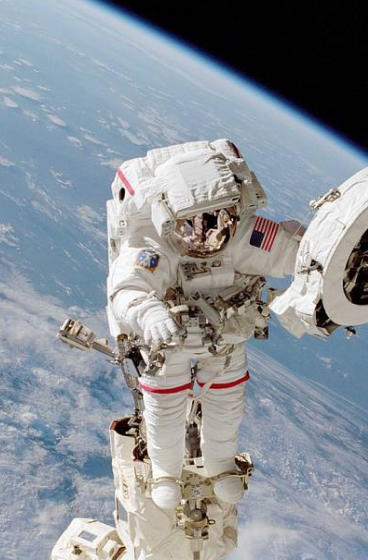
The third servicing mission to the Hubble Space Telescope, placed in orbit in 1990, occurred during the STS-103 mission in December 1999. During the mission, originally planned for June 2000 but accelerated by six months following unexpected failures of the telescope’s attitude control gyroscopes, the astronauts restored the facility to full functionality. During their eight-day mission that featured the first space shuttle crew to spend Christmas in space, the seven-member U.S. and European crew rendezvoused with and captured Hubble, and four astronauts in rotating teams of two conducted three lengthy and complex spacewalks to service and upgrade the telescope. They redeployed the telescope with greater capabilities than ever before to continue its mission to help scientists unlock the secrets of the universe.

The discovery after the Hubble Space Telescope’s launch in 1990 that its primary mirror suffered from a flaw called spherical aberration disappointed scientists who could not obtain the sharp images they had expected. But thanks to the Hubble’s built-in feature of on-orbit servicing, NASA devised a plan to correct the telescope’s optics during the first planned repair mission in 1993. A second servicing mission in 1997 upgraded the telescope’s capabilities until the next mission planned for three years later. But after three of the telescope’s six gyroscopes failed in 1997, 1998, and 1999, mission rules dictated a call up mission in case additional gyroscope failures sent Hubble into a safe mode. NASA elected to move up some of the servicing tasks from the third mission, splitting it into missions 3A and 3B, planning to fly 3A in October 1999 on Discovery’s STS-103 mission primarily to replace the failed gyroscopes. Delays to the shuttle fleet resulting from anomalies during the launch of STS-93 in July 1993 slipped STS-103 first into November and ultimately into December. Technical issues with Discovery itself pushed the launch date to mid-December, and raised concerns about having a shuttle in orbit during the Y2K transition. Once the launch had slipped to Dec. 19, mission planners cut the mission from 10 to eight days, deleting one of the four spacewalks, to ensure a return before the end of the calendar year. The servicing mission couldn’t come soon enough, as a fourth gyroscope failed aboard Hubble in mid-November, with Discovery already poised on the launch pad to prepare for STS-103. Controllers placed Hubble in a safe mode until the astronauts arrived.

To execute the third Hubble Servicing Mission, in July 1998 NASA selected an experienced four-person team to carry out a record-breaking six spacewalks on the flight then planned for June 2000. The spacewalkers included Mission Specialists Steven L. Smith serving as payload commander, John M. Grunsfeld, C. Michael Foale, and European Space Agency (ESA) astronaut Claude Nicollier from Switzerland. The addition in March 1999 of Commander Curtis L. Brown, Pilot Scott J. Kelly, and Mission Specialist ESA astronaut Jean-François A. Clervoy of France rounded out the highly experienced crew with 18 previous spaceflights among them. Brown earned the distinction as only the fifth person to fly in space six times. For Kelly, STS-103 marked his first spaceflight. Smith, Clervoy, and Grunsfeld each had flown two previous missions, Foale four including a long-duration mission aboard Mir, and Nicollier three. Smith participated in three spacewalks during the second Hubble Servicing Mission and Nicollier served as the Remote Manipulator System (RMS) or robotic arm operator during the first.

Discovery arrived back to KSC at the end of the STS-96 mission on June 6, 1999, and workers towed it to the Orbiter Processing Facility the same day to begin readying it for STS-103. The vehicle rolled over to the Vehicle Assembly Building on Nov. 4, where workers mated it with its external tank and twin solid rocket boosters, before rolling the stack out to Launch Pad 39B on Nov. 13.

Beginning its 27th trip into space, Discovery lifted off from Launch Pad 39B at 7:50 p.m. EST on Dec. 19 to fix the ailing space telescope. Two days later, Brown and Kelly maneuvered Discovery to within range of Hubble so Clervoy operating the 50-foot-long RMS could grapple the telescope and berth it into the payload bay.

Smith and Grunsfeld conducted the mission’s first spacewalk on Dec. 22, the flight’s fourth day in space. The duo, aided by Clervoy operating the RMS from inside Discovery, completed two of mission’s highest priority objectives. They replaced the failed gyroscopes, installing three new Rate Sensor Units, each containing two gyroscopes, to return control to the ailing telescope. They also installed six Voltage/Temperature Improvement Kits to prevent the telescope’s batteries from overheating as they aged. The excursion lasted eight hours 15 minutes, at the time the second longest spacewalk.

The next day, Nicollier and Foale conducted the mission’s second spacewalk. The main task for this excursion involved installing a new computer aboard Hubble, replacing the original 1970s vintage unit. The new radiation-hardened system ran 20 times faster and carried six times more memory while using one-third the electrical power. They also installed a fine guidance sensor before concluding the eight-hour 10-minute spacewalk.

Smith and Grunsfeld ventured outside for a second time to complete the flight’s third and final spacewalk on Dec. 24, the first spacewalk conducted on Christmas Eve day. First, they replaced an old reel-to-reel tape recorder with a solid state unit providing a 10-fold increase in recording capability and replaced a failed data transmitter. They installed seven new covers on Hubble’s electronics bay doors for added protection of the telescope’s insulation. This third spacewalk lasted eight hours eight minutes.

The next day, the STS-103 astronauts earned the distinction as the first space shuttle crew to spend Christmas Day in space. Clervoy grappled Hubble, lifted it out of the payload bay and released it to continue its mission. Hubble Space Telescope Program Manager John H. Campbell said after the release, “The spacecraft is being guided by its new gyros under the control of its brand new computer. [It] is now orbiting freely and is in fantastic shape.” After deploying Hubble, the astronauts enjoyed a well-deserved Christmas dinner, with Clervoy providing French delicacies. The crew spent Dec. 26 readying Discovery for its return to Earth, including testing its reaction control system thrusters and aerodynamic surfaces and stowing unneeded gear.

On Dec. 27, the astronauts donned their launch and entry suits and prepared for the return to Earth. They closed the payload bay doors and fired Discovery’s engines to bring them out of orbit. Just before landing, Kelly lowered the craft’s landing gear and Brown guided Discovery to a smooth night landing at KSC, concluding a flight of seven days, 23 hours, 11 minutes. They circled the Earth 119 times. The flight marked Discovery’s last solo flight as all its subsequent missions docked with the International Space Station. Workers at KSC began readying it for its next mission, STS-92 in October 2000.

The Hubble Space Telescope continues to operate today, far exceeding the five-year life extension expected from the last of the servicing missions in 2009. Joined in space by the James Webb Space Telescope in 2021, the two instruments together continue to image the skies across a broad range of the electromagnetic spectrum to provide scientists with the tools to gain unprecedented insights into the universe and its formation.

Watch the STS-103 crew narrate a video of their Hubble servicing mission.

Powered by WPeMatico

Get The Details…
John J. Uri

NASA, Notre Dame Connect Students to Inspire STEM Careers

NASA, Notre Dame Connect Students to Inspire STEM Careers

2 min read

Preparations for Next Moonwalk Simulations Underway (and Underwater)

Portage School of Leaders High School junior Rebecca Anderson, wearing a black short-sleeved shirt and glasses, stands smiling beside NASA Glenn’s Daniel Sutliff, an acoustic engineer, on the campus of the University of Notre Dame. Sutliff is wearing a NASA ballcap and black jacket. He and Anderson are holding an autographed NASA mug, which Sutliff signed with a black ink permanent magic marker. Anderson is holding the black marker and a small cardboard box.
Rebecca Anderson, a junior enrolled at the Portage School of Leaders High School in South Bend, Indiana, spent time with NASA Glenn Research Center’s Daniel Sutliff, an acoustic engineer, on the campus of the University of Notre Dame on Nov. 7, 2024. Students witnessed the operation of the Advanced Noise Control Fan owned by NASA and on loan to the university for STEM experiences.
Credit: Matt Cashore/University of Notre Dame

High school students in Indiana are contributing to NASA’s groundbreaking research to develop quieter, more fuel-efficient aircraft engines.

Their learning experience is a collaboration between aircraft noise researchers from NASA’s Glenn Research Center in Cleveland and educators from the University of Notre Dame’s Turbomachinery Laboratory. The collaboration aims to encourage students’ interest in science, technology, engineering, and math (STEM) careers.

Recently, Notre Dame hosted students from The Portage School of Leaders High School and a team from NASA Glenn to see the Advanced Noise Control Fan operate in an outdoor setting. The fan is a NASA-owned test rig that has been configured to enable the study of a quieter aircraft engine technology. Known as the open rotor fan concept, the configuration involves an engine fan without a cover. Ground microphones were used during the test operated by Notre Dame to evaluate the radiated sound as the open rotor fan spun at various speeds.

NASA’s Advanced Noise Control Fan features an open aircraft engine fan concept, which means it is uncovered. The fan is surrounded by a beige frame designed to prevent lateral winds from interfering with the test.
NASA’s Advanced Noise Control Fan is on loan at the University of Notre Dame through a Space Act Agreement. It provides a hands-on learning laboratory for students in STEM.
Credit: Matt Cashore/University of Notre Dame

Students from the high school, which is part of the Career Academy Network of Public Schools, used 3D printers from the school’s facilities to fabricate parts for the open rotor test fan. The parts, known as stator blades, help direct and control airflow, ensuring smooth operation of the large, exposed fan blades that are the defining feature of an open fan engine design.

“It was beyond words,” said Rebecca Anderson, a junior from the high school. “The part I enjoyed most was when they got the fan running. It was really impressive to see how quiet it was. I feel like everyone involved in STEM would love to work for NASA, including me.”

NASA researcher Dr. Daniel Sutliff was part of the team from NASA Glenn to spend time mentoring the students.

“This is real-world, hands-on research for them,” Sutliff said. “If airlines are able to use technologies to make flight quieter and cleaner, passengers will have more enjoyable flights.”

The Advanced Noise Control Fan is on loan to Notre Dame from NASA through a Space Act Agreement. The fan research is supported by NASA’s Advanced Air Transport Technology project and its Efficient Quiet Integrated Propulsors technical challenge.

Powered by WPeMatico

Get The Details…
Kelly M. Matter

NASA Flight Rerouting Tool Curbs Delays, Emissions

NASA Flight Rerouting Tool Curbs Delays, Emissions

2 min read

Preparations for Next Moonwalk Simulations Underway (and Underwater)

People walk in a room with monitors in an American Airlines facility.
NASA Deputy Administrator Pam Melroy and Deputy Associate Administrator Casey Swails visit the American Airlines Integrated Operations Center near Dallas Fort Worth International Airport on a recent trip to see NASA’s digital tools for aviation efficiency in operational use.
American Airlines

It’s the holiday season — which means many are taking to the skies to join their loved ones.

If you’ve ever used an app to navigate on a road trip, you’ve probably noticed how it finds you the most efficient route to your destination, even before you depart. To that end, NASA has been working to make flight departures out of major international airports more efficient — thereby saving fuel and reducing delays — in close collaboration with the aviation industry and the Federal Aviation Administration (FAA). 

The savings are possible thanks to a NASA-developed tool called Collaborative Digital Departure Rerouting

This tool determines where potential time savings could be gained by slightly altering a departure route, based on existing data about delays. The software presents its proposed more-efficient route in real time to an airline, who can then decide whether or not to use it and coordinate with air traffic control through a streamlined digital process. 

The capability is being tested thoroughly at Dallas Fort Worth International Airport and Love Field Airport in Texas in collaboration with several major air carriers, including American Airlines, Delta, JetBlue, Southwest, and United. 

Now, these capabilities are expanding out of the Dallas area to other major airports in Houston for further research. 

“We’re enabling the use of digital services to greatly improve aviation efficiency,” said Shivanjli Sharma, manager of NASA’s Air Traffic Management — eXploration project which oversees the research on aviation services. “Streamlining airline operations, reducing emissions, and saving time are all part of making an efficient next-generation airspace system.” 

Animation of an airplane over a blue background showing aviation emissions and delays savings
NASA / Maria Werries

The animation above shows the savings Collaborative Digital Departure Rerouting is responsible for at just a single airport. As the tool is expanded to be used at other airports, the savings begin to add up even more. 

It’s all part of NASA’s vision for transforming the skies above our communities to be more sustainable, efficient, safer, and quieter. 

Collaborative Digital Departure Rerouting is one of a series of new cloud-based digital air traffic management tools NASA and industry plan to develop and demonstrate as part of the agency’s Sustainable Flight National Partnership. These new flight management capabilities will contribute to the partnership’s goal of accelerating progress towards aviation achieving net-zero greenhouse gas emissions by 2050. 

About the Author

John Gould

John Gould

Aeronautics Research Mission Directorate

John Gould is a member of NASA Aeronautics’ Strategic Communications team at NASA Headquarters in Washington, DC. He is dedicated to public service and NASA’s leading role in scientific exploration. Prior to working for NASA Aeronautics, he was a spaceflight historian and writer, having a lifelong passion for space and aviation.

Powered by WPeMatico

Get The Details…
John Gould

Hubble Spies a Cosmic Eye

Hubble Spies a Cosmic Eye

2 min read

Hubble Spies a Cosmic Eye

An oval-shaped spiral galaxy. Its core is a compact, glowing blue spot. A bright bar of light, lined with dark reddish dust, extends horizontally to the edge of the disk. A spiral arm emerges from each end of the bar and follows the edge of the disk, lined with blue and red glowing patches of stars, to the opposite end and a little off the galaxy. A scattering of blue stars are between us and the galaxy.
This NASA/ESA Hubble Space Telescope image features the spiral galaxy NGC 2566.
ESA/Hubble & NASA, D. Thilker

This NASA/ESA Hubble Space Telescope image features the spiral galaxy NGC 2566, which sits 76 million light-years away in the constellation Puppis. A prominent bar of stars stretches across the center of this galaxy, and spiral arms emerge from each end of the bar. Because NGC 2566 appears tilted from our perspective, its disk takes on an almond shape, giving the galaxy the appearance of a cosmic eye.

As NGC 2566 appears to gaze at us, astronomers gaze right back, using Hubble to survey the galaxy’s star clusters and star-forming regions. The Hubble data are especially valuable for studying stars that are just a few million years old; these stars are bright at the ultraviolet and visible wavelengths to which Hubble is sensitive. Using these data, researchers can measure the ages of NGC 2566’s stars, which helps piece together the timeline of the galaxy’s star formation and the exchange of gas between star-forming clouds and the stars themselves.

Hubble regularly teams up with other astronomical observatories to examine objects like NGC 2566, including the NASA/ESA/CSA James Webb Space Telescope. Webb data complements Hubble’s by going beyond the infrared wavelengths of light Hubble can see, better defining areas of warm, glowing dust. At even longer wavelengths, the Atacama Large Millimeter/submillimeter Array (ALMA) of 66 radio telescopes that work together can capture detailed images of the clouds of gas and dust in which stars form. Together, Hubble, Webb, and ALMA provide an overview of the formation, lives, and deaths of stars in galaxies across the universe.

Explore More

Media Contact:

Claire Andreoli (claire.andreoli@nasa.gov)
NASA’s Goddard Space Flight CenterGreenbelt, MD

Powered by WPeMatico

Get The Details…