Expedition 70 Welcomes Four New Crewmates, Quickly Gets to Work

Expedition 70 Welcomes Four New Crewmates, Quickly Gets to Work
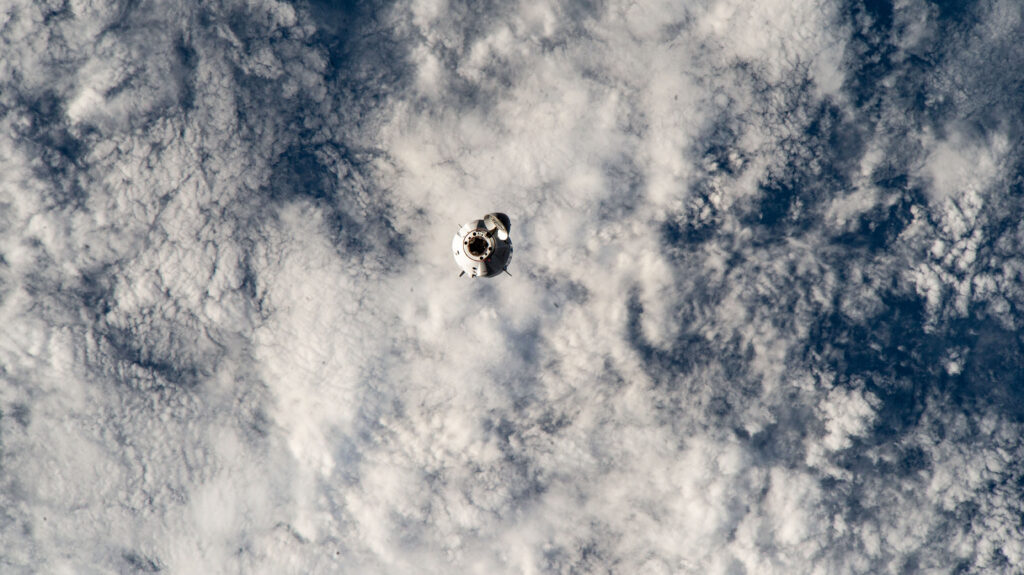
 The SpaceX Dragon Endeavour spacecraft, with the Crew-8 quartet aboard, is pictured approaching the International Space Station as it orbited 268 miles above the Indian Ocean.
The SpaceX Dragon Endeavour spacecraft, with the Crew-8 quartet aboard, is pictured approaching the International Space Station as it orbited 268 miles above the Indian Ocean.

11 crew members now reside aboard the International Space Station following the arrival of the SpaceX Crew-8 mission early Tuesday morning. The four new Crew-8 members will spend the next few days getting used to life on orbit as four Expedition 70 crewmates pack up for their return to Earth.

The SpaceX Dragon “Endeavour“ spacecraft docked to the forward port of orbital outpost’s Harmony module at 2:28 a.m. EST on Tuesday. About an hour-and-a-half later, Crew-8 Commander Matthew Dominick, Pilot Mike Barratt, and Mission Specialists Jeanette Epps and Alexander Grebenkin opened Dragon’s hatch and entered Harmony officially becoming station flight engineers. Soon after, the new quartet, with the Expedition 70 septet, called down to Earth for welcome remarks.

Afterward, the entire crew quickly got to work first conducting a safety briefing, then unpacking new science and supplies, conducting health checks, and more. The crewmates transferred Dragon freezers containing research samples and installed them into science racks throughout the station. Tuesday’s health studies included testing the inner-ear balance system, conducting eye scans with an ultrasound device, and evaluating a specialized suit’s ability to help a crew member readjust to Earth’s gravity.

The foursome will live aboard the space station for a six-month space research mission. They will take advantage of the microgravity environment to explore the mechanisms behind neurodegenerative disorders, how spaceflight affects plant growth to sustain crews, countering space-caused fluid shifts that create head and eye pressure in astronauts, and the potential for algae to improve spacecraft life support systems.

While Crew-8 gets up to speed with space station systems, four Expedition 70 crewmates are nearing their departure after a six-and-a-half-month mission on orbit. NASA astronaut Jasmin Moghbeli will lead Andreas Mogensen of ESA (European Space Agency), Satoshi Furukawa of JAXA (Japan Aerospace Exploration Agency) and Konstantin Borisov of Roscosmos back to Earth inside the SpaceX Dragon “Endurance” spacecraft. The homebound quartet has been aboard the station since Aug. 27, 2023, and is expected to undock from Harmony’s space-facing port no earlier than Monday, March 11.

The station’s other three crewmates, NASA astronaut Loral O’Hara and cosmonauts Oleg Kononenko and Nikolai Chub, have been aboard the station since Sept. 15, when they docked to the Rassvet module inside the Soyuz MS-24 crew ship. O’Hara is due to return to Earth in April while Kononenko and Chub will stay in space for a few more months.


Learn more about station activities by following the space station blog, @space_station and @ISS_Research on X, as well as the ISS Facebook and ISS Instagram accounts.

Get weekly video highlights at: https://roundupreads.jsc.nasa.gov/videoupdate/

Get the latest from NASA delivered every week. Subscribe here: www.nasa.gov/subscribe

Powered by WPeMatico

Get The Details…

Abby Graf

SWOT Satellite Catches Coastal Flooding During California Storms

SWOT Satellite Catches Coastal Flooding During California Storms

4 min read

Preparations for Next Moonwalk Simulations Underway (and Underwater)

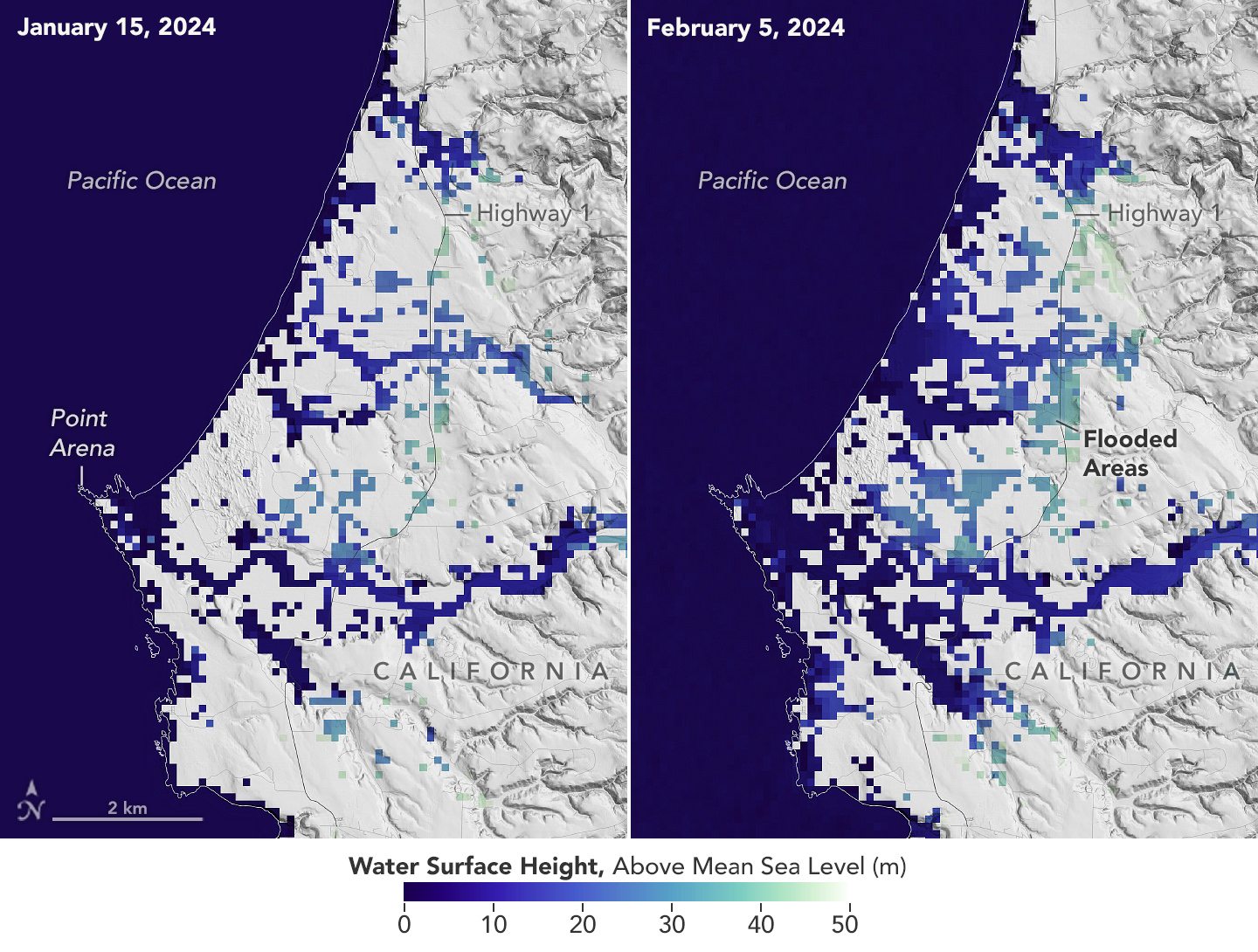
SWOT satellite data for water surface height in part of Mendocino County, Northern California
This image shows SWOT satellite data for water surface height in part of Mendocino County, Northern California, on Jan. 15, before several atmospheric rivers arrived, and on Feb. 4, after the first storms. Light blue and green indicate the highest water levels relative to mean sea level. (Inland water heights include the underlying ground elevation.)
NASA/JPL-Caltech

Operated by NASA and the French space agency, the Surface Water and Ocean Topography mission provides a new view of water on land, at the coast, and in the ocean.

A series of atmospheric rivers drenched California in February, with record amounts of rainfall and hurricane-force winds sweeping across parts of the state. At one point, weather agencies posted flood watches for nearly the entirety of California’s coast. The Surface Water and Ocean Topography (SWOT) mission captured data on some of the flooding near the community of Manchester, roughly 105 miles (169 kilometers) north of San Francisco. The satellite is a collaboration between NASA and the French space agency, CNES (Centre National d’Études Spatiales).

The image above shows the area on Jan. 15, before the rain and snow from atmospheric rivers, and then again on Feb. 4, after the first in a series of storms soaked California. Water heights are shown in shades of green and blue, with lighter hues indicating the highest levels relative to mean sea level. (Data for inland areas includes the height of the floodwaters plus the ground elevation beneath it.) Some coastal areas were flooded by both ocean tides and heavy rain, while others were likely flooded only by precipitation. Each pixel in the image represents an area that is 330 feet by 330 feet (100 meters by 100 meters).

Since December 2022, SWOT has been measuring the height of nearly all water on Earth’s surface, developing one of the most detailed, comprehensive views yet of the planet’s oceans and freshwater lakes and rivers. Not only can the satellite detect the extent of the water on Earth’s surface, as other satellites can, but SWOT can also provide water level data. Combined with other types of information, SWOT measurements can yield water depth data in features like lakes and rivers.

“SWOT gives us information about flooding that we’ve never had before,” said Ben Hamlington, lead researcher for NASA’s sea level change team at the agency’s Jet Propulsion Laboratory in Southern California. Satellites can provide pictures showing how much of an area is flooded, but unless instruments are already installed on a river or at the coast, it’s difficult to know how conditions evolve during and after a flood. “Data from the SWOT satellite, combined with other information, is filling in this picture,” said Hamlington.

The SWOT science team made the measurements using the Ka-band Radar Interferometer (KaRIn) instrument. With two antennas spread 33 feet (10 meters) apart on a boom, KaRIn produces a pair of data swaths as it circles the globe, bouncing radar pulses off water surfaces to collect surface-height measurements.

More About the Mission

Launched in December 2022, from Vandenberg Space Force Base in central California, SWOT is now in its operations phase, collecting data that will be used for research and other purposes.

SWOT was jointly developed by NASA and CNES, with contributions from the Canadian Space Agency (CSA) and the UK Space Agency. NASA’s Jet Propulsion Laboratory, which is managed for the agency by Caltech in Pasadena, California, leads the U.S. component of the project. For the flight system payload, NASA provided the KaRIn instrument, a GPS science receiver, a laser retroreflector, a two-beam microwave radiometer, and NASA instrument operations. CNES provided the Doppler Orbitography and Radioposition Integrated by Satellite (DORIS) system, the dual frequency Poseidon altimeter (developed by Thales Alenia Space), the KaRIn radio-frequency subsystem (together with Thales Alenia Space and with support from the UK Space Agency), the satellite platform, and ground operations. CSA provided the KaRIn high-power transmitter assembly. NASA provided the launch vehicle and the agency’s Launch Services Program, based at Kennedy Space Center, managed the associated launch services.

To learn more about SWOT, visit:

https://swot.jpl.nasa.gov/

News Media Contacts

Jane J. Lee / Andrew Wang
Jet Propulsion Laboratory, Pasadena, Calif.
818-354-0307 / 626-379-6874
jane.j.lee@jpl.nasa.gov / andrew.wang@jpl.nasa.gov

2024-021

Powered by WPeMatico

Get The Details…
Anthony Greicius

La NASA abre plazo de solicitudes para ser astronauta

La NASA abre plazo de solicitudes para ser astronauta

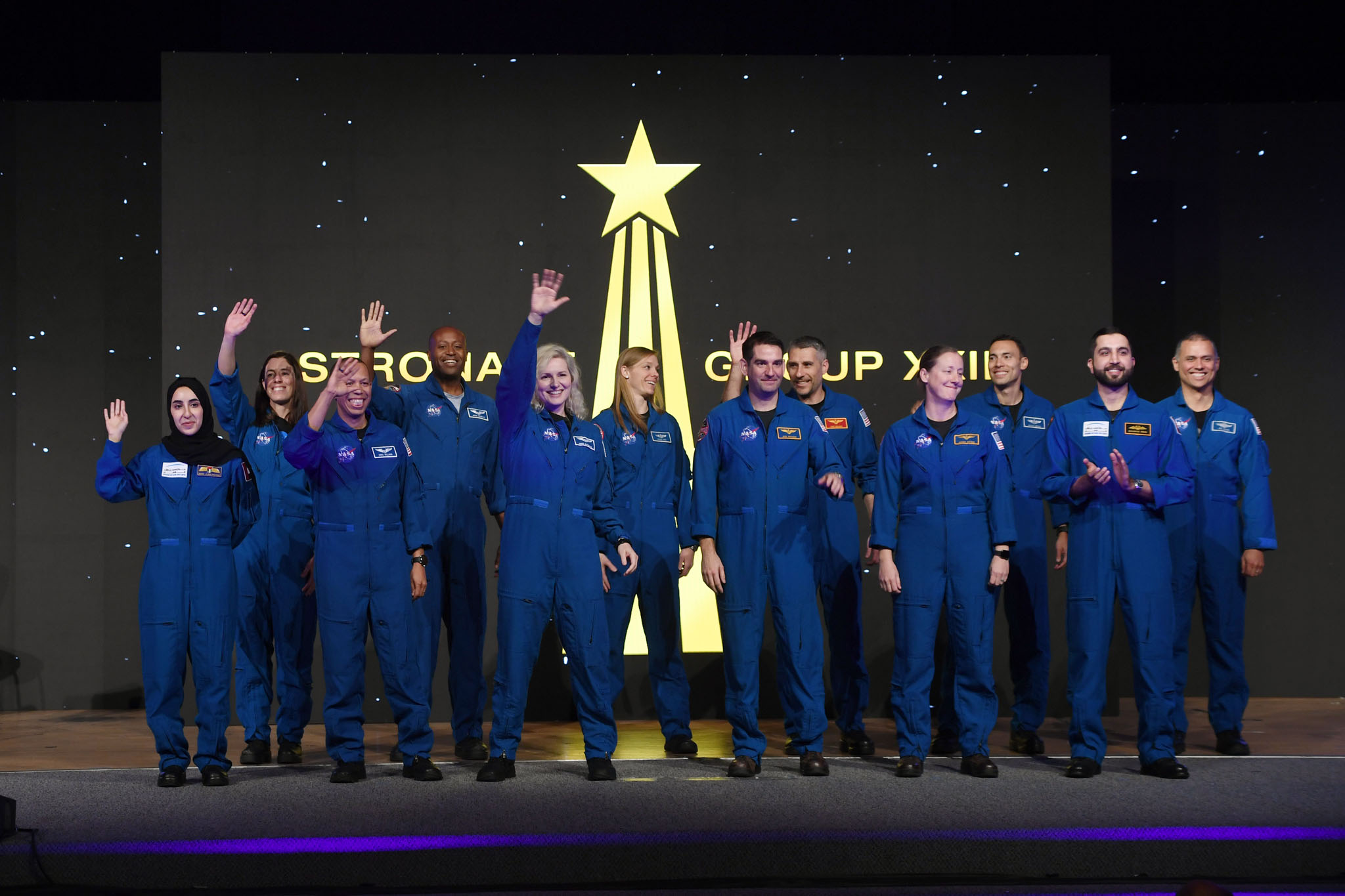
La nueva promoción de astronautas de la NASA, seleccionada en 2021, se graduó en una ceremonia que tuvo lugar el 5 de marzo de 2024 en el Centro Espacial Johnson de la agencia en Houston.
Créditos: NASA

Read this release in English here.

La NASA dio la bienvenida a su nueva cohorte de astronautas de la generación Artemis durante una ceremonia celebrada el martes en el Centro Espacial Johnson de la agencia en Houston. Los 10 astronautas graduados ya son elegibles para misiones de vuelo. La agencia también anunció la apertura de la próxima ronda de solicitudes para astronautas de la NASA.

“¡Enhorabuena a la nueva promoción de astronautas de la NASA! Estamos muy contentos de tener un nuevo y diverso grupo de exploradores listos para expandir el alcance de la humanidad”, dijo el administrador de la NASA Bill Nelson. “Los astronautas son pioneros que nos ayudarán a embarcarnos en esta nueva era de exploración, y necesitamos más aventureros dispuestos a unirse al grupo para explorar el cosmos, incluyendo futuras misiones a la Luna, a Marte, y más allá”.

Los astronautas graduados hoy fueron seleccionados para su entrenamiento en 2021, elegidos entre un grupo de más de 12.000 solicitantes, y completaron con éxito más de dos años de entrenamiento básico requerido, incluyendo caminatas espaciales, robótica, sistemas de la estación espacial y más.

Los graduados podrán ser destinados a misiones a la Estación Espacial Internacional, futuras estaciones espaciales comerciales y misiones de la campaña Artemis a la Luna, como preparación para ir a Marte.

“Enhorabuena a la NASA y a los astronautas graduados”, declaró Kiran Ahuja, directora de la Oficina de Gestión de Personal (OPM, por sus siglas en inglés) de Estados Unidos. “Al asociarse con la OPM, la NASA empleó un proceso de contratación automatizado y optimizado para seleccionar a los solicitantes de estos prestigiosos puestos. La OPM está encantada de seguir apoyando a los expertos de la NASA para diseñar e implementar sus métodos de contratación”.

“Es un momento increíble para ser astronauta, con una gran variedad de naves espaciales que pilotar y más destinos que explorar”, declaró el astronauta jefe Joe Acabá. “Me siento honrado de dar la bienvenida a estos astronautas, felicitarles por su duro trabajo, y espero con interés ver crecer nuestras filas mientras ayudamos a expandir el alcance de la humanidad en el sistema solar”.

Los astronautas de la NASA que se han graduado son Nichole Ayers, de Colorado Springs (Colorado); Marcos Berríos, de Guaynabo (Puerto Rico); Chris Birch, de Gilbert (Arizona); Deniz Bunham, de Wasilla (Alaska); Luke Delaney, de Debary (Florida); Andre Douglas, de Chesapeake (Virginia); Jack Hathaway, de South Windsor (Connecticut); Anil Menon, de Minneapolis; Chris Williams, de Potomac (Maryland), y Jessica Wittner, de Clovis (California).

Continuando con una larga tradición de colaboración internacional, dos astronautas de los Emiratos Árabes Unidos (EAU), Nora AlMatrooshi y Mohammad AlMulla, del Centro Espacial Mohammad Bin Rashid, se entrenaron junto a sus homólogos de la NASA durante los dos últimos años.

Esta es una parte de la asociación entre la NASA y los EAU, que incluye la cooperación en la Estación Espacial Internacional, en las misiones Artemis de la NASA a través de la estación espacial lunar Gateway, y en otras actividades en la Tierra y en el espacio que están dando apoyo a investigaciones pioneras.

Para solicitar ser astronauta de la NASA, los aspirantes deben dirigirse a la siguiente página web en inglés:

https://www.usajobs.gov/job/779261100

-fin-

Josh Finch / María José Viñas
Sede, Washington
202-358-1100 / 240-458-0248
joshua.a.finch@nasa.gov / maria-jose,.vinasgarcia@nasa.gov

Chelsey Ballarte
Centro Espacial Johnson, Houston
281-483-5111
chelsey.n.ballarte@nasa.gov

Powered by WPeMatico

Get The Details…
Lauren E. Low

NASA Opens Astronaut Applications as Newest Class Graduates

NASA Opens Astronaut Applications as Newest Class Graduates

The newest class of NASA astronauts celebrate at their graduation ceremony at the Johnson Space Center in Houston.
NASA newest class of astronauts, selected in 2021, graduate during a ceremony on March 5, 2024, at the at the agency’s Johnson Space Center in Houston.
Credit: NASA

Lee esta nota de prensa en español aquí.

NASA welcomed its newest class of next generation Artemis astronauts in a Tuesday ceremony at the agency’s Johnson Space Center in Houston. The 10 astronaut graduates now are eligible for flight assignments. The agency also announced the opening for the next round of NASA astronaut applications.

“Congratulations to the newest class of NASA astronauts! We are excited to have a new and diverse set of explorers ready to expand humanity’s reach,” said NASA Administrator Bill Nelson. “Astronauts are pioneers who will help us embark on this new era of exploration, and we need more adventurers ready to join the ranks to explore the cosmos, including future missions to the Moon, on to Mars, and beyond.”

Selected for training in 2021, the astronaut graduates were chosen from a pool of more than 12,000 applicants and successfully completed more than two years of required basic training, including spacewalking, robotics, space station systems, and more.

The graduates may be assigned to missions destined for the International Space Station, future commercial space stations, and Artemis campaign missions to the Moon in preparation for Mars.

“Congratulations to NASA and the astronaut graduates,” said U.S. Office of Personnel Management (OPM) Director Kiran Ahuja. “By partnering with OPM, NASA employed an automated and streamlined hiring process to screen applicants for these prestigious roles. OPM is thrilled to continue supporting NASA experts to design and implement their hiring methods.”

“It’s an incredible time to be an astronaut with a variety of spacecraft to fly and more destinations to explore,” said Chief Astronaut Joe Acaba. “I’m honored to welcome these astronauts, congratulate them on their hard work, and look forward to growing our ranks as we help expand humanity’s reach into the solar system.”

The graduating NASA astronauts are Nichole Ayers of Colorado Springs, Colorado; Marcos Berríos of Guaynabo, Puerto Rico; Chris Birch of Gilbert, Arizona; Deniz Bunham of Wasilla, Alaska; Luke Delaney of Debary, Florida; Andre Douglas of Chesapeake, Virginia; Jack Hathaway of South Windsor, Connecticut; Anil Menon of Minneapolis; Chris Williams of Potomac, Maryland, and Jessica Wittner of Clovis, California.

Continuing the long tradition of international partnership, two UAE (United Arab Emirates) astronauts, Nora AlMatrooshi and Mohammad AlMulla of the Mohammad Bin Rashid Space Centre, trained alongside their NASA counterparts for the past two years, as well as participated in the graduation ceremony.

This is one part of the partnership between NASA the UAE, including cooperation on the International Space Station, NASA’s Artemis missions through the Gateway lunar space station, and other activities on Earth and in space that are supporting groundbreaking science and research.

To apply to become a NASA astronaut, applicants should go to:

https://www.usajobs.gov/job/779261100

-end-

Josh Finch / Claire O’Shea
Headquarters, Washington
202-358-1100
joshua.a.finch@nasa.gov / claire.a.oshea@nasa.gov

Chelsey Ballarte
Johnson Space Center, Houston
281-483-5111
chelsey.n.ballarte@nasa.gov

Powered by WPeMatico

Get The Details…
Lauren E. Low

The NASA Space Technology Art Challenge: Imagine Tomorrow

The NASA Space Technology Art Challenge: Imagine Tomorrow

The NASA Innovative Advanced Concepts (NIAC) Program wants you to show the world the future of space technology. The NIAC Program is looking for posters that help people better understand these visionary aerospace concepts that might be used in future NASA missions. If you can create an engaging poster that depicts one or more of the innovative concepts in action, you might win a portion of the $3000 USD purse. These early-stage technologies are 10 to 20+ years away from final development. To help people understand what they might look like, NIAC is turning to artists and graphic designers to create posters that help people visualize the technologies. The posters will show what the technology will look like, and how and where they might be used in the future. NIAC will use these images to help illustrate the tech story to everyone including students, the press, science and technology museums, Congress, and the general public. These images will inspire vast audiences by creating effective visualizations of cutting-edge technologies. All selected images will be uploaded to the NIAC website, shared widely, and available for free digital download. Credit will be given to all artists’ work.

Award: $3,000 in total prizes

Open Date: March 5, 2024

Close Date: April 15, 2024

For more information, visit: https://www.freelancer.com/contest/The-NASA-Space-Technology-Art-Challenge-Imagine-Tomorrow-2373640/prize-details

Powered by WPeMatico

Get The Details…
Sarah Douglas