2023 Pushing the Envelope Honoree (Group)

2023 Pushing the Envelope Honoree (Group)

3 min read

Preparations for Next Moonwalk Simulations Underway (and Underwater)

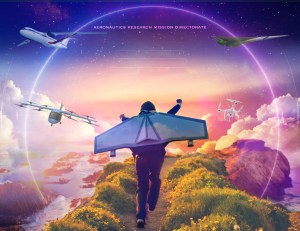
2023 Aeronautics Research Mission Directorate Associate Administrator Awards

Pushing the Envelope Honoree

X-57 Maxwell Team

* Denotes Team Lead

NASA Armstrong Flight Research Center
Bony J. Baca
Jeffrey E. Baker
Kaleiokalani J. Barela
Ethan A. Baumann
Paul S. Bean
Matthew J. Berry
Keerti K. Bhamidipati
Andrew D. Blua
John K. Bodylski
Kirsten M. Boogaard
Trong T. Bui
Bradley S. Butler
Sean C. Clarke
Bruce R. Cogan
John G. Coggins
James R. Cowart
Brian P. Curlett
Adam F. Curry
Angelo De La Rosa
Jacob J. Ediger
German Escobar Vicelis
Karen L. Estes
David E. Farmer
Russell J. Franz
Mei L. Franz
Michael A. Frederick
Timothy R. Gadbois
Eric J. Garza
Starr R. Ginn
Donald T. Griffith
Leo J. Gross
Mary A. Grossman
Joe G. Hernandez
Joel J. Hiddema
April M. Jungers
Matthew R. Kamlet
Ed T. Koshimoto
Wesley W. Li
Yohan Lin
Lyndel L. Lohberger
Johanna B. Lucht
Heather A. Maliska*
John L. Maliska
Kassidy M. McLaughlin
Shaun C. Mcwherter
Daniel C. Melo
Sarkis S. Mikaelian
Andrea K. Muir
Elizabeth L Nail
Jason P. Nelson
Eric W. Nisbet
Deleena M. Noble
Chan-gi Pak
Kurt V. Papathakis
Francisco Pena
Richard H. Pokorski
Thang T. Quach
Almanda Randle
Jeffrey R. Ray
Patrick D. Ray
Matthew E. Redifer
James R. Reynolds
Thomas K. Rigney
Wayne M. Ringelberg
Anthony P. Rodgers
Michael P. Rodriguez
John R. Rudy
Rosalio Salazar
Claudia Y. Sales
Aamod G. Samuel
Otto C. Schnarr
Keith A. Schweikhard
Mark S. Smith
Natalie D. Spivey
Gregory W. Strombo
Daniel W. Sturgeon
David J. Tempesta
Jacob R. Terry
April C. Torres
Duc N. Tran
Samson S. Truong
Rashmi N. Vidyasagar
Abbigail G. Waddell
Randy L. Wagner
Ryan D. Wallace
Aric D. Warner
Brennan R. Wehr
Kyle J. Whitfield
Timothy L. Williams
Mae Yook Y. Wong
Seung Y. Yoo
Alex C. Zamora
Christina M. Zinger

NASA Glenn Research Center
Aaron D. Anderson
David Avanesian
Julie A. Blystone
Jeffrey C. Chin
Peggy A. Cornell
Ryan D. Edwards
Bradley D. French
Michael J. Garrett
Matthew G. Granger
Dionne M. Hernandez-Lugo
Ralph H. Jansen
Susanah R. Kowalewski
Alex M. Leary
John M. Maroli
Thomas B. Miller
Brian A. Morris
Adabelle Narvaez-Bostwick
Ron D. Noebe
Andrew D. Smith
Jarred M. Whilhite

NASA Johnson Space Center
Linda K. Ruhl

NASA Langley Research Center
Christopher J. Bahr
Steven X. Bauer
Nicholas K Borer
Melissa B. Carter
William P. Chambers
David E. Cox
Stephen E. Cutright
Karen A. Deere
Joseph M. Derlaga
Jared S. Fell
Zachary J. Frederick
Frank H. Gern
Thomas G. Ivanco
Theodore F Johnson
Donald F. Keller
Laura K. Kushner
Brandon L. Litherland
David P. Lockard
Charles B. Lunsford
Steven J. Massey
Sean P. McCormick
John Dana D. Mcminn
James B. Moore
Douglas M. Nark
Michael D. Patterson
David J. Piatak
Russ D. Rausch
Stephen A. Rizzi
Kevin P. Roscoe
Vincent P. Schultz
Martin Krystian (K) Sekula
Bret K. Stanford
Erik D. Tyler
Jeffrey K. Viken
Sally A. Viken
Josiah M. Waite
James P. Winkel
Nikolas S. Zawodny

AEGIS
Tyler B. Allen

ALBERS
Frank O. Andrade
Richard W. Smith

Analytical Mechanics Associates Inc.
Donna A. Gilchrist
Joy R. Bland
Phillip A. Burkhardt
Lynda D. Clinton
William A. Cookson
Tara E. Requist
Nathan D. Rick
Linda D. Soden
Stephen R. Washington

Arcata Associates, Inc.
Joseph N. Innis
Andrew S. Kelly
Jesus Vazquez

ASRC Federal System Solutions
Kathleen J. Chavez
Cody S. Lydon

Axient
Nicholas J. Bierschwal
Franklin K. Harris
Lynnell L. Parker

Distinguished Research Associates
Patrick C. Murphy

Empirical Systems Aerospace (ESAero)
Joseph Ayala
Kevin Barton
Ike Bayraktar
Nick Brake
Alexander Bugrov
Anthony Cash
Raymond Curtis
Felipe DeJesus
Joseph Fernandez
Trevor Foster
Andrew Gibson
Clayton Green
Michael Green
Deb Jelen
Garrett Klunk
Jonathan Lazatin
Madison Machado
Michael McDonald
Aric Naess
Philip Osterkamp
Christopher Platt
Marc Richardson
Benjamin Sauer
Benjamin Schiltgen
Matthew Shemenski
Daniel Soto
Autumn Turner
Chris Welch
Colin Wilson
Jackie Young

HS Advanced Concepts, LLC
Herb Schlickenmaier

HX5, LLC
Vicky L. Freeworth
Gregor Liederbach
Wesley A. Miller
Andrew M. O’Connor

Kay & Associates, Inc.
April D. Hagan

NCS
Sarah Mann

NFSS
Amanda Torgerson-Monsees

Northrop Grumman Systems Corporation
Rick A. Solano

Peerless Technologies Corp.
Shun-fat F. Lung

ROTHE ARES Joint Venture
Steven M. Harris

RSES
Ted M. Holtz
Edward Nemie
Sev F. Rosario
Dan D. Vicroy

Science & Technology Corp
Cathy J. Davis
James J. Faber
Pablo M. Mendoza
Daniel Son

SRC Federal System Solutions
Sonja T. Belcher

Vertex Aerospace LLC
Edwin J. Albornoz
Andrew G. Olvera
Mark Scherer

2023 AA Award Honorees

2023 AA Award Honorees PDF

ARMD Associate Administrator Awards

Share

Details

Last Updated

Mar 06, 2024

Related Terms

Powered by WPeMatico

Get The Details…
Lillian Gipson
NASA’s Newest Astronauts

NASA’s Newest Astronauts

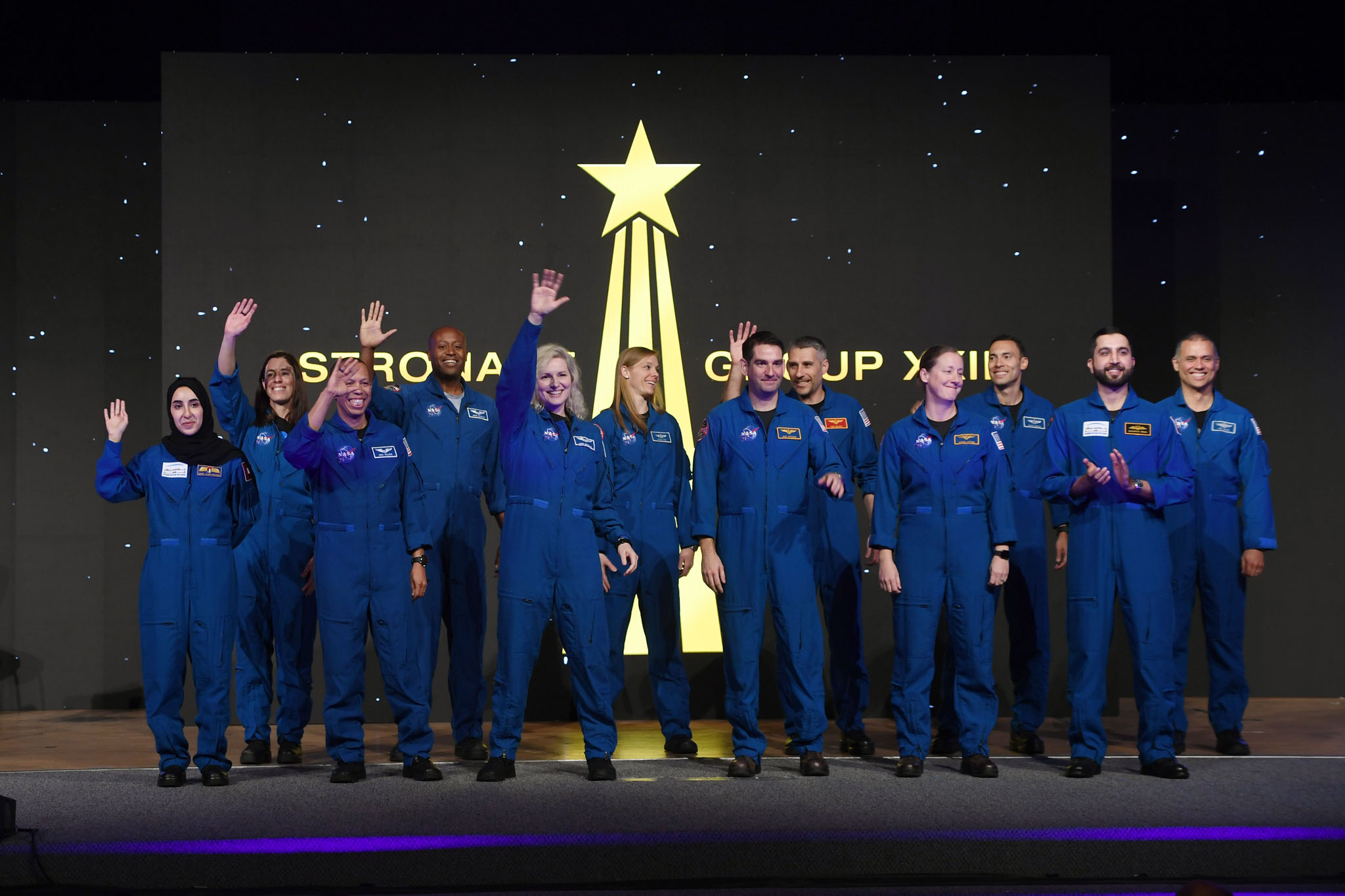
The latest astronaut candidate graduates, a group of men and women of different races and ethnicities, greet the audience (not pictured). The candidates all wear blue jumpsuits with patches on them. Behind them is a black and gold graphic of a star streaking upwards. The background has white dots on it that resemble distant stars.
NASA

The most recent astronaut candidates wave to the crowd in this image from their March 5, 2024, graduation ceremony at NASA’s Johnson Space Center in Houston. Nicknamed “The Flies,” this cohort is now eligible for spaceflight assignments to the International Space Station, future orbiting destinations, the Moon, and beyond.

Selected for training in 2021, the astronaut graduates were chosen from a pool of more than 12,000 applicants and successfully completed more than two years of required basic training, including spacewalking, robotics, space station systems, and more.

The graduating NASA astronauts are Nichole Ayers or Colorado Springs, Colorado; Marcos Berríos of Guaynabo, Puerto Rico; Chris Birch of Gilbert, Arizona; Deniz Bunham of Wasilla, Alaska; Luke Delaney of Debary, Florida; Andre Douglas of Chesapeake, Virginia; Jack Hathaway of South Windsor, Connecticut; Anil Menon of Minneapolis; Chris Williams of Potomac, Maryland, and Jessica Wittner of Clovis, California. UAE (United Arab Emirates) astronauts Mohammad AlMulla and Nora AlMatrooshi trained alongside the NASA astronaut candidates for the past two years and took part in the graduation ceremony.

Applications to become a NASA astronaut are now open.

Image Credit: NASA

Powered by WPeMatico

Get The Details…
Monika Luabeya

Back on Earth: NASA’s Orion Capsule Put to the Test Before Crewed Mission

Back on Earth: NASA’s Orion Capsule Put to the Test Before Crewed Mission

2 min read

Preparations for Next Moonwalk Simulations Underway (and Underwater)

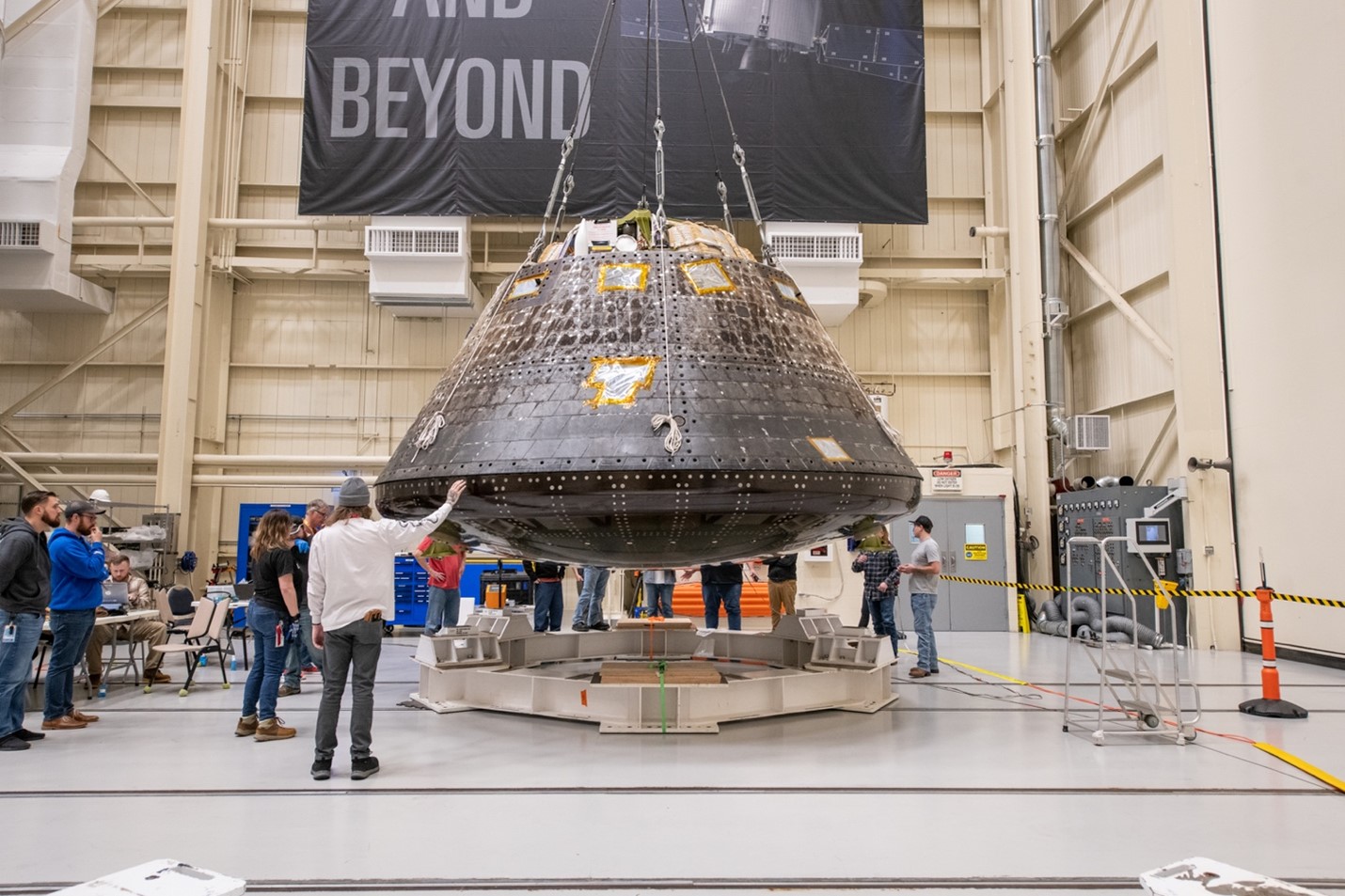
Inside the high-bay assembly area in the Space Environments Complex at NASA’s Neil Armstrong Test Facility, the charred Orion capsule from Artemis I is hoisted about four feet above the round white metal framing that it will be tested in. Several engineers and technicians wearing jeans, casual shirts, and work boots surround the capsule.
The Orion spacecraft from Artemis I – now known as the Orion Environmental Test Article – arrives at NASA’s Neil Armstrong Test Facility in Sandusky, Ohio, ahead of eight months of testing.
Credit: NASA/Jordan Salkin

The Orion spacecraft that traveled around the Moon and back during 2022’s Artemis I mission completed a different round trip when it recently returned to Ohio for testing.

Now known as the Orion Environmental Test Article, the spacecraft is undergoing ground testing at NASA’s Neil Armstrong Test Facility in Sandusky, Ohio. This testing is crucial to the safety and success of Artemis II – a 10-day flight test scheduled for 2025, during which four astronauts will demonstrate the spacecraft’s capabilities in the lunar vicinity. The flight will be the first crewed mission under NASA’s Artemis campaign.

Engineers and technicians at NASA’s Neil Armstrong Test Facility in Sandusky, Ohio, prepare the Orion Environmental Test Article for testing in advance of the Artemis II mission.
Credit: NASA/Steven Logan and Jim Zunt

Over the next eight months, engineers and technicians from NASA and Lockheed Martin will subject the test article to the extreme conditions Orion may experience during a launch abort scenario. The lengthy test campaign includes simulated lightning strikes and abort-level acoustics reaching levels of more than 160 decibels, louder than a jackhammer. It also includes deployments of the spacecraft’s docking and shielding covers and its crew module uprighting system, five airbags on top of the capsule that inflate upon splashdown. The test campaign serves to ensure Orion is ready to protect the crew if an emergency occurs during launch.

This Orion spacecraft completed months of space environmental testing in 2019 and 2020 at Armstrong Test Facility before its 2022 flight test, showing that the path to the Moon goes through Ohio. The test facility is the only place in the world capable of testing full-scale spacecraft in the extreme conditions experienced during launch and flight.

Powered by WPeMatico

Get The Details…
Kelly M. Matter

What Are Hubble and Webb Observing Right Now? NASA Tool Has the Answer

What Are Hubble and Webb Observing Right Now? NASA Tool Has the Answer

4 min read

What Are Hubble and Webb Observing Right Now? NASA Tool Has the Answer

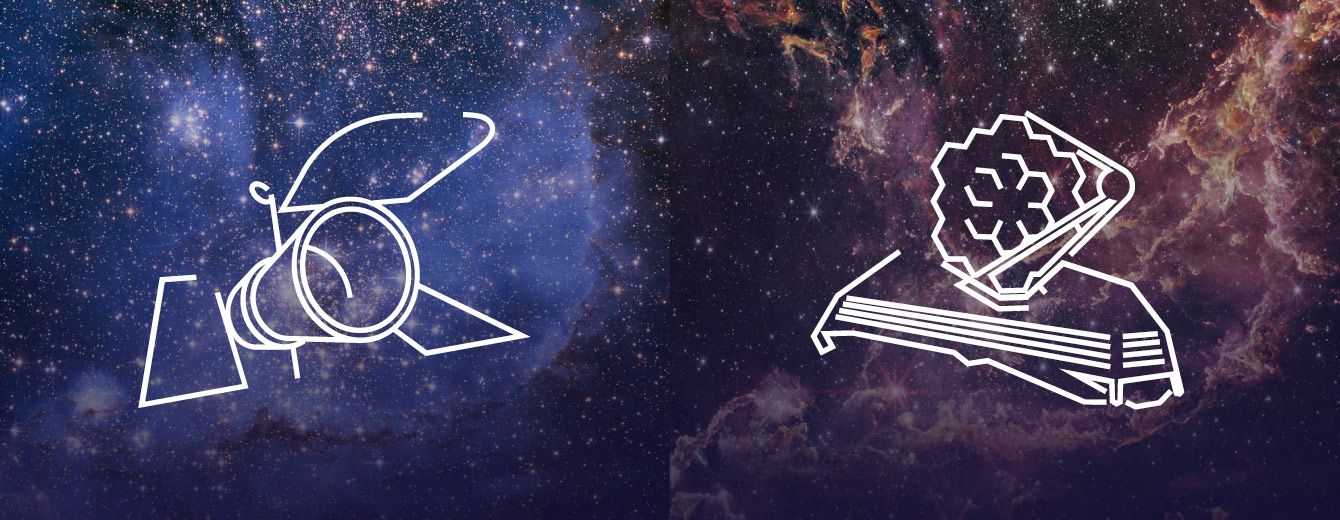
Two side-by-side images of the same region of space. Superimposed on each is a simple, white line drawing of a telescope. Left: Drawing of the Hubble Space Telescope on a Hubble image showing numerous stars and a hazy blue to brown cloud of gas and dust. Right: Drawing of the Webb Space Telescope on a Webb image showing numerous stars and a pinkish yellow to brown cloud of gas and dust. The Webb image shows a more filamentous and billowy structure. There is no clear boundary between the two images.

It’s not hard to find out what NASA’s Hubble and James Webb space telescopes have observed in the past. Barely a week goes by without news of a cosmic discovery made possible using images, spectra, and other data captured by NASA’s prolific astronomical observatories. 

But what are Hubble and Webb looking at right this minute? A shadowy pillar harboring nascent stars? A pair of colliding galaxies? The atmosphere of a distant planet? Galactic light, stretched and distorted on a 13-billion-year journey across space?

NASA’s Space Telescope Live, a web application originally developed in 2016 to deliver real-time updates on Hubble targets, now affords easy access to up-to-date information on current, past, and upcoming observations from both Hubble and Webb

Designed and developed for NASA by the Space Telescope Science Institute in Baltimore, this exploratory tool offers the public a straightforward and engaging way to learn more about how astronomical investigations are carried out.

With its redesigned user interface and expanded functionality, users can find out not only what planet, star, nebula, galaxy, or region of deep space each telescope is observing at the moment, but also where exactly these targets are in the sky; what scientific instruments are being used to capture the images, spectra, and other data; precisely when and how long the observations are scheduled to occur; the status of the observation; who is leading the research; and most importantly, what the scientists are trying to find out. 

Information for observations from approved science programs is available via the Mikulski Archive for Space Telescopes. NASA’s Space Telescope Live offers easy access to this information – not only the current day’s targets, but the entire catalog of past observations as well – with Webb records dating back to its first commissioning targets in January 2022, and Hubble records all the way back to the beginning of its operations in May 1990. 

The zoomable sky map centered on the target’s location was developed using the Aladin Sky Atlas, with imagery from ground-based telescopes to provide context for the observation. (Because the Hubble and Webb data must go through preliminary processing, and in many cases preliminary analysis, before being released to the public and astronomy community, real-time imagery is not available in this tool for either telescope.)

Details such as target name and coordinates, scheduled start and end times, and the research topic, are pulled directly from the observation scheduling and proposal planning databases. Links within the tool direct users to the original research proposal, which serves as a gateway to more technical information. 

While this latest version of NASA’s Space Telescope Live constitutes a significant transformation from the previous release, the team is already gathering feedback from users and planning additional enhancements to provide opportunities for deeper exploration and understanding.  

NASA’s Space Telescope Live is designed to work on desktop and mobile devices, and is accessible via NASA’s official Hubble and Webb websites. Additional details about the content, including public-friendly explanations of the information displayed in the tool, can be found in the User Guide.

The James Webb Space Telescope is the world’s premier space science observatory. Webb is solving mysteries in our solar system, looking beyond to distant worlds around other stars, and probing the mysterious structures and origins of our universe and our place in it. Webb is an international program led by NASA with its partners, ESA (European Space Agency) and the Canadian Space Agency.

The Hubble Space Telescope has been operating for over three decades and continues to make ground-breaking discoveries that shape our fundamental understanding of the universe. Hubble is a project of international cooperation between NASA and ESA. NASA’s Goddard Space Flight Center in Greenbelt, Maryland, manages the telescope. Goddard also conducts mission operations with Lockheed Martin Space in Denver, Colorado. The Space Telescope Science Institute (STScI) in Baltimore, Maryland, conducts Hubble and Webb science operations for NASA.

Learn More:

Media Contacts:

Claire Andreoli – claire.andreoli@nasa.gov
Laura Betz – laura.e.betz@nasa.gov
NASA’s Goddard Space Flight Center, Greenbelt, MD

Margaret W. Carruthers, Christine Pulliam
Space Telescope Science Institute, Baltimore, MD

Share

Details

Last Updated
Mar 06, 2024
Editor
Andrea Gianopoulos
Location
Goddard Space Flight Center

Powered by WPeMatico

Get The Details…

More Planets than Stars: Kepler’s Legacy

More Planets than Stars: Kepler’s Legacy

4 min read

Preparations for Next Moonwalk Simulations Underway (and Underwater)

The Kepler mission enabled the discovery of thousands of exoplanets, revealing a deep truth about our place in the cosmos: there are more planets than stars in the Milky Way galaxy. The road to this fundamental change in our understanding of the universe, however, required almost 20 years of persistence before the mission became a reality with its selection in 2001.

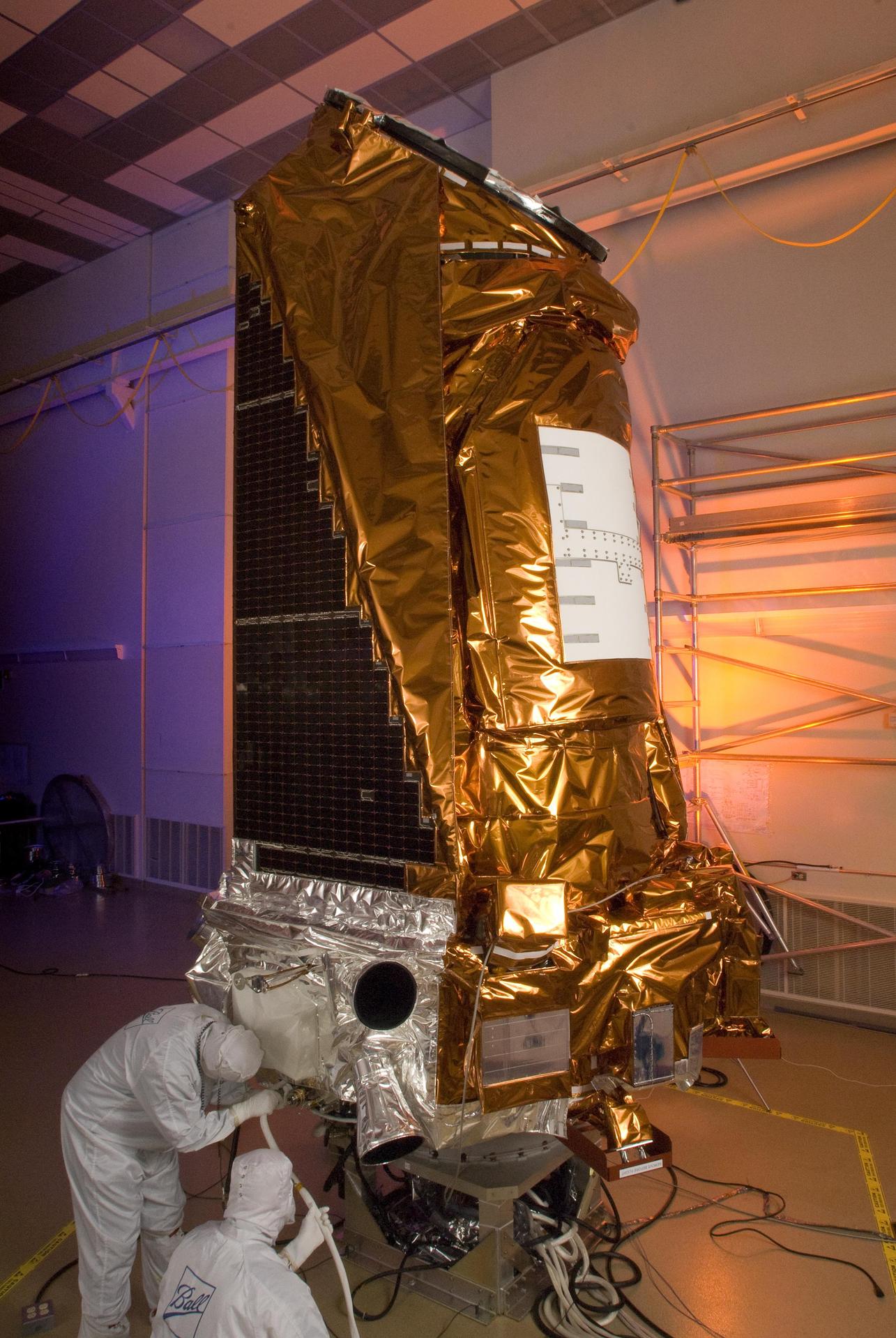
NASA Kepler spacecraft at Ball Aerospace & Technologies Corp. in Boulder, Colo.
The Kepler spacecraft at Ball Aerospace & Technologies Corp. in Boulder, Colorado. The Kepler mission surveyed a region of the Milky Way galaxy, discovering the first Earth-size exoplanets and determining that there are more planets than stars in our galaxy.
NASA/JPL-Caltech/Ball

Astronomers had assumed, but still had not confirmed, the existence of exoplanets when the mission concept that would become Kepler was first suggested in 1983. It wasn’t until the 1990s that the first confirmations of planets orbiting stars outside of our solar system were made, most of them gas giants orbiting close to their host star, not at all similar to what we know from our own solar system.

When Kepler launched in 2009, fewer than 400 exoplanets had been discovered. Today, there are more than 5,500 confirmed exoplanets and over half of them were discovered from Kepler data. Many of these confirmed exoplanets reside in the so-called “habitable zone” of their star, making them prime candidates for future observations to uncover more of the universe’s mysteries, including the potential for life.

The Kepler mission was designed to address the questions “How prevalent are other worlds?” and “How unique is our solar system?” Even if Kepler had found the opposite—that exoplanets were rare—Kepler still would have been an historic mission since the question it addressed was so scientifically profound.

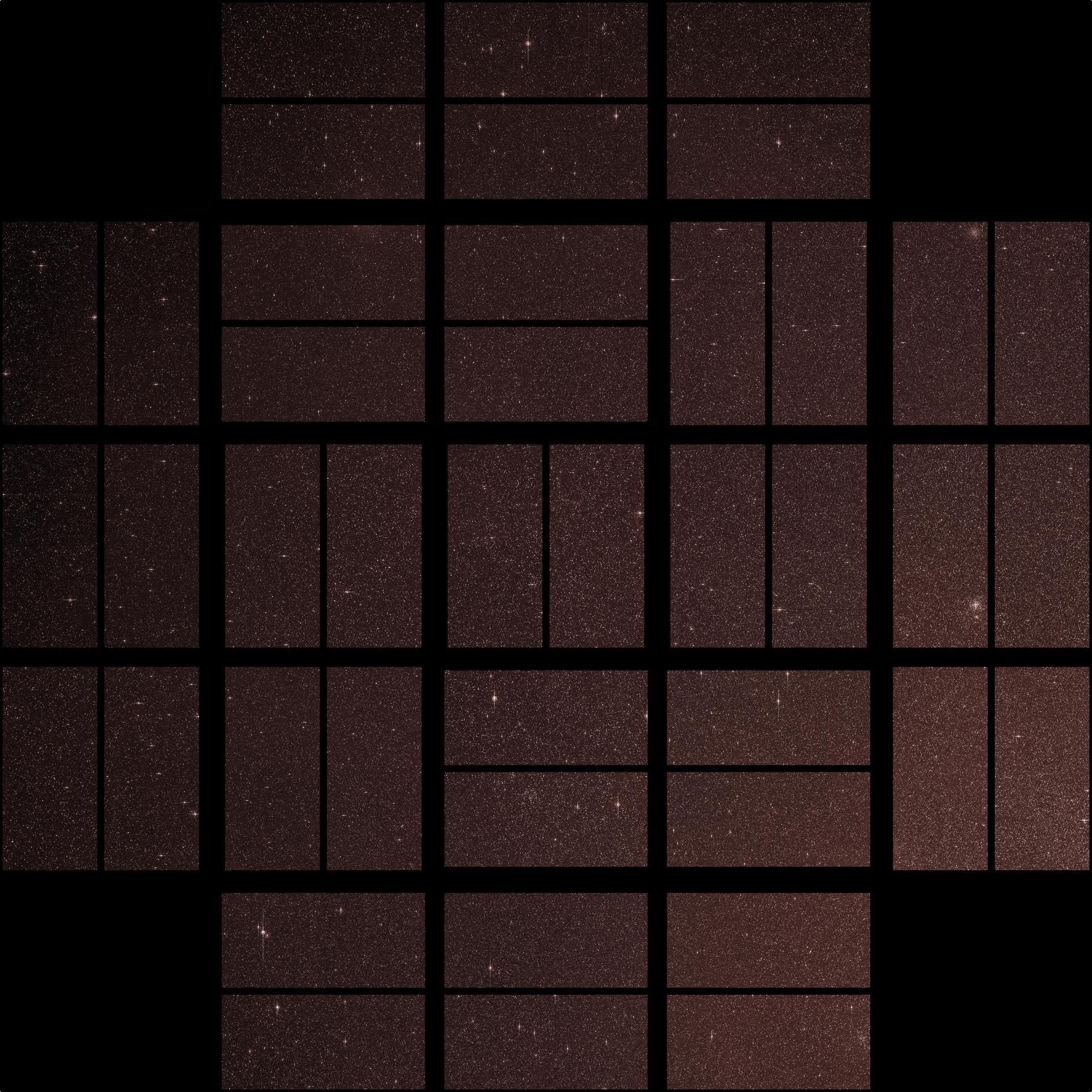
This image from NASA Kepler mission shows the telescope full field of view an expansive star-rich patch of sky in the constellations Cygnus and Lyra stretching across 100 square degrees, or the equivalent of two side-by-side dips of the Big Dipper.
This image shows the Kepler telescope’s “first light”—a full field of view of an expansive star-rich patch of sky in the constellations Cygnus and Lyra stretching across 100 square degrees. The 42 individual rectangles are due to the charge-coupled devices (CCDs) with a total of 95 megapixels.
NASA/J.Jenkins

Earlier versions of the mission proposal had been rejected four times beginning in 1992. Back then, the mission was known as the FRequency of Earth-Sized Inner Planets (FRESIP). After its second rejection in 1994, team members David Koch, Jill Tarter, and Carl Sagan, suggested the name change from FRESIP to Kepler.

One of the technical changes made to the 1994 proposal before the 1996 submission included changing the orbit from the Lagrange L2 point to a heliocentric orbit. This allowed Kepler to use reaction wheels for pointing the spacecraft, which reduced the thruster fuel consumption and saved on cost.

This wasn’t enough to convince NASA. To address concerns about the mission as proposed, two major demonstrations, one each after the 1996 and 1998 rejections, followed. The demonstrations reduced the risk that gave some reviewers pause and provided the Kepler team the opportunity to refine their operations.

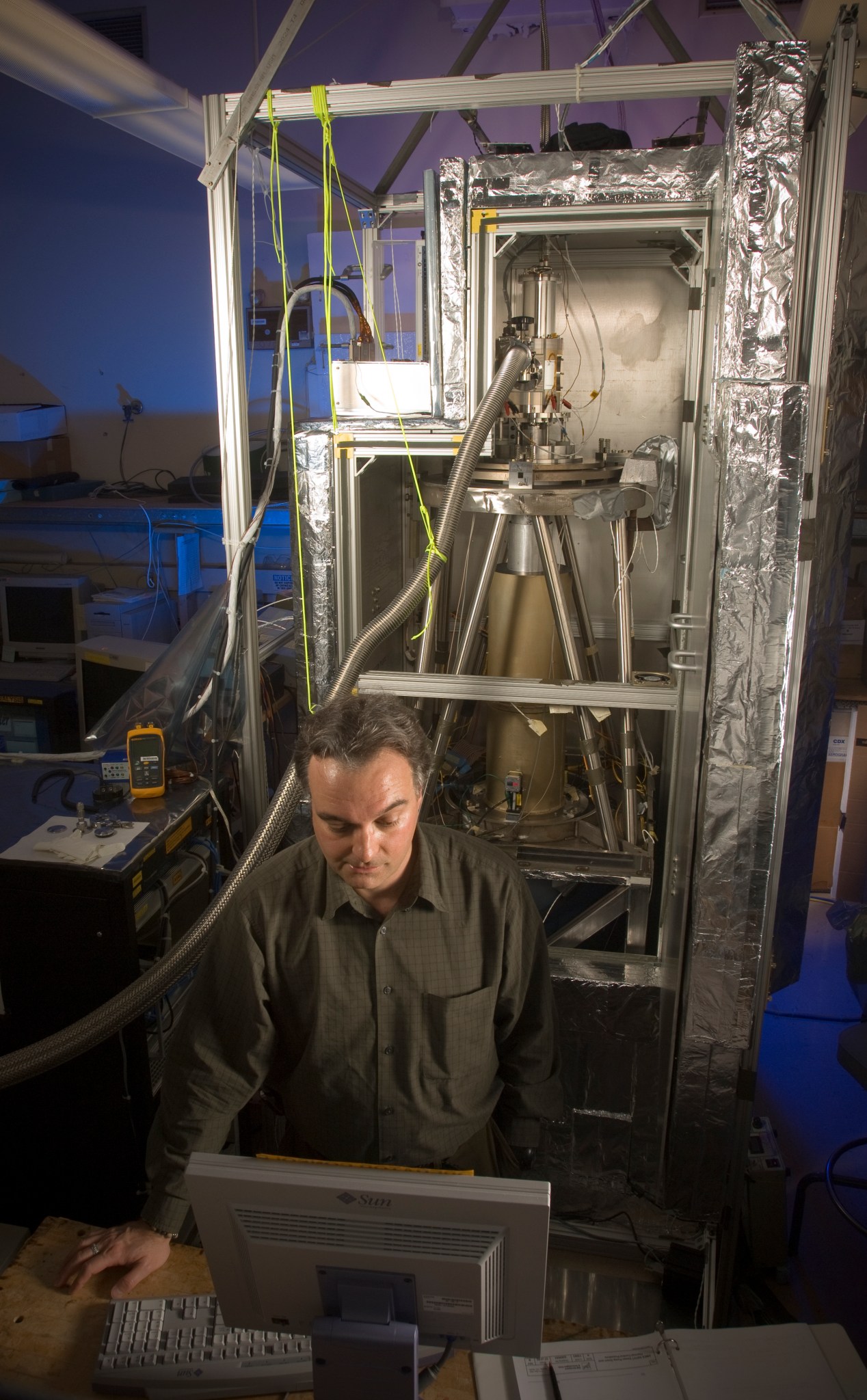
Jeff Van Cleve in the Precision Photometry Lab at Ames
Kepler team member Jeff Van Cleve in the Precision Photometry Lab at Ames Research Center in February 2007. The apparatus behind him is the Kepler Testbed Facility, a system mock-up that provided a key demonstration of Kepler’s capability.
NASA/Ames

The first demonstration showed that the continuous, automatic monitoring of thousands of stars was possible. For that demonstration, an instrument called the Vulcan photometer was installed at Lick Observatory in California, which radioed its data to NASA’s Ames Research Center in California’s Silicon Valley for automated analysis. The second demonstration (following the 1998 rejection) was the construction of the Kepler Testbed Facility.

The testbed proved that existing charge-coupled device (CCD) technology no different from a consumer digital camera could achieve the precision necessary to detect Earth-size planets in the midst of the various kinds of noise expected in the whole system, from vibrations to image motion to cosmic ray strikes. The Kepler team at Ames built an intricate simulated sky and Ball Aerospace, the industry partner throughout the many years of proposals and the mission itself, built the numerical simulator for the demonstration. The testbed from the laboratory at Ames is now on display at the Smithsonian National Air and Space Museum.

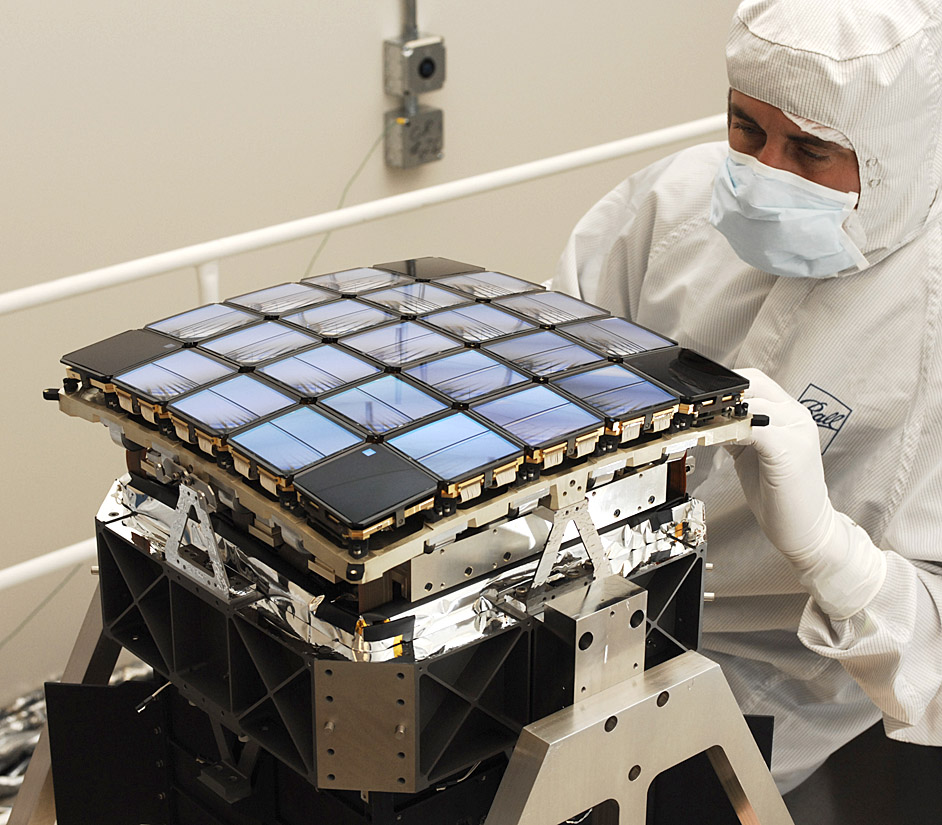
A technician works with Kepler's focal plane
The 42 CCDs of the Kepler focal plane are approximately one square foot in size. There are four fine guidance modules in the corners of the focal plane that are much smaller CCDs compared to the 42 CCDs used for science. Those smaller CCDs were used to track Kepler’s position and relay that information to its guidance system to keep the spacecraft accurately pointed.
NASA/Kepler mission

These demonstrations finally put the remaining concerns to rest. In 2001, Kepler was selected more than 17 years after its principal investigator, William Borucki, had written a paper that considered a space-based photometer for detecting Earth-size planets with his colleague Audrey Summers of the Theoretical and Planetary Studies Branch in the Space Science Division at Ames.

In the eight years between selection and launch on March 6, 2009, the mission responded to a number of challenges and changes that were largely beyond the team’s control, such as NASA instituting a policy that required either NASA’s Goddard Spaceflight Center in Greenbelt, Maryland or the Jet Propulsion Laboratory in Southern California to manage planetary missions, changes in accounting requirements, and increasing launch costs. Those pieces of Kepler’s story are told in detail in the latest book from the NASA History Office, NASA’s Discovery Program: The First Twenty Years of Competitive Planetary Exploration.

Share

Details

Last Updated

Mar 05, 2024

Powered by WPeMatico

Get The Details…
James Anderson