Artemis, Architecture, and Lunar Science: SMD and ESDMD Associate Administrators visits Tokyo

Artemis, Architecture, and Lunar Science: SMD and ESDMD Associate Administrators visits Tokyo

3 min read

Artemis, Architecture, and Lunar Science: SMD and ESDMD Associate Administrators visits Tokyo

June 18, 2024

At NASA we always say that exploration enables science, and science enables exploration. During a recent, quick trip to Tokyo, Japan with our Associate Administrator for the Exploration Systems Development Mission Directorate (ESDMD), Cathy Koerner, I had an opportunity to share this message with our partners at the Japanese Aerospace Exploration Agency (JAXA).

We explore for several reasons but primarily to benefit humanity. How exactly does exploration benefit humanity? By accepting audacious challenges like retuning to the Moon and venturing on to Mars, we inspire and motivate current and future generations of scientists, engineers, problem solvers, and communicators to contribute to our mission and other national priorities. By conducting scientific investigations in deep space, on the Moon, and on Mars, we enhance our understanding of the universe and our place in it. And finally, what we achieve when we explore, how it’s accomplished, and who participates benefits international partnerships and global cooperation that are essential for enhancing the quality of life for all.

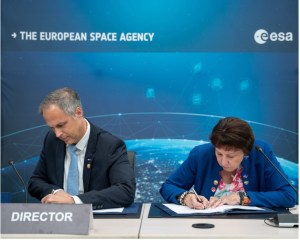
NASA Associate Administrator for the Science Mission Directorate, Dr. Nicky Fox, and Associate Administrator for the Exploration systems Development Mission Directorate, Cathy Koerner, meet with the Japanese Aerospace Exploration Agency (JAXA) in Tokyo, Japan on June 11, 2024.
Credits: NASA

In addition to bi-lateral meetings with our JAXA partners, Cathy and I co-presented at the International Space Exploration Symposium where I shared how every NASA Science division has a stake in Artemis. Cathy provided updates on the Orion spacecraft, SLS rocket, Gateway, human landing systems, and advanced spacesuits, and I talked about all of the incredible science we will conduct along the way. The Artemis campaign is a series of increasingly complex missions that provide ever-growing capabilities for scientific exploration of the Moon. From geology to solar, biological, and fundamental physics phenomena, exploration teaches about the earliest solar system environment: whether and how the bombardments of nascent worlds influenced the emergence of life, how the Earth and Moon formed and evolved, and how volatiles (like water) and other potential resources were distributed and transported throughout the solar system.

Together with our partners like JAXA, NASA is working towards establishing infrastructure for long-term exploration in lunar orbit and on the surface. For example, on Artemis III, JAXA will provide the Lunar Dielectric Analyzer instrument, which once installed near the lunar South Pole, will help collect valuable scientific data about the lunar environment, it’s interior, and how to sustain a long-duration human presence on the Moon. In April, the U.S. and Japan were proud to make a historic announcement for cooperation on the Moon. Japan will design, develop, and operate a pressurized rover for crewed and uncrewed exploration on the Moon. NASA will launch and deliver the rover, and provide two opportunities for Japanese astronauts to travel to the lunar surface. This historic agreement was highlighted by President Biden and Prime Minister Kishida and is an example of the strong relationship between the United States and Japan. The enclosed and pressurized rover will be able to accommodate two astronauts on the lunar surface for 30 days, and will have a lifespan of about 10 years, enabling it to be used for multiple missions. It will enable longer-duration expeditions, so that astronauts can conduct more moonwalks and perform more science in geographically diverse areas near the lunar South Pole.

Artemis is different than anything humanity has ever done before. The Artemis campaign will bring the world along for this historic journey, forever changing humanity’s perspective of our place in the universe. This is the start of a lunar ecosystem, where we’ll do more science than we can dream of, together.

Powered by WPeMatico

Get The Details…

NASA Awards Logistic Services, Management Contract

NASA Awards Logistic Services, Management Contract

Credits: NASA

NASA has awarded the Goddard Logistics Services Contract to TRAX International Corporation of Las Vegas to provide logistics services and management for NASA missions.

The cost-plus-fixed-fee contract includes a base period and up to five options with a potential contract value of approximately $265 million if all options are exercised. The basic period of performance is from Thursday, Aug. 1, 2024, to July 21, 2025. The five option periods, if exercised, would extend the contract through Jan. 31, 2030.

Under this contract, TRAX will provide disposal operations, export control, equipment management, mail, supply, materials, and transportation for NASA. The work will be performed at the agency’s Goddard Space Flight Center in Greenbelt, Maryland, Wallops Flight Facility in Virginia, and NASA Headquarters in Washington.

For information about NASA and agency programs, visit:

https://www.nasa.gov

-end-

Abbey Donaldson
Headquarters, Washington
202-358-1600
Abbey.a.donaldson@nasa.gov

Powered by WPeMatico

Get The Details…
Tiernan P. Doyle

NASA Awards Logistic Services, Management Contract

NASA Awards Logistic Services, Management Contract

Credits: NASA

NASA has awarded the Goddard Logistics Services Contract to TRAX International Corporation of Las Vegas to provide logistics services and management for NASA missions.

The cost-plus-fixed-fee contract includes a base period and up to five options with a potential contract value of approximately $265 million if all options are exercised. The basic period of performance is from Thursday, Aug. 1, 2024, to July 21, 2025. The five option periods, if exercised, would extend the contract through Jan. 31, 2030.

Under this contract, TRAX will provide disposal operations, export control, equipment management, mail, supply, materials, and transportation for NASA. The work will be performed at the agency’s Goddard Space Flight Center in Greenbelt, Maryland, Wallops Flight Facility in Virginia, and NASA Headquarters in Washington.

For information about NASA and agency programs, visit:

https://www.nasa.gov

-end-

Abbey Donaldson
Headquarters, Washington
202-358-1600
Abbey.a.donaldson@nasa.gov

Powered by WPeMatico

Get The Details…
Tiernan P. Doyle

NASA Selects Lockheed Martin to Build Next-Gen Spacecraft for NOAA

NASA Selects Lockheed Martin to Build Next-Gen Spacecraft for NOAA

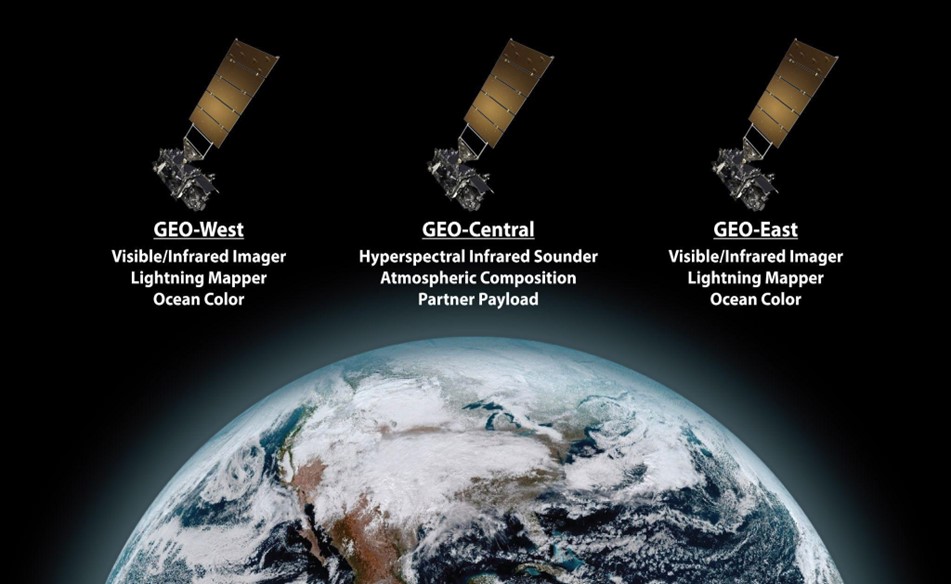
Conceptualization of the GeoXO constellation.
Credits: NOAA

NASA, on behalf of the National Oceanic and Atmospheric Administration (NOAA), has selected Lockheed Martin Corp. of Littleton, Colorado, to build the spacecraft for NOAA’s Geostationary Extended Observations (GeoXO) satellite program.

This cost-plus-award-fee contract is valued at approximately $2.27 billion. It includes the development of three spacecraft as well as four options for additional spacecraft. The anticipated period of performance for this contract includes support for 10 years of on-orbit operations and five years of on-orbit storage, for a total of 15 years for each spacecraft. The work will take place at Lockheed Martin’s facility in Littleton and NASA’s Kennedy Space Center in Florida.

The GeoXO constellation will include three operational satellites — east, west and central. Each geostationary, three-axis stabilized spacecraft is designed to host three instruments. The centrally-located spacecraft will carry an infrared sounder and atmospheric composition instrument and can also accommodate a partner payload. Spacecraft in the east and west positions will carry an imager, lightning mapper, and ocean color instrument. They will also support an auxiliary communication payload for the NOAA Data Collection System relay, dissemination, and commanding.

The contract scope includes the tasks necessary to design, analyze, develop, fabricate, integrate, test, evaluate, and support launch of the GeoXO satellites; provide engineering development units; supply and maintain the ground support equipment and simulators; and support mission operations at the NOAA Satellite Operations Facility in Suitland, Maryland.

NASA and NOAA oversee the development, launch, testing, and operation of all the satellites in the GeoXO program. NOAA funds and manages the program, operations, and data products. On behalf of NOAA, NASA and commercial partners develop and build the instruments and spacecraft and launch the satellites.

As part of NOAA’s constellation of geostationary environmental satellites to protect life and property across the Western Hemisphere, the GeoXO program is the follow-on to the Geostationary Operational Environmental Satellites – R (GOES-R) Series Program.

The GeoXO satellite system will advance Earth observations from geostationary orbit. The mission will supply vital information to address major environmental challenges of the future in support of weather, ocean, and climate operations in the United States. The advanced capabilities from GeoXO will help assess our changing planet and the evolving needs of the nation’s data users. Together, NASA and NOAA are working to ensure GeoXO’s critical observations are in place by the early 2030s when the GOES-R Series nears the end of its operational lifetime.

For more information on the GeoXO program, visit:

https://www.nesdis.noaa.gov/geoxo

-end-

Liz Vlock
Headquarters, Washington
202-358-1600
elizabeth.a.vlock@nasa.gov

Jeremy Eggers
Goddard Space Flight Center, Greenbelt, Md.
757-824-2958
jeremy.l.eggers@nasa.gov

John Leslie
NOAA’s National Environmental Satellite, Data, and Information Service
202-527-3504
nesdis.pa@noaa.gov

Powered by WPeMatico

Get The Details…
Tiernan P. Doyle

NASA Selects Lockheed Martin to Build Next-Gen Spacecraft for NOAA

NASA Selects Lockheed Martin to Build Next-Gen Spacecraft for NOAA

Conceptualization of the GeoXO constellation.
Credits: NOAA

NASA, on behalf of the National Oceanic and Atmospheric Administration (NOAA), has selected Lockheed Martin Corp. of Littleton, Colorado, to build the spacecraft for NOAA’s Geostationary Extended Observations (GeoXO) satellite program.

This cost-plus-award-fee contract is valued at approximately $2.27 billion. It includes the development of three spacecraft as well as four options for additional spacecraft. The anticipated period of performance for this contract includes support for 10 years of on-orbit operations and five years of on-orbit storage, for a total of 15 years for each spacecraft. The work will take place at Lockheed Martin’s facility in Littleton and NASA’s Kennedy Space Center in Florida.

The GeoXO constellation will include three operational satellites — east, west and central. Each geostationary, three-axis stabilized spacecraft is designed to host three instruments. The centrally-located spacecraft will carry an infrared sounder and atmospheric composition instrument and can also accommodate a partner payload. Spacecraft in the east and west positions will carry an imager, lightning mapper, and ocean color instrument. They will also support an auxiliary communication payload for the NOAA Data Collection System relay, dissemination, and commanding.

The contract scope includes the tasks necessary to design, analyze, develop, fabricate, integrate, test, evaluate, and support launch of the GeoXO satellites; provide engineering development units; supply and maintain the ground support equipment and simulators; and support mission operations at the NOAA Satellite Operations Facility in Suitland, Maryland.

NASA and NOAA oversee the development, launch, testing, and operation of all the satellites in the GeoXO program. NOAA funds and manages the program, operations, and data products. On behalf of NOAA, NASA and commercial partners develop and build the instruments and spacecraft and launch the satellites.

As part of NOAA’s constellation of geostationary environmental satellites to protect life and property across the Western Hemisphere, the GeoXO program is the follow-on to the Geostationary Operational Environmental Satellites – R (GOES-R) Series Program.

The GeoXO satellite system will advance Earth observations from geostationary orbit. The mission will supply vital information to address major environmental challenges of the future in support of weather, ocean, and climate operations in the United States. The advanced capabilities from GeoXO will help assess our changing planet and the evolving needs of the nation’s data users. Together, NASA and NOAA are working to ensure GeoXO’s critical observations are in place by the early 2030s when the GOES-R Series nears the end of its operational lifetime.

For more information on the GeoXO program, visit:

https://www.nesdis.noaa.gov/geoxo

-end-

Liz Vlock
Headquarters, Washington
202-358-1600
elizabeth.a.vlock@nasa.gov

Jeremy Eggers
Goddard Space Flight Center, Greenbelt, Md.
757-824-2958
jeremy.l.eggers@nasa.gov

John Leslie
NOAA’s National Environmental Satellite, Data, and Information Service
202-527-3504
nesdis.pa@noaa.gov

Powered by WPeMatico

Get The Details…
Tiernan P. Doyle