
NASA Sets Launch Coverage for NOAA Weather Satellite

NASA Sets Launch Coverage for NOAA Weather Satellite

Crews transport NOAA’s (National Oceanic and Atmospheric Administration) Geostationary Operational Environmental Satellite (GOES-U) from the Astrotech Space Operations facility to the SpaceX hangar at Launch Complex 39A at NASA’s Kennedy Space Center in Florida beginning on Friday, June 14, 2024, with the operation finishing early Saturday, June 15, 2024. The fourth and final weather-observing and environmental monitoring satellite in NOAA’s GOES-R Series will assist meteorologists in providing advanced weather forecasting and warning capabilities. The two-hour window for liftoff opens 5:16 p.m. EDT Tuesday, June 25, aboard a SpaceX Falcon Heavy rocket from Launch Complex 39A at NASA’s Kennedy Space Center in Florida. (NASA/Ben Smegelsky)

NASA will provide live coverage of prelaunch and launch activities for the National Oceanic and Atmospheric Administration’s (NOAA) GOES-U (Geostationary Operational Environmental Satellite U) mission. The two-hour launch window opens at 5:16 p.m. EDT Tuesday, June 25, for the satellite’s launch on a SpaceX Falcon Heavy rocket from Launch Complex 39A at NASA’s Kennedy Space Center in Florida. 

The GOES-U satellite, the final addition to GOES-R series, will help to prepare for two kinds of weather — Earth and space weather. The GOES satellites serve a critical role in providing continuous coverage of the Western Hemisphere, including monitoring tropical systems in the eastern Pacific and Atlantic oceans. This continuous monitoring aids scientists and forecasters in issuing timely warnings and forecasts to help protect the one billion people who live and work in the Americas. Additionally, GOES-U carries a new compact coronagraph that will image the outer layer of the Sun’s atmosphere to detect and characterize coronal mass ejections. 

The deadline for media accreditation for in-person coverage of this launch has passed. NASA’s media credentialing policy is available online. For questions about media accreditation, please email: ksc-media-accreditat@mail.nasa.gov

NASA’s mission coverage is as follows (all times Eastern and subject to change based on real-time operations): 

Monday, June 24 

9:30 a.m. – NASA EDGE GOES-U prelaunch show on NASA+, the NASA app, and the agency’s website

11 a.m. – GOES-U science briefing with the following participants: 

  • Charles Webb, deputy director, Joint Agency Satellite Division, NASA 
  • Ken Graham, director, NOAA’s National Weather Service 
  • Dan Lindsey, chief scientist, GOES-R Program, NOAA 
  • Elsayed Talaat, director, NOAA’s Office of Space Weather Observations 
  • Chris Wood, NOAA Hurricane Hunter pilot 

Coverage of the science news conference will stream live on NASA+, the NASA app, YouTube, and the agency’s website

Media may ask questions in person and via phone. Limited auditorium space will be available for in-person participation. For the dial-in number and passcode, media should contact the Kennedy newsroom no later than one hour before the start of the event at ksc-newsroom@mail.nasa.gov

3:15 p.m. – NASA Social panel at Kennedy with the following participants: 

  • Jade Zsiros, telemetry engineer, NASA’s Launch Services Program 
  • Ellen Ramirez, deputy division chief, Mission Operations Division, National Environmental Satellite, Data, and Information Service Office of Satellite and Product Operations, NOAA 
  • Dakota Smith, satellite analyst and communicator, NOAA’s Cooperative Institute for Research in the Atmosphere 
  • Allana Nepomuceno, senior manager, GOES-U Assembly, Test, and Launch Operations, Lockheed Martin 
  • Chris Reith, program manager, Advanced Baseline Imager, L3Harris Technologies 

The panel will stream live on NASA Kennedy’s YouTube, X and Facebook accounts. Members of the public may ask questions online by posting to the YouTube, X, and Facebook live streams or using #AskNASA. 

5 p.m. – Prelaunch news conference at Kennedy (following completion of the Launch Readiness Review), with the following participants: 

  • Denton Gibson, launch director, Launch Services Program, NASA 
  • Steve Volz, assistant administrator, NOAA’s Satellite and Information Service 
  • Pam Sullivan, director, GOES-R Program, NOAA 
  • John Gagosian, director, Joint Agency Satellite Division 
  • Julianna Scheiman, director, NASA Science Missions, SpaceX 
  • Brian Cizek, launch weather officer, 45th Weather Squadron, U.S. Space Force 

Coverage of the prelaunch news conference will stream live on NASA+, the NASA app, YouTube, and the agency’s website

Media may ask questions in person and via phone. Limited auditorium space will be available for in-person participation. For the dial-in number and passcode, media should contact the Kennedy newsroom no later than one hour before the start of the event at ksc-newsroom@mail.nasa.gov

Tuesday, June 25 

1 p.m. – Media one-on-one interviews with the following: 

  • Michael Morgan, Assistant Secretary of Commerce for Environmental Observation and Prediction, NOAA 
  • Michael Brennan, director, NOAA’s National Hurricane Center 
  • James Spann, senior scientist, Office of Space Weather Observations, NOAA 
  • John Gagosian, director, Joint Agency Satellite Division 
  • Krizia Negron, language program lead, National Weather Service Office of Science and Technology Integration, NOAA (bilingual, available for Spanish interviews) 
  • Dan Lindsey, chief scientist, GOES-R Program, NOAA 
  • Jagdeep Shergill, program director, GEO Weather, Lockheed Martin 
  • Chris Reith, program manager, Advanced Baseline Imager, L3Harris Technologies 

4:15 p.m. – NASA launch coverage begins on NASA+, the agency’s website, and other digital channels.  

5:16 p.m. – Two-hour launch window opens 

Audio Only Coverage 

Audio only of the news conferences and launch coverage will be carried on the NASA “V” circuits, which may be accessed by dialing 321-867-1220, -1240 or -7135. On launch day, “mission audio,” countdown activities without NASA Television media launch commentary, will be carried on 321-867-7135. 

Live Video Coverage Prior to Launch 

NASA will provide a live video feed of Launch Complex 39A approximately 24 hours prior to the planned liftoff of the mission on NASA Kennedy’s YouTube: https://youtube.com/kscnewsroom. The feed will be uninterrupted until the prelaunch broadcast begins on NASA Television media channel. 

NASA Website Launch Coverage 

Launch day coverage of the mission will be available on the agency’s website. Coverage will include live streaming and blog updates beginning no earlier than 3 p.m., June 25, as the countdown milestones occur. On-demand streaming video and photos of the launch will be available shortly after liftoff. 

For questions about countdown coverage, contact the Kennedy newsroom at 321-867-2468. Follow countdown coverage on the GOES blog

Para obtener información sobre cobertura en español en el Centro Espacial Kennedy o si desea solicitar entrevistas en español, comuníquese con Antonia Jaramillo: antonia.jaramillobotero@nasa.gov o Messod Bendayan: messod.c.bendayan@nasa.gov 

Attend the Launch Virtually 

Members of the public can register to attend this launch virtually. NASA’s virtual guest program for this mission also includes curated launch resources, notifications about related opportunities or changes, and a stamp for the NASA virtual guest passport following launch. 

Watch, Engage on Social Media 

Let people know you’re following the mission on X, Facebook, and Instagram by using the hashtags #ReadyToGOES and #NASASocial. You can also stay connected by following and tagging these accounts: 

X: @NASA, @NASA_LSP, @NASAKennedy, @NOAASatellites, @NASAGoddard 

Facebook: NASA, NASA LSP, NASA Kennedy, NOAA Satellites, NASA Goddard 

Instagram: NASA, NASA Kennedy, NOAA Satellites 

For more information about the mission, visit: 

https://www.nasa.gov/goes-u

-end- 

Liz Vlock 
Headquarters, Washington 
202-358-1600 
elizabeth.a.vlock@nasa.gov 

Peter Jacobs 
Goddard Space Flight Center, Greenbelt, Maryland 
301-286-0535 
peter.jacobs@nasa.gov 

Leejay Lockhart 
Kennedy Space Center, Florida 
321-747-8310 
leejay.lockhart@nasa.gov 

Powered by WPeMatico

Get The Details…
Abbey A. Donaldson

NASA Sets Launch Coverage for NOAA Weather Satellite

NASA Sets Launch Coverage for NOAA Weather Satellite

Crews transport NOAA’s (National Oceanic and Atmospheric Administration) Geostationary Operational Environmental Satellite (GOES-U) from the Astrotech Space Operations facility to the SpaceX hangar at Launch Complex 39A at NASA’s Kennedy Space Center in Florida beginning on Friday, June 14, 2024, with the operation finishing early Saturday, June 15, 2024. The fourth and final weather-observing and environmental monitoring satellite in NOAA’s GOES-R Series will assist meteorologists in providing advanced weather forecasting and warning capabilities. The two-hour window for liftoff opens 5:16 p.m. EDT Tuesday, June 25, aboard a SpaceX Falcon Heavy rocket from Launch Complex 39A at NASA’s Kennedy Space Center in Florida. (NASA/Ben Smegelsky)

NASA will provide live coverage of prelaunch and launch activities for the National Oceanic and Atmospheric Administration’s (NOAA) GOES-U (Geostationary Operational Environmental Satellite U) mission. The two-hour launch window opens at 5:16 p.m. EDT Tuesday, June 25, for the satellite’s launch on a SpaceX Falcon Heavy rocket from Launch Complex 39A at NASA’s Kennedy Space Center in Florida. 

The GOES-U satellite, the final addition to GOES-R series, will help to prepare for two kinds of weather — Earth and space weather. The GOES satellites serve a critical role in providing continuous coverage of the Western Hemisphere, including monitoring tropical systems in the eastern Pacific and Atlantic oceans. This continuous monitoring aids scientists and forecasters in issuing timely warnings and forecasts to help protect the one billion people who live and work in the Americas. Additionally, GOES-U carries a new compact coronagraph that will image the outer layer of the Sun’s atmosphere to detect and characterize coronal mass ejections. 

The deadline for media accreditation for in-person coverage of this launch has passed. NASA’s media credentialing policy is available online. For questions about media accreditation, please email: ksc-media-accreditat@mail.nasa.gov

NASA’s mission coverage is as follows (all times Eastern and subject to change based on real-time operations): 

Monday, June 24 

9:30 a.m. – NASA EDGE GOES-U prelaunch show on NASA+, the NASA app, and the agency’s website

11 a.m. – GOES-U science briefing with the following participants: 

  • Charles Webb, deputy director, Joint Agency Satellite Division, NASA 
  • Ken Graham, director, NOAA’s National Weather Service 
  • Dan Lindsey, chief scientist, GOES-R Program, NOAA 
  • Elsayed Talaat, director, NOAA’s Office of Space Weather Observations 
  • Chris Wood, NOAA Hurricane Hunter pilot 

Coverage of the science news conference will stream live on NASA+, the NASA app, YouTube, and the agency’s website

Media may ask questions in person and via phone. Limited auditorium space will be available for in-person participation. For the dial-in number and passcode, media should contact the Kennedy newsroom no later than one hour before the start of the event at ksc-newsroom@mail.nasa.gov

3:15 p.m. – NASA Social panel at Kennedy with the following participants: 

  • Jade Zsiros, telemetry engineer, NASA’s Launch Services Program 
  • Ellen Ramirez, deputy division chief, Mission Operations Division, National Environmental Satellite, Data, and Information Service Office of Satellite and Product Operations, NOAA 
  • Dakota Smith, satellite analyst and communicator, NOAA’s Cooperative Institute for Research in the Atmosphere 
  • Allana Nepomuceno, senior manager, GOES-U Assembly, Test, and Launch Operations, Lockheed Martin 
  • Chris Reith, program manager, Advanced Baseline Imager, L3Harris Technologies 

The panel will stream live on NASA Kennedy’s YouTube, X and Facebook accounts. Members of the public may ask questions online by posting to the YouTube, X, and Facebook live streams or using #AskNASA. 

5 p.m. – Prelaunch news conference at Kennedy (following completion of the Launch Readiness Review), with the following participants: 

  • Denton Gibson, launch director, Launch Services Program, NASA 
  • Steve Volz, assistant administrator, NOAA’s Satellite and Information Service 
  • Pam Sullivan, director, GOES-R Program, NOAA 
  • John Gagosian, director, Joint Agency Satellite Division 
  • Julianna Scheiman, director, NASA Science Missions, SpaceX 
  • Brian Cizek, launch weather officer, 45th Weather Squadron, U.S. Space Force 

Coverage of the prelaunch news conference will stream live on NASA+, the NASA app, YouTube, and the agency’s website

Media may ask questions in person and via phone. Limited auditorium space will be available for in-person participation. For the dial-in number and passcode, media should contact the Kennedy newsroom no later than one hour before the start of the event at ksc-newsroom@mail.nasa.gov

Tuesday, June 25 

1 p.m. – Media one-on-one interviews with the following: 

  • Michael Morgan, Assistant Secretary of Commerce for Environmental Observation and Prediction, NOAA 
  • Michael Brennan, director, NOAA’s National Hurricane Center 
  • James Spann, senior scientist, Office of Space Weather Observations, NOAA 
  • John Gagosian, director, Joint Agency Satellite Division 
  • Krizia Negron, language program lead, National Weather Service Office of Science and Technology Integration, NOAA (bilingual, available for Spanish interviews) 
  • Dan Lindsey, chief scientist, GOES-R Program, NOAA 
  • Jagdeep Shergill, program director, GEO Weather, Lockheed Martin 
  • Chris Reith, program manager, Advanced Baseline Imager, L3Harris Technologies 

4:15 p.m. – NASA launch coverage begins on NASA+, the agency’s website, and other digital channels.  

5:16 p.m. – Two-hour launch window opens 

Audio Only Coverage 

Audio only of the news conferences and launch coverage will be carried on the NASA “V” circuits, which may be accessed by dialing 321-867-1220, -1240 or -7135. On launch day, “mission audio,” countdown activities without NASA Television media launch commentary, will be carried on 321-867-7135. 

Live Video Coverage Prior to Launch 

NASA will provide a live video feed of Launch Complex 39A approximately 24 hours prior to the planned liftoff of the mission on NASA Kennedy’s YouTube: https://youtube.com/kscnewsroom. The feed will be uninterrupted until the prelaunch broadcast begins on NASA Television media channel. 

NASA Website Launch Coverage 

Launch day coverage of the mission will be available on the agency’s website. Coverage will include live streaming and blog updates beginning no earlier than 3 p.m., June 25, as the countdown milestones occur. On-demand streaming video and photos of the launch will be available shortly after liftoff. 

For questions about countdown coverage, contact the Kennedy newsroom at 321-867-2468. Follow countdown coverage on the GOES blog

Para obtener información sobre cobertura en español en el Centro Espacial Kennedy o si desea solicitar entrevistas en español, comuníquese con Antonia Jaramillo: antonia.jaramillobotero@nasa.gov o Messod Bendayan: messod.c.bendayan@nasa.gov 

Attend the Launch Virtually 

Members of the public can register to attend this launch virtually. NASA’s virtual guest program for this mission also includes curated launch resources, notifications about related opportunities or changes, and a stamp for the NASA virtual guest passport following launch. 

Watch, Engage on Social Media 

Let people know you’re following the mission on X, Facebook, and Instagram by using the hashtags #ReadyToGOES and #NASASocial. You can also stay connected by following and tagging these accounts: 

X: @NASA, @NASA_LSP, @NASAKennedy, @NOAASatellites, @NASAGoddard 

Facebook: NASA, NASA LSP, NASA Kennedy, NOAA Satellites, NASA Goddard 

Instagram: NASA, NASA Kennedy, NOAA Satellites 

For more information about the mission, visit: 

https://www.nasa.gov/goes-u

-end- 

Liz Vlock 
Headquarters, Washington 
202-358-1600 
elizabeth.a.vlock@nasa.gov 

Peter Jacobs 
Goddard Space Flight Center, Greenbelt, Maryland 
301-286-0535 
peter.jacobs@nasa.gov 

Leejay Lockhart 
Kennedy Space Center, Florida 
321-747-8310 
leejay.lockhart@nasa.gov 

Powered by WPeMatico

Get The Details…
Abbey A. Donaldson
NASA’s OSIRIS-REx Etched into Collier Trophy, Aerospace History

NASA’s OSIRIS-REx Etched into Collier Trophy, Aerospace History

NASA’s OSIRIS-REx mission has been immortalized at the Smithsonian’s National Air and Space Museum in Washington as the latest awardee of the Robert J. Collier Trophy. Bestowed annually by the National Aeronautic Association, the trophy recognizes groundbreaking aerospace achievements.

a crowd of people stand around a tall wooden plinth and sculpture
Members of the OSIRIS-REx team at the Smithsonian Institute’s National Air and Space Museum in Washington, D.C., with the Collier trophy on June 13, 2024. From left to right: Nayi Castro, mission operations manager, NASA’s Goddard Space Flight Center, Greenbelt, Md.; Nicole Lunning, curator, NASA’s Johnson Space Center, Houston; Anjani Polit, mission implementation systems engineer, University of Arizona, Tucson; Coralie Adam, OSIRIS-REx optical navigation lead, KinetX Inc.; Michael Moreau, OSIRIS-REx deputy project manager, NASA Goddard; Dennis Reuter, OVIRS instrument scientist, NASA Goddard; Ronald Mink, OSIRIS-REx missions systems engineer, NASA Goddard; Joshua Wood, system design lead, Lockheed Martin Space; Peter Antreasian, OSIRIS-REx navigation team chief, KinetX Inc.; Sandy Freund, program manager, Lockheed Martin Space; Eric Sahr, optical navigation engineer, KinetX Inc.
NASA/Rani Gran

OSIRIS-REx, formally the Origins, Spectral Interpretation, Resource Identification, and Security – Regolith Explorer, was honored “for successfully executing the first American retrieval of an asteroid sample and its return to Earth,” according to the award citation. The award was announced in March, and the OSIRIS-REx team visited the museum on June 13, 2024, to see the mission’s name engraved in brass at the base of the statue.

It just blows me away to see the OSIRIS-REx team engraved on the Collier trophy, next to names like Orville Wright, the Apollo 8 crew, and the Voyager Mission Team,” said Michael Moreau, OSIRIS-REx deputy project manager at NASA’s Goddard Space Flight Center in Greenbelt, Maryland.  “I’m so proud of our amazing team that their excellence and sacrifice to make the OSIRIS-REx mission so successful have been recognized with this prestigious award.”

While NASA’s accomplishments have been honored with the Collier award many times, this is one of just a handful of instances that NASA Goddard has been a major partner on a winning team. NASA Goddard most recently claimed a share of the award in 2022 for the James Webb Space Telescope. Previous wins also include 1993 honors for the Hubble Space Telescope and the 1974 prize for a NASA–U.S. Geological Survey satellite that began the long-running Landsat program that studies and monitors changes to Earth’s land masses.

The OSIRIS-REx team includes NASA’s Goddard Space Flight Center in Greenbelt, Maryland; Lockheed Martin in Littleton, Colorado; the University of Arizona, Tucson; and KinetX in Tempe, Arizona. NASA’s Johnson Space Center is responsible for the curation of the Bennu sample material that OSIRIS-REx returned to Earth in September 2023.

The Collier Trophy resides in a glass case in the “America by Air” section on the museum’s first floor. The century-old trophy stands at over 7 feet tall and weighs 525 pounds. The bronze sculpture depicts a globe, with three figures emerging from it. The sculpture rests on two walnut bases, each adorned with an engrave brass plaque bearing the names of the recipients.

Baltimore sculptor Ernest Wise Keyser designed the Trophy in 1910 for Robert J. Collier, the publisher of Collier’s Weekly magazine and president of the Aero Club of America.

By Rani Gran
NASA’s Goddard Space Flight Center, Greenbelt, Md.

Share

Details

Last Updated

Jun 18, 2024

Editor
Rob Garner
Contact
Rani Gran

Powered by WPeMatico

Get The Details…
Rob Garner

NASA’s OSIRIS-REx Etched into Collier Trophy, Aerospace History

NASA’s OSIRIS-REx Etched into Collier Trophy, Aerospace History

NASA’s OSIRIS-REx mission has been immortalized at the Smithsonian’s National Air and Space Museum in Washington as the latest awardee of the Robert J. Collier Trophy. Bestowed annually by the National Aeronautic Association, the trophy recognizes groundbreaking aerospace achievements.

a crowd of people stand around a tall wooden plinth and sculpture
Members of the OSIRIS-REx team at the Smithsonian Institute’s National Air and Space Museum in Washington, D.C., with the Collier trophy on June 13, 2024. From left to right: Nayi Castro, mission operations manager, NASA’s Goddard Space Flight Center, Greenbelt, Md.; Nicole Lunning, curator, NASA’s Johnson Space Center, Houston; Anjani Polit, mission implementation systems engineer, University of Arizona, Tucson; Coralie Adam, OSIRIS-REx optical navigation lead, KinetX Inc.; Michael Moreau, OSIRIS-REx deputy project manager, NASA Goddard; Dennis Reuter, OVIRS instrument scientist, NASA Goddard; Ronald Mink, OSIRIS-REx missions systems engineer, NASA Goddard; Joshua Wood, system design lead, Lockheed Martin Space; Peter Antreasian, OSIRIS-REx navigation team chief, KinetX Inc.; Sandy Freund, program manager, Lockheed Martin Space; Eric Sahr, optical navigation engineer, KinetX Inc.
NASA/Rani Gran

OSIRIS-REx, formally the Origins, Spectral Interpretation, Resource Identification, and Security – Regolith Explorer, was honored “for successfully executing the first American retrieval of an asteroid sample and its return to Earth,” according to the award citation. The award was announced in March, and the OSIRIS-REx team visited the museum on June 13, 2024, to see the mission’s name engraved in brass at the base of the statue.

It just blows me away to see the OSIRIS-REx team engraved on the Collier trophy, next to names like Orville Wright, the Apollo 8 crew, and the Voyager Mission Team,” said Michael Moreau, OSIRIS-REx deputy project manager at NASA’s Goddard Space Flight Center in Greenbelt, Maryland.  “I’m so proud of our amazing team that their excellence and sacrifice to make the OSIRIS-REx mission so successful have been recognized with this prestigious award.”

While NASA’s accomplishments have been honored with the Collier award many times, this is one of just a handful of instances that NASA Goddard has been a major partner on a winning team. NASA Goddard most recently claimed a share of the award in 2022 for the James Webb Space Telescope. Previous wins also include 1993 honors for the Hubble Space Telescope and the 1974 prize for a NASA–U.S. Geological Survey satellite that began the long-running Landsat program that studies and monitors changes to Earth’s land masses.

The OSIRIS-REx team includes NASA’s Goddard Space Flight Center in Greenbelt, Maryland; Lockheed Martin in Littleton, Colorado; the University of Arizona, Tucson; and KinetX in Tempe, Arizona. NASA’s Johnson Space Center is responsible for the curation of the Bennu sample material that OSIRIS-REx returned to Earth in September 2023.

The Collier Trophy resides in a glass case in the “America by Air” section on the museum’s first floor. The century-old trophy stands at over 7 feet tall and weighs 525 pounds. The bronze sculpture depicts a globe, with three figures emerging from it. The sculpture rests on two walnut bases, each adorned with an engrave brass plaque bearing the names of the recipients.

Baltimore sculptor Ernest Wise Keyser designed the Trophy in 1910 for Robert J. Collier, the publisher of Collier’s Weekly magazine and president of the Aero Club of America.

By Rani Gran
NASA’s Goddard Space Flight Center, Greenbelt, Md.

Share

Details

Last Updated

Jun 18, 2024

Editor
Rob Garner
Contact
Rani Gran

Powered by WPeMatico

Get The Details…
Rob Garner

Celebrating Juneteenth

Celebrating Juneteenth

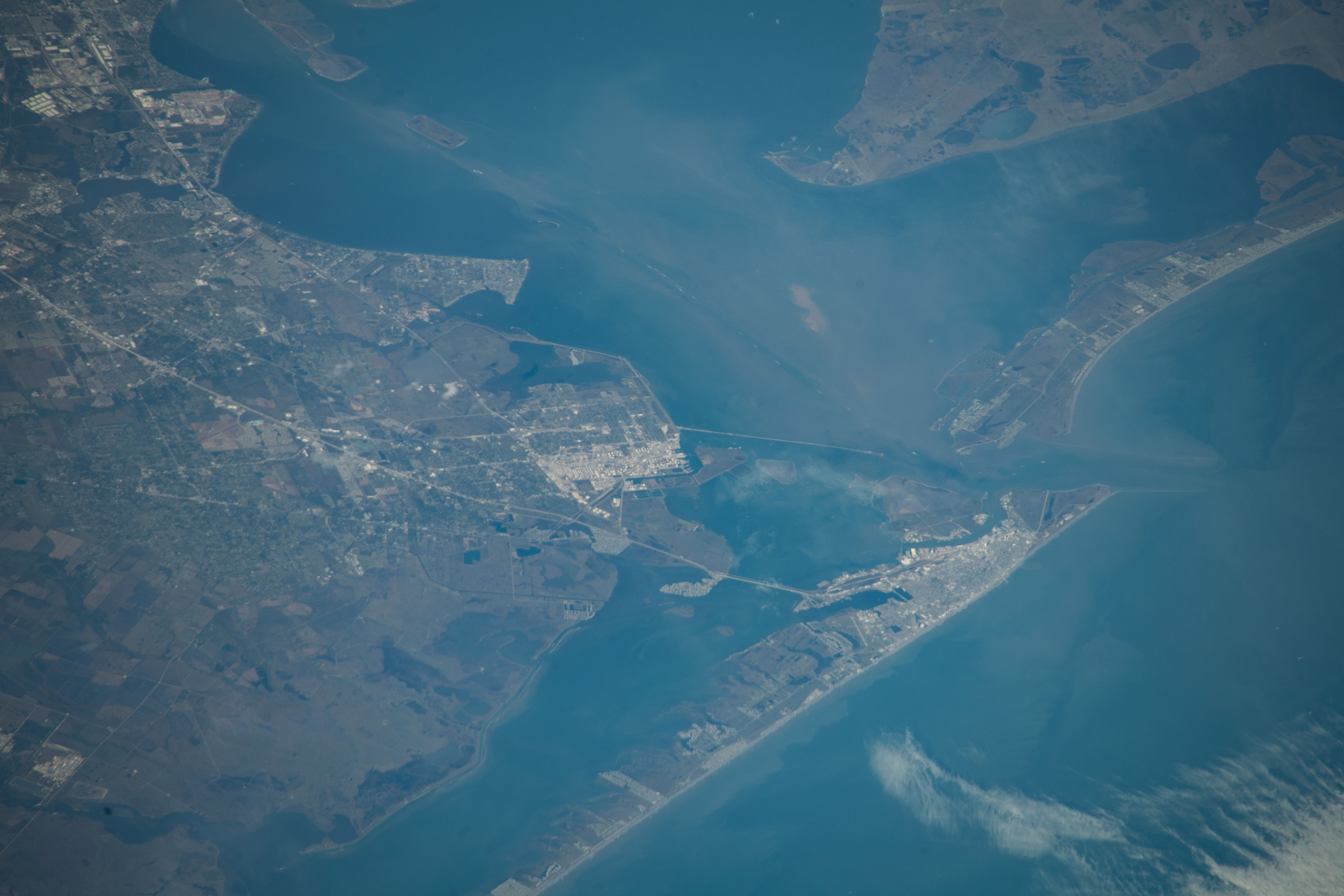
A view of Galveston from the International Space Station. The colors are faded: the land is a muted green, while the water is a hazy blue.
NASA

The crew aboard the International Space Station captured this image of Galveston, Texas, the birthplace of Juneteenth, as the station orbited 224 miles above on Nov. 23, 2011.

In the early 1800s, slavers periodically used Galveston Island as an outpost for operations. By 1860, about one-third of Galveston’s population lived under the oppression of chattel slavery. Even after President Abraham Lincoln issued the Emancipation Proclamation in 1863, in the midst of America’s Civil War, change came slowly to Galveston. Most enslaved people were unaware of Lincoln’s executive order, and the practice of buying and selling Black people based on race continued in Galveston and other parts of Texas until well into 1865.

When Union troops arrived in April 1865, circumstances changed. U.S. Major General Gordon Granger then issued General Order No. 3 on June 19, 1865, and Union troops marched through Galveston and read the order aloud at several locations, informing the people of Texas that all enslaved people were free. As news of the order spread, spontaneous celebrations broke out in African American churches, homes, and other gathering places. As years passed, the picnics, barbecues, parades, and other celebrations that sprang up to commemorate June 19th became more formalized as freed men and women purchased land, or “emancipation grounds,” to hold annual Juneteenth celebrations.

Image Credit: NASA

Powered by WPeMatico

Get The Details…
Monika Luabeya