Celebrating 10 Years at Mars with NASA’s MAVEN Mission

Celebrating 10 Years at Mars with NASA’s MAVEN Mission

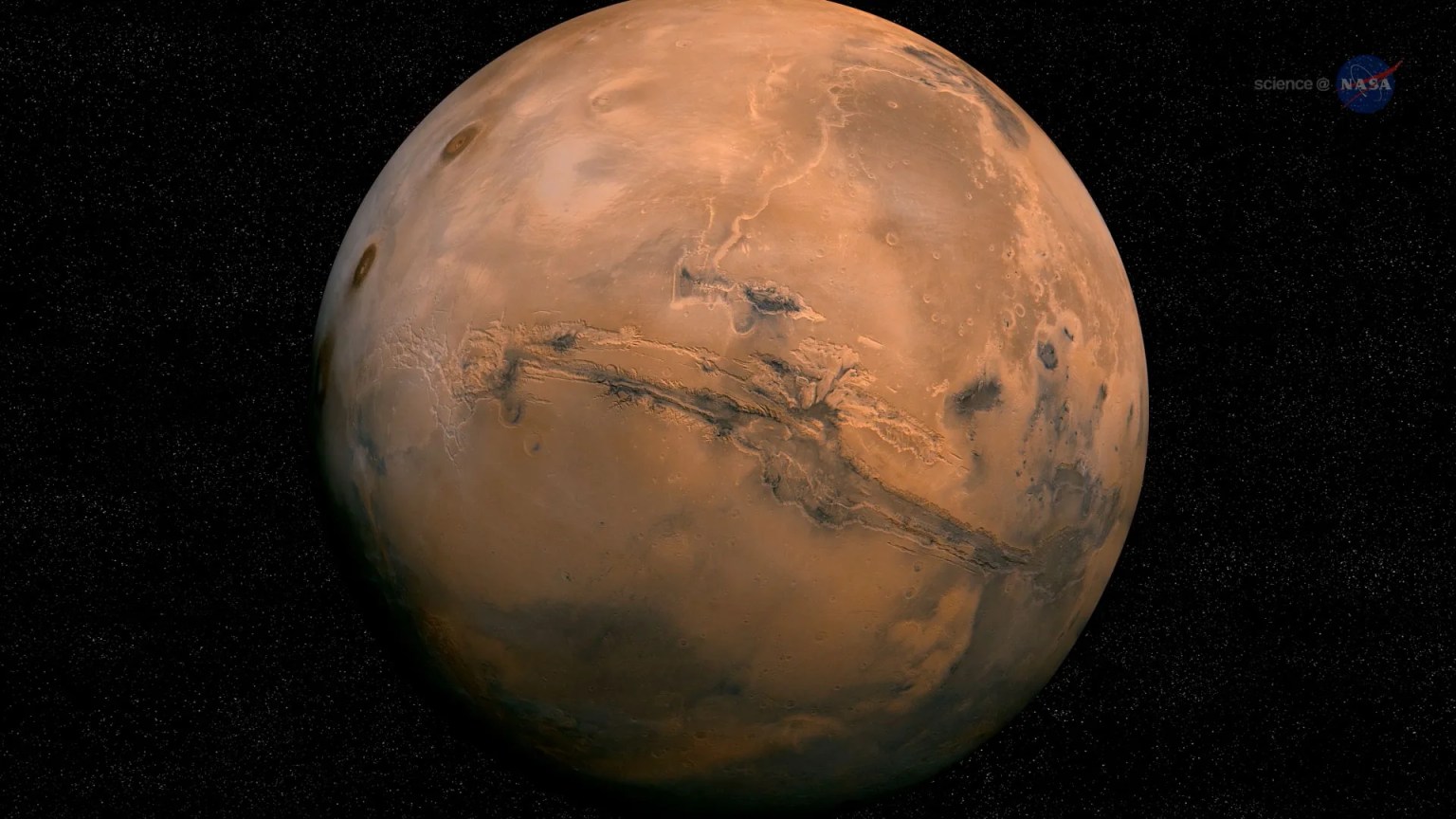
A decade ago, on Sept. 21, 2014, NASA’s MAVEN (Mars Atmospheric and Volatile EvolutioN) spacecraft entered orbit around Mars, beginning its ongoing exploration of the Red Planet’s upper atmosphere. The mission has produced a wealth of data about how Mars’ atmosphere responds to the Sun and solar wind, and how these interactions can explain the loss of the Martian atmosphere to space.

During its first 10 years at Mars, MAVEN has helped to explain how the Red Planet evolved from warm and wet early on into the cold, dry world that we see today. 
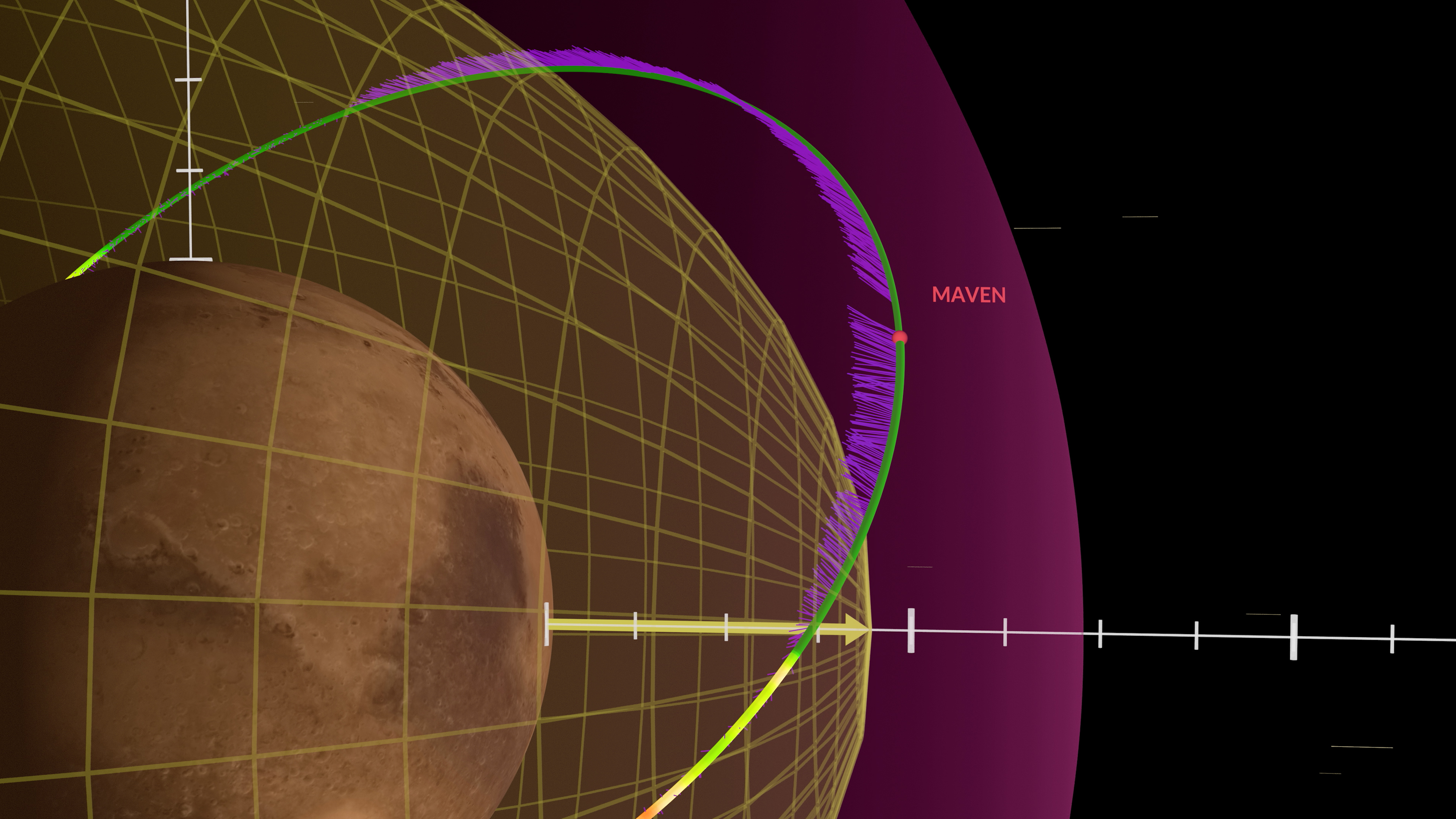
Download this video in high-resolution from NASA’s Scientific Visualization Studio: https://svs.gsfc.nasa.gov/14690/
Credit: NASA’s Goddard Space Flight Center/Dan Gallagher

Today, MAVEN continues to make exciting new discoveries about the Red Planet that increase our understanding of how atmospheric evolution affected Mars’ climate and the previous presence of liquid water on its surface, potentially determining its prior habitability.

“It is an incredibly exciting time for the MAVEN team as we celebrate 10 years of Martian science and see the tremendous impact this mission has had on the field,” said Shannon Curry, the principal investigator of MAVEN and a researcher at the Laboratory for Atmospheric and Space Physics at the University of Colorado Boulder. “We also look forward to the future discoveries MAVEN will bring.”

In celebration of this mission milestone, we recap some of the most significant scientific results of this unique and long-lasting Mars aeronomy mission.

  1. Extreme atmospheric erosion
    One of MAVEN’s first big results was discovering that the erosion of Mars’ atmosphere increases significantly during solar storms. The team studied how the solar wind — a stream of charged particles continually streaming from the Sun — and solar storms continually strip away Mars’ atmosphere, and how this process played a key role in altering the Martian climate from a potentially habitable planet to today’s cold, arid planet.
  2. Sputtering to space
    To better understand how Mars lost much of its atmosphere, MAVEN measured isotopes of argon gas in the upper Martian atmosphere. Argon is a noble gas, meaning it rarely reacts with other constituents in the Martian atmosphere. The only way it can be removed is by atmospheric sputtering — a process where ions crash into the Martian atmosphere at high enough speeds that they knock gas molecules out of the atmosphere. When the MAVEN team analyzed argon isotopes in the upper atmosphere, they were able to estimate that roughly 65% of the argon originally present had been lost through sputtering over the planet’s history.
  3. A new type of aurora
    MAVEN has discovered several types of auroras that flare up when energetic particles plunge into the atmosphere, bombarding gases and making them glow. The MAVEN team showed that protons, rather than electrons, create auroras at Mars. On Earth, proton auroras only occur in very small regions near the poles, whereas at Mars they can happen everywhere.
  4. Martian dust storm
    In 2018, a runaway series of dust storms created a dust cloud so large that it enveloped the planet. The MAVEN team studied how this “global” dust storm affected Mars’ upper atmosphere to understand how these events affect how the escape of water to space. It confirmed that heating from dust storms can loft water molecules far higher into the atmosphere than usual, leading to a sudden surge in water lost to space.
  5. Map of Martian winds
    MAVEN researchers created the first map of wind circulation in the upper atmosphere of Mars. The new map is helping scientists better understand the Martian climate, including how terrain on the planet’s surface is disturbing high-altitude wind currents. The results provide insight into how the dynamics of the upper Martian atmosphere have influenced the Red Planet’s climate evolution in the past and present.
  6. Twisted tail
    Mars has an invisible magnetic “tail” that is twisted by its interaction with the solar wind. Although models predicted that magnetic reconnection causes Mars’ magnetotail to twist, it wasn’t until MAVEN arrived that scientists could confirm that the predictions were correct. The process that creates the twisted tail could also allow some of Mars’ already thin atmosphere to escape to space.
  7. Mapping electric currents
    Researchers used MAVEN data to create a map of electric current systems in the Martian atmosphere. These form when solar wind ions and electrons smash into the planet’s induced magnetic field, causing the particles to flow apart. The resulting electric currents, which drape around the planet, play a fundamental role in the atmospheric loss that transformed Mars from a world that could have supported life to an inhospitable desert.
  8. Disappearing solar wind
    MAVEN recently observed the unexpected “disappearance” of the solar wind. This was caused by a type of solar event so powerful that it created a void in its wake as it traveled across the solar system. MAVEN’s measurements showed that when it reached Mars, the solar wind density dropped significantly. This disappearance of the solar wind allowed the Martian atmosphere and magnetosphere to balloon out by thousands of kilometers.
  9. Ultraviolet views of the Red Planet
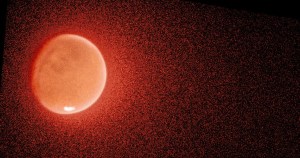
    MAVEN captured stunning views of Mars in two ultraviolet images taken at different points along the Red Planet’s orbit around the Sun. By viewing the planet in ultraviolet wavelengths, scientists gain insight into the Martian atmosphere and view surface features in remarkable ways.
  10. Mars’ response to solar storms
    In May 2024, a series of solar events triggered a torrent of energetic particles that quickly traveled to Mars. Many of NASA’s Mars missions, including MAVEN, observed this celestial event and captured images of glowing auroras over the planet.

MAVEN’s principal investigator is based at the Laboratory for Atmospheric and Space Physics (LASP) at the University of Colorado Boulder. LASP is also responsible for managing science operations and public outreach and communications. NASA’s Goddard Space Flight Center in Greenbelt, Maryland, manages the MAVEN mission. Lockheed Martin Space built the spacecraft and is responsible for mission operations. NASA’s Jet Propulsion Laboratory in Southern California provides navigation and Deep Space Network support.

By Willow Reed
Laboratory for Atmospheric and Space Physics (LASP), University of Colorado Boulder

Media Contact: Nancy N. Jones
NASA’s Goddard Space Flight Center, Greenbelt, Md.

Powered by WPeMatico

Get The Details…

NASA Science Activation Program Wins Prestigious Award

NASA Science Activation Program Wins Prestigious Award

The NASA Science Activation (SciAct) Program has been selected to receive the American Geophysical Union (AGU) 2024 Excellence in Earth and Space Science Education Award. This prestigious, annual award, established in 1995, honors a mid-career or senior scientist team, individual, or group that has demonstrated a sustained commitment to broad, positive impact on Earth and space science education at any education level from kindergarten through postgraduate studies.

SciAct engages learners of all ages in all 50 states and 4 US territories with Earth and space science. Through an extensive network of nearly 600 partners, SciAct develops, co-creates, validates, and disseminates effective learning resources and activities to support the needs of learners in their pursuit of knowledge, including specific underrepresented groups such as: Black, blind and low vision, community college, differently abled, Hispanic, immigrant, Indigenous, multilingual, neurodiverse, rural, and other underserved communities. Furthermore, SciAct project teams share lessons-learned and best practices across the SciAct community to facilitate ongoing learning and growth for the entire SciAct community, ensuring the implementation of ever-more effective approaches for reaching all learners. 

Since SciAct began in January 2016, its network has grown in strength and capacity. When reach data were collected for the first time in 2019, SciAct reported 15 million learner interactions. Four years later, in 2023, SciAct reported nearly 76 million learner interactions, a 506% increase. With many SciAct resources freely available online, 10 million of those interactions occurred across 170 other countries. In April 2024 alone, as part of a larger NASA-led eclipse mobilization, SciAct reported more than 62 million learner interactions, intentionally bringing the excitement of that celestial event to people in all 50 states, as well as Puerto Rico, Mexico, and Canada, to include learners far beyond the path of totality.

The SciAct model is built on a foundation of NASA science. NASA Earth and space science research content areas, missions, scientists and other technical experts, and data are the building blocks of all SciAct learning resources and activities. Nearly 1,000 subject matter experts support the SciAct program to ensure science content is accurate, up-to-date, and – working with education/learning experts – accessible to diverse learner communities. Through these interactions, SciAct also influences scientists, showing them effective ways to contribute towards learning goals and reach new audiences. An increasing number of activities are specifically focused on giving scientists – especially early career scientists – the skills and knowledge to connect with learners outside the research community. 

SciAct began as an experiment for conducting NASA Science education and outreach in a new, more coordinated way. Eight years later, that experiment has given rise to a powerful and effective approach for sharing the wonder of NASA science, content, and experts with the world. It is an honor for the NASA Science Activation program to be recognized by AGU, the world’s largest Earth and space science association, for its role in advancing science, transforming our understanding of the world, impacting our everyday lives, improving our communities, and contributing to solutions for a sustainable future.

Share

Details

Last Updated
Sep 23, 2024

Related Terms

Powered by WPeMatico

Get The Details…

NASA Ames Stars of the Month: September 2024

NASA Ames Stars of the Month: September 2024

Four images of profile pictures of NASA Ames Research Center staff. Pictured left to right are Don Sullivan, Serena Trieu, Emmett Quigley, and Zara Mirmalek.

The NASA Ames Science Directorate recognizes the outstanding contributions of (pictured left to right) Don Sullivan, Serena Trieu, Emmett Quigley, and Zara Mirmalek. Their commitment to the NASA mission represents the talent, camaraderie, and vision needed to explore this world and beyond.

A scientist named Don Sullivan from NASA Ames Research Center standing in a forest for a portrait photo.

Earth Science Star: Don Sullivan

Don Sullivan enables cutting-edge research in the Earth Science Division, serving as telemetry and communications lead for the Airborne Science Program. As Principal Investigator, Don led the highly successful and innovative STRATO long-duration balloon flight project in August 2024 with the United States Forest Service (USFS) that demonstrated last-mile connectivity and near real-time infrared imagery to a remote wildfire incident command station.

Portrait photo of Space Bioscientist Serena Trieu in a city.

Space Biosciences Star: Serena Trieu

Serena Trieu conducts research in the Bioengineering Branch for projects that develop Earth-independent spaceflight instrumentation, especially for the International Space Station (ISS). She has excelled in coordinating the inventory for 21 spaceflight trash batches sent to Sierra Space, Inc., for ground-unit testing of the Trash Compaction Processing System (TCPS). Tapping into her innovative spirit and technical expertise, she developed a new method to prepare trash batches for the ISS without freezing.

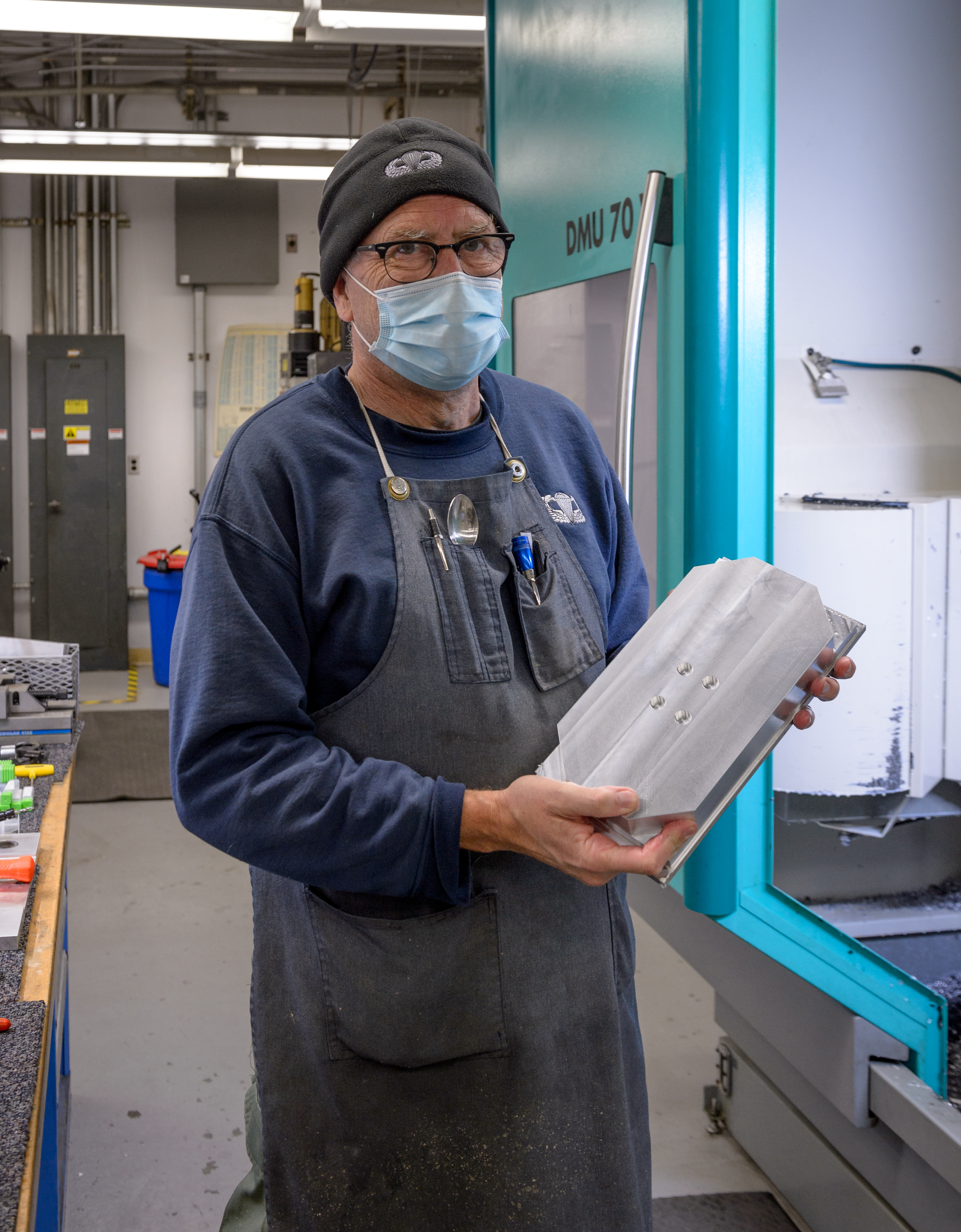
Portrait photo of NASA Ames Research mechanical technician Emmett Quigley holding

Space Science & Astrobiology Star: Emmett Quigley

Emmett Quigley is a mechanical technician with the Astrophysics Branch who goes above and beyond to serve Ames. As a specialist in small precision manufacturing, Emmett has designed and built lab hardware, telescopes, and airborne instruments, as well as small satellites and instruments heading to the Moon and beyond. His collaborative disposition and dedication to problem solving have enabled delivery of numerous projects on behalf of the Space Science and Astrobiology Division and the Earth Science Division.

Portrait photo of NASA Ames Research Center social scientists Zara Mirmalek sitting in front of a window.

Space Science & Astrobiology Star: Zara Mirmalek

Zara Mirmalek is the Deputy Science Operations Lead for VIPER within the Space Science & Astrobiology Division and has been pivotal in the design and build efforts of the VIPER Mission Science Operations team and Mission Science Center. She has applied her expertise in science team social-technical interactions to recommend discussions, groupings, and timelines that enable the VIPER Science Team to advance pre-planning for VIPER surface operations.

Powered by WPeMatico

Get The Details…
Aaron McKinnon

A Striped Surprise

A Striped Surprise

3 min read

A Striped Surprise

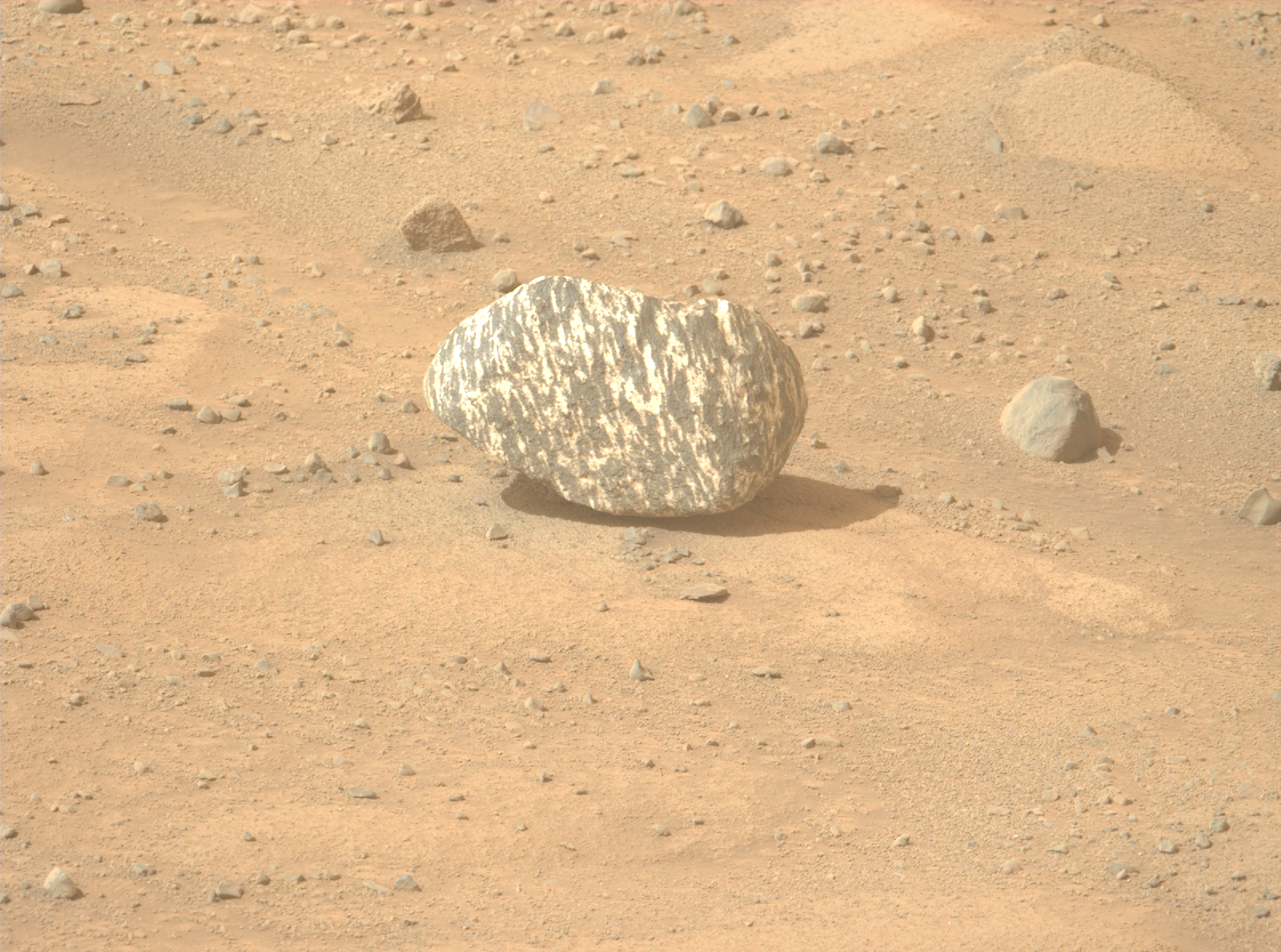
NASA’s Mars Perseverance rover captured this image of a black-and-white striped rock using its Left Mastcam-Z camera. Mastcam-Z is a pair of cameras located high on the rover’s mast. This image was acquired on Sept. 13, 2024 (Sol 1268) at the local mean solar time of 12:40:29.
NASA/JPL-Caltech/ASU

Last week, team scientists and the internet alike were amazed when Perseverance spotted a black-and-white striped rock unlike any seen on Mars before. Is this a sign of exciting discoveries to come?

It has now nearly been a month since the rover began its climb up the steep slopes leading to the crater rim, on the hunt for ancient rocks that could teach us about early Martian history. While these tricky slopes made for a slow initial ascent, drive progress has improved greatly in recent days, as Perseverance has cruised along a flatter stretch. From this overlook, the rover can now spot landmarks from earlier in the mission like the iconic ‘Kodiak’ butte on the hazy horizon, thick with dust from nearby dust storms.

While driving across unremarkable pebbly terrain, beady-eyed team members spotted a cobble in the distance with hints of an unusual texture in low resolution Navcam images, and gave it the name ‘Freya Castle’. The team planned a multispectral observation using the Mastcam-Z camera in order to get a closer look before driving away. When these data were downlinked a couple days later, after Perseverance had already left the area, it became clear just how unusual it was! ‘Freya Castle’ is around 20 cm across, and has a striking pattern with alternating black and white stripes. The internet immediately lit up with speculation about what this “zebra rock” might be, and we’ve enjoyed reading your theories!

The science team thinks that this rock has a texture unlike any seen in Jezero Crater before, and perhaps all of Mars. Our knowledge of its chemical composition is limited, but early interpretations are that igneous and/or metamorphic processes could have created its stripes. Since Freya Castle is a loose stone that is clearly different from the underlying bedrock, it has likely arrived here from someplace else, perhaps having rolled downhill from a source higher up. This possibility has us excited, and we hope that as we continue to drive uphill, Perseverance will encounter an outcrop of this new rock type so that more detailed measurements can be acquired.

‘Freya Castle’ is merely the latest in a series of intriguing rocks found recently; ever since arriving in the vicinity of the crater rim, the team has noticed an increased variety of rocks, such as the diverse collection of boulders at ‘Mount Washburn’. Could these be our first glimpses at ancient rocks uplifted from depth by the Jezero impact, now exposed on the crater rim? Only time will tell…

Written by Athanasios Klidaras, Ph.D. student at Purdue University

Share

Details

Last Updated
Sep 23, 2024

Related Terms

Powered by WPeMatico

Get The Details…

Soyuz Lands Returning Dyson, Two Crewmates Back to Earth

Soyuz Lands Returning Dyson, Two Crewmates Back to Earth

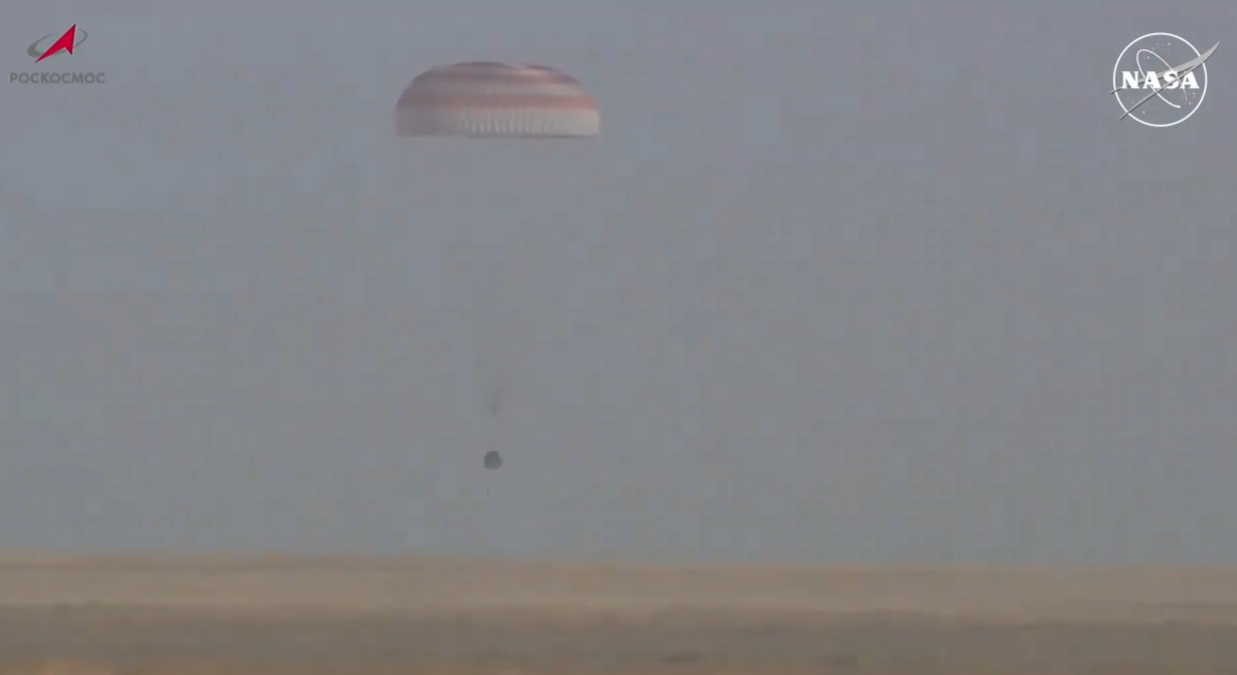
The Soyuz MS-25 spacecraft lands in Kazakhstan at 7:59 a.m. EDT Monday, Sept. 23. Credit: NASA

At 7:59 a.m. EDT (4:59 p.m. Kazakhstan time), the Soyuz MS-25 spacecraft made a parachute-assisted landing on the steppe of Kazakhstan, southeast of the town of Dzhezkazgan.

Spanning 184 days in space, NASA astronaut Tracy C. Dyson’s mission includes covering 2,944 orbits of the Earth and a journey of 78 million miles. The Soyuz MS-25 spacecraft launched March 23, and arrived at the station March 25, with Dyson, Roscosmos cosmonaut Oleg Novitskiy, and spaceflight participant Marina Vasilevskaya of Belarus. Novitskiy and Vasilevskaya were aboard the station for 12 days before returning home with NASA astronaut Loral O’Hara on April 6.

Roscosmos cosmonauts Nikolai Chub and Oleg Kononenko, who launched with O’Hara to the station on the Soyuz MS-24 spacecraft last September, returned after 374 days in space and a trip of 158.6 million miles, spanning 5,984 orbits.

Dyson spent her third spaceflight aboard the station as an Expedition 70 and 71 flight engineer, and returned with Kononenko, completing his fifth flight into space and accruing an all-time record 1,111 days in orbit, and Chub, who completed his first spaceflight.

The three crew members will fly on a helicopter from the landing site to the recovery staging city of Karaganda, Kazakhstan. Dyson will board a NASA plane and return to Houston, while Kononenko and Chub will depart for a training base in Star City, Russia.


Learn more about station activities by following the space station blog, @space_station and @ISS_Research on X, as well as the ISS Facebook and ISS Instagram accounts.

Get weekly updates from NASA Johnson Space Center at: https://roundupreads.jsc.nasa.gov/

Get the latest from NASA delivered every week. Subscribe here: www.nasa.gov/subscribe

Powered by WPeMatico
Get The Details…

Abby Graf