Bindu Rani Explores Black Holes, Mothers Hard, Balances Life

Bindu Rani Explores Black Holes, Mothers Hard, Balances Life

Bindu Rani had childhood dreams of flight. Today she lifts her gaze even higher, helping researchers study stars, planets beyond our solar system, and black holes billions of times more massive than our Sun.

Name: Bindu Rani
Title: Astrophysicist, Neil Gehrels Swift Observatory Guest Investigator Program Lead Scientist
Organization: Astroparticle Physics Laboratory, Science Directorate (Code 661)

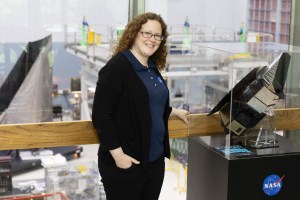
Bindu Rani is an astrophysicist at NASA’s Goddard Space Flight Center in Greenbelt, Md.
Photo credit: NASA/Jay Friedlander

What do you do and what is most interesting about your role here at Goddard?

I study supermassive black holes using both space-based and ground-based observations. I love trying to understand the dynamics and nature of physical processes that happen in the vicinity of a black hole.

Why did you become an astrophysicist?

When I was a little girl, I wanted to fly way up in the sky and be a pilot. When I was doing my master’s, I got interested in black holes and neutron stars. I was so fascinated that I decided to pursue this field.

What is your educational background?

In 2005, I got a bachelor’s degree in science from Government College Bahadurgarh, India. In 2007, I got a master’s degree in in physics from the Department of Physics and Astrophysics, Delhi University, India. In 2013, I got a doctorate in astrophysics from the Max Planck Institute for Radio Astronomy, Bonn, Germany. From 2014 to 2016, I was a post-doctoral fellow at Max Plank.

How did you come to Goddard?

In 2016, I came to Goddard through NASA’s Postdoctoral Fellowship program.

From 2020 to 2022, I worked at the Korea Astronomy and Space Science Institute in South Korea as a staff scientist. I can say please and thank you in Korean, but everyone in the lab and the young students spoke English and loved practicing English.

In September 2022, I returned to Goddard as the Swift Guest Investigator Program lead scientist.

You have lived in India, South Korea, Germany, and now the United States. What are your favorite aspects of each country?

The best thing about India is that my family is there, and I deeply miss them. All my happy memories are in one small town along with my parents, siblings, and friends. I deeply miss Indian food too. My family and I visit India whenever we can.

I love South Korean food. What motivated me in the mornings was their delicious coffee and cafeteria food. I miss their culture, so warm and welcoming. When I left, there was a hole in my heart.

Life in Germany is amazing. They have the best work life balance. Also, I miss German bread and beer.

What are your goals as the Swift Guest Investigator Program lead?

I lead the program, including managing the proposals, staffing the program, conducting reviews, and supporting the users. Swift is an amazing mission because it provides X-rays and ultraviolet to optical observations of all different kinds of astronomical objects including exoplanets, stars, dwarf stars, and black holes up to millions to billions of solar masses.

How do you keep your people motivated?

Our work is super interesting which itself is motivating. My idea is that if you want the best out of people, you have to make them comfortable. I try to apply this both at work and at home.

Bindu Rani stands in in front of glass windows next to a statue of Albert Einstein. She is wearing a light colored button down with tan pants and is holding the handle to a blue suitcase.
“Most of my inspiration comes from my own curiosity and from the fact that I am very determined,” said Bindu.
Photo courtesy of Bindu Rani

How do you feel when you discover a black hole?

Swift observes radiation from many black holes ranging in size from a few solar masses (that is, a few times the mass of our Sun) to billions of solar masses. In the vicinity of black holes, infalling material heats up and emits radiation. In some cases, black holes consuming dust and gas at the center of galaxies produce jets — a laser-like beam of light that we observe with our telescopes.

When we have a new discovery, it is very exciting, and many observations follow using many different ground and space telescopes. For example, the brightest of all time gamma-ray burst (BOAT GRB), which is likely the birth cry of a new black hole, was jointly discovered by Swift and the Fermi Gamma-ray Space Telescope on Oct. 9, 2022. It was subsequently observed by about 50 space- and ground-based telescopes.

What is the most amazing observation you have seen from a black hole?

Black holes are extremely fascinating astronomical objects to study and to test our theoretical models in extreme gravity environments. I believe the most amazing observation is the first image of a black hole itself. In 2019, the first direct image of a black hole at the center of galaxy M87 confirmed the existence of black holes, marking a historic milestone in astrophysics.

Who inspires you?

Most of my inspiration comes from my own curiosity and from the fact that I am very determined. My family is my true inspiration, especially my parents. They were motivating in many different ways. My parents are really hard working. They are very proud of me.

What do you say to the people you mentor?

I tell them to keep learning, to enjoy what they are doing even if it feels hard. I them to stay curious. I also tell them to strengthen their speaking, writing and coding skills to become a good scientists. As my doctorate advisor told me, you have to learn how to sell yourself.

As an avid reader, who is your favorite author?

Books bring me peace. I enjoy reading books in Hindi, by an Indian author called Munsi Prem Chand, who wrote about social fiction. I am currently reading Laura Markam’s “Peaceful Parents, Happy Kids” because I have a young child.

What else do you do to relax?

I like to run and practice yoga. Mostly either I work or spend time with my child.

What is it like for both you and your husband to both work at Goddard?

My husband, Pankaj Kumar, is a heliophysicist in the Space Weather Laboratory (Code 674). We met in India, and both found jobs at Goddard. It is so wonderful to be at the same working institute. At home, we try not to discuss work. But our child is very curious and asks us a lot of questions about our research. Our child wants to become a NASA scientist, which he calls a NASA professor.

What do you value most about working at Goddard?

Goddard has the best work culture. Everyone is so open and friendly. I can just knock on any door and will be able to talk. The open communication puts you at ease.

Also, Goddard has a lot of women researchers in lead positions. Goddard values women.

How do you describe yourself?

I am a girl who came from a small village in India and am now at Goddard. I dreamed about going to space one day and now I am doing research at Goddard. My family’s support mattered. My own strong-willed nature helped too. At this stage, my curiosity and love of challenges continues to motivate me. Several factors in my life got me to where I am.

Who do you want to thank?

I am grateful to the people who believed in me (my family, friends, and colleagues) as well as those who tried to hinder me.

What’s your “big dream”?

I want to be an astronaut. When I was doing my master’s, I became interested in being an astronaut.

By Elizabeth M. Jarrell
NASA’s Goddard Space Flight Center, Greenbelt, Md.
A banner graphic with a group of people smiling and the text "Conversations with Goddard" on the right. The people represent many genders, ethnicities, and ages, and all pose in front of a soft blue background image of space and stars.

Conversations With Goddard is a collection of Q&A profiles highlighting the breadth and depth of NASA’s Goddard Space Flight Center’s talented and diverse workforce. The Conversations have been published twice a month on average since May 2011. Read past editions on Goddard’s “Our People” webpage.

Share

Details

Last Updated

Aug 06, 2024

Editor
Madison Olson
Contact
Rob Garner
Location
Goddard Space Flight Center

Powered by WPeMatico

Get The Details…
Madison Olson

Tech Today: Flipping NASA Tech and Sticking the Landing 

Tech Today: Flipping NASA Tech and Sticking the Landing 

2 min read

Preparations for Next Moonwalk Simulations Underway (and Underwater)

Akeem Shannon sitting on a sofa, holding a cellphone with Flipstik attached to it.
Akeem Shannon showcasing Flipstik attached to a smartphone. The product’s design was improved by looking at NASA research to inform its gecko-inspired method of adhering to surfaces
Credit: Flipstik Inc.

When it comes to innovative technologies, inventors often find inspiration in the most unexpected places. A former salesman, Akeem Shannon, was inspired by his uncle, who worked as an engineer at NASA’s Marshall Space Flight Center in Huntsville, Alabama, to research the agency’s published technologies. He came across a sticky NASA invention that would help him launch his breakout product.  

In the early 2010s, a team of roboticists at NASA’s Jet Propulsion Laboratory in Southern California were exploring methods to enhance robots’ gripping capabilities. They came across the Van Der Waals force – a weak electrostatic bond that forms at the molecular level when points on two surfaces make contact. This is the same force that geckos use to climb along walls.  

A hand holds a dangling circular apparatus attached to a flat surface via gecko-like adhesion.
Much like a gecko’s foot, this apparatus developed at the Jet Propulsion Laboratory uses tiny fibers to grip objects and hold them tight. This work later inspired and informed the development of Flipstik.
Credit: NASA

The microscopic hairs on gecko toe pads are called setae, which gives the technology the nickname of “synthetic setae.” While Shannon couldn’t use this NASA technology to hang a TV on a wall, he saw a way to mount a much smaller screen – a cellphone. 

A synthetic setae attachment on a cellphone case could stick to most surfaces, such as mirrors or the back of airplane seats. With a product design in hand, Shannon founded St. Louis-based Flipstik Inc. in 2018. Shannon wanted to make a reliable product that could be used multiple times in various situations. He said the published NASA research, which describes methods of molding and casting the tiny hairs to be more durable, was indispensable to making his product portable and reusable. 

Flipstik has made an impact on the mobile device industry. In addition to people using it to mount their phones to watch videos, it has become popular among content creators to capture camera angles. Flipstik also allows deaf users to keep their hands free, enabling them to make video calls in sign language. From geckos to NASA research, Shannon’s innovation is a reminder that inspiration can come from anywhere. 

Powered by WPeMatico

Get The Details…
Andrew Wagner

Quantum Scale Sensors used to Measure Planetary Scale Magnetic Fields

Quantum Scale Sensors used to Measure Planetary Scale Magnetic Fields

6 min read

Quantum Scale Sensors used to Measure Planetary Scale Magnetic Fields

Magnetic fields are everywhere in our solar system. They originate from the Sun, planets, and moons, and are carried throughout interplanetary space by solar wind. This is precisely why magnetometers—devices used to measure magnetic fields—are flown on almost all missions in space to benefit the Earth, Planetary, and Heliophysics science communities, and ultimately enrich knowledge for all humankind. These instruments can remotely probe the interior of a planetary body to provide insight into its internal composition, structure, dynamics, and even evolution based on the magnetic history frozen into the body’s crustal rock layers. Magnetometers can even discover hidden oceans within our solar system and help determine their salinity, thereby providing insight into the potential habitability of these icy worlds.

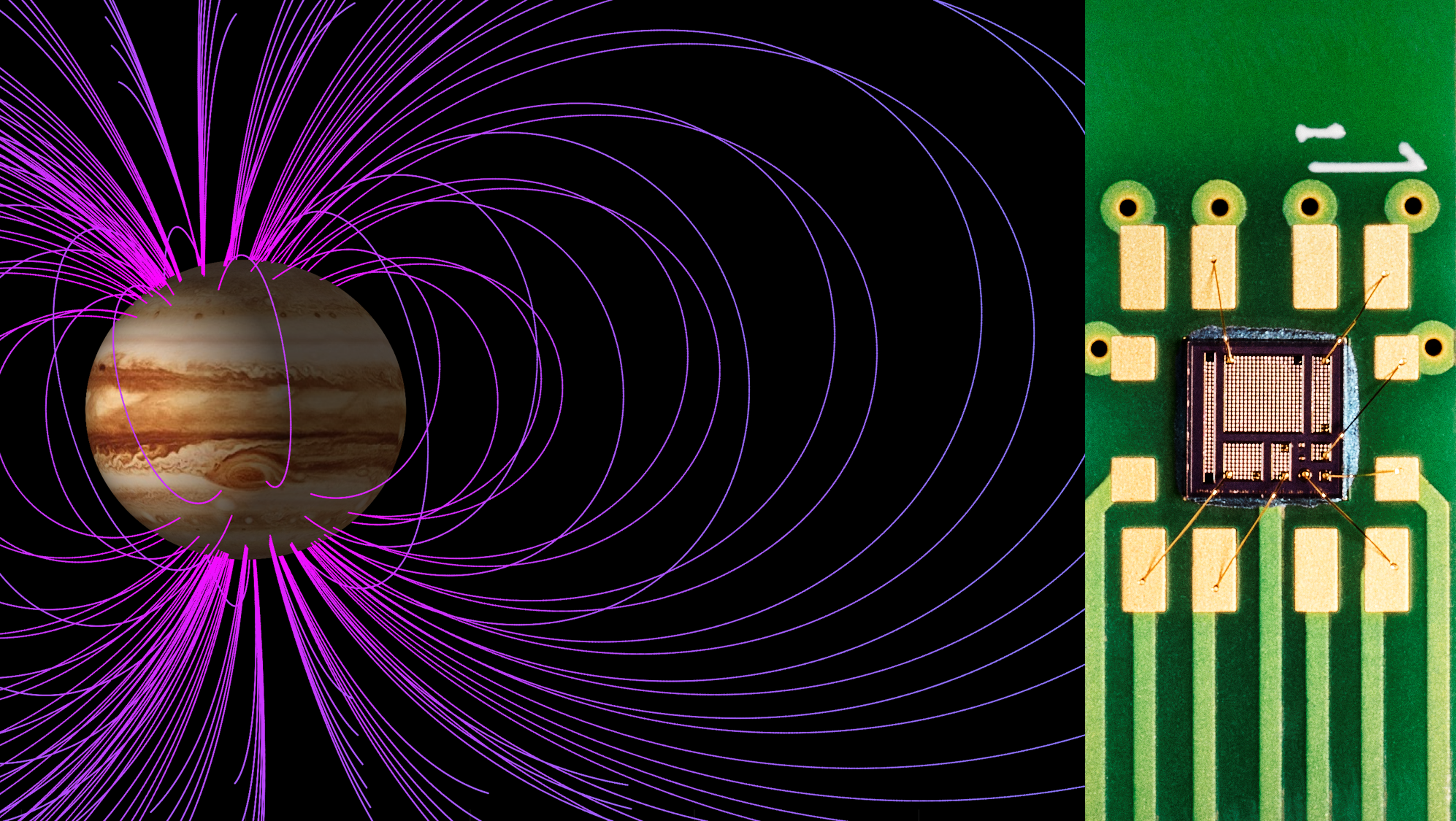
An image of Jupiter is on the left, with purple magnetic field lines emanating from one pole of the planet, curving out into space, and ending at the other pole. The right image is a square magnetic field sensor mounted on top of a green printed circuit board (PCB) with gold leads, which allows for electrical connectivity with the sensor.
Left: The magnetic field of Jupiter provides insight into its interior composition, structure, dynamics, and even its evolutionary history. Right: Image of the first prototype 4H-SiC solid-state magnetometer sensor die (2mm by 2mm) developed by NASA-GRC. Each gold rectangle or square on the surface represents an individual sensor, the smallest being 10 microns by 10 microns.

Fluxgates are the most widely used magnetometers for missions in space due to their proven performance and simplicity. However, the conventional size, weight, and power (SWaP) of fluxgate instruments can restrict them from being used on small platforms like CubeSats and sometimes limit the number of sensors that can be used on a spacecraft for inter-sensor calibration, redundancy, and spacecraft magnetic field removal. Traditionally, a long boom is used to distance the fluxgate magnetometers from the contaminate magnetic field generated by the spacecraft, itself, and at least two sensors are used to characterize the falloff of this field contribution so it can be removed from the measurements. Fluxgates also do not provide an absolute measurement, meaning that they need to be routinely calibrated in space through spacecraft rolls, which can be time and resource intensive.

An SMD-funded team at NASA’s Jet Propulsion Laboratory in Southern California has partnered with NASA’s Glenn Research Center in Cleveland, Ohio to prototype a new magnetometer called the silicon carbide (SiC) magnetometer, or SiCMag, that could change the way magnetic fields are measured in space. SiCMag uses a solid-state sensor made of a silicon carbide (SiC) semiconductor. Inside the SiC sensor are quantum centers—intentionally introduced defects or irregularities at an atomic scale—that give rise to a magnetoresistance signal that can be detected by monitoring changes in the sensor’s electrical current, which indicate changes in the strength and direction of the external magnetic field. This new technology has the potential to be incredibly sensitive, and due to its large bandgap (i.e., the energy required to free an electron from its bound state so it can participate in electrical conduction), is capable of operating in the wide range of temperature extremes and harsh radiation environments commonly encountered in space.

Team member David Spry of NASA Glenn indicates, “Not only is the SiC material great for magnetic field sensing, but here at NASA Glenn we’re further developing robust SiC electronics that operate in hot environments far beyond the upper temperature limitations of silicon electronics. These SiC-based technologies will someday enable long-duration robotic scientific exploration of the 460 °C Venus surface.”

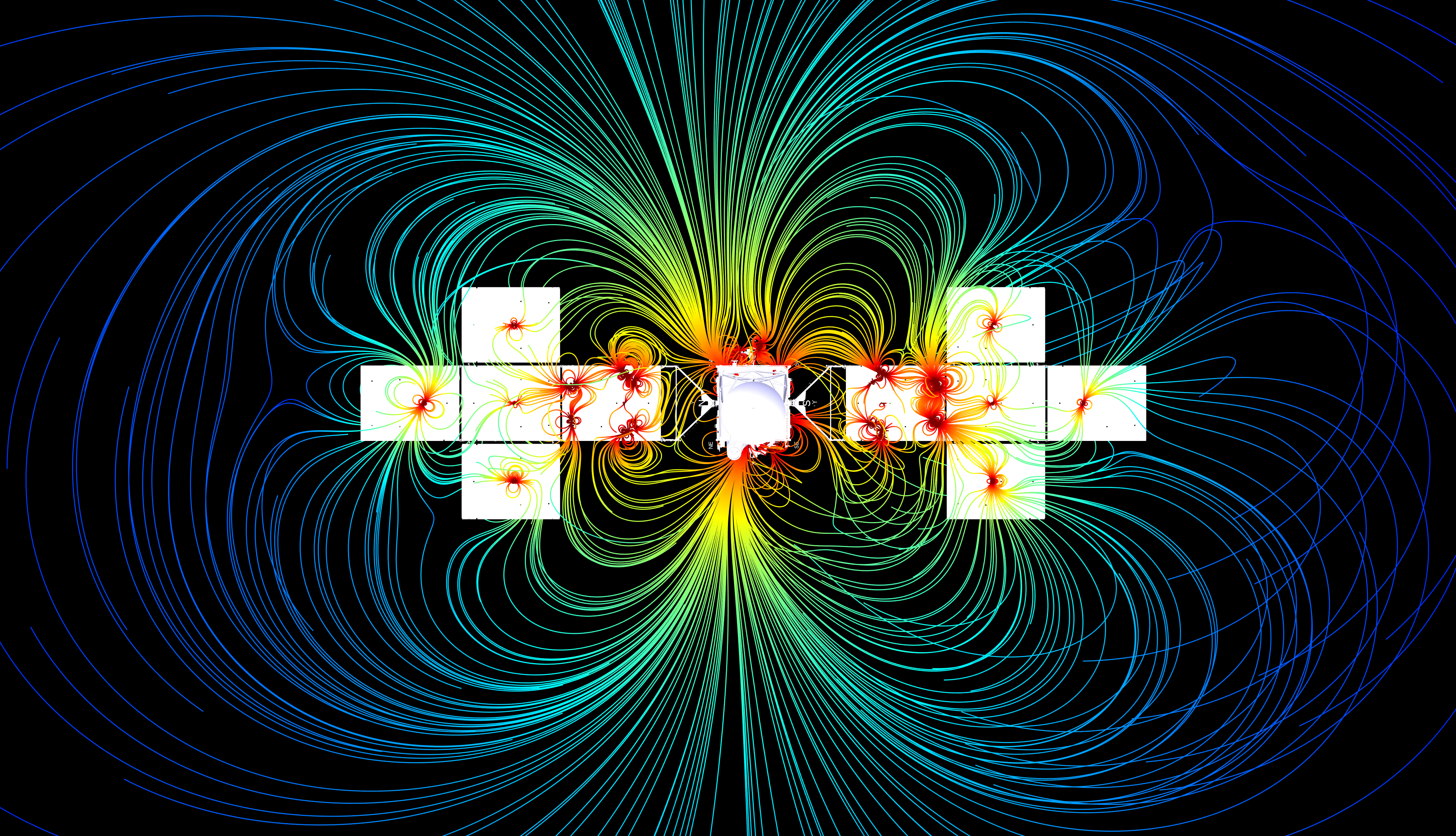
SiCMag is also very small— the sensor area is only 0.1 x 0.1 mm and the compensation coils are smaller than a penny. Consequently, dozens of SiCMag sensors can easily be incorporated on a spacecraft to better remove the complex contaminate magnetic field generated by the spacecraft, reducing the need for a long boom to distance the sensors from the spacecraft, like implemented on most spacecraft, including Psyche (see figure below).

Swirling magnetic field lines extend from a CAD model of the Psyche spacecraft.
The magnetic field lines associated with the Psyche spacecraft, modeled from over 200 individual magnetic sources. Removing this magnetic field contribution from the measurements conventionally requires the use of two fluxgate sensors on a long boom. Incorporating 4 or more SiCMag sensors in such a scenario would significantly reduce the size of the boom required, or even remove the need for a boom completely.
Image Credit: This image was adopted from https://science.nasa.gov/resource/magnetic-field-of-the-psyche-spacecraft/

SiCMag has several advantages when compared to fluxgates and other types of heritage magnetometers including those based on optically pumped atomic vapor. SiCMag is a simple instrument that doesn’t rely on optics or high-frequency components, which are sensitive to temperature variations. SiCMag’s low SWaP also allows for accommodation on small platforms such as CubeSats, enabling simultaneous spatial and temporal magnetic field measurements not possible with single large-scale spacecraft. This capability will enable planetary magnetic field mapping and space weather monitoring by constellations of CubeSats. Multiplatform measurements would also be very valuable on the surface of the Moon and Mars for crustal magnetic field mapping, composition identification, and magnetic history investigation of these bodies.

SiCMag has a true zero-field magnetic sensing ability (i.e., SiCMag can measure extremely weak magnetic fields), which is unattainable with most conventional atomic vapor magnetometers due to the requisite minimum magnetic field needed for the sensor to operate. And because the spin-carrying electrons in SiCMag are tied up in the quantum centers, they won’t escape the sensor, meaning they are well-suited for decades-long journeys to the ice-giants or to the edges of the heliosphere. This capability is also an advantage of SiCMag’s optical equivalent sibling, OPuS-MAGNM, an optically pumped solid state quantum magnetometer developed by Hannes Kraus and matured by Andreas Gottscholl of the JPL solid-state magnetometry group. SiCMag has the advantage of being extremely simple, while OPuS-MAGNM promises to have lower noise characteristics, but uses complex optical components.

According to Dr. Andreas Gottscholl, “SiCMag and OPuS-MAGNM are very similar, actually. Progress in one sensor system translates directly into benefits for the other. Therefore, enhancements in design and electronics advance both projects, effectively doubling the impact of our efforts while we are still flexible for different applications.”

SiCMag has the ability to self-calibrate due to its absolute sensing capability, which is a significant advantage in the remote space environment. SiCMag uses a spectroscopic calibration technique that atomic vapor magnetometers also leverage called magnetic resonance (in the case of SiCMag, the magnetic resonance is electrically detected) to measure the precession frequency of electrons associated with the quantum centers, which is directly related to the magnetic field in which the sensor is immersed. This relationship is a fundamental physical constant in nature that doesn’t change as a function of time or temperature, making the response ideal for calibration of the sensor’s measurements. “If we are successful in achieving the sought-out sensitivity improvement we anticipate using isotopically purer materials, SiC could change the way magnetometry is typically performed in space due to the instrument’s attractive SWaP, robustness, and self-calibration ability,” says JPL’s Dr. Corey Cochrane, principal investigator of the SiCMag technology.

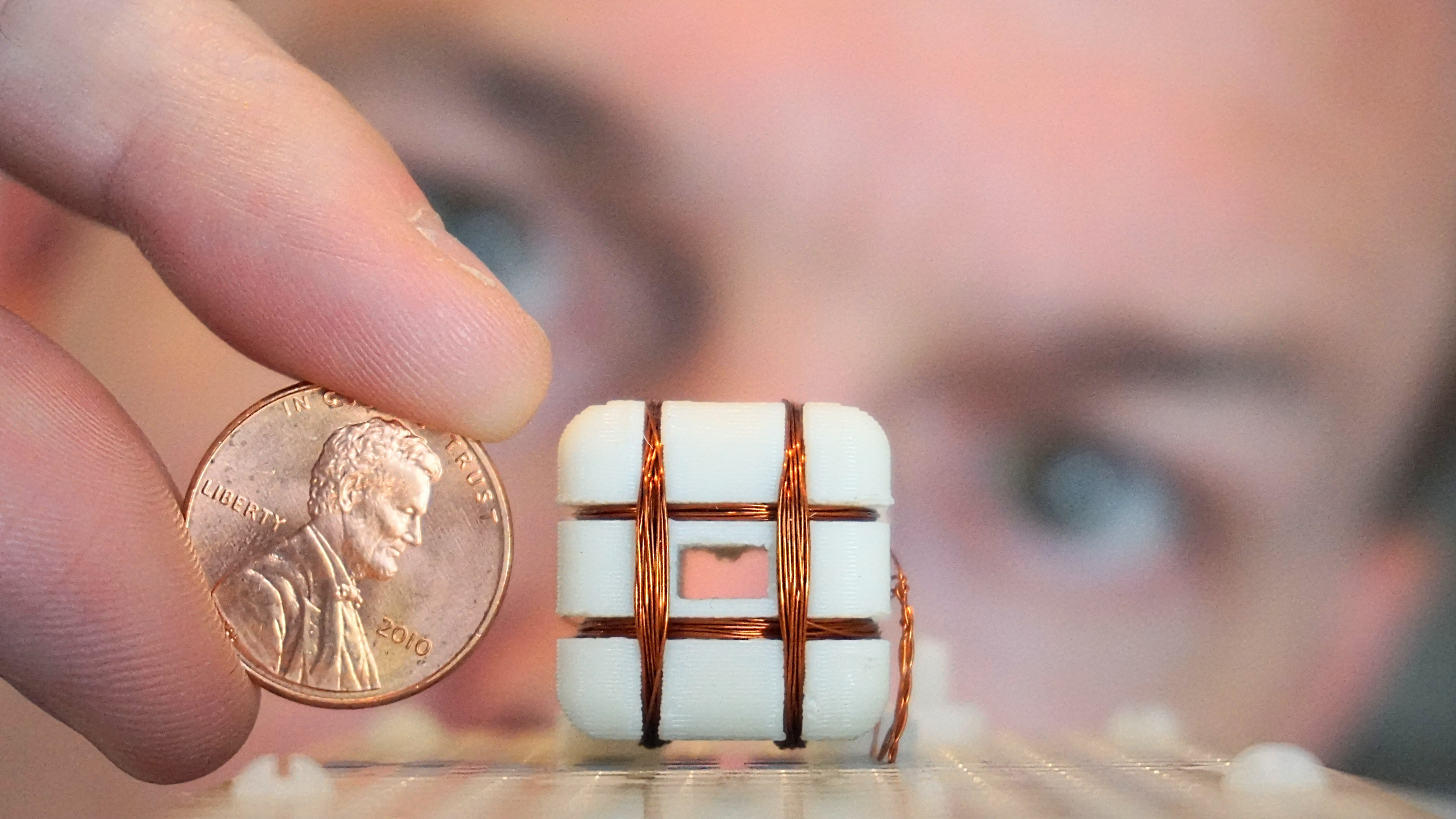
Close up image of a 3D printed plastic fixture wrapped with copper wire next to a penny.
The 3-axis 3D printed electromagnet – no larger than the size of a US penny – is used to modulate and maintain a region of zero magnetic field around our 0.1 mm x 0.1 mm 4H-SiC solid-state sensor.

NASA has been funding this team’s solid-state quantum magnetometer sensor research through its PICASSO (Planetary Instrument Concepts for the Advancement of Solar System Observations) program since 2016. A variety of domestic partners from industry and academia also support this research, including NASA’s Glenn Research Center in Cleveland, Penn State University, University of Iowa, QuantCAD LLC, as well as international partners such as Japan’s Quantum Materials and Applications Research Center (QUARC) and Infineon Technologies.

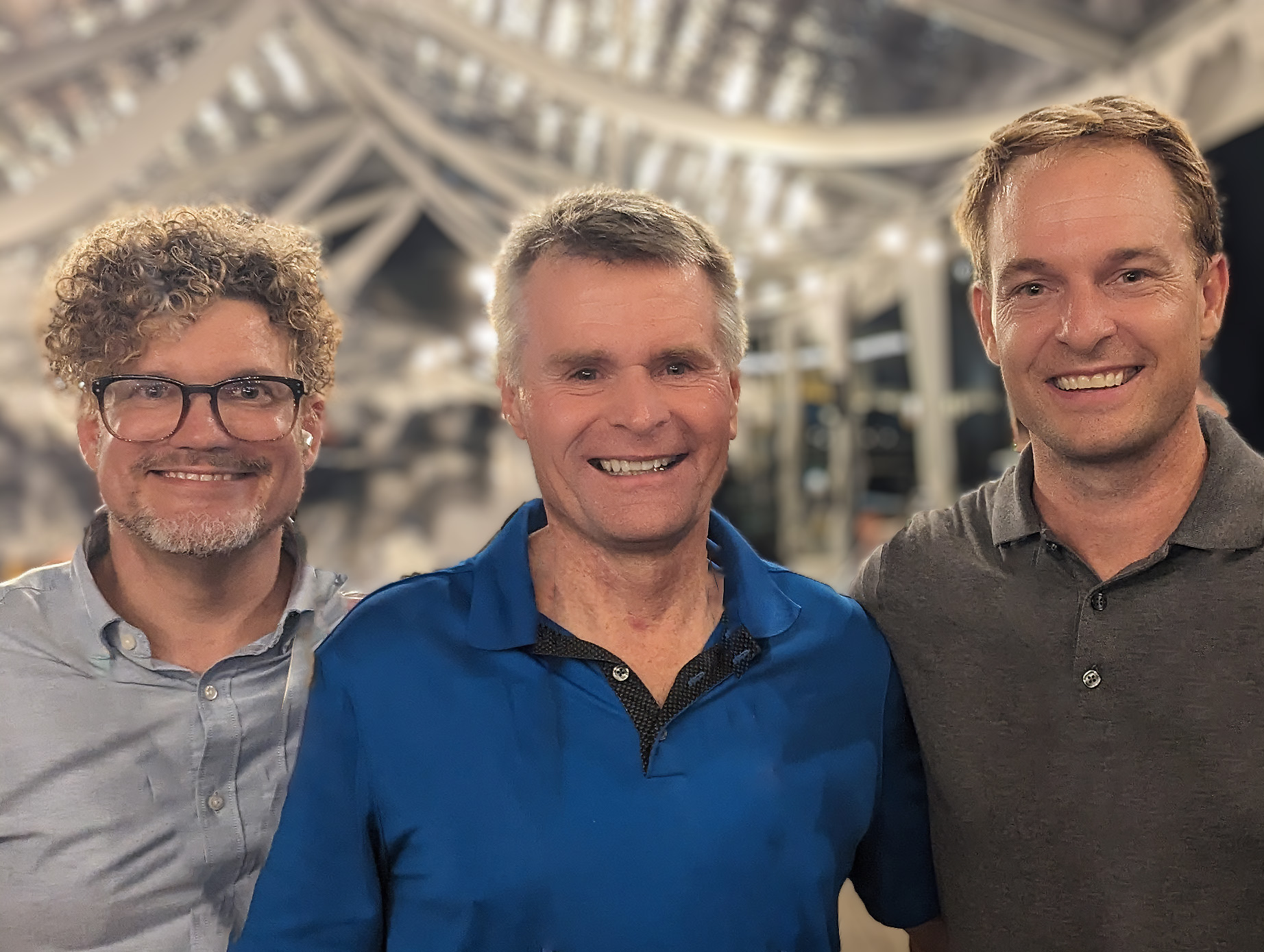
Three smiling team members
The SiC magnetometer team leads from JPL and GRC (left: Dr. Hannes Kraus, middle: Dr. Phillip Neudeck, right: Dr. Corey Cochrane) at the last International Conference on Silicon Carbide and Related Materials (ICSCRM) where their research is presented annually.

Acknowledgment: The research was carried out at the Jet Propulsion Laboratory, California Institute of Technology, under a contract with the National Aeronautics and Space Administration (80NM0018D0004) and the NASA Glenn Research Center.

Project Lead(s):

Dr. Corey Cochrane, Dr. Hannes Kraus, Jet Propulsion Laboratory/California Institute of Technology

Dr. Phil Neudeck, David Spry, NASA Glenn Research Center

Sponsoring Organization(s):

Science Mission Directorate PICASSO, JPL R&D fund

Powered by WPeMatico

Get The Details…

Cygnus Spacecraft Installed to Space Station; Cargo Ops Underway

Cygnus Spacecraft Installed to Space Station; Cargo Ops Underway

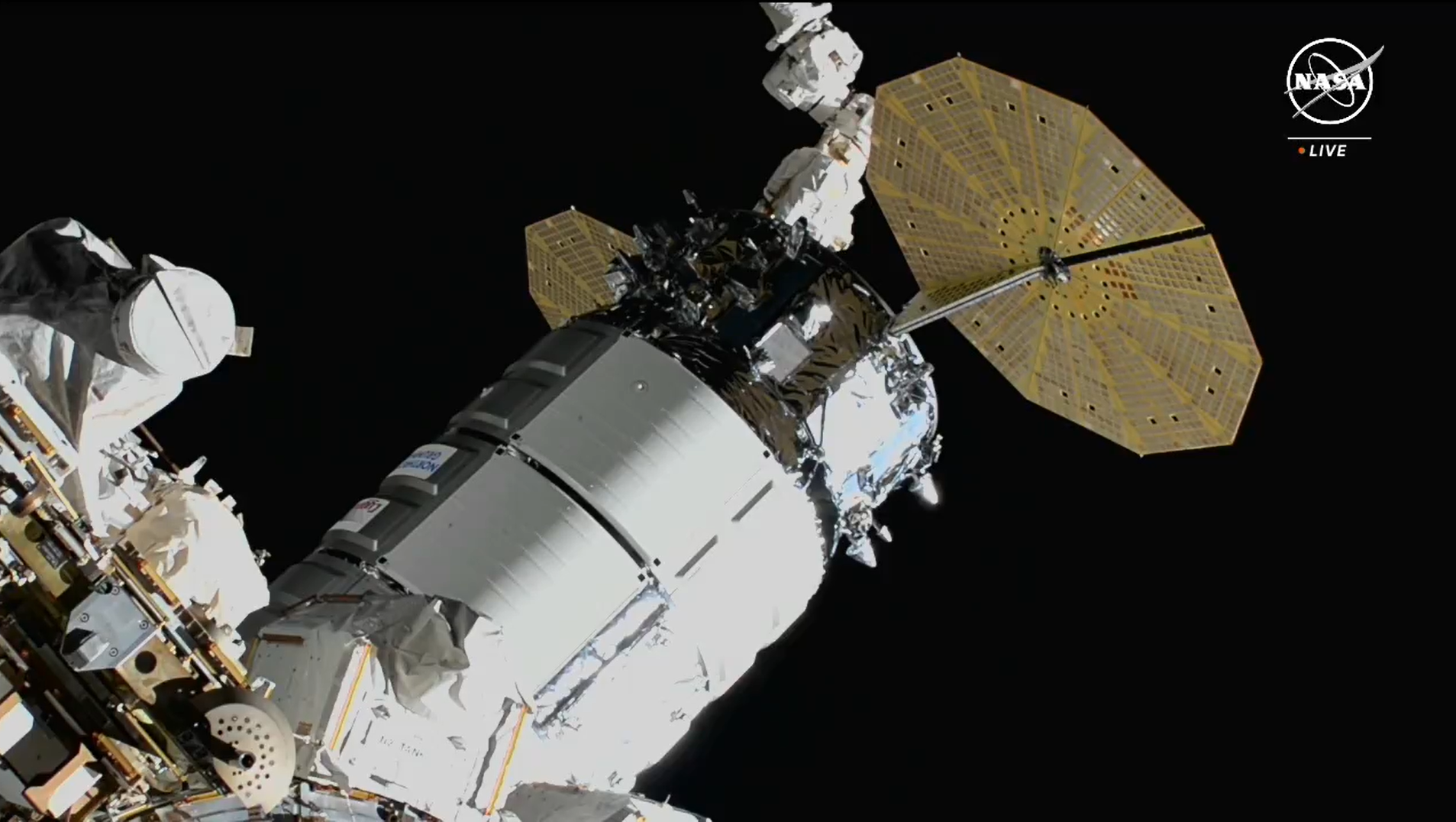
Northrop Grumman's Cygnus spacecraft is pictured attached to the Earth-facing port of the space station's Unity module on Aug. 6, 2024. Credit: NASA TV
Northrop Grumman’s Cygnus spacecraft is pictured attached to the Earth-facing port of the space station’s Unity module on Aug. 6, 2024. Credit: NASA TV

Northrop Grumman’s Cygnus spacecraft installation on the International Space Station is complete at 5:33 a.m. EDT.

The spacecraft carried 8,200 pounds of scientific investigations and cargo to the orbiting laboratory for Northrop Grumman’s 21st commercial resupply mission for NASA.

The mission launched at 11:02 a.m. Aug. 4 on a SpaceX Falcon 9 rocket from Space Launch Complex 40 at Cape Canaveral Space Force Station in Florida.

Cygnus will remain at the space station until January when it departs the orbiting laboratory at which point it will dispose of several thousand pounds of debris through its re-entry into Earth’s atmosphere where it will harmlessly burn up.


Learn more about station activities by following the space station blog, @space_station and @ISS_Research on X, as well as the ISS Facebook and ISS Instagram accounts.

Get weekly updates from NASA Johnson Space Center at: https://roundupreads.jsc.nasa.gov/

Get the latest from NASA delivered every week. Subscribe here: www.nasa.gov/subscribe

Powered by WPeMatico

Get The Details…

Abby Graf

Live NASA Coverage of Cygnus Installation Underway

Live NASA Coverage of Cygnus Installation Underway

Northrop Grumman's Cygnus spacecraft is pictured attached to the Canadarm2 robotic arm, moments after NASA astronaut Matthew Dominick maneuvered the robotic arm to capture the spacecraft ahead of installation to the Earth-facing port of the Unity module. Credit: NASA TV
Northrop Grumman’s Cygnus spacecraft is pictured attached to the Canadarm2 robotic arm, moments after NASA astronaut Matthew Dominick maneuvered the robotic arm to capture the spacecraft ahead of installation to the Earth-facing port of the Unity module. Credit: NASA TV

NASA’s coverage is underway for the installation of Northrop Grumman’s Cygnus spacecraft to the International Space Station on NASA+, NASA Television, the NASA app, YouTube, X, Facebook, and the agency’s website.

At 3:11 a.m. EDT, NASA astronaut Matthew Dominick, with NASA astronaut Jeanette Epps acting as backup, captured Northrop Grumman’s Cygnus spacecraft using the International Space Station’s Canadarm2 robotic arm as the station was flying about 260 miles over the South Atlantic Ocean.

The spacecraft is carrying 8,200 pounds of scientific investigations and cargo to the orbiting laboratory for Northrop Grumman’s 21st commercial resupply mission for NASA.

The mission launched at 11:02 a.m. Aug. 4 on a SpaceX Falcon 9 rocket from Space Launch Complex 40 at Cape Canaveral Space Force Station in Florida.

Cygnus will remain at the space station until January when it departs the orbiting laboratory at which point it will dispose of several thousand pounds of debris through its re-entry into Earth’s atmosphere where it will harmlessly burn up.


Learn more about station activities by following the space station blog, @space_station and @ISS_Research on X, as well as the ISS Facebook and ISS Instagram accounts.

Get weekly updates from NASA Johnson Space Center at: https://roundupreads.jsc.nasa.gov/

Get the latest from NASA delivered every week. Subscribe here: www.nasa.gov/subscribe

Powered by WPeMatico

Get The Details…

Abby Graf