Tundra Vegetation to Grow Taller, Greener Through 2100, NASA Study Finds

Tundra Vegetation to Grow Taller, Greener Through 2100, NASA Study Finds

4 min read

Preparations for Next Moonwalk Simulations Underway (and Underwater)

Warming global climate is changing the vegetation structure of forests in the far north. It’s a trend that will continue at least through the end of this century, according to NASA researchers. The change in forest structure could absorb more of the greenhouse gas carbon dioxide (CO2) from the atmosphere, or increase permafrost thawing, resulting in the release of ancient carbon. Millions of data points from the Ice, Cloud, and land Elevation Satellite 2 (ICESat-2) and Landsat missions helped inform this latest research, which will be used to refine climate forecasting computer models.
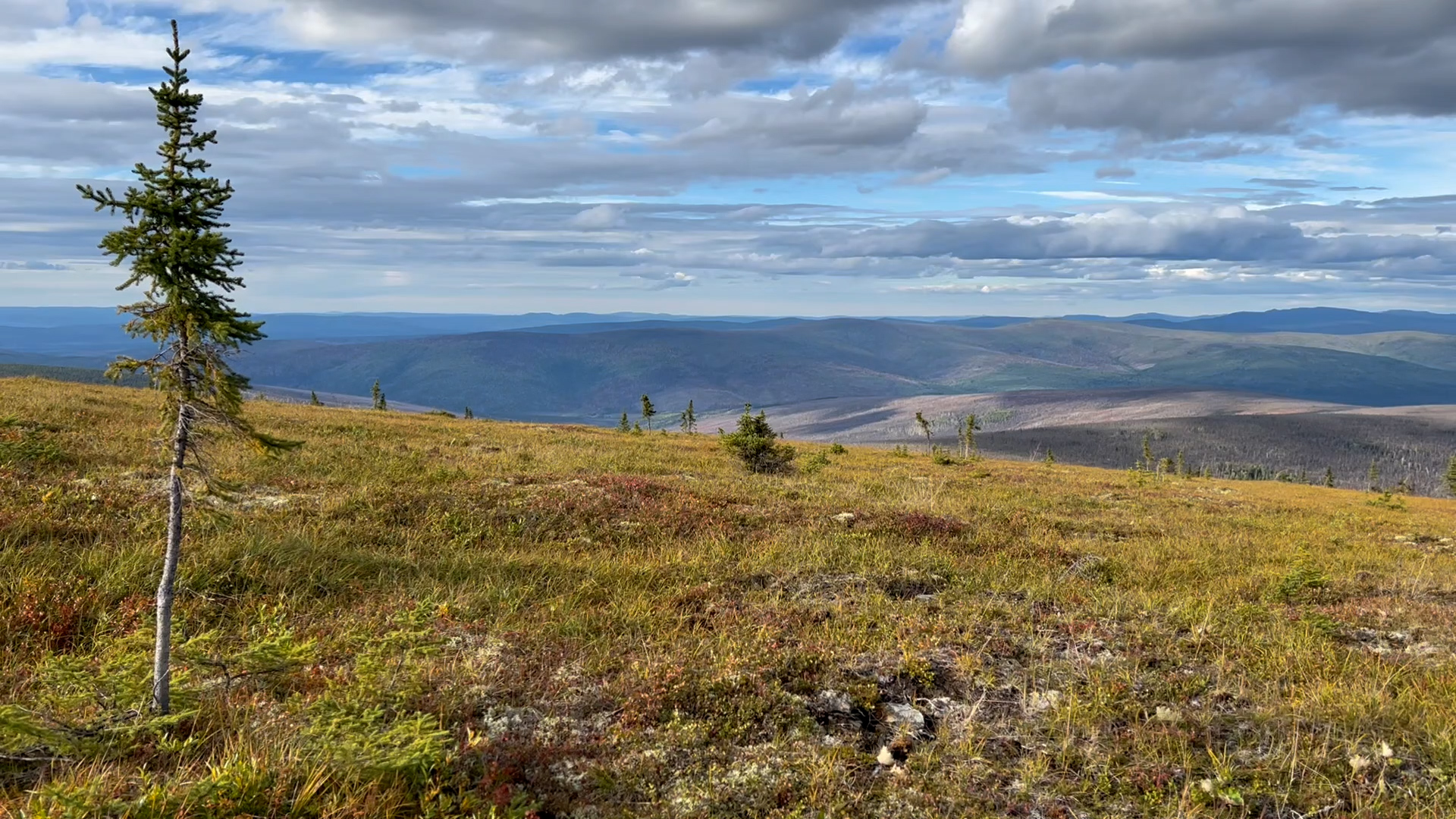
A landscape image. In the foreground on the left side of the image is a single small evergreen tree, with pine needles only at the top of the tree. The rest of the foreground is mostly a green/brown grass. The background shows some extending landscapes, but primarily is taken up by the sky, a light blue color that is covered by white and gray puffy clouds.
Landscape at Murphy Dome fire scar, outside of Fairbanks, Alaska, during the Arctic Boreal Vulnerability Experiment (ABoVE) in August 2022.
Credit: NASA/Katie Jepson

Tundra landscapes are getting taller and greener. With the warming climate, the vegetation of forests in the far north is changing as more trees and shrubs appear. These shifts in the vegetation structure of boreal forests and tundra will continue for at least the next 80 years, according to NASA scientists in a recently published study.

Boreal forests generally grow between 50 and 60 degrees north latitude, covering large parts of Alaska, Canada, Scandinavia, and Russia. The biome is home to evergreens such as pine, spruce, and fir. Farther north, the permafrost and short growing season of the tundra biome have historically made it hard to support large trees or dense forests. The vegetation in those regions has instead been made up of shrubs, mosses, and grasses.

The boundary between the two biomes is difficult to discern. Previous studies have found high-latitude plant growth increasing and moving northward into areas that earlier were sparsely covered in the shrubs and grasses of the tundra. Now, the new NASA-led study finds an increased presence of trees and shrubs in those tundra regions and adjacent transitional forests, where boreal regions and tundra meet. This is predicted to continue until at least the end of the century.

A rendered map of the northern United States and Canada. The ocean is depicted as a light blue, while most of the land is depicted in grayscale. Data is overlayed onto the image in splotches of purple and green. A scale is at the bottom of the image, with a label stating Change in Tree Canopy Cover 1984-2020
Data from the study depicted on a map of Alaska and Northern Canada highlighting the change in tree canopy cover extending into transitional landscapes. In boreal North America, the largest increases in canopy cover (dark green) have occurred in transitional tundra landscapes. These landscapes are found along the cold, northern extent of the study area and have historically supported mostly shrubs, mosses, and grasses.
Credit: NASA Earth Observatory/Wanmei Liang

“The results from this study advance a growing body of work that recognizes a shift in vegetation patterns within the boreal forest biome,” said Paul Montesano, lead author for the paper and research scientist at NASA Goddard’s Space Flight Center in Greenbelt, Maryland. “We’ve used satellite data to track the increased vegetation growth in this biome since 1984, and we found that it’s similar to what computer models predict for the decades to come. This paints a picture of continued change for the next 80 or so years that is particularly strong in transitional forests.”

Scientists found predictions of “positive median height changes” in all tundra landscapes and transitional – between boreal and tundra – forests featured in this study. This suggests trees and shrubs will be both larger and more abundant in areas where they are currently sparse.

“The increase of vegetation that corresponds with the shift can potentially offset some of the impact of rising CO2 emissions by absorbing more CO2 through photosynthesis,” said study co-author Chris Neigh, NASA’s Landsat 8 and 9 project scientist at Goddard. Carbon absorbed through this process would then be stored in the trees, shrubs, and soil.

The change in forest structure may also cause permafrost areas to thaw as more sunlight is absorbed by the darker colored vegetation. This could release CO2 and methane that has been stored in the soil for thousands of years.

In their paper published in Nature Communications Earth & Environment in May, NASA scientists described the mixture of satellite data, machine learning, climate variables, and climate models they used to model and predict how the forest structure will look for years to come. Specifically, they analyzed nearly 20 million data points from NASA’s ICESat-2. They then matched these data points with tens of thousands of scenes of North American boreal forests between 1984 to 2020 from Landsat, a joint mission of NASA and the U.S. Geological Survey. Advanced computing capabilities are required to create models with such large quantities of data, which are called “big data” projects.

An image taken from the viewpoint of the plane. The image is mostly showing a green landscape below, with strands of rivers and lakes interspersing the land.
Flight over the boreal landscapes of Fairbanks, Alaska, during the ABoVE field campaign in August 2022.
Credit: NASA/Sofie Bates

The ICESat-2 mission uses a laser instrument called lidar to measure the height of Earth’s surface features (like ice sheets or trees) from the vantage point of space. In the study, the authors examined these measurements of vegetation height in the far north to understand what the current boreal forest structure looks like. Scientists then modeled several future climate scenarios — adjusting to different scenarios for temperature and precipitation — to show what forest structure may look like in response.

“Our climate is changing and, as it changes, it affects almost everything in nature,” said Melanie Frost, remote sensing scientist at NASA Goddard. “It’s important for scientists to understand how things are changing and use that knowledge to inform our climate models.”

By Erica McNamee

NASA’s Goddard Space Flight Center, Greenbelt, Md.

Share

Details

Last Updated

Aug 06, 2024

Editor
Kate D. Ramsayer
Contact
Erica McNamee
Location
Goddard Space Flight Center

Powered by WPeMatico

Get The Details…
Erica McNamee
Tundra Vegetation to Grow Taller, Greener Through 2100, NASA Study Finds

Tundra Vegetation to Grow Taller, Greener Through 2100, NASA Study Finds

4 min read

Preparations for Next Moonwalk Simulations Underway (and Underwater)

Warming global climate is changing the vegetation structure of forests in the far north. It’s a trend that will continue at least through the end of this century, according to NASA researchers. The change in forest structure could absorb more of the greenhouse gas carbon dioxide (CO2) from the atmosphere, or increase permafrost thawing, resulting in the release of ancient carbon. Millions of data points from the Ice, Cloud, and land Elevation Satellite 2 (ICESat-2) and Landsat missions helped inform this latest research, which will be used to refine climate forecasting computer models.

A landscape image. In the foreground on the left side of the image is a single small evergreen tree, with pine needles only at the top of the tree. The rest of the foreground is mostly a green/brown grass. The background shows some extending landscapes, but primarily is taken up by the sky, a light blue color that is covered by white and gray puffy clouds.
Landscape at Murphy Dome fire scar, outside of Fairbanks, Alaska, during the Arctic Boreal Vulnerability Experiment (ABoVE) in August 2022.
Credit: NASA/Katie Jepson

Tundra landscapes are getting taller and greener. With the warming climate, the vegetation of forests in the far north is changing as more trees and shrubs appear. These shifts in the vegetation structure of boreal forests and tundra will continue for at least the next 80 years, according to NASA scientists in a recently published study.

Boreal forests generally grow between 50 and 60 degrees north latitude, covering large parts of Alaska, Canada, Scandinavia, and Russia. The biome is home to evergreens such as pine, spruce, and fir. Farther north, the permafrost and short growing season of the tundra biome have historically made it hard to support large trees or dense forests. The vegetation in those regions has instead been made up of shrubs, mosses, and grasses.

The boundary between the two biomes is difficult to discern. Previous studies have found high-latitude plant growth increasing and moving northward into areas that earlier were sparsely covered in the shrubs and grasses of the tundra. Now, the new NASA-led study finds an increased presence of trees and shrubs in those tundra regions and adjacent transitional forests, where boreal regions and tundra meet. This is predicted to continue until at least the end of the century.

A rendered map of the northern United States and Canada. The ocean is depicted as a light blue, while most of the land is depicted in grayscale. Data is overlayed onto the image in splotches of purple and green. A scale is at the bottom of the image, with a label stating Change in Tree Canopy Cover 1984-2020
Data from the study depicted on a map of Alaska and Northern Canada highlighting the change in tree canopy cover extending into transitional landscapes. In boreal North America, the largest increases in canopy cover (dark green) have occurred in transitional tundra landscapes. These landscapes are found along the cold, northern extent of the study area and have historically supported mostly shrubs, mosses, and grasses.
Credit: NASA Earth Observatory/Wanmei Liang

“The results from this study advance a growing body of work that recognizes a shift in vegetation patterns within the boreal forest biome,” said Paul Montesano, lead author for the paper and research scientist at NASA Goddard’s Space Flight Center in Greenbelt, Maryland. “We’ve used satellite data to track the increased vegetation growth in this biome since 1984, and we found that it’s similar to what computer models predict for the decades to come. This paints a picture of continued change for the next 80 or so years that is particularly strong in transitional forests.”

Scientists found predictions of “positive median height changes” in all tundra landscapes and transitional – between boreal and tundra – forests featured in this study. This suggests trees and shrubs will be both larger and more abundant in areas where they are currently sparse.

“The increase of vegetation that corresponds with the shift can potentially offset some of the impact of rising CO2 emissions by absorbing more CO2 through photosynthesis,” said study co-author Chris Neigh, NASA’s Landsat 8 and 9 project scientist at Goddard. Carbon absorbed through this process would then be stored in the trees, shrubs, and soil.

The change in forest structure may also cause permafrost areas to thaw as more sunlight is absorbed by the darker colored vegetation. This could release CO2 and methane that has been stored in the soil for thousands of years.

In their paper published in Nature Communications Earth & Environment in May, NASA scientists described the mixture of satellite data, machine learning, climate variables, and climate models they used to model and predict how the forest structure will look for years to come. Specifically, they analyzed nearly 20 million data points from NASA’s ICESat-2. They then matched these data points with tens of thousands of scenes of North American boreal forests between 1984 to 2020 from Landsat, a joint mission of NASA and the U.S. Geological Survey. Advanced computing capabilities are required to create models with such large quantities of data, which are called “big data” projects.

An image taken from the viewpoint of the plane. The image is mostly showing a green landscape below, with strands of rivers and lakes interspersing the land.
Flight over the boreal landscapes of Fairbanks, Alaska, during the ABoVE field campaign in August 2022.
Credit: NASA/Sofie Bates

The ICESat-2 mission uses a laser instrument called lidar to measure the height of Earth’s surface features (like ice sheets or trees) from the vantage point of space. In the study, the authors examined these measurements of vegetation height in the far north to understand what the current boreal forest structure looks like. Scientists then modeled several future climate scenarios — adjusting to different scenarios for temperature and precipitation — to show what forest structure may look like in response.

“Our climate is changing and, as it changes, it affects almost everything in nature,” said Melanie Frost, remote sensing scientist at NASA Goddard. “It’s important for scientists to understand how things are changing and use that knowledge to inform our climate models.”

By Erica McNamee

NASA’s Goddard Space Flight Center, Greenbelt, Md.

Share

Details

Last Updated

Aug 06, 2024

Editor
Kate D. Ramsayer
Contact
Erica McNamee
Location
Goddard Space Flight Center

Powered by WPeMatico

Get The Details…
Erica McNamee
Collegiate Teams to Focus on Aviation Solutions for Agriculture in 2025 Gateways to Blue Skies Competition  

Collegiate Teams to Focus on Aviation Solutions for Agriculture in 2025 Gateways to Blue Skies Competition  

4 min read

Preparations for Next Moonwalk Simulations Underway (and Underwater)

Students attending the 2024 Blue Skies Competition toured NASA’s Ames Research Center during the Forum.
Students attending the 2024 Blue Skies Competition toured NASA’s Ames Research Center during the Forum. 
NASA

In the 2025 Gateways to Blue Skies Competition, the theme is AgAir: Aviation Solutions for Agriculture. NASA asks collegiate teams to investigate either new or improved aviation capabilities that could assist the agriculture industry by improving production, efficiency, environmental impact and extreme weather/climate resilience. 

The agriculture industry plays a vital role in providing food, fuel, and fiber for the global population; however, it is facing several challenges, including limited resources and growing demands to reduce agriculture’s environmental impact while increasing its climate resilience. With a growing world population, the demand for food continues to rise, putting pressure on available resources such as arable land, water, and energy. The changing climate exacerbates these challenges by leading to unpredictable weather patterns, extreme temperatures and natural disasters affecting crop yields and livestock. NASA Aeronautics is dedicated to expanding its efforts to assist commercial, industry, and government partners in advancing aviation systems that could modernize capabilities in agriculture. 

“This is an area where innovative aviation technologies can really make an impact on an industry that is so vital to the health and sustainability of our planet,” said Dr. Bradley Doorn, Program Manager for NASA’s Applied Sciences agriculture area. “The agriculture industry is already on the forefront of technology adoption to support growing demands on production, from quantity to quality to withstanding increasing environmental and social pressures. More opportunities exist to help with a wide range of applications, particularly within aviation systems. It could be very exciting to see what students conceptualize within this theme.” 

Sponsored by NASA’s Aeronautics Research Mission Directorate’s (ARMD’s) University Innovation (UI) Project, the Gateways to Blue Skies competition (aka Blue Skies) encourages diverse, multidisciplinary teams of college students to conceptualize unique systems-level ideas and analysis to an aviation-themed problem identified annually. It aims to engage as many students as possible – from all backgrounds, majors, and collegiate levels, freshman to graduate.  

In this competition, participating students in teams of two to six will select an aviation system or systems that can be applied to a specific area of agriculture. Competitors must choose technologies that can be deployable by 2035 or sooner.  

Teams will submit concepts in a five-to-seven-page proposal and accompanying two-minute video, which will be judged in a competitive review process by NASA and industry experts. Up to eight finalist teams will receive up to $8,000 each to continue their research to develop a final research paper and infographic, and to attend the 2025 Blue Skies Forum to be held in May 2025 at NASA’s Armstrong Flight Research Center. Forum winners who fulfill eligibility criteria will be offered the opportunity to intern with NASA Aeronautics in the academic year following the Forum.  

“Going into our fourth year, we continue to see excitement increasing both at NASA and throughout the universities for the Gateway to Blue Skies Competition,” said Steven Holz, UI Assistant Project Manager and Blue Skies Co-Chair. “Aviation solutions to this year’s challenge could have monumental impacts on the future of the agricultural industry, which is the foundation of our everyday lives.” 

Teams interested in participating in the competition should review competition guidelines and eligibility requirements posted on the Blue Skies competition website, https://blueskies.nianet.org. Teams are encouraged to submit a non-binding Notice of Intent (NOI) by October 22, 2024, via the website. Submitting an NOI ensures teams stay apprised of competition news. The proposal and video are due February 17, 2025. 

Blue Skies is sponsored by NASA’s Aeronautics Research Mission Directorate’s (ARMD’s) University Innovation Project (UI) and is managed by the National Institute of Aerospace (NIA).  

For full competition details, including design guidelines and constraints, relevant resources, and information on how to apply, visit the Blue Skies website at: 

For more information about NASA’s Aeronautics Research Mission Directorate, visit: https://www.nasa.gov/aeroresearch/programs   

For more information about the National Institute of Aerospace, visit: www.nianet.org  

Share

Details

Last Updated

Aug 06, 2024

Powered by WPeMatico

Get The Details…
Angelique Herring

Celebrate Heliophysics Big Year: Free Monthly Webinars on the Sun Touches Everything

Celebrate Heliophysics Big Year: Free Monthly Webinars on the Sun Touches Everything

2 min read

Celebrate Heliophysics Big Year: Free Monthly Webinars on the Sun Touches Everything

Once a month (usually on the first Tuesday), the Heliophysics Education Community meets online to share knowledge and opportunities. During the Heliophysics Big Year (HBY) – a global celebration of the Sun’s influence on Earth and the entire solar system, beginning with the Annular Solar Eclipse on October 14, 2023, continuing through the Total Solar Eclipse on April 8, 2024, and concluding with the Parker Solar Probe’s closest approach to the Sun in December, 2024 – the meetings are structured to include short presentations by subject matter experts both inside and outside NASA.

Challenged by the NASA Heliophysics Division to participate in as many Sun-related activities as possible, the NASA Heliophysics Education community has been hosting these short monthly presentations for formal and informal educators, science communicators, and other heliophysics enthusiasts to promote the understanding of heliophysics in alignment with monthly HBY themes. Presenters and team members from the NASA Science Activation program’s NASA Heliophysics Education Activation Team (NASA HEAT) connect these themes with the Framework of Heliophysics Education in mind, mapping them directly to the Next Generation Science Standards (NGSS) – a set of research-based science content standards for grades K–12. Using the three main questions that heliophysicists investigate as a foundation, NASA HEAT cross-references heliophysics topics with the NGSS Disciplinary Core Ideas to create NGSS-aligned “heliophysics big ideas.” These community meetings welcome an average of 30 attendees, but NASA celebrated a record-breaking 234 attendees for the July meeting, which explored the Sun’s impact on physical and mental health.

Everyone is welcome to participate in upcoming presentations and topics on the following dates at 1 p.m. EDT:

8/6/24 Youth/Informal Education – NASA PUNCH Mission
9/02/24 Environment and Sustainability – Solar Sail
10/15/24 Solar Cycle and Solar Max – National Solar Observatory
11/19/24 Bonus Science
12/03/24 Parker’s Perihelion

Join the Meeting

NASA HEAT is part of NASA’s Science Activation Portfolio. Learn more about how Science Activation connects NASA science experts, real content, and experiences with community leaders to do science in ways that activate minds and promote deeper understanding of our world and beyond: https://science.nasa.gov/learn

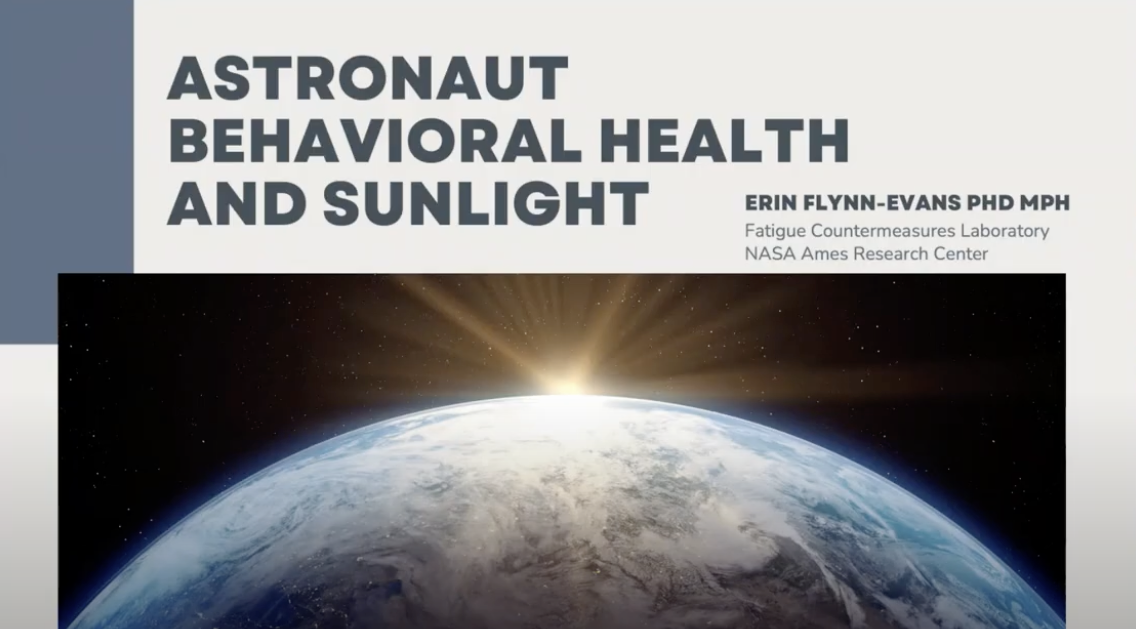
An image with a bright light over planet Earth.
Dr. Erin Flynn-Evans of NASA Ames Research Center gave a short presentation of her research on how sunlight affects the behavioral health of astronauts.

Powered by WPeMatico

Get The Details…

Artemis Emergency Egress System Emphasizes Crew Safety 

Artemis Emergency Egress System Emphasizes Crew Safety 

Image shows egress baskets that will transport astronauts and personnel from the crew access arm to the launch pad in case of an emergency
Teams with NASA’s Exploration Ground Systems Program, in preparation for the agency’s Artemis II crewed mission to the Moon, conduct testing of four emergency egress baskets on the mobile launcher at Launch Complex 39B at the agency’s Kennedy Space Center in Florida in July 2024. The baskets are used in the case of a pad abort emergency to allow astronauts and other pad personnel to escape quickly from the mobile launcher to the base of the pad to be driven to safety by emergency transport vehicles.
NASA/Amanda Arrieta

Since NASA began sending astronauts to space, the agency has relied on emergency systems for personnel to safely leave the launch pad and escape the hazard in the unlikely event of an emergency during the launch countdown.  

During the Mercury and Gemini programs, NASA used launch escape systems on spacecraft for the crew to safely evacuate if needed. Though these systems are still in use for spacecraft today, the emergency routes on the ground were updated starting with the Apollo missions to account for not only the crew, but all remaining personnel at the launch pad. 

During Apollo, personnel relied on a ground-based emergency egress system – or emergency exit route – to allow for a quick and safe departure. Though the system has varied over time and different launch pads use different escape systems, the overall goal has stayed the same – quickly leave the launch pad and head to safety.  

Beginning with Artemis II, the Exploration Ground Systems (EGS) Program at Kennedy Space Center in Florida, will use a track cable which connects the mobile launcher to the perimeter area of the launch pad where four baskets, similar to gondolas at ski lifts, can ride down. Once down at the ground level, armored emergency response vehicles are stationed to take personnel safely away from the launch pad to one of the triage site locations at Kennedy. 

“We have four baskets that sit on the side of the mobile launcher tower at the same level as the crew access arm, the location where the crew enters the spacecraft,” said Amanda Arrieta, mobile launcher 1 senior element engineer for NASA’s EGS Program. “The intention is to provide another means of egress for the crew and the closeout crew in the event of an emergency. Each of these baskets will go down a wire. It’s a wire rope system that connects to the pad terminus, an area near the pad perimeter where the baskets will land after leaving the mobile launcher tower.” 

Infographic shows the route astronauts and personnel would take during an emergency abort situation. Credit: NASA

The Artemis system works like this: personnel will exit the Orion spacecraft or the white room (depending where teams are at the time of the emergency) inside the crew access arm of the mobile launcher. Located on the 274-foot-level, teams are approximately 375 feet above the ground. From there, they will head down the 1,335-foot-long cables inside the emergency egress baskets to the launch pad perimeter, or the pad terminus area. Each basket, which is similar in size to a small SUV, is designed to carry up to five people or a maximum weight of 1,500 pounds.

Once teams have left the terminus area and arrive at the triage site location, emergency response crews are there to evaluate and take care of any personnel. 

“When we send our crews to the pad during launch, their safety is always at the forefront of our minds. While it is very unlikely that we will need the emergency egress and pad abort systems, they are built and tested to ensure that if we do need them then they are ready to go,” said Charlie Blackwell-Thompson, Artemis launch director. “Our upcoming integrated ground systems training is about demonstrating the capability of the entire emergency egress response from the time an emergency condition is declared until we have the crews, both flight and ground, safely accounted for outside the hazardous area.”  

For the agency’s Commercial Crew Program, SpaceX uses a slidewire cable with baskets that ride down the cable at the Launch Complex 39A pad. At Space Launch Complex 40, meanwhile, the team uses a deployable chute for its emergency egress system. Boeing and United Launch Alliance also use a slidewire, but instead of baskets, the team deploys seats that ride down the slide wires, similar to riding down a zip line, at Space Launch Complex 41 at Cape Canaveral Space Force Station.  

Artemis II will be NASA’s first mission with crew aboard the SLS (Space Launch System) rocket and Orion spacecraft and will also introduce several new ground systems for the first time – including the emergency egress system. Though no NASA mission to date has needed to use its ground-based emergency egress system during launch countdown, those safety measures are still in place and maintained as a top priority for the agency. 

Powered by WPeMatico

Get The Details…
Antonia Jaramillo