Disaster Response Coordination System (DRCS) Formally Launches
The NASA Disasters Response Coordination System (DRCS) formally launched on 6/13/24 during a ceremony at NASA Headquarters with Administrator Nelson as the keynote speaker. The DRCS is a revamped one NASA approach in how the agency responds to natural hazards and disasters domestically and internationally to support partners and stakeholders The DRCS will be organized by the Program Office located at LaRC. MSFC and Earth Science Branch Disasters team will continue to support the DRCS and events that agency respond too by tapping into expertise and subject matter expertise here at MSFC. MSFC was represented at the DRCS launch by Center Response Coordinators Jordan Bell (ST11), Ronan Lucey (ST11/UAH) and Earth Action Associate Disasters Program Manager Lori Schultz (ST11). Additional information about the DRCS launch can be found here: https://science.nasa.gov/earth/natural-disasters/nasa-announces-new-system-to-aid-disaster-response/.
Sols 4263-4265: A Royal Birthday Celebration at Kings Canyon
3 min read
Sols 4263-4265: A Royal Birthday Celebration at Kings Canyon
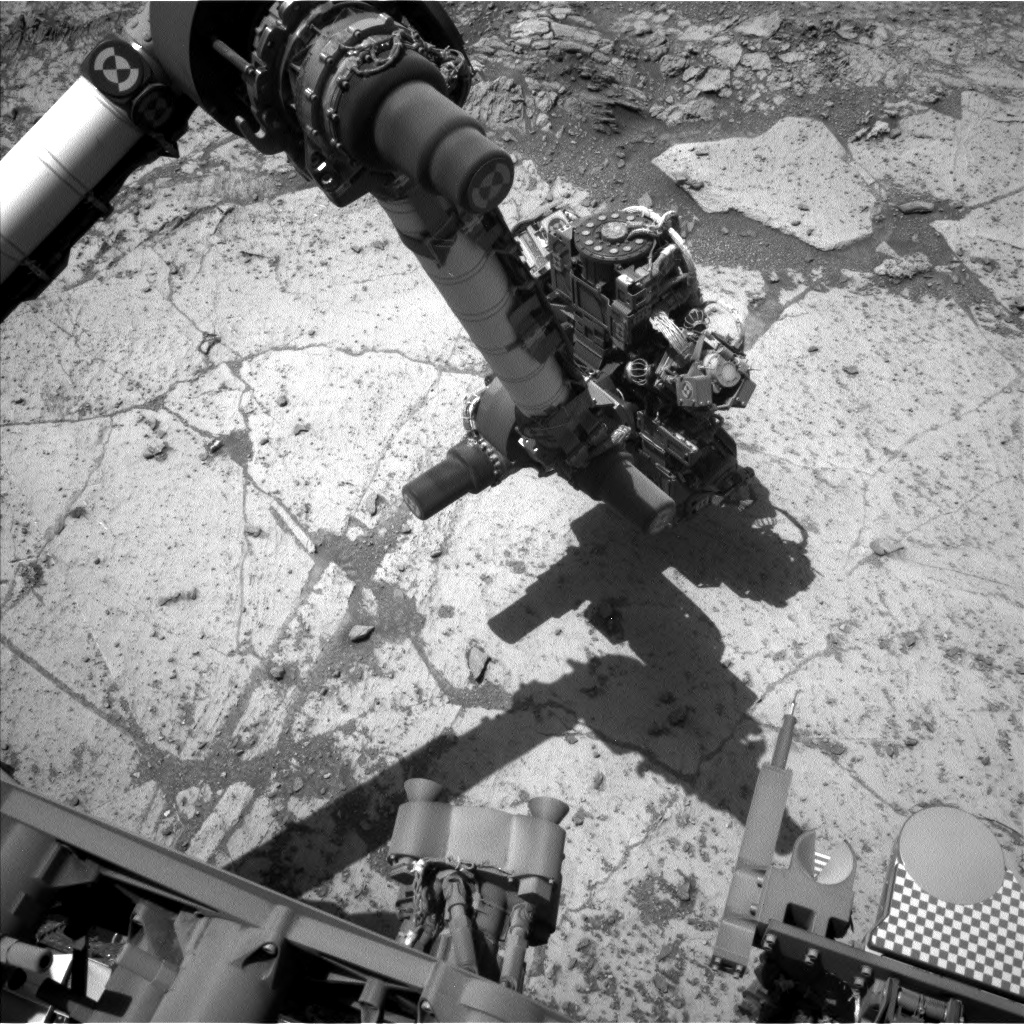
This image captures the rover arm conducting the preload test on “Kings Canyon” from Drill Sol 1 to determine whether the target is safe to drill.
Earth planning date: Friday, Aug. 2, 2024
Prepare your party poppers, horns, and confetti! On Aug. 6 (EDT), after 4,265 Martian sols since Curiosity first landed in Gale Crater, the rover will be turning 12 years old. I still remember the excitement of watching Curiosity’s landing back when I started high school. Now, as a “Keeper of the Plan” for the Geology and Mineralogy theme group, I have the incredible opportunity to be part of this mission. To mark the end of the 12th year, Curiosity is currently parked within a large valley called Gediz Vallis, all primed and ready to drill “Kings Canyon” (pictured).
The previous plan involved conducting a preload test in Drill Sol 1, to ensure we could drill safely. The test was successful, confirming that Kings Canyon is safe to drill! The team was also happy with the chemical composition data from the APXS (Alpha Particle X-ray Spectrometer) results, so we are all set to drill a new king!
On the first sol, we’ll conduct Drill Sols 2 and 3, where the actual drilling will take place and the drilled material will be subsequently characterized. Alongside drilling, we also plan to capture a MAHLI (Mars Hand Lens Imager) image of a relatively peaceful target called “RAGE.” (This target is the site where the rover will later perform the RAGE activity to clean up after drilling.) On the second sol, we’ll perform a LIBS (Laser Induced Breakdown Spectrometer) analysis on “Lake Eleanor,” a rock crushed by Curiosity’s wheel, revealing light-toned material. Additionally, we will conduct a ChemCam passive observation on a section of the Gediz Vallis channel floor.
The third sol is packed with scientific activities. We’ll conduct a LIBS on “Lyell Glacier,” a rock with different colored coatings to compare with dark-toned coatings seen by the Perseverance rover. ChemCam will take the opportunity to capture a long-distance Remote Micro-Imager (RMI) shot of an arm of “Milestone Peak,” which is full of gray rocks aligned in a slightly different direction from the rest of the ridge within the center of Gediz Vallis. We also plan to capture four Mastcam mosaics: one of the southern section of a large hill called “Kukenan” and three mosaics documenting the different textures, structures, and lithologies of the deposits within the valley floor. Furthermore, a ChemCam Passive Sky observation and atmospheric monitoring activities in the morning are also on the agenda.
As we prepare for these exciting activities, the anticipation builds for Curiosity’s 12th birthday. Here’s to many more years of exploration and discovery on the Red Planet!
Written by Amelie Roberts, Ph.D. candidate at Imperial College London
Sols 4263-4265: A Royal Birthday Celebration at Kings Canyon
3 min read
Sols 4263-4265: A Royal Birthday Celebration at Kings Canyon
This image captures the rover arm conducting the preload test on “Kings Canyon” from Drill Sol 1 to determine whether the target is safe to drill.
Earth planning date: Friday, Aug. 2, 2024
Prepare your party poppers, horns, and confetti! On Aug. 6 (EDT), after 4,265 Martian sols since Curiosity first landed in Gale Crater, the rover will be turning 12 years old. I still remember the excitement of watching Curiosity’s landing back when I started high school. Now, as a “Keeper of the Plan” for the Geology and Mineralogy theme group, I have the incredible opportunity to be part of this mission. To mark the end of the 12th year, Curiosity is currently parked within a large valley called Gediz Vallis, all primed and ready to drill “Kings Canyon” (pictured).
The previous plan involved conducting a preload test in Drill Sol 1, to ensure we could drill safely. The test was successful, confirming that Kings Canyon is safe to drill! The team was also happy with the chemical composition data from the APXS (Alpha Particle X-ray Spectrometer) results, so we are all set to drill a new king!
On the first sol, we’ll conduct Drill Sols 2 and 3, where the actual drilling will take place and the drilled material will be subsequently characterized. Alongside drilling, we also plan to capture a MAHLI (Mars Hand Lens Imager) image of a relatively peaceful target called “RAGE.” (This target is the site where the rover will later perform the RAGE activity to clean up after drilling.) On the second sol, we’ll perform a LIBS (Laser Induced Breakdown Spectrometer) analysis on “Lake Eleanor,” a rock crushed by Curiosity’s wheel, revealing light-toned material. Additionally, we will conduct a ChemCam passive observation on a section of the Gediz Vallis channel floor.
The third sol is packed with scientific activities. We’ll conduct a LIBS on “Lyell Glacier,” a rock with different colored coatings to compare with dark-toned coatings seen by the Perseverance rover. ChemCam will take the opportunity to capture a long-distance Remote Micro-Imager (RMI) shot of an arm of “Milestone Peak,” which is full of gray rocks aligned in a slightly different direction from the rest of the ridge within the center of Gediz Vallis. We also plan to capture four Mastcam mosaics: one of the southern section of a large hill called “Kukenan” and three mosaics documenting the different textures, structures, and lithologies of the deposits within the valley floor. Furthermore, a ChemCam Passive Sky observation and atmospheric monitoring activities in the morning are also on the agenda.
As we prepare for these exciting activities, the anticipation builds for Curiosity’s 12th birthday. Here’s to many more years of exploration and discovery on the Red Planet!
Written by Amelie Roberts, Ph.D. candidate at Imperial College London
How Do I Navigate NASA Learning Resources and Opportunities?
4 Min Read
How Do I Navigate NASA Learning Resources and Opportunities?
NASA offers a variety of platforms and resources to support kindergarten through college educators in bringing the excitement of exploration and discovery to students in the classroom and beyond. From in-depth lesson plans to supplemental videos and activities, the resources below can help educators develop an out-of-this world curriculum and create unforgettable experiences for their students.
Where Can I Find NASA STEM Learning Resources for My Classroom?
NASA’s website has a dedicated section for the agency’s learning resources: nasa.gov/learning-resources. Using the navigation bar, educators can click through to find dedicated pages with STEM resources for K-4, 5-8, and 9-12 grade bands.
Looking for something in particular for your curriculum? Try the NASA STEM Resource Search tool to explore hands-on activities, interactive features, videos, lesson plans, educator guides, and more. Browse the nearly 2,000 resources or search by grade level, subject, or keywords.
NASA also offers a range of resources and community-based projects that invite learners of all ages to participate in authentic science across the U.S. and the world through the Science Activation (SciAct) program. In addition to traditional classroom resources, NASA has a webpage dedicated to citizen science opportunities around the globe, which can be fun to participate in as a class.
How Do I Connect My Classroom With a NASA Expert?
NASA has several pathways for getting a NASA expert involved with your classroom.
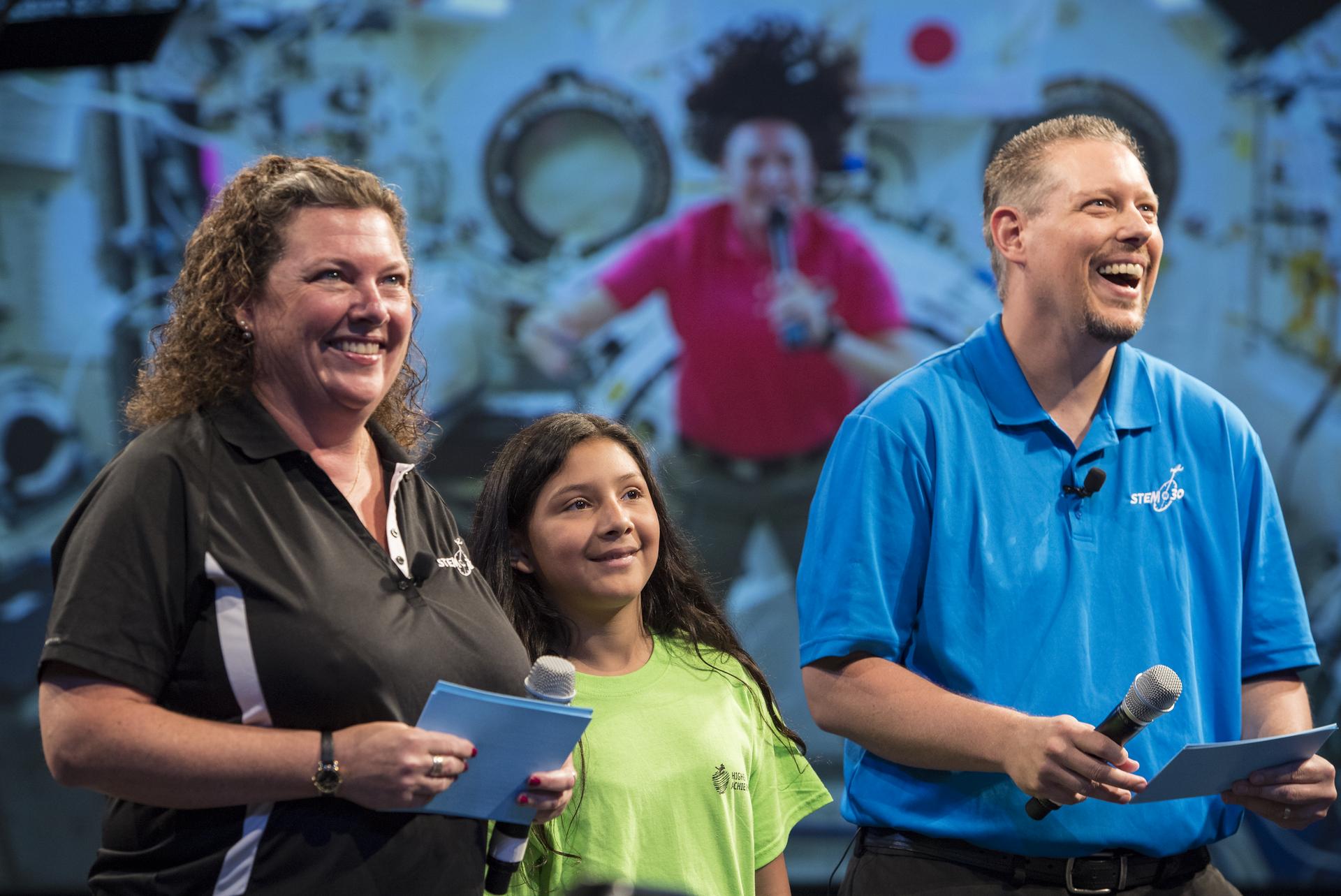
Students can get questions answered by astronauts living and working aboard the International Space Station through In-Flight Education Downlinks. These twenty-minute live Q&A sessions are available to U.S.-based education organizations. Applications are accepted during several proposal periods each year.
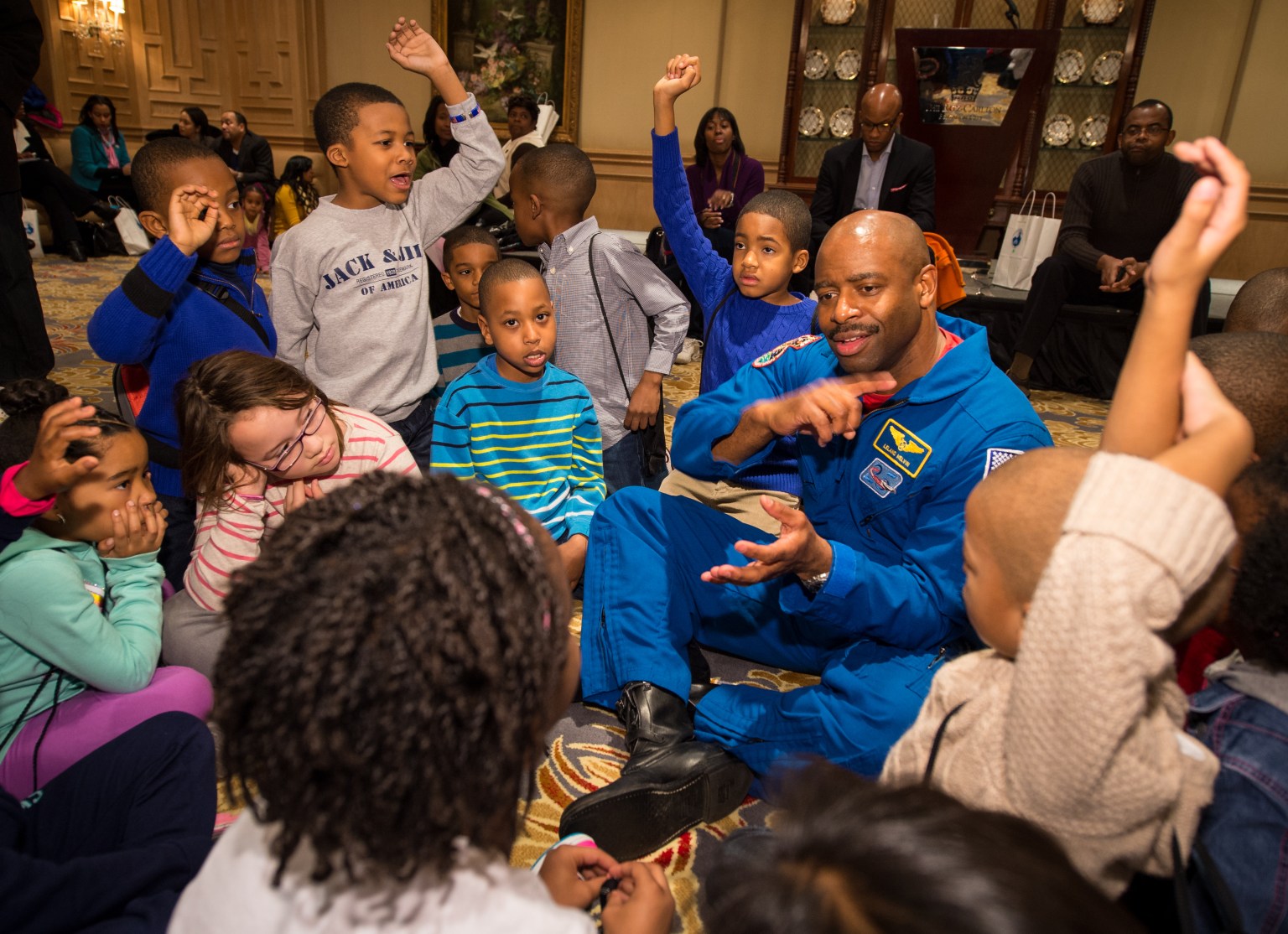
Educators can also request classroom engagements with NASA engineers, scientists, and other professionals through the NASA Engages program. The program connects NASA experts with U.S. students ranging from preschool to college, through formal or informal education groups such as libraries, museums, professional and technical organizations, afterschool programs, and other non-profit organizations. Requests can be made in the NASA STEM Gatewayplatform after creating an account.
NASA STEM Gateway is also the portal where educators and students can sign up for other NASA opportunities, such asinternships, student challenges, and more.
How Can I Obtain an Authentic Space Program Artifact for Use in My Classroom?
U.S. K-12 schools, universities, and other organizations may be eligible to request an authentic NASA artifact to help bring STEM lessons to life in the classroom. NASA considers an “artifact” to be an object representing historically significant or innovative achievements in spaceflight, aviation, technology, or science. Through NASA’s Artifact Module, browse through the agency’s trove of objects and request an item that will spark inspiration or understanding among students in the Artemis Generation.
How Can I Find Out About New NASA STEM Resources and Opportunities?
To learn about the latest NASA STEM resources and opportunities, follow NASA STEM on X,Facebook,Pinterest, and YouTube. NASA also publishes a weekly e-newsletter for teachers, parents, caregivers, and students. Sign up for the NASA EXPRESS newsletter to get the latest NASA STEM opportunities delivered to your inbox every Thursday. It’s an easy way to stay up to date on internships, challenges, professional development, and more.
NASA also has an online community of practice for formal and informal educators called CONNECTS (Connecting Our NASA Network of Educators for Collaborating Together in STEM). On the CONNECTS platform, new and experienced professionals in STEM education can join discussions, share best practices, learn about the latest events and opportunities at NASA, participate in professional development opportunities, and download free STEM products available by topic or grade level. Registered community members can chat with other members who are interested in similar fields and can find nearby members with whom they can collaborate.
More About STEM Learning Resources and Opportunities at NASA
NASA Engagement Platform Brings Experts to Classrooms, Communities
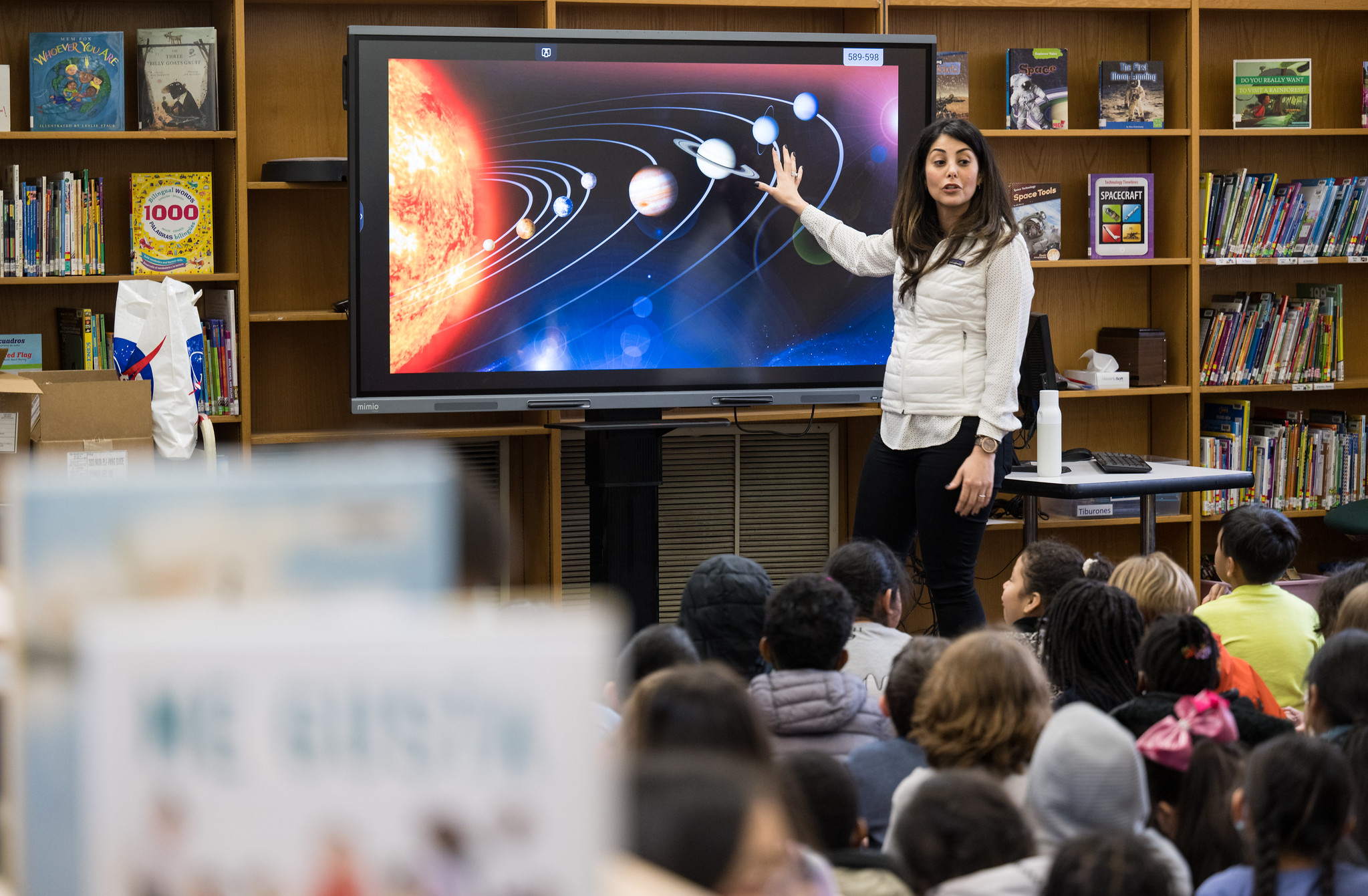
NASA Technical Group Supervisor for Sequence Planning and Execution and Tactical Mission Lead for the Mars Perseverance rover, Diana Trujillo, speaks to students at Rolling Terrace Elementary School, Monday, March 13, 2023, in Takoma Park, Maryland. Photo Credit: (NASA/Aubrey Gemignani)
NASA/Aubrey Gemignani
With a new school year on the horizon, NASA is introducing a platform to connect communities with agency experts to share their experiences working on agency missions and programs for the benefit of humanity.
Continuing a long-standing tradition of connecting the public with science, technology, engineering, and math, NASA Engages augments the agency’s speaker’s bureau program to inspire the Artemis Generation. The platform includes a database of agency employees of various expertise, skillsets, and backgrounds. The public may request a NASA expert to participate in educational, professional, and civic events, either virtually or in person, by submitting a request through the NASA Engages page:
“With NASA Engages, the agency is creating new avenues for communities to learn about STEM, while making genuine connections with the diverse, talented experts within our agency,” said Mike Kincaid, associate administrator, Office of STEM Engagement at NASA Headquarters in Washington. “Representation is key – our ability to meet people where they are is enhanced when our experts reflect the communities they are speaking to. Whether it’s a heliophysics panel in Denver or an elementary school in Florida, anyone can bring NASA to their neighborhood with Engages.”
Managed by NASA’s Office of STEM Engagement in coordination with the agency’s Office of Diversity and Equal Opportunity and Office of Communications, NASA Engages is open to all types of public speaking engagements. Audiences include preschool to college, libraries and museums, youth organizations, professional and technical organizations, community groups and other non-profit organizations. Engages also is not just limited to speaking engagements – the public may request science fair judges, emcees at award ceremonies, and more.
Requests should be submitted at least seven weeks in advance for U.S. events to allow adequate lead time for representatives to coordinate support and ensure minimal disruption to their work schedules. Preference will be given to virtual events. International requests can be submitted via email and will soon be available through NASA Engages. In the meantime, submit those requests via email to: HQ-NASAEngages@mail.nasa.gov.
Participation is voluntary, and while every effort will be made to accommodate requests, there is no guarantee of fulfillment.