Webb Finds Early Galaxies Weren’t Too Big for Their Britches After All
5 Min Read
Webb Finds Early Galaxies Weren’t Too Big for Their Britches After All
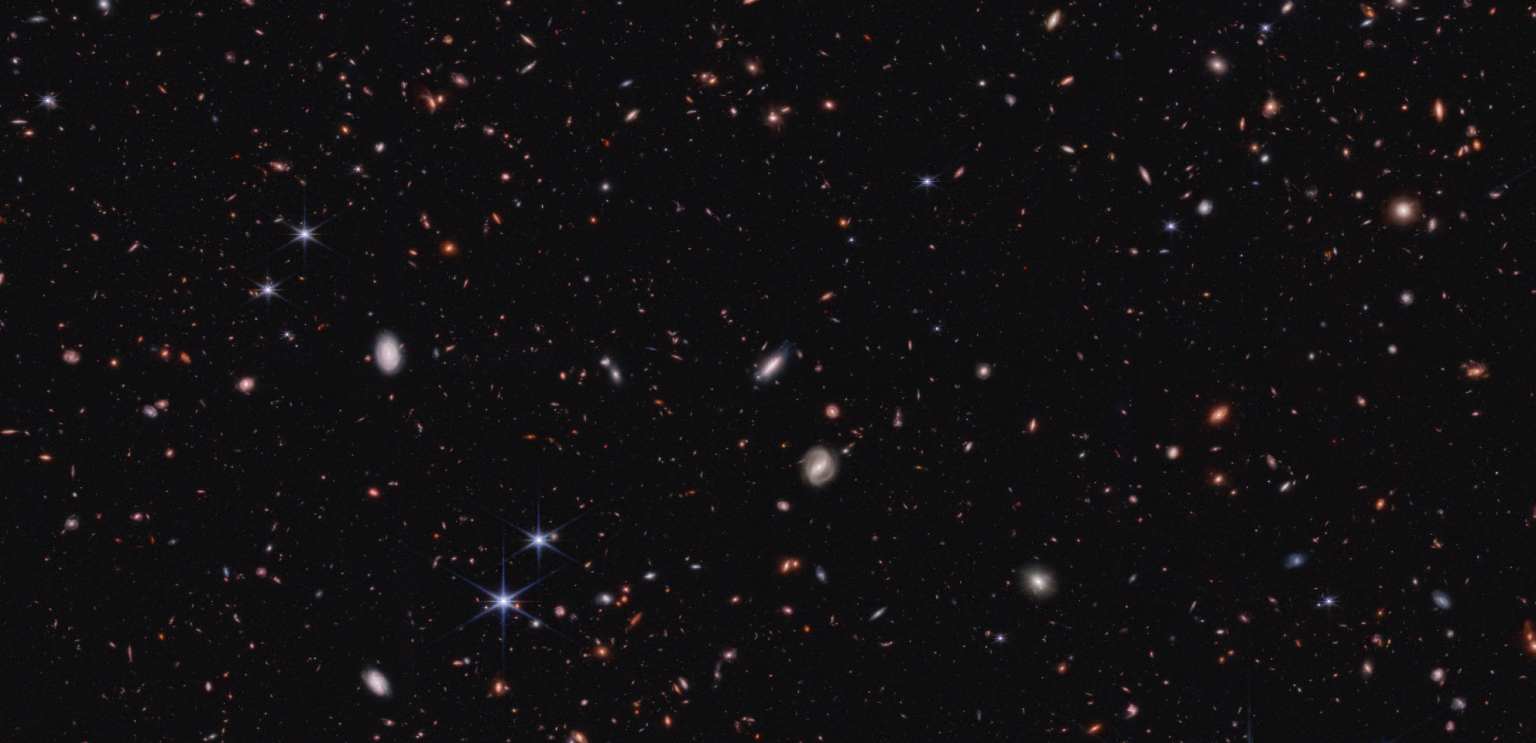
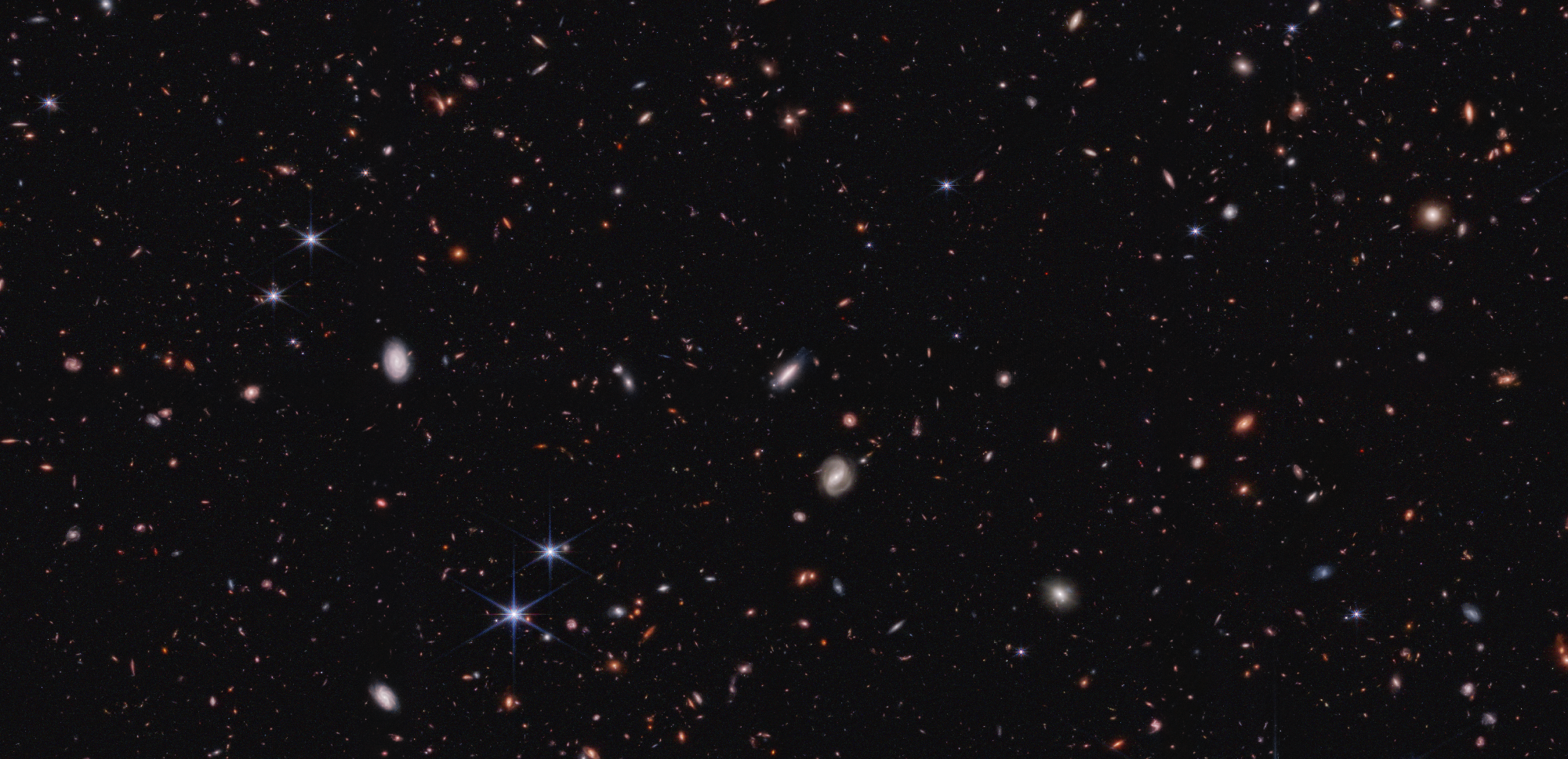
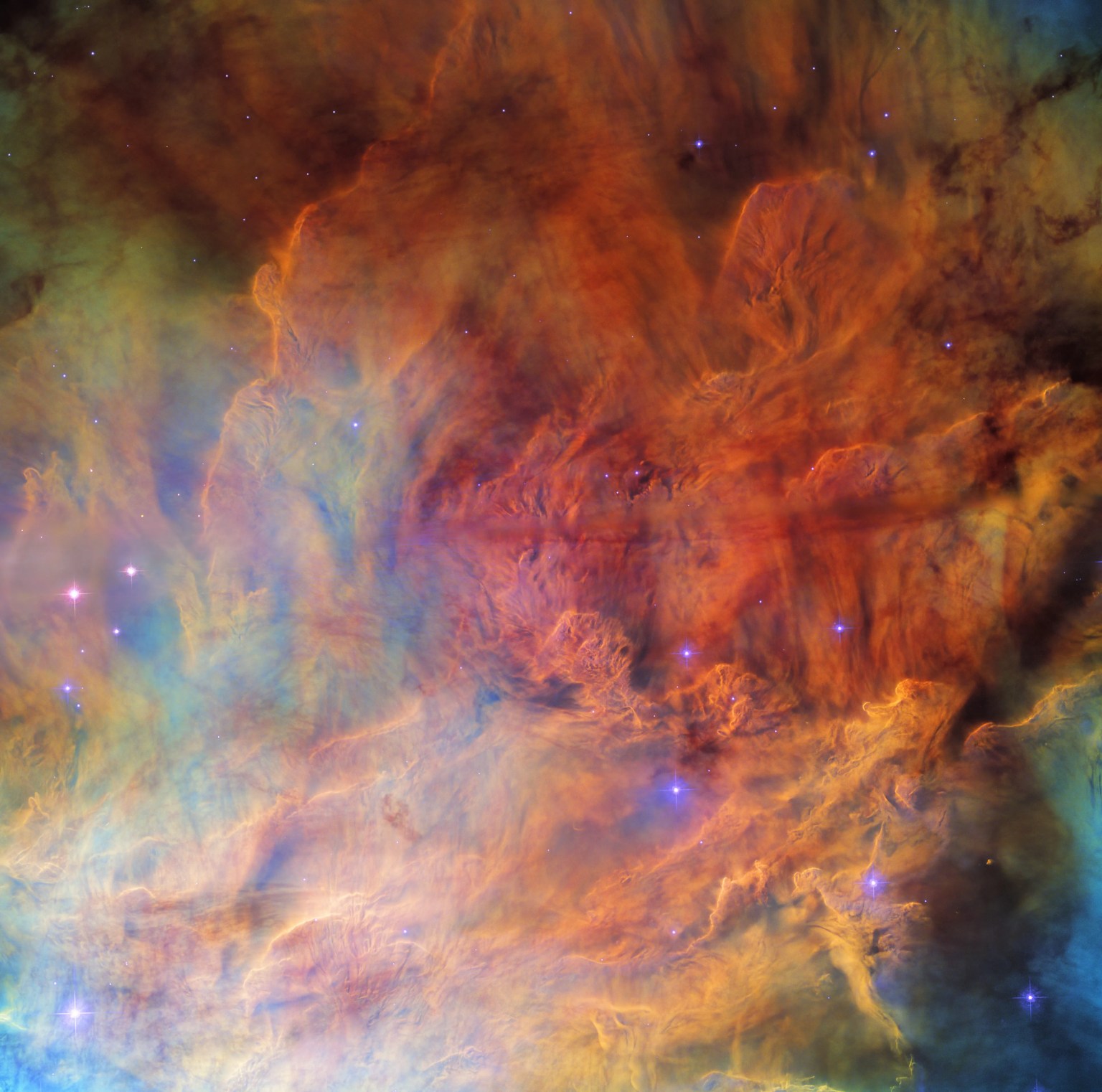
This image shows a small portion of the field observed by NASA’s James Webb Space Telescope’s NIRCam (Near-Infrared Camera) for the Cosmic Evolution Early Release Science (CEERS) survey. The full image appears below.
Credits: NASA, ESA, CSA, S. Finkelstein (University of Texas)
It got called the crisis in cosmology. But now astronomers can explain some surprising recent discoveries.
When astronomers got their first glimpses of galaxies in the early universe from NASA’s James Webb Space Telescope, they were expecting to find galactic pipsqueaks, but instead they found what appeared to be a bevy of Olympic bodybuilders. Some galaxies appeared to have grown so massive, so quickly, that simulations couldn’t account for them. Some researchers suggested this meant that something might be wrong with the theory that explains what the universe is made of and how it has evolved since the big bang, known as the standard model of cosmology.
According to a new study in the Astronomical Journal led by University of Texas at Austin graduate student Katherine Chworowsky, some of those early galaxies are in fact much less massive than they first appeared. Black holes in some of these galaxies make them appear much brighter and bigger than they really are.
“We are still seeing more galaxies than predicted, although none of them are so massive that they ‘break’ the universe,” Chworowsky said.
This image shows a small portion of the field observed by NASA’s James Webb Space Telescope’s NIRCam (Near-Infrared Camera) for the Cosmic Evolution Early Release Science (CEERS) survey. It is filled with galaxies. Some galaxies appear to have grown so massive, so quickly, that simulations couldn’t account for them. However, a new study finds that some of those early galaxies are in fact much less massive than they first appeared. Black holes in some of those galaxies make them appear much brighter and bigger than they really are.
NASA, ESA, CSA, S. Finkelstein (University of Texas)
According to this latest study, the galaxies that appeared overly massive likely host black holes rapidly consuming gas. Friction in the fast-moving gas emits heat and light, making these galaxies much brighter than they would be if that light emanated just from stars. This extra light can make it appear that the galaxies contain many more stars, and hence are more massive, than we would otherwise estimate. When scientists remove these galaxies, dubbed “little red dots” (based on their red color and small size), from the analysis, the remaining early galaxies are not too massive to fit within predictions of the standard model.
“So, the bottom line is there is no crisis in terms of the standard model of cosmology,” Finkelstein said. “Any time you have a theory that has stood the test of time for so long, you have to have overwhelming evidence to really throw it out. And that’s simply not the case.”
Efficient Star Factories
Although they’ve settled the main dilemma, a less thorny problem remains: There are still roughly twice as many massive galaxies in Webb’s data of the early universe than expected from the standard model. One possible reason might be that stars formed more quickly in the early universe than they do today.
“Maybe in the early universe, galaxies were better at turning gas into stars,” Chworowsky said.
Star formation happens when hot gas cools enough to succumb to gravity and condense into one or more stars. But as the gas contracts, it heats up, generating outward pressure. In our region of the universe, the balance of these opposing forces tends to make the star formation process very slow. But perhaps, according to some theories, because the early universe was denser than today, it was harder to blow gas out during star formation, allowing the process to go faster.
More Evidence of Black Holes
Concurrently, astronomers have been analyzing the spectra of “little red dots” discovered with Webb, with researchers in both the CEERS team and others finding evidence of fast-moving hydrogen gas, a signature of black hole accretion disks. This supports the idea that at least some of the light coming from these compact, red objects comes from gas swirling around black holes, rather than stars – reinforcing Chworowsky and their team’s conclusion that they are probably not as massive as astronomers initially thought. However, further observations of these intriguing objects are incoming, and should help solve the puzzle about how much light comes from stars versus gas around black holes.
Often in science, when you answer one question, that leads to new questions. While Chworowsky and their colleagues have shown that the standard model of cosmology likely isn’t broken, their work points to the need for new ideas in star formation.
“And so there is still that sense of intrigue,” Chworowsky said. “Not everything is fully understood. That’s what makes doing this kind of science fun, because it’d be a terribly boring field if one paper figured everything out, or there were no more questions to answer.”The James Webb Space Telescope is the world’s premier space science observatory. Webb is solving mysteries in our solar system, looking beyond to distant worlds around other stars, and probing the mysterious structures and origins of our universe and our place in it. Webb is an international program led by NASA with its partners, ESA (European Space Agency) and CSA (Canadian Space Agency).
Downloads
Right click any image to save it or open a larger version in a new tab/window via the browser’s popup menu.
Hubble Captures Unique Ultraviolet View of a Spectacular Star Cluster
2 min read
Hubble Captures Unique Ultraviolet View of a Spectacular Star Cluster
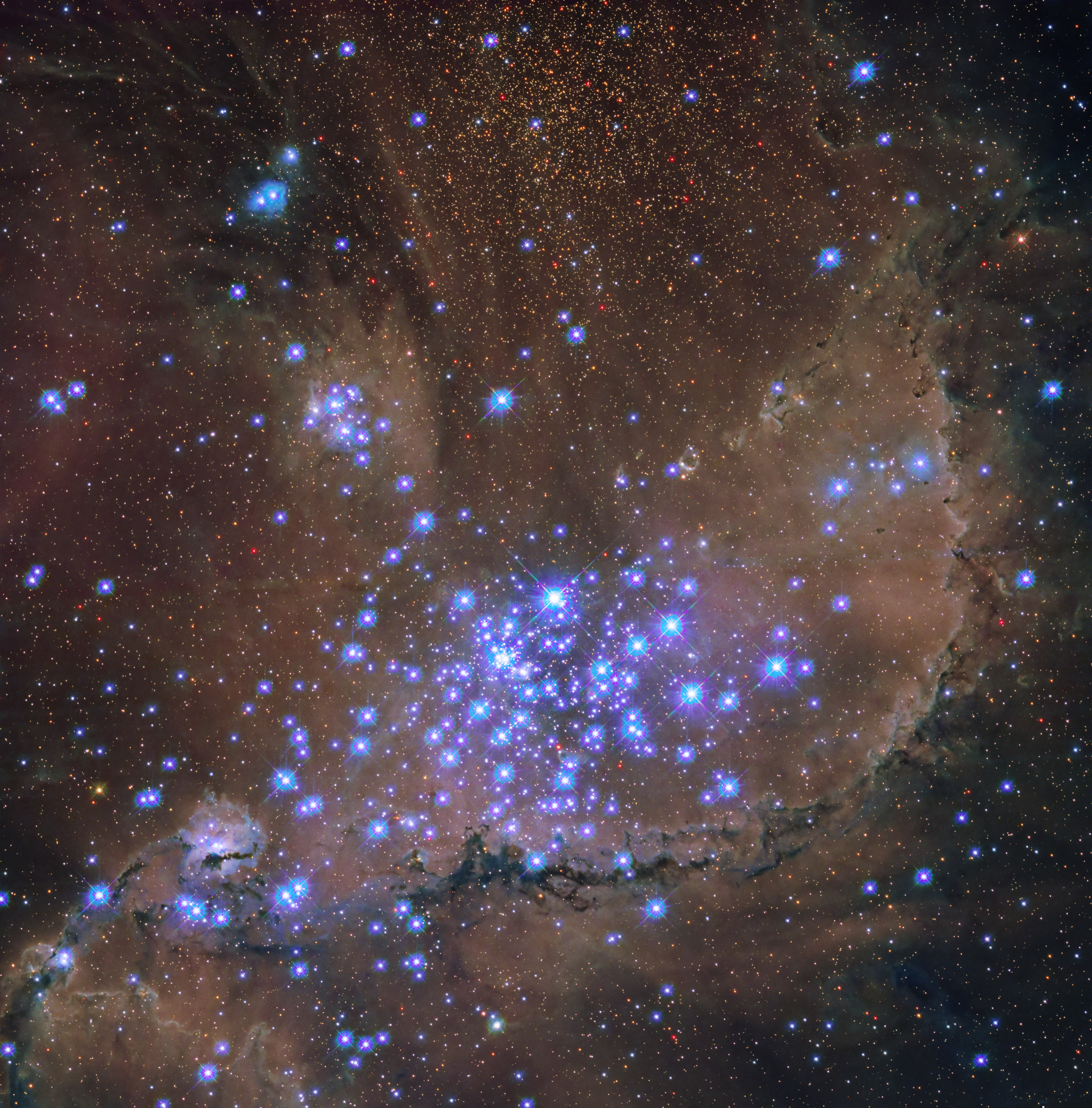
NASA, ESA, and C. Murray (Space Telescope Science Institute); Image Processing: Gladys Kober (NASA/Catholic University of America)
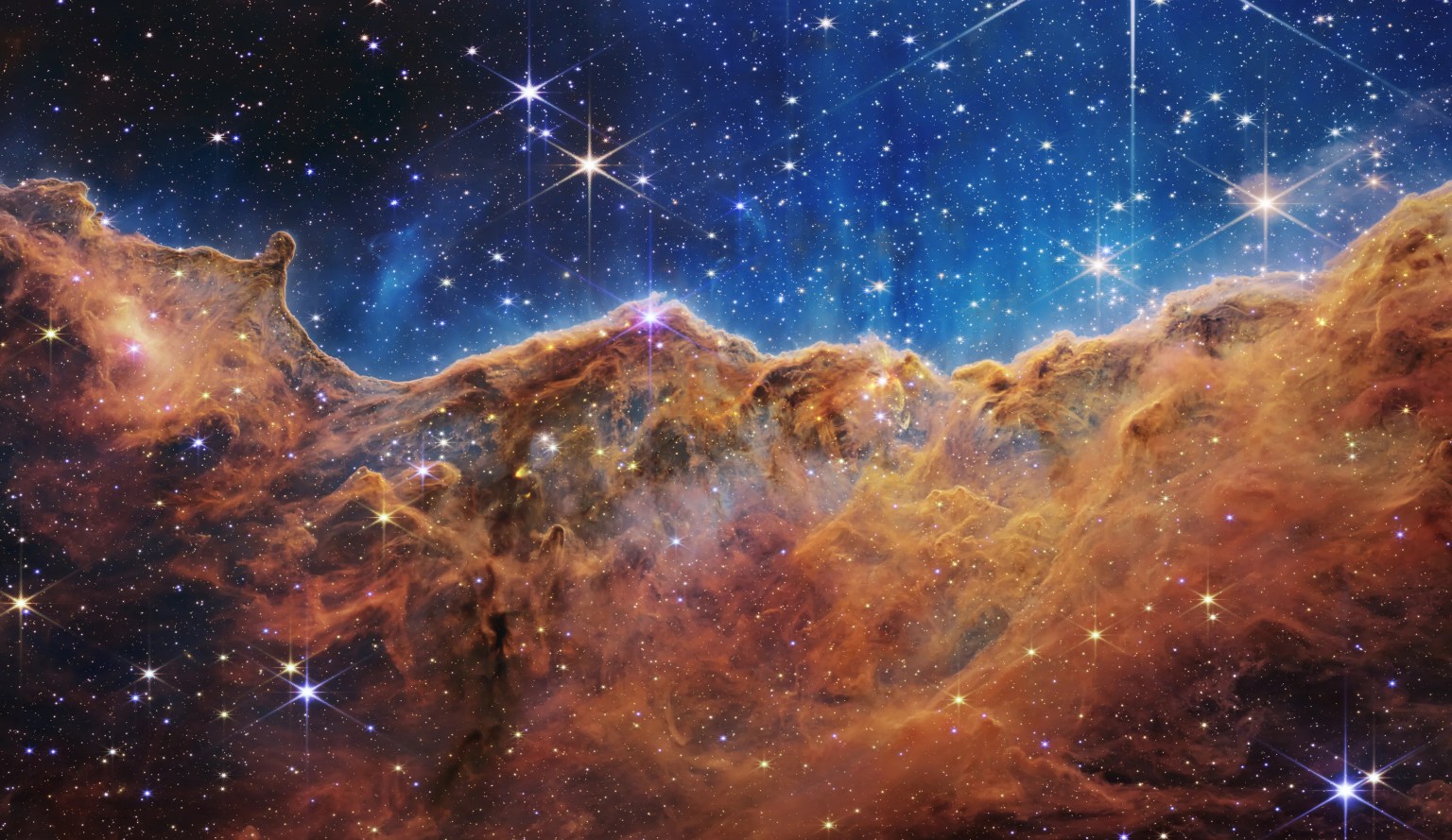
Roughly 210,000 light-years away, the Small Magellanic Cloud (SMC) is one of our Milky Way galaxy’s closest neighbors. In fact, this small galaxy is one of the Milky Way’s “satellite” galaxies, which orbit our home spiral galaxy.
Nested within the SMC is this spectacular star cluster, known as NGC 346. Its hot stars unleash a torrent of radiation and energetic outflows, which erode the denser portions of gas and dust in the surrounding nebula, N66. Dozens of hot, blue, and high-mass stars shine within NGC 346, and astronomers believe this cluster contains more than half of the known high-mass stars in the whole SMC.
This inset image shows the location of NGC 346 within the Small Magellanic Cloud.
NASA, ESA, C. Murray (Space Telescope Science Institute), and ESO/VISTA VMC; Image Processing: Gladys Kober (NASA/Catholic University of America)
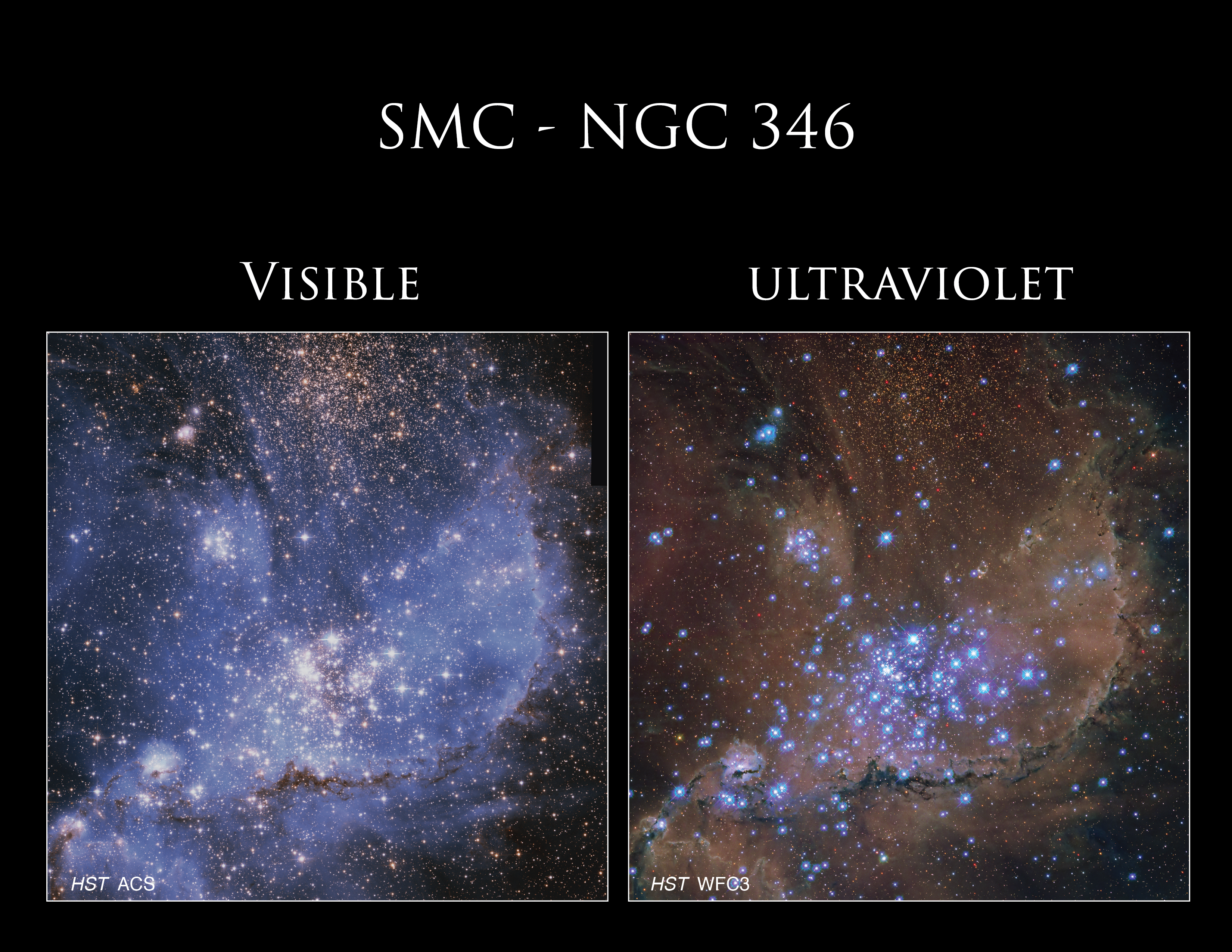
The NASA/ESA Hubble Space Telescope has observed this cluster before, but its new view shows NGC 346 in ultraviolet light, along with some visible-light data. Ultraviolet light helps scientists understand more about star formation and evolution, and Hubble – with its combined sharp resolution and position above our UV-blocking atmosphere – is the only telescope with the ability to make sensitive, ultraviolet observations.
These two Hubble images of NGC 346 show the star cluster in visible and ultraviolet wavelengths of light.
NASA, ESA, A. James (STScI), and C. Murray (Space Telescope Science Institute); Image Processing: Gladys Kober (NASA/Catholic University of America)
These specific observations were gathered to learn more about how star formation shapes the interstellar medium, which is the gas distributed throughout seemingly empty space, in a low-metallicity galaxy like the SMC. Astronomers call elements heavier than hydrogen and helium “metals,” and the SMC contains fewer metals when compared to most parts of our Milky Way. This condition helps make it an excellent example of a galaxy similar to those that existed in our early universe, when very few heavy elements were around to incorporate.
The Making of Our Alien Earth: The Undersea Volcanoes of Santorini, Greece
14 Min Read
The Making of Our Alien Earth: The Undersea Volcanoes of Santorini, Greece
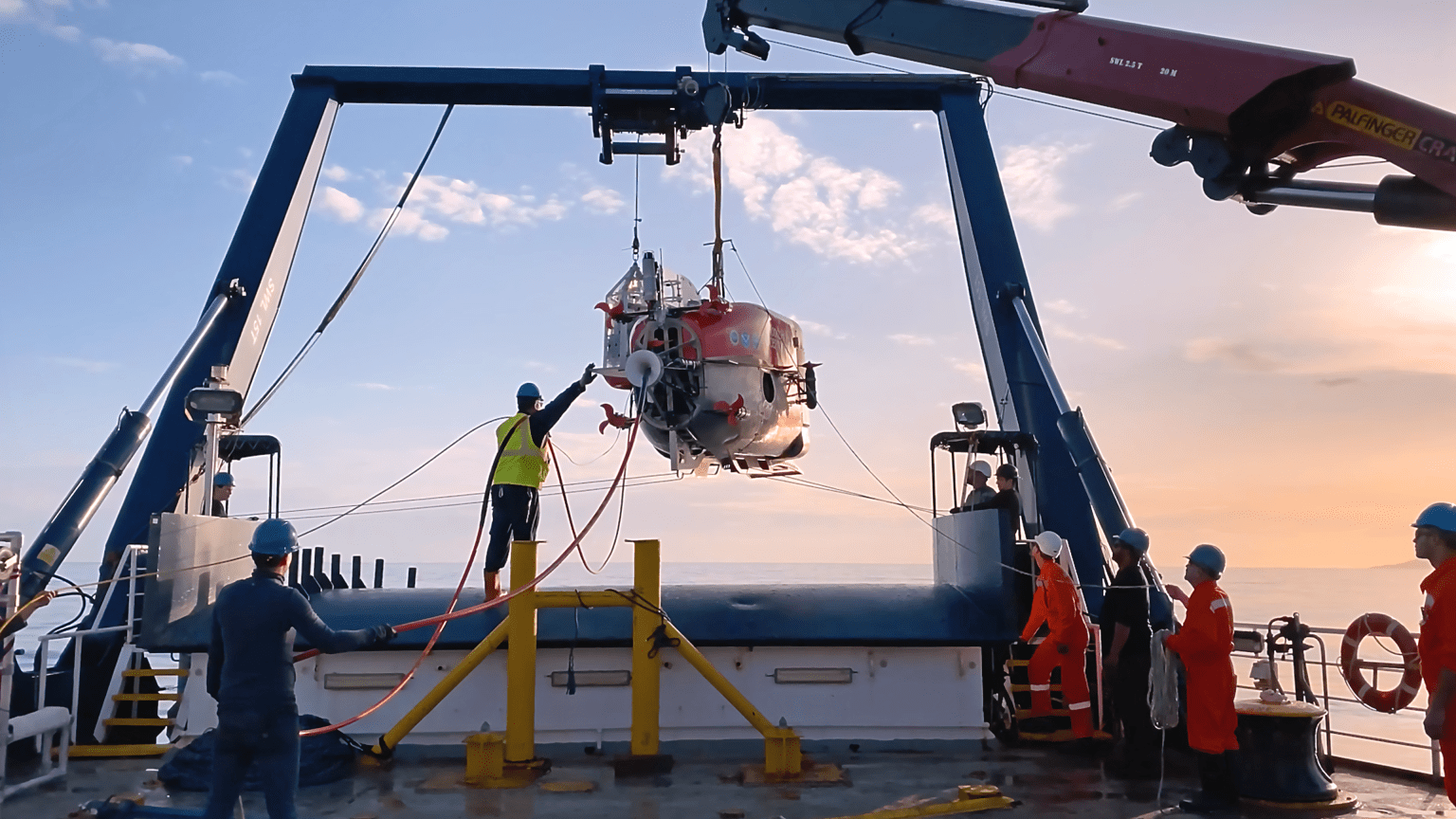
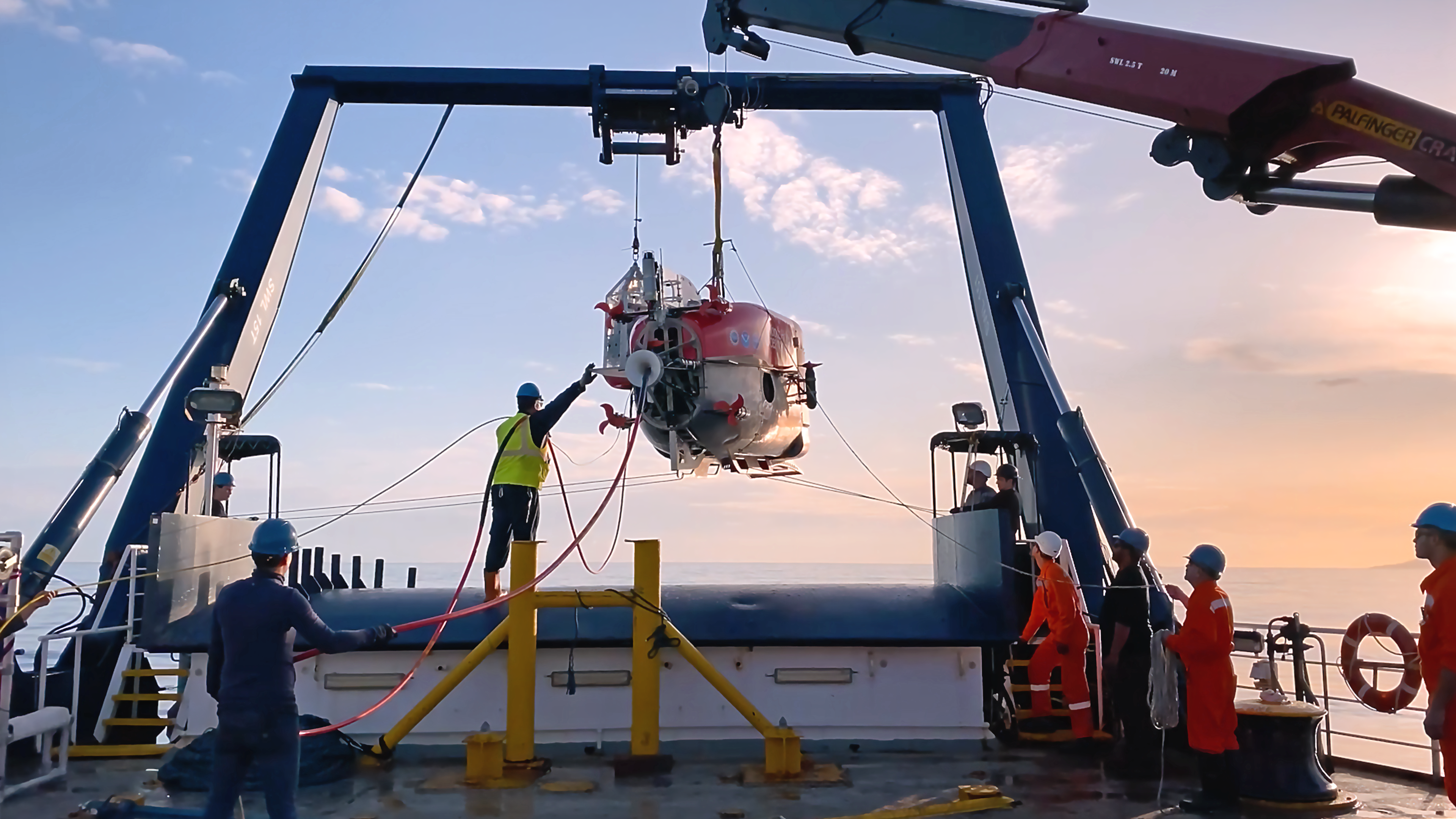
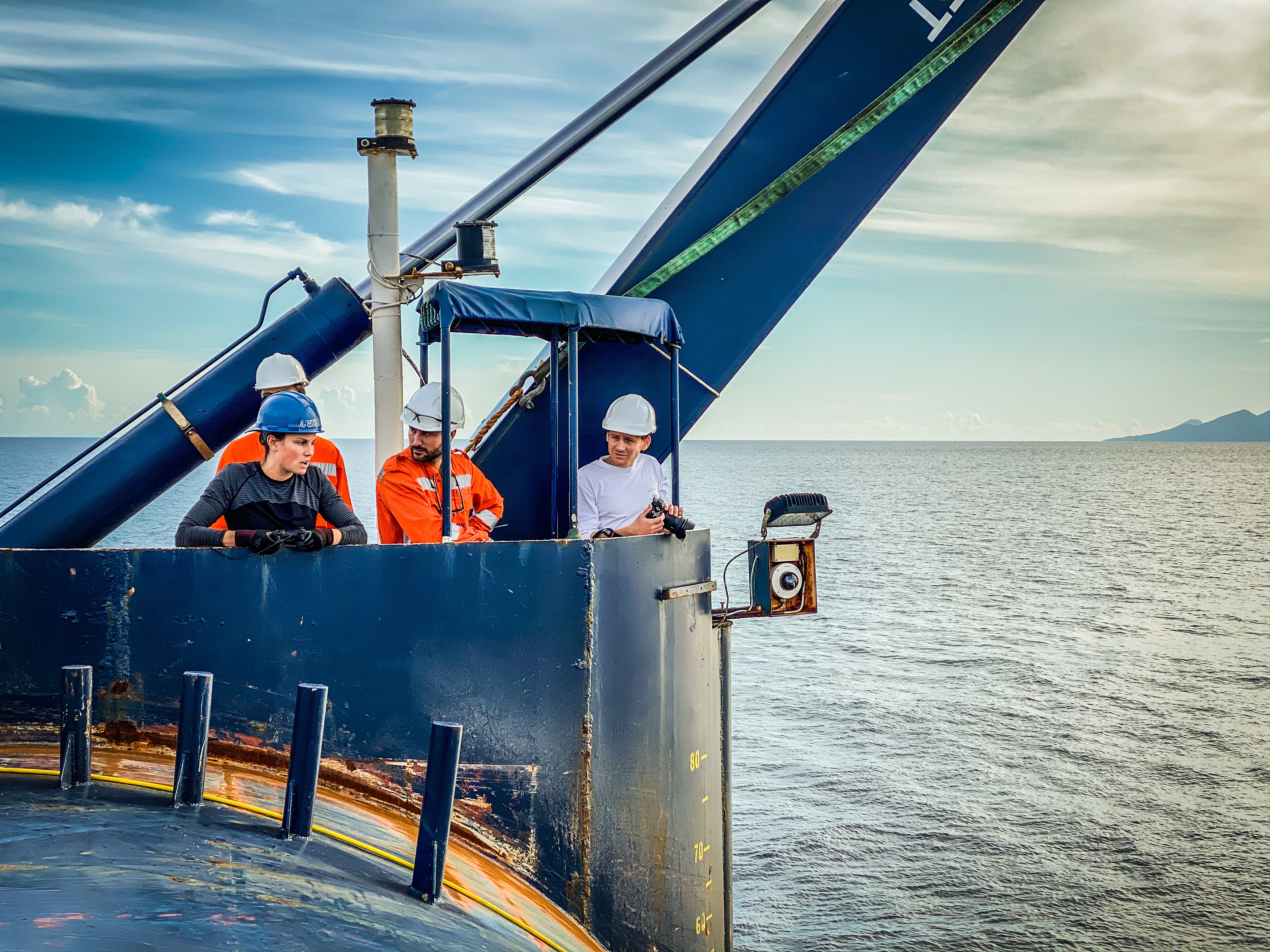
The expedition team and crew prepare to deploy Nereid Under Ice (NUI) into the sea.
The following expedition marks the third installment of NASA Astrobiology’s fieldwork series, the newly rebranded Our Alien Earth, streaming on NASA+. Check out all three episodes following teams of astrobiologists from the lava fields of Holuhraun, Iceland, to the Isua Greenstone Belt of Greenland, and finally, the undersea volcanoes of Santorini, Greece. And stay tuned for the lava tubes of Mauna Loa, Hawaii in 2025.
THE VOYAGE BEGINS
My career at NASA has always felt like a mad scientist’s concoction of equal parts hard work, perseverance, absurd luck, and happenstance. It was due to this mad blend that I suddenly found myself on the deck of a massive tanker ship in the middle of the Mediterranean sea, watching a team of windburnt scientists, engineers, and sailors through my camera lens as they wrestled with a 5,000lb submersible hanging in the air.
The expedition team and crew prepare to deploy Nereid Under Ice (NUI) into the sea.
“Let it out, Molly, slack off a little bit…” shouts deck boss Mario Fernandez, as he coordinates the dozen people maneuvering the vehicle. It’s a delicate dance as the hybrid remotely operated vehicle (ROV), Nereid Under Ice (NUI), is hoisted off the ship and deployed into the sea. “Tagline slips, line breaks… you’ve got a 5,000lb wrecking ball,” recounts Mario in an interview later that day.
How did I get here?
A few years ago I found myself roaming the poster halls of the Astrobiology Science Conference in Bellevue, Washington, struggling to decipher the jargon of a dozen disciplines doing their best to share their discoveries; phrases like lipid biomarkers, anaerobic biospheres, and macromolecular emergence floated past me as I walked. I felt like a Peanuts character listening to an adult speak.
Until I stumbled upon a poster by Dr. Richard Camilli entitled, Risk-Aware Adaptive Sampling for the Search for Life in Ocean Worlds. I was quickly enthralled in a whirlwind of icy moons, fleets of deep sea submersible vehicles, and life at sea.
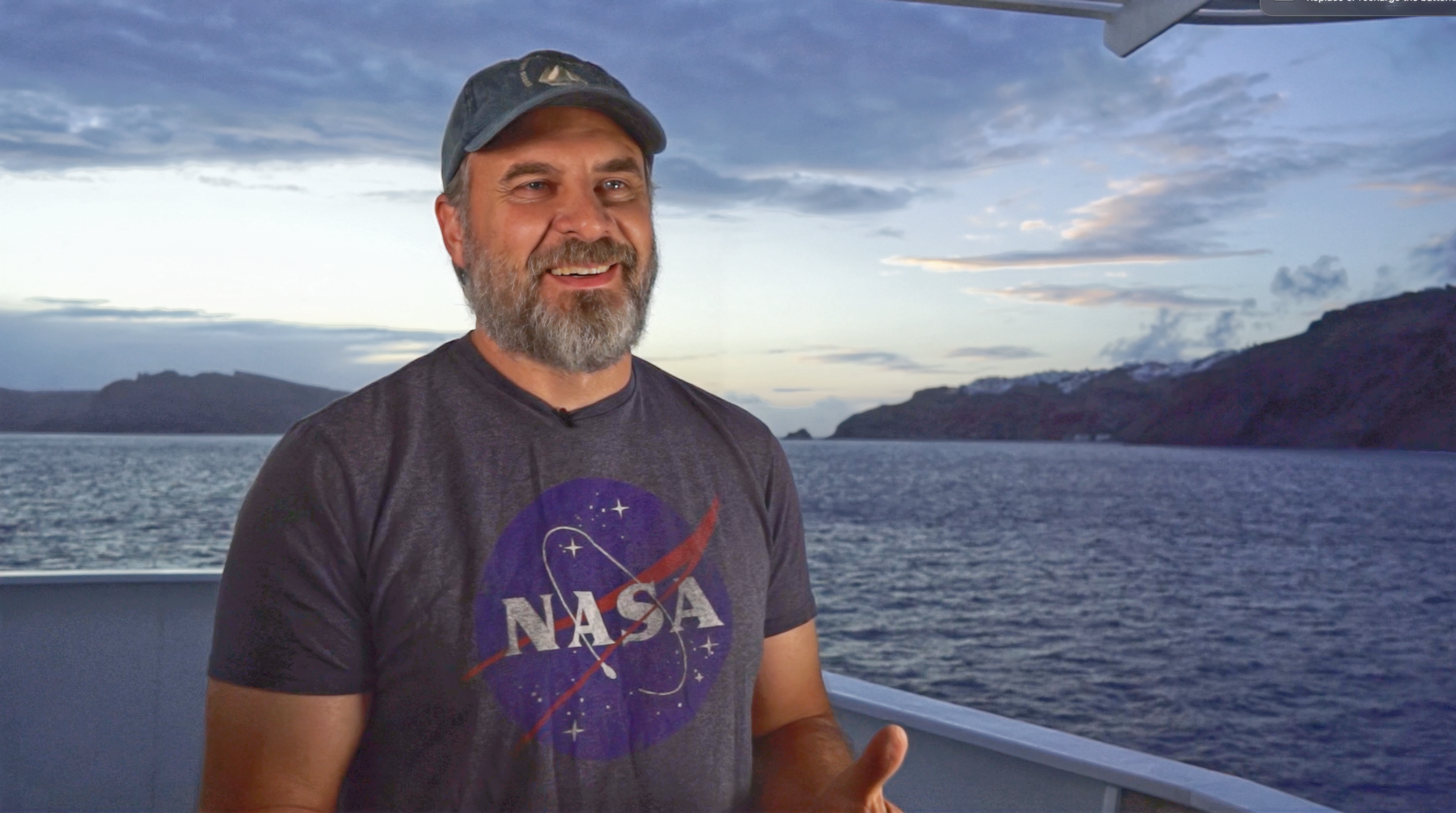
Dr. Richard Camilli, principal investigator of a research expedition to explore undersea volcanoes off the coast of Santorini.
“Are you free in November?”
“Absolutely,” I replied without checking a single calendar.
Five months and three flights later, I arrived at the port of Lavrio, Greece, as Dr. Camilli and his team were unloading their suite of vehicles from gigantic shipping crates onto the even more massive research vessel. I stocked up on motion sickness tablets, said a silent farewell to land, and boarded the ship destined for the undersea Kolumbo volcano.
Greece is a great place to study geology, because it’s a kind of supermarket of natural disasters.
Dr. Paraskevi NomikoU
University of Athens
The expedition sets out to sea as the sun sets in the distance.
LIFE AT SEA
Documenting astrobiology fieldwork has taken me to some pretty remote and rough places. Sleeping in wooden shacks in Iceland without running water and electricity, or bundled up in a zero-degree sleeping bag in a tent while being buffeted by gale force winds in the wilderness of Greenland. But life at sea? Life at sea is GOOD.
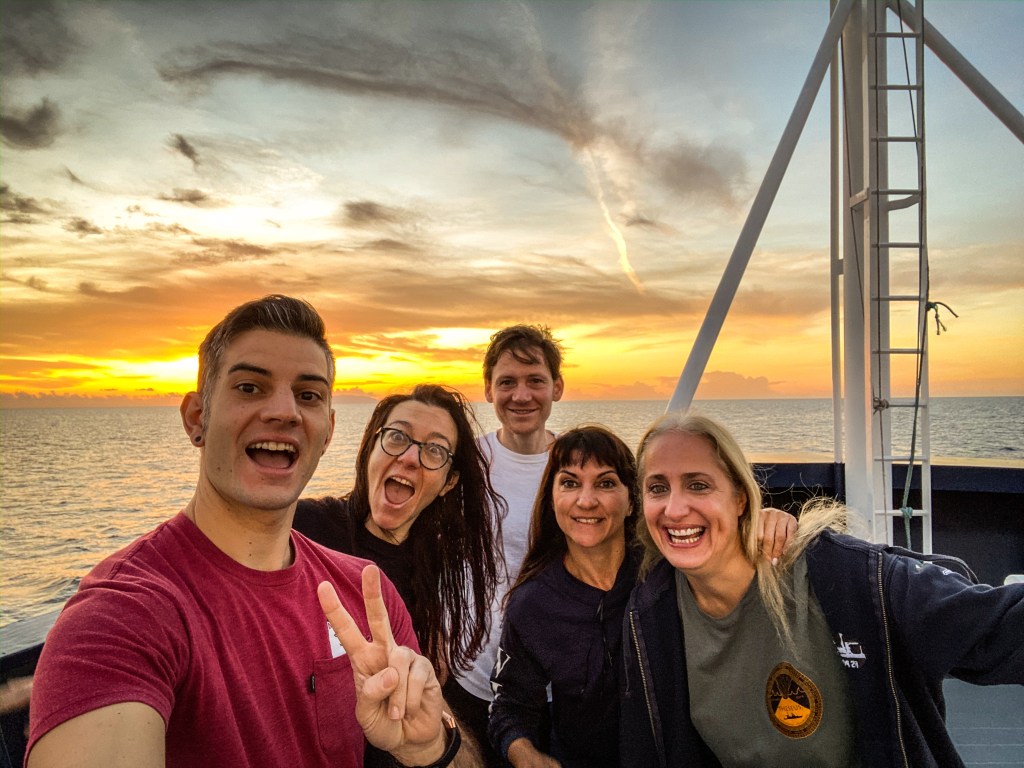
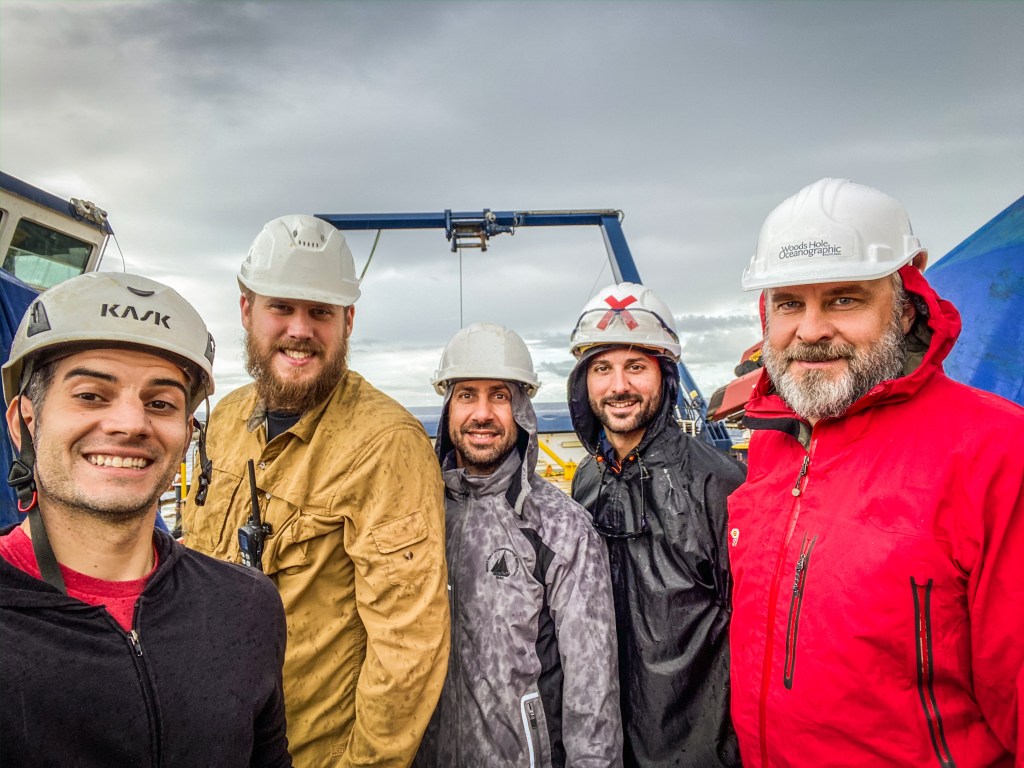
Filmmaker Mike Toillion takes a selfie, holding up a peace sign with members of the science team. From left to right:
NASA Astrobiology/Mike Toillion
Mike Toillion, creator of Our Alien Earth, taking a selfie with members of the glider team. From left to right:
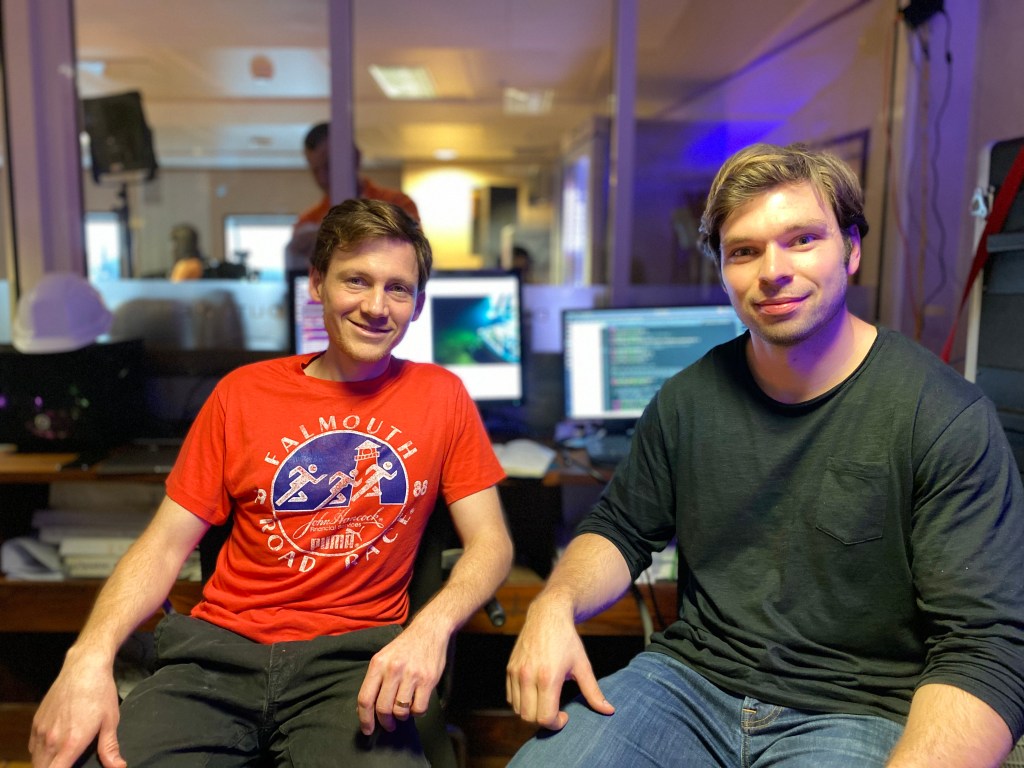
Matt Walter and Gideon Billings of the autonomous sampling team inside the ship’s control room.
I was fortunate to have a personal cabin all to myself: a set of bunk beds, a small bathroom with a shower, and a small desk with plenty of outlets for charging my gear. I would also be remiss if I didn’t mention the mess hall. Aside from a freshly rotated menu of three hot meals a day, it was open 24/7 with a constant lineup of snacks to keep bellies full and morale high. This was luxury fieldwork. The ability to live, work, and socialize all in the same place would make this trip special in its own right, and allowed me to really get to know the team and capture every angle of this incredibly complex and multi-faceted expedition.
The ship in the port of Lavrio, Greece. The team will spend two full days docked here while preparing for the voyage ahead.
NASA Astrobiology/Mike Toillion
SEARCHING FOR LIFE ON OCEAN WORLDS
“The goal of this program is cooperative exploration with under-actuated vehicles in hazardous environments,” explains Dr. Camilli as we stand on the bow of the ship, the sun beginning to set in the distance. “These vehicles work cooperatively in order to explore areas that are potentially too dangerous or too far away for humans to go.”
This is the problem at hand with exploring icy ocean worlds like Jupiter’s moon, Europa. The tremendous distance between Earth and Europa means we will barely be able to communicate and control vehicles that we send to the surface, and will face even more difficulty once those vehicles dive below the ice. This makes Earth’s ocean a perfect testbed for developing autonomous, intelligent robotic explorers.
“I’ve always been struck at how parallel ocean exploration and space exploration is,” says Brian Williams, professor from the Computer Science and Artificial Intelligence Laboratory at MIT. “Once you go through the surface, you can’t communicate. So, somehow you have to embody the key insights of a scientist, to be able to look and see: is that evidence of life?”
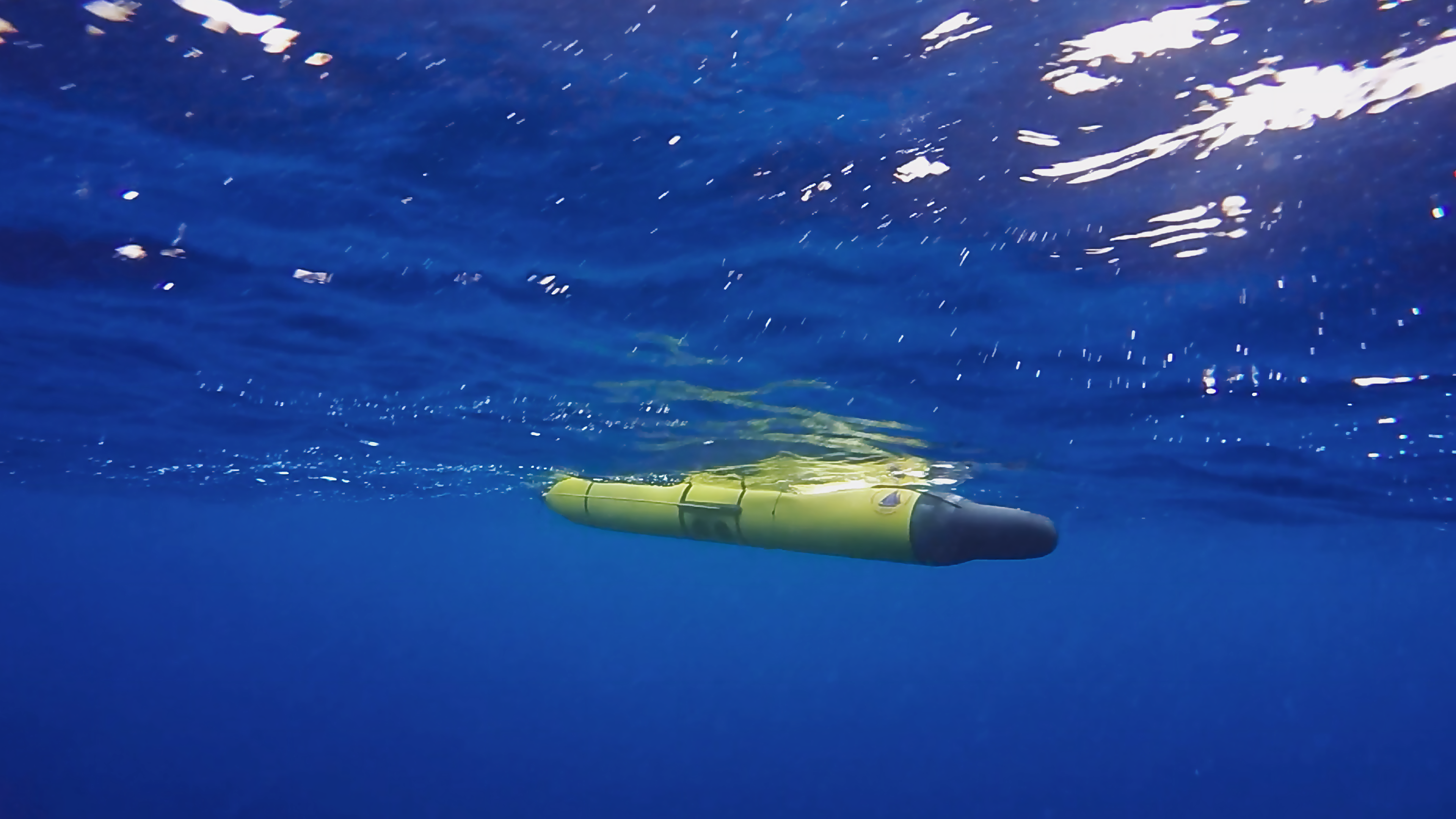
One of the gliders, an autonomous scouting vehicle equipped with multple sensors to map the seafloor and report back to the ship.
NASA Astrobiology/Mike Toillion
MEET THE FLEET
Exploring anywhere in space begins with a few simple steps: first, you need to get a general map of the area, which is typically done by deploying orbiters around a celestial body. The next step is to get a closer look, by launching lander and rover missions to the surface. Finally, in order to understand the location best, you need to bring samples back to Earth to study in greater detail.
“So you can think of what we’re doing here as being very parallel, that the ship is like the orbiter and is giving us a broad view of the Kolumbo volcano, right? Once we do that map, then we need to be able to explore interesting places to collect samples. So, the gliders are navigating around places that look promising from what the ship told us. And then, it looks to identify places where we might want to send NUI. NUI is very capable in terms of doing the samples, but it can’t move around nearly as much. And so, we finally put NUI at the places where the gliders thought that they were interesting.”
The expedition team works into the night preparing NUI for its upcoming mission to the Kolumbo volcano.
NASA Astrobiology/Mike Toillion
THE SCIENTIST’S ROBOTIC APPRENTICE
As the espresso machine in the mess hall whirred away pouring out a much needed shot of caffeine, I sat with Eric Timmons, one of the expedition’s computer science engineers. Eric wears a few hats on the ship, but today we are discussing automated mission planning, the first step to true autonomy in robotic exploration.
“In any sort of scientific mission, you’re going to have a list of goals, each with their own set of steps, and a limited amount of time to achieve them. And so, Kirk works on automating that.” Kirk is the nickname of one of the many algorithms involved in the team’s automated mission planning. It’s joined by other algorithms, all named after Star Trek characters, collectively known as Enterprise, each responsible for different aspects of planning a mission and actively adapting to new mission parameters.
Dr. Richard Camilli explains further: “Basically, we have scientists onboard the ship that are feeding policies to these automated planners. [The planners] then take those policies plus historical information, the oceanographic context, and new information being transmitted by the vehicles here and now; they take all that information, and combine it to construct a mission that gets to the scientific deliverables, while also being safe.”
These are areas that humans aren’t designed to go to. I guess the best analogy would be like hang gliding in Midtown Manhattan at night.
Dr. richard camilli
Woods Hole Oceanographic Institution
OK, let’s recap the story so far: the ship’s sonar and other instruments create a general map of the Kolumbo volcano. That information, along with data from previous missions, is fed to Enterprise’s team of algorithms, which generates a mission for the gliders. The gliders are deployed, and using their sensors, provide higher-fidelity data about the area and transmit that knowledge back to the ship. The automated mission planners take in this new data, and revise their mission plan, ranking potential sites of scientific interest, which are then passed onto NUI, which will conduct its own mission to explore these sites, and potentially sample anything of interest.
DIVE, DIVE, DIVE
After a few days on the ship, the routine of donning my steel-toed boots and hard hat when walking around the deck has started to become second nature. My drone skills have greatly improved, as the magnetic field produced by the ship and its instruments forced me to take-off and land manually, carefully guiding the drone in and around the many hazards of the vessel. This morning, however, I’ve been invited to step off the ship for the first time to get a first-hand look at deploying the gliders. Angelos Mallios from the glider team leads me down into the bowels of the ship to the lower decks, as we arrive at a door that opens to the outside of the ship, waves lapping about six feet below. A zodiac pulls up to the door and we descend down a ladder into the small boat.
Riding in the zodiac with the glider team, led by Angelos Mallios.
NASA Astrobiology/Mike Toillion
Meanwhile, the rest of the glider team is on the main deck of the ship, lifting the gliders with a large, motorized crane, and lowering them onto the surface of the water. The zodiac team approached to detach the glider and safely set it out into the sea, while I dipped a monopod-mounted action camera in and out of the water to capture the process. Unbeknownst to me at the time, this would become some of my favorite footage of the trip, sunlight dancing off the surface of the waves, while the gliders floated and dove beneath.
Angelos’ radio began to chatter. Eric Timmons was onboard the ship ready to command the gliders to begin their mission plan assigned by Enterprise. A moment passed and the yellow fin of the glider dipped below the water’s surface and disappeared.
Angelos Mallios from the Woods Hole Oceanographic Institution, leans out of a zodiac to deploy a glider, an autonomous vehicle and the forward scout for the expedition.
NUI VERSUS THE VOLCANO
The following day, it was time to see the star of the show in action; the expedition team was ready to deploy the aforementioned 5,000lb wrecking ball, NUI. The gliders had been exploring the surrounding area day and night, using their suite of sensors to detect areas of scientific interest. Since this mission is about searching for life, the gliders know that warmer areas could indicate hydrothermal vent activity; a literal hotspot for life in the deep ocean. Kirk, along with the science planner algorithm, Spock, determined a list of possible candidates that fit that exact description.
“There’s always a bit of tension in the operations, where, do you go strike out in an area that is unstudied and potentially come back with nothing? Or do you go to a site that you know and try to understand it a little bit more, that kind of incremental advance?” Dr. Camilli pauses to take a quick swig of sparkling water after a long day of diving operations, as he recounts a moment in the control room earlier that day. All the scientists onboard this expedition are extremely skilled and knowledgable, and this mission is asking them to put aside their instincts, and follow the suggestions of computer algorithms; a hard pill to swallow for some.
Underwater footage from Nereid Under Ice, showing a thriving community on the sea floor, including a never before seen species.
NASA Astrobiology/Mike Toillion and WHOI
“We stuck with the Spock program, and it paid great dividends. And all of the scientists were amazed at what they saw. The first site that we went to was spectacular. The second site we went to was spectacular. Each of the five sites that it identified as interesting were interesting, and they were each interesting in a different way; totally different environments.”
Interesting, in this case, was quite the understatement. As the expedition team and I crowded into the ship’s control room to look at the camera feeds transmitted by NUI, now fully deployed to the seafloor, audible gasps erupted from multiple people. Bubbles filled the monitor as live fumaroles, active vents from the volcano, were pouring out heat and chemical-rich fluid into the water. Thick, microbial mats covered the surrounding rock, and multicellular lifeforms dotted the landscape. The expedition team had found a live hydrothermal vent, and life thriving around it.
SOUVENIRS FROM THE OCEAN FLOOR
“I’ve never seen anything like that before,” recalls Casey Machado, expedition lead and the main pilot for Nereid Under Ice (NUI). Casey is sitting in an office chair surrounded by glowing monitors, a joystick in their left hand, and a gaming controller in their right. Since NUI is a hybrid ROV, it can be controlled manually from the ship by remote, or receive autonomous instructions from the Enterprise mission planners. Today, the team plans on manually controlling NUI to retrieve samples from the first site of interest.
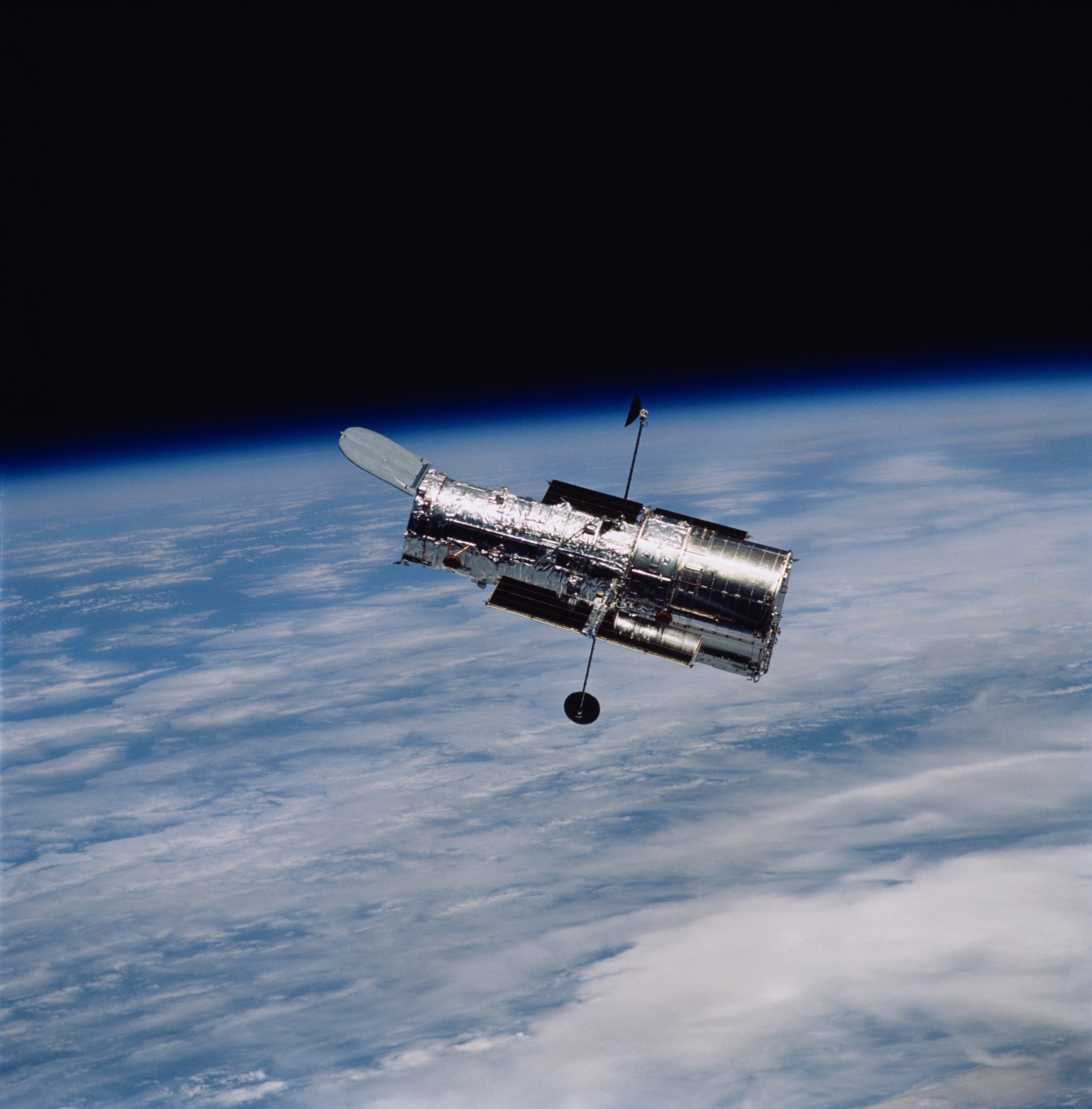
NUI is a strange looking vehicle. Only a small section of its body is watertight, where many of its critical components are housed. The remainder is fairly open, and upon arriving at the first site recommended by Spock, the front of the ROV opens up its front double doors to reveal a multi-jointed manipulator arm, stereo camera set, and other instruments. I’m instantly reminded of the space shuttle mission to repair the Hubble Space Telescope, which had a similar mechanism.
Casey Machado, pilot of the hybrid ROV Nereid Under Ice (NUI), pilots the manipulator arm to take a rock sample.
NASA Astrobiology/Mike Toillion
Casey deftly maneuvers each joint of the arm to approach a rock covered in microbial mats. The end of NUI’s arm is equipped with two sampling instruments: a claw-like grabbing mechanism and a vacuum-like hose called the “slurp gun”. The end of the arm twists and turns as Machado aligns it with the rock, eventually opening and closing it around the target. With a gentle pull, the rock comes loose, and with a few more careful manipulations places it delicately into NUI’s sample cache. I offer a high-five, which Casey nonchalantly returns like the whole task was nothing.
TEACHING A ROBOT TO FISH
At this point, the expedition team has collected dozens of samples and achieved multiple engineering milestones, enough to fill years’ worth of scientific papers, but they are far from finished. A true mission to an ocean world will have to be pilotless, as Dr. Gideon Billings from MIT explains: “They need to operate without any human intervention. They need to be able to understand the scene through perception and then make a decision about how they want to manipulate to take a sample or achieve a task.”
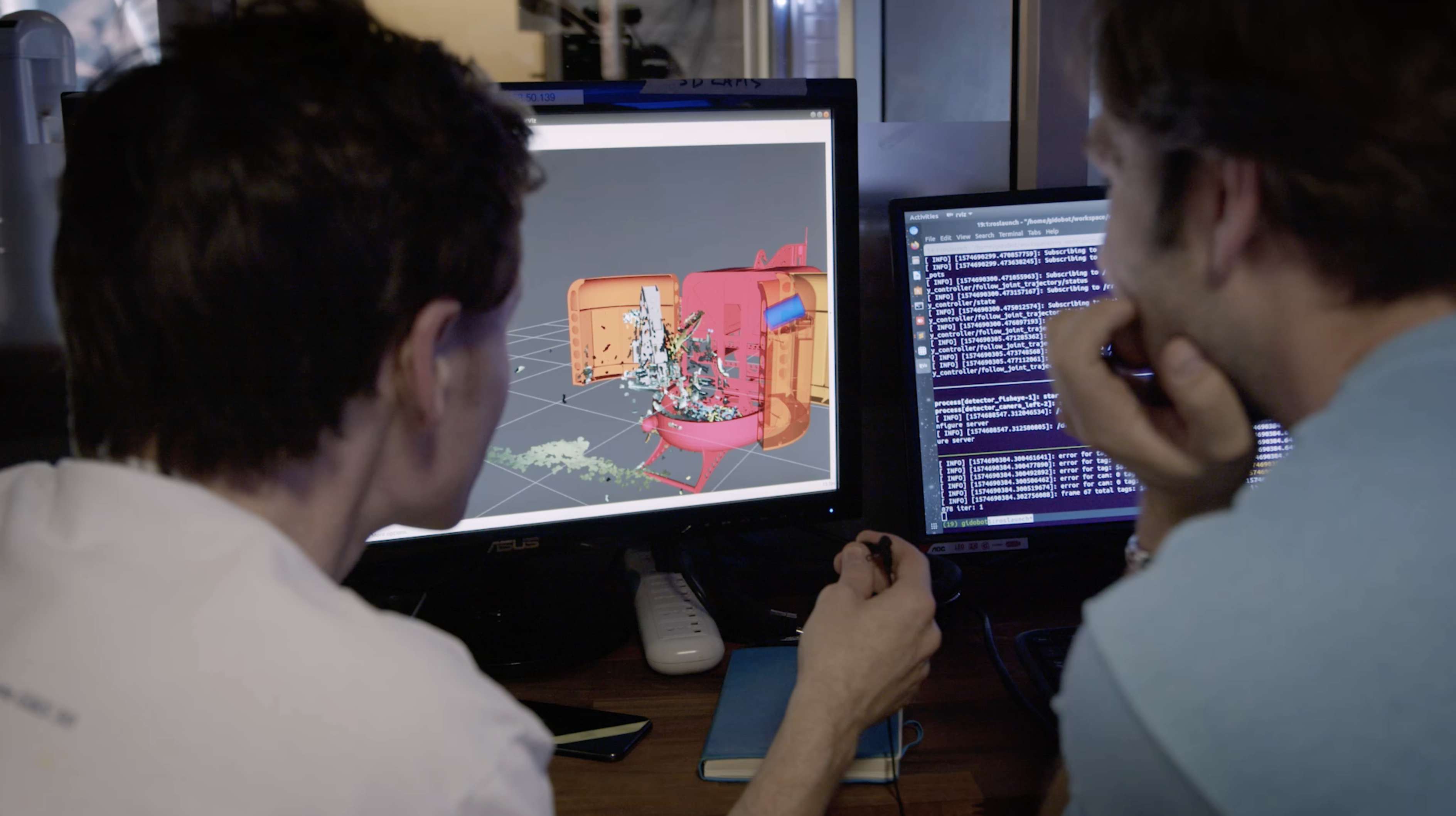
Gideon sits in the control room to the left of the piloting station, working alongside Casey as they prepare to demonstrate NUI’s automated sampling capabilities. His laptop screen shows a live 3D-model of the craft, its doors open, arm extended. Projected around the craft is a 3D reconstruction, or point cloud, of the seafloor created from the stereo camera pair mounted inside the vehicle. Similarly to how our brains take the two visual feeds from both of our eyes to see three-dimensionally, a stereo camera pair uses two cameras to achieve the same effect. By clicking on the model and moving its position in the software, NUI performs the same action thousands of meters under the ocean.
Shared autonomy between the automated sampling team and the ROV Nereid Under Ice.
“That is shared autonomy, where you could imagine a pilot indicating a desired pose
for the arm to move to, but then a planner taking over and coming up with the path that the arm should move to reach that goal. And then, the pilot just essentially hitting a button and the arm following that path.”
Over the course of multiple dives, Gideon tested various sampling techniques, directing the manipulator arm to use its claw-like device to grab different tools and perform a variety of tasks. “We were able to project the point cloud into that scene, and then command the arm to grab a push core and move it into a location within that 3D reconstruction. We verified that that location matched up. That showed the viability of an autonomous system.” This seemingly small victory is a huge step towards exploring planets beyond Earth. Since this expedition, the engineering team has not only improved this shared autonomy system, but has also implemented a natural language interface, allowing a user to use their normal speaking voice to give commands to the ROV, further blurring the lines between reality and science fiction.
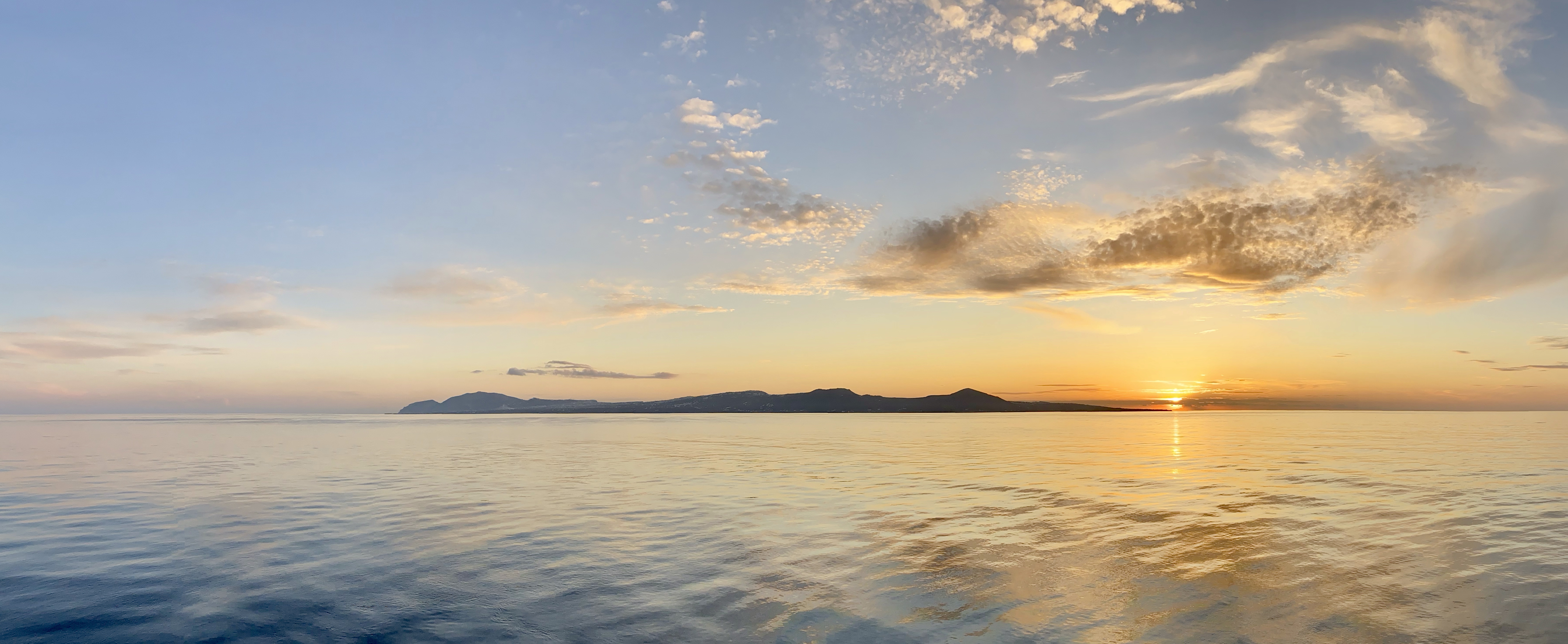
The sun rises over the Mediterranean Sea on the final day of the research cruise.
NASA Astrobiology/Mike Toillion
SOMEWHERE BEYOND THE SEA
I cannot help but envy the life of those who chose to make the ocean their place of work. The time I’ve spent with oceanographers has me questioning all my life choices; clearly they knew something I didn’t.
Watching the sunrise every morning, peering through the murky depths of the deep sea, unlocking the secrets of Earth’s final frontier. All in a day’s work for Dr. Richard Camilli and his team of intrepid explorers.
Watch Our Alien Earth and The Undersea Volcanoes of Santorini, Greece on NASA+ and follow the full story of this incredible expedition.
NASA Decides to Bring Starliner Spacecraft Back to Earth Without Crew
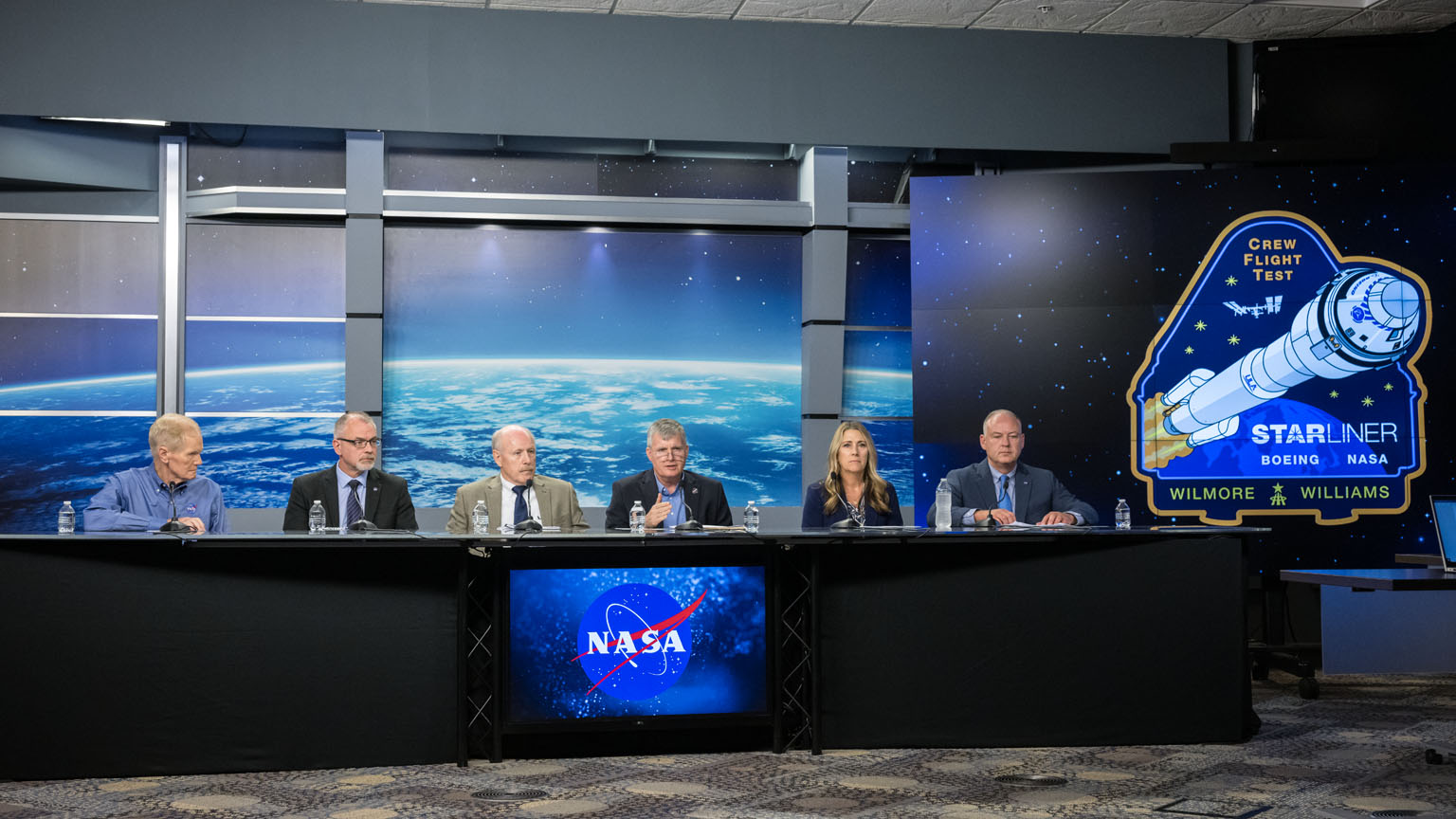
NASA Administrator Bill Nelson and leadership participate in a live news conference on Saturday, Aug. 24, 2024, at the agency’s Johnson Space Center in Houston where they provided an update about NASA’s Boeing Crew Flight Test.
Credit: NASA
NASA will return Boeing’s Starliner to Earth without astronauts Butch Wilmore and Suni Williams aboard the spacecraft, the agency announced Saturday. The uncrewed return allows NASA and Boeing to continue gathering testing data on Starliner during its upcoming flight home, while also not accepting more risk than necessary for its crew.
Wilmore and Williams, who flew to the International Space Station in June aboard NASA’s Boeing Crew Flight Test, have been busy supporting station research, maintenance, and Starliner system testing and data analysis, among other activities.
“Spaceflight is risky, even at its safest and most routine. A test flight, by nature, is neither safe, nor routine. The decision to keep Butch and Suni aboard the International Space Station and bring Boeing’s Starliner home uncrewed is the result of our commitment to safety: our core value and our North Star,” said NASA Administrator Bill Nelson. “I’m grateful to both the NASA and Boeing teams for all their incredible and detailed work.”
Wilmore and Williams will continue their work formally as part of the Expedition 71/72 crew through February 2025. They will fly home aboard a Dragon spacecraft with two other crew members assigned to the agency’s SpaceX Crew-9 mission. Starliner is expected to depart from the space station and make a safe, controlled autonomous re-entry and landing in early September.
NASA and Boeing identified helium leaks and experienced issues with the spacecraft reaction control thrusters on June 6 as Starliner approached the space station. Since then, engineering teams have completed a significant amount of work, including reviewing a collection of data, conducting flight and ground testing, hosting independent reviews with agency propulsion experts, and developing various return contingency plans. The uncertainty and lack of expert concurrence does not meet the agency’s safety and performance requirements for human spaceflight, thus prompting NASA leadership to move the astronauts to the Crew-9 mission.
“Decisions like this are never easy, but I want to commend our NASA and Boeing teams for their thorough analysis, transparent discussions, and focus on safety during the Crew Flight Test,” said Ken Bowersox, associate administrator for NASA’s Space Operations Mission Directorate. “We’ve learned a lot about the spacecraft during its journey to the station and its docked operations. We also will continue to gather more data about Starliner during the uncrewed return and improve the system for future flights to the space station.”
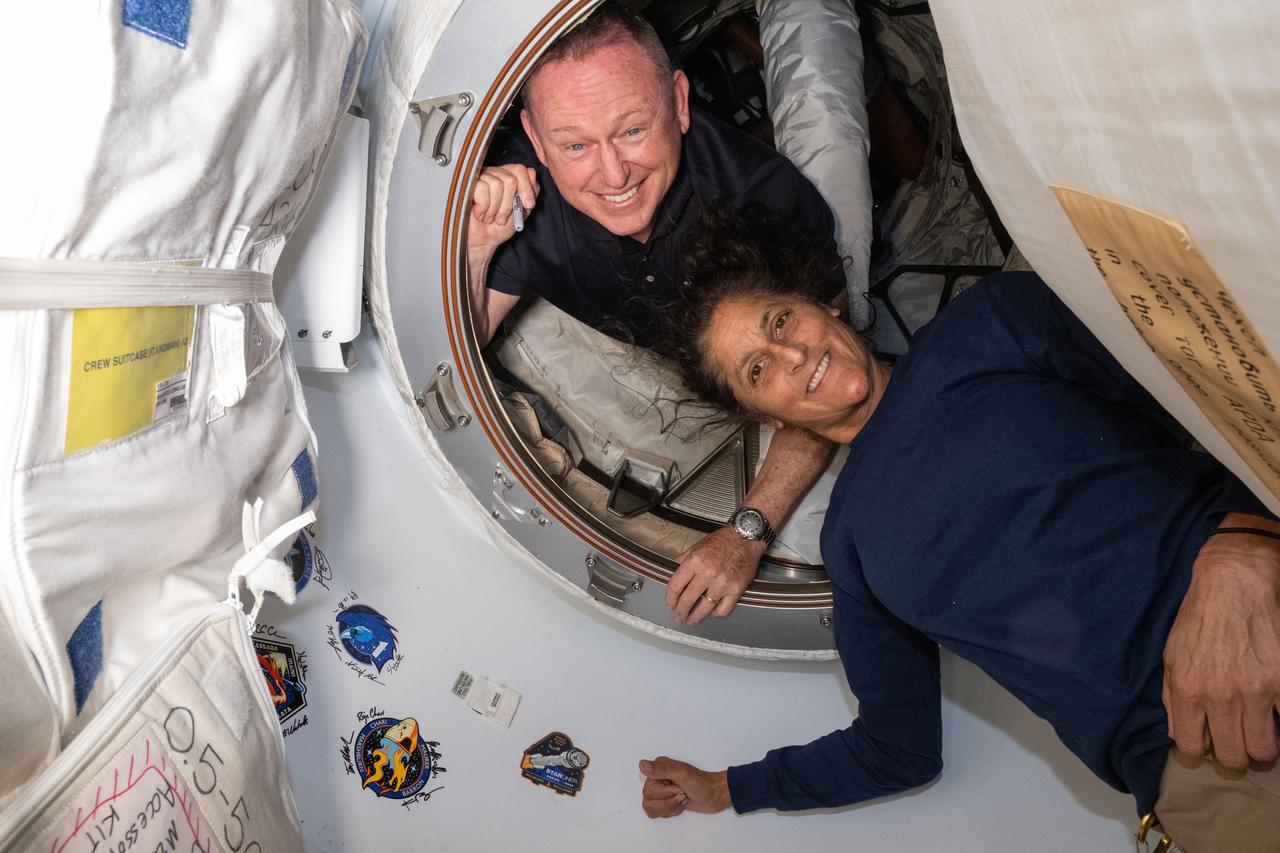
NASA’s Boeing Crew Flight Test astronauts (from top) Butch Wilmore and Suni Williams pose on June 13, 2024 for a portrait inside the vestibule between the forward port on the International Space Station’s Harmony module and Boeing’s Starliner spacecraft.
Credit: NASA
Starliner is designed to operate autonomously and previously completed two uncrewed flights. NASA and Boeing will work together to adjust end-of-mission planning and Starliner’s systems to set up for the uncrewed return in the coming weeks. Starliner must return to Earth before the Crew-9 mission launches to ensure a docking port is available on station.
“Starliner is a very capable spacecraft and, ultimately, this comes down to needing a higher level of certainty to perform a crewed return,” said Steve Stich, manager of NASA’s Commercial Crew Program. “The NASA and Boeing teams have completed a tremendous amount of testing and analysis, and this flight test is providing critical information on Starliner’s performance in space. Our efforts will help prepare for the uncrewed return and will greatly benefit future corrective actions for the spacecraft.”
NASA’s Commercial Crew Program requires spacecraft fly a crewed test flight to prove the system is ready for regular flights to and from the space station. Following Starliner’s return, the agency will review all mission-related data to inform what additional actions are required to meet NASA’s certification requirements.
The agency’s SpaceX Crew-9 mission, originally slated with four crew members, will launch no earlier than Tuesday, Sept. 24. The agency will share more information about the Crew-9 complement when details are finalized.
NASA and SpaceX currently are working several items before launch, including reconfiguring seats on the Crew-9 Dragon, and adjusting the manifest to carry additional cargo, personal effects, and Dragon-specific spacesuits for Wilmore and Williams. In addition, NASA and SpaceX now will use new facilities at Space Launch Complex-40 at Cape Canaveral Space Force Station in Florida to launch Crew-9, which provides increased operational flexibility around NASA’s planned Europa Clipper launch.
The Crew-9 mission will be the ninth rotational mission to the space station under NASA’s Commercial Crew Program, which works with the American aerospace industry to meet the goal of safe, reliable, and cost-effective transportation to and from the orbital outpost on American-made rockets and spacecraft launching from American soil.
For more than two decades, people have lived and worked continuously aboard the International Space Station, advancing scientific knowledge and demonstrating new technologies, making research breakthroughs not possible on Earth. The station is a critical testbed for NASA to understand and overcome the challenges of long-duration spaceflight and to expand commercial opportunities in low Earth orbit. As commercial companies focus on providing human space transportation services and destinations as part of a robust low Earth orbit economy, NASA’s Artemis campaign is underway at the Moon where the agency is preparing for future human exploration of Mars.
Find more information on NASA’s Commercial Crew Program at:
Science Hardware Work Completes Week; NASA Managers Discuss Crew Flight Test
NASA astronauts Butch Wilmore and Suni Williams, Boeing’s Crew Flight Test Commander and Pilot respectively, inspect safety hardware aboard the space station.
Advanced research hardware work took precedence aboard the International Space Station at the end of the week as the crew readied satellite gear and experimental communications components for placement in the vacuum of space.
NASA Flight Engineer Matthew Dominick spent Friday installing the Small Satellite Orbital Deployer onto the Kibo laboratory module’s multipurpose experiment platform (MPEP). He then loaded the MPEP into Kibo’s airlock where JAXA’s (Japan Aerospace Exploration Agency) robotic arm will grapple the device and position it away from the space station to release a series of CubeSats into Earth orbit for a variety of educational and research activities. NASA astronaut Suni Williams, Pilot for Boeing’s Crew Flight Test, assisted Dominick throughout the day and familiarized herself with CubeSat operations.
NASA Flight Engineer Tracy C. Dyson spent her entire shift on Friday conducting lab maintenance. She started the morning reorganizing cargo stowed in Kibo. After lunch, she inspected rack hardware throughout the Destiny, Unity, Harmony, and Tranquility modules, including the Quest airlock. At the end of the day, she swapped out a tank and a hose and on the orbital lab’s restroom, also known as the waste and hygiene compartment, located in Tranquility.
Cosmonauts Oleg Kononenko and Nikolai Chub partnered Friday morning on inspections and hardware replacements in the aft end of the Zvezda service module. Kononenko also cleaned ventilation systems while Chub researched futuristic planetary and robotic piloting techniques. Roscosmos Flight Engineer Alexander Grebenkin downloaded data collected from a radiation detector then worked inside the Nauka science module checking its ventilation hardware.
NASA Administrator Bill Nelson and leadership will hold an internal Agency Test Flight Readiness Review on Saturday, Aug. 24, for NASA’s Boeing Crew Flight Test. Afterward, NASA will host a news conference at 1 p.m. EDT from the agency’s Johnson Space Center in Houston.