Hubble Traces Star Formation in a Nearby Nebula

Hubble Traces Star Formation in a Nearby Nebula

2 min read

Hubble Traces Star Formation in a Nearby Nebula

Thousands of stars fill the image against black space, with a glowing, nebulous cloud of pink dominating most of the lower right half of the view.
NASA, ESA, and L. C. Johnson (Northwestern University); Image Processing: Gladys Kober (NASA/Catholic University of America)

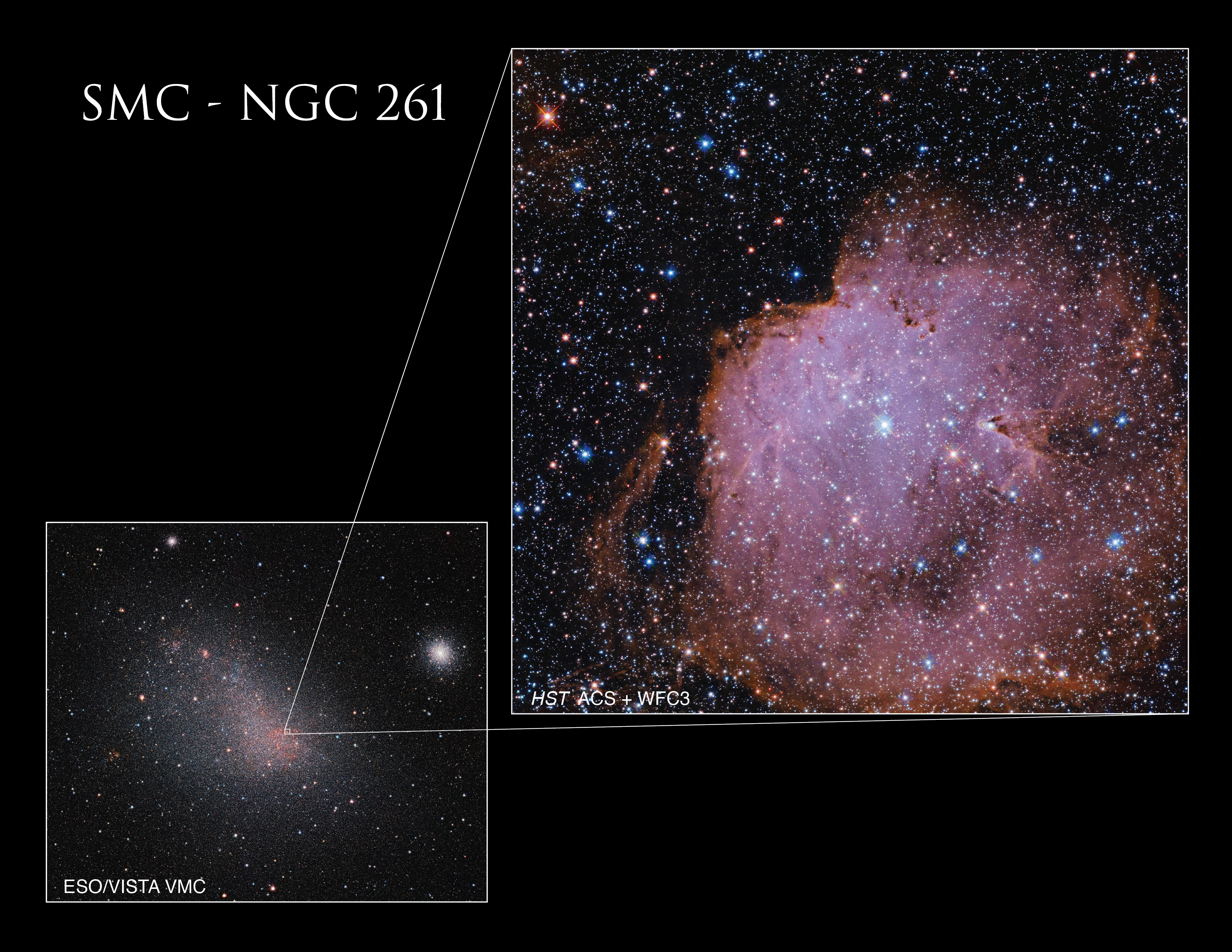
NGC 261 blooms a brilliant ruby red against a myriad of stars in this new image from NASA’s Hubble Space Telescope. Discovered on Sept. 5, 1826 by Scottish astronomer James Dunlop, this nebula is located in one of the Milky Way’s closest galactic companions, the Small Magellanic Cloud (SMC). The ionized gas blazing from within this diffuse region marks NGC 261 as an emission nebula. It is home to numerous stars hot enough to irradiate surrounding hydrogen gas, causing the cloud to emit a pinkish-red glow.

On the right, a large image of NGC 261 shows thousands of stars that fill black space, with a glowing, nebulous cloud of pink dominating most of the lower right half of the view. White lines connect this image to a wider view on the lower left, showing a diffuse, pinkish galaxy. White text above it reads “SMC - NGC 361”.
This inset image shows the location of NGC 261 within the Small Magellanic Cloud.
NASA, ESA, L. C. Johnson (Northwestern University), and ESO/VISTA VMC; Image Processing: Gladys Kober (NASA/Catholic University of America)

Hubble turned its keen eye toward NGC 261 to investigate how efficiently stars form in molecular clouds, which are extremely dense and compact regions of gas and dust. These clouds often consist of large amounts of molecular hydrogen — cold areas where most stars form. However, measuring this raw fuel of star formation in stellar nurseries is a challenge because molecular hydrogen doesn’t radiate easily. Since it is difficult to detect, scientists instead trace other molecules present in the molecular clouds.

The SMC hosts a gas-rich environment of young stars along with trace amounts of carbon monoxide (CO), a chemical correlated with hydrogen and often used to identify the presence of such clouds. Using the Advanced Camera for Surveys (ACS) and Wide Field Camera 3 (WFC3), Hubble imaged these stars in the southwest portion of the SMC where NGC 261 resides. The combined power of ACS and WFC3 allowed scientists to closely examine the nebula’s star-forming properties through its CO content at optical and near-infrared wavelengths. This research helps astronomers better understand how stars form in our home galaxy and others in our galactic neighborhood.

Explore More

Media Contact:

Claire Andreoli
NASA’s Goddard Space Flight CenterGreenbelt, MD
claire.andreoli@nasa.gov

Share

Details

Last Updated

Aug 28, 2024

Editor
Michelle Belleville

Powered by WPeMatico

Get The Details…

Sols 4287-4288: Back on the Road

Sols 4287-4288: Back on the Road

3 min read

Sols 4287-4288: Back on the Road

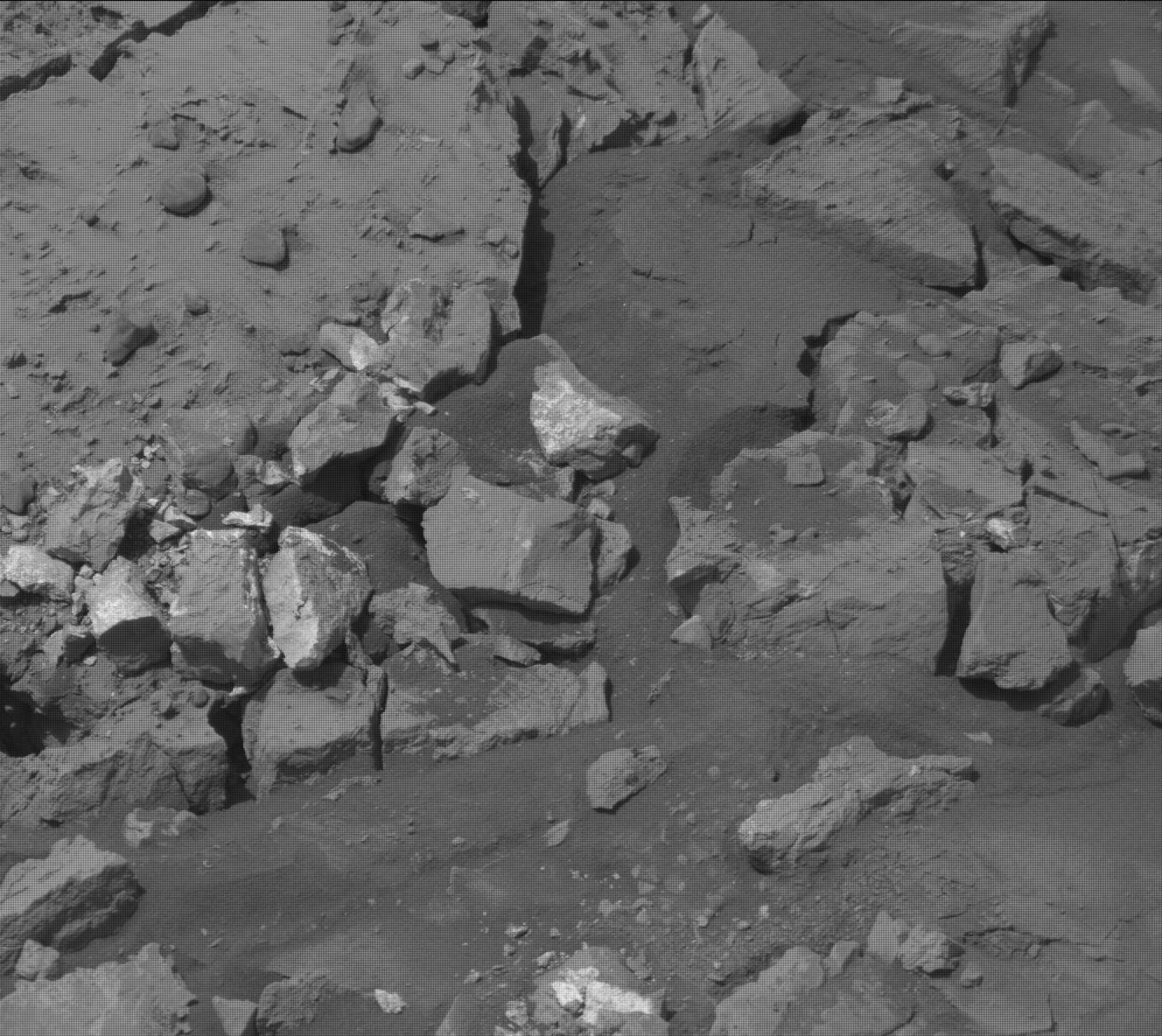
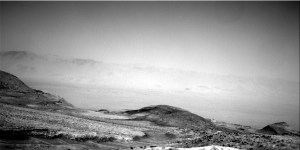
A grayscale photo of the Martian surface shows rocky terrain in shades of medium gray, with larger slabs and smaller rocks interspersed with areas of smooth soil, but several small-to-medium rocks stand out — in the middle-left and bottom parts of the frame — having surfaces much brighter and lighter-colored than anything around them.
This image was taken by Mast Camera (Mastcam) aboard NASA’s Mars rover Curiosity on Sol 4284 — Martian day 4,284 of the Mars Science Laboratory mission — on Aug. 24, 2024, at 20:32:43 UTC.
NASA/JPL-Caltech/MSSS

Earth planning date: Monday, Aug. 26, 2024

Today’s planning day was a good example of how our team comes together to make quick decisions based on new information and science priorities.

The original intent of today’s plan was to perform contact science on some interesting bright-toned rubbly rocks in our workspace, seen in the image above. These rocks were just a short bump away from the location of our last sampling campaign and the team had been eyeing them for a few weeks, interested in the details of their composition from the APXS instrument and their morphology from MAHLI. However, before we ever unstow our robotic arm to perform these types of observations, our Rover Planners and Surface Property Scientists perform a “Slip Risk Assessment.” This assessment is used to determine whether the rover’s wheels are stable on the ground so that we can safely unstow the heavy robotic arm and place the arm-mounted instruments very close to the surface. In today’s case, the team determined that it was not safe to unstow our arm. If the science team was interested in observing the bright-toned rocks in our workspace, it would require adjusting the rover’s position and performing the observations in the next planning cycle, impacting our overall mission timeline. 

With this information on hand, the science team had an excellent discussion, quickly assessing the pros and cons of sticking around with a small adjustment to get contact science at this location in our next plan, or continuing down the road to our next waypoint. I always enjoy listening to these discussions; they are led by our Long-Term Planners and provide the opportunity for all science advocates to voice their opinions. In today’s case, the science team decided to move along. This location had been opportunistic to begin with and more juicy science targets are certainly to come. Time is a precious resource to us, and we often consider the timeline cost of any given science observation, weighing the relative science benefit to the cost of planning cycles.

So given this reworking of priorities, today’s two-sol plan was adjusted to include targeted science on the first sol before driving away towards our next waypoint, followed by another sol with untargeted science. Our drive takes us about 25 meters north and we’ll pause part way through the drive to take Mastcam imaging of some bright nodular-appearing rocks to examine their relationship to other rock types.

Between the two sols of this plan, we’ll perform an empty-cell analysis of the CheMin cell used for our last sampling campaign, to determine if we have dumped all the sample out of it for future use with another sampling campaign. As always, we performed our normal environmental monitoring observations.

Onward, Curiosity!

Written by Elena Amador-French, Science Operations Coordinator at NASA’s Jet Propulsion Laboratory

Share

Details

Last Updated
Aug 28, 2024

Related Terms

Powered by WPeMatico

Get The Details…

Space Botany, Eye Research, Plasma Physics Fill Science Schedule on Station

Space Botany, Eye Research, Plasma Physics Fill Science Schedule on Station

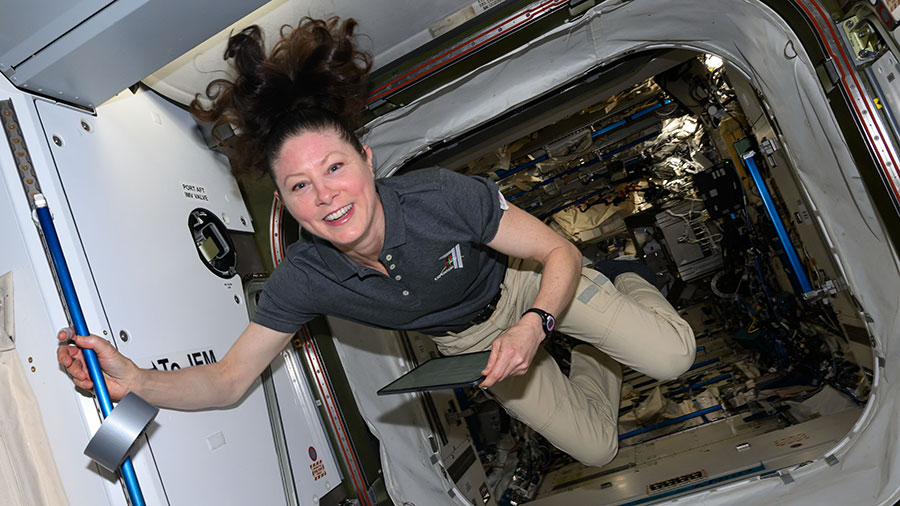
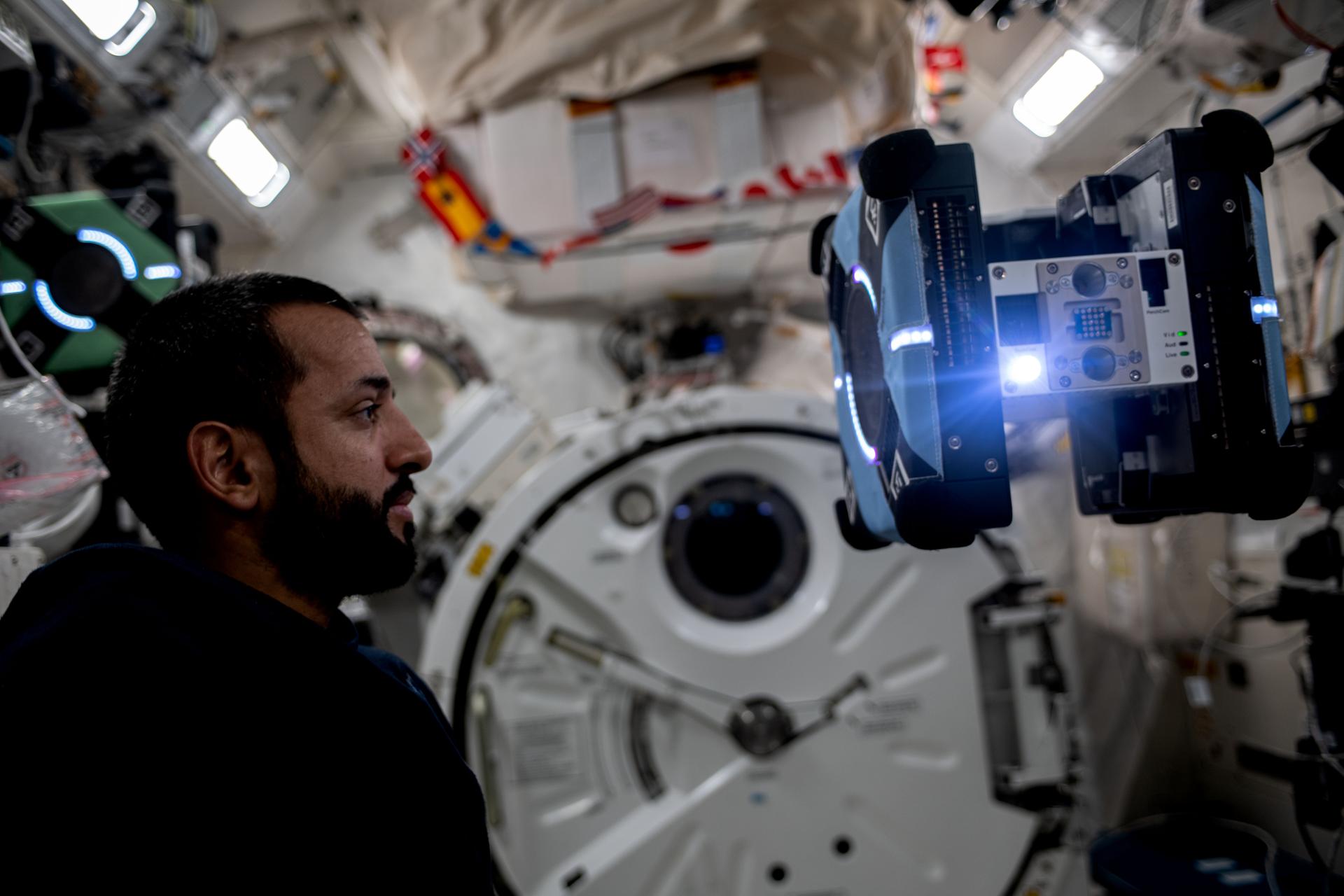
Astronaut Tracy C. Dyson smiles for a portrait in the vestibule between the Kibo laboratory module and the Harmony module.

Tuesday was a science-packed day aboard the International Space Station as the astronauts and cosmonauts explored space botany, eye health, and plasma physics to promote longer spaceflights farther away from Earth.

NASA Flight Engineers Mike Barratt and Jeanette Epps of Expedition 71 took turns tending to plants growing inside the Columbus laboratory module’s Veggie space botany facility throughout the day. Barratt started first scanning leaves on two types of grasses using an agricultural multispectral device measuring leaf thickness, chlorophyll, and other plant properties. Epps followed and photographed the plants so scientists on the ground could analyze the space-grown grasses. Results from the botany experiment may show space-caused changes to photosynthesis and plant metabolism and possibly inform bioregenerative life support systems on future spacecraft.

Afterward, Epps peered into the eyes of NASA Flight Engineer Matthew Dominick using standard medical imaging gear found in a doctor’s office on Earth. She was specifically looking at his optic nerve with real-time assistance from researchers on the ground. NASA scientists are trying to determine if genetics and a B vitamin condition could affect crew vision in space and develop countermeasures to prevent the swelling of the optic nerve on spaceflight missions.

NASA Flight Engineer Tracy C. Dyson had a light-duty day first examining experimental life support hardware installed in the Microgravity Science Glovebox. Next, she, Commander Oleg Kononenko, and Flight Engineer Nikolai Chub took turns reading characters midday on an eye chart so eye doctors could assess their visual acuity, or vision sharpness. Afterward, Dyson spent about 25 minutes testing VHF communication systems with mission controllers in the United States, Japan, Germany, and Russia.

NASA astronauts Butch Wilmore and Suni Williams worked together throughout Tuesday on life support maintenance in the Tranquility module. The duo uninstalled the carbon dioxide removal assembly from Tranquility’s Air Revitalization System rack then reconfigured and replaced components on the life support device.

Kononenko spent most of his morning swapping out computer and electronics gear in the Zarya module before working the rest of the afternoon inspecting modules in the Roscosmos segment of the orbital outpost. Chub started his day photographing surfaces treated with a variety of disinfectants analyzing their effectiveness in microgravity then finished his shift checking Roscosmos power supply diagnostics.

Roscosmos Flight Engineer Alexander Grebenkin dedicated his entire day to the Plasma Kristall-4 experiment supported by both Roscosmos and ESA (European Space Agency). Grebenkin checked the pressure on argon and neon gas bottles that supply the investigation which observes complex plasmas, or ionized gases produced by high temperatures, potentially benefitting spacecraft designs and fundamental research on Earth.


Learn more about station activities by following the space station blog@space_station and @ISS_Research on X, as well as the ISS Facebook and ISS Instagram accounts.

Get weekly video highlights at: https://roundupreads.jsc.nasa.gov/videoupdate/

Get the latest from NASA delivered every week. Subscribe here: www.nasa.gov/subscribe

Powered by WPeMatico

Get The Details…

Mark Garcia

Perseverance Kicks off the Crater Rim Campaign!

Perseverance Kicks off the Crater Rim Campaign!

3 min read

Perseverance Kicks off the Crater Rim Campaign!

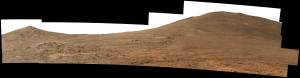
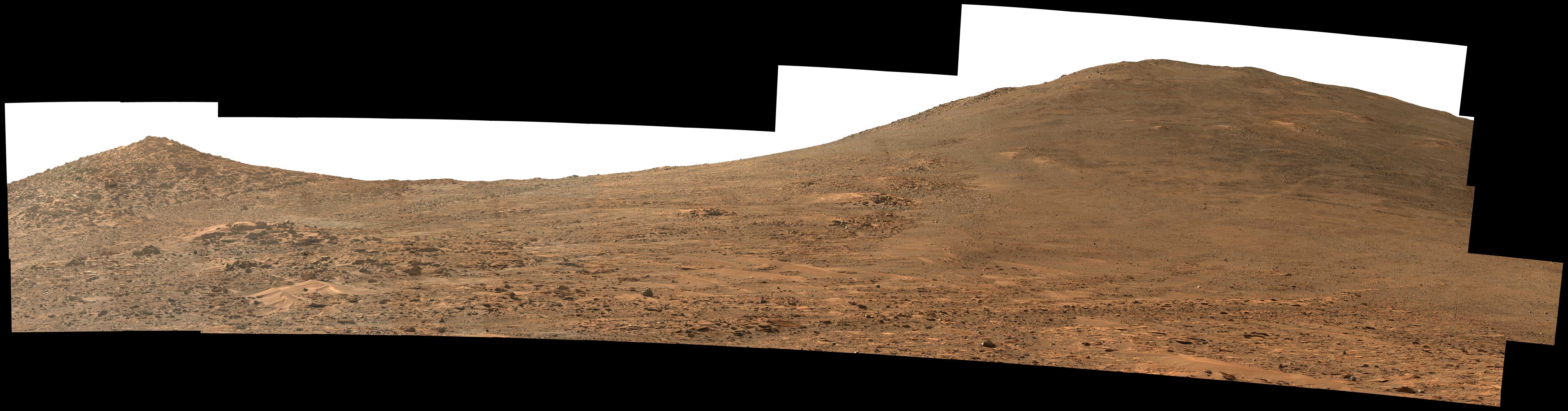
This panorama shows the area NASA’s Perseverance Mars rover will climb in coming months to crest Jezero Crater’s rim. It is made up of 59 images taken by the rover’s Mastcam-Z on Aug. 4.
Mastcam-Z mosaic made of 59 individual Mastcam-Z images showing the area Perseverance will climb in the coming weeks on its way to Dox Castle, the rover’s first stop on the crater rim.
NASA/JPL-Caltech/ASU/MSSS

Perseverance is officially headed into a new phase of scientific investigation on the Jezero Crater rim!

For the last 2 months, the Perseverance rover has been exploring the Neretva Vallis region of Jezero Crater, where rocks with interesting popcorn-like textures and “leopard spot” patterns have fascinated us all. Now, the rover has begun its long ascent up the crater rim, and is officially kicking off a new phase of exploration for the mission.

Strategic (longer-term) planning is particularly important for the Mars 2020 mission given the crucial role Perseverance plays in collecting samples for Mars Sample Return, and the Mars 2020 team undertakes this planning in the form of campaigns. Perseverance has now completed four such campaigns— the Crater Floor, Delta Front, Upper Fan and Margin Unit campaigns respectively— making the Crater Rim Campaign next in line. Given its broad scope and the wide diversity of rocks we expect to encounter and sample along the way, it may be the most ambitious campaign the team has attempted so far.

The team also has less information from orbiter data to go on compared to previous campaigns, because this area of the crater rim does not have the high-resolution, hyperspectral imaging of CRISM that helped inform much of our geological unit distinctions inside the crater. This means that Mastcam-Z multispectral and SuperCam long-distance imaging will be particularly useful for understanding broadscale mineralogical distinctions between rocks as we traverse the crater rim. Such imaging has already proved extremely useful in the Neretva Vallis area, where at Alsap Butte we observed rocks that appeared similar to each other in initial imaging, but actually display an Andy-Warhol-esque array of color in multispectral products, indicative of varied mineral signatures. 

Our next stop is Dox Castle where Perseverance will investigate the contact between the Margin Unit and the Crater rim, as well as rubbly material that may be our first encounter with deposits generated during the impact that created Jezero crater itself. Later in the campaign, we will investigate other light-toned outcrops that may or may not be similar to those encountered at Bright Angel, as well as rocks thought to be part of the regionally extensive olivine-carbonate-bearing unit, and whose relationship to both Séítah and the Margin Unit remains an interesting story to unravel. Throughout this next phase of exploration, comparing and contrasting the rocks we see on the rim to both each other and those previously explored in the mission will be an important part of our scientific investigations.

The whole Mars 2020 science team is incredibly excited to be embarking on the next phase of Perseverance’s adventure, and we expect these results, and the samples we collect along the way, to inform our understanding of not just Jezero itself, but the planet Mars as a whole. We can’t wait to share what we find!

Written by Eleni Ravanis, PhD Candidate and Graduate Research Assistant at University of Hawaiʻi at Mānoa 

Share

Details

Last Updated
Aug 27, 2024

Related Terms

Powered by WPeMatico

Get The Details…

40 Years Ago: President Reagan Announces Teacher in Space Project

40 Years Ago: President Reagan Announces Teacher in Space Project

On Aug. 27, 1984, President Ronald W. Reagan announced the Teacher in Space project as part of NASA’s Space Flight Participant Program to expand the space shuttle experience to a wider set of private citizens who would communicate the experience to the public. From 11,000 teacher applicants, each of the 50 states and territories selected two nominees for a total of 114. After meeting with each candidate, a review panel narrowed the field down to 10 finalists. These 10 underwent interviews and medical examinations. A senior review panel recommended S. Christa McAuliffe as the prime Teacher in Space to fly with the STS-51L crew, with Barbara R. Morgan as her backup. Tragically, the Jan. 28, 1986, Challenger accident prevented McAuliffe from realizing her dreams of teaching from space.

President Ronald W. Reagan announces the Teacher in Space project in 1984 NASA Administrator James M. Beggs Official emblem of the Teacher in Space project
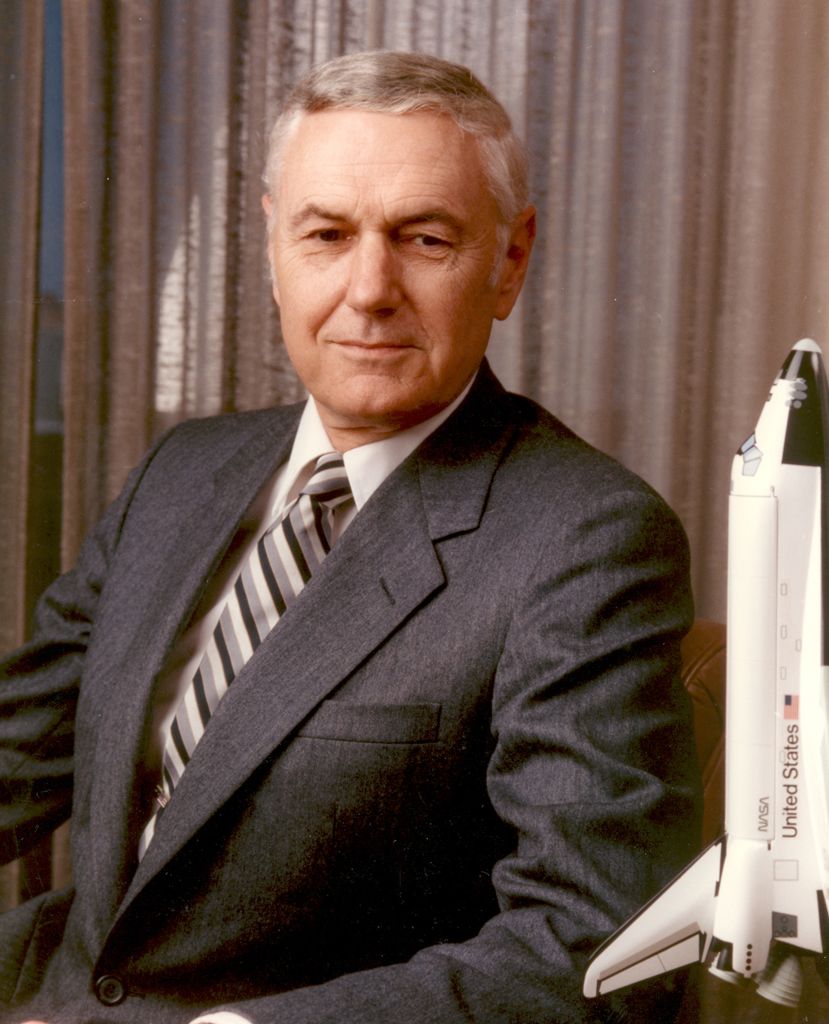
Left: President Ronald W. Reagan announces the Teacher in Space project in 1984.Middle: NASA Administrator James M. Beggs. Right: Official emblem of the Teacher in Space project.

During a ceremony at the Department of Education recognizing outstanding public secondary schools, President Reagan announced the Teacher in Space project, saying,

It’s long been a goal of our space shuttle to someday carry private citizens in space. Until now, we hadn’t decided who the first citizen passenger would be. But today, I’m directing NASA to begin a search in all of our elementary and secondary schools, and to choose as the first citizen passenger in the history of our space program, one of America’s finest – a teacher. When that shuttle takes off, all of America will be reminded of the crucial role that teachers and education play in the life of our nation.

Later that day, NASA Administrator James M. Beggs held a news conference at NASA Headquarters in Washington, D.C., and provided more details, saying that although a teacher would lead off the Space Flight Participant Program, future selections would include journalists, poets, and artists. NASA released an Announcement of Opportunity on Nov. 8 detailing the requirements for teacher applicants and setting the target launch date of early 1986. From the approximately 11,000 applications received by the Feb. 1, 1985, deadline, the Council of Chief State School Officers coordinated the selection process, working with state, territorial, and agency review panels. On May 3, they announced the 114 nominees, two from each U.S. state, the District of Columbia, Puerto Rico, the U.S. Virgin Islands, Guam, Departments of Defense and State overseas schools, and Bureau of Indian Affairs schools. The nominees attended a workshop in Washington, D.C., June 22-27 focused on space education, because even those not selected planned to serve as space ambassadors for NASA. Each nominee met with the National Review Panel that selected the 10 finalists, announced on July 1.
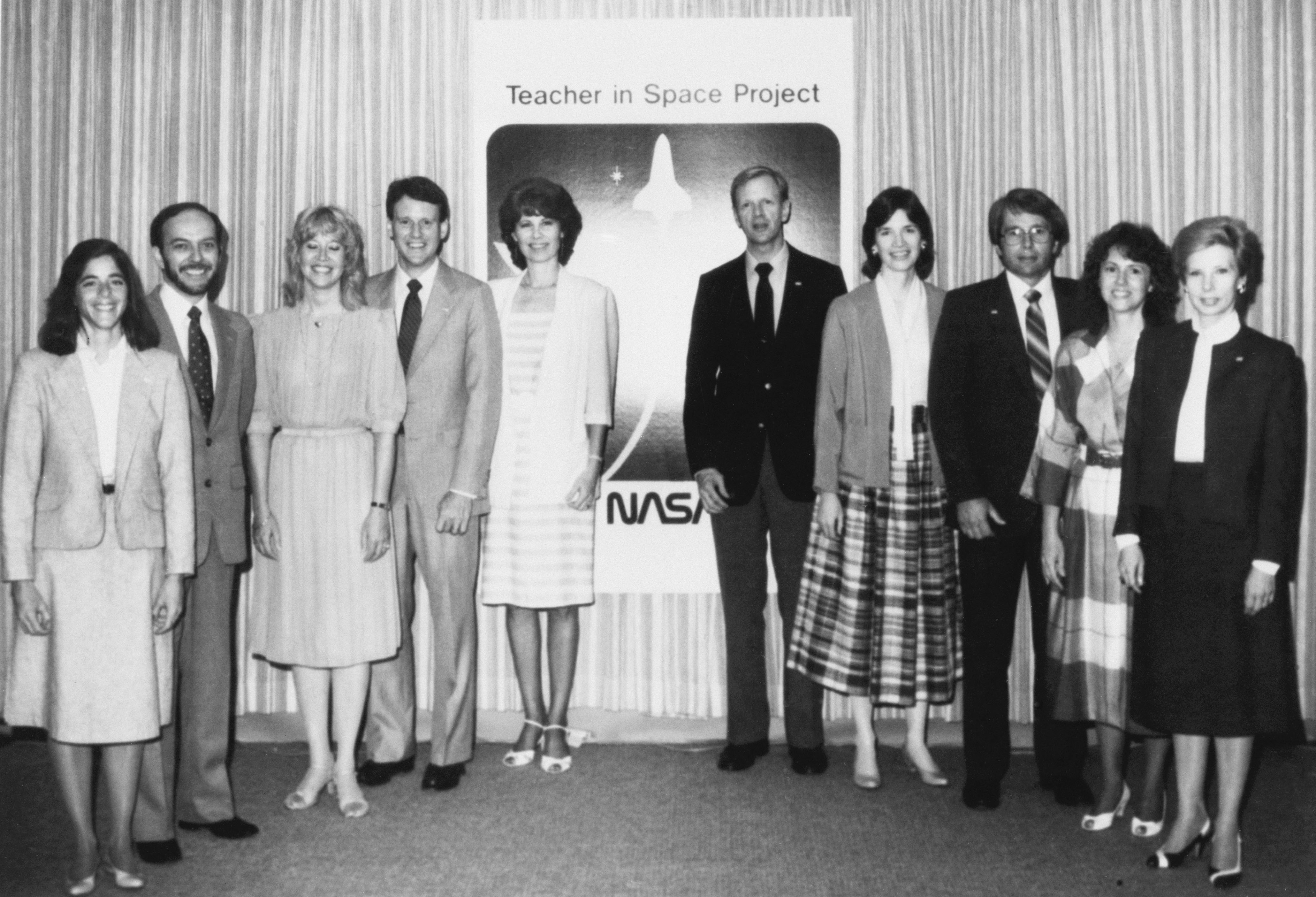
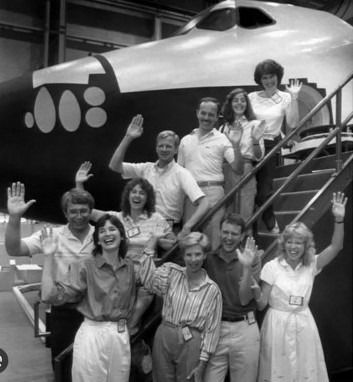
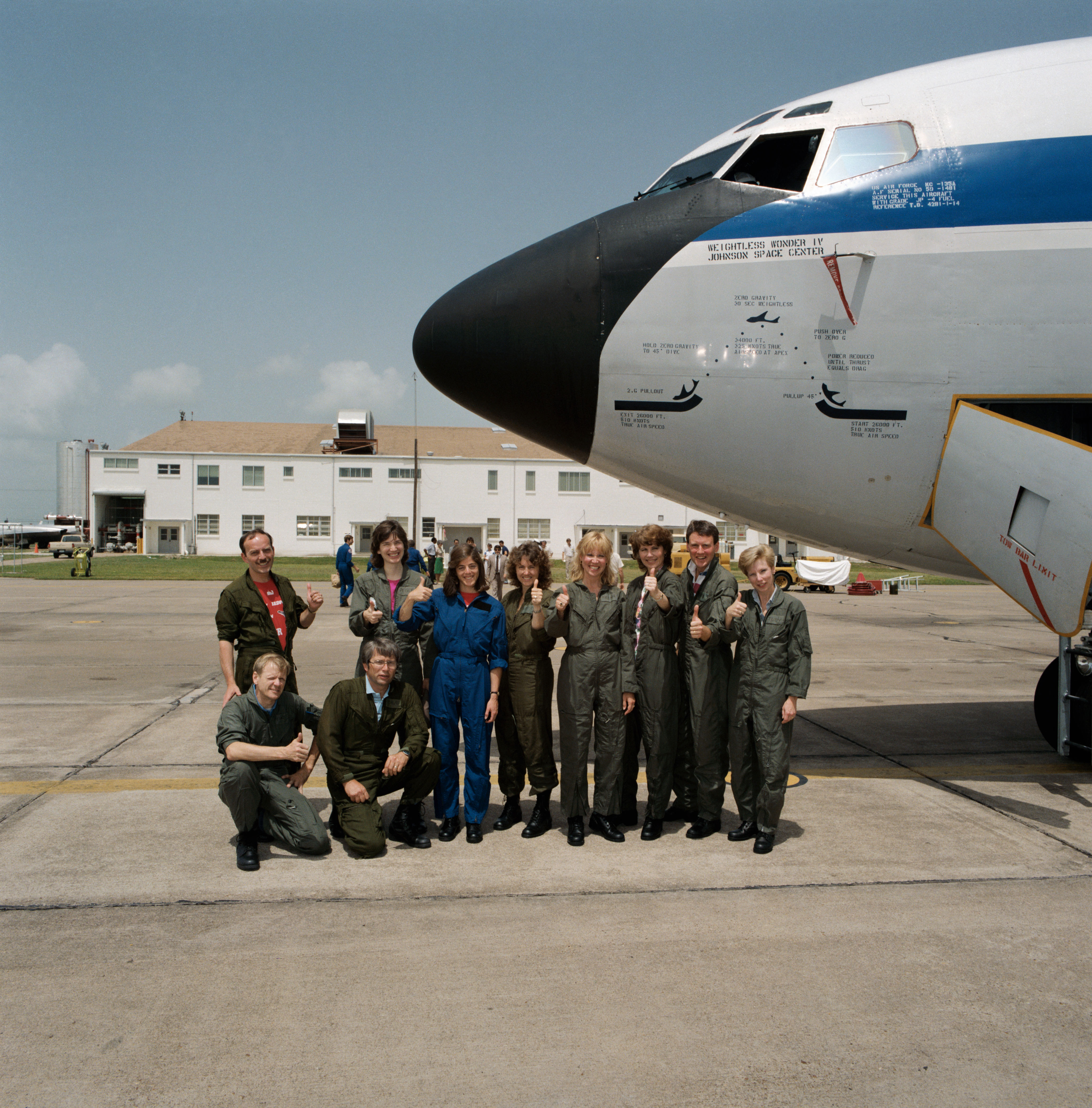
The 10 Teacher in Space finalists during their visit to NASA’s Johnson Space Center (JSC) in Houston in July 1985 As part of their orientation, the 10 finalists toured JSC’s space shuttle mockups The 10 finalists experienced brief periods of weightlessness aboard NASA’s KC-135 aircraft
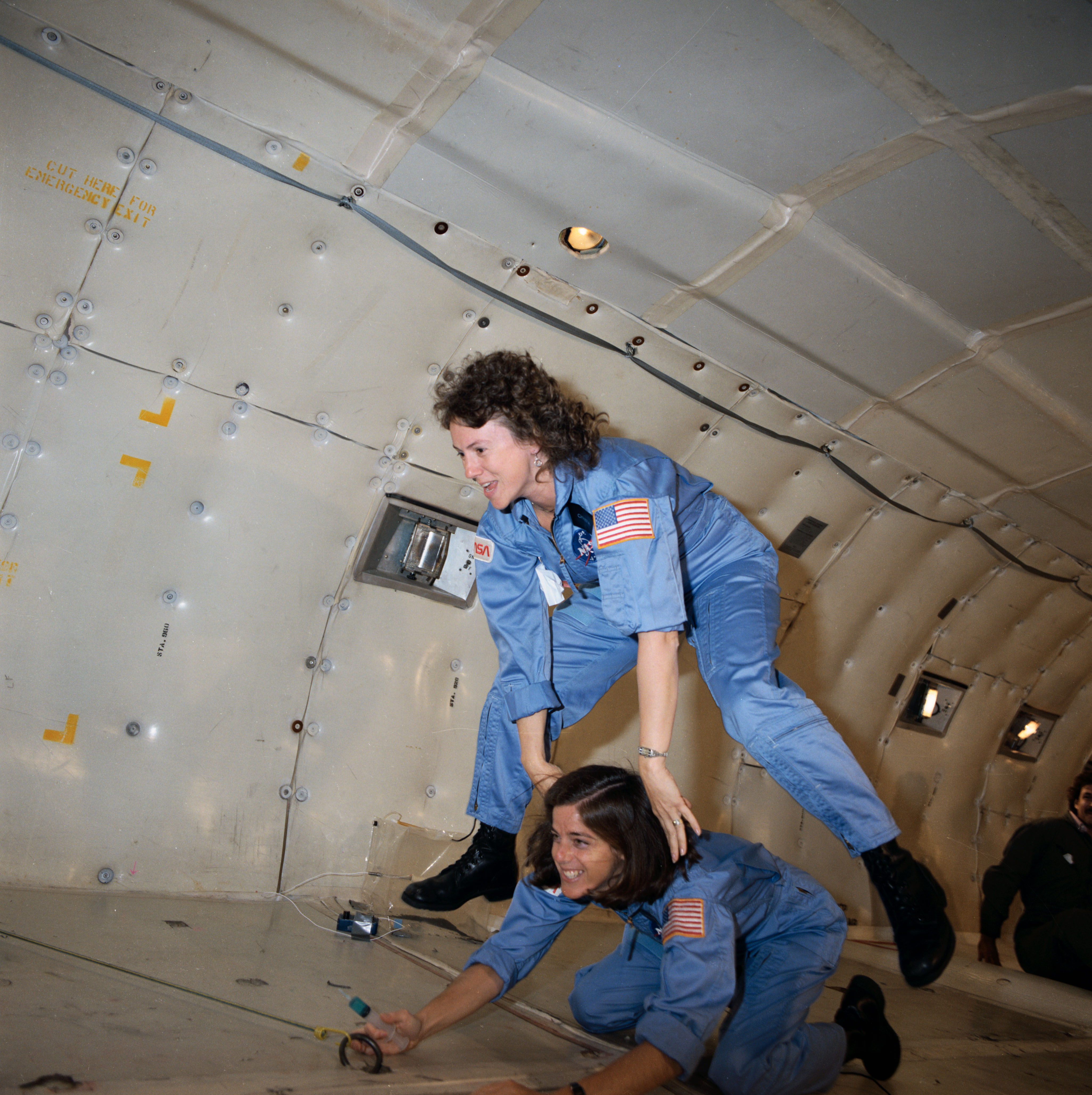
Left: The 10 Teacher in Space finalists during their visit to NASA’s Johnson Space Center (JSC) in Houston in July 1985. Middle: As part of their orientation, the 10 finalists toured JSC’s space shuttle mockups. Right: The 10 finalists experienced brief periods of weightlessness aboard NASA’s KC-135 aircraft.

The 10 finalists spent the week of July 7 at NASA’s Johnson Space Center (JSC) in Houston. During the week, the finalists underwent medical and psychological examinations, toured JSC’s facilities, and experienced episodes of weightlessness on the KC-135 aircraft. Following a brief stop at NASA’s Marshall Space Flight Center in Huntsville, Alabama, the finalists spent July 15-17 in Washington, D.C., undergoing a series of interviews with the NASA Space Flight Participant Committee, who recommended the Teacher in Space candidate and a backup to NASA Administrator Beggs.
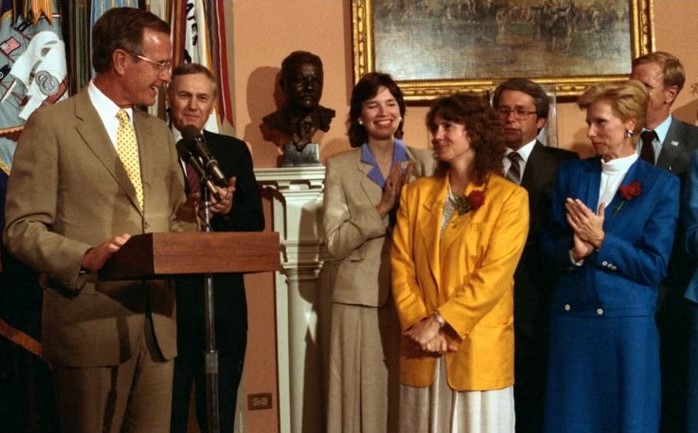
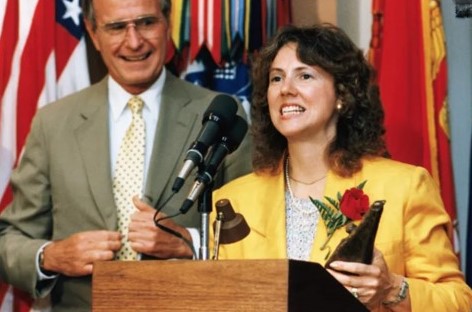
Vice President George H.W. Bush announces the prime, S. Christa McAuliffe, and backup, Barbara R. Morgan, Teacher in Space candidates McAuliffe addresses the assembled crowd
Left: Vice President George H.W. Bush announces the prime, S. Christa McAuliffe, and backup, Barbara R. Morgan, Teacher in Space candidates. Right: McAuliffe addresses the assembled crowd.

On July 19, the 10 finalists assembled in the Roosevelt Room at the White House. Following Administrator Beggs’ introductory remarks, Vice President George H.W. Bush announced the Teacher in Space winners – S. Christa McAuliffe, a high school social studies teacher from Concord, New Hampshire, and her backup, Barbara R. Morgan, a second-grade teacher from McCall, Idaho. The other eight finalists continued to participate in the project by helping to develop McAuliffe’s lesson plans.
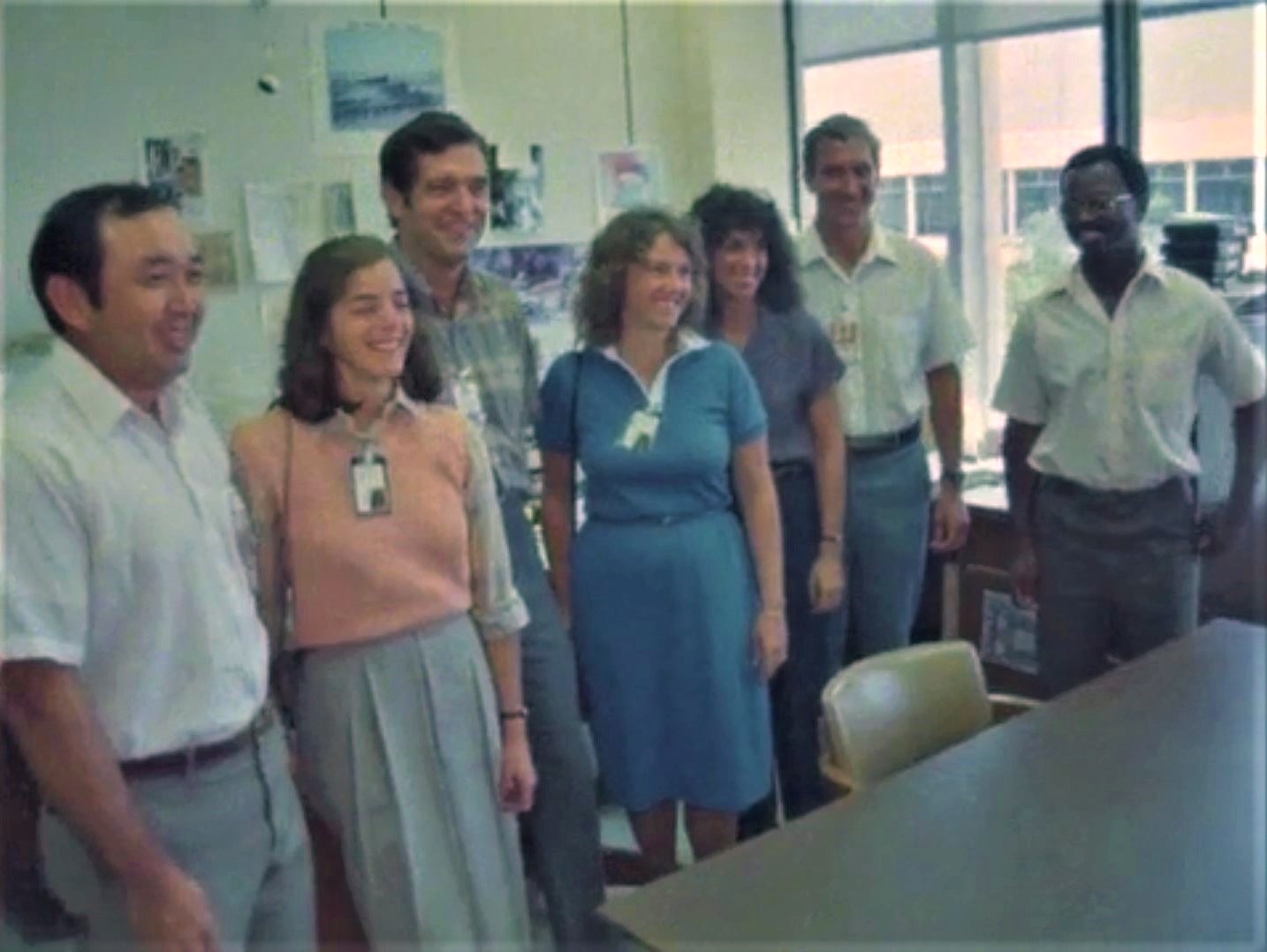
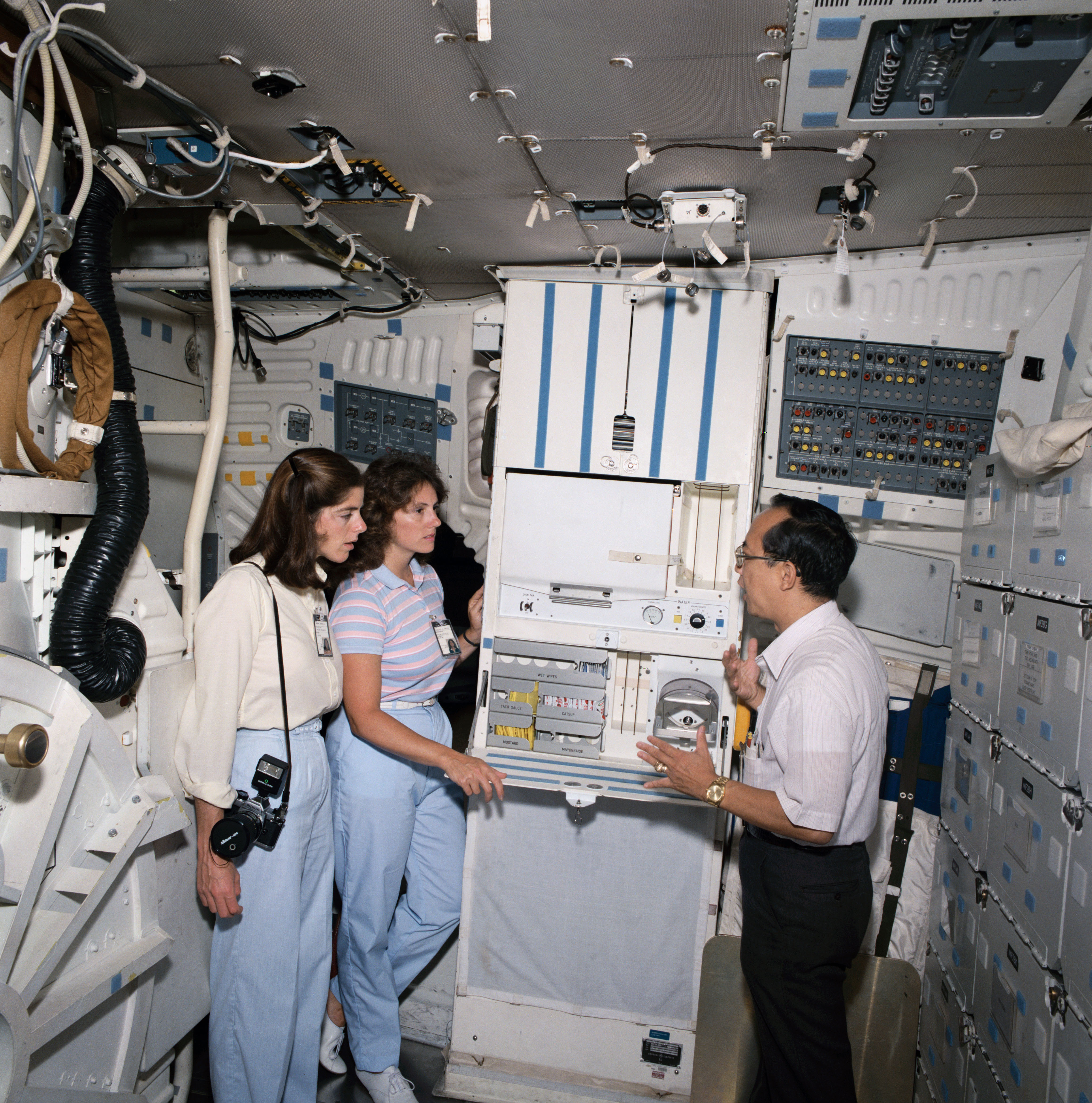
Barbara R. Morgan, second from left, and S. Christa McAuliffe, fourth from left, meet the STS-51L crew at NASA’s Johnson Space Center in Houston McAuliffe, left, and Morgan get their first taste of space food Morgan, left, and McAuliffe receive a briefing on the space shuttle galley
Left: Barbara R. Morgan, second from left, and S. Christa McAuliffe, fourth from left, meet the STS-51L crew at NASA’s Johnson Space Center in Houston. Middle: McAuliffe, left, and Morgan get their first taste of space food. Right: Morgan, left, and McAuliffe receive a briefing on the space shuttle galley.

McAuliffe and Morgan reported to JSC on Sept. 9, 1985, to begin training for their space shuttle mission. Assigned to STS-51L scheduled for January 1986, they met their fellow crewmates Commander Francis R. “Dick” Scobee, Pilot Michael J. Smith, and Mission Specialists Ellison S. Onizuka, Judith A. Resnik, and Ronald E. McNair. Gregory B. Jarvis, a Hughes Aircraft engineer, joined the crew as a second payload specialist in October. Their first week, McAuliffe and Morgan received basic orientation, including fitting for their flight suits and tasting space food. For the next four months, they trained with the rest of the crew on shuttle systems, emergency evacuation drills, and completed flights aboard T-38 jets and the KC-135 weightless aircraft.

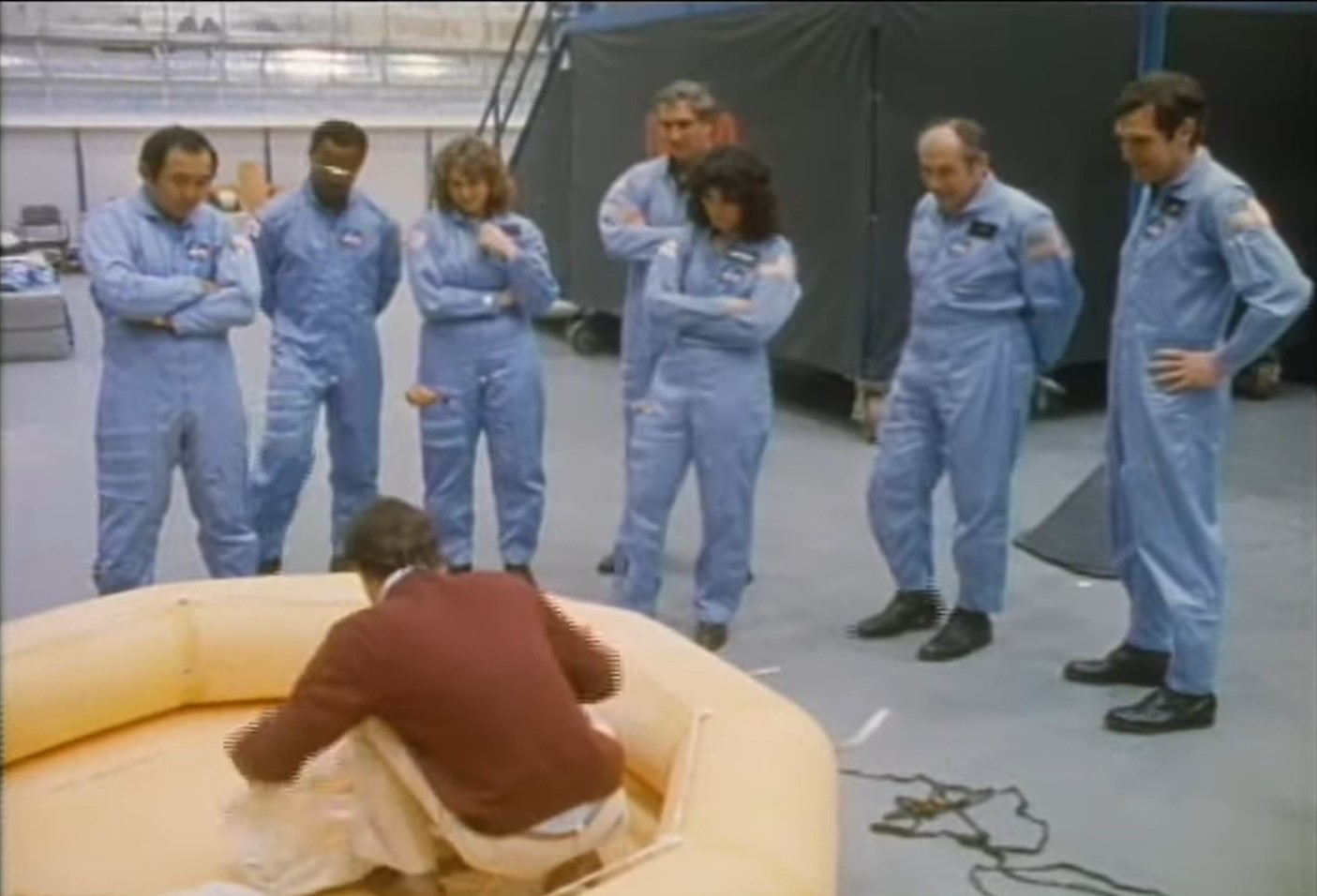
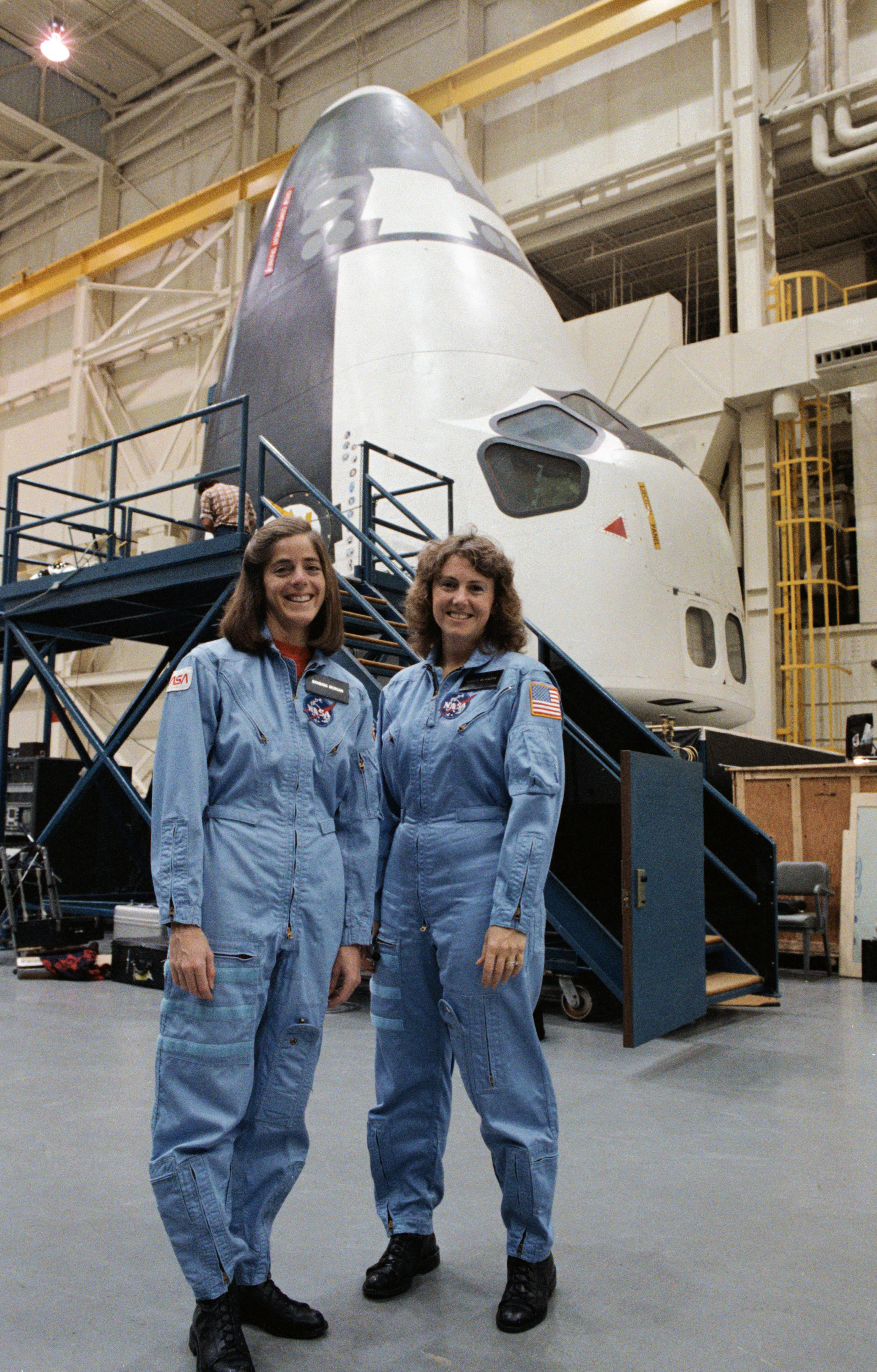
The STS-51L crew receives a briefing on crew escape procedures The STS-51L crew receives a briefing on water evacuation Barbara R. Morgan and S. Christa McAuliffe pose in front of the space shuttle crew compartment trainer
Left: The STS-51L crew receives a briefing on crew escape procedures. Middle: The STS-51L crew receives a briefing on water evacuation. Right: Barbara R. Morgan, left, and S. Christa McAuliffe pose in front of the space shuttle crew compartment trainer.
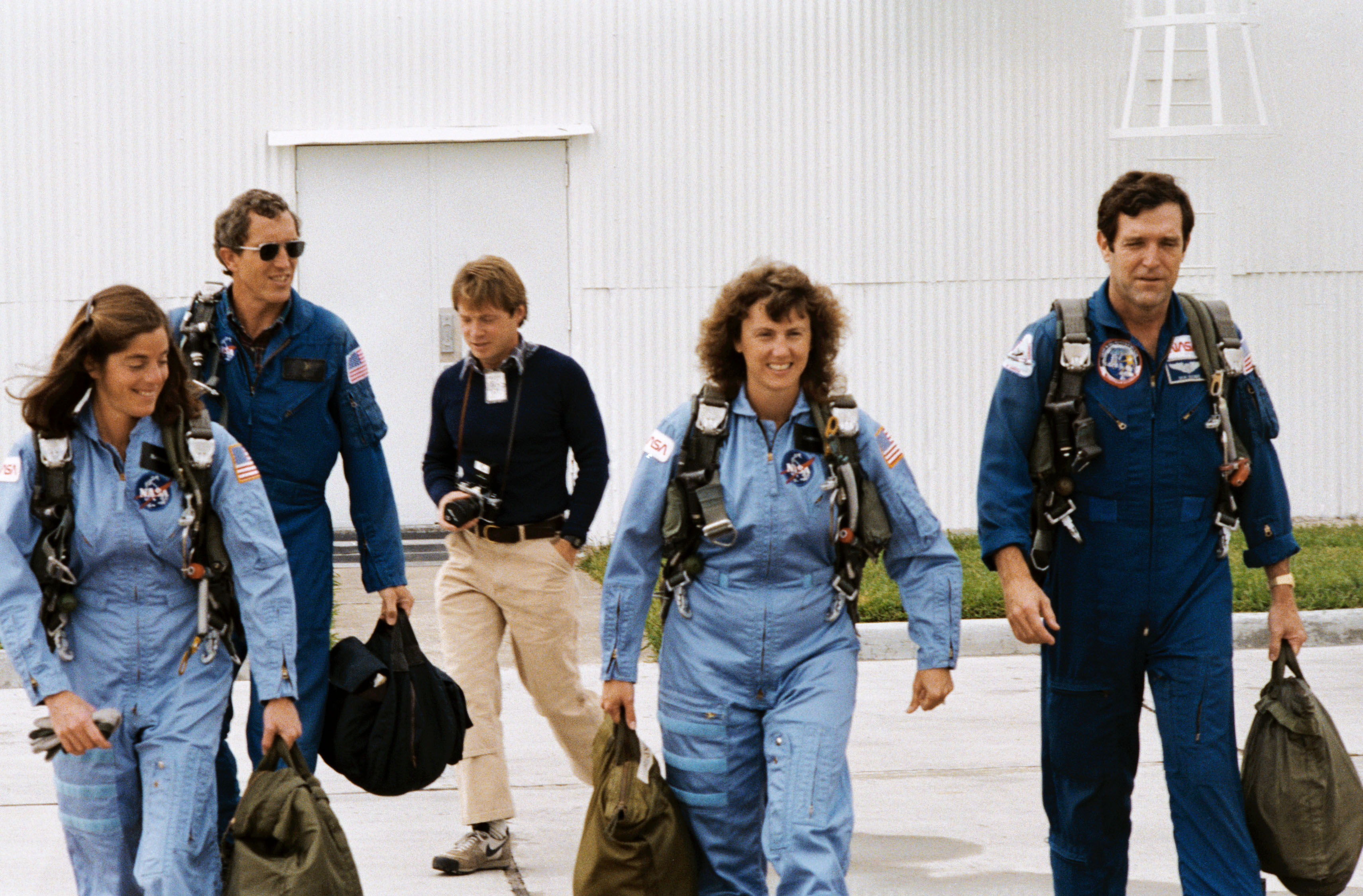
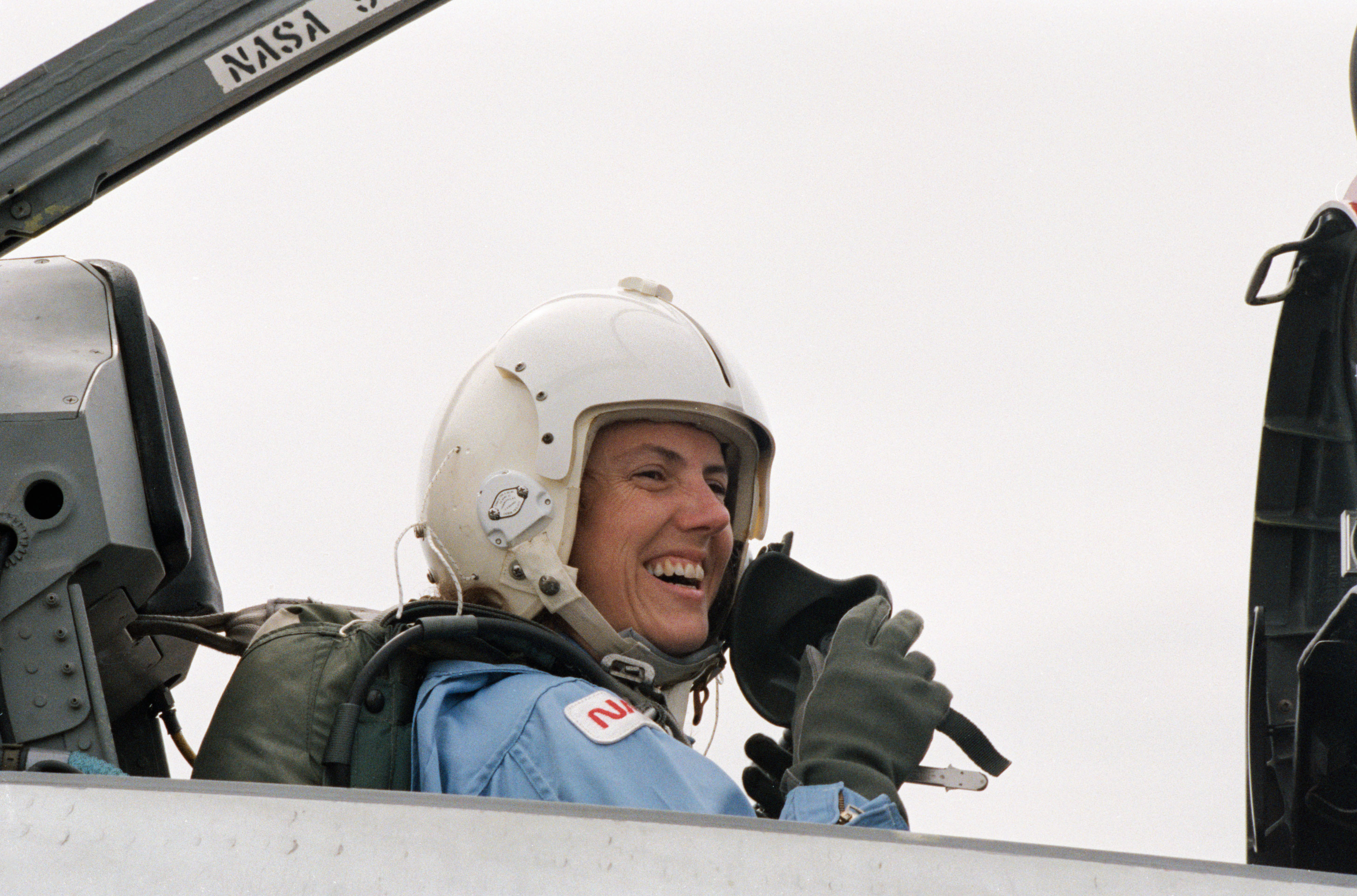
At Houston’s Ellington Air Force Base, Barbara R. Morgan, Michael J. Smith, a photographer, S. Christa McAuliffe, and Francis R. “Dick” Scobee walk onto the tarmac toward T-38 jet trainers McAuliffe in the backseat of a T-38 prior to takeoff
Left: At Houston’s Ellington Air Force Base, Barbara R. Morgan, Michael J. Smith, a photographer, S. Christa McAuliffe, and Francis R. “Dick” Scobee walk onto the tarmac toward T-38 jet trainers. Right: McAuliffe in the backseat of a T-38 prior to takeoff.
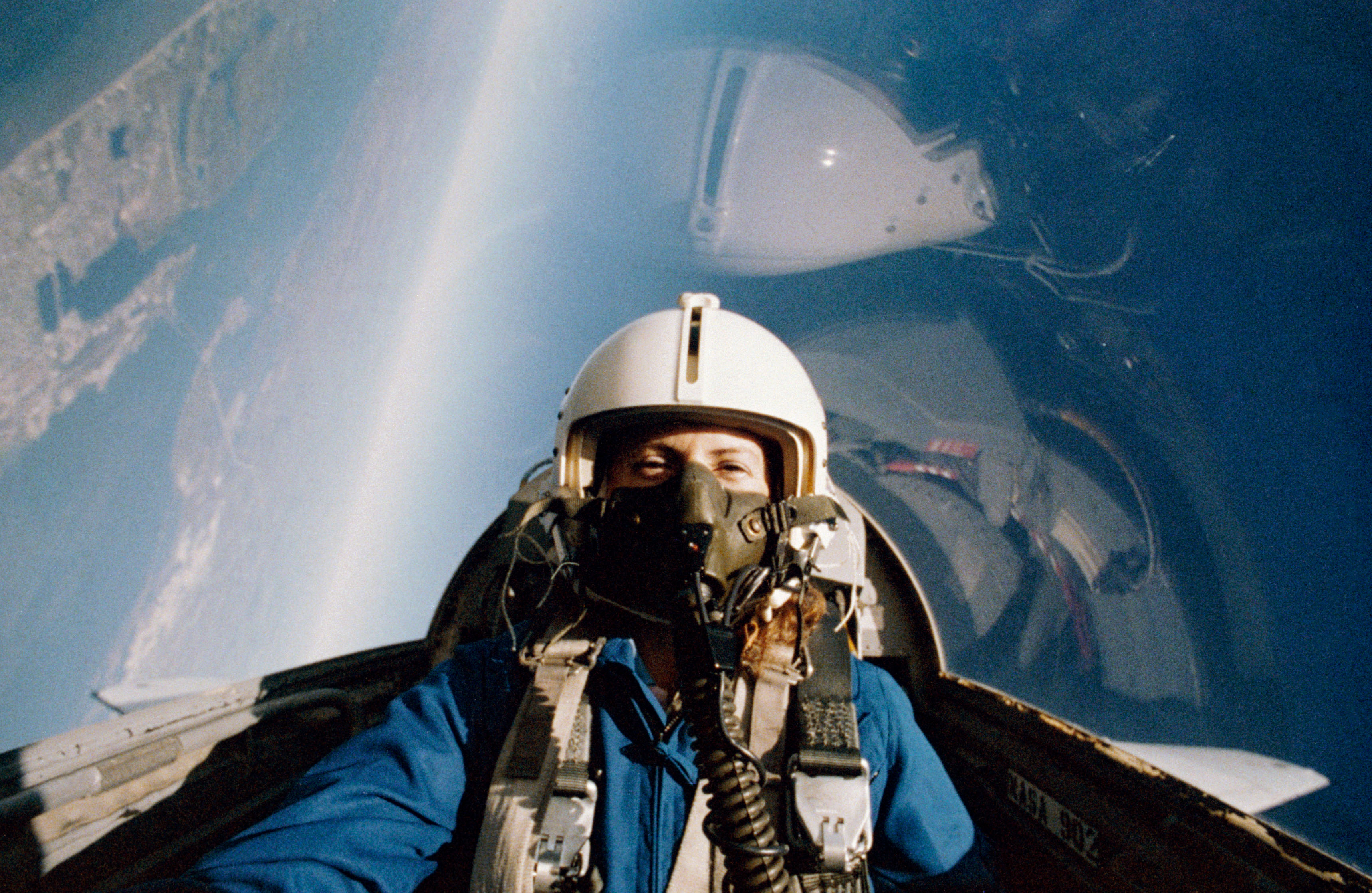
Teacher in Space designee S. Christa McAuliffe in the backseat of a T-38 jet trainer during a right turn, with part of Galveston Island visible at left Michael J. Smith, left, Barbara R. Morgan, McAuliffe, and Francis R. “Dick” Scobee following training flights aboard T-38 jets
Left: Teacher in Space designee S. Christa McAuliffe in the backseat of a T-38 jet trainer during a right turn, with part of Galveston Island visible at left. Right: Michael J. Smith, left, Barbara R. Morgan, McAuliffe, and Francis R. “Dick” Scobee following training flights aboard T-38 jets.


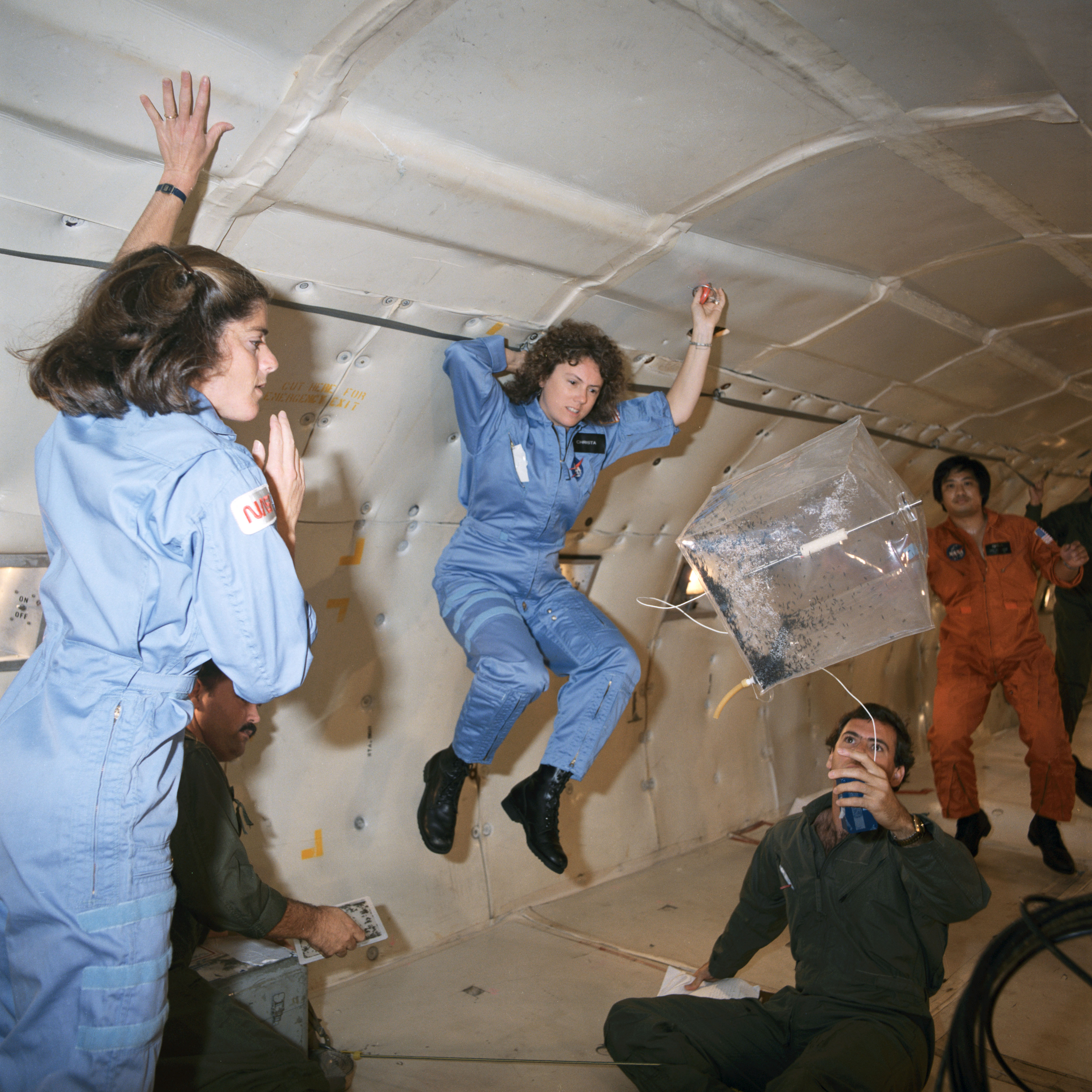
Backup Teacher in Space Barbara R. Morgan, left, prime Teacher in Space S. Christa McAuliffe, Payload Specialist Gregory B. Jarvis, and Mission Specialist Ronald E. McNair in the middeck of the Shuttle Mission Simulator Teacher in Space McAuliffe, second from left, and her backup Morgan, get a taste of weightlessness aboard NASA’s KC-135, along with STS-61C Payload Specialist Congressman C. William “Bill” Nelson, now serving as NASA’s 14th administrator
Left: Backup Teacher in Space Barbara R. Morgan, left, prime Teacher in Space S. Christa McAuliffe, Payload Specialist Gregory B. Jarvis, and Mission Specialist Ronald E. McNair in the middeck of the Shuttle Mission Simulator. Right: Teacher in Space McAuliffe, second from left, and her backup Morgan, get a taste of weightlessness aboard NASA’s KC-135, along with STS-61C Payload Specialist Congressman C. William “Bill” Nelson, now serving as NASA’s 14th administrator.
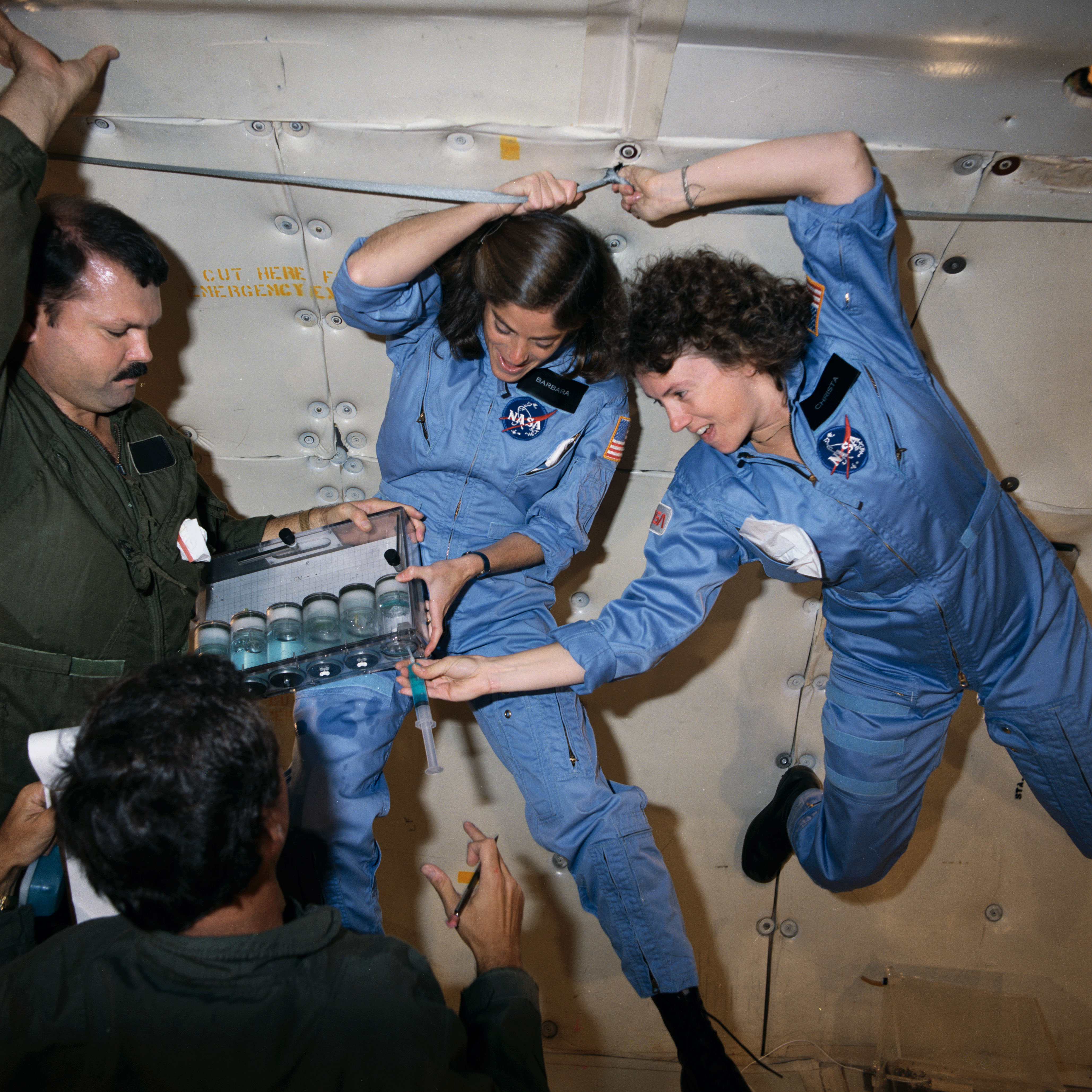
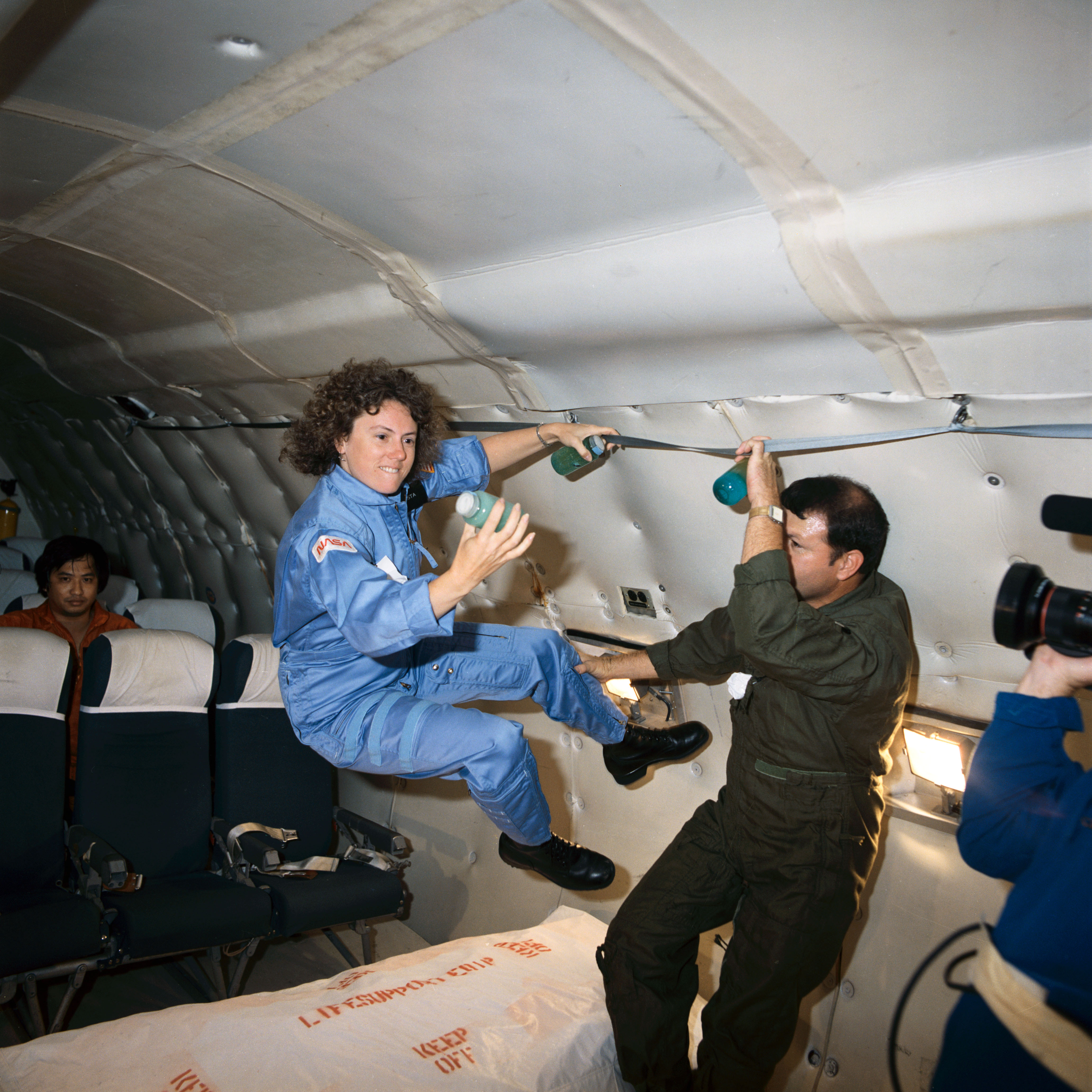
Hydroponics in Microgravity Molecular Mixing Experiment Magnetic Effects Leapfrog in Microgravity – not an actual experiment
Training aboard the KC-135 for Teacher in Space demonstrations. Left: Hydroponics in Microgravity. Middle left: Molecular Mixing Experiment. Middle right: Magnetic Effects. Right: Leapfrog in Microgravity – not an actual experiment.

During her flight, McAuliffe planned to conduct two live lessons from space and record film for six demonstrations. The first lesson, “The Ultimate Field Trip,” sought to allow students to compare daily life aboard the shuttle versus on Earth. The second lesson, “Where We’ve Been, Where We’re Going, Why?” would explain the reasons for exploring space and making use of its unique environment for manufacturing certain products. The six filmed demonstrations included topics such as magnetism, Newton’s Laws, effervescence, simple machines and tools, hydroponics, and chromatographic separation, and how each of these behaves in weightlessness. Since McAuliffe could not complete these activities, many years later astronauts aboard the space station completed her mission by filming the demonstrations and preparing classroom lessons.
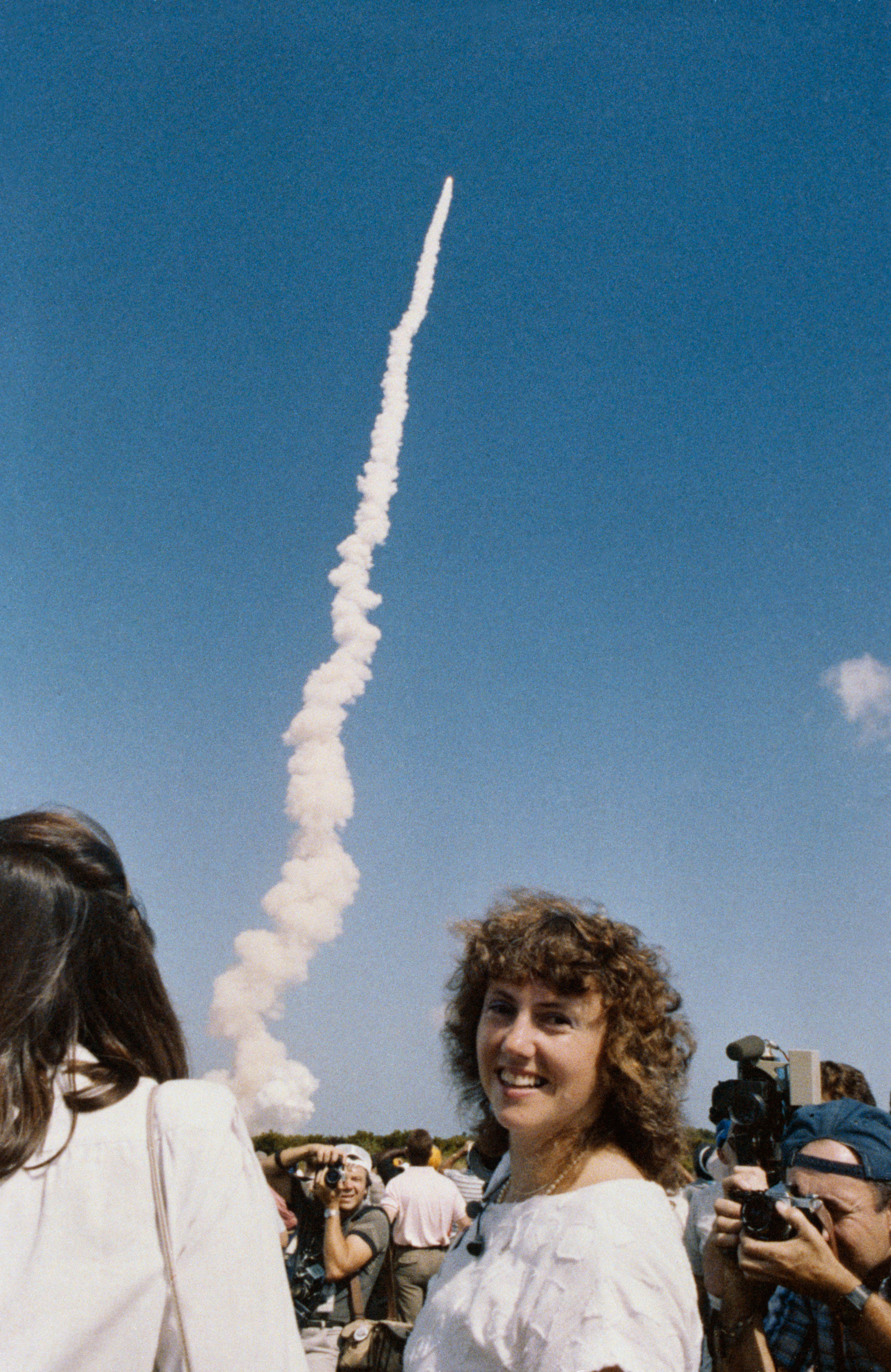
S. Christa McAuliffe watches the launch of space shuttle Challenger on the STS-61A Spacelab D1 mission The STS-51L crew answer reporters’ questions following the Terminal Countdown Demonstration Test (TCDT) During the TCDT, the crew practices emergency evacuation procedures
Left: At NASA’s Kennedy Space Center in Florida, Teacher in Space S. Christa McAuliffe watches the launch of space shuttle Challenger on the STS-61A Spacelab D1 mission. Middle: The STS-51L crew answer reporters’ questions following the Terminal Countdown Demonstration Test (TCDT). Right: During the TCDT, the crew practices emergency evacuation procedures.

To prepare for the upcoming launch, McAuliffe and Morgan traveled to NASA’s Kennedy Space Center (KSC) in Florida to witness the liftoff of the STS-61A Spacelab D1 mission, the last flight of space shuttle Challenger before STS-51L, on Oct. 30. The entire STS-51L crew returned to Florida for the Jan. 8, 1986, Terminal Countdown Demonstration Test (TCDT), essentially a dress rehearsal for the actual countdown to launch, planned for two weeks later. As part of the TCDT, the astronauts practiced evacuations drills from the shuttle in case of a fire or other emergency. After the test, they returned to Houston to complete last-minute training.
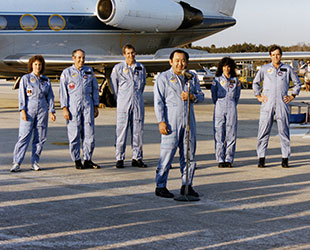
The STS-51L crew arrives at NASA’s Kennedy Space Center in Florida a few days before launch The STS-51L crew at the traditional prelaunch breakfast The STS-51L astronauts leave crew quarters on their way to Launch Pad 39B
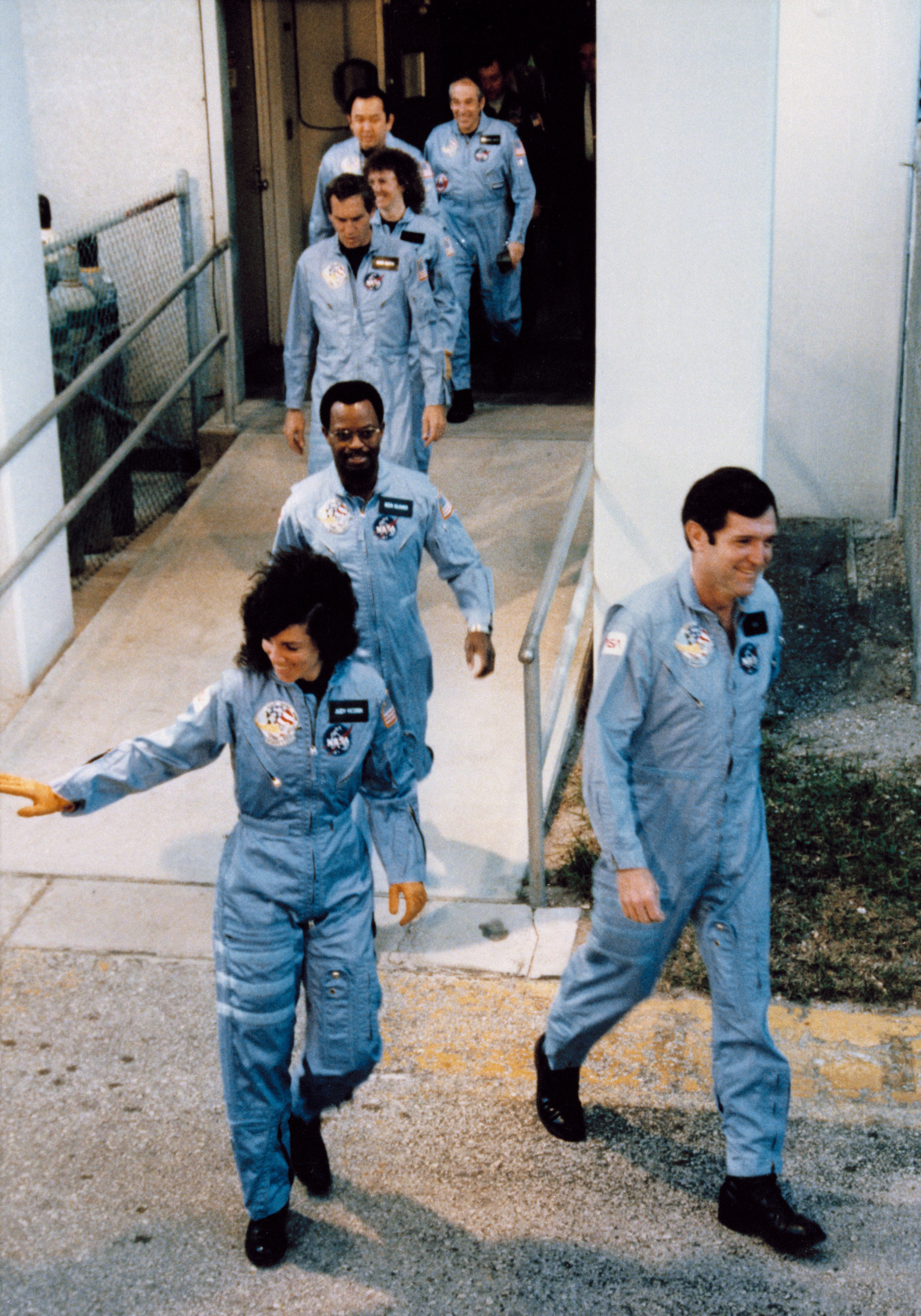
Left: The STS-51L crew arrives at NASA’s Kennedy Space Center in Florida a few days before launch. Middle: The STS-51L crew at the traditional prelaunch breakfast. Right: The STS-51L astronauts leave crew quarters on their way to Launch Pad 39B.

On Jan. 23, the STS-51L crew arrived at KSC for the launch set for Jan. 26. Bad weather caused a one-day delay, and the crew suited up, rode out to the pad, and boarded Challenger. A problem closing the hatch followed by poor weather caused a scrub of the launch attempt. On Jan. 28, the crew went back out to the pad in unusually cold weather for Florida and took their places aboard Challenger. This time, the launch took place on time.

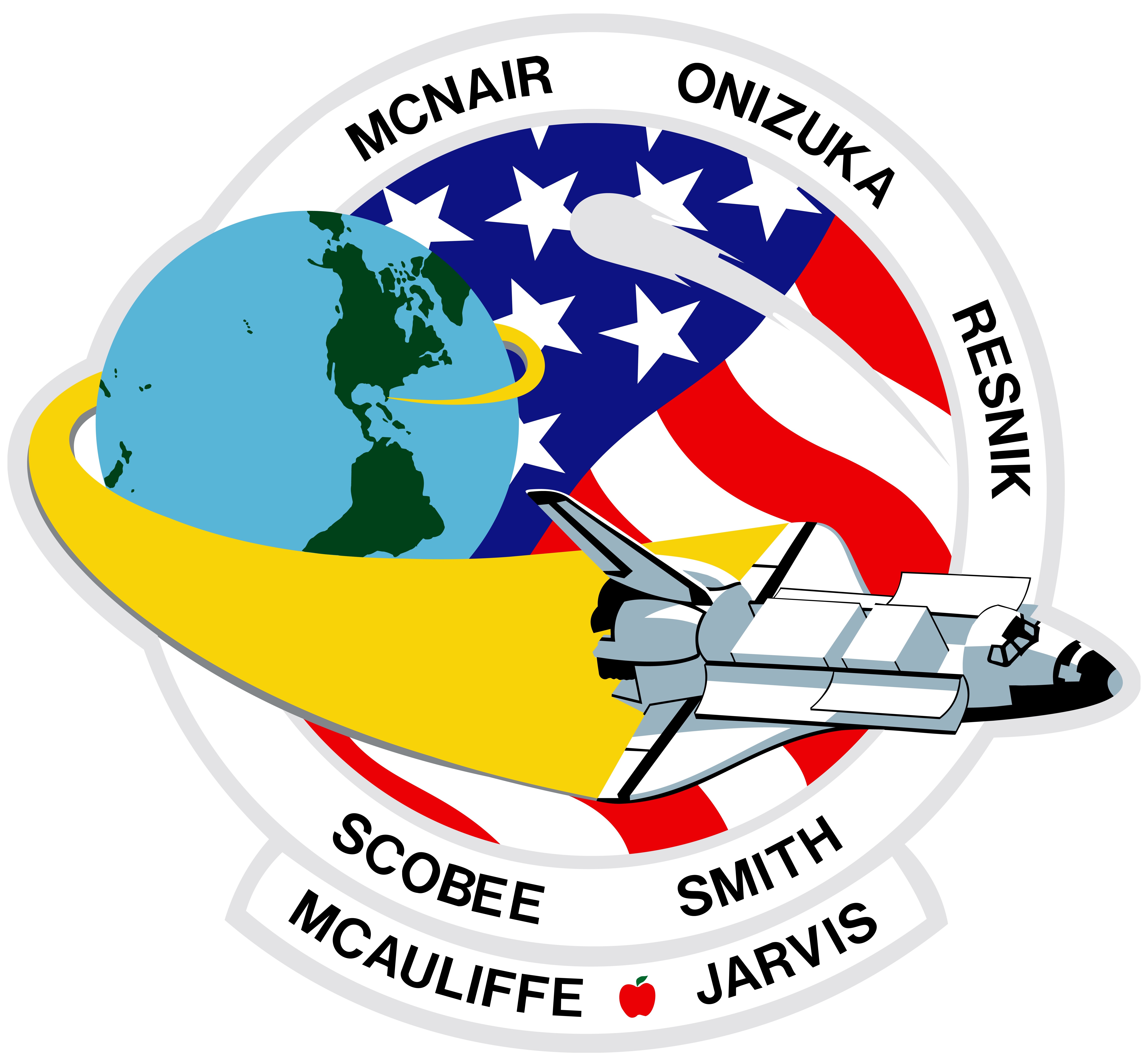
The official photograph of the STS-51L crew The STS-51L crew patch
Left: The official photograph of the STS-51L crew. Right: The STS-51L crew patch, with an apple representing S. Christa McAuliffe and the Teacher in Space project.

Following the Challenger accident, the Teacher in Space project remained active for a time as NASA reevaluated the entire Space Flight Participant Program. Morgan assumed the role of Teacher in Space designee for a few months, returning to Idaho in the fall of 1986 to resume her teaching duties, yet maintained her contact with NASA. In 1990, NASA canceled the Teacher in Space project.
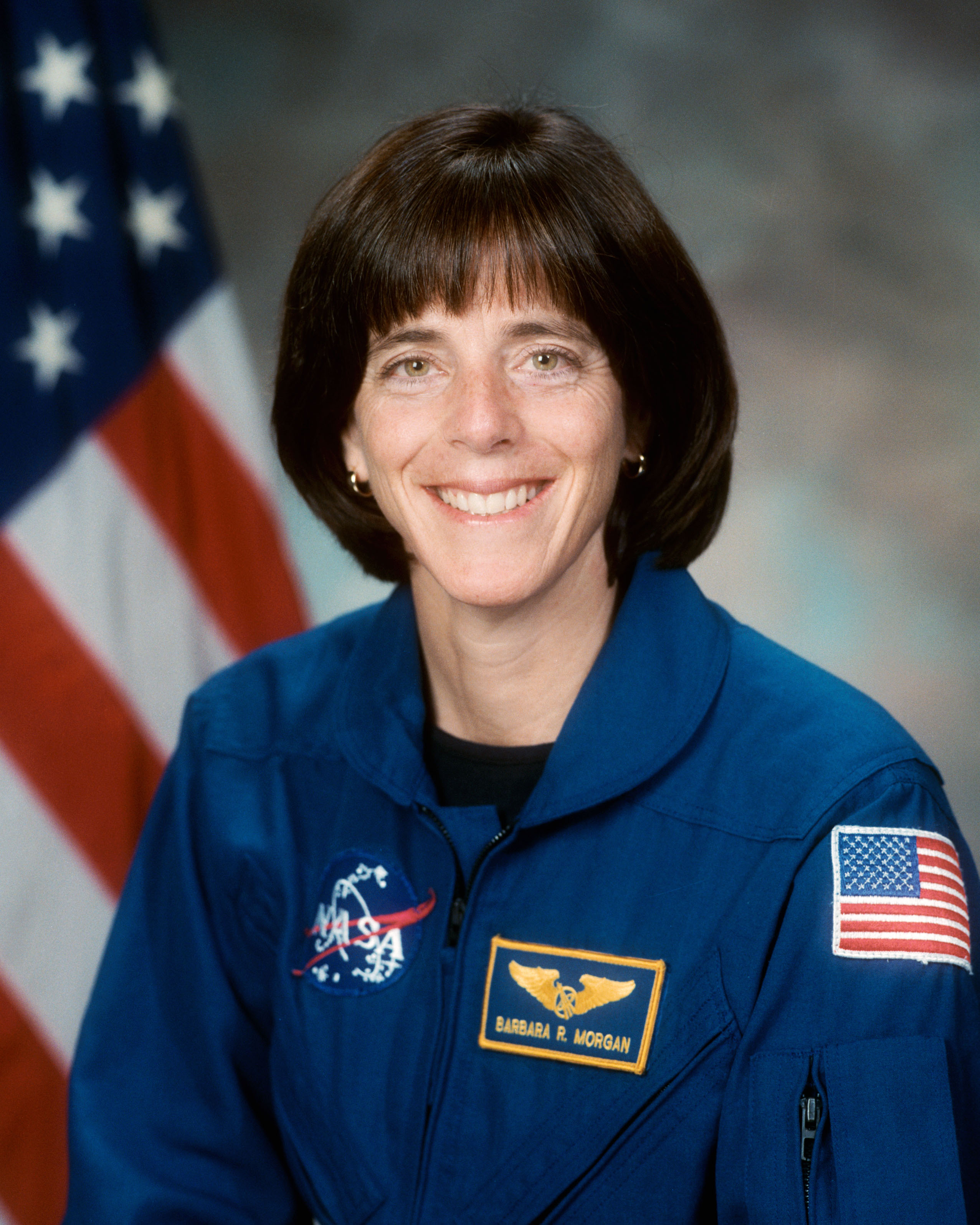
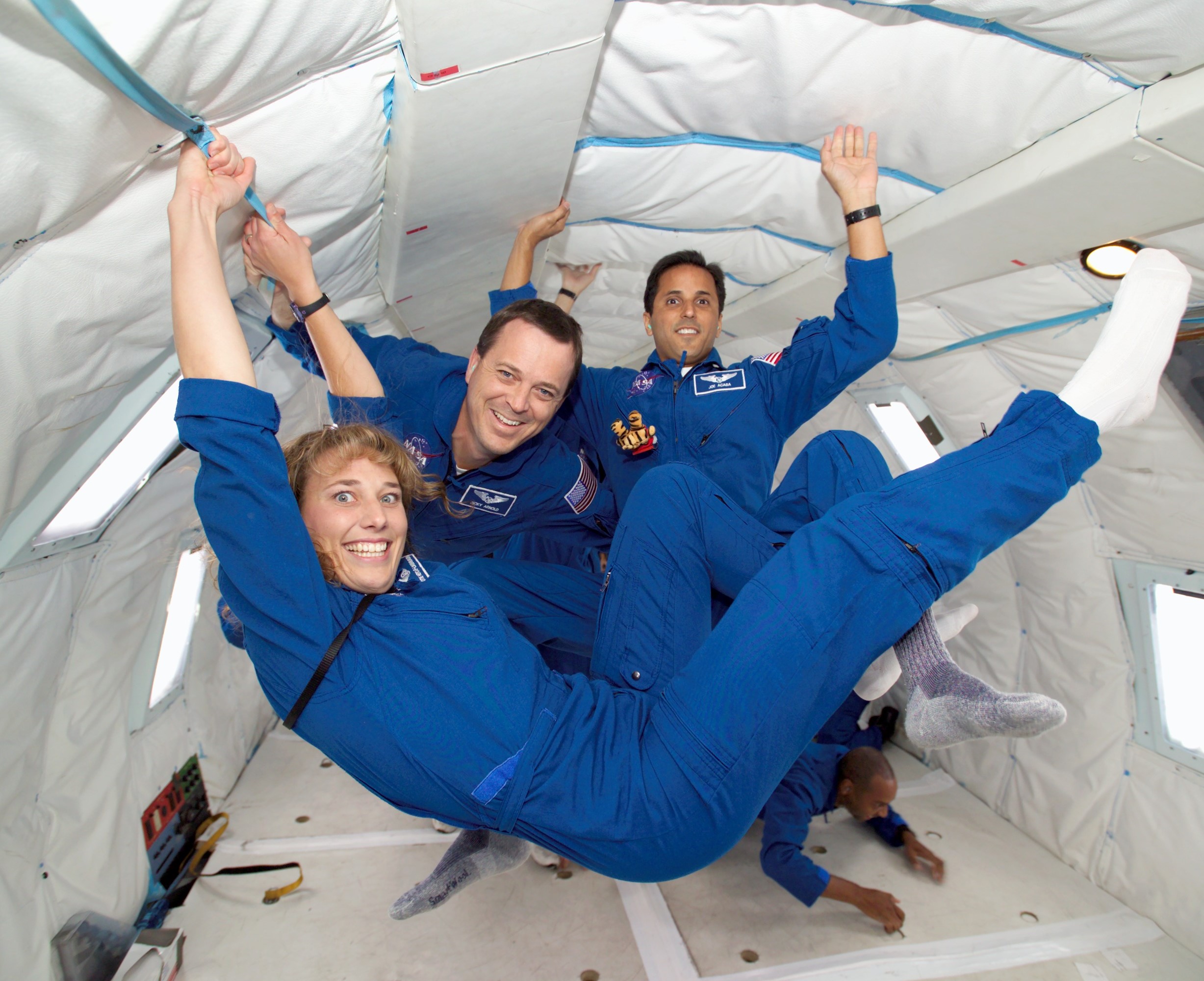
Official portrait of Barbara R. Morgan Astronauts Dorothy “Dottie” M. Metcalf-Lindenburger, left, Richard “Ricky” R. Arnold, and Joseph “Joe” M. Acaba Emblem of the Year of Education on Station
Left: Official portrait of Barbara R. Morgan following her selection as a NASA astronaut in 1998. Middle: In 2004, NASA selected Educator Astronauts Dorothy “Dottie” M. Metcalf-Lindenburger, left, Richard “Ricky” R. Arnold, and Joseph “Joe” M. Acaba as members of the Group 19 astronauts. Right: Emblem of the Year of Education on Station.

In 1998, NASA invited Morgan to join the next astronaut selection group, not as a teacher but as a full-fledged mission specialist, eligible for multiple flights. That same year, NASA initiated its Educator Astronaut program, in which the agency selected qualified teachers as full-time astronauts instead of payload specialists. Morgan reported for training with the rest of the Group 17 astronauts in August 1998. In 2002, NASA assigned her to the STS-118 space station assembly mission that, following delays caused by the Columbia accident, flew in August 2007 aboard Endeavour, Challenger’s replacement. In 2004, NASA selected its first Educator Astronauts as part of Group 19Joseph “Joe” M. Acaba, Richard R. “Rickey” Arnold, and Dorothy “Dottie” M. Metcalf-Lindenburger. Metcalf-Lindenburger flew as a mission specialist aboard the STS-131 space station assembly flight in April 2010. Acaba and Arnold flew together on STS-119 in March 2009. Acaba went on to spend 125 days aboard the space station as an Expedition 31 and 32 flight engineer between May and September 2012, and another 168 days during Expedition 53 and 54 between September 2017 and February 2018. He has served as chief of the astronaut office since February 2023. Arnold made his second flight as a flight engineer during Expedition 55 and 56 from March to October 2018. Between their nearly back-to-back missions, Acaba and Arnold spent the 2017-18 school year aboard the space station for A Year of Education on Station. As a tribute to McAuliffe and her legacy, they completed her mission, filming her demonstrations and developing corresponding lessons for classrooms.

Powered by WPeMatico

Get The Details…
Kelli Mars