Robots, Microbes, and Plants Pack Research Schedule at End of Week

Robots, Microbes, and Plants Pack Research Schedule at End of Week

Expedition 72 Commander Suni Williams of NASA smiles for a portrait inside the International Space Station's Zvezda service module during dinner time.
Expedition 72 Commander Suni Williams of NASA smiles for a portrait inside the International Space Station’s Zvezda service module during dinner time.

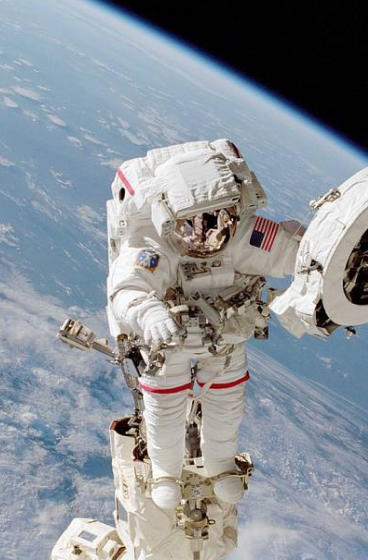
Robotic tentacles, antibiotic resistant microbes, and space agriculture topped the research schedule aboard the International Space Station at the end of the week. The Expedition 72 crew members are also preparing for a spacewalk and continuing maintenance on the orbital outpost.

NASA astronaut and station Commander Suni Williams had a busy day on Friday researching how robots could capture orbital debris and growing safe and nutritious food in space. Williams activated an Astrobee robotic free-flyer outfitted with tentacle-like arms containing gecko-like adhesive pads. Then, she and ground controllers monitored the Astrobee as it demonstrated docking maneuvers that could be used to remove orbital debris and capture satellites for servicing. She also trimmed red romaine lettuce leaves being grown in the Advanced Plant Habitat to test different moisture levels that may support growing crops in space.

NASA Flight Engineer Don Pettit worked in the Columbus laboratory module sequencing microbial DNA to identify the characteristics of antibiotic resistant organisms in microgravity. Results may reveal why some pathogens are more potent in space and address the risks to astronaut health.

NASA Flight Engineer Nick Hague started his day processing bacteria and yeast samples to learn how to produce food and medicine in space. Afterward, Hague, with assistance from NASA Flight Engineer Butch Wilmore, wrapped up a six-month inspection and cleaning of the COLBERT treadmill’s hardware and components inside the Tranquility module. Wilmore would spend the rest of Friday off-duty after a busy week of microbial research and cargo packing inside the SpaceX Dragon cargo spacecraft.

Cosmonauts Alexey Ovchinin and Ivan Vagner continued preparing for a Dec. 19 spacewalk to remove external science experiments and relocate European robotic arm hardware. The duo first checked the hatch for leaks inside the Poisk module where they will exit the station to begin a planned six-hour and 40-minute spacewalk. Afterward, the pair from Roscosmos collected and organized the spacewalking tools they will use for the first excursion of Expedition 72.

Roscosmos Flight Engineer Aleksandr Gorbunov began his day measuring his body mass using a version of Newton’s first law of motion, force equals mass times acceleration. Next, he started his shift on orbital plumbing duties before ending his day inspecting a gas-liquid heat exchanger in the Zvezda service module.


Learn more about station activities by following the space station blog@space_station and @ISS_Research on X, as well as the ISS Facebook and ISS Instagram accounts.

Get the latest from NASA delivered every week. Subscribe here: www.nasa.gov/subscribe

Powered by WPeMatico

Get The Details…

Mark Garcia

NASA’s ASTRO CAMP – and its Impact – Continues to Grow in FY2024

NASA’s ASTRO CAMP – and its Impact – Continues to Grow in FY2024

3 min read

Preparations for Next Moonwalk Simulations Underway (and Underwater)

When it comes to NASA’s ASTRO CAMP®, the numbers – and impact – of the initiative to help students across the nation and world learn about NASA and STEM (science, technology, engineering, and mathematics) just continue to grow and grow and grow.

As in recent years, the NASA ASTRO CAMP® Community Partners (ACCP) program surpassed previous milestone marks in fiscal year 2024 by partnering with 373 community sites, including 50 outside the United States, to inspire youth, families, and educators. Participants included students from various population segments, focusing on students from underrepresented groups, accessibility for differently-abled students, and reaching under-resourced urban and rural settings.

“This year has been extremely impactful for the students at ACCP collaborating partner sites,” said Kelly Martin-Rivers, principal investigator for NASA’s ACCP. “A particular highlight was being a part of NASA’s focus on the solar eclipses of 2024, supporting over 42,000 students at 52 NASA ACCP events. Supporting more and more exciting research and activities by the Science Activation grantees and Globe citizen scientists also continues to bring hands-on experiences directly to students across the country and around the world.”

In the most recent year, the NASA ACCP partnered with 323 sites in 29 states and the District of Columbia. It also reached beyond the borders to partner with 50 sites in six countries, including Mexico, India, Turkey, Canada, Spain, and Ukraine. Overall, almost 150,000 students took part in the program, a 30% increase from fiscal year 2023. In addition, almost 107,000 students took part in special STEM activities, an increase of 43.6% from the previous year’s total of more than 74,000. ACCP trained 1,454 facilitators during Educator Professional Development sessions as well, representing an increase of 25.3% from the prior year.

Taken together, the total NASA ACCP impact exceeded a quarter of a million (257,765) people.

As part of the NASA Science Mission Directorate Science Activation program, ACCP continues to make strides in bridging disparities and breaking barriers in STEM. Demographically, the initiative reached a range of ethnic and multiethnic groups. One-third of participants were African American, with another 13% identified as Hispanic. Participants were almost equally divided between male (52%) and female (48%).

In terms of age, 38% of participants were elementary school students. Another 30% were middle school aged, with the remaining 38% high school students. In a final breakdown, more than 42,000 of the participants were impacted during 52 NASA ACCP solar eclipse events in the spring of 2024.

ACCP activities offer real-world opportunities for students to enhance scientific understanding and contribute to NASA science missions, while also inspiring lifelong learning. The ACCP theme was “NASA Science … Fire to Water to Ice and Beyond!” The program featured materials and activities related to NASA science missions, astrophysics, heliophysics, Earth science, and planetary science.

The unique methodology teaches students to work collaboratively to complete missions and provides trained community educators to implement the themed NASA modules, developed by the ACCP team, seated at NASA’s Stennis Space Center near Bay St. Louis, Mississippi.

ASTRO CAMP began at NASA Stennis as a single one-week camp in the 1990s. Since then, it has developed into several adaptable models for schools, museums, universities, libraries, and youth service organizations, enabling a worldwide expansion.

For more information about becoming a NASA ASTRO CAMP Collaborative Community Partner, contact: Kelly Martin-Rivers at kelly.e.martin-rivers@nasa.gov or 228-688-1500; or Maria Lott at maria.l.lott@nasa.gov or 228-688-1776.

For more on the ASTRO CAMP Collaborative Community Partner Program, visit:

https://www.nasa.gov/stennis/stem-engagement-at-stennis/nasa-accp/.

Share

Details

Last Updated

Dec 06, 2024

Editor
NASA Stennis Communications
Contact
C. Lacy Thompson
Location
Stennis Space Center

Related Terms

Powered by WPeMatico

Get The Details…
LaToya Dean

Hubble Spots a Spiral in the Celestial River

Hubble Spots a Spiral in the Celestial River

2 min read

Hubble Spots a Spiral in the Celestial River

A spiral galaxy filling the view. Its disk holds many bright red spots where stars are forming, dark reddish threads of dust that obscure light, and bluish glowing areas that hold concentrations of older stars. It has a large, glowing yellow oval area at the center, from which two spiral arms wind through the galaxy’s disk. One side of the disk appears rounded (bottom of the image) while the opposite side appears somewhat squared-off (top of the image).
This NASA/ESA Hubble Space Telescope image features the spiral galaxy NGC 1637.
ESA/Hubble & NASA, D. Thilker

The subject of this NASA/ESA Hubble Space Telescope image is NGC 1637, a spiral galaxy located 38 million light-years from Earth in the constellation Eridanus, the River.

This image comes from an observing program dedicated to studying star formation in nearby galaxies. Stars form in cold, dusty gas clouds that collapse under their own gravity. As young stars grow, they heat their nurseries through starlight, winds, and powerful outflows. Together, these factors play a role in controlling the rate at which future generations of stars form.

NGC 1637 holds evidence of star formation scattered throughout its disk, if you know where to look. The galaxy’s spiral arms have pockets of pink clouds, many with bright blue stars. The pinkish color comes from hydrogen atoms excited by ultraviolet light from young, massive stars forming within the clouds. This contrasts with the warm yellow glow of the galaxy’s center, which is home to a densely packed collection of older, redder stars.

The stars that set their cloudy birthplaces aglow are comparatively short-lived, and many of these stars will explode as supernovae just a few million years after they’re born. In 1999, NGC 1637 played host to a supernova named SN 1999EM, lauded as the brightest supernova seen that year. When a massive star expires as a supernova, the explosion outshines its entire home galaxy for a short time. While a supernova marks the end of a star’s life, it can also jump start the formation of new stars by compressing nearby clouds of gas, beginning the stellar lifecycle anew.

Explore More

Media Contact:

Claire Andreoli (claire.andreoli@nasa.gov)
NASA’s Goddard Space Flight CenterGreenbelt, MD

Share

Details

Last Updated

Dec 06, 2024

Editor
Andrea Gianopoulos

Powered by WPeMatico

Get The Details…

NASA to Test Technology for X-59’s Unique Shock Wave Measurements

NASA to Test Technology for X-59’s Unique Shock Wave Measurements

3 min read

Preparations for Next Moonwalk Simulations Underway (and Underwater)

NASA will soon test advancements made on a key tool for measuring the unique “sonic thumps” that its quiet supersonic X-59 research aircraft will make while flying.

A shock-sensing probe is a cone-shaped air data probe developed with specific features to capture the unique shock waves the X-59 will produce. Researchers at NASA’s Armstrong Flight Research Center in Edwards, California developed two versions of the probe to collect precise pressure data during supersonic flight. One probe is optimized for near-field measurements, capturing shock waves that occur very close to where the X-59 will generate them. The second shock-sensing probe will measure the mid-field, collecting data at altitudes between 5,000 to 20,000 feet below the aircraft.

When an aircraft flies supersonic, it generates shockwaves that travel through the surrounding air, producing loud sonic booms. The X-59 is designed to divert those shock waves, reducing the loud sonic booms to quieter sonic thumps. During test flights, an F-15B aircraft with a shock-sensing probe attached to its nose will fly with the X-59. The roughly 6-foot probe will continuously collect thousands of pressure samples per second, capturing air pressure changes as it flies through shock waves. Data from the sensors will be vital for validating computer models that predict the strength of the shock waves produced by the X-59, the centerpiece of NASA’s Quesst mission.

“A shock-sensing probe acts as the truth source, comparing the predicted data with the real-world measurements,” said Mike Frederick, NASA principal investigator for the probe.

For the near-field probe, the F-15B will fly close behind the X-59 at its cruising altitude of approximately 55,000 feet, utilizing a “follow-the-leader” setup allowing researchers to analyze shock waves in real time. The mid-field probe, intended for separate missions, will collect more useful data as the shock waves travel closer to the ground.

The probes’ ability to capture small pressure changes is especially important for the X-59, as its shock waves are expected to be much weaker than those of most supersonic aircraft. By comparing the probes’ data to predictions from advanced computer models, researchers can better evaluate their accuracy.

“The probes have five pressure ports, one at the tip and four around the cone,” said Frederick. “These ports measure static pressure changes as the aircraft flies through shock waves, helping us understand the shock characteristics of a particular aircraft.” The ports combine their measurements to calculate the local pressure, speed, and direction of airflow.

Researchers will soon evaluate upgrades to the near-field shock-sensing probe through test flights, where the probe, mounted on one F-15B, will collect data by chasing a second F-15 during supersonic flight. The upgrades include having the probe’s pressure transducers – devices that measure the air pressure on the cone – just 5 inches from its ports. Previous designs placed those transducers nearly 12 feet away, delaying recording time and distorting measurements.

Temperature sensitivity on previous designs also presented a challenge, causing fluctuations in accuracy with changing conditions. To solve this, the team designed a heating system to maintain the pressure transducers at a consistent temperature during flight.

“The probe will meet the resolution and accuracy requirements from the Quesst mission,” Frederick said. “This project shows how NASA can take existing technology and adapt it to solve new challenges.”

Powered by WPeMatico

Get The Details…
Dede Dinius

NASA Invites Media to Administrator Flight in Electra Hybrid-Electric Aircraft

NASA Invites Media to Administrator Flight in Electra Hybrid-Electric Aircraft

Electra’s EL2 Goldfinch experimental prototype aircraft reference, photographed outside of NASA s Langley Research Center in Hampton, Virginia.
Credit: Electra

NASA Administrator Bill Nelson will fly in aircraft manufacturer Electra’s EL2 Goldfinch experimental prototype aircraft on Sunday, Dec. 8. Members of the media are invited to speak with Nelson and Electra leaders just prior to the flight at 11:45 a.m. EST at Manassas Regional Airport in Manassas, Virginia.

Electra designed the experimental aircraft with the goals of reducing emissions and noise and connecting new locations for regional air travel, including underserved communities.

Media will be able to view and film the flight, which is set to feature ultra-short takeoffs and landings with as few as 150 feet of ground roll. The flight also is set to include a battery-only landing. Media interested in participating must RSVP to Rob Margetta at robert.j.margetta@nasa.gov.

NASA’s aeronautics research works to develop new generations of sustainable aviation technologies that will create new options for both U.S. passengers and cargo. Agency-supported research aims to provide industry providers like Electra, and others, data that can help inform the designs of innovative, greener aircraft with reduced operating costs. NASA investments have included projects that explore electrified aircraft technologies, and work that helped refine the electric short-takeoff and landing concept.

The agency’s work with private sector aviation providers helps NASA in its effort to bring sustainable solutions to the American public. In November, NASA selected Electra as one of five recipients of its Advanced Aircraft Concepts for Environmental Sustainability 2050 awards, through which they will develop design studies and explore key technologies to push the boundaries of possibility for next-generation sustainable commercial aircraft. These new studies will help the agency identify and select promising aircraft concepts and technologies for further investigations.

https://www.nasa.gov/aeronautics

-end-

Meira Bernstein / Rob Margetta
Headquarters, Washington
202-358-1600
meira.b.bernstein@nasa.gov / robert.j.margetta@nasa.gov

Powered by WPeMatico

Get The Details…
Tiernan P. Doyle