Preparations for Next Moonwalk Simulations Underway (and Underwater)
iss075e0088825 (Sept. 4, 2026) — Expedition 75 flight engineers Anil Menon of NASA and Anna Kikina and Pyotr Dubrov of Roscosmos smile for a portrait as they check out emergency medical equipment inside the International Space Station’s Destiny laboratory module.
Planning crewed missions to the Moon and Mars involves preparing for the medical realities of long-duration space travel. Factors like cosmic radiation, microgravity, and distance from Earth create unique health considerations for astronauts. To anticipate these needs ahead of time, NASA developed the Integrated Medical Model (IMM).
The IMM is a decision-support tool that uses medical evidence and computational modeling to forecast health risks before a mission launches.
How the Model Works
The IMM pulls from decades of flight records and clinical research compiled in NASA’s Integrated Medical Evidence Database (iMED).
Using Monte Carlo simulations, the tool models thousands of potential mission paths. Each run accounts for specific mission parameters, such as crew size, flight duration, planned spacewalks, and the spacecraft environment. This approach allows planners to evaluate risks for new mission profiles that lack historical precedents.
The model evaluates more than 100 medical conditions, ranging from common health concerns to hazards specific to spaceflight, like:
Decompression sickness
Radiation sickness
Space motion sickness
Smoke inhalation and barotrauma
Routine conditions like infections and kidney stones
Practical Applications for Mission Planning
The model generates several quantitative metrics to help teams prepare:
Total Medical Events (TME): The projected number of illnesses or injuries during the mission.
Crew Health Index (CHI): An indicator of the crew’s overall functional capacity.
Quality-Adjusted Time Lost (QTL): The estimated time spent diagnosing conditions, treating patients, and recovering.
Probability of Evacuation and Loss of Crew Life (EVAC / LOCL): The likelihood of a medical emergency requiring a mission abort or resulting in a fatality.
Resource Utilization: Projections of which medical consumables, medications, and tools the crew will need.
Because spacecraft carry strict mass and volume constraints, these outputs guide the composition of onboard medical kits (MedCap). Mission planners can balance necessary medical coverage against available cargo space with clear data in hand.
Planning for Greater Distances
On the International Space Station, emergency medical evacuation back to Earth can happen within hours. Deep-space exploration changes that timeline significantly, introducing communication delays and eliminating the option for a rapid return.
The IMM provides the data flight surgeons and engineers need to build resilient, self-sufficient medical systems for long journeys ahead.
Explore More
To dig deeper into how NASA prepares for the medical realities of space travel, explore the full IMM overview and supporting documentation:
Newfound ‘Baby’ Planet Smashes Record for Youngest Known World
5 Min Read
Newfound ‘Baby’ Planet Smashes Record for Youngest Known World
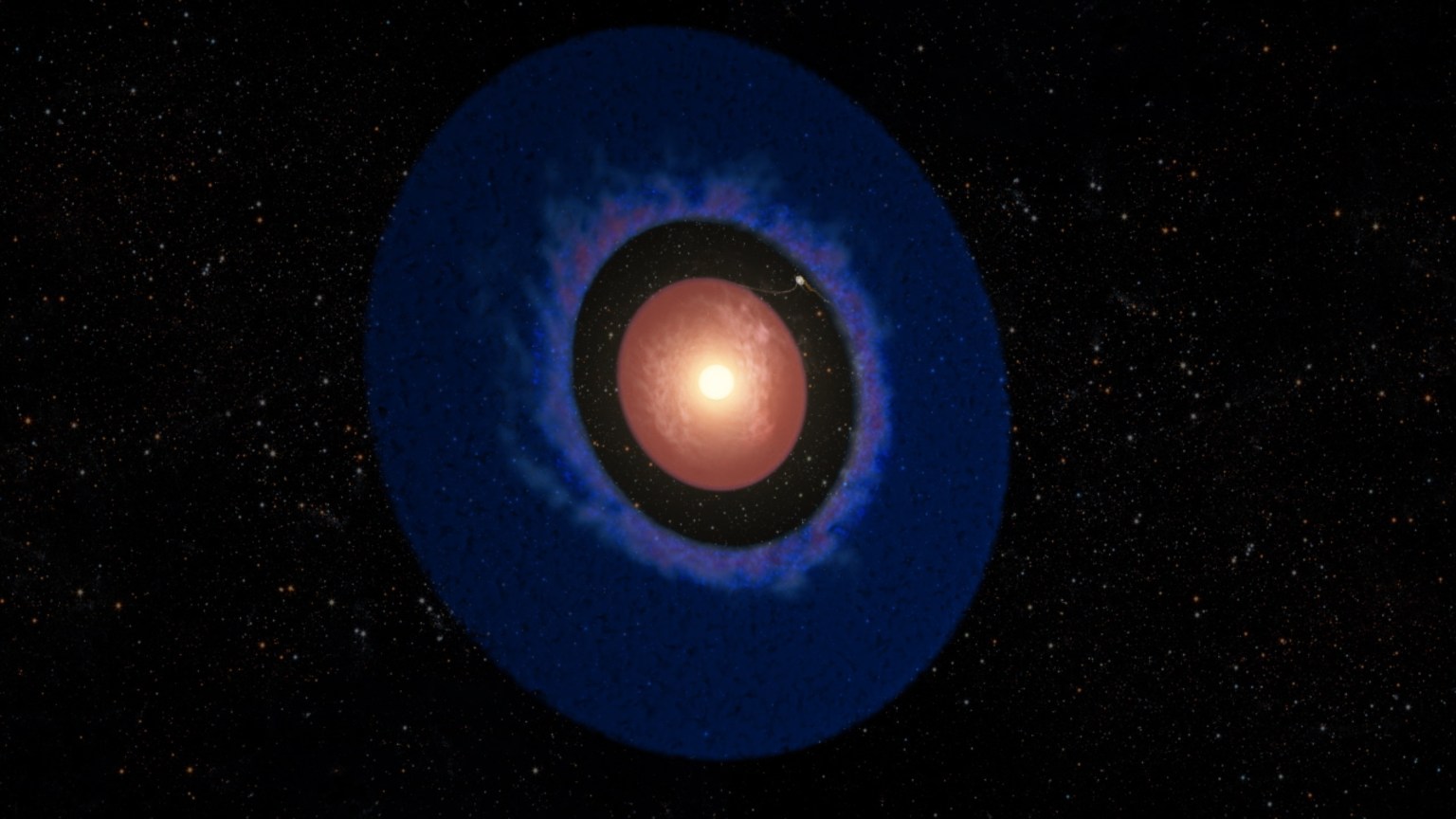
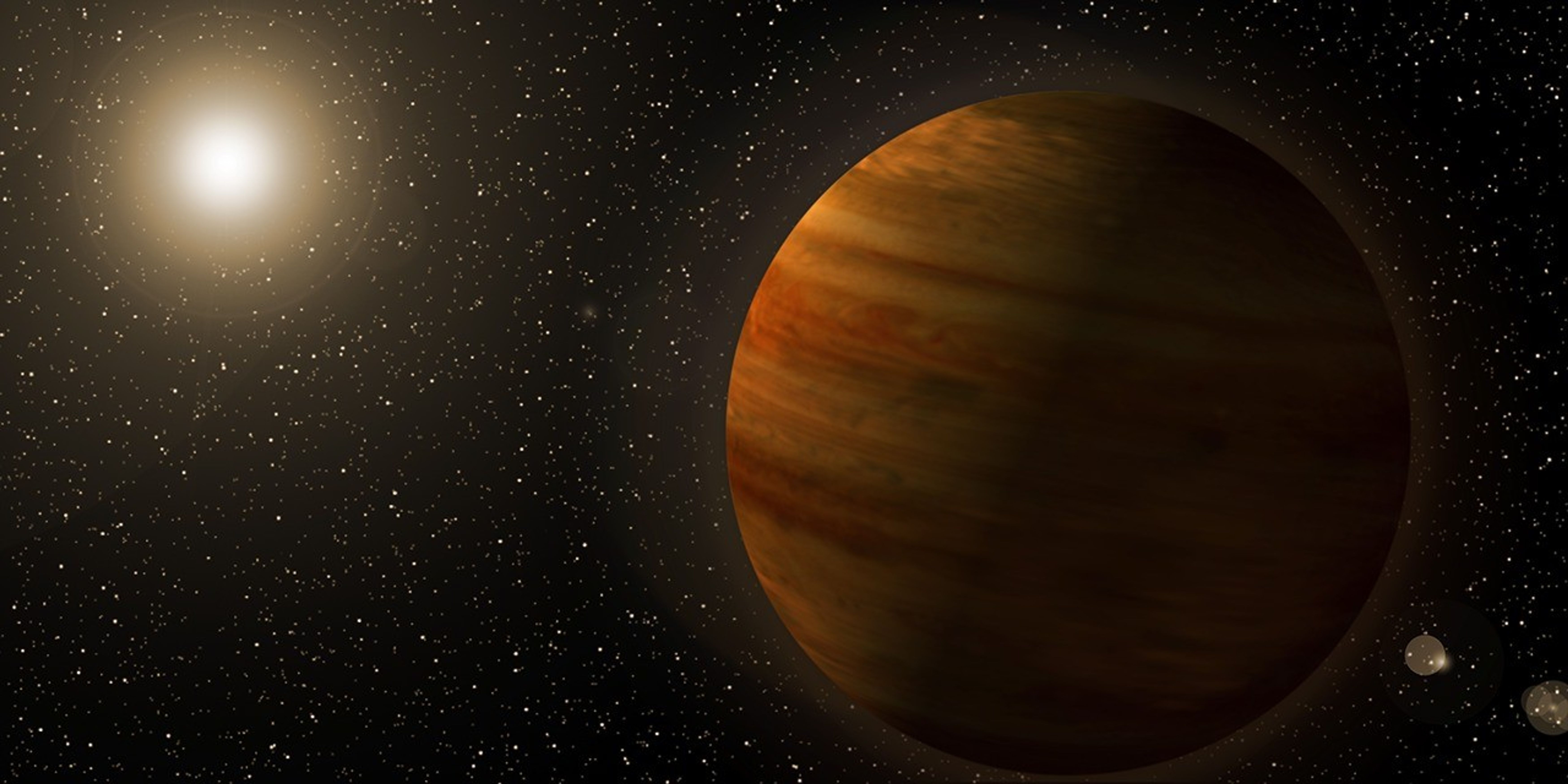
An artist’s concept of the youngest known exoplanet: Elias 2024 b.
Credits: W. M. Keck Observatory/Adam Makarenko
Astronomers have confirmed a world that’s less than a million years old as the youngest known planet, using data from NASA-funded archives. Called Elias 2-24 b, the baby planet is still whirling in its natal disk of dust and gas.
“Our planet-formation models already struggled to explain the previous record holders for the youngest known planet — a four-way tie between two planets orbiting the star PDS 70 and two planets orbiting the star WISPIT 2 — which are all more than 5 million years old,” said Lucas Cieza, a professor at the Instituto de Estudios Astrofísicos in Chile and co-author of a paper detailing the results. “Elias 2-24 b shows us that even our best planet-formation models are still missing some important processes.”
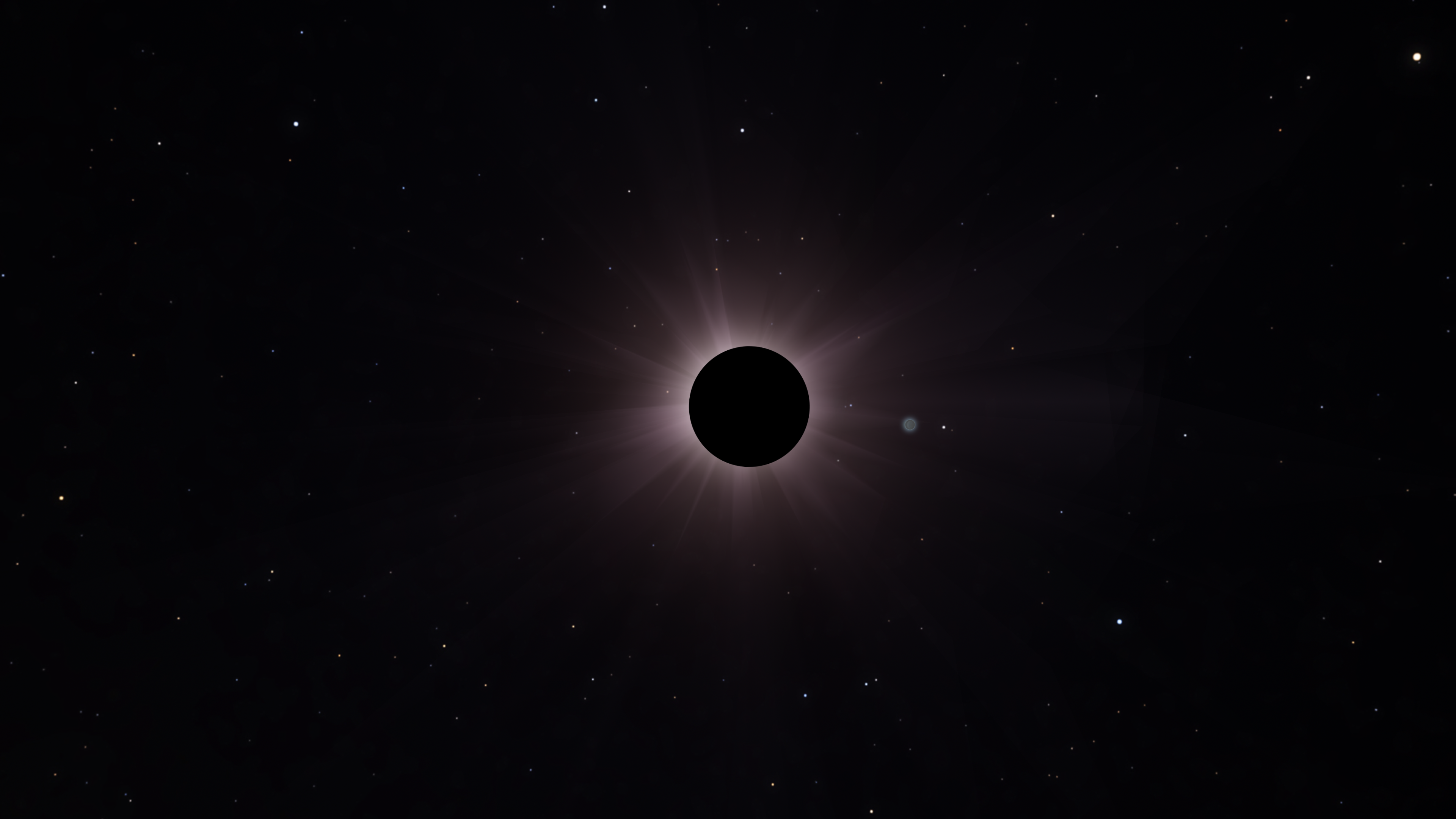
In a study published Wednesday in The Astrophysical Journal Letters, a team led by Andrea Bernardi, a doctoral candidate at the Universidad Diego Portales in Chile, homed in on archival observations of seven stars that were observed using the coronagraph at the W. M. Keck Observatory in Hawaii, which partners with NASA under a cooperative agreement. Each of these stars hosts a debris disk chock-full of dust, gas, and chunks of ice and rock with structures and gaps in the disk hinting that planets may be forming around them.
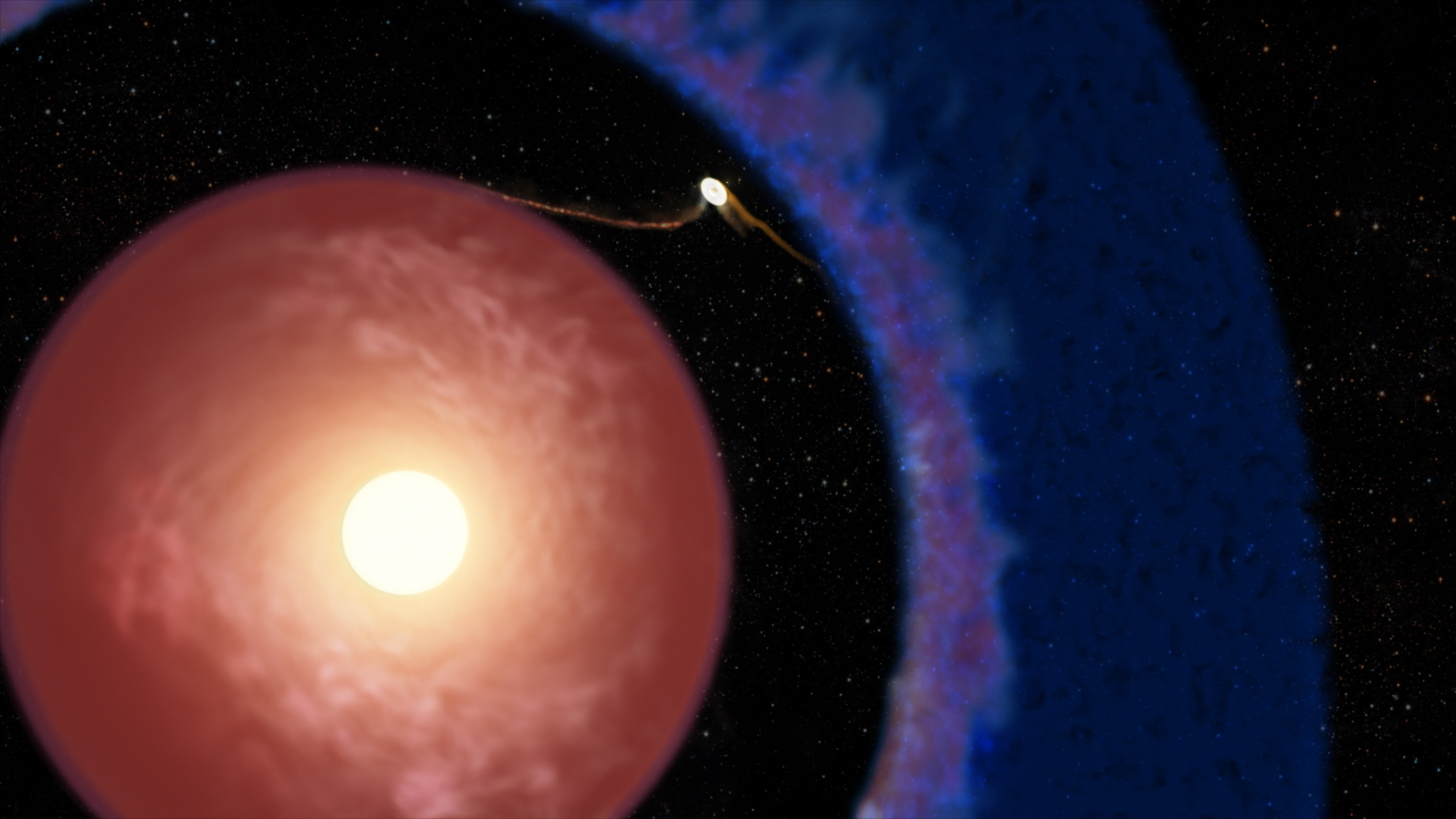
Artist’s concept depicting Elias 2-24 b, the youngest exoplanet detected to date, still growing within the disk of gas and dust surrounding its young host star. Material from the disk is actively accreting onto the Jupiter-mass planet, which sits within a prominent gap in the disk, supporting the leading theory of giant planet formation.
W. M. Keck Observatory/Adam Makarenko
With the coronagraph blocking light from the host stars, astronomers searched for fainter planets orbiting those stars that could be embedded in the dusty disks. Planets found outside our own solar system are called exoplanets.
“The planets should be found within the gaps, since they are carving them,” Bernardi said. “And that’s exactly where we found Elias 2-24 b.”
The planet orbiting the star Elias 2-24 is about as massive as Jupiter and the star is about 450 light-years from Earth. Studying this system offers a time machine of sorts for scientists to explore what our own planetary system may have been like billions of years ago.
Construction zone
Stars are born in swirling clouds of gas and dust, swaddled in haze. Orbiting planets form from leftover material that clumps up and gradually sculpts a path around the star. But it’s difficult to study an exoplanet’s newborn stage because of all the dust that shrouds them.
Most of the exoplanets we’ve discovered so far have been found using transits, which happen when a planet passes in front of its star and temporarily dims the amount of light we receive.
Those transits are hard to spot when the planets are still deeply buried in dust or orbiting far from the star. That’s why an overwhelming majority of the 6,000 currently confirmed exoplanets are billions of years old and very close to their stars. Current planet-formation models rely on a combination of complex theories and simulations, along with observations of young stars with disks where the presence of planets cannot yet be detected. Finding and studying more baby planets like Elias 2-24 b will help astronomers refine those models.
“The galaxy churns out new stars and planets continuously, so there are many in every stage of evolution,” Cieza said. “That means we can see the entire process in theory, but there is a large gap in what most telescopes can detect. We are mostly blind to these baby planets right now.”
Artist’s animation depicting Elias 2-24 b, the youngest exoplanet detected to date, still growing within the disk of gas and dust surrounding its young host star. Material from the disk is actively accreting onto the Jupiter-mass planet, which sits within a prominent gap in the disk, supporting the leading theory of giant planet formation.
W. M. Keck Observatory/Adam Makarenko
Connecting dots
The confirmation using Keck data solves a mystery that has puzzled astronomers for a decade. About a decade ago, observations from ALMA (Atacama Large Millimeter/submillimeter Array) in Chile showed a gap in the young star’s dusty disk. The European Southern Observatory’s Very Large Telescope in Chile then detected a faint point of light sitting in that gap.
Astronomers debated whether it could be a planet; according to planet formation theories, such gaps appear too early and too far from their stars for planets to have formed. Current models predict that it takes about 5 million years to form a Jupiter-size planet at Jupiter’s distance from the Sun (which is just over five times larger than the distance of Earth to the Sun), and even longer farther out. Yet the glowing dot they spotted was 55 times farther from its star than Earth is from the Sun and already behaving like a forming planet.
So Bernardi’s team searched the Keck Observatory Archive, a NASA-funded partnership between Keck Observatory and the NASA Exoplanet Science Institute at Caltech/IPAC, for the same little point of light again and found it in observations from 2018 and 2020. They stitched the observations together to analyze its motion over time and found that it behaved more like a planet than an imaging defect or background star, ultimately confirming it as Elias 2-24 b.
“We usually hear about telescopes working separately, but this confirmation was possible only by using multiple telescopes together,” Bernardi said. “Elias 2-24 b is at the limit of what current telescopes can detect, but with new instruments like NASA’s Nancy Grace Roman Space Telescope, such detections should become easier.”
Roman, which just launched Aug. 30, is equipped with an even more powerful coronagraph and is capable of spotting planets that are much harder for other telescopes to see. By employing the same technique, Roman could find planets in much smaller orbits, including true Jupiter analogs that are currently impossible to see through the glare. Elias 2-24 b is about 10 times farther out from its host star.
“This is just the beginning of a new era of discovery,” Cieza said. “It’s incredible that with modern technology, we are actually able to see planet formation in action, and Roman will take planet hunting to the next level.”
To learn more about NASA’s exploration of exoplanets, visit:
Discover the cosmos! Each day a different image or photograph of our fascinating universe is featured, along with a brief explanation written by a professional astronomer.
Webb’s View of M64
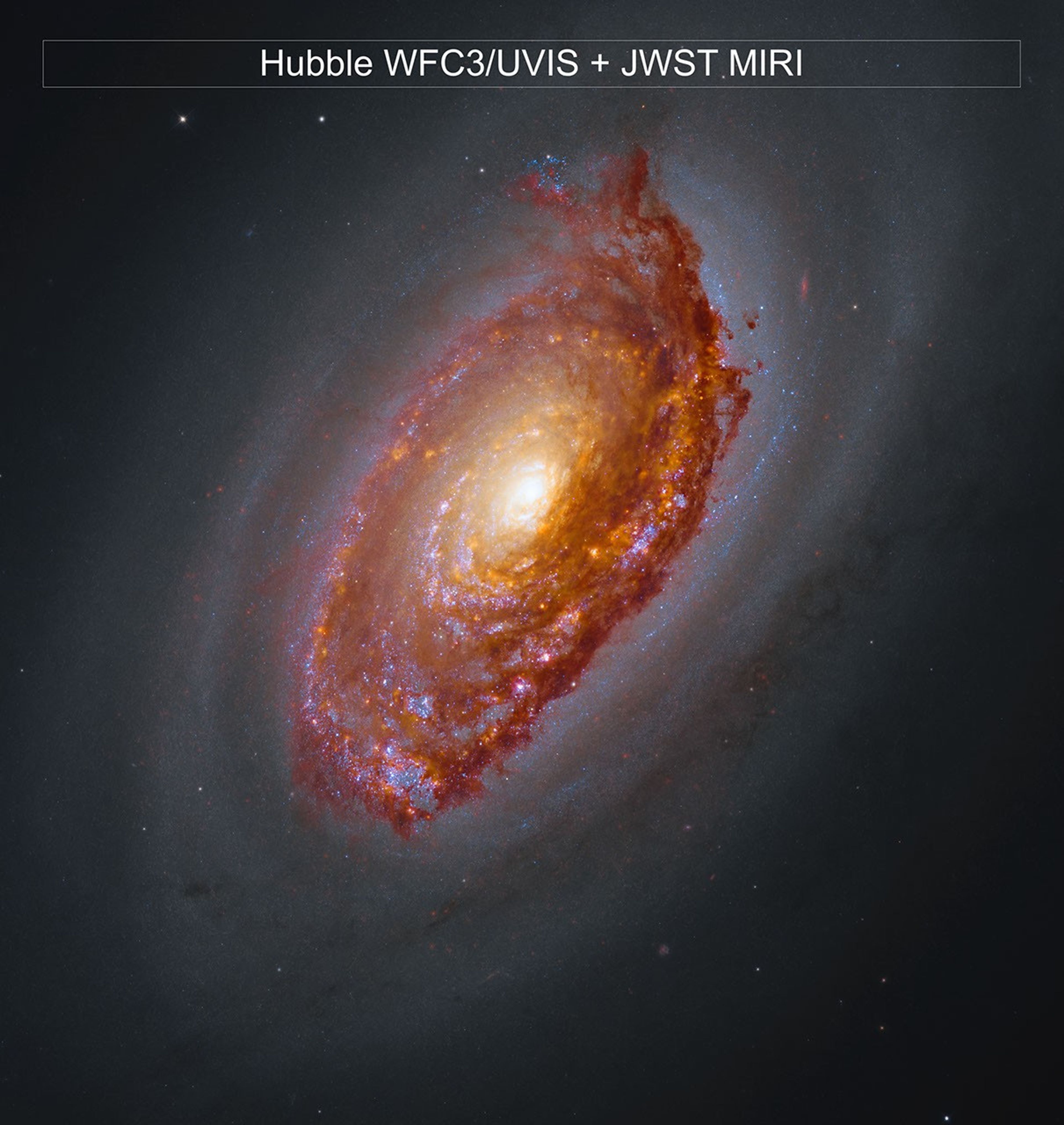
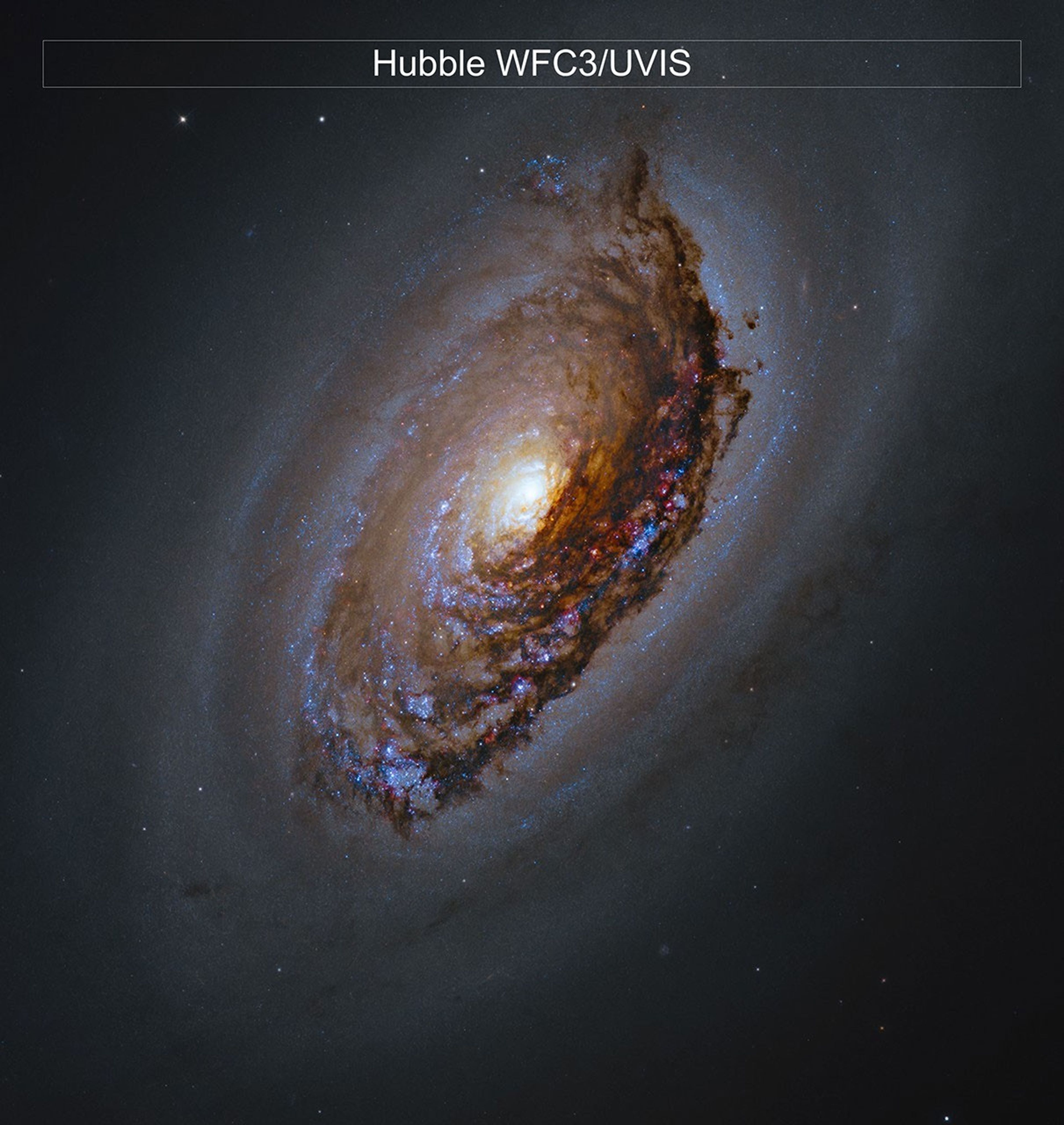
Explanation: Sometimes where Hubble finds darkness, Webb sees light. An example is today’s composite images of Messier 64 (M64), a nearby spiral galaxyof many names. The dark band of dust partially blocking its bright core earned it the moniker “the Black Eye Galaxy.” Webb’s Mid-InfraRed Instrument (MIRI) sees that dust, shown in red, as it absorbs and re-emits light from surrounding newborn stars. These young stars are embedded in pink star-forming regions in the Hubble-only image. M64’s inner and outer gas regions counter-rotate, creating regions of increased star formation where the two gas “currents” meet and compress. A merger between M64 and a smaller galaxy was likely the cause of the opposing motion of the outer gas. Spiral galaxies were once thought to have peaceful histories. M64 was key evidence that spiral galaxies, including the Milky Way, can and do experience mergers. Webb’s view of M64 will tell astronomers about the structure, motion, and composition of the galaxy’s dust and add context to the galaxy’s merger history and evolution.
Bioprinting, Space Manufacturing Top Research Schedule Aboard Station
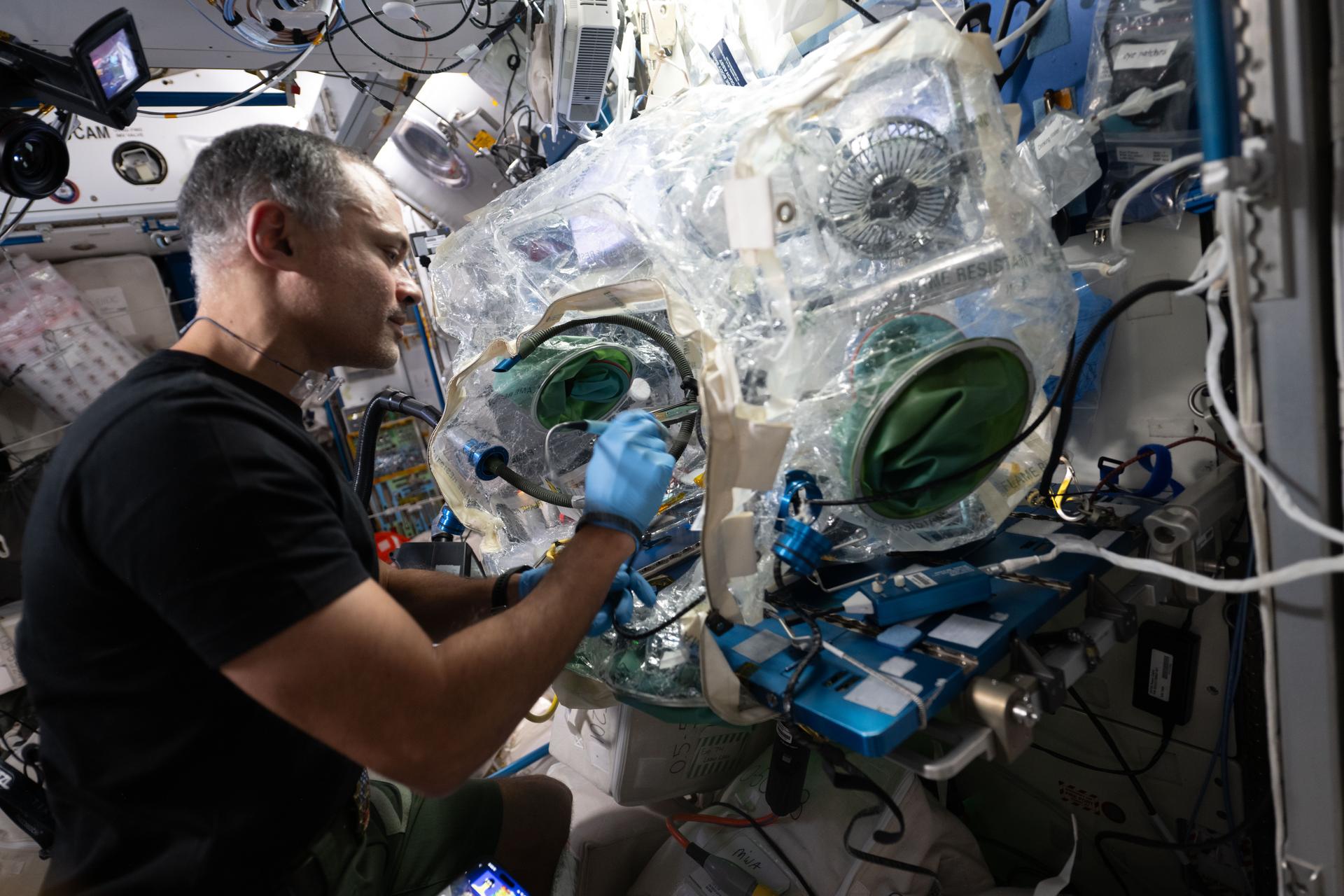
NASA astronaut Anil Menon uses a lead-free soldering technique to solder components on a circuit board and demonstrate the manufacturing and repair of electronics in microgravity abaord the International Space Station.
ESA/Sophie Adenot
Cartilage bioprinting and lead-free soldering topped the advanced microgravity research schedule aboard the International Space Station on Tuesday. The Expedition 75 crew members also explored blood pressure in weightlessness, serviced spacesuit components, and inspected lab hardware aboard the orbital outpost.
Bioprinting cartilage tissue in microgravity results in higher-quality tissues than those produced on Earth potentially leading to advanced treatments for cartilage injuries on and off the Earth. Expedition 75 crewmates Jessica Meir of NASA and Sophie Adenot of ESA (European Space Agency), station commander and flight engineer respectively, worked together processing cartilage cell samples stowed in the MERLIN research incubator then loaded them inside the Auxilium bioprinter. The bioprinting sessions take place inside the Kibo laboratory module’s Life Science Glovebox and can be run remotely possibly leading to personalized implants using the patient’s own cells.
Meir also explored mindfulness and meditation techniques for the RelaxPro investigation to reduce stress and improve sleep quality for astronauts. Adenot inspected hatch seals throughout the orbital outpost’s U.S. segment.
NASA flight engineer Anil Menon continued studying lead-free soldering techniques inside the Harmony module. Menon soldered components on a circuit board demonstrating the ability to manufacture and repair electronics in microgravity then photographed the results for analysis. The space-soldered samples will be returned to Earth and compared to identical ground-soldered samples. Results may lead to reduced reliance on costly resupply missions. Next, he cleaned a water filter cartridge in the Unity module’s oxygen generation system then tested the operation of a spacesuit emergency jet pack in the Quest airlock.
NASA flight engineer Jack Hathaway worked on Quest’s atmospheric control system and installed a new oxygen tank. Afterward, Hathaway checked out lithium-ion batteries that power spacesuits and the metal oxide canisters that remove carbon dioxide from the suits during a spacewalk.
Over in the Roscosmos segment’s Nauka science module, flight engineers Pyotr Dubrov and Anna Kikina checked the functionality and monitored the operations of research hardware that can heat and remove air pressure from material samples. Dubrov and Kikina also inspected air ducts and hatch seals throughout their portion of the space station.
Roscosmos flight engineer Andrey Fedyaev measured his blood pressure while wearing a series of cuffs on his arm, wrist, and fingers to understand how microgravity affects a crew member’s microcirculatory system. Fedyaev wrapped up his shift inside Nauka working on ventilation system maintenance.
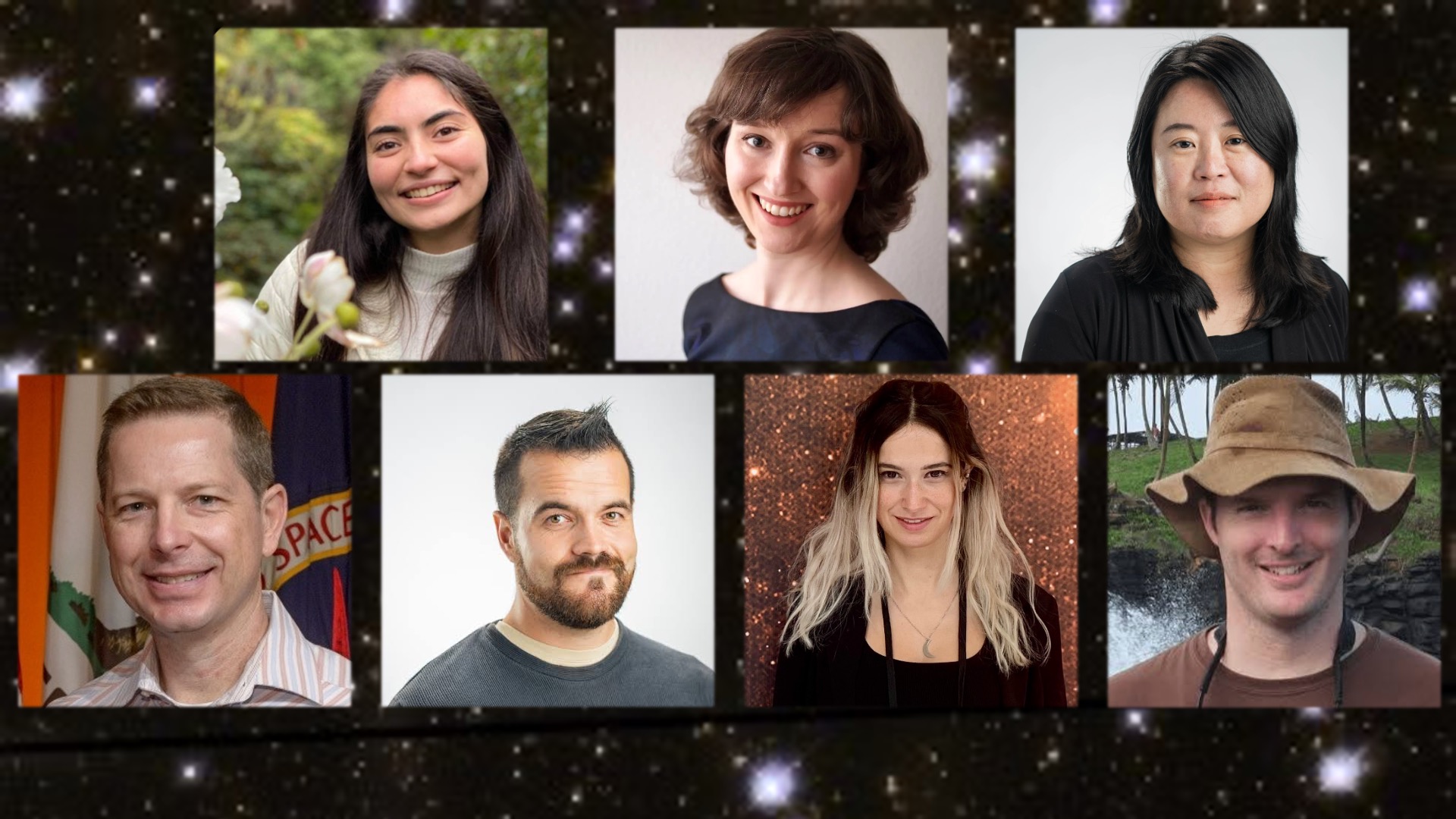
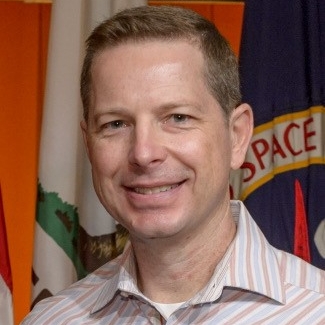
The NASA Ames Science Directorate recognizes the outstanding contributions of (pictured left to right) Steve Ormsby, Aphrodite Kostakis, Alejando Borlaff, Sarah Nickerson, Martina Caussi, Keiko Nomura, and Stephen Broccardo. Their commitment to the NASA mission represents the entrepreneurial spirit, technical expertise, and collaborative disposition needed to explore this world and beyond.
Space Biosciences Star: Steve Ormsby
Steve Ormsby is a project engineer for the Space Biosciences Division with Amentum in the Center Operations Directorate. He is recognized for his perseverance, dedication and initiative in overseeing the safety of division facilities and infrastructure maintenance, as well as exceptional diligence as a property custodian.
Space Biosciences Star: Aphrodite Kostakis
Aphrodite Kostakis is the Facility Service Manager with Amentum for building N239 in the Space Biosciences Division. She is acknowledged for her exemplary work ethic in maintaining building safety, preparing for and leading VPP inspections with diligence and attention, and suggesting infrastructure improvements and ensuring they get implemented for everyone’s benefit.
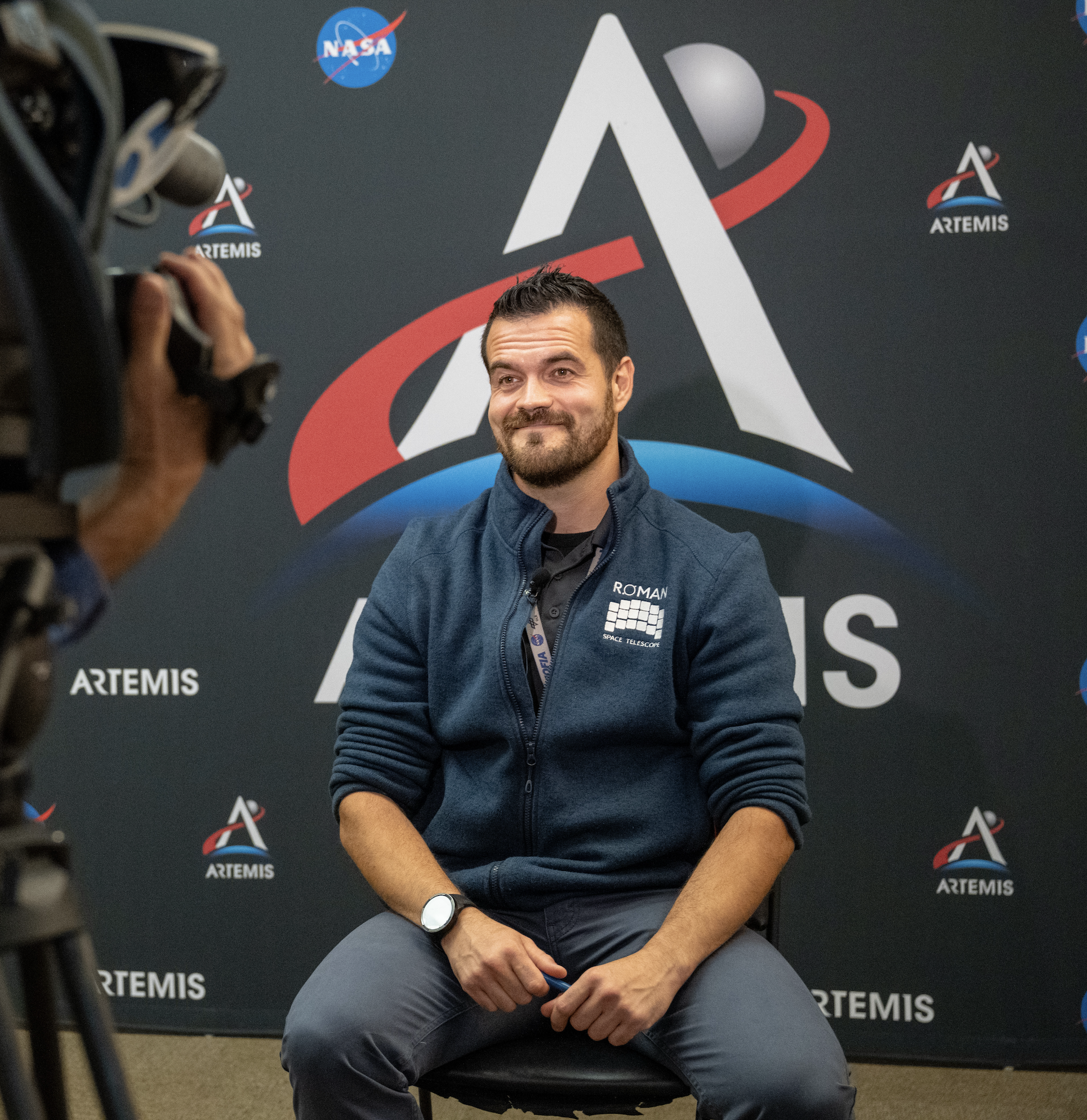
Astrophysics Star: Alejandro Borlaff
Alejandro (Alex) Borlaff, a research scientist in the Astrophysics Division with the Bay Area Environmental Research Institute, is recognized for his leadership in pioneering and developing image reduction pipelines for the Hubble Space Telescope (HST) and the Roman Space Telescope’s Wide Field Instrument (WFI). These algorithms significantly advance the detection of ultra-low surface brightness features through rigorous modeling of background contamination, including scattered and zodiacal light, better maximizing the science derived from NASA flagship astrophysics missions.
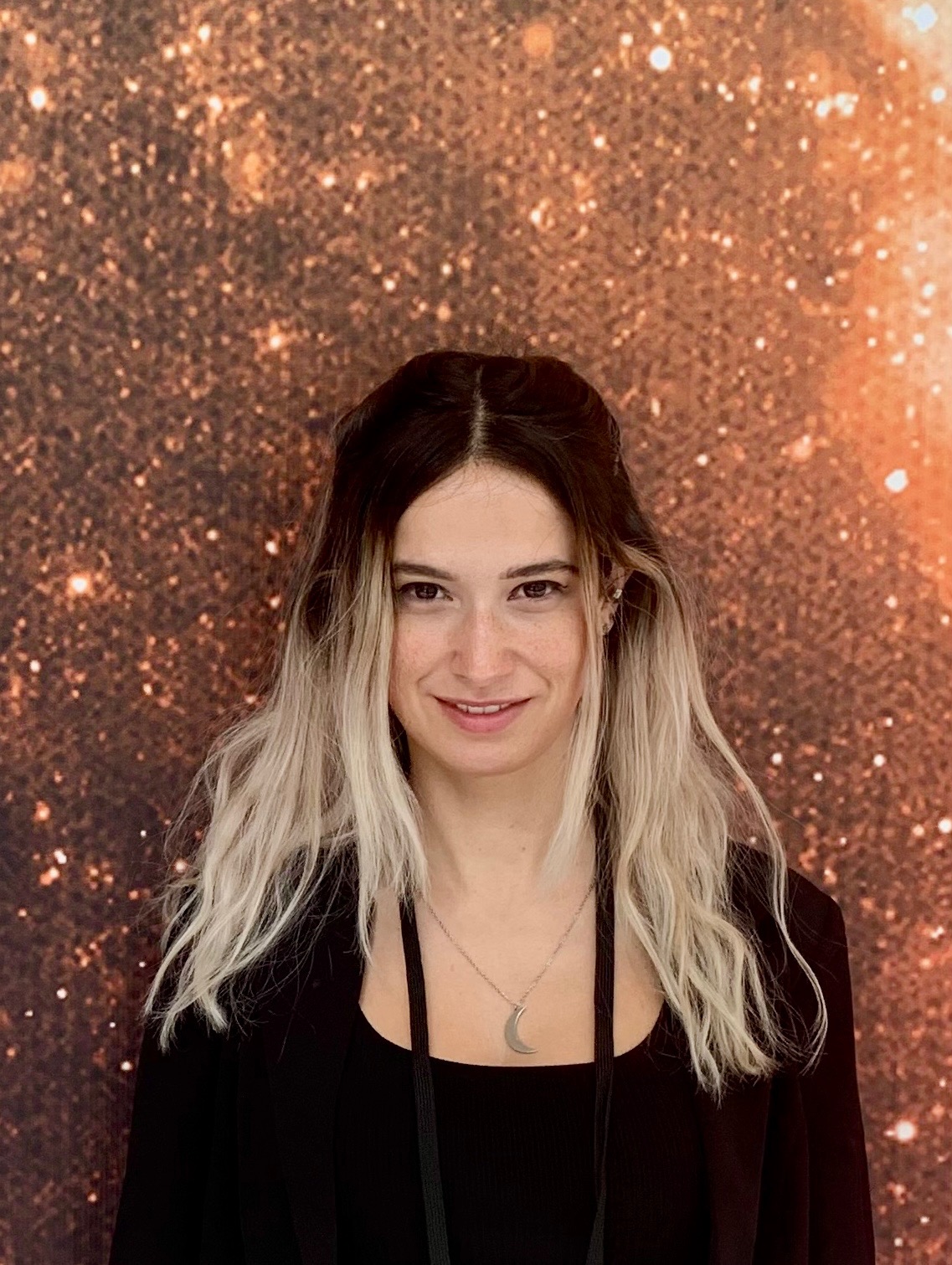
Astrophysics Star: Sarah Nickerson
Sarah Nickerson, a research scientist in the Astrophysics Division with the Bay Area Environmental Research Institute, is recognized for exceptional work on the analysis and curation of data taken from the EXES instrument on NASA’s Stratospheric Observatory for Infrared Astronomy (SOFIA) observatory. This provides high-level data products to the global astrophysics community for continued discovery and synergy with other NASA missions.
Planetary Science and Exobiology Star: Martina Caussi
Martina Caussi is a NASA Postdoctoral Program Fellow in the Planetary Science and Exobiology Division. Martina is recognized for her outstanding work using finite element simulations to determine that topographic relaxation has played a significant role in shaping Tegid, an unusually shaped impact crater on Europa. This work represents valuable precursory science in anticipation of the Europa Clipper mission, which will refine our understanding of this ocean world.
Earth Science Star: Keiko Nomura
Keiko Nomura is a research scientist for the NASA Earth Exchange (NEX) in the Earth Science Division with the Bay Area Environmental Research Institute. She is acknowledged for timely efforts in leadership, stakeholder engagement, coordination with NASA HQ management, and team building for the recently funded NEX-GeoAI project. This project is now being recognized as a key step forward to establishing NASA as the ground-truthing agency for federal and private sector GeoAI modeling activities for decision making.
Earth Science Star: Stephen Broccardo
Stephen Broccardo is a research scientist in the Earth Science Division with the Bay Area Environmental Research Institute. He is recognized for exceptional initiative and technical leadership in sustaining and advancing Ames’ atmospheric remote-sensing capabilities. Stephen has maintained critical observational capabilities and developed thoughtful technical milestones for future satellite-validation and science activities.