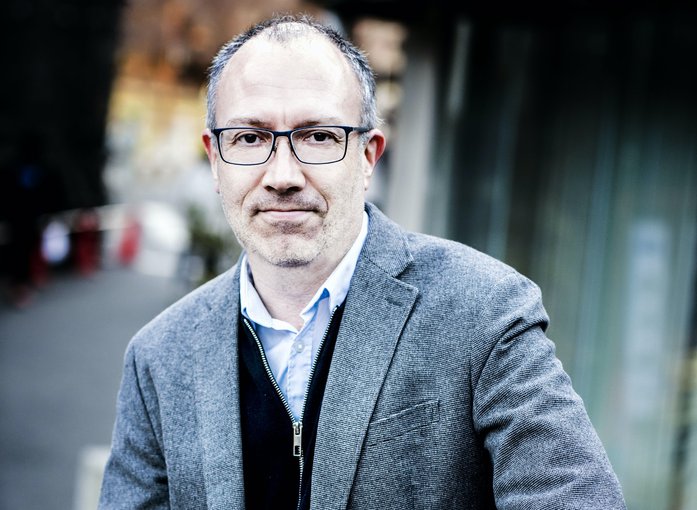
Interview with Dr. Caleb Scharf
_________________________________________________________________________________________
In the following interview, questions from the interviewer, Fred Van Wert, are in bold, and Caleb Scharf’s responses are in regular text.
_________________________________________________________________________________________
Let’s begin with your early years. Where you were born, something about your family, what your mother and father did, your early schooling, what got you interested in the career that you’ve been pursuing, that kind of thing.
Well, I was born in London, England, about a ten minute walk from the British Museum, right in the center of Old London. My parents were very interesting. My dad was American and my mother was British. They were both academics and both were art historians, in fact my dad was somewhat famous for his work in art history. My mother also did a lot of study in London. But when I was about three or four years old we moved out to a small village in England, in a county called Norfolk. It was just farms and us, so I actually grew up in a very rural part of England. Today it’s become a second home location for a lot of people but back then it was . . . well, you were excited if you saw a loaf of white bread in the village shop! So, I have a bit of an eclectic background. Like I said, my dad was American, so I have a lot of family in the U.S., mostly in Los Angeles. My father’s family had emigrated from Austria to the U.S. My grandfather was a musician and in the 1930’s he played in the Hollywood Studios, and that’s how that side of the family ended up in LA. There’s music in the family but I missed that gene! (laughs).
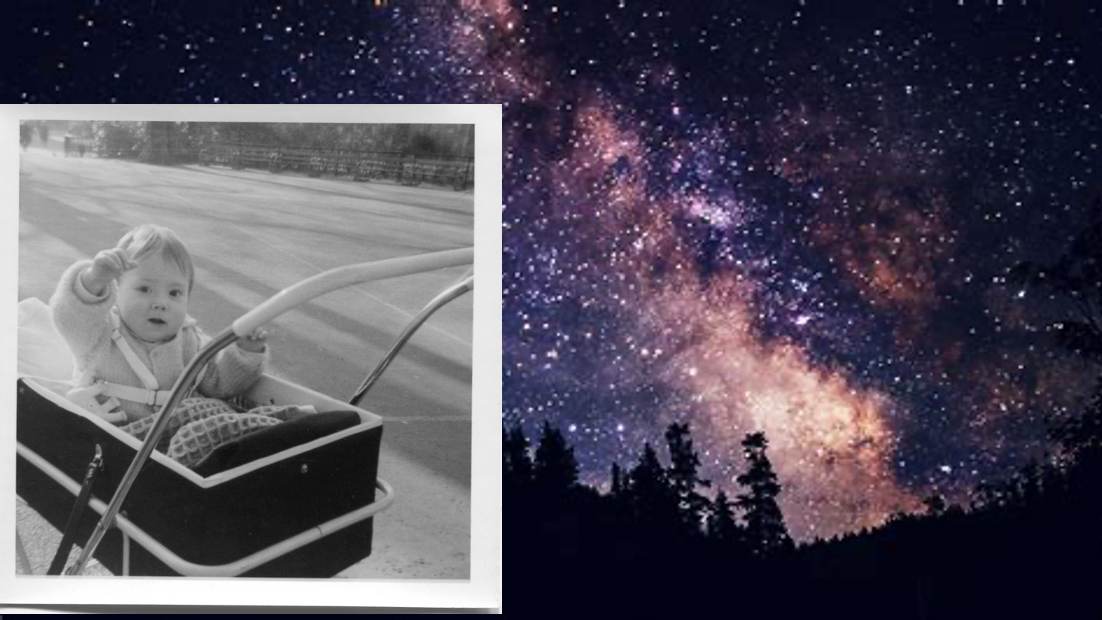
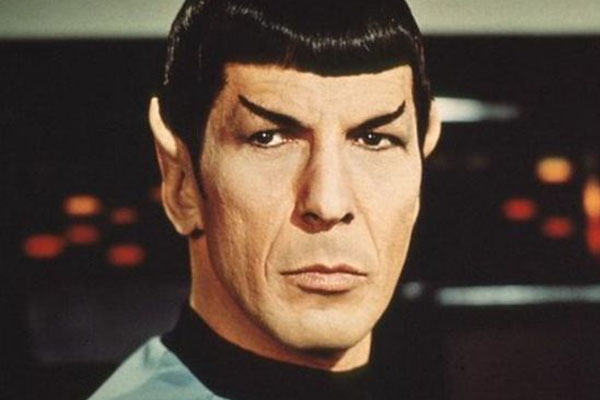
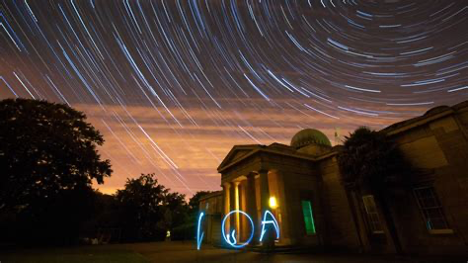
Regarding the question of if there was something in my early childhood that got me interested in space, astronomy, and science, I feel like it may have been moving out into the countryside where suddenly you could see the sky at night. London in the late 1960’s and early ‘70’s had light pollution and other pollution everywhere. But I have memories of going out into the countryside at night, even as a little kid. I’d get excused from the dinner table and go outside to burn off some energy, and I could see these brilliant night skies, the Milky Way and all the other features, with my naked eyes. I remember spending a lot of time just gazing and thinking about that. And, although my parents wouldn’t let me watch much TV, for some reason they did let me watch Star Trek when it was a new thing. I remember being both terrified by it and hiding behind the couch, but also being fascinated. I didn’t really understand everything that was going on, but it was just so intriguing. There was this guy with pointy ears who wasn’t human. How could you not be human, right? That was a really interesting thing to me. But also seeing how this group of people, who were intelligent but weren’t sitting behind a desk all the time, could do interesting things – that stuck with me for a long time, so maybe it was a combination of pop culture and living in the countryside.
It’s interesting to me how often something early on, like being able to see the beautiful night sky clearly or as with one researcher who on a Sunday drive with her family looked out the window and saw beautiful clouds. And with that interest in clouds, she decided on a career in meteorology, and then realized there were clouds on Mars, and became a planetary scientist because she wanted to study the Martian atmosphere. And it all started with being interested in something as a little kid, so there’s a commonality there.
Yeah, yeah, definitely.
Do you have siblings?
No, I’m an only child, for which my wife always pokes fun at me. She has a sister, but I’m an only child, which, growing up in the countryside, was good and bad because you had to make an effort to go see your friends since you were more distant from each other. You didn’t have neighbors right next door.
So starting in school, at some point, you had a growing interest in the stars, and that’s a science, astronomy is science. Did you find yourself in school being drawn toward, and being good in, science classes?
When I was in grade school I definitely was better at things like writing and art, that kind of thing. But by the time I was sixteen or seventeen, I started to realize that science classes were really interesting, and I also began to realize I could do some of this stuff. The math was, I wouldn’t say it was easy, but it came reasonably naturally to me. In England at that time you had to pick your academic direction by the time you were sixteen, which seems crazy early looking back. So, by sixteen, I was focusing on science and by the time I was eighteen I had completed some of the more specialized science classes. I did physics. I did chemistry. I did mathematics. And then it seemed to me that the most obvious thing I wanted to do was go to college and do physics. Physics seemed like the topic to go after because it felt more fundamental. Physicists are terrible this way, right? We think that if you do physics you can do anything, which of course isn’t really true, but it was the most attractive because it was a combination of simplicity and complexity, right? With simple rules you could learn things about very complex stuff, and I think that was something that attracted me. So I went to college to do physics. I studied at the University of Durham in the north of England, which is one of the equivalents to the various Ivy League schools in the U.S. or Cambridge, Oxford, or Imperial College in England.
I did physics with a concentration in theoretical physics, which drove me a little crazy because it was really difficult and I saw my limits there in the very theoretical aspects of physics, realizing that this was not for me. But we had a couple of really great astronomy classes as part of the physics degree and those kind of piqued my interest. Before graduating everyone was trying to figure out what to do next and I knew I didn’t want to go work in finance or industry. In England at that time, an undergraduate degree was three years, so it was intensive, and I felt that I hadn’t had enough chance to put into action what I had learned. So I decided to go to graduate school and earn a PhD. The things that came to my mind were astronomy, cosmology, and astrophysics, so that’s what I pursued. I was really, really lucky to get into Cambridge University to do my PhD and there was a wonderful place called the Institute of Astronomy in Cambridge where Fred Hoyle, Steven Hawking, and many other luminaries of the field had worked and that was a really terrific experience. I ended up doing my PhD in cosmology, studying the large scale structure of the universe and trying to understand how we can make measurements today that inform us about the contents of the universe, things like dark matter and the history of the universe since the big bang. It was rather theoretical but it was also the beginnings of what I would call early data science. It was a lot of statistical work, a lot of analysis of catalogs of galaxies and other things like that. So that’s what I did.
Well, let me poke at this a little because what you’ve described is a very natural progression into your career field. The things that interested you, and were available, you were good at, and if you were going down a path that you didn’t think was right for you, you made choices, and wound up where you are, which is great. We usually ask those we interview about their path to Ames. You did your postdoc at Goddard and didn’t come to Ames until later when you were already prominent in your field. So how did you wind up coming here? Did you reach out because you wanted to come to Ames, or did Ames reach out to you because they wanted you here, Ames being the cradle of the science of astrobiology? Or was it a combination of both?
I‘ve had a convoluted path! Having trained in cosmology and astrophysics, that’s what I wound up doing as a postdoc and then after, establishing a decent career. But then I switched fields almost entirely back in the early 2000’s. I made a conscious decision to switch to the kind of interesting stuff about exoplanets and astrobiology that had lingered in the background for me, but was then exploding as a field. And I established an astrobiology center at Columbia University. Then, after 22 years at Columbia, the opportunity came up to apply to the opening at Ames. It was intriguing, and I knew Ames’ reputation, I mean Ames and astrobiology, as you say, kind of go together. So it was very, very appealing, the idea of a bit of change and of coming to the place where so much of this science had begun or been scoped out in the early days, and seeing what I could do here, how I could help continue that legacy of innovation and of leading the field.
Is the work that you do hindered at all by the Covid situation? Do you go into the office every day? Many people don’t anymore.
I don’t run a physical lab, so while Covid was hugely impactful, it didn’t hit my work the way it did for many others. I actually work remotely, but really for family reasons. I was at Ames for seven months to get to know the place when I started in late 2022, and now I’m typically remote from New York. But I do come to Ames on a fairly regular basis. Today I’m sitting in our apartment in Manhattan. Often, I’m sitting in a falling down Victorian house up in the Catskills in New York, where it’s really quiet, and I can work to my heart’s content. I can sit in on my Teams calls and nobody knows any better! (laughs)
We often ask for a comment on the value of your work to NASA and the taxpayer, but that’s probably redundant because one of the goals of astrobiology is the search for life, or evidence of life, in the Universe, and that’s the preeminent thing that people are interested in. The people underwriting our work, the taxpayers, would love an answer to that and anything that pursues the answer is going to be supported by the public at large. Has there been something important that has come from your research, some new finding or advancement in that quest, or in something else?
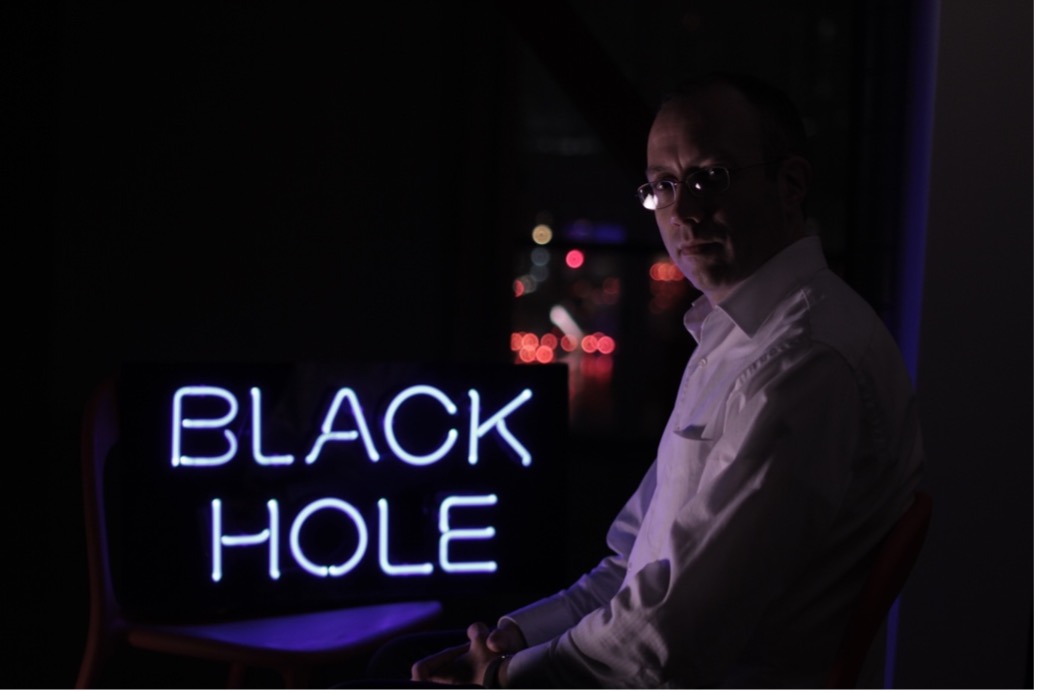
If you’re lucky enough to stick around in science long enough, you’ll end up getting to do some things that make a genuine contribution to the field. I’ve been lucky to have worked on a number of projects in astrobiology, and also astrophysics, where we touched on new phenomena or developed new ideas that I think have been important. For instance, in astrobiology I’ve spent a number of years working with some really excellent scientists, most of whom are at NASA, developing sophisticated climate models for worlds that are not the Earth. Modeling the Earth’s climate is super difficult, but we’ve figured out how to do it well. However, modeling climate on worlds that may be configured very differently, may have a different star, may have a different day length, may be in a different orbit, may have a different configuration of land and oceans – that’s a real challenge because climate system variables are really complicated. We’ve developed ways to do this for exoplanets, for worlds where we’re just beginning to understand their configuration enough that we can plug that information into our model and derive things like how hot is this world, what kind of climate does it have, does it have seasons, what those seasons look like, what kind of cloud cover does it have, and so forth. I’ve only played a modest role in a lot of that, but I feel really happy with that work. I think it’s made a significant contribution to understanding not only the possibilities for life but also the possibilities for planets themselves. Planets are interesting objects even if there isn’t anything living there. I was also very lucky to work on a number of astrophysics projects where I think we made some significant discoveries. One I’m particularly proud of was using the Chandra X-ray Telescope, one of NASA’s Great Observatories. It lets you study very energetic phenomenon, and in one project we found evidence of a super massive black hole in the very early universe, maybe a billion or two years after the Big Bang, that was spewing material out into the surrounding cosmos and we were actually able to detect that material. It’s hot gas, the result of some complicated physics and it suggests that black holes can influence the growth and evolution of entire galaxies. I remember that work particularly because, as with all these space telescopes, you propose for the data and then you wait. Eventually, if you’re lucky, the telescope takes your data, and it gets sent to you and you’re pretty much the first person to have seen it. I remember getting this data and creating an image on my computer screen, looking at it and thinking “that’s weird”. And then printing it out, running to the printer down the hall and picking up this piece of paper, and seeing this crazy looking structure from a black hole that existed twelve and a half billion years ago, and I’m one of the first humans to hold it in my sweaty little hands and see it with my own eyes. It was a pretty thrilling moment because of the implications of that. It was at the time the most distant such object anyone had ever seen. So, there can be those “aha” moments where you’re excited and run down the hallway and tell your colleagues, “Look what I did!”
And you don’t know what your contribution might result in until years later, maybe after you’re gone. But something that you did was important.
Yeah, yeah, yeah.
It’s not the first time that I’ve heard this from scientists, the appeal of being the first one to find out something or to know something, or to see something. There’s something very satisfying in that. You mentioned the Chandra X-ray telescope and I have to ask you a question: in researching your bio there was a comment of yours that I found humorous. It was that the delays in JWST occurred so we had time to develop 4K and 8K TV to properly view the images. That prompted me to look at some JWST images and I found some were labeled JWST+Hubble. Were those images somehow combined or enhanced by each other, or are they dual images? I didn’t understand in what sense they were dual.
I don’t know if I’ve seen those images, but Hubble is more sensitive to visible light and blue light than JWST, which looks at the infrared, so they are looking at different parts of the electromagnetic spectrum. So, if you are looking at a beautiful nebula, you will see slightly different phenomena or slightly different things. Putting the images together gives you a much grander painting of what’s there because you’re capturing much more of the electromagnetic spectrum. The spatial resolution of both Hubble and JWST is so exquisite that you can do that and not make a mess of things.
I also wondered, since the perspective from different angles would be different, how can they combine them without overlap or something? But I’m sure they can do things with computers now.
I think the perspective won’t really change because of the distances involved.
Oh, sure, that’s true.
But when aligning those images, as any person who builds instruments will tell you, there are always subtle imperfections, and a flat surface is not always a perfectly flat surface. Even though JWST and Hubble have some of the flattest surfaces, or precisely formed surfaces, humanity has ever managed to produce, there will still be differences. So yes, making those images is actually quite an art form. But people have put quite a lot of time into getting it all perfectly lined up so that it makes sense.
Thank you for that explanation. I hadn’t thought of that, but it certainly makes sense. If you weren’t a physicist, have you ever thought about another career that you would have liked to pursue?
It’s a great question! I really like what I do. I feel very privileged to get to do what I do. It’s close to my dream job. I do enjoy writing a great deal, which I do in my spare time, and some part of me likes the romantic idea of being the fabulous writer who is paid so well they don’t have to care about things, they can just focus on their art. (laughs) So a bit of me feels like that would be OK. That would be a kind of nice way to be. Just get up and think great things and put them down on paper. But I’ve also long wondered what it would be like to try to make movies. I think some of that comes from my dad’s career. He was an art historian, but his specialty was the topic of photography and how that changed the way humans thought about the world. So, film and that side of things. Hollywood director, best-selling author, those sound like good career choices to me! (laughs)
I liked your quote about being a writer. You said, “I’m a thinker, a writer, and sometimes both.” I don’t know if you remember that comment, but I got a kick out of it as I researched you online.
Yes, I do remember that comment and it pretty much describes things. When you’re writing for your fellow scientists there are very specific ways that you construct your papers or your proposals and so on, and it’s not always clear that thinking at the same time is an advantage. (laughs)
That’s a good way to put it. Would you like to share anything about your home life, your family? Do you have a wife, partner, kids, or pets?
I’m married and have two daughters who are now in their twenties, one has just graduated from college and the other is getting close to graduating, and I’m extremely proud of them both. It’s really exciting as a parent to see them beginning to find their way in the world. We don’t have any pets because everybody in the family but me is allergic!
Are your daughters pursuing science?
No, not science, really. I think we’ll see what they end up wanting to do. One is interested in media, in making documentaries, and using those tools for underserved and underrepresented communities in the world, which is really interesting. She’s spent a lot of time in Spain, so is very fluent in Spanish and is interested in that culture. My other daughter is interested in psychology but also in history and the way humans function as a society, which is interesting to me but is very different from my interests. They’ve clearly not followed the purely scientific pathway, but I think they’re both analytic thinkers. I recognize that so maybe it is something that runs in the family.
Well, congratulations to them on where they are now; you said one has graduated and one is about to?
The one who graduated is, as we speak, starting her first day working in a museum here in in New York.
That’s wonderful. I can lose myself in museums. I could visit them every day. You’re obviously quite busy being a scientist and a writer and the other things that you’ve described, but when you have time, what do you like to do for fun?
Sometimes I write, which may not like sound like fun to some people, but I do it also because I have books in my head that I want to write and publish. I also love being outdoors and that doesn’t mean just hiking, I just like being outside. When I’m out of a city, out in the countryside, I just like to wander around or sit there, absorbing all the plants, animals, and planetary goodness around me! I don’t know if that really counts as a hobby, but it definitely is something I enjoy a great deal. I also like a bit of gardening. I’m a strange variety of person who enjoys mowing the lawn! I find it a nice thing to do. It’s nice to do something physical where there’s an immediate outcome versus so much of science, certainly the kind of science I do, where a lot of it is sitting at a computer and you don’t necessarily see the product of your work for a while. So, physical things I enjoy. And I enjoy cycling and traveling for sure. I don’t like the process of traveling but I like it when I get there, let’s put it that way.
My wife says that, too. It piqued my interest when you said you liked to mow the lawn because you can see the results of your work immediately. When I was growing up, my two siblings and I each had to choose a room in the house to clean and I chose the kitchen. It was the hardest one to keep clean because everybody’s in there all the time and there are always dirty dishes and pots and pans, but once it was clean, you could really tell. You could look in there and tell it had been cleaned. If you are vacuuming somewhere, you can’t usually tell if that’s been done or not, so I, too, like the sense of seeing what I’ve accomplished.
That’s right. That’s absolutely right. And I like hedge trimming as well. I’m definitely into that, which may be the British side of me! (laughs). We like carefully pruned hedges and shrubbery, and I’ve probably become a bit obsessed with that.
You don’t make figures out of your hedges, shapes and things like that, do you?
No, no yet, but I am tempted. (laughs)
Would you have advice for a young postdoc? Perhaps one who’s just starting out, who would like to have the kind of career and success that you are having? What advice would you give them in pursuing their dream, be it science or whatever?
That’s always an interesting and quite a difficult question to answer. Some of it depends on if they find astrobiology in particular an interesting topic. I myself came to astrobiology, not right away but via a circuitous route through astrophysics, getting interested in exoplanets, then just deciding to focus on the search for life. What else is there? This is such a profound thing to do. So I would say to people, young scientists, maybe postdocs or grad students, if you have an interest in something like astrobiology, it’s really important to do two things: one is to be really skillful at a few technical areas, to specialize in useful things, but also to make sure that you look for ways to apply that specialization more broadly because that’s really what astrobiology is all about. For me it’s this playground where you can take very specialized skill sets and find new ways to apply them. Astrobiology demands that you engage with people in different fields, it really does, more than any other science that I know. So be specialized, but also be engaged with everyone around you. Scientists you might not expect to have things in common with, talk to them. Learn. See commonalities. Look for those little threads to pull on because those little threads are the interesting stuff and that might lead you to something really, really interesting, where a physicist like me can have a productive engagement with microbiologists, with very useful results. So that’s part of the advice I would say to people: don’t shut off other things, especially in astrobiology.
That’s very good advice, thank you. You may have already answered this because you said you weren’t particularly musical, so you probably don’t play musical instrument, but do you have other hobbies or interests? You mentioned bicycle riding and hiking. Anything else? Art perhaps? Or literature? Or something else you’d characterize as a hobby?
It’s a good question. I’m a pretty good cook, although cooking for me is primarily because I enjoy eating, so I don’t know if that really qualifies as a hobby, but it’s definitely a skill that I put into practice and it’s very different from work. I like it because there’s an end result that you see right there and you can share it with other people and that’s kind of a lovely thing. But all in all, I’m pretty boring. I spend a lot of time thinking about science and/or writing about science , so I don’t think I have hobbies in the conventional sense.
Trust me, you’re not boring. I can tell just from reading your bio and having this conversation that you’re not boring. What accomplishment in your life to date are you most proud of that’s not related to your science work?
Well, I think it’s probably that between my wife and myself, we’ve brought up two daughters who seem to be high functioning, decent human beings, is probably my proudest thing outside of science.
If you hadn’t said that, I would have wondered why. (laughs) Who or what inspires you?
That’s a very good question. I’ve been asked that question before in interviews and it’s always a struggle for me because I think I find inspiration in the most unexpected things all the time. I’ve had some of the most inspiring conversations in my life with farmers who lived down the lane from where I grew up in rural England. These people who have tended their fields for generations. They have this deep intuition about the way nature works but they were always inquisitive. As a little kid you could talk to them about all sorts of things. They were engaged with what was happening in the broader world as well as their own microcosm and I find that pretty inspiring. The ability to live a life where they’re not staring at TV screens, they’re not Tik-Tok influencers, but they’re thoughtful, observant, curious people. I always find that inspiring. I also find nature inspiring. I can sit on my back deck and just watch the birds and the bees doing their thing and I always find questions that I hadn’t thought of before. So, I think it’s a combination of, not celebrities or famous people so much, although some of them are extremely inspiring and impressive, but I’m more inspired by the day to day, and the people going about their lives quietly and carefully.
That’s a very thoughtful answer and I appreciate it. One of the things we do with these conversations is invite you to provide pictures of the things you’ve talked about. Of your work of course, but also of your family perhaps or of trips you’ve taken, things that go along with the narrative because it makes the whole post more interesting. If there’s a JWST image that you find particularly appealing or interesting, one that we might we see on the wall of your office or in your house, you can include that and others when you return the edited transcript.
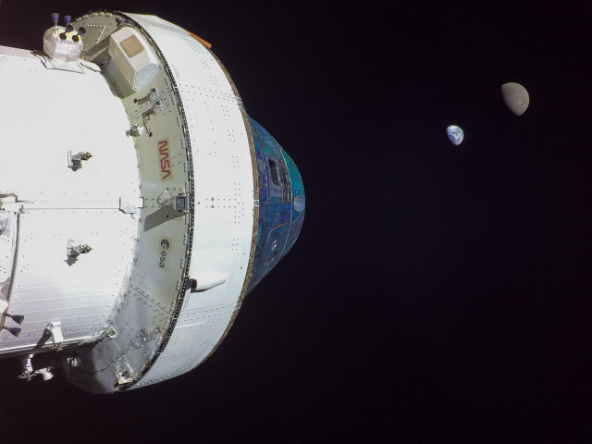
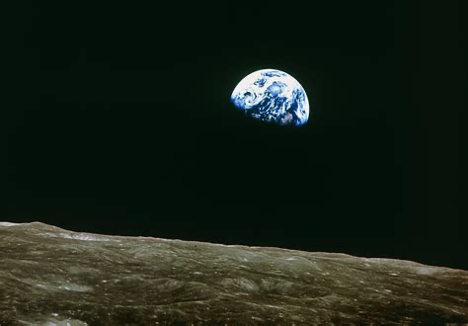
Among the images I find most interesting are the earth from space, and the most interesting of those are where a spacecraft is on its way to do something else. Some of the earliest images were where you see the Earth and the moon in one frame and you realize how far apart they are from each other and how tiny they really are. There’s something about those images that I find quite disturbing, in a good way.
And there’s the famous blue dot, right?
Yes. The pale blue dot. it’s a pixel and I honestly look at that and I think it’s a bit of a dud! I have to really work hard in my imagination to get there, but when you see just enough of the earth and just enough of the moon to recognize what they are and where they are, just sitting in the blackness of space, that for me is both terrifying and exhilarating. That’s kind of a special thing, the sort of picture I would have looming over me.
I can just see you writing about these things and how interesting you find them. I’ll have to get one of your books and read it. Now is there a favorite quote that appeals to you because it’s clever or thought provoking or anything like that?
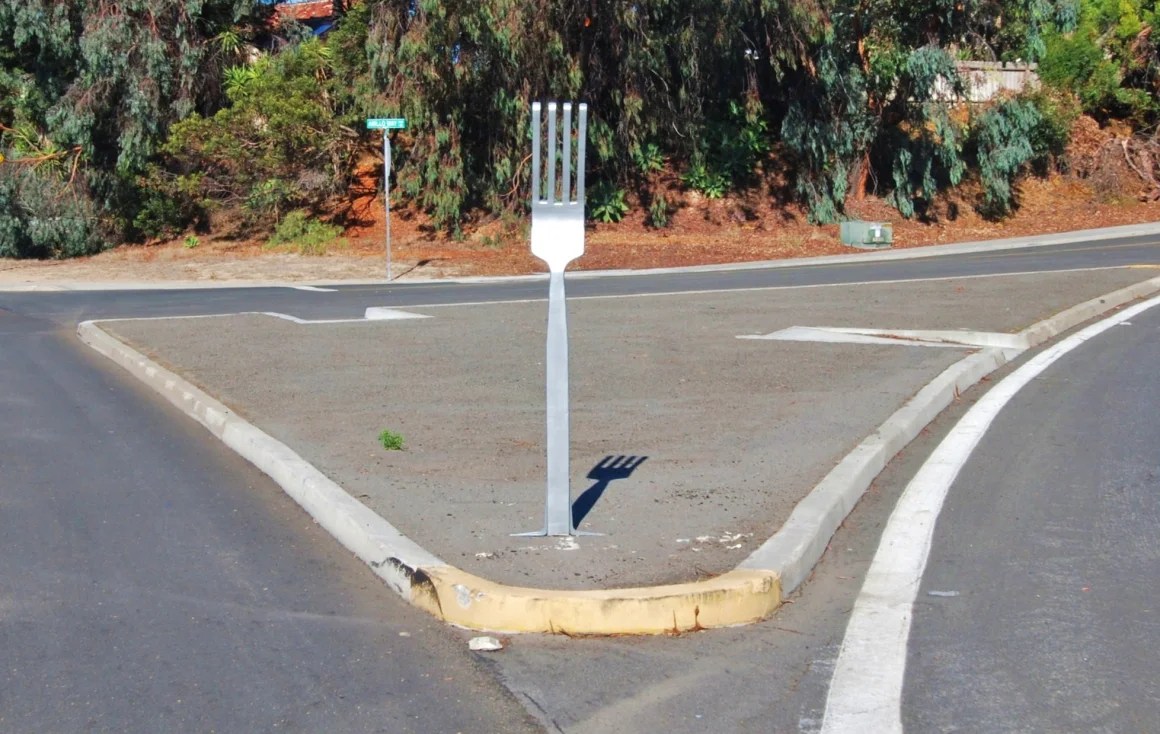
I was thinking about this because I saw the questions and I immediately thought “Oh my gosh!”, because for me humor is incredibly important. It just is. It’s how I cope with things, but also a sense of humor is so important because it cuts through cultural differences, it cuts through differences in background, all that stuff. Oh yeah! The best I could come up with, since I’m a fan of Yogi Berra, is one that I recall because it’s so beautifully daft, where he says, “When you come to a fork in the road, take it”. (laughs)
That’s a good one!
I like that because it makes you think for a moment, to realize that he’s not really saying anything, but he’s also saying everything. To me it means “You’re going to get through it no matter what.” The most important thing is that you take that step and you will eventually find out the rest of it and everything will be OK.
Is there something that you would like me to have asked you that I didn’t?
No. Well, we didn’t talk much about my writing stuff.
You can say something about that if you would like, sure.
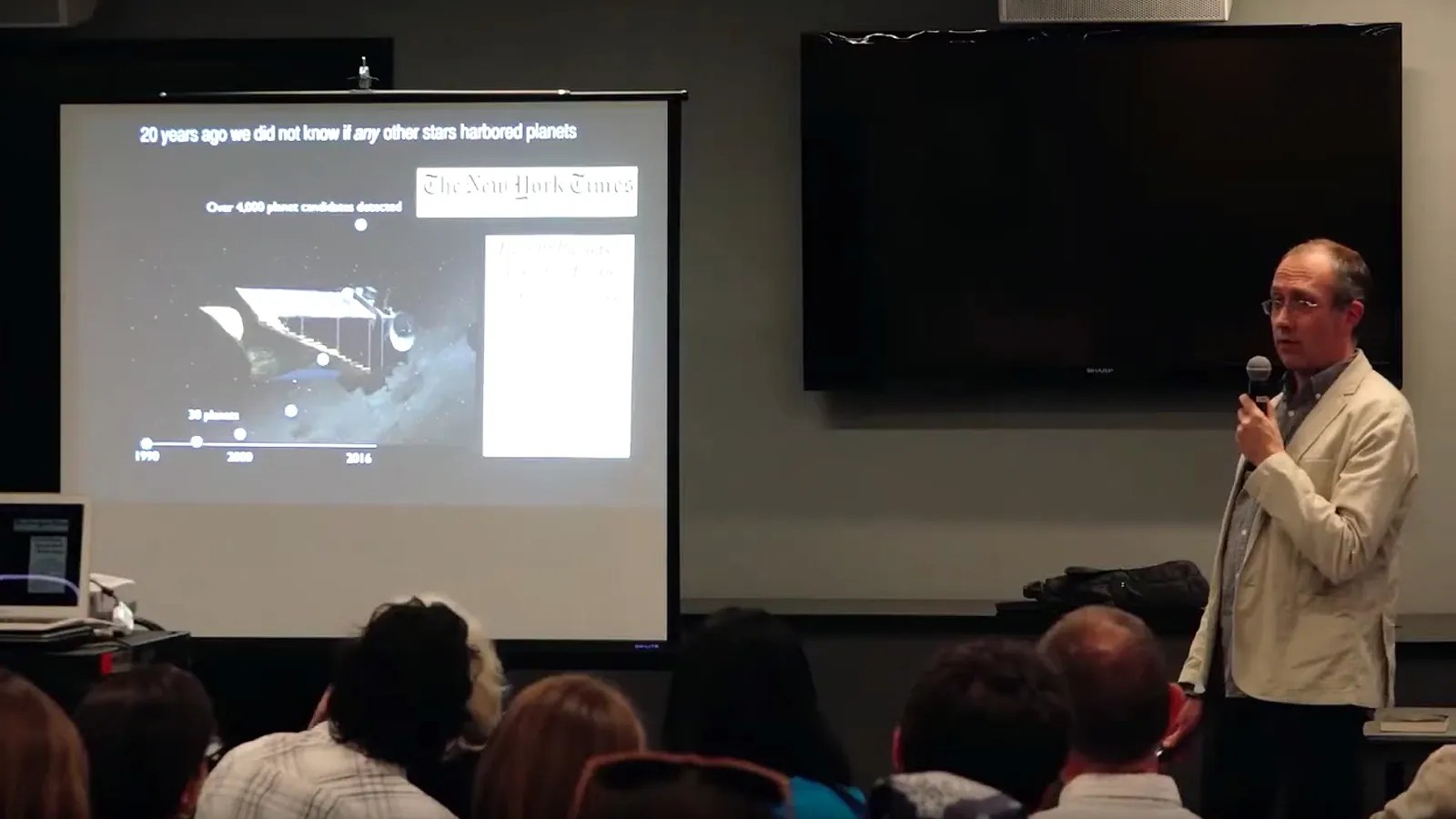
It’s kind of separate from science, but it is a big part of my life, and it was kind of unexpected. At a certain point maybe about ten or twelve years ago I decided to try writing for a more general audience and it’s kind of turned into this parallel career that I’ve had since then, quite unexpectedly. And it’s resulted in my writing over five hundred pieces for Scientific American over ten years and I’ve also written a bunch of books. I’m working on a new book right now, if I can put in a plug for it. It’s called “The Giant Leap” and it’s all about space exploration. That’s been an interesting turn for me, and it’s also made me realize that, much like teaching, there’s value to sitting down to write for a readership that is not specialist in any way. I try to imagine I’m writing for my mother or the guy who does my plumbing, you know? It’s incredibly useful as a scientist because it really helps you play with ideas, but it also helps you refine your own understanding because you can’t explain things simply unless you really understand them. And that’s been an interesting journey for me. Like I say, it’s been an entire parallel career, in the spare moments in between everything else, but it’s been marvelous. And as advice to younger scientists, think about that side of yourself, your capacity to share. We live in an era where it’s easier than ever to share, in many respects, for better or worse and I think scientists do have a certain obligation, especially as government scientists. We’re being paid by the taxpayer and we’re doing things for the good of the nation and for humanity. We should be more willing to share what we’re doing. People deserve to hear what we’re up to, and I think NASA does a great job at that. But as individuals, we can all help. There you go, that’s my soap box! (laughs)
Thanks for the tip about your upcoming book “The Giant Leap”. And let’s not be timid about plugging your books. A brief online survey revealed these:
The Copernicus Complex: Our Cosmic Significance in a Universe of Planets and Probabilities
Gravity’s Engines: How Bubble-Blowing Black Holes Rule Galaxies
The Zoomable Universe: An Epic Tour Through Cosmic Scale, from Almost Everything to Nearly Nothing
The Ascent of Information: Books, Bits, Genes, Machines, and Life’s Unending Algorythm
Extrasolar Planets and Astrobiology
These all look fascinating and I hope they are doing well. Your comments describe a great ethic not only for the agency but also for individuals. I liked what you said about your writing: “anything expressed here is my fault alone”. It’s another way of saying the author is responsible. It was a little piece of humor. It’s been delightful to spend these few minutes chatting with you and I think we’re going to have a wonderful addition to our archive of scientist interviews.
Sounds good.
It’ll take probably two weeks, maybe three to get this on paper and then you can have whatever time you need and once you concur we will put it in a queue. It’s been a delight to chat with you today. Thank you again very much.
My pleasure.
________________________________________________
Interview conducted by Fred Van Wert on March 28, 2024
Powered by WPeMatico
Get The Details…
Ciara C. Fitzpatrick