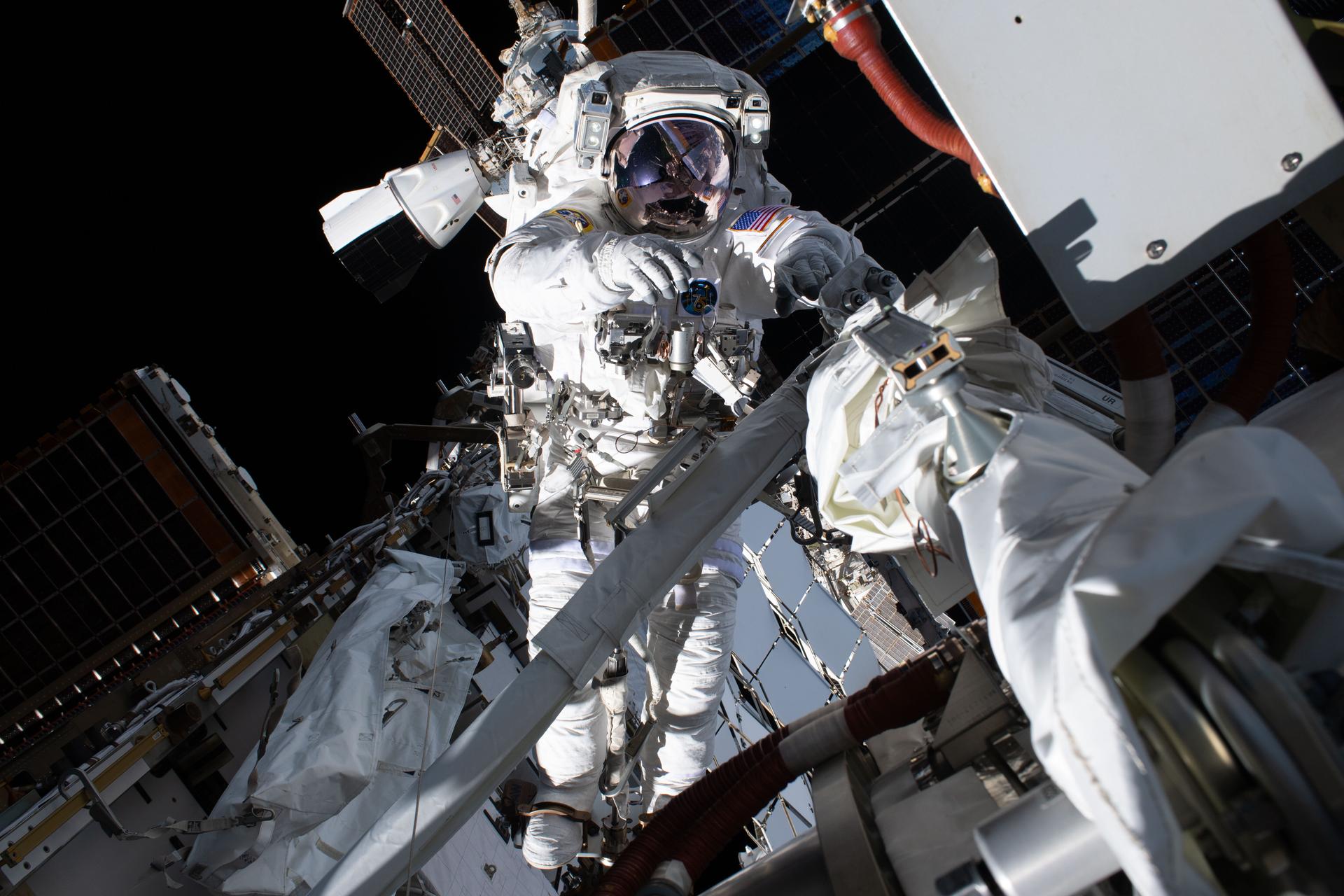
NASA Selects Voyager for Seventh Private Mission to Space Station

NASA Selects Voyager for Seventh Private Mission to Space Station

Official insignia of the National Aeronautics and Space Administration.
NASA

NASA and Voyager Technologies have signed an order for the seventh private astronaut mission to the International Space Station, targeted to launch no earlier than 2028 from Florida.

This is the company’s first selection for a private astronaut mission to the orbiting laboratory, underscoring NASA’s ongoing investment in fostering a commercial space economy and expanding opportunities for private industry in low Earth orbit. 

“Private astronaut missions are accelerating the growth of new ideas, industries, and technologies that strengthen America’s presence in low Earth orbit and pave the way for what comes next,” said NASA Administrator Jared Isaacman. “With three providers now selected for private missions, NASA is doing everything we can to send more astronauts to space and ignite the orbital economy. Each new partner brings fresh capabilities that move us closer to a future with multiple commercially operated space stations and a vibrant, sustainable marketplace in low Earth orbit.”

The mission, named VOYG-1, is expected to spend as many as 14 days aboard the space station. A specific launch date will depend on overall spacecraft traffic at the orbital outpost and other planning considerations.

Voyager will submit four proposed crew members to NASA and its international partners for review. Once approved and confirmed, they will train with NASA, international partners, and the launch provider for their flight.

“This award reflects decades of partnership with NASA and validates our belief that the infrastructure being built in low Earth orbit today is the launchpad for humanity’s future in deep space,” said Dylan Taylor, chairman and CEO, Voyager. “From the International Space Station’s first commercial airlock to the seventh private astronaut mission, Voyager is committed to making American human spaceflight stronger, more capable, and more sustainable at every step of the journey.”

The company will purchase mission services from NASA, including crew consumables, cargo delivery, storage, and other in-orbit resources for daily use. NASA will purchase the capability to return scientific samples that must remain cold during transit back to Earth.

NASA made the selection from proposals received in response to its March 2025 NASA Research Announcement.

Missions aboard the International Space Station, including private astronaut missions, help advance scientific knowledge and demonstrate new technologies in the unique microgravity environment. These commercial efforts in low Earth orbit help develop capabilities and technologies that could support NASA’s long-term goals for missions beyond low Earth orbit, including deep space exploration to the Moon and eventually to Mars through the agency’s Artemis program.

Learn more about NASA’s commercial space strategy at:

https://www.nasa.gov/commercial-space

-end-

Jimi Russell
Headquarters, Washington
202-358-1600
james.j.russell@nasa.gov 

Anna Schneider / Joseph Zakrzewski
Johnson Space Center, Houston
281-483-5111
anna.c.schneider@nasa.gov / joseph.a.zakrzewski@nasa.gov

Powered by WPeMatico

Get The Details…
Gerelle Q. Dodson

NASA Launches Six CubeSats to International Space Station

NASA Launches Six CubeSats to International Space Station

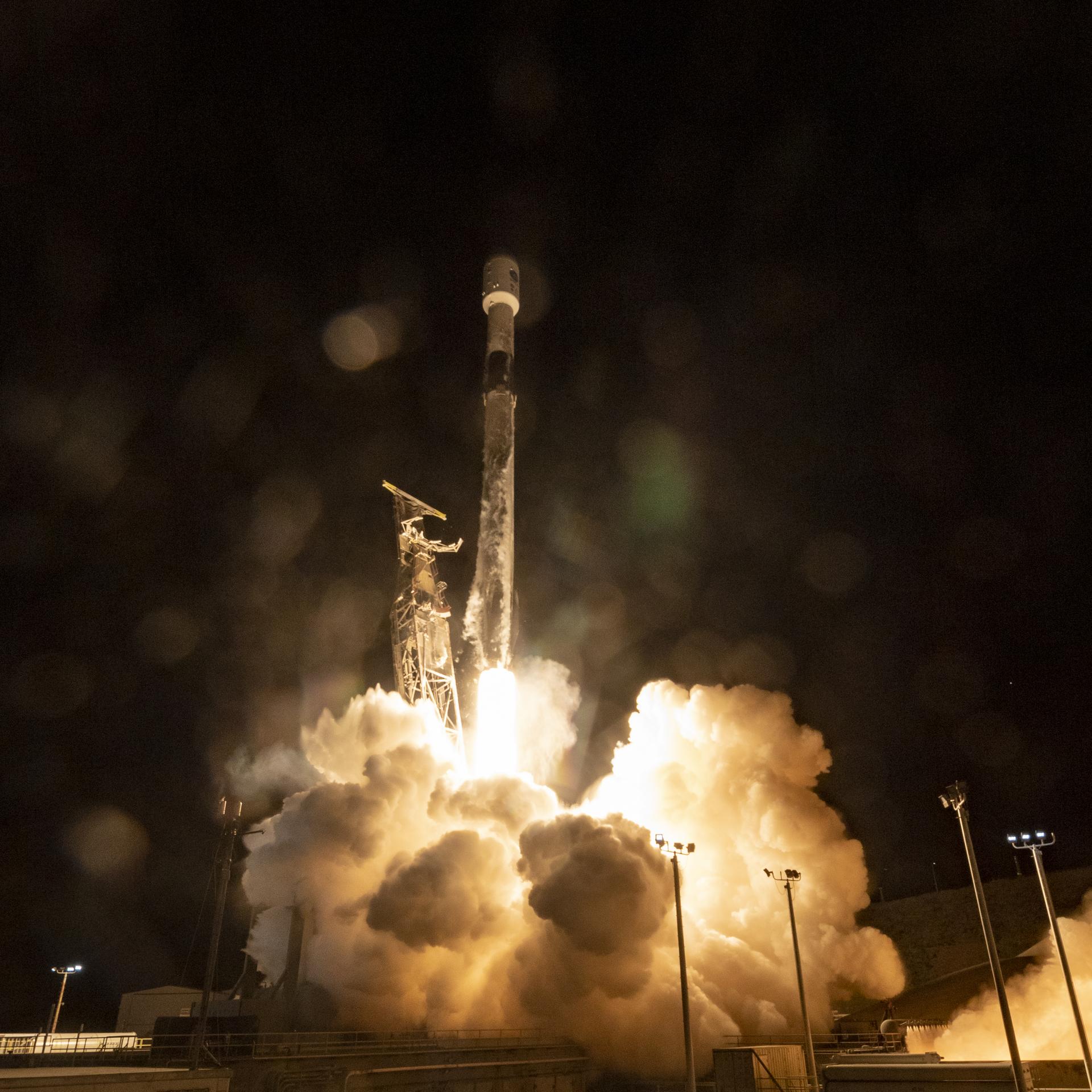
Image shows a rocket launching vertically in a morning blue sky with white clouds at Cape Canaveral Space Force Station in Florida on Saturday, April 11, 2026. The launch reflects in a nearby body of water and shrubs. Photo credit: SpaceX

Experiments and supplies bound for the International Space Station launched on April 11 as part of the agency’s Northrop Grumman Commercial Resupply Services 24 mission.

As part of the approximately 11,000 pounds cargo that lifted off inside the company’s Cygnus XL spacecraft, NASA’s CubeSat Launch Initiative (CSLI) launched six CubeSats built by U.S. educational institutions and non-profit organizations. These CubeSats are Coconut, Harvard Undergraduate CubeSat (HUCSat), Low Earth Orbit Platform for Aerospace Research and Development Satellite 1 (LEOPARDSat-1), and three Pleiades Rapid Orbital Verification Experiment System (PROVES) CubeSats: PROVES – Alcyone, PROVES – Atlas, and PROVES – Electra.

Each CubeSat is a small satellite that will deploy into orbit from the space station to conduct its experiments. NASA’s Launch Services Program, based at the agency’s Kennedy Space Center in Florida, manages CSLI and manifested these CubeSats on the mission as part of the Educational Launch of Nanosatellites (ELaNa) 58 launch grouping.

Photo credit: SpaceX

Powered by WPeMatico

Get The Details…
Leejay Lockhart

2026 NSTA Hyperwall Schedule

2026 NSTA Hyperwall Schedule

2 min read

2026 NSTA Hyperwall Schedule

NASA Science at NSTA Hyperwall Schedule, April 16-18, 2026

Join NASA in the Exhibit Hall (Booth #1265) for Hyperwall Storytelling by NASA experts. Full Hyperwall Agenda below.

THURSDAY, APRIL 16

11:00 AM Teaching Space Weather in the Artemis Mission Era Christina Milotte
11:15 AM 5E StoryMaps using NASA Resources Tina Harte
Ballinger
11:30 AM Growing Beyond Earth: A Partnership Between
Fairchild Tropical Botanic Garden & NASA
Amy Padolf
11:45 AM Learn Science by Doing Science:
Real NASA Research That Your Class Can Do Today
Sarah Kirn
12:00 PM Unlock NASA’s Eyes and Inspire the Scientists of Tomorrow Jason Craig
12:15 PM Access NASA Earth Data for your Class Angela Rizzi
12:30 PM Solar System Treks George Chang
12:45 PM Earth in Motion: How the NISAR Satellite
Mission will Transform Our View of the Planet
Erika Podest
1:30 PM Differentiated NASA Earth Data Analysis and Interpretation Angela Rizzi
1:45 PM Roman Space Telescope and Webb Space Telescope Begoña Vila
2:00 PM Earth in Motion: How the NISAR Satellite
Mission will Transform Our View of the Planet
Erika Podest
2:15 PM Solar System Treks George Chang
2:30 PM Unlock NASA’s Eyes and Inspire the Scientists of Tomorrow Jason Craig
2:45 PM Teaching Space Weather in the Artemis Mission Era Christina Milotte
3:00 PM Earth in Motion: How the NISAR Satellite Mission will Transform Our View of the Planet Erika Podest
3:45 PM Learn Science by Doing Science:
Real NASA Research That Your Class Can Do Today
Sarah Kirn

FRIDAY, APRIL 17

11:00 AM NASA Solar System Ambassador Program Sarah Marcotte
11:15 AM Growing Beyond Earth: A Partnership Between
Fairchild Tropical Botanic Garden & NASA
Amy Padolf
11:30 AM Access NASA Earth Data for your Class Angela Rizzi
11:45 AM Roman Space Telescope and Webb Space Telescope Begoña Vila
12:00 PM Learn Science by Doing Science:
Real NASA Research That Your Class Can Do Today
Sarah Kirn
12:15 PM Teaching Space Weather in the Artemis Mission Era Christina Milotte
12:30 PM 5E StoryMaps using NASA Resources Tina Harte Ballinger
1:30 PM Growing Beyond Earth: A Partnership Between
Fairchild Tropical Botanic Garden & NASA
Amy Padolf
1:45 PM Learn Science by Doing Science:
Real NASA Research That Your Class Can Do Today
Sarah Kirn
2:00 PM Roman Space Telescope and Webb Space Telescope Begoña Vila
2:15 PM NASA Solar System Ambassador Program Sarah Marcotte

Powered by WPeMatico

Get The Details…

NASA’s SPHEREx Mission Maps Water Ice Throughout Cygnus X

NASA’s SPHEREx Mission Maps Water Ice Throughout Cygnus X

3 Min Read

NASA’s SPHEREx Mission Maps Water Ice Throughout Cygnus X

An observation made by NASA’s SPHEREx shows the chemical signatures of water ice and polycyclic aromatic hydrocarbons in Cygnus X, one of the most active and turbulent regions of star birth in our Milky Way galaxy.
PIA26748
Credits:
NASA/JPL-Caltech/IPAC/Hora et al.

Description

An observation made by NASA’s SPHEREx (Spectro-Photometer for the History of the Universe, Epoch of Reionization, and Ices Explorer) shows the chemical signatures of water ice (shown in bright blue) and polycyclic aromatic hydrocarbons (orange) in Cygnus X, one of the most active and turbulent regions of star birth in our Milky Way galaxy.

One of several maps of molecular clouds made by SPHEREx, this observation is detailed in a study published April 15, 2026, in The Astrophysical Journal. The study supports the hypothesis that interstellar ice forms on the surface of tiny dust particles no larger than particles found in the smoke from a candle. The findings show the densest regions of ice coincide with the densest regions of dust, and the dust shields the ice from the intense ultraviolet radiation emitted by newborn stars.

An observation made by NASA’s SPHEREx shows the chemical signatures of water ice and polycyclic aromatic hydrocarbons in Cygnus X, one of the most active and turbulent regions of star birth in our Milky Way galaxy.
Figure A

Figure A shows the same region, but in three different wavelengths assigned the colors green, blue, and red. This SPHEREx observation highlights the dark, dusty lanes that protect the water molecules from the intense radiation generated by newborn stars.

Although space telescopes such as NASA’s James Webb Space Telescope and the agency’s retired Spitzer have detected water, carbon dioxide, carbon monoxide, and other icy molecules throughout our galaxy, the SPHEREx observatory is the first infrared mission specifically designed to find such molecules over the entire sky, via the mission’s large-scale spectral survey.

Managed by NASA’s Jet Propulsion Laboratory in Southern California, the SPHEREx observatory launchedMarch 11, 2025, and has the unique ability to see the sky in 102 colors, each representing a different wavelength of infrared light that offers distinctive information about galaxies, stars, planet-forming regions, and other cosmic features. By late 2025, SPHEREx had completed the first of four all-sky infrared maps of the universe, charting the positions of hundreds of millions of galaxies in 3D to help answer major questions about the cosmos, including those about the origins of water and life. 

The mission is managed by JPL for the agency’s Astrophysics Division within the Science Mission Directorate in Washington. The telescope and the spacecraft bus were built by BAE Systems in Boulder, Colorado. The science analysis of the SPHEREx data is being conducted by a team of scientists at 13 institutions across the U.S. and in South Korea and Taiwan, led by Principal Investigator Jamie Bock, who is based at Caltech with a joint JPL appointment, and by JPL Project Scientist Olivier Doré. Data is processed and archived at IPAC at Caltech in Pasadena, which manages JPL for NASA. The SPHEREx dataset is freely available to scientists and the public.

For more information about the SPHEREx mission visit: https://science.nasa.gov/mission/spherex/

Powered by WPeMatico

Get The Details…

‘Interstellar Glaciers’: NASA’s SPHEREx Maps Vast Galactic Ice Regions

‘Interstellar Glaciers’: NASA’s SPHEREx Maps Vast Galactic Ice Regions

6 min read

Preparations for Next Moonwalk Simulations Underway (and Underwater)


Water ice highlighted
Interstellar dust highlighted

Wispy filaments of vibrant orange and electric blue cosmic dust and gas weave through a dark, star-studded expanse of outer space, creating a chaotic and intricate web of celestial matter.
These observations made by NASA’s SPHEREx mission reveal vast frozen complexes in the Cygnus X star-forming region of the Milky Way galaxy. Water ice, shown as bright blue structures at left, exactly overlays the dark lanes of interstellar dust, shown in different wavelengths at right.
NASA/JPL-Caltech/IPAC/Hora et al

A dense tapestry of countless colorful stars fills the frame, punctuated by larger, brilliant points of light and faint, wispy veins of dark cosmic dust stretching across the deep space background.
These observations made by NASA’s SPHEREx mission reveal vast frozen complexes in the Cygnus X star-forming region of the Milky Way galaxy. Water ice, shown as bright blue structures at left, exactly overlays the dark lanes of interstellar dust, shown in different wavelengths at right.

Wispy filaments of vibrant orange and electric blue cosmic dust and gas weave through a dark, star-studded expanse of outer space, creating a chaotic and intricate web of celestial matter.
These observations made by NASA’s SPHEREx mission reveal vast frozen complexes in the Cygnus X star-forming region of the Milky Way galaxy. Water ice, shown as bright blue structures at left, exactly overlays the dark lanes of interstellar dust, shown in different wavelengths at right.
NASA/JPL-Caltech/IPAC/Hora et al

A dense tapestry of countless colorful stars fills the frame, punctuated by larger, brilliant points of light and faint, wispy veins of dark cosmic dust stretching across the deep space background.
These observations made by NASA’s SPHEREx mission reveal vast frozen complexes in the Cygnus X star-forming region of the Milky Way galaxy. Water ice, shown as bright blue structures at left, exactly overlays the dark lanes of interstellar dust, shown in different wavelengths at right.


Water ice highlighted

Interstellar dust highlighted


These observations made by NASA’s SPHEREx mission reveal vast frozen complexes in the Cygnus X star-forming region of the Milky Way galaxy. Water ice, shown as bright blue structures at left, exactly overlays the dark lanes of interstellar dust, shown in different wavelengths at right.

NASA’s SPHEREx (Spectro-Photometer for the History of the Universe, Epoch of Reionization, and Ices Explorer) mission has mapped interstellar ice at an unprecedented scale. Covering regions in our Milky Way galaxy more than 600 light-years across, the ice was found inside giant molecular clouds — vast regions of gas and dust where dense clumps of matter collapse under gravity, giving birth to stars. A study describing these findings published Wednesday in The Astrophysical Journal.

One of SPHEREx’s main goals is to map the chemical signatures of various types of interstellar ice. This ice includes molecules like water, carbon dioxide, and carbon monoxide, which are vital to the chemistry that allows life to develop. Researchers believe these ice reservoirs, attached to the surfaces of tiny dust grains, are where most of the universe’s water is formed and stored. The water in Earth’s oceans — and the ices in comets and on other planets and moons in our galaxy — originates from these regions.

“These vast frozen complexes are like ‘interstellar glaciers’ that could deliver a massive water supply to new solar systems that will be born in the region,” said study coauthor Phil Korngut, the instrument scientist for SPHEREx at Caltech in Pasadena, California. “It’s a profound idea that we are looking at a map of material that could rain on nascent planets and potentially support future life.” 

Thanks to its spectral capabilities, SPHEREx can measure the amounts of various ices and molecules, such as polycyclic aromatic hydrocarbons, in and around molecular clouds, helping scientists better understand their composition and environment.  

Although space telescopes such as NASA’s James Webb Space Telescope and the agency’s retired Spitzer have detected water, carbon dioxide, carbon monoxide, and other icy molecules throughout our galaxy, the SPHEREx observatory is the first infrared mission specifically designed to find such molecules over the entire sky via the mission’s large-scale spectral survey. 

“We expected to detect these ices in front of individual bright stars: The light from a star acts like a spotlight, revealing any ice in the space between us and that star. But this is something different,” said lead author Joseph Hora, an astronomer at the Center for Astrophysics (CfA) at Harvard & Smithsonian in Cambridge, Massachusetts. “When looking along the galactic plane — where most of the stars, gas, and dust of our galaxy are concentrated — there’s a lot of diffuse background light shining through entire dust clouds, and SPHEREx can see the spatial distribution of the ices they contain in incredible detail.” 

Managed by NASA’s Jet Propulsion Laboratory in Southern California, the SPHEREx observatory launched March 11, 2025, and has the unique ability to see the sky in 102 colors, each representing a different wavelength of infrared light that offers distinctive information about galaxies, stars, planet-forming regions, and other cosmic features. By late 2025, SPHEREx had completed the first of four all-sky infrared maps of the universe, charting the positions of hundreds of millions of galaxies in 3D to help answer major questions about the cosmos, including those about the origins of water and life.

Icy origins

Using the SPHEREx maps of various icy molecules, the study’s authors were able to look deep into many molecular clouds in the Cygnus X and North American Nebula regions of the Milky Way. In the densest areas, where the amount of dust is greatest, dark filamentary lanes block the visible light from the stars behind. With its infrared eye, the space telescope also revealed where the different ices — which absorb specific wavelengths of infrared light that would pass through the clouds if they consisted only of dust — are at their densest.  

This finding supports the hypothesis that interstellar ice forms on the surface of tiny dust particles, which are no larger than particles found in candle smoke, and that the dense regions of dust shield the ices from the intense ultraviolet radiation emitted by newborn stars. However, not all ices are treated the same way in the interstellar medium.

“We can investigate the environmental factors that contribute to different ice formation rates across large areas of interstellar space,” said study coauthor Gary Melnick, also an astronomer at the CfA. “The SPHEREx mission’s ‘big picture’ view provides valuable new information you can’t get when zooming in on a small region.” 

Within this broad perspective, adds Melnick, SPHEREx can do something ground-based observatories cannot: detect varying amounts of water and carbon dioxide, two ices that respond differently to environmental factors. For example, the presence of intense ultraviolet light from nearby massive young stars or the heating of these dust grains by that light affects the abundances of different ices in distinct ways. 

This is just the beginning for the mission. Observations from SPHEREx will provide scientists with a powerful tool to explore the various components of our galaxy, the physics of the interstellar medium that lead to star and planet formation, and the chemical processes that deliver molecules essential for life to newly formed planets.

More about SPHEREx

The mission is managed by JPL for the agency’s Astrophysics Division within the Science Mission Directorate in Washington. The telescope and the spacecraft bus were built by BAE Systems in Boulder, Colorado. The science analysis of the SPHEREx data is being conducted by a team of scientists at 13 institutions across the U.S. and in South Korea and Taiwan, led by Principal Investigator Jamie Bock, who is based at Caltech with a joint JPL appointment, and by JPL Project Scientist Olivier Doré. Data is processed and archived at IPAC at Caltech in Pasadena, which manages JPL for NASA. The SPHEREx dataset is freely available to scientists and the public. 

For more information about the SPHEREx mission visit:

https://science.nasa.gov/mission/spherex/

Media Contacts 

Ian J. O’Neill
Jet Propulsion Laboratory, Pasadena, Calif.
818-354-2649
ian.j.oneill@jpl.nasa.gov 

Alise Fisher
NASA Headquarters, Washington
202-617-4977
alise.m.fisher@nasa.gov 

Amy C. Oliver, FRAS
Public Affairs Officer
Smithsonian Astrophysical Observatory
amy.oliver@cfa.harvard.edu

2026-022

Powered by WPeMatico

Get The Details…
scarney1