Station Orbits Higher as Crew Runs New Science Experiments

Station Orbits Higher as Crew Runs New Science Experiments

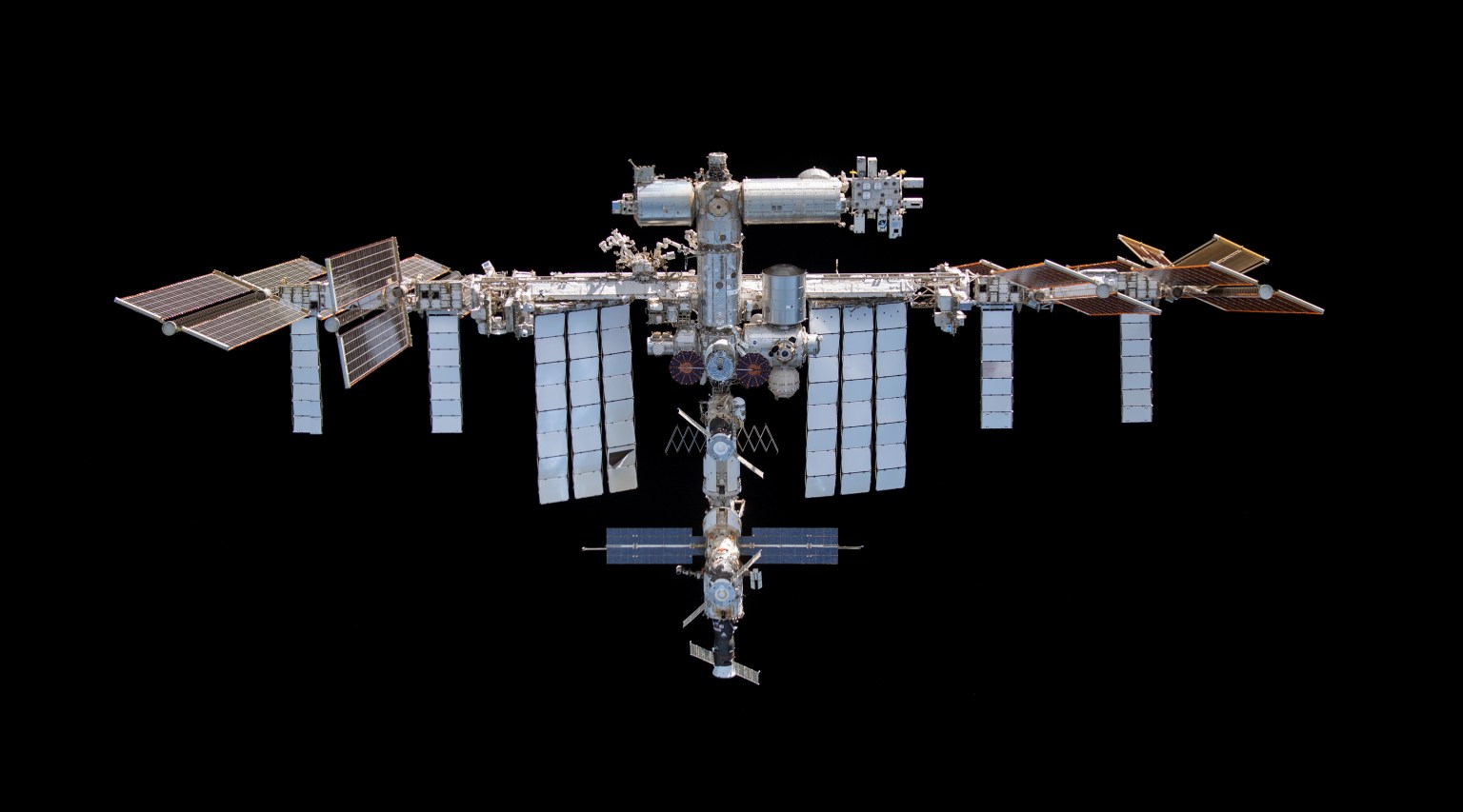
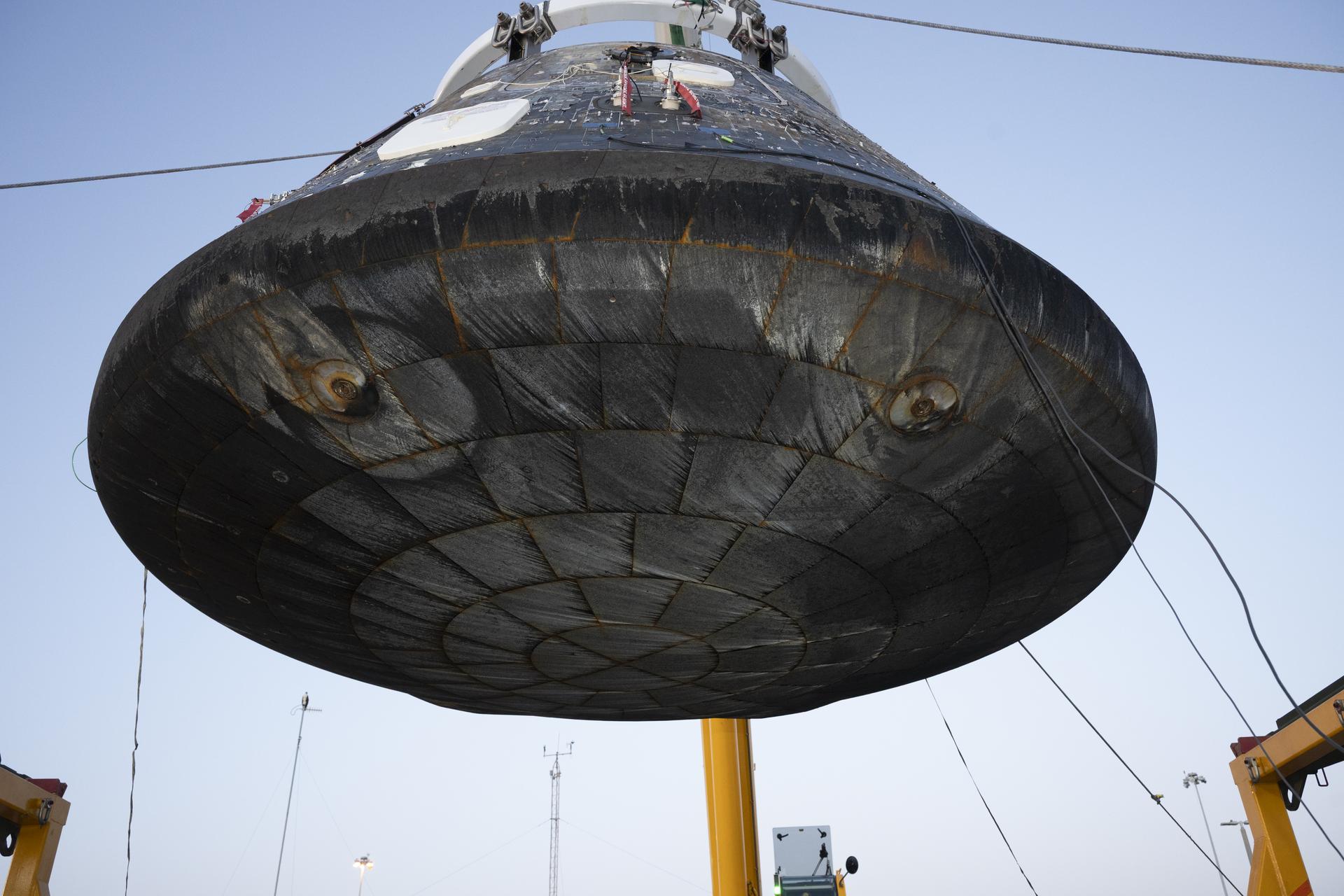
The Roscosmos Progress 93 cargo craft, docked to the rear port of the Zvezda service module, fires its engines to raise the International Space Station's orbit. This reboost maneuver positioned the orbital outpost at the correct altitude for the arrival of the Soyuz MS-28 crew spacecraft on Nov. 27 and the undocking of the Soyuz MS-27 crew spacecraft on Dec. 8.
The Progress 93 cargo craft, docked to the rear port of the Zvezda service module, fires its engines on Nov. 19, 2025, raising the International Space Station’s orbit. This reboost maneuver positions the orbital outpost at the correct altitude to receive arriving spacecraft.
NASA

The International Space Station is orbiting higher today after the Progress 93 resupply ship, docked to the Zvezda service module, fired its engines for just over five minutes Wednesday night. The orbital reboost places the space station at the correct altitude for the upcoming Progress 95 cargo mission scheduled to resupply the Expedition 74 crew at the end of April.

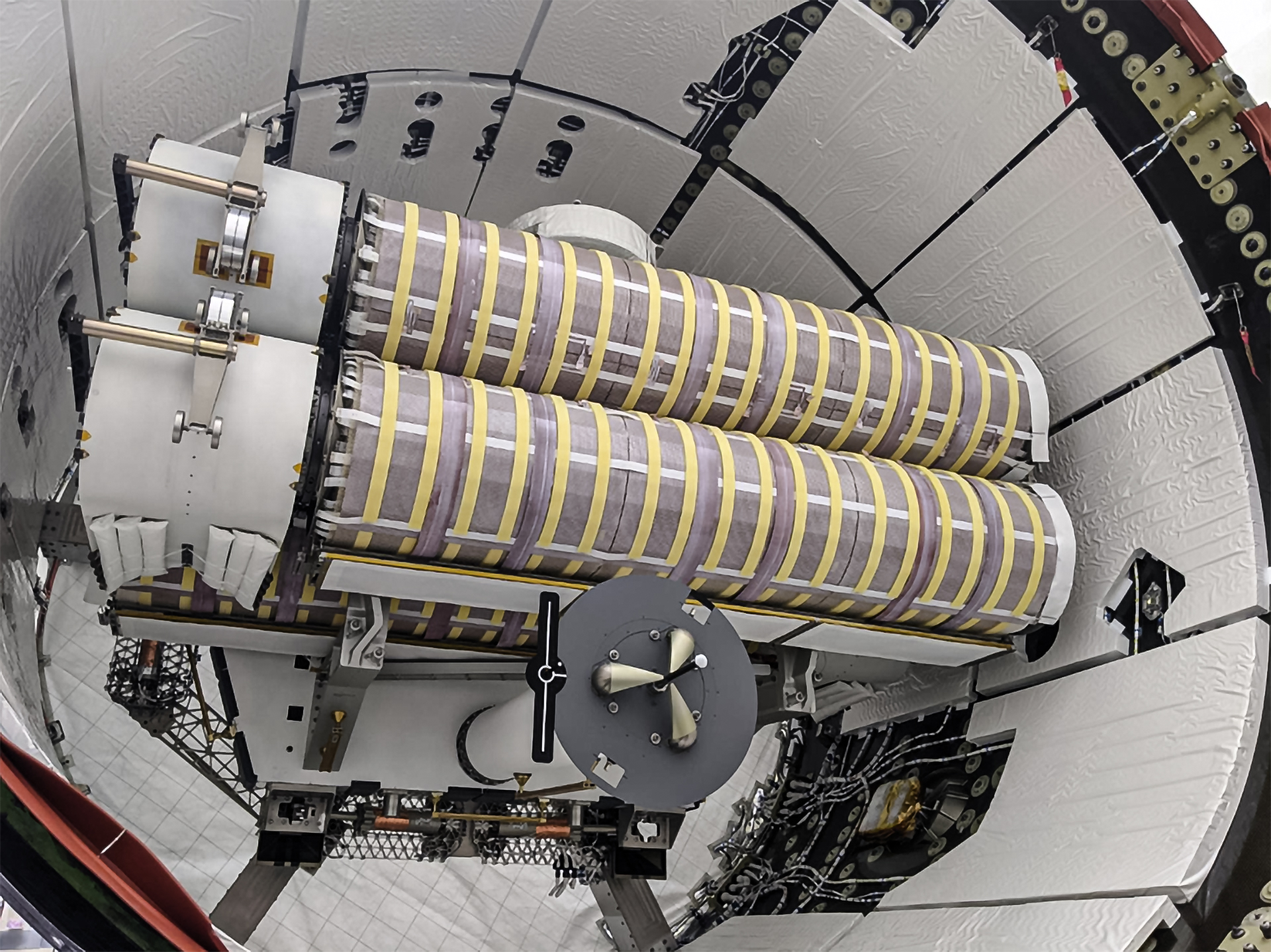
Meanwhile, brand new science experiments are underway and advanced lab hardware is being installed on the orbital outpost following the arrival of the Cygnus XL cargo spacecraft on Monday. The crew has been unpacking several tons of scientific gear, research samples, crew supplies, and more since the hatches were opened on Cygnus on Tuesday.

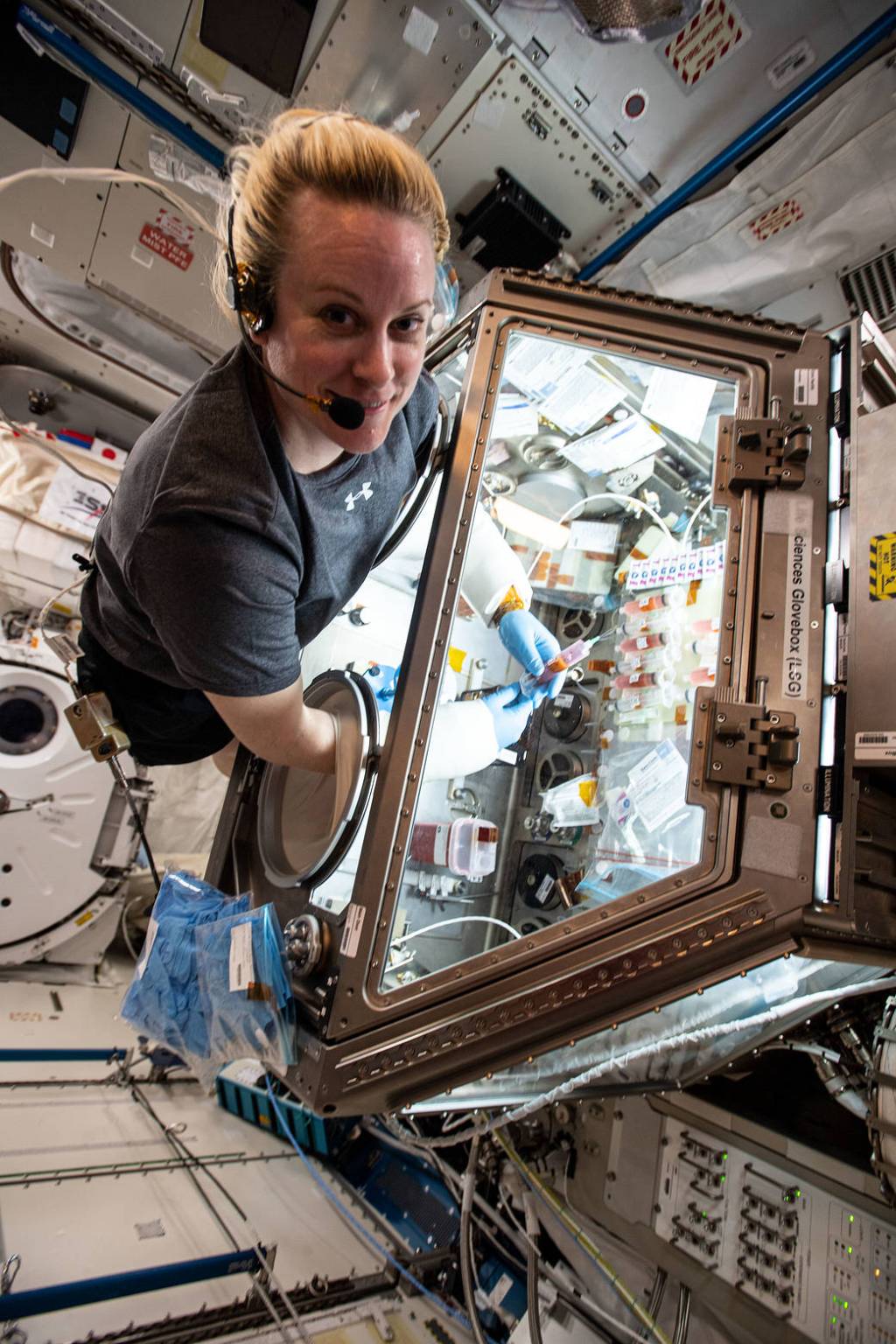
NASA flight engineers Jack Hathaway, Jessica Meir, and Chris Williams took turns on Thursday learning how to manage cardiovascular health and infectious diseases in space. Hathaway started first setting up a portable glovebag in the Harmony module and configuring the Multi-use Variable-g Platform (MVP) that can generate artificial gravity for a wide range of biology and physics investigations. Meir and Williams then installed sample hardware housing bacteria and heart tissue samples inside the MVP. Researchers will observe how bacteria affects heart tissue in the microgravity environment to learn how to treat heart and infectious diseases.

Later in his shift, Hathway installed light hardware inside the Columbus laboratory module’s Veggie facility and collected light measurements for the upcoming Veg-06 study to learn how to grow plants for food on future space missions. Meir swapped blood stem cell samples inside the Destiny laboratory module’s fluorescent microscope providing researchers with insights into cancerous diseases and blood disorders. Finally, Williams installed the new European Enhanced Exploration Exercise Device, or E4D, inside Columbus. The E4D is being evaluated for its ability to support crew workouts on missions to the Moon, Mars, and beyond.

At the beginning of her shift on Thursday, flight engineer Sophie Adenot from ESA (European Space Agency) assisted her crewmates with the scientific work and the E4D installations. She later finalized the installation of a new quantum physics module inside the Destiny laboratory module’s EXPRESS rack. The new module expands the Cold Atom Lab’s (CAL) quantum science capabilities for improved insights into general relativity and aid the search for dark matter.

Roscosmos cosmonauts Sergey Kud-Sverchkov and Sergei Mikaev began their day conducting maintenance and inspections inside the Zvezda service module. The duo later split up as Kud-Sverchkov studied ways to use artificial intelligence tools to improve crew operations while Mikaev continued inspections inside Zvezda. Cosmonaut Andrey Fedyaev spent his shift on lab maintenance disinfecting water tanks, checking the battery levels of tablet computers, and replacing orbital plumbing gear.

Learn more about station activities by following the space station blog, @space_stationon X, as well as the ISS Facebookand ISS Instagram accounts.

Get the latest from NASA delivered every week. Subscribe here.

Powered by WPeMatico

Get The Details…

Mark A. Garcia

At the Edge of Light

At the Edge of Light

Part of the Moon stands out against the blackness of space. Its surface is marked with many craters of different sizes. The craters are mostly on the left and bottom. The upper right portion of the Moon's surface is much smoother.
NASA

In this photo taken on April 6, 2026, a portion of the Moon’s far side is seen along the terminator—the boundary between lunar day and night—where low-angle sunlight casts long shadows across the surface.

A section of Orientale Basin is visible along the upper right portion of the lunar disk, its structure subtly revealed under grazing illumination. This lighting enhances contrast across the cratered terrain, highlighting variations in surface features and providing insight into the Moon’s geologic history.

See more imagery from the Artemis II mission.

Credit: NASA

Powered by WPeMatico

Get The Details…
Monika Luabeya

Eyeing the Richat Structure

Eyeing the Richat Structure

A large
The Richat Structure appears as a giant “bull’s eye” on a plateau in Mauritania in this mosaic, composed of images captured by the OLI (Operational Land Imager) on Landsat 9 and Landsat 8 on March 5 and March 6, 2026, respectively.
NASA Earth Observatory/Lauren Dauphin

In a remote part of northern Mauritania on the Adrar Plateau lies a desert landscape rich in human history. This region of northwestern Africa is sprinkled with Paleolithic stone tools, Neolithic cave paintings, and the remains of medieval towns once used by caravans crossing the Sahara Desert.

When viewed from space, the landscape appears to be shaped most prominently by natural forces. Wind sculpted the seas of colorful sand dunes and scoured plateaus capped with dark desert pavement, while ancient flowing water carved valleys and networks of dried river channels.

But the region’s most eye-catching feature when seen from above is the Richat Structure—a large geologic formation made of concentric ridges on the eastern side of the plateau. French geographers first described the feature in the 1930s, calling it the Richat “buttonhole.” NASA astronauts Ed White and James McDivitt helped bring wider global attention to what became known as “The Eye of the Sahara” after photographing it during their history-making Gemini IV mission.

The 40-kilometer-wide (25-mile-wide) structure was initially thought to be an impact crater because large meteors can produce circular features on Earth’s surface. However, researchers later showed that it is actually a deeply eroded geologic dome formed by the uplift of rock above an underground intrusion of igneous material. Over time, differing erosion rates among rock types in the exposed upper dome led to the development of circular ridges known as cuestas. The orange and gray colors reflect differences in sedimentary and igneous rock types across the structure and the surrounding landscape.

NASA Earth Observatory image by Lauren Dauphin, using Landsat data from the U.S. Geological Survey. Story by Adam Voiland.

References & Resources

You may also be interested in:

Stay up-to-date with the latest content from NASA as we explore the universe and discover more about our home planet.

Rings of Rock in the Sahara 

3 min read

In southeastern Libya, Jabal Arkanū’s concentric rock rings stand as relics of past geologic forces that churned beneath the desert.

Article

A Bit of Gray on an Emerald Isle

3 min read

Ireland is best known for its many greens, but the striking grays of the island’s Burren region also stand out…

Article

The Towers of Tràng An

3 min read

Over millions of years, water has sculpted limestone in northern Vietnam into an extraordinary karst landscape full of towers, cones,…

Article

Powered by WPeMatico

Get The Details…

Crew Begins New Space Research and Installs New Science Gear

Crew Begins New Space Research and Installs New Science Gear

NASA astronauts (from left) Chris Williams and Jack Hathaway, both Expedition 74 flight engineers, pose for a portrait inside the cupola during a break in their procedures as Northrop Grumman's Cygnus XL cargo spacecraft approached the International Space Station. Williams operated the Canadarm2 robotic arm from inside the cupola to capture Cygnus XL, while Hathaway monitored the spacecraft during its approach and rendezvous. Cygnus XL delivered more than 11,000 pounds of new science experiments, lab hardware, and crew supplies for the Expedition 74 crew.
NASA astronauts (from left) Chris Williams and Jack Hathaway, both Expedition 74 flight engineers, pose for a portrait inside the International Space Station’s cupola.
Credit: NASA/Jessica Meir

New science experiments are getting underway and new research hardware is being activated aboard the International Space Station after being delivered by a Cygnus XL cargo spacecraft on Monday. The Expedition 74 crew spent Wednesday unpacking Cygnus XL and stowing the new gear and supplies throughout the orbital outpost.

A new microgravity workout machine from ESA (European Space Agency), known as the European Enhanced Exploration Exercise Device, or E4D, is being configured for activation and installation inside the Columbus laboratory module. NASA flight engineer Chris Williams began his day unpacking computer hardware that supports the E4D then installing it and powering it on inside Columbus. Next, he joined NASA flight engineer Jessica Meir and replaced components on the E4D to ensure its accurate motion, alignment, and system longevity. The E4D is being evaluated for its ability to support crew workouts on missions to the Moon, Mars, and beyond.

NASA flight engineer Jack Hathaway kicked off the new Space Surface Spirulina experiment to demonstrate more efficient protein food production and carbon dioxide processing aboard spacecraft. He worked inside the Kibo laboratory module setting up the research hardware and retrieving microalgae samples for placement inside the Cell Biology Experiment Facility’s incubator unit. Scientists will observe how the spirulina microalgae grow in weightlessness to support the design of advanced, highly efficient life support systems for future space missions.

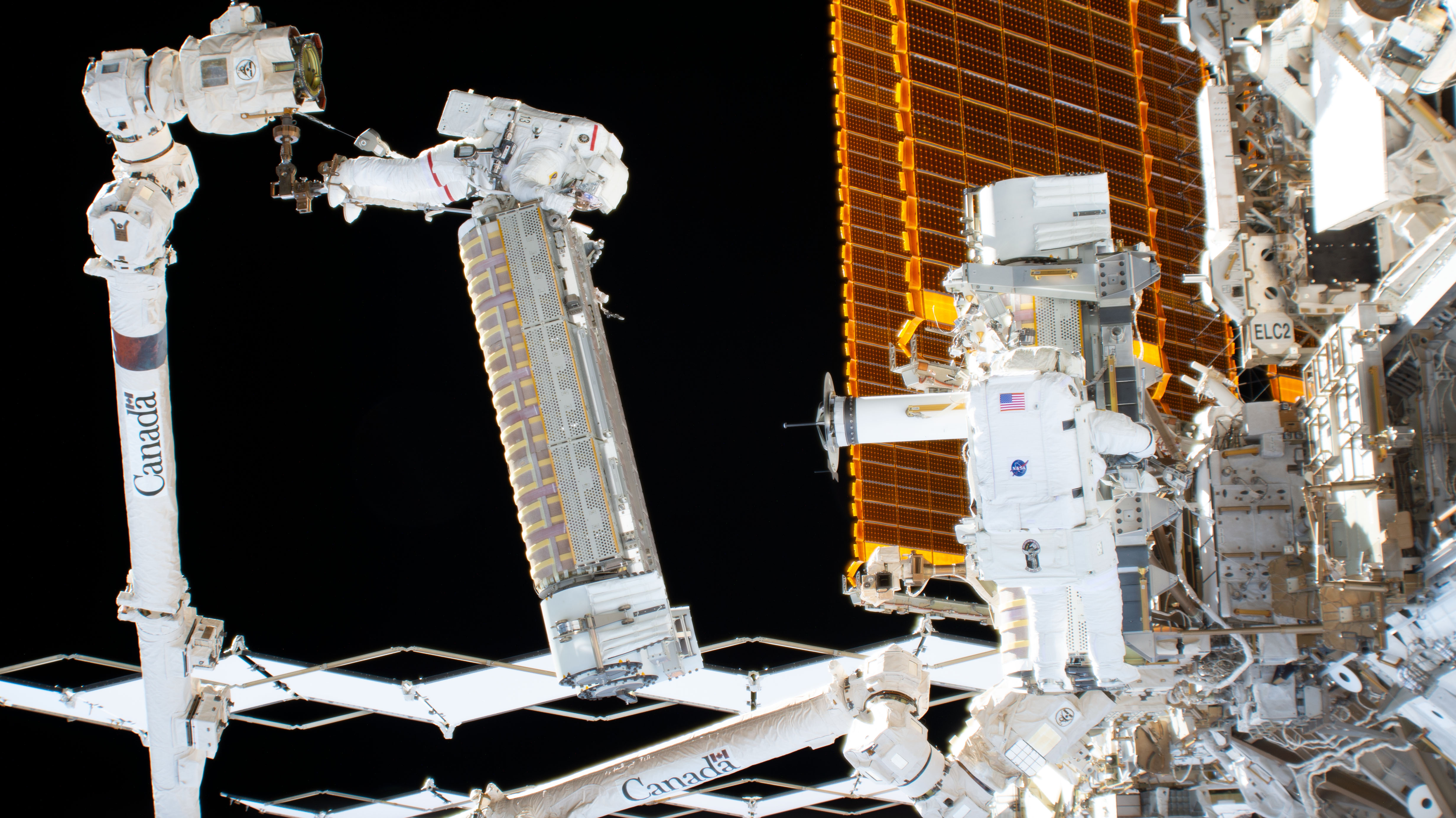
Afterward, Hathaway installed a new quantum physics module inside the Destiny laboratory module’s EXPRESS rack. The new module expands the Cold Atom Lab’s (CAL) quantum science capabilities for improved insights into general relativity and aid the search for dark matter. The CAL produces and chills clouds of atoms to about one ten billionth of a degree above absolute zero enabling the observation of atomic wave functions, a fundamental part of quantum physics. 

ESA flight engineer Sophie Adenot photographed Hathaway as he set up the new Cold Atom Lab hardware inside Destiny and performed other scientific duties. She also spent most of her day in and out of Cygnus XL unpacking lab hardware, crew supplies, and food replenishing the space station crew.

Station commander Sergey Kud-Sverchkov of Roscosmos worked throughout Wednesday conducting a photographic inspection inside the Zvezda service module. Flight engineer Sergei Mikaev assisted with the inspections then worked on life support maintenance servicing the Elektron oxygen generator and replacing carbon dioxide filters. Flight engineer Andrey Fedyaev spent his shift transferring water between the station’s U.S. and Roscosmos segments, as well as ensuring the operability of the Nauka science module’s ventilation system.

Learn more about station activities by following the space station blog, @space_station on X, as well as the ISS Facebook and ISS Instagram accounts.

Get the latest from NASA delivered every week. Subscribe here.

Powered by WPeMatico

Get The Details…
Mark A. Garcia

I Am Artemis: Rebekah Tolatovicz

I Am Artemis: Rebekah Tolatovicz

3 Min Read

I Am Artemis: Rebekah Tolatovicz

Rebekah Tolatovicz, a mechanical technician lead supporting Lockheed Martin, works inside the Artemis III Orion crew module in the Operations and Checkout Building at NASA’s Kennedy Space Center in Florida.

Credits:
NASA/Rad Sinyak

Listen to this audio excerpt from Rebekah Tolatovicz, a mechanical technician lead supporting the Orion spacecraft’s main contractor Lockheed Martin:

0:00 / 0:00

At NASA’s Kennedy Space Center in Florida, there is a fleet of Orion spacecraft in work, and Rebekah Tolatovicz’s hands have helped build each one. Tolatovicz works to build, integrate, and test the spacecraft used during the Artemis II test flight, as well as those designed to carry humanity to the Moon on future Artemis missions.

Tolatovicz is a mechanical technician lead for the Arctic Slope Regional Corporation, or ASRC Federal, supporting the Orion spacecraft’s main contractor Lockheed Martin. A typical day for Tolatovicz takes place inside NASA Kennedy’s Operations and Checkout Building, with Orion assembly and testing. Her work ranges from helping coordinate and lead technicians, to jumping into hands-on installations on components like hatches and engines, to collaborating with the engineering team.

“What I really like about the area that I’m in is we do so much,” said Tolatovicz. “From starting with the bare structure and installing giant parts and titanium pieces, to final integration where you’re installing the tiniest little components. I think that’s the coolest part. We don’t do just one technical thing — it’s all the technical things.”

Rebekah Tolatovicz, a mechanical technician lead for the Arctic Slope Regional Corporation, or ASRC Federal, supporting the Orion spacecraft’s main contractor Lockheed Martin, works inside the Artemis III Orion crew module in the Operations and Checkout Building at NASA’s Kennedy Space Center in Florida.
Credits: NASA/Rad Sinyak

Tolatovicz currently works on the Orion crew modules that could sustain the astronauts on future Artemis missions, and she played a large role in work on the Artemis II spacecraft that carried four astronauts on a mission around the Moon, splashing down April 10. This included testing, integration, and final installation and closeout before the spacecraft was prepared for fueling and stacking on the SLS (Space Launch System) rocket.

As Artemis II was the first crewed mission under NASA’s Artemis program, Tolatovicz recognized the impact of her work.

It’s really vital to stress the importance of what we do and know nothing is minuscule. Everything matters. It’s really important to pass that down on to the new hires and make sure that everybody has that perspective.”

Rebekah Tolatovicz

Rebekah Tolatovicz

Orion Mechanical Technician Lead for ASRC Federal

Tolatovicz, who began as an intern with Lockheed Martin through Eastern Florida State College’s aerospace technician program, knows what it’s like to be a newcomer. She had been mentored by technicians who worked through the space shuttle era, which largely shaped her experience and outlook.

“At first I didn’t think I was going to make it,” said Tolatovicz. “But if you come in with a good attitude and want to learn — there’s so much you can learn from these guys, they have decades of knowledge to share. Once I got down on the floor and was working with them hands-on, I knew I could figure it out.”

Tolatovicz has been working on the Orion program for nine years. Since then, the Maine native has witnessed her work come to fruition on Orion’s uncrewed Artemis I test flight as well as the Artemis II mission around the Moon.

“It’s really amazing for me to be a part of NASA’s history and the next step,” said Tolatovicz. “I just really love my job, the team, and working through challenges. You don’t think about it when you’re putting things on, but then you get to tell somebody else that you installed the thrusters for the spacecraft, and you realize — man, that’s pretty cool.”

Image shows woman looking at NASA's Artemis II Orion spacecraft
Rebekah Tolatovicz, a technician with Lockheed Martin, operates a 30-ton crane to move NASA’s Artemis II Orion spacecraft out of the Final Assembly and System Testing cell inside the Neil A. Operations and Checkout Building at NASA’s Kennedy Space Center in Florida on Saturday, Feb. 22, 2025. The move prepared for the installation of four solar array wings and spacecraft adapter jettison fairings for the agency’s first crewed flight test under the Artemis campaign.
Credits: NASA/Cory S Huston

About the Author

Erika Peters

Erika Peters

Share

Details

Last Updated

Apr 15, 2026

Powered by WPeMatico

Get The Details…
Erika Peters