NASA Taps Alabama A&M University to Host Break the Ice Lunar Challenge

NASA Taps Alabama A&M University to Host Break the Ice Lunar Challenge

4 min read

Preparations for Next Moonwalk Simulations Underway (and Underwater)

An external image of the Alabama A&M University Agribition Center from the front facade. The Center is a cream-colored stone building with a curved roof, floor-to-ceiling windows, and concrete steps that lead to a covered awning, framed by deep-red structural beams above. Shrubs and crepe myrtle trees frame the foreground and steps leading up to the building. Photo courtesy of AAMU Extension
Alabama A&M University Agribition Center will host the final Break the Ice Lunar Challenge featuring a large dirt-based indoor arena on 40 acres of land, offering plenty of green space to build Break the Ice’s complex testing infrastructure.
Photo Courtesy: Alabama A&M University Extension

By Savannah Bullard

NASA has selected Alabama A&M University’s Agribition Center in Huntsville, Alabama, to host the final level of the agency’s Break the Ice Lunar Challenge, using indoor and outdoor space to ground test the finalists’ solutions.

The challenge opened in 2020 to find novel solutions for excavating icy lunar regolith and delivering acquired resources in extreme environmental conditions. In alignment with NASA’s Moon to Mars objectives, the challenge aims to develop technologies that could support a sustained human presence on the Moon.

Throughout the challenge, competitors have designed, built, and independently tested robots that could theoretically withstand the harsh environments inside permanently shadowed regions of the lunar South Pole. The six finalists who succeeded in Phase 2: Level 2 of the challenge were announced in December 2023.

“We were looking for a unique set of criteria to house the Break the Ice Lunar competition, so we partnered with Jacobs Space Exploration Group in finding a facility,” said Denise Morris, NASA Centennial Challenges program manager at NASA’s Marshall Space Flight Center in Huntsville, Alabama. “Alabama A&M is a good fit for this challenge because of the on-site capabilities they have and being close to NASA facilities makes logistics much easier.”

Located a few miles east of the Alabama A&M University (AAMU) campus, the Agribition (agriculture + exhibition) Center is managed by the Alabama Cooperative Extension System with support from AAMU and its College of Agricultural, Life, and Natural Sciences. Its indoor arena features a large dirt space, typically equipped to support rodeos and other agricultural expos. Outside, the center sits on roughly 40 acres of land, offering plenty of green space to build the competition’s complex infrastructure.

The final Phase 2: Level 3 testing will occur June 10-12, 2024. There are two components that each team will focus on mastering: excavation and transportation.

Six identically sized concrete slabs will be set up inside the arena for the finalists’ robots to dig. The slabs, measuring 300 cubic feet, will have qualities similar to a permanently shadowed crater located at the Moon’s South Pole. A gravity-offloading crane and pulley system will lift the excavators while working, simulating the one-sixth gravity experienced on the Moon.

Each team will have one hour to dig as much material as possible or until they reach the payload capacity of their excavation robot. Up to three top-performing teams will earn an opportunity to test their solution inside one of the thermal vacuum chambers located at Marshall, which can simulate the temperature and vacuum conditions at the lunar South Pole.

Outside the Agribition Center, challenge teams will take turns on a custom-built track outfitted with slopes, boulders, pebbles, rocks, and gravel to simulate the lunar surface. This volatile surface will stretch approximately 300 meters and include several twists and turns for more intermediate handling.

Each team will get one hour on the track to deliver a payload and return to the starting point. Times, distances, and pitfalls will be recorded independently.

“These two testing methods address the excavation and transportation of large quantities of icy regolith, which are some of NASA’s current top technology gaps,” said Naveen Vetcha, NASA challenge manager at Jacobs Space Exploration Group. “This competition has enabled teams to develop lightweight, energy efficient, reliable and durable hardware, all while performing well in Moon-like conditions like reduced gravity and complex terrain.”

The total prize purse is $1.5 million, with the first-place winner taking home $1 million and the second-place winner receiving $500,000.

The Break the Ice Lunar Challenge is a NASA Centennial Challenge led by the agency’s Marshall Space Flight Center, with support from NASA’s Kennedy Space Center in Florida. Centennial Challenges are part of the Prizes, Challenges, and Crowdsourcing program under NASA’s Space Technology Mission Directorate. Ensemble Consultancy supports challenge competitors.

Jonathan Deal
NASA’s Marshall Space Flight Center
256-544-0034
jonathan.e.deal@nasa.gov

Share

Details

Last Updated

Feb 01, 2024

Powered by WPeMatico

Get The Details…
Beth Ridgeway

Cygnus Installed on Station; Cargo Ops Begin

Cygnus Installed on Station; Cargo Ops Begin

The Cygnus space freighter is pictured attached to the space station as the Canadarm2 robotic arm prepares to grapple the cargo craft.

Northrop Grumman’s Cygnus spacecraft installation on the International Space Station is now complete. Cygnus, carrying over 8,200 pounds of cargo and science experiments. At 4:59 a.m., NASA astronaut Loral O’Hara, with NASA astronaut Jasmin Moghbeli acting as backup, captured Cygnus using the International Space Station’s Canadarm2 robotic arm.

The mission launched at 12:07 p.m. EST Jan. 30 on a SpaceX Falcon 9 rocket from Space Launch Complex 40 at Cape Canaveral Space Force Station in Florida.

Cygnus will remain at the space station until May when it will depart the orbiting laboratory at which point it will harmlessly burn up in the Earth’s atmosphere.


Learn more about station activities by following the space station blog, @space_station and @ISS_Research on X, as well as the ISS Facebook and ISS Instagram accounts.

Get weekly video highlights at: https://roundupreads.jsc.nasa.gov/videoupdate/

Get the latest from NASA delivered every week. Subscribe here: www.nasa.gov/subscribe

Powered by WPeMatico

Get The Details…

Abby Graf

Cygnus Installation Underway Live on NASA TV

Cygnus Installation Underway Live on NASA TV

The Canadarm2 robotic arm, guided by NASA astronaut Loral O’Hara, captures Northrop Grumman’s Cygnus spacecraft. Credit: NASA TV

NASA Television’s live coverage of installation of Northrop Grumman’s Cygnus spacecraft is underway.

At 4:59 a.m. EST, NASA astronaut Loral O’Hara, with NASA astronaut Jasmin Moghbeli acting as backup, captured Northrop Grumman’s Cygnus spacecraft using the International Space Station’s Canadarm2 robotic arm. Cygnus is carrying 8,200 pounds of supplies, hardware, and science experiments.

This is Northrop Grumman’s 20th commercial resupply mission to the space station for NASA. The spacecraft is named the S.S. Patricia “Patty” Hilliard Robertson in honor of the former NASA astronaut.

Cygnus will remain at the space station until May when it will depart the orbiting laboratory at which point it will harmlessly burn up in the Earth’s atmosphere.


Learn more about station activities by following the space station blog, @space_station and @ISS_Research on X, as well as the ISS Facebook and ISS Instagram accounts.

Get weekly video highlights at: https://roundupreads.jsc.nasa.gov/videoupdate/

Get the latest from NASA delivered every week. Subscribe here: www.nasa.gov/subscribe

Powered by WPeMatico

Get The Details…

Abby Graf

Statement from NASA’s Jennifer Kunz at SpaceCom, 50th Space Congress

Statement from NASA’s Jennifer Kunz at SpaceCom, 50th Space Congress

Jennifer Kunz, associate director, technical, at NASA’s Kennedy Space Center in Florida, participates in a virtual Town Hall meeting on Jan. 13, 2022, for Kennedy employees.
NASA/Kim Shiflett

Jennifer Kunz, associate director technical of NASA’s Kennedy Space Center in Florida, released the following statement after speaking Thursday at the SpaceCom / 50th Space Congress in Orlando, Florida.

“NASA’s Moon to Mars strategy rests on three pillars: pursuing science to better understand the universe and our origins; inspiring the next generation to achieve the seemingly impossible; and building on American preeminence in science, technology and exploration while strengthening economic and diplomatic ties with other nations. Kennedy is proud to be at the forefront of helping achieve the agency’s ambitious Moon to Mars Objectives for the benefit of all.

“Most people know Kennedy for launching rockets, but our spaceport also is home to new technologies needed to establish a sustained human presence on the Moon and exploration throughout the solar system. Today, Kennedy teams are working on the Space Launch System (SLS) rocket and Orion spacecraft for the Artemis campaign, which will return humans to the lunar surface after more than 50 years. Kennedy is the only place on Earth where the SLS rocket is fully assembled prior to launch. Once built, the rocket, spacecraft, and ground systems will undergo rigorous testing and validation in preparation for launching astronauts further and deeper in space than ever before.

“Engineers also are developing technologies that our astronauts will need on the lunar surface. These include 3D printing capability to build structures on the Moon; rovers, and instruments to find water, minerals, and other resources to help sustain a long-term presence; and electrodynamic dust shield technologies that repel the abrasive Moon dust and protect vehicles and sensitive equipment.

“Kennedy’s plant researchers continue working hard to find new ways to grow food in space to supplement the diets of astronauts with key nutrients. And as we advance these technologies, we also administer a number of programs that enable university researchers to help solve other key Moon to Mars challenges.

“While we focus on Moon and Mars, NASA continues to enable the growth of the commercial space sector. Beyond supporting Artemis, our industry and international partners make it possible to launch crews and conduct critical research on the International Space Station. We also rely on commercial expertise to launch many of our robotic science missions that study the Earth, the solar system, and beyond.  

“As we stand at the dawn of a new age of space exploration, I can’t wait to see the innovations and advancements to come. We often hear that “space is hard,” and we at Kennedy take great inspiration from our history, which is full of stories of NASA engineers solving seemingly impossible problems. As we make the next giant leap to the Moon and Mars, Kennedy Space Center is proud to do our part to advance science, inspire the Artemis Generation, and strengthen America’s standing in the world.”

Kunz’s biography is available online, and file images are available from NASA’s image library in vertical and horizontal formats.

For more information about Kennedy Space Center, visit:

www.nasa.gov/kennedy

-end-

Patti Bielling
Kennedy Space Center, Florida
321-501-7575
patricia.a.bielling@nasa.gov

Powered by WPeMatico

Get The Details…
Patricia A. Bielling

Lagniappe for February 2024

Lagniappe for February 2024

5 Min Read

Lagniappe for February 2024

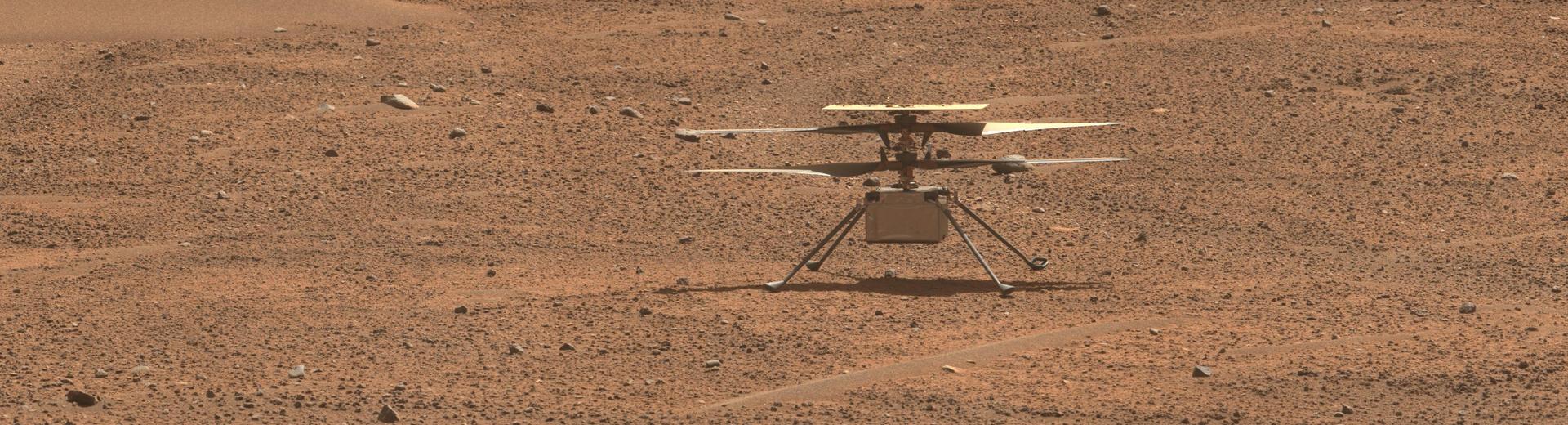
This view of NASA's Ingenuity Mars Helicopter was generated using data collected by the Mastcam-Z instrument aboard the agency's Perseverance Mars rover on Aug. 2, 2023.

Explore the February 2024 issue, highlighted by NASA reaching the halfway point for the Artemis Moon Rocket Engine Certification Series, NASA’s Day of Remembrance, and what fuels a NASA Stennis Test Operations Leader.

Explore the February 2024 edition featuring:

  • RS-25 Test on Jan. 27
  • Day of Remembrance
  • NASA Spinoff

Gator Speaks

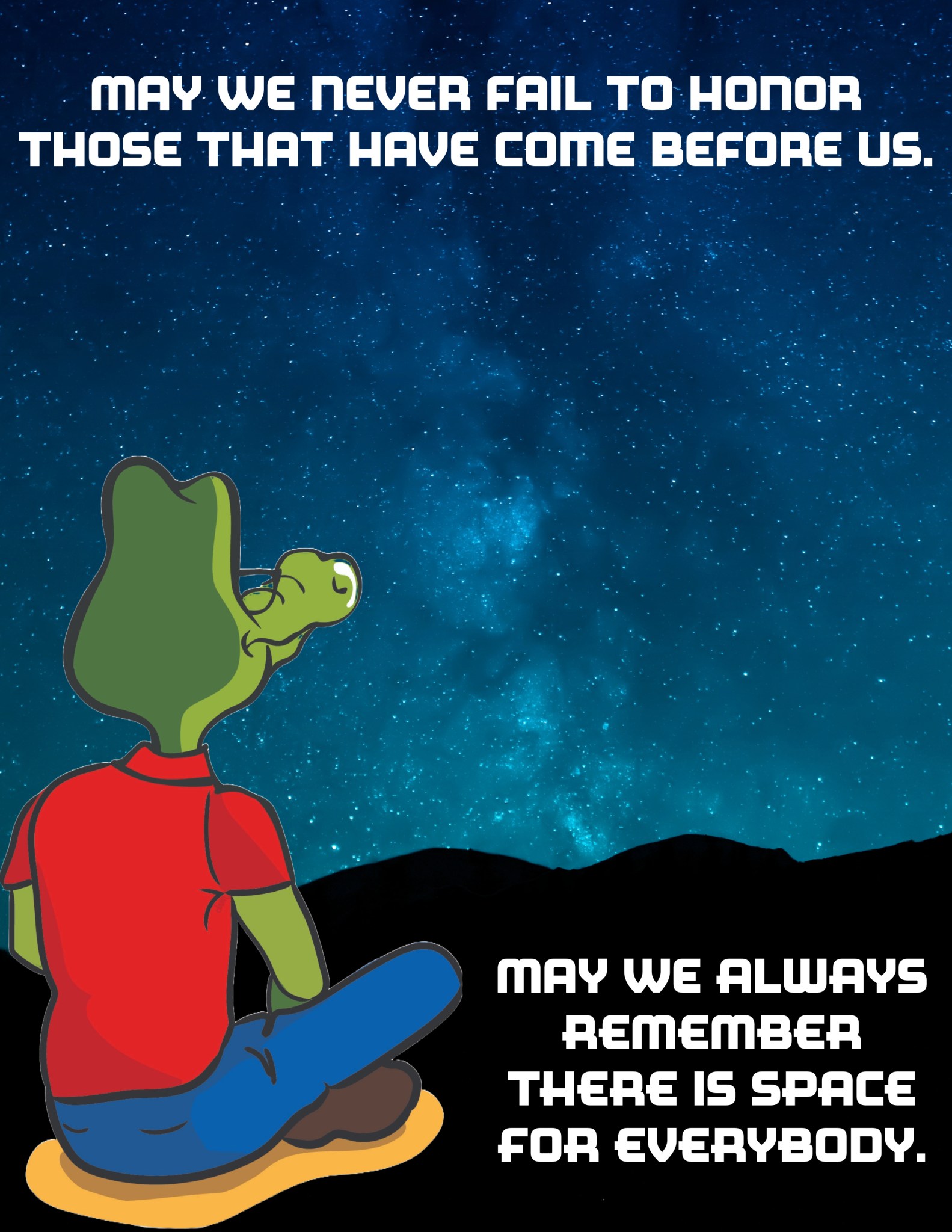
Gator, a cartoon drawing of an alligator wearing a red shirt and blue pants, sits with crossed-legs staring into space.
Gator Speaks
NASA Stennis

There are two reasons why the last Thursday in January and the month of February are important at NASA moving ahead as the Artemis Generation.

Having been around for decades as the NASA Stennis mascot, it is easy to forget important things if you are not intentional about remembering. For newer folks, whether new employees at NASA Stennis or new fans of NASA in general, it is easy not to know something if you are never told about it.

NASA intentionally carves out time each January for a Day of Remembrance to honor members of the NASA family who lost their lives while furthering the cause of exploration and discovery, including the crews of Apollo 1 and space shuttles Challenger and Columbia.

This current moment in space history is a tribute to the men and women who made the ultimate sacrifice. One of the best ways NASA honors the sacrifice made by the previous crew members is by embracing safety as one of the core values at NASA.

This is the cornerstone for mission success as NASA prepares to send the first Artemis astronauts to the Moon. The four astronauts will venture around the Moon on Artemis II as part of NASA’s path to creating a long-term presence on the lunar surface for science and exploration.

The NASA safety culture benefits astronauts, employees, and even surrounding communities where employees participate in daily life. This is a reminder every day at NASA, and especially on the final Thursday in January.

Going forward, the annual Day of Remembrance leads into Black History Month (observed each February), which brings the opportunity to recognize Black Americans who have made contributions to America and NASA’s space program. 

One such person is the late NASA astronaut Ronald McNair, who was honored during the Day of Remembrance. McNair, the second Black astronaut to fly to space, was a member of the Challenger crew. He is one of many African Americans whose contributions helped pave the way for NASA to take giant leaps in space exploration for the Artemis Generation.

May we never forget that it is through the sacrifice and contributions of all that NASA explores for the benefit of all. May we never fail to honor those who have come before us, and may we always remember there is space for everybody – in NASA and all of life.

NASA Stennis Top News

NASA Day of Remembrance Honors Fallen Heroes

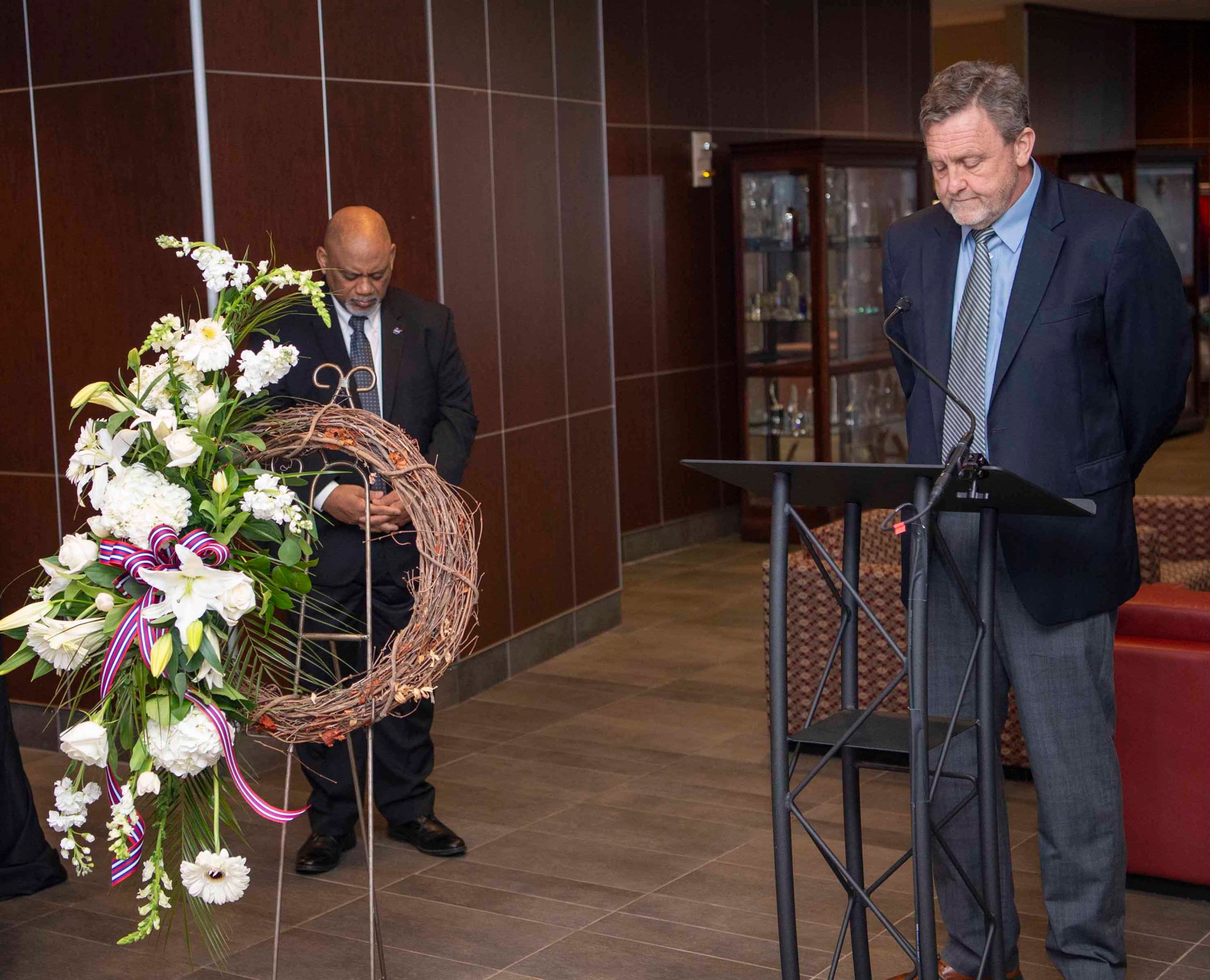
A man stands behind a lectern. A memorial wreath is displayed next to him.
NASA’s Stennis Space Center and NASA Shared Services Center leaders commemorate NASA Day of Remembrance on Jan. 25 with a ceremony at the south Mississippi site. Rodney McKellip, NASA Stennis associate director (right), and Ken Newton, NASA Shared Services Center acting executive director, observe a moment of silence as employees honor members of the NASA family who lost their lives while furthering the cause of exploration and discovery, including the crews of Apollo 1, and space shuttles Challenger and Columbia.
NASA/Danny Nowlin

NASA Marks Halfway Point for Artemis Moon Rocket Engine Certification Series

NASA completed the sixth of 12 scheduled RS-25 engine certification tests in a critical series for future flights of the agency’s SLS (Space Launch System) rocket as engineers conducted a full-duration hot fire Jan. 27 at NASA’s Stennis Space Center near Bay St. Louis, Mississippi.

NASA Continues Artemis Moon Rocket Engine Tests with 1st Hot Fire of 2024

NASA continued a critical test series for future flights of NASA’s SLS (Space Launch System) rocket in support of the Artemis campaign on Jan. 17 with a full-duration hot fire of the RS-25 engine on the Fred Haise Test Stand at NASA’s Stennis Space Center near Bay St. Louis, Mississippi.

NASA Spinoffs Feature NASA Stennis Developed Technologies

As NASA innovates for the benefit of all, what the agency develops for exploration has the potential to evolve into other technologies with broader use here on Earth. Many of those examples are highlighted in NASA’s annual Spinoff book including dozens of NASA-enabled medical innovations, as well other advancements in 3D printing, robots, and brake designs.

Center Activities

Leadership Class Visits NASA Stennis

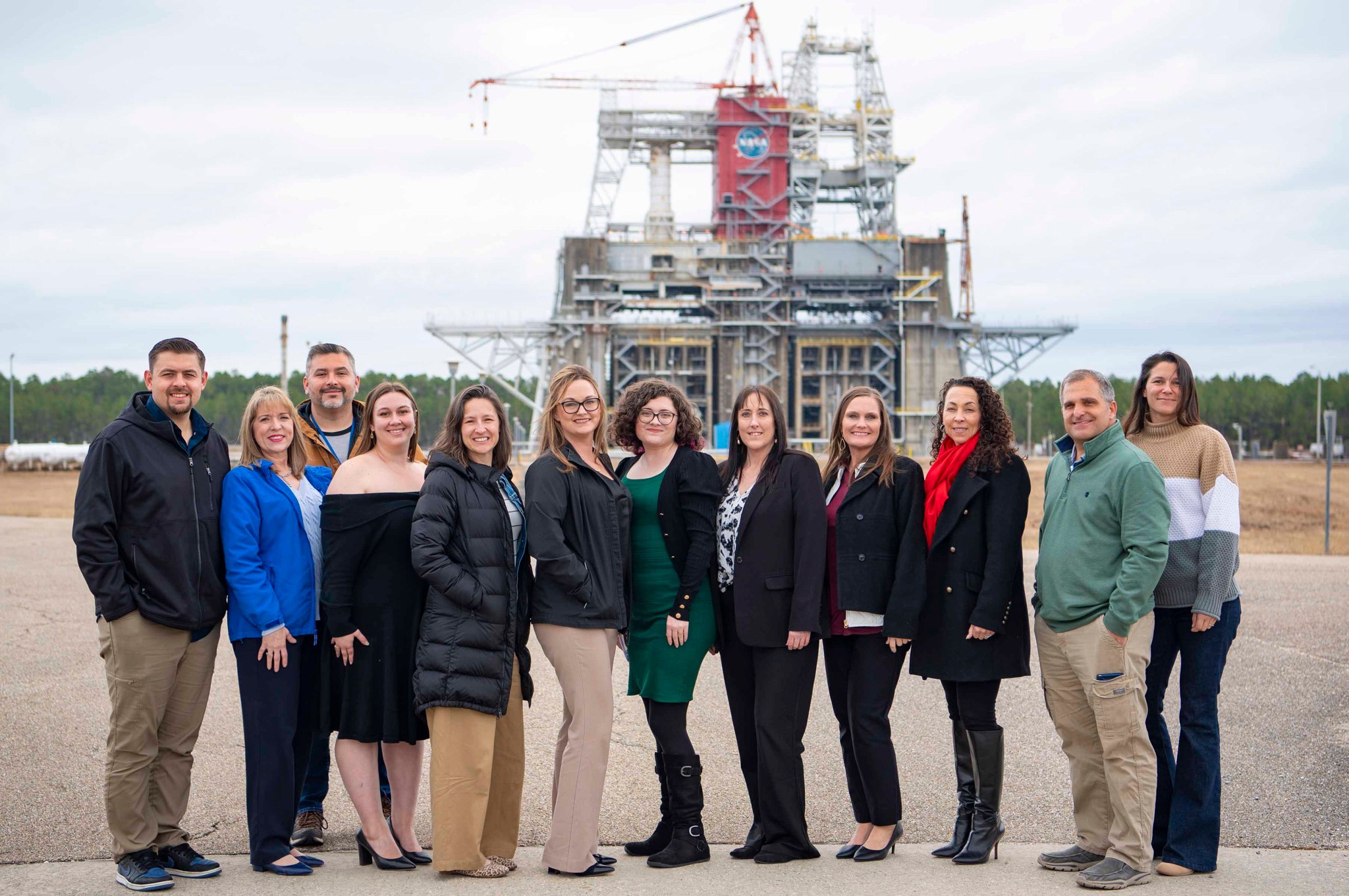
The Pearl River County Leadership Class stands in front of the Thad Cochran Test Stand
The Pearl River County Leadership Class stands in front of the Thad Cochran Test Stand during a NASA Stennis site tour on Jan. 18. The group learned about the RS-25 engine certification test series underway for future flights of NASA’s SLS (Space Launch System) rocket and preparations for Green Run testing at the Thad Cochran Test Stand (B-2) for NASA’s Exploration Upper Stage (EUS) in support of the Artemis program. EUS is expected to fly on the Artemis IV mission. Prior to that time, it will undergo a series of integrated systems tests to demonstrate it is ready to fly. Through Artemis, NASA will send the first woman and first person of color to the Moon. The agency will use what is learned on and around the Moon to take the next giant leap – sending astronauts to Mars.
NASA Stennis

Employees View RS-25 Engine Test

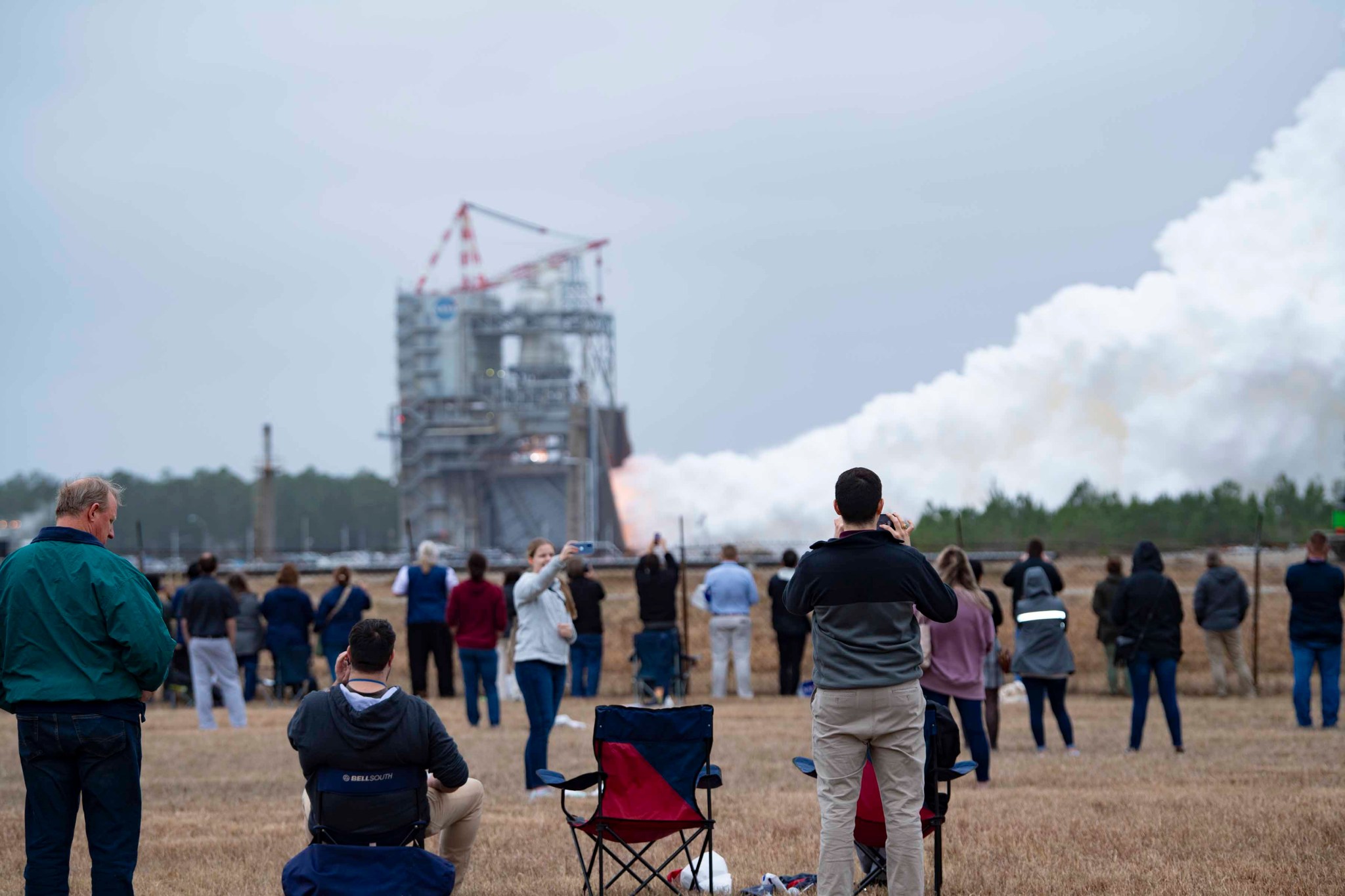
employees gather at the viewing site to witness
Sitewide employees at NASA’s Stennis Space Center watch the RS-25 test conducted on Jan. 23 as NASA continued a critical test series for future Artemis flights of NASA’s SLS (Space Launch System) rocket. The full-duration hot fire on the Fred Haise Test Stand is part of a 12-test series to certify production of new RS-25 engines by lead contractor Aerojet Rocketdyne, an L3Harris Technologies company. The new engines will help power SLS rocket on Artemis missions to the Moon and beyond, beginning with Artemis V.
NASA/Danny Nowlin

NASA Joins Students for Space Day Event

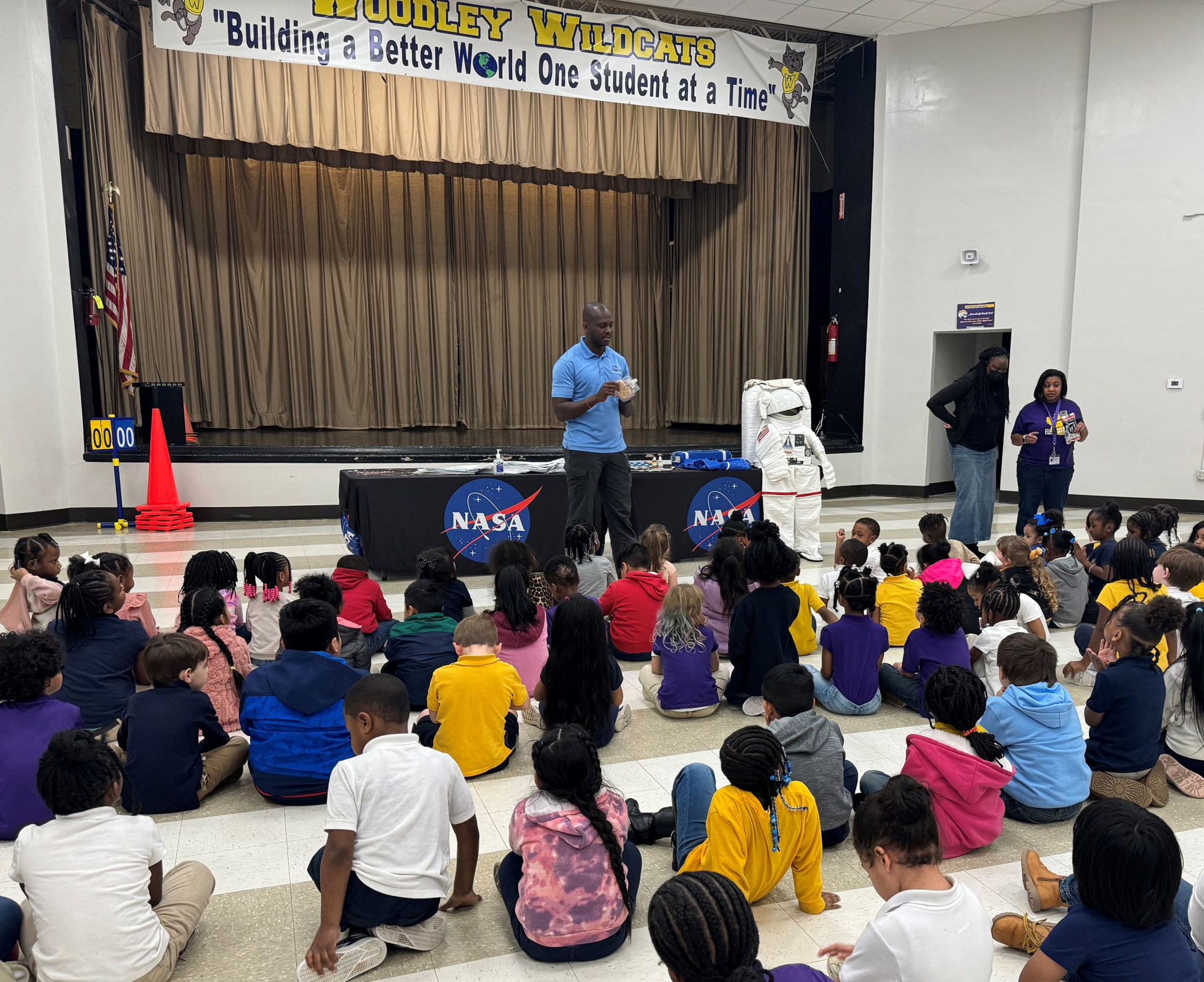
elementary students assemble to hear presentation
NASA Visitor Relations Specialist Nick Middleton shares a presentation with Woodley Elementary students on Jan. 26 in Hattiesburg. As part of the Artemis Generation, the more than 100 students from five pre-K and kindergarten classes learned about the Moon and space exploration. Through Artemis, NASA will send the first woman and first person of color to the Moon. As NASA explores the secrets of the universe for the benefit of all, the agency will use what is learned on and around the Moon to take the next giant leap of sending astronauts to Mars.
NASA/Samone Wilson

NASA in the News

Employee Profile

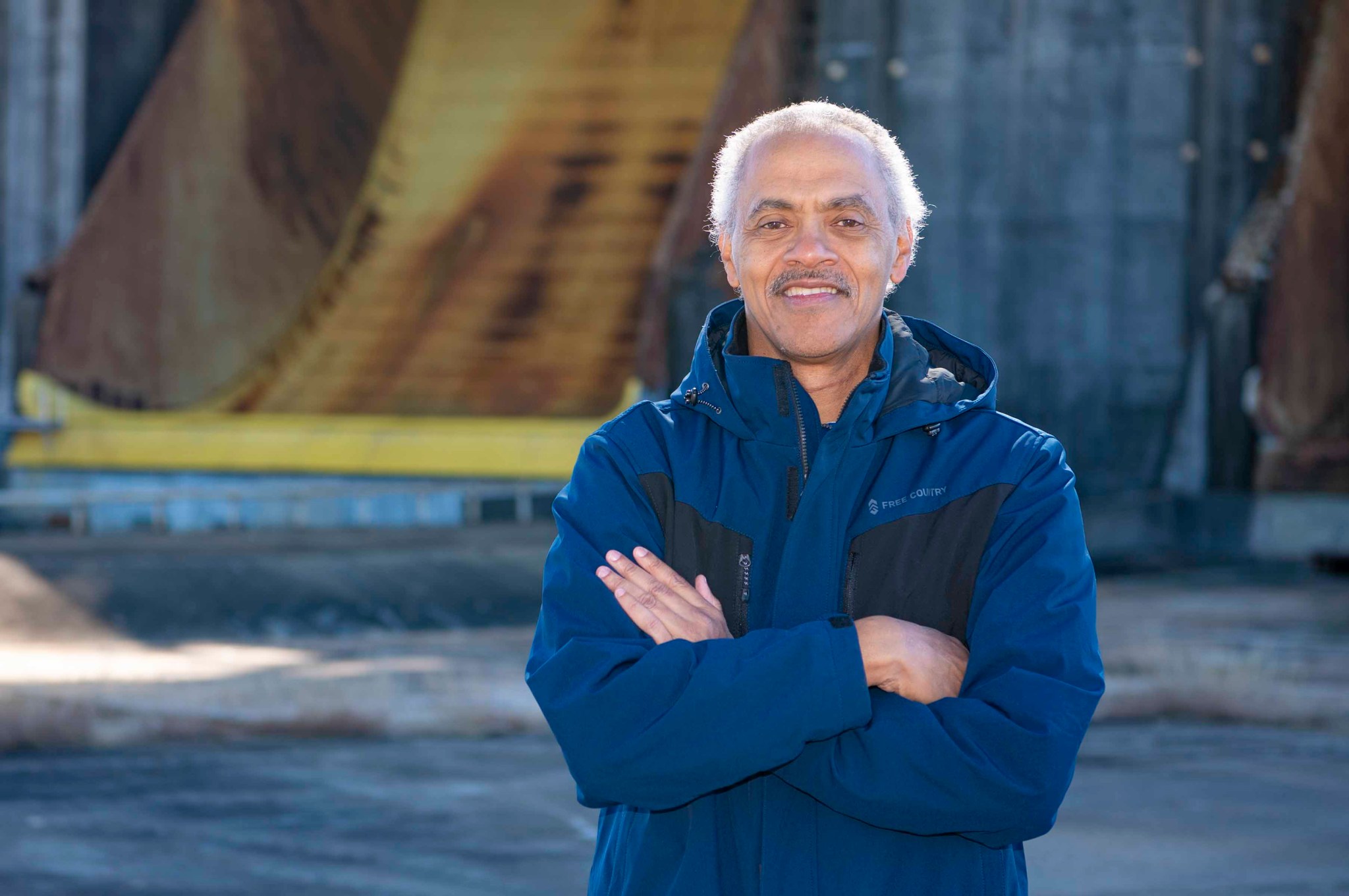
Maury Vander, wearing a navy-colored jacket, smiles at the camera. He is standing in the foreground with the Thad Cochran Test Stand in the background.
Maury Vander stands at NASA’s Stennis Space Center, where he has worked more than 30 years supporting NASA’s mission of space exploration.
NASA/Danny Nowlin

One thing has remained constant throughout Maury Vander’s career with NASA – the satisfaction of being part of a team working to innovate and benefit the agency and the aerospace industry at large.

Looking Back: NASA Stennis Meets Testing Needs

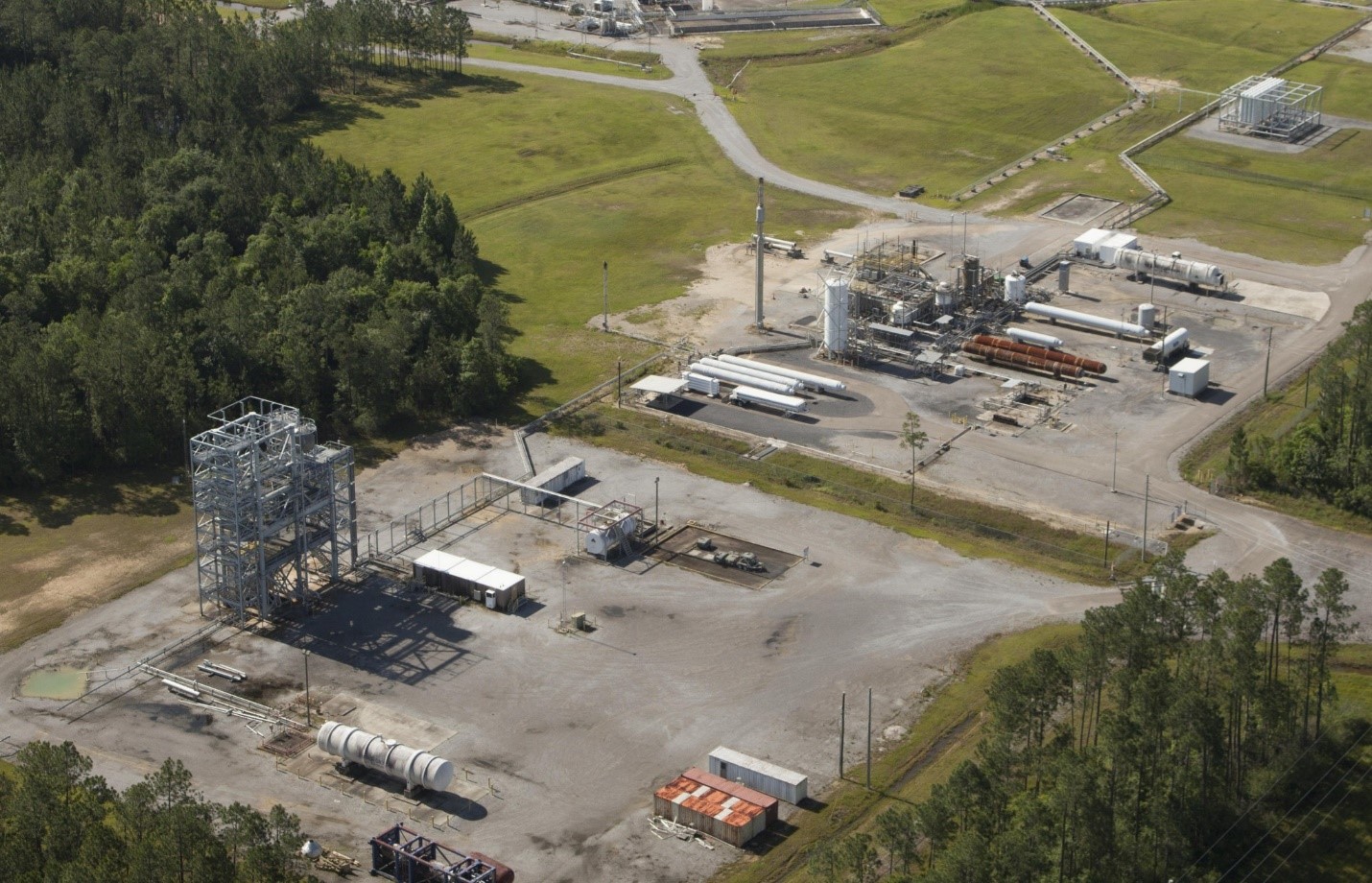
Aerial view of the E-2 Test Facility
In the 1980s, President Ronald Reagan unveiled plans for a National Aerospace Plane (NASP). In May 1992, NASA’s Stennis Space Center was selected to initially test new materials for the NASP that would be able to withstand the extreme change in temperature the plane would endure when it flew into Earth’s orbit and then landed in destinations across the globe. In January 1993, foundations for the various tanks needed for the new High Heat Flux Facility at NASA Stennis were poured. Even though the facility was designed to support the NASP project, NASA Stennis leaders and engineers are always thinking towards the future. To that end, they not only equipped the facility to handle testing of NASP components but designed it with the ability to evolve into a versatile test complex able to handle a range of test projects. Thus, even after the NASP program was cancelled, the leadership at NASA Stennis continued to evolve the test facility to meet the needs of the future. What began as the High Heat Flux Facility is now cell 1 on the E-2 Test Stand at the south Mississippi site.
NASA Stennis

Additional Resources

Subscription Info

Lagniappe is published monthly by the Office of Communications at NASA’s Stennis Space Center. The NASA Stennis office may be contacted by at 228-688-3333 (phone); ssc-office-of-communications@mail.nasa.gov (email); or NASA OFFICE OF COMMUNICATIONS, Attn: LAGNIAPPE, Mail code IA00, Building 1111 Room 173, Stennis Space Center, MS 39529 (mail).

The Lagniappe staff includes: Managing Editor Lacy Thompson, Editor Bo Black, and photographer Danny Nowlin.

To subscribe to the monthly publication, please email the following to ssc-office-of-communications@mail.nasa.gov – name, location (city/state), email address.

Powered by WPeMatico

Get The Details…
LaToya Dean