Health and Earth Studies, More Spacewalk Preps Continue on Station

Health and Earth Studies, More Spacewalk Preps Continue on Station

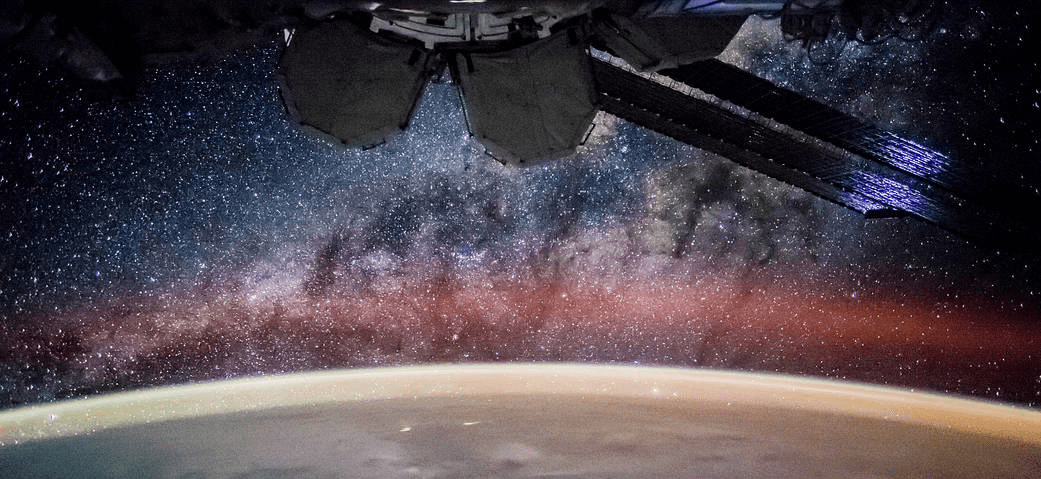
The waning gibbous Moon is pictured from the space station as it soared into an orbital nighttime above the Atlantic Ocean.

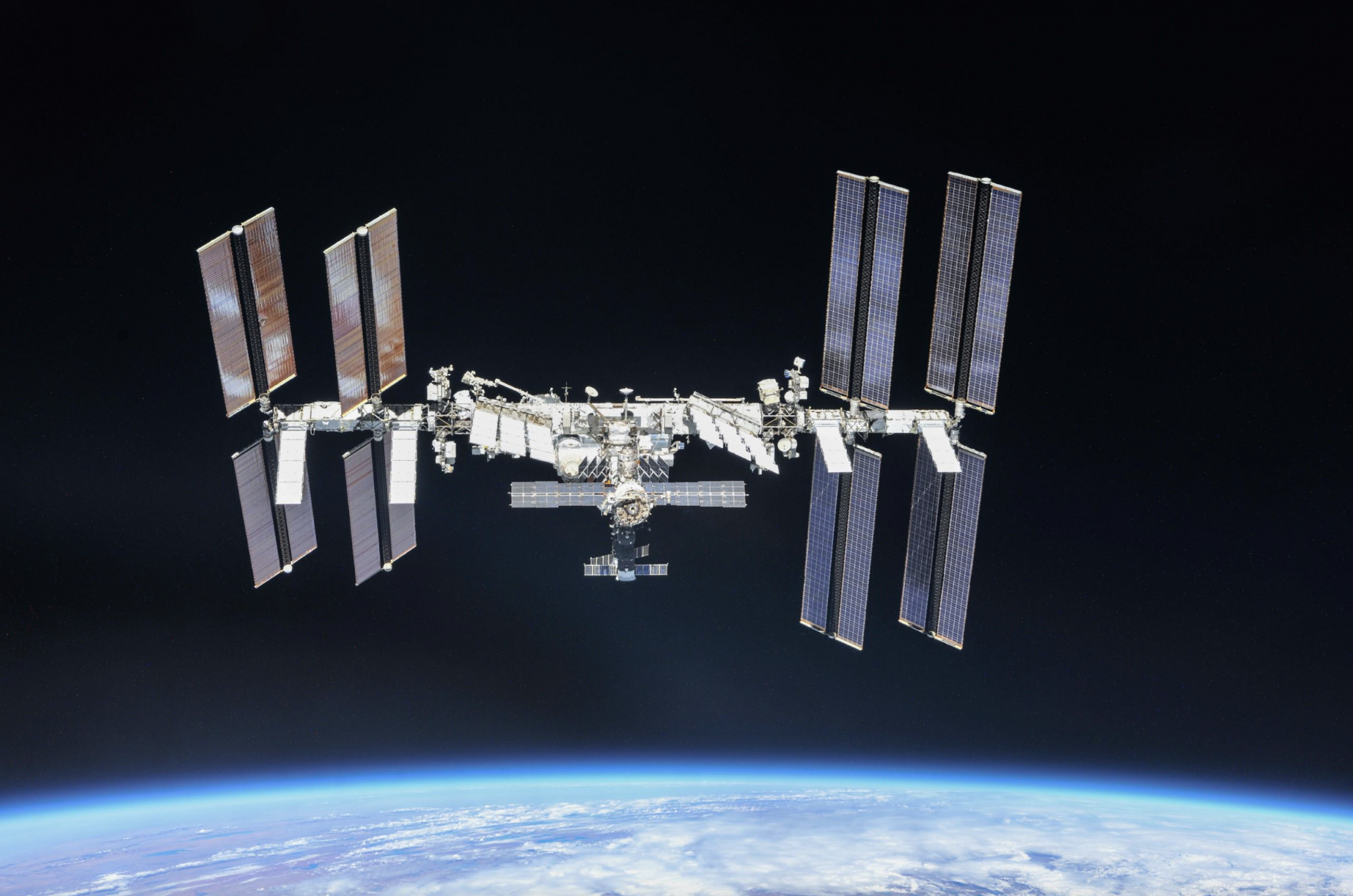
Space biology and Earth science were the main research objectives aboard the International Space Station on Wednesday. The Expedition 70 crew also continued its ongoing cargo operations and spacewalk preparations.

NASA astronauts Jasmin Moghbeli and Loral O’Hara focused on a pair of different life science experiments to help keep crews healthy during long-term missions. The research contributes not only to the knowledge of microgravity’s affect on humans but also informs countermeasures and innovations to protect future crews exploring farther away from Earth.

Moghbeli began her day using a portable DNA detection device that can be found in laboratories and classrooms on Earth to identify bacteria extracted from water samples collected aboard the orbital outpost. Known as BioMole, the study is demonstrating the ability to monitor the spacecraft’s microbial environment without sending samples back to Earth for analysis. O’Hara continued her CIPHER studies, a suite of 14 human research experiments, wearing a vest and headband packed with sensors measuring heart rate, blood pressure, temperature, and more. The Bio-Monitor wearables from CSA (Canadian Space Agency) comfortably track an astronaut’s health while minimally interfering with their daily activities.

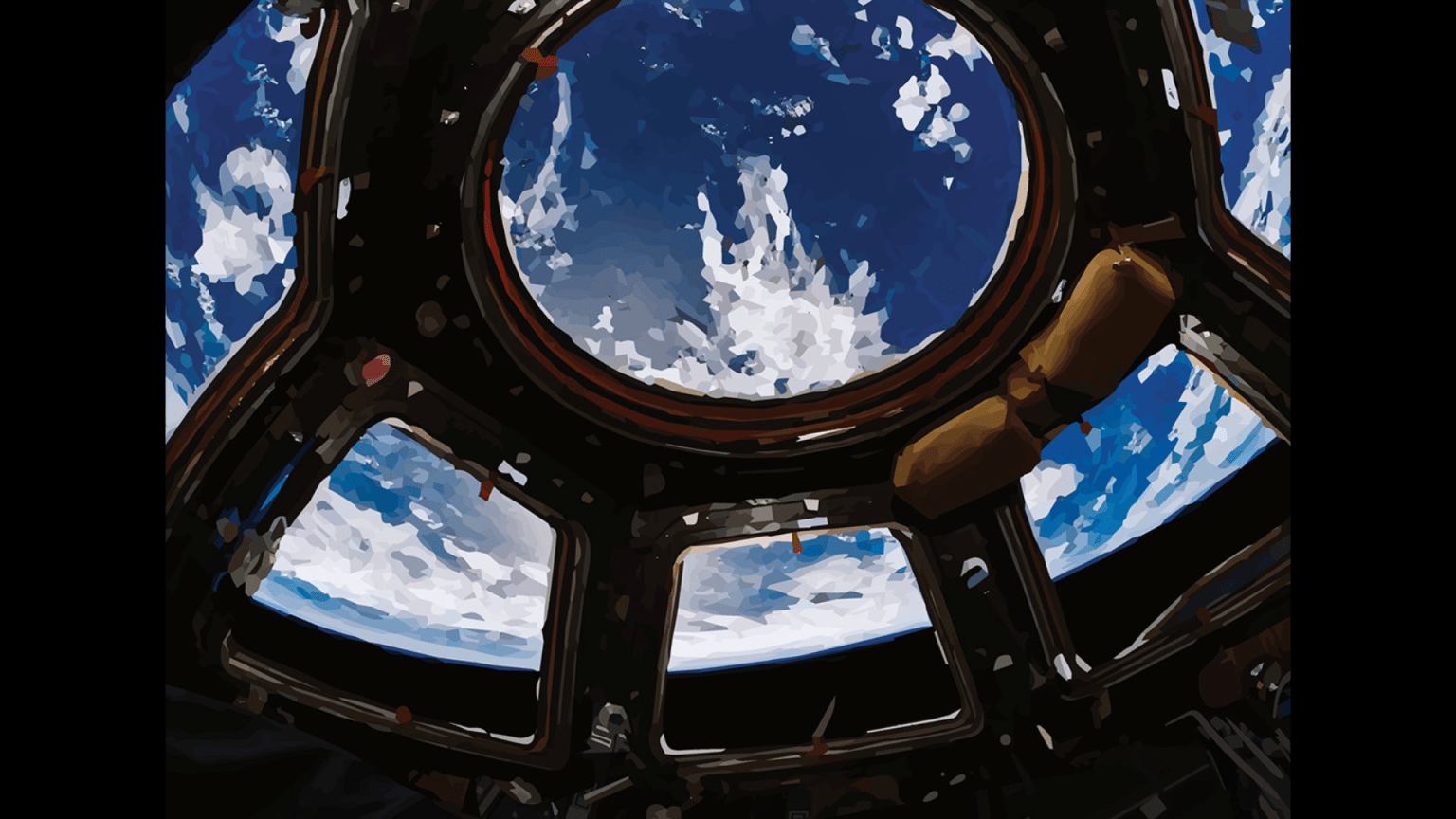
Commander Andreas Mogensen of ESA (European Space Agency) worked in the cupola Wednesday pointing a digital camera toward the Moon for the Earthshine experiment. He was photographing the lunar surface to image sunlight reflecting off Earth, also known as albedo, for insights into our planet’s changing climate. Next, he tested a unique camera and its ability to observe thunderstorms and their electrical activity at 100,000 frames per second. Results may improve atmospheric knowledge and promote future space applications.

Flight Engineer Satoshi Furukawa of JAXA (Japan Aerospace Exploration Agency) continued unpacking supplies and loading trash inside the Cygnus space freighter. At the end of the day, he joined O’Hara in the Quest airlock and inspected spacesuit arm and leg components.

Cosmonauts Oleg Kononenko and Nikolai Chub kept up their preparations for a spacewalk scheduled on Oct. 25. The duo first reviewed the steps necessary to transfer their pressurized Orlan suits in the Poisk airlock. Afterward, both flight engineers pedaled on an exercise cycle to evaluate their physical fitness ahead of next week’s spacewalk. The two cosmonauts are expected to spend about seven hours conducting external maintenance on the Roscosmos segment of the space station.

Flight Engineer Konstantin Borisov began his day with orbital plumbing duties inside the Nauka science module. In the afternoon, Borisov inspected surfaces on the inside of the Zvezda service module before closing Roscosmos module windows and finalizing the plumbing work in Nauka.


Learn more about station activities by following the space station blog@space_station and @ISS_Research on X, as well as the ISS Facebook and ISS Instagram accounts.

Get weekly video highlights at: https://roundupreads.jsc.nasa.gov/videoupdate/

Get the latest from NASA delivered every week. Subscribe here: www.nasa.gov/subscribe

Powered by WPeMatico

Get The Details…

Mark Garcia

Station Science 101: Growing Plants in Space

Station Science 101: Growing Plants in Space

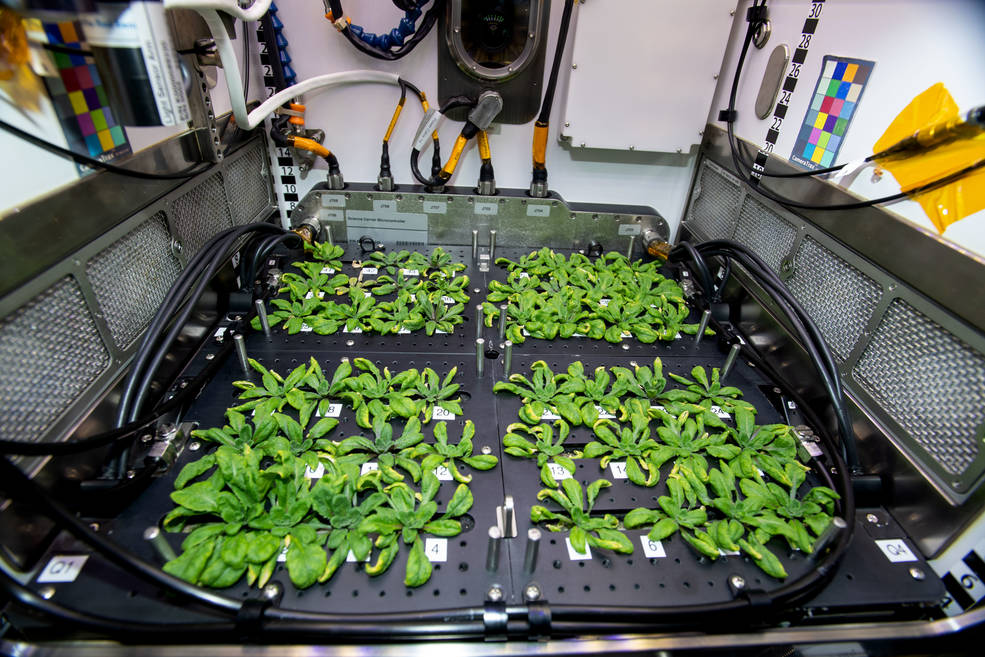
Arabadopsis thaliana plants growing in the International Space Stations Advanced Plant Habitat for the Plant Habitat-03 investigation, which looks at whether plants grown in space can pass adaptations to their next generation.
Thale cress plants from the Plant Habitat-03 investigation just before a harvest.
NASA

As NASA plans missions to the Moon and Mars, a key factor is figuring out how to feed crew members during their weeks, months, and even years in space.

Astronauts on the International Space Station primarily eat prepackaged food, which requires regular resupply and can degrade in quality and nutrition. Researchers are exploring the idea of crews growing some of their food during a mission, testing various crops and equipment to figure out how to do this without a lot of extra hardware or power.

Picking the right plants

The first step in this research is identifying which plants to test. NASA started a project in 2015 with the Fairchild Botanical Garden in Miami called “Growing Beyond Earth.” The program has recruited hundreds of middle and high school science classes across the U.S. to grow different seeds in a habitat similar to one on the space station. Seeds that grow well in the classrooms are then tested in a chamber at NASA’s Kennedy Space Center. Ones that do well there are sent to the station to test how they grow in microgravity.

Gardens in space

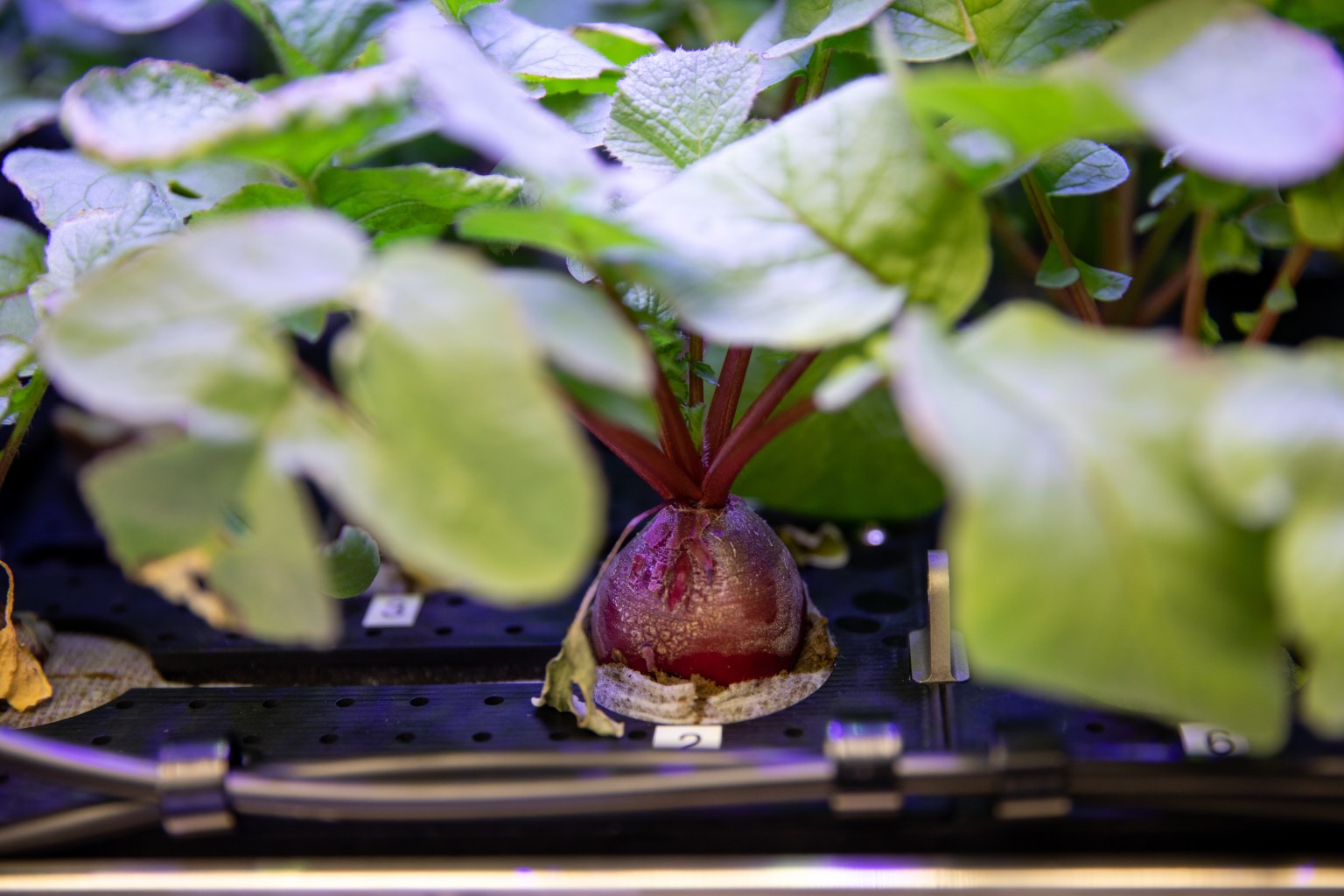
NASA also has tested facilities to host future microgravity gardens. One is the Vegetable Production System, or Veggie, a simple, low-power chamber that can hold six plants. Seeds are grown in small fabric “pillows” that crew members look after and water by hand, similar to caring for a window garden on Earth.

Another system, the Passive Orbital Nutrient Delivery System, or Veggie PONDS, works with the Veggie platform but replaces seed pillows with a holder that automatically feeds and waters the plants. The Advanced Plant Habitat is a fully automated device designed to study growing plants in ways that require only minimal crew attention.

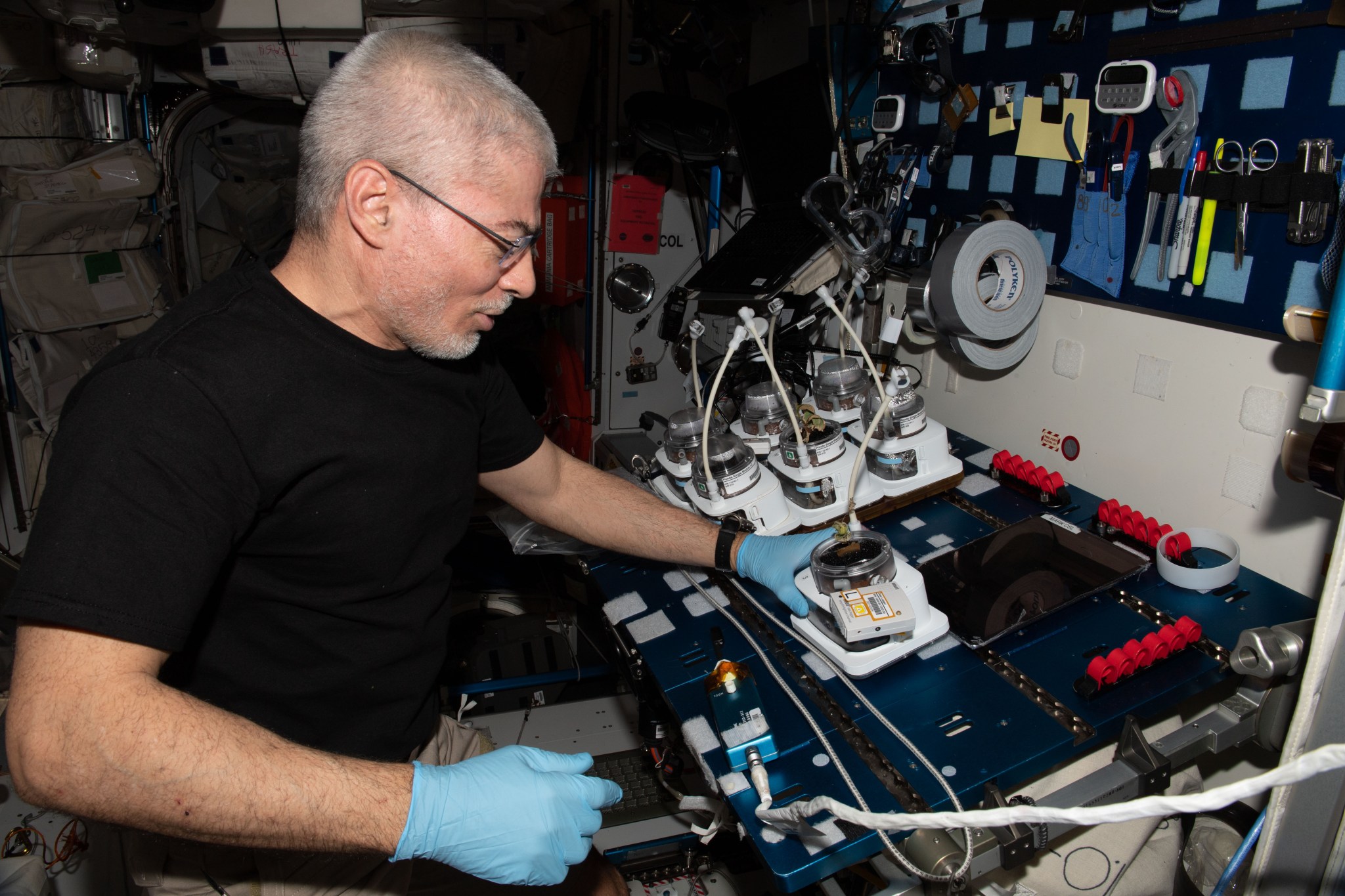
Mark Vande Hei harvests for the Veggie PONDS investigation.
NASA

The right light and food

A series of experiments aboard the space station known as Veg-04A, Veg-04B, and Veg-05 grew Mizuna mustard, a leafy green crop, under different light conditions and compared plant yield, nutritional composition, and microbial levels. The investigation also compared the space-grown plants to ones grown on Earth, and had crew members rate the flavor, texture, and other characteristics of the produce.

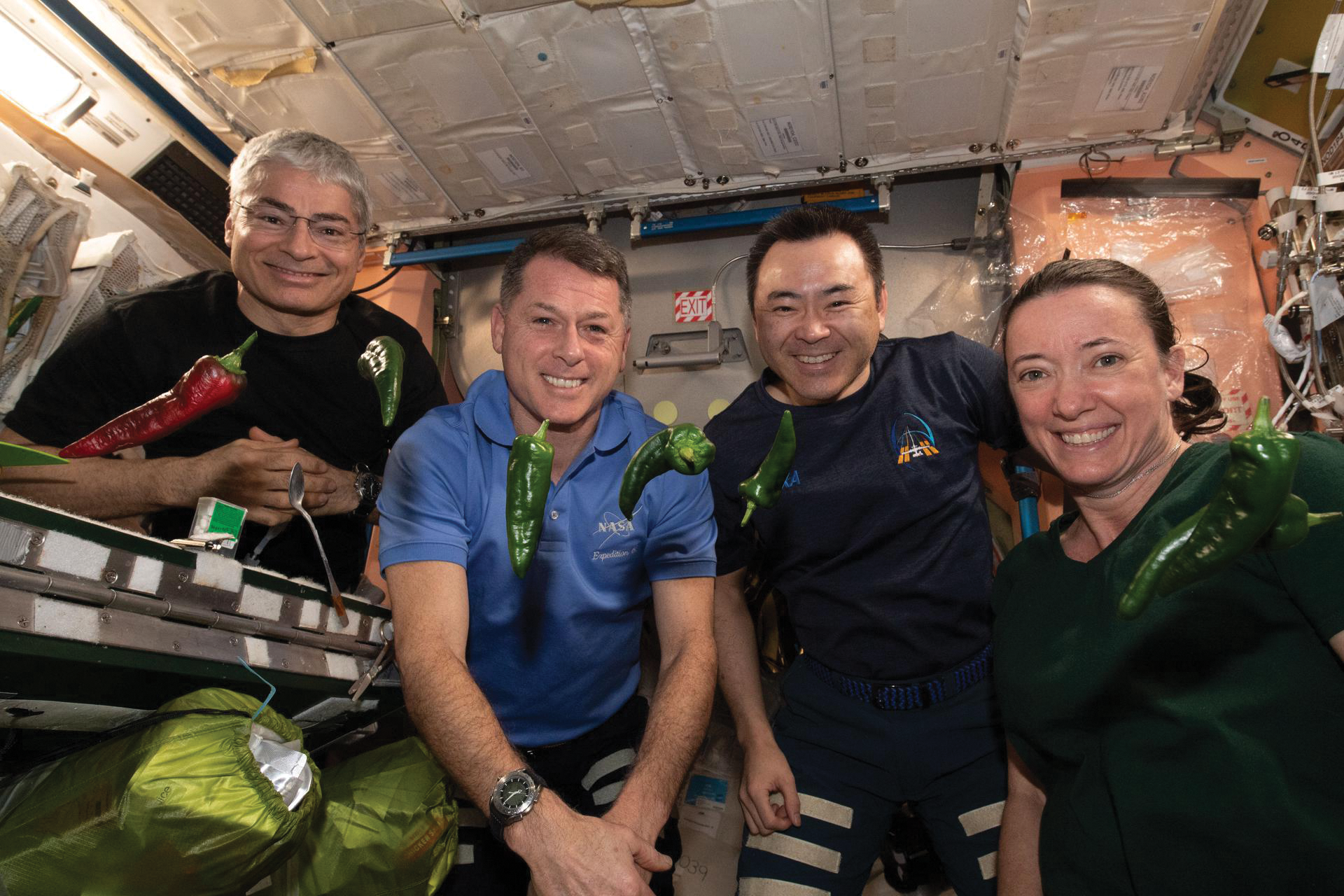
Plant Habitat-04 analyzed plant-microbe interactions and assessed the flavor and texture of chile peppers. The first crop, harvested on Oct. 29, 2021, was eaten by the crew and 12 peppers from the second harvest were returned to Earth for analysis. This experiment demonstrated that research about space crop production is on the right path and researchers plan to apply lessons learned to testing other plants.

image of astronaut posing with floating chili peppers in the meal area of the space station
NASA astronauts Mark Vande Hei and Shane Kimbrough, JAXA astronaut Akihiko Hoshide, and NASA astronaut Megan McArthur with chile peppers grown for Plant Habitat-04.
NASA

The influence of gravity

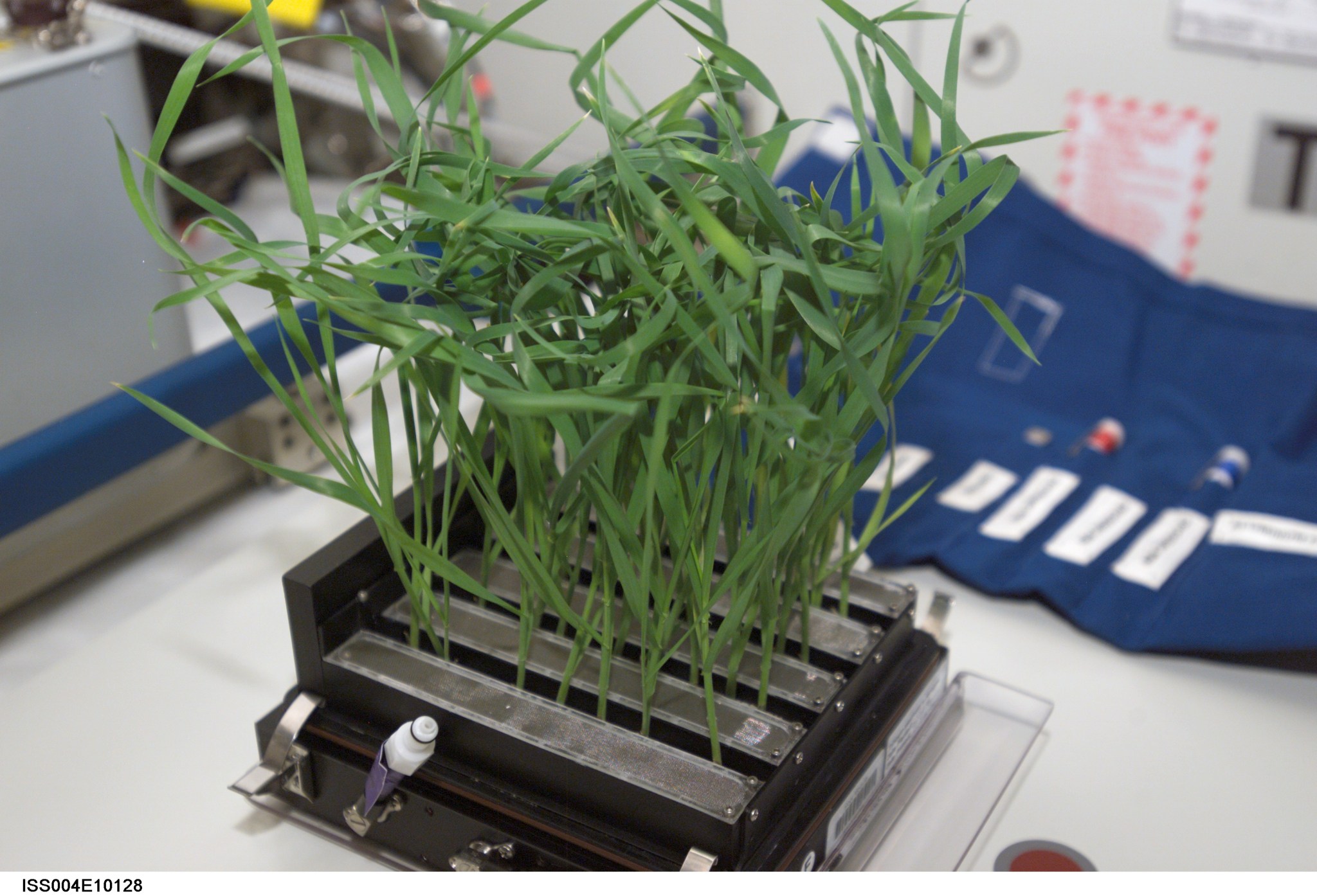
An early experiment, PESTO, found that microgravity alters leaf development, plant cells, and the chloroplasts used in photosynthesis, but did not harm the plants overall. In fact, wheat plants grew 10% taller compared to those on Earth.

The Seedling Growth investigations showed that seedlings can acclimate to microgravity by modulating expression of some genes related to the stressors of space, a discovery that adds to knowledge about how microgravity affects plant physiology [1].

One way that plants sense gravity is via changes to calcium within their cells. Plant Gravity Sensing, a JAXA (Japan Aerospace Exploration Agency) investigation, measured how microgravity affects calcium levels, which could help scientists design better ways to grow food in space.

ADVASC, an investigation that grew two generations of mustard plants using the Advanced Astroculture chamber, showed that seeds were smaller but germination rates near normal in microgravity [2].

image of a close-up view of plants grown in experiment
Close-up view of Apogee Wheat Plants grown as part of the PESTO experiment during Expedition 4.
NASA

Water delivery

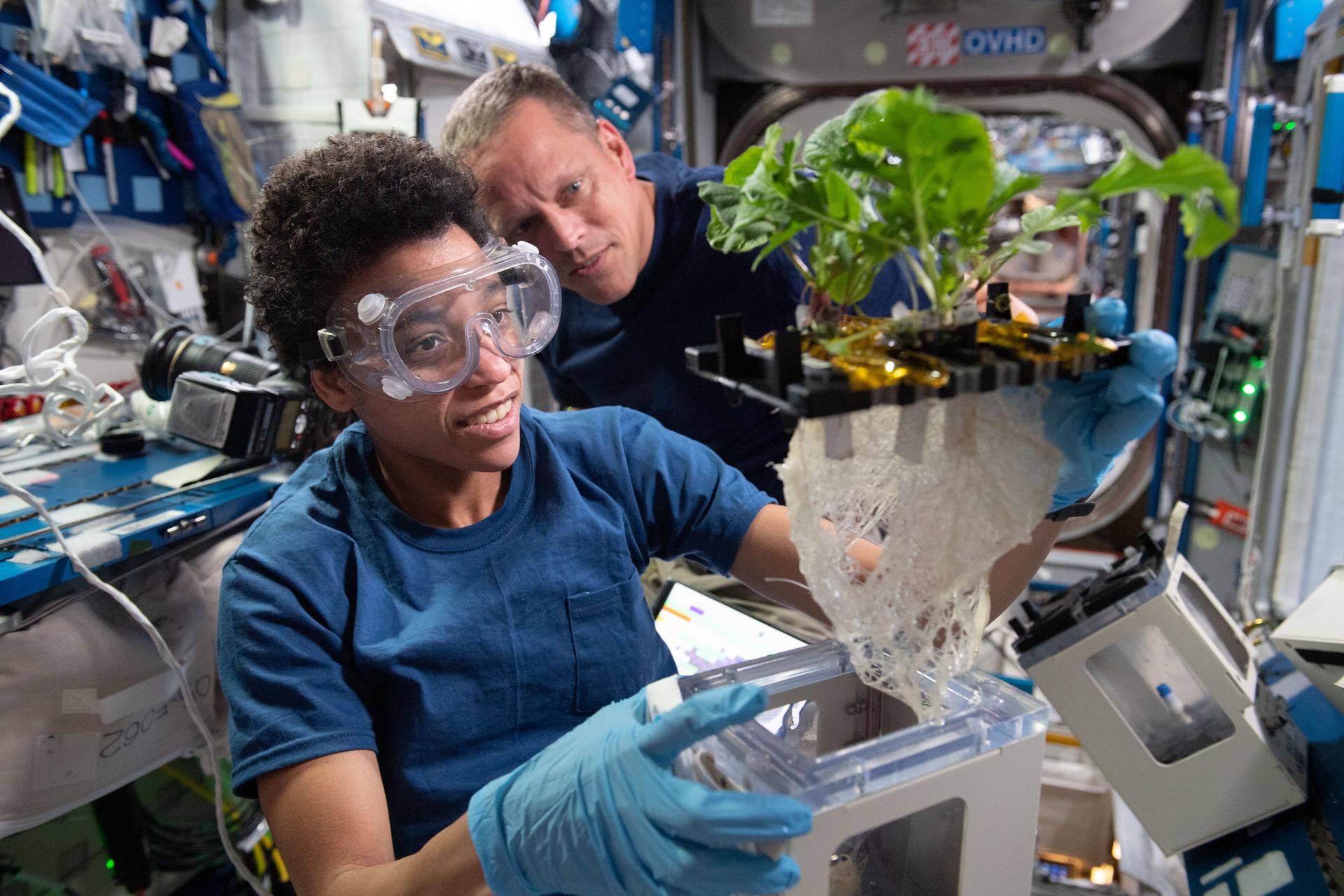
One significant challenge for growing plants in microgravity is providing enough water to keep them healthy without drowning them in too much water. Plant Water Management demonstrated a hydroponic (water-based) method for providing water and air to plant roots. The XROOTS study tested using both hydroponic and aeroponic (air-based) techniques to grow plants rather than traditional soil. These techniques could enable large-scale crop production for future space exploration.

Jessica Watkins and Bob Hines work on a botany investigation on board the International Space Station
NASA astronauts Jessica Watkins and Bob Hines work on the XROOTS investigation.
NASA

Transplanting veggies

During a series of investigations called VEG-03, which cultivated Extra Dwarf Pak Choi, Amara Mustard, and Red Romaine Lettuce, NASA astronaut Mike Hopkins noticed some of the plants were struggling. Hopkins conducted the first plant transplant in space, moving extra sprouts from thriving plant pillows into two of the struggling pillows in Veggie. The transplants survived and grew, opening new possibilities for future plant growth.

Plant genetics

Plants exposed to spaceflight undergo changes that involve the addition of extra information to their DNA, affecting how genes turn on or off without changing the sequence of the DNA itself. This process is known as epigenetic change. Plant Habitat-03 assesses whether such adaptations in one generation of plants grown in space can transfer to the next generation.

The long-term goal is to understand how epigenetics contribute to adaptive strategies that plants use in space and, ultimately, develop plants better suited for providing food and other services on future missions. Results also could support the development of strategies for adapting crops and other economically important plants for growth in marginal and reclaimed habitats on Earth.

The human effect

Gardens need tending, of course. The Veg-04A, Veg-04B, and Veg-05 investigations also looked at how tending plants contributed to the well-being of astronauts. Many astronauts reported they found caring for plants an enjoyable and relaxing activity – another important contribution to future long-duration missions.

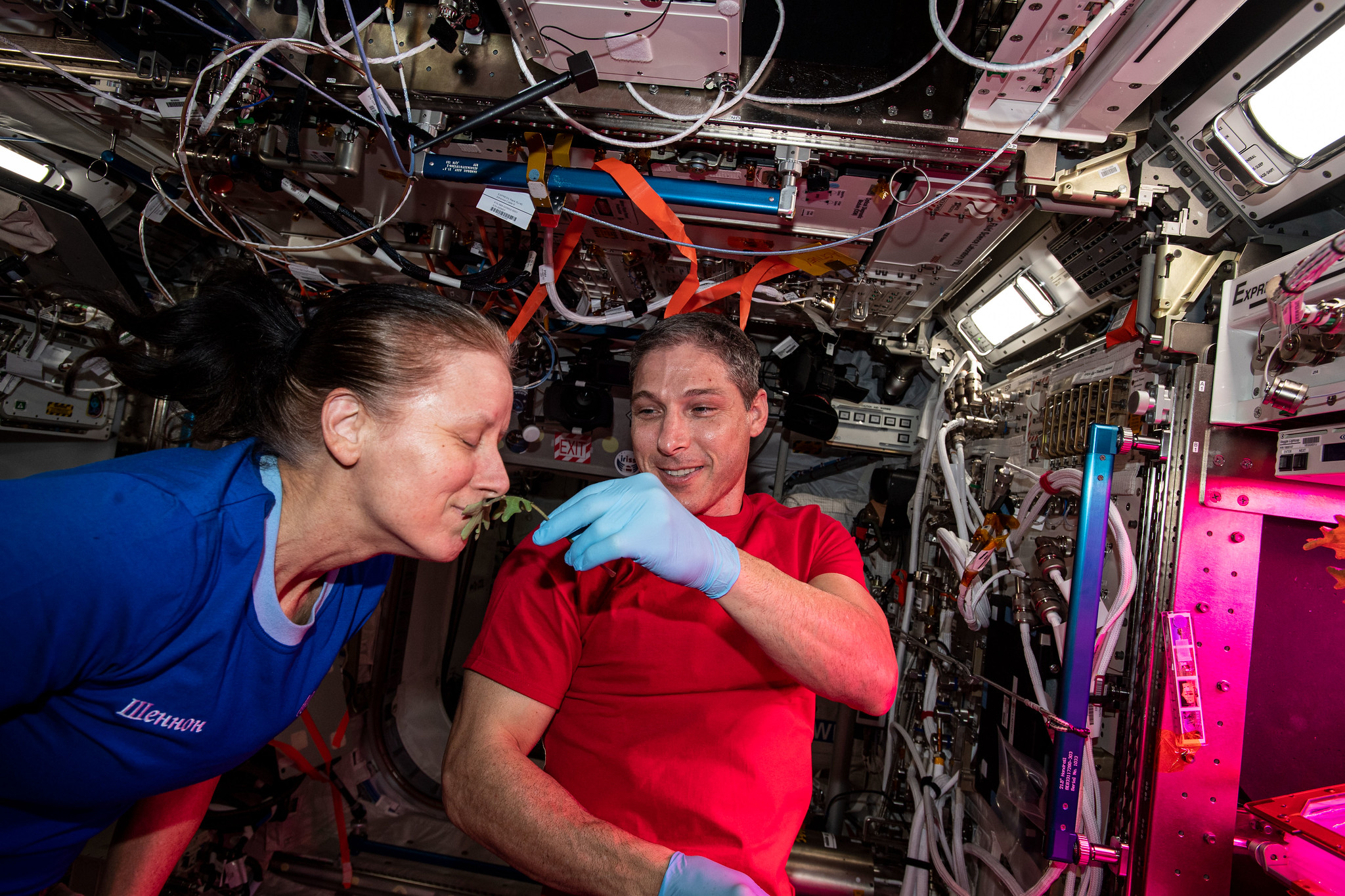
image of astronauts collecting leaf samples from experiment
NASA astronauts Shannon Walker and Michael Hopkins collect leaf samples from plants growing inside the European Columbus laboratory for the Veg-03 experiment during Expedition 64.
NASA

Citations:

1 Medina F, Manzano A, Herranz R, Kiss JZ. Red Light Enhances Plant Adaptation to Spaceflight and Mars g-Levels. Life. 2022, 12(10), 1484; https://doi.org/10.3390/life12101484

2 Link BM, Busse JS, Stankovic B. Seed-to-Seed-to-Seed Growth and Development of Arabidopsis in Microgravity. Astrobiology. 2014 October; 14(10): 866-875. DOI: 10.1089/ast.2014.1184.PMID: 25317938

Powered by WPeMatico

Get The Details…
Ana Guzman

News Media Invited to NASA Langley’s Open House

News Media Invited to NASA Langley’s Open House

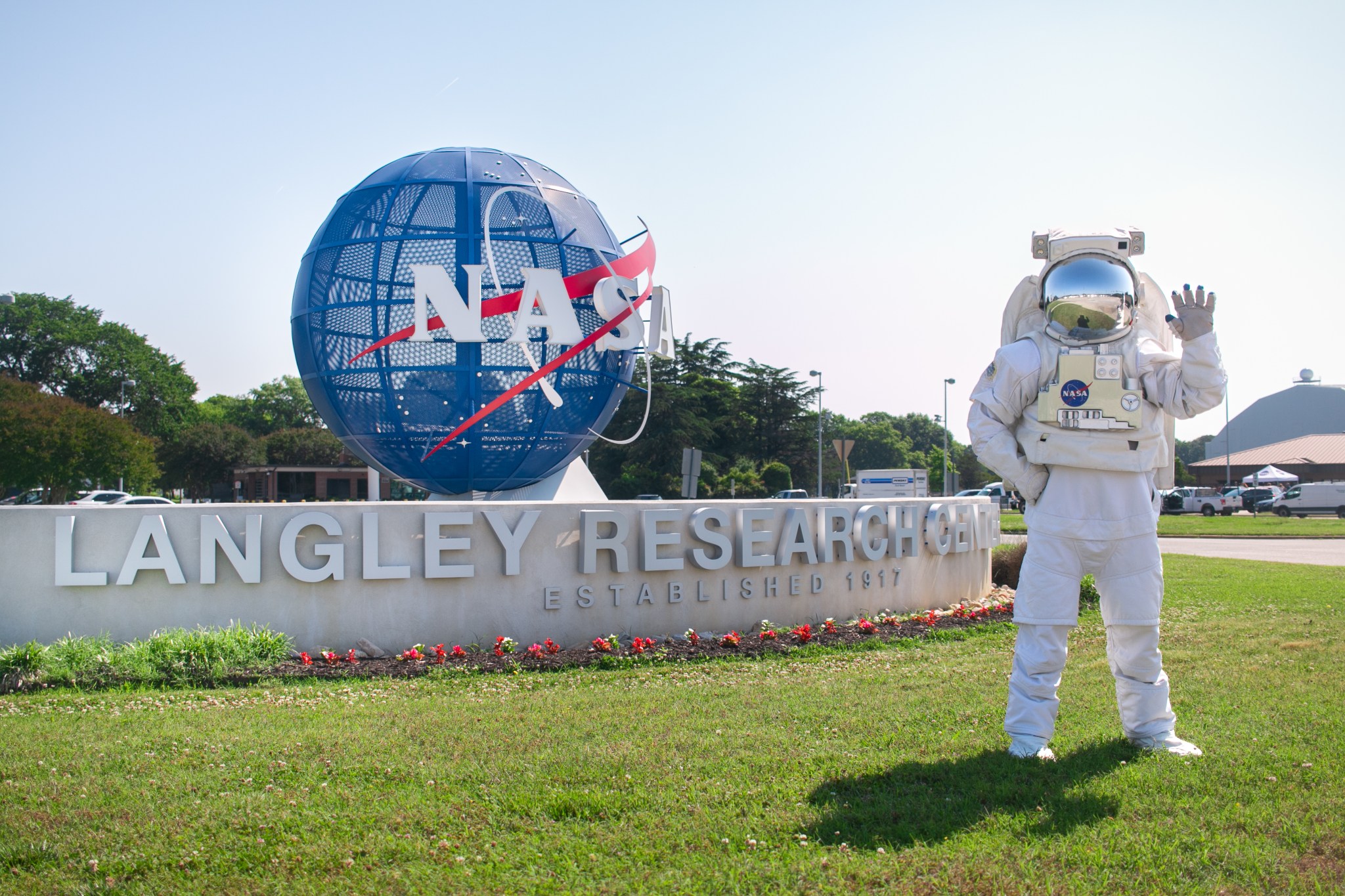
A NASA employee wears an astronaut suit and stands on bright green and freshly cut grass in front of the welcome sign at NASA Langley Research Center. The welcome sign features a large, blue globe with the NASA insiginia on it and text on a long stone ridge that reads "Langley Research Center." Flowers line the edge of the stone ridge.
NASA’s “Spacey Casey” welcomes visitors to NASA Langley Research Center.
NASA

2 min read

News Media Invited to NASA Langley’s Open House

HAMPTON, Virginia – Members of the media are invited to cover the Open House at NASA’s Langley Research Center in Hampton, Virginia. The event takes place 9 a.m. to 4 p.m. Saturday, Oct. 21, 2023.

Media will have photo, video, and interview opportunities. Center Director Clayton Turner and NASA astronaut Victor Glover will be available to answer media questions at 9 a.m. on Saturday. 

This is the first time since 2017 Langley has opened its gates and doors to the public, inviting them to learn more about the center’s innovative aerospace research.

Event: Open House 
Date: Saturday, Oct. 21, 2023  
Time: 9 a.m. to 4 p.m.  
Location: NASA’s Langley Research Center, Hampton, Va.
RSVP Deadline: Friday, Oct. 20, 2023 at 2 p.m.

Please note! In order to cover the event and have access to parking on center, media outlets must RSVP with Brittny McGraw at 757-769-3763 or  brittny.v.mcgraw@nasa.gov no later than 2 p.m. Friday, Oct. 20. Media who attempt to come to the center without an RSVP will not have vehicle access.

Media interested in interviewing Clayton Turner and Victor Glover should follow the procedures listed above, but must arrive no later than 8:30 a.m. on Saturday, Oct. 21.

Helpful links:

NASA Langley Research Center: https://www.nasa.gov/langley/

NASA Langley’s Open House: https://openhouse.larc.nasa.gov/

Please contact:

Brittny McGraw  
Langley Research Center, Hampton, Va. 
757-769-3763 
brittny.v.mcgraw@nasa.gov

David Meade  
Langley Research Center, Hampton, Va. 
757-751-2034
davidlee.t.meade@nasa.gov

-end-

Powered by WPeMatico

Get The Details…
Sondra Woodward

The Space Life Sciences Training Program at Ames Research Center

The Space Life Sciences Training Program at Ames Research Center

NASA SLST Logo

Space Life Sciences Training Program

An investment in tomorrow

The Space Life Sciences Training Program (SLSTP) provides undergraduate students entering their junior or senior years, and entering graduate students, with professional experience in space life science disciplines. This challenging ten-week summer program is hosted by NASA’s Ames Research Center in the heart of California’s Silicon Valley. The primary goal of the program is to train the next generation of scientists and engineers, enabling NASA to meet future research and development challenges in the space life sciences.

Summer 2023 SLSTP students at Ames Research Center.
Summer 2023 SLSTP students present their projects during midterm.
NASA / Stephanie Perreau Rainey

The SLSTP Experience
In this rigorous program, students work closely with renowned NASA scientists and engineers on cutting-edge research, benefitting from the concentration of bioscience expertise at Ames. In addition to conducting hands-on research, SLSTP students attend technical lectures given by experts on a wide range of topics and tour NASA research facilities.

This program provides opportunities for students to develop professional skills. These include technical and professional development training, presenting their scientific work and submitting an abstract to a professional scientific organization (e.g. the American Society for Gravitational and Space Research.)

SLSTP participants are exposed to a broad scope of space biosciences research performed by NASA scientists. While learning about the tools and methodology that enable biological experiments to be conducted in flight, students acquire skills and knowledge required for the design and execution of life science research conducted in microgravity.

Participants in the program receive a stipend and may be eligible to attend a scientific conference to formally present their research.

Research Areas
Students in SLSTP undertake research projects in multiple areas, including:

  • The effects of spaceflight on living systems, conducted both on the ground and also in space aboard the International Space Station and other spacecraft.
  • The development and operation of specialized research facilities to support investigations in microgravity, partial gravity, and hypergravity.
  • Research and development of advanced biotechnologies that enable NASA’s exploration of distant destinations.

Information for Applicants
The SLSTP is an equal opportunity program. Admission is by competitive application process. Past student participants were selected for their outstanding merit, passion for space, and desire to study space life science. Applicants must fulfill the following requirements: be a US citizen, age 18 or older in high academic standing (GPA of 3.2 or greater). Applicants should be junior or senior undergraduate student next Fall or a senior graduating in 2024 and entering graduate school for Fall 2024.

How to Apply:
Applications for the summer 2024 program will be opening soon in late 2023. Applications will be open in the NASA Internships Gateway portal.

SLSTP Mailing List
To subscribe to our mailing list and to receive e-mail announcements about the program and application process, please send an email to arc-slstp@mail.nasa.gov with “subscribe” in the subject to be added to our mailing list.

Program Support
The SLSTP is funded by NASA’s Space Biology Program, which is part of the Biological and Physical Sciences Division of NASA. The SLSTP is managed by the Space Biology Project within the Science Directorate at Ames Research Center.

For more information, contact:
arc-slstp@mail.nasa.gov

Powered by WPeMatico

Get The Details…
Sonja Caldwell

Station Science 101: Microbiology

Station Science 101: Microbiology

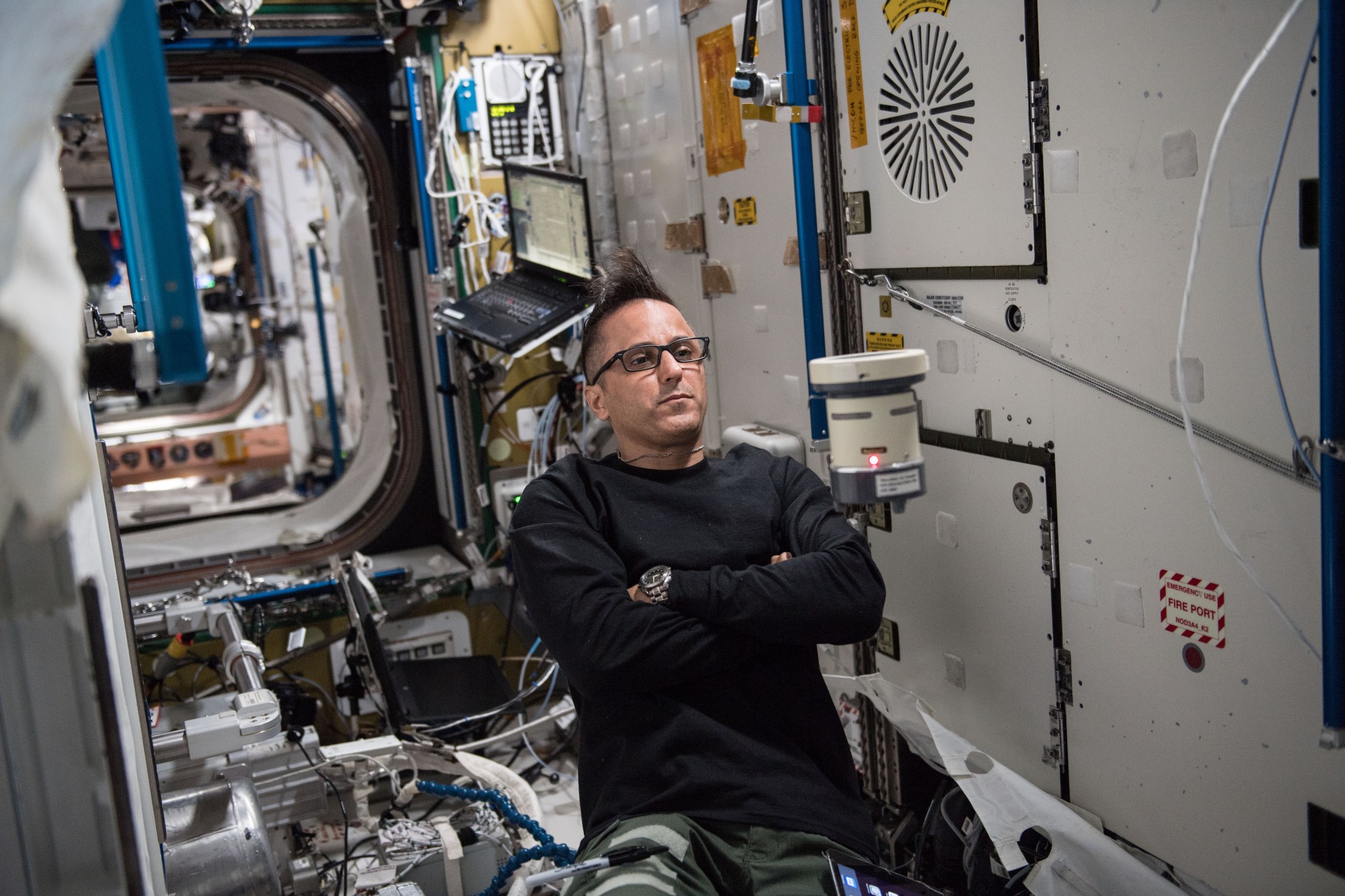
astronaut Joe Acaba using an air sampling device inside the space station
NASA astronaut Joe Acaba with one of the Microbial Air Samplers, devices that monitor microbes in the air of the space station.
NASA

Wherever there are humans, there are microbes, too. Bacteria and fungi live all around us, in our homes, offices, industrial areas, the outdoors – even in space. People literally could not live without these tiny organisms, many of which are beneficial.

The trick is limiting potentially harmful ones, particularly in a contained environment such as a spacecraft. So from the launch of the very first module of the International Space Station, NASA has monitored its microbial community.

Because the station is an enclosed system, the only way that microbes get there is hitching a ride on the contents of resupply spacecraft from Earth and on arriving astronauts. The NASA Johnson Space Center Microbiology Laboratory puts a lot of effort into knowing which microbes ride along.

“We can’t sterilize everything we send into space, and don’t want to, but we do a lot to limit potential pathogens from making their way to the station,” says NASA microbiologist Sarah Wallace, Ph.D. “At launch, the cargo, food, vehicles, and crew members each have their own microbiome, or suite of microbes. When everything gets to the station, these microbiomes become part of the space station microbiome.”

The lab uses the traditional method of culturing a sample in a growth medium, similar to Petri dishes from high school science class, to sample a portion of everything during packing for launch and the launch vehicles themselves. This sampling confirms that contamination control plans are working properly – essentially making sure the numbers of microbes remain low and that those present are the ones normally expected.

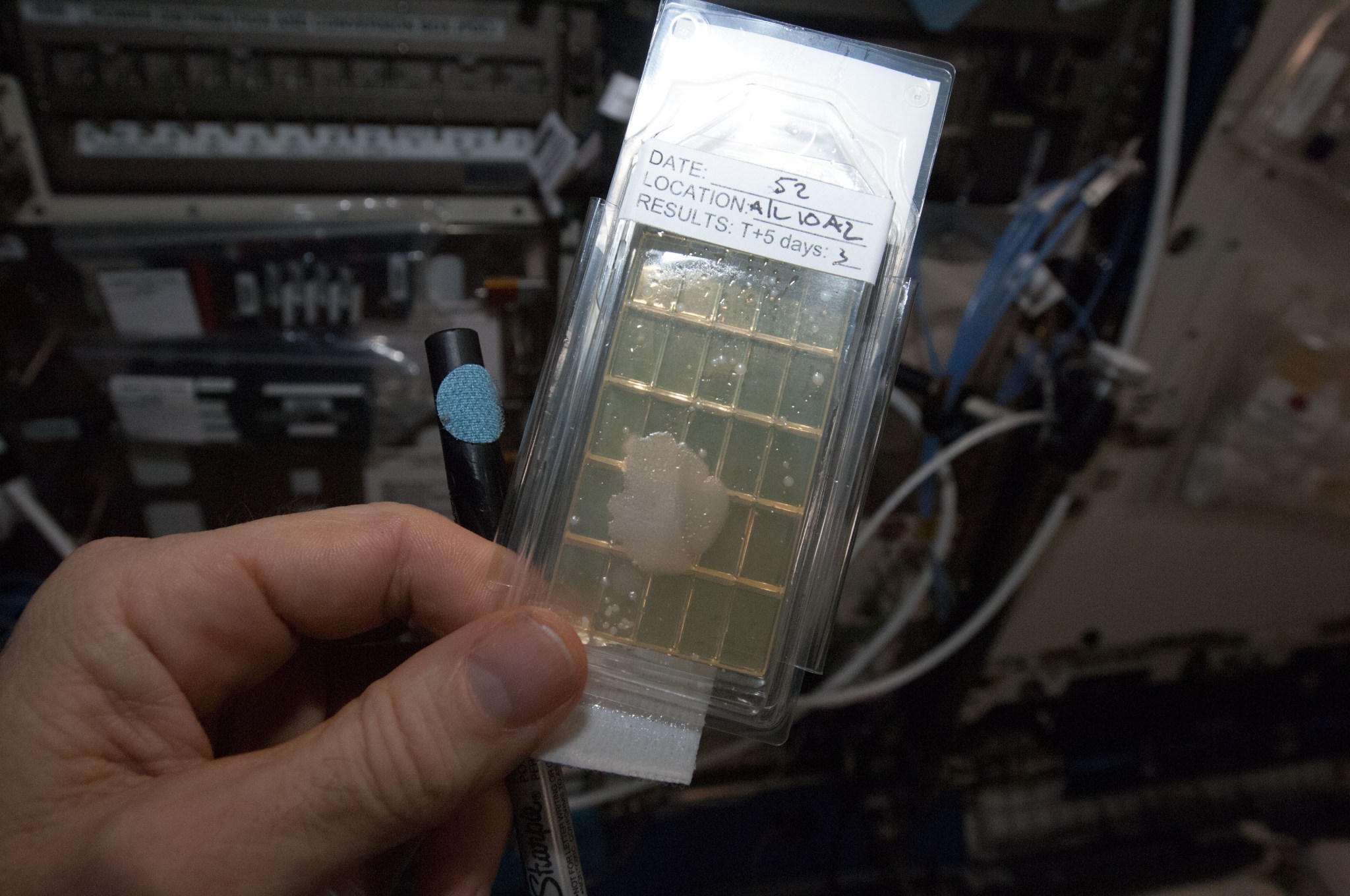
bacteria culture inside space station
Astronauts sample a surface on the International Space Station for this microbial culture slide.
NASA

Then the lab continues monitoring after the vehicle, cargo, and crew arrive at the station. Crew members sample and culture microbes from the air, surfaces, and water on the station.

“It’s kind of a spot check to see how well housekeeping procedures are being implemented and how well the water system and the air filters are working,” Wallace says.

She calls the station’s water processing system “a phenomenal piece of engineering” that produces water much cleaner than most of us drink on Earth. In addition, the station itself is remarkably clean thanks to HEPA filters for the air and housekeeping practices for surfaces. “What microbes we see are really what we’d see if we looked at your home. In fact, we’ve done several studies comparing the station to a typical home and it is similar but usually cleaner,” she adds.

This monitoring over the lifetime of the orbiting lab has created a unique, long-term database that helps microbiologists know what to expect.

“Our requirements are two-fold, how much is there and what is there,” Wallace says. For years, the scientists didn’t know the ‘what’ until samples came back to ground. Now the equipment exists to perform direct swab-to-sequencer identification, eliminating the need to culture samples and return them to Earth. That equipment includes the miniPCR, a device that amplifies or makes many copies of a DNA strand using a process called polymerase chain reaction (PCR), and the MinION, a portable DNA sequencer. The Genes in Space 3 collaboration between Boeing and NASA paired these two platforms together, which led to the first identification of unknown bacteria off Earth.

NASA’s lab then conducted tests and confirmed that microbe identifications from the inflight process matched those determined on the ground down to the species level1.

“For the first time ever, we identified unknown microbes collected and cultured off Earth,” says Wallace. “We followed that up with the swab-to-sequencer, which lets us move away from culturing completely. We can swab a surface and sequence whatever is there.”

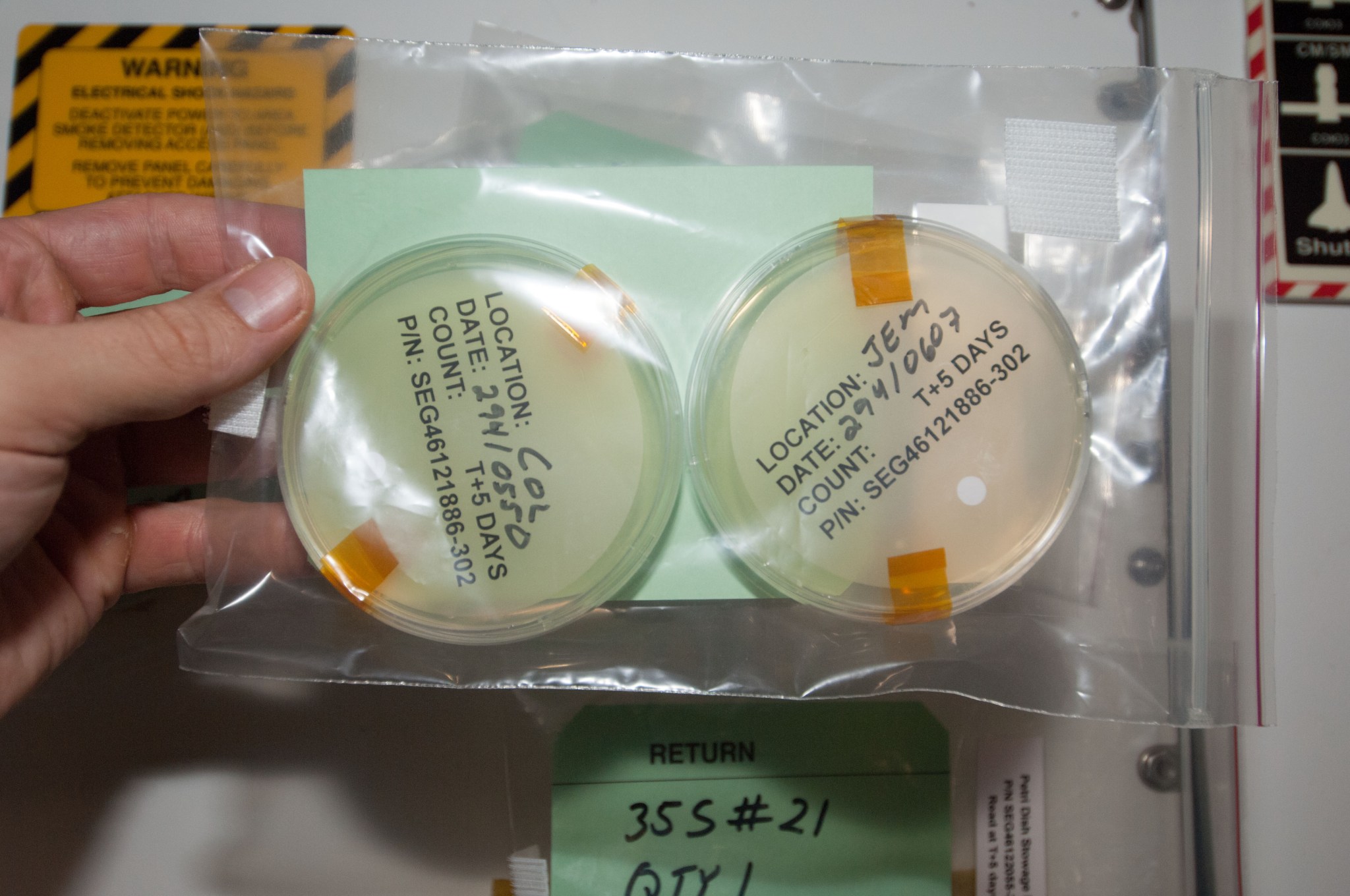
sample culture dishes inside the space station
Plates for culturing samples collected by the Microbial Air Samplers on the space station.
NASA

Subsequent work advanced the use of sequencing in space and later tests found that the culture-independent method showed the same microbial distributions as the standard culture-dependent method2. The swab-and-sequence method has been streamlined so that crew members can easily complete it in an extreme environment.

That is a critical capability for future missions to the Moon and Mars, both to continue to protect crew health and safety and to make sure that we do not contaminate other worlds. If explorers detect microbial life on another planet, they need to know whether it was already there or came from Earth.

Researchers also use the space station to conduct long-term microbial studies. The Microbial Tracking series studied what kinds of microbes are on the space station, both in the environment and in the astronauts’ bodies.

In addition to surveying the types of microbes present on the station, the lab studies whether those microbes could be harmful, as microgravity and radiation in space can render innocuous microorganisms potentially harmful and microbial behavior can change as the organisms adapt to the spaceflight environment.

So far, microbial issues on Earth far exceed any seen in space, Wallace says. “In addition to all the preflight monitoring, crew members are quarantined prior to launch. These steps were started back during Apollo missions and still are effective toward keeping our crews healthy.”

Because where people go, scientists want to know what microbes follow.

Citations

1 Burton AS, Stahl-Rommel SE, John KK, Jain M, Juul S, Turner DJ, Harrington ED, Stoddart D, Paten B, Akeson M, Castro-Wallace SL. Off Earth Identification of Bacterial Populations Using 16S rDNA Nanopore Sequencing. Genes. 2020 January 9; 76(11): 76 (https://www.mdpi.com/2073-4425/11/1/76)

2 Stahl-Rommel S, Jain M, Nguyen HN, Arnold RR, Aunon-Chancellor SM, Sharp GM, Castro CL, John KK, Juul S, Turner DJ, et al. Real-Time Culture-Independent Microbial Profiling Onboard the International Space Station Using Nanopore Sequencing. Genes. 2021; 12(1):106. (https://www.mdpi.com/2073-4425/12/1/106)

Powered by WPeMatico

Get The Details…
NASA