NASA to Study Effects of Radio Noise on Lunar Science

NASA to Study Effects of Radio Noise on Lunar Science

5 min read

Preparations for Next Moonwalk Simulations Underway (and Underwater)

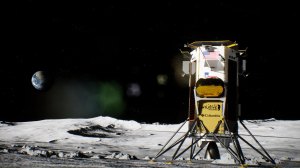
In February 2024, Intuitive Machines’ IM-1 mission will launch to the Moon’s South Polar region, as part of NASA’s Commercial Lunar Payload Services, or CLPS, initiative. This mission is part of CLPS’ ongoing effort to bring down the cost for science investigations and technology demonstrations going to the Moon and to make them more routine in the lead-up to the Artemis landings later this decade. Among the NASA-provided research flying aboard IM-1 will be an instrument designed to observe the Moon’s surface environment in radio frequencies, to determine how natural and human-generated activity near the surface interacts with and could interfere with science conducted there.

The instrument is called the Radio wave Observation at the Lunar Surface of the photo-Electron Sheath (ROLSES) and is designed to study the dynamic radio energy environment near the lunar surface. It will launch aboard Intuitive Machines’ Nova-C lander.

In February 2024, Intuitive Machines’ IM-1 mission will launch to the Moon’s South Pole as part of NASA’s Commercial Lunar Payload Services initiative. Among the NASA provided payloads will be an instrument called the Radio wave Observation at the Lunar Surface of the photo-Electron Sheath (ROLSES) designed to observe the Moon’s surface environment in radio frequencies, to determine how natural and human-generated activity near the surface interacts with and could interfere with science conducted there. Credit: NASA’s Goddard Space Flight Center/Scientific Visualization Studio James Tralie (ADNET Systems, Inc.). Lead Producer Natchimuthuk Gopalswamy (NASA/GSFC). This video can be freely shared and downloaded at
https://svs.gsfc.nasa.gov/14516

The ROLSES instrument project is headed up by Dr. Natchimuthuk “Nat” Gopalswamy of NASA’s Goddard Space Flight Center in Greenbelt, Maryland. Gopalswamy describes the design of ROLSES as being a very simple system. “We have four antennas which observe whatever radio emissions are present on the Moon [radio emissions are a type of light, or electromagnetic radiation, which have the longest wavelength, or distance between peaks in their energy waves],” said Gopalswamy. “These antennas are very long, about 8 feet (2.5 meters). But for launching they are packed into a small canister, about 8 inches (21 centimeters) in size.”

The main purpose of ROLSES will be to account for the variety of radiation generated by cosmic phenomena, as well as by human activity on Earth. “There are varying sorts of radio emissions,” said Gopalswamy. “These include activity on Earth that produces radio interference at the lunar surface. And then we have natural radio emissions, coming from Jupiter, coming from the Sun, even coming from our Milky Way galaxy. There is even an emission from Earth that is associated with the Aurora.”

The trick, as Gopalswamy points out, is that each of these types of radio noise produces its own dynamic spectral pattern, somewhat similar to the way in which fingerprints are unique for each person. “The spectrum of each event looks different from the others,” he said. “Therefore, it’s easy for us to identify which is coming from Jupiter, or from the Sun, or from the galaxy, which is very low-frequency background radiation.”

Another source of radio interference will be the lunar lander itself. “Landers obviously have mechanisms, motors and things; they all will produce some kind of radio emission, and that will also be recorded in the spectrum,” said Gopalswamy. “And those will produce distinct features which show that there is interference going on at this particular location.” By identifying this type of interference, scientists can work to sift through the noise it creates when analyzing data returned by instruments like ROLSES. That way, they can hone in on real data, and not “noise” created by non-natural processes.

The four ROLSES antennas are also mounted at two different heights, meaning that once they begin taking measurements, they can provide information on variations in the cloud of negatively charged electrons blasted from the lunar surface by sunlight, and how it changes between different heights. “This way, we can measure the electrons’ density based upon distance from the surface,” said Gopalswamy. “Then we can see how the number of electrons decreases as you go farther from the surface.”

This information, he points out, will be essential when it comes time to design and build future lunar observatories, since the radio frequency interference from the electron cloud and from Earth-based radio transmitters will need to be accounted for.

These radio observations will help build what Gopalswamy calls a library of knowledge on the lunar environment. “That way we will know if we’re at this latitude, at this height, we’re going to have this type of radiation and emission background, and we’ll be able to design our hardware accordingly.” This will aid NASA in its mission to return humans to the Moon over the next decade and beyond, and to establish a sustainable, long-term presence.

ROLSES and IM-1 are part of the agency’s CLPS initiative, which was developed with the goal of creating a lunar economy through commercial deliveries of NASA-provided payloads. With CLPS, private companies of varying sizes and backgrounds are responsible for designing the landers and procuring the launch vehicles, allowing NASA to focus its efforts on designing the instrument payloads. When the agency’s Artemis program establishes a human presence on the Moon, the data gathered by instruments onboard CLPS flights will help astronauts conduct more lunar science.

By Nick Oakes

NASA Goddard Space Flight Center

Share

Details

Last Updated

Feb 01, 2024

Editor
William Steigerwald
Contact
Nancy N. Jones
Location
Goddard Space Flight Center

Powered by WPeMatico

Get The Details…
William Steigerwald
Station Science 101: Studying DNA in Space

Station Science 101: Studying DNA in Space

Long-term space exploration exposes humans to radiation that can damage deoxyribonucleic acid or DNA, which carries the genetic information for our development and functioning. Conditions in space also affect the way the body repairs such damage, potentially compounding the risk. Research on the International Space Station studies DNA damage and repair using tools and techniques to sequence, analyze, and even edit DNA.

Those tools and techniques have been developed especially for use in space, which has unique safety considerations and where there are limits on the size and weight of equipment. This specialization has made this type of research possible and resulted in significant milestones in DNA research.

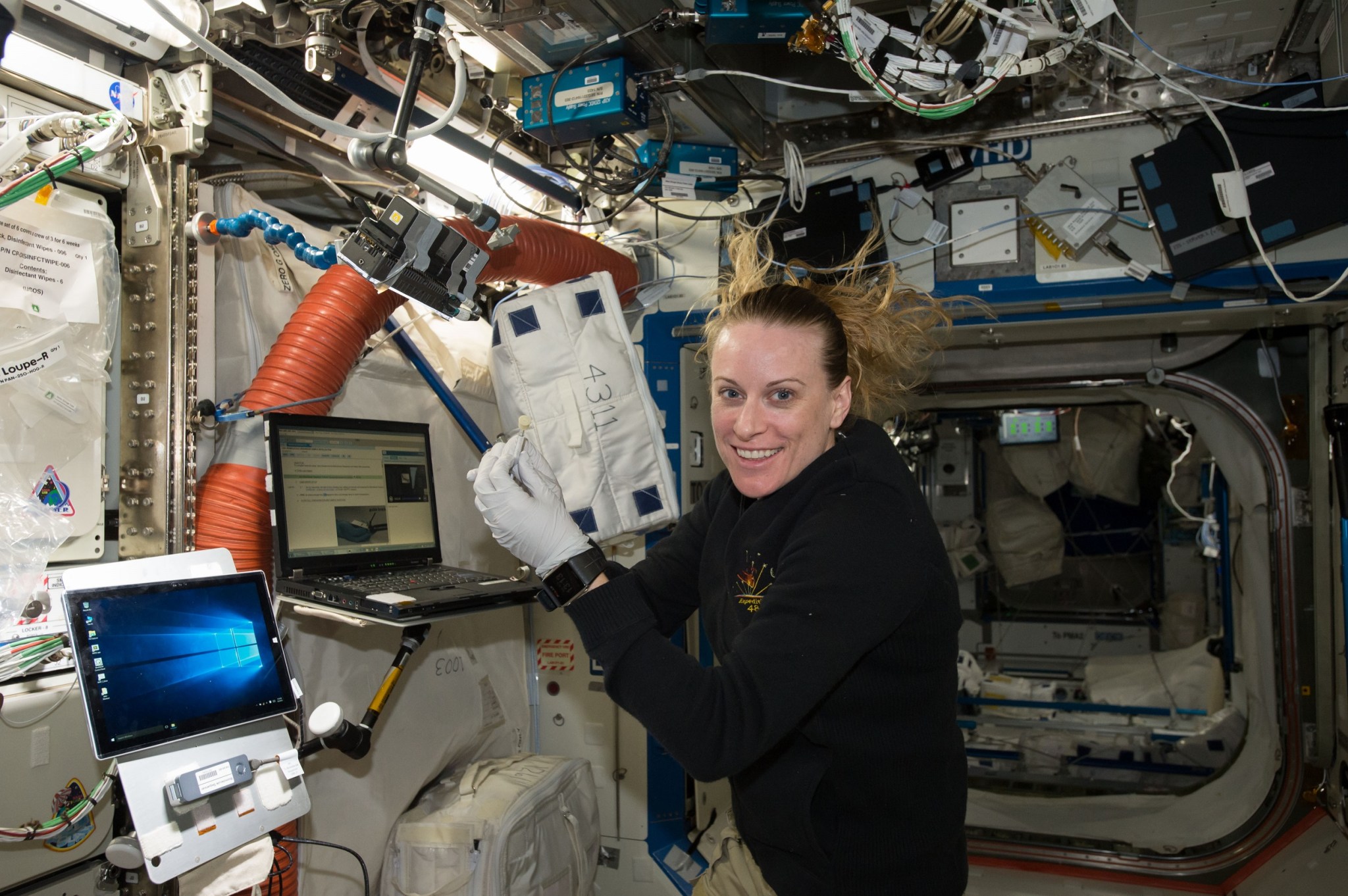
Rubins wears a black sweatshirt as she holds a small experiment tube and smiles at the camera. There are two laptops in front of her and equipment and wiring above her.
NASA astronaut Kate Rubins prepares a run of Biomolecule Sequencer experiment, which sequenced DNA in space for the first time.
NASA

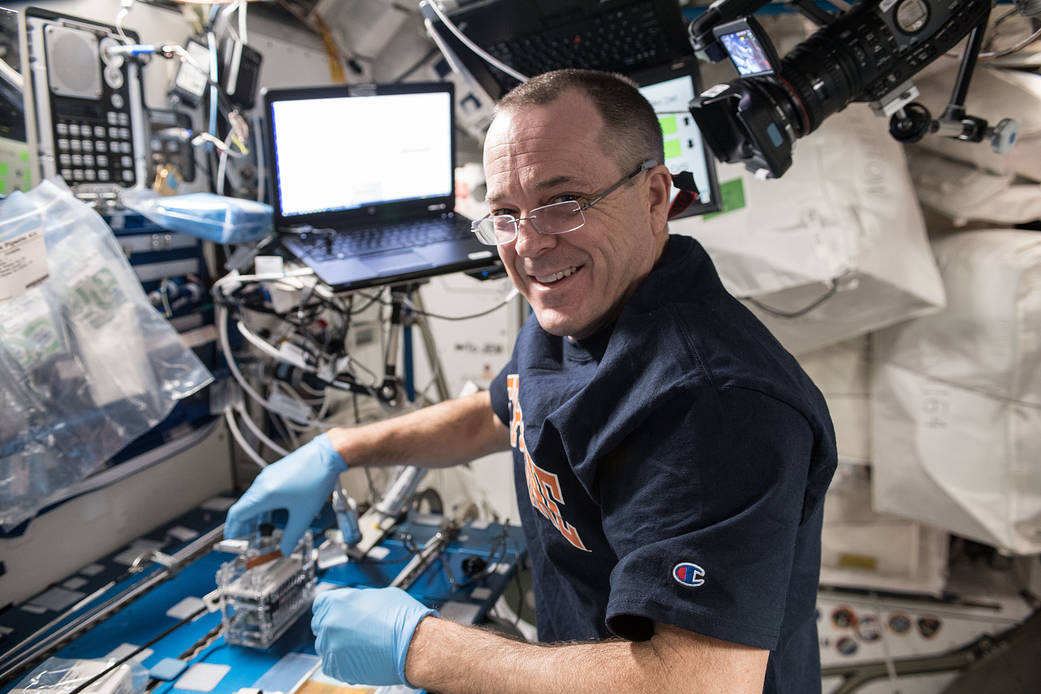
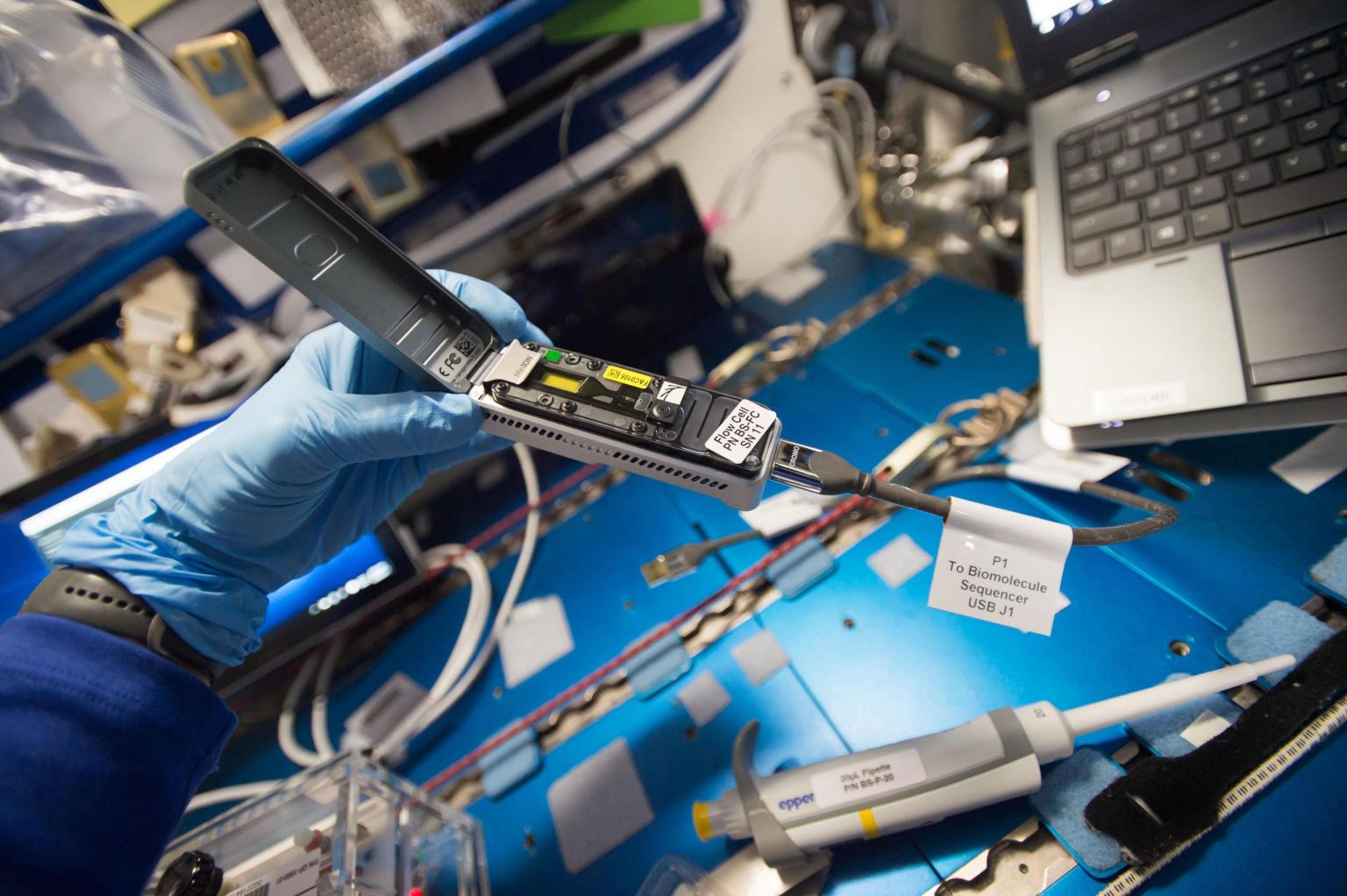
In April 2016, ESA (European Space Agency) astronaut Tim Peake first amplified DNA using the first polymerase chain reaction (PCR) device sent to station, called miniPCR.1 An important step in the process of analyzing genetic material, amplification involves making multiple copies of a segment of DNA. NASA astronaut Kate Rubin sequenced DNA in space for the first time in August 2016 using a commercial off-the-shelf device called MinION.2 In August 2017, NASA astronaut Peggy Whitson combined the miniPCR and MinION to identify the first unknown microbe from the station, validating a process that could make possible in-flight identification of microbes and diagnosis of infectious diseases on future missions.3 In August 2018, NASA astronaut Ricky Arnold first used a “swab to sequencer” DNA sequencing method that eliminates the need to culture bacteria before analysis.4

Arnold, facing the camera, wears a blue shirt, glasses, and light blue gloves. His right hand holds the miniPCR on the work bench. A laptop and video camera are visible behind him.
NASA astronaut Ricky Arnold processes DNA from swabs of space station surfaces to identify microbes.
NASA

Another milestone, reached in May 2019, was the first CRISPR gene editing on station, performed by NASA astronaut Christina Koch.5 CRISPR stands for Clustered Regularly Interspaced Short Palindromic Repeats. These are short, repeated sequences of DNA noted in bacteria with viral DNA sequences in between them. Bacteria transcribe the viral DNA sequences to RNA, which then guides a specific protein to the viral DNA and cuts it – creating a line of defense against invading viruses. Researchers can create a guide RNA to be specific to any part of a genome. This means CRISPR can be used to create precise breaks in a known location of a gene, resulting in simplified gene editing.

A program called Genes in Space has employed these advances for multiple investigations. A collaboration between Boeing and miniPCR bio sponsored by the ISS National Lab and New England Biolabs, this program is a national contest where students in grades 7 through 12 design DNA analysis experiments for the space station.

Genes in Space-6 used CRISPR to successfully generate breaks in the DNA of a common yeast, allow for repair of the breaks, and sequence the patched-up DNA to determine whether its original order was restored, all during spaceflight.5 Performing the entire process in space – rather than causing a break, freezing the sample, and sending it into space to repair –provided researchers insight into the type of repair mechanism used. Organisms repair DNA breaks in one of two major ways. One method may add or delete bases while the other rejoins the strands without changing the DNA sequence. Understanding whether one type of repair is less error-prone has important implications for protecting crew members.

Koch faces a work bench and concentrates on sample tubes in her left hand. She is wearing a headset, gloves, and glasses.
NASA astronaut Christina Koch works on the Genes in Space-6 experiment.
NASA

Genes in Space-5 represented an important step toward a rapid, safe, and cost-effective way to examine the immune system during spaceflight. This investigation also provided proof of concept for simultaneously amplifying multiple DNA sequences in space, expanding the possibilities for in-flight research and health monitoring.

Genes in Space-10 validated a method for measuring and analyzing the length of DNA fragments known as telomeres using fluorescence. Telomeres, cap-like genetic structures at the end of chromosomes that protect them from damage, shorten with age but have been found to lengthen in space. Analyzing telomere length could help determine the mechanism behind this effect. Results from the investigation also could provide a way to measure DNA and to diagnose genetic-based medical problems during spaceflight. Sending DNA samples back to Earth for analysis can cause the samples to degrade and is not feasible for future long-duration missions. Insight into why telomeres lengthen in space could lead to a better understanding of their role in human aging as well.

Having an entire molecular laboratory in space greatly increases what scientists can do. The ability to analyze DNA, study how it is damaged and repaired in space, and make specific changes to it enables more complex research. Identifying unknown organisms and changes in known ones is key to keeping crew members safe on future missions.

Melissa Gaskill
International Space Station Program Science Office
Johnson Space Center

Search this database of scientific experiments to learn more about those mentioned above.

Citations

1 Boguraev, A. S. et al. Successful amplification of DNA aboard the International Space Station. NPJ Microgravity 3, 26, doi:10.1038/s41526-017-0033-9 (2017).

2 Castro-Wallace, S. L. et al. Nanopore DNA Sequencing and Genome Assembly on the International Space Station. Sci Rep 7, 18022, doi:10.1038/s41598-017-18364-0 (2017).

3 Burton, A. S. et al. Off Earth Identification of Bacterial Populations Using 16S rDNA Nanopore Sequencing. Genes (Basel) 11, doi:10.3390/genes11010076 (2020).

4 Stahl-Rommel, S. et al. Real-Time Culture-Independent Microbial Profiling Onboard the International Space Station Using Nanopore Sequencing. Genes (Basel) 12, doi:10.3390/genes12010106 (2021).

5 Stahl-Rommel, S. et al. A CRISPR-based assay for the study of eukaryotic DNA repair onboard the International Space Station. PloS one 16, e0253403, doi:10.1371/journal.pone.0253403 (2021).

Powered by WPeMatico

Get The Details…
Ana Guzman

NASA Spinoffs Feature NASA Stennis Developed Technologies

NASA Spinoffs Feature NASA Stennis Developed Technologies

5 min read

Preparations for Next Moonwalk Simulations Underway (and Underwater)

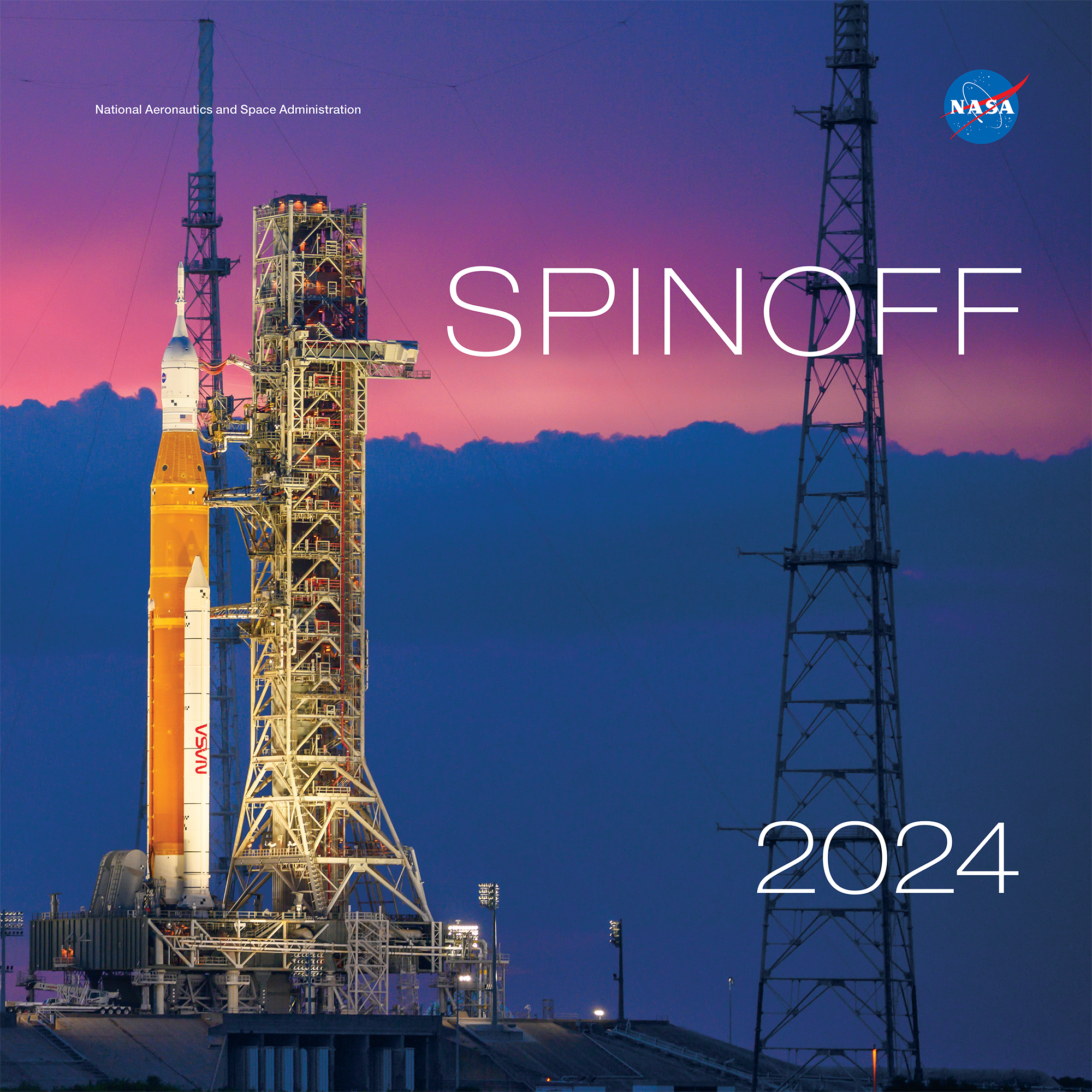
NASA’s Space Launch System (SLS) rocket, capped by the Orion spacecraft, sits on the mobile launcher at Launch Complex 39B at NASA’s Kennedy Space Center in Florida
NASA’s 2024 Spinoff publication features more than 40 medical and other commercialized technologies using the agency’s research and development expertise. It also features new technology developed at various agency centers, including NASA’s Stennis Space Center.
NASA

As NASA innovates for the benefit of all, what the agency develops for exploration has the potential to evolve into other technologies with broader use here on Earth. Many of those examples are highlighted in NASA’s annual Spinoff book including dozens of NASA-enabled medical innovations, as well other advancements in 3D printing, robots, and brake designs.

This year’s publication also features a section highlighting technologies developed at agency centers such as NASA’s Stennis Space Center near Bay St. Louis, Mississippi, that are available for use by various industries.

NASA’s 2024 Spinoff highlights more than 40 medical and other commercialized technologies using the agency’s research and development expertise.

“As we continue to push new frontiers and do the unimaginable, NASA’s scientists and engineers are constantly innovating and advancing technologies,” said NASA Administrator Bill Nelson. “A critical part of our mission is to quickly get those advances into the hands of companies and entrepreneurs who can use them to grow their businesses, open new markets, boost the economy, and raise the quality of life for everyone.”

One of the featured medical innovations is the first wireless arthroscope – a small tube carrying a camera inserted into the body during surgery – to receive clearance from the U.S. Food and Drug Administration, which benefited from NASA’s experience with spacesuits and satellite batteries. Commercialized technologies for diagnosing illnesses like the coronavirus, hepatitis, and cancer have also stemmed from NASA’s space exploration and science endeavors. Even certain types of toothpaste originated from the agency’s efforts to grow crystals for electronics.

The book also features several technologies NASA has identified as promising future spinoffs and information on how to license agency tech. Since the 1970s, thousands of NASA technologies have found their way into many scientific and technical disciplines, impacting nearly every American industry.

Additional 2024 Spinoff highlights include developments under NASA’s Artemis campaign, like a small, rugged video camera used to improve aircraft safety and a new method for detecting defects or damage in composite materials. Meanwhile, another spinoff story details the latest benefits of fuel cell technology created more than 50 years ago for Apollo, which is now poised to support terrestrial power grids based on renewable energy.

The book also features other notable spinoffs like:

NASA Stennis items included in the new publication are:

  • Remote Sensing Toolkit. The NASA Spinoff 2024 publication describes the remote sensing toolkit as an online portal that offers easy access to NASA Earth-observation data. NASA’s Technology Transfer program at NASA Stennis developed the online resource to promote wider use of the agency’s freely available remote sensing data and software to work with it. It helps users find, analyze, and use the most relevant data for projects such as precision agriculture and crop forecasting, conservation and resource management, and natural disaster planning and response. The free and easy-to-use toolkit includes data from more than 20 satellites and missions.
  • Cryogenic Butterfly Cam Valve. According to the NASA Spinoff 2024 book, the unique butterfly valve designed at NASA Stennis provides “no-leak” performance in a broad range of temperatures. The NASA Stennis valve addresses a key disadvantage of current butterfly valves, which require the butterfly disc to establish a tight seal at exactly 90 degrees. Providing additional torque to the valve may cause the disc to rotate beyond 90 degrees, allowing fluid flow. Current butterfly valves also usually fail leakage tests when used with liquid nitrogen, a key cryogenic in propulsion testing. The simple NASA Stennis design remedies these issues by allowing rotation of the valve shaft, enabling the disc to slide until it seals tightly despite temperature changes. The NASA Stennis valve can be used in various aerospace, natural gas, and cryogenic plant systems.

“As NASA’s longest continuously running program, we continue to increase the number of technologies we license year-over-year while streamlining the development path from the government to the commercial sector,” said Daniel Lockney, Technology Transfer program executive at NASA Headquarters in Washington. “These commercialization success stories continually prove the benefits of transitioning agency technologies into private hands, where the real impacts are made.”

Spinoffs are part of NASA’s Space Technology Mission Directorate and its Technology Transfer program. Tech Transfer is charged with finding broad, innovative applications for NASA-developed technology through partnerships and licensing agreements, ensuring agency investments benefit the nation and the world.

To read or download the digital version of the latest issue of Spinoff, visit:

https://spinoff.nasa.gov/

For information about NASA Stennis Space Center, visit:

www.nasa.gov/centers/stennis/

Share

Details

Last Updated

Feb 01, 2024

Editor
NASA Stennis Communications
Contact
C. Lacy Thompson
Location
Stennis Space Center

Related Terms

Powered by WPeMatico

Get The Details…
LaToya Dean

NASA Employee Supports Mission While Inspiring Artemis Generation

NASA Employee Supports Mission While Inspiring Artemis Generation

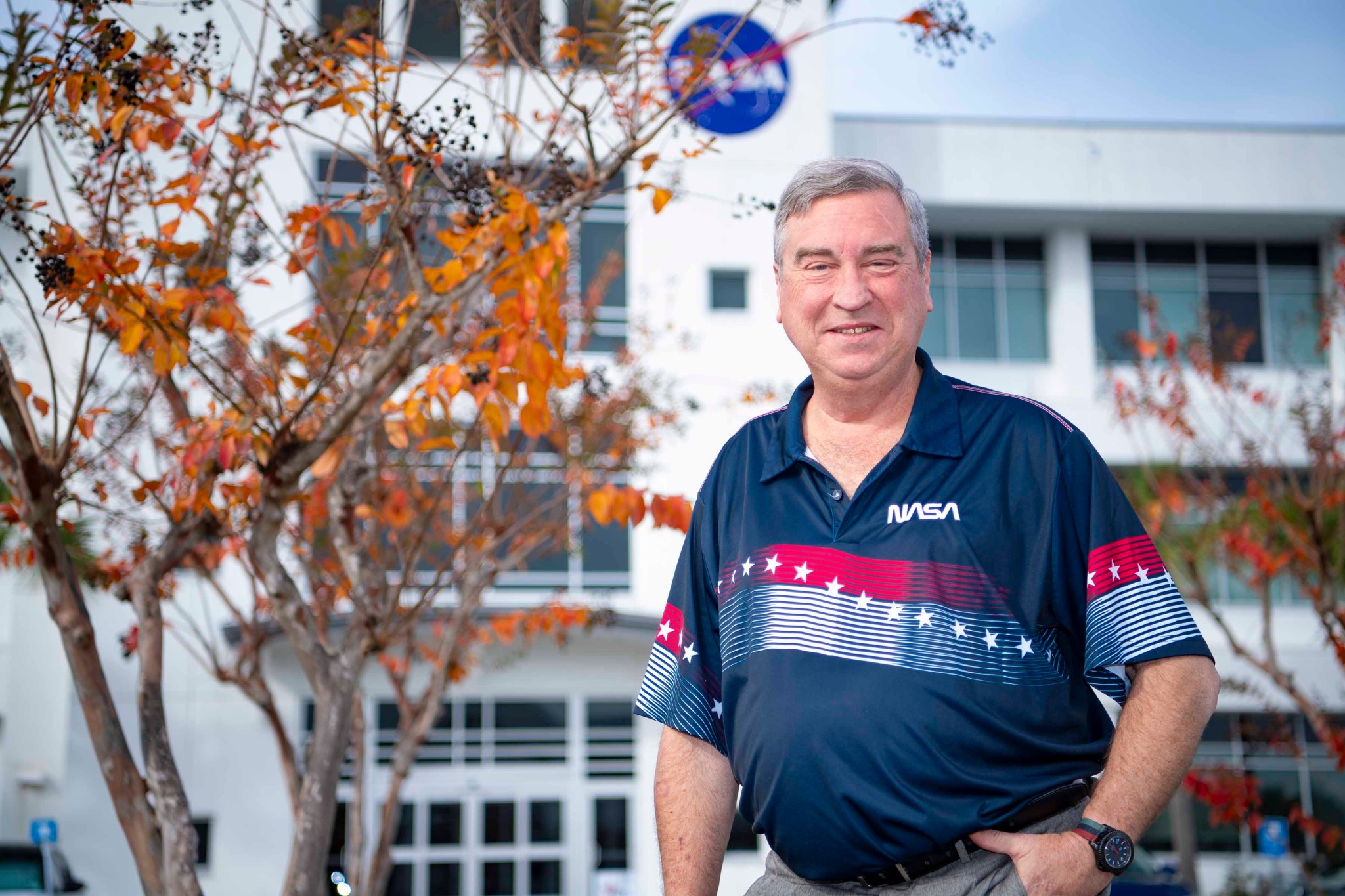
Tony Goretski, wearing a navy NASA polo shirt, smiles at the camera while standing outside of a building at NASA’s Stennis Space Center
Tony Goretski stands at NASA’s Stennis Space Center, where he has worked more than 24 years supporting NASA’s mission of space exploration.
NASA/Danny Nowlin

NASA inspires as it explores secrets of the universe for the benefit of all – just ask Tony Goretski, the senior employee in the Office of Procurement at NASA’s Stennis Space Center near Bay St. Louis, Mississippi.

Goretski felt the inspiration long ago on a school trip to the Gulf Coast site, vowing to one day become employed with NASA. Now, he is doing his part to support the NASA mission and inspire the next generation of great explorers – the Artemis Generation.

“NASA has a phenomenal way of including everybody, like you really belong,” Goretski said. “We are all family, driving towards a common purpose, and I love that aspect about NASA Stennis.”

The common goal is returning to the Moon in a sustainable way. Through Artemis missions, NASA will use innovative technologies, and collaborate with commercial and international partners, to explore more of the lunar surface than ever. NASA will then use what is learned on and around the Moon to take the next giant leap: sending the first astronauts to Mars. 

Take time to debrief after success or conflict. Listen, then restate messages to make sure they’re understood.

Tony Goretski

Tony Goretski

NASA Stennis Procurement Analyst

Much like NASA clearly has its sight set on the task at hand, Goretski had a goal of being employed with NASA. A native of Ocean Springs, Mississippi, Goretski grew up in the shadow of NASA Stennis and did everything necessary from an education standpoint to ensure his future work with the space agency.

He earned an associate degree in business administration from Mississippi Gulf Coast Community College, followed by a bachelor’s degree in business administration from The University of Mississippi. The Long Beach resident also earned a master’s degree in aeronautical science with an emphasis on management from Embry-Riddle Aeronautical University in Daytona Beach, Florida.

Following a career in the United States Air Force, Goretski reached his goal of returning to NASA Stennis, this time as a contract specialist prior to becoming a procurement analyst.

As a member of the Procurement Management Support Division team at the center, Goretski is part of an integral support mechanism, which provides training and guidance for more than 100 contracting officer representatives supporting NASA’s Artemis Program.

As NASA moves toward future Artemis launches, Goretski looks forward to attending the launch of Artemis III, which will mark humanity’s first return to the lunar surface in more than 50 years. NASA will make history by sending the first humans to explore the region near the lunar South Pole.

Meanwhile, he will continue his day-to-day work supporting the agency’s efforts to reach that moment. Goretski also enjoys volunteering through outreach efforts with NASA’s Office of STEM Engagement, which helps bridge disparities and break barriers by providing a way for a broad spectrum of students to learn about NASA and STEM (science, technology, engineering, and mathematics).

Goretski also has volunteered for more than 13 years with the FIRST (For the Inspiration and Recognition of Science and Technology) Robotics organization. In 2023, NASA co-sponsored the inaugural FIRST Robotics competition held in the state of Mississippi with the Magnolia Regional event in Laurel. STEM will play a key role as NASA explores more of the Moon than ever before with highly trained astronauts and advanced robotics.

In all of his engagement efforts, Goretski takes to heart one of NASA’s core values – inclusion – to share opportunities available for all and, along the way, to inspire the Artemis Generation, just as he was inspired on a school visit to the south Mississippi NASA center.

Powered by WPeMatico

Get The Details…
LaToya Dean

Team Mindset Fuels NASA Stennis Test Operations Leader

Team Mindset Fuels NASA Stennis Test Operations Leader

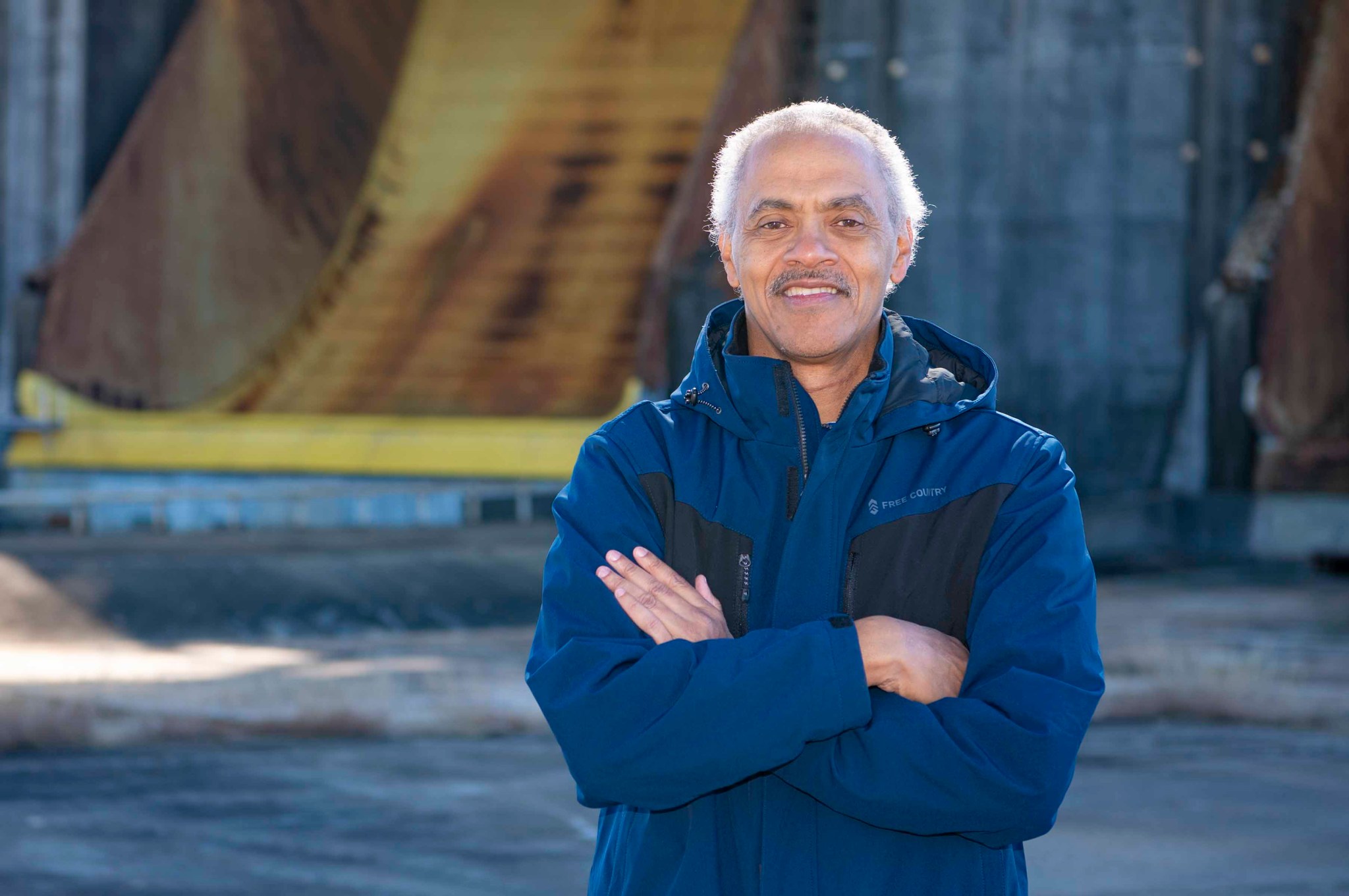
Maury Vander, wearing a navy-colored jacket, smiles at the camera. He is standing in the foreground with the Thad Cochran Test Stand in the background.
Maury Vander stands at NASA’s Stennis Space Center, where he has worked more than 30 years supporting NASA’s mission of space exploration.
NASA/Danny Nowlin

One thing has remained constant throughout Maury Vander’s career with NASA – the satisfaction of being part of a team working to innovate and benefit the agency and the aerospace industry at large.

As chief of the Test Operations Division at NASA’s Stennis Space Center, Vander provides guidance and help with technical challenges to a group of electrical and mechanical engineers performing test operations for NASA and commercial companies.

“With the test team at NASA Stennis, the work doesn’t happen because of one individual,” Vander said. “It’s a total team effort that makes it happen. Our team consists of a diverse group of personalities, experience levels and backgrounds, so you get value from that.”

Vander has contributed in various capacities to four engine programs since coming to NASA Stennis in 1990 as a contract worker and then being hired by NASA in 2000. He performed the role of test conductor for the programs, which included being the first to do so in three of the four programs. 

Filling this role allowed him the opportunity to be heavily involved in developing the test processes used during the initial hot fire tests of those engines. He called this a highlight of his career as he witnessed the success of the test campaigns.

A key part of continuing NASA’s mission of exploring secrets of the universe for the benefit of all is developing people to contribute to the agency, which ultimately benefits humanity.

With the test team at NASA Stennis, the work doesn’t happen because of one individual. It’s a total team effort that makes it happen. Our team consists of a diverse group of personalities, experience levels and backgrounds, so you get value from that.”

maury vander

maury vander

NASA Stennis Test Operations Leader

The Slidell, Louisiana, native was once the person that pressed the button and made the ground shake as a conductor of engine tests. Since being promoted to his leadership role in 2012, Vander now helps other people grow into such roles as NASA works to safely carry out Artemis missions to the Moon and beyond.

“You start to gain enjoyment as you watch people develop,” he said. “You watch someone who comes in as a new hire and watch as they develop skills and see what they are capable of doing and you kind of draw a different level of satisfaction with your job.”

Helping people become aware of their potential is something Vander enjoys. When NASA led an outreach event in November at the Bayou Classic in New Orleans to reach deeper into underrepresented and underserved segments of society, Vander was quick to volunteer for the activity and help staff a NASA exhibit tent.

“When I do outreach events like that, I hope I can open their eyes and make a connection,” he said. “And in this instance, I looked a lot like the high school graduating seniors passing by or the freshmen in college going into the game.”

Vander’s message to young people attending the HBCU (Historically Black Colleges and Universities) event was clear. “Forty years ago, I was you,” Vander told students who stopped at the NASA exhibit. “There’s a lot more opportunity now. There’s a lot more skills that are out there that you can take advantage of and go way farther than I went or even thought about going.”

Whether it is welcoming new people or helping develop those already on the team at NASA Stennis, Vander knows most of the success he has experienced can be traced back to the team.

“At the end of the day, I’m going to look back and say there was some good work going on, and there were some great people that I got to interact with,” Vander said. “I would love for them to be able to say of me, ‘It was good to be on a team with him, he treated me not just as a coworker but as a friend, and I’m better for having encountered him.’”

For information about NASA’s Stennis Space Center, visit

Stennis Space Center – NASA

Powered by WPeMatico

Get The Details…
LaToya Dean