Scientists and Students Discuss the Future of Space Research at ASGSR Annual Conference

Scientists and Students Discuss the Future of Space Research at ASGSR Annual Conference

2 min read

Scientists and Students Discuss the Future of Space Research at ASGSR Annual Conference

Dr. Lisa Carnell (right) and Dr. Bonnie Dunbar (left) on stage presenting at the main conference podium. Both women are wearing dark, formal business attire.
Dr. Lisa Carnell, NASA’s Biological and Physical Sciences’ (BPS) Division Director, presenting keynote remarks with Dr. Bonnie Dunbar at the 2023 American Space and Gravitational Research Conference (ASGSR).

The American Society for Gravitational and Space Research’s (ASGSR) annual meeting brought together over 850 scientists, engineers, educators, and students from around the world to share their latest findings on microgravity research and discuss the future of space exploration. ASGSR stands at the forefront for fostering groundbreaking research and highlighting the cutting-edge science happening now using microgravity, low-gravity, radiation, and other space-based stressors.

The meeting, held in Washington, D.C., November 14-18, 2023, featured a variety of general and technical sessions, student fireside chats, and working sessions exploring the conference’s theme: The Future of Space Exploration: Challenges and Opportunities.

Dr. Lisa Carnell, NASA’s Biological and Physical Sciences’ (BPS) Division Director, opened the conference with her keynote presentation on the state of BPS. Carnell shared that if the U.S. wants to maintain science leadership, with the intent to go farther and stay longer in space, we must continue to pioneer transformative science at the frontiers of biology and physical sciences. Carnell encouraged attendees to look ahead for ways to support the technologies and infrastructure that will be needed to carry out this science.

Former astronaut Dr. Bonnie Dunbar echoed Carnell’s remarks as she expressed the need for adequate funding of this scientific and space-based research as a critical path needed for sustainable exploration. Dunbar challenged the group to build upon the pioneering work of BPS to inspire the next generation of space scientists, engineers, and astronauts.

ASGSR hosted over 300 presentations where speakers and participants shared their latest findings and discussed the future of space exploration, a few highlighted topics follow:

  • The development of new technologies to enable sustainable space exploration
  • The effects of gravity on biological systems
  • The need to support the commercial space industry to ensure the continuation of research and success of the commercial space economy
  • The growing importance of international collaboration in space research
  • The potential of space exploration to benefit life on Earth
  • The search for new knowledge about the universe
  • The use of space-based research to address global challenges such as climate change and food security

Next year’s ASGSR conference will be held in Puerto Rico, December 3-7, 2024.

Share

Details

Last Updated
Dec 21, 2023

Powered by WPeMatico

Get The Details…

NASA’s Hubble Watches ‘Spoke Season’ on Saturn

NASA’s Hubble Watches ‘Spoke Season’ on Saturn

3 min read

NASA’s Hubble Watches ‘Spoke Season’ on Saturn

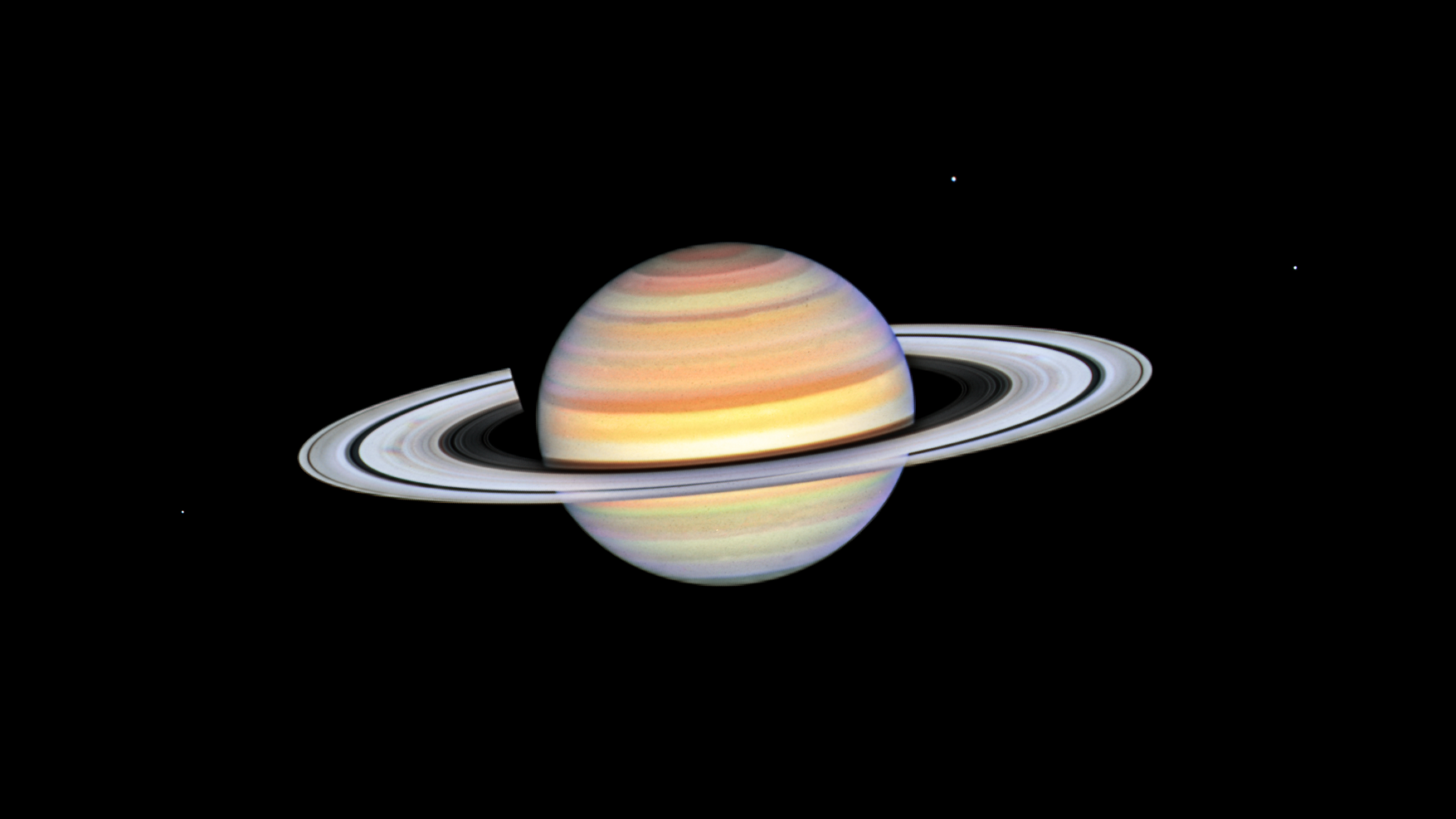
Colorful stripes in yellow, white, reddish-orange, pink, and green cover the planet. Saturn is tilted slightly toward us allowing the Sun to illuminate the top of its rings. The planet's shadow is cast toward the back and left of the planet. Saturn's moons Dione, and Enceladus are visible to its upper right, while its moon Mimas is just below and to the left of the planet's rings.
This NASA Hubble Space Telescope photo of Saturn reveals the planet’s cloud bands and a phenomenon called ring spokes.
NASA, ESA, STScI, Amy Simon (NASA-GSFC)

This photo of Saturn was taken by NASA’s Hubble Space Telescope on October 22, 2023, when the ringed planet was approximately 850 million miles from Earth. Hubble’s ultra-sharp vision reveals a phenomenon called ring spokes.

Saturn’s spokes are transient features that rotate along with the rings. Their ghostly appearance only persists for two or three rotations around Saturn. During active periods, freshly-formed spokes continuously add to the pattern.

In 1981, NASA’s Voyager 2 first photographed the ring spokes. NASA’s Cassini orbiter also saw the spokes during its 13-year-long mission that ended in 2017.

Hubble continues observing Saturn annually as the spokes come and go. This cycle has been captured by Hubble’s Outer Planets Atmospheres Legacy (OPAL) program that began nearly a decade ago to annually monitor weather changes on all four gas-giant outer planets.

Hubble’s crisp images show that the frequency of spoke apparitions is seasonally driven, first appearing in OPAL data in 2021 but only on the morning (left) side of the rings. Long-term monitoring show that both the number and contrast of the spokes vary with Saturn’s seasons. Saturn is tilted on its axis like Earth and has seasons lasting approximately seven years.

“We are heading towards Saturn equinox, when we’d expect maximum spoke activity, with higher frequency and darker spokes appearing over the next few years,” said the OPAL program lead scientist, Amy Simon of NASA’s Goddard Space Flight Center in Greenbelt, Maryland.

This year, these ephemeral structures appear on both sides of the planet simultaneously as they spin around the giant world. Although they look small compared with Saturn, their length and width can stretch longer than Earth’s diameter!

“The leading theory is that spokes are tied to Saturn’s powerful magnetic field, with some sort of solar interaction with the magnetic field that gives you the spokes,” said Simon. When it’s near the equinox on Saturn, the planet and its rings are less tilted away from the Sun. In this configuration, the solar wind may more strongly batter Saturn’s immense magnetic field, enhancing spoke formation.

Planetary scientists think that electrostatic forces generated from this interaction levitate dust or ice above the ring to form the spokes, though after several decades no theory perfectly predicts the spokes. Continued Hubble observations may eventually help solve the mystery.


This Hubble Space Telescope time-lapse series of Saturn images (taken on October 22, 2023) resolves a phenomenon called ring spokes appearing on both sides of the planet simultaneously as they spin around the giant world. The video zooms into one set of spokes on the morning (left) side of the rings. The spokes are transient features that rotate along the ring plane. The spokes may be a product of electrostatic forces generated by the interaction of the planet’s magnetic field with the solar wind. This interaction levitates dust or ice above the ring to form the spokes. Credit: NASA, Amy Simon (NASA-GSFC);
Animation:
Joseph DePasquale (STScI)

The Hubble Space Telescope is a project of international cooperation between NASA and ESA. NASA’s Goddard Space Flight Center in Greenbelt, Maryland, manages the telescope. The Space Telescope Science Institute (STScI) in Baltimore, Maryland, conducts Hubble and Webb science operations. STScI is operated for NASA by the Association of Universities for Research in Astronomy, in Washington, D.C.

Media Contacts:

Claire Andreoli
NASA’s Goddard Space Flight CenterGreenbelt, MD
claire.andreoli@nasa.gov

Ray Villard
Space Telescope Science Institute, Baltimore, MD

Science Contact:

Amy Simon
NASA’s Goddard Space Flight CenterGreenbelt, MD

Share

Details

Last Updated
Dec 21, 2023
Editor
Andrea Gianopoulos

Powered by WPeMatico

Get The Details…

NASA Stennis Internship Brings Aerospace Industry to Life

NASA Stennis Internship Brings Aerospace Industry to Life

4 min read

Preparations for Next Moonwalk Simulations Underway (and Underwater)

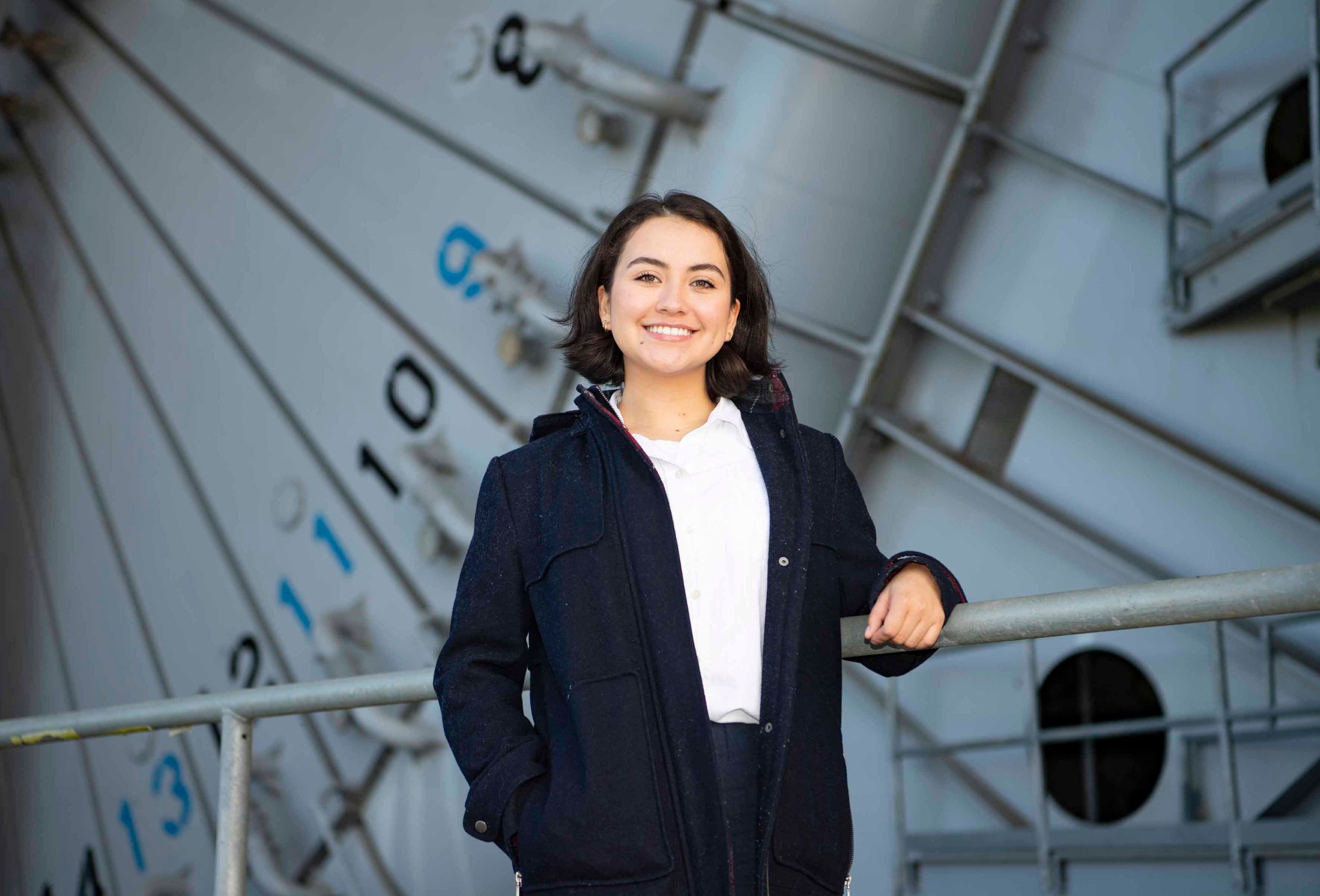
A young woman stands in front of the near the Fred Haise Test Stand
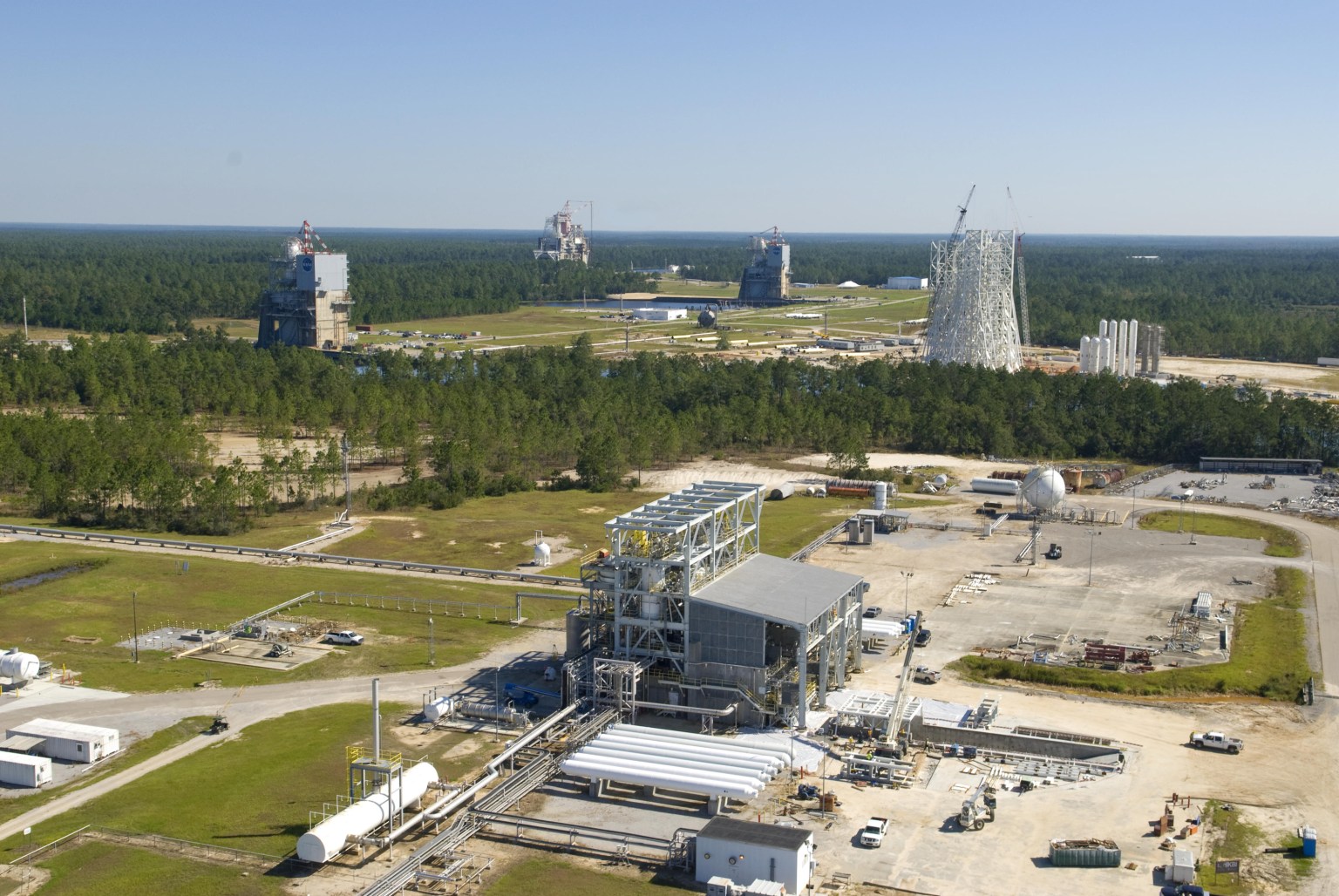
NASA Pathways Intern Raquel Cervantes Espinosa is pictured at NASA’s Stennis Space Center near the Fred Haise Test Stand, where she worked throughout the fall semester supporting RS-25 engine testing. Cervantes Espinosa will return to NASA Stennis in the summer following the spring semester at Duke University in Durham, North Carolina.
NASA/Danny Nowlin

A first-generation student from North Carolina will return to school in January feeling more motivated and better connected to her future thanks to time invested as a NASA Pathways Intern at NASA’s Stennis Space Center near Bay St. Louis, Mississippi.

Raquel Cervantes Espinosa, the first member of her family to attend college and a rising junior at Duke University, applied to the internship at NASA Stennis because of opportunities the site presented, such as working with large rocket engines. She admits to initially being nervous, having never traveled to Mississippi or the Gulf Coast area.

The electrical engineering major says she was welcomed with open arms. She grew fond of the diverse and highly skilled workforce that showed how her studies apply to working with NASA, which makes leaving after the fall semester bittersweet.

“It feels like NASA is really investing in me as an individual, and the people that I work with make it feel that way, too,” Cervantes Espinosa said. “I feel valued here and feel like I can grow with my career and degree studies in terms of what I want to do in the future. I really enjoyed my time at NASA Stennis during the fall and look forward to returning in the summer.”

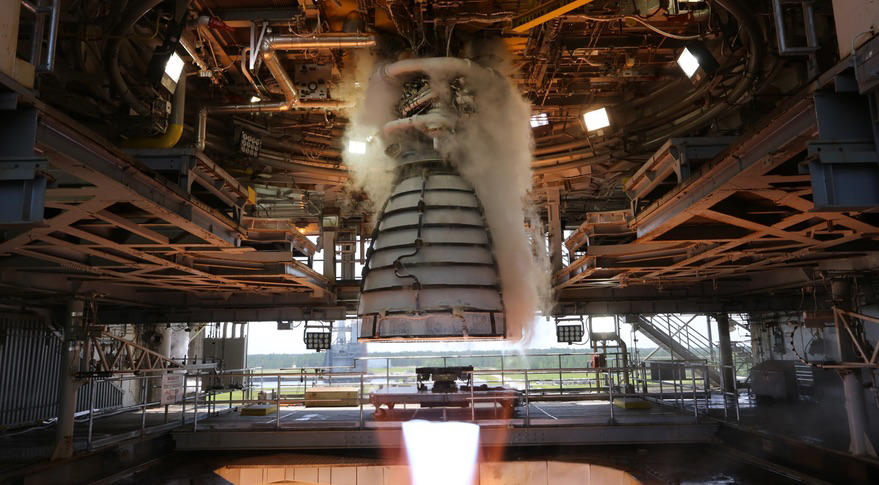
During the fall semester, Cervantes Espinosa worked with test stand camera systems, including those in support of NASA’s certification test series of the RS-25 engine. The series will lead to production of updated engines that will help power future Artemis missions to the Moon and beyond on the SLS (Space Launch System) rocket.

“Raquel had a great first semester as a Pathways Intern learning about various electrical and mechanical systems,” said David Carver, deputy branch chief of the Electrical Operations Branch at NASA Stennis. “Her shining accomplishment for the semester was the new test operations video system that she helped design and bring online. The system will provide test engineers with new insight into the operation and health of critical propulsion systems. I look forward to seeing what she accomplishes in the future.”

The thermal visual cameras set up by Cervantes Espinosa at the Fred Haise Test Stand, where RS-25 hot fires take place, help ensure safe operations by allowing engineers to monitor key areas of the test stand, such as the liquid oxygen stalls and hydrogen systems. The cameras can also identify potential gas leaks not seen with the naked eye. Additionally, Cervantes Espinosa had the opportunity to analyze data and work on instruments that are used on the RS-25 engine.

“A lot of the experience I’m getting from working at NASA Stennis, a lot of the stuff I’m learning now, is really shaping how I see engineering differently than I used to,” she said.

The Duke student says one key takeaway from the fall semester was learning beyond electrical engineering and understanding how her physics minor can be applied in the aerospace industry – an industry she now wants to join following graduation.

On pace to graduate in 2026, Cervantes Espinosa said it can be challenging at times in unfamiliar territory, whether as an intern at NASA Stennis or as a first-generation engineering student.

“I would encourage other first-generation students to keep your head up and keep going,” Cervantes Espinosa said. “It sounds very cliché, but I think it’s really accurate for people like me and a lot of my friends who are first-generation students in engineering and beginning to immerse ourselves into the workforce and see what we need to do. Keep your head up, keep going, and really take advantage of such opportunities because they are out there, and people want the best for you and want to invest in you. You just have to go and seize the opportunity.”

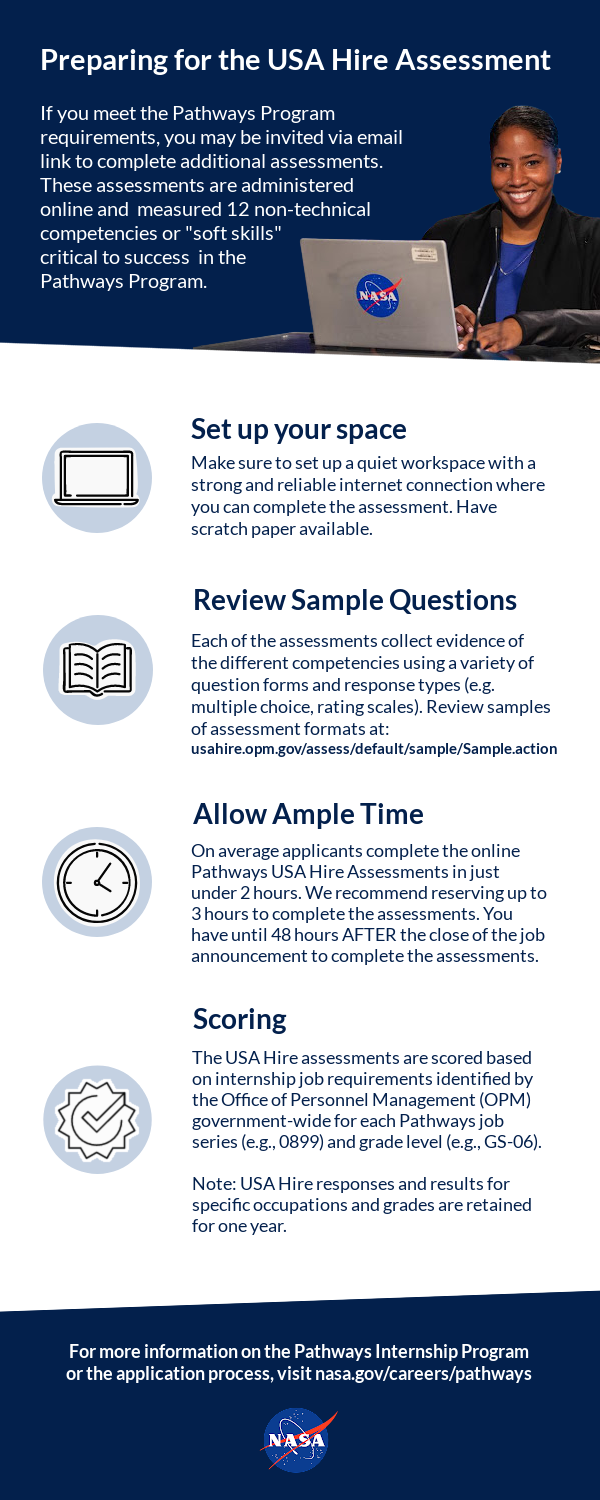
The NASA Pathways Intern Program opens in the spring and fall each year with job postings on USAJobs.gov. The application windows open two times each year – typically around February and September.

For information about the NASA Pathways program, visit:

NASA Careers: Pathways – NASA

Social Media

Stay connected with the mission on social media, and let people know you’re following it on X, Facebook, and Instagram using the hashtags #NASAStennis #Pathways #Artemis. Follow and tag these accounts:

Share

Details

Last Updated

Dec 21, 2023

Editor
NASA Stennis Communications
Contact
C. Lacy Thompson
Location
Stennis Space Center

Related Terms

Powered by WPeMatico

Get The Details…
LaToya Dean

SpaceX Dragon Departure from Space Station Targets Thursday

SpaceX Dragon Departure from Space Station Targets Thursday

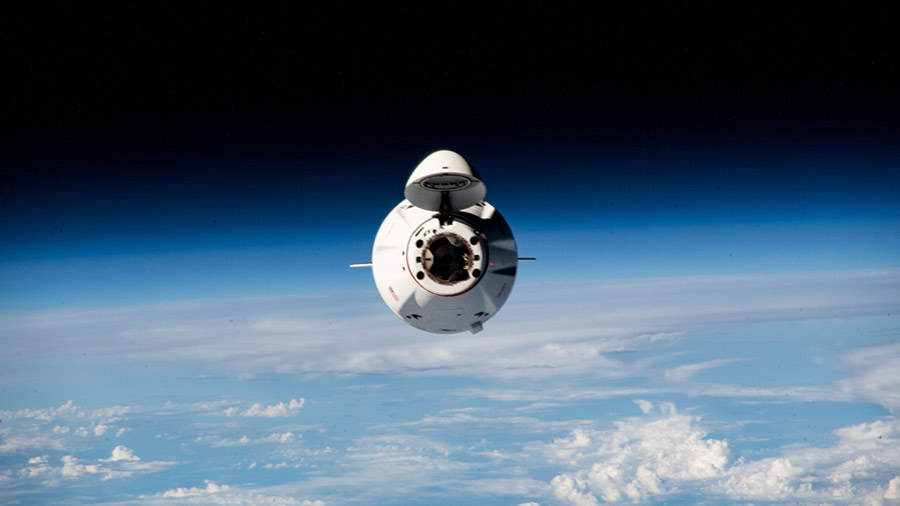
The SpaceX Dragon cargo spacecraft is pictured approaching the space station above the Indian Ocean on March 16, 2023.

Following a weather review, NASA and SpaceX now are targeting no earlier than 5:05 p.m. EST Thursday, Dec. 21, for the undocking of the company’s 29th Dragon commercial resupply services mission from the International Space Station due to unfavorable weather in the splashdown zones off the coast of Florida.

Coverage of Dragon’s departure Thursday will begin at 4:45 p.m. on the NASA+ streaming service via the web or the NASA app. Coverage also will air live on NASA Television, YouTube, and on the agency’s website. Learn how to stream NASA TV through a variety of platforms including social media.

After re-entering Earth’s atmosphere, the spacecraft will splash down off the coast of Florida, which will not be broadcast on NASA TV. Follow updates on return plans on the agency’s space station blog.

NASA and Northrop Grumman continue to target Friday, Dec. 22, for the departure of the Cygnus spacecraft from the orbital complex.

Coverage of Cygnus departure Friday will begin at 7:45 a.m. ahead of the robotic release of the spacecraft at 8:05 a.m. on the NASA+ streaming service via the web or the NASA app. Coverage also will air live on NASA Television, YouTube, and on the agency’s website.

Cygnus will conduct secondary payload operations following unberthing and complete a safe re-entry into the Earth’s atmosphere where it will burn up harmlessly over the Pacific Ocean.


Learn more about station activities by following the space station blog, @space_station and @ISS_Research on X, as well as the ISS Facebook and ISS Instagram accounts.

Get weekly video highlights at: https://roundupreads.jsc.nasa.gov/videoupdate/

Get the latest from NASA delivered every week. Subscribe here: www.nasa.gov/subscribe

Powered by WPeMatico

Get The Details…

Abby Graf

NASA Leadership Participates in Vice President-Chaired National Space Council Meeting 

NASA Leadership Participates in Vice President-Chaired National Space Council Meeting 

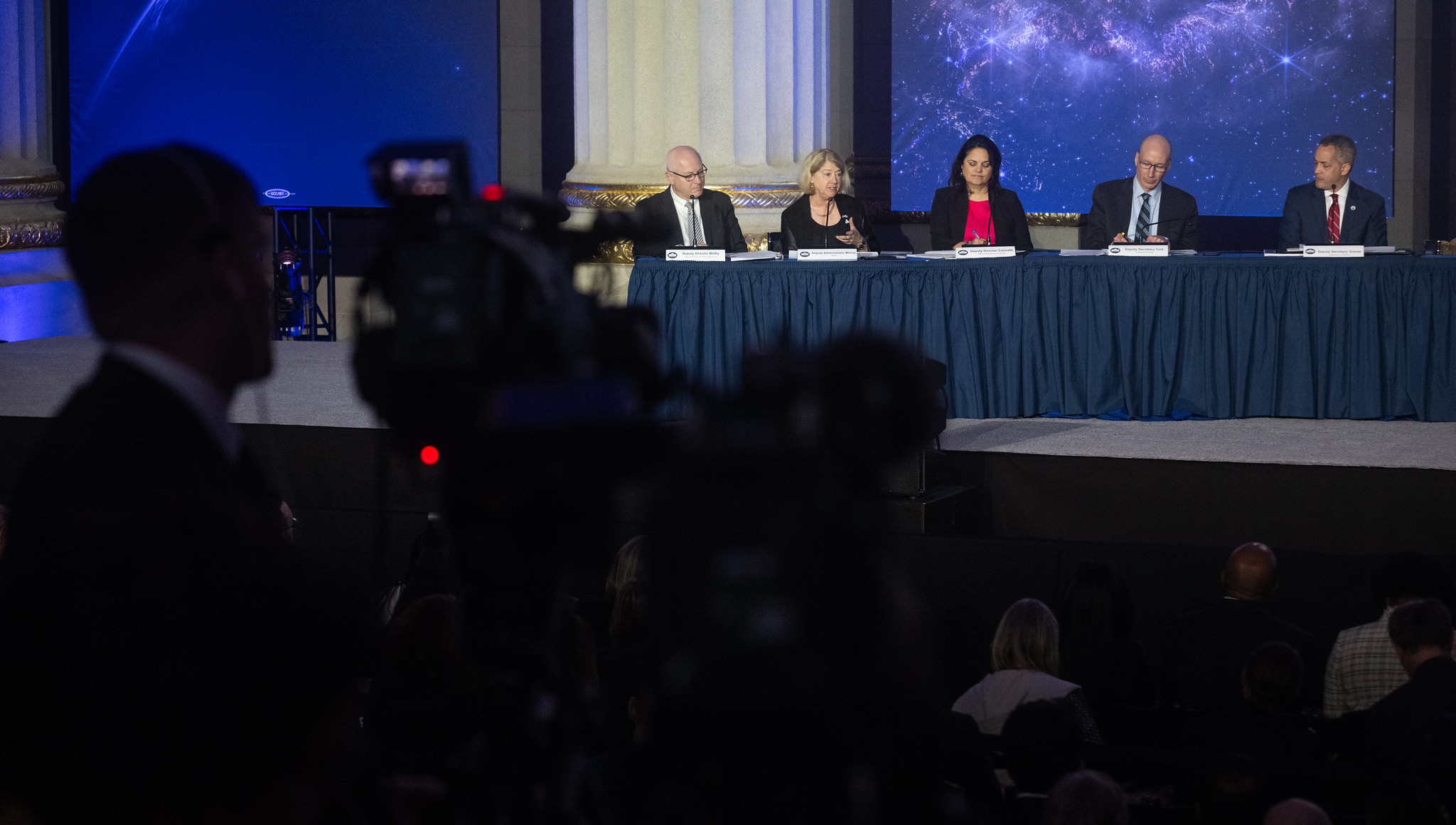
NASA Deputy Administrator Pam Melroy, second from left, speaks during the third meeting of the National Space Council alongside Deputy Director of the Office of Science and Technology Policy Steve Welby, left, Deputy Director of the Office of Management and Budget Nani Coloretti, center, Deputy Secretary of Energy David Turk, second from right, and Deputy Secretary of Commerce Don Graves, right, Wednesday, Dec. 20, 2023, at the Andrew W. Mellon Auditorium in Washington. Chaired by Vice President Kamala Harris, the council’s role is to advise the President regarding national space policy and strategy, and ensuring the United States capitalizes on the opportunities presented by the country’s space activities.
NASA/Joel Kowsky

Vice President Kamala Harris highlighted the importance of international partnerships and the societal benefits of space exploration, including NASA’s Earth science missions and the agency’s efforts to build a responsible, sustainable human presence in space during the Biden-Harris Administration’s third National Space Council meeting Wednesday, held at the Andrew W. Mellon Auditorium in Washington. 

“For generations, our nation has led the world in the exploration and use of space,” said Harris. “In the coming years, one of the primary ways we will continue to extend that leadership is by strengthening our international partnerships, combining our resources, scientific capacity, and technical skill with that of our allies and partners around the world, all in furtherance of our collective vision.” 

During the meeting, NASA announced it will deepen its partnership with the U.S. Agency for International Development (USAID) by advancing data collection for enhanced air quality monitoring in South America and Africa. Under this effort, NASA and the Italian Space Agency will partner to build and launch the Multi-Angle Imager for Aerosols (MAIA) mission, which is expected to launch in 2025 to enable improved measurements of airborne particulate matter in large metropolitan areas. The mission marks the first time NASA has partnered with epidemiologists and health organizations on a satellite mission to study human health and improve lives. 

“NASA is excited to partner with the Italian Space Agency on the MAIA mission while simultaneously strengthening our support for USAID,” said NASA Deputy Administrator Pam Melroy. “Airborne particles pollute some of the world’s most populous cities and have been linked to respiratory and cardiovascular diseases, as well as adverse reproductive and birth outcomes. Results from this mission will allow us to better understand the health impacts of pollution in geographically diverse global communities, including our Southern Hemisphere.” 

The Vice President also underscored the importance of international partnerships enabling long-duration stays on the Moon and future human missions to Mars. 

“In consultation with international and industry partners, NASA has built a cohesive and robust Moon to Mars strategy to enable a responsible, sustainable presence throughout the solar system. Our future depends on partnerships,” said Melroy. “Together, we will strategically advance science, boost our national posture, and inspire a new generation to want to explore the cosmos.” 

NASA has welcomed significant development progress and investments by international partners for its Artemis program. The European Space Agency provides the European Service Module, the Orion spacecraft’s powerhouse. Additionally, Canada, Japan, and Europe are contributing to Gateway, a human-tended space station in lunar orbit. Europe and Japan are building the International Habitation Module, Europe is providing the European System Providing Refueling, Infrastructure and Telecommunications (ESPRIT) module, Japan will provide cargo resupply with an upgrade of its H-II Transfer Vehicle (HTV-X), and Canada is developing Canadarm3, a robotic arm to perform science utilization and maintenance. With these significant contributions, the United States intends to land an international astronaut on the lunar surface by the end of the decade. 

In coordination with the U.S. Department of State, the agency has also welcomed 33 signatories to the Artemis Accords since it was established in 2020, ten in the past year alone. The Artemis Accords establish practical principles to guide space exploration cooperation among nations, including those participating in NASA’s Artemis program. The Accords signatories are holding focused discussions on how best to implement the Artemis Accords principles, including transparency and deconfliction at the Moon. 

NASA also highlighted the April 2023 release of the initial Moon to Mars architecture, comprised of the elements needed for long-term, human-led scientific discovery in deep space. NASA recently hosted its second Architecture Concept Review in November and anticipates releasing the outcomes of the annual cycle early in 2024. NASA noted that it is seeking international partnerships for an array of elements identified in the architecture and is in conversation with international space agencies to identify future partnership opportunities. 

A full recording of the National Space Council meeting is available online at: 

https://go.nasa.gov/3TtFxWM

More information on the outcomes of the meeting is available at: 

https://go.nasa.gov/3Rya4zV

https://go.nasa.gov/482FJRp

Faith McKie / Amber Jacobson 
Headquarters, Washington 
202-262-8342 / 240-298-1832 
faith.d.mckie@nasa.gov / amber.c.jacobson@nasa.gov 

Share

Details

Last Updated

Dec 20, 2023

Related Terms

Powered by WPeMatico
Get The Details…
Roxana Bardan