NASA Astronauts Test SpaceX Elevator Concept for Artemis Lunar Lander

NASA Astronauts Test SpaceX Elevator Concept for Artemis Lunar Lander

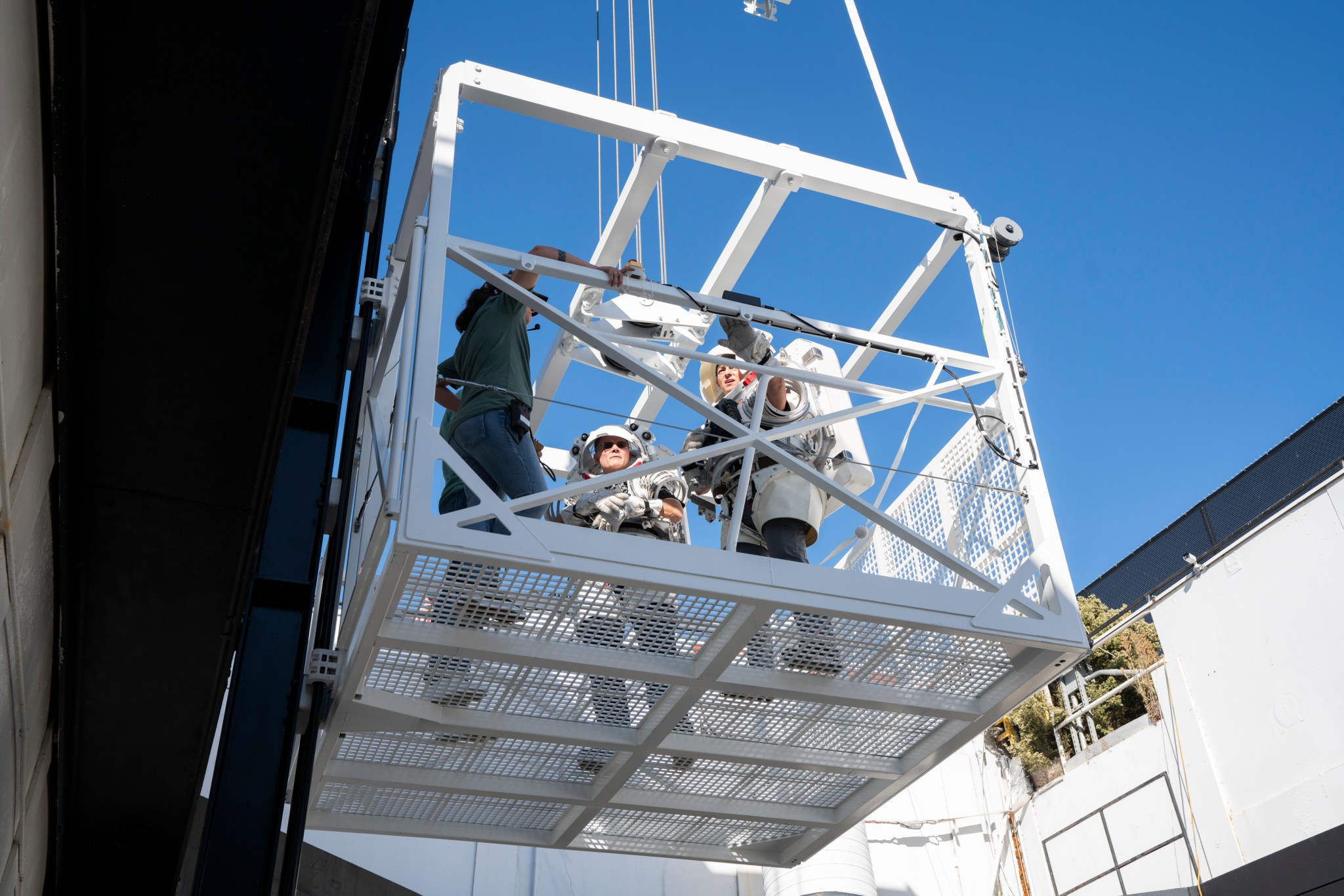
NASA astronauts Nicole Mann and Doug “Wheels” Wheelock participated in a recent test of a sub-scale mockup elevator for SpaceX’s Starship human landing system that will be used for NASA’s Artemis III and IV missions to the Moon.
SpaceX

NASA astronauts Nicole Mann and Doug “Wheels” Wheelock participated in a recent test of a sub-scale mockup elevator for SpaceX’s Starship human landing system that will be used for NASA’s Artemis III and IV missions to the Moon. The Starship human landing system will carry two astronauts from the Orion spacecraft in lunar orbit to the surface, serve as a habitat for crew members’ approximately one week stay on the Moon, and transfer them from the surface back to Orion.

The elevator will transport equipment and crew between Starship’s habitable area, located near the top of the lander, and the lunar surface, as they exit for moonwalks. The test allowed the astronauts to interact with a flight-like design of the elevator system, serving as both a functional demonstration of the hardware and providing the chance to receive valuable feedback from a crew perspective.

Built at SpaceX’s facility in Hawthorne, California, the elevator mockup has a full-scale basket section with functioning mechanical assemblies and crew interfaces for testing. During the demonstration, NASA astronauts wore spacesuits that simulate the suit size and mobility constraints that crew will face on the Moon. For Artemis III, the crew will wear new advanced spacesuits being developed by Axiom Space.

The suited crew provided feedback on elevator controls, such as gate latches, ramp deployment interfaces for moving into and out of the elevator basket, available space for cargo, and dynamic operations while the basket moved along a vertical rail system.

NASA is working to land the first woman and first person of color on the Moon under Artemis to explore more of the lunar surface than ever before and prepare to send humans to Mars for the benefit of all. The human landing system is a critical piece of deep space exploration architecture, along with the Space Launch System rocket, Orion spacecraft, advanced spacesuits and rovers, and the Gateway in orbit around the Moon.

Read more about Artemis:

https://www.nasa.gov/humans-in-space/artemis

News Media Contact

Jenalane Rowe
Marshall Space Flight Center
Huntsville, Ala.
256-544-0034

Powered by WPeMatico

Get The Details…
Lee Mohon

Artemis II Crew Visits White House

Artemis II Crew Visits White House

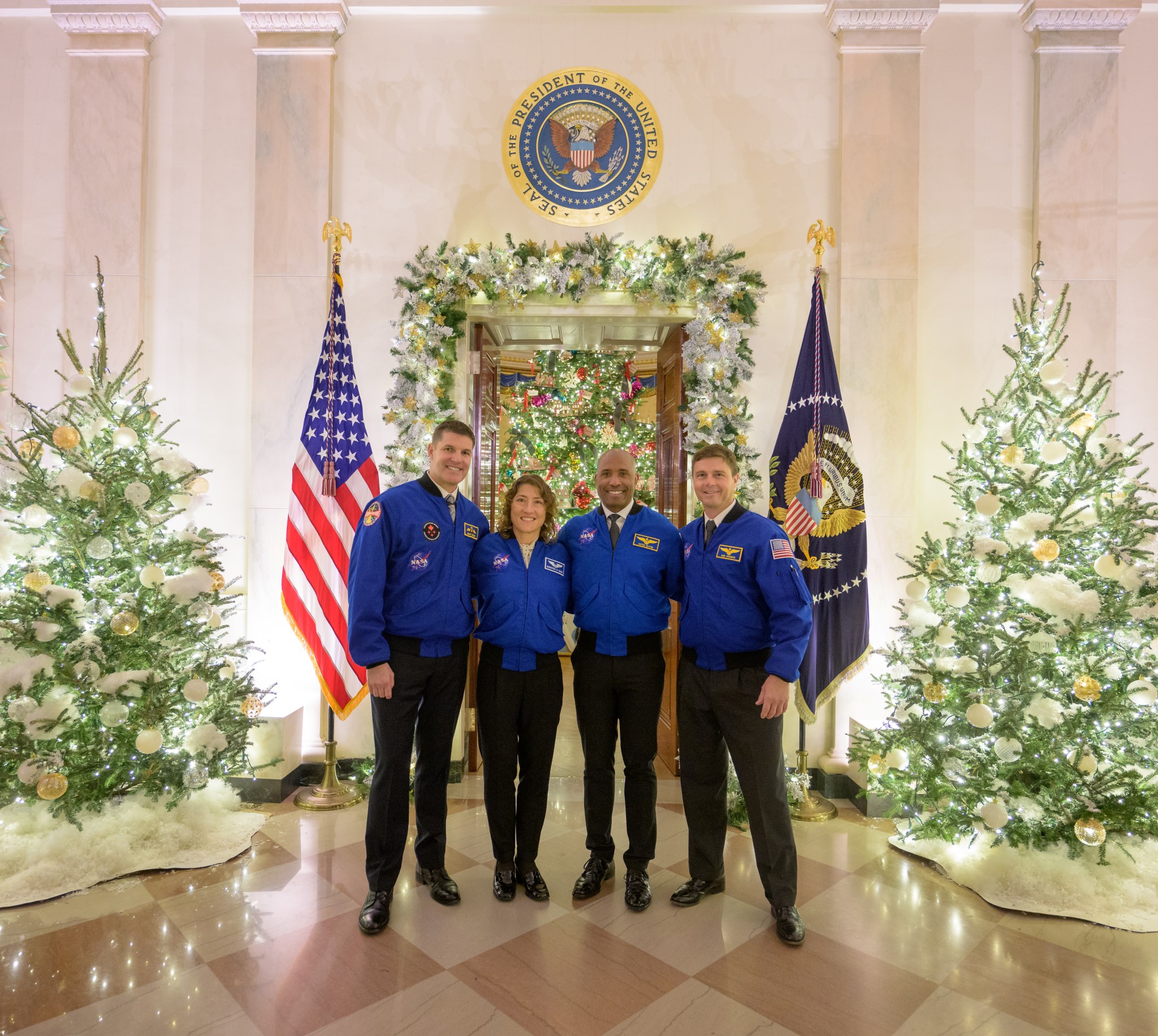
Four astronauts, wearing blue jackets and black pants, pose for a photo at the White House in front of decorations like trees, wreaths, and boughs. The astronauts, members of the Artemis II mission, have their arms around each other's shoulders. Behind them are two flags, and a seal high on the wall that reads
NASA / Bill Ingalls

Artemis II crew members (from left) CSA (Canadian Space Agency) astronaut Jeremy Hansen and NASA astronauts Christina Koch, Victor Glover, and Reid Wiseman pose for a group photograph after their meetings with U.S. President Joe Biden and U.S. Vice President Kamala Harris at the White House on Dec. 14, 2023.

The crew will travel aboard NASA’s Orion spacecraft on a 10-day mission around the Moon, testing spacecraft systems for the first time with astronauts for long-term exploration and scientific discovery.

Image Credit: NASA/Bill Ingalls

Powered by WPeMatico

Get The Details…
Monika Luabeya

As the Arctic Warms, Its Waters Are Emitting Carbon

As the Arctic Warms, Its Waters Are Emitting Carbon

Sediment from Canada’s Mackenzie River empties into the Beaufort Sea in milky swirls in this 2017 satellite image. Scientists are studying how river discharge drives carbon dioxide emissions in this part of the Arctic Ocean.
NASA Earth Observatory image by Jesse Allen using Landsat data from USGS

Runoff from one of North America’s largest rivers is driving intense carbon dioxide emissions in the Arctic Ocean.

When it comes to influencing climate change, the world’s smallest ocean punches above its weight. It’s been estimated that the cold waters of the Arctic absorb as much as 180 million metric tons of carbon per year – more than three times what New York City emits annually – making it one of Earth’s critical carbon sinks. But recent findings show that thawing permafrost and carbon-rich runoff from Canada’s Mackenzie River trigger part of the Arctic Ocean to release more carbon dioxide (CO2) than it absorbs.

The study, published earlier this year, explores how scientists are using state-of-the-art computer modeling to study rivers such as the Mackenzie, which flows into a region of the Arctic Ocean called the Beaufort Sea. Like many parts of the Arctic, the Mackenzie River and its delta have faced significantly warmer temperatures in recent years across all seasons, leading to more melting and thawing of waterways and landscapes.

In this marshy corner of Canada’s Northwest Territories, the continent’s second largest river system ends a thousand-mile journey that begins near Alberta. Along the way, the river acts as a conveyor belt for mineral nutrients as well as organic and inorganic matter. That material drains into the Beaufort Sea as a soup of dissolved carbon and sediment. Some of the carbon is eventually released, or outgassed, into the atmosphere by natural processes.

Scientists have thought of the southeastern Beaufort Sea as a weak-to-moderate CO2 sink, meaning it absorbs more of the greenhouse gas than it releases. But there has been great uncertainty due to a lack of data from the remote region.

To fill that void, the study team adapted a global ocean biogeochemical model called ECCO-Darwin, which was developed at NASA’s Jet Propulsion Laboratory in Southern California and the Massachusetts Institute of Technology in Cambridge. The model assimilates nearly all available ocean observations collected for more than two decades by sea- and satellite-based instruments (sea level observations from the Jason-series altimeters, for example, and ocean-bottom pressure from the GRACE and GRACE Follow-On missions).

Like a conveyer belt of carbon, the Mackenzie River, seen here in 2007 from NASA’s Terra satellite, drains an area of almost 700,000 square miles (1.8 million square kilometers) on its journey north to the Arctic Ocean. Some of the carbon originates from thawing permafrost and peatlands.
NASA/GSFC/METI/ERSDAC/JAROS, and U.S./Japan ASTER Science Team

The scientists used the model to simulate the discharge of fresh water and the elements and compounds it carries – including carbon, nitrogen, and silica – across nearly 20 years (from 2000 to 2019).

The researchers, from France, the U.S., and Canada, found that the river discharge was triggering such intense outgassing in the southeastern Beaufort Sea that it tipped the carbon balance, leading to a net CO2 release of 0.13 million metric tons per year – roughly equivalent to the annual emissions from 28,000 gasoline-powered cars. The release of CO2 into the atmosphere varied between seasons, being more pronounced in warmer months, when river discharge was high and there was less sea ice to cover and trap the gas.

Ground Zero for Climate Change

Scientists have for decades studied how carbon cycles between the open ocean and atmosphere, a process called air-sea CO2 flux. However, the observational record is sparse along the coastal fringes of the Arctic, where the terrain, sea ice, and long polar nights can make long-term monitoring and experiments challenging.

“With our model, we are trying to explore the real contribution of the coastal peripheries and rivers to the Arctic carbon cycle,” said lead author Clément Bertin, a scientist at Littoral Environnement et Sociétés in France.

Such insights are critical because about half of the area of the Arctic Ocean is composed of coastal waters, where land meets sea in a complex embrace. And while the study focused on a particular corner of the Arctic Ocean, it can help tell a larger story of environmental change unfolding in the region.

Since the 1970s, the Arctic has warmed at least three times faster than anywhere else on Earth, transforming its waters and ecosystems, the scientists said. Some of these changes promote more CO2 outgassing in the region, while others lead to more CO2 being absorbed.

For example, with Arctic lands thawing and more snow and ice melting, rivers are flowing more briskly and flushing more organic matter from permafrost and peatlands into the ocean. On the other hand, microscopic phytoplankton floating near the ocean surface are increasingly taking advantage of shrinking sea ice to bloom in the newfound open water and sunlight. These plantlike marine organisms capture and draw down atmospheric CO2during photosynthesis. The ECCO-Darwin model is being used to study these blooms and the ties between ice and life in the Arctic.

Scientists are tracking these large and seemingly small changes in the Arctic and beyond because our ocean waters remain a critical buffer against a changing climate, sequestering as much as 48% of the carbon produced by burning fossil fuels.

News Media Contacts

Andrew Wang / Jane J. Lee
Jet Propulsion Laboratory, Pasadena, Calif.
626-379-6874 / 818-354-0307
andrew.wang@jpl.nasa.gov / jane.j.lee@jpl.nasa.gov

Written by Sally Younger

2023-185

Share

Details

Last Updated

Dec 21, 2023

Powered by WPeMatico

Get The Details…
Naomi Hartono

Kennedy Space Center Looks Ahead to a Busy Year in 2024

Kennedy Space Center Looks Ahead to a Busy Year in 2024

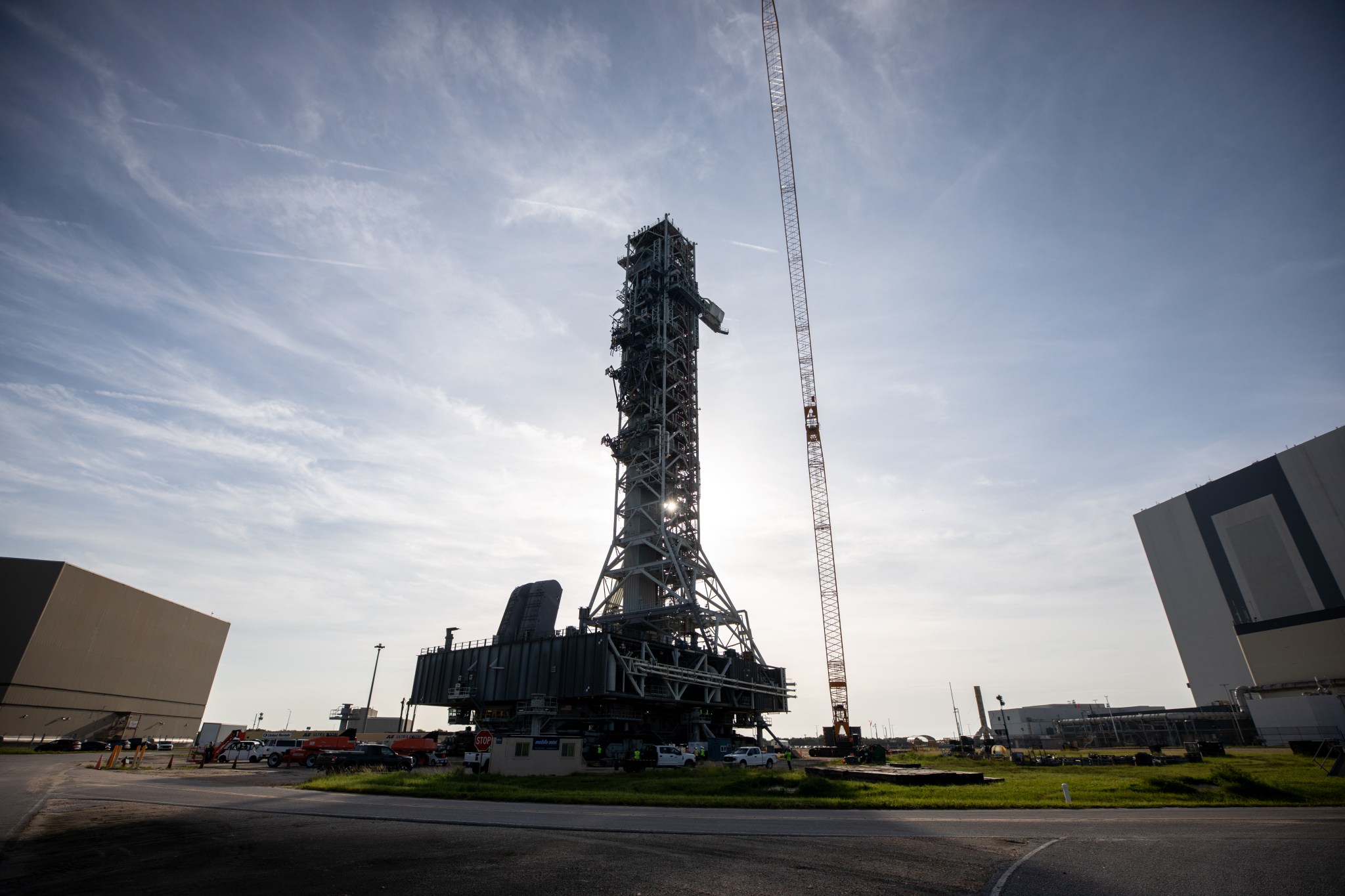
NASA's Space Launch System rocket Mobile Launcher moves to the launch pad at Kennedy Space Center.
The mobile launcher, carried by the crawler-transporter 2, rolls out from its park site location to Launch Pad 39B at NASA’s Kennedy Space Center in Florida in August 2023 for testing ahead of the agency’s Artemis II mission.
NASA/Ben Smegelsky

Another jam-packed year is in store for NASA’s Kennedy Space Center in Florida as the momentum of a busy 2023 is carried forward into the new year. On the horizon are missions to the Moon, more crew and cargo flights to the International Space Station, and several upgrade projects across the spaceport.

NASA’s first CLPS (Commercial Lunar Payload Services) initiative mission with Astrobotic’s Peregrine lunar lander is set to begin work in 2024 after lifting off on the inaugural launch of United Launch Alliance’s Vulcan Centaur rocket. These missions will help the agency develop capabilities needed to explore the Moon under Artemis ahead of sending astronauts to the lunar surface. 

Another CLPS mission, set for launch early in the year aboard a SpaceX Falcon 9 rocket, will send the Intuitive Machines Nova-C lander to a landing site at the Moon’s South Pole region. The mission will carry NASA payloads focusing on plume-surface interactions, space weather/lunar surface interactions, radio astronomy, precision landing technologies, and a communication and navigation node for future autonomous navigation technologies.  

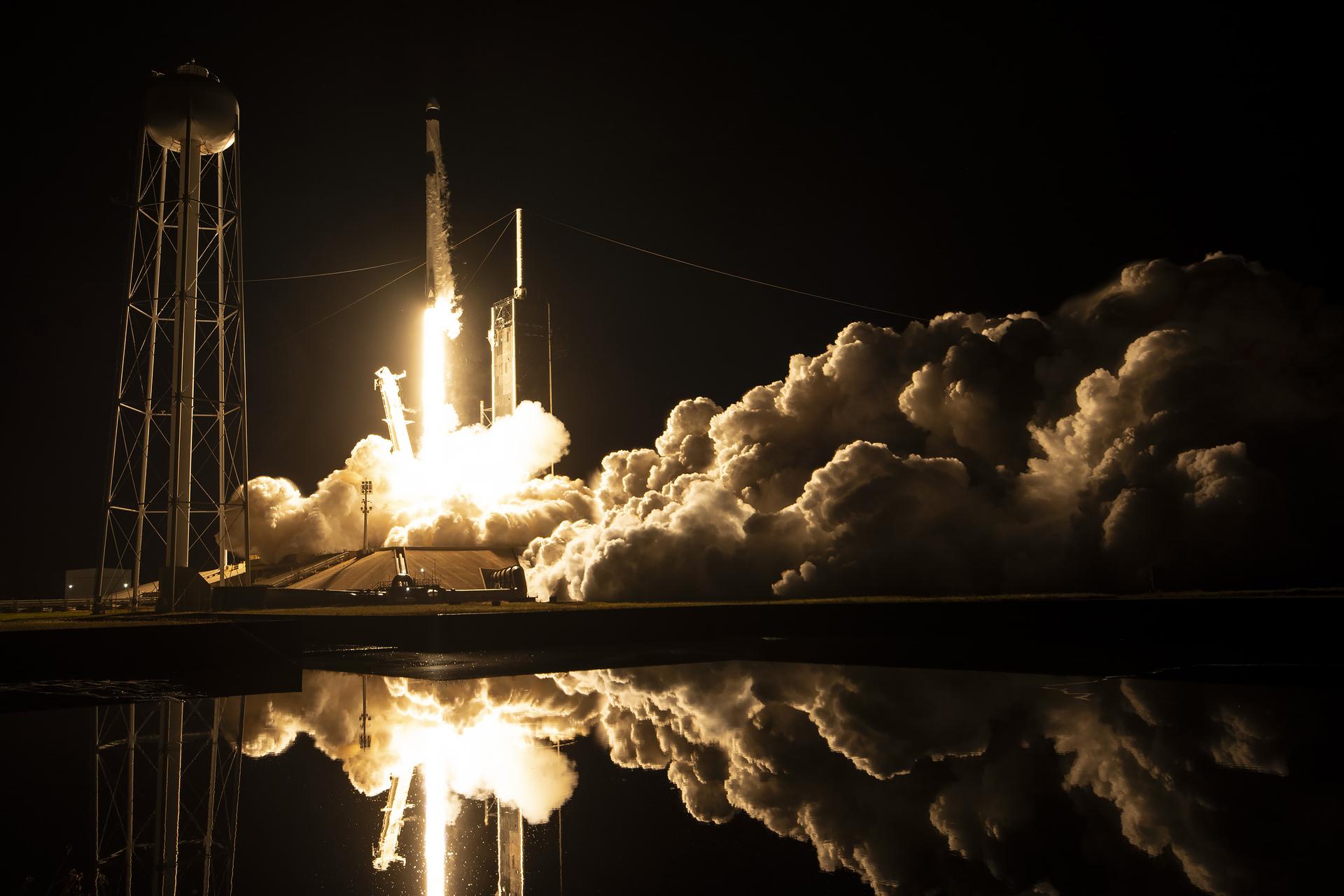
A SpaceX Falcon 9 lifts off from NASA's Kennedy Space Center in Florida.
The SpaceX Falcon 9 rocket carrying the Dragon spacecraft lifts off from Launch Complex 39A at NASA’s Kennedy Space Center in Florida in November 2023 on the company’s 29th commercial resupply services mission for the agency to the International Space Station.
SpaceX

Development toward Artemis II, NASA’s first crewed test flight of its lunar-focused Artemis program continues across Kennedy. SLS (Space Launch System) hardware, including twin solid rocket boosters and a 212-foot-tall core stage for the Artemis II mission, will begin stacking and integration inside the Vehicle Assembly Building in the coming months, after which teams will begin a series of testing prior to launch. Processing also is underway on the core stage for Artemis III. 

The Artemis II Orion crew and service modules will continue prelaunch processing inside Kennedy’s Neil Armstrong Operations and Checkout Building alongside the crew modules for Artemis III and Artemis IV– NASA’s initial missions to land the next humans on the lunar surface.  

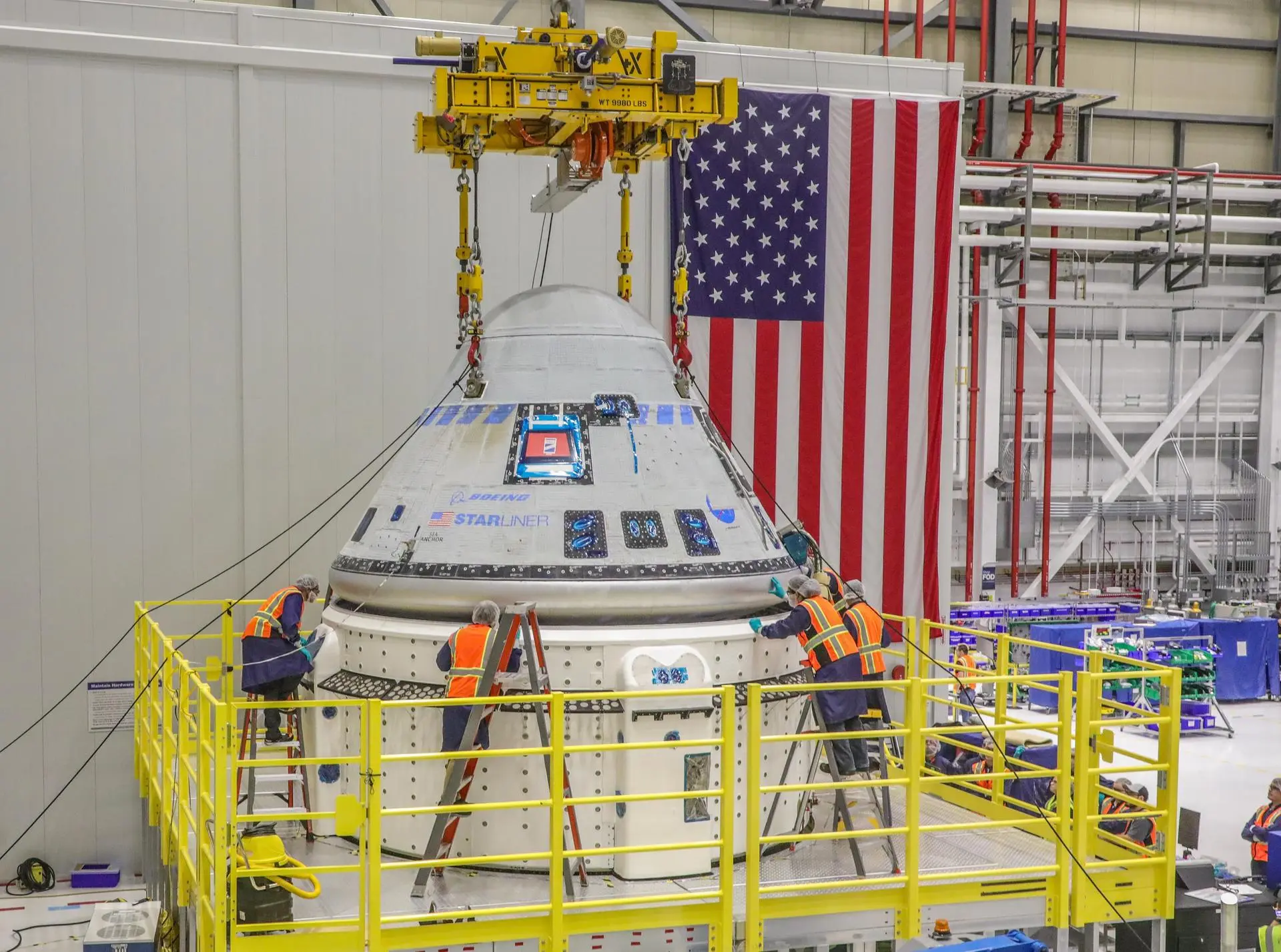
Technicians work around Boeing's Starliner spacecraft supported by a yellow crane during processing.
The Starliner team works to finalize the mate of the crew module and new service module for NASA’s Boeing Crew Flight Test that will take NASA astronauts Barry “Butch” Wilmore and Sunita “Suni” Williams to and from the International Space Station.
Boeing/John Grant

NASA and its commercial partners, Boeing and SpaceX, have three Commercial Crew Program missions set to fly from Florida’s Space Coast, setting up another busy year of traffic for the International Space Station in 2024. Teams are readying for the short-duration Crew Flight Test of Boeing’s CST-100 Starliner no earlier than April. Meanwhile, NASA and SpaceX will continue crew rotation missions to the orbiting laboratory with Crew-8 expected no earlier than mid-February and Crew-9 to follow in mid-August.  

Other crewed missions to the space station include SpaceX and Axiom Space’s short-duration Axiom Mission 3 and Axiom Mission 4 private astronaut missions.  

SpaceX’s Polaris Dawn, the second private short-duration orbital flight will also lift off from Kennedy with four individuals that plan to attempt the first-ever commercial spacewalk. 

Along with crewed flights, three of the agency’s Commercial Resupply Services missions hosted on SpaceX’s Dragon cargo spacecraft, Northrop Grumman’s Cygnus, and the debut flight of Sierra Space’s cargo spaceplane, Dream Chaser, are slated to fly from Kennedy next year to deliver thousands of pounds of supplies, equipment, and science investigations to the orbiting laboratory. 

Four astronauts sit inside a SpaceX Dragon crew capsule.
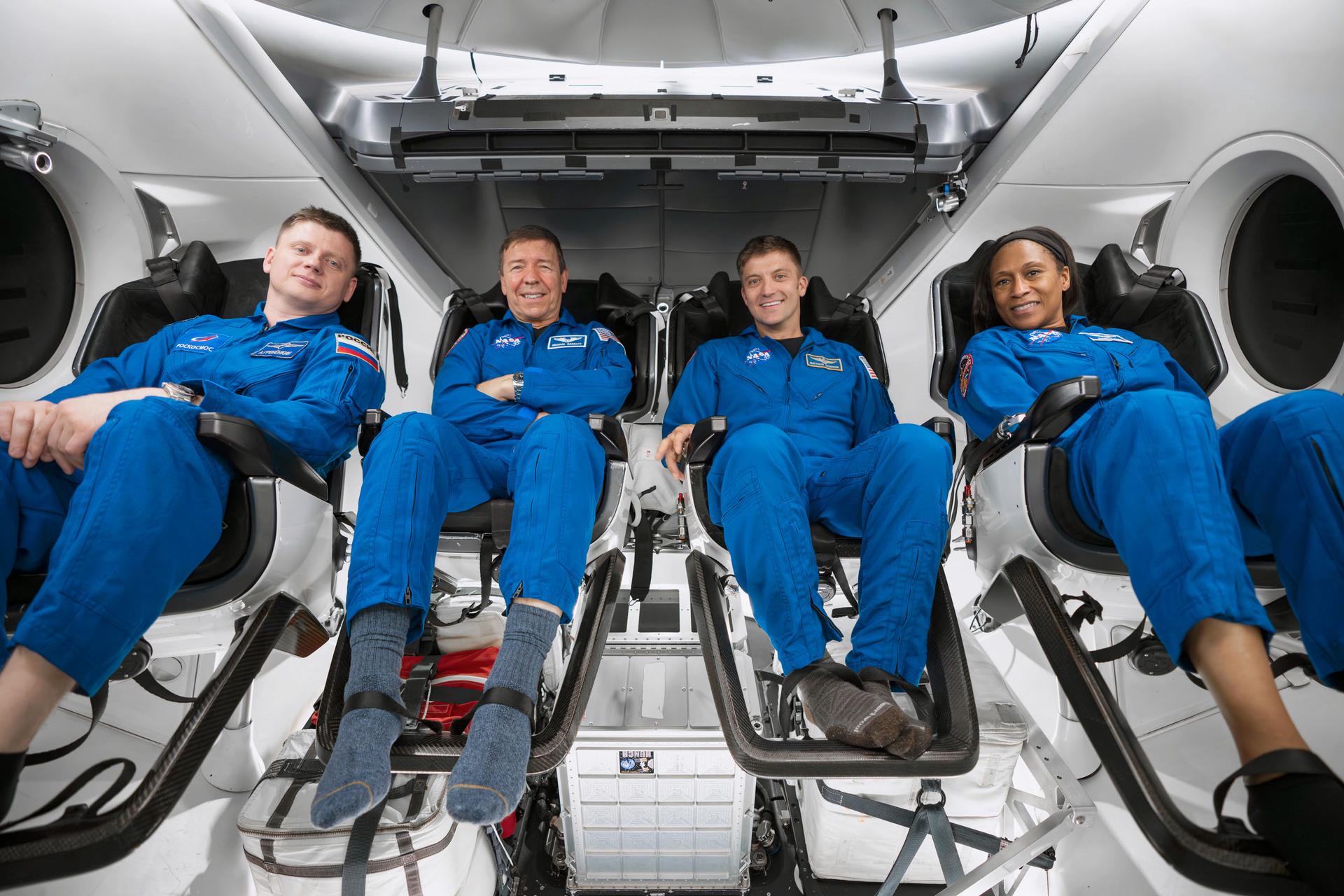
The four SpaceX Crew-8 crew members (from left) Alexander Grebenkin from Roscosmos, and Michael Barratt, Matthew Dominick, and Jeanette Epps, all NASA astronauts, are pictured training inside a Dragon mockup crew vehicle at SpaceX headquarters in Hawthorne, California.
SpaceX

NASA’s Launch Services Program based at Kennedy has several science and CubeSat missions manifested to fly on commercial rockets next year. They represent a mix of some of the agency’s most complex robotic and scientific missions, as well as smaller cost-efficient missions, and missions sponsored by NASA’s CubeSat Launch Initiative

The first of three primary missions is NASA’s PACE (Plankton, Aerosol, Cloud, ocean Ecosystem) spacecraft that will launch early next year on a SpaceX Falcon 9 rocket. PACE’s science goals include extending ocean color, atmospheric aerosol, and cloud data records for Earth system and climate studies.  

GOES-U (Geostationary Operational Environmental Satellite-U) is slated to launch in April on a SpaceX Falcon Heavy rocket, the fourth and final satellite in NOAA’s GOES-R Series of advanced geostationary weather-observing satellites. Scheduled for an October launch on a Falcon Heavy, the agency’s Europa Clipper mission will investigate Jupiter’s moon Europa to determine if it has conditions suitable to support life.  

Among the small spacecraft and CubeSat missions slated to launch in 2024 are two dedicated launches on Rocket Lab’s Electron for PREFIRE (Polar Radiant Energy in the Infrared Experiment), which aims to give researchers a more accurate picture of the energy entering and leaving Earth. Blue Origin’s New Glenn rocket will host NASA’s EscaPADE (Escape and Plasma Acceleration and Dynamics Explorers) mission that will send two spacecraft to study solar wind energy and momentum through Mars’ unique hybrid magnetosphere. 

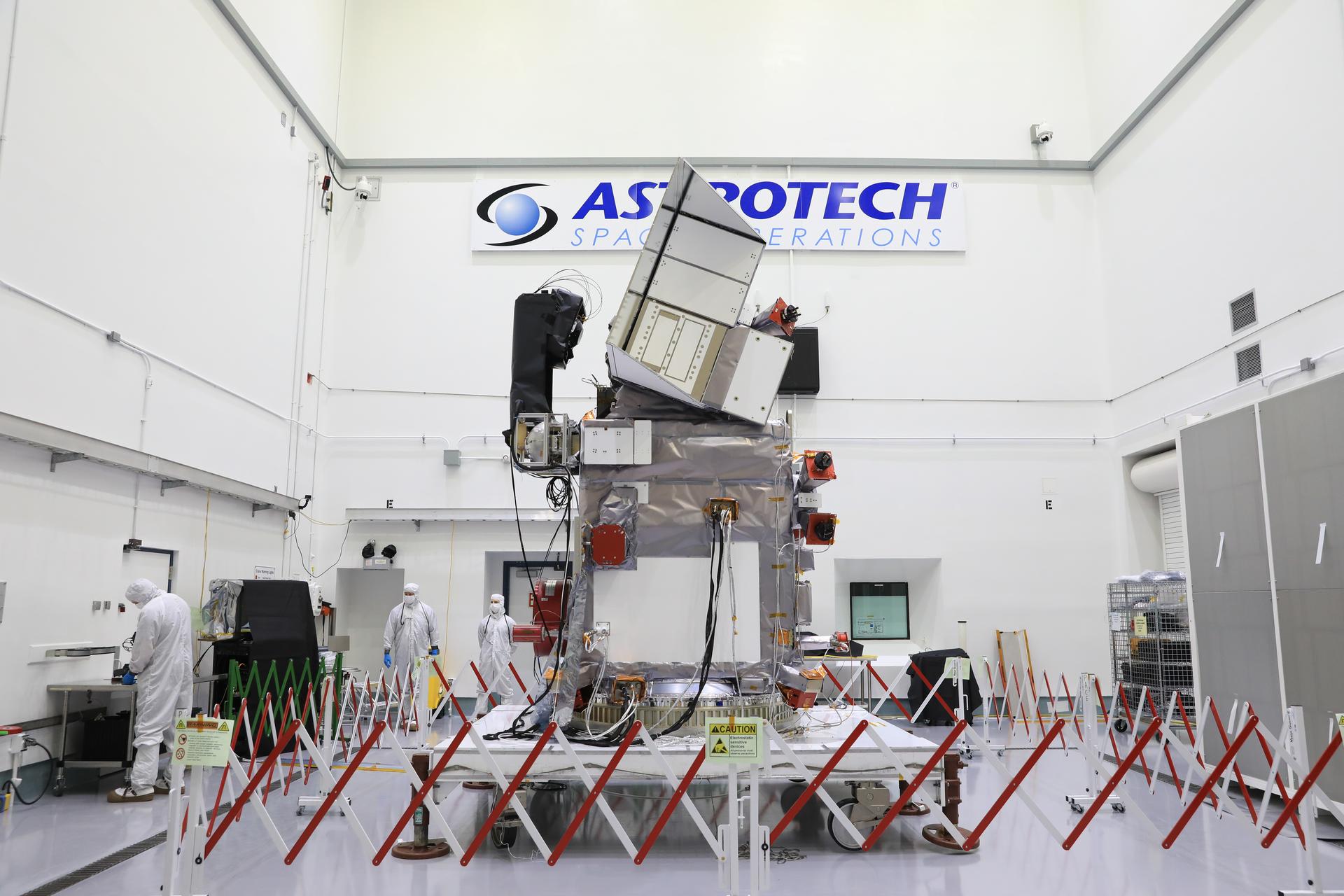
Technicians process the NASA’s Plankton, Aerosol, Cloud, ocean Ecosystem (PACE) observatory on a spacecraft dolly in a high bay at the Astrotech Space Operations Facility near the agency’s Kennedy Space Center in Florida.
NASA/Kim Shiflett

While next year’s expected cadence of nearly 100 launches from Florida’s Space Coast is likely to mirror 2023’s record-setting pace, something else to look out for will be upgrade and sustainability efforts around the spaceport.  

The Indian River Bridge construction project, which opened the first of two spans in June of 2023, and the solar site 6 project of the Utility Energy Services Contract, are expected to wrap up and become fully operational next year. 

Restoration and beautification efforts across Kennedy also include the consideration of several sites for development into natural wildflower prairies. In the spring, Spaceport Integration’s sustainability team will work on “Project Arbor at the Spaceport.” It will focus on planting Florida native trees and one seedling from the Artemis Moon Tree project along the Fitness Trail near Operations Support Building II to provide shade, benefit wildlife, and help improve air quality. 

A historical marker sponsored by NASA and the Florida Department of State will be installed in early 2024 at the site of Kennedy’s original Headquarters Building making it the first to be located within Kennedy’s secure area. 

As 2023 draws to a close, Kennedy Space Center is gearing up to support more groundbreaking missions that will expand human knowledge of Earth and our solar system while protecting the local ecosystem and natural resources. 

Powered by WPeMatico

Get The Details…
Jamie Groh

Going the Extra 500 miles for Alaskan River Ice

Going the Extra 500 miles for Alaskan River Ice

2 Min Read

Going the Extra 500 miles for Alaskan River Ice

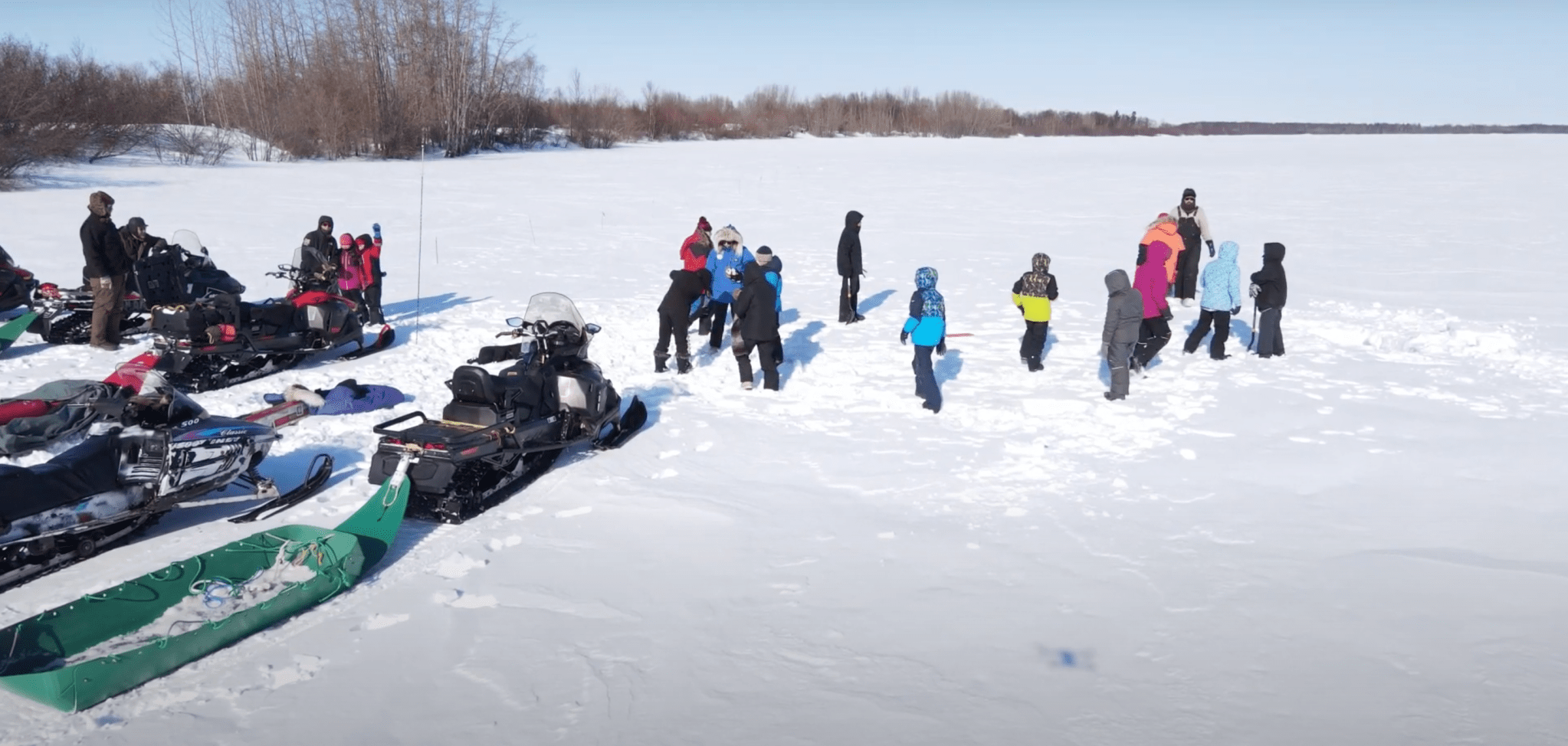
Aerial photograph of about 20 people in colorful jackets gathered on the ice
Fresh Eyes on Ice science team from the University of Alaska Fairbanks stop in the Alaska Native village of Shageluk on a community and citizen science journey of 550 mile by snow mobile.
Credits:
Photo by Amanda Byrd, UAF

Teachers and students in remote Alaskan villages have become vital NASA climate researchers. These special volunteers are so important that last year, climate scientists took an epic 550 mile snowmobile journey to collaborate with them! You can learn all about it in a new video from the Fresh Eyes on Ice project.

The researchers stopped at several remote Alaskan villages, where teachers and students at the local schools already understood why this work was so crucial. When you drive over ice-covered rivers every day—as many Alaskan residents do—tracking ice thickness is no joke. Neither is climate change.

“We knew that climate change was happening around us.” explains Joyanne Hamilton, a teacher whose students worked with the team. “Our elders here in Shageluk were talking about changes that were happening….the data they’re gathering is ultimately important to the tribe.” 

The new video features Hamilton, her students, and Fresh Eyes on Ice researchers Dr. Chris Arp, Allen Bondurant and Sarah Clement. It follows their journey along the Innoko, Kukokwim and Yukon Rivers and the Iditarod Sled Dog Trail.

Photograph of about 20 people in colorful jackets gathered on lake ice. Snowmobiles, backpacks and other equipment are nearby.
Fresh Eyes on Ice science team from the University of Alaska Fairbanks stop in the Alaska Native village of Shageluk on a community and citizen science journey of 550 mile by snow mobile.
Photo by Amanda Byrd, UAF

Do you live in Alaska or elsewhere in North America where ice forms? All you need to help out is a smartphone and NASA’s GLOBE Observer Landcover app. Your photos will be used in near-real time by river forecasters to help predict spring ice jam flooding, and by scientists to understand how ice timing and extent is changing. Join Fresh Eyes on Ice here!

Share

Details

Last Updated
Dec 21, 2023

Powered by WPeMatico

Get The Details…