Stem Cell Research Continues, Crew Preps for Cargo Arrival

Stem Cell Research Continues, Crew Preps for Cargo Arrival

NASA astronaut and Expedition 70 Flight Engineer Loral O'Hara works on a bone cell study inside the Life Science Glovebox located inside the International Space Station's Kibo laboratory module. O’Hara was working on the Microgravity Associated Bone Loss-A investigation that may provide a better understanding of space-caused bone loss and aging-related bone conditions on Earth.
NASA astronaut and Expedition 70 Flight Engineer Loral O’Hara works on a bone cell study inside the Life Science Glovebox located inside the International Space Station’s Kibo laboratory module. O’Hara was working on the Microgravity Associated Bone Loss-A investigation that may provide a better understanding of space-caused bone loss and aging-related bone conditions on Earth.

Stem cell research carried into Friday as the Expedition 70 crew members worked to wrap up an experiment that began earlier in the week. As science continued aboard the International Space Station, a cargo craft is currently in orbit preparing to approach the orbiting laboratory for an automatic docking scheduled for the early morning hours Saturday.

Two cosmonauts, Flight Engineers Oleg Kononenko and Nikolai Chub, are gearing up to be on duty monitoring the automated docking of the Progress 87 cargo craft, which launched from the Baikonur Cosmodrome in Kazakhstan at 10:25 p.m. EST Wednesday, Feb. 14. Loaded with nearly three tons of food, fuel, and supplies, Progress is scheduled to dock to the station at 1:12 a.m. Saturday, Feb. 17. Kononenko and Chub spent Friday preparing for the upcoming cargo delivery by reviewing telerobotically operated rendezvous unit (TORU) procedures, which allows them to remotely control an arriving spacecraft in the unlikely event it could not automatically dock.

In the Kibo Laboratory, another day of stem cell research was underway for four orbital residents. Throughout the morning, NASA astronaut Loral O’Hara, with assistance from JAXA (Japan Aerospace Exploration Agency) Flight Engineer Satoshi Furukawa, processed samples inside the Life Sciences Glovebox for the Microgravity Associated Bone Loss-A (MABL-A) investigation. The duo carried out the experiment to help scientists assess the effects of microgravity on bone marrow stem cells, which may provide a better understanding of space-caused bone loss and aging-related bone conditions on Earth.

NASA astronaut Jasmin Moghbeli, with assistance from ESA (European Space Agency) Commander Andreas Mogensen, then took over the work with MABL-A, sampling additional stem cells throughout the afternoon.

O’Hara also spent some time conducting maintenance in the Bishop Airlock. Furukawa removed old and installed new CO2 units in Kibo’s gas supply equipment, Moghbeli conducted some orbital plumbing, and Mogensen analyzed some bacteria samples that were collected earlier in the week.

In the Roscosmos segment, Flight Engineer Konstantin Borisov ran a distillation cycle on the water processing unit. Later on, he conducted an experiment to analyze Earth’s nighttime atmosphere in near-ultraviolet.


Learn more about station activities by following the space station blog, @space_station and @ISS_Research on X, as well as the ISS Facebook and ISS Instagram accounts.

Get weekly video highlights at: https://roundupreads.jsc.nasa.gov/videoupdate/

Get the latest from NASA delivered every week. Subscribe here: www.nasa.gov/subscribe

Powered by WPeMatico

Get The Details…

Abby Graf

30 Years Ago: Clementine Changes Our View of the Moon

30 Years Ago: Clementine Changes Our View of the Moon

In 1994, a joint NASA and Department of Defense (DOD) mission called Clementine dramatically changed our view of the Moon. As the first U.S. mission to the Moon in more than two decades, Clementine’s primary objectives involved technology demonstrations to test lightweight component and sensor performance. The lightweight sensors aboard the spacecraft returned 1.6 million digital images, providing the first global multispectral and topographic maps of the Moon. Data from a radar instrument indicated that large quantities of water ice may lie in permanently shadowed craters at lunar south pole, while other polar regions may remain in near permanent sunlight. Although a technical problem prevented a planned flyby of an asteroid, Clementine’s study of the Moon proved that a technology demonstration mission can accomplish significant science.

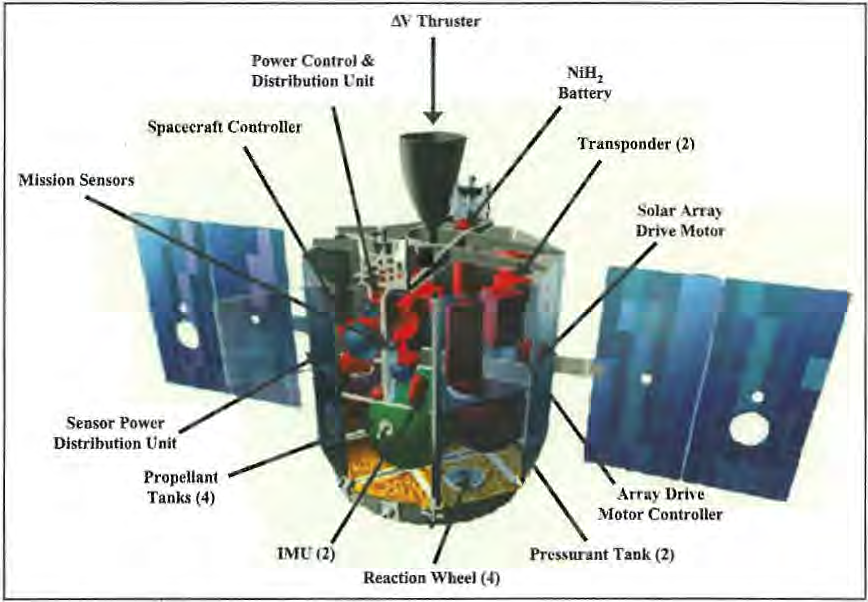
The Clementine engineering model on display at the Smithsonian Institution’s National Air and Space Museum (NASM) in Washington, D.C. Schematic illustration showing Clementine’s major components and sensors
Left: The Clementine engineering model on display at the Smithsonian Institution’s National Air and Space Museum (NASM) in Washington, D.C. Image credit: courtesy NASM. Right: Schematic illustration showing Clementine’s major components and sensors.

The DOD’s Strategic Defense Initiative Organization, renamed the Ballistic Missile Defense Organization in 1993, directed the Clementine project, formally called the Deep Space Program Science Experiment. The Naval Research Laboratory (NRL) in Washington, D.C., managed the mission design, spacecraft manufacture and test, launch vehicle integration, ground support, and flight operations. The Lawrence Livermore National Laboratory (LLNL) in Livermore, California, provided the nine science instruments, including lightweight imaging cameras and ranging sensors. NASA’s Goddard Space Flight Center in Beltsville, Maryland, provided trajectory and mission planning support for the lunar phase, and NASA’s Jet Propulsion Laboratory in Pasadena, California, provided trajectory and mission planning for the asteroid encounter and deep space communications and tracking through the Deep Space Network. Clementine’s primary planned mission involved the testing of new lightweight satellite technologies in the harsh deep space environment. As a secondary mission, Clementine would observe the Moon for two months using its multiple sensors, then leave lunar orbit and travel to 1620 Geographos, a 1.6-mile-long, elongated, stony asteroid. At a distance of 5.3 million miles from Earth, Clementine would fly within 62 miles of the near-Earth asteroid, returning images and data using its suite of sensors.
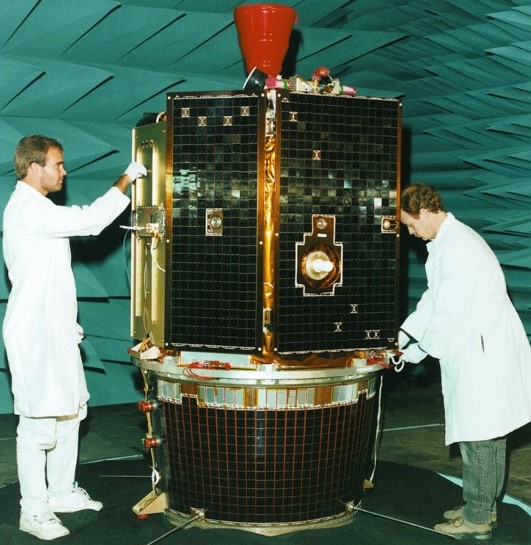
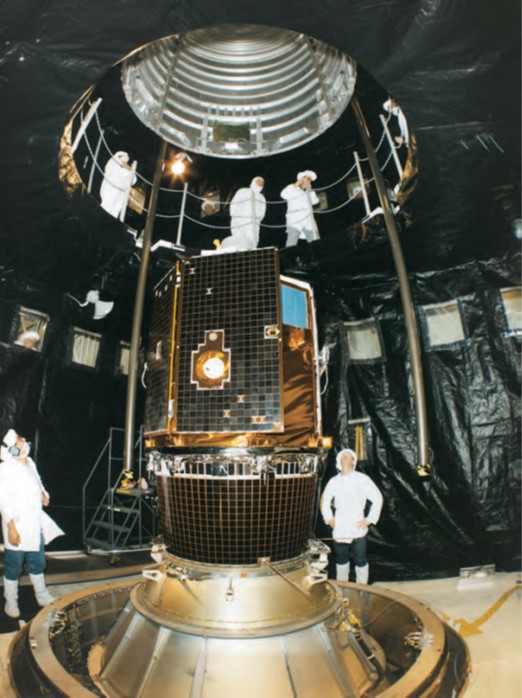
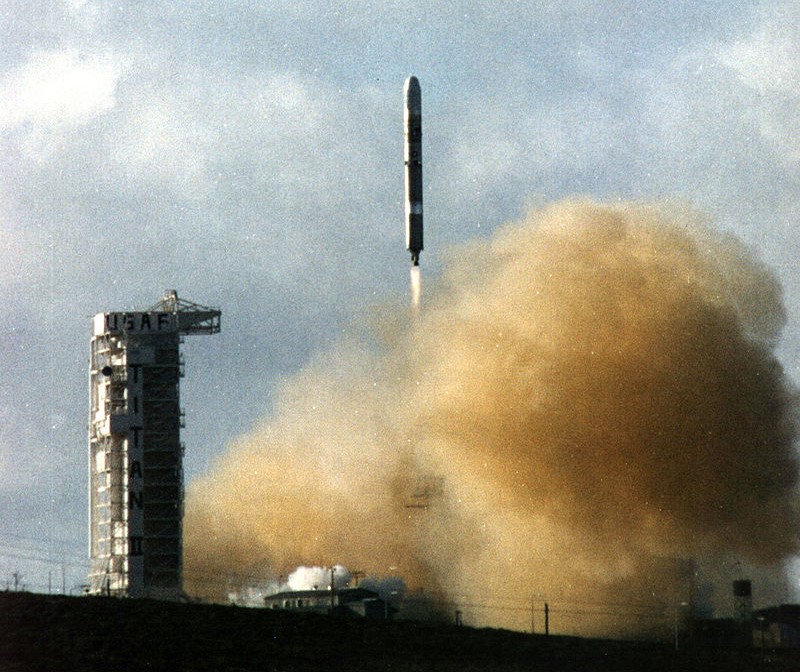
Technicians prepare Clementine for a test in an anechoic chamber prior to shipping to the launch site Workers lower the payload shroud over Clementine already mounted on its Titan IIG launch vehicle Liftoff of Clementine from Vandenberg Air Force, now Space Force, Base in California
Left: Technicians prepare Clementine for a test in an anechoic chamber prior to shipping to the launch site. Middle: Workers lower the payload shroud over Clementine already mounted on its Titan IIG launch vehicle. Right: Liftoff of Clementine from Vandenberg Air Force, now Space Force, Base in California.

The initial idea behind a joint NASA/DOD technology demonstration mission began in 1990, with funding approved in March 1992 to NRL and LLNL to start design of Clementine and its sensors, respectively. In an incredibly short 22 months, the spacecraft completed design, build, and testing to prepare it for flight. Clementine launched on Jan. 25, 1994, from Space Launch Complex 4-West at Vandenberg Air Force, now Space Force, Base in California atop a Titan IIG rocket.
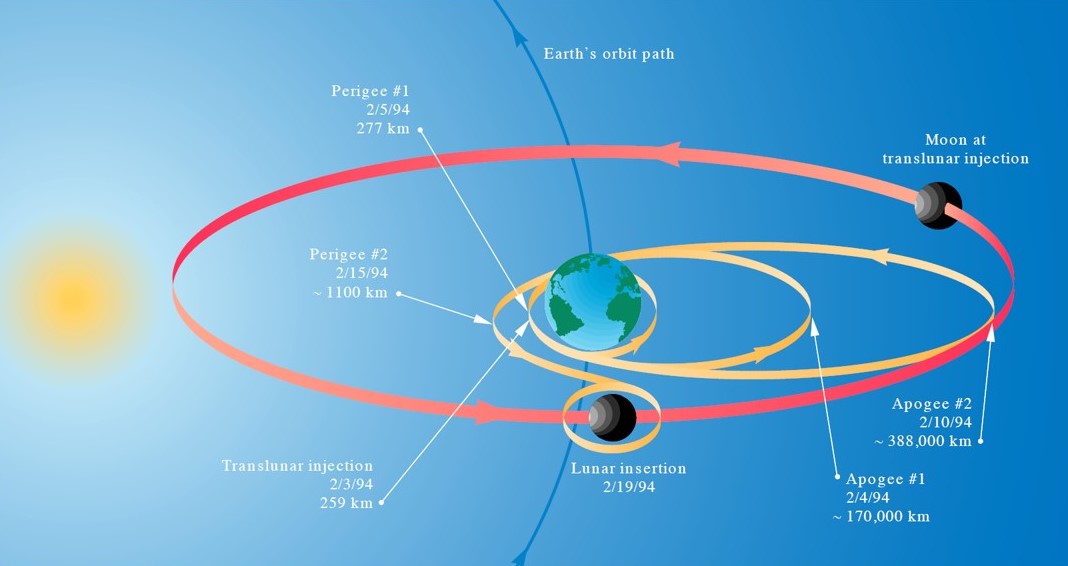
Trajectory of Clementine from launch to lunar orbit insertion
Trajectory of Clementine from launch to lunar orbit insertion. Image credit: courtesy Lawrence Livermore National Laboratory.

The spacecraft spent the next eight days in low Earth orbit checking out its systems. On Feb. 3, a solid rocket motor fired to place it on a lunar phasing loop trajectory that included two Earth flybys to gain enough energy to reach the Moon. During the first orbit, the spacecraft jettisoned the Interstage Adapter Subsystem that remained in a highly elliptical Earth orbit for three months collecting radiation data as it passed repeatedly through the Van Allen radiation belts. On Feb. 19, Clementine fired its own engine to place the spacecraft into a highly elliptical polar lunar orbit with an 8-hour period. A second burn two days later placed Clementine into its 5-hour mapping orbit. The first mapping cycle began on Feb. 26, lasting one month, and the second cycle ended on April 21, followed by special observations.
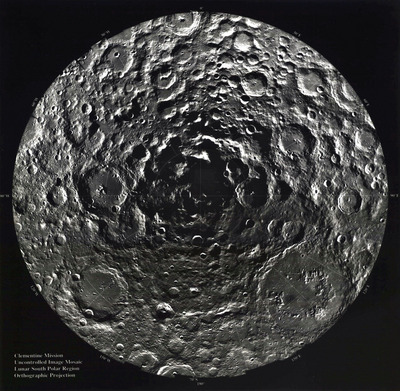
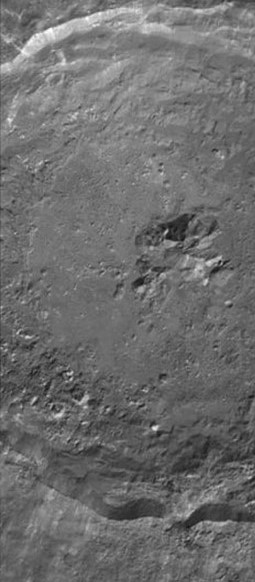
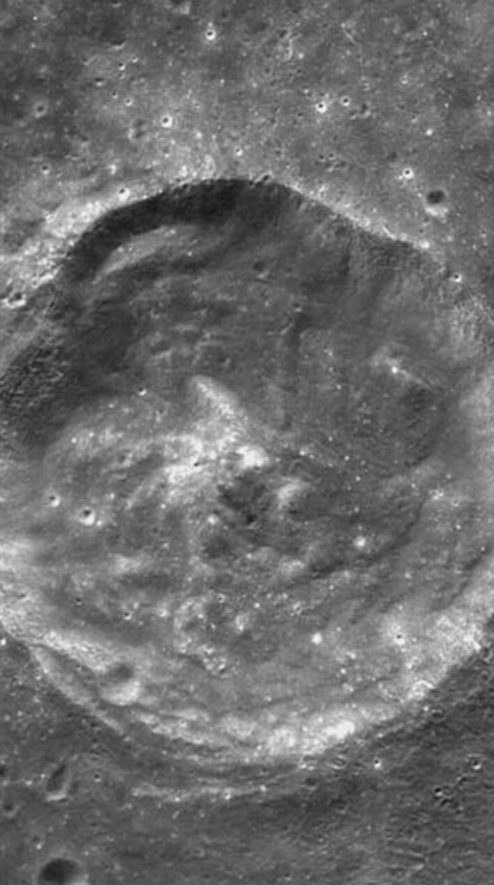
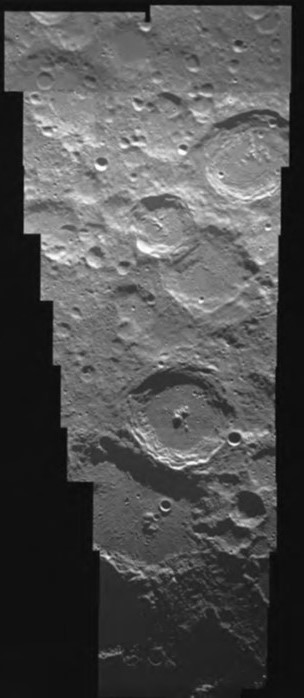
Composite image of the Moon’s south polar region Image of Crater Tycho Image of Crater Rydberg Composite image of the Moon’s north polar region
Left: Composite image of the Moon’s south polar region. Middle left: Image of Crater Tycho. Middle right: Image of Crater Rydberg. Right: Composite image of the Moon’s north polar region.

During the first month of mapping, the low point of Clementine’s orbit was over the southern hemisphere to enable higher resolution imagery and laser altimetry over the south polar regions. Clementine adjusted its orbit to place the low point over the northern hemisphere for the second month of mapping to image the north polar region at higher resolution. Clementine spent the final two weeks in orbit filling in any gaps and performing extra studies looking for ice in the north polar region. For 71 days and 297 lunar orbits, Clementine imaged the Moon, returning 1.6 million digital images, many at a resolution of 330 feet. It mapped the Moon’s entire surface including the polar regions at wavelengths from near ultraviolet through visible to far infrared. The laser altimetry provided the first global topographic map of the Moon. Similar data from Apollo missions only mapped the equatorial regions of the Moon that lay under the spacecraft’s orbital path. Radio tracking of the spacecraft refined our knowledge of the Moon’s gravity field. A finding with significant application to future exploration missions, Clementine found areas near the polar regions where significant amounts of water ice may exist in permanently shadowed crater floors. Conversely, Clementine found other regions near the poles that may remain in near perpetual sunlight, providing an abundant energy source for future explorers. The Dec. 16, 1994, issue of Science, Vol. 266, No. 5192, published early results from Clementine. The Clementine project team assembled a series of lessons learned from the mission to aid future spacecraft development and operations.
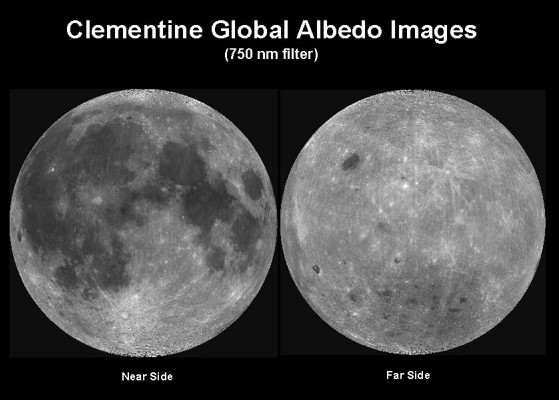
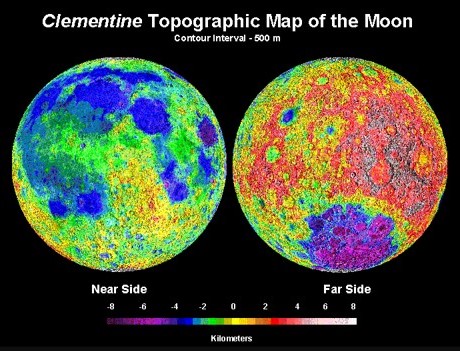
A global map of the Moon created from Clementine images A global topographic map of the Moon based on Clementine data
Left: A global map of the Moon created from Clementine images. Right: A global topographic map of the Moon based on Clementine data.

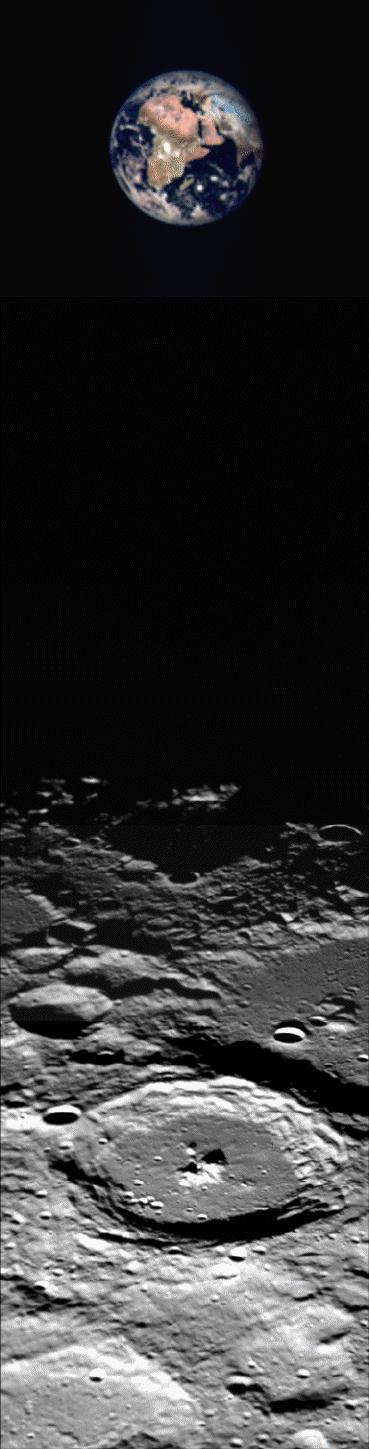
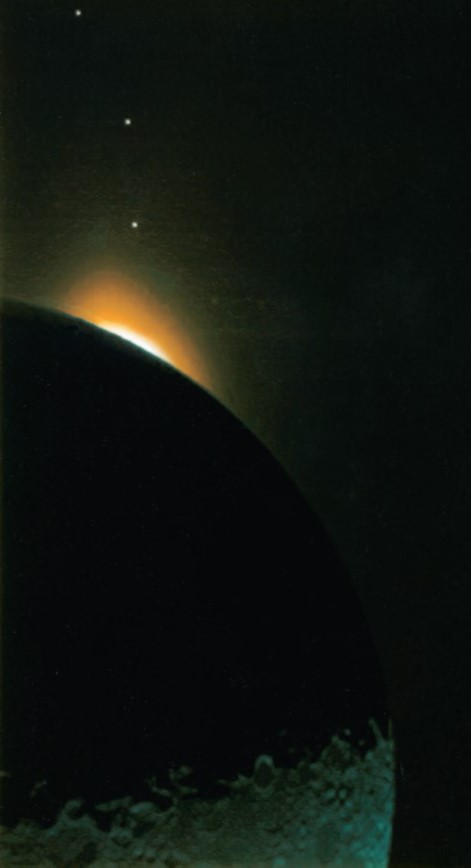
Composite image of Earth taken by Clementine from lunar orbit Colorized image of the full Earth over the lunar north pole Color enhanced view of the Moon lit by Earth shine, the solar corona, and the planet Venus Color enhanced image of the Earthlit Moon, the solar corona, and the planets Saturn, Mars, and Mercury
Left: Composite image of Earth taken by Clementine from lunar orbit. Middle left: Colorized image of the full Earth over the lunar north pole. Middle right: Color enhanced view of the Moon lit by Earth shine, the solar corona, and the planet Venus. Right: Color enhanced image of the Earthlit Moon, the solar corona, and the planets Saturn, Mars, and Mercury.

Its Moon observation time over, Clementine left lunar orbit on May 5, heading for Geographos via two more Earth gravity-assist flybys. Unfortunately, two days later a computer glitch caused one of the spacecraft’s attitude control thrusters to misfire for 11 minutes, expending precious fuel and sending Clementine into an 80-rotations-per-minute spin. The problem would have significantly reduced data return from the asteroid flyby planned for August and managers decided to keep the spacecraft in an elliptical geocentric orbit. A power supply failure in June rendered Clementine’s telemetry unintelligible. On July 20, lunar gravity propelled the spacecraft into solar orbit and the mission officially ended on Aug. 8. Ground controllers briefly regained contact between Feb. 20 and May 10, 1995, but Clementine transmitted no useful data.

Despite the loss of the Geographos flyby, Clementine left a lasting legacy. The mission demonstrated that a flight primarily designed as a technology demonstration can accomplished significant science. The data Clementine returned revolutionized our knowledge of lunar history and evolution. The discovery of the unique environments at the lunar poles, including the probability of large quantities of water ice in permanently shadowed regions there, changed the outlook for future scientific missions and human exploration. Subsequent science missions, such as NASA’s Lunar Prospector and Lunar Reconnaissance Orbiter, China’s Chang’e spacecraft, and India’s Chandrayaan spacecraft, all built on the knowledge that Clementine first obtained. Current uncrewed missions target the lunar polar regions to add ground truth to the orbital observations, and NASA’s Artemis program intends to land the first woman and the first person of color in that region as a step toward sustainable lunar exploration.

Powered by WPeMatico

Get The Details…
Kelli Mars

NASA Administrator to Discuss Science with Crew Aboard Space Station

NASA Administrator to Discuss Science with Crew Aboard Space Station

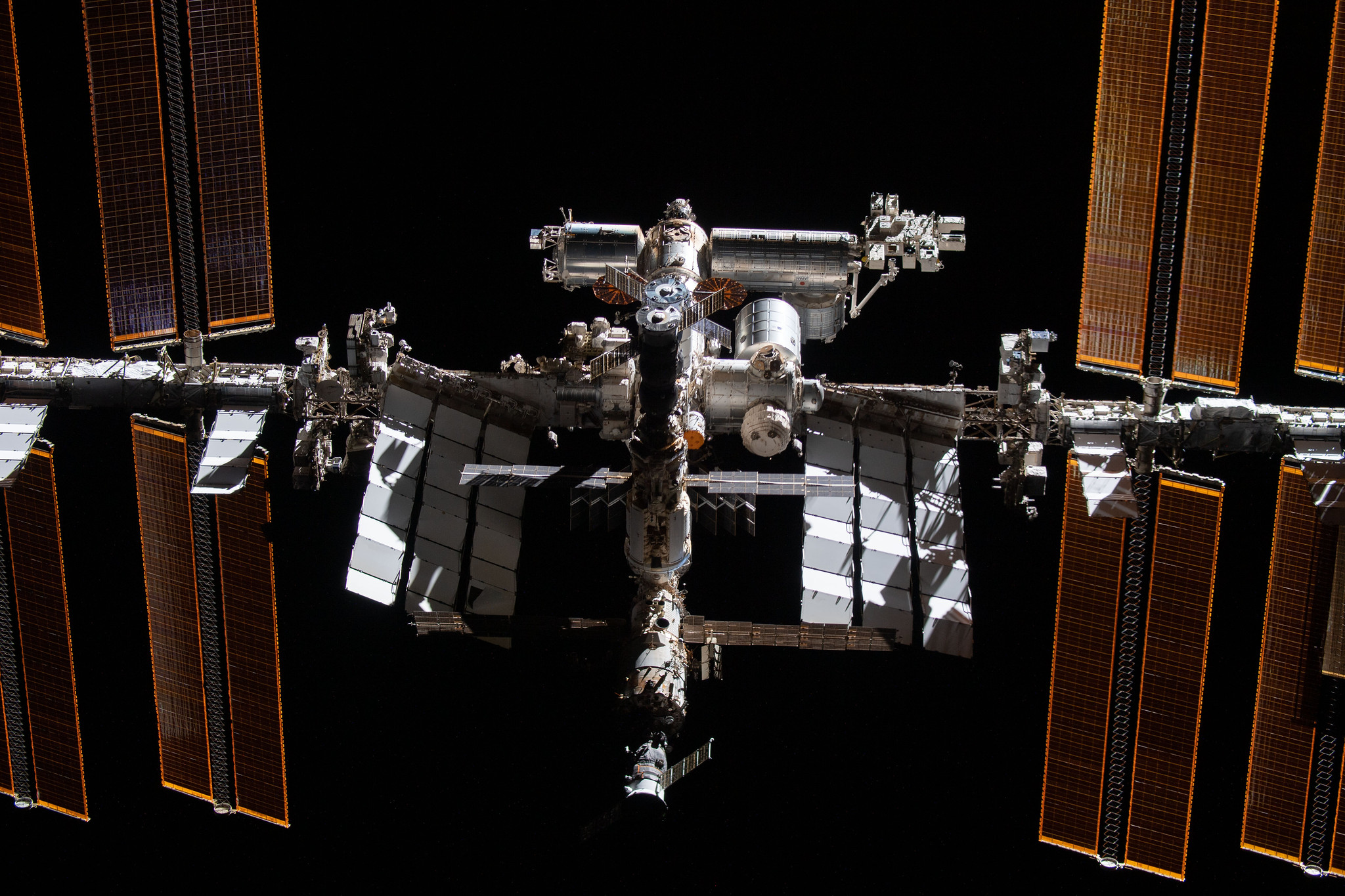
The International Space Station is pictured from the SpaceX Crew Dragon Endeavour during a fly around of the orbiting lab that took place following its undocking from the Harmony module’s space-facing port on Nov. 8, 2021.

NASA Administrator Bill Nelson will discuss recent science research and technology demonstrations aboard the International Space Station at 10:35 a.m. EST Wednesday, Feb. 21, with astronauts living and working aboard the microgravity laboratory.

During the Earth-to-space call, leadership and the crew will discuss a tech experiment demonstrating the performance of a small robot remotely controlled from our home planet to perform surgical procedures in space. They also will highlight a study focused on bone loss in space that may improve our understanding of the mechanisms behind age-related bone loss on Earth, and more ground-breaking research conducted on the microgravity laboratory.

Event coverage will be available on NASA+, NASA Television, and the agency’s website. Learn how to stream NASA TV through a variety of platforms including social media.

Additional participants include:

  • Dr. Lisa Carnell, director, NASA’s Biological and Physical Sciences Division
  • Jasmin Moghbeli, NASA astronaut
  • Andreas Mogensen, ESA (European Space Agency) astronaut
  • Satoshi Furukawa, JAXA (Japan Aerospace Exploration Agency) astronaut

Members of the media also are invited to ask questions to the participants during the 30-minute news conference.

Media interested in participating must RSVP no later than 5 p.m. Tuesday, Feb. 20, to the newsroom at NASA’s Johnson Space Center in Houston at 281-483-5111 or jsccommu@mail.nasa.gov. Reporters must dial into the news conference no later than 10:20 a.m. Feb. 21 to ask a question. Questions also may be submitted on social media using #AskNASA.

Read about some of the recent investigations flown to the space station.

The International Space Station is a hub for scientific research and technology demonstration. NASA and its partners continue to maximize use of the space station, where astronauts have lived and worked continuously for more than 23 years testing technologies, performing research, and developing the skills needed to operate future commercial destinations in low Earth orbit, and explore farther from Earth. Research conducted aboard the space station provides benefits for people on Earth and paves the way for future long-duration trips to the Moon and beyond through NASA’s Artemis missions.

Learn more about current science missions and the International Space Station at:

https://www.nasa.gov/station

-end-

Faith McKie / Joshua Finch
Headquarters, Washington
202-358-1100
faith.d.mckie@nasa.gov / joshua.a.finch@nasa.gov  

Chelsey Ballarte
Johnson Space Center, Houston
281-483-5111
chelsey.n.ballarte@nasa.gov

Share

Details

Last Updated

Feb 16, 2024

Powered by WPeMatico

Get The Details…
Abbey A. Donaldson

Signing Our Names

Signing Our Names

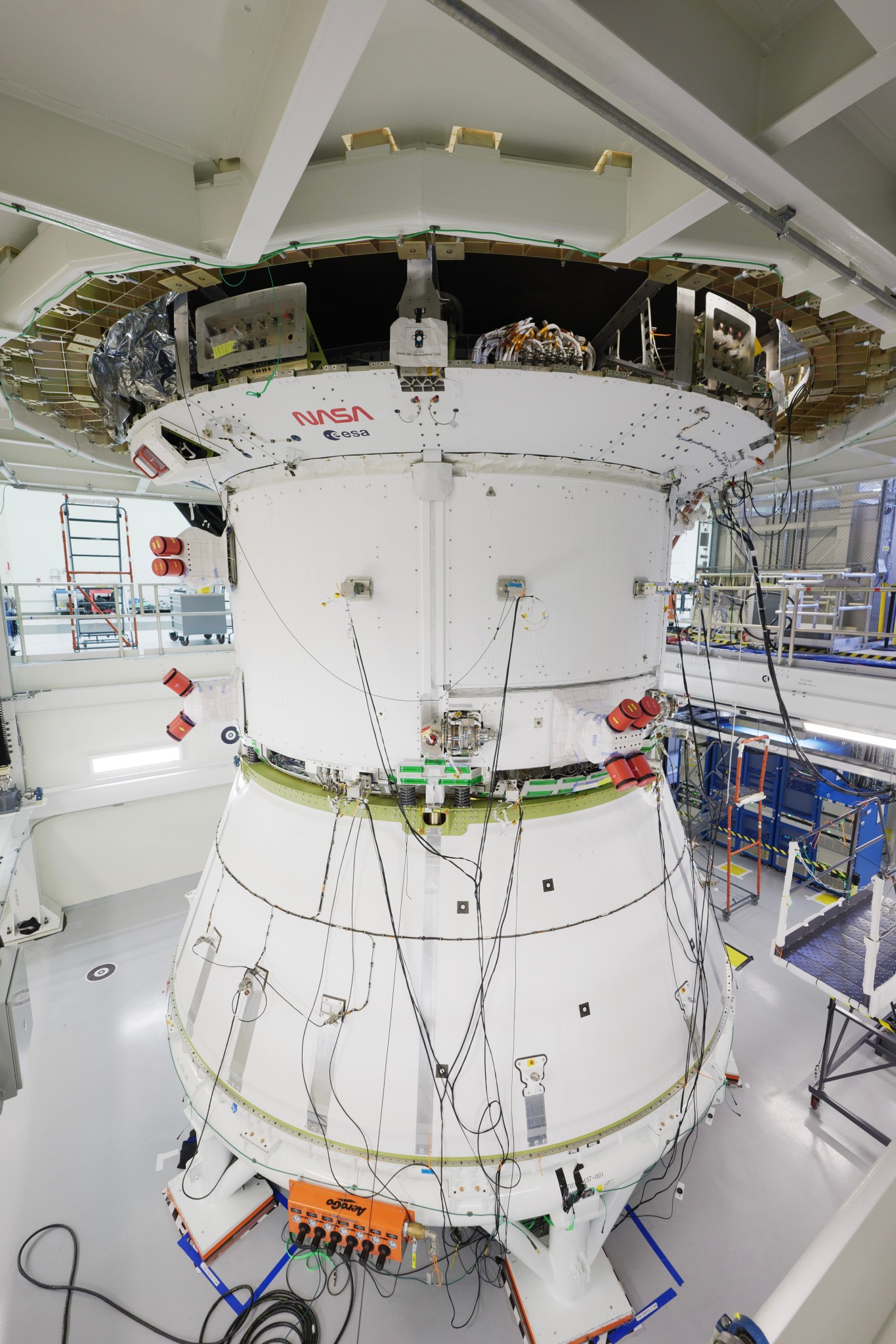
A large white spacecraft component stands in the center of a large room. At the top, the NASA "worm" logo and ESA (European Space Agency) insignia are painted on the crew module adapter.
The Orion spacecraft for NASA’s Artemis II mission received its latest makeover. Teams adhered the agency’s iconic “worm” logo and ESA (European Space Agency) insignia on the spacecraft’s crew module adapter on Sunday, Jan. 28, inside the Neil Armstrong Operations and Checkout Building at NASA’s Kennedy Space Center in Florida.
NASA/Rad Sinyak

NASA’s iconic “worm” logo and ESA’s (European Space Agency) insignia are painted on the Orion spacecraft’s crew module adapter in this image from Feb. 1, 2024. The adapter houses electronic equipment for communications, power, and control, and includes an umbilical connector that bridges the electrical, data, and fluid systems between the main modules.

In October 2023, technicians joined the crew and service modules together. The crew module will house the four Artemis II astronauts as they journey around the Moon and back to Earth on an approximately 10-day trip. The spacecraft’s service module, provided by ESA, will supply the vehicle with electricity, propulsion, thermal control, air, and water in space.

See photos of the crew module adapter and the SLS (Space Launch System) solid rocket boosters, which were also recently adorned with the “worm” logo.

Image Credit: NASA/Rad Sinyak

Powered by WPeMatico

Get The Details…
Monika Luabeya

Rocket Propellant Tanks for NASA’s Artemis III Mission Take Shape

Rocket Propellant Tanks for NASA’s Artemis III Mission Take Shape

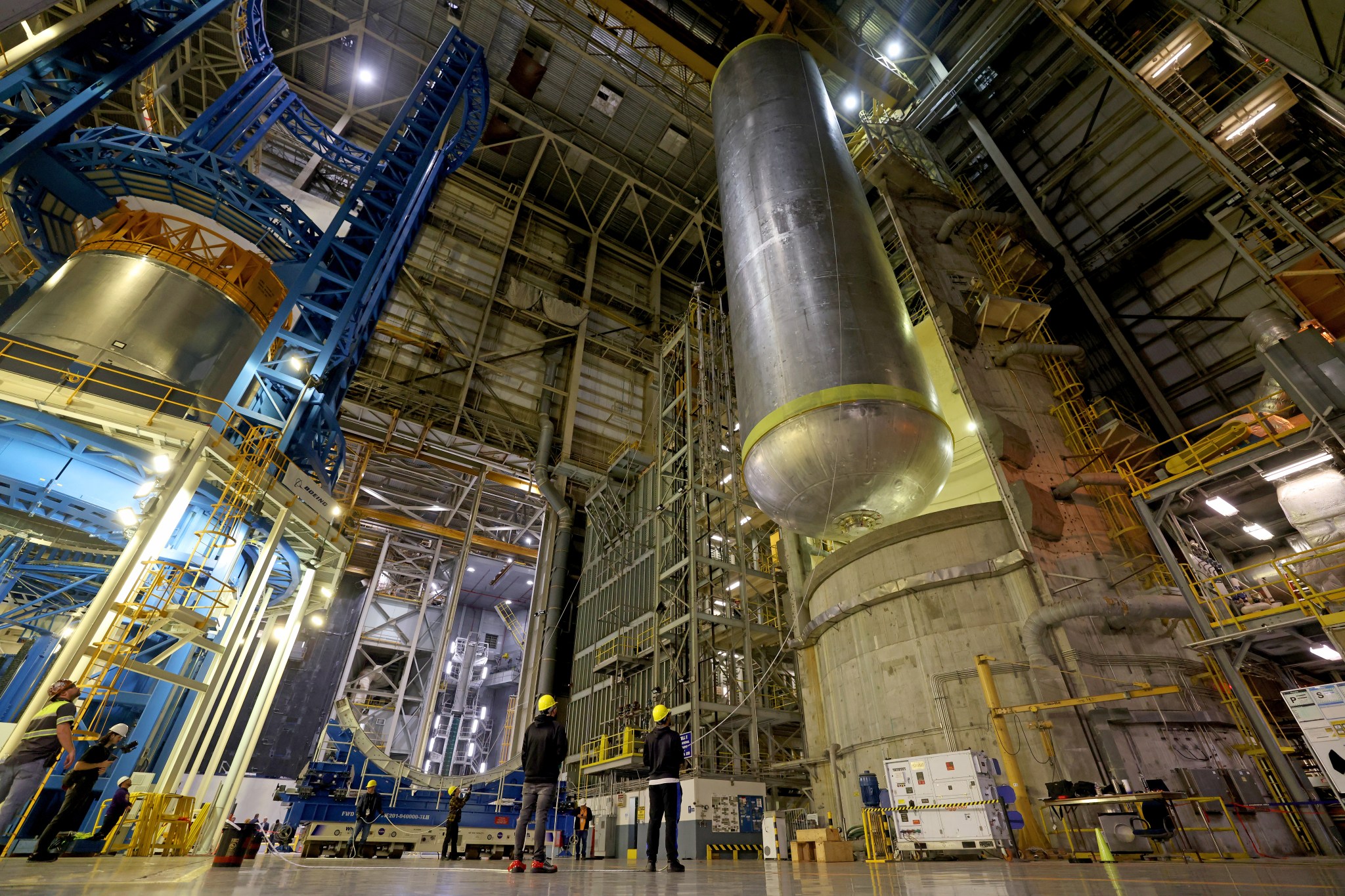
All the major structures that will form the core stage for NASA’s SLS (Space Launch System) rocket for the agency’s Artemis III mission are structurally complete. Technicians finished welding the 51-foot liquid oxygen tank structure, left, inside the Vertical Assembly Building at NASA’s Michoud Assembly Facility in New Orleans Jan. 8. The liquid hydrogen tank, right, completed internal cleaning Nov. 14.
NASA/Michael DeMocker

As NASA works to develop all the systems needed to return astronauts to the Moon under its Artemis campaign for the benefit of all, the SLS (Space Launch System) rocket will be responsible for launching astronauts on their journey. With the liquid oxygen tank now fully welded, all of the major structures that will form the core stage for the SLS rocket for the agency’s Artemis III mission are ready for additional outfitting. The hardware will be a part of the rocket used for the first of the Artemis missions planning to land astronauts on the Moon’s surface near the lunar South Pole. Technicians finished welding the 51-foot liquid oxygen tank structure inside the Vertical Assembly Building at NASA’s Michoud Assembly Facility in New Orleans Jan. 8.

The mega rocket’s other giant propellant tank – the liquid hydrogen tank – is already one fully welded structure. NASA and Boeing, the SLS core stage lead contractor, are currently priming the tank  in another cell within the Vertical Assembly Building area called the Building 131 cryogenic tank thermal protection system and primer application complex. It completed internal cleaning Nov. 14.

Manufacturing hardware is a multi-step process that includes welding, washing, and, later, outfitting hardware.The internal cleaning process is similar to a shower to ensure contaminants do not find their way into the stage’s complex propulsion and engine systems prior to priming. Once internal cleaning is complete, primer is applied to the external portions of the tank’s barrel section and domes by an automated robotic tool. Following primer, technicians apply a foam-based thermal protection system to shield it from the extreme temperatures it will face during launch and flight while also regulating the super-chilled propellant within.

“NASA and its partners are processing major hardware elements at Michoud for several SLS rockets in parallel to support the agency’s Artemis campaign,” said Chad Bryant, acting manager of the Stages Office for NASA’s SLS Program. “With the Artemis II core stage nearing completion, the major structural elements of the SLS core stage for Artemis III will advance through production on the factory floor.”

The two massive propellant tanks for the rocket collectively hold more than 733,000 gallons of super-chilled propellant. The propellant powers the four RS-25 engines and must stay extremely cold to remain liquid.

The core stage, along with the RS-25 engines, will produce two million pounds of thrust to help launch NASA’s Orion spacecraft, astronauts, and supplies beyond Earth’s orbit and to the lunar surface for Artemis III. SLS is the only rocket that can send Orion, astronauts, and supplies to the Moon in a single launch.

Through Artemis, NASA will send astronauts—including the first woman, first person of color, and first international partner astronaut—to explore the Moon for scientific discovery, economic benefits, and to build the foundation for crewed mission to Mars. SLS is part of NASA’s backbone for deep space exploration, along with the Orion spacecraft, exploration ground systems, advanced spacesuits and rovers, Gateway, and human landing systems.

For more on SLS, visit:

https://www.nasa.gov/humans-in-space/space-launch-system/

News Media Contact

Corinne Beckinger
Marshall Space Flight Center, Huntsville, Ala.
256.544.0034
corinne.m.beckinger@nasa.gov

Powered by WPeMatico

Get The Details…
Lee Mohon