2025 AAS Hyperwall Schedule

2025 AAS Hyperwall Schedule

2 min read

2025 AAS Hyperwall Schedule

247th American Astronomical Society (AAS) Meeting

Join NASA in the Exhibit Hall (Booth #401 for Hyperwall Storytelling by NASA experts. Full Hyperwall Agenda below.

SUNDAY, JANUARY 4

6:45 – 7:00 PM Nancy Grace Roman Space Telescope Dominic Benford
7:00 – 7:15 PM Storytelling with NASA: Eyes on Exoplanets Anjali Tripathi
7:15 – 7:30 PM Roman Space Telescope Update Julie McEnery
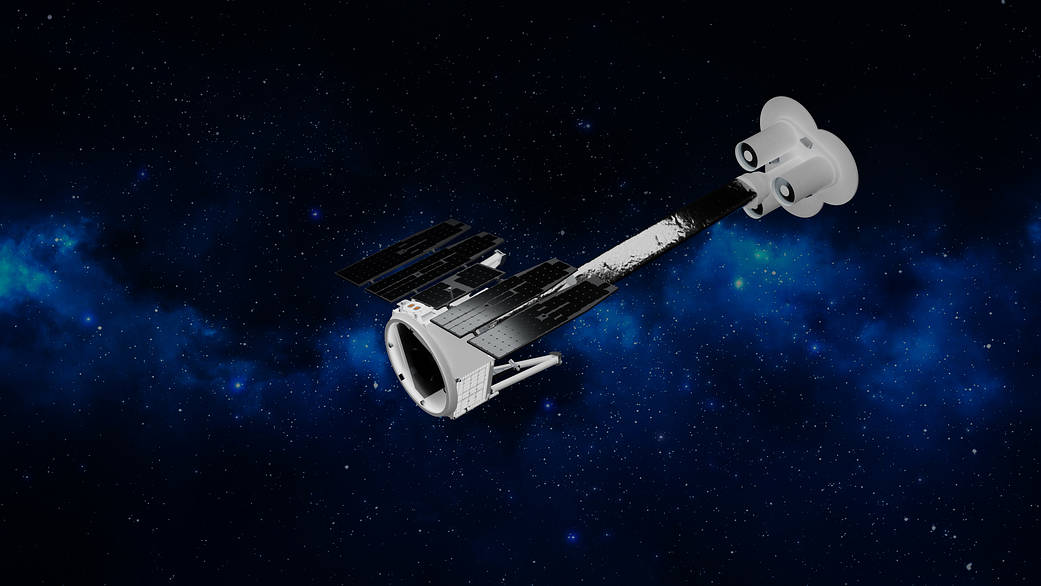
7:30 – 7:45 PM The Search for Life in the Universe with Habitable Worlds Observatory Giada Arney
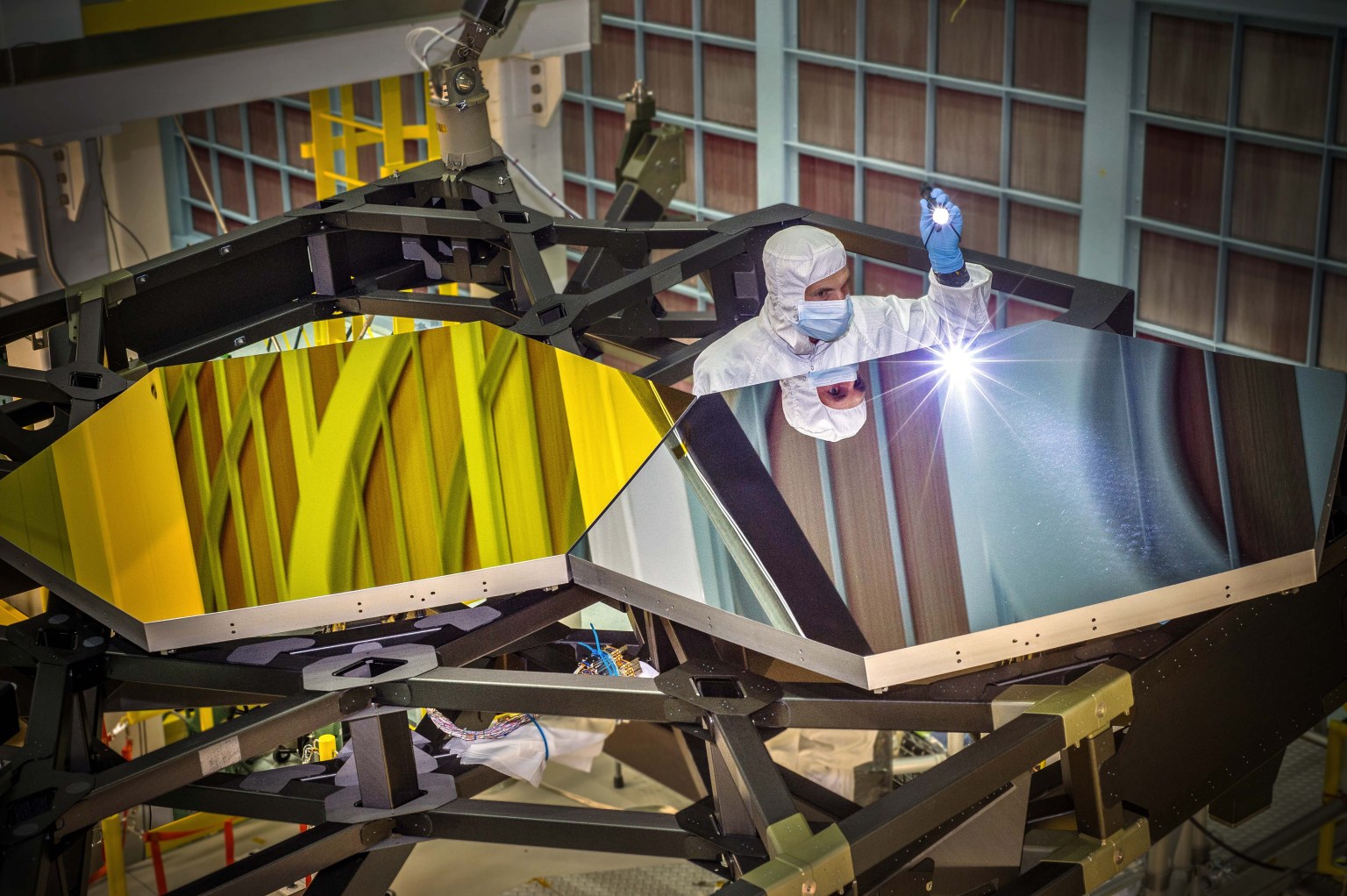
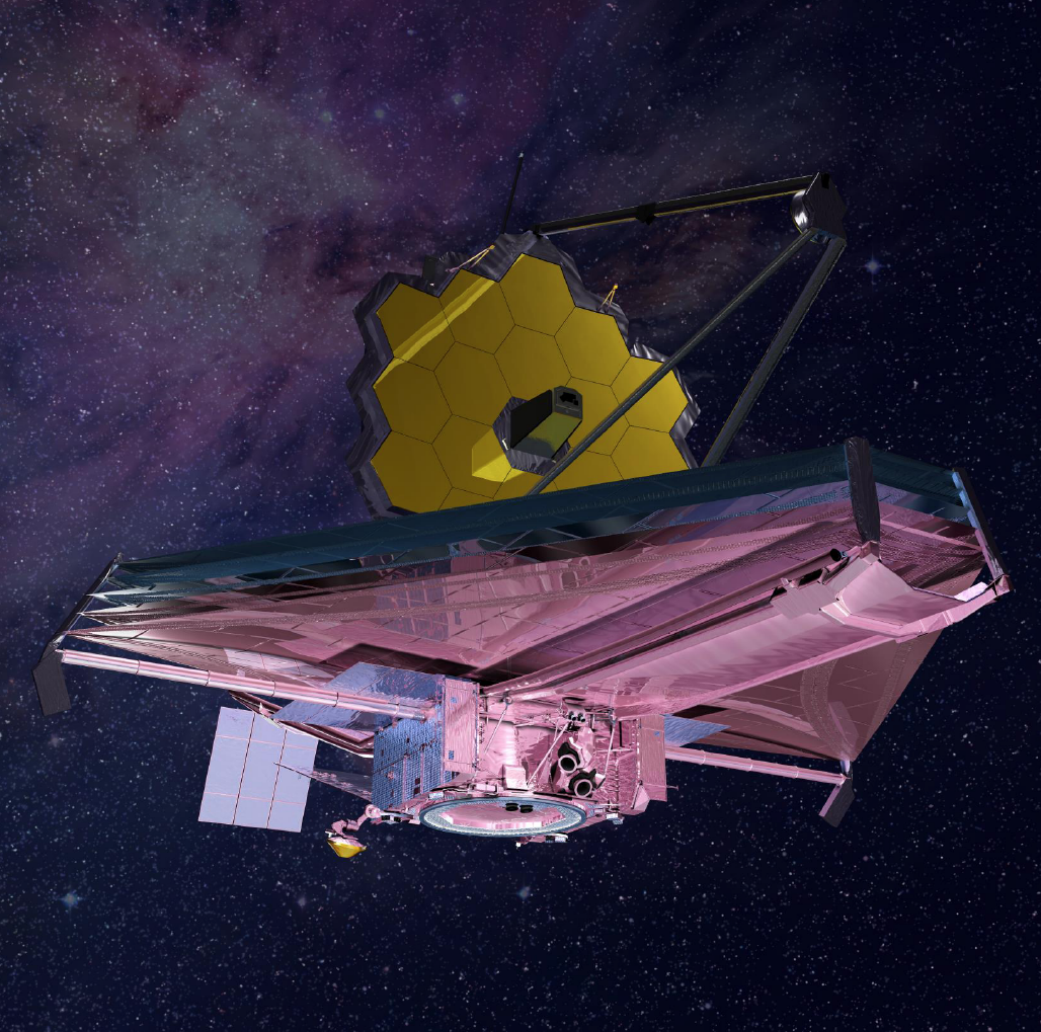
7:45 – 8:00 PM The James Webb Space Telescope Engineering History Lee Feinberg

MONDAY, JANUARY 5

9:00 – 9:15AM Galaxies Across Cosmic Time with JWST and Roman Aaron Yung
9:15 – 9:30AM The Hubble Space Telescope: Next Era of Discovery Jennifer Wiseman
9:30 – 9:45AM Cosmic Pathfinders Ron Gamble
9:45- 10:00AM Preliminary Findings from the NASA Technosignatures Database Nick Siegler
5:30 – 5:45PM Habitable Worlds Observatory
From Gas to Galaxies to Life in the Universe
Kevin France
5:45 – 6:00PM Space Servicing: From Hubble to Habitable Worlds John Grunsfeld
6:00 – 6:15PM Supernova Cosmology with Roman Rebekah Hounsell
6:15- 6:30PM What Even is Bayesian Analysis, and Why Do I Care? Natasha Latouf

TUESDAY, JANUARY 6

9:00 – 9:15AM Revealing the Faintest Galaxies in the Nearby Universe with Roman Aaron Yung
9:15 – 9:30AM Open Science Training for Researchers Jennifer Wiseman
9:30 – 9:45AM Universe in 24 hours Ron Gamble
9:45- 10:00AM Beyond ADS: SciX as the Next-Generation Platform for Earth and Space Science Research Nick Siegler
5:30 – 5:45PM From Ground Tests to Science with the Wide Field Instrument Kevin France
5:45 – 6:00PM Habitable Worlds Observatory and the Search for Life John Grunsfeld
6:00 – 6:15PM Laser Interferometry Space Antenna : Measuring Low Frequency Gravitational Waves from the Universe Rebekah Hounsell
6:15- 6:30PM Our Cosmic Roots, Kinship, and Destiny with the Habitable Worlds Observatory Natasha Latouf

WEDNESDAY, JANUARY 7

9:00 – 9:15AM What Can Roman Do for You? Explore Its Four Community-Defined Surveys Karoline Gilbert
9:15 – 9:30AM Galaxies Benne Holwerda
9:30 – 9:45AM The NASA Exoplanet Science Institute: Making Exoplanet Science Easier Catherine Clark
5:30 – 5:45PM Science from the Roman Space Telescope Galactic Bulge Time-Domain Survey Robby Wilson
5:45 – 6:00PM The Pandora SmallSat: Exploring Exoplanet Atmospheres Thomas Barclay
6:00 – 6:15PM How Did the Universe Become Habitable? Get Involved with NASA’s Cosmic Origins Group Sabrina Stierwalt

THURSDAY, JANUARY 8

9:00 – 9:15AM Science with Petabyte-Scale Data: Cloud Platforms Thomas Dutkiewicz
9:15 – 9:30AM The Future of the Transiting Exoplanet Survey Satellite Nicole Schanche
9:30 – 9:45AM Is There an Atmosphere on the Habitable-Zone Planet TRAPPIST-1 e? Nestor Espinoza

Powered by WPeMatico
Get The Details…

NASA, SpaceX CRS-33 Dragon Boost Space Station

NASA, SpaceX CRS-33 Dragon Boost Space Station

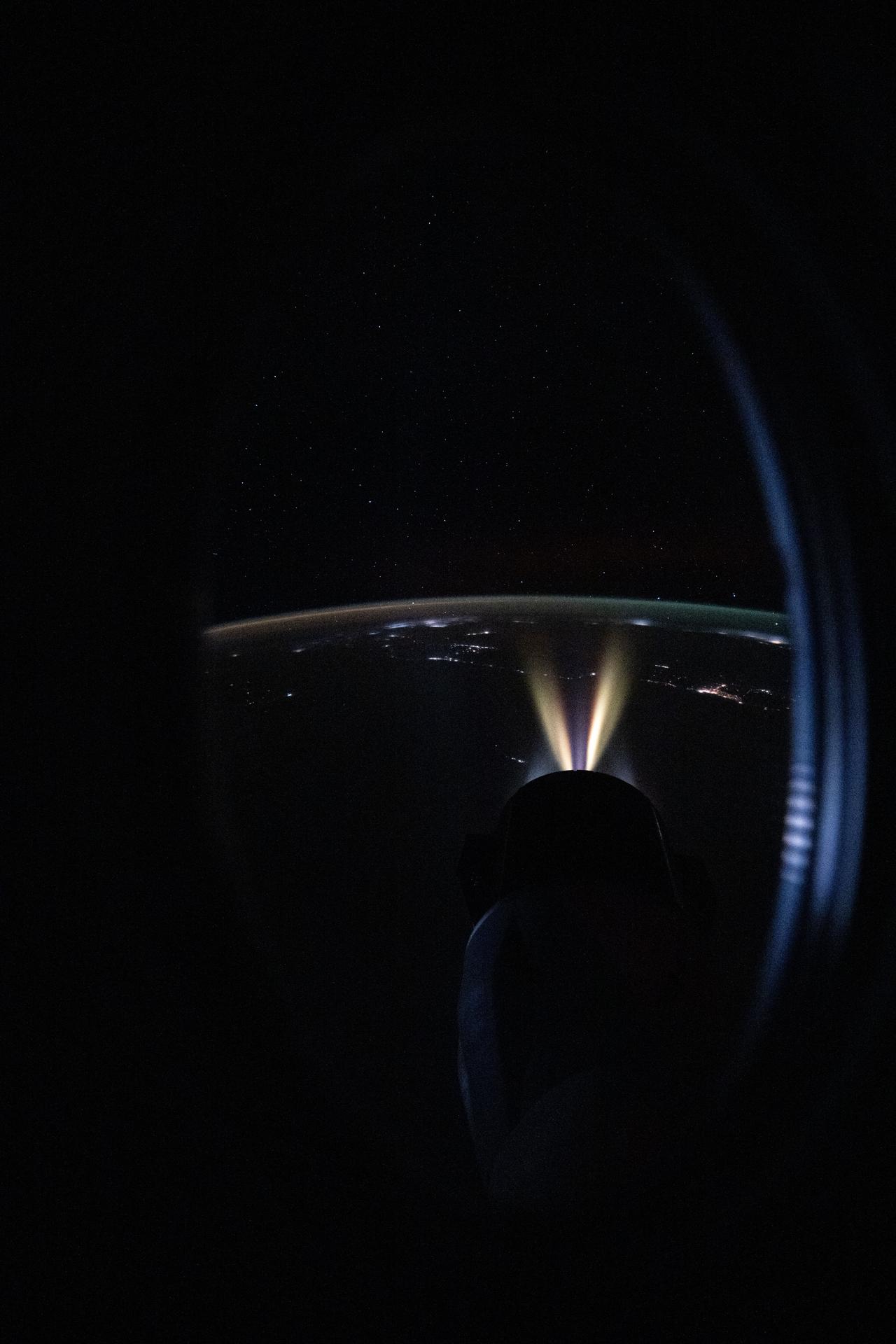
This nighttime image was captured from a window aboard the SpaceX Dragon crew spacecraft, docked to the space-facing port of the International Space Station’s Harmony module, while orbiting 259 miles above the Indian Ocean. In the foreground, the Draco thrusters of the SpaceX Dragon cargo spacecraft, docked to Harmony’s forward port, are seen firing during a demonstration of its ability to reboost the station’s orbit. In the background, an atmospheric glow blankets Earth's horizon with the city lights on Africa's east coast dotting the dark landscape.
The Draco thrusters of the SpaceX Dragon cargo spacecraft are seen firing during a demonstration of its ability to reboost the International Space Station’s orbit on Sept. 26, 2025. In the background, an atmospheric glow blankets Earth’s horizon with the city lights on Africa’s east coast dotting the dark landscape.
NASA

On Dec. 29, SpaceX’s Dragon fired its thrusters for more than 19 minutes, boosting the International Space Station’s orbit.

The two Draco engines, which are located in the spacecraft’s trunk and use an independent propellant system, increased the station’s altitude by 1.6 miles at apogee, or highest point of station’s orbit, and 1.9 miles at perigee, or low point of station’s orbit, placing the station in an orbit of 263.5 x 257.8 miles.  

This Dragon spacecraft, which is supporting SpaceX’s 33rd commercial resupply mission for NASA, arrived at the orbital complex on Aug. 25 and previously performed four reboosts of the station on Sept. 3, Sept. 26, and Oct. 14, and Nov. 7. One additional reboost is planned in mid-January before Dragon returns to Earth with critical research and cargo and splashes down off the coast of California. 

Learn more about station activities by following the space station blog, @space_station on X, as well as the ISS Facebook and ISS Instagram accounts.

Get the latest from NASA delivered every week. Subscribe here.

Powered by WPeMatico

Get The Details…

Mark A. Garcia

Curiosity Sends Holiday Postcard from Mars

Curiosity Sends Holiday Postcard from Mars

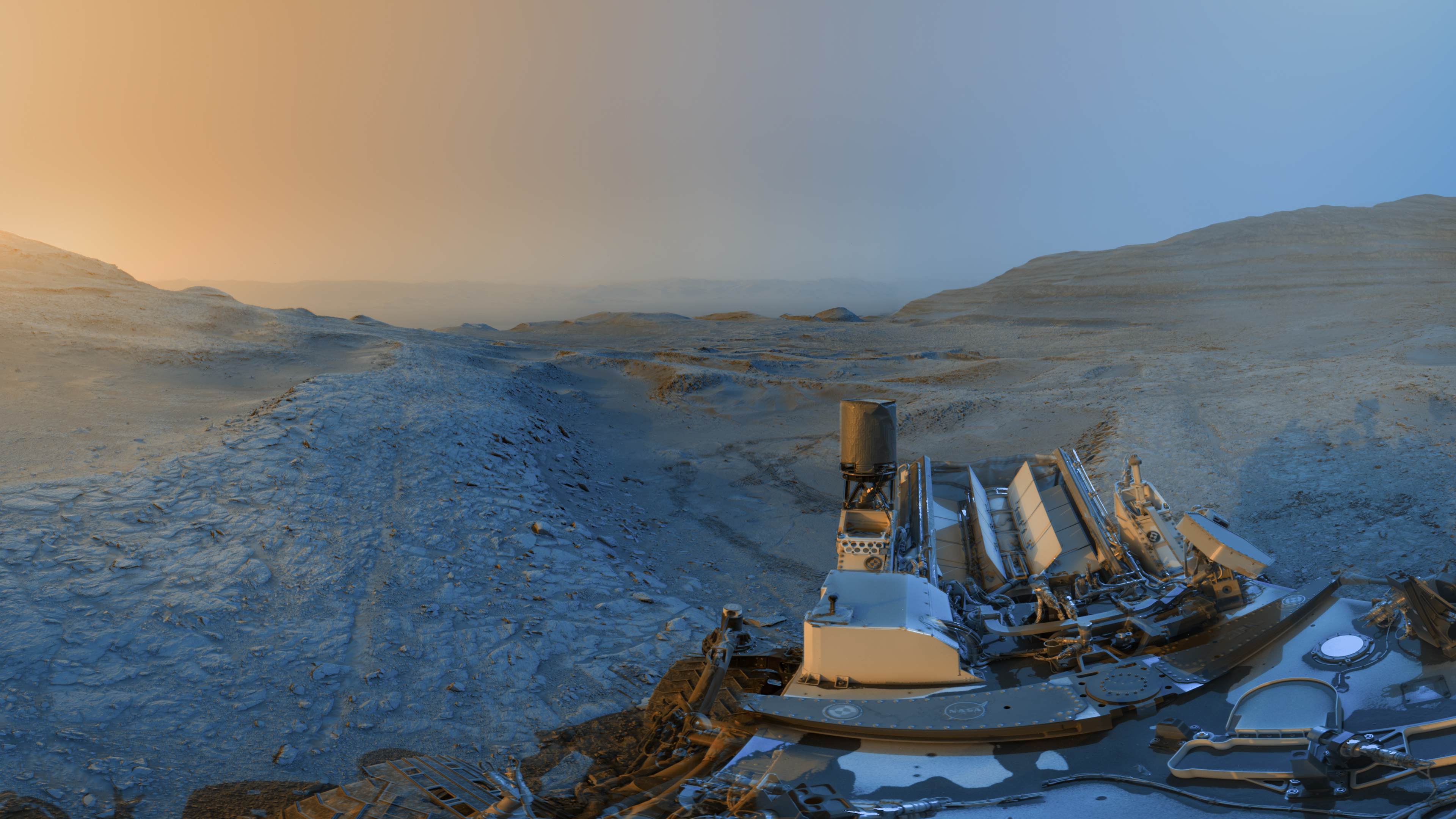
The Curiosity rover is visible at the bottom right of this panorama image. The rover is at the top of a ridge referred to as a boxwork formation. The sky ahead of it is hazy; it's red on the left and blue on the right.
NASA/JPL-Caltech

Team members working with NASA’s Curiosity Mars rover created this “postcard” by commanding the rover to take images at two times of day on Nov. 18, 2025, spanning periods that occurred on both the 4,722nd and 4,723rd Martian days, or sols, of the mission.

The panoramas were captured at 4:15 p.m. on Sol 4,722 and 8:20 a.m. on Sol 4,723 (both at local Mars time), then merged together. Color was later added for an artistic interpretation of the scene with blue representing the morning panorama and yellow representing the afternoon one. The resulting “postcard” is similar to ones the rover took in June 2023 and November 2021. Adding color to these kinds of merged images helps different details stand out in the landscape.

Credit: NASA/JPL-Caltech

Powered by WPeMatico
Get The Details…
Monika Luabeya

Microbiology

Microbiology

2 min read

Preparations for Next Moonwalk Simulations Underway (and Underwater)

Microbiology Laboratory
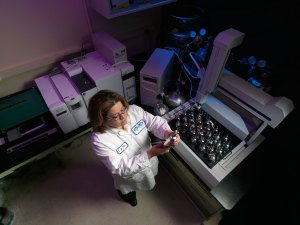
Microbiology Laboratory at JSC NASA.

Microorganisms and Spaceflight

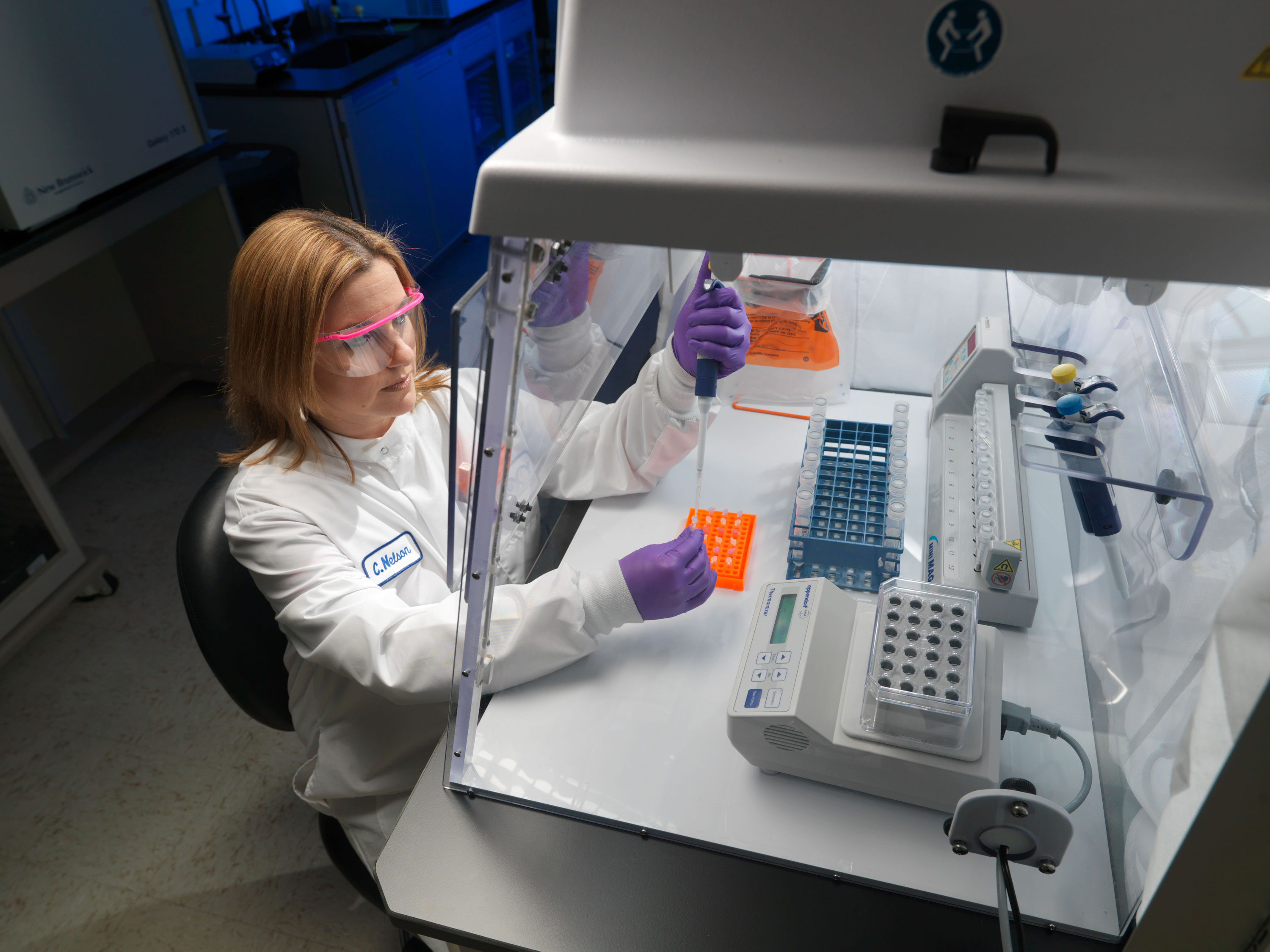
Spaceflight poses a risk of adverse health effects due to the interactions between microorganisms, their hosts, and their environment. The JSC Microbiology team addresses the benefits and risks related to microorganisms, including infectious disease, allergens, environmental and food contamination, and the impacts of changes in environmental and human microbial ecology aboard spacecraft. The team includes certified medical technologists, environmental microbiologists, mycologists, and biosafety professionals.

The JSC Microbiology laboratory is a critical component of the Human Health and Performance Directorate and is responsible for addressing crew health and environmental issues related to microbial infection, allergens, and contamination. This responsibility is achieved by operational monitoring and investigative research using classical microbiological, advanced molecular, and immunohistochemical techniques. This research has resulted in a significant number of presentations and peer-reviewed publications contributing to the field of Microbiology with articles in journals such as Infection and Immunity, Journal of Infectious Disease and Applied and Environmental Microbiology, Nature Reviews Microbiology, and Proceedings of the National Academies of Science.

Fun Fact: Microorganisms display unexpected responses when grown in the spaceflight environment compared to otherwise identically grown microbes on Earth.

NASA

NASA

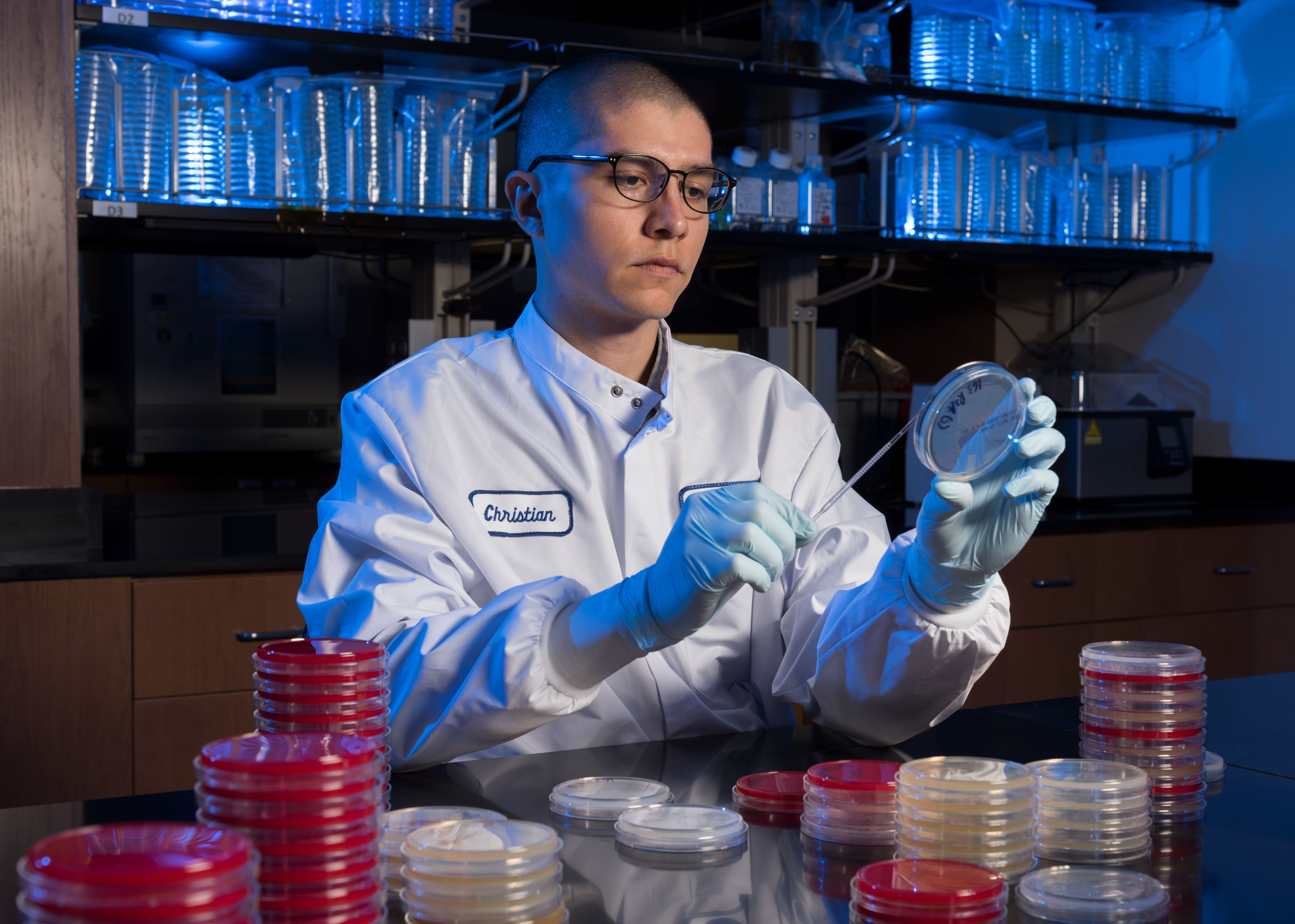
microbiologist streaks microbial cultures
Christian Castro is streaking bacteria to be characterized using a variety of culture media. Photo Date: May 29, 2018. Location: Building 21 – Microbiology Lab.
NASA

Keeping Crew-members Safe

As a functional part of the Crew Health Care System and in support of Environmental Control and Life Support Systems engineers, the Microbiology Laboratory team defines requirements, coordinates and analyzes microbial sampling, and analysis of air, surface, and water samples. These environmental samples, including preflight and in-flight samples, re-analyzed to ensure that microorganisms do not adversely affect crew health or system performance.

Microbiologists also serve as team members when anomalous events occur that might affect crew health or life support systems operations. Spaceflight food samples also are evaluated preflight to decrease the risk of infectious disease to the crew.

DNA sequencing
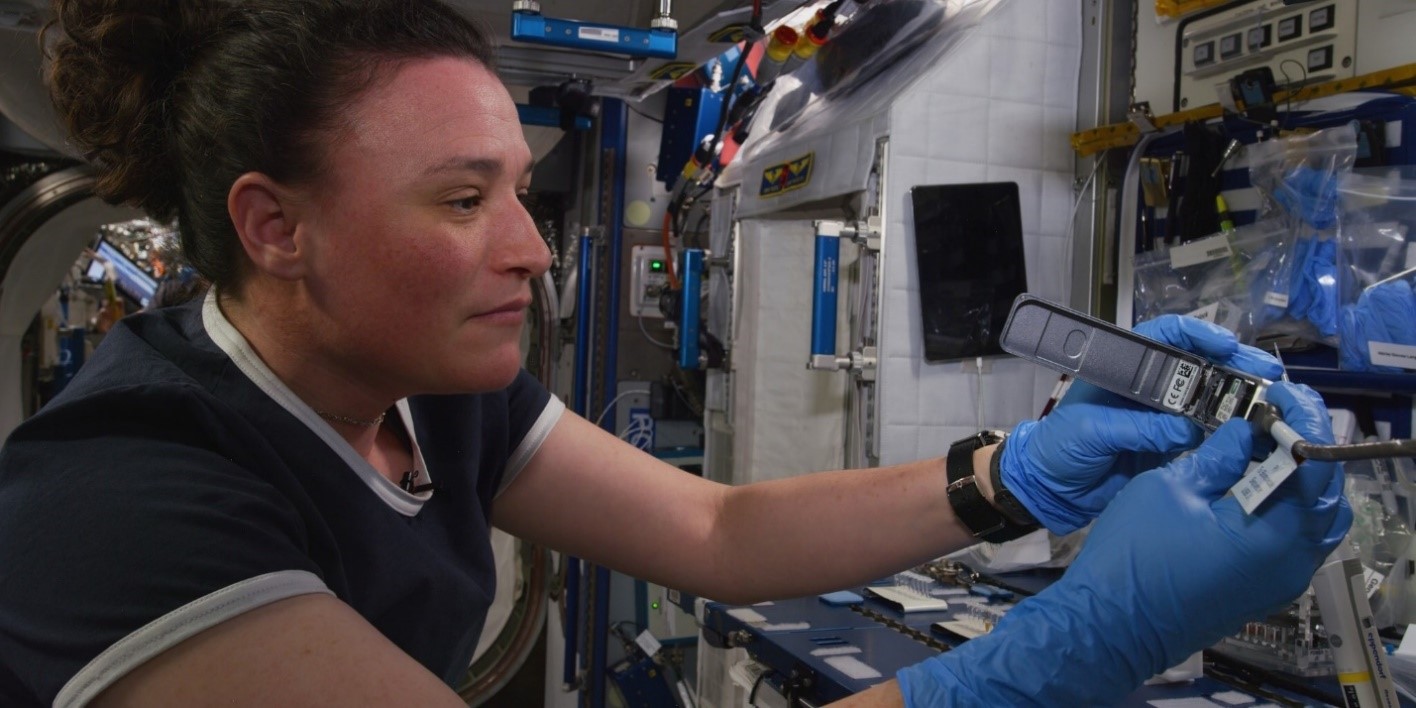
A crewmember identifies unknown environmental microbes aboard the ISS through DNA sequencing.
NASA

Technology and Hardware

  • ABI DNA sequencer
  • Illumina MiSeq desktop sequencer
  • Oxford Nanopore Technologies MinION DNA / RNA sequencers
  • Agilent Bioanalyzer
  • VITEK 2 Microbial Identification
  • ​Space analogue bioreactors
Surface Sampler Kit
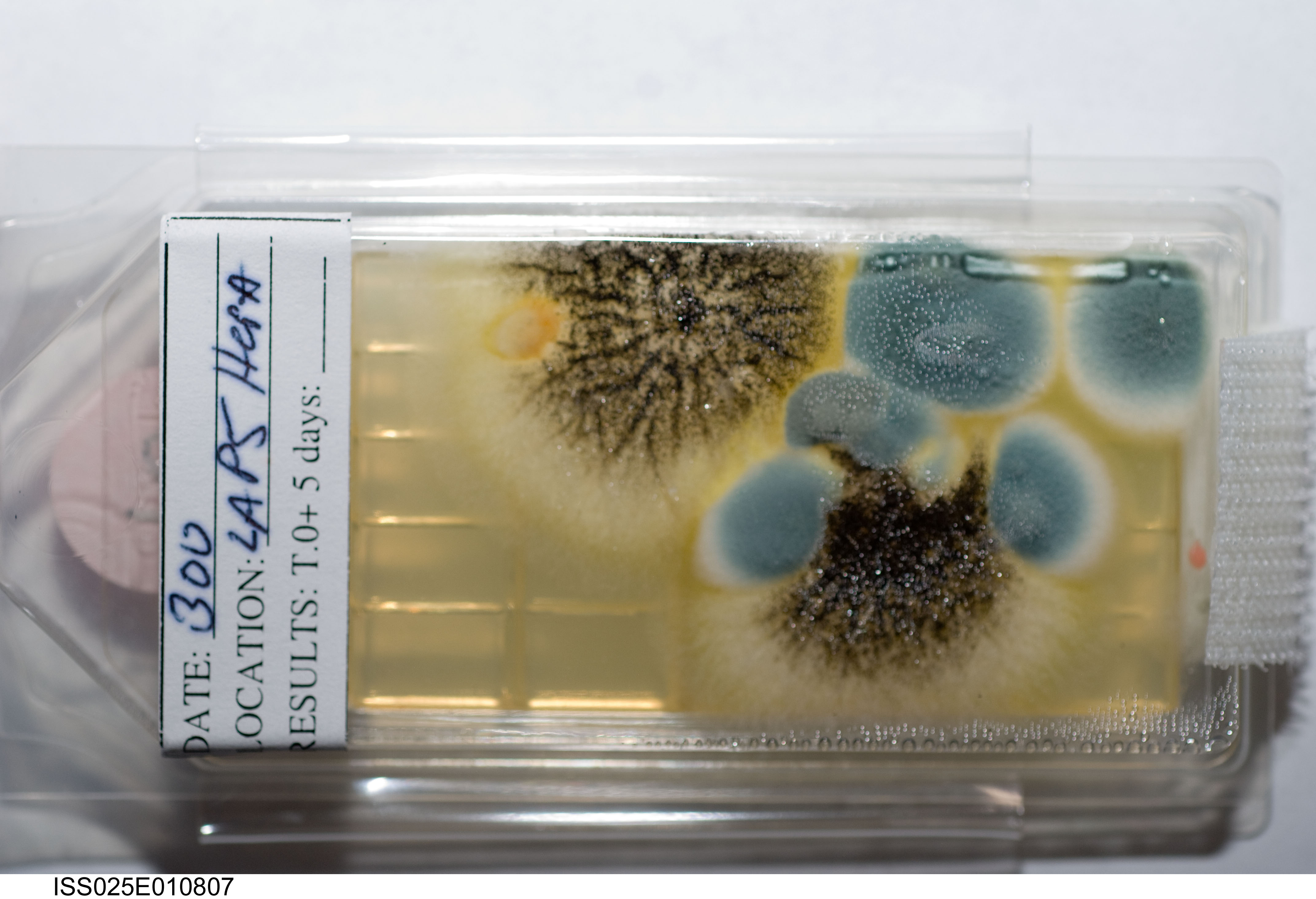
An example of in-flight Surface Sampler Kit results with growth of fungal cultures after 5 days
NASA

Points of Contact

Sarah Wallace, PhD
Hang Nguyen, PhD

Share

Details

Last Updated

Dec 30, 2025

Editor
Robert E. Lewis

Powered by WPeMatico

Get The Details…
Karam Mohammed

NASA’s Chandra Rings in New Year With Champagne Cluster

NASA’s Chandra Rings in New Year With Champagne Cluster

This release features a composite image of a galaxy cluster first discovered on New Year's Eve day, 2020. The cluster appears here as a large collection of brilliant white lights, each a distinct galaxy. A neon purple cloud stretches across the cluster's crowded core. Many of the hundred-plus galaxies in the cluster are in two clumps of galaxies towards the top and bottom of center. Some are encircled by a faint glowing haze, while a few foreground stars gleam with diffraction spikes. Some of the smaller galaxies are tinted blue, orange, or red, and some appear more oblong than round, suggesting spiral shapes viewed edge-on. The neon purple cloud sits at the heart of the image, surrounding the most densely-packed part of the cluster. This cloud, which spreads vertically across the cluster, is multimillion-degree gas observed by Chandra. The two clumps of observable galaxies, and the spread of superheated gas, reveal that the Champagne Cluster is in fact two clusters in the process of colliding. With the two clusters of sparkling light clinking together, and the auspicious discovery date, astronomers have dubbed the merged cosmic structure
X-ray: NASA/CXC/UCDavis/F. Bouhrik et al.; Optical:Legacy Survey/DECaLS/BASS/MzLS; Image Processing: NASA/CXC/SAO/P. Edmonds and L. Frattare

Celebrate the New Year with the “Champagne Cluster,” a galaxy cluster seen in this new image from NASA’s Chandra X-ray Observatory and optical telescopes.

Astronomers discovered this galaxy cluster Dec. 31, 2020. The date, combined with the bubble-like appearance of the galaxies and the superheated gas seen with Chandra observations (represented in purple), inspired the scientists to nickname the galaxy cluster the Champagne Cluster, a much easier-to-remember name than its official designation of RM J130558.9+263048.4.

The new composite image shows that the Champagne Cluster is actually two galaxy clusters in the process of merging to form an even larger cluster. Multimillion-degree gas in galaxy clusters usually takes on an approximately circular or moderately oval shape in images, but in the Champagne Cluster it is more widely spread from top to bottom, revealing the presence of the two colliding clusters. Two clumps of individual galaxies making up the colliding clusters can be seen toward the top and bottom of center. (The image has been rotated clockwise by 90 degrees so that North points to the right.)

The hot gas outweighs the combined mass in all of the hundred-plus individual galaxies in the newly forming cluster. The clusters also contain even larger amounts of unseen dark matter, the mysterious substance that pervades the universe.

In addition to the Chandra data, this new image contains optical data from the Legacy Surveys (red, green, and blue), which consists of three individual and complementary surveys from various telescopes in Arizona and Chile.

The Champagne Cluster is a member of a rare class of merging clusters, which includes the well-known Bullet Cluster, where the hot gas in each cluster has collided and slowed down, and there is a clear separation between the hot gas and the most massive galaxy in each cluster.

By comparing the data with computer simulations, astronomers came up with two possibilities for the history of the Champagne Cluster. One is that the two clusters already collided with each other over two billion years ago. After the collision the two clusters traveled outward and then were pulled back toward each other by gravity, and are now heading into a second collision. The other idea is that a single collision occurred about 400 million years ago, and the two clusters are now traveling away from each other after that collision. Researchers think further studies of the Champagne Cluster can potentially teach them how dark matter reacts to a high-speed collision.

A paper describing these results recently appeared in The Astrophysical Journal and is available online. The authors of the paper are Faik Bouhrik, Rodrigo Stancioli, and David Wittman, all from the University of California, Davis.

NASA’s Marshall Space Flight Center in Huntsville, Alabama, manages the Chandra program. The Smithsonian Astrophysical Observatory’s Chandra X-ray Center controls science operations from Cambridge, Massachusetts, and flight operations from Burlington, Massachusetts.


Read more from NASA’s Chandra X-ray Observatory

Learn more about the Chandra X-ray Observatory and its mission here:

https://www.nasa.gov/chandra

https://chandra.si.edu

Visual Description

This release features a composite image of a galaxy cluster discovered on New Year’s Eve day, 2020.

The cluster appears here as a large collection of brilliant white lights, each a distinct galaxy. A neon purple cloud stretches across the cluster’s crowded core. Many of the hundred-plus galaxies in the cluster are in two clumps of galaxies towards the top and bottom of center. Some are encircled by a faint glowing haze, while a few foreground stars gleam with diffraction spikes. Some of the smaller galaxies are tinted blue, orange, or red, and some appear more oblong than round, suggesting spiral shapes viewed edge-on.

The neon purple cloud sits at the heart of the image, surrounding the most densely-packed part of the cluster. This cloud, which spreads vertically across the cluster, is multimillion-degree gas observed by Chandra. The two clumps of observable galaxies, and the spread of superheated gas, reveal that the Champagne Cluster is in fact two clusters in the process of colliding.

With the two clusters of sparkling light clinking together, and the auspicious discovery date, astronomers have dubbed the merged cosmic structure “The Champagne Cluster”.

News Media Contact

Megan Watzke
Chandra X-ray Center
Cambridge, Mass.
617-496-7998
mwatzke@cfa.harvard.edu

Joel Wallace
Marshall Space Flight Center, Huntsville, Alabama
256-544-0034
joel.w.wallace@nasa.gov

Share

Details

Last Updated

Dec 30, 2025

Editor
Lee Mohon
Contact
Joel Wallace

Powered by WPeMatico

Get The Details…
Lee Mohon