Spacewalk, Dragon Ops Near as Health Research Continues

Spacewalk, Dragon Ops Near as Health Research Continues

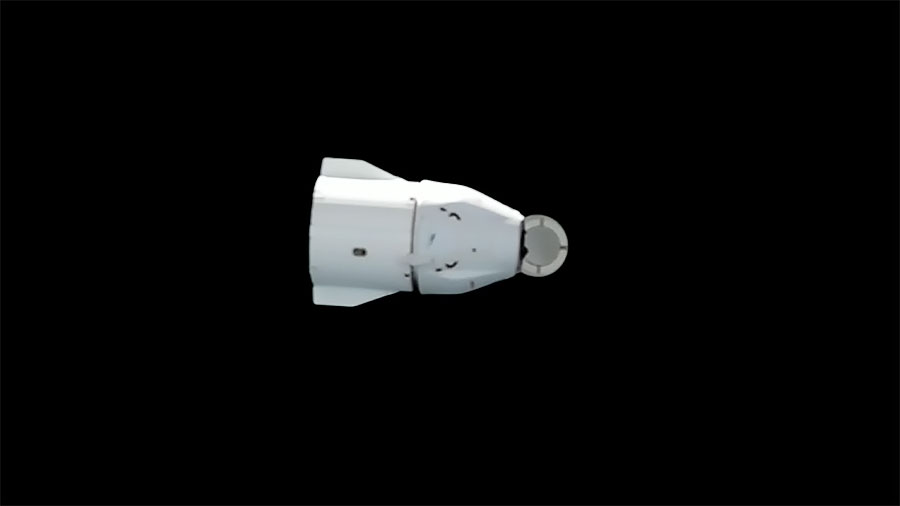
The SpaceX Dragon space freighter approaches the space station during an orbital sunrise on July 16, 2022.

Mission managers have given the “go” for the seventh spacewalk of the year scheduled to take place in the middle of the week. A U.S. cargo craft is also nearing the end of its mission with its undocking and return to Earth planned for the end of the week.

Two cosmonauts are gearing up for a six-and-a-half-hour spacewalk to continue setting up the European robotic arm (ERA) for operations on the outside of the International Space Station’s Russian segment. Commander Oleg Artemyev and Flight Engineer Denis Matveev will exit the Poisk module’s airlock on at 9:20 a.m. EDT on Wednesday in their Russian Orlan spacesuits. The pair will install cameras on the ERA, move its external control panel, remove the robotic arm’s launch restraints, and test the arm’s grasping mechanism. NASA TV, on the agency’s app and website, will begin its live spacewalk coverage at 9 a.m.

Roscosmos Flight Engineer Sergey Korsakov is assisting his fellow cosmonauts with the spacewalk preparations while also maintaining orbital lab systems and conducting space research. Today, he worked on ventilation systems inside the Nauka module then explored effective exercise techniques to maintain physical fitness in microgravity.

Meanwhile, the SpaceX Dragon resupply ship is nearing the end of its monthlong stay on the Harmony module’s forward port. Expedition 67 Flight Engineers Jessica Watkins of NASA and Samantha Cristoforetti of ESA (European Space Agency) spent Monday afternoon packing Dragon with some of the more than 4,000 pounds of station gear and completed science experiments it will return to Earth. Dragon will undock at 11:05 a.m. on Thursday and parachute to a splashdown off the coast of Florida the following day for retrieval. Live undocking coverage on NASA TV begins at 10:45 a.m. on Thursday.

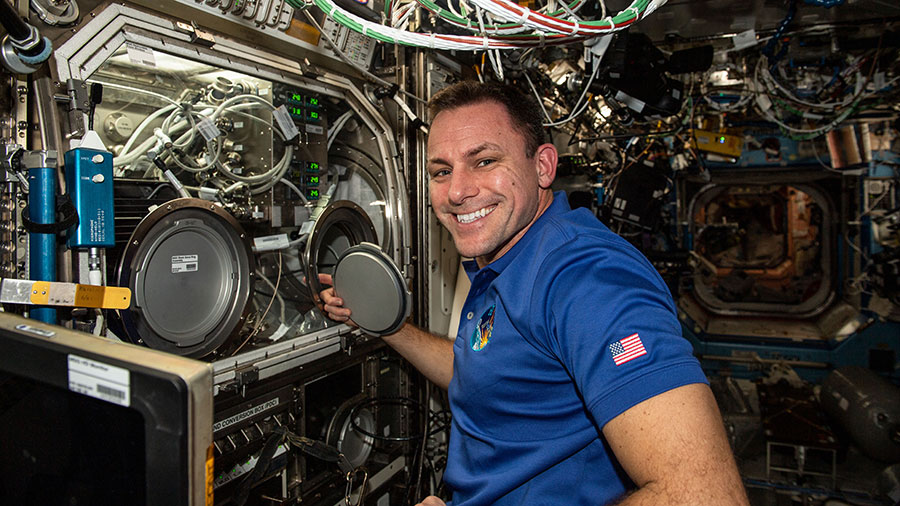
NASA Flight Engineers Kjell Lindgren and Bob Hines spent Monday focusing on life science to improve human health on and off the Earth. Lindgren set up tissue stem cell samples inside the Life Science Glovebox (LSG) to explore how weightlessness affects immunological aging possibly promoting therapies to protect astronauts and Earthlings. Afterward, Hines cleaned up the LSG in the Kibo laboratory module to prepare for experiment operations that will use the microgravity environment to develop new wound treatment techniques.


Learn more about station activities by following the space station blog@space_station and @ISS_Research on Twitter, as well as the ISS Facebook and ISS Instagram accounts.

Get weekly video highlights at: http://jscfeatures.jsc.nasa.gov/videoupdate/

Get the latest from NASA delivered every week. Subscribe here: www.nasa.gov/subscribe

Get The Details…

Mark Garcia

Powered by WPeMatico

Astronauts Pack Dragon for Return; Cosmonauts Practice Spacewalk

Astronauts Pack Dragon for Return; Cosmonauts Practice Spacewalk

The SpaceX Dragon resupply ship (at top) is pictured docked to the Harmony module's forward port on the International Space Station.
The SpaceX Dragon resupply ship (at top) is pictured docked to the Harmony module’s forward port on the International Space Station.

Skin healing processes and spacewalk preparations filled the work schedule aboard the International Space Station on Friday. The Expedition 67 crew members are also readying a U.S. space freighter for its return to Earth next week.

Four astronauts aboard the orbiting lab practiced surgical techniques to heal wounds in microgravity on Friday in the Kibo laboratory module. The quartet split up in groups of two with NASA astronaut Bob Hines joining ESA (European Space Agency) Flight Engineer Samantha Cristoforetti for the first practice session during the morning. In the afternoon, NASA Flight Engineers Kjell Lindgren and Jessica Watkins began their session studying how to take biopsies and suture wounds inside the Life Science Glovebox.

During the middle of the day, the foursome had time set aside time for gathering frozen research samples inside science freezers and preparing them for departure back to Earth inside the SpaceX Dragon resupply ship. Dragon is due to leave the station on Aug. 18 loaded with over 4,000 pounds of station supplies and science experiments after 33 days docked to the Harmony module’s forward port. The commercial cargo craft will parachute to a splashdown off the coast of Florida the next day for retrieval by NASA and SpaceX personnel.

Watkins and Cristoforetti started the day collecting blood samples for spinning in centrifuge then stowing them in a science freezer. Lindgren demonstrated evaluated the effectiveness of the Butterfly IQ Ultrasound device that uses mobile-computing technology to promote crew autonomy. Hines wrapped up his day with light orbital plumbing tasks and spacewalk tether inspections.

Two cosmonauts are gearing up for a spacewalk on Aug. 17 to continue configuring the European robotic arm (ERA) for operations on the station’s Russian segment. Commander Oleg Artemyev and Flight Engineer Denis Matveev tried on their Orlan spacesuits, tested communications gear, checked for leaks, and practiced maneuvers planned for next week’s six-and-half-hour excursion. Flight Engineer Sergey Korsakov assisted the duo during the spacewalking dry run and will be on duty monitoring his two crewmates when they exit the Poisk module’s airlock next week for the ongoing ERA work.

Get The Details…

Mark Garcia

Powered by WPeMatico

Crew Studies Life Science, Botany and Prepares for Spacewalk

Crew Studies Life Science, Botany and Prepares for Spacewalk

Cosmonauts (from left) Denis Matveev and Oleg Artemyev configure the European robotic arm on the Nauka multipurpose laboratory module during a spacewalk on April 18, 2022.

Healing wounds in space and growing crops in low-Earth orbit and beyond were the main research topics aboard the International Space Station on Thursday. Meanwhile, the Expedition 67 crew is also packing a U.S. cargo craft and preparing for a Russian spacewalk next week.

Two-time space station resident Kjell Lindgren of NASA set up hardware during the morning inside the Life Science Glovebox for a biology experiment studying how skin heals in weightlessness. He was joined in the afternoon by fellow astronauts Bob Hines and Jessica Watkins, both from NASA, and Samantha Cristoforetti of ESA (European Space Agency) for an experiment procedures review and a conference with the payload developer on the ground. Observations may provide insights improving wound healing techniques for astronauts and Earthlings.

Hines and Watkins began their day drawing their blood samples, spinning them in a centrifuge, then stowing them in a science freezer for later analysis. Hines then inspected seeds and recirculated fluids for the XROOTS botany study growing mizuna greens and radishes to explore agricultural techniques in space. Watkins later worked on orbital plumbing duties inside the Unity module.

Cristoforetti began her day servicing research gear as she downloaded Acoustic Monitor data to a laptop computer then swapped components on a fluorescence imaging microscope. At the end of the day, she continued stowing cargo inside the SpaceX Dragon resupply ship readying it for its return to Earth later this month.

Cosmonauts Oleg Artemyev and Denis Matveev are gearing up for another spacewalk on Aug. 17 to prepare the European robotic arm (ERA) for operations on the station’s Russian segment. The duo has been readying their Russian Orlan spacesuits, spacewalking tools, and the Poisk module’s airlock for next week’s planned six-and-half-hour spacewalk. Flight Engineer Sergey Korsakov, who will assist the spacewalkers next week, is also configuring the ERA for the upcoming excursion, which would be this year’s seventh spacewalk.

Get The Details…

Mark Garcia

Powered by WPeMatico

Aging Process, CubeSat Preps, and Space Physics Fill Station Research Schedule

Aging Process, CubeSat Preps, and Space Physics Fill Station Research Schedule

Astronaut Jessica Watkins sets up cell samples for viewing in a microscope for an immune system aging study.

Human research, nanosatellites, and space physics topped the research operations aboard the International Space Station on Wednesday. The Expedition 67 crew also continued packing a U.S. cargo craft while servicing Russian spacesuits.

NASA Flight Engineer Jessica Watkins peered at tissue stem cells through a microscope in the U.S. Destiny laboratory module today to understand how the human immune system ages in space. Observations may provide insights into the biological aging process and tissue regeneration possibly informing new ways to keeps astronauts healthy in space and treat medical conditions on Earth. Watkins then spent the afternoon readying cargo packed inside the SpaceX Dragon resupply ship for return to Earth in mid-August.

A small satellite deployer loaded with CubeSats has been installed on an external science platform and placed inside the Kibo laboratory module’s airlock by NASA astronaut Kjell Lindgren today. The deployer will soon be moved into the vacuum of space where the CubeSats will be released into low-Earth orbit for a variety of research programs. Lindgren later set up an AstroBee robotic free-flyer to rehearse pre-programmed maneuvers for the upcoming student-based Kibo Robotic Programming Challenge 3.

Flight Engineer Samantha Cristoforetti of ESA (European Space Agency) explored the dynamics of foams, droplets, and granular materials with implications for future planetary travel and industries on Earth. She swapped the samples inside the Fluid Science Laboratory’s Soft Matter Dynamics experiment container.

NASA Flight Engineer Bob Hines started his day transferring U.S. spacewalking gear into the orbiting lab’s Russian segment. During the afternoon, he serviced hardware supporting the Ring Sheared Drop fluid physics study that could lead to a better understanding of Alzheimer’s disease and the development of advanced materials.

Roscosmos cosmonauts Oleg Artemyev and Denis Matveev took the U.S. spacewalk components, including tools and video cameras, Hines delivered today and installed them on a pair of Russian Orlan spacesuits. The duo will conduct a spacewalk on Aug. 17 to continue outfitting the European robotic arm. Flight Engineer Sergey Korsakov focused on network cable connections inside the Nauka and Zvezda modules.

Get The Details…

Mark Garcia

Powered by WPeMatico

Multilateral Coordination Board Joint Statement

Multilateral Coordination Board Joint Statement

This mosaic depicts the space station pictured from the SpaceX Crew Dragon Endeavour on Nov. 8, 2021.

The International Space Station Multilateral Coordination Board met Friday, July 29, to discuss the status of the combined work aboard the microgravity laboratory. Partner representatives from NASA, the Canadian Space Agency, the European Space Agency,  the Ministry of Education, Culture, Sports, Science and Technology of Japan / the Japan Aerospace Exploration Agency, and Roscosmos discussed a variety of topics including space station utilization, operations, and research, and transition planning and partnership in low-Earth orbit in the post-space station era. The board, tasked with  coordinating the management of the space station, also discussed extension of space station operations beyond 2024. Each partner confirmed it will continue to work through respective government processes on station extension and utilization beyond 2024.


Learn more about station activities by following the space station blog@space_station and @ISS_Research on Twitter, as well as the ISS Facebook and ISS Instagram accounts.

Get weekly video highlights at: http://jscfeatures.jsc.nasa.gov/videoupdate/

Get the latest from NASA delivered every week. Subscribe here: www.nasa.gov/subscribe

Get The Details…

Mark Garcia

Powered by WPeMatico