Research Informing Deep Space Missions as Dragon Nears Departure

Research Informing Deep Space Missions as Dragon Nears Departure
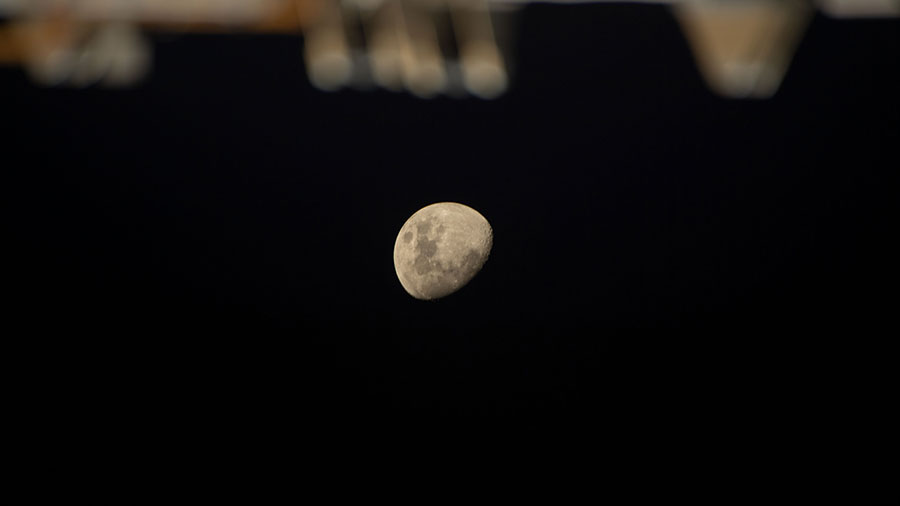
The Waxing Gibbous Moon is pictured from the space station as it orbited above the southern Indian Ocean.

Space science and spacesuits dominated the Expedition 68 crew’s work day aboard the International Space Station on Thursday. The orbital lab will also see the departure of a U.S. cargo ship early next week.

Sustaining crews farther away from Earth is a key objective as NASA and its international partners plan human missions to the Moon, Mars, and beyond. The BioNutrients-2 investigation taking place on the station seeks to provide nutrients in flight for astronauts to reduce reliance on visiting cargo missions. Food stowed for long periods of time also tends to lose its nutritional value. NASA astronauts Frank Rubio and Nicole Mann took turns today servicing and photographing genetically engineered yeast samples incubated in the Space Automated Bioproduct Laboratory for the study that could provide adequate nutrition on demand quickly using a minimal amount of equipment.

Mann also partnered with Flight Engineer Koichi Wakata of the Japan Aerospace Exploration Agency (JAXA) resizing a pair of spacesuits, also known as Extravehicular Mobility Units, or EMUs. Mann also installed lithium-ion batteries in the EMUs that power the spacesuit life support systems. The suits are being readied for an upcoming spacewalk planned to continue upgrading the station’s power generation system.

Wakata earlier joined NASA Flight Engineer Josh Cassada and continued packing the soon-to-depart SpaceX Dragon resupply ship. Dragon will complete a 43-day cargo mission and undock from the Harmony module’s space-facing port on Monday at 5:05 p.m. EST. It will splashdown off the coast of Florida packed with station hardware for inspection and finalized science experiments for analysis.

The orbiting lab’s three cosmonauts focused on their complement of microgravity research on Thursday benefiting humans on and off the Earth and providing insights on deep space exploration. Commander Sergey Prokopyev analyzed his blood samples using chromatography, a process for separating components of a mixture, then he studied how stress during a spaceflight may affect a cosmonaut’s immune system.

Roscosmos Flight Engineer Dmitri Petelin, wearing sensors, used a computer to explore how future crews may handle piloting spaceships or robots on planetary missions. Flight Engineer Anna Kikina pointed a camera outside a station window and photographed wildfires in South America. She then turned her attention to researching ways to improve communications between international crews and mission controllers from around the world.


Learn more about station activities by following the space station blog, @space_station and @ISS_Research on Twitter, as well as the ISS Facebook and ISS Instagram accounts.

Get weekly video highlights at: https://roundupreads.jsc.nasa.gov/videupdate/

Get the latest from NASA delivered every week. Subscribe here: www.nasa.gov/subscribe

Get The Details…

Mark Garcia

Powered by WPeMatico

Humans, Tomatoes, Tiny Satellites Top Station Research Schedule

Humans, Tomatoes, Tiny Satellites Top Station Research Schedule

Astronauts (from left) Josh Cassada, Koichi Wakata, and Frank Rubio share a meal on Christmas Eve inside the space station's Unity module.
Astronauts (from left) Josh Cassada, Koichi Wakata, and Frank Rubio share a meal on Christmas Eve inside the space station’s Unity module.

Human research, space botany, and tiny satellites filled the research schedule aboard the International Space Station on Wednesday. The seven Expedition 68 crew members also split their day on maintaining lab systems and packing a U.S. cargo craft for departure.

It was the second day of operations for the GRIP study as NASA Flight Engineer Josh Cassada explored how dexterous manipulation is affected by living and working in weightlessness. He was seated once again inside the Columbus laboratory module performing computerized scientific tasks with a controller device. Researchers will use the data to help design intelligent spacecraft interfaces enabling human missions to the Moon, Mars, and beyond.

NASA Flight Engineer Frank Rubio watered and photographed tomatoes growing for the Veg-05 space agriculture experiment. The main purpose of the botany investigation is to create a continuous fresh food production system to sustain astronauts traveling far beyond low-Earth orbit and decrease reliance on visiting cargo missions.

Science also takes place outside the orbiting lab with experiments attached to external platforms or small research satellites deployed from the station into Earth orbit. Flight Engineer Koichi Wakata of the Japan Aerospace Exploration Agency (JAXA) spent the day installing a set of CubeSats into the Kibo laboratory module’s airlock. The nanosatellites will be staged outside in space then deployed into orbit on Friday to demonstrate a variety of technologies such as communications, propulsion systems, and Earth observations.

NASA Flight Engineer Nicole Mann partnered with Rubio during the afternoon continuing to load the SpaceX Dragon resupply ship with cargo ahead of its return to Earth next week. The duo, along with Cassada and Wakata, will accelerate its cargo activities going into the weekend finally loading sensitive research samples for analysis on Earth into Dragon before it undocks on Monday at 5:05 p.m. EST.

All four astronauts also had time set aside on Wednesday for vision tests using a standard eye chart commonly seen in an optometrist’s office. Doctors on Earth monitored the tests real-time checking the crew’s visual acuity, visual field, and contrast sensitivity.

Working in the Zvezda service module, cosmonauts Sergey Prokopyev and Dmitri Petelin checked out the audio system’s low frequency and very high frequency receivers. Roscosmos Flight Engineer Anna Kikina cleaned the Nauka multipurpose laboratory module’s ventilation system in the morning then studied futuristic planetary and robotic piloting techniques during the afternoon.


Learn more about station activities by following the space station blog, @space_station and @ISS_Research on Twitter, as well as the ISS Facebook and ISS Instagram accounts.

Get weekly video highlights at: https://roundupreads.jsc.nasa.gov/videupdate/

Get the latest from NASA delivered every week. Subscribe here: www.nasa.gov/subscribe

Get The Details…

Mark Garcia

Powered by WPeMatico

Station Science Kicks Off New Year Promoting Deep Space Exploration

Station Science Kicks Off New Year Promoting Deep Space Exploration

Astronauts Koichi Wakata and Nicole Mann pose with a pair of Extravehicular Mobility Units (EMUs), or spacesuits, aboard the space station.

The Expedition 68 crew kicked off the new year with an array of microgravity research aboard the International Space Station aimed at sustaining future crews farther away from Earth. The seven orbital residents from the United States, Japan, and Russia explored a wide variety of phenomena including space nutrition, dexterous manipulation, and microbe samples collected from inside the orbiting lab.

Providing adequate nutrition for crews is critical as NASA and its international partners plan expeditions to the Moon, Mars, and beyond. The BioNutrients-2 investigation is using genetically engineered microbes to provide nutrients, and potentially other compounds and pharmaceuticals, on demand in space. NASA Flight Engineer Nicole Mann nourished and incubated genetically engineered yeast samples for the study in the Space Automated Bioproduct Laboratory on Tuesday.

The way humans adapt to the lack of an up-and-down reference in weightlessness is also important as researchers study how astronauts grip and manipulate objects. NASA Flight Engineer Josh Cassada seated himself in a specialized chair in the Columbus laboratory module and performed different tasks using a controller device. Scientists may gain insights and use the observations to design intelligent spacecraft interfaces benefitting future astronauts as they venture into deep space visiting planets, moons, and asteroids.

Understanding the microbial environment on the space station is another vital activity to ensure healthy crews and safe, successful missions. NASA Flight Engineer Frank Rubio analyzed microbe samples on Tuesday morning that were collected from the station’s atmosphere and surfaces and grown in an incubator. Those samples will be returned to Earth next week on the SpaceX Dragon cargo craft for additional analysis. Roscosmos Flight Engineers Dmitri Petelin and Anna Kikina performed their own analysis of a separate set of microbe samples adding to the knowledge of how bacteria and fungi adapt and thrive in microgravity.

Flight Engineer Koichi Wakata of the Japan Aerospace Exploration Agency (JAXA) tended to research samples being observed to understand bone regeneration on Earth and in space. Wakata later took a robotics test on a computer measuring his performance, behavior, and cognition while living in space. Station Commander Sergey Prokopyev from Roscosmos set up an experimental 3-D printer to demonstrate the ability to print parts and tools supporting spacecraft and space habitat maintenance.


Learn more about station activities by following the space station blog, @space_station and @ISS_Research on Twitter, as well as the ISS Facebook and ISS Instagram accounts.

Get weekly video highlights at: https://roundupreads.jsc.nasa.gov/videupdate/

Get the latest from NASA delivered every week. Subscribe here: www.nasa.gov/subscribe

Get The Details…

Mark Garcia

Powered by WPeMatico

Station Crew Wraps Up a Busy Year as Soyuz Review Continues

Station Crew Wraps Up a Busy Year as Soyuz Review Continues

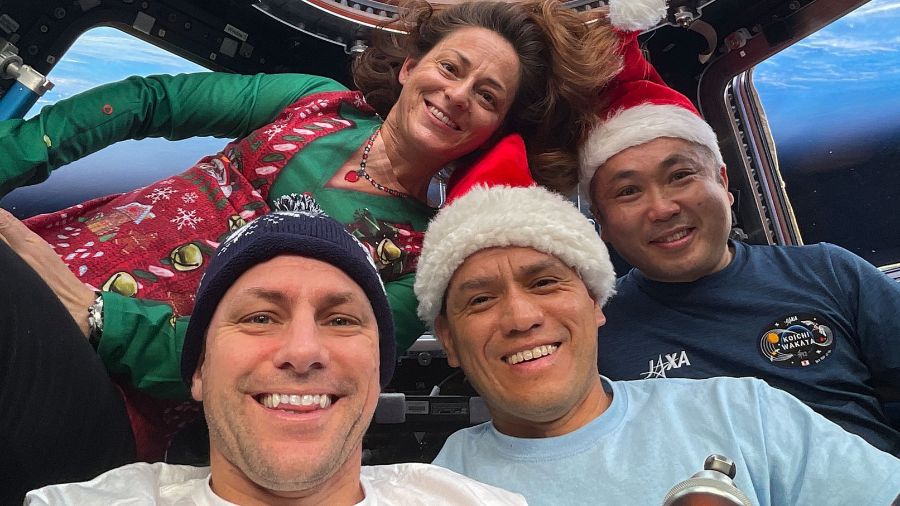
Expedition 68 Flight Engineers (from left) Josh Cassada, Nicole Mann, and Frank Rubio, all from NASA, and Koichi Wakata of the Japan Aerospace Exploration Agency (JAXA), pose for a festive portrait on Christmas Day inside the cupola as the International Space Station orbited 270 miles above the southern Atlantic Ocean on Dec. 25, 2022.

Research and maintenance activities aboard the International Space Station continue into the new year while engineers and managers discuss Soyuz capabilities and potential next steps in response to the Soyuz MS-22’s external cooling loop leak.

The Expedition 68 crew remains in good condition, performing a variety of maintenance and research activities and looks forward to some time off on New Year’s Day. NASA astronauts Frank Rubio, Josh Cassada, and Nicole Mann continued work to service the spacesuits used by Rubio and Cassada to install a new International Space Station Roll-out Solar Array.

On Dec. 29, Japan Aerospace Exploration Agency (JAXA) astronaut Koichi Wakata monitored the deployment of eight Cubesats from JAXA’s Kibo module. Cosmonauts Sergey Prokopyev, Dmitri Petelin and Anna Kikina worked on a variety of maintenance and research tasks.

With integrated crews on each other’s spacecraft, NASA and Roscosmos work jointly on any decisions related to crew safety including crew transportation. NASA and Roscosmos are continuing to conduct a variety of engineering reviews and are consulting with other international partners about methods for safely bringing the Soyuz crew home for both normal and contingency scenarios. A final decision on the path forward is expected in January.

As a part of the analysis, NASA also reached out to SpaceX about its capability to return additional crew members aboard Dragon if needed in an emergency, although the primary focus is on understanding the post-leak capabilities of the Soyuz MS-22 spacecraft.

Station teams also are preparing for the undocking and departure of the SpaceX CRS-26 cargo spacecraft on Monday, Jan. 9. The cargo Dragon is scheduled to return valuable scientific research samples through a splashdown off the Florida coast. Undocking is scheduled for 5:05 p.m. EST, with splashdown planned for Wednesday, Jan. 11. Live coverage of the undocking and departure will begin at 4:45 p.m. on NASA Television, the NASA app, and the agency’s website.


Learn more about station activities by following the space station blog, @space_station and @ISS_Research on Twitter, as well as the ISS Facebook and ISS Instagram accounts.

Get weekly video highlights at: https://roundupreads.jsc.nasa.gov/videoupdate/

Get the latest from NASA delivered every week. Subscribe here: www.nasa.gov/subscribe

Get The Details…

Heidi Lavelle

Powered by WPeMatico

Crew Goes into Christmas Weekend After Spacewalk and Science Ops

Crew Goes into Christmas Weekend After Spacewalk and Science Ops

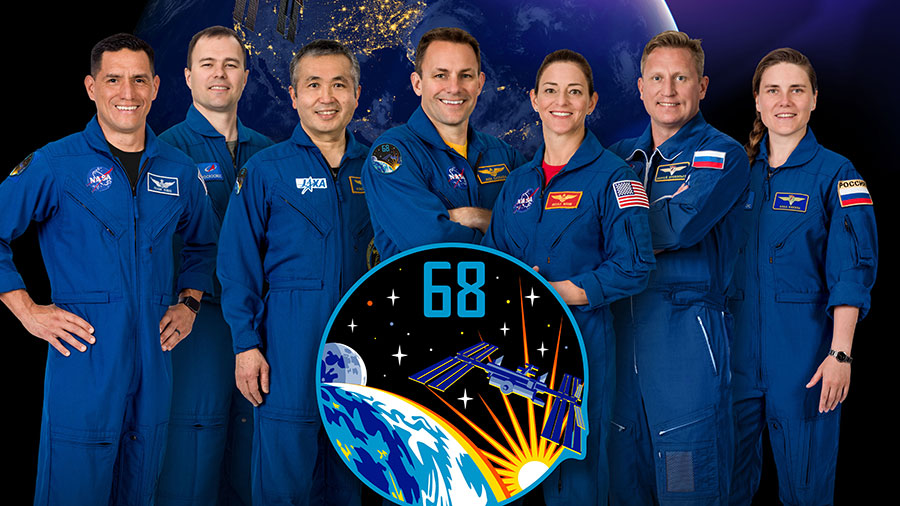
The official portrait of the Expedition 68 crew with (from left) Frank Rubio, Dmitri Petelin, Koichi Wakata, Josh Cassada, Nicole Mann, Sergey Prokopyev, and Anna Kikina.

The seven Expedition 68 crew members wrapped up the work week cleaning up after a spacewalk and performing a variety of research operations. The space residents will spend a quiet weekend observing the Christmas holiday orbiting Earth aboard the International Space Station.

NASA Flight Engineers Frank Rubio and Josh Cassada worked throughout Friday cleaning up after conducting a seven-hour and eight minute spacewalk on Thursday. The duo started the day with standard post-spacewalk health checkups and measured each other’s temperature, blood pressure, pulse, and respiratory rate. Afterward, Rubio and Cassada stowed tools inside the Quest airlock and refilled water tanks inside their Extravehicular Mobility Units (EMUs), also known as spacesuits.

The spacewalking pair successfully installed and deployed a roll-out solar array on the International Space Station’s Port-4 truss segment during the Dec. 22 spacewalk. During a previous spacewalk on Dec. 3, the two NASA astronauts spent seven hours and 28 minutes installing another roll-out solar array on the Starboard-4 truss segment on the opposite side of the station.

Science operations continued aboard the orbiting lab on Friday with NASA Flight Engineer Nicole Mann attaching sensors to herself and pedaling on an exercise bike. She was working out for the Cardiobreath investigation that observes how an astronaut’s cardiovascular and respiratory systems affect blood pressure in weightlessness. Flight Engineer Koichi Wakata of the Japan Aerospace Exploration Agency (JAXA) worked all day in the Kibo laboratory module servicing a variety of research hardware and electronics components.

Roscosmos Commander Sergey Prokopyev worked on two different science experiments beginning Friday with cardiac research then spending the afternoon exploring ways to pilot futuristic spacecraft and robots. Flight Engineer Dmitri Petelin began the day on a space physics study before researching ways international crews and mission controllers can improve communications. Flight Engineer Anna Kikina assisted Prokopyev in the morning with the heart study then wrapped up her day setting up Earth observation gear.


Learn more about station activities by following the space station blog, @space_station and @ISS_Research on Twitter, as well as the ISS Facebook and ISS Instagram accounts.

Get weekly video highlights at: https://roundupreads.jsc.nasa.gov/videupdate/

Get the latest from NASA delivered every week. Subscribe here: www.nasa.gov/subscribe

Get The Details…

Mark Garcia

Powered by WPeMatico