Cygnus Unpacking and Research Continue as Managers Discuss Starliner Updates

Cygnus Unpacking and Research Continue as Managers Discuss Starliner Updates
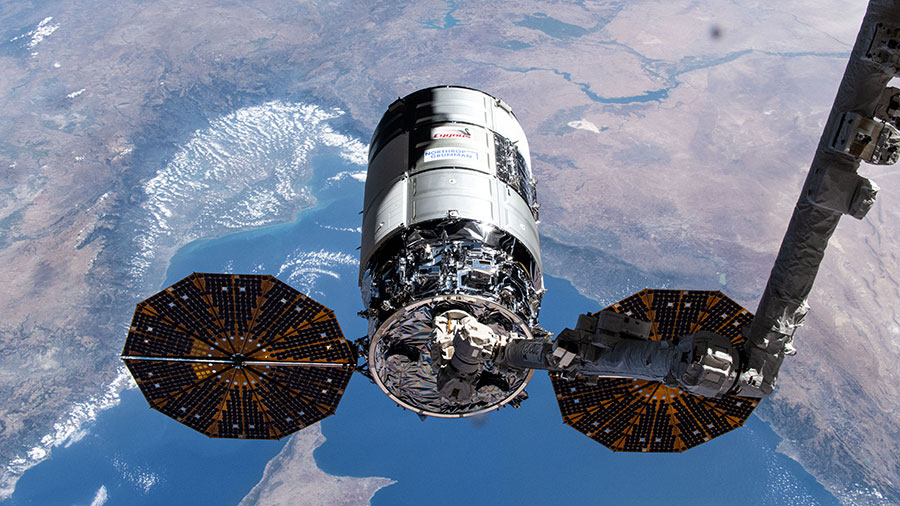
The Cygnus cargo craft is pictured in the grips of the Canadarm2 robotic arm as the International Space Station orbited 262 miles above the Mediterranean Sea.

The residents aboard the International Space Station continued unpacking several tons of science and supplies packed inside Northrop Grumman’s Cygnus cargo craft on Wednesday. The seven-member Expedition 71 crew also studied an array of space research while the two Boeing Crew Flight Test astronauts from NASA reviewed their Starliner spacecraft’s systems.

NASA Flight Engineers Matthew Dominick, Mike Barratt, and Jeanette Epps spent the afternoon transferring cargo out of the newly arrived Cygnus space freighter. Starliner Pilot Suni Williams started the cargo work during the morning beginning the job of replenishing the orbital outpost with food, fuel, supplies, and new science experiments.

Earlier in the day, Dominick and Barratt conducted science operations to learn more about Earth’s climate and install a new research incubator. Dominick photographed the Moon from inside the cupola to measure sunshine reflected from the Earth. Results may provide scientists insights into climate change. Barratt installed and activated the Space Automated Lab Incubator (SALI) inside the Kibo laboratory module. The SALI can host a variety of samples at a range of temperatures supporting numerous space investigations into biology and physics.

Epps and NASA astronaut Tracy C. Dyson also spent their day on a variety of station science and maintenance duties. Epps transferred water between life support systems, configured a radiation detector, then wrapped up her shift with biomedical checks. Dyson worked inside the Destiny laboratory module throughout Wednesday configuring research hardware to study stem cells for treatment purposes and commercial use.

Williams joined Starliner Commander Butch Wilmore and reviewed on a pair of tablet computers the Boeing Starliner crew flight procedures and systems to maintain their operational proficiency. NASA managers also provided mission updates and answered reporter’s questions about Starliner and space station operations during a media teleconference on Wednesday.

Roscosmos cosmonauts Oleg Kononenko and Nikolai Chub tested the telerobotically operated rendezvous unit’s, or TORU, ability to communicate with the Progress 87 space freighter docked to the Zvezda service module’s rear port. The Progress 87 is due to depart the orbital outpost early next week making space for the arrival of the Progress 89 cargo craft with a fresh load of food, fuel, and supplies just over a week later. The TORU would be used to remotely control a Roscosmos spaceship in the unlikely event the spacecraft would be unable to complete its automated arrival or departure.

Roscosmos Flight Engineer Alexander Grebenkin spent a portion of his day on a host of orbital household duties including plumbing and camera battery charging. He later partnered with Kononenko and Chub and recorded a series of congratulatory and greeting videos for their home space agency.


Learn more about station activities by following the space station blog, @space_station and @ISS_Research on X, as well as the ISS Facebook and ISS Instagram accounts.

Get weekly video highlights at: https://roundupreads.jsc.nasa.gov/videoupdate/

Get the latest from NASA delivered every week. Subscribe here: www.nasa.gov/subscribe

Powered by WPeMatico

Get The Details…

Mark Garcia

NASA Adjusts Crew-9 Launch Date for Operational Flexibility

NASA Adjusts Crew-9 Launch Date for Operational Flexibility

Image of NASA Crew-9 mission patch
NASA, SpaceX Crew-9 mission patch

NASA and SpaceX are targeting no earlier than Tuesday, Sept. 24, for the launch of the agency’s Crew-9 mission to the International Space Station.

This adjustment allows more time for mission managers to finalize return planning for the agency’s Boeing Crew Flight Test currently docked to the orbiting laboratory. Starliner ground teams are taking their time to analyze the results of recent docked hot-fire testing, finalize flight rationale for the spacecraft’s integrated propulsion system, and confirm system reliability ahead of Starliner’s return to Earth. NASA and Boeing continue to evaluate the spacecraft’s readiness, and no decisions have been made regarding Starliner’s return.

The Crew-9 launch adjustment also deconflicts the next SpaceX rotation with the upcoming Soyuz handover targeted for no earlier than mid-September. Teams are working to prepare the Crew-9 mission to be ready to launch from Space Launch Complex 40 at Cape Canaveral Space Force Station in Florida to deconflict with pad preparations for NASA’s Europa Clipper mission beginning this September at nearby Launch Complex 39A at the agency’s Kennedy Space Center. NASA also will adjust the launch of SpaceX’s 31st commercial resupply services mission to no earlier than mid-October.

The agency will host a media teleconference at 12:30 p.m. EDT, Wednesday, Aug. 7, with agency leadership to discuss ongoing operations, including NASA’s Crew-9, Crew-8, and Crew Flight Test missions.

Powered by WPeMatico

Get The Details…

Elyna Niles-Carnes

Cygnus Arrives at Station, Astronauts Unpack New Science

Cygnus Arrives at Station, Astronauts Unpack New Science

The Cygnus space freighter is pictured in the grips of the Canadarm2 robotic arm shortly after its capture delivering 8,200 pounds of science and supplies to the orbital outpost. Credit: NASA TV

Northrop Grumman’s Cygnus cargo craft has arrived at its new home for the next six months and the International Space Station residents have begun unloading some of its 8,200 pounds of science and supplies.

NASA Flight Engineer Matthew Dominick captured Cygnus with the Canadarm2 robotic arm at 3:11 a.m. EDT on Tuesday following its automated approach and rendezvous. The maneuver marked the 50th free-flying capture for Canadarm2. Just over two hours later mission controllers on Earth remotely commanded the Canadarm2 and installed Cygnus to the Unity module’s Earth-facing port where it will stay until January. Cygnus began its trip to the orbital outpost with a launch atop a SpaceX Falcon 9 rocket from Florida at 11:02 a.m. EDT on Sunday.

Dominick later joined NASA Flight Engineer Jeanette Epps and conducted cable connections and leak checks before opening Cygnus’ hatch and entering the space freighter for the first time. Next, the rest of the NASA astronauts including Tracy C. Dyson, Mike Barratt, Suni Williams, and Butch Wilmore started offloading research samples stowed in Cygnus and preserved in portable science freezers and double coldbags. Those samples were then placed inside station science freezers in preparation for upcoming research. The orbital residents will soon be exploring liquid and gas flows, centripetal force, DNA repair mechanisms, cellular expansion, and more.

During a break in the cargo activities Dominick set up photography gear in the cupola and took pictures of the Moon to measure sunshine reflected from the Earth. Dyson worked in the Destiny laboratory module and connected a microscope to an advanced research incubator to support space biology investigations.

The orbital lab’s three cosmonauts representing Roscosmos stayed focused on their science and maintenance schedule throughout Tuesday. Commander Oleg Kononenko began his morning setting up carbon dioxide monitors and installing Earth observation hardware. During the afternoon, the five-time station visitor studied futuristic planetary piloting techniques on a computer. Flight Engineer Alexander Grebenkin attached sensors to himself measuring his heart activity during an hour-and-a-half long relaxation session. Next, he jogged on a treadmill for a fitness test before ending his day with computer maintenance in the Nauka science module. Flight Engineer Nikolai Chub worked throughout the day servicing hardware batteries and exercise gear.


Learn more about station activities by following the space station blog, @space_station and @ISS_Research on X, as well as the ISS Facebook and ISS Instagram accounts.

Get weekly video highlights at: https://roundupreads.jsc.nasa.gov/videoupdate/

Get the latest from NASA delivered every week. Subscribe here: www.nasa.gov/subscribe

Powered by WPeMatico

Get The Details…

Mark Garcia

Cygnus Spacecraft Installed to Space Station; Cargo Ops Underway

Cygnus Spacecraft Installed to Space Station; Cargo Ops Underway

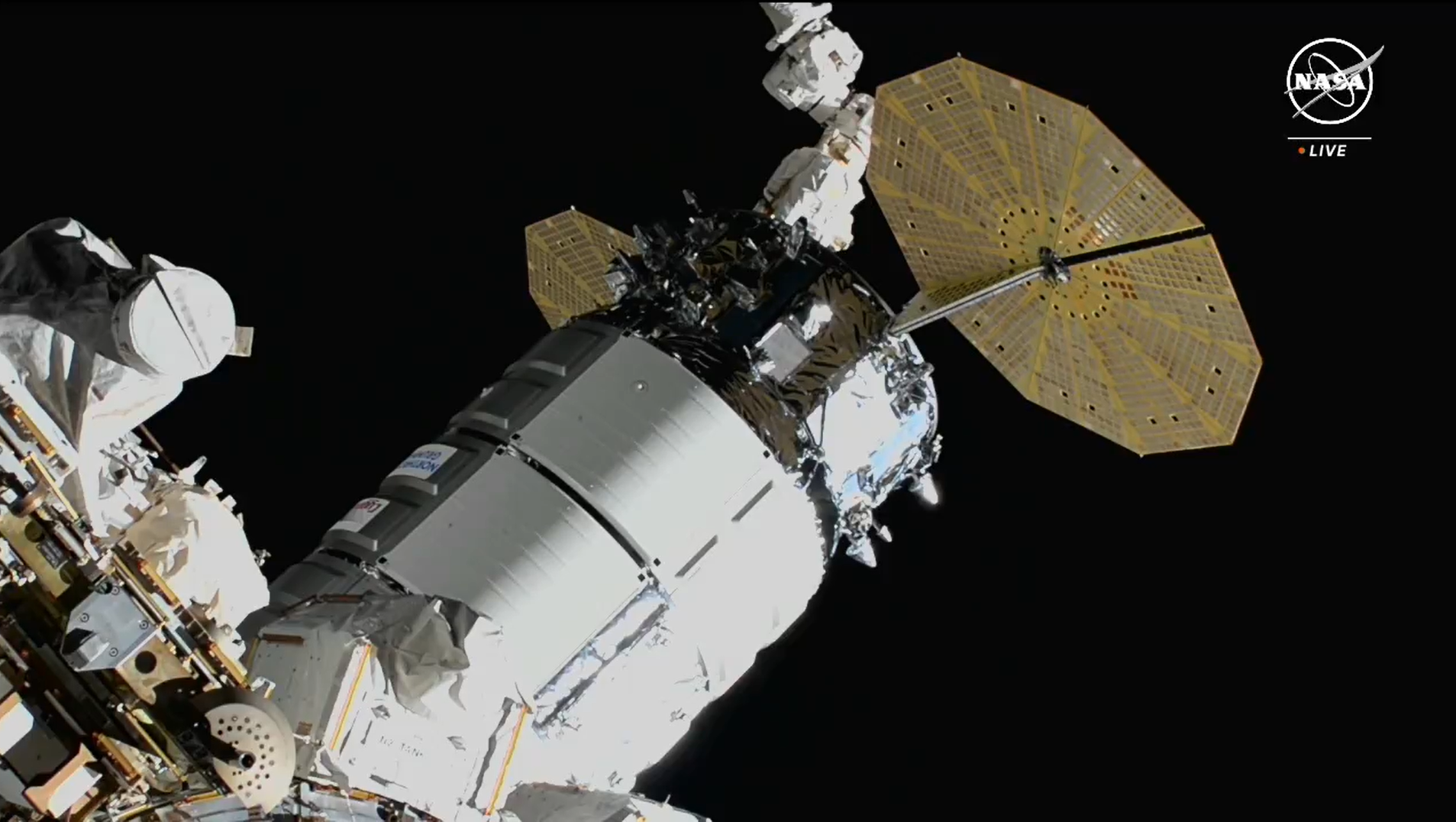
Northrop Grumman's Cygnus spacecraft is pictured attached to the Earth-facing port of the space station's Unity module on Aug. 6, 2024. Credit: NASA TV
Northrop Grumman’s Cygnus spacecraft is pictured attached to the Earth-facing port of the space station’s Unity module on Aug. 6, 2024. Credit: NASA TV

Northrop Grumman’s Cygnus spacecraft installation on the International Space Station is complete at 5:33 a.m. EDT.

The spacecraft carried 8,200 pounds of scientific investigations and cargo to the orbiting laboratory for Northrop Grumman’s 21st commercial resupply mission for NASA.

The mission launched at 11:02 a.m. Aug. 4 on a SpaceX Falcon 9 rocket from Space Launch Complex 40 at Cape Canaveral Space Force Station in Florida.

Cygnus will remain at the space station until January when it departs the orbiting laboratory at which point it will dispose of several thousand pounds of debris through its re-entry into Earth’s atmosphere where it will harmlessly burn up.


Learn more about station activities by following the space station blog, @space_station and @ISS_Research on X, as well as the ISS Facebook and ISS Instagram accounts.

Get weekly updates from NASA Johnson Space Center at: https://roundupreads.jsc.nasa.gov/

Get the latest from NASA delivered every week. Subscribe here: www.nasa.gov/subscribe

Powered by WPeMatico

Get The Details…

Abby Graf

Live NASA Coverage of Cygnus Installation Underway

Live NASA Coverage of Cygnus Installation Underway

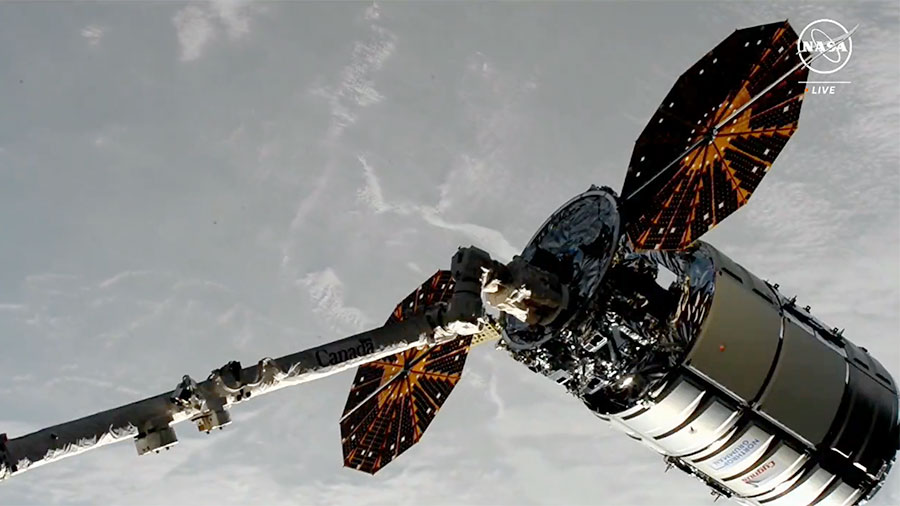
Northrop Grumman's Cygnus spacecraft is pictured attached to the Canadarm2 robotic arm, moments after NASA astronaut Matthew Dominick maneuvered the robotic arm to capture the spacecraft ahead of installation to the Earth-facing port of the Unity module. Credit: NASA TV
Northrop Grumman’s Cygnus spacecraft is pictured attached to the Canadarm2 robotic arm, moments after NASA astronaut Matthew Dominick maneuvered the robotic arm to capture the spacecraft ahead of installation to the Earth-facing port of the Unity module. Credit: NASA TV

NASA’s coverage is underway for the installation of Northrop Grumman’s Cygnus spacecraft to the International Space Station on NASA+, NASA Television, the NASA app, YouTube, X, Facebook, and the agency’s website.

At 3:11 a.m. EDT, NASA astronaut Matthew Dominick, with NASA astronaut Jeanette Epps acting as backup, captured Northrop Grumman’s Cygnus spacecraft using the International Space Station’s Canadarm2 robotic arm as the station was flying about 260 miles over the South Atlantic Ocean.

The spacecraft is carrying 8,200 pounds of scientific investigations and cargo to the orbiting laboratory for Northrop Grumman’s 21st commercial resupply mission for NASA.

The mission launched at 11:02 a.m. Aug. 4 on a SpaceX Falcon 9 rocket from Space Launch Complex 40 at Cape Canaveral Space Force Station in Florida.

Cygnus will remain at the space station until January when it departs the orbiting laboratory at which point it will dispose of several thousand pounds of debris through its re-entry into Earth’s atmosphere where it will harmlessly burn up.


Learn more about station activities by following the space station blog, @space_station and @ISS_Research on X, as well as the ISS Facebook and ISS Instagram accounts.

Get weekly updates from NASA Johnson Space Center at: https://roundupreads.jsc.nasa.gov/

Get the latest from NASA delivered every week. Subscribe here: www.nasa.gov/subscribe

Powered by WPeMatico

Get The Details…

Abby Graf