Crew Studies Space Effects on Humans, Plants; Managers Provide Starliner Update

Crew Studies Space Effects on Humans, Plants; Managers Provide Starliner Update
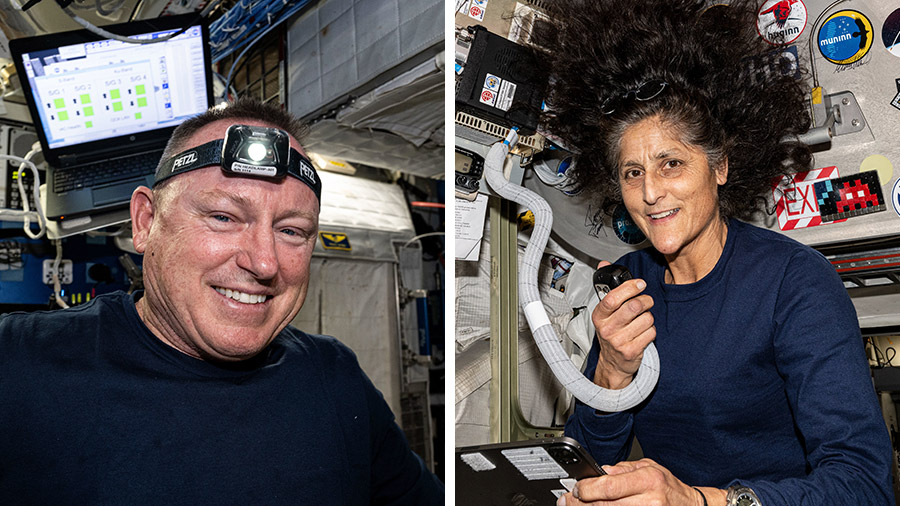
NASA astronauts Butch Wilmore and Suni Williams, Boeing Crew Flight Test Commander and Pilot respectively, conduct a variety of research and maintenance activities aboard the space station.

Vein scans and space botany topped Wednesday’s science schedule aboard the International Space Station. Earth observations and health assessments rounded out the day’s investigations as NASA managers on the ground provided an update on Boeing’s Crew Flight Test.

NASA Flight Engineer Tracy C. Dyson, who is celebrating her birthday today, spent the day on space biology participating in vein scans then cleaning up after a stem cell study. She first joined Flight Engineer Jeanette Epps who scanned Dyson’s neck, shoulder, and leg veins with the Ultrasound 2 device in the Columbus laboratory module. Doctors on the ground monitored in real-time to understand how the human body adapts to weightlessness. At the end of the day, Dyson cleaned up the Life Science Glovebox in the Kibo laboratory module after the previous day’s stem cell research to advance cellular manufacturing and improve human health.

Epps began her day handing over hardware to the cosmonauts for usage in the orbital outpost’s Roscosmos segment. Following her vein scan work, Epps moved to Kibo and watered plants growing inside the Plant Experiment Unit that is part of the Cell Biology Experiment Facility. She was caring for thale cress plants and supporting the Plant UV-B space botany study to understand how plant life responds to high ultraviolet radiation and the microgravity environment.

NASA Flight Engineers Matthew Dominick and Mike Barratt focused primarily on unpacking some of the 8,200 pounds of cargo that was stowed inside the Cygnus space freighter. Afterward, Dominick removed simulated lunar cement packs from a thermos can that he had mixed and incubated two days before. The concrete samples will spend several more weeks settling at ambient temperature before returning to Earth for analysis. Before the cargo work, Barratt called down to doctors on Earth for a medical conference.

NASA astronauts Butch Wilmore and Suni Williams, Commander and Pilot for Boeing’s Crew Flight Test, tested the use of an ultrasound device with software guidance instead of remote guidance from doctors on the ground. The duo conducted bladder and kidney ultrasound scans to demonstrate autonomous medical procedures in space and inform future crewed missions to the Moon, Mars, and beyond.

NASA managers updated the media and answered questions today about the Boeing Crew Flight Test. The agency and Boeing are still evaluating the Starliner spacecraft docked to the Harmony module’s forward port and will decide soon when Wilmore and Williams will return to Earth.

The three Roscosmos cosmonauts had their day full with a variety of science expanding knowledge obtainable only in the microgravity environment. Flight Engineer Alexander Grebenkin once again set up a digital camera and collected hyper-spectroscopy imagery of natural and man-made disasters on Earth. Flight Engineer Nikolai Chub jogged on a treadmill as sensors recorded his heart and lung activity for a space fitness evaluation. Station Commander Oleg Kononenko attached electrodes to himself for a 24-hour session monitoring his heart rate and blood pressure. Flight surgeons are constantly evaluating the health of crews to ensure successful missions and ease the adjustment when crews return to Earth’s gravity.

Nearly three tons of science, supplies, and fuel are packed inside the Progress 89 cargo craft that is counting down to a liftoff at 11:20 p.m. EDT today from the Baikonur Cosmodrome in Kazakhstan. The Progress 89 will take a day a two-day trip to the space station before its automated docking planned for 1:56 a.m. on Saturday.


Learn more about station activities by following the space station blog, @space_station and @ISS_Research on X, as well as the ISS Facebook and ISS Instagram accounts.

Get weekly video highlights at: https://roundupreads.jsc.nasa.gov/videoupdate/

Get the latest from NASA delivered every week. Subscribe here: www.nasa.gov/subscribe

Powered by WPeMatico

Get The Details…

Mark Garcia

Stem Cells, Fluid Physics on Station as Next Cargo Mission Nears Launch

Stem Cells, Fluid Physics on Station as Next Cargo Mission Nears Launch

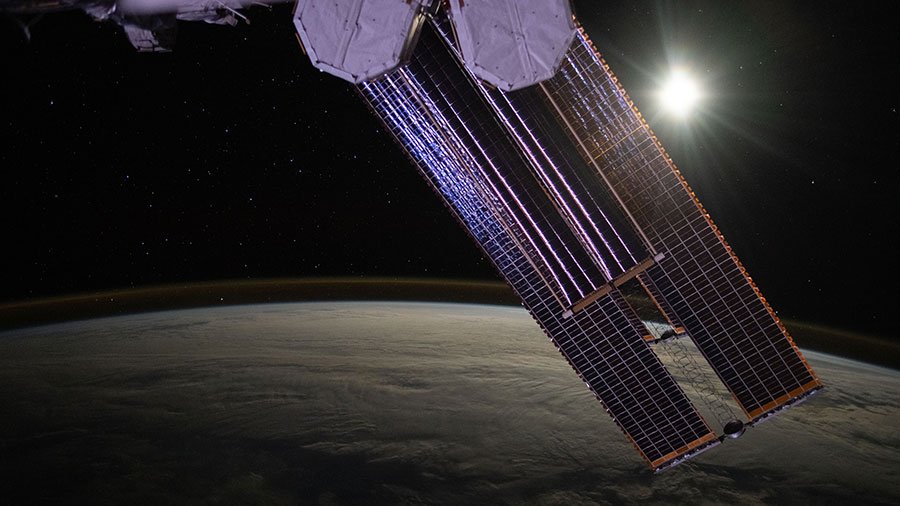
The Moon illuminates a cloud-covered Pacific Ocean as stars glitter in the background above the Earth's airglow.
The Moon illuminates a cloud-covered Pacific Ocean as stars glitter in the background above the Earth’s airglow.

Tuesday was a light duty day aboard the International Space Station for some of the crewmates as the rest of the orbital residents explored biotechnology and fluid physics while maintaining life support systems. Back on Earth, a new cargo craft stands ready to resupply the orbital outpost following the departure of another resupply spacecraft late Monday.

Studying stem cells in microgravity eliminates the challenges of growing and reproducing cells in Earth’s gravity environment. However, the space-borne results of stem cell research may have far-reaching Earth-bound benefits including advanced cellular manufacturing processes and improved human health.

NASA Flight Engineer Tracy C. Dyson explored how to grow stem cells in space today servicing samples inside the Kibo laboratory module’s Life Science Glovebox. Afterward, she peered at the stem cell specimens with the state-of-the-art Kermit microscope that can be operated by a station crew member or remotely by scientists on the ground. NASA astronauts Matthew Dominick and Jeanette Epps spent a few moments during their light duty day assisting Dyson with the glovebox work and the microscope set up.

NASA’s Commander for the Boeing Crew Flight Test Butch Wilmore worked throughout the day checking water systems and replacing components on thermal control hardware. He first collected drinking water samples, processed those samples, then analyzed them using the total organic compound analyzer. Next, Wilmore worked inside the Tranquility module replacing gear that cools equipment and rejects heat.

NASA astronauts Mike Barratt and Suni Williams also had a light schedule on Tuesday with the duo periodically swapping out orbital plumbing gear and training to use advanced life support systems.

A Roscosmos Progress 89 cargo spacecraft is due to launch from the Baikonur Cosmodrome in Kazakhstan at 11:20 p.m. EDT on Wednesday. It will take a day a two-day trip to the orbital outpost where cosmonauts Oleg Kononenko and Nikolai Chub will be monitoring its automated approach and docking planned for 1:56 a.m. on Saturday. The Progress 89 will dock to the Zvezda service module’s rear port that was vacated at 10 p.m. on Monday after the Progress 87 space freighter undocked and completed its six-month resupply mission.

Kononenko started Tuesday transferring water from the docked Progress 88 cargo craft into station water tanks. He then joined Chub for a videotaped session answering questions submitted by media outlets from their home country. Chub earlier spent his day exploring how magnetic and electrical fields affect fluids in microgravity. Flight Engineer Alexander Grebenkin began his day downloading data that captures how international crews and mission controllers interact with each other. Afterward, Grebenkin pointed a digital camera toward Earth and took photographs using hyper-spectroscopy to study the effects of natural and man-made disasters.


Learn more about station activities by following the space station blog, @space_station and @ISS_Research on X, as well as the ISS Facebook and ISS Instagram accounts.

Get weekly video highlights at: https://roundupreads.jsc.nasa.gov/videoupdate/

Get the latest from NASA delivered every week. Subscribe here: www.nasa.gov/subscribe

Powered by WPeMatico

Get The Details…

Mark Garcia

Crew Explores Satellites and Lunar Cement Mixing for Space Construction

Crew Explores Satellites and Lunar Cement Mixing for Space Construction

NASA astronaut Mike Barratt collects and organizes medical supplies aboard the Harmony module.

Science looked to construction at the beginning of the week aboard the International Space Station as the lab residents explored a variety of space assembly techniques. A new cargo craft also is due to arrive later this week replenishing the orbital crewmates with food, fuel, and supplies for the next several months.

NASA and its international partners are studying ways to make it economical to construct satellites in space, as well as build crew habitats on the Moon. Building the materials on Earth and launching them aboard rockets is costly in terms of mass and fuel. One option engineers are considering includes autonomous satellites that can navigate to other satellites for refueling, spacecraft repair, and orbital manufacturing. Another possibility, is using the microgravity environment to mix lunar soil with other materials to make cement and build habitable structures on the Moon.

NASA Flight Engineer Jeanette Epps activated a pair of Astrobee robotic free-flying assistants inside the Kibo laboratory module Monday morning. She then attached a connecting interface system, called CLINGERS with an embedded navigation sensor, to the cube-shaped, toaster-sized devices. For a few hours, Epps, with assistance from ground controllers, monitored the Astrobees as they demonstrated autonomous docking maneuvers with the CLINGERS device that may benefit construction in space.

NASA Flight Engineer Matthew Dominick explored how microgravity affects the production of cement materials that could be used to build infrastructure on the lunar surface. He mixed two bags containing simulated lunar soil and other materials with a liquid solution, he placed another bag with hot water in between them, then he inserted them inside a thermos can for overnight incubation. After several more weeks of settling at ambient temperature, the concrete samples will be returned to Earth aboard a SpaceX Dragon cargo craft for analysis.

NASA astronauts Mike Barratt and Suni Williams began their shift together inside the Tranquility module replacing components on the advanced resistive exercise device. Barratt went on and performed biological sample operations in the Human Research Facility. Next, he tested specialized goggles that track an astronaut’s eye movement to help monitor how crews adapt to living in weightlessness.

After her workout machine job, Williams inspected and cleaned a carbon dioxide removal device in the Destiny laboratory module. She then took turns with fellow NASA astronaut and Crew Flight Test member Butch Wilmore for a standard hearing test. The duo also participated in a conference with Boeing flight controllers before wrapping up the day configuring computer tablets inside the Unity module.

NASA Flight Engineer Tracy C. Dyson had a light duty day aboard the orbital outpost spending a few moments packing computer gear for return to Earth and installing air quality monitors in the Zarya module.

Roscosmos cosmonauts Oleg Kononenko and Nikolai Chub trained for the arrival of the Progress 89 cargo craft due to dock to the rear port of the Zvezda service module at 1:56 a.m. EDT on  Saturday. The duo practiced using the telerobotically operated rendezvous unit, or TORU. The TORU would be used to remotely control the Roscosmos spaceship in the unlikely event it would be unable to complete its automated docking. The Progress 87 cargo craft will undock and vacate the rear Zvezda port at 10 p.m. on Monday for a destructive, but safe reentry above the Pacific Ocean completing a six-month resupply mission.

Flight Engineer Alexander Grebenkin spent the first part of his day cleaning water tanks and performing other orbital plumbing work. After lunchtime, he explored ways international crews and flight controllers can improve communication then conducted photographic inspections inside Zvezda.


Learn more about station activities by following the space station blog, @space_station and @ISS_Research on X, as well as the ISS Facebook and ISS Instagram accounts.

Get weekly video highlights at: https://roundupreads.jsc.nasa.gov/videoupdate/

Get the latest from NASA delivered every week. Subscribe here: www.nasa.gov/subscribe

Powered by WPeMatico

Get The Details…

Mark Garcia

Crew Ends Week With Robotics, Cancer Study, and More Aboard Station

Crew Ends Week With Robotics, Cancer Study, and More Aboard Station

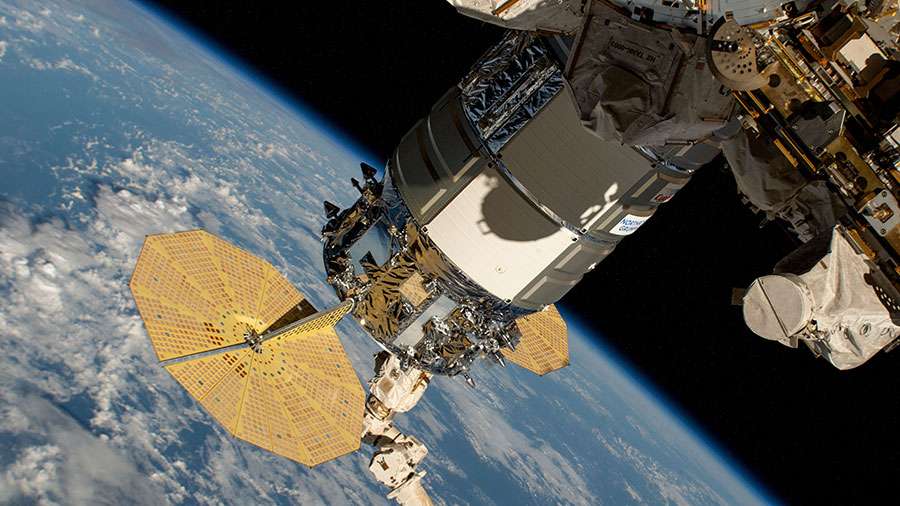
Still in the grips of the Canadarm2 robotic arm, the Northrop Grumman Cygnus space freighter is pictured attached to the Unity module's Earth-facing port above the Pacific Ocean.
Still in the grips of the Canadarm2 robotic arm, the Northrop Grumman Cygnus space freighter is pictured attached to the Unity module’s Earth-facing port above the Pacific Ocean.

The nine orbital residents living and working aboard the International Space Station wrapped up the work week with a science-filled day exploring space biology, physics, and robotics. Cargo transfers and lab inspections rounded out the day for the Expedition 71 and Boeing Crew Flight Test crews.

NASA Flight Engineer Jeanette Epps had a busy day on Friday supporting a pair of different experiments before leading an eye examination at the end of the day. She started her day in the Kibo laboratory module configuring a free-flying camera robot from JAXA (Japan Aerospace Exploration Agency) and the Astrobee robotic assistant for an upcoming educational challenge. Students on Earth compete to write software that is uploaded to the orbital outpost and controls and maneuvers the devices to encourage and promote the next generation of scientists, engineers, and leaders. Next, she installed research hardware into Kibo’s Cell Biology Experiment Facility to incubate and illuminate seeds for the Plant UV-B botany study. Finally, she peered into the eyes of Starliner Commander Butch Wilmore of NASA using standard medical imaging hardware to check the health of his retina, cornea, and lens.

Wilmore began his day continuing to unload new science and supplies packed inside the Cygnus space freighter that arrived early Tuesday. Afterward, he partnered with fellow crewmate and Starliner Pilot Suni Williams of NASA on standard safety inspections and photographed emergency hardware for further analysis on the ground. Earlier, Williams worked inside the Tranquility module filling water tanks, conducting leak checks, and installing new orbital plumbing gear in the station’s restroom, also known as the waste and hygiene compartment.

The orbital lab’s three other NASA astronauts, Tracy C. Dyson, Matthew Dominick, and Mike Barratt, serviced a variety advanced research hardware to ensure ongoing critical space research. Dyson set up the KERMIT state-of-the-art microscope in the Destiny laboratory module and imaged stem cell samples for a cancer treatment investigation. Dominick replaced components inside the Electrostatic Levitation Furnace that supports safe observations of microgravity’s effect on materials exposed to high temperatures. Barratt removed an outmoded sample processing device from Kibo, packed it for return to Earth, then replaced it with an updated sample processor recently delivered aboard Cygnus.

Roscosmos Flight Engineers Nikolai Chub and Alexander Grebenkin continued a second day of digestion studies after their breakfast on Friday. Chub used an ultrasound device and scanned Grebenkin’s stomach following his first meal of the day to learn how the human digestion system adapts to long-term weightlessness. The duo then split up with Chub cleaning ventilations systems in the Zvezda service module and Grebenkin exploring futuristic planetary mission piloting techniques. Station Commander Oleg Kononenko spent his morning replacing life support hardware before wrapping up his day photographing the condition of lab windows inside Zvezda.


Learn more about station activities by following the space station blog, @space_station and @ISS_Research on X, as well as the ISS Facebook and ISS Instagram accounts.

Get weekly video highlights at: https://roundupreads.jsc.nasa.gov/videoupdate/

Get the latest from NASA delivered every week. Subscribe here: www.nasa.gov/subscribe

Powered by WPeMatico

Get The Details…

Mark Garcia

Science Fills Day Aboard Station as Cygnus Unpacking Continues

Science Fills Day Aboard Station as Cygnus Unpacking Continues

An orbital sunrise colorfully illuminates the Earth's atmosphere and highlights the boundary between night and day, also known as the terminator, in this photograph from the space station.
An orbital sunrise colorfully illuminates the Earth’s atmosphere and highlights the boundary between night and day, also known as the terminator, in this photograph from the space station.

It was a packed day aboard the International Space Station as the astronauts and cosmonauts conducted a wide array of space research and serviced a range of science hardware. The orbital residents also continued to unload a U.S. cargo craft, maintained a variety of life support gear, and participated in eye checks.

Stem cells were being analyzed today inside the Life Science Glovebox to explore their potential for disease treatments and commercial purposes both in space and on Earth. Expedition 71 Flight Engineers Tracy C. Dyson and Jeanette Epps from NASA worked together in the Kibo laboratory module harvesting stem cells and peering at the samples in a microscope. Dyson earlier installed new hardware in the Destiny laboratory module that can host a variety of science experiments and space manufacturing studies. Epps also watered plants growing for the Plant UV-B botany study then scanned the cornea, retina, and lens of NASA astronaut and Starliner Pilot Suni Williams using standard medical imaging hardware.

Williams spent the majority of her day with Starliner Commander Butch Wilmore of NASA, both from the Boeing Crew Flight Test, checking out life support components inside Destiny and the Harmony and Tranquility modules. The duo took turns working on thermal control gear and orbital plumbing hardware throughout the orbital outpost’s U.S. segment.

Wilmore also partnered with NASA Flight Engineer Matthew Dominick unpacking some of the 8,200 pound of science and supplies packed inside the Cygnus space freighter that arrived at the space station on Aug. 6. Dominick also removed batteries from the CIMON artificial intelligence assistant then stowed double coldbags that contained research samples delivered aboard Cygnus.

NASA Flight Engineer Mike Barratt concentrated his activities inside Kibo attaching new science experiments on the NanoRacks External Platform that will be placed outside the space station in the vacuum of space. The external studies will explore ultra-high-resolution spectral imagery downloads to Earth (OPTICA), electromagnetic interference and radiation tolerance (ASTRID), and the performance of electronics components in the radiation environment (ENCORE).

The three cosmonauts representing Roscosmos also had a busy day with a schedule full of research and maintenance. Flight Engineer Nikolai Chub studied a variety of topics on Thursday including Earth observations, how space affects the digestive system, and future planetary mission piloting techniques. Flight Engineer Alexander Grebenkin worked in the Nauka science and Zvezda service modules transferring water and filling an oxygen generator. Finally, station Commander Oleg Kononenko focused primarily on computer maintenance task duties throughout the orbital lab’s Roscosmos segment.


Learn more about station activities by following the space station blog, @space_station and @ISS_Research on X, as well as the ISS Facebook and ISS Instagram accounts.

Get weekly video highlights at: https://roundupreads.jsc.nasa.gov/videoupdate/

Get the latest from NASA delivered every week. Subscribe here: www.nasa.gov/subscribe

Powered by WPeMatico

Get The Details…

Mark Garcia