NASA Joins Rice University for 2024 Space Studies Program
March 4, 2024
RELEASE: J24-006
Students from around the world will visit NASA’s Johnson Space Center in Houston this summer for a variety of activities associated with the 36th annual Space Studies Program of the International Space University.
Through a continuing partnership with Houston’s Rice University, NASA Johnson will welcome students from many countries participating in tours, lectures and hands-on activities with aerospace experts from June 8 to Aug. 3, 2024.
“Johnson Space Center is looking forward to partnering with Rice as it hosts the International Space University’s Space Studies Program in partnership with Rice University,” said Johnson Director Vanessa Wyche. “This is an amazing opportunity, not only for the students participating in the Space Studies Program, but for employees of Johnson to share their knowledge and experiences with an international network of leading space experts and professionals.”
The Space Studies Program is an educational and training program in the space sector, covering both technical and non-technical aspects, in an international, intercultural, and interdisciplinary environment.
During an intensive eight-week program, 200+ participants, lecturers, professors, staff members, experts, and executives from American and international space agencies and private companies from over 30 countries will converge in Houston.
The program is aimed at aspiring space professionals and leaders with an educational experience, featuring a curriculum covering space exploration engineering, policy, business and management, and applications. Hands-on projects, workshops, and immersive learning experiences will provide students with networking opportunities with a global community of space enthusiasts.
Learn more about how NASA explores the unknown and innovates for the benefit of humanity at: https://www.nasa.gov
-end-
Kelly Humphries Johnson Space Center, Houston 281-483-5111 kelly.o.humphries@nasa.gov
NASA Awards Contracts for Flight, Payload Integration Services
NASA has selected 15 companies to provide flight and payload integration services to advance technologies and procedures for operating in space, including testing in high-altitude, reduced gravity, or other relevant environments.Examples of payloads include NASA science instruments or technology demonstrations.
The indefinite-delivery/indefinite-quantity base contract awards are firm-fixed-price with a total combined value of $45 million and a performance period of five years. The flights and other services covered by these contracts are for use by NASA and other government agencies. The types of platforms that will be used for testing include suborbital rockets, high-altitude balloons, orbital spacecraft and satellites, and, in some instances, suborbital rockets that can accommodate carry people.
The following companies have been awarded contracts to provide services through demonstrated commercial capabilities:
Aerostar International, Inc., of Sioux Falls, South Dakota
Angstrom Designs Inc., of Santa Barbara, California
Astrobotic Technology Inc., of Pittsburgh
Astro Digital US Inc., of Santa Clara, California
Blue Origin Texas, LLC of Van Horn, Texas
Galactic Enterprises, LLC of Las Cruces, New Mexico
Loft Orbital Federal, LLC of Golden, Colorado
Momentus Space LLC of San Jose, California
Near Space Corp., of Tillamook, Oregon
Rocket Lab USA Inc., of Long Beach, California
Space Exploration Technologies Corp., of Hawthorne, California
Spire Global Subsidiary, Inc., of Vienna, Virginia
Tyvak Nano-Satellite Systems, Inc., of Irvine, California
Varda Space Industries, Inc., of El Segundo, California
World View Enterprises Inc., of Tucson, Arizona
The contracts are in support of NASA’s Flight Opportunities and Small Spacecraft Technology programs, both part of the NASA’s Space Technology Mission Directorate at the agency’s headquarters in Washington. These programs support technology development and missions to change the pace of space exploration, discovery, and space commerce.
For information about the flight platforms available through NASA’s Flight Opportunities program, visit:
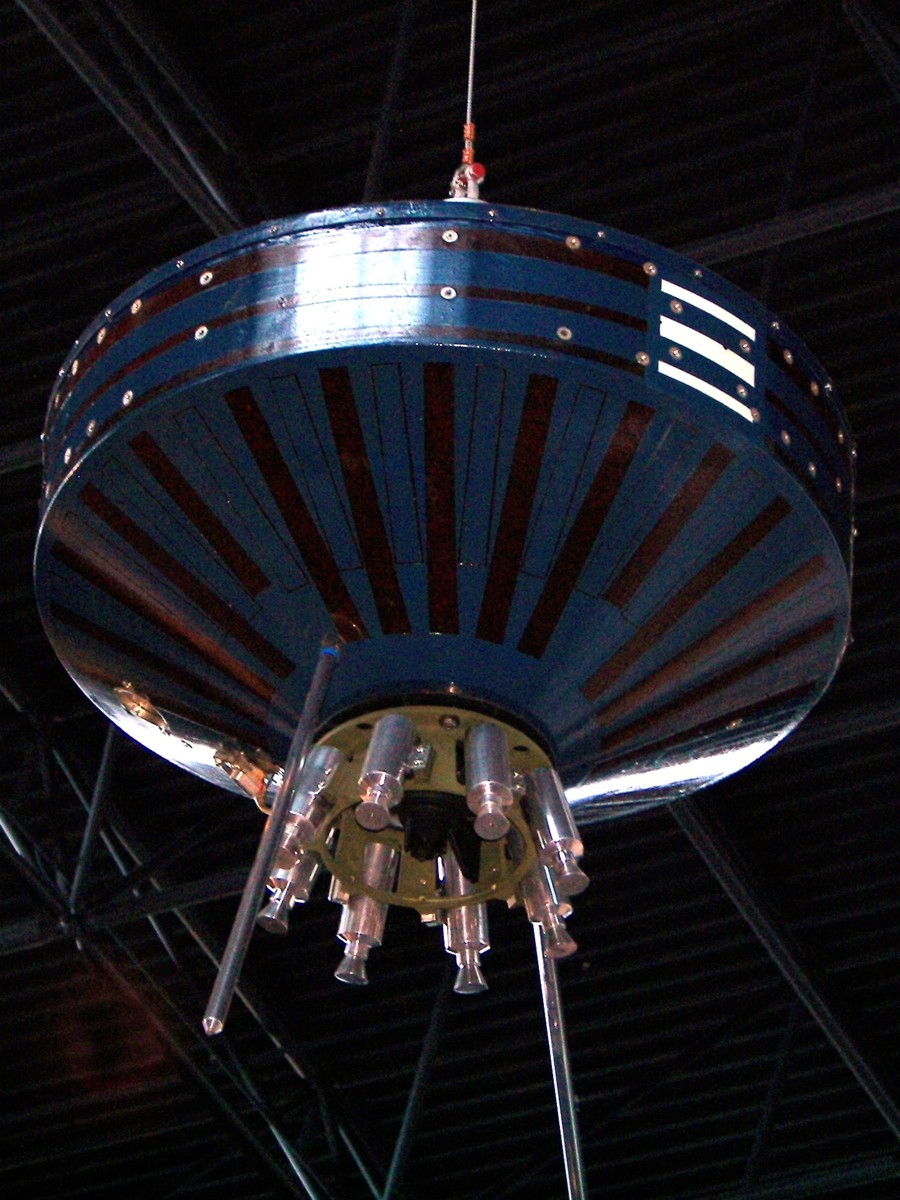
On March 3, 1959, the United States launched Pioneer 4 with the goal of photographing the Moon during a close flyby. As part of the International Geophysical Year that ran from July 1, 1957, to Dec. 31, 1958, the United States planned to send five probes to study the Moon. The first three planned to orbit the Moon, while the last two simpler probes planned to photograph it during flybys. After NASA opened for business in October 1958, the new space agency inherited the Pioneer program from the Advanced Research Projects Agency, a branch of the Department of Defense established earlier in 1958 as part of America’s initiative to respond to early Soviet space accomplishments. The Jet Propulsion Laboratory in Pasadena, California, part of the U.S. Army until transferred to NASA in December 1958, built the two Pioneer lunar flyby spacecraft. While the first four missions did not succeed in reaching their target, Pioneer 4 became the first American spacecraft to flyby the Moon and enter solar orbit.
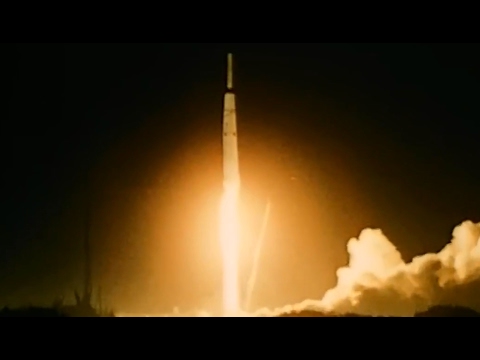
Left: A replica of the Pioneer 1 spacecraft. Image credit: courtesy National Air and Space Museum. Right: Liftoff of Pioneer 1, the first satellite launched by NASA.
The first Pioneer launch attempt on August 17, 1958, ended in failure 77 seconds after liftoff when the Thor-Able booster exploded. Engineers identified and corrected the problem with the rocket and on Oct. 11, Pioneer 1, weighing 84 pounds, thundered off from Cape Canaveral’s Launch Complex 17A. The launch took place just 10 days after NASA officially opened for business. Liftoff seemed to go well, but tracking soon showed that the spacecraft was traveling more slowly than expected and was also off course. Relatively minor errors in the first stage’s performance were compounded by other issues with the second stage, making it clear that Pioneer 1 would not achieve its primary goal of entering orbit around the Moon. The spacecraft did reach a then-record altitude of 70,770 miles about 21 hours after launch before beginning its fall back to Earth. It burned up on reentry over the Pacific Ocean 43 hours after liftoff. The probe’s instruments confirmed the existence of the Van Allen radiation belts discovered by Explorer 1 earlier in the year. The third and final lunar orbiter attempt, Pioneer 2 on November 8, met with less success. The rocket’s first and second stages performed well, but the third stage failed to ignite. Pioneer 2 could not achieve orbital velocity and only reached a peak altitude of 960 miles before falling back to Earth after a brief 42-minute flight.
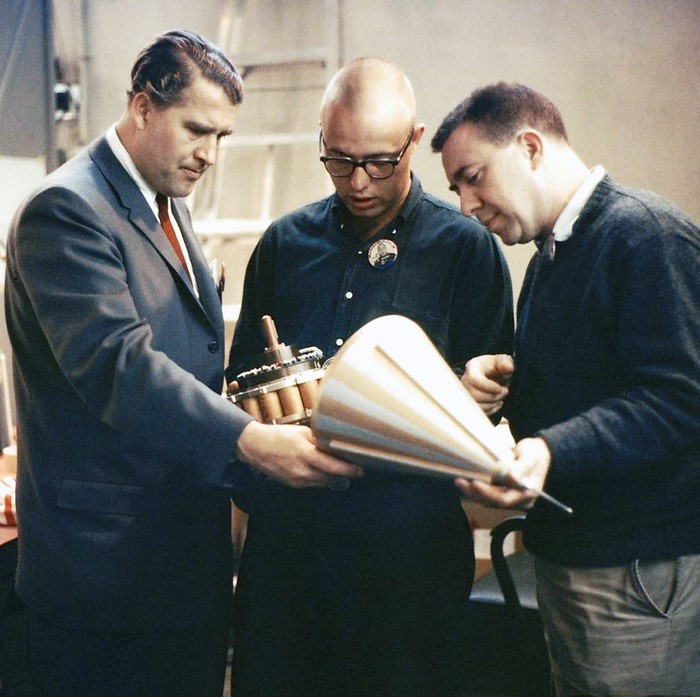
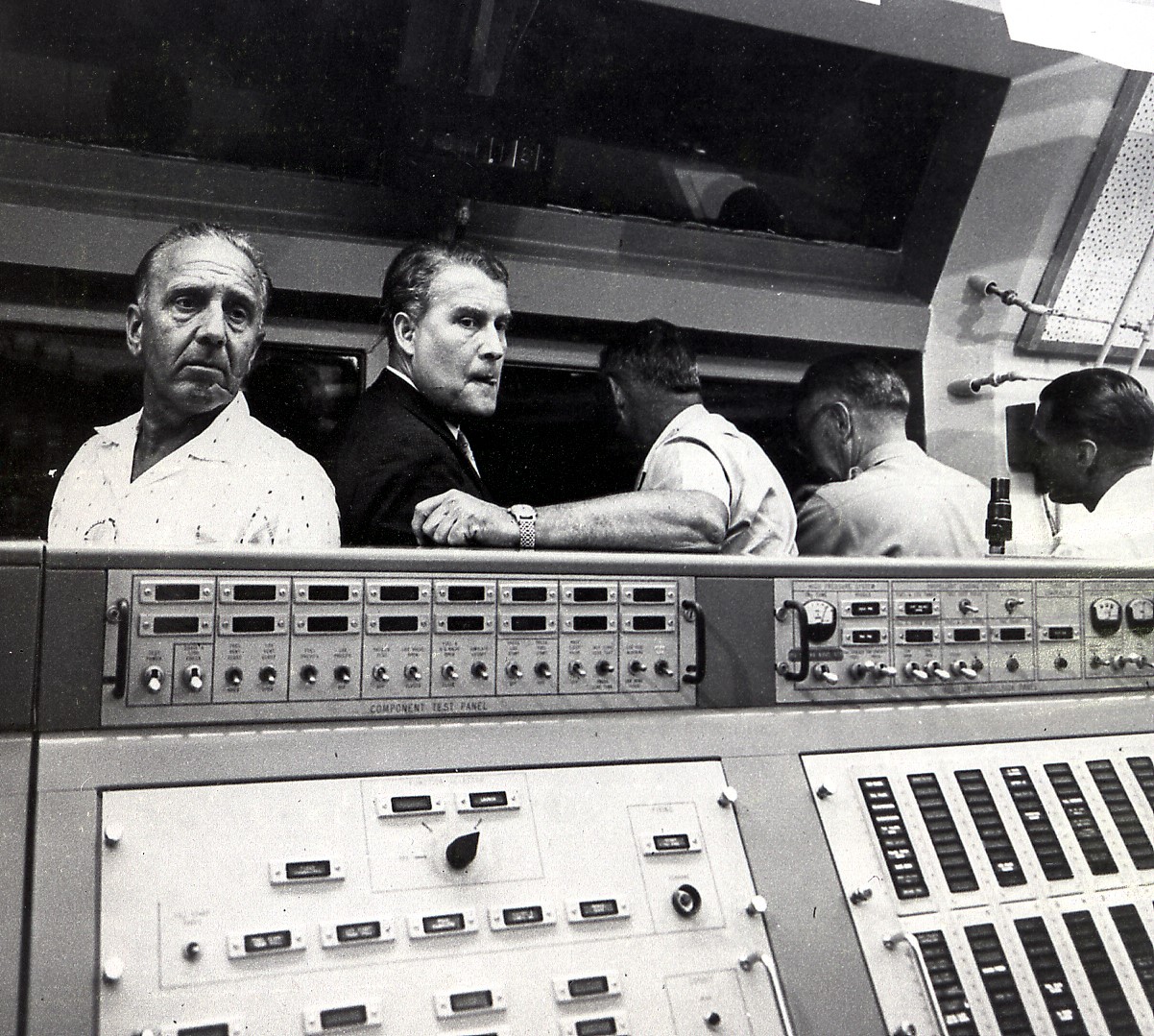
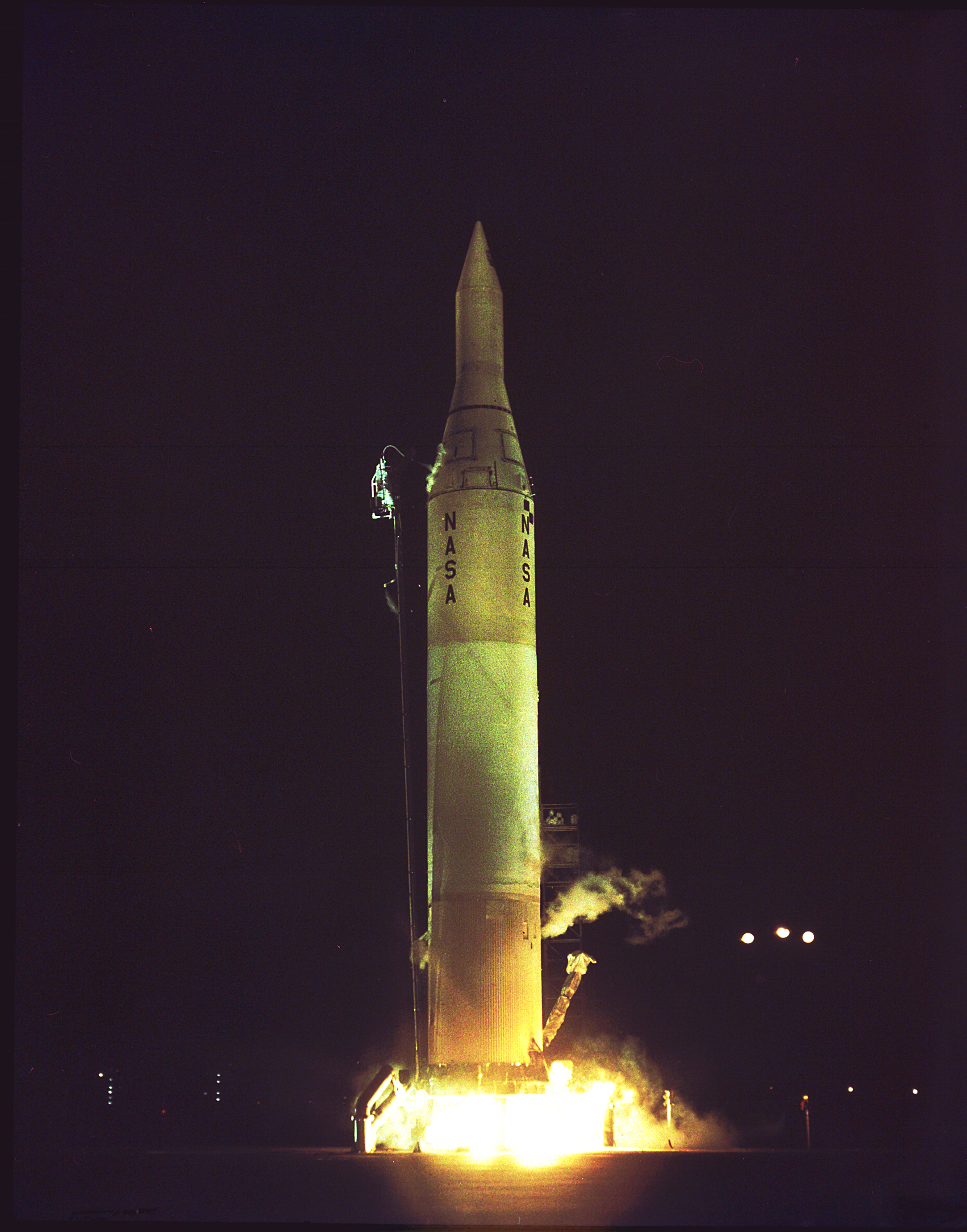
Left: Juno rocket developer Wernher von Braun, left, Pioneer project engineer John R. Casani, and project scientist James A. Van Allen inspect the instruments in the Pioneer 4 spacecraft. Image credit: courtesy LIFE Magazine. Middle: Kurt H. Debus, left, and von Braun in the blockhouse for the Pioneer 4 launch. Right: Launch of Pioneer 4, the first American spacecraft to flyby the Moon and enter solar orbit.
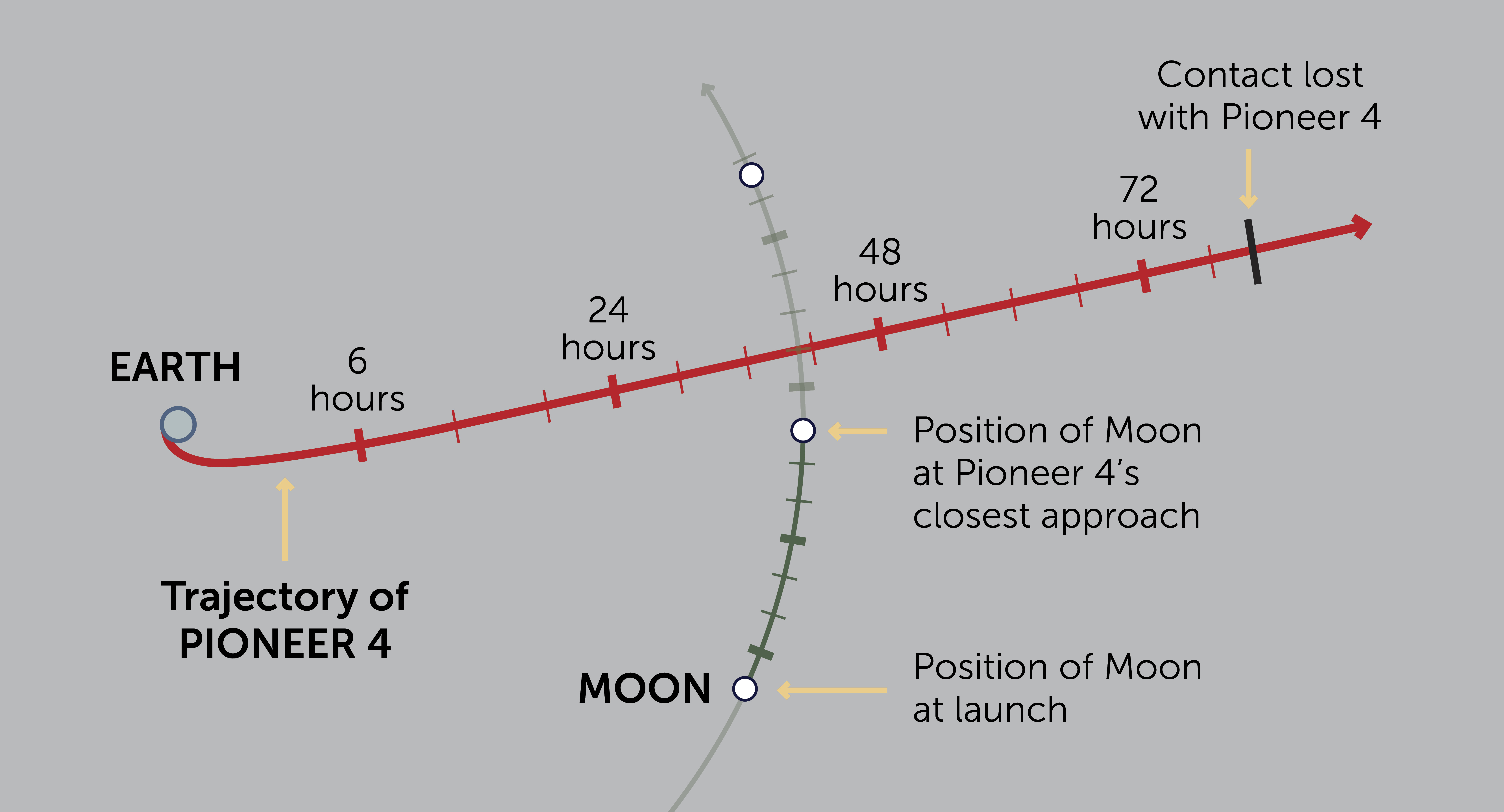
The two lunar flyby missions came next, each carrying a radiation counter and photographic equipment. The 13-pound Pioneer 3 took off on Dec. 6. The Juno-II rocket’s first stage engine cut off early, and the probe could not reach its destination, falling back to Earth 38 hours after launch. Despite this problem, Pioneer 3 returned significant radiation data and discovered a second outer Van Allen belt encircling the Earth. The second attempt on March 3, 1959, met with more success as Pioneer 4 became the first American spacecraft to reach Earth escape velocity. The Juno-II’s second stage burned for an extra few seconds, resulting in Pioneer 4 passing at 36,650 miles of the Moon’s surface 41 hours after launch. At that distance, instead of the planned 5,000 miles, the spacecraft could not achieve its objective of photographing the Moon. Pioneer 4 then went on to become the first American spacecraft to enter solar orbit, a feat the Soviet Luna 1 accomplished two months earlier. Pioneer 4 returned radiation data for 82 hours, out to 409,000 miles, nearly twice the Earth-Moon distance, until its batteries died.
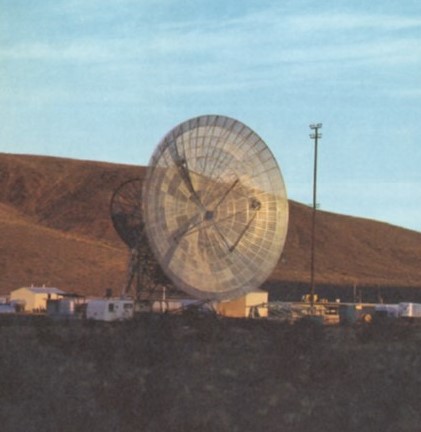
Left: Pioneer 4’s trajectory to the Moon and beyond. Right: The Deep Space Station-11, also known as Pioneer Station, in 1958.
Although these early Pioneer lunar probes met with limited mission success, the program marked the first use of the 26-meter antenna and tracking station at Goldstone, California. This antenna, completed in 1958 and known as Deep Space Station 11 (DSS-11), was the first component of what eventually became the NASA Deep Space Network. Although called Pioneer Station, DSS-11 not only followed these early spacecraft, starting with Pioneer 3, but later monitored the Ranger, Surveyor, and Lunar Orbiter robotic precursor missions and tracked the Apollo 11 Lunar Module Eagle to the Moon’s surface on July 20, 1969, and the other Apollo lunar missions as well. It also tracked Mariner, Viking, and Voyager missions to the planets before its decommissioning in 1978.
Explore the March 2024 issue with highlights of Stennis Day at the Capitol; Artemis Moon Rocket Engine Testing; and coverage on the first-ever in-space mission for NASA Stennis.
Explore the March 2024 edition featuring:
NASA Stennis Capitol Day
NASA Enters Second Half of Key RS-25 Engine Certification Series
NASA Stennis Celebrates Milestone for Historic Autonomous Systems Mission
Gator Speaks
Gator Speaks
NASA/Stennis
Closing out February and coming into March has Gator fired up, and rightfully so!
Recent weeks and upcoming events remind us all how we are in a golden era of space exploration as NASA inspires the world through discovery.
For the first time in more than half a century, America returned to the Moon on Feb. 22 during the eighth day of a quarter-million-mile voyage under NASA’s Commercial Lunar Payload Services initiative with an Intuitive Machines lander named Odysseus. This Odysseus landing on the lunar South Pole makes way for future commercial deliveries to the Moon, along with future Artemis missions that will see humans return to the Moon, Mars, and beyond.
Speaking of Artemis, NASA Stennis is expected to carry out multiple RS-25 engine hot fires this month in the key test series for future Artemis flights of NASA’s SLS (Space Launch System) rocket.
Another example of NASA and NASA Stennis working with a commercial partner comes in the form of the first ever in-space autonomous systems mission involving NASA Stennis as a payload rider. The payload, part of project ASTRA (Autonomous Satellite Technology for Resilient Applications), is expected to launch soon on the Sidus Space LizzieSat TM small satellite.
In March, NASA will celebrate Women’s History Month. I invite you to read how one NASA Stennis employee’s interest in computer science brought her to the south Mississippi site, where she has become the first at NASA Stennis to reach a particular certification that showcases her dedication and level of skill to the job.
Can you feel it? The spring weather is here, and that shine outside is not only the Sun, but also this golden era of space exploration we all get to take part in and enjoy.
NASA Stennis Top News
NASA Leaders Participate in Annual Stennis Day at the Capitol
Leaders from NASA’s Stennis Space Center and NASA Shared Services Center visit Jackson, Mississippi, in late February to share site updates with state leaders during the annual Stennis Day at the Capitol.
NASA Stennis Celebrates Milestone for Historic Autonomous Systems Mission
NASA’s Stennis Space Center and Sidus Space, Inc., marked another milestone February 15 for the Center’s first-ever in-flight autonomous systems software mission as a payload rider on the Sidus Space LizzieSatTM small satellite.
NASA Enters Second Half of Key RS-25 Engine Certification Series
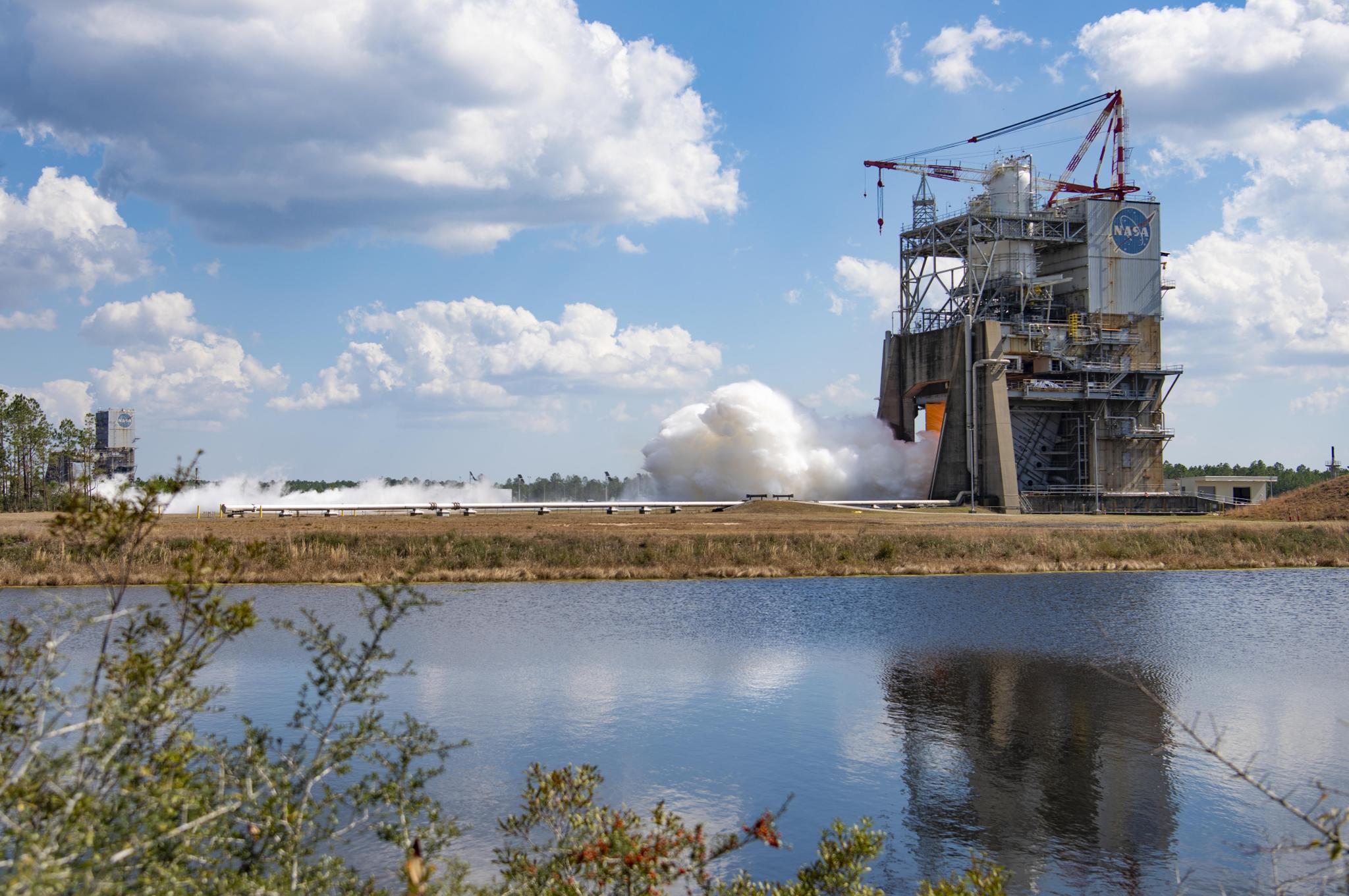
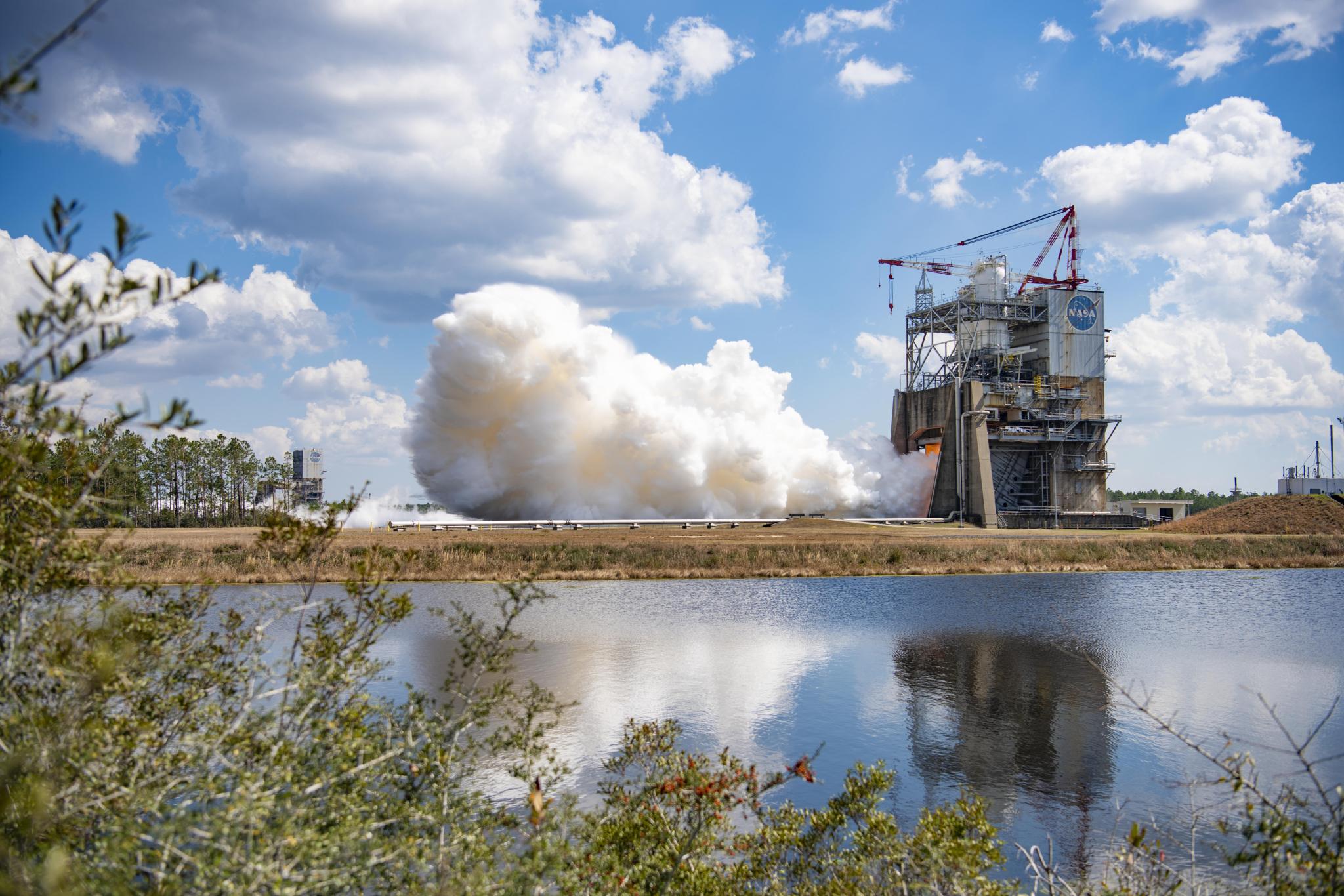
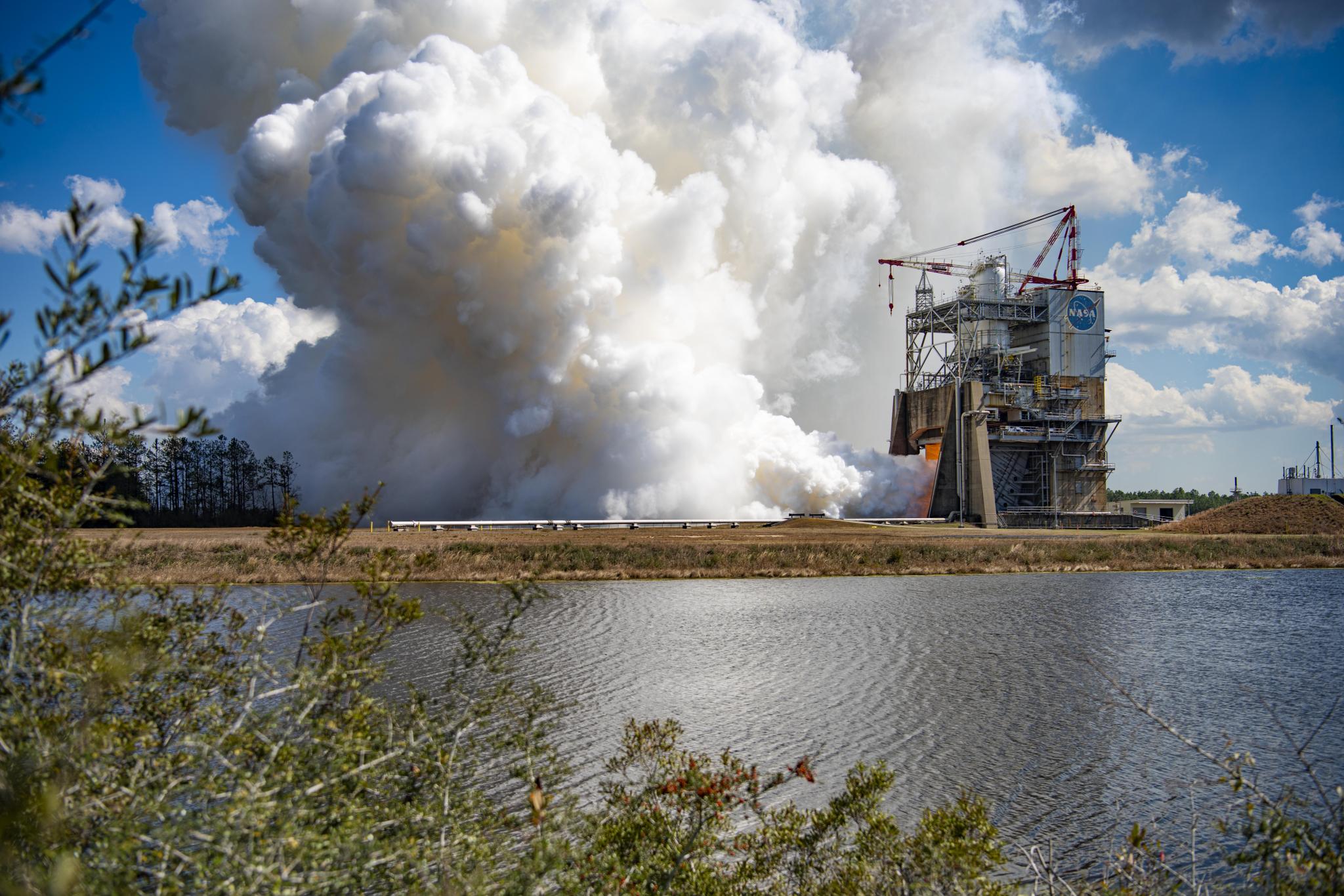
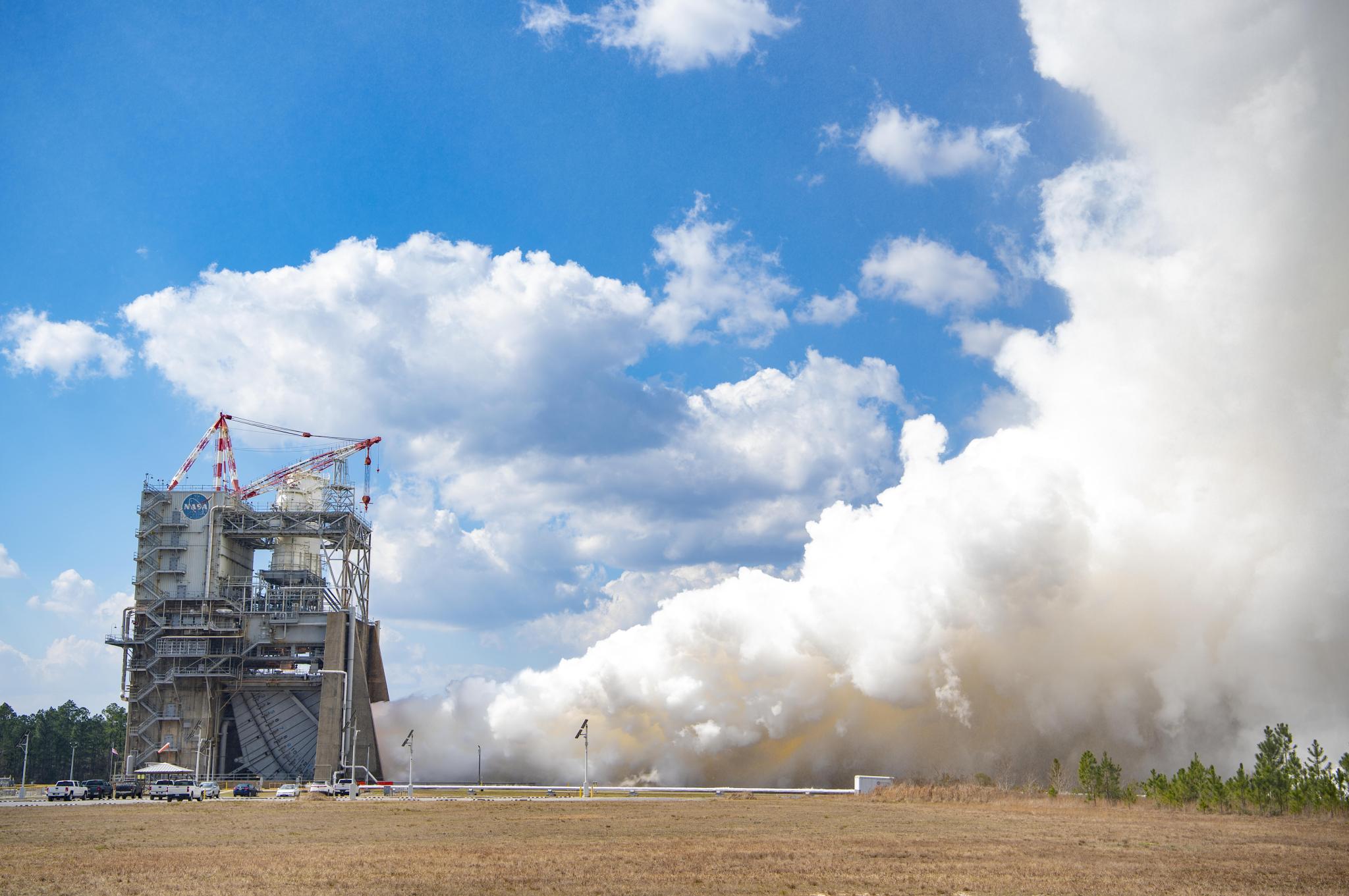
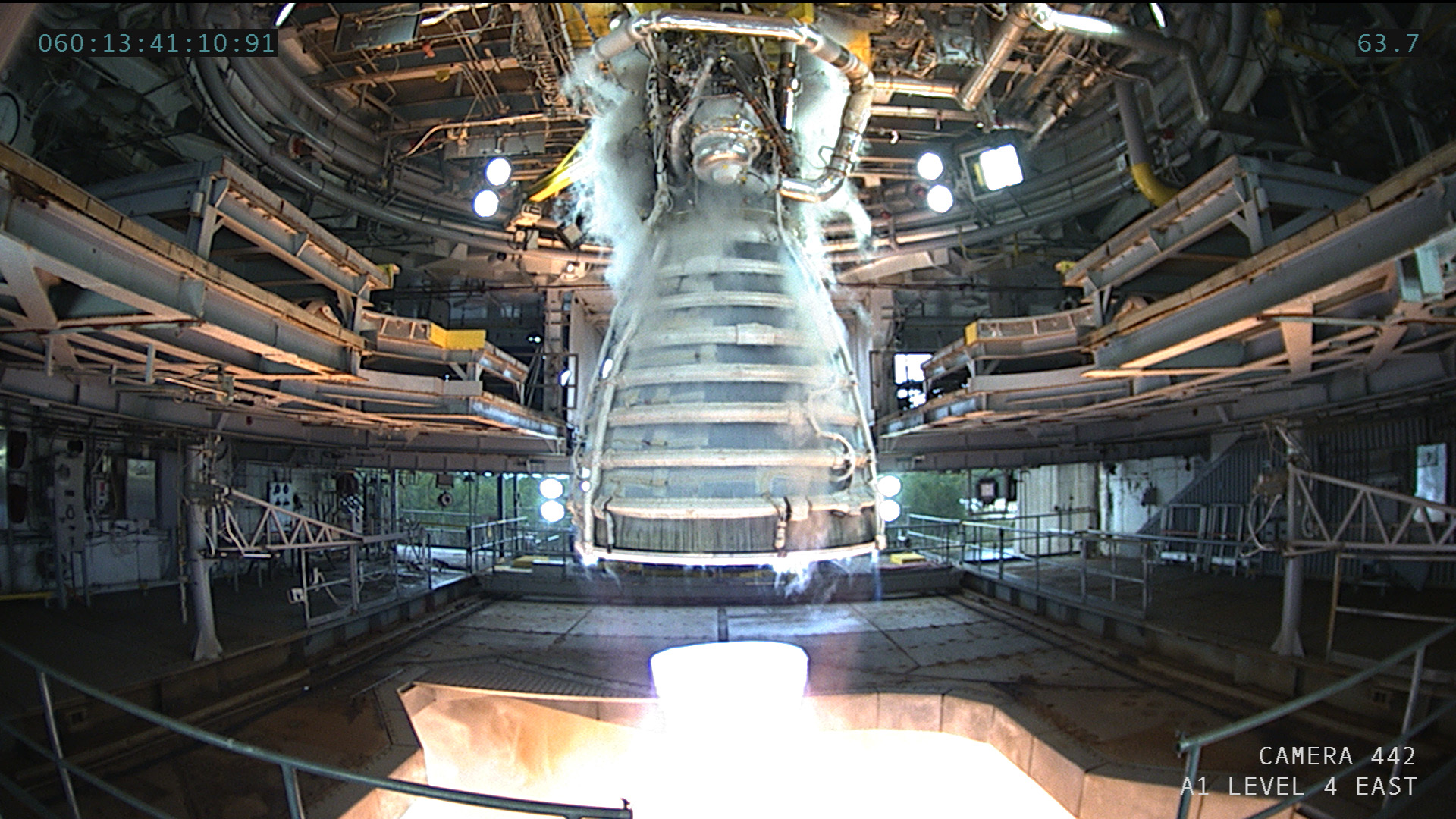
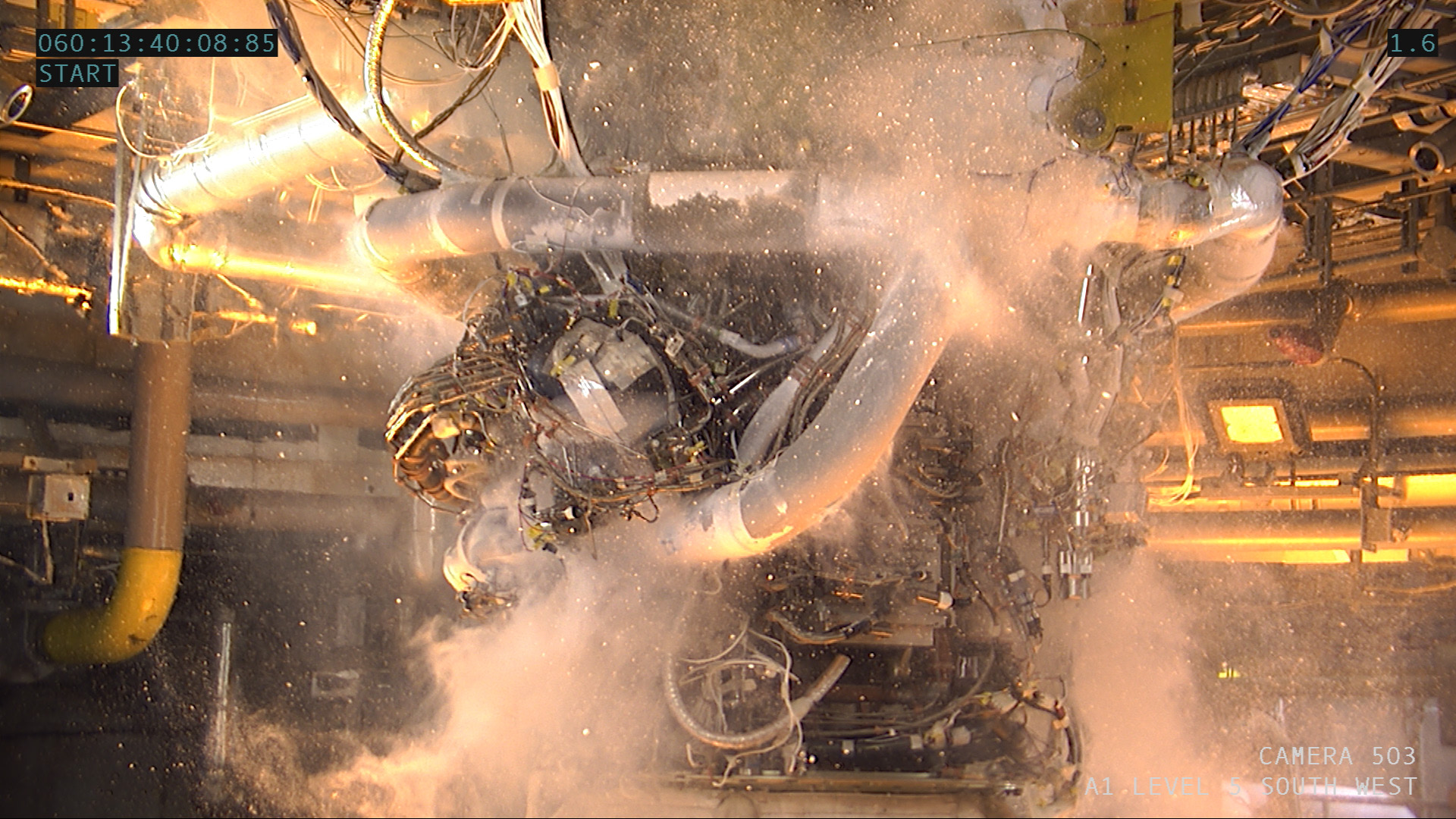
NASA conducts a full-duration RS-25 hot fire Feb. 23 on the Fred Haise Test Stand at NASA’s Stennis Space Center near Bay St. Louis, Mississippi, continuing a key test series for future Artemis flights of NASA’s SLS (Space Launch System) rocket. During the seventh test of the 12-test series, operators fired the certification engine for 550 seconds and up to a 113% power level. The hot fire followed installation of a second production engine nozzle that will provide additional performance data on the upgraded unit. The test series is the second, and final, series to certify restart production of the upgraded engines by lead contractor Aerojet Rocketdyne, an L3Harris Technologies company. New engines will help power NASA’s SLS rocket on Artemis missions to the Moon and beyond, beginning with Artemis V. NASA and Aerojet Rocketdyne modified 16 former space shuttle engines for use on Artemis missions I through IV. NASA completed an initial 12-test certification series with the upgraded components in June 2023. Four RS-25 engines fire simultaneously to help launch each SLS rocket, producing up to 2 million pounds of combined thrust.
RS-25 Hot Fire
NASA/Danny Nowlin
RS-25 Hot Fire
NASA/Danny Nowlin
RS-25 Hot Fire
NASA/Danny Nowlin
RS-25 Hot Fire
NASA/Danny Nowlin
RS-25 Hot Fire
NASA/Danny Nowlin
NASA Caps Off February with RS-25 Engine Certification Test
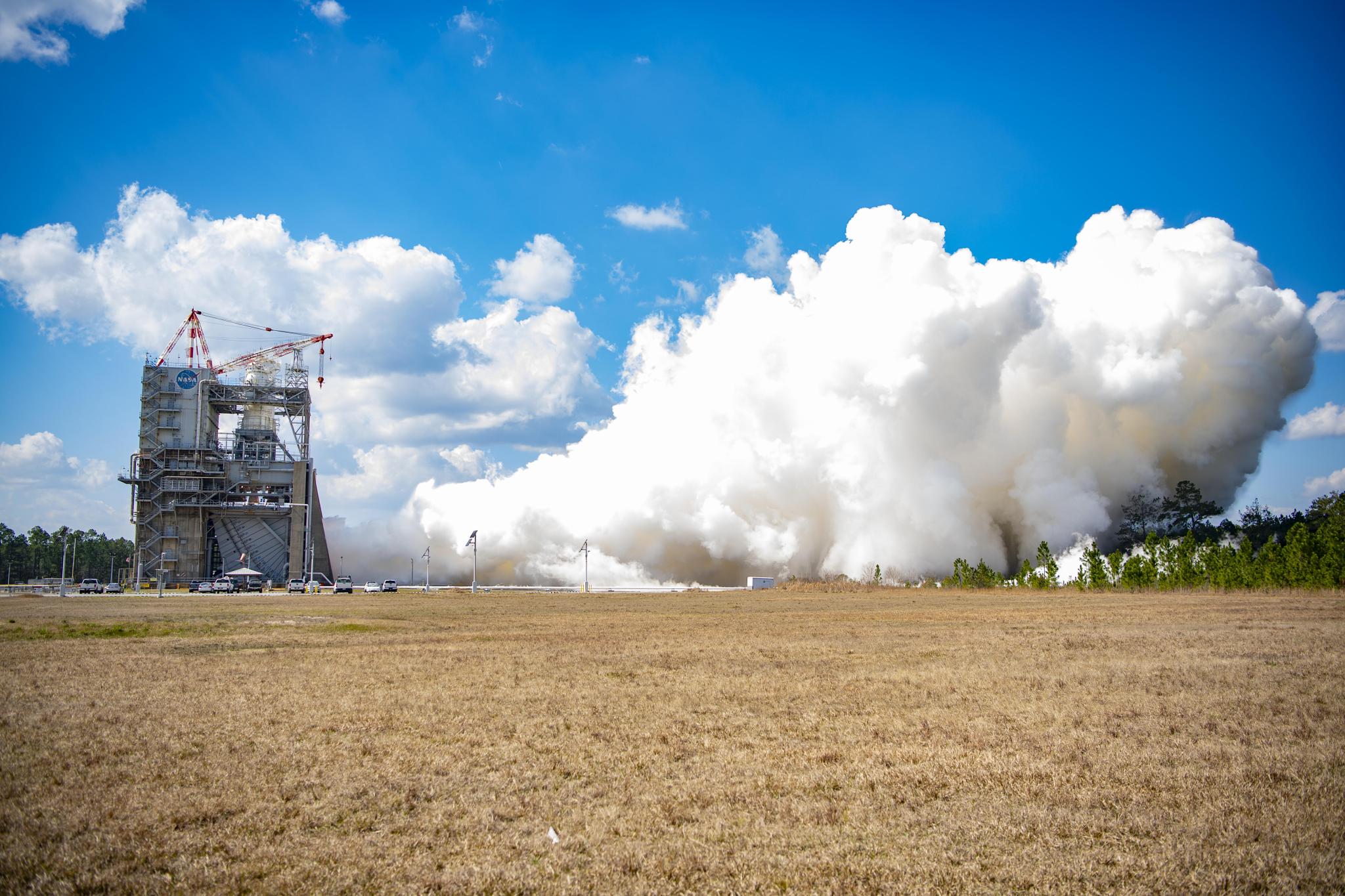
NASA conducted a full-duration RS-25 hot fire Feb. 29 on the Fred Haise Test Stand at NASA’s Stennis Space Center near Bay St. Louis, Mississippi, continuing a key test series for future Artemis flights of NASA’s SLS (Space Launch System) rocket. The hot fire to certify new production RS-25 engines for SLS marked only the second ever Leap Day engine test. Fourty-four years ago on Feb. 29, 1980, before the first space shuttle launch, a test-fire occurred for RS-25 engine #0009. Both tests were conducted on the Fred Haise Test, previously known as the A-1 Test Stand at NASA Stennis. The Feb. 29, 2024, hot fire is the second test following installation of a second production engine nozzle that will provide additional performance data on the upgraded unit. It also marked the eighth in a 12-test series to certify production of new RS-25 engines by lead contractor Aerojet Rocketdyne, an L3Harris Technologies company, to help power NASA’s SLS rocket on Artemis missions to the Moon and beyond, beginning with Artemis V. The current series is the second and final series to certify restart production of the upgraded engines. NASA completed an initial 12-test certification series with the upgraded components in June 2023. Four RS-25 engines fire simultaneously to help launch each SLS rocket, producing up to 2 million pounds of combined thrust.
RS-25 Hot Fire on Feb. 29
NASA/Stennis
RS-25 Hot Fire on Feb. 29
NASA/Stennis
Center Activities
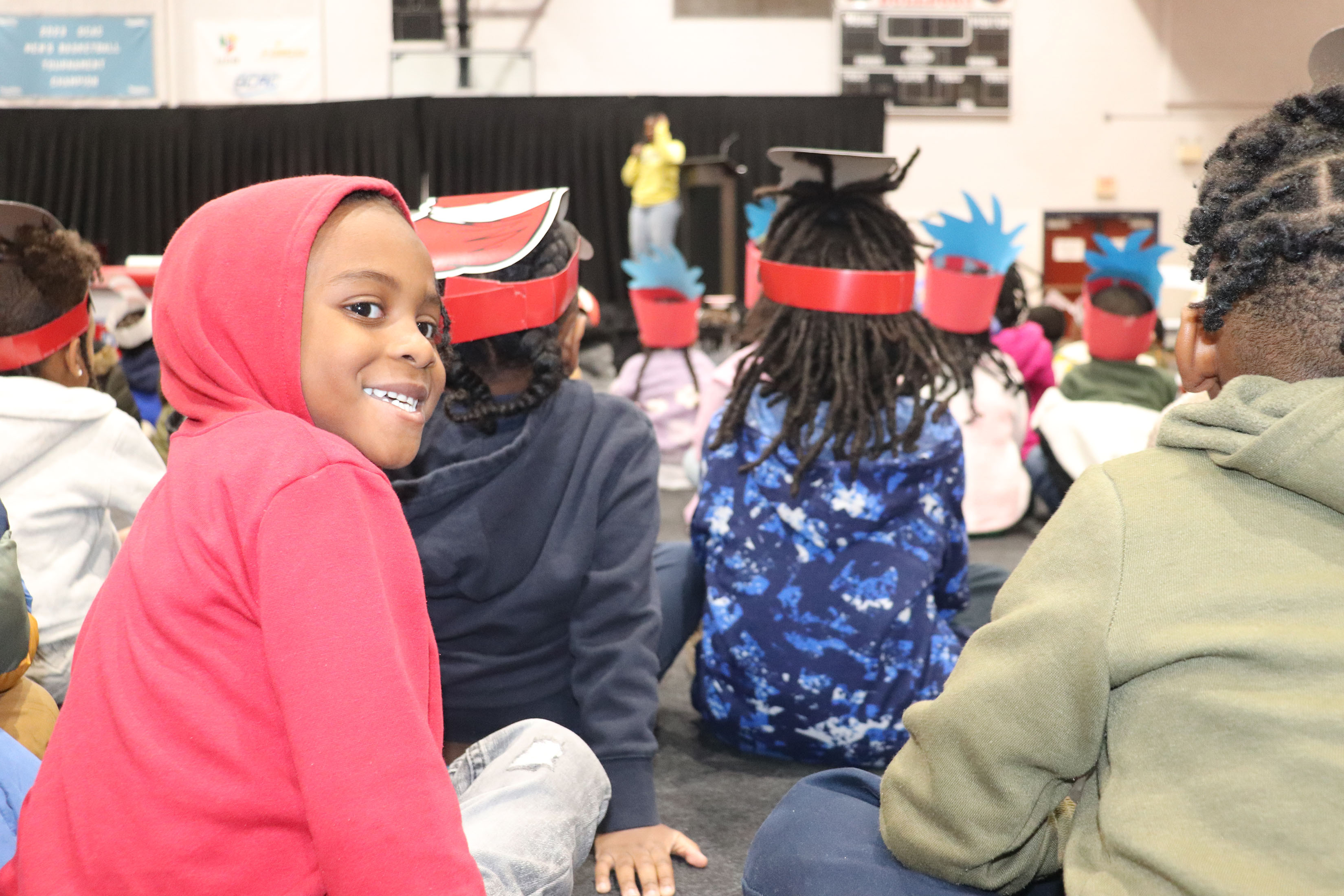
NASA Stennis Inspires Students at Hattiesburg Event
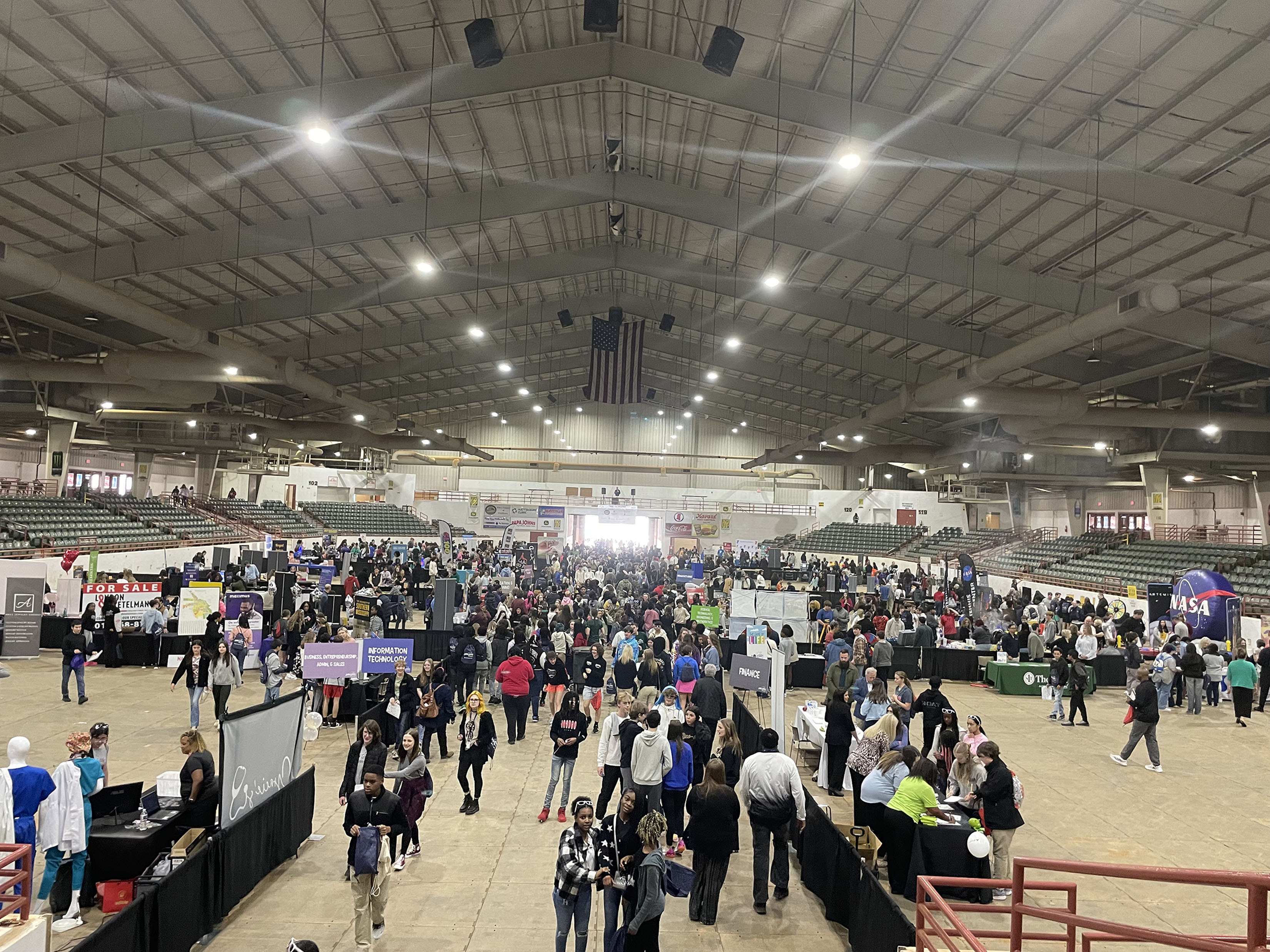
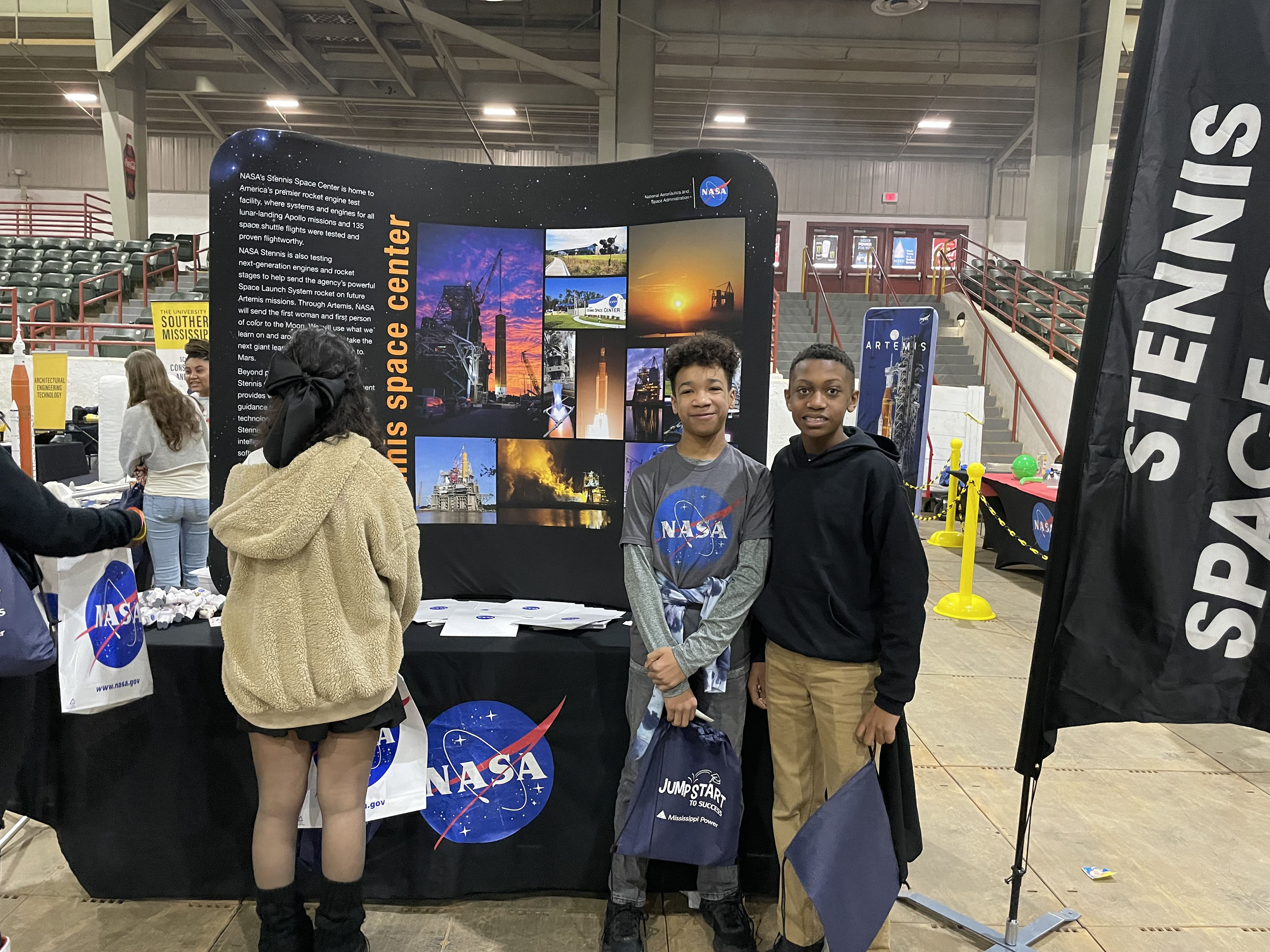
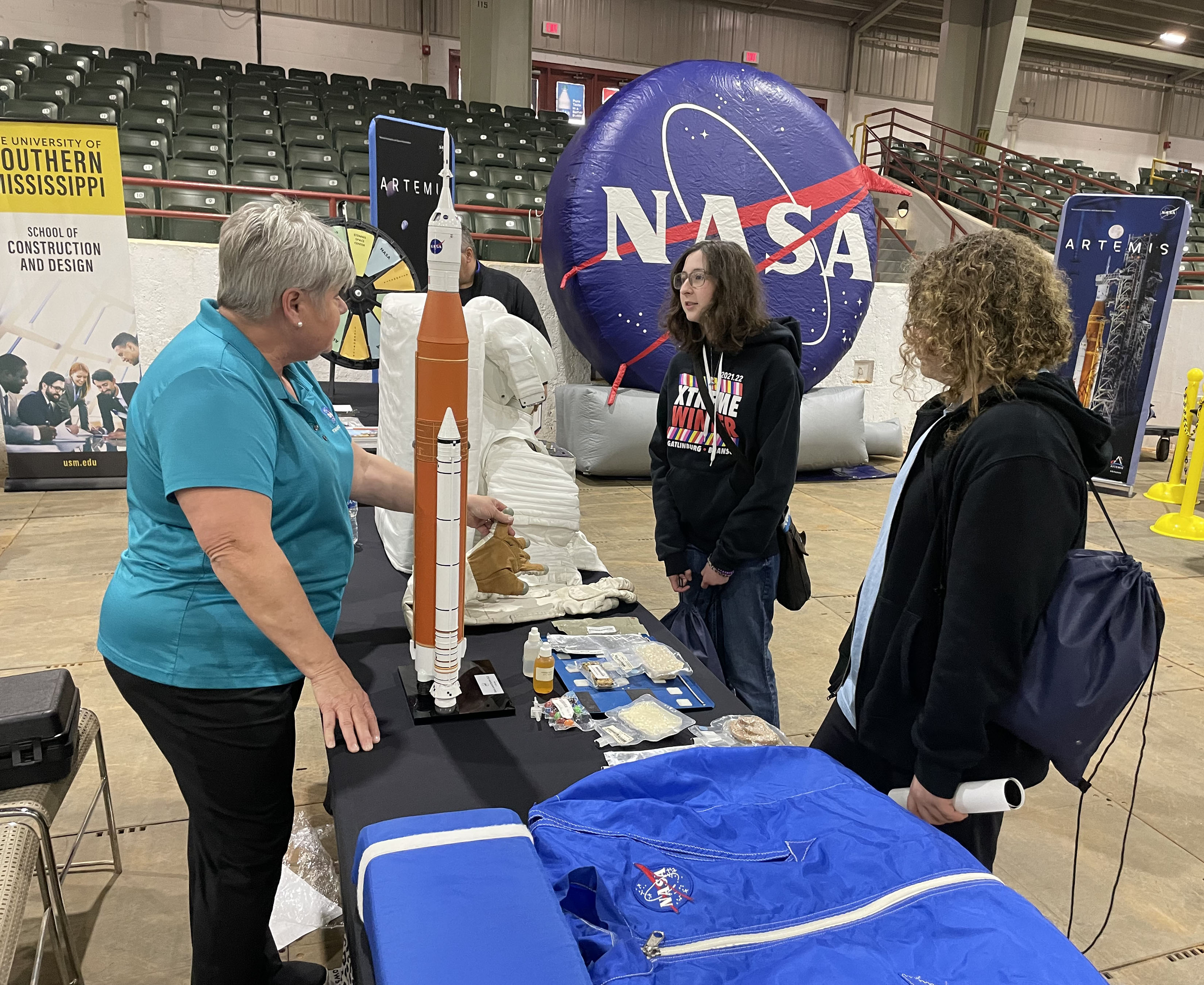
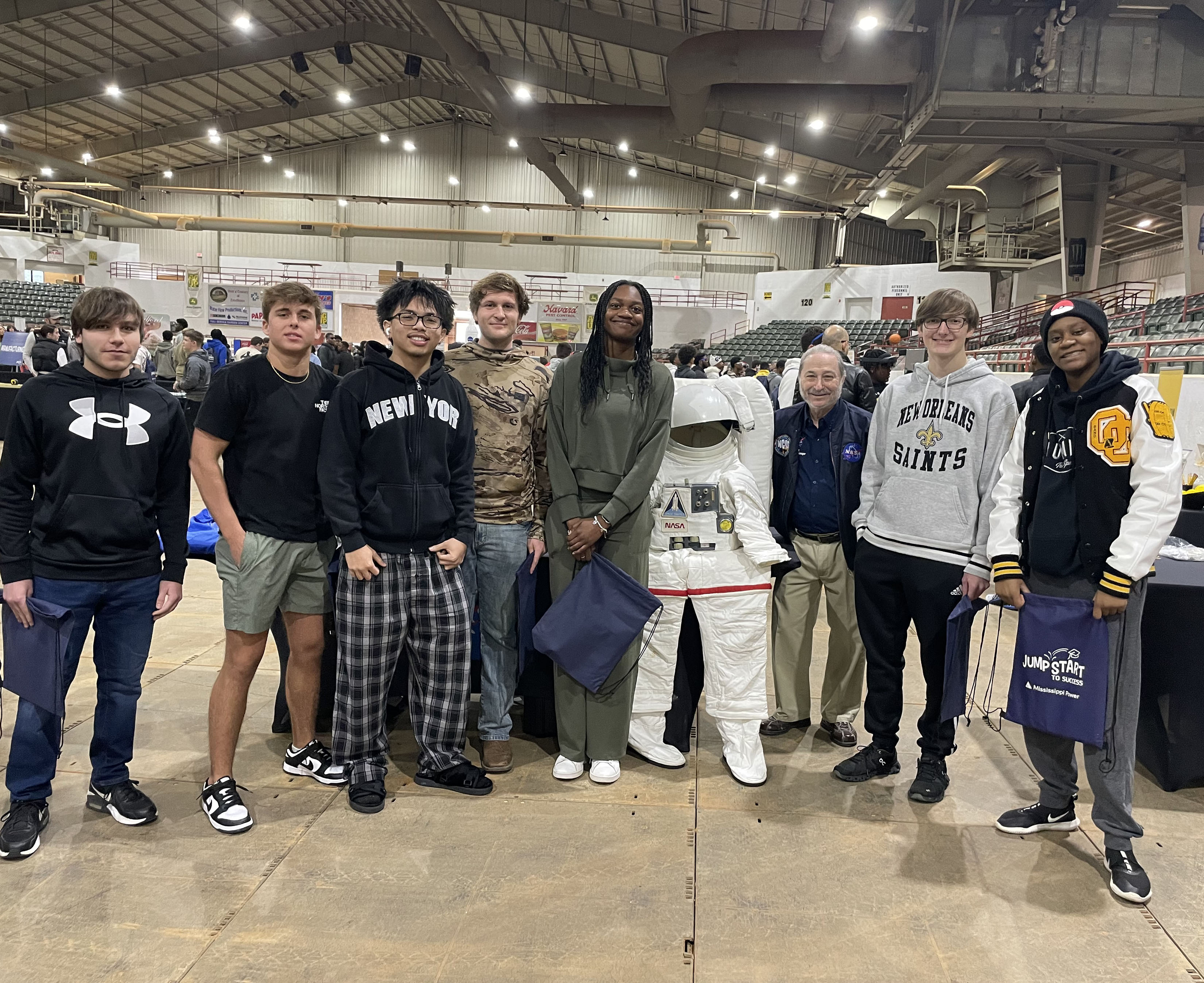
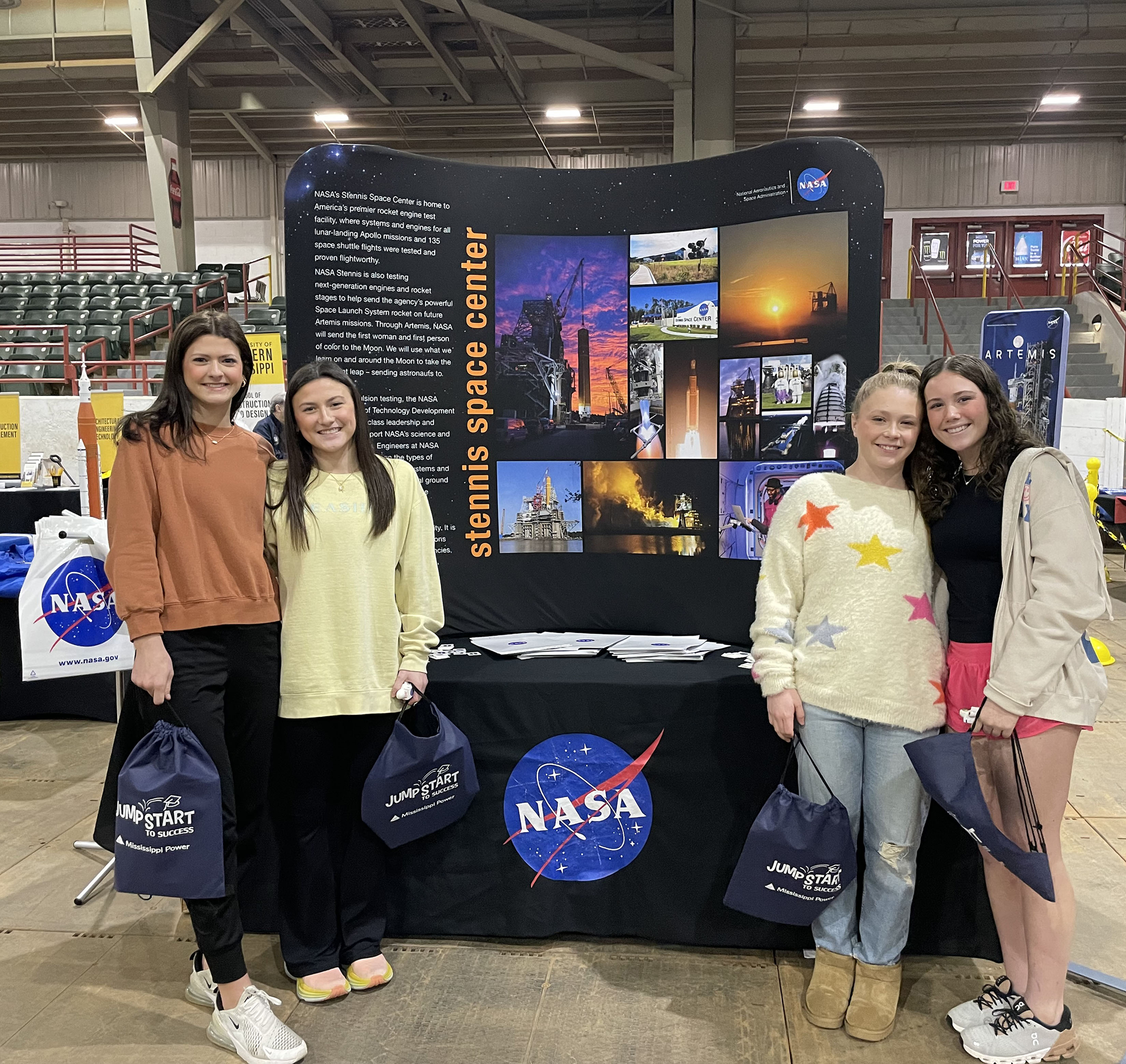
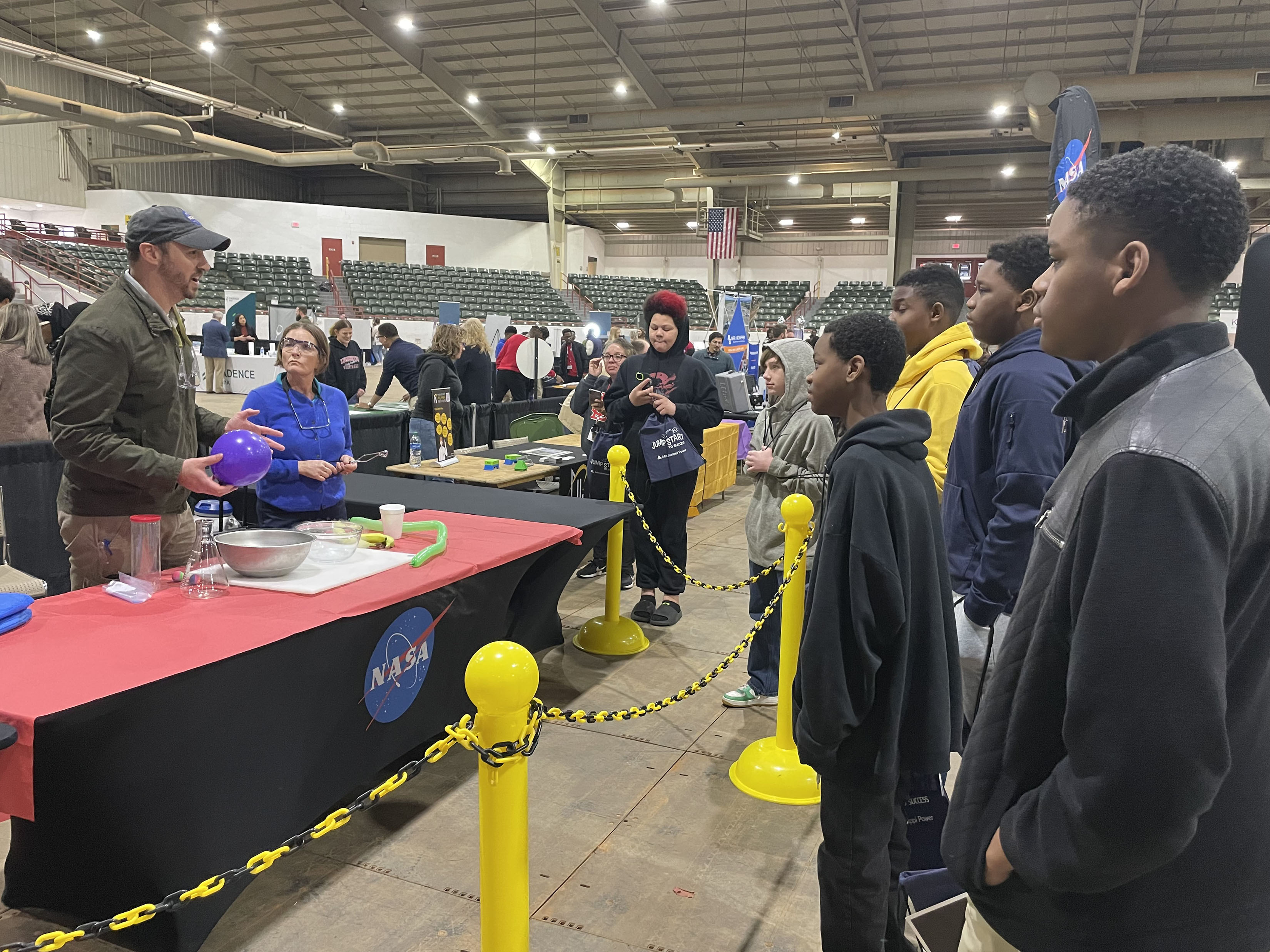
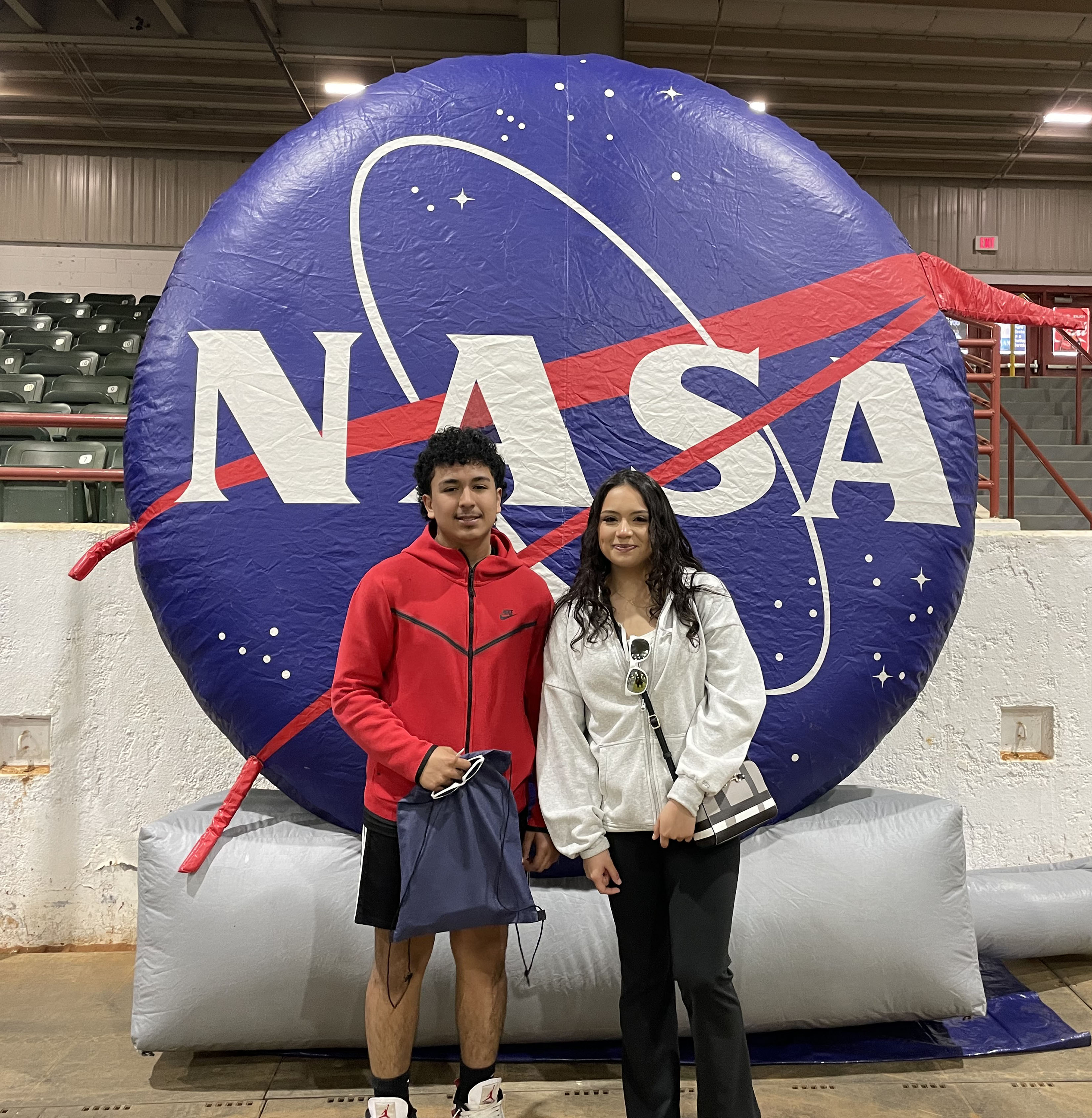
Students in today’s classrooms make up the Artemis Generation and everyone can find their place in space as NASA explores the secrets of the universe for the benefit of all. Representatives from NASA’s Stennis Space Center participated in the Hattiesburg Area Development Partnership’s Jumpstart to Success interactive career expo on Feb. 1, reaching more than 1,700 eighth and ninth grade students from Forrest, Lamar, and Perry counties in Mississippi. Through Artemis, NASA will establish the foundation for long-term scientific exploration at the Moon, land the first woman, first person of color, and first international partner astronaut on the lunar surface, and prepare for human expeditions to Mars.
NASA/Samone Wilson
Students in today’s classrooms make up the Artemis Generation and everyone can find their place in space as NASA explores the secrets of the universe for the benefit of all. Representatives from NASA’s Stennis Space Center participated in the Hattiesburg Area Development Partnership’s Jumpstart to Success interactive career expo on Feb. 1, reaching more than 1,700 eighth and ninth grade students from Forrest, Lamar, and Perry counties in Mississippi. Through Artemis, NASA will establish the foundation for long-term scientific exploration at the Moon, land the first woman, first person of color, and first international partner astronaut on the lunar surface, and prepare for human expeditions to Mars.
NASA/Samone Wilson
Students in today’s classrooms make up the Artemis Generation and everyone can find their place in space as NASA explores the secrets of the universe for the benefit of all. Representatives from NASA’s Stennis Space Center participated in the Hattiesburg Area Development Partnership’s Jumpstart to Success interactive career expo on Feb. 1, reaching more than 1,700 eighth and ninth grade students from Forrest, Lamar, and Perry counties in Mississippi. Through Artemis, NASA will establish the foundation for long-term scientific exploration at the Moon, land the first woman, first person of color, and first international partner astronaut on the lunar surface, and prepare for human expeditions to Mars.
NASA/Samone Wilson
Students in today’s classrooms make up the Artemis Generation and everyone can find their place in space as NASA explores the secrets of the universe for the benefit of all. Representatives from NASA’s Stennis Space Center participated in the Hattiesburg Area Development Partnership’s Jumpstart to Success interactive career expo on Feb. 1, reaching more than 1,700 eighth and ninth grade students from Forrest, Lamar, and Perry counties in Mississippi. Through Artemis, NASA will establish the foundation for long-term scientific exploration at the Moon, land the first woman, first person of color, and first international partner astronaut on the lunar surface, and prepare for human expeditions to Mars.
NASA/Samone Wilson
Students in today’s classrooms make up the Artemis Generation and everyone can find their place in space as NASA explores the secrets of the universe for the benefit of all. Representatives from NASA’s Stennis Space Center participated in the Hattiesburg Area Development Partnership’s Jumpstart to Success interactive career expo on Feb. 1, reaching more than 1,700 eighth and ninth grade students from Forrest, Lamar, and Perry counties in Mississippi. Through Artemis, NASA will establish the foundation for long-term scientific exploration at the Moon, land the first woman, first person of color, and first international partner astronaut on the lunar surface, and prepare for human expeditions to Mars.
NASA/Samone Wilson
Students in today’s classrooms make up the Artemis Generation and everyone can find their place in space as NASA explores the secrets of the universe for the benefit of all. Representatives from NASA’s Stennis Space Center participated in the Hattiesburg Area Development Partnership’s Jumpstart to Success interactive career expo on Feb. 1, reaching more than 1,700 eighth and ninth grade students from Forrest, Lamar, and Perry counties in Mississippi. Through Artemis, NASA will establish the foundation for long-term scientific exploration at the Moon, land the first woman, first person of color, and first international partner astronaut on the lunar surface, and prepare for human expeditions to Mars.
NASA/Samone Wilson
Students in today’s classrooms make up the Artemis Generation and everyone can find their place in space as NASA explores the secrets of the universe for the benefit of all. Representatives from NASA’s Stennis Space Center participated in the Hattiesburg Area Development Partnership’s Jumpstart to Success interactive career expo on Feb. 1, reaching more than 1,700 eighth and ninth grade students from Forrest, Lamar, and Perry counties in Mississippi. Through Artemis, NASA will establish the foundation for long-term scientific exploration at the Moon, land the first woman, first person of color, and first international partner astronaut on the lunar surface, and prepare for human expeditions to Mars.
NASA/Samone Wilson
NASA Participates in Jackson State University Events
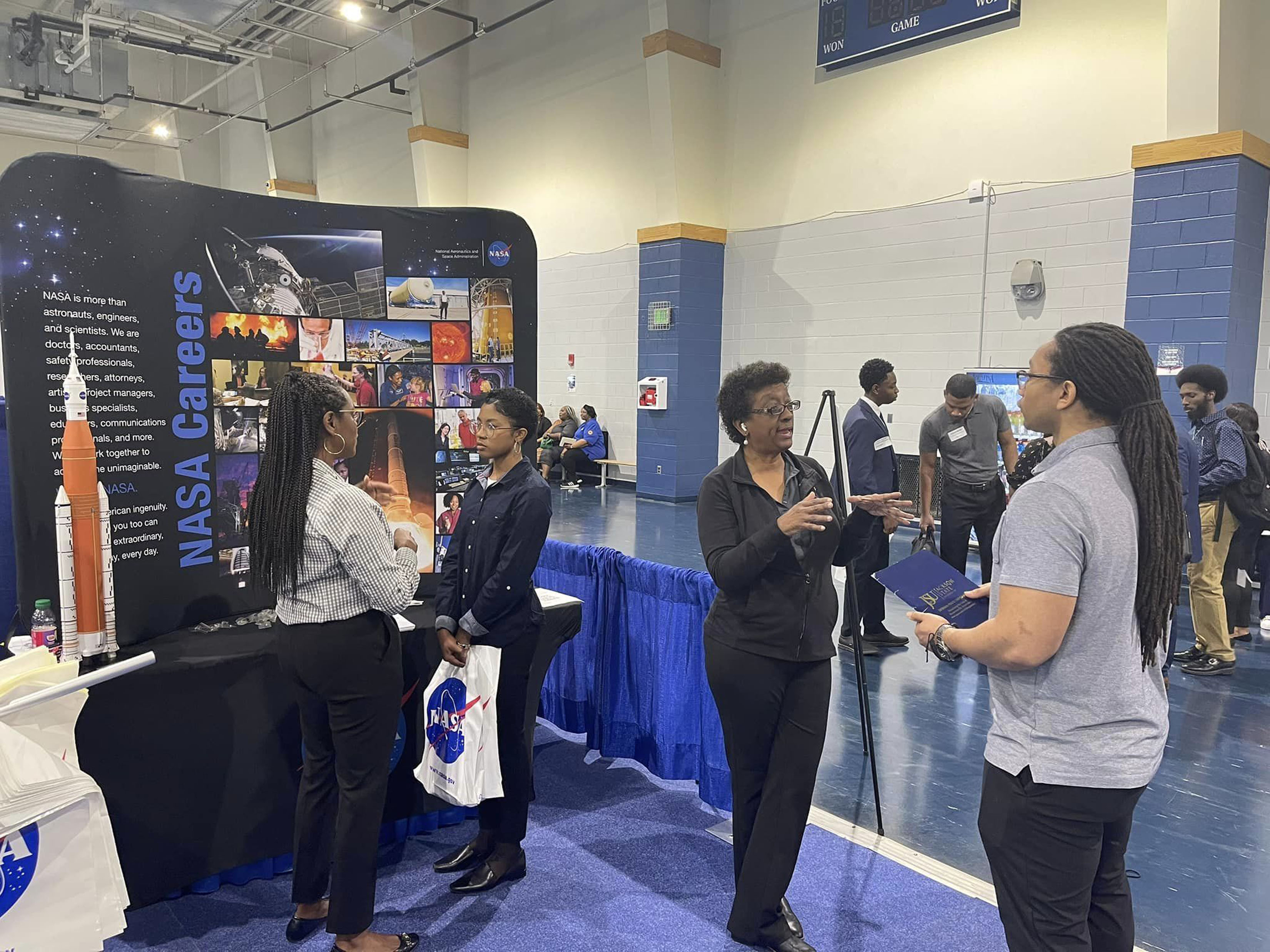
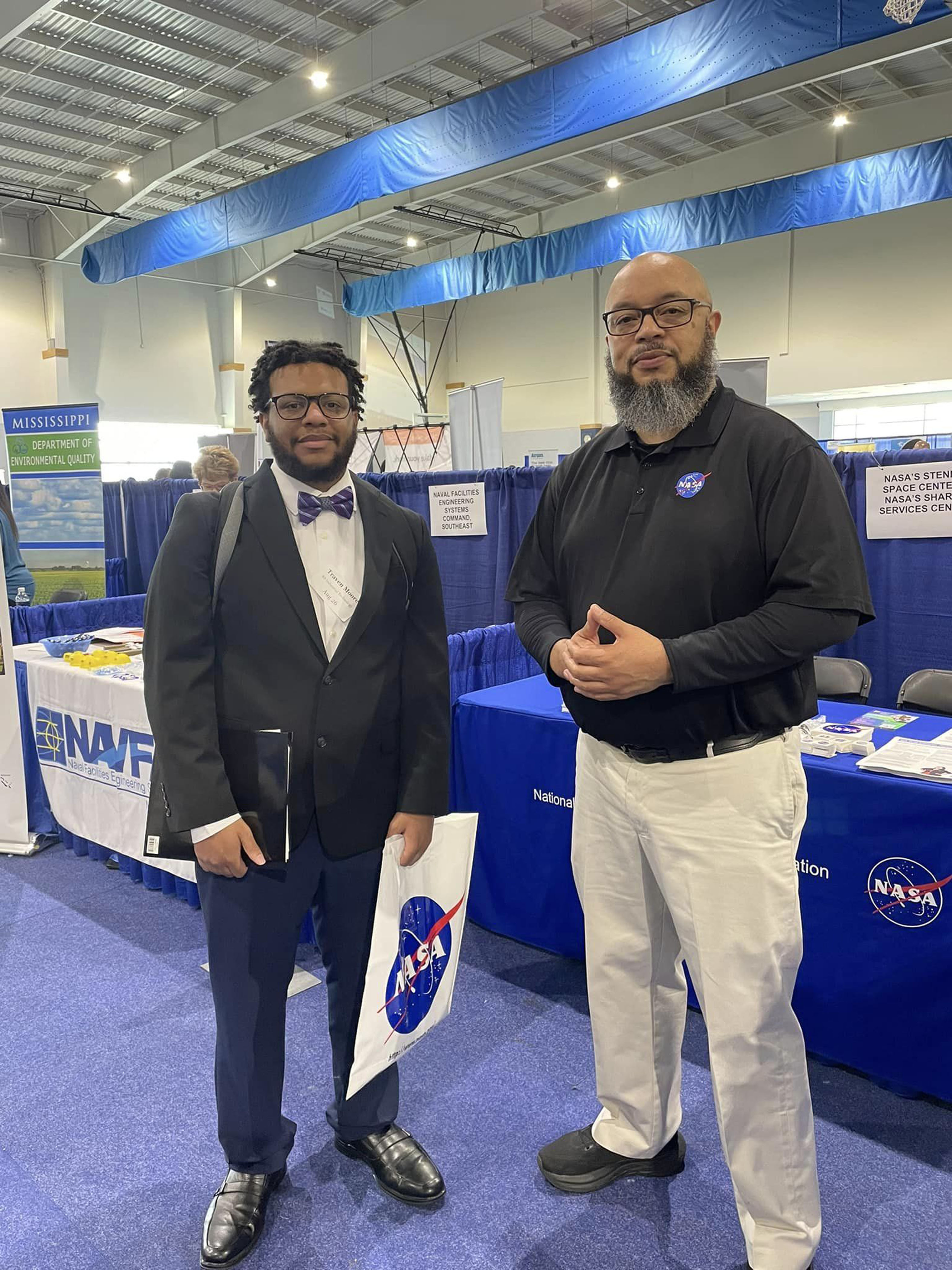
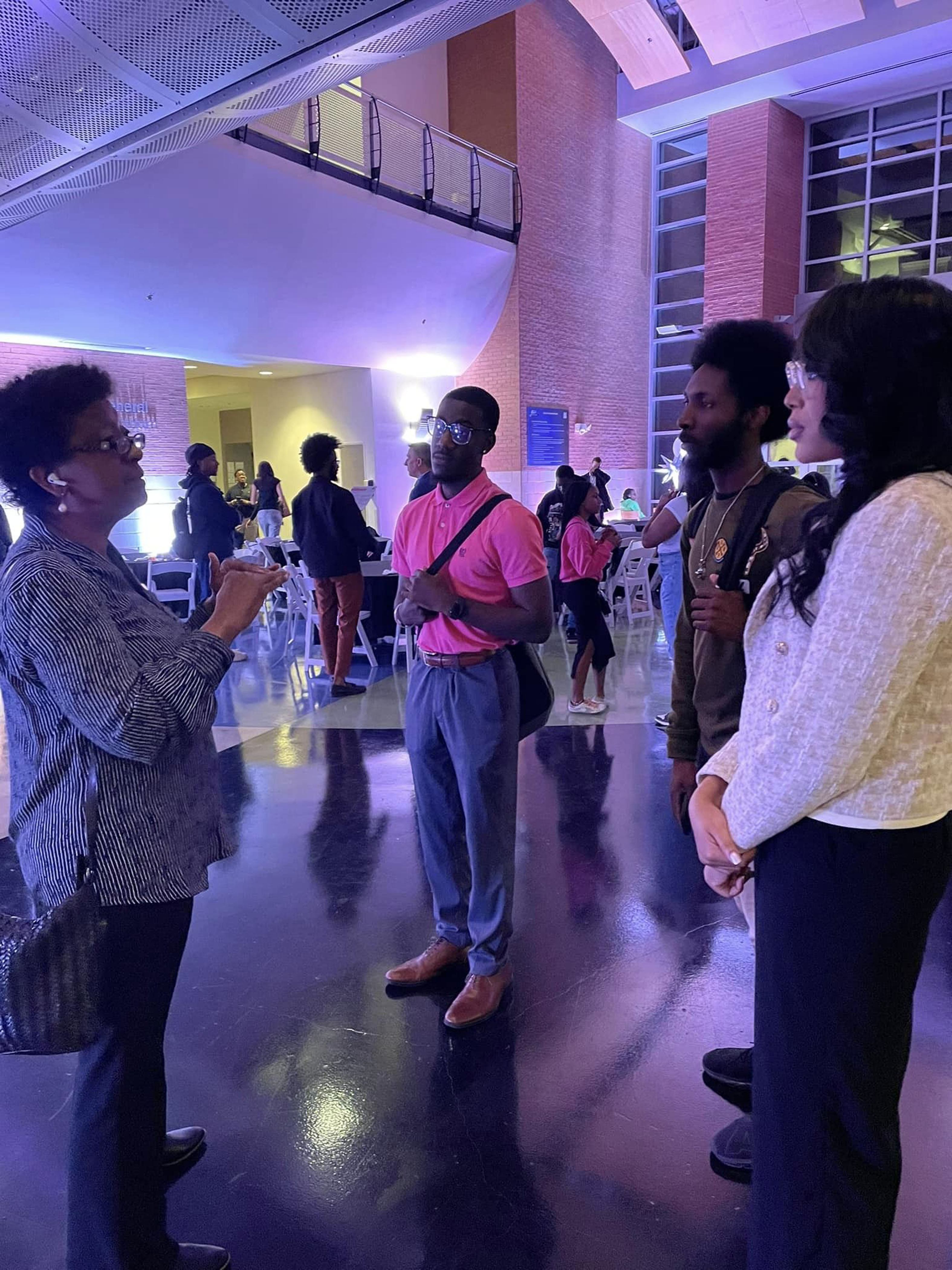
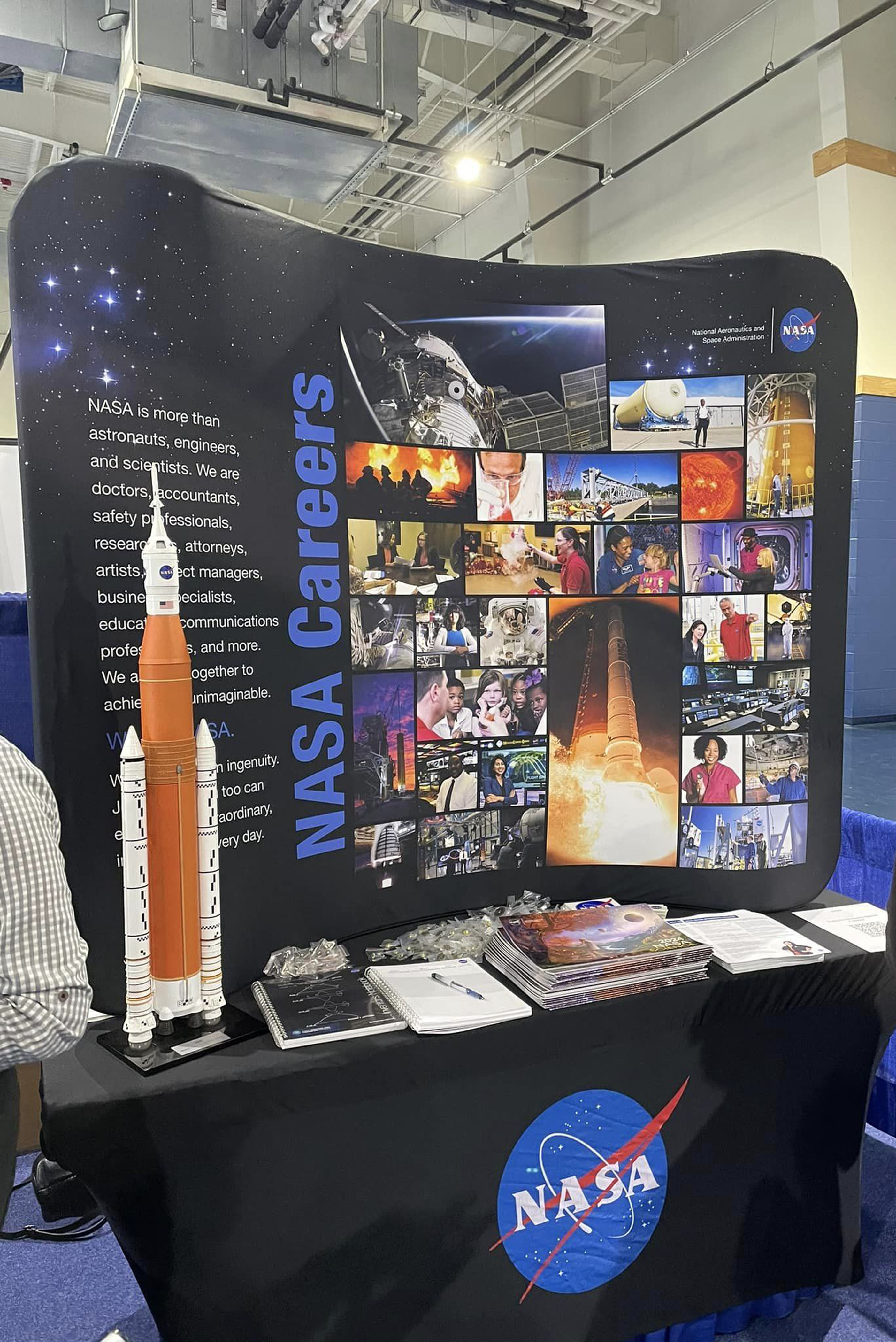
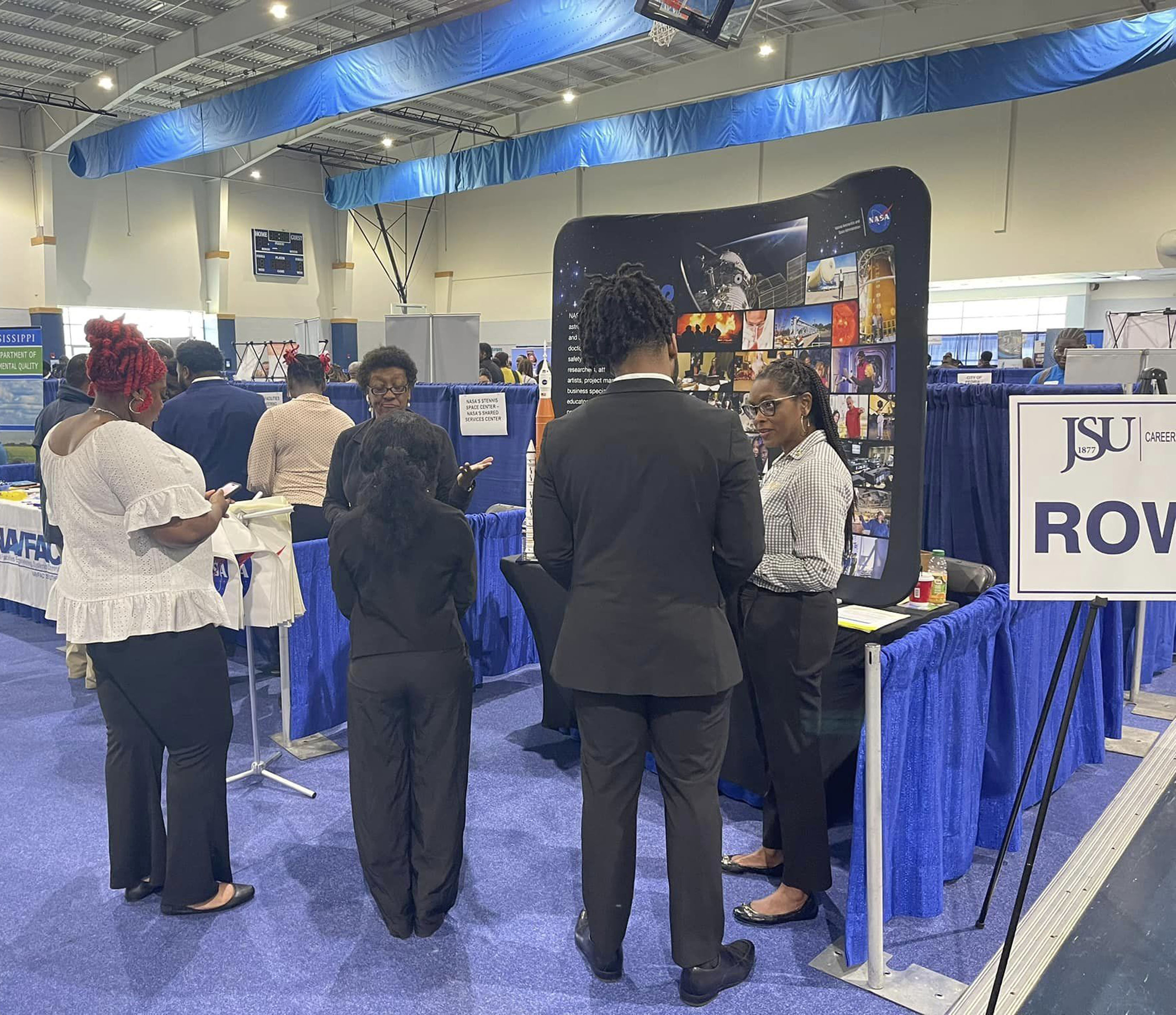
In conjunction with NASA Stennis Capitol Day and Black History Month, NASA Stennis representatives provided information on NASA internships and career opportunities at Jackson State University’s Spring Career Expo on Feb. 22 and participated in the National Society of Black Engineers networking reception on campus Feb. 21. At NASA, space is for everybody.
NASA Stennis/NSSC
In conjunction with NASA Stennis Capitol Day and Black History Month, NASA Stennis representatives provided information on NASA internships and career opportunities at Jackson State University’s Spring Career Expo on Feb. 22 and participated in the National Society of Black Engineers networking reception on campus Feb. 21. At NASA, space is for everybody.
NASA Stennis/NSSC
In conjunction with NASA Stennis Capitol Day and Black History Month, NASA Stennis representatives provided information on NASA internships and career opportunities at Jackson State University’s Spring Career Expo on Feb. 22 and participated in the National Society of Black Engineers networking reception on campus Feb. 21. At NASA, space is for everybody.
NASA Stennis/NSSC
In conjunction with NASA Stennis Capitol Day and Black History Month, NASA Stennis representatives provided information on NASA internships and career opportunities at Jackson State University’s Spring Career Expo on Feb. 22 and participated in the National Society of Black Engineers networking reception on campus Feb. 21. At NASA, space is for everybody.
NASA Stennis/NSSC
In conjunction with NASA Stennis Capitol Day and Black History Month, NASA Stennis representatives provided information on NASA internships and career opportunities at Jackson State University’s Spring Career Expo on Feb. 22 and participated in the National Society of Black Engineers networking reception on campus Feb. 21. At NASA, space is for everybody.
NASA Stennis/NSSC
NASA Engages the Artemis Generation in Capital City
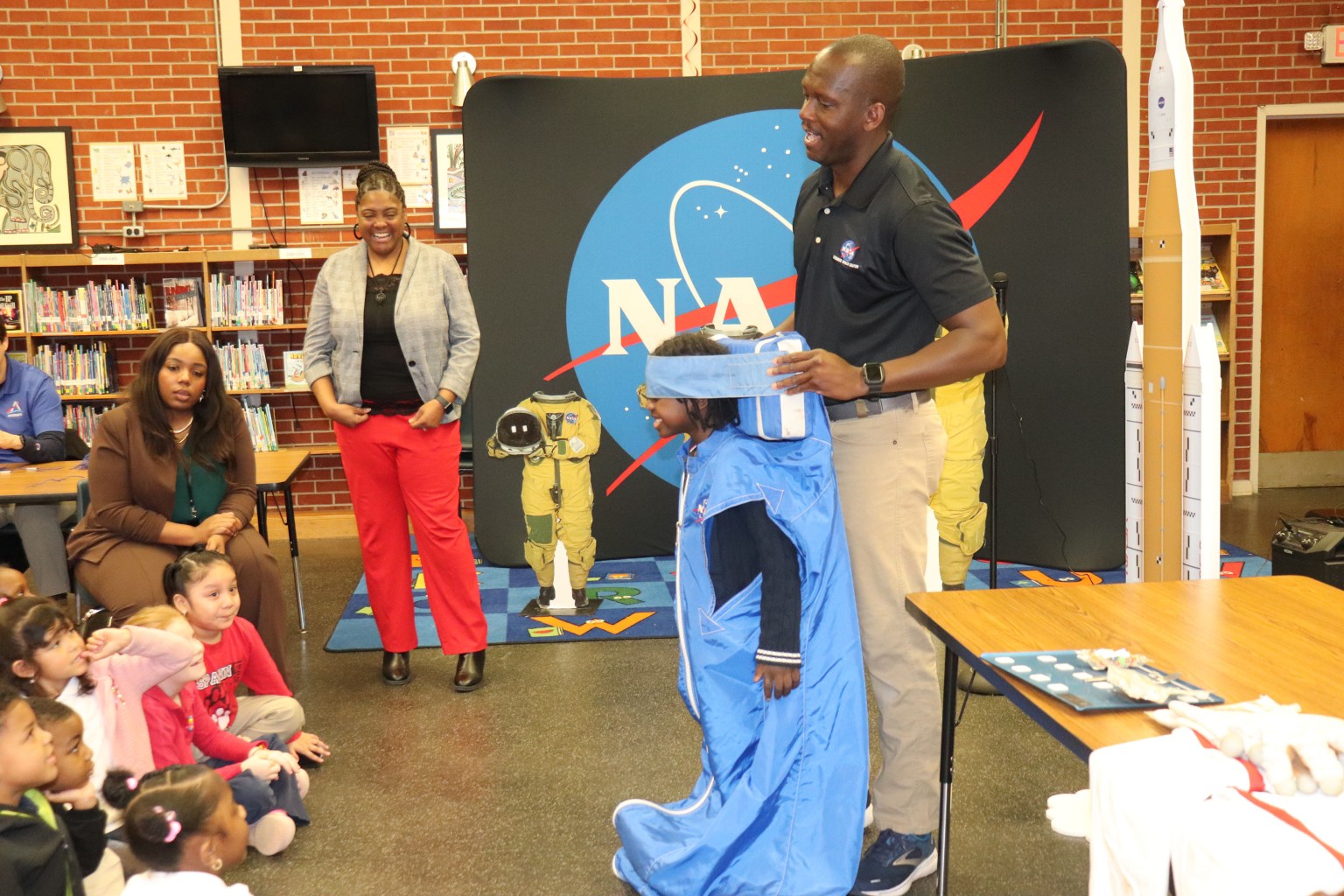
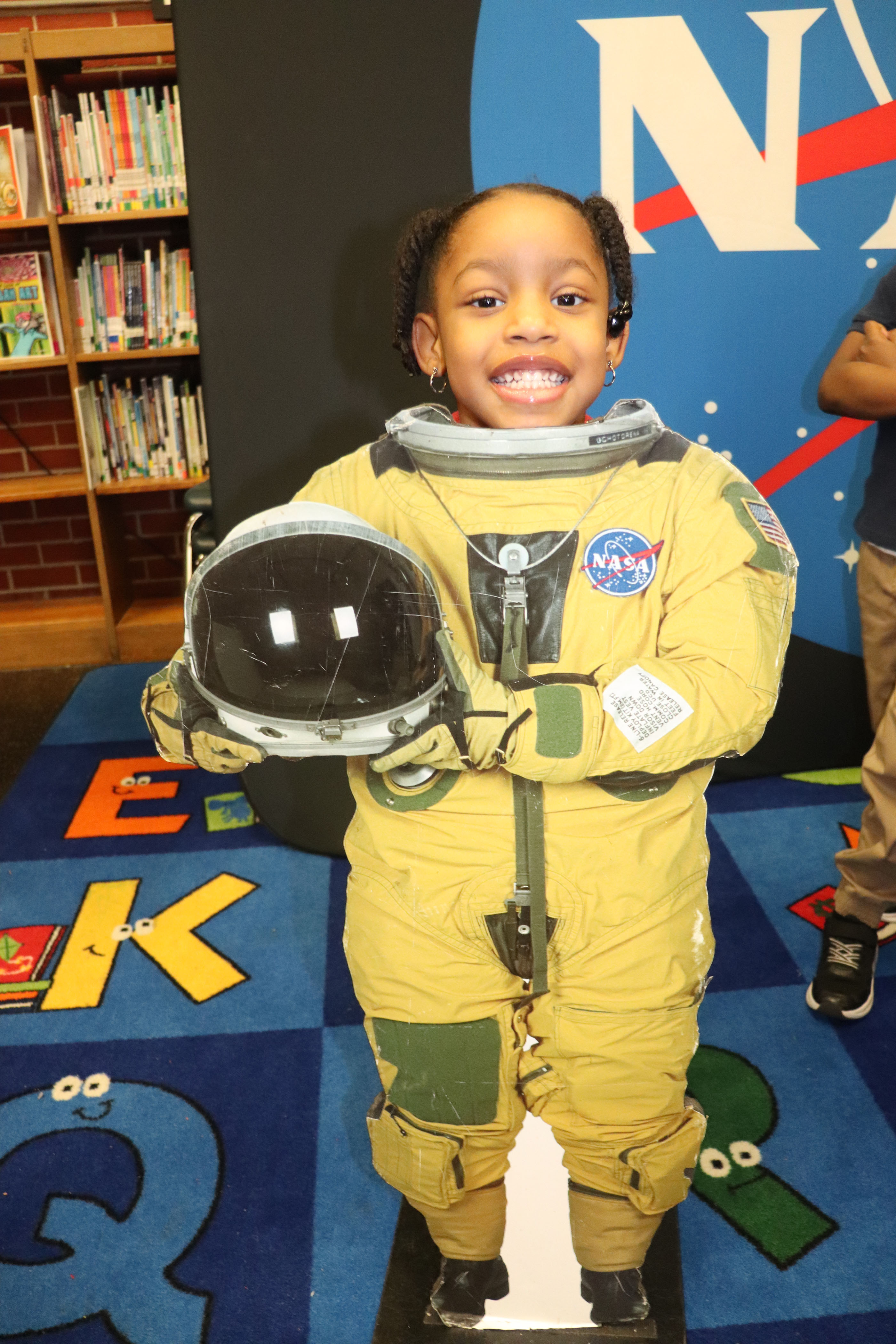
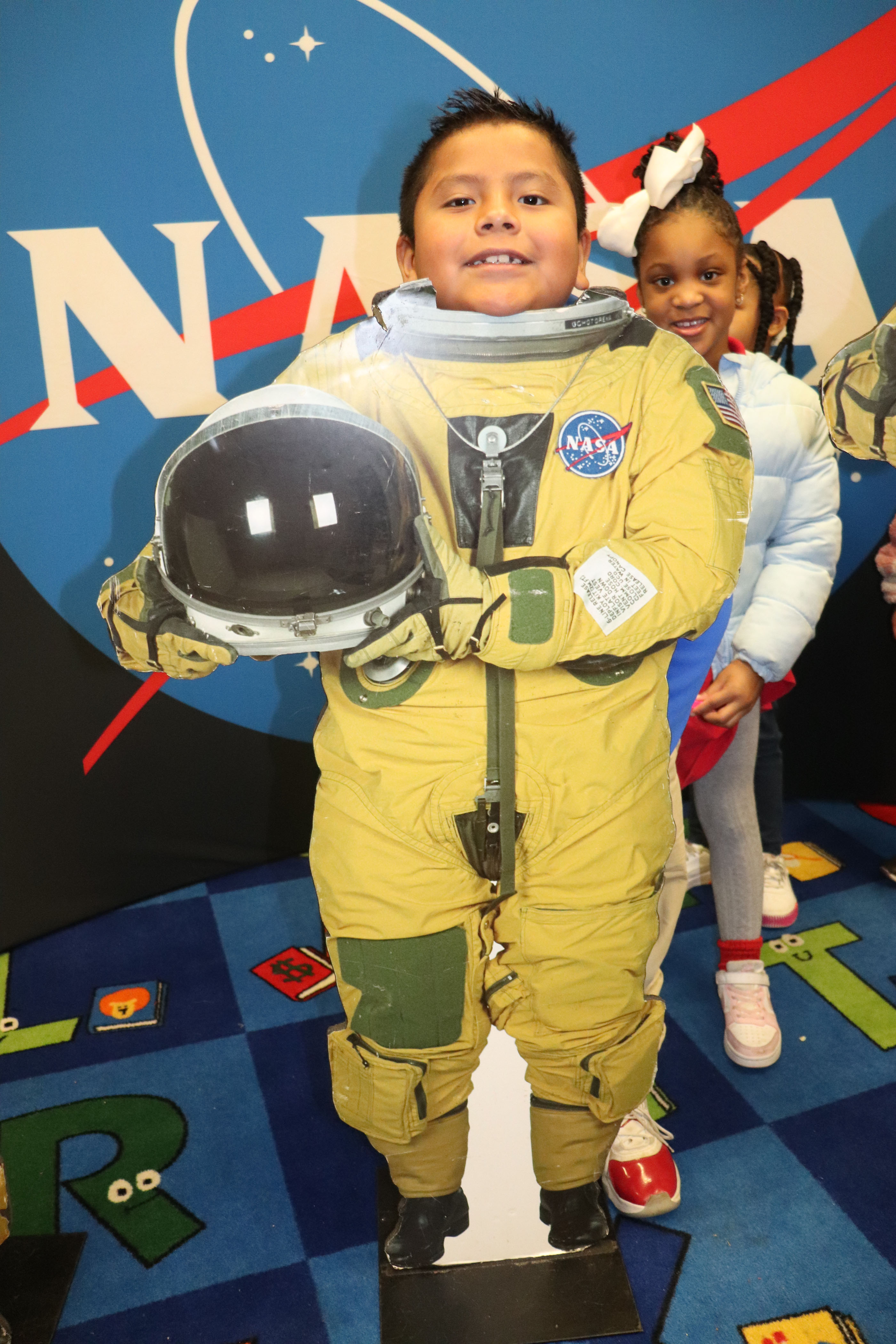
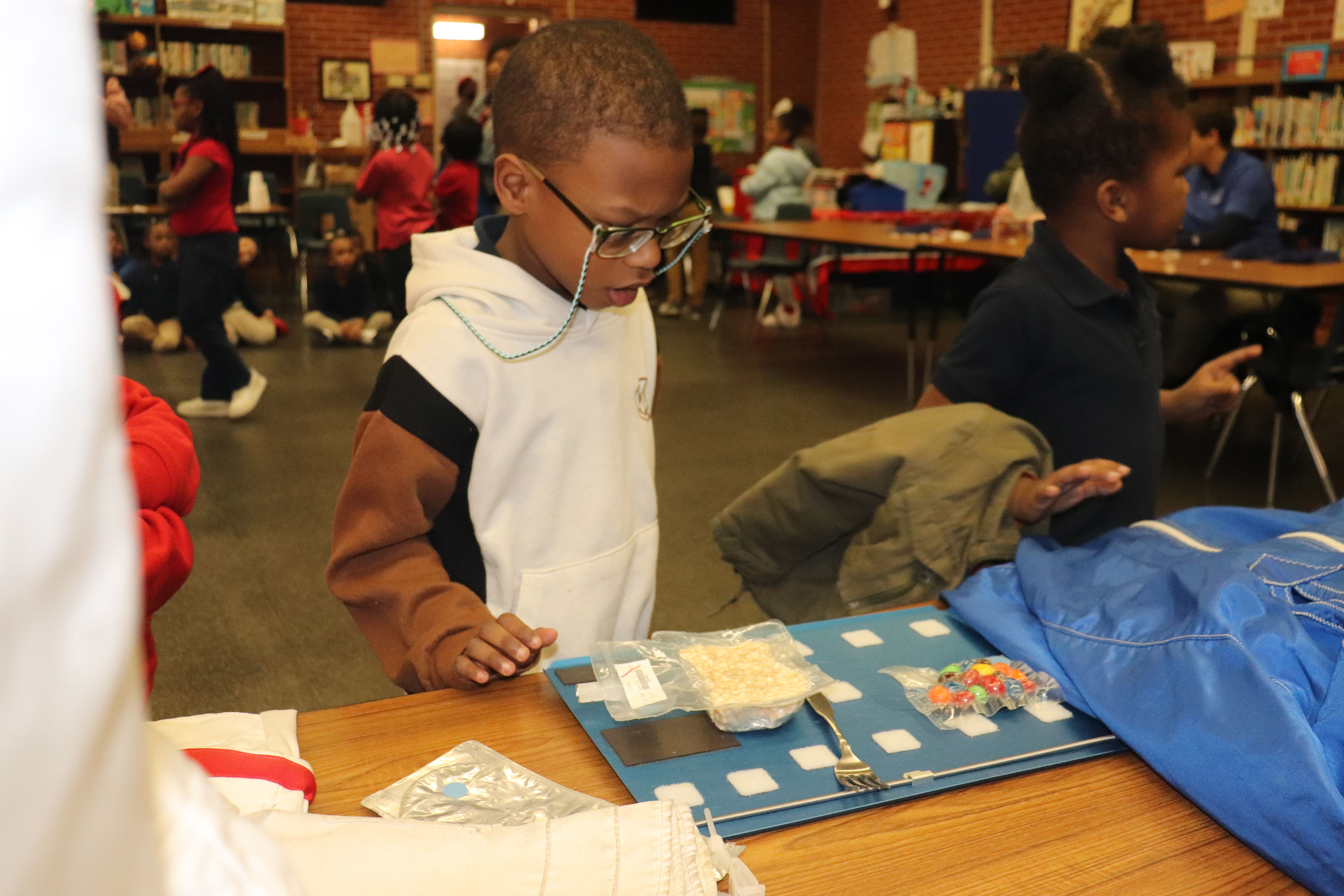
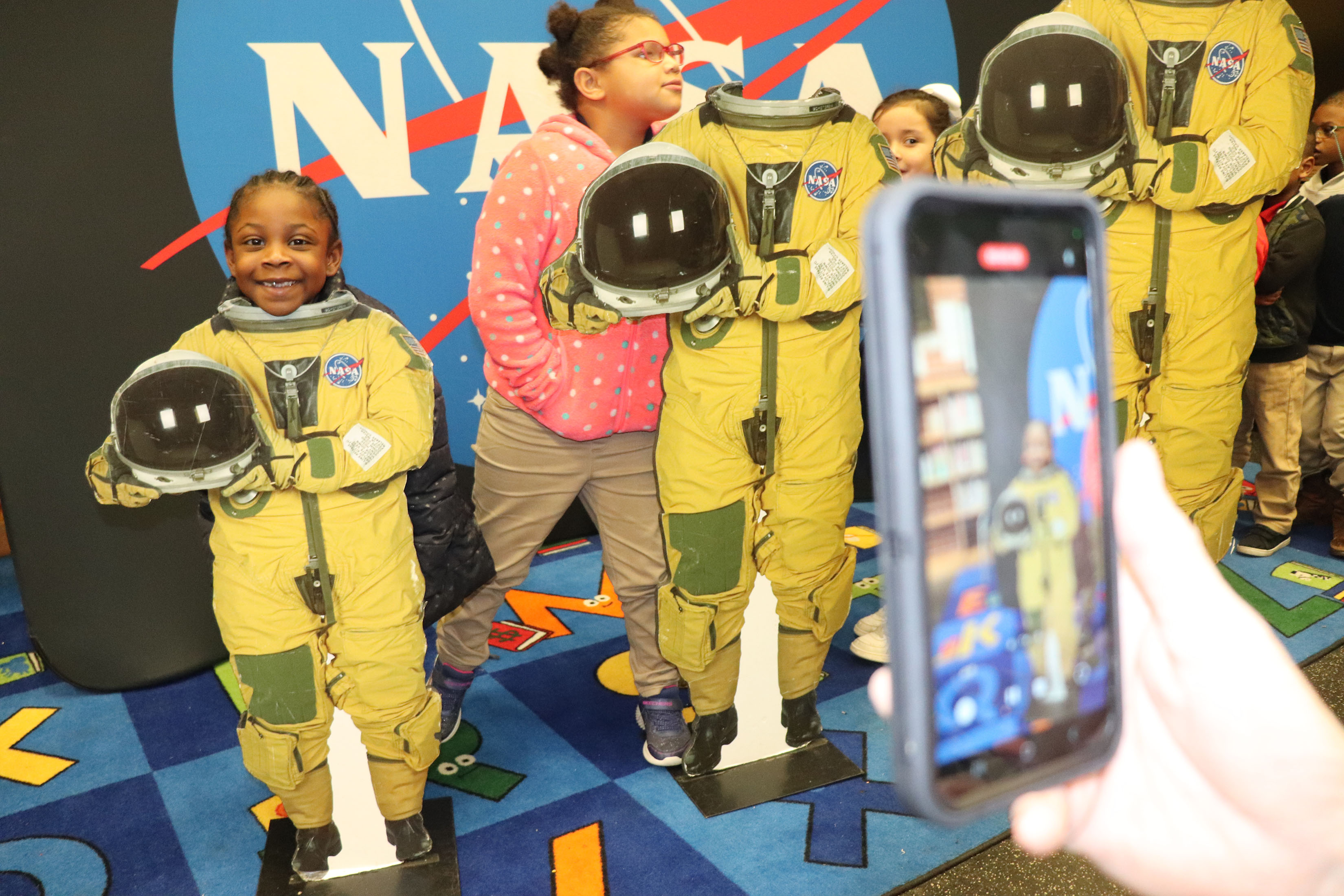
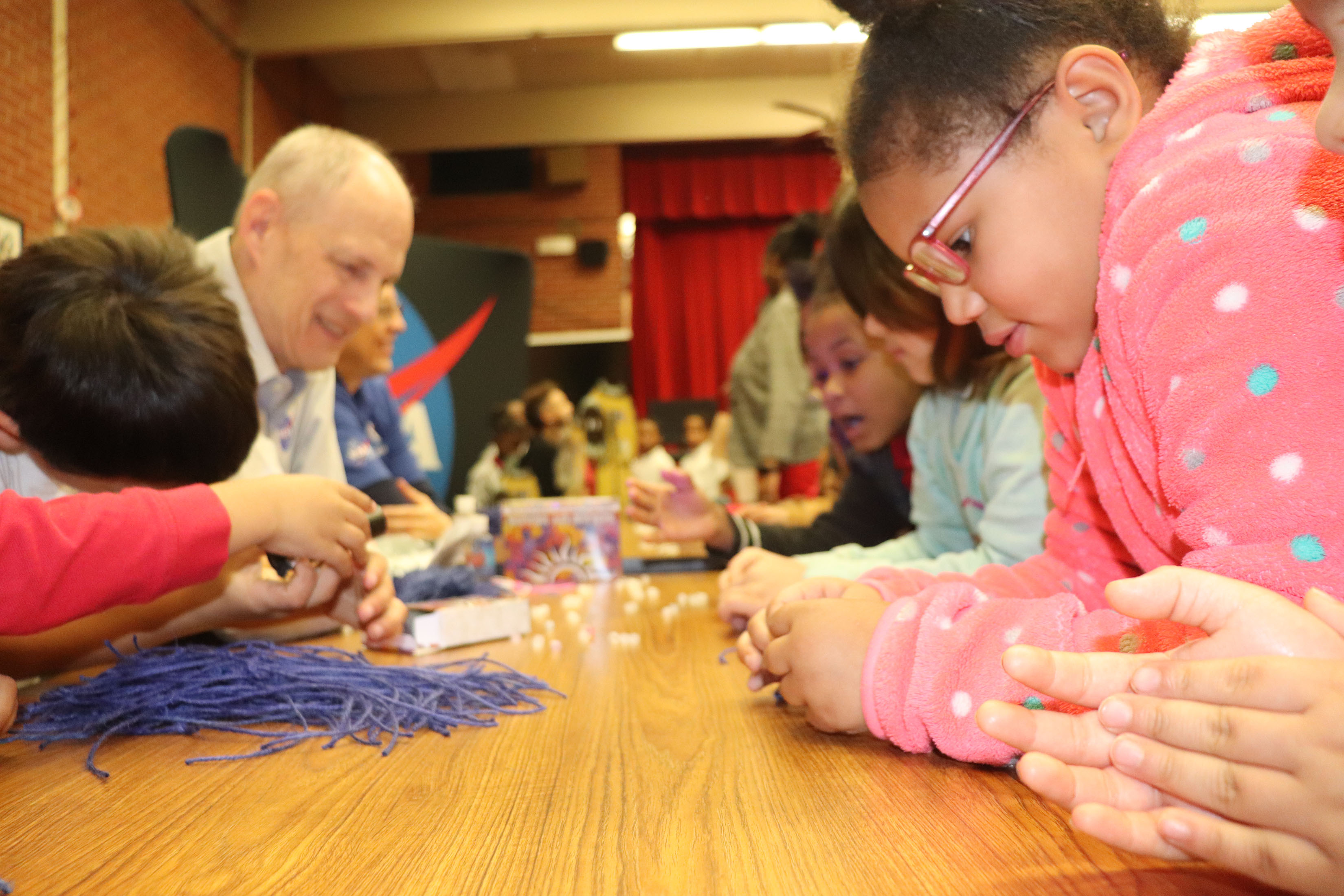
Representatives from NASA’s Stennis Space Center and NASA Shared Services Center participate in multiple related outreach events throughout Jackson, Mississippi, as part of the annual Stennis Day at the Capitol activities on Feb. 29. NASA personnel inspired the Artemis Generation with visits to Spann Elementary and Blackburn Middle schools. Activities included students learning about life as a NASA astronaut and a hands-on STEM (science, technology, engineering, and mathematics) activity. Sending the first woman and first person of color to the Moon on future Artemis missions will inspire the Artemis Generation to see themselves in space and understand the importance of STEM studies and careers. As NASA takes giant leaps to bridge disparities and break barriers in STEM, the agency’s efforts in the future workforce advances the nation’s space exploration.
Jackson Public Schools
Representatives from NASA’s Stennis Space Center and NASA Shared Services Center participate in multiple related outreach events throughout Jackson, Mississippi, as part of the annual Stennis Day at the Capitol activities on Feb. 29. NASA personnel inspired the Artemis Generation with visits to Spann Elementary and Blackburn Middle schools. Activities included students learning about life as a NASA astronaut and a hands-on STEM (science, technology, engineering, and mathematics) activity. Sending the first woman and first person of color to the Moon on future Artemis missions will inspire the Artemis Generation to see themselves in space and understand the importance of STEM studies and careers. As NASA takes giant leaps to bridge disparities and break barriers in STEM, the agency’s efforts in the future workforce advances the nation’s space exploration.
Jackson Public Schools
Representatives from NASA’s Stennis Space Center and NASA Shared Services Center participate in multiple related outreach events throughout Jackson, Mississippi, as part of the annual Stennis Day at the Capitol activities on Feb. 29. NASA personnel inspired the Artemis Generation with visits to Spann Elementary and Blackburn Middle schools. Activities included students learning about life as a NASA astronaut and a hands-on STEM (science, technology, engineering, and mathematics) activity. Sending the first woman and first person of color to the Moon on future Artemis missions will inspire the Artemis Generation to see themselves in space and understand the importance of STEM studies and careers. As NASA takes giant leaps to bridge disparities and break barriers in STEM, the agency’s efforts in the future workforce advances the nation’s space exploration.
Jackson Public Schools
Representatives from NASA’s Stennis Space Center and NASA Shared Services Center participate in multiple related outreach events throughout Jackson, Mississippi, as part of the annual Stennis Day at the Capitol activities on Feb. 29. NASA personnel inspired the Artemis Generation with visits to Spann Elementary and Blackburn Middle schools. Activities included students learning about life as a NASA astronaut and a hands-on STEM (science, technology, engineering, and mathematics) activity. Sending the first woman and first person of color to the Moon on future Artemis missions will inspire the Artemis Generation to see themselves in space and understand the importance of STEM studies and careers. As NASA takes giant leaps to bridge disparities and break barriers in STEM, the agency’s efforts in the future workforce advances the nation’s space exploration.
Jackson Public Schools
Representatives from NASA’s Stennis Space Center and NASA Shared Services Center participate in multiple related outreach events throughout Jackson, Mississippi, as part of the annual Stennis Day at the Capitol activities on Feb. 29. NASA personnel inspired the Artemis Generation with visits to Spann Elementary and Blackburn Middle schools. Activities included students learning about life as a NASA astronaut and a hands-on STEM (science, technology, engineering, and mathematics) activity. Sending the first woman and first person of color to the Moon on future Artemis missions will inspire the Artemis Generation to see themselves in space and understand the importance of STEM studies and careers. As NASA takes giant leaps to bridge disparities and break barriers in STEM, the agency’s efforts in the future workforce advances the nation’s space exploration.
Jackson Public Schools
Representatives from NASA’s Stennis Space Center and NASA Shared Services Center participate in multiple related outreach events throughout Jackson, Mississippi, as part of the annual Stennis Day at the Capitol activities on Feb. 29. NASA personnel inspired the Artemis Generation with visits to Spann Elementary and Blackburn Middle schools. Activities included students learning about life as a NASA astronaut and a hands-on STEM (science, technology, engineering, and mathematics) activity. Sending the first woman and first person of color to the Moon on future Artemis missions will inspire the Artemis Generation to see themselves in space and understand the importance of STEM studies and careers. As NASA takes giant leaps to bridge disparities and break barriers in STEM, the agency’s efforts in the future workforce advances the nation’s space exploration.
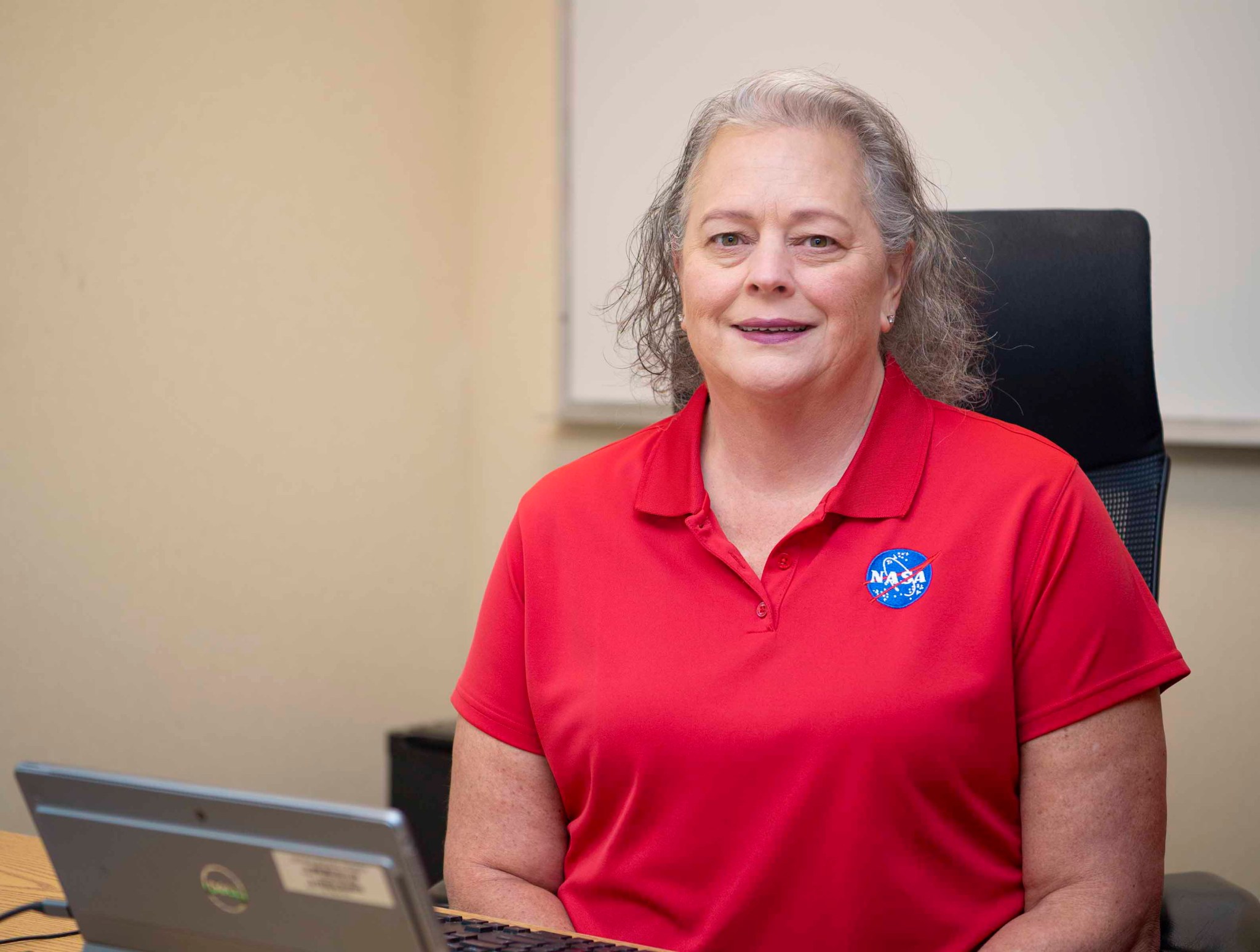
Rae Anderson, subject matter expert for software assurance in the NASA Stennis Safety and Mission Assurance Directorate, is the first employee at NASA’s Stennis Space Center – and one of five civil servants across NASA – to earn the highest distinction in the Safety and Mission Assurance Technical Excellence Program in the discipline of software assurance. The level four certification demonstrates Anderson’s dedication to growing her knowledge and skills to become an effective contributor to the agency’s mission.
NASA/Danny Nowlin
Rae Anderson never set out to have a career with NASA, but the pursuit of opportunities around her interest in computer science led the Union City, Tennessee native to the agency that explores the secrets of the universe for the benefit of all.
Lagniappe is published monthly by the Office of Communications at NASA’s Stennis Space Center. The NASA Stennis office may be contacted by at 228-688-3333 (phone); ssc-office-of-communications@mail.nasa.gov (email); or NASA OFFICE OF COMMUNICATIONS, Attn: LAGNIAPPE, Mail code IA00, Building 1111 Room 173, Stennis Space Center, MS 39529 (mail).
The Lagniappe staff includes: Managing Editor Lacy Thompson, Editor Bo Black, and photographer Danny Nowlin.
NASA Leaders Participate in Annual Stennis Day at the Capitol
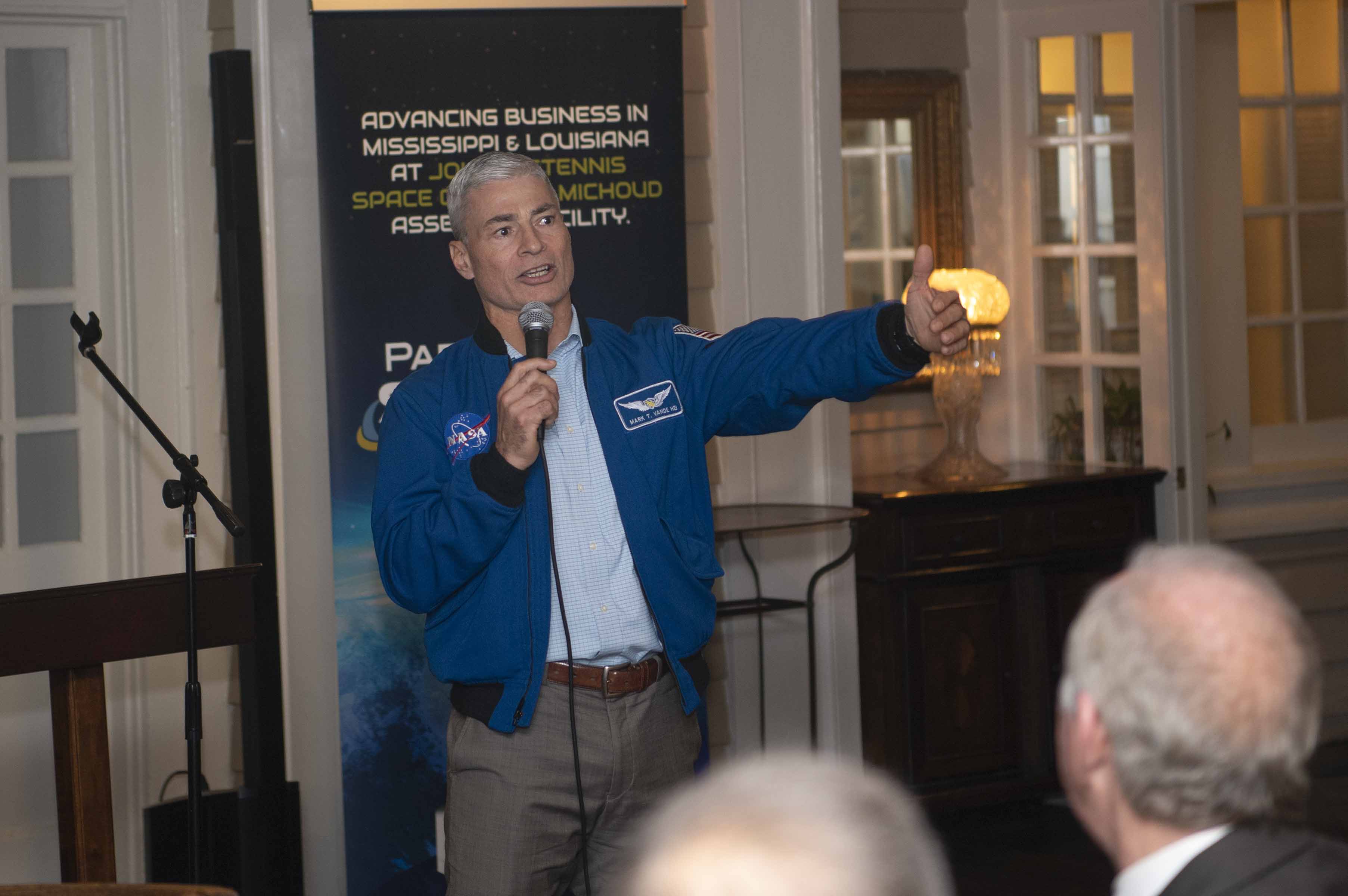
NASA astronaut Mark Vande Hei speaks the night before Stennis Day at the Capitol during a reception hosted by Partners for Stennis & Michoud on Feb. 28 in Jackson, Mississippi. Vande Hei returned from a record stay on the International Space Station in 2022 following 355 days in space. Partners for Stennis & Michoud are volunteers of Mississippi and Louisiana citizens who advocate for space, Earth, and ocean exploration. The group is composed of chambers of commerce members, economic development foundations, businesses, educational institutions, local governments, community groups, and individual citizens.
NASA/Danny Nowlin
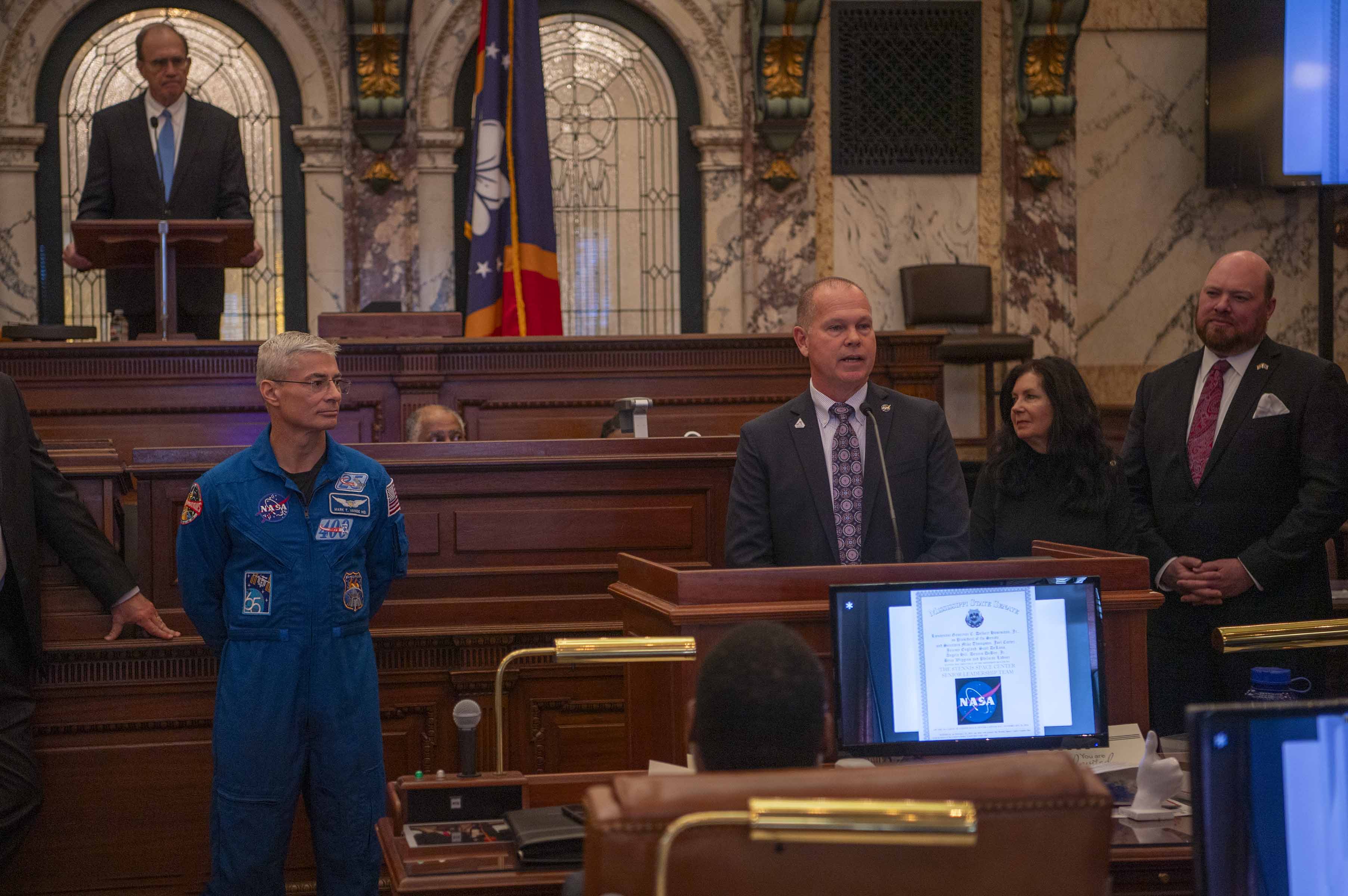
NASA Stennis Acting Center Director John Bailey addresses members of the Mississippi Senate during Stennis Day at the Capitol on Feb. 29. Also shown are (l to r): NASA astronaut Mark Vande Hei, Sen. Angela Hill, Sen. Joel R. Carter Jr., and Lt. Gov. Delbert Hosemann in back left.
NASA/Danny Nowlin
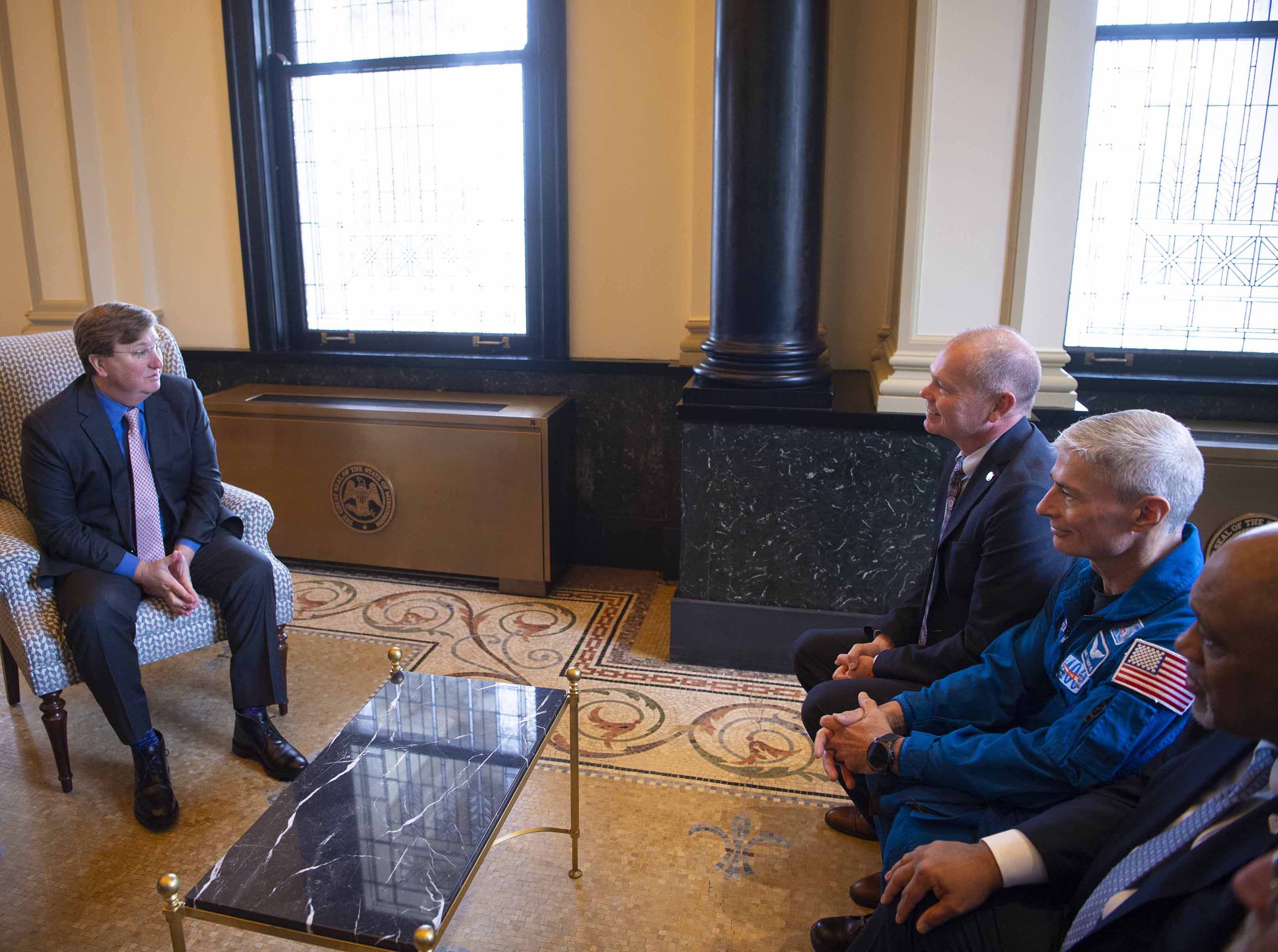
NASA Stennis Acting Center Director John Bailey, NASA astronaut Mark Vande Hei, and NASA Shared Service Center Acting Executive Director Ken Newton meet with Mississippi Gov. Tate Reeves (left) as part of Stennis Day at the Capitol in Jackson, Mississippi on Feb. 29.
NASA/Danny Nowlin
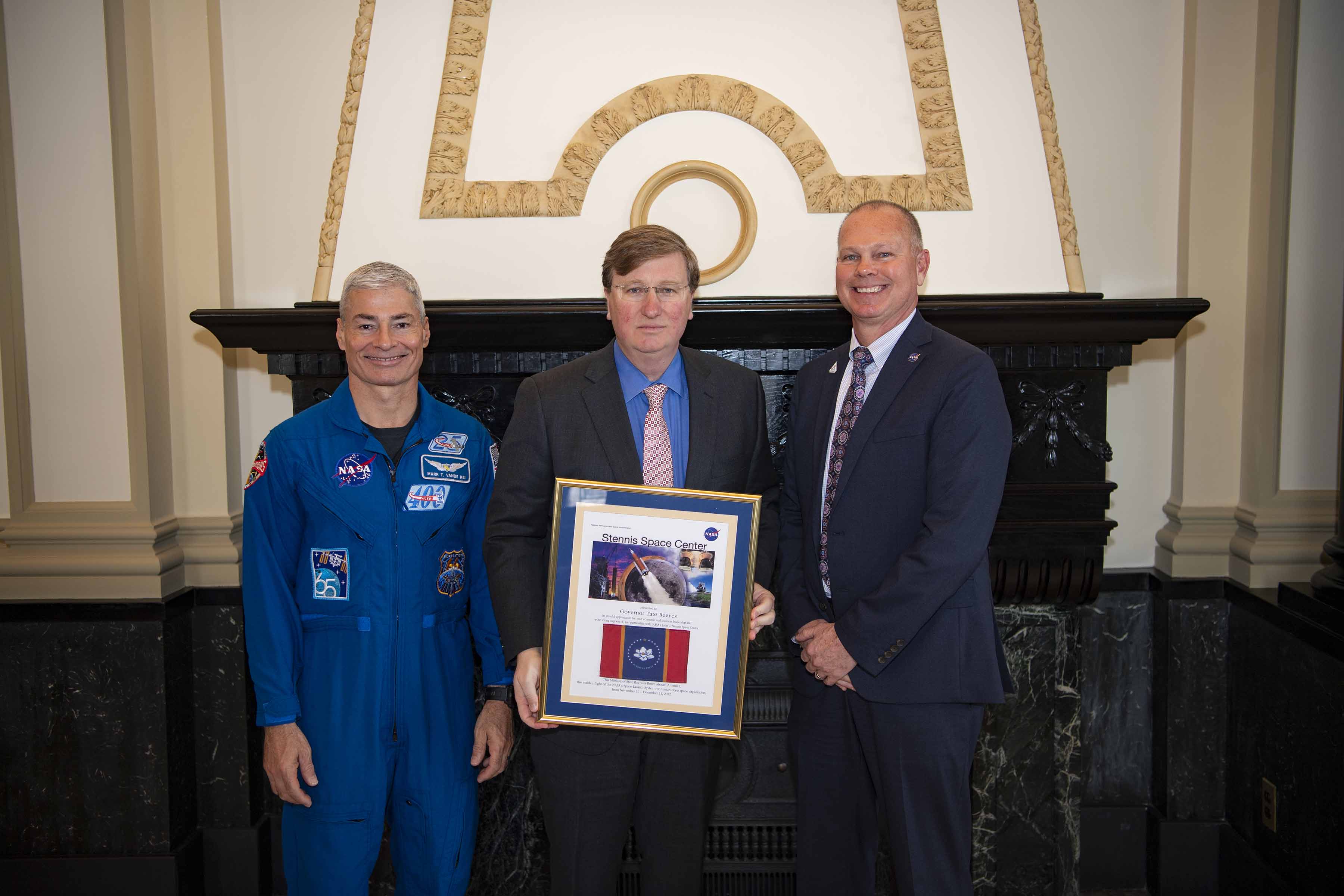
Shown left to right is NASA astronaut Mark Vande Hei, Mississippi Gov. Tate Reeves, and NASA Stennis Acting Center Director John Bailey with a plaque presented to the governor for Mississippi’s support of NASA Stennis. The plaque shows a picture of activities from NASA Stennis and the Mississippi flag flown aboard Artemis I, the maiden flight of NASA’s SLS (Space Launch System) for human deep space exploration. Prior to the successful launch of Artemis I, NASA Stennis conducted a historic Green Run test series of the SLS core stage and four RS-25 engines.
NASA/Danny Nowlin
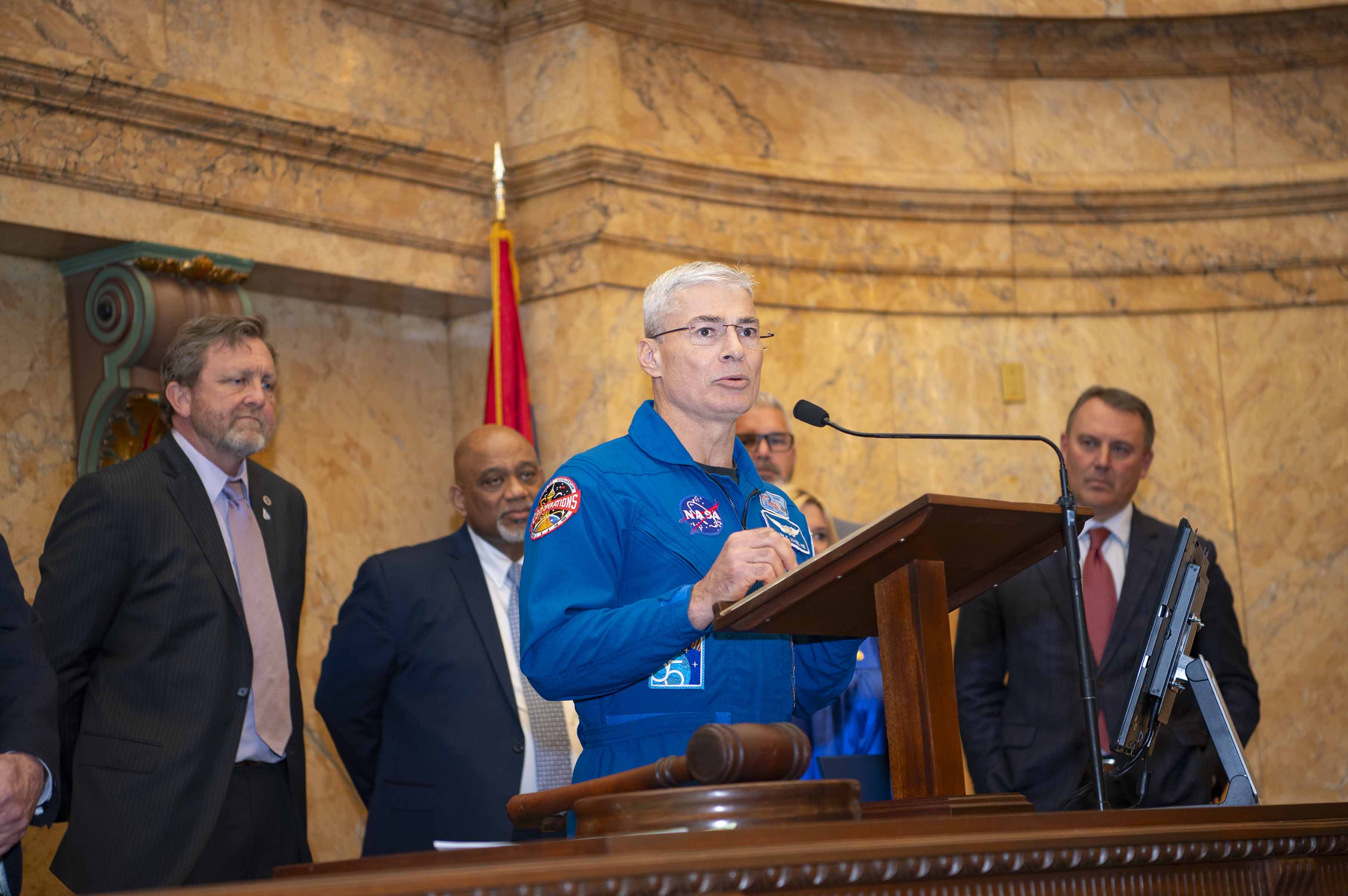
NASA astronaut Mark Vande Hei speaks with Mississippi House of Representatives during Stennis Day at the Capitol on Feb. 29. NASA Stennis Associate Director Rodney McKellip, NASA Shared Service Center Acting Executive Director Ken Newton, and Mississippi Speaker of the House Jason White are also pictured.
NASA/Danny Nowlin
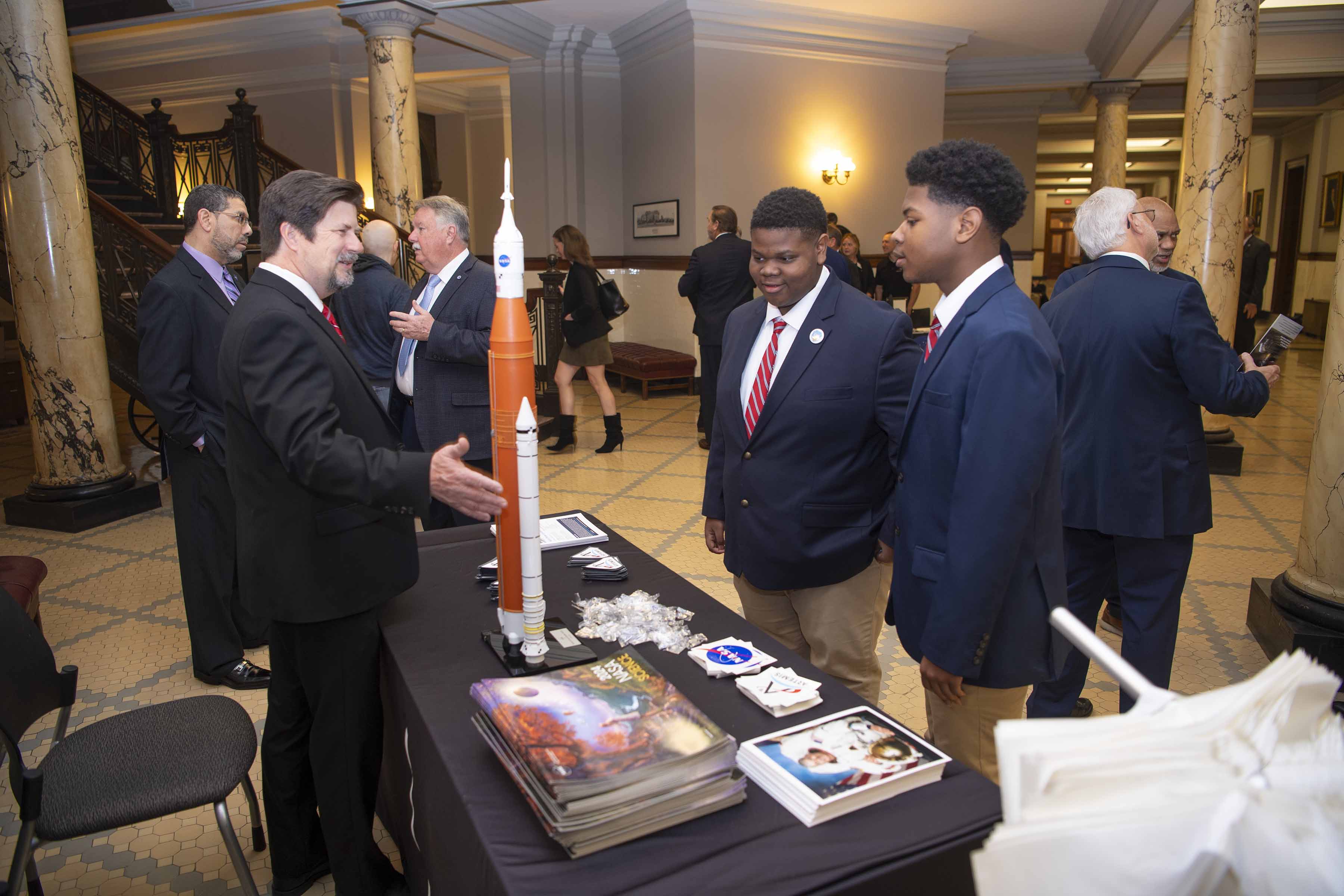
NASA Stennis Safety and Mission Assurance Director Gary Benton speaks with students serving as legislative pages on Feb. 29 at the NASA booth in the rotunda of the Mississippi State Capitol in Jackson, Mississippi, during Stennis Day at the Capitol activities.
NASA/Danny Nowlin
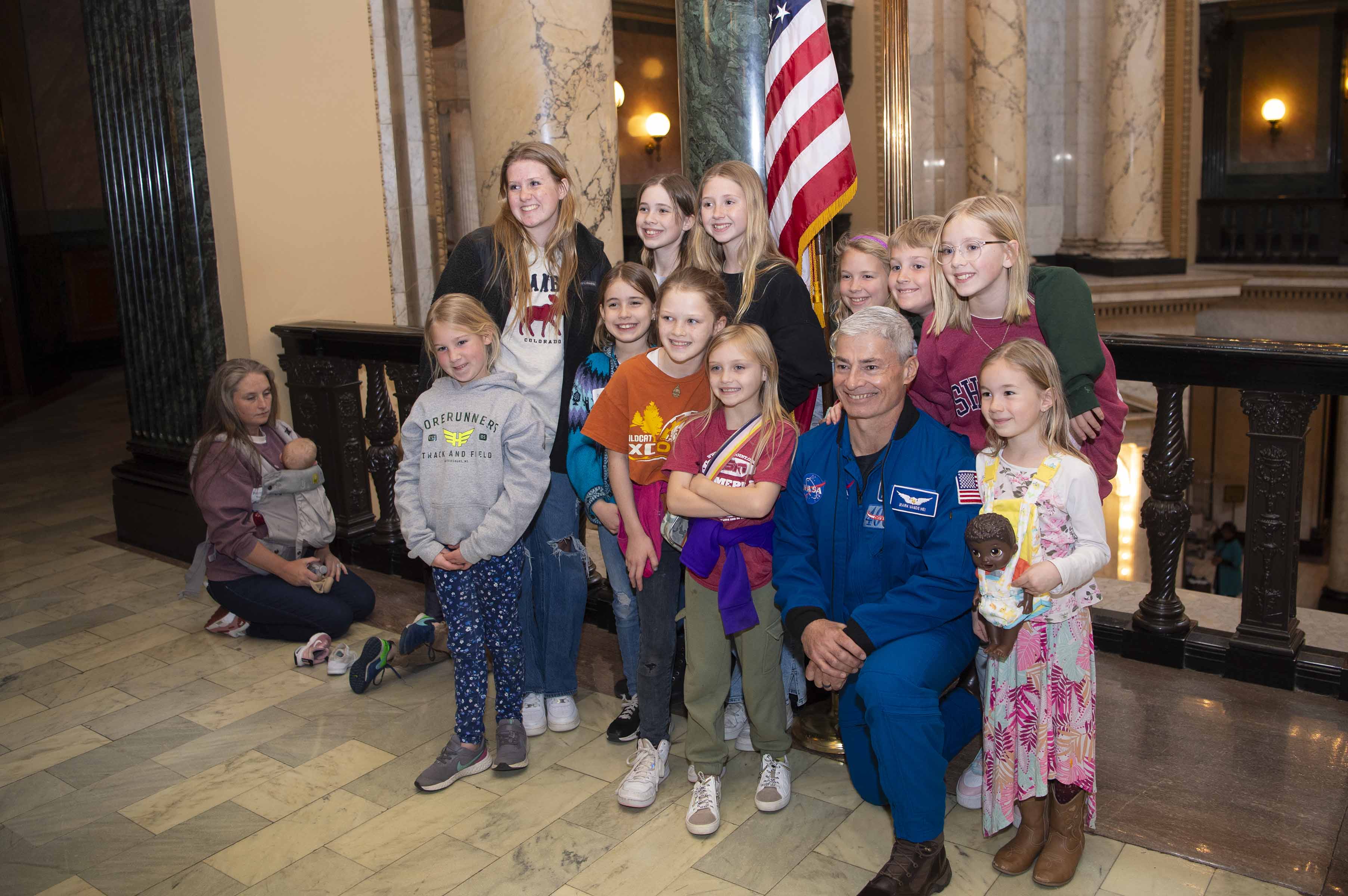
NASA astronaut Mark Vande Hei is pictured with children visiting the Mississippi State Capitol in Jackson, Mississippi, on Feb. 29 as NASA attended Stennis Day at the Capitol. Not since the Apollo era has there been a space mission to be embraced by the next generation – the Artemis Generation. Through Artemis, NASA will establish the foundation for long-term scientific exploration at the Moon, land the first woman, first person of color, and first international partner astronaut on the lunar surface, and prepare for human expeditions to Mars for the benefit of all.
NASA/Danny Nowlin
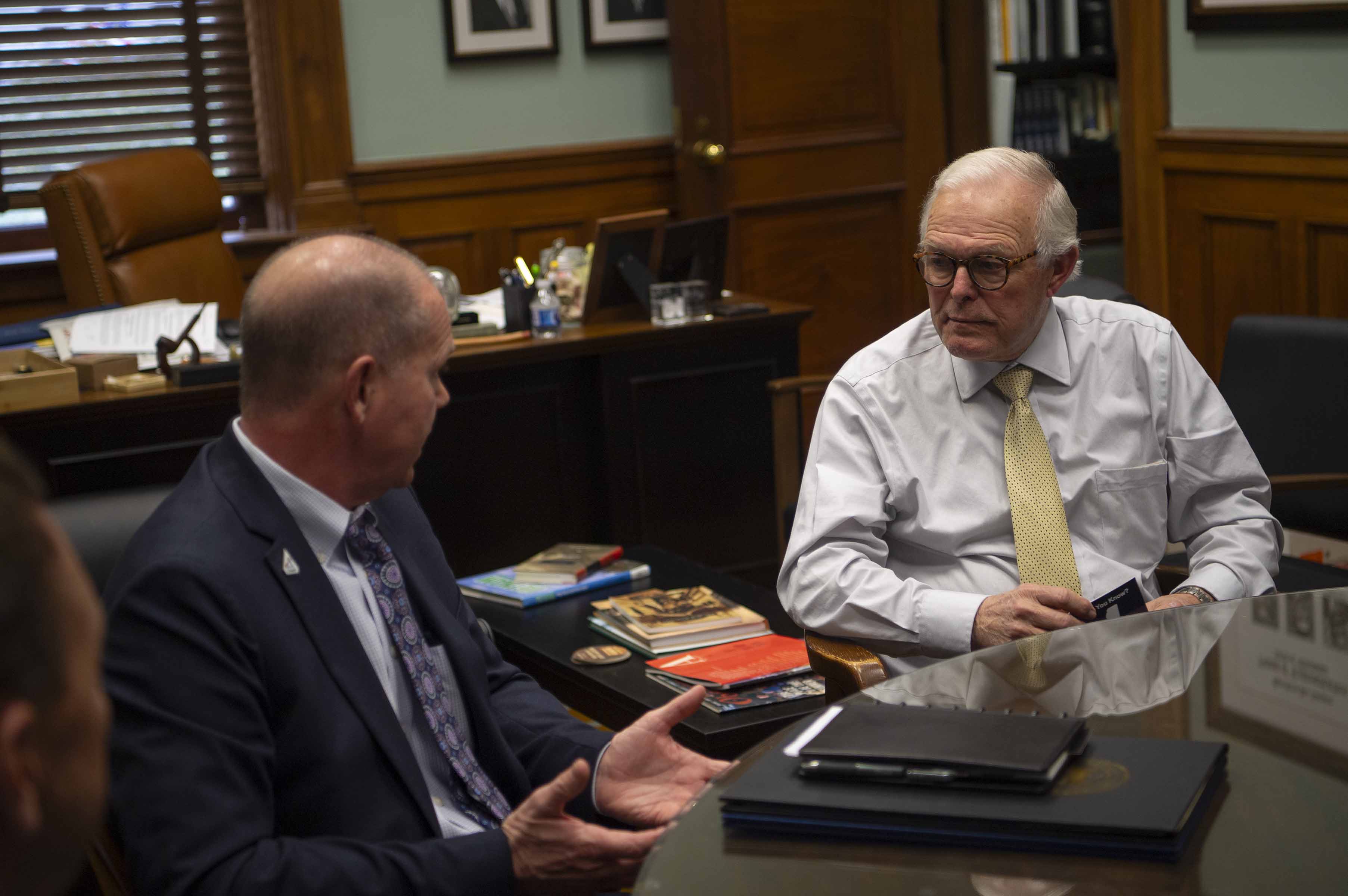
NASA Stennis Acting Center Director John Bailey talks with Mississippi Speaker Pro Tempore Manly Barton during Stennis Day at the Capitol on Feb. 29 in Jackson, Mississippi.
NASA/Danny Nowlin
Leaders from NASA’s Stennis Space Center and NASA Shared Services Center visit Jackson, Mississippi, in late February to share site updates with state leaders during the annual Stennis Day at the Capitol. NASA Stennis is on the front line of the next great era of human space exploration as NASA explores the secrets of the universe for the benefit of all. The south Mississippi center tests propulsion systems and engines helping power Artemis missions on the SLS (Space Launch System) rocket to deep space. Through Artemis, NASA will establish the foundation for long-term scientific exploration at the Moon, land the first woman, first person of color, and first international partner astronaut on the lunar surface, and prepare for human expeditions to Mars. Moving forward, NASA Stennis is working to accelerate the exploration and commercialization of space, innovate to benefit NASA and industry, and leverage assets to stimulate the economy and enhance national security.