Back on Earth: NASA’s Orion Capsule Put to the Test Before Crewed Mission

Back on Earth: NASA’s Orion Capsule Put to the Test Before Crewed Mission

2 min read

Preparations for Next Moonwalk Simulations Underway (and Underwater)

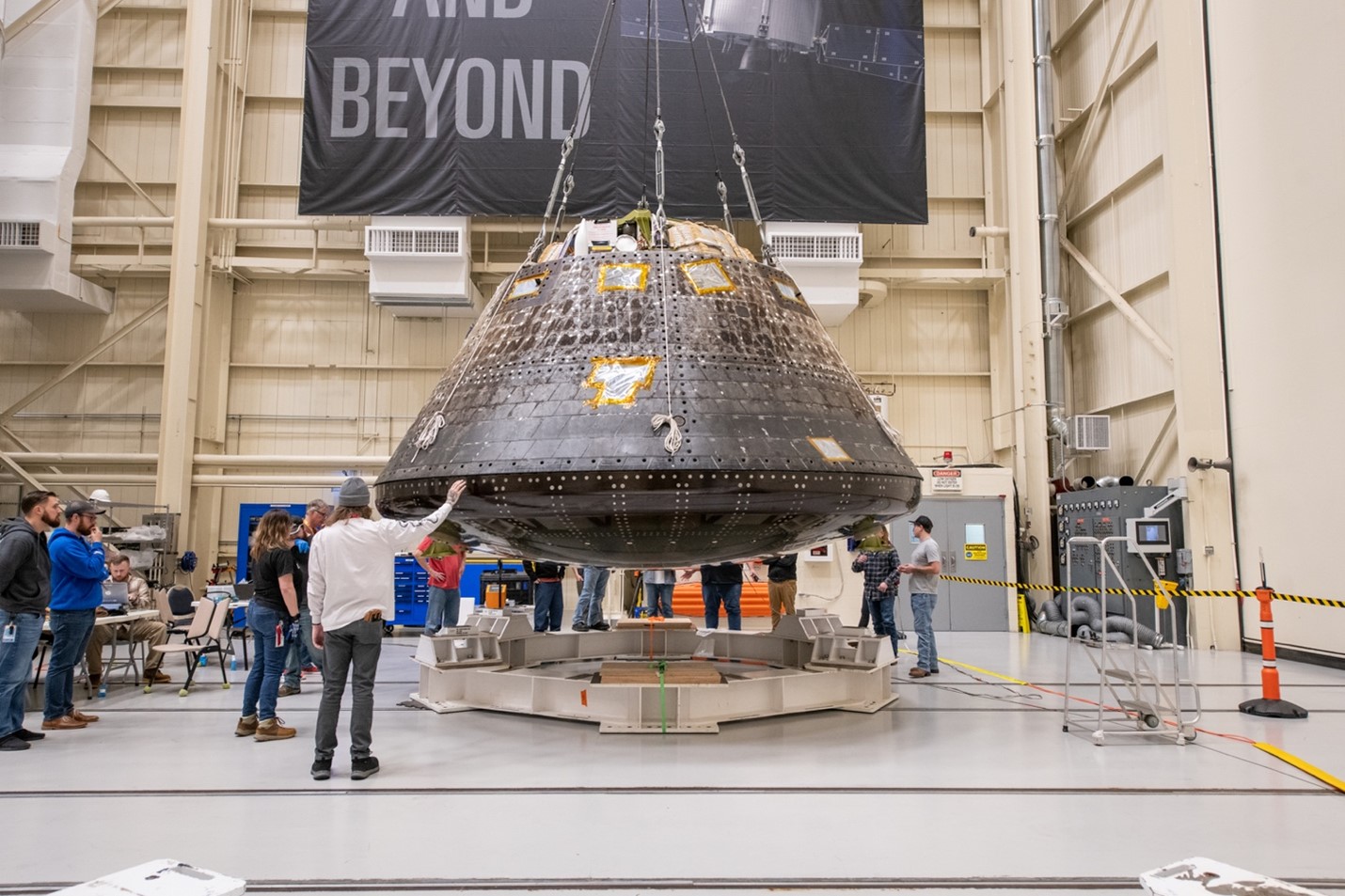
Inside the high-bay assembly area in the Space Environments Complex at NASA’s Neil Armstrong Test Facility, the charred Orion capsule from Artemis I is hoisted about four feet above the round white metal framing that it will be tested in. Several engineers and technicians wearing jeans, casual shirts, and work boots surround the capsule.
The Orion spacecraft from Artemis I – now known as the Orion Environmental Test Article – arrives at NASA’s Neil Armstrong Test Facility in Sandusky, Ohio, ahead of eight months of testing.
Credit: NASA/Jordan Salkin

The Orion spacecraft that traveled around the Moon and back during 2022’s Artemis I mission completed a different round trip when it recently returned to Ohio for testing.

Now known as the Orion Environmental Test Article, the spacecraft is undergoing ground testing at NASA’s Neil Armstrong Test Facility in Sandusky, Ohio. This testing is crucial to the safety and success of Artemis II – a 10-day flight test scheduled for 2025, during which four astronauts will demonstrate the spacecraft’s capabilities in the lunar vicinity. The flight will be the first crewed mission under NASA’s Artemis campaign.

Engineers and technicians at NASA’s Neil Armstrong Test Facility in Sandusky, Ohio, prepare the Orion Environmental Test Article for testing in advance of the Artemis II mission.
Credit: NASA/Steven Logan and Jim Zunt

Over the next eight months, engineers and technicians from NASA and Lockheed Martin will subject the test article to the extreme conditions Orion may experience during a launch abort scenario. The lengthy test campaign includes simulated lightning strikes and abort-level acoustics reaching levels of more than 160 decibels, louder than a jackhammer. It also includes deployments of the spacecraft’s docking and shielding covers and its crew module uprighting system, five airbags on top of the capsule that inflate upon splashdown. The test campaign serves to ensure Orion is ready to protect the crew if an emergency occurs during launch.

This Orion spacecraft completed months of space environmental testing in 2019 and 2020 at Armstrong Test Facility before its 2022 flight test, showing that the path to the Moon goes through Ohio. The test facility is the only place in the world capable of testing full-scale spacecraft in the extreme conditions experienced during launch and flight.

Powered by WPeMatico

Get The Details…
Kelly M. Matter

What Are Hubble and Webb Observing Right Now? NASA Tool Has the Answer

What Are Hubble and Webb Observing Right Now? NASA Tool Has the Answer

4 min read

What Are Hubble and Webb Observing Right Now? NASA Tool Has the Answer

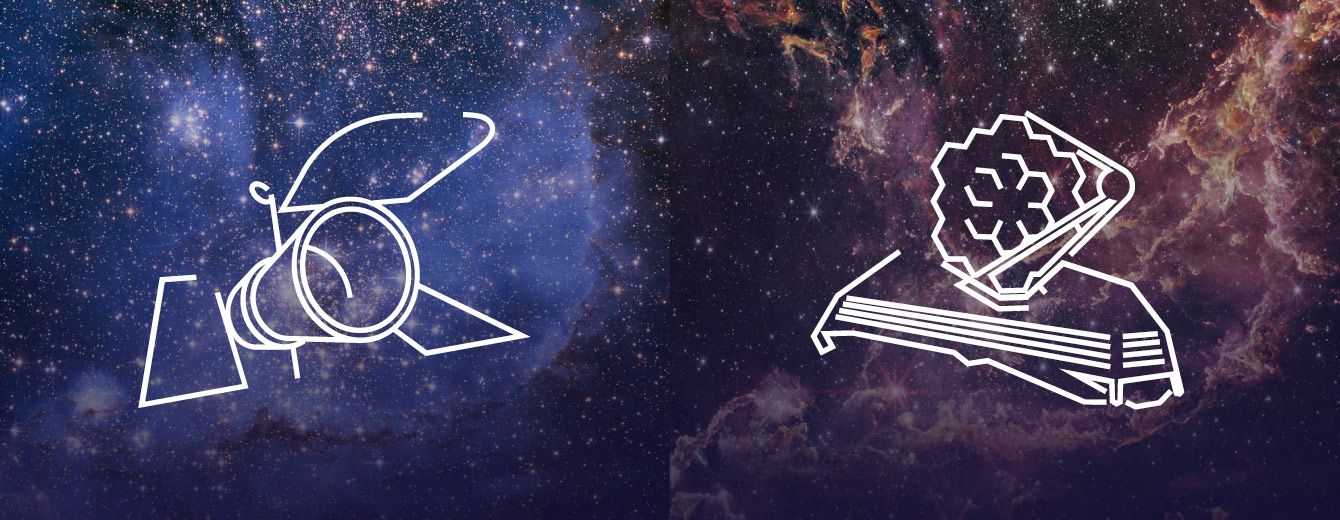
Two side-by-side images of the same region of space. Superimposed on each is a simple, white line drawing of a telescope. Left: Drawing of the Hubble Space Telescope on a Hubble image showing numerous stars and a hazy blue to brown cloud of gas and dust. Right: Drawing of the Webb Space Telescope on a Webb image showing numerous stars and a pinkish yellow to brown cloud of gas and dust. The Webb image shows a more filamentous and billowy structure. There is no clear boundary between the two images.

It’s not hard to find out what NASA’s Hubble and James Webb space telescopes have observed in the past. Barely a week goes by without news of a cosmic discovery made possible using images, spectra, and other data captured by NASA’s prolific astronomical observatories. 

But what are Hubble and Webb looking at right this minute? A shadowy pillar harboring nascent stars? A pair of colliding galaxies? The atmosphere of a distant planet? Galactic light, stretched and distorted on a 13-billion-year journey across space?

NASA’s Space Telescope Live, a web application originally developed in 2016 to deliver real-time updates on Hubble targets, now affords easy access to up-to-date information on current, past, and upcoming observations from both Hubble and Webb

Designed and developed for NASA by the Space Telescope Science Institute in Baltimore, this exploratory tool offers the public a straightforward and engaging way to learn more about how astronomical investigations are carried out.

With its redesigned user interface and expanded functionality, users can find out not only what planet, star, nebula, galaxy, or region of deep space each telescope is observing at the moment, but also where exactly these targets are in the sky; what scientific instruments are being used to capture the images, spectra, and other data; precisely when and how long the observations are scheduled to occur; the status of the observation; who is leading the research; and most importantly, what the scientists are trying to find out. 

Information for observations from approved science programs is available via the Mikulski Archive for Space Telescopes. NASA’s Space Telescope Live offers easy access to this information – not only the current day’s targets, but the entire catalog of past observations as well – with Webb records dating back to its first commissioning targets in January 2022, and Hubble records all the way back to the beginning of its operations in May 1990. 

The zoomable sky map centered on the target’s location was developed using the Aladin Sky Atlas, with imagery from ground-based telescopes to provide context for the observation. (Because the Hubble and Webb data must go through preliminary processing, and in many cases preliminary analysis, before being released to the public and astronomy community, real-time imagery is not available in this tool for either telescope.)

Details such as target name and coordinates, scheduled start and end times, and the research topic, are pulled directly from the observation scheduling and proposal planning databases. Links within the tool direct users to the original research proposal, which serves as a gateway to more technical information. 

While this latest version of NASA’s Space Telescope Live constitutes a significant transformation from the previous release, the team is already gathering feedback from users and planning additional enhancements to provide opportunities for deeper exploration and understanding.  

NASA’s Space Telescope Live is designed to work on desktop and mobile devices, and is accessible via NASA’s official Hubble and Webb websites. Additional details about the content, including public-friendly explanations of the information displayed in the tool, can be found in the User Guide.

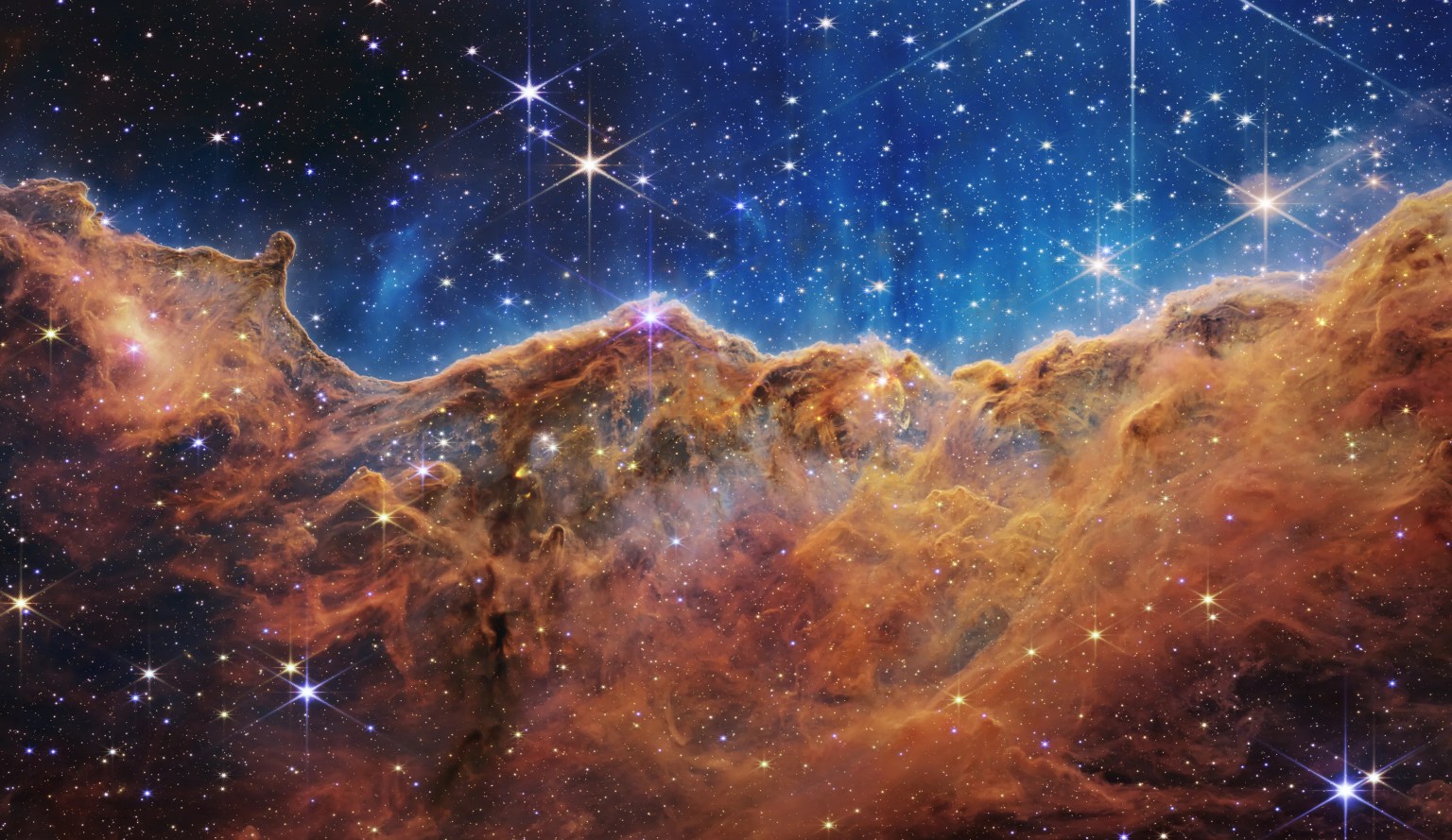
The James Webb Space Telescope is the world’s premier space science observatory. Webb is solving mysteries in our solar system, looking beyond to distant worlds around other stars, and probing the mysterious structures and origins of our universe and our place in it. Webb is an international program led by NASA with its partners, ESA (European Space Agency) and the Canadian Space Agency.

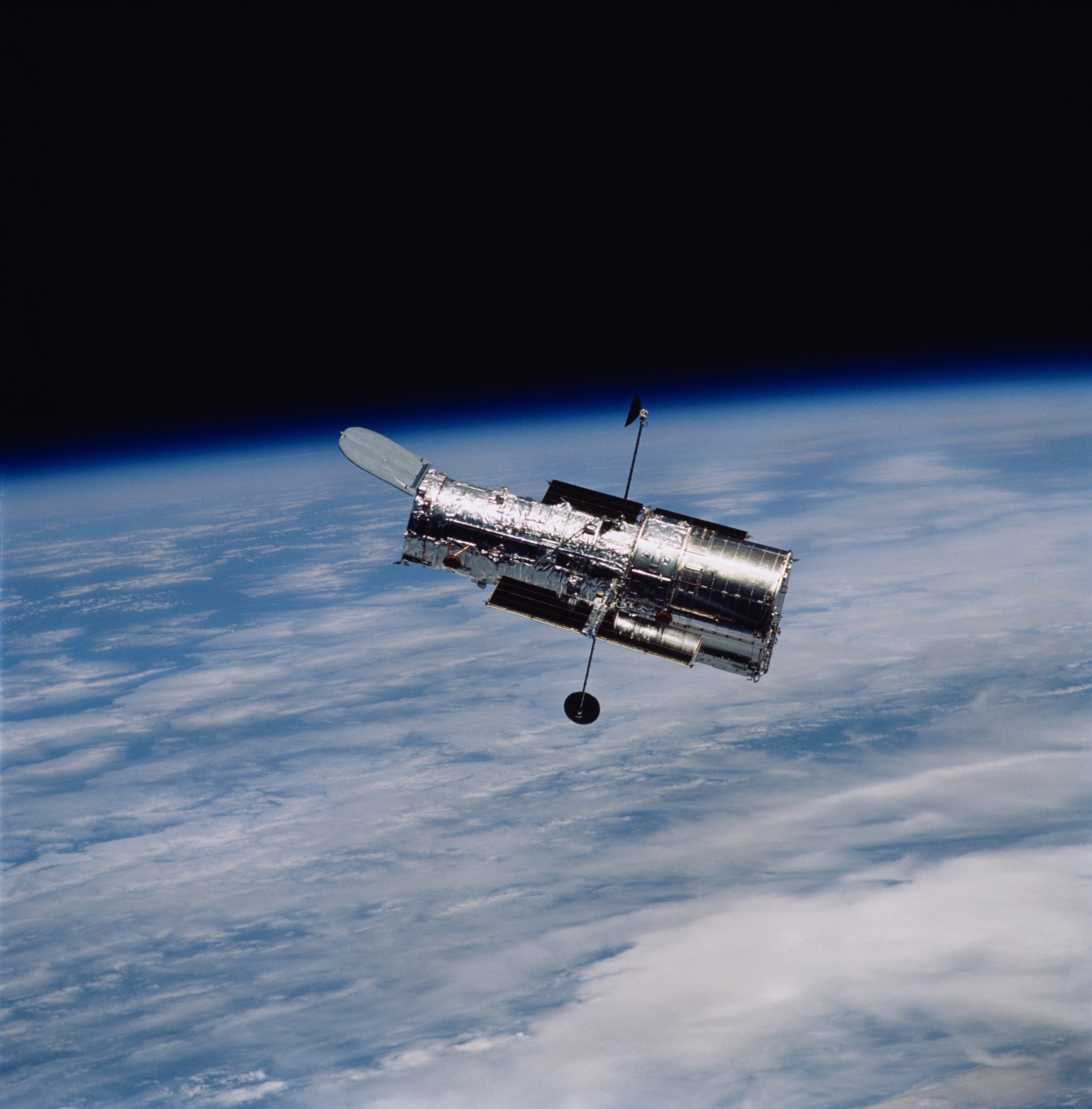
The Hubble Space Telescope has been operating for over three decades and continues to make ground-breaking discoveries that shape our fundamental understanding of the universe. Hubble is a project of international cooperation between NASA and ESA. NASA’s Goddard Space Flight Center in Greenbelt, Maryland, manages the telescope. Goddard also conducts mission operations with Lockheed Martin Space in Denver, Colorado. The Space Telescope Science Institute (STScI) in Baltimore, Maryland, conducts Hubble and Webb science operations for NASA.

Learn More:

Media Contacts:

Claire Andreoli – claire.andreoli@nasa.gov
Laura Betz – laura.e.betz@nasa.gov
NASA’s Goddard Space Flight Center, Greenbelt, MD

Margaret W. Carruthers, Christine Pulliam
Space Telescope Science Institute, Baltimore, MD

Share

Details

Last Updated
Mar 06, 2024
Editor
Andrea Gianopoulos
Location
Goddard Space Flight Center

Powered by WPeMatico

Get The Details…

More Planets than Stars: Kepler’s Legacy

More Planets than Stars: Kepler’s Legacy

4 min read

Preparations for Next Moonwalk Simulations Underway (and Underwater)

The Kepler mission enabled the discovery of thousands of exoplanets, revealing a deep truth about our place in the cosmos: there are more planets than stars in the Milky Way galaxy. The road to this fundamental change in our understanding of the universe, however, required almost 20 years of persistence before the mission became a reality with its selection in 2001.

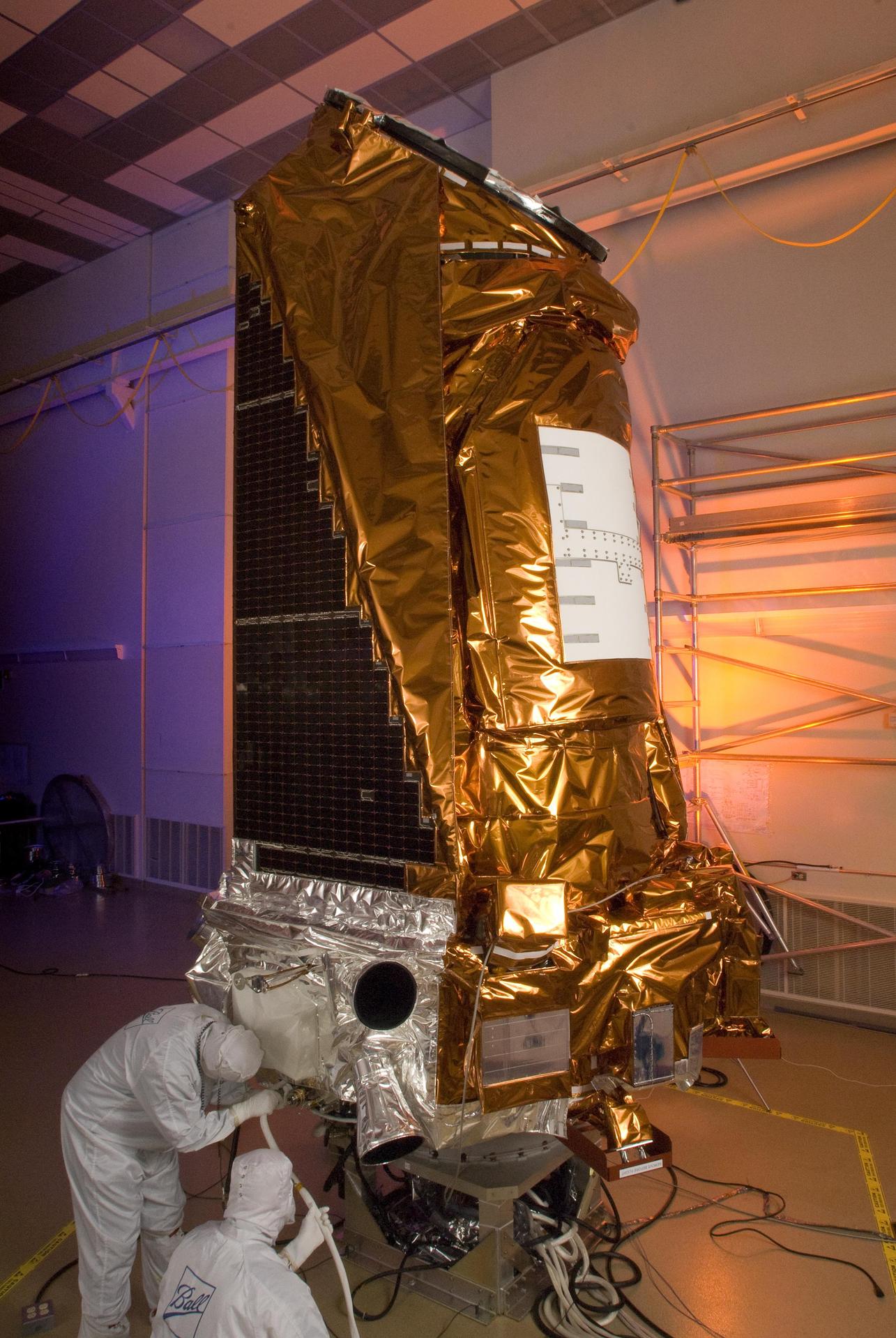
NASA Kepler spacecraft at Ball Aerospace & Technologies Corp. in Boulder, Colo.
The Kepler spacecraft at Ball Aerospace & Technologies Corp. in Boulder, Colorado. The Kepler mission surveyed a region of the Milky Way galaxy, discovering the first Earth-size exoplanets and determining that there are more planets than stars in our galaxy.
NASA/JPL-Caltech/Ball

Astronomers had assumed, but still had not confirmed, the existence of exoplanets when the mission concept that would become Kepler was first suggested in 1983. It wasn’t until the 1990s that the first confirmations of planets orbiting stars outside of our solar system were made, most of them gas giants orbiting close to their host star, not at all similar to what we know from our own solar system.

When Kepler launched in 2009, fewer than 400 exoplanets had been discovered. Today, there are more than 5,500 confirmed exoplanets and over half of them were discovered from Kepler data. Many of these confirmed exoplanets reside in the so-called “habitable zone” of their star, making them prime candidates for future observations to uncover more of the universe’s mysteries, including the potential for life.

The Kepler mission was designed to address the questions “How prevalent are other worlds?” and “How unique is our solar system?” Even if Kepler had found the opposite—that exoplanets were rare—Kepler still would have been an historic mission since the question it addressed was so scientifically profound.

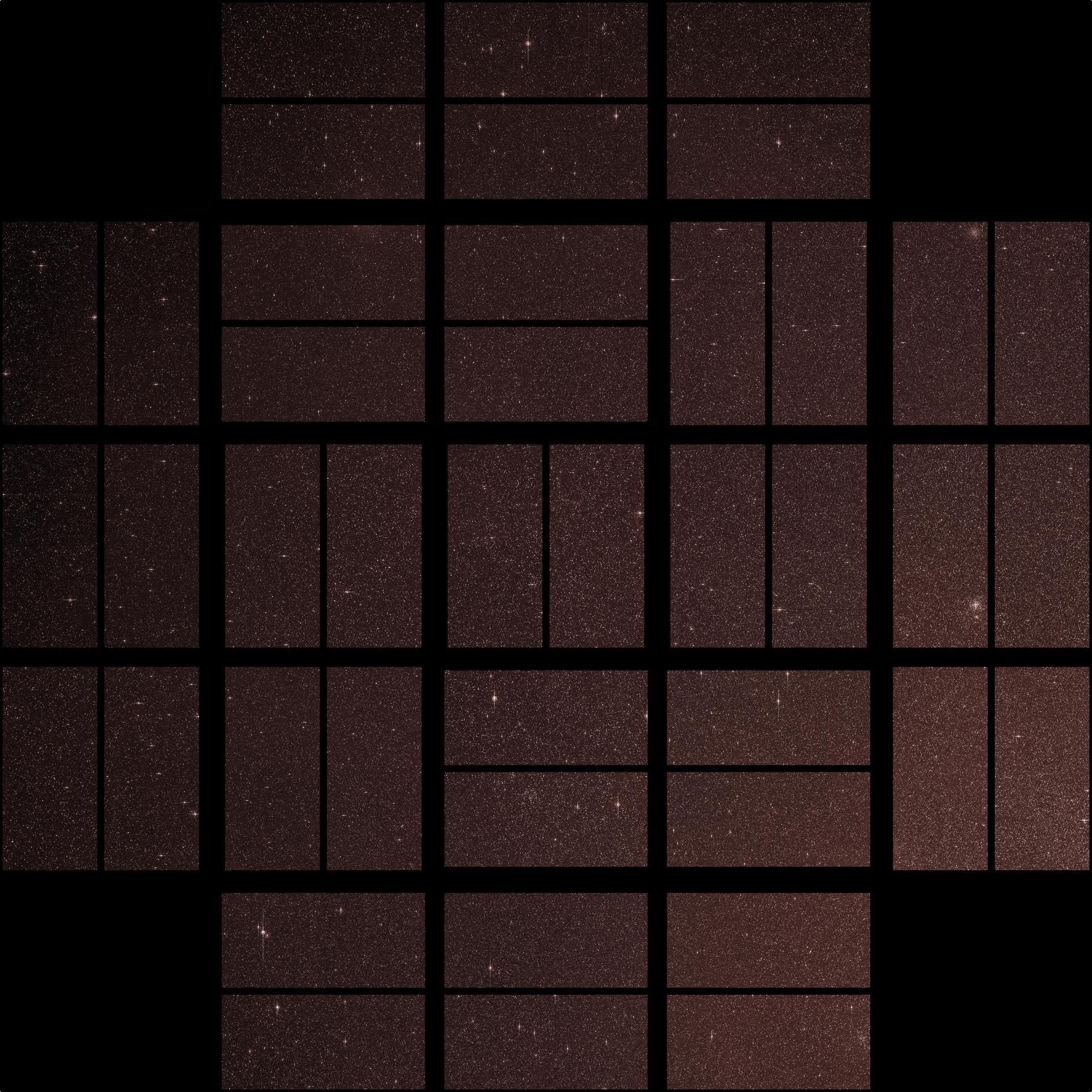
This image from NASA Kepler mission shows the telescope full field of view an expansive star-rich patch of sky in the constellations Cygnus and Lyra stretching across 100 square degrees, or the equivalent of two side-by-side dips of the Big Dipper.
This image shows the Kepler telescope’s “first light”—a full field of view of an expansive star-rich patch of sky in the constellations Cygnus and Lyra stretching across 100 square degrees. The 42 individual rectangles are due to the charge-coupled devices (CCDs) with a total of 95 megapixels.
NASA/J.Jenkins

Earlier versions of the mission proposal had been rejected four times beginning in 1992. Back then, the mission was known as the FRequency of Earth-Sized Inner Planets (FRESIP). After its second rejection in 1994, team members David Koch, Jill Tarter, and Carl Sagan, suggested the name change from FRESIP to Kepler.

One of the technical changes made to the 1994 proposal before the 1996 submission included changing the orbit from the Lagrange L2 point to a heliocentric orbit. This allowed Kepler to use reaction wheels for pointing the spacecraft, which reduced the thruster fuel consumption and saved on cost.

This wasn’t enough to convince NASA. To address concerns about the mission as proposed, two major demonstrations, one each after the 1996 and 1998 rejections, followed. The demonstrations reduced the risk that gave some reviewers pause and provided the Kepler team the opportunity to refine their operations.

Jeff Van Cleve in the Precision Photometry Lab at Ames
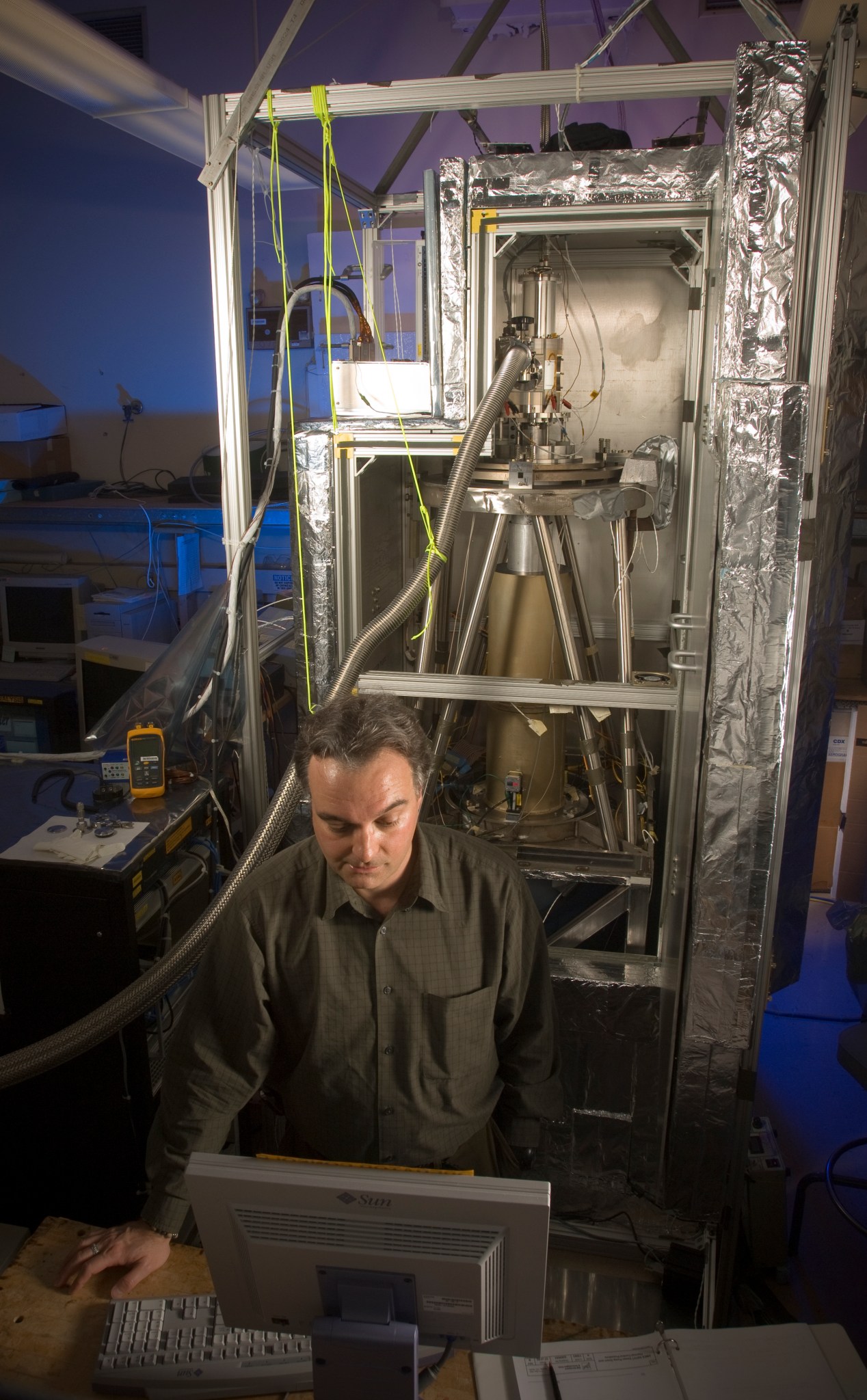
Kepler team member Jeff Van Cleve in the Precision Photometry Lab at Ames Research Center in February 2007. The apparatus behind him is the Kepler Testbed Facility, a system mock-up that provided a key demonstration of Kepler’s capability.
NASA/Ames

The first demonstration showed that the continuous, automatic monitoring of thousands of stars was possible. For that demonstration, an instrument called the Vulcan photometer was installed at Lick Observatory in California, which radioed its data to NASA’s Ames Research Center in California’s Silicon Valley for automated analysis. The second demonstration (following the 1998 rejection) was the construction of the Kepler Testbed Facility.

The testbed proved that existing charge-coupled device (CCD) technology no different from a consumer digital camera could achieve the precision necessary to detect Earth-size planets in the midst of the various kinds of noise expected in the whole system, from vibrations to image motion to cosmic ray strikes. The Kepler team at Ames built an intricate simulated sky and Ball Aerospace, the industry partner throughout the many years of proposals and the mission itself, built the numerical simulator for the demonstration. The testbed from the laboratory at Ames is now on display at the Smithsonian National Air and Space Museum.

A technician works with Kepler's focal plane
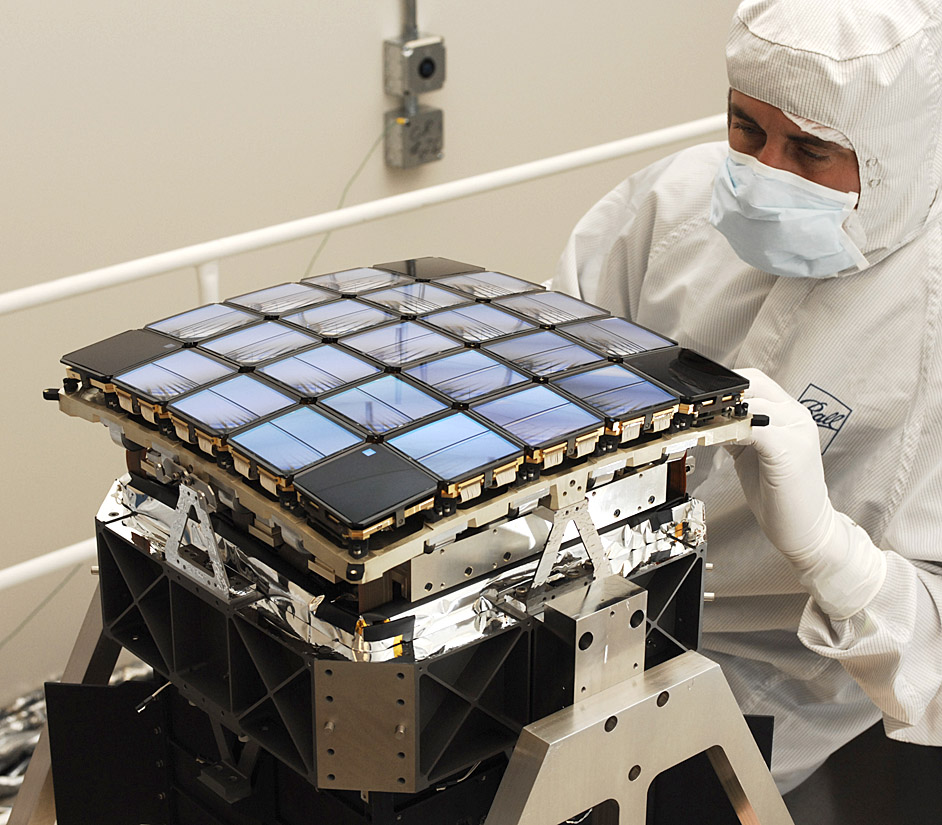
The 42 CCDs of the Kepler focal plane are approximately one square foot in size. There are four fine guidance modules in the corners of the focal plane that are much smaller CCDs compared to the 42 CCDs used for science. Those smaller CCDs were used to track Kepler’s position and relay that information to its guidance system to keep the spacecraft accurately pointed.
NASA/Kepler mission

These demonstrations finally put the remaining concerns to rest. In 2001, Kepler was selected more than 17 years after its principal investigator, William Borucki, had written a paper that considered a space-based photometer for detecting Earth-size planets with his colleague Audrey Summers of the Theoretical and Planetary Studies Branch in the Space Science Division at Ames.

In the eight years between selection and launch on March 6, 2009, the mission responded to a number of challenges and changes that were largely beyond the team’s control, such as NASA instituting a policy that required either NASA’s Goddard Spaceflight Center in Greenbelt, Maryland or the Jet Propulsion Laboratory in Southern California to manage planetary missions, changes in accounting requirements, and increasing launch costs. Those pieces of Kepler’s story are told in detail in the latest book from the NASA History Office, NASA’s Discovery Program: The First Twenty Years of Competitive Planetary Exploration.

Share

Details

Last Updated

Mar 05, 2024

Powered by WPeMatico

Get The Details…
James Anderson

SWOT Satellite Catches Coastal Flooding During California Storms

SWOT Satellite Catches Coastal Flooding During California Storms

4 min read

Preparations for Next Moonwalk Simulations Underway (and Underwater)

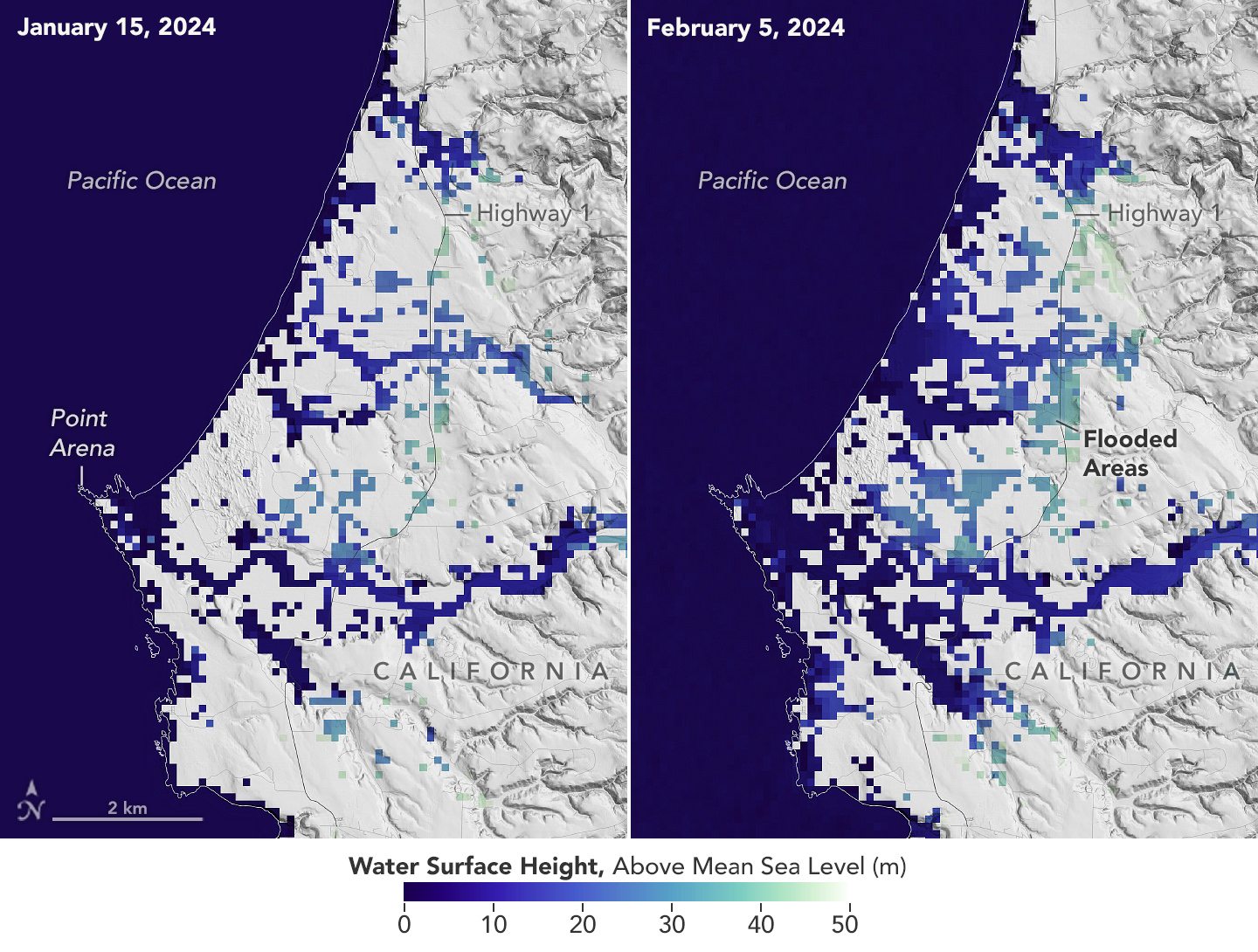
SWOT satellite data for water surface height in part of Mendocino County, Northern California
This image shows SWOT satellite data for water surface height in part of Mendocino County, Northern California, on Jan. 15, before several atmospheric rivers arrived, and on Feb. 4, after the first storms. Light blue and green indicate the highest water levels relative to mean sea level. (Inland water heights include the underlying ground elevation.)
NASA/JPL-Caltech

Operated by NASA and the French space agency, the Surface Water and Ocean Topography mission provides a new view of water on land, at the coast, and in the ocean.

A series of atmospheric rivers drenched California in February, with record amounts of rainfall and hurricane-force winds sweeping across parts of the state. At one point, weather agencies posted flood watches for nearly the entirety of California’s coast. The Surface Water and Ocean Topography (SWOT) mission captured data on some of the flooding near the community of Manchester, roughly 105 miles (169 kilometers) north of San Francisco. The satellite is a collaboration between NASA and the French space agency, CNES (Centre National d’Études Spatiales).

The image above shows the area on Jan. 15, before the rain and snow from atmospheric rivers, and then again on Feb. 4, after the first in a series of storms soaked California. Water heights are shown in shades of green and blue, with lighter hues indicating the highest levels relative to mean sea level. (Data for inland areas includes the height of the floodwaters plus the ground elevation beneath it.) Some coastal areas were flooded by both ocean tides and heavy rain, while others were likely flooded only by precipitation. Each pixel in the image represents an area that is 330 feet by 330 feet (100 meters by 100 meters).

Since December 2022, SWOT has been measuring the height of nearly all water on Earth’s surface, developing one of the most detailed, comprehensive views yet of the planet’s oceans and freshwater lakes and rivers. Not only can the satellite detect the extent of the water on Earth’s surface, as other satellites can, but SWOT can also provide water level data. Combined with other types of information, SWOT measurements can yield water depth data in features like lakes and rivers.

“SWOT gives us information about flooding that we’ve never had before,” said Ben Hamlington, lead researcher for NASA’s sea level change team at the agency’s Jet Propulsion Laboratory in Southern California. Satellites can provide pictures showing how much of an area is flooded, but unless instruments are already installed on a river or at the coast, it’s difficult to know how conditions evolve during and after a flood. “Data from the SWOT satellite, combined with other information, is filling in this picture,” said Hamlington.

The SWOT science team made the measurements using the Ka-band Radar Interferometer (KaRIn) instrument. With two antennas spread 33 feet (10 meters) apart on a boom, KaRIn produces a pair of data swaths as it circles the globe, bouncing radar pulses off water surfaces to collect surface-height measurements.

More About the Mission

Launched in December 2022, from Vandenberg Space Force Base in central California, SWOT is now in its operations phase, collecting data that will be used for research and other purposes.

SWOT was jointly developed by NASA and CNES, with contributions from the Canadian Space Agency (CSA) and the UK Space Agency. NASA’s Jet Propulsion Laboratory, which is managed for the agency by Caltech in Pasadena, California, leads the U.S. component of the project. For the flight system payload, NASA provided the KaRIn instrument, a GPS science receiver, a laser retroreflector, a two-beam microwave radiometer, and NASA instrument operations. CNES provided the Doppler Orbitography and Radioposition Integrated by Satellite (DORIS) system, the dual frequency Poseidon altimeter (developed by Thales Alenia Space), the KaRIn radio-frequency subsystem (together with Thales Alenia Space and with support from the UK Space Agency), the satellite platform, and ground operations. CSA provided the KaRIn high-power transmitter assembly. NASA provided the launch vehicle and the agency’s Launch Services Program, based at Kennedy Space Center, managed the associated launch services.

To learn more about SWOT, visit:

https://swot.jpl.nasa.gov/

News Media Contacts

Jane J. Lee / Andrew Wang
Jet Propulsion Laboratory, Pasadena, Calif.
818-354-0307 / 626-379-6874
jane.j.lee@jpl.nasa.gov / andrew.wang@jpl.nasa.gov

2024-021

Powered by WPeMatico

Get The Details…
Anthony Greicius

La NASA abre plazo de solicitudes para ser astronauta

La NASA abre plazo de solicitudes para ser astronauta

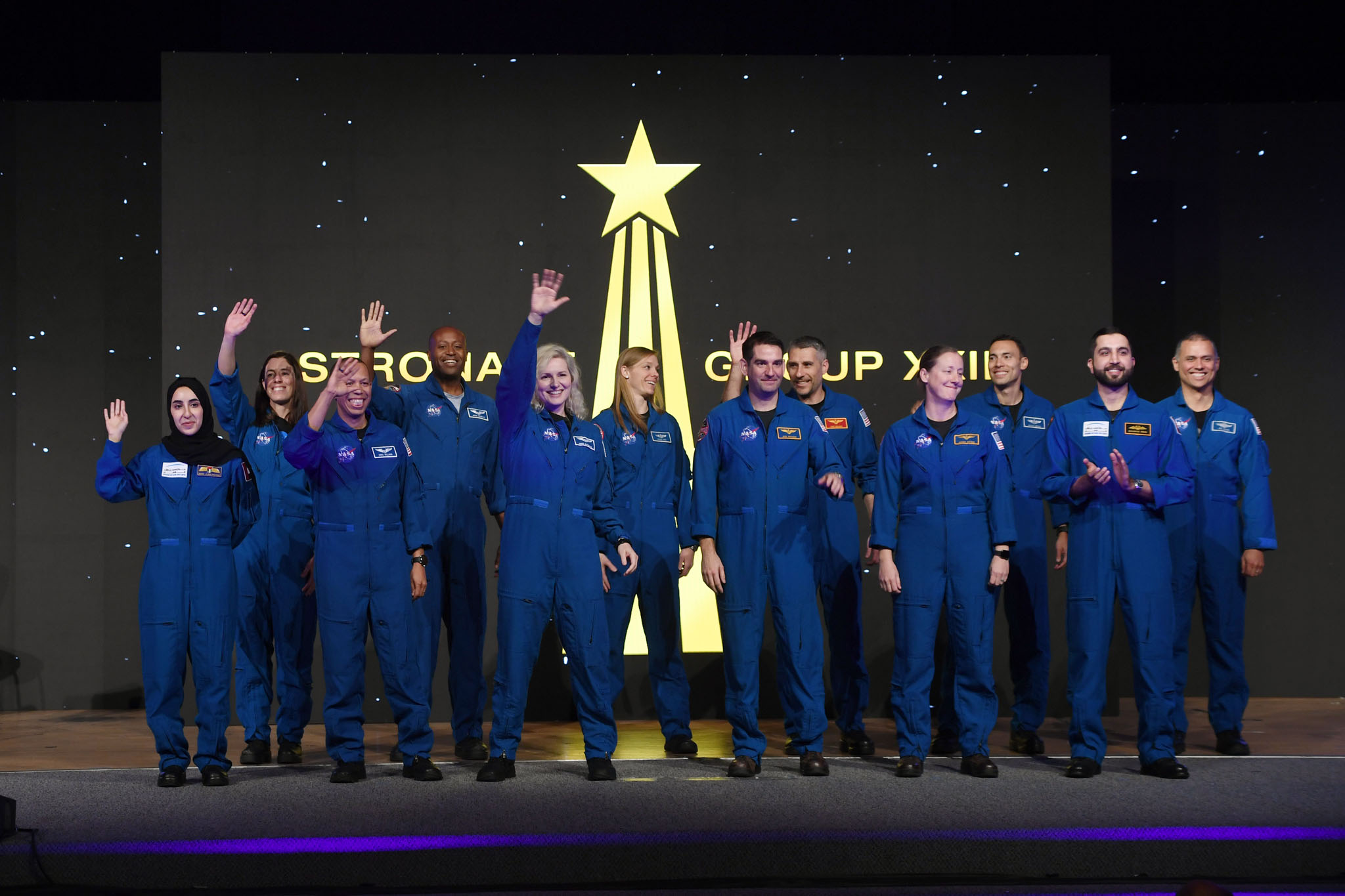
La nueva promoción de astronautas de la NASA, seleccionada en 2021, se graduó en una ceremonia que tuvo lugar el 5 de marzo de 2024 en el Centro Espacial Johnson de la agencia en Houston.
Créditos: NASA

Read this release in English here.

La NASA dio la bienvenida a su nueva cohorte de astronautas de la generación Artemis durante una ceremonia celebrada el martes en el Centro Espacial Johnson de la agencia en Houston. Los 10 astronautas graduados ya son elegibles para misiones de vuelo. La agencia también anunció la apertura de la próxima ronda de solicitudes para astronautas de la NASA.

“¡Enhorabuena a la nueva promoción de astronautas de la NASA! Estamos muy contentos de tener un nuevo y diverso grupo de exploradores listos para expandir el alcance de la humanidad”, dijo el administrador de la NASA Bill Nelson. “Los astronautas son pioneros que nos ayudarán a embarcarnos en esta nueva era de exploración, y necesitamos más aventureros dispuestos a unirse al grupo para explorar el cosmos, incluyendo futuras misiones a la Luna, a Marte, y más allá”.

Los astronautas graduados hoy fueron seleccionados para su entrenamiento en 2021, elegidos entre un grupo de más de 12.000 solicitantes, y completaron con éxito más de dos años de entrenamiento básico requerido, incluyendo caminatas espaciales, robótica, sistemas de la estación espacial y más.

Los graduados podrán ser destinados a misiones a la Estación Espacial Internacional, futuras estaciones espaciales comerciales y misiones de la campaña Artemis a la Luna, como preparación para ir a Marte.

“Enhorabuena a la NASA y a los astronautas graduados”, declaró Kiran Ahuja, directora de la Oficina de Gestión de Personal (OPM, por sus siglas en inglés) de Estados Unidos. “Al asociarse con la OPM, la NASA empleó un proceso de contratación automatizado y optimizado para seleccionar a los solicitantes de estos prestigiosos puestos. La OPM está encantada de seguir apoyando a los expertos de la NASA para diseñar e implementar sus métodos de contratación”.

“Es un momento increíble para ser astronauta, con una gran variedad de naves espaciales que pilotar y más destinos que explorar”, declaró el astronauta jefe Joe Acabá. “Me siento honrado de dar la bienvenida a estos astronautas, felicitarles por su duro trabajo, y espero con interés ver crecer nuestras filas mientras ayudamos a expandir el alcance de la humanidad en el sistema solar”.

Los astronautas de la NASA que se han graduado son Nichole Ayers, de Colorado Springs (Colorado); Marcos Berríos, de Guaynabo (Puerto Rico); Chris Birch, de Gilbert (Arizona); Deniz Bunham, de Wasilla (Alaska); Luke Delaney, de Debary (Florida); Andre Douglas, de Chesapeake (Virginia); Jack Hathaway, de South Windsor (Connecticut); Anil Menon, de Minneapolis; Chris Williams, de Potomac (Maryland), y Jessica Wittner, de Clovis (California).

Continuando con una larga tradición de colaboración internacional, dos astronautas de los Emiratos Árabes Unidos (EAU), Nora AlMatrooshi y Mohammad AlMulla, del Centro Espacial Mohammad Bin Rashid, se entrenaron junto a sus homólogos de la NASA durante los dos últimos años.

Esta es una parte de la asociación entre la NASA y los EAU, que incluye la cooperación en la Estación Espacial Internacional, en las misiones Artemis de la NASA a través de la estación espacial lunar Gateway, y en otras actividades en la Tierra y en el espacio que están dando apoyo a investigaciones pioneras.

Para solicitar ser astronauta de la NASA, los aspirantes deben dirigirse a la siguiente página web en inglés:

https://www.usajobs.gov/job/779261100

-fin-

Josh Finch / María José Viñas
Sede, Washington
202-358-1100 / 240-458-0248
joshua.a.finch@nasa.gov / maria-jose,.vinasgarcia@nasa.gov

Chelsey Ballarte
Centro Espacial Johnson, Houston
281-483-5111
chelsey.n.ballarte@nasa.gov

Powered by WPeMatico

Get The Details…
Lauren E. Low