US, Germany Partnering on Mission to Track Earth’s Water Movement

US, Germany Partnering on Mission to Track Earth’s Water Movement

An engineering geologist measures water depth at an agricultural well in a field north of Sacramento, California. Groundwater is an important source of water for irrigation in the state’s Central Valley, especially during times of drought, and the GRACE missions provide data that helps track the resource.
Kelly M. Grow/California Department of Water Resources

The Gravity Recovery and Climate Experiment-Continuity mission will extend a decades-long record of following shifting water masses using gravity measurements.

NASA and the German Space Agency at DLR (German Aerospace Center) have agreed to jointly build, launch, and operate a pair of spacecraft that will yield insights into how Earth’s water, ice, and land masses are shifting by measuring monthly changes in the planet’s gravity field. Tracking large-scale mass changes – showing when and where water moves within and between the atmosphere, oceans, underground aquifers, and ice sheets – provides a view into Earth’s water cycle, including changes in response to drivers like climate change.

With the international agreement signed in late 2023, the Gravity Recovery and Climate Experiment-Continuity (GRACE-C) mission will extend a nearly 25-year legacy that began with the 2002 launch of the GRACE mission. The GRACE-Follow On (GRACE-FO) mission succeeded GRACE in 2018. GRACE-C is targeting a launch no earlier than 2028.

The data from the GRACE missions is considered key information in characterizing Earth’s climate. Those measurements, together with other information and computer models, are regularly used for drought assessment and forecasting, water-use planning for agriculture, and understanding the drivers of sea level rise, such as how much ice the world’s ice sheets are losing.

“GRACE-C represents an international and collaborative effort to observe and study one of our planet’s most precious resources,” said Nicola Fox, associate administrator for science at NASA in Washington. “From our coastlines to our kitchen tables, there is no aspect of our planet that is not impacted by changes in the water cycle. The partnership between NASA and the German Aerospace Center will serve a critical role in preparing for the challenges we face today and tomorrow.”

Engineers and scientists are finalizing design details for the instruments and satellites, and then teams will start work on fabricating and building. The mission will be composed of a pair of identical satellites flying one behind the other, roughly 60 to 190 miles (100 to 300 kilometers) apart, in a polar orbit. The spacecraft will fly at an altitude of roughly 300 miles (500 kilometers). Together they will monitor monthly changes to the distribution of water on Earth from variations in the planet’s gravity field.

Following the Water

The pull of gravity varies naturally from place to place on Earth depending on the mass distribution near the surface. For instance, large shifts in underground water storage (groundwater) or losses from ice sheets move a great amount of mass around, which can in turn shift the planet’s gravity field on weekly to monthly time scales.

Researchers can gauge those changes by measuring very small changes in the distance between the two GRACE-C satellites. As the lead spacecraft flies over an area with relatively more mass – like a spot with more groundwater than its surroundings – the slight increase in Earth’s gravity field pulls the satellite forward, increasing its distance from the trailing spacecraft. Capable of measuring distance changes 100 times smaller than the thickness of a human hair, a laser ranging interferometer (LRI) instrument continually measures the distance between the two spacecraft.

The satellite systems and orbit for GRACE-C will be similar to those of GRACE-FO, ensuring the continuity of measurements between the two missions.

“GRACE-C will build on decades of observations of the global movement of water and changes in water resources. This is critical to informing predictions of future trends in our climate and to assess food and water security,” said Frank Webb, GRACE-C project scientist at NASA’s Jet Propulsion Laboratory in Southern California. “The mission is an example of the commitment that NASA and our German partners share for studying the Earth and helping society better prepare for a warming world.”

GRACE-C, previously known as the Mass Change mission, addresses one of the key goals outlined in the 2017 Decadal Survey for Earth Science conducted by the U.S. National Academies of Science, Engineering, and Medicine: to better understand the planet’s global water cycle through large-scale changes in Earth’s mass.

“Together with NASA, we are now continuing along the GRACE route in Earth observation, thereby strengthening our international cooperation in space-based research,” said Walther Pelzer, a member of the DLR executive board and director general of the German Space Agency at DLR. “The USA and Germany have been working closely together for a long time on climate and environmental research from space. The trust that our U.S. partners are placing in German space expertise for these missions by commissioning the satellite construction and the delivery of important parts of the GRACE-C instrumentation and mission control is also a sign of Germany’s capabilities as a prime location for spaceflight.”

The mission will be part of NASA’s Earth System Observatory (ESO), a set of Earth-focused missions that will provide data to guide efforts related to climate change, natural hazard mitigation, wildfire management, and food security. When combined, ESO mission data will create a holistic view of Earth from the planet’s atmosphere to its bedrock.

More About the Mission

JPL manages the GRACE-C mission for NASA and will procure the two spacecraft from Airbus Defence and Space, the company that built the satellites for the GRACE and GRACE-FO missions. Development and construction of the LRI system will be led by JPL, which is managed for NASA by Caltech in Pasadena. The German contributions are funded by the German Federal Ministry of Economic Affairs and Climate Action and the Federal Ministry of Education and Research. The German Space Agency at DLR will manage the German contributions to GRACE-C, providing the LRI optics subsystems; mission operations; telemetry, tracking, and command; the ground data system; the laser retroreflectors to help with satellite positioning; the launch vehicle; and launch services.

To learn more about GRACE-FO, visit:

https://gracefo.jpl.nasa.gov/

News Media Contacts

Jane J. Lee / Andrew Wang
Jet Propulsion Laboratory, Pasadena, Calif.
818-354-0307 / 626-379-6874
jane.j.lee@jpl.nasa.gov / andrew.wang@jpl.nasa.gov

2024-030

Powered by WPeMatico

Get The Details…
Naomi Hartono

Gemini VI Astronauts Thomas P. Stafford and Walter M. Schirra Jr.

Gemini VI Astronauts Thomas P. Stafford and Walter M. Schirra Jr.

Two male astronauts, Thomas P. Stafford (left) and Walter M. Schirra Jr., look directly into the camera. They are wearing white spacesuits with multiple patches including their names, mission, NASA, and the American flag. Behind them is a deep blue backdrop.
NASA

Astronauts Thomas P. Stafford (left), and Walter M. Schirra Jr., pose for the camera during suiting up exercises on Oct. 22, 1965. Stafford was selected among the second group of astronauts in September 1962 by NASA to participate in Projects Gemini and Apollo. In December 1965, he piloted Gemini VI, which made the first rendezvous in space with Gemini VII, and helped develop techniques to prove the basic theory and practicality of space rendezvous.

In June 1966, Stafford commanded the Gemini IX mission and performed a demonstration of an early rendezvous that would be used in the Apollo lunar missions, the first optical rendezvous, and a lunar orbit abort rendezvous. He was also commander of Apollo 10 in May 1969; he descended to nine miles above the Moon, performing the entire lunar landing mission except the actual landing. He logged his fourth spaceflight as Apollo commander of the Apollo-Soyuz mission in July 1975, which culminated in the historic first meeting in space between American astronauts and Soviet cosmonauts.

Learn more about Stafford and the missions he participated in.

Image Credit: NASA

Powered by WPeMatico

Get The Details…
Monika Luabeya

NASA Study: Asteroid’s Orbit, Shape Changed After DART Impact

NASA Study: Asteroid’s Orbit, Shape Changed After DART Impact

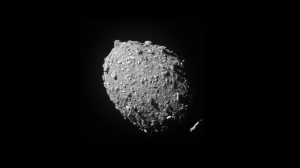
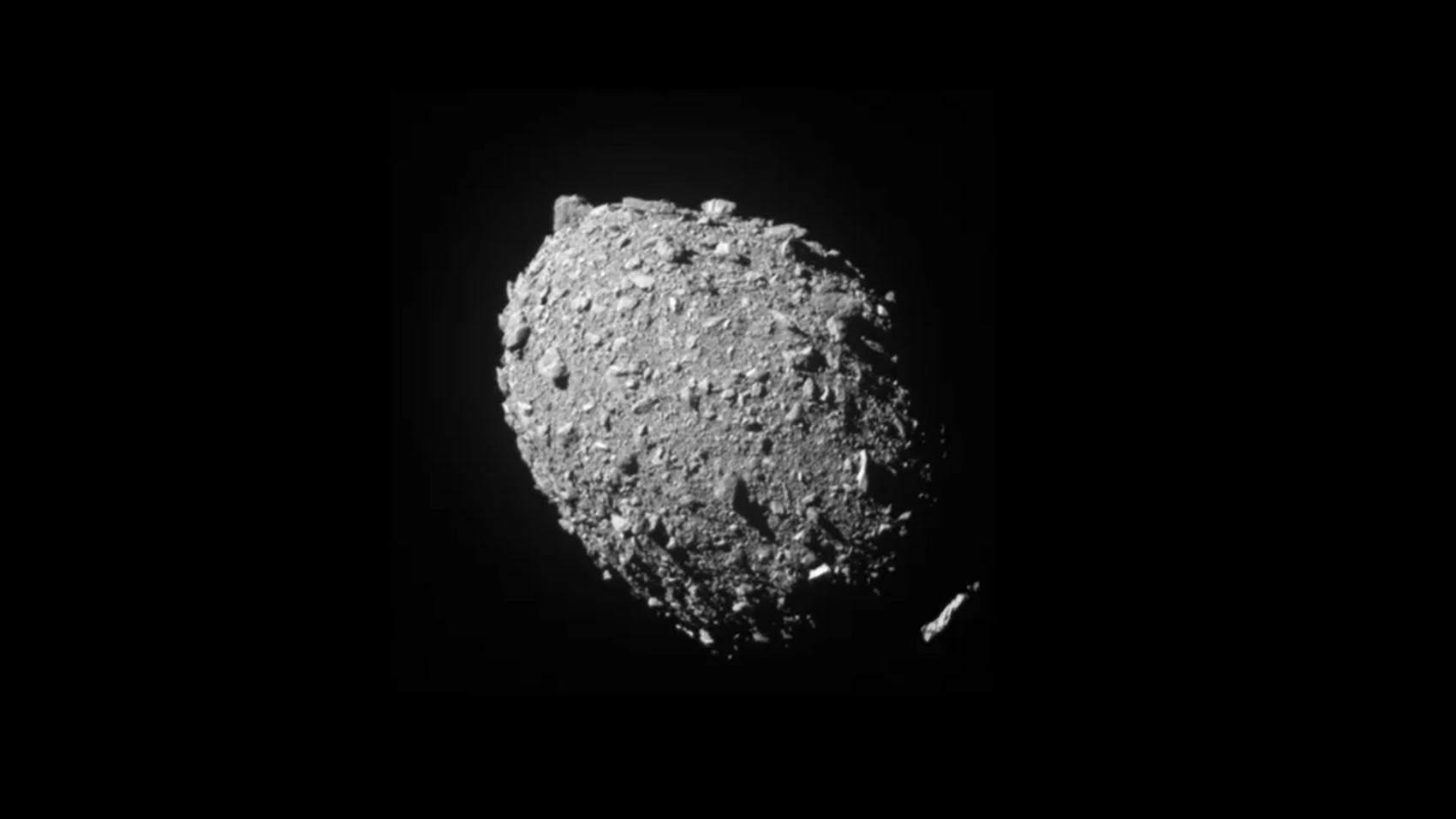
The asteroid Dimorphos was captured by NASA’s DART mission just two seconds before the spacecraft struck its surface on Sept. 26, 2022. Observations of the asteroid before and after impact suggest it is a loosely packed “rubble pile” object.
NASA/Johns Hopkins APL

After NASA’s historic Double Asteroid Redirection Test, a JPL-led study has shown that the shape of asteroid Dimorphos has changed and its orbit has shrunk.

When NASA’s DART (Double Asteroid Redirection Test) deliberately smashed into a 560-foot-wide (170-meter-wide) asteroid on Sept. 26, 2022, it made its mark in more ways than one. The demonstration showed that a kinetic impactor could deflect a hazardous asteroid should one ever be on a collision course with Earth. Now a new study published in the Planetary Science Journal shows the impact changed not only the motion of the asteroid, but also its shape.

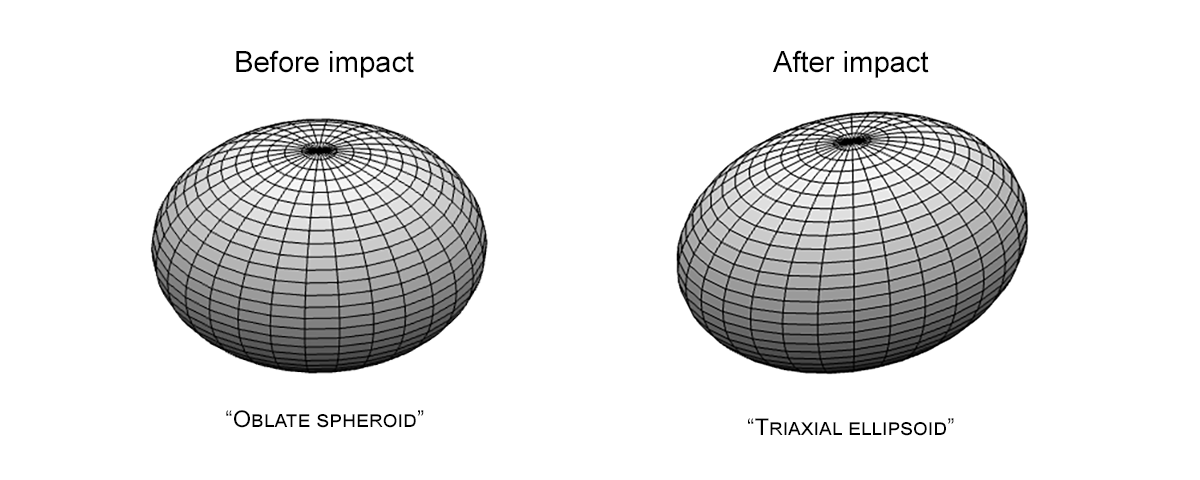
DART’s target, the asteroid Dimorphos, orbits a larger near-Earth asteroid called Didymos. Before the impact, Dimorphos had a roughly symmetrical “oblate spheroid” shape – like a squashed ball that is wider than it is tall. With a well-defined, circular orbit at a distance of about 3,900 feet (1,189 meters) from Didymos, Dimorphos took 11 hours and 55 minutes to complete one loop around Didymos.

“When DART made impact, things got very interesting,” said Shantanu Naidu, a navigation engineer at NASA’s Jet Propulsion Laboratory in Southern California, who led the study. “Dimorphos’ orbit is no longer circular: Its orbital period” – the time it takes to complete a single orbit – “is now 33 minutes and 15 seconds shorter. And the entire shape of the asteroid has changed, from a relatively symmetrical object to a ‘triaxial ellipsoid’ – something more like an oblong watermelon.”

This illustration shows the approximate shape change that the asteroid Dimorphos experienced after DART hit it. Before impact, left, the asteroid was shaped like a squashed ball; after impact it took on a more elongated shape, like a watermelon.
NASA/JPL-Caltech

Dimorphos Damage Report

Naidu’s team used three data sources in their computer models to deduce what had happened to the asteroid after impact. The first source was aboard DART: The spacecraft captured images as it approached the asteroid and sent them back to Earth via NASA’s Deep Space Network (DSN). These images provided close-up measurements of the gap between Didymos and Dimorphos while also gauging the dimensions of both asteroids just prior to impact.

The second data source was the DSN’s Goldstone Solar System Radar, located near Barstow, California, which bounced radio waves off both asteroids to precisely measure the position and velocity of Dimorphos relative to Didymos after impact. Radar observations quickly helped NASA conclude that DART’s effect on the asteroid greatly exceeded the minimum expectations.

The third and most significant source of data: ground telescopes around the world that measured both asteroids’ “light curve,” or how the sunlight reflecting off the asteroids’ surfaces changed over time. By comparing the light curves before and after impact, the researchers could learn how DART altered Dimorphos’ motion.

As Dimorphos orbits, it periodically passes in front of and then behind Didymos. In these so-called “mutual events,” one asteroid can cast a shadow on the other, or block our view from Earth. In either case, a temporary dimming – a dip in the light curve – will be recorded by telescopes.

“We used the timing of this precise series of light-curve dips to deduce the shape of the orbit, and because our models were so sensitive, we could also figure out the shape of the asteroid,” said Steve Chesley, a senior research scientist at JPL and study co-author. The team found Dimorphos’ orbit is now slightly elongated, or eccentric. “Before impact,” Chesley continued, “the times of the events occurred regularly, showing a circular orbit. After impact, there were very slight timing differences, showing something was askew. We never expected to get this kind of accuracy.”

The models are so precise, they even show that Dimorphos rocks back and forth as it orbits Didymos, Naidu said.

Orbital Evolution

The team’s models also calculated how Dimorphos’ orbital period evolved. Immediately after impact, DART reduced the average distance between the two asteroids, shortening Dimorphos’ orbital period by 32 minutes and 42 seconds, to 11 hours, 22 minutes, and 37 seconds.

Over the following weeks, the asteroid’s orbital period continued to shorten as Dimorphos lost more rocky material to space, finally settling at 11 hours, 22 minutes, and 3 seconds per orbit – 33 minutes and 15 seconds less time than before impact. This calculation is accurate to within 1 ½ seconds, Naidu said. Dimorphos now has a mean orbital distance from Didymos of about 3,780 feet (1,152 meters) – about 120 feet (37 meters) closer than before impact.

“The results of this study agree with others that are being published,” said Tom Statler, lead scientist for solar system small bodies at NASA Headquarters in Washington. “Seeing separate groups analyze the data and independently come to the same conclusions is a hallmark of a solid scientific result. DART is not only showing us the pathway to an asteroid-deflection technology, it’s revealing new fundamental understanding of what asteroids are and how they behave.”

These results and observations of the debris left after impact indicate that Dimorphos is a loosely packed “rubble pile” object, similar to asteroid Bennu. ESA’s (European Space Agency) Hera mission, planned to launch in October 2024, will travel to the asteroid pair to carry out a detailed survey and confirm how DART reshaped Dimorphos.

More About the Mission

DART was designed, built, and operated by the Johns Hopkins Applied Physics Laboratory (APL) in Laurel, Maryland, for NASA’s Planetary Defense Coordination Office, which oversees the agency’s ongoing efforts in planetary defense. DART was humanity’s first mission to intentionally move a celestial object.

JPL, a division of Caltech in Pasadena, California, manages the DSN for NASA’s Space Communications and Navigation (SCaN) program within the Space Operations Mission Directorate at the agency’s headquarters in Washington.

News Media Contacts

Ian J. O’Neill
Jet Propulsion Laboratory, Pasadena, Calif.
818-354-2649
ian.j.oneill@jpl.nasa.gov

Karen Fox / Charles Blue
NASA Headquarters
karen.c.fox@nasa.gov / charles.e.blue@nasa.gov

2024-029

Powered by WPeMatico

Get The Details…
Naomi Hartono
NASA Administrator, Health Secretary to Host Cancer Moonshot Event

NASA Administrator, Health Secretary to Host Cancer Moonshot Event

NASA circular logo
NASA logo

Media are invited to join NASA and Department of Health and Human Services leadership at 9:30 a.m. EDT on Thursday, March 21, at NASA Headquarters in Washington, to highlight how the agencies are making progress toward President Joe Biden and First Lady Jill Biden’s Cancer Moonshot initiative.

During the event, NASA Administrator Bill Nelson and Health and Human Services Secretary Xavier Becerra will give remarks and are available for interviews afterward.

Additional participants include:

  • NASA Astronaut Frank Rubio
  • NASA Astronaut Stephen Bowen
  • Dr. Kimryn Rathmell, director, National Cancer Institute

Media interested in covering the event must RSVP to Luis Botello Faz no later than 5 p.m. Wednesday, March 20, via email at: luis.m.botellofaz@nasa.gov. A copy of NASA’s media accreditation policy is online.

The event will take place in the agency’s Earth Information Center in the East Lobby at NASA Headquarters, located at 300 E St. SW.

The International Space Station is a hub for scientific research and technology, including demonstrations to help end cancer as we know it.

NASA is working with agencies and researchers across the federal government to help cut the nation’s cancer death rate by at least 50% in the next 25 years, a goal of the Cancer Moonshot Initiative.

Learn more about Cancer Moonshot at:

https://www.whitehouse.gov/cancermoonshot/

-end-

Faith McKie
Headquarters, Washington
202-358-1600
faith.d.mckie@nasa.gov

Renata Miller
Health and Human Services
202-570-8194
Renata.Miller@hhs.gov

Share

Details

Last Updated

Mar 19, 2024

Editor
Jennifer M. Dooren

Powered by WPeMatico

Get The Details…
Jennifer M. Dooren

Student-Built Robots Clash at Competition Supported by NASA-JPL

Student-Built Robots Clash at Competition Supported by NASA-JPL

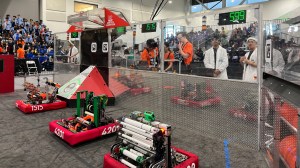
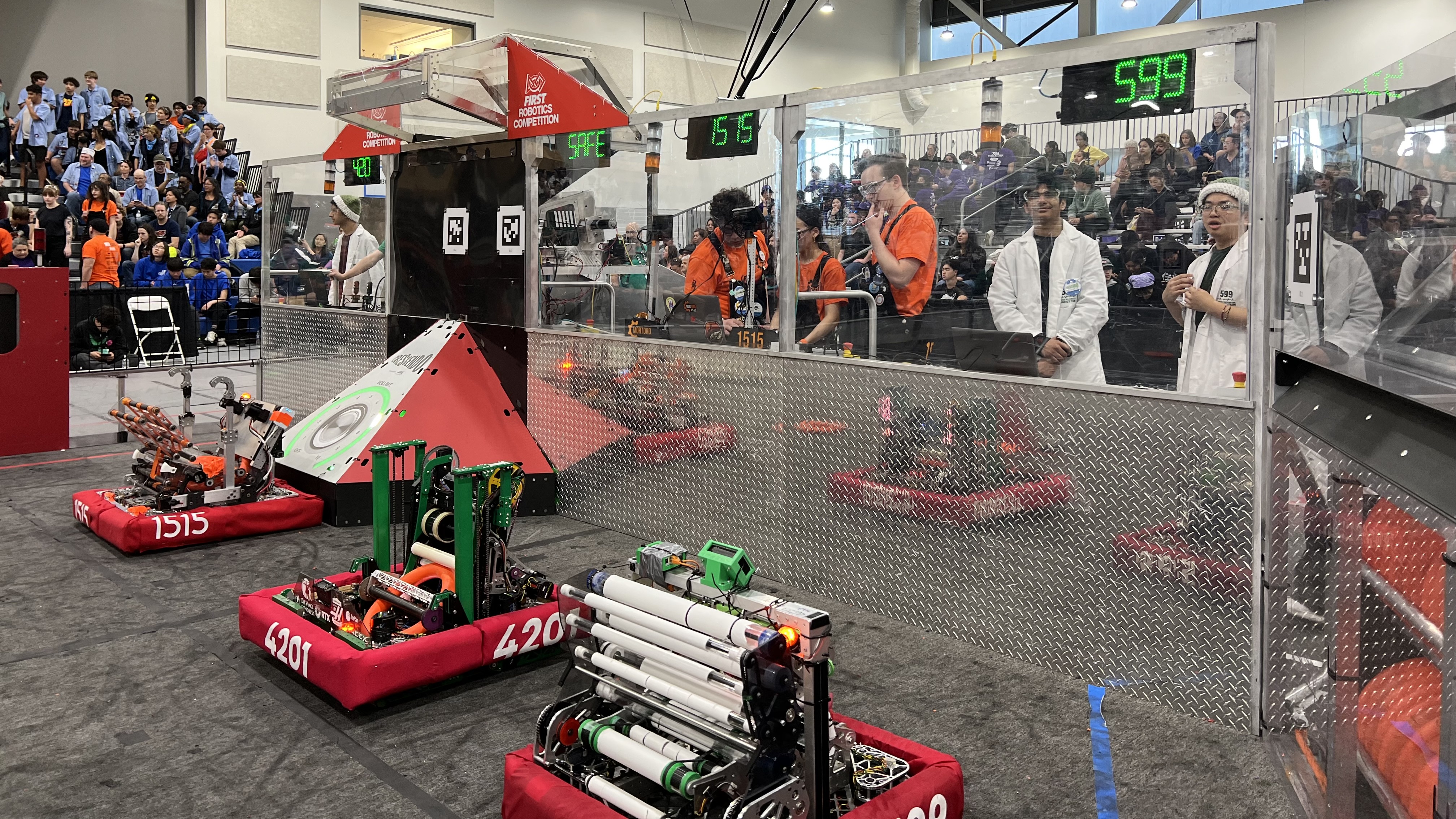
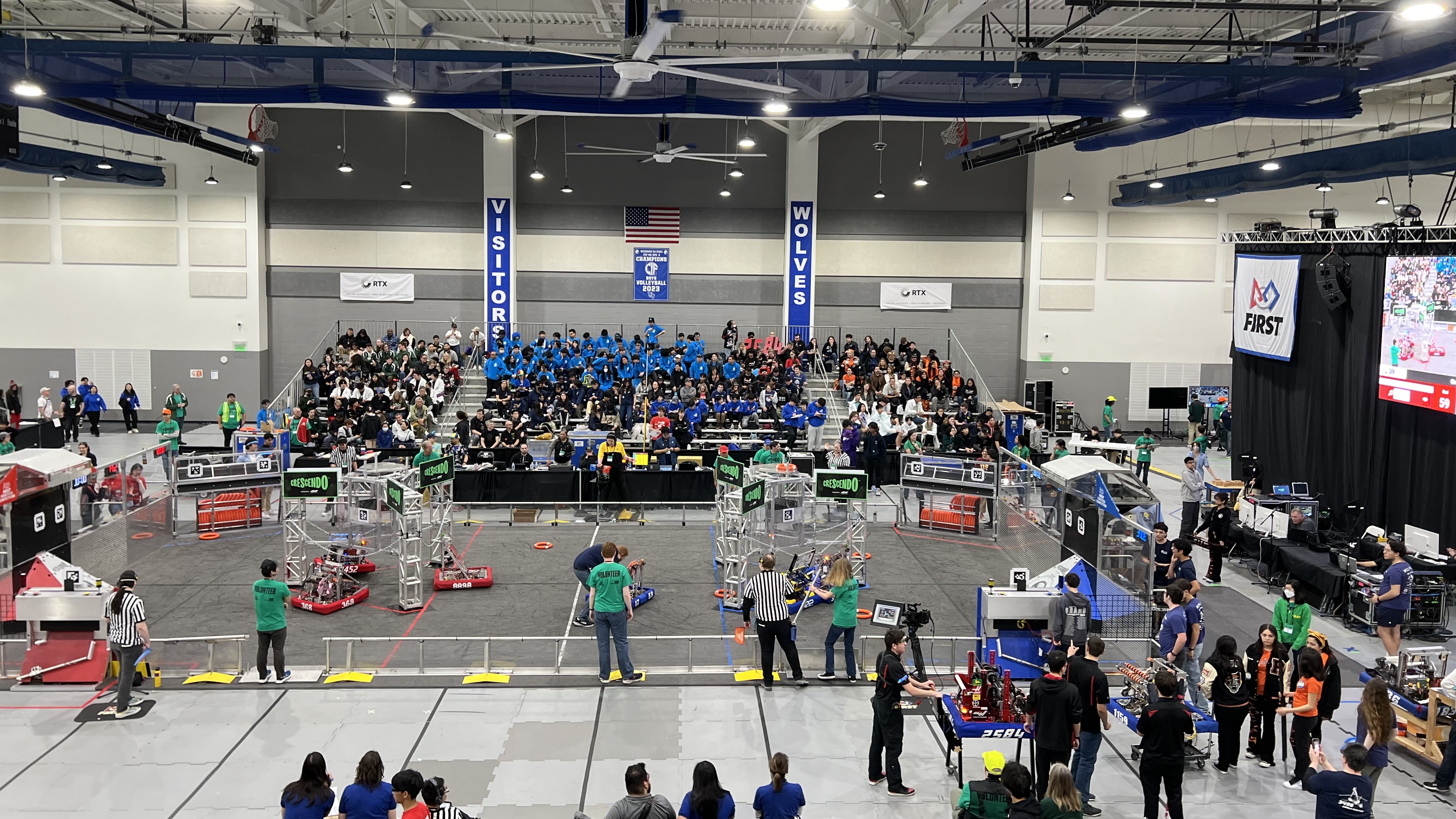
Hand-crafted robots, constructed over the past two months by 44 high school teams, duked it out at the FIRST Robotics Los Angeles regional competition.

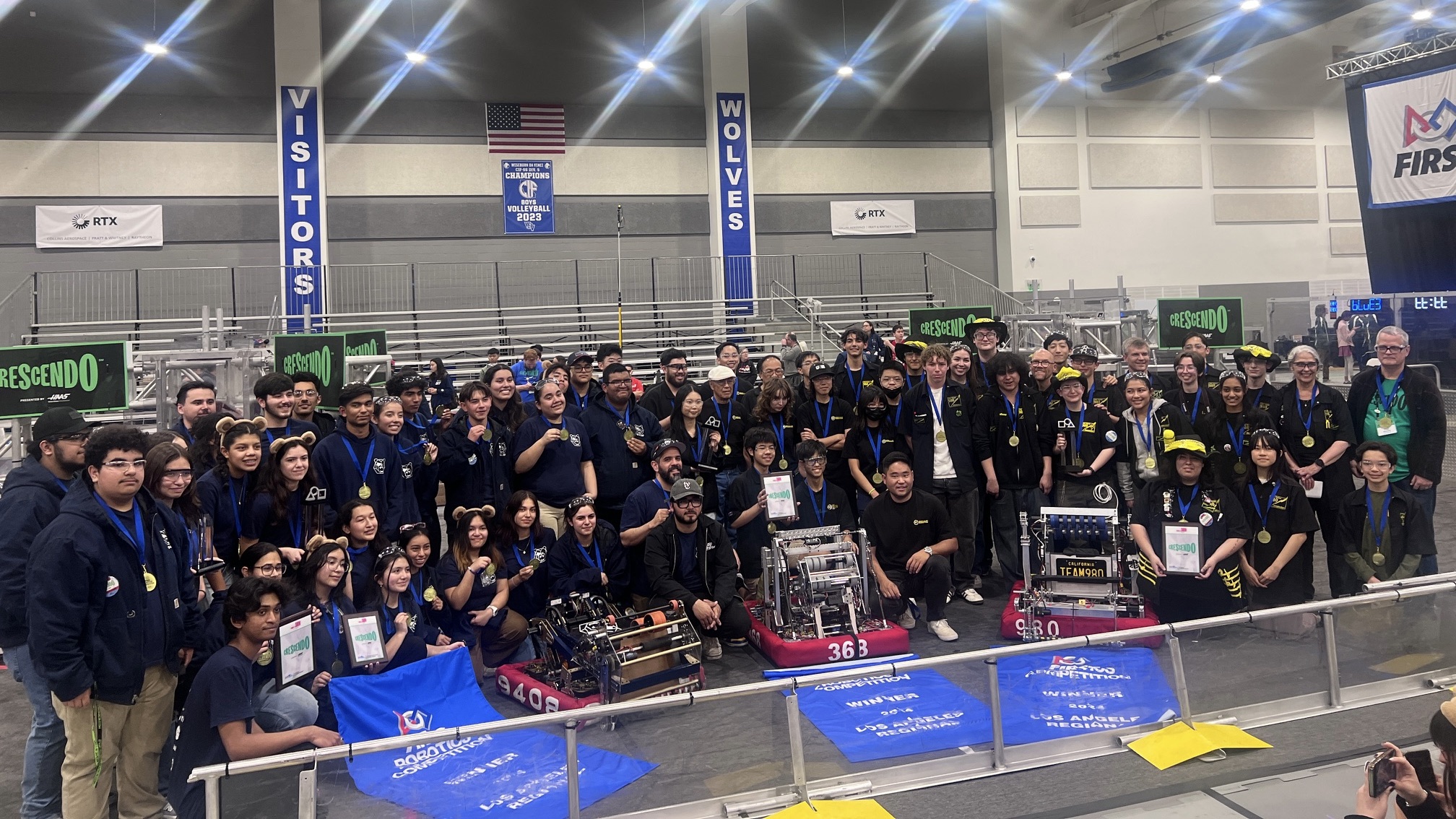
Student-made contraptions of a metal and a little magic battled each other in front of cheering and dancing high schoolers at the annual Los Angeles regional FIRST Robotics Competition over the weekend, an event supported by NASA’s Jet Propulsion Laboratory. Of the 44 participating teams, five triumphed, earning the chance to compete this April at the FIRST international championship tournament in Houston.

The raucous event at the Da Vinci Schools campus in El Segundo saw six 125-pound robots racing around the playing field during each 2 ½-minute match as pounding music filled the room and a live announcer narrated the action. Working in alliances of three teams on each side, the robots jockeyed for position and banged into each other, using a variety of mechanical devices to retrieve large, foam rings from the floor and launch them into two target chutes. In the final seconds of each round, the bots could earn extra points by hoisting themselves off the ground to dangle from a metal chain.

“The energy in the room was amazing this year,” said Kim Lievense, the manager of JPL’s Public Services Office, who coordinates some 100 volunteers for the event every year. “These teams and their bots really left it all on the field, and it was so great to be there to see it yet again.”

The 24th year for this L.A.-area competition, the event is one of many under the umbrella of the nonprofit FIRST (For Inspiration and Recognition of Science and Technology), which pairs students with STEM professionals. The competitions give students hands-on experience with engineering and problem-solving, team-building, fundraising, and other business skills.

Teams receive the rules of the game – titled “Crescendo” this year and themed around arts and entertainment – in January. Using FIRST’s technical specifications, students have just weeks to design, build, and test their robots, devoting hours after school and on weekends to the project.

“There were a lot of really impressive robots, and students, this year. The engineering, the manufacturing, the programming in the software these kids are writing – it’s quite complex,” said Julie Townsend, one of three event judges from JPL. She has been volunteering with FIRST for nearly 20 years as a judge and coach and is JPL’s point of contact for the NASA Robotics Alliance Project, which supports NASA “house” youth robotics teams across the country.

“Without these programs like FIRST, high school students don’t have the opportunity to do this kind of engineering,” Townsend added. “It’s hard, but they eventually get to experience the joy of a functioning system that you designed. You failed 16 times and then you get to see it work flawlessly.”

In the end, the winning alliance joined together a team from Hawaii with two Southern California teams: Team 368 (“Team Kika Mana”) of McKinley High School in Honolulu, Team 9408 (“Warbots”) of Warren High in Downey, and Team 980 (“ThunderBots”) of Burbank and Burroughs high schools in Burbank, which is a NASA house team supported by JPL.

Two other L.A.-area teams won awards that mean they’ll get to compete in Houston as well: Team 687 (“The Nerd Herd”) of California Academy of Math and Science in Carson, and Team 3473 (“Team Sprocket”) of Diamond Bar High.

For more information about the FIRST Los Angeles regional, visit:

https://cafirst.org/frc/losangeles/

News Media Contact

Melissa Pamer
Jet Propulsion Laboratory, Pasadena, Calif.
626-314-4928
melissa.pamer@jpl.nasa.gov

2024-028

Share

Details

Last Updated

Mar 18, 2024

Powered by WPeMatico

Get The Details…
Naomi Hartono