Sketch the Shape of the Sun for Science During the Solar Eclipse

Sketch the Shape of the Sun for Science During the Solar Eclipse

5 min read

Sketch the Shape of the Sun for Science During the Solar Eclipse

Calling all eclipse admirers!

The SunSketcher team is looking for one million volunteers to capture photos on their cell phones during the April 8 total solar eclipse. These images will help scientists learn about the size, shape, and inner structure of the Sun.

This NASA-funded citizen science project invites anyone who will be within the path of totality in the U.S. to take photos of the Baily’s Beads effect, which occurs when little points of sunlight pass through the valleys in between the mountains on the edge of the Moon. It’s the last piece of the Sun seen before totality and the first to appear after totality. For a few seconds, these glimmers of light look like beads along the Moon’s edge.
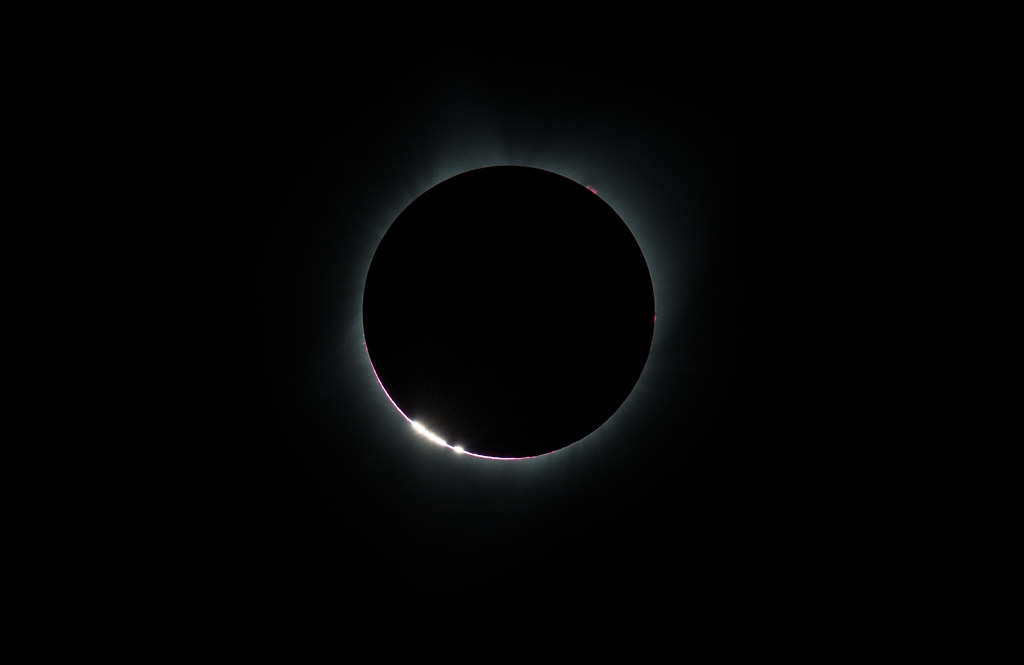
Sunlight passes through the Moon’s rugged terrain creating the Baily’s Beads effect during the total solar eclipse Aug. 21, 2017
The Baily’s Beads effect is seen as the Moon makes its final move over the Sun during the total solar eclipse on Aug. 21, 2017, above Madras, Oregon. This effect occurs when gaps in the Moon’s rugged terrain allow sunlight to pass through in some places just before the total phase of the eclipse.
NASA/Aubrey Gemignani

The SunSketcher app will use smartphones to automatically take a sequence of images as Baily’s Beads appear. Volunteers will simply download a free app, activate it just before totality, set the phone down with the rear camera pointed at the Sun, and leave it alone. The app will use the phone’s GPS location to calculate when Baily’s Beads will be visible.

“All you need is a cell phone,” says Gordon Emslie, SunSketcher’s project lead and professor of physics and astronomy at Western Kentucky University. “How many science projects can you do with the equipment you already have in your pocket?”

Emslie says the cell phone images of Baily’s Beads will look fairly simple, but the tiny dots of light will provide crucial data about our star.

“It’s the precise timing of when these flashes appear and disappear that can tell you how big the Sun is and what shape it is,” Emslie says.
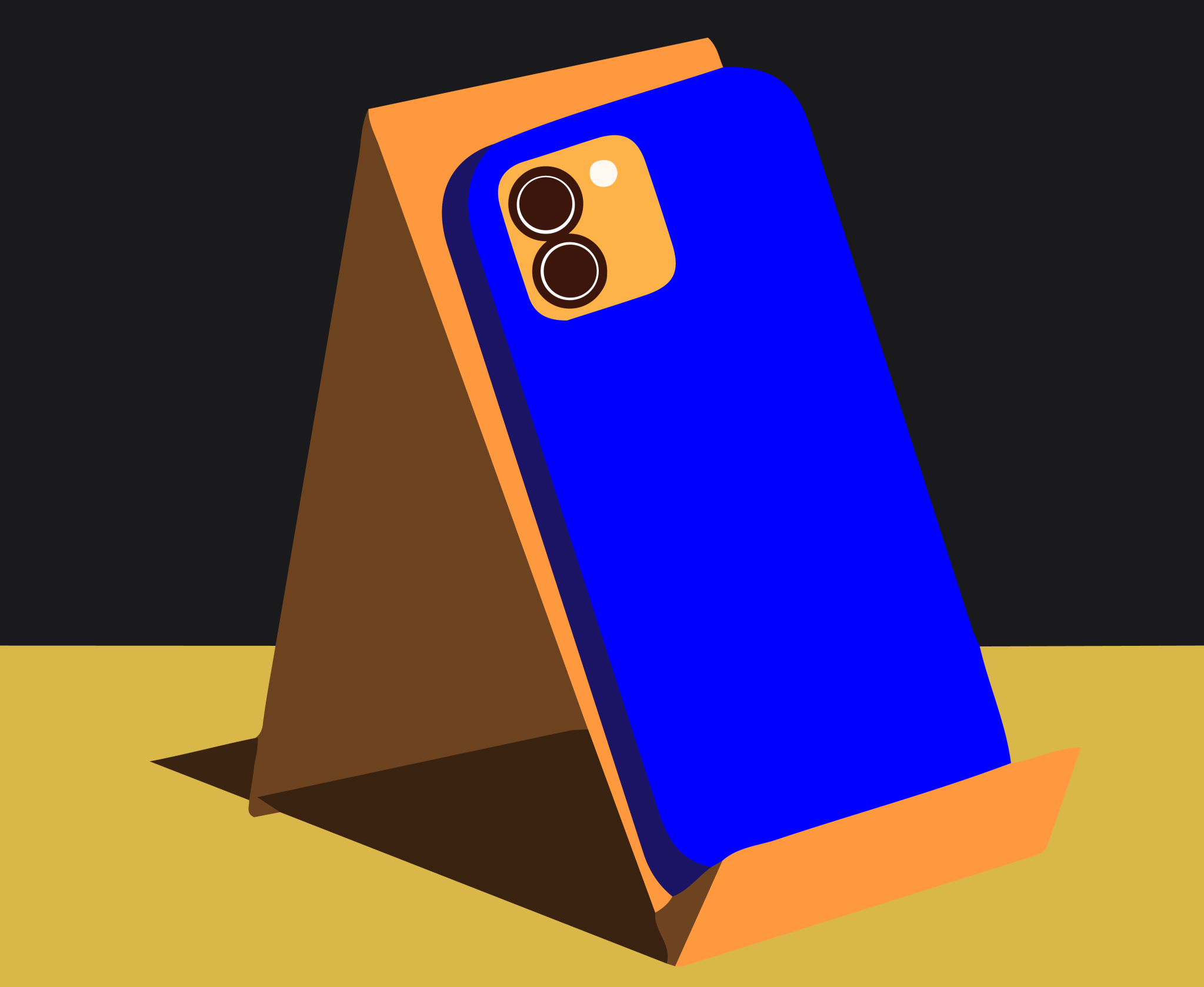
The rear camera of a cell phone faces towards a solar eclipse.
Citizen scientists will activate the Sunsketcher app before the eclipse and then prop their phone against a steady surface with the rear (back-facing) camera pointed at the Sun. The app will automatically take images of Baily’s Beads at the correct times.
SunSketcher/Tabby Cline

The SunSketcher team will merge the images collected from various viewpoints on the eclipse path to create an evolving pattern of beads. This pattern will be compared with 3D maps that show the exact locations and distances between lunar craters, mountains, and valleys on the surface of the Moon from NASA’s Lunar Reconnaissance Orbiter. The combined measurements will allow researchers to calculate the precise size and shape of the Sun based on the timing of the images captured over 90 minutes of eclipse observations.

“The fascinating thing about this is you can really only do this by having observers stretched over the whole eclipse path,” Emslie explains. “No one observer can monitor an eclipse for more than about four or five minutes.”

The Sun is round but not a perfect sphere. It bulges out slightly along the equator with a diameter of about 865,000 miles. Scientists suspect the shape of the Sun changes slightly as it goes through 11-year cycles of fluctuating solar activity. The Sun is a rotating ball of gas and plasma with complicated internal flows of material, energy, and magnetic fields beneath the surface that vary over that cycle and impact its overall shape.

“All of these flows connect to the surface somehow, and so the shape of the surface is determined by the details of the flows,” Emslie says. “If we can understand the subsurface flows, we can better understand the Sun’s internal structure.”

The Sun’s shape also determines its gravitational field, which affects the motions of the planets, so measuring the Sun’s precise shape will help scientists test theories of gravity.
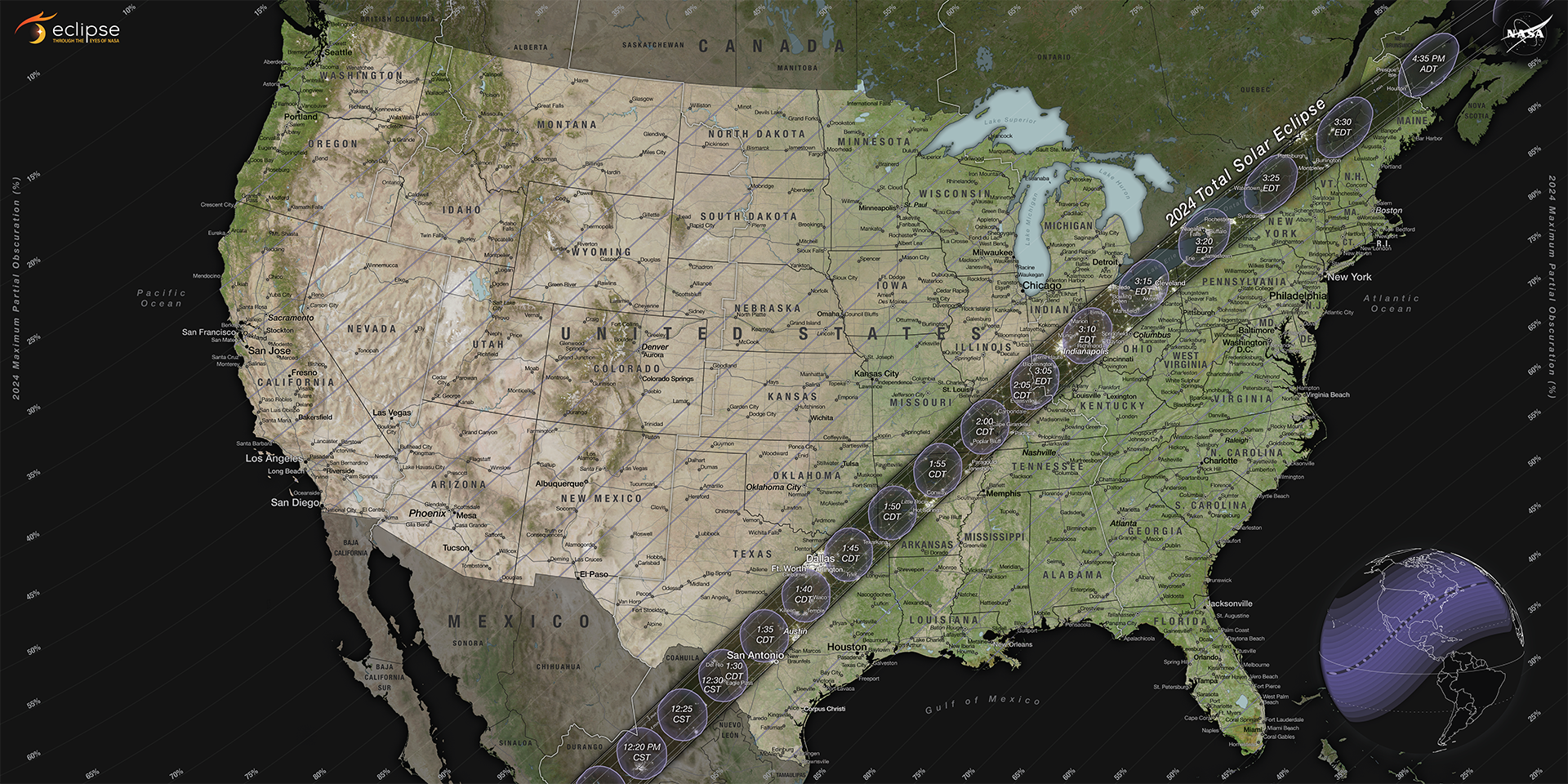
A map of the contiguous U.S. shows the path of the 2024 total solar eclipse stretching on a narrow band from Texas to Maine.
This map shows the path of totality and partial contours crossing the U.S. for the 2024 total solar eclipse occurring on April 8, 2024.
NASA/Scientific Visualization Studio/Michala Garrison; Eclipse Calculations By Ernie Wright, NASA Goddard Space Flight Center

Participants in the SunSketcher project can be located anywhere in the eclipse’s path of totality in the U.S., which stretches from Texas to Maine, on April 8. Emslie says the more people involved, the more worthwhile the project will be. “Literally, we’re looking for a million people to play.”

For more info on SunSketcher, visit: https://sunsketcher.org/

How to Become a SunSketcher and Be a Part of History 

This animated tutorial from the SunSketcher team explains how volunteers can capture images during the total solar eclipse using a free cell phone app to help learn about the size, shape, and inner structure of the Sun.
Animation credit: SunSketcher/Tabby Cline

Before the Eclipse

  • Download the free app from your phone’s app store (available now on iOS and coming soon on Android).
  • Initiate the app around five minutes before totality. No internet connection is required.
  • If possible, turn on “Do Not Disturb” in your phone’s settings to prevent vibrations that could disturb the image sequence.
  • Prop the phone against a steady surface (such as a rock, book, phone stand, or tripod) with the rear (back-facing) camera pointed at the Sun.
  • Let it be! The app will automatically take images of Baily’s Beads at the correct times.
  • Enjoy the eclipse! Remember to use specialized eye protection for solar viewing except during the brief total phase of a total solar eclipse, when the Moon completely blocks the Sun.

After the Eclipse

  • The app will show a directory of images taken and will request user permission to share them. Only time and location data will be recorded with the images. No personally identifiable or private information will be collected.
  • Once an internet connection is established, the images will be automatically uploaded to a central server and a screen will appear with a thank-you message.

By Rose Brunning
Communications Lead, NASA Heliophysics Digital Resource Library (HDRL)

Share

Details

Last Updated
Mar 19, 2024

Powered by WPeMatico
Get The Details…

Casey Honniball: Finding Her Space in Lunar Science

Casey Honniball: Finding Her Space in Lunar Science

Lunar scientist Casey Honniball conducts lunar observations and field work near volcanoes to investigate how astronauts could use instruments during moonwalks.

Name: Casey Honniball
Title: Lunar scientist
Organization: Planetary Geology, Geophysics, and Geochemistry Laboratory, Science Directorate (Code 698)

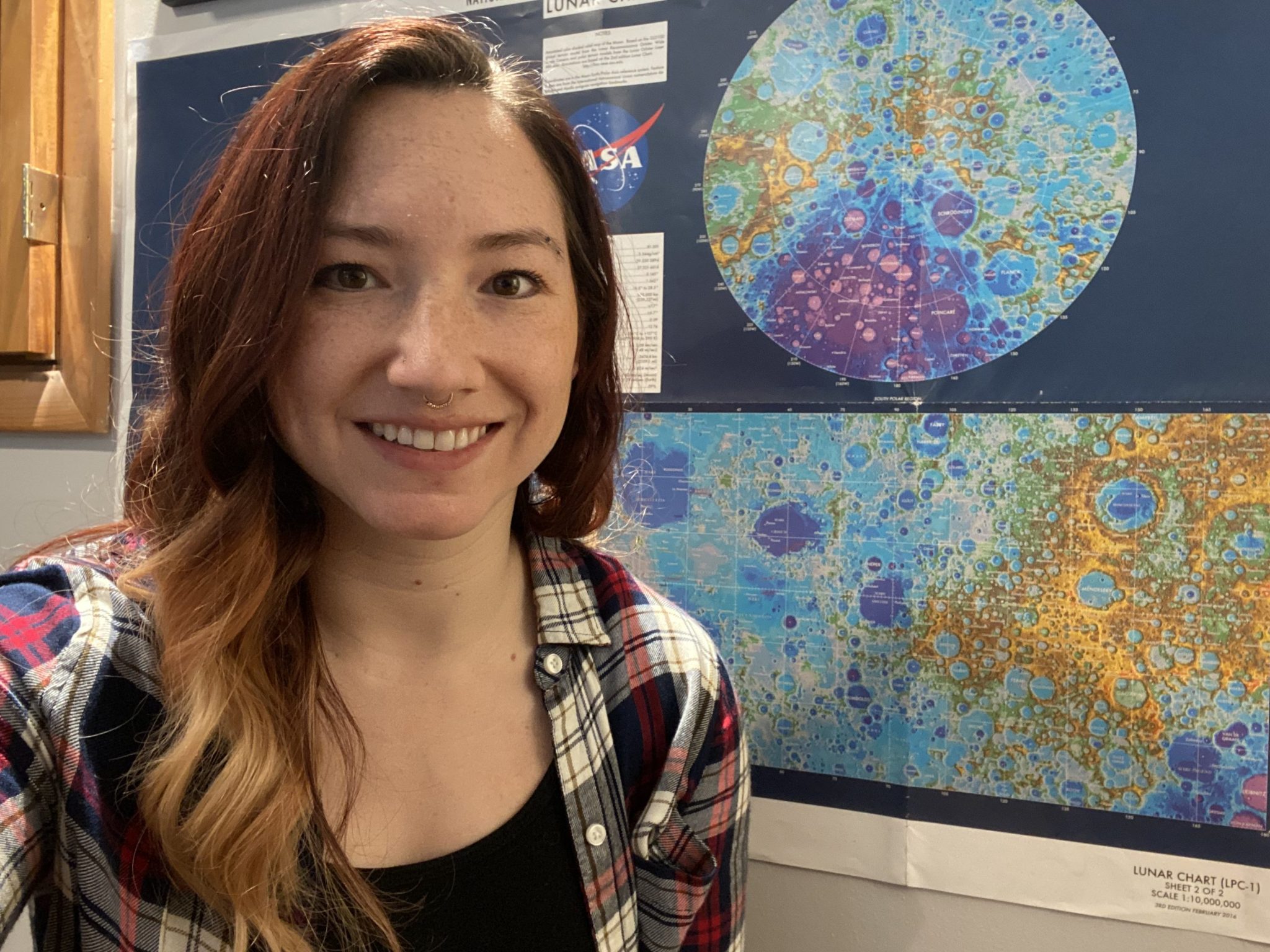
Casey Honniball stands in front of a colorful lunar map
Casey Honniball is a lunar scientist at NASA’s Goddard Space Flight Center in Greenbelt, Maryland.
Courtesy of Casey Honniball

What do you do and what is most interesting about your role here at Goddard? How do you help support Goddard’s mission?

I study the Moon using Earth-based telescopes to understand the lunar volatile cycle. I also conduct field work at volcanic sites to investigate how astronauts can utilize instruments during moonwalks.

Why did you want to be a lunar scientist?

When I was 6 years old and in first grade, I was diagnosed with dyslexia. I was tutored and had help with homework and tests, which continued until I was a junior in high school. At that point, I learned to manage my dyslexia.

Because I was not good at reading and writing, I turned to more physical things such as things I could touch and build. I discovered physics in high school, which turned me on to other sciences.

I went to college for physics, but learned that I preferred astronomy. In graduate school I realized I wanted to be a lunar scientist.

I have a B.S. in astronomy from the University of Arizona, a master’s in geology and geophysics from the University of Hawaiʻi at Manoa, and a Ph.D. in Earth and planetary science also from the University of Hawaiʻi at Manoa.

While doing my master’s, one of my advisers introduced me to Earth-based lunar observation to look at hydration on the surface of the Moon. I found that I really liked the Moon and found my place in science.

What brought you to Goddard?

During graduate school, I worked with Goddard’s Dr. Kelsey Young on a field deployment testing instruments for astronauts. In 2020, I became a post-doctoral fellow for her at Goddard.

In January 2023, I became a visiting assistant research scientist in the Planetary Geology, Geophysics, and Geochemistry Laboratory through CRESSTII, and Kelsey is still my mentor.

As your mentor, what is the most important advice Kelsey Young has given you?

Kelsey helps me stay passionate about the work I am doing. She does this by providing new and exciting opportunities and being supportive about work-life balance.

I admire Kelsey’s spirit of adventure and her passion for field work. I appreciate all she has done for me and am grateful for the opportunities she and our lab have provided.

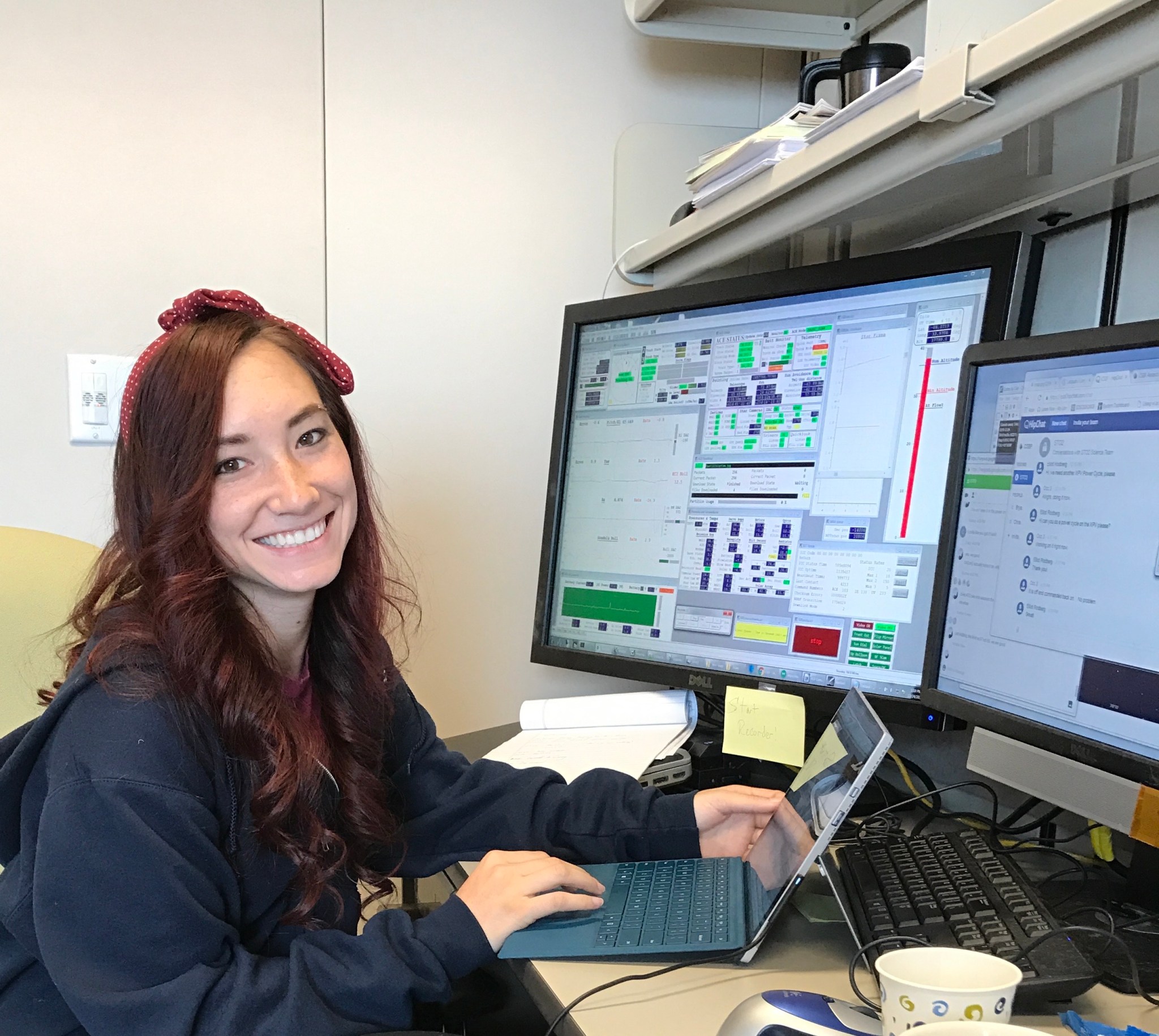
Casey Honniball smiles in front of three computer screens as she works
Using Earth-based telescopes, Casey studies the Moon to understand the lunar volatile cycle. “While doing my master’s, one of my advisers introduced me to Earth-based lunar observation to look at hydration on the surface of the Moon,” said Casey. “I found that I really liked the Moon and found my place in science.”
Courtesy of Casey Honniball

What sorts of instruments do you test for use on the Moon?

I test the use of mid- to long-wave infrared instruments for reconnaissance of a location prior to astronauts setting foot outside a vehicle. For example, an instrument on a rover can scan the area to characterize the minerology and volatiles including water, carbon dioxide, sulfur, methane, and similar chemicals. This then allows astronauts and scientists to select locations to collect samples.

I test this procedure on Earth by doing field work.

What is the most exciting field work you have done to test those instruments?

In 2015, I went to the Atacama Desert in Chile to install a radio camera on an existing telescope. I spent about a month installing the camera and observing on the telescope. There were only about 15 people I interacted with during that time. The area is very Martian-like; it is very red, dry, and barren, although we saw wild donkeys.

During Christmas of 2015 and again in 2016, one month each time, I went to Antarctica to launch a high-altitude balloon radio telescope. I lived at McMurdo Station and worked at their balloon facility near the airstrip. Antarctica is a completely different experience than you could imagine. You are so cut off from civilization. You have only the people who are there, although, I was there during Antarctica’s summer when McMurdo had many people. You are in a completely barren landscape that is so magnificently beautiful.

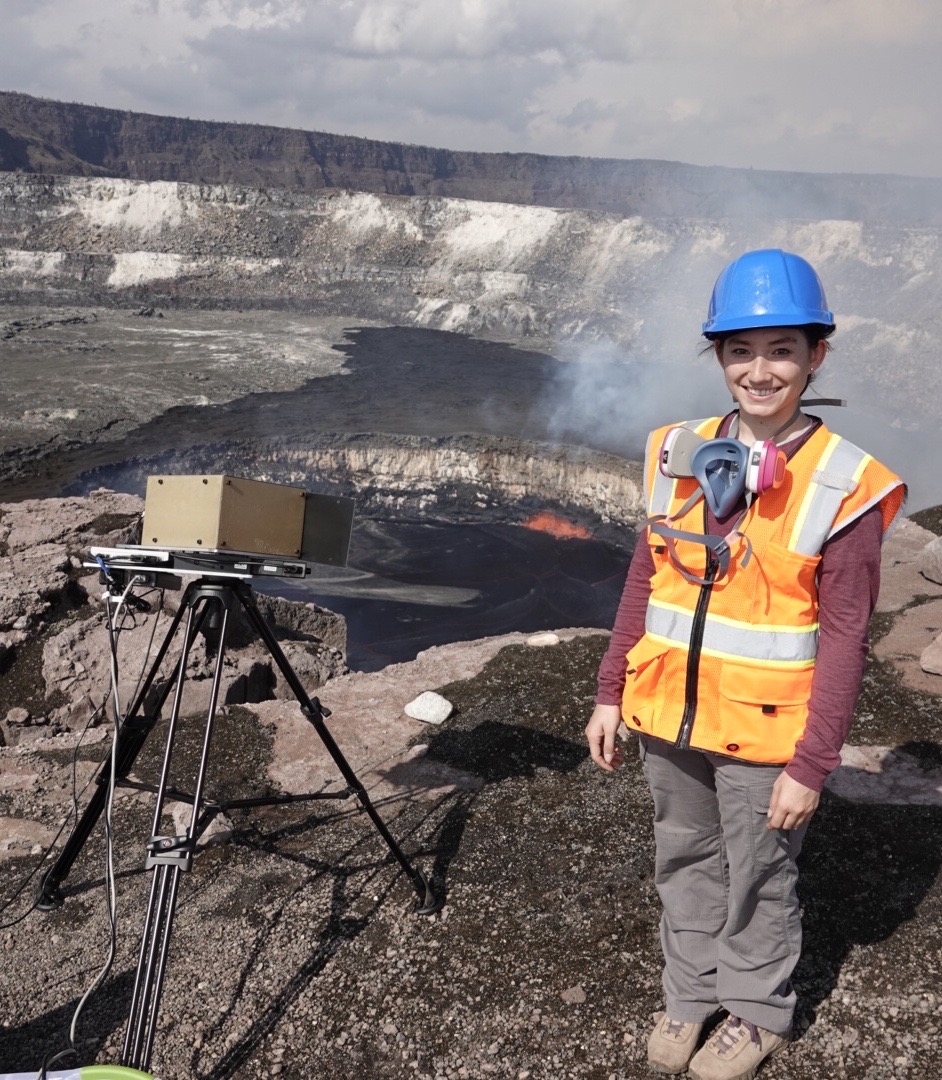
In 2018, I deployed an instrument I built to the Kīlauea Lava Lake on the Big Island of Hawaii. This is a National Park with thousands of visitors yearly. The lava lake was active at the time. We could see lava spewing out at different vent locations in the lake. It was very exciting and kind of scary. We had special permits allowing us into restricted areas closer to the lake. We were told not to get any closer to the cliff edge of the lake than our height so that if we tripped, we would not fall into the active lava.

I’d love to do field work in Iceland. Iceland is a great location for planetary field analog research as it has a similar landscape and geologic context to the Moon and Mars.

Casey Honniball wears a blue hard hat and orange vest while standing in front of a field work site.
Casey conducts field work at volcanic sites to investigate how astronauts can utilize instruments during moonwalks.
Courtesy of Casey Honniball

What outreach do you do that inspires others with dyslexia?

I like to talk to elementary through high school students about life as a scientist and how I got to where I am. I like to tell my story about learning to manage dyslexia to hopefully inspire others.

What do you do for fun?

I am a deep-sea scuba certified diver. I mainly dove in Hawaii because I was living there. I also enjoy working out, hiking, baking sourdough bread, and being with my family.

Where do you see yourself in five years?

I hope to be supporting Artemis science operations on the surface of Moon and continuing to studying the Moon’s surface remotely and conducting research through field deployments.

What is your “six-word memoir”? A six-word memoir describes something in just six words.

Fear is a state of mind.

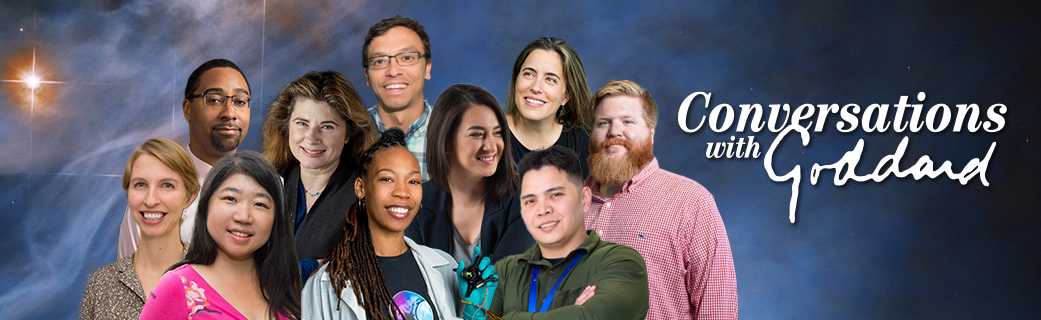
A banner graphic with a group of people smiling and the text "Conversations with Goddard" on the right. The people represent many genders, ethnicities, and ages, and all pose in front of a soft blue background image of space and stars.

Conversations With Goddard is a collection of Q&A profiles highlighting the breadth and depth of NASA’s Goddard Space Flight Center’s talented and diverse workforce. The Conversations have been published twice a month on average since May 2011. Read past editions on Goddard’s “Our People” webpage.

Share

Details

Last Updated

Mar 19, 2024

Editor
Madison Olson
Contact
Elizabeth M. Jarrell
Location
Goddard Space Flight Center

Powered by WPeMatico

Get The Details…
Madison Olson

NASA’s Curious Universe Podcast Unveils New Sun + Eclipse Series

NASA’s Curious Universe Podcast Unveils New Sun + Eclipse Series

Credit: NASA

NASA released Tuesday the first episode of a new six-part podcast series for first-time space explorers to learn about the Sun. Ahead of the total solar eclipse in April, NASA’s Sun + Eclipse Series will focus on the sphere full of swirling magnetic fields and explosions of hot gases.

New episodes will post every Tuesday through April 23. The first episode is available at:

Sun Series: The Sun, Our Star – NASA

On April 8, 2024, a total solar eclipse will cross North America, passing over Mexico, the United States, and Canada. More than 32 million people will have the chance to witness, and a phenomenon the contiguous U.S. will not see again for 20 years.

The series will delve into the cultural connections and historical significance of solar studies. Listeners can prepare firsthand for the solar eclipse with insight from NASA experts along the path of totality. The series offers insight into research from NASA scientists, firsthand accounts from “eclipse chasers”, and how the agency protects astronauts and spacecraft during solar activity.

The series is part of NASA’s Curious Universe podcast. In each episode, hosts Padi Boyd and Jacob Pinter, bring listeners on science and space adventures. Explore the cosmos alongside astronauts, scientists, engineers, and other NASA experts in science, space exploration, and aeronautics.

NASA’s Sun + Eclipse Series is now available on SpotifyApple PodcastsGoogle Podcasts, and Soundcloud. Curious Universe is written and produced by a team at the agency’s Goddard Space Flight Center in Greenbelt, Maryland.

Discover more original NASA shows at:

https://www.nasa.gov/podcasts

-end-

Melissa Howell
Headquarters, Washington
202-961-6602
melissa.e.howell@nasa.gov

Share

Details

Last Updated

Mar 19, 2024

Powered by WPeMatico
Get The Details…
Lauren E. Low

Tech Today: NASA Helps Find Where the Wildfires Are

Tech Today: NASA Helps Find Where the Wildfires Are

2 min read

Preparations for Next Moonwalk Simulations Underway (and Underwater)

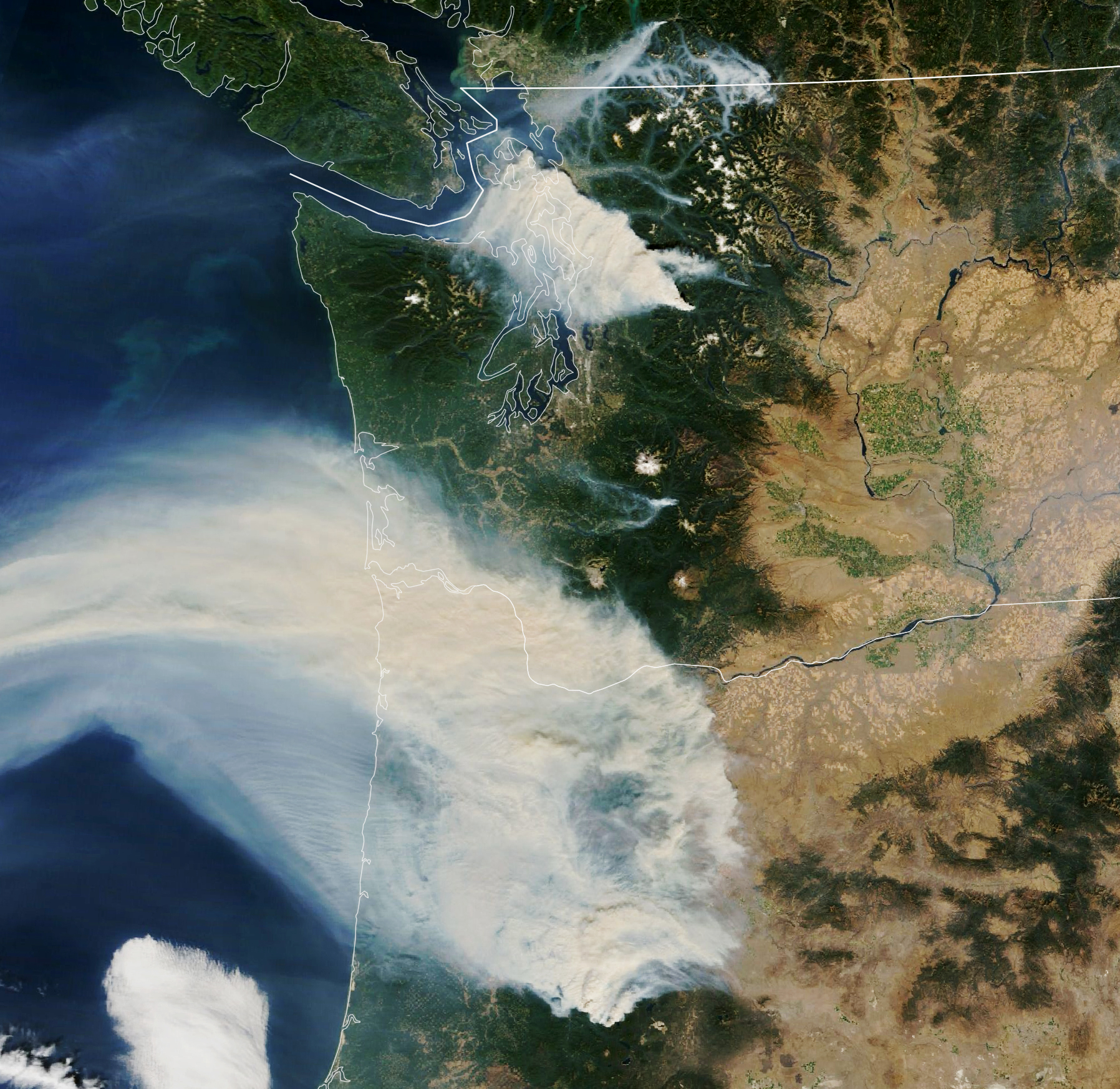
Satellite view of the Northwest United States, showing plumes of smoke from
In 2022, nearly 100 large wildland fires burned in the U.S. West. Almost two dozen of those burned Washington and Oregon alone, filling the air with smoke. Plumes from the fires often could easily be seen from space.
Credit: NASA

Globally, nearly all wildfires start with a human ignition source – not lightning strikes or wildlife encountering power equipment. Knowing humans can be a primary cause is an example of the sort of knowledge that helps predict and prevent wildfires, a challenge that NASA and the firefighting industry are undertaking together. 

As wildfires become more common in rarely experienced countries like Ireland and are more intense in other areas impacted by climate change, governments and businesses are turning to space for help.

Landsat satellite Earth-observation data, artificial intelligence, and machine learning now predict and monitor fires and support post-fire recovery. San Diego-based Technosylva Inc. provides firefighters with a wildfire monitoring service that combines all these technologies. The company also uses other NASA fire data resources compiled by the agency’s Ames Research Center in Silicon Valley to assist during the fire season and beyond.

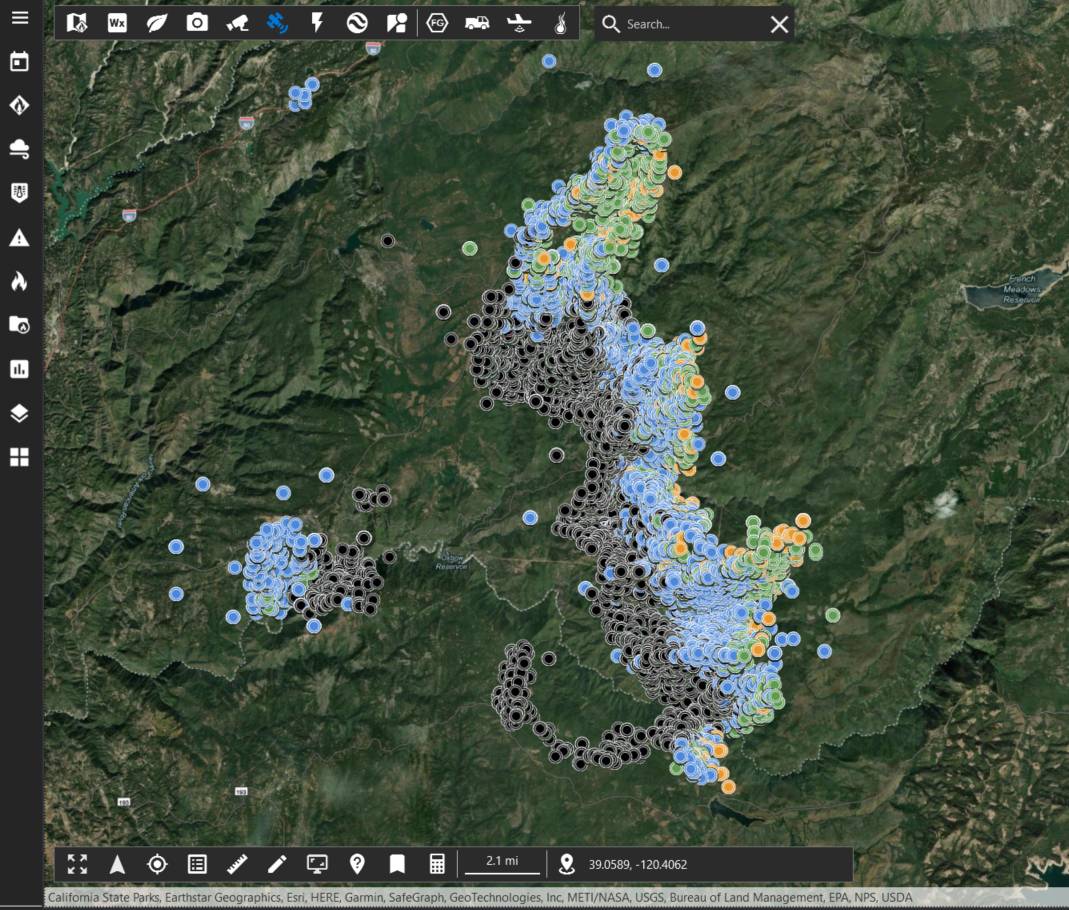
Screenshots from Technosylvas Wildfire Analyst identify areas previously burned by wildfire
Satellite imagery helps Technosylva’s Wildfire Analyst identify areas previously burned by wildfire to eliminate those areas without fuel like leaves or grasses (black circles) and pinpoint areas different types of available fuel (colored circles).
Credit: Technosylva Inc.

Technosylva uses data fusion, which integrates multiple data sources from climate, weather, landscapes, and human infrastructure, to develop a complete picture of current fire risks. Before fire season begins, these efforts help develop more resilient landscapes to make communities safer. During the fire season, models predict how fires will spread, and provide real-time equipment and personnel tracking across vast tracts of land.

During the 2017 Las Máquinas wildfire in Chile – a fire so large the only way to view the perimeter was from space – Technosylva assisted in firefighting efforts by providing satellite data to help identify new hot spots and guided containment efforts.

Powered by WPeMatico
Get The Details…
Andrew Wagner

Expedition 69 Astronauts Tour NASA Goddard, Speak With Employees

Expedition 69 Astronauts Tour NASA Goddard, Speak With Employees

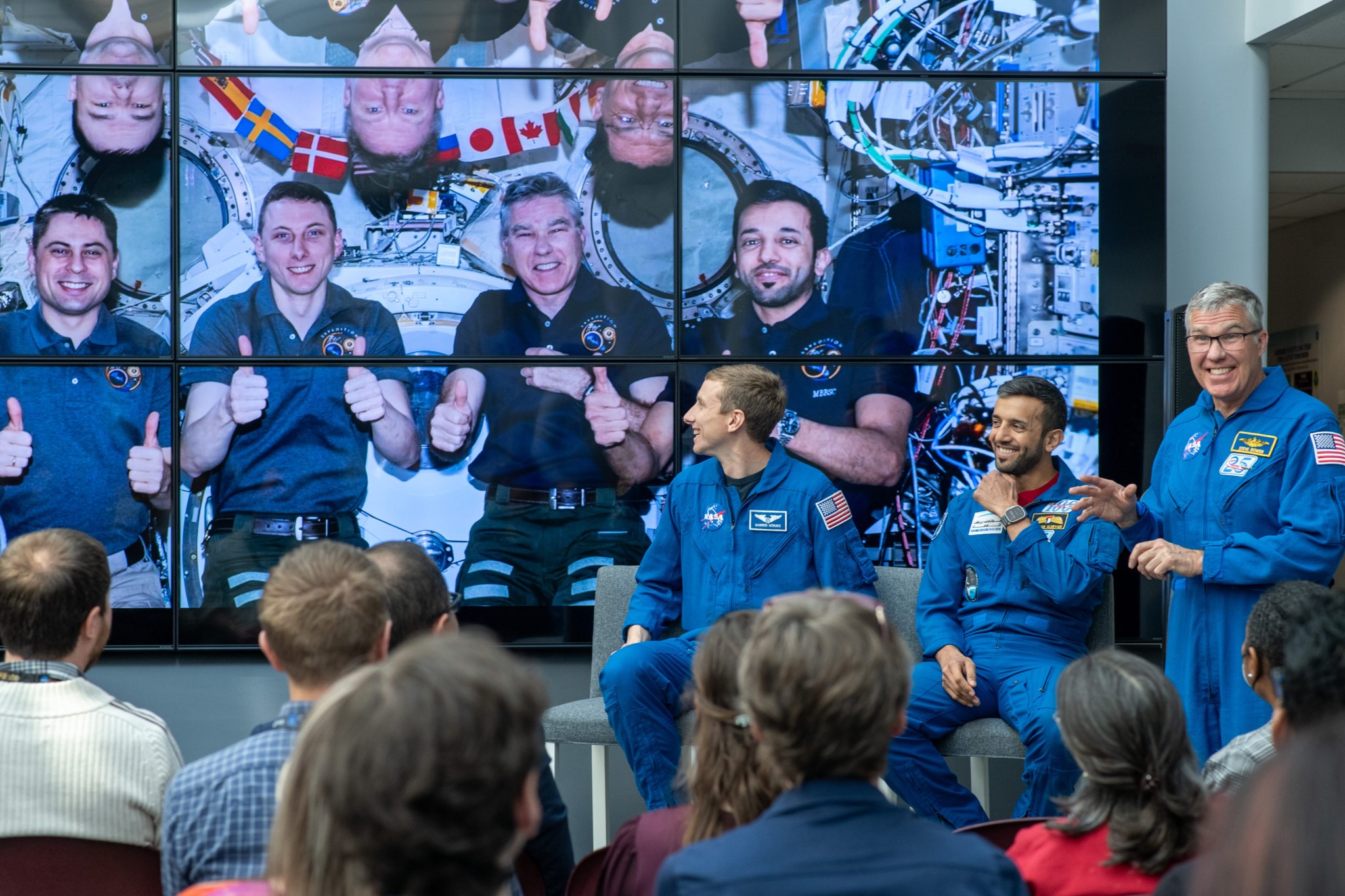
A trio of astronauts visited with employees at NASA’s Goddard Space Flight Center in Greenbelt, Maryland, on March 18, 2024, to share their spaceflight experiences aboard the International Space Station.

NASA astronauts Stephen Bowen and Warren “Woody” Hoburg, and United Arab Emirates astronaut Sultan Alneyadi all served as flight engineers on the Expedition 69 crew aboard the International Space Station last year.

Three astronauts in blue flight suits stand in front of a bank of TV monitors
Over 40 employees at NASA’s Goddard Space Flight Center in Greenbelt, Md., participated in a meet and greet with visiting astronauts on March 18, 2024. NASA astronaut Warren “Woody” Hoburg (left), United Arab Emirates astronaut Sultan Alneyadi, and NASA astronaut Stephen Bowen presented a video summarizing their mission before answering questions from Goddard staff.
NASA/Tabatha Luskey

The astronauts engaged with over 40 center employees during a meet and greet at the beginning of their visit. Employees viewed a 20-minute video that highlighted the astronauts’ preparation for the mission and their time in space. Afterward, they answered questions about daily life aboard the International Space Station.

“These are people that you see growing up, and you hear about them, but to actually be in person with them is beyond words,” said Emily Wilson, an intern at Goddard. “It’s really awesome to hear their stories.”

During their time in space, the Expedition 69 crew studied how materials burn in microgravity to understand spacecraft fire hazards, and they worked with technology to monitor how spaceflight stressors like microgravity and radiation impact the immune system. Bowen, Hoburg, and Alneyadi also completed spacewalks during the mission.

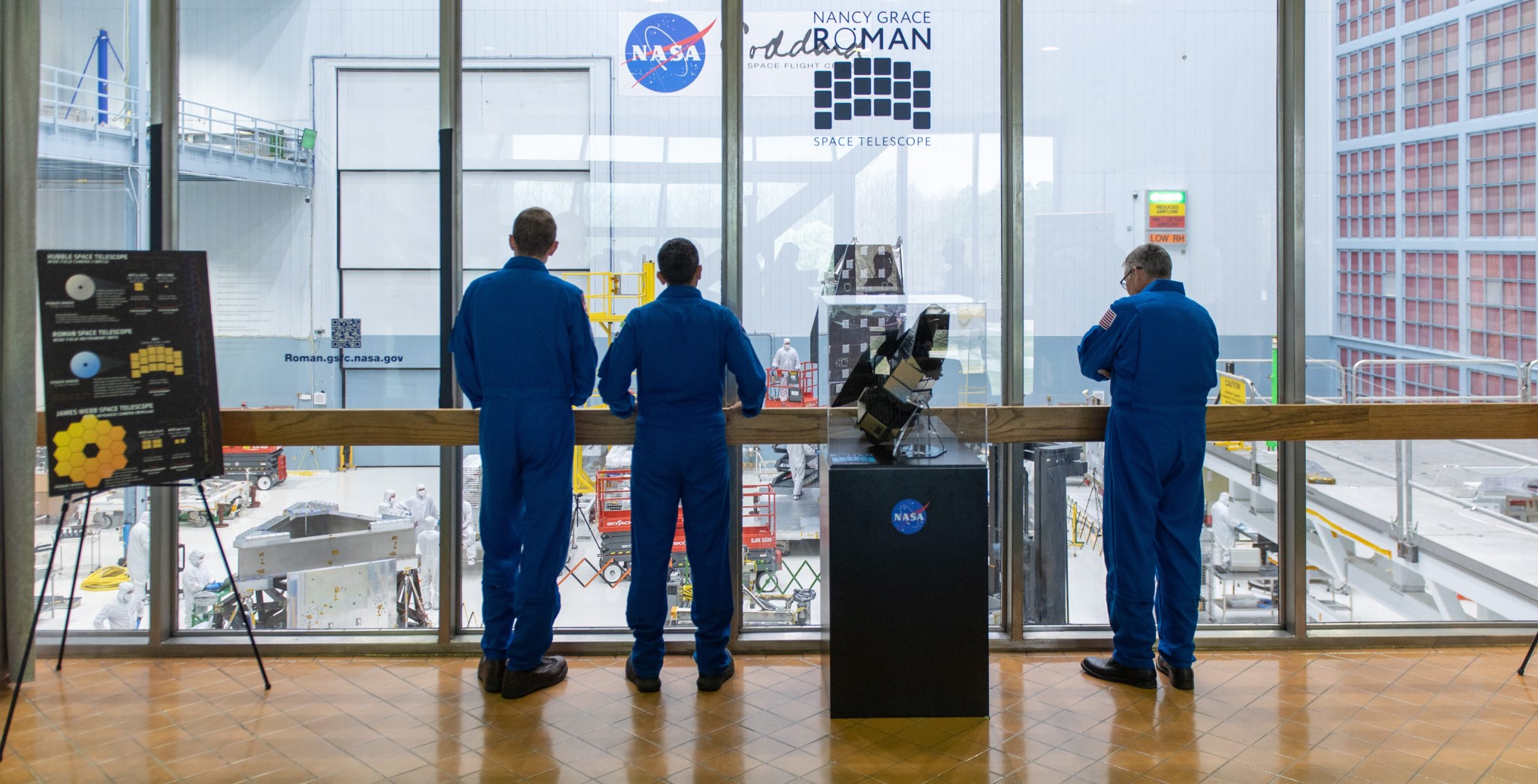
with backs to the camera, three astronauts in blue flight suits stand before glass windowpanes that look in on the enormous clean room where spaceflight hardware for the Roman Space Telescope can be seen in the background
Hoburg (left), Alneyadi, and Bowen view the construction of the Nancy Grace Roman Space Telescope from the clean room overlook in Goddard’s Building 29.
NASA/Tabatha Luskey

After their presentation to employees, the astronauts toured Goddard and heard from researchers about the exciting science and missions in work at the center. They listened to a presentation from Dr. Antti Pulkkinen, director of Goddard’s Heliophysics Science Division, and they visited the clean room where engineers are building the Nancy Grace Roman Space Telescope. Their time at Goddard concluded at the Hubble Space Telescope Operations Control Center.

“The long history is really amazing, of all the contributions Goddard has made,” Hoburg said. “We’re truly going after those big fundamental questions about the origins of the universe, and all the kind of inspiring big scientific questions that drive us as humans, and it’s cool to see the contribution Goddard makes to all those big questions.”

Learn more about NASA’s Expedition 69 at: https://www.nasa.gov/mission/expedition-69/

By Julia Tilton
NASA’s Goddard Space Flight Center, Greenbelt, Md.

Share

Details

Last Updated

Mar 19, 2024

Editor
Rob Garner
Contact
Rob Garner
Location
Goddard Space Flight Center

Powered by WPeMatico
Get The Details…
Rob Garner