NASA Teams Change Brakes to Keep Artemis Crew Safe

NASA Teams Change Brakes to Keep Artemis Crew Safe
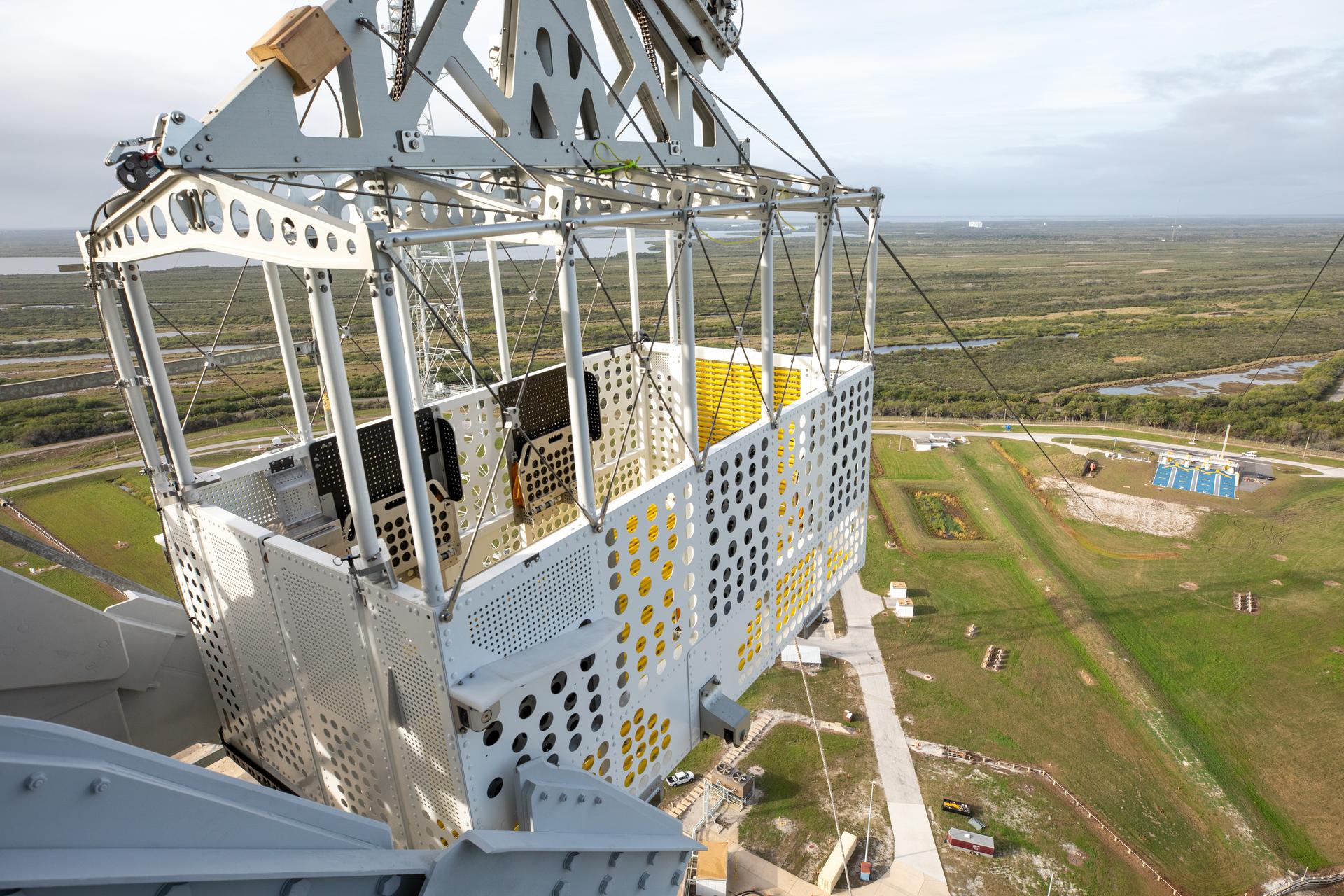
Teams with NASA’s Exploration Ground Systems Program, in preparation for the agency’s Artemis II crewed mission to the Moon, begin installing the first of four emergency egress baskets on the mobile launcher at Launch Complex 39B at the agency’s Kennedy Space Center in Florida on Wednesday, Jan. 24, 2024. The baskets, similar to gondolas on ski lifts, are used in the case of a pad abort emergency to enable astronauts and other pad personnel a way to quickly escape away from the mobile launcher to the base of the pad and where waiting emergency transport vehicles will then drive them away.
NASA/Isaac Watson

Recently, teams with NASA’s Exploration Ground Systems (EGS) Program at the agency’s Kennedy Space Center met with engineering teams at a central Florida amusement park to share knowledge on a new braking system NASA is using for its launch pad emergency egress system for Artemis missions.

“We have a new magnetic braking system for the Artemis emergency egress system and NASA hasn’t used this technology on the ground infrastructure side before to support launches,” said Jesse Berdis, mobile launcher 1 deputy project manager for EGS. “I realized we have neighbors 50 miles from us in Orlando that are essentially the world experts on magnetic braking systems.”

For Artemis, teams will use a track cable that connects the mobile launcher to the terminus site near the perimeter of NASA Kennedy’s Launch Pad 39B, where four baskets, similar to gondola lifts, can ride down. This is where the magnetic braking system operates to help control the acceleration of the baskets in multiple weight and environmental conditions. At the pad terminus site, armored emergency response vehicles are stationed to take personnel safely away from the launch pad to a designated safe site  at Kennedy.

Many roller coaster manufacturers employ the use of an “eddy current braking system,” which involves using magnetics to help slow down a vehicle. Though the applications used on the roller coasters differ slightly from what the EGS teams are using for Artemis, the concept is the same, explained Amanda Arrieta, mobile launcher 1 senior element engineer.

However, unlike roller coasters which are typically in use daily for multiple hours on end, the Artemis emergency egress system is there for emergency situations only.

“We don’t plan to ever run our system unless we’re testing it or performing maintenance,” Berdis said.

Regardless of this, teams at Kennedy have ensured the system is able to function for years to come to support future Artemis missions.

“The maintenance crews [at the amusement park] were awesome because they showed us their nightly, monthly, and yearly inspections on what they were doing,” Berdis said. “That gave our operations teams a really good foundation and baseline knowledge of what to expect when they maintain and operate this system for the Artemis missions.”

Some of the conversations and suggestions teams shared include adding an acceleration sensor in the emergency egress baskets during testing. The sensor will help detect how fast the baskets are going when they ride down.

The emergency egress system is one of several new additions the EGS team is implementing  to prepare for future crewed missions starting with Artemis II, and this system especially emphasizes the importance of safety.

“We have a mission, and a part of that mission is in case of an emergency, which we don’t expect, is to protect our astronauts and supporting teams at the launch pad,” Berdis said. “We want our teams to be safe and, for any scenario we put them in, especially on the ground infrastructure side, it’s important for us to do our due diligence. That includes talking to other groups that are the experts in their field to ensure we have looked at all possibilities across the board to ensure our mission is a safe one for our teams.”

During the Space Shuttle Program, teams used a similar system for the escape route astronauts and other personnel take in the event of an emergency during a launch countdown. However, instead of using a magnetic braking system for the baskets, teams used a mechanical braking system, which involved using a catch net and drag chain to slow and then halt the baskets sliding down the wire.

For the agency’s Commercial Crew Program, SpaceX also uses a catch net and drag chain for its slidewire cable at NASA Kennedy’s Launch Complex 39A pad and a deployable chute at Space Launch Complex 40 at Cape Canaveral Space Force Station. Boeing and United Launch Alliance also use a slidewire, but instead of baskets, the team deploys seats, like riding down a zip line, that ride down the slide wires at Space Launch Complex 41 at Cape Canaveral Space Force Station.

Under NASA’s Artemis campaign, the agency will establish the foundation for long-term scientific exploration at the Moon, land the first woman, first person of color, and its first international partner astronaut on the lunar surface, and prepare for human expeditions to Mars for the benefit of all.

Powered by WPeMatico

Get The Details…
Antonia Jaramillo

Regina Caputo Charts the Future of High-Energy Astrophysics

Regina Caputo Charts the Future of High-Energy Astrophysics

Research astrophysicist Regina Caputo puzzles out how the universe works by studying the most extreme events in the cosmos.

​​Name: Regina Caputo
Title: Research Astrophysicist 
Organization: Astroparticle Physics Laboratory (Code 661)

Regina Caputo stands in front of a white wall with an image hanging on it. She is smiling and wearing a black shirt under an open maroon cardigan. Her brown hair falls loosely on her shoulders. The image behind Regina consists of a black background and in front of it a large blue oval that is not completely visible within the screen. The blue oval takes up most of the image and is speckled with deeper blues as well as some red dots. Just above Regina’s head, within the blue oval, is a horizontal orange and yellow line that glows. Scattered around the line are a few glowing yellow dots. Additionally, red speckling surrounds the line. The speckling starts dense towards the orange and yellow line — dense enough to appear solid — and becomes less dense further from the center line.
Regina Caputo is a research astrophysicist at NASA’s Goddard Space Flight Center in Greenbelt, Md. She focuses on technology development and support for gamma-ray telescopes.
Photo credit: NASA/David Friedlander

What do you do and what is most interesting about your role here at Goddard?

I’m a research astrophysicist in the particle astrophysics lab at Goddard. I’m really interested in the most extreme events that happen in the universe, so I work on current gamma-ray missions and develop technology for future gamma-ray telescopes. 

The most exciting part of my work is trying to figure out how the universe works and how it got the way it is today.

What is your educational background?

In 2006, I got my bachelor’s degree in engineering physics from the Colorado School of Mines. Then, in 2011 I got my Ph.D. in particle physics from Stony Brook University. 

I’ve always been inclined to bridge the gap between science and engineering, so my undergraduate education was where I learned to build things, develop instruments, and analyze data. Then, through my Ph.D. program, I started trying to understand the fundamental building blocks of matter. Eventually, I found my way to astro-particle physics. Particles on the ground are cool, but particles in space are even cooler!

What brought you to Goddard?

I arrived at Goddard in 2017, and I think it was a natural confluence of building telescopes, doing high energy astrophysics, and working in a collaborative environment.

What were the most exciting moments of your career?

I am very fortunate because there have been a couple exciting moments. I was a student working on CERN’s Large Hadron Collider when the Higgs Boson was discovered, so that was really exciting.

Then, after I had gotten into particle astrophysics, we discovered in 2017 that merging neutron stars created gravitational waves and gamma-ray bursts. Around the same time, we discovered an active galaxy that produced neutrinos with ultra-high-energy gamma-ray flares. This was like the birth of multi-messenger astrophysics, so it felt like a whole new era of discovery. I really felt like the universe was telling me something. 

How does your work involve different teams?

I’m on a few different teams on different scales. On the science side, I’m a part of the Fermi Large Area Telescope (LAT) collaboration — an international group of scientists supporting Fermi, analyzing data, and doing science.

I’m also a Swift Observatory project scientist. I support the mission by making sure it’s fulfilling its obligations to the public and various stakeholders.

The technology development teams are the ones that I’m leading in preparation for a next-generation gamma-ray telescope. I have a group of postdocs, students, and other scientists — 10 or 15 people around the world. We are developing and characterizing silicon CMOS detectors, called AstroPix, to make sure that they meet our requirements, and think about the next steps to implement them in different experiments. 

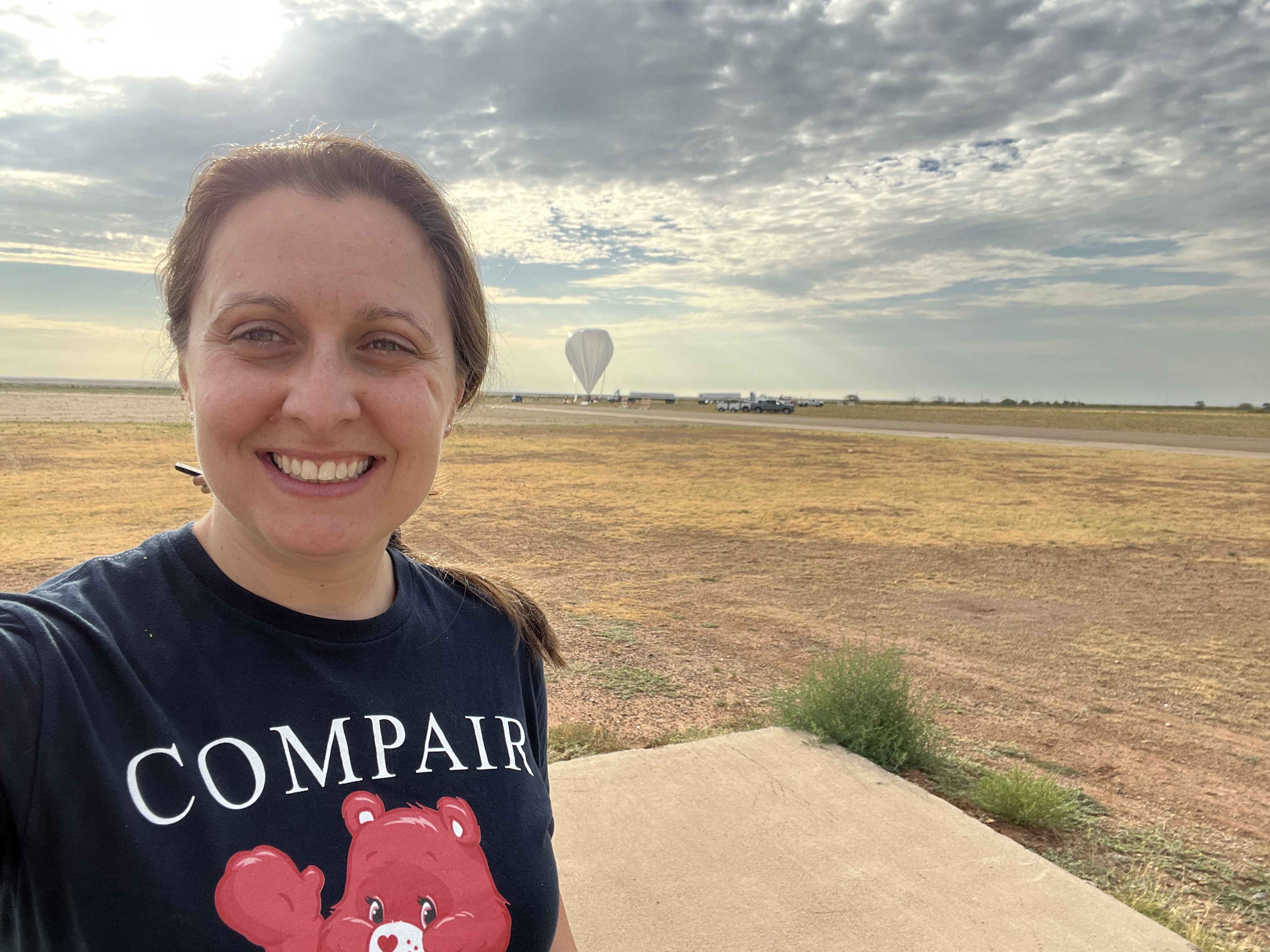
The other team, called Compton-Pair Telescope (ComPair), built a prototype gamma-ray telescope that was launched as a balloon payload last summer. Right now, we’re working on the next generation of it.

Regina Caputo smiles at the camera in a selfie that captures her head and shoulders. Her brown hair is tied back in a ponytail, and she is wearing a navy-blue tee-shirt which reads “COMPAIR.” Behind Regina is a large open field covered in patches of light brown and yellow grass. The sky is a hazy gray-blue and is covered in dark gray clouds that are thick in certain places but patchy. In the far distance behind Regina, nearing the horizon, is a large space-balloon. The balloon resembles a gray upside-down teardrop, the tip of which just touches the ground.
Regina Caputo at the August 2023 ComPair balloon launch in Fort Sumter, New Mexico. ComPair is a prototype gamma-ray telescope that can measure and detect gamma-rays.
Photo courtesy of Regina Caputo

What is challenging about your position?

I think one of the most challenging things is communicating effectively with an international group of people. You have to be like an events coordinator to make sure people have the resources they need.

What role do you serve for early career scientists?

I think it’s really important that scientists think about the next generation of scientists and technically minded people. It’s really important to me to make sure that we are giving junior folks the field opportunities they need to achieve their goals. 

What science outreach do you do?

I really enjoy science outreach, so I like to jump in whenever there’s an opportunity — like Black Hole Week, career days, or public talks. I like to be able to say, “Hey, you’re paying us to explore the universe — here’s what we found!”

What goals do you have for the future?

It would be so cool to see the detectors we develop to be in a next-generation gamma-ray telescope that flies and takes data. It’s a hard goal, but hey, I shoot for the stars.

By Laine Havens
NASA’s Goddard Space Flight Center in Greenbelt, Md.

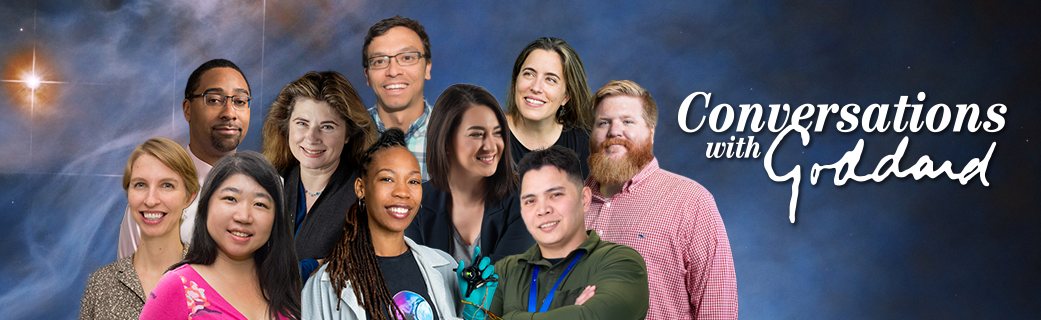
A banner graphic with a group of people smiling and the text "Conversations with Goddard" on the right. The people represent many genders, ethnicities, and ages, and all pose in front of a soft blue background image of space and stars.

Conversations With Goddard is a collection of Q&A profiles highlighting the breadth and depth of NASA’s Goddard Space Flight Center’s talented and diverse workforce. The Conversations have been published twice a month on average since May 2011. Read past editions on Goddard’s “Our People” webpage.

Share

Details

Last Updated

Aug 09, 2024

Editor
Madison Olson
Contact
Rob Garner
Location
Goddard Space Flight Center

Powered by WPeMatico

Get The Details…
Madison Olson

The International Space Station’s “window to the world”

The International Space Station’s “window to the world”

The International Space Station's
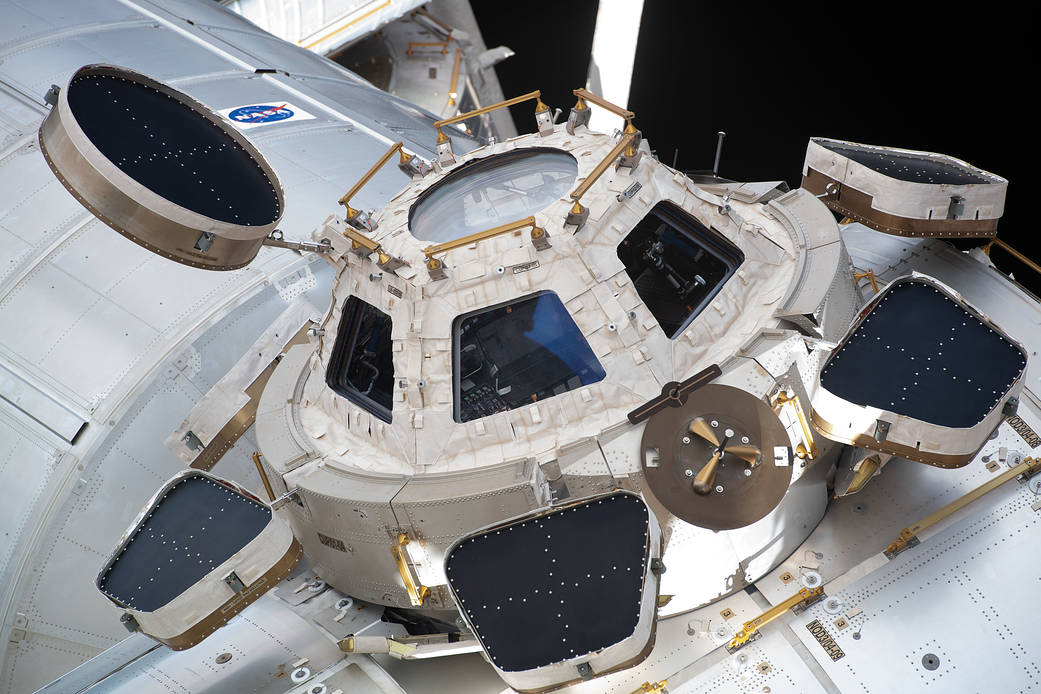
The International Space Station’s “window to the world” is pictured from the Nauka Multipurpose Laboratory Module.
NASA

The cupola is a small module designed for the observation of operations outside the station such as robotic activities, the approach of vehicles, and spacewalks. Its six side windows and a direct nadir viewing window provide spectacular views of Earth and celestial objects. The windows are equipped with shutters to protect them from contamination and collisions with orbital debris or micrometeorites. The cupola house the robotic workstation that controls the Canadarm2.

Powered by WPeMatico

Get The Details…
Gary Daines

NASA to Launch 8 Scientific Balloons From New Mexico

NASA to Launch 8 Scientific Balloons From New Mexico

4 min read

Preparations for Next Moonwalk Simulations Underway (and Underwater)

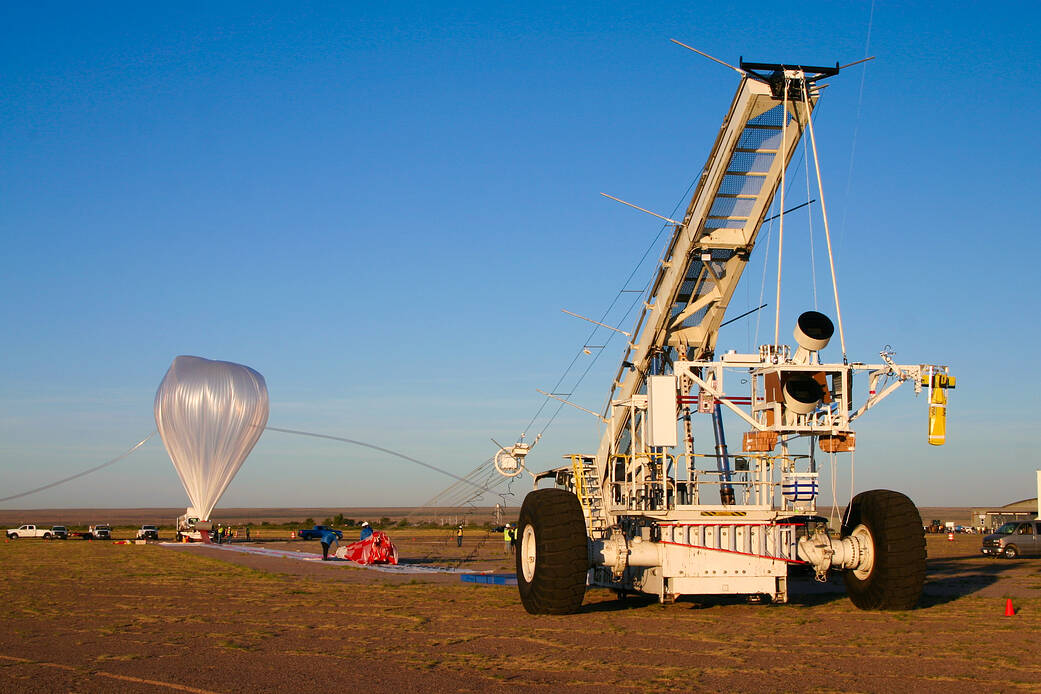
A crane holds a science instrument as a large scientific balloon, tethered to the ground, inflates before liftoff in New Mexico.
A scientific balloon is inflated for the Salter Test Flight before being released during NASA’s 2023 fall balloon campaign. The test flight returns for the 2024 campaign in Fort Sumner, New Mexico, carrying several smaller payloads.
NASA/Andrew Hynous

NASA’s Scientific Balloon Program has kicked off its annual fall balloon campaign at the agency’s balloon launch facility in Fort Sumner, New Mexico. Eight balloon flights carrying scientific experiments and technology demonstrations are scheduled to launch from mid-August through mid-October.

The flights will support 16 missions, including investigations in the fields of astrophysics, heliophysics, and atmospheric research.

“The annual Fort Sumner campaign is the cornerstone of the NASA Balloon Program operations,” said Andrew Hamilton, acting chief of NASA’s Balloon Program Office. “Not only are we launching a large number of missions, but these flights set the foundation for follow-on missions from our long-duration launch facilities in Antarctica, New Zealand, and Sweden. The Fort Sumner campaign is also a strong focus for our student-based payloads and is an excellent training opportunity for our up-and-coming scientists and engineers.”

Returning to the fall lineup is the EXCITE (Exoplanet Climate Infrared Telescope) mission led by Peter Nagler, principal investigator, NASA’s Goddard Space Flight Center in Greenbelt, Maryland. EXCITE features an astronomical telescope developed to study the atmospheric properties of Jupiter-type exoplanets from near space. EXCITE’s launch was delayed during the 2023 campaign due to weather conditions.

“The whole EXCITE team is looking forward to our upcoming field campaign and launch opportunity from Fort Sumner,” said Nagler. “We’re bringing a more capable instrument than we did last year and are excited to prove EXCITE from North America before we bring it to the Antarctic for our future long-duration science flight.”

Some additional missions scheduled to launch include:

  • Salter Test Flight: The test flight aims to verify system design and support several smaller payloads on the flight called piggyback missions.
  • HASP 1.0 (High-Altitude Student Platform): This platform supports up to 12 student payloads and assists in training the next generation of aerospace scientists and engineers. It is designed to flight test compact satellites, prototypes, and other small payloads.
  • HASP 2.0 (High-Altitude Student Platform 2): This engineering test flight of the upgraded gondola and systems for the HASP program aims to double the carrying capability of student payloads.
  • DR-TES (mini-Dilution Refrigerator and a Transition Edge Sensor): This flight will test a cooling system and a gamma-ray detector in a near-space environment.
  • TIM Test Flight (Terahertz Intensity Mapper): This experiment will study galaxy evolution and the history of cosmic star formation.
  • THAI-SPICE (Testbed for High-Acuity Imaging ­­– ­­­Stable Photometry and Image-motion Compensation Experiment): The goal of this project is to build and demonstrate a fine-pointing system for stratospheric payloads with balloon-borne telescopes. 
  • TinMan (Thermalized Neutron Measurement Experiment): This hand-launch mission features a 60-pound payload designed to help better understand how thermal neutrons may affect aircraft electronics.

An additional eight piggyback missions will ride along on flights to support science and technology development. Three of these piggyback missions are technology demonstrations led by the balloon program team at NASA’s Wallops Flight Facility in Virginia. Their common goal is to enhance the capabilities of NASA balloon missions. CASBa (Comprehensive Avionics System for Balloons) aims to upgrade the flight control systems for NASA balloon missions. DINGO (Dynamics INstrumentation for GOndolas) and SPARROW-5 (Sensor Package for Attitude, Rotation, and Relative Observable Winds – Five) are technology maturation projects designed to provide new sensing capabilities to NASA balloon missions.

Zero-pressure balloons, used in this campaign, are in thermal equilibrium with their surroundings as they fly. They maintain a zero-pressure differential with ducts that allow gas to escape to prevent an increase in pressure from inside the balloons as they rise above Earth’s surface. This zero-pressure design makes the balloons very robust and well-suited for short, domestic flights, such as those in this campaign. The loss of lift gas during the day-to-night cycle affects the balloon’s altitude after repeated day-to-night cycles; however, this can be overcome by launching from the polar regions, such as Sweden or Antarctica, where the Sun does not set on the balloon in the summer.

To follow the missions in the 2024 Fort Sumner fall campaign, visit NASA’s Columbia Scientific Balloon Facility website for real-time updates of balloons’ altitudes and locations during flight.

NASA’s Wallops Flight Facility in Virginia manages the agency’s scientific balloon flight program with 10 to 15 flights each year from launch sites worldwide. Peraton, which operates NASA’s Columbia Scientific Balloon Facility (CSBF) in Palestine, Texas, provides mission planning, engineering services, and field operations for NASA’s Scientific Balloon Program. The CSBF team has launched more than 1,700 scientific balloons over some 40 years of operations. NASA’s balloons are fabricated by Aerostar. The NASA Scientific Balloon Program is funded by the Science Mission Directorate’s Astrophysics Division at NASA Headquarters in Washington. 

For more information on NASA’s Scientific Balloon Program, visit: https://www.nasa.gov/scientificballoons 

By Olivia Littleton
NASA’s Wallops Flight Facility, Wallops Island, Va.

Share

Details

Last Updated

Aug 09, 2024

Editor
Olivia F. Littleton
Contact
Olivia F. Littleton
Location
Wallops Flight Facility

Powered by WPeMatico

Get The Details…
Olivia F. Littleton

NASA Tests Deployment of Roman Space Telescope’s ‘Visor’

NASA Tests Deployment of Roman Space Telescope’s ‘Visor’

In this clip, engineers are testing the the Nancy Grace Roman Space Telescope’s Deployable Aperture Cover. This component is responsible for keeping light out of the telescope barrel. It will be deployed once in orbit using a soft material attached to support booms and remains in this position throughout the observatory’s lifetime. Credit: NASA’s Goddard Space Flight Center

The “visor” for NASA’s Nancy Grace Roman Space Telescope recently completed several environmental tests simulating the conditions it will experience during launch and in space. Called the Deployable Aperture Cover, this large sunshade is designed to keep unwanted light out of the telescope. This milestone marks the halfway point for the cover’s final sprint of testing, bringing it one step closer to integration with Roman’s other subsystems this fall.

Designed and built at NASA’s Goddard Space Flight Center in Greenbelt, Maryland, the Deployable Aperture Cover consists of two layers of reinforced thermal blankets, distinguishing it from previous hard aperture covers, like those on NASA’s Hubble. The sunshade will remain folded during launch and deploy after Roman is in space via three booms that spring upward when triggered electronically. 

“With a soft deployable like the Deployable Aperture Cover, it’s very difficult to model and precisely predict what it’s going to do — you just have to test it,” said Matthew Neuman, a Deployable Aperture Cover mechanical engineer at Goddard. “Passing this testing now really proves that this system works.”

Roman's Deployable Aperture Cover
After a successful test deployment at NASA’s Goddard Space Flight Center in Greenbelt, Md., clean room technicians inspect the Deployable Aperture Cover for NASA’s Nancy Grace Roman Space Telescope.
NASA/Chris Gunn

During its first major environmental test, the sunshade endured conditions simulating what it will experience in space. It was sealed inside NASA Goddard’s Space Environment Simulator — a massive chamber that can achieve extremely low pressure and a wide range of temperatures. Technicians placed the DAC near six heaters — a Sun simulator — and thermal simulators representing Roman’s Outer Barrel Assembly and Solar Array Sun Shield. Since these two components will eventually form a subsystem with the Deployable Aperture Cover, replicating their temperatures allows engineers to understand how heat will actually flow when Roman is in space. 

When in space, the sunshade is expected to operate at minus 67 degrees Fahrenheit, or minus 55 degrees Celsius. However, recent testing cooled the cover to minus 94 degrees Fahrenheit, or minus 70 degrees Celsius — ensuring that it will work even in unexpectedly cold conditions. Once chilled, technicians triggered its deployment, carefully monitoring through cameras and sensors onboard. Over the span of about a minute, the sunshade successfully deployed, proving its resilience in extreme space conditions.

“This was probably the environmental test we were most nervous about,” said Brian Simpson, project design lead for the Deployable Aperture Cover at NASA Goddard. “If there’s any reason that the Deployable Aperture Cover would stall or not completely deploy, it would be because the material became frozen stiff or stuck to itself.”

Brian Simpson, product design lead at NASA’s Goddard Space Flight Center, adjusts sensors on the Deployable Aperture Cover for NASA’s Nancy Grace Roman Space Telescope. The sensors will collect data on the DAC’s response to testing.
NASA/Chris Gunn

If the sunshade were to stall or partially deploy, it would obscure Roman’s view, severely limiting the mission’s science capabilities.

After passing thermal vacuum testing, the sunshade underwent acoustic testing to simulate the launch’s intense noises, which can cause vibrations at higher frequencies than the shaking of the launch itself. During this test, the sunshade remained stowed, hanging inside one of Goddard’s acoustic chambers — a large room outfitted with two gigantic horns and hanging microphones to monitor sound levels. 

With the sunshade plastered in sensors, the acoustic test ramped up in noise level, eventually subjecting the cover to one full minute at 138 decibels — louder than a jet plane’s takeoff at close range! Technicians attentively monitored the sunshade’s response to the powerful acoustics and gathered valuable data, concluding that the test succeeded.

Roman's Deployable Aperture Cover
Technicians prepare for acoustic testing at NASA’s Goddard Space Flight Center in Greenbelt, Md. During testing, the Deployable Aperture Cover for NASA’s Nancy Grace Roman Space Telescope was suspended in the air and exposed to 138 decibels for one full minute to simulate launch’s intense noise.
NASA/Chris Gunn

“For the better part of a year, we’ve been building the flight assembly,” Simpson said. “We’re finally getting to the exciting part where we get to test it. We’re confident that we’ll get through with no problem, but after each test we can’t help but breathe a collective sigh of relief!”

Next, the Deployable Aperture Cover will undergo its two final phases of testing. These assessments will measure the sunshade’s natural frequency and response to the launch’s vibrations. Then, the Deployable Aperture Cover will integrate with the Outer Barrel Assembly and Solar Array Sun Shield this fall.

For more information about the Roman Space Telescope, visit NASA’s website. To virtually tour an interactive version of the telescope, visit:

https://roman.gsfc.nasa.gov/interactive

The Nancy Grace Roman Space Telescope is managed at NASA’s Goddard Space Flight Center in Greenbelt, Maryland, with participation by NASA’s Jet Propulsion Laboratory and Caltech/IPAC in Southern California, the Space Telescope Science Institute in Baltimore, and a science team comprising scientists from various research institutions. The primary industrial partners are BAE Systems, Inc in Boulder, Colorado; L3Harris Technologies in Rochester, New York; and Teledyne Scientific & Imaging in Thousand Oaks, California.

Download high-resolution video and images from NASA’s Scientific Visualization Studio

By Laine Havens
NASA’s Goddard Space Flight Center, Greenbelt, Md.

Media contact:
Claire Andreoli
claire.andreoli@nasa.gov

NASA’s Goddard Space Flight Center, Greenbelt, Md.
301-286-1940

Share

Details

Last Updated

Aug 09, 2024

Editor
Ashley Balzer
Contact
Ashley Balzer
Location
Goddard Space Flight Center

Powered by WPeMatico

Get The Details…
Ashley Balzer