Hubble Spotlights a Supernova

Hubble Spotlights a Supernova

2 min read

Hubble Spotlights a Supernova

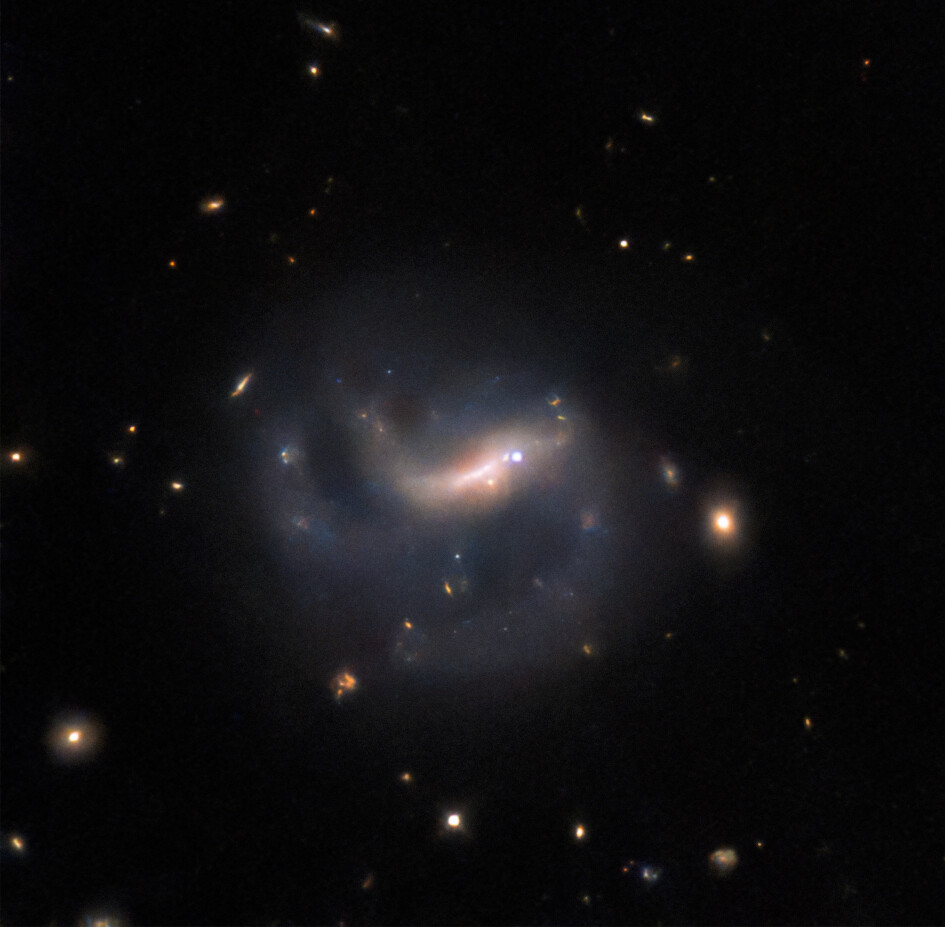
A close-in view of a barred spiral galaxy. A bright, glowing bar crosses the center of the galaxy, with blurred spiral arms curving away from its ends and continuing out of view. Bright points of light that indicate stars and background galaxies surround the featured barred spiral galaxy. The galaxy also hosts a bright supernova in its central bar, just right of image center.
This NASA/ESA Hubble Space Telescope image reveals the galaxy LEDA 857074.
Credit: ESA/Hubble & NASA, R. J. Foley

This NASA/ESA Hubble Space Telescope image features the galaxy LEDA 857074, located in the constellation Eridanus. LEDA 857074 is a barred spiral galaxy, with partially broken spiral arms. The image also captured a supernova, named SN 2022ADQZ, shining brightly on the right side of the galaxy’s bar.

Several evolutionary paths can lead to a supernova explosion. One is the death of a supermassive star. When a supermassive star runs out of its hydrogen fuel, it begins a stage where it fuses the remaining elements to heavier and heavier ones. These final fusion reactions generate less and less outward force (radiation pressure) to balance the star’s gravitational tug inward. As heavier elements form in the star’s core, the core itself begins to fully collapse under its own gravity, and the star’s outer layers blast away in a supernova explosion. Depending on the star’s original mass, its core may collapse to nothing but neutrons, leaving behind a neutron star, or its gravity may be so great that it collapses to a black hole.

Astronomers detected supernova SN 2022ADQZ with an automated survey in late 2022. This discovery led them to look at the supernova’s host galaxy, LEDA 857074, with Hubble in early 2023.

Hubble’s sharp vision means that it can see supernovae that are billions of light years away and difficult for other telescopes to study. A supernova image from the ground usually blends in with the image of its host galaxy, but Hubble can distinguish a supernova’s light from its host galaxy’s, measuring the supernova directly.

Astronomers detect thousands of supernovae annually, but the chance that they spot one in any particular galaxy of the millions that are cataloged is slim. Thanks to this supernova, LEDA 857074 joins the ranks of other celestial objects with its own Hubble image.

Explore More

Media Contact:

Claire Andreoli
NASA’s Goddard Space Flight CenterGreenbelt, MD
claire.andreoli@nasa.gov

Powered by WPeMatico

Get The Details…

NASA Mission Concludes After Years of Successful Asteroid Detections

NASA Mission Concludes After Years of Successful Asteroid Detections

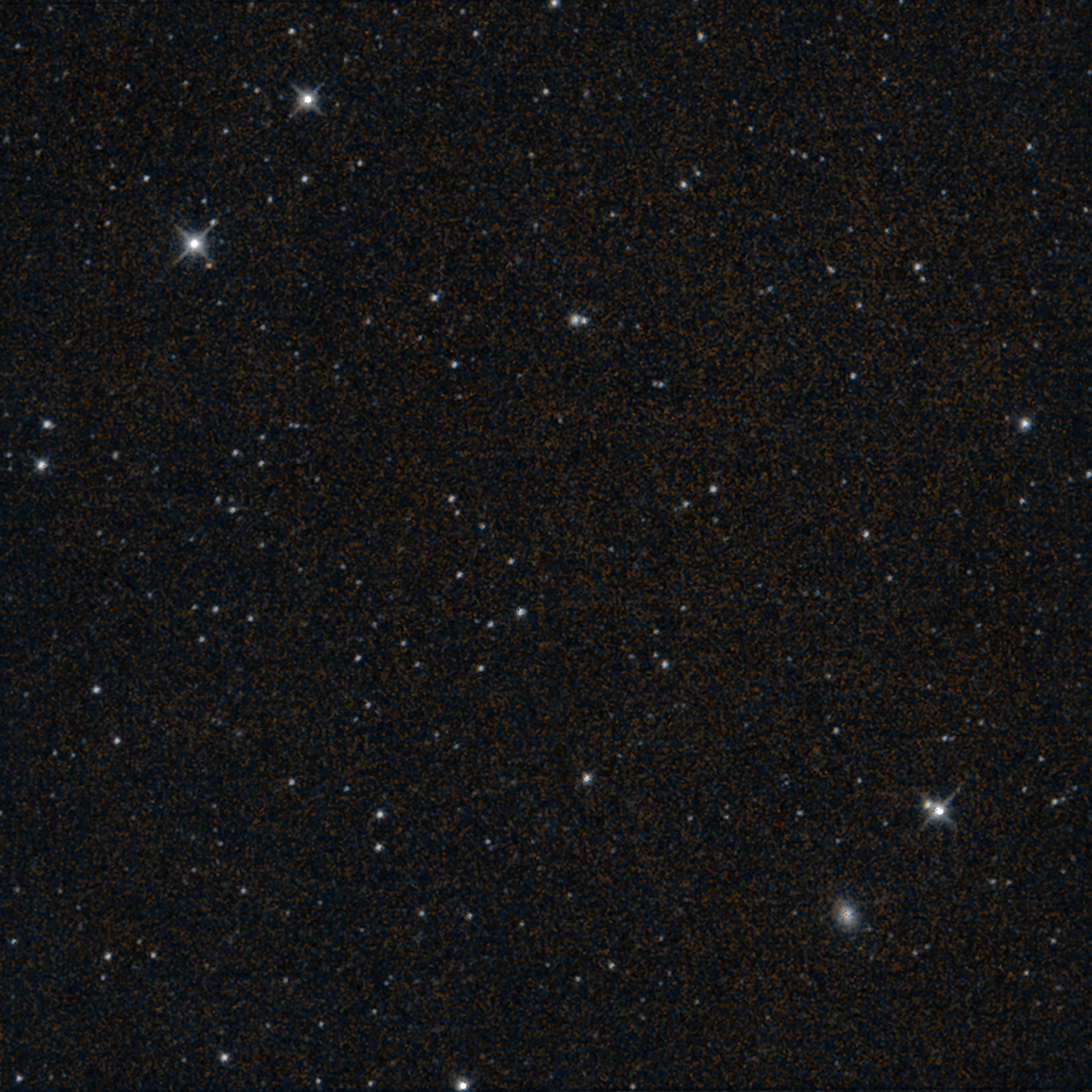
An image captured by NASA’s NEOWISE shows part of the Fornax constellation in the Southern Hemisphere.
This final image captured by NASA’s NEOWISE shows part of the Fornax constellation in the Southern Hemisphere. Processed by IPAC at Caltech, this is the mission’s 26,886,704th exposure. It was taken by the spacecraft just before 3 a.m. EDT on Aug. 1, when the mission’s survey ended.
Credits: NASA/JPL-Caltech/IPAC/UCLA

Engineers on NASA’s NEOWISE (Near-Earth Object Wide-field Infrared Survey Explorer) mission commanded the spacecraft to turn its transmitter off for the last time Thursday. This concludes more than 10 years of its planetary defense mission to search for asteroids and comets, including those that could pose a threat to Earth.

The final command was sent from the Earth Orbiting Missions Operation Center at NASA’s Jet Propulsion Laboratory in Southern California, with mission members past and present in attendance alongside officials from the agency’s headquarters in Washington. NASA’s Tracking and Data Relay Satellite System then relayed the signal to NEOWISE, decommissioning the spacecraft. As NASA previously shared, the spacecraft’s science survey ended on July 31, and all remaining science data was downlinked from the spacecraft.

“The NEOWISE mission has been an extraordinary success story as it helped us better understand our place in the universe by tracking asteroids and comets that could be hazardous for us on Earth,” said Nicola Fox, associate administrator, Science Mission Directorate at NASA Headquarters. “While we are sad to see this brave mission come to an end, we are excited for the future scientific discoveries it has opened by setting the foundation for the next generation planetary defense telescope.”

NASA ended the mission because NEOWISE will soon drop too low in its orbit around Earth to provide usable science data. An uptick in solar activity is heating the upper atmosphere, causing it to expand and create drag on the spacecraft, which does not have a propulsion system to keep it in orbit. Now decommissioned, NEOWISE is expected to safely burn up in our planet’s atmosphere in late 2024.

During its operational lifetime, the infrared survey telescope exceeded scientific objectives for not one but two missions, starting with the WISE (Wide-field Infrared Survey Explorer) mission. Managed by JPL, WISE launched in December 2009 with a seven-month mission to scan the entire infrared sky. By July 2010, WISE had accomplished this with far greater sensitivity than previous surveys. A few months later, the telescope ran out of the coolant that kept heat produced by the spacecraft from interfering with its infrared observations. (Invisible to the human eye, infrared wavelengths are associated with heat.)

NASA extended the mission under the name NEOWISE until February 2011 to complete a survey of the main belt asteroids, at which point the spacecraft was put into hibernation. Analysis of this data showed that although the lack of coolant meant the space telescope could no longer observe the faintest infrared objects in the universe, it could still make precise observations of asteroids and comets that generate a strong infrared signal from being heated by the Sun as they travel past our planet.

NASA brought the telescope out of hibernation in 2013 under the Near-Earth Object Observations Program, a precursor for the agency’s Planetary Defense Coordination Office, to continue the NEOWISE survey of asteroids and comets in the pursuit of planetary defense.

“The NEOWISE mission has been instrumental in our quest to map the skies and understand the near-Earth environment. Its huge number of discoveries have expanded our knowledge of asteroids and comets, while also boosting our nation’s planetary defense,” said Laurie Leshin, director, NASA JPL. “As we bid farewell to NEOWISE, we also celebrate the team behind it for their impressive achievements.” 

By repeatedly observing the sky from low Earth orbit, NEOWISE created all-sky maps featuring 1.45 million infrared measurements of more than 44,000 solar system objects. Of the 3,000-plus near-Earth objects it detected, 215 were first spotted by NEOWISE. The mission also discovered 25 new comets, including the famed comet C/2020 F3 NEOWISE that streaked across the night sky in the summer of 2020.

In addition to leaving behind a trove of science data, the spacecraft has helped inform the development of NASA’s first infrared space telescope purpose-built for detecting near-Earth objects: NEO Surveyor.

“The NEOWISE mission has provided a unique, long-duration data set of the infrared sky that will be used by scientists for decades to come,” said Amy Mainzer, principal investigator for both NEOWISE and NEO Surveyor at the University of California, Los Angeles. “But its additional legacy is that it has helped lay the groundwork for NASA’s next planetary defense infrared space telescope.”

Also managed by JPL, NEO Surveyor will seek out some of the hardest-to-find near-Earth objects, such as dark asteroids and comets that don’t reflect much visible light, as well as objects that approach Earth from the direction of the Sun. The next-generation infrared space telescope will greatly enhance the capabilities of the international planetary defense community, which includes NASA-funded ground surveys. Construction of NEO Surveyor is already well under way, with a launch date set for no earlier than 2027.

More Mission Information

The NEOWISE and NEO Surveyor missions support the objectives of NASA’s Planetary Defense Coordination Office at the agency’s headquarters. The NASA Authorization Act of 2005 directed NASA to discover and characterize at least 90% of the near-Earth objects more than 460 feet (140 meters) across that come within 30 million miles (48 million kilometers) of our planet’s orbit. Objects of this size can cause significant regional damage, or worse, should they impact the Earth.

NASA JPL manages and operates the NEOWISE mission for the agency’s Planetary Defense Coordination Office within the Science Mission Directorate. The Space Dynamics Laboratory in Logan, Utah, built the science instrument. BAE Systems of Boulder, Colorado, built the spacecraft. Science data processing, archiving, and distribution is done at IPAC at Caltech in Pasadena, California. Caltech manages JPL for NASA.

To learn more about NEOWISE, visit:

https://www.nasa.gov/neowise

-end-

Karen Fox / Alana Johnson
Headquarters, Washington
202-358-1600
karen.c.fox@nasa.govalana.r.johnson@nasa.gov

Ian J. O’Neill
Jet Propulsion Laboratory, Pasadena, Calif.
818-354-2649
ian.j.oneill@jpl.nasa.gov 

Powered by WPeMatico

Get The Details…
Tiernan P. Doyle

NASA Aircraft Gathers 150 Hours of Data to Better Understand Earth

NASA Aircraft Gathers 150 Hours of Data to Better Understand Earth

3 min read

Preparations for Next Moonwalk Simulations Underway (and Underwater)

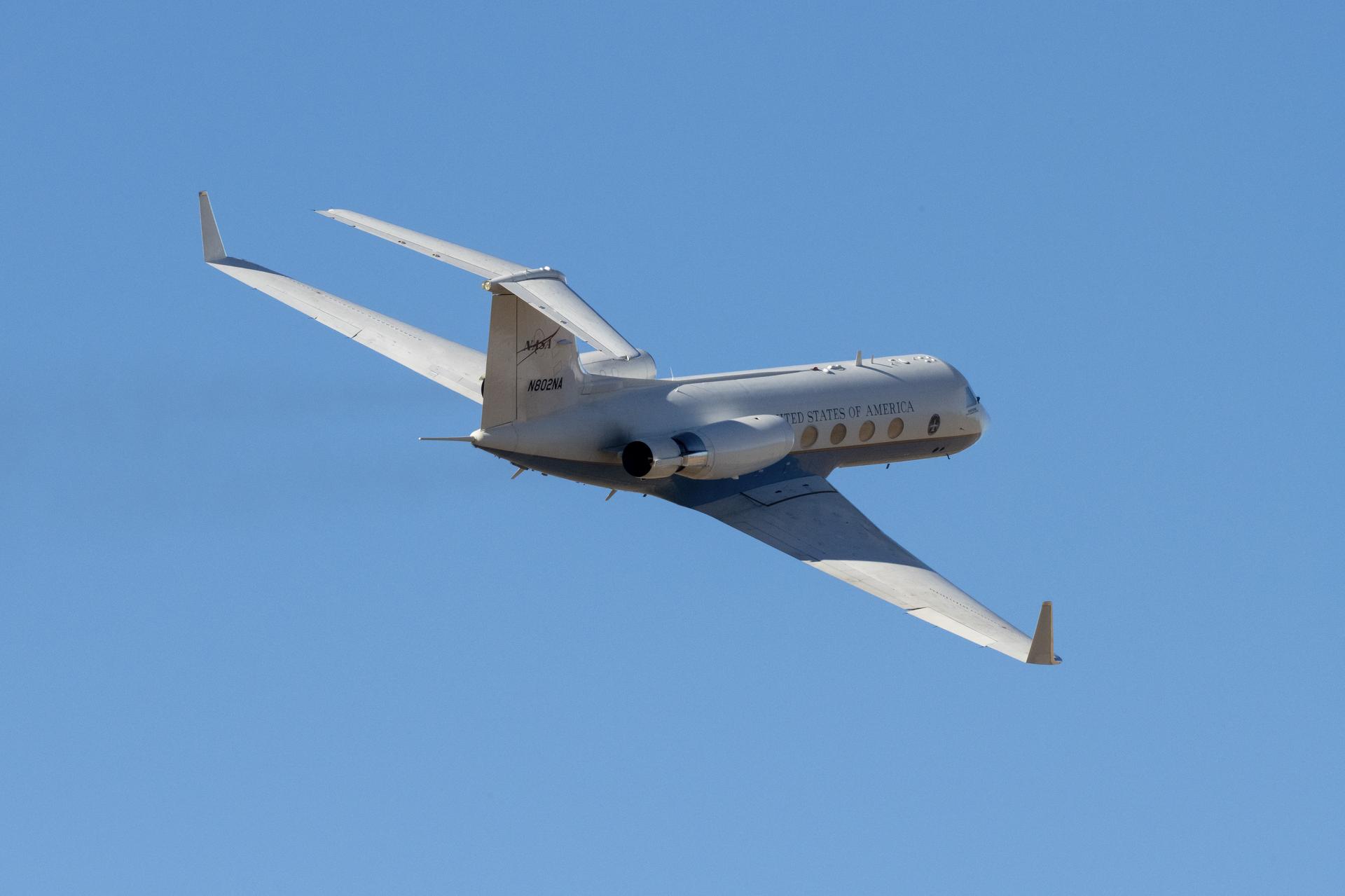
An aircraft in flight against a bright blue cloudless sky.
NASA’s C-20A aircraft completed more than 150 hours of international science flights from May 20 to July 24 in support of an Earth science deployment series. The aircraft, owned and operated by NASA’s Armstrong Flight Research Center in Edwards, California, overcame several challenges throughout the missions.
NASA/Carla Thomas

Operating internationally over several countries this summer, NASA’S C-20A aircraft completed more than 150 hours of science flights across two months in support of Earth science research and overcame several challenges throughout its missions.

Based at NASA’s Armstrong Flight Research in Edwards, California, the C-20A research aircraft has been modified to support the Uninhabited Aerial Vehicle Synthetic Aperture Radar and SAR-fusion camera. The instruments, built and operated by NASA’s Jet Propulsion Laboratory in Southern California, collect data and images of Earth’s surface for use in understanding global ecosystems, natural hazards, and land surface changes.  

From May 20 to July 24, the team crossed the Atlantic and deployed to several locations in Africa, as well as Germany, for two campaigns. They included the Africa Synthetic Aperture Radar (AfriSAR) mission, in collaboration with the European Space Agency, and the Germany Bistatic Experiment, in collaboration with the German Aerospace Center.

For the AfriSAR mission, researchers collected airborne data over African forests, savannas, and wetlands for use in studies of Earth’s ecosystems. Datasets collected over Germany will be used to develop land surface height maps.

Ten people post in front of an aircraft.
NASA team members pose in front of the C-20A aircraft while in Sao Tome, Africa, May 24, 2024. From left, Kirt Stallings, Joe Piotrowski Jr., Adam Vaccaro, Carrie Worth, Tim Miller, Otis Allen, Roger “Todd” Renfro, Edgar Aragon-Torres, Ryan Applegate, and Isac Mata.
NASA

The flight team successfully achieved its missions despite several challenges, including mechanical and technical issues with the aircraft. Despite the challenges, the team resolved issues quickly and worked to minimize impacts to the science schedule and objectives.

“We prepared for the unexpected and we expected to be unprepared,” said Shawn Kern, NASA Armstrong’s director of safety and mission assurance and a C-20A pilot. “With that mindset, we were ready to adapt and change the plans as needed, and met challenges with a lot of resilience, a lot of innovation, and a lot of improvised solutions to get things done despite some significant roadblocks.”

The team included aircraft mechanics, avionics technicians, quality assurance representatives, science leads and instrument operators, operation engineers, mission managers, and pilots. They were also supported by project management, safety, logistics, weather, and maintenance personnel at NASA Armstrong.

NASA pilots Kirt “Skirt” Stallings and Carrie Worth fly the C-20A aircraft over Africa on July 9, 2024.
NASA

“It was really the teamwork, improvisation, and creativity that resolved these unexpected challenges that made the mission a success.” Kern added.

Gathering scientific data in unique regions and conditions is necessary to understanding climate on the global scale. Data generated from these two airborne campaigns can be used to support the calibration and validation of data from future satellite-based missions like NISAR (NASA ISRO Synthetic Aperture Radar).

“Airborne campaigns like these are essential for enabling space-based technology. There are often measurements and science that simply cannot be achieved from satellites alone, and so they require airborne data collection.” said Gerald Bawden, program scientist for studies of Earth’s surface and interior at NASA Headquarters in Washington. “This deployment advanced both of these areas and was enabled by this team.”

Powered by WPeMatico

Get The Details…
Dede Dinius

This Rocks! NASA is Sending Student Science to Space

This Rocks! NASA is Sending Student Science to Space

4 min read

Preparations for Next Moonwalk Simulations Underway (and Underwater)

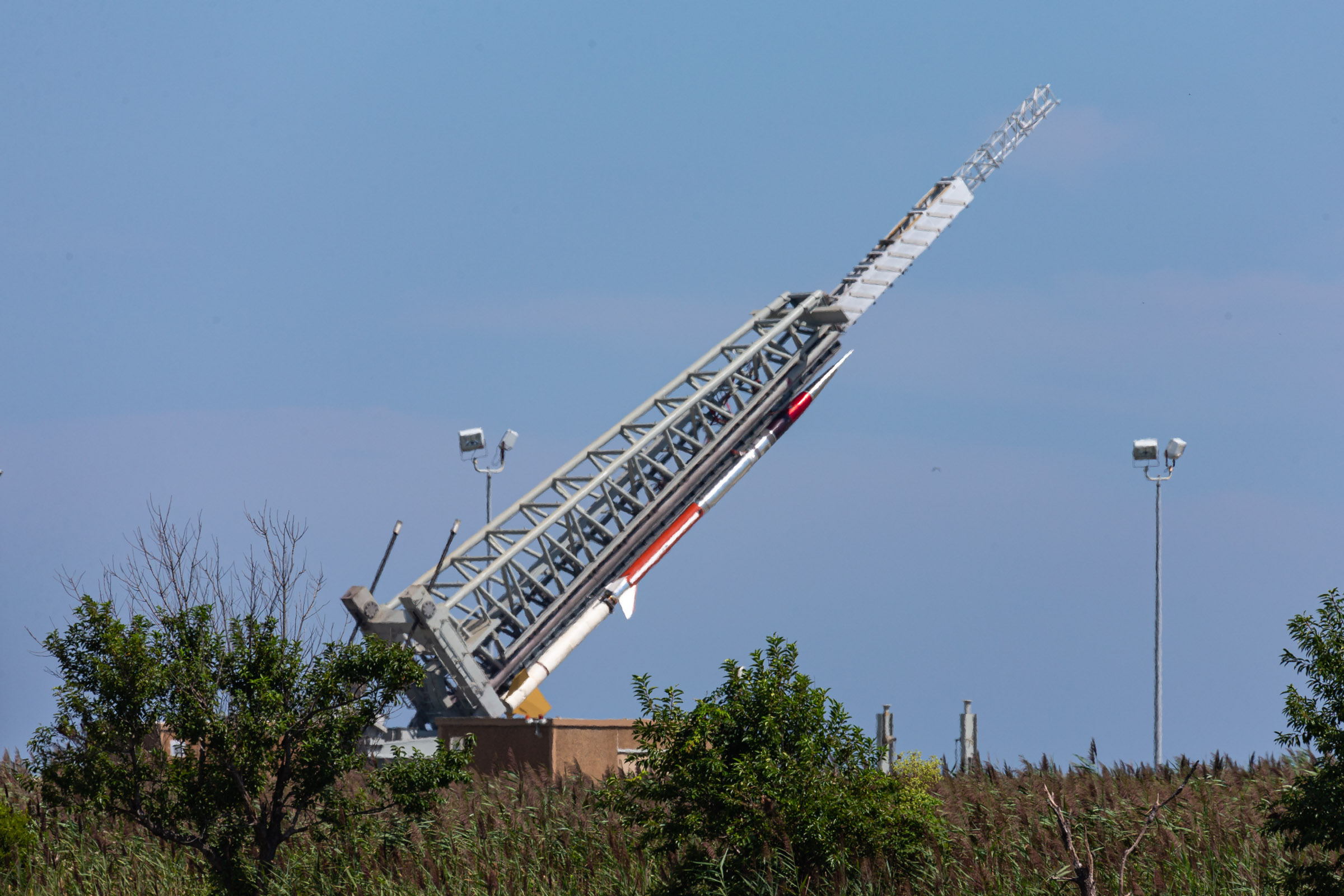
A sounding rocket is being raised on the launch rail, it is still in a horizontal position. The red a silver rocket contrasts against the bright blue sky behind, and green foliage can be seen at the bottom of the photo
A Terrier Improved Malemute sounding rocket carrying RockSat-X student developed experiments being raised on the launch rail on Wallops Island
NASA

NASA’s Wallops Flight Facility in Virginia is scheduled to launch a sounding rocket carrying student-developed experiments for the RockSat-X mission on Tuesday, Aug. 13.

The Terrier-Improved Malemute rocket is expected to reach an altitude of about 100 miles (162 kilometers) before descending by parachute into the Atlantic Ocean to be recovered. The launch window for the mission is 6 a.m. to 9 a.m. EDT, Aug. 13, with backup days of Aug. 14, 15, and 16. The Wallops Visitor Center’s launch viewing area will open at 5 a.m. for launch viewing. A livestream of the mission will begin 15 minutes before launch on the Wallops YouTube channel. Launch updates are also available via the Wallops Facebook page. The launch may be visible in the Chesapeake Bay region.

The rocket will carry experiments developed by nine university and community college teams as part of NASA’s RockSat programs.

“The RockSat program provides unique hands-on experiences for students in the development of scientific experiments and working in teams, so these students are ready to enter STEM careers,” said Dr. Joyce Winterton, Wallops senior advisor for education and leadership development.

A series of circles show areas in the United States from where a sounding rocket launch may be viewed at different times during flight.
These circular areas show where and when people may see the rocket launch in the sky, depending on cloud cover. The different colored sections indicate the time (in seconds) after liftoff that the sounding rocket may be visible.
NASA/Christian Billie

RockSat-X 2024 Flight Projects

  • The University of Alabama Huntsville is flying two primary experiments:
    1. Joint Union of Payload Information and Technology between Experiments and Rockets (JUPITER), a custom spacecraft bus-like system that connects experiment hardware with existing launch vehicle electronics.
    2. SwingSat will increase the technology readiness level of momentum exchange tether technology in the context of satellite constellation deployments.
  • The University of Alberta will demonstrate instruments for characterizing plasma wave activity and electron microburst precipitation, specifically by resolving precipitating relativistic and sub-relativistic electrons. The project will be capable of measuring magnetic plasma wave oscillations, including chorus waves and ground-based Very Low Frequency transmitters. The outcome of this mission will improve the Technology Readiness Level.
  • Clemson University’s experiment will measure electron density and temperature of the E region ionosphere, between 56- 93 miles (90-150 kilometers).
  • The College of the Canyons experiment will deploy three capsules to gather data on greenhouse gases in the upper atmosphere to aid in the fight against climate change.
  • The Community Colleges of Colorado, a collaboration of Arapahoe and Red Rocks Community Colleges, aims to evaluate how microgravity affects the mechanical properties of lunar regolith simulants sintered during suborbital flight. The mission will also create a cost-efficient star tracker using off-the-shelf materials and open-source software.
  • Northwest Nazarene University is testing a space-rated robotic arm capable of tracking and capturing objects. The arm will deploy and catch three balls, then stow itself for reentry, and will also capture video footage of all the catch attempts.
  • The University of Puerto Rico will collect environmental data of the atmosphere using humidity, temperature, and pressure sensors. Using an Ultra High Frequency antenna, telecommunications will use open-source protocols to beam down data to ground stations at Wallops. Uninterrupted Virtual Reality footage of flight will be used for STEM engagement.
  • Virginia Tech’s experiment tests a space tether that provides a small CubeSat with power and a mechanical connection.
  • West Virginia Space Collaboration, a collaboration of five West Virginia universities, will conduct nine independent experiments flying on the 2024 RockSat-X mission. Included are:
    • Lower Ionosphere Electric Field Double Probes (LIEF), which will study plasma and electric field densities throughout the flight.
    • A mycelium properties experiment that will study the mechanical properties of mycelium under space flight conditions.
    • A flight dynamics module that will record data on rocket and space flight conditions.
    • A Geiger counter to detect radiation density during flight.
    • A heat study that will analyze heat dissipation during space flight and reentry.
    • A study on the effect of spaceflight on microbes in soil during flight and reentry.
    • Power generation using type K thermocouples.
    • Spectrometric and photographic data of the Sun.
    • Creation of a 3D model of flight using LiDAR tracking and flight data.
A student participant integrating a RockSat-X experiment
NASA/Berit Bland

NASA’s Sounding Rocket Program is conducted at the agency’s Wallops Flight Facility, which is managed by NASA’s Goddard Space Flight Center in Greenbelt, Maryland. NASA’s Heliophysics Division manages the sounding rocket program for the agency.

Share

Details

Last Updated

Aug 08, 2024

Editor
Amy Barra
Contact
Location
Wallops Flight Facility

Powered by WPeMatico

Get The Details…
Amy Barra

Interior of Vacuum Tank at the Electric Propulsion Laboratory

Interior of Vacuum Tank at the Electric Propulsion Laboratory

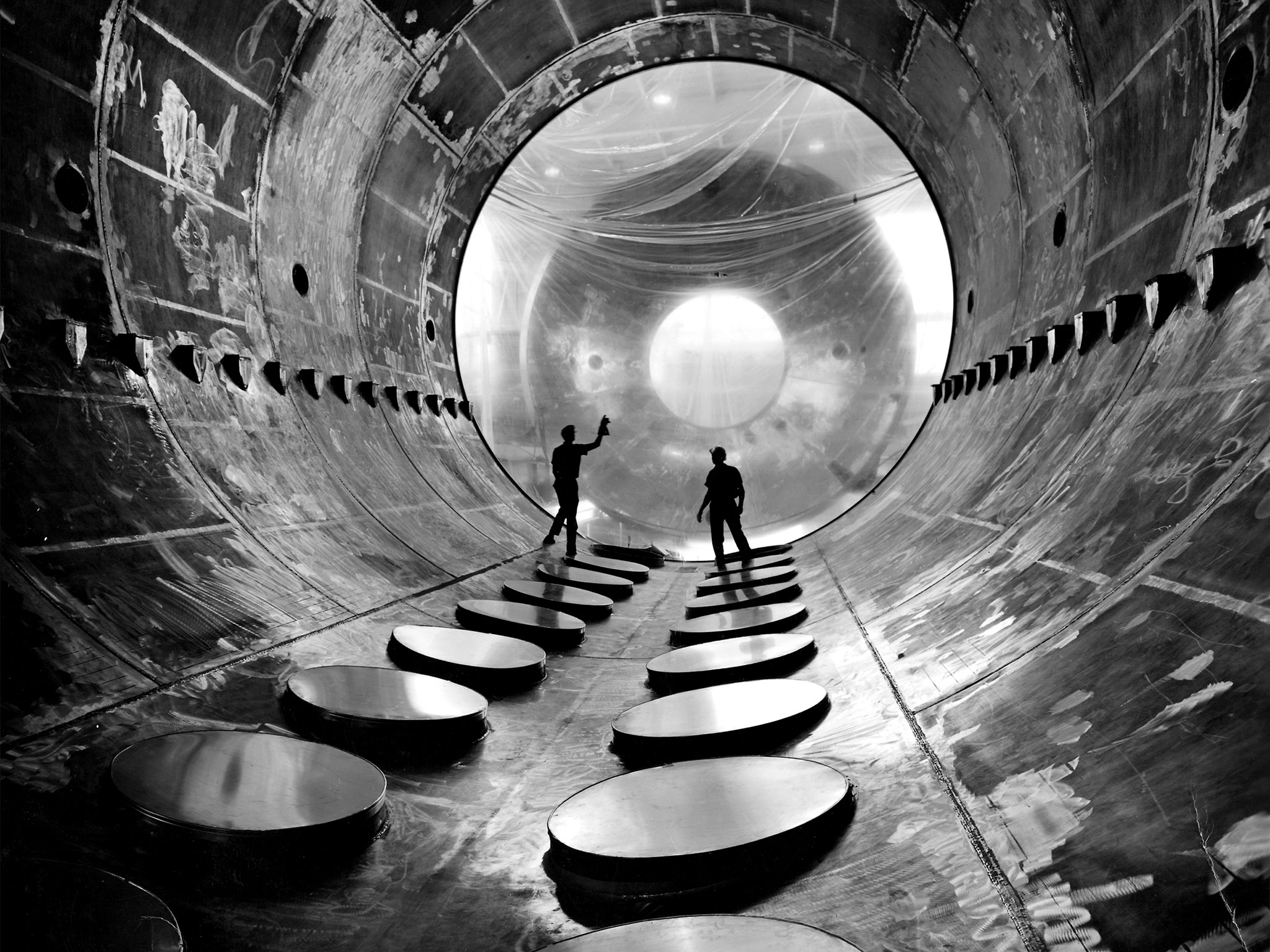
Two workers in a large vacuum tank.

Interior of the 20-foot diameter vacuum tank at the NASA Lewis Research Center’s Electric Propulsion Laboratory.

The Electric Propulsion Laboratory, which began operation in 1961, contained two large vacuum tanks capable of simulating a space environment. The tanks were designed especially for testing ion and plasma thrusters and spacecraft. The larger 25-foot diameter tank included a 10-foot diameter test compartment to test electric thrusters with condensable propellants. The portals along the chamber floor lead to the massive exhauster equipment that pumped out the air to simulate the low pressures found in space.

Lewis researchers had been studying different electric rocket propulsion methods since the mid-1950s. Harold Kaufman created the first successful ion engine, the electron bombardment ion engine, in the early 1960s. These engines used electric power to create and accelerate small particles of propellant material to high exhaust velocities. Electric engines have a very small thrust, but can operate for long periods of time. The ion engines are often clustered together to provide higher levels of thrust.

NASA

Powered by WPeMatico

Get The Details…
Gary Daines