Station Science Top News: August 9, 2024

Station Science Top News: August 9, 2024

Researchers tested a treatment on cartilage and bone tissue cultures subjected to compressive impact injury and found differences in the metabolites and proteins released by cells in space and on Earth along with partial improvement in both gravity conditions. The findings suggest the treatment is safe and could help ensure the health of crew members on future missions and patients on Earth.

Astronauts have high rates of musculoskeletal injuries, and post-traumatic osteoarthritis from joint injuries is a major contributor to disability across all ages on the ground. MVP Cell-06 used cultures of human knee cartilage and bone cells from two donors to study how spaceflight affects musculoskeletal disease. Results could lead to ways to prevent and treat bone and cartilage degradation in astronauts and people on Earth following joint injury.

Expedition 60 Flight Engineer Drew Morgan works with the Multi-use Variable-g Platform (MVP) Experiment Module used in the MVP Cell-02 investigation.
NASA/Christina Koch

NASA and Roscosmos researchers examined brazing of an aluminum-silicon material and found that gravity had a moderate effect with small quantities of the alloy and a more significant effect with larger quantities. The finding could inform techniques for manufacturing on future space missions.

SUBSA-BRAINS examined capillary flow, interface reactions, and bubble formation during solidification of brazing alloys in microgravity. Brazing, which bonds similar and dissimilar materials at temperatures above 450°C, is a potential tool for construction, manufacture, and repair of space vehicles and habitats.

Roscosmos cosmonaut and Expedition 65 Flight Engineer Oleg Novitskiy swaps hardware inside the U.S. Destiny laboratory module’s Microgravity Science Glovebox for a physics investigation.
NASA/Shane Kimbrough

Analysis of the pain experience of two Axiom-1 astronauts suggests that spaceflight may affect sensory perception and regulation, a finding similar to previous studies. Researchers recommend developing measurement tools with greater sensitivity and questions that capture previous spaceflight experience and astronaut status (commercial or professional) to assess pain experiences.

Astronauts frequently report pain during missions and after returning to Earth, particularly in the back and neck. Microgravity Pain Sensation (Ax-1) assessed how short-term exposure to microgravity affects pain sensation, biomechanics, bone physiology, and the musculoskeletal system. Results suggested that spaceflight may affect various aspects of sensory perception and regulation, and further investigation is needed to support development of countermeasures and treatments.
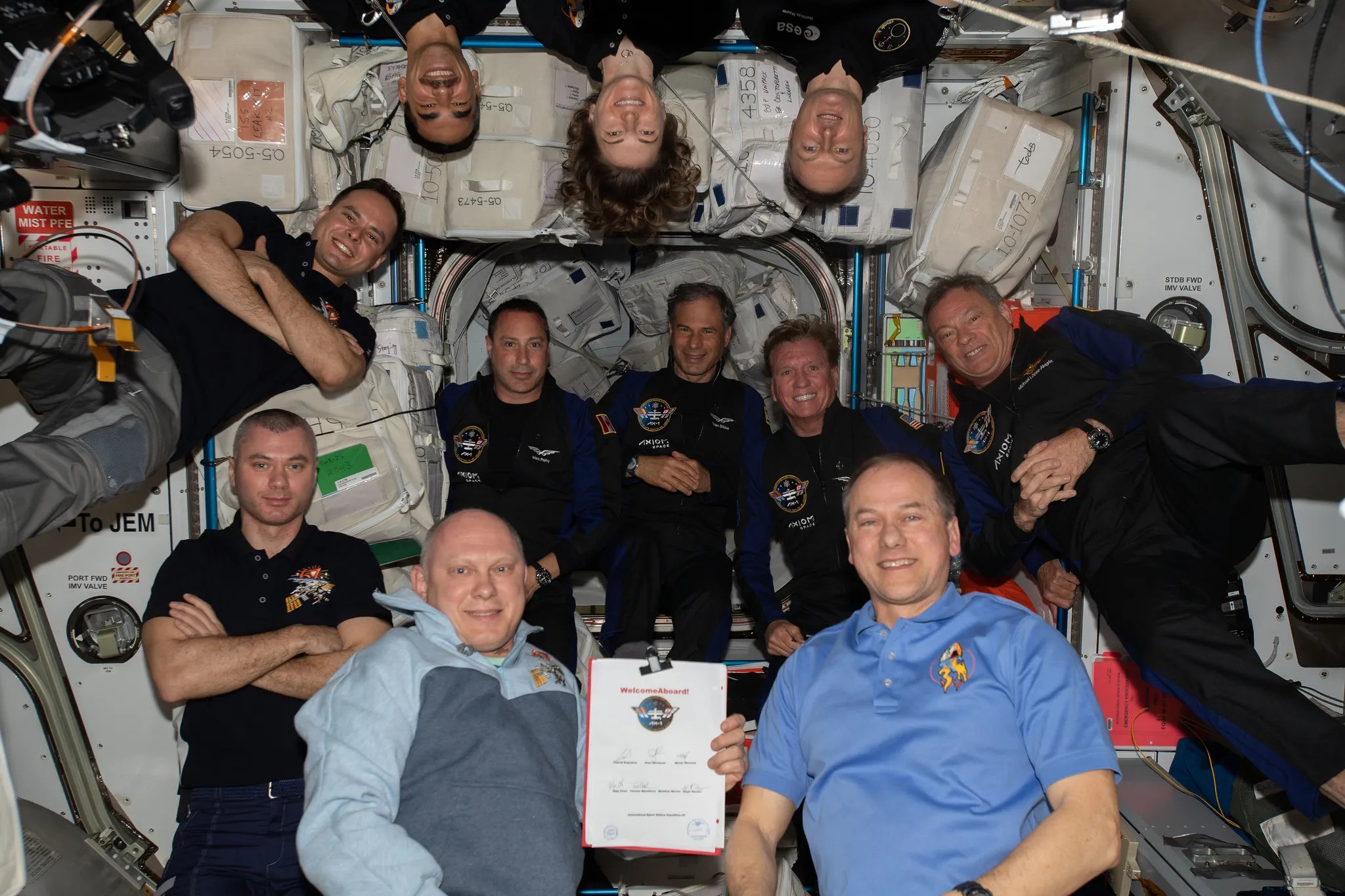
The 11-person crew aboard the International Space Station comprises of (clockwise from bottom right) Expedition 67 Commander Tom Marshburn with Flight Engineers Oleg Artemyev, Denis Matveev, Sergey Korsakov, Raja Chari, Kayla Barron, and Matthias Maurer; and Axiom Mission 1 astronauts (center row from left) Mark Pathy, Eytan Stibbe, Larry Conner, and Michael Lopez-Alegria.
NASA

The 13th annual International Space Station Research and Development Conference (ISSRDC), sponsored by the ISS National Lab, brought together more than 900 leaders in academia, industry, and government to discuss the space station’s role in future research and development.

The event was held in Boston July 30 to Aug 1. Speakers included White House Office of Science and Technology Policy Assistant Director for Space Policy Jinni Meehan, NASA Associate Administrator Jim Free, NASA astronaut Stephen Bowen, and representatives from the International Space Station international and commercial partners.

Powered by WPeMatico

Get The Details…
Sumer Loggins
Webb Sees Gassy Baby Stars

Webb Sees Gassy Baby Stars

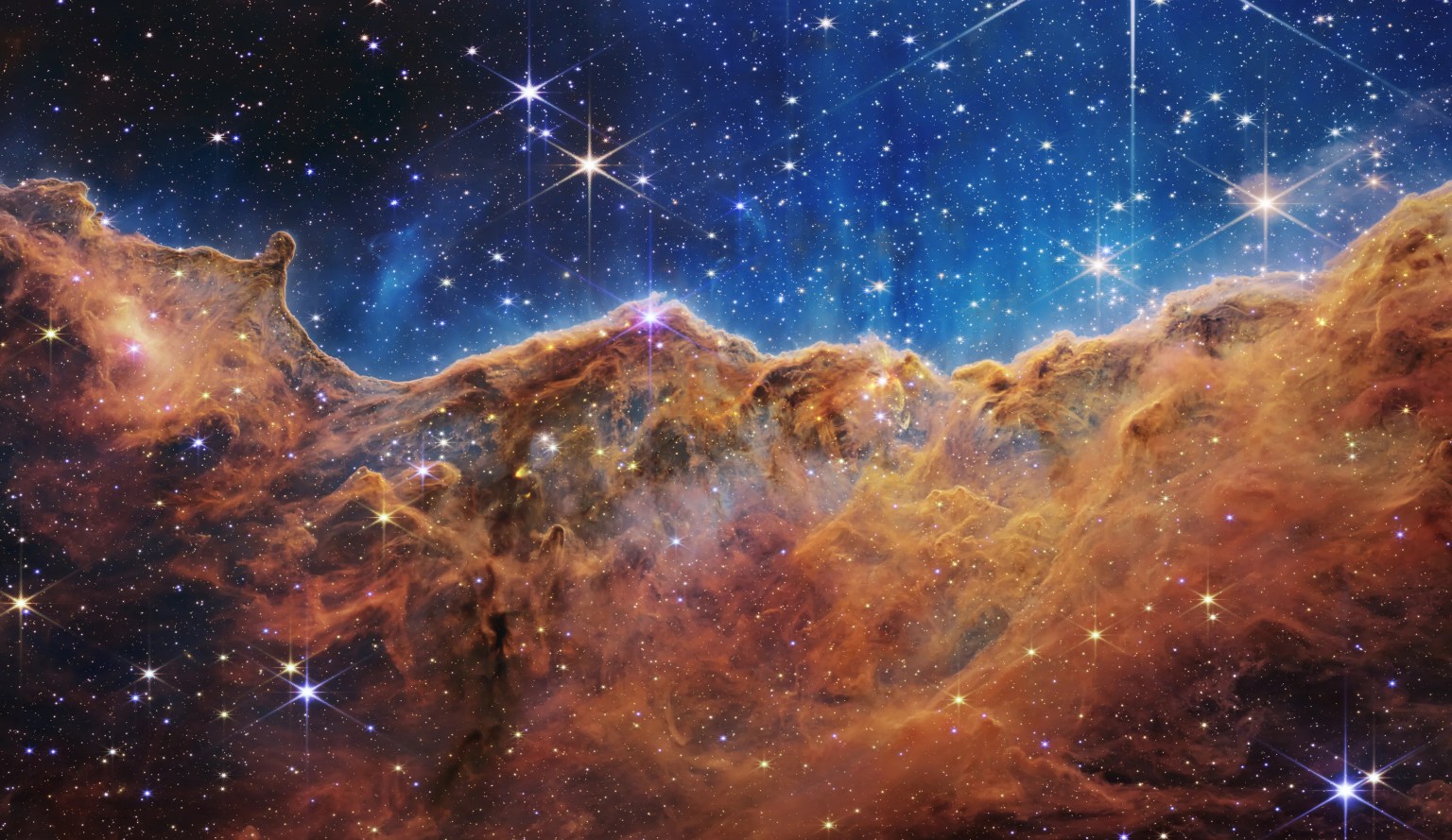
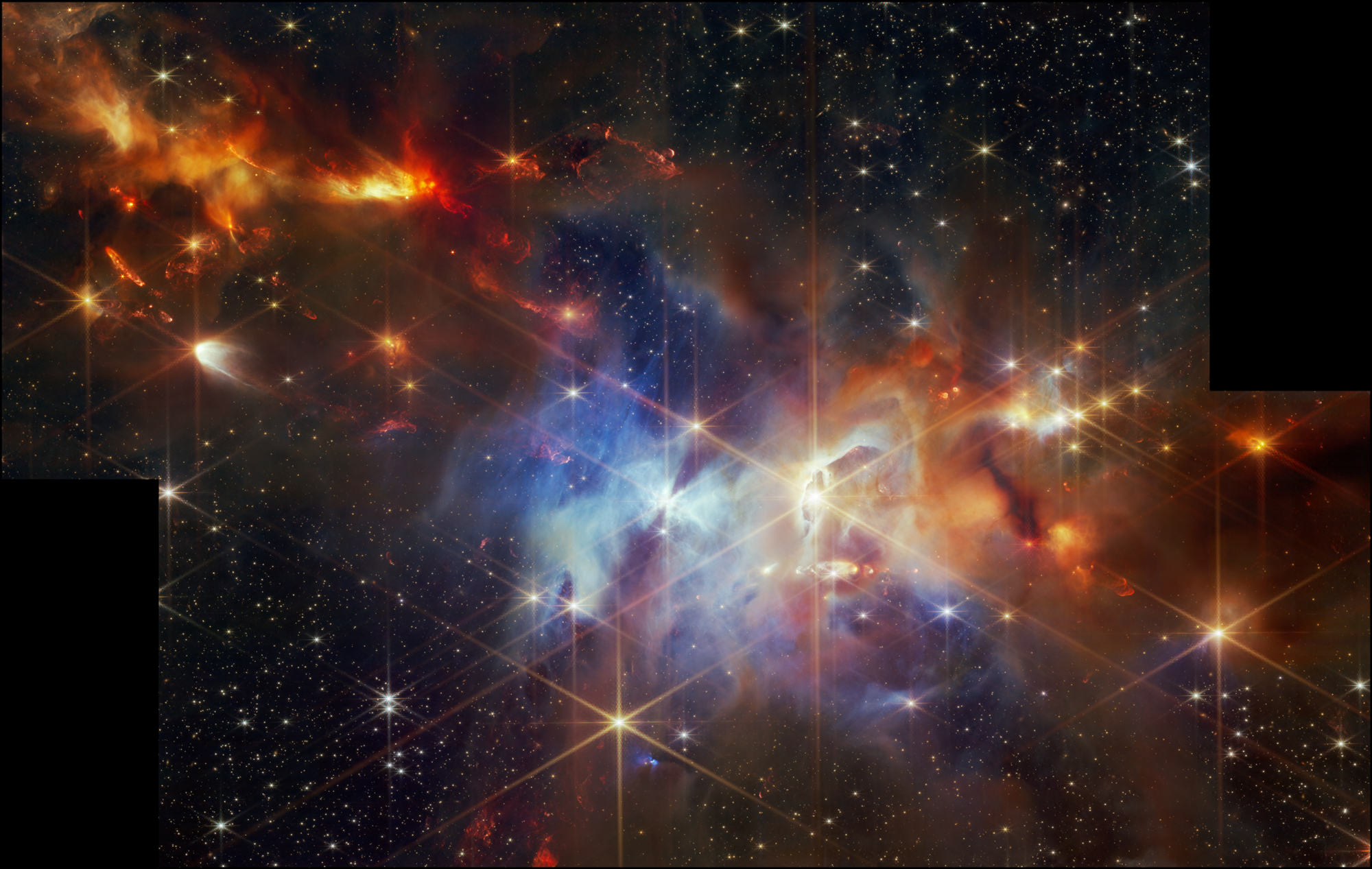
A rectangular image with black vertical rectangles at the bottle left and top right to indicate missing data. A young star-forming region is filled with wispy orange, red, and blue layers of gas and dust. The upper left corner of the image is filled with mostly orange dust, and within that orange dust, there are several small red plumes of gas that extend from the top left to the bottom right, at the same angle. The center of the image is filled with mostly blue gas. At the center, there is one particularly bright star, that has an hourglass shadow above and below it. To the right of that is what looks a vertical eye-shaped crevice with a bright star at the center. The gas to the right of the crevice is a darker orange. Small points of light are sprinkled across the field, brightest sources in the field have extensive eight-pointed diffraction spikes that are characteristic of the Webb Telescope.
In this image of the Serpens Nebula from NASA’s James Webb Space Telescope, astronomers found a grouping of aligned protostellar outflows within one small region (the top left corner). Serpens is a reflection nebula, which means it’s a cloud of gas and dust that does not create its own light, but instead shines by reflecting the light from stars close to or within the nebula.
NASA, ESA, CSA, STScI, Klaus Pontoppidan (NASA-JPL), Joel Green (STScI)

NASA’s James Webb Space Telescope has captured a phenomenon for the very first time. The bright red streaks at top left of this June 20, 2024, image are aligned protostar outflows – jets of gas from newborn stars that all slant in the same direction.

This image supports astronomers’ assumption that as clouds collapse to form stars, the stars will tend to spin in the same direction. Previously, the objects appeared as blobs or were invisible in optical wavelengths. Webb’s sensitive infrared vision was able to pierce through the thick dust, resolving the stars and their outflows.

Image credit: NASA, ESA, CSA, STScI, Klaus Pontoppidan (NASA-JPL), Joel Green (STScI)

Powered by WPeMatico

Get The Details…
Monika Luabeya

Sols 4270-4272: Sample for SAM

Sols 4270-4272: Sample for SAM

2 min read

Sols 4270-4272: Sample for SAM

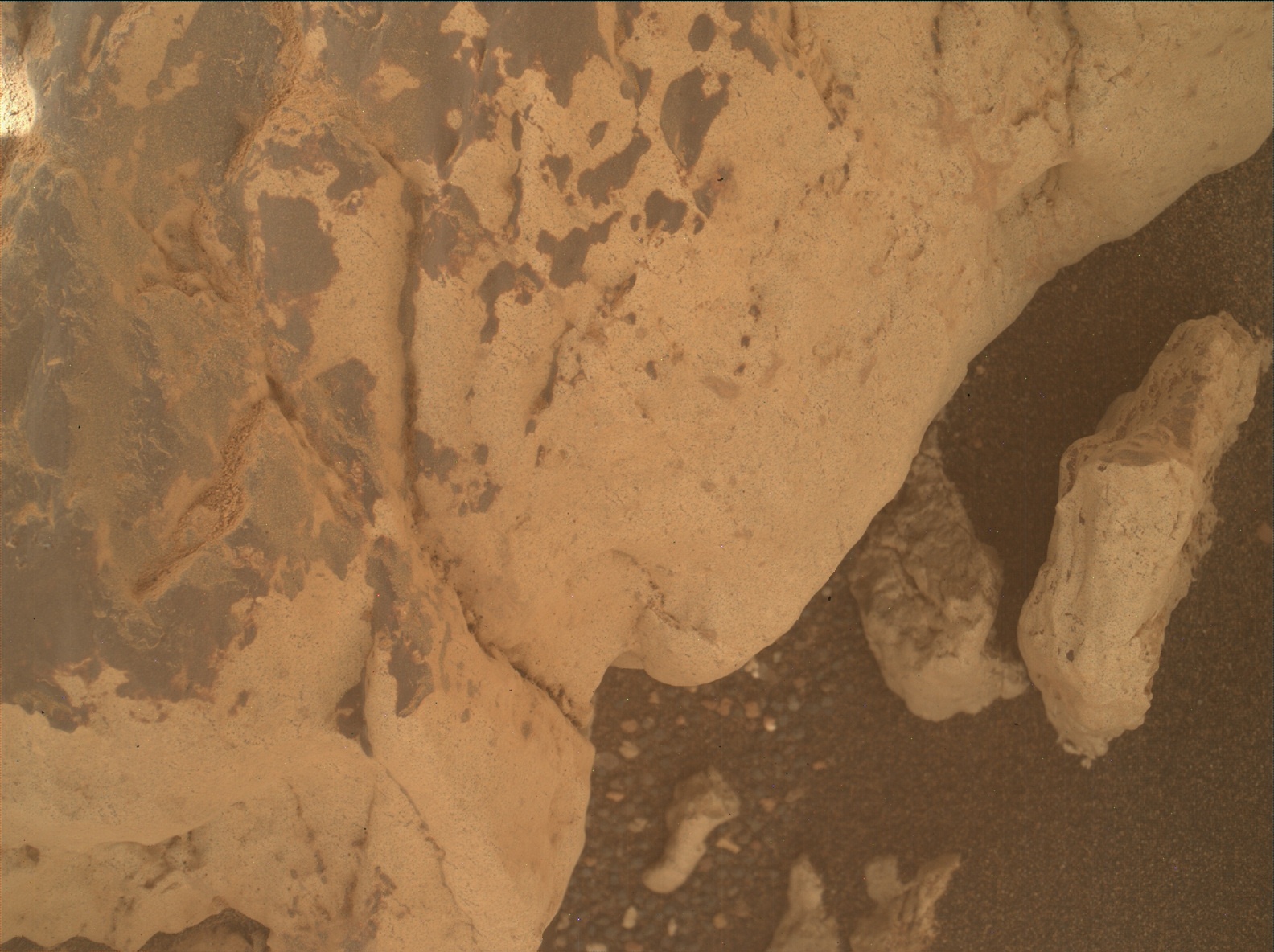
A close-up image of Martian surface terrain, showing areas of soil in orange-tan, pale orange, and brown.
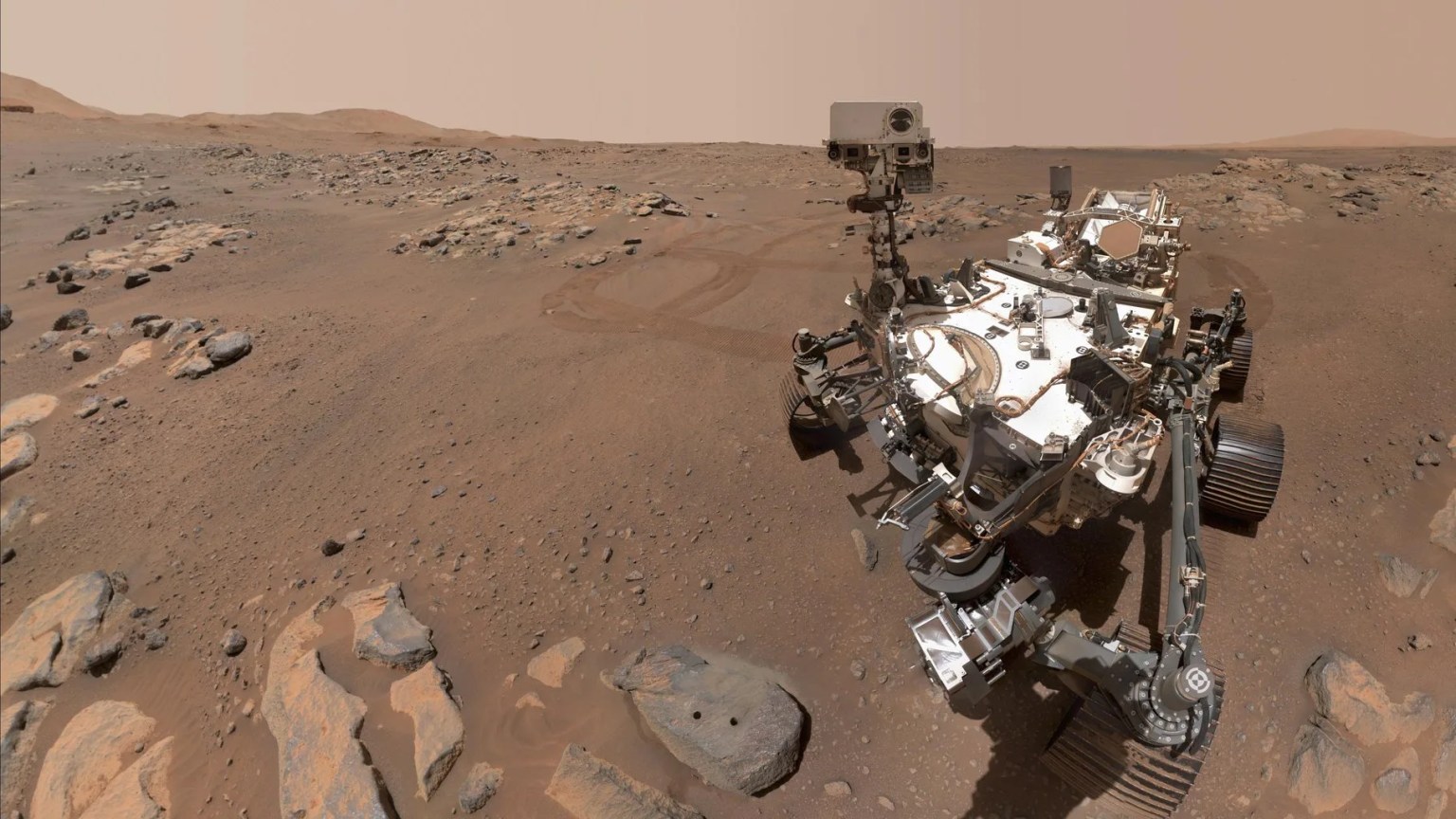
An image of “Discovery Pinnacle,” a target of the NASA Mars rover Curiosity’s APXS (Alpha Particle X-Ray Spectrometer), taken from about 5 centimeters (about 2 inches) above. Curiosity used the Mars Hand Lens Imager (MAHLI), located on the turret at the end of the rover’s robotic arm, to capture two to eight images of the target, then used an onboard focusing system to merge those into one image, on sol 4253 — Martian day 4,253 of the Mars Science Laboratory mission — July 24, 2024, at 03:10:00 (UTC).
NASA/JPL-Caltech/MSSS

Earth planning date: Friday, Aug. 9, 2024

The focus for this three-sol weekend plan is delivering a portion of the Kings Canyon drill sample to SAM for Evolved Gas Analysis (EGA), following on from a successful CheMin analysis. The CheMin and SAM analyses, coupled with APXS and ChemCam analyses, will tell us about the composition and mineralogy of this block within the Gediz Vallis channel deposit. We can compare it to the composition and mineralogy of the intriguing Mammoth Lakes drilled sample at Whitebark Pass, which was near the elemental sulfur blocks, and also within the Gediz Vallis deposit, as well as to the bedrock outside the channel and other previous drilled samples. This will help inform the source(s) of the blocks, which could be derived from higher up on Mount Sharp. 

To further characterize the Kings Canyon block and immediate vicinity, we will acquire three ChemCam LIBS analyses. The “Gabbot Pass” target is on the same light-toned rock as the drill target. “New Army Pass” will investigate the edge of the drilled block, which exhibits textural and tonal similarities to an interesting previous APXS target, “Discovery Pinnacle.” Finally, “Bridalveil Falls” is on a freshly broken, bright rock on the edge of the drilled block. Mastcam will provide documentation imaging of the three targets.

Looking further afield, we continue to image the stunning scenery surrounding us from this vantage point. We planned a ChemCam long distance remote imager (LD RMI) mosaic of the Gediz Vallis channel form to the south, and an extension of a Mastcam mosaic of the Milestone Peak area of the deposit. These mosaics will help us to further characterize the Gediz Vallis deposits, and hopefully the processes responsible for their emplacement (e.g., debris flow or rock avalanche). We will also acquire a Mastcam mosaic of the Texoli butte, which represents a cross section of the rock layers that we will eventually drive over when we leave the Gediz Vallis deposit and continue climbing Mount Sharp.

It isn’t just about the rocks though! The environmental and atmospheric science team also have several observations in this plan to monitor changes in the atmosphere. These include Mastcam tau and Navcam line of sight observations, as well as Navcam zenith, suprahorizon and dust devil movies. Standard DAN, RAD and REMS activities round out the plan.

Written by Lucy Thompson, Planetary Geologist at University of New Brunswick

Share

Details

Last Updated
Aug 12, 2024

Related Terms

Powered by WPeMatico

Get The Details…

NASA to Provide Coverage of Progress 89 Launch, Space Station Docking

NASA to Provide Coverage of Progress 89 Launch, Space Station Docking

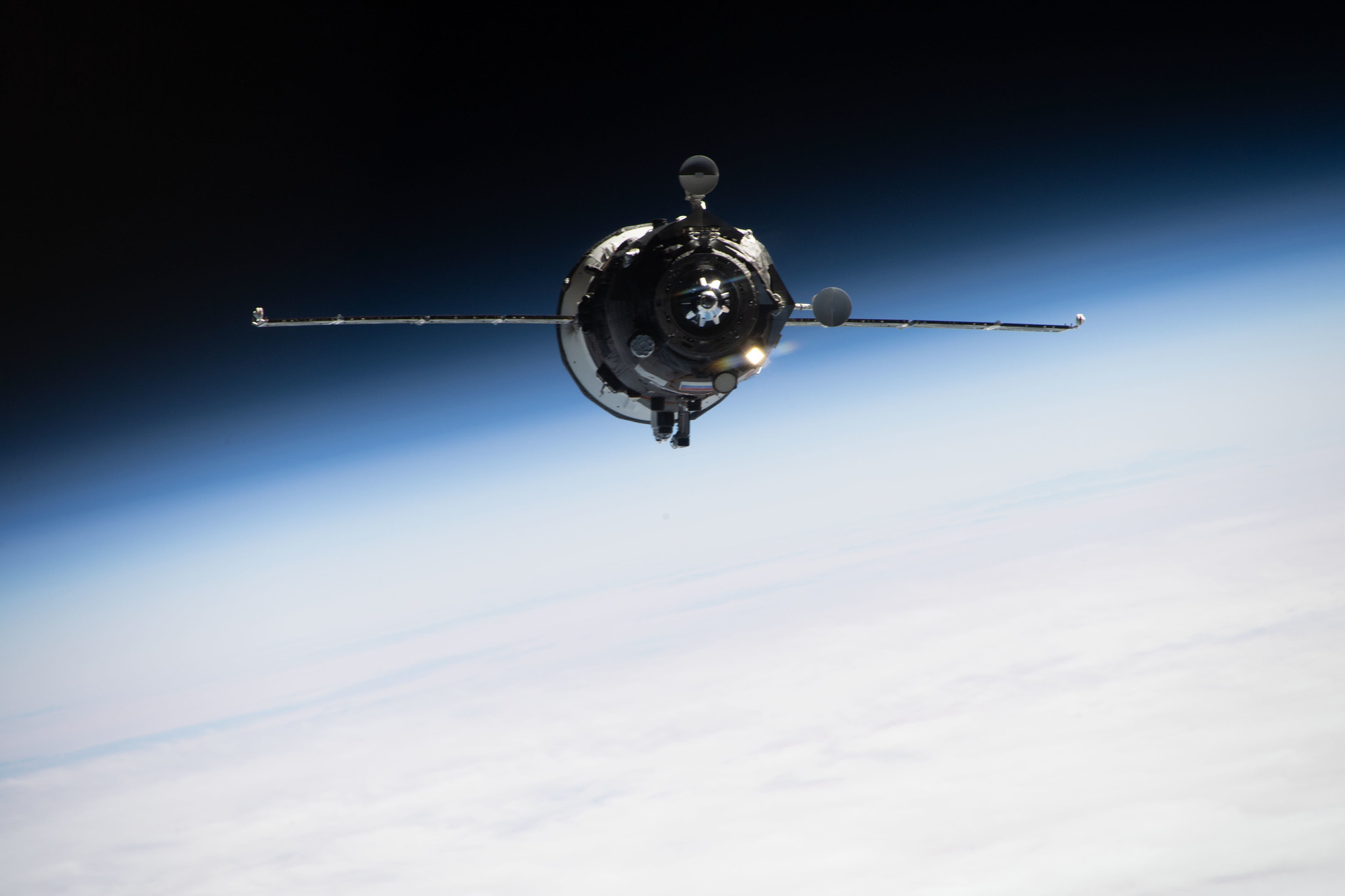
The Progress 86 cargo spacecraft approaches the International Space Station’s Poisk module on Dec. 3, 2023, ahead of its docking.
Credit: NASA

NASA will provide live launch and docking coverage of a Roscosmos cargo spacecraft delivering nearly three tons of food, fuel, and supplies to the Expedition 71 crew aboard the International Space Station.

The unpiloted Progress 89 spacecraft is scheduled to launch at 11:20 p.m. EDT, Wednesday, Aug. 14 (8:20 a.m. Baikonur time, Thursday, Aug. 15), on a Soyuz rocket from the Baikonur Cosmodrome in Kazakhstan.

Live launch coverage will begin at 11 p.m. on NASA+, NASA Television, the NASA app, YouTube, and the agency’s website. Learn how to stream NASA+ through a variety of platforms including social media.

After a two-day in-orbit journey to the station, the spacecraft will autonomously dock to the aft port of the Zvezda service module at 1:56 a.m., Saturday, Aug. 17. NASA’s coverage of rendezvous and docking will begin at 1 a.m., on NASA+, NASA Television, the NASA app, YouTube, and the agency’s website.

The spacecraft will remain docked at the station for approximately six months before departing for a re-entry into Earth’s atmosphere to dispose of trash loaded by the crew.

The International Space Station is a convergence of science, technology, and human innovation that enables research not possible on Earth. For more than 23 years, NASA has supported a continuous U.S. human presence aboard the orbiting laboratory, through which astronauts have learned to live and work in space for extended periods of time. The space station is a springboard for developing a low Earth economy and NASA’s next great leaps in exploration, including missions to the Moon under Artemis and, ultimately, human exploration of Mars.

Get breaking news, images and features from the space station on Instagram, Facebook, and X.

For more information about the International Space Station, its research, and crew, visit:

https://www.nasa.gov/station

-end-

Jimi Russell / Julian Coltre
Headquarters, Washington
202-358-1100
james.j.russell@nasa.gov / julian.n.coltre@nasa.gov

Sandra Jones
Johnson Space Center, Houston
281-483-5111
sandra.p.jones@nasa.gov

Share

Details

Last Updated

Aug 12, 2024

Editor
Jessica Taveau

Powered by WPeMatico

Get The Details…
Jessica Taveau

Earth Educators Rendezvous with Infiniscope and Tour It

Earth Educators Rendezvous with Infiniscope and Tour It

3 min read

Earth Educators Rendezvous with Infiniscope and Tour It

At the Earth Educator’s Rendezvous, held July 15-19, 2024, NASA’s Infiniscope project from Arizona State University hosted a two-day workshop aimed at empowering Earth educators with the tools to design and build virtual tours (VTs). This hands-on session provided participants with a unique opportunity to experience first-hand how to create immersive virtual tours using Tour It, a free virtual tour creator developed by the NASA Science Activation program’s Infiniscope team. The workshop focused on making the benefits of place-based education more accessible through digital means. One participant remarked, “I have learned more than I could imagine about teaching, communicating, how to be a student, and how to human.”

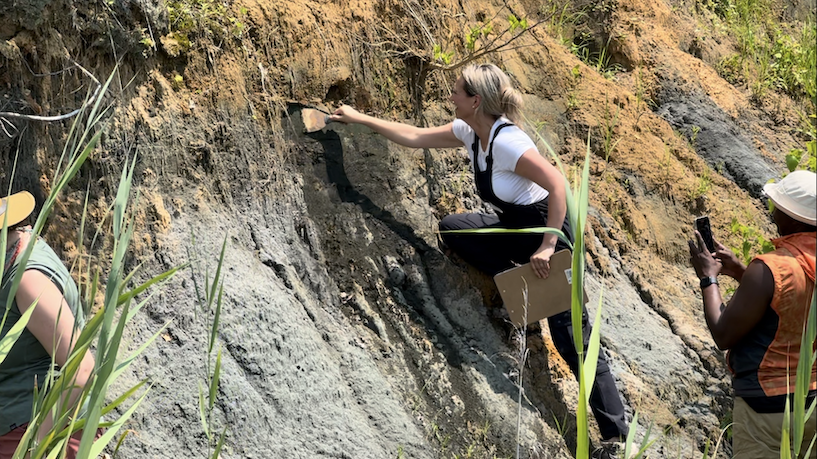
The workshop encouraged participation in a Sunday pre-Rendezvous field trip titled “Crossing the Pennsylvania-New Jersey Fall Zone: from the Neoproterozoic and into the Cenozoic.” The Infiniscope team joined this field trip to gather media that workshop participants could use to create their own VTs. This media included 360-degree images, photos, resource documents, diagrams and video interviews with tour guides, Dr. Lily Pfeifer and Dr. Aaron Barth, both of Rowan University.

Throughout the workshop, participants learned to capture media, design for place-based learning, and accommodate the diverse needs of their students, ultimately equipping them to create immersive virtual field experiences that enrich their educational practices. Reflecting on their experience, a participant shared, “I have been exposed to so many things such as the use of place-based learning, creating my own digital content, and publishing – which seemed daunting hitherto, but now, I feel comfortable.”

When asked how they might use Tour It in their teaching, one educator responded, “Not only will I finish the work on the Sunday field trip and submit it to the [contributed content] of [Infiniscope], I will actually USE THIS IN MY K-12 classroom. Without a doubt, I have found an excellent way to get kids to experience the geology out there in a personal way that might just spur them to make a trip to see it in real life.”

Additionally, another attendee remarked, “I feel much more prepared to make an effective virtual tour for my courses and other courses at my institution or in collaboration with others. I appreciate the acknowledgement that there are cultural aspects to locations that should be included and the rubric offers a framework to build balanced experiences.”

The workshop highlighted the power and value of in-person field trips for educators in field sciences while addressing practical challenges, such as lack of transportation and funding. VTs, offering similar educational impacts, can be used more frequently and are not hindered by logistical constraints. Tour It, a user-friendly, NASA-funded tool, was introduced as a solution to the accessibility barriers of creating digital learning experiences. Unlike more complex VT tools, Tour It requires minimal training and operates within a web browser, allowing educators to upload 360° imagery and build comprehensive virtual tours complete with text, image, or video annotations, all VR-compatible.

Experience an example of a VT created with Tour It during this workshop.

The Infiniscope project is supported by NASA under cooperative agreement award number NNX16AD79A and is part of NASA’s Science Activation Portfolio. Learn more about how Science Activation connects NASA science experts, real content, and experiences with community leaders to do science in ways that activate minds and promote deeper understanding of our world and beyond: https://science.nasa.gov/learn

A group of people engaged in a fieldwork activity at a rocky outcrop. One person is using a brush and other tools to scrape the rock surface, while another person is recording the activity with a mobile phone. The setting is outdoors with tall grass and a layered rock formation in the background.
Dr. Lily Pfiefer scraping to reveal the KPg boundary in Edleman Fossil Park.

Share

Details

Last Updated
Aug 12, 2024
Editor
NASA Science Editorial Team

Powered by WPeMatico

Get The Details…