Sols 4268-4269: Admiring Kings Canyon

Sols 4268-4269: Admiring Kings Canyon

2 min read

Sols 4268-4269: Admiring Kings Canyon

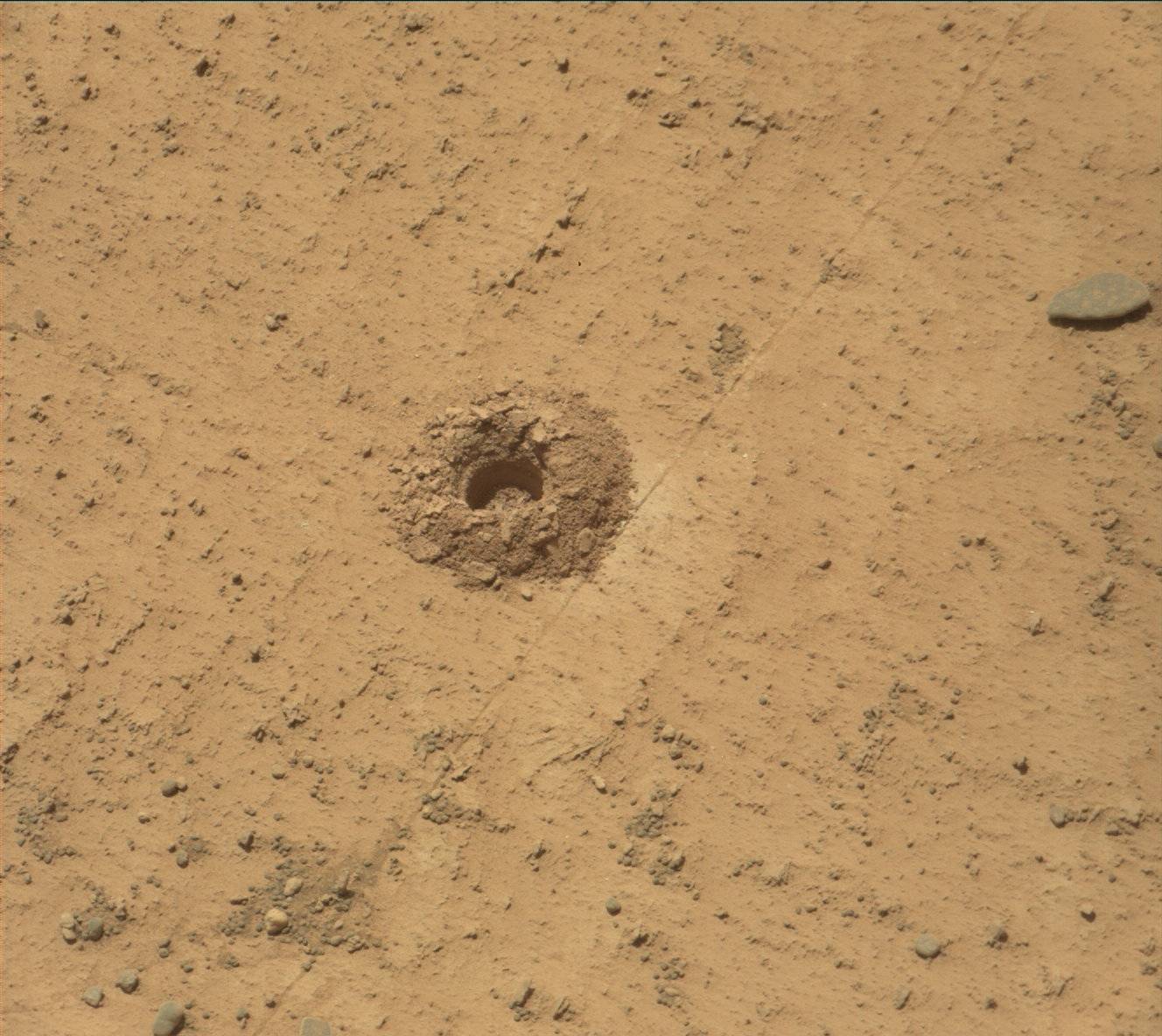
A photograph of a patch of gritty ground, mostly packed flat with scattered tiny sharp rocks and a few small ridges. In the center of the image, a shallow hole has been bored into the ground, and a pile of the excavated soil forms a mound around the hole.
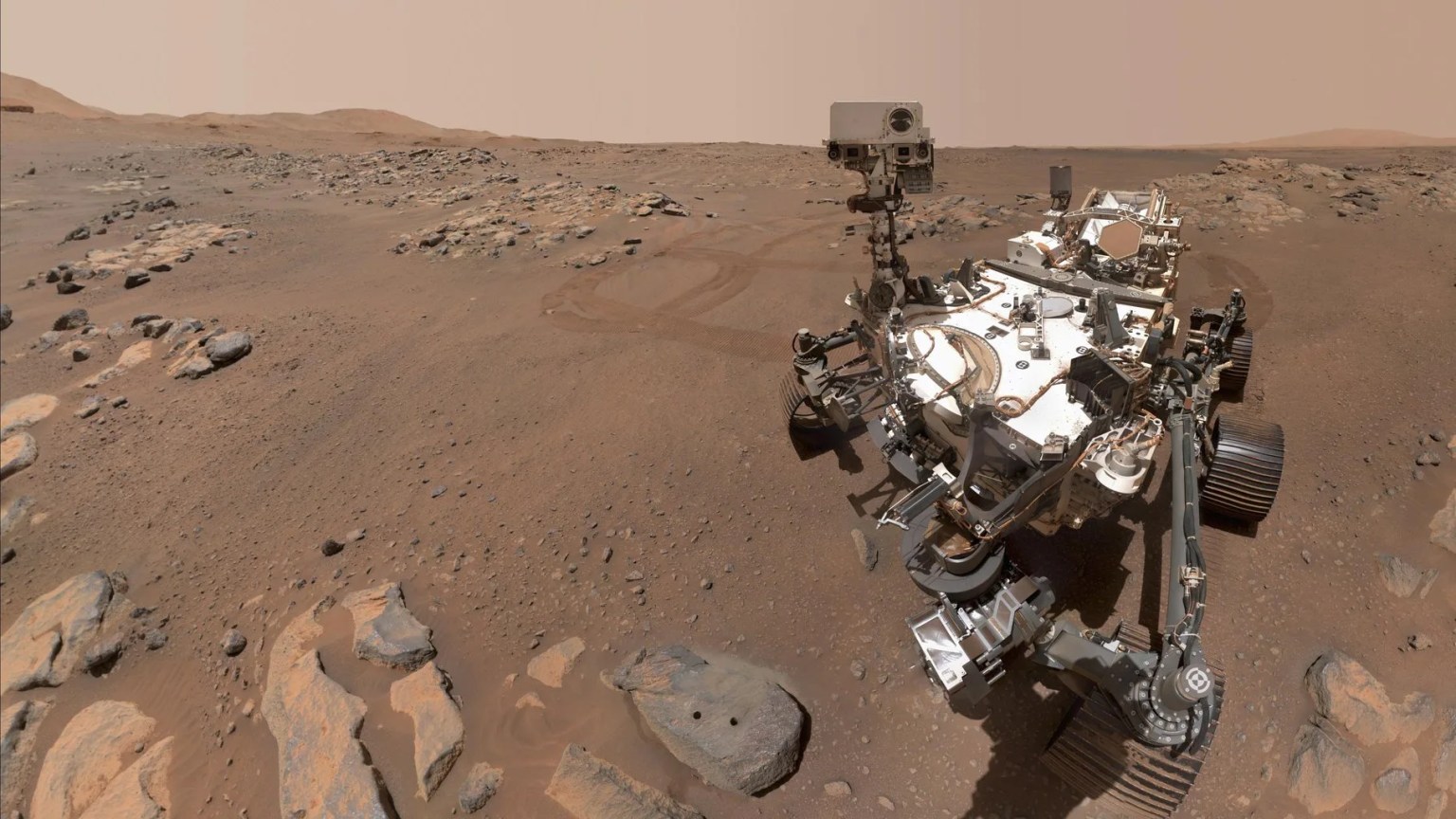
A hole on the Red Planet drilled by NASA’s Mars rover Curiosity and nicknamed “Kings Canyon” produced a soil sample the mission team is studying. This image was taken by Mast Camera (Mastcam) onboard Curiosity on Sol 4263 — Martian day 4,263 of the Mars Science Laboratory mission — on Aug. 3, 2024 at 07:56:55 UTC.
NASA/JPL-Caltech/MSSS

Earth planning date: Wednesday, Aug. 7, 2024

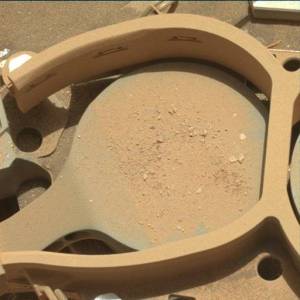
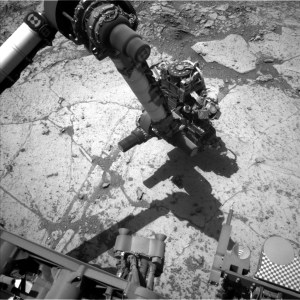
Curiosity is admiring our latest drill hole, “Kings Canyon.” Today’s plan is dedicated to continuing analysis of the drilled sample, including preconditioning for SAM evolved gas analysis (EGA) scheduled for the weekend. In planning today, the environmental (ENV), and the geology and mineralogy (GeoMin) theme groups planned two days of science observations.

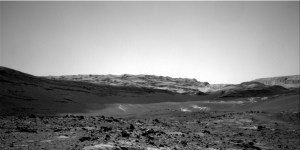
The ENV science group is making the most of Curiosity remaining stationary for a while and has planned two Mastcam Tau observations to measure the amount of dust in the atmosphere, as well as using Navcam for a total of three dust devil movies — one on the first sol, and two on the second sol. They are also observing clouds in the Martian atmosphere with Navcam suprahorizon and zenith movies.

The GeoMin science group is enjoying the view too, extending Mastcam coverage of areas of interest including the Kings Canyon drill hole, and “Fairview Dome.” Looking further ahead, ChemCam planned a long distance RMI view of “Texoli butte,” to investigate the interesting sedimentology and stratigraphy here. To round off our plan, we are taking two ChemCam Laser Induced Bedrock Spectroscopy (LIBS) observations of a bright-toned rock named “Fourth Recess Lake” in an area of rocks that were previously crushed by the rover wheels known as “Sam Mack Meadow.” We are also taking a LIBS observation of the Kings Canyon drill hole. As we await the preliminary results on the analysis of the drill hole, we’ll be enjoying the view as these images downlink to Earth over the next few days.

Written by Emma Harris, graduate student at The Natural History Museum, London

Share

Details

Last Updated
Aug 12, 2024

Related Terms

Powered by WPeMatico

Get The Details…

NASA Explores Industry, Partner Interest in Using VIPER Moon Rover

NASA Explores Industry, Partner Interest in Using VIPER Moon Rover

2 min read

NASA Explores Industry, Partner Interest in Using VIPER Moon Rover

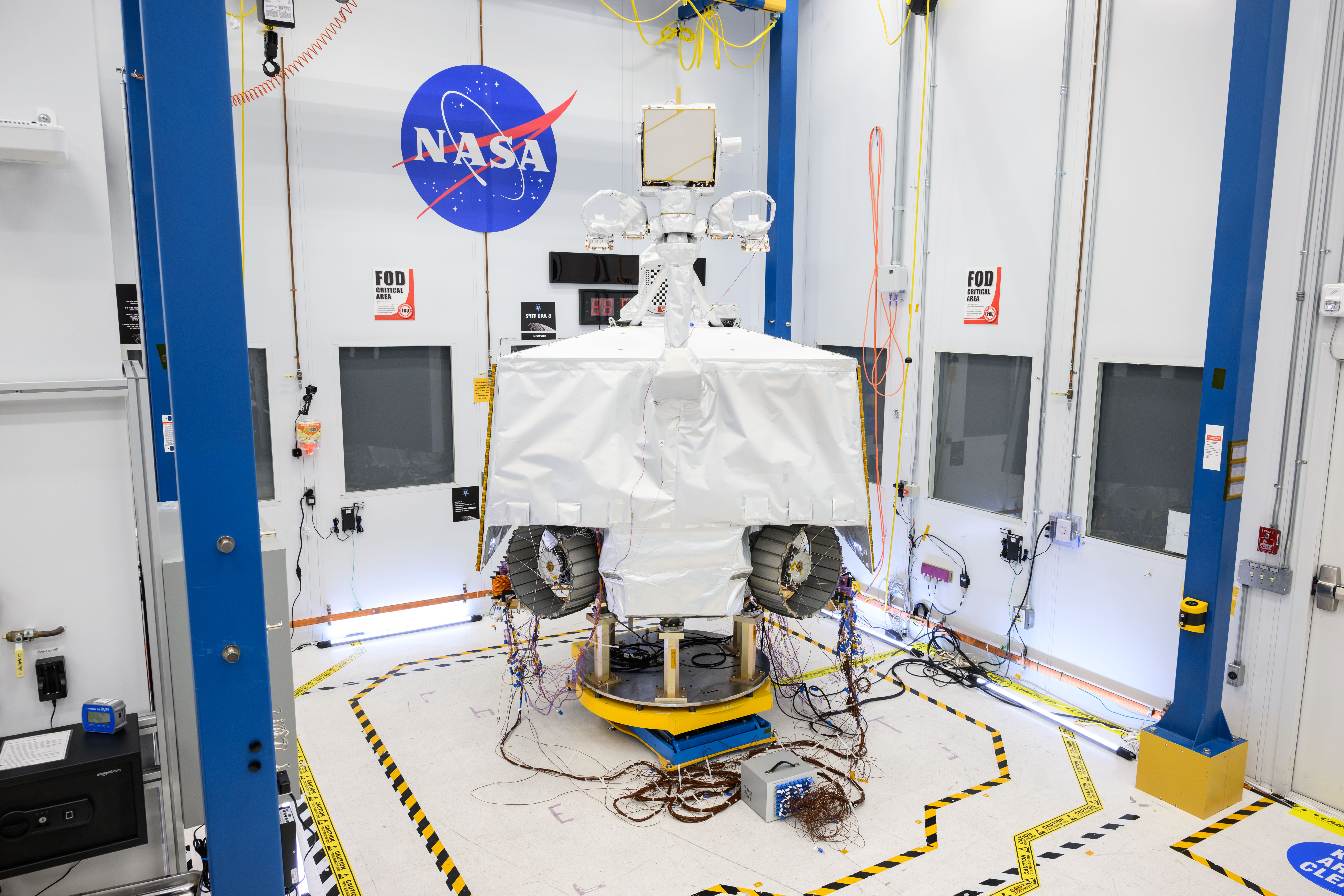
NASA’s VIPER robotic Moon rover is shown in a clean room at NASA’s Johnson Space Center in Houston.
NASA’s VIPER robotic Moon rover is seen here in a clean room at NASA’s Johnson Space Center in Houston.
NASA/Helen Arase Vargas

As part of its commitment to a robust, sustainable lunar exploration program for the benefit of all, NASA issued a Request for Information Friday to seek interest from American companies and institutions in conducting a mission using the agency’s VIPER Moon rover.

VIPER, short for Volatiles Investigating Polar Exploration Rover, was designed to map the location and concentration of potential off-planet resources, like ice, on the South Pole of Earth’s Moon. NASA announced July 17 its intent to discontinue VIPER, and to pursue alternative methods to verify the presence of frozen water at the lunar South Pole, but could contribute the VIPER rover as-is to an interested partner.

From July 17 to Aug. 1, NASA accepted expressions of interest from the broader community in using the existing VIPER rover system. The Request for Information now seeks to learn more about how interested parties would use VIPER at minimal to no cost to the government. This Request for Information is open to U.S. organizations and industry. NASA will explore interest from the international community through separate channels. 

“NASA thanks everyone who provided expressions of interest in using VIPER and looks forward to learning more about how potential partners envision accomplishing NASA’s science and exploration goals with the rover,” said Nicola Fox, associate administrator, Science Mission Directorate at NASA Headquarters in Washington. “We want to make the best use possible of the engineering, technology, and expertise that have been developed by this project to advance scientific knowledge of the Moon. Partnership opportunities on VIPER would allow us to do this without impacting our future cadence of commercial deliveries to the Moon, to continue lunar science and exploration for everyone’s benefit.”

Future CLPS (Commercial Lunar Payload Services) deliveries to the lunar surface and instruments on NASA’s crewed missions will progress the agency’s assessment of volatiles across the South Pole region.

The Request for Information is available online and will remain open for responses until 11:59 p.m. EDT Monday, Sep. 2.

For more information about VIPER, visit:

https://www.nasa.gov/viper

Media contacts

Alise Fisher / Erin Morton
Headquarters, Washington
202-358-2546 / 202-805-9393
alise.m.fisher@nasa.goverin.morton@nasa.gov

Powered by WPeMatico

Get The Details…

NASA Hosts Astronaut Don Pettit Prelaunch Interviews

NASA Hosts Astronaut Don Pettit Prelaunch Interviews

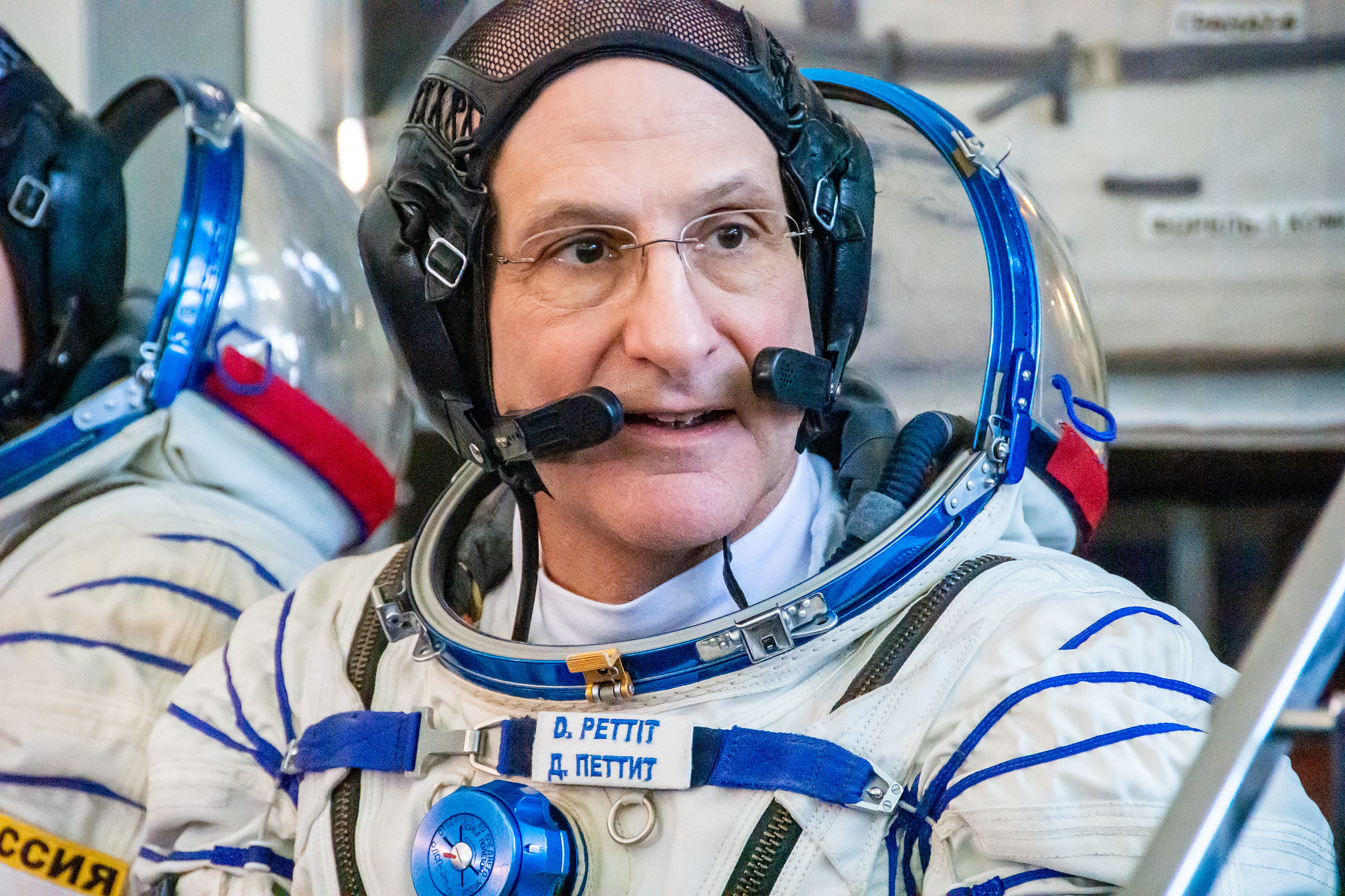
A headshot image of NASA astronaut Don Pettit wearing a launch and entry suit during crew qualification exams at the Gagarin Cosmonaut Training Center.
NASA astronaut Don Pettit during crew qualification exams at the Gagarin Cosmonaut Training Center.
Credits: GCTC/Roscosmos

NASA astronaut Don Pettit is available for limited interview opportunities beginning at 10 a.m. EDT, Friday, Aug. 16, to discuss his upcoming mission to the International Space Station in September.

The virtual interviews will stream live on NASA+, NASA Television, the NASA app, and the agency’s website. Learn how to stream NASA+ through a variety of platforms including social media.

Interested media must submit a request no later than 12 p.m., Thursday, Aug. 15, to the newsroom at NASA’s Johnson Space Center in Houston at 281-483-5111 or jsccommu@mail.nasa.gov.

Pettit will launch on the Roscosmos Soyuz MS-26 spacecraft, accompanied by Roscosmos cosmonauts Alexey Ovchinin and Ivan Vagner. The trio will spend approximately six months aboard the orbital laboratory before returning to Earth in the spring of 2025.

During his time in orbit, Pettit will conduct scientific investigations and technology demonstrations to help prepare the crew for future space missions and provide benefits to people on Earth. Pettit will participate in several of the hundreds of experiments happening during his mission, including studying how spaceflight affects blood clotting, continuing tests of technology to produce human stem cells in space, and contributing his unique photography skills to the long-running Crew Earth Observations study of how Earth is changing over time.

NASA selected Pettit as an astronaut in 1996. A veteran of three spaceflights, he has contributed to integral advancements in technology and demonstrations for human space exploration. He served as a science officer for Expedition 6 in 2003, operated the robotic arm for STS-126 space shuttle Endeavour in 2008, and served as a flight engineer for Expedition 30/31 in 2012. Pettit has logged 370 days in space and conducted two spacewalks totaling 13 hours and 17 minutes.

A native from Silverton, Oregon, Pettit holds a bachelor’s degree in Chemical Engineering from Oregon State University, Corvallis, and a doctorate degree in Chemical Engineering from the University of Arizona, Tucson. Prior to his career with NASA, Pettit worked as a staff scientist at the Los Alamos National Laboratory in New Mexico.

For more than two decades, humans have lived and worked continuously aboard the International Space Station, advancing scientific knowledge, and making research breakthroughs that are not possible on Earth. The station is a critical testbed for NASA to understand and overcome the challenges of long-duration spaceflight and to expand commercial opportunities in low Earth orbit. As commercial companies focus on providing human space transportation services and destinations as part of a robust low Earth orbit economy, NASA is able to focus more of its resources on deep space missions to the Moon and Mars.

Get breaking news, images and features from the space station on the station blog, Instagram, Facebook, and X.

Learn more about International Space Station research and operations at:

https://www.nasa.gov/station

-end-

Joshua Finch / Claire O’Shea
Headquarters, Washington
202-358-1100
joshua.a.finch@nasa.gov / claire.a.o’shea@nasa.gov

Courtney Beasley
Johnson Space Center, Houston
281-483-5111
courtney.m.beasley@nasa.gov

Powered by WPeMatico

Get The Details…
Tiernan P. Doyle

Astro Campers SCoPE Out New Worlds

Astro Campers SCoPE Out New Worlds

2 min read

Astro Campers SCoPE Out New Worlds

Teachers at Smokey Mountain Elementary School have collaborated with the NASA Science Activation (SciAct) program’s Smoky Mountains STEM (Science, Technology, Engineering, and Mathematics) Collaborative (SMSC) and project coordinator, Randi Neff, to create a summer camp for students who are passionate about STEM topics. What started as a small summer camp has since evolved into Astro Camp, a two-week community program from the NASA Astro Camp Community Partners (part of the NASA SciAct program infrastructure) with many engaging student activities.

Many students have enjoyed this camp from the beginning, and those who have participated annually have become increasingly interested in more challenging and robust activities to continue their learning adventures. With the help of SciAct’s NASA SCoPE (the NASA Science Mission Directorate Community of Practice for Education) team, Neff was able to connect teachers with a NASA Subject Matter Expert, Dr. Alissa Bans, to help draft new, challenging activities for the students who were ready to take them on in June 2024. Of course, new attendees and learners continued to excitedly engage in the foundational Astro Camp activities, as appropriate for their learning levels.

Thanks to Dr. Bans and the ongoing collaboration of these three SciAct teams, returning campers took on new challenges identifying and observing goldilocks exoplanets and zones (habitable planets outside our solar system and zones where conditions might be just right – neither too hot nor too cold – for life) and exploring the various conditions that might support life on a planet. Having the opportunity to seek out and tackle more advanced STEM topics, learners developed critical thinking skills and found satisfaction in expanding their science identities.

The Smoky Mountains STEM Collaborative, NASA SCoPE, and NASA Astro Camp Community Partners projects are supported by NASA as part of the Science Activation program portfolio. Learn more about how Science Activation connects NASA science experts, real content, and experiences with community leaders to do science in ways that activate minds and promote deeper understanding of our world and beyond: https://science.nasa.gov/learn

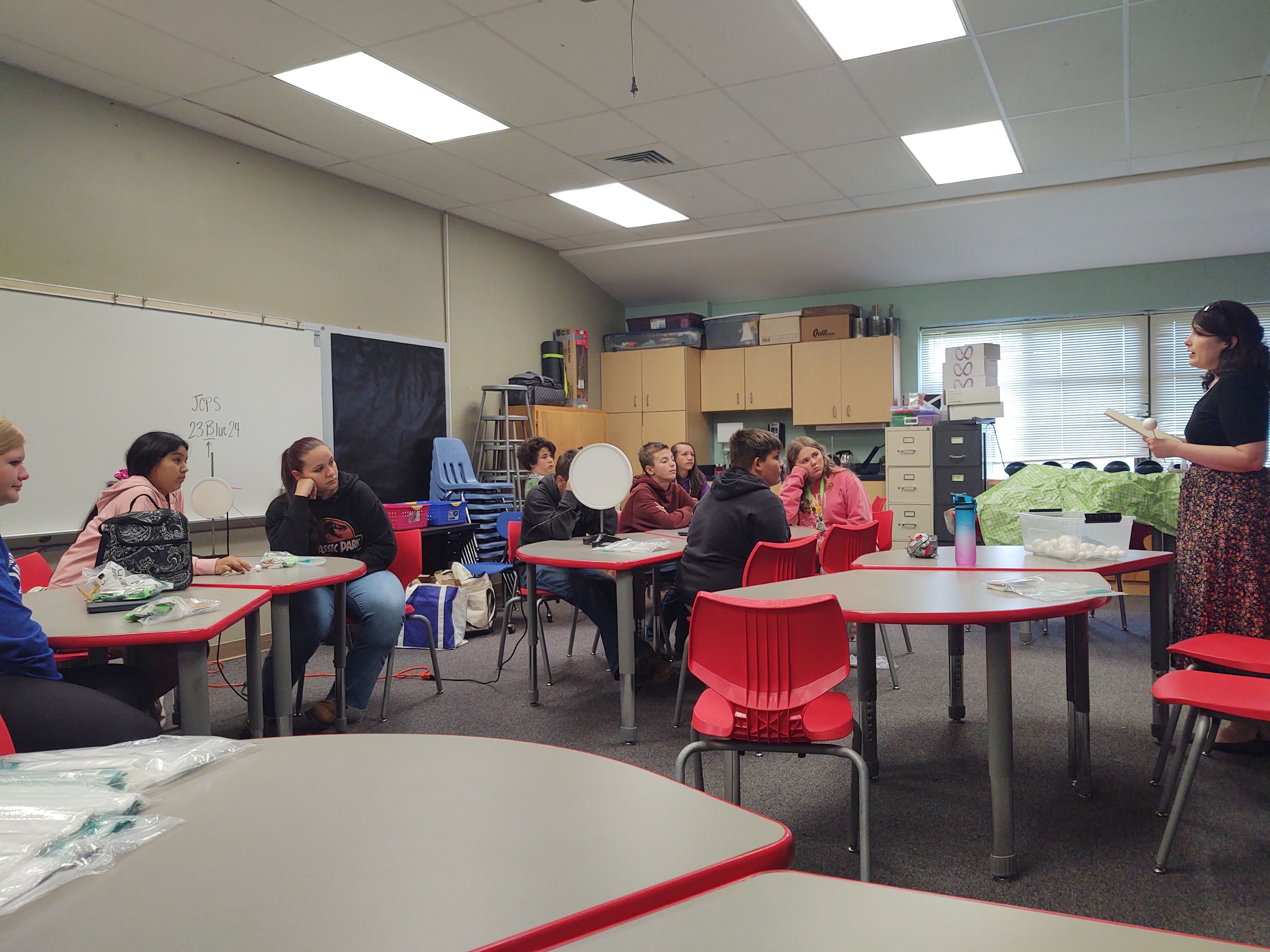
Nine students in a classroom (left) listening to Dr. Alissa Bans (right).
Dr. Alissa Bans, a NASA Subject Matter Expert with NASA SCoPE, leads an activity with a group of students during Astro Camp.

Share

Details

Last Updated
Aug 09, 2024
Editor
NASA Science Editorial Team

Powered by WPeMatico

Get The Details…

A ‘FURST’ of its Kind: Sounding Rocket Mission to Study Sun as a Star

A ‘FURST’ of its Kind: Sounding Rocket Mission to Study Sun as a Star

4 min read

Preparations for Next Moonwalk Simulations Underway (and Underwater)

By Jessica Barnett 

From Earth, one might be tempted to view the Sun as a unique celestial object like no other, as it’s the star our home planet orbits and the one our planet relies on most for heat and light. But if you took a step back and compared the Sun to the other stars NASA has studied over the years, how would it compare? Would it still be so unique?

The Full-sun Ultraviolet Rocket SpecTrograph (FURST) aims to answer those questions when it launches aboard a Black Brant IX sounding rocket Aug. 11 at White Sands Missile Range in New Mexico.

“When we talk about ‘Sun as a star’, we’re treating it like any other star in the night sky as opposed to the unique object we rely on for human life. It’s so exciting to study the Sun from that vantage point,” said Adam Kobelski, institutional principal investigator for FURST and a research astrophysicist at NASA’s Marshall Space Flight Center in Huntsville, Alabama.

The Full-sun Ultraviolet Rocket SpecTrograph (FURST) undergoes testing at White Sands Missile Range in New Mexico in preparation for launch on Aug. 11. FURST will be launched aboard a Black Bryant IX sounding rocket and will observe the Sun in vacuum ultraviolet (VUV). The instrument was designed and built at Montana State University. NASA Marshall provided the camera, supplied avionics, and designed and built its calibration system.
Credit: Montana State University

FURST will obtain the first high-resolution spectra of the “Sun as a star” in vacuum ultraviolet (VUV), a light wavelength that is absorbed in Earth’s atmosphere meaning it can only be observed from space. Astronomers have studied other stars in the vacuum ultraviolet with orbiting telescopes, however these instruments are too sensitive to be pointed to the Sun. The recent advancements in high-resolution VUV spectroscopy now allow for the same observations of our own star, the Sun.

“These are wavelengths that Hubble Space Telescope is really great at observing, so there is a decent amount of Hubble observations of stars in ultraviolet wavelengths, but we don’t have comparable observations of our star in this wavelength range,” said Kobelski. Marshall was the lead field center for the design, development, and construction of the Hubble Space Telescope.

Because Hubble is too sensitive to point at Earth’s Sun, new instruments were needed to get a spectrum of the entire Sun that is of a similar quality to Hubble’s observations of other stars. Marshall built the camera, supplied avionics, and designed and built a new calibration system for the FURST mission. Montana State University (MSU), which leads the FURST mission in partnership with Marshall, built the optical system, which includes seven optics that will feed into the camera that will essentially create seven exposures, covering the entire ultraviolet wavelength range.

Charles Kankelborg, a heliophysics professor at MSU and principal investigator for FURST, described the mission as a very close collaboration with wide-ranging implications.

“Our mission will obtain the first far ultraviolent spectrum of the Sun as a star,” Kankelborg said. “This is a key piece of information that has been missing for decades. With it, we will place the Sun in context with other stars.”

Kobelski echoed the sentiment.

“How well do the observations and what we know about our Sun compare to our observations or what we know of other stars?” Kobelski said. “You’d expect that we know all this information about the Sun – it’s right there – but it turns out, we actually don’t. If we can get these same observations or same wavelengths as we’ve observed from these other sources, we can start to connect the dots and connect our Sun to other stars.”

Four men stand under a large NASA meatball logo that is painted on a wall.
Montana State University alumnus Jake Davis, left, Professor Charles Kankelborg, and doctoral students Catharine “Cappy” Bunn and Suman Panda, pose at White Sands Missile Range in New Mexico, where they are preparing for the launch of the FURST rocket mission to observe the sun in far ultraviolet.
Credit: Montana State University

FURST will be the third launch led by Marshall for NASA’s Sounding Rocket Program within five months, making 2024 an active year for the program. Like the Hi-C Flare mission that launched in April, the sounding rocket will launch and open during flight to allow FURST to observe the Sun for approximately five minutes before closing and falling back to Earth’s surface. Marshall team members will be able to calibrate the instruments during launch and flight, as well as retrieve data during flight and soon after landing.

Kobelski and Kankelborg each said they’re grateful for the opportunity to fill the gaps in our knowledge of Earth’s Sun.

The launch will be livestreamed on Sunday, Aug. 11, with a launch window of 11:40 a.m.– 12:40 p.m. CDT. Tune in on NASA’s White Sands Test Facility Launch Channel.

The FURST mission is led by Marshall in partnership with Montana State University in Bozeman, Montana, with additional support from the NASA’s Sounding Rockets Office and the U.S. National Center for Atmospheric Research’s High Altitude Observatory. Launch support is provided at White Sands Missile Range in New Mexico by NASA’s Johnson Space Center. NASA’s Sounding Rocket Program is managed by the agency’s Heliophysics Division.

Lane Figueroa 
Marshall Space Flight Center, Huntsville, Ala. 
256.544.0034  
lane.e.figueroa@nasa.gov 

Share

Details

Last Updated

Aug 09, 2024

Editor
Beth Ridgeway
Powered by WPeMatico

Get The Details…
Beth Ridgeway