Sols 4352-4354: Halloween Fright Night on Mars

Sols 4352-4354: Halloween Fright Night on Mars

3 min read

Sols 4352-4354: Halloween Fright Night on Mars

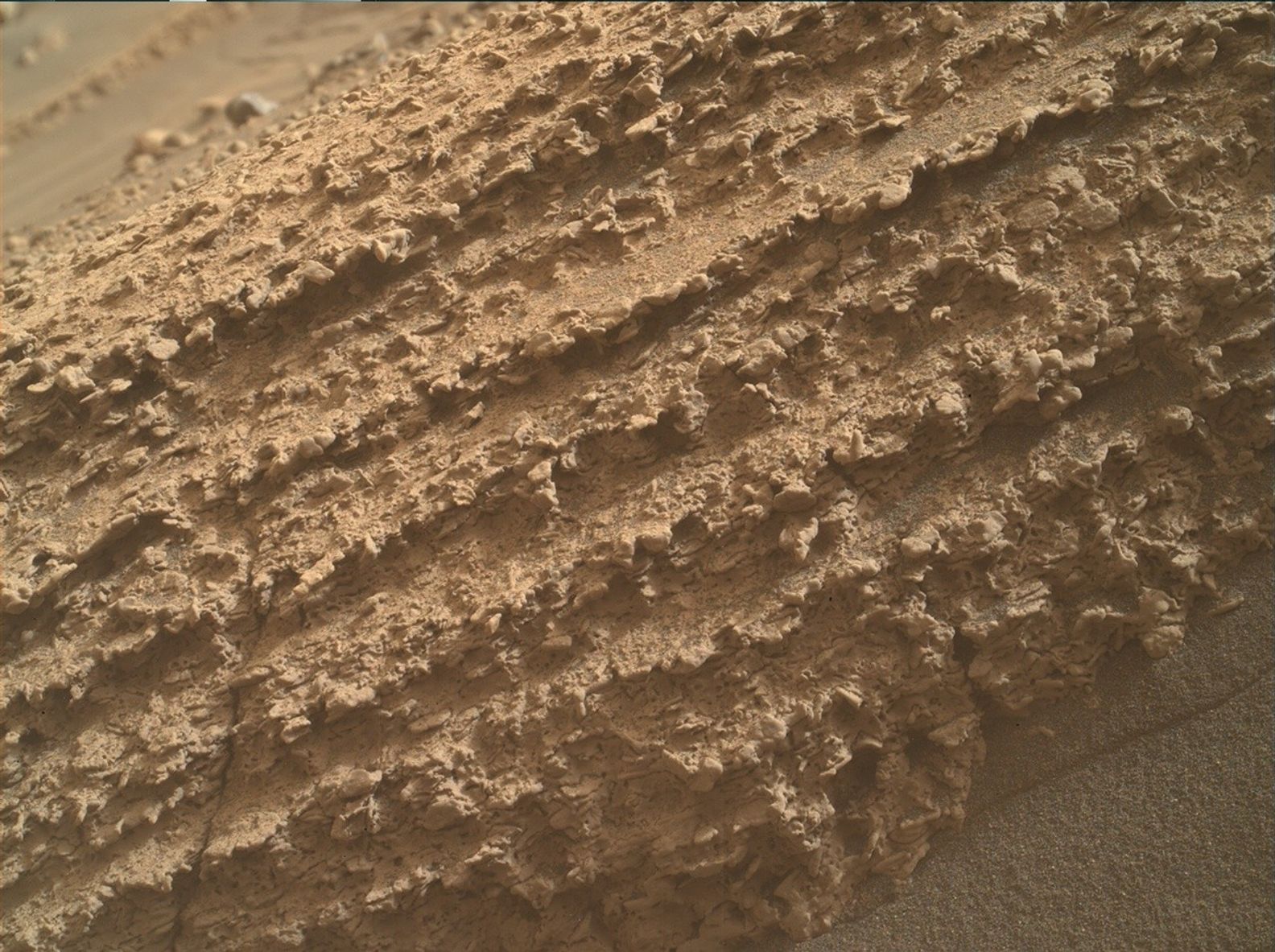
A close-up color photo from the Martian surface shows an area of what looks like pale orange, fine-grained soil or sand that’s reflective, as if it were moist (or just shiny). It’s terraced, creating different levels that look like a topographic map, and overlaid across the top of the entire area is a latticework that in several places looks like the cells of a layer of dried foam. Most of the area is sunlit, but about a third of the image — from the top center of the frame to the lower right corner — is in shadow, presumably cast by the Curiosity rover.
NASA’s Mars rover Curiosity acquired this image of the target surface feature nicknamed “Reds Meadow,” using its Mars Hand Lens Imager (MAHLI), located on the turret at the end of the rover’s robotic arm. Curiosity captured the image Oct. 31, 2024, at 19:09:10 UTC, on sol 4350 — Martian day 4,350 of the Mars Science Laboratory Mission.
NASA/JPL-Caltech/MSSS

Earth planning date: Friday, Nov. 1, 2024

Yesterday evening (Thursday) was Halloween for many of us here on Earth. My neighborhood in eastern Canada was full of small (and not so small!) children, running around in the dark collecting sweets and candy but also getting scared by the ghostly decorations hung at each house. Little did we suspect that our poor rover on Mars was also getting spooked. Curiosity completed about a meter (about 3 feet) of the planned drive before becoming unsettled … scared, if you will! … when its left front wheel got hung up on a rock and stopped moving.

Luckily, we understood this kind of frightened behavior and were able to resume planning today as per usual. That meter was enough to give us a whole new set of targets to choose from. As APXS Strategic Planner this week, I had chosen darker-looking targets in the workspace — “Ladder Lake” and “Reds Meadow” (shown in the accompanying MAHLI image) — earlier in the week. I was happy that bumping backwards by a meter allowed us to reach some of the more typical pale colored bedrock at “Eureka Valley” and a second APXS analysis on “Black Bear Lake,” which is a mixture of both pale bedrock and some darker layers. MAHLI added in a bonus set of images on “Stag Dome,” focusing on small, rougher patches on the pale bedrock.

ChemCam is taking advantage of the short bump, too, adding a passive observation on the brushed Reds Meadow target, analyzed by APXS and MAHLI in Monday’s plan. A ChemCam LIBS target “Hoist Ridge” focuses on a small vertical face of dark material. Two long distance images planned for ChemCam’s Remote Micro Imager (RMI) look at the distribution of rocks along the Gediz Vallis ridge in the distance.

Mastcam is taking several mosaics this weekend (must have gotten extra energy from the Halloween sugar!). Close to the rover, Mastcam will acquire single-frame images of the targets Hoist Ridge and Eureka Valley, and a small mosaic of some surficial troughs just a little further away. Moving further afield, a small 3×1 mosaic (three images in one row) will image the same area as the ChemCam RMI of the Gediz Vallis ridge, and a larger 9×2 mosaic will focus on the faraway yardang unit, where we hopefully will be in a few years.

Then for the really big images: Mastcam will image the whole landscape in a special 360-degree view, so big it needs to be broken into two parts. The first will have 43×4 frames, the second 34×5 frames. These mosaics are huge, so we save them for when we are at a really good vantage point to allow us to capture as much detail as possible for science and engineering planning.

As ever, we continue our environmental monitoring of conditions, with Mastcam and Navcam movies and images looking at dust in the atmosphere above and around us in Gale crater, and watching out for dust devils.

Written by Catherine O’Connell-Cooper, Planetary Geologist at University of New Brunswick

    Share

    Details

    Last Updated
    Nov 04, 2024

    Related Terms

    Powered by WPeMatico
    Get The Details…

    Lagniappe for November 2024

    Lagniappe for November 2024

    6 Min Read

    Lagniappe for November 2024

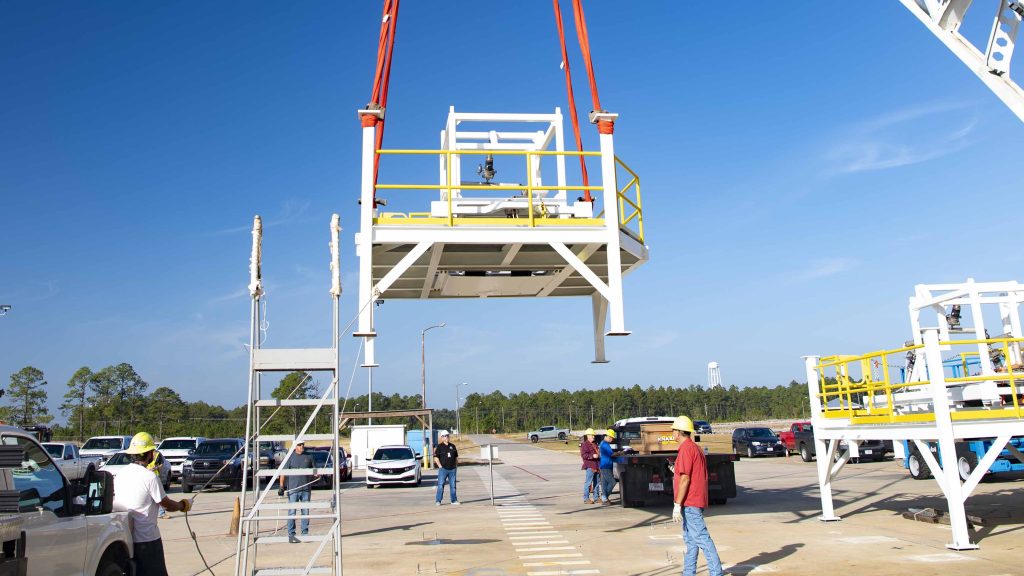
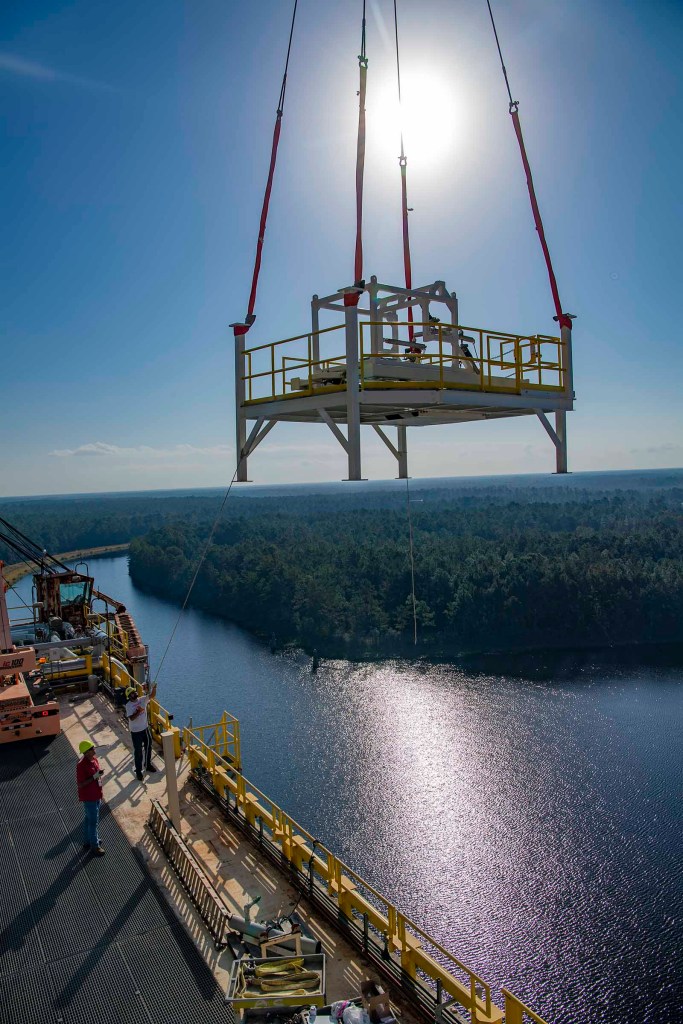
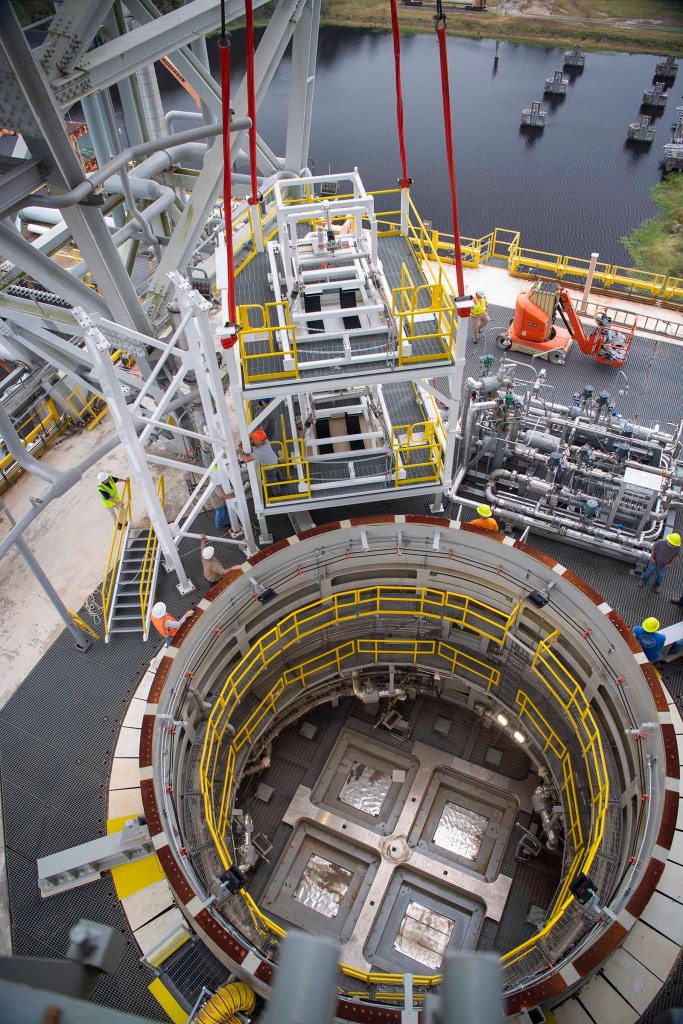
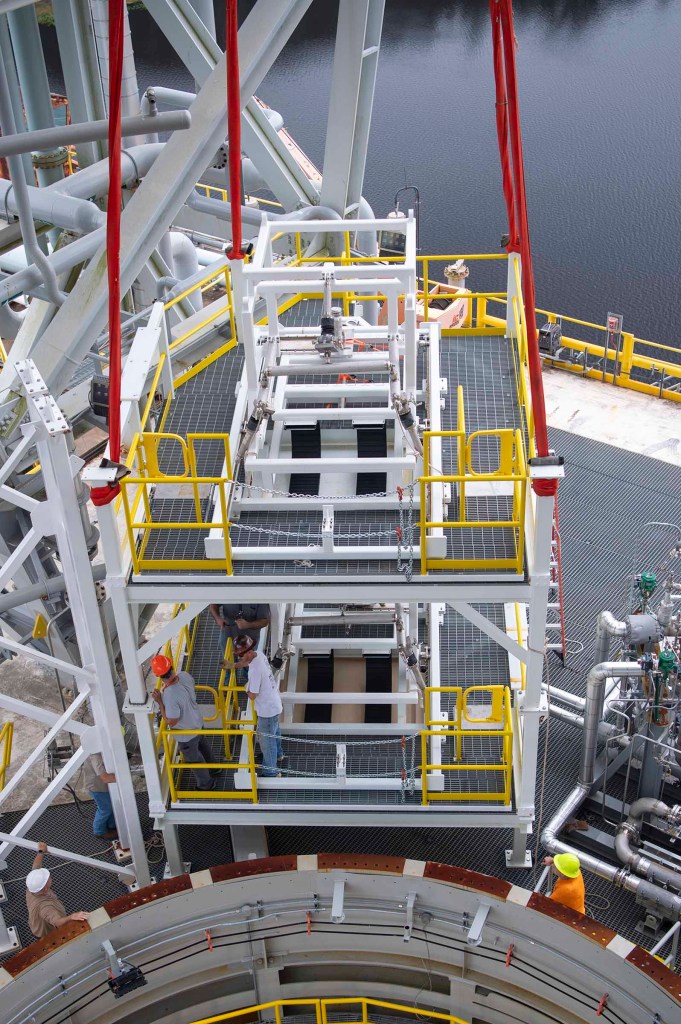
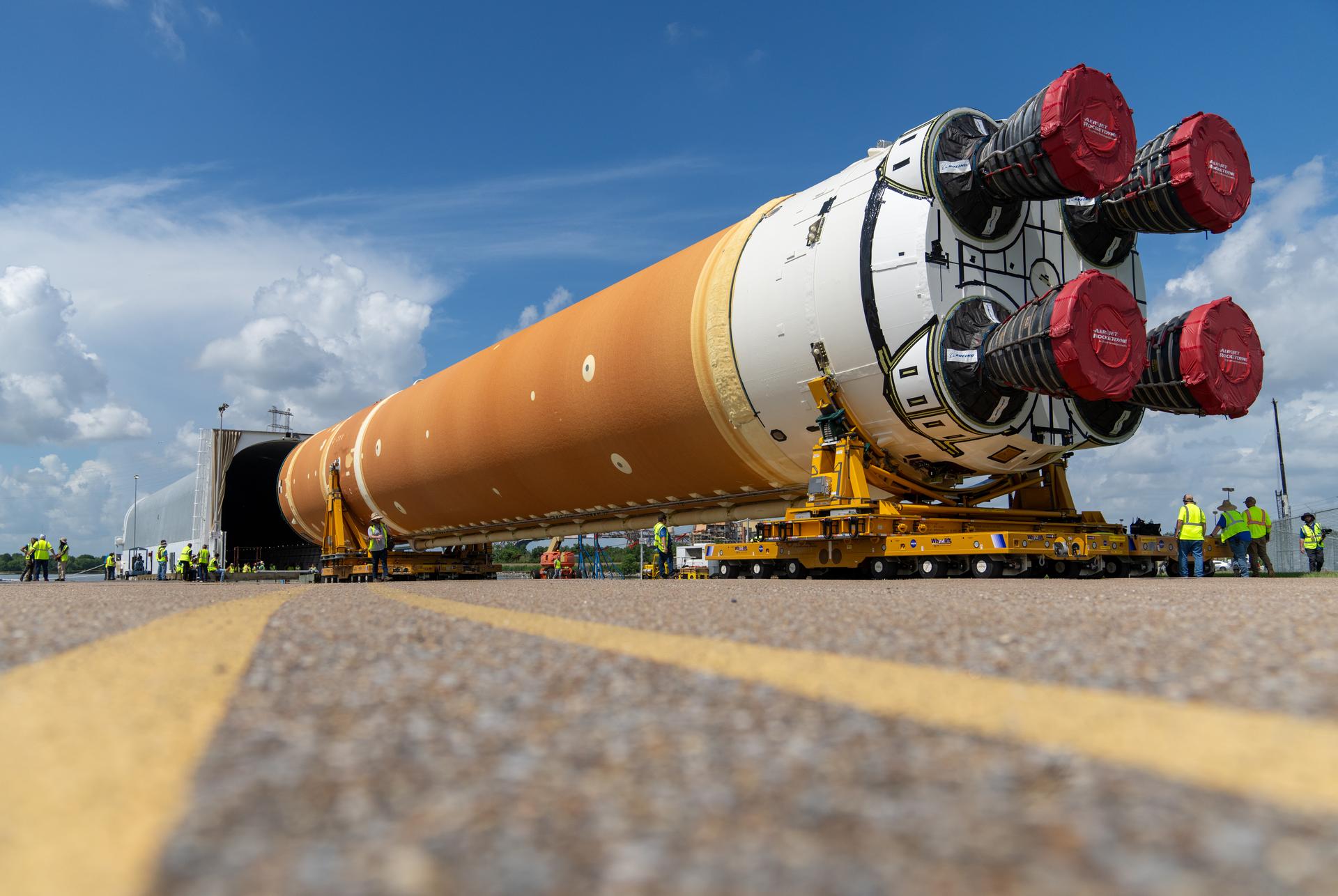
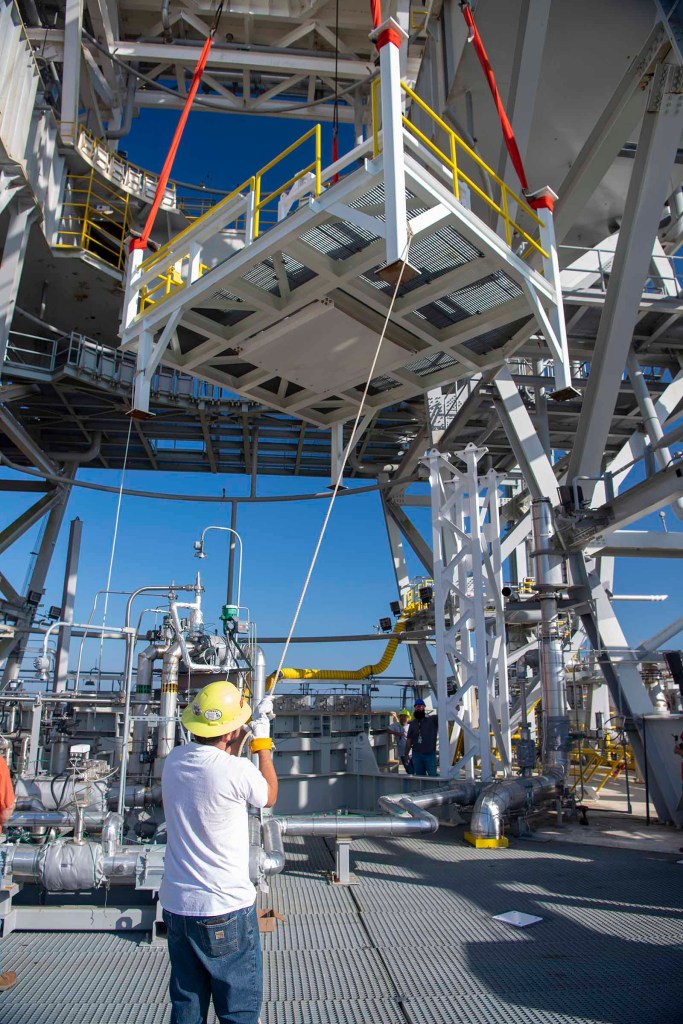
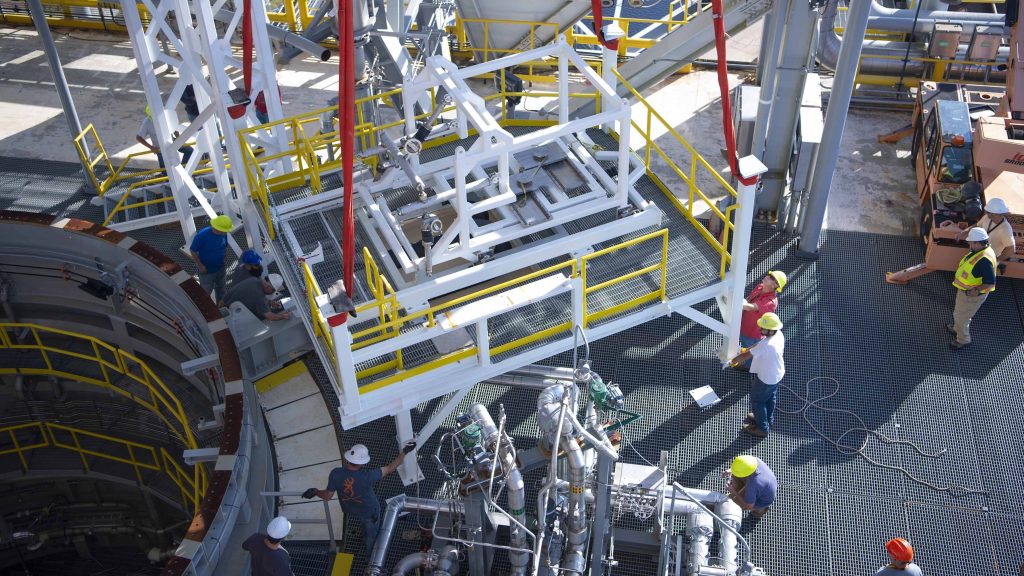
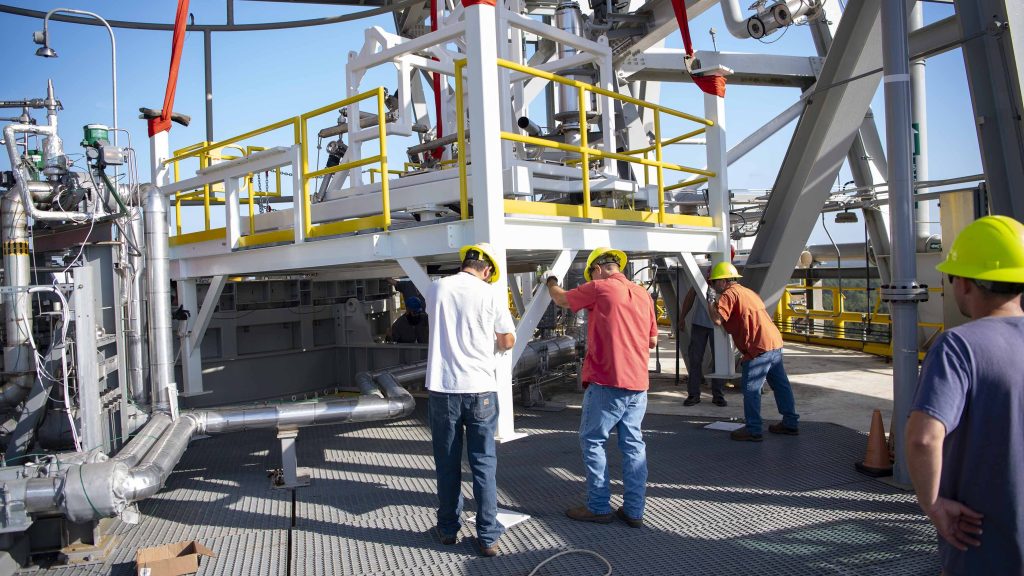
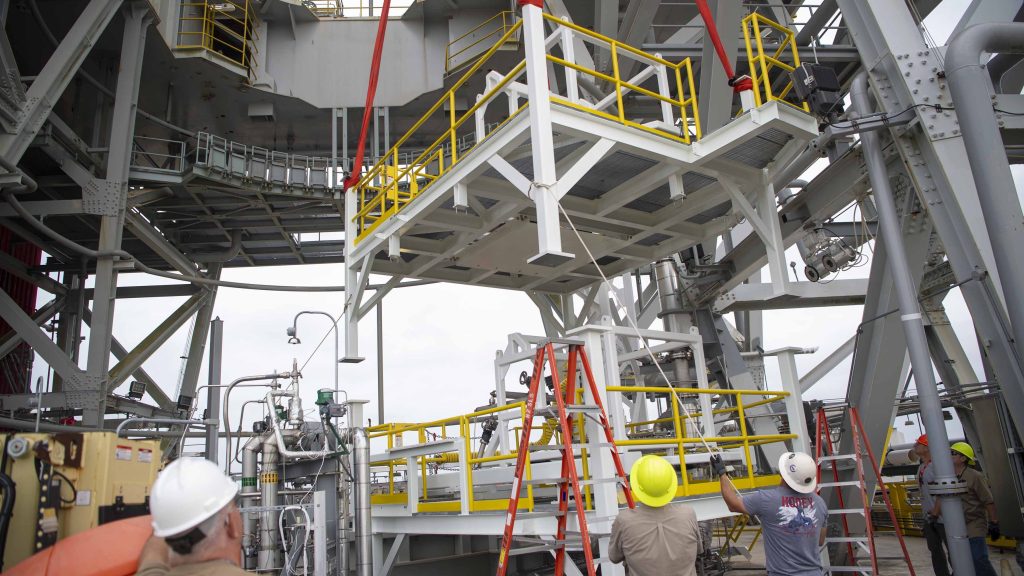
    interstage simulator component suspended in air by crane

    Explore the November 2024 issue, highlighting a milestone for future Artemis testing, a key step to expand NASA Stennis Range Operations work, and more!

    Explore Lagniappe for November 2024 featuring:

    • NASA Stennis Takes Key Step in Expanding its Range Operations Work
    • NASA Stennis Plants Artemis Moon Tree
    • NASA Employees Complete Agency Leadership Program

    Gator Speaks

    Banner for Gator Speaks feature in Lagniappe for November 2024; Gator, a fictional character, is shown on a fall background of autumn leaves;
    Gator Speaks
    NASA/Stennis

    The month of October is known for becoming cooler in these parts, and there sure were plenty of recent cool moments for NASA Stennis that set the tone for the future.

    Last month, the center marked a milestone for testing a new SLS (Space Launch System) rocket stage to fly on future Artemis missions to the Moon and beyond.

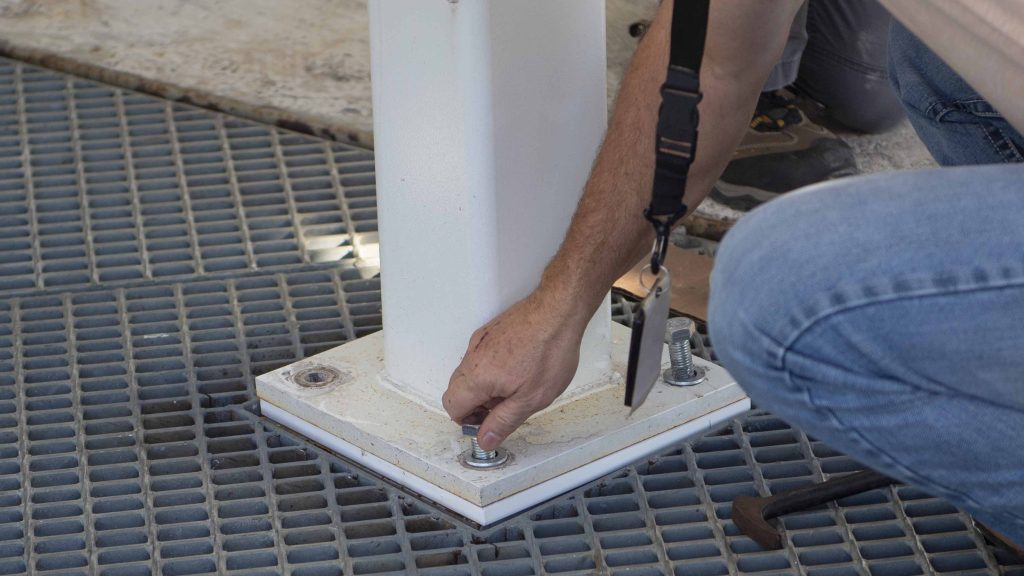
    Crews safely lifted and installed the interstage simulator component that will be used for future testing of NASA’s exploration upper stage on the B-2 side of the Thad Cochran Test Stand.

    Why does this matter?

    When the new upper stage is ready to fly following testing at NASA Stennis, it will allow NASA to send astronauts and larger payloads to the Moon on a single mission.

    It is expected to fly on Artemis IV when astronauts will live and work in humanity’s first lunar space station, Gateway.

    How exciting! This mission will make possible new opportunities for science and preparation for human missions to Mars.

    The massive interstage simulator component lifted and installed at NASA Stennis is 103 tons, or 206,000 pounds. When you learn about the exploration upper stage, and how it functions, it makes sense. The upper stage is powered by four engines and provides more than 97,000 pounds of thrust.

    Speaking of missions to the Moon, have you ever asked yourself why are we returning to the Moon?

    A few goals NASA has set for Artemis missions include: preparing for future exploration missions deeper into space – including Mars – by developing and proving new technologies and capabilities, while learning how to live and operate on the lunar surface; finding and using water and other critical resources needed for long-term exploration; and investigating the Moon’s mysteries to learn more about Earth and the universe for the benefit of all.

    These long-term plans build on more than 50 years of NASA’s experience and are reigniting everyone’s passion for discovery.

    I believe it because the grandgators have been talking NASA nonstop lately.

    All of this culminates with inspiring the Artemis Generation and encouraging young people to pursue studies and careers in science, technology, engineering, and mathematics.

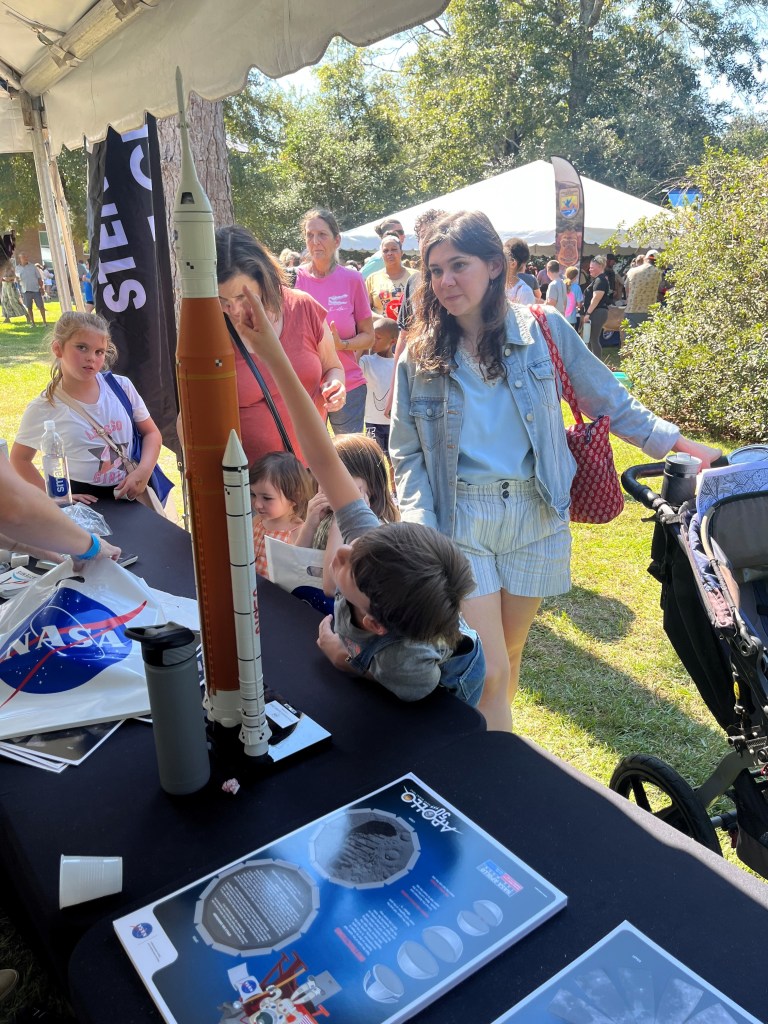
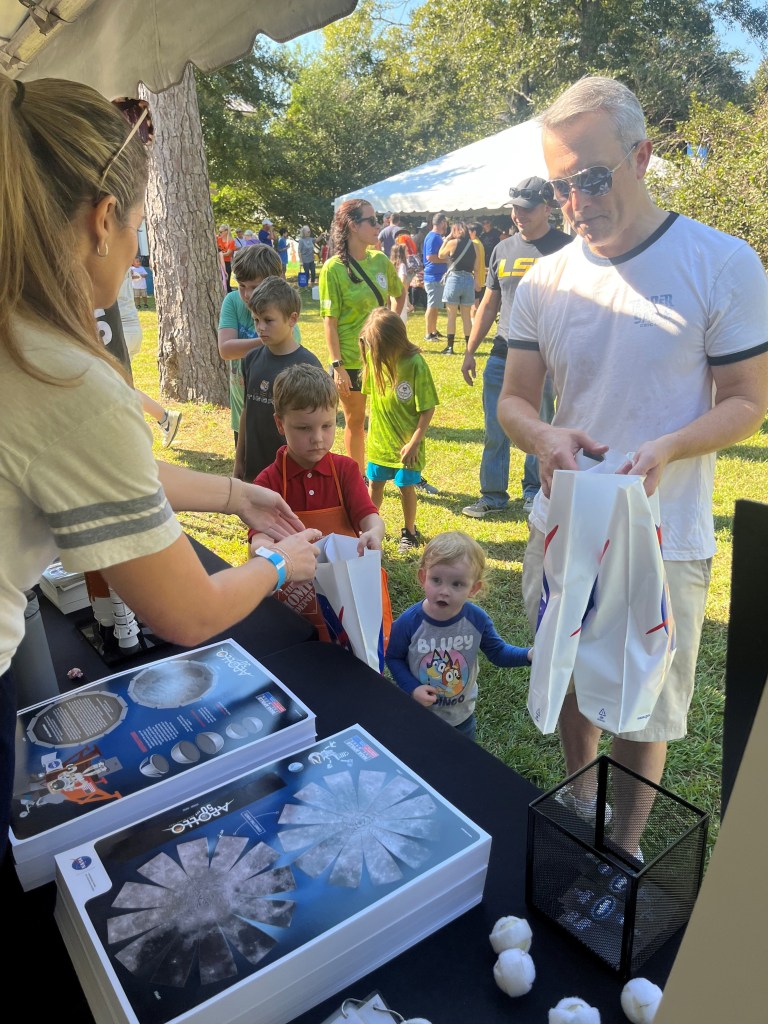
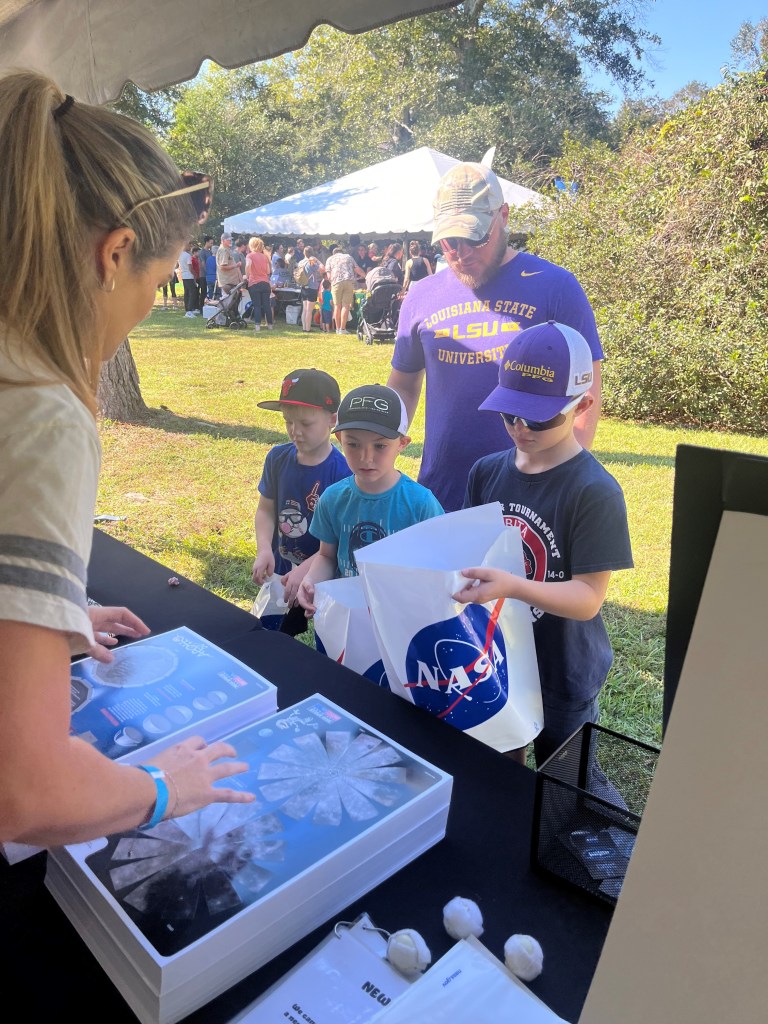
    Throughout the month of October, NASA Stennis representatives have been doing just that, sharing the cool ways NASA explores, innovates, and inspires all of humanity and the Artemis Generation.

    Such stops have included Congressman Bennie Thompson’s College and Career Fair in Greenville, Mississippi, located in the Yazoo-Mississippi Delta area, bordering the state of Arkansas; Cruisin’ the Coast, where car enthusiasts from over 37 states and Canada drive to the Mississippi Gulf Coast annually; and various college and career fairs throughout Pearl River County and Hancock County, areas where many NASA Stennis employees live.

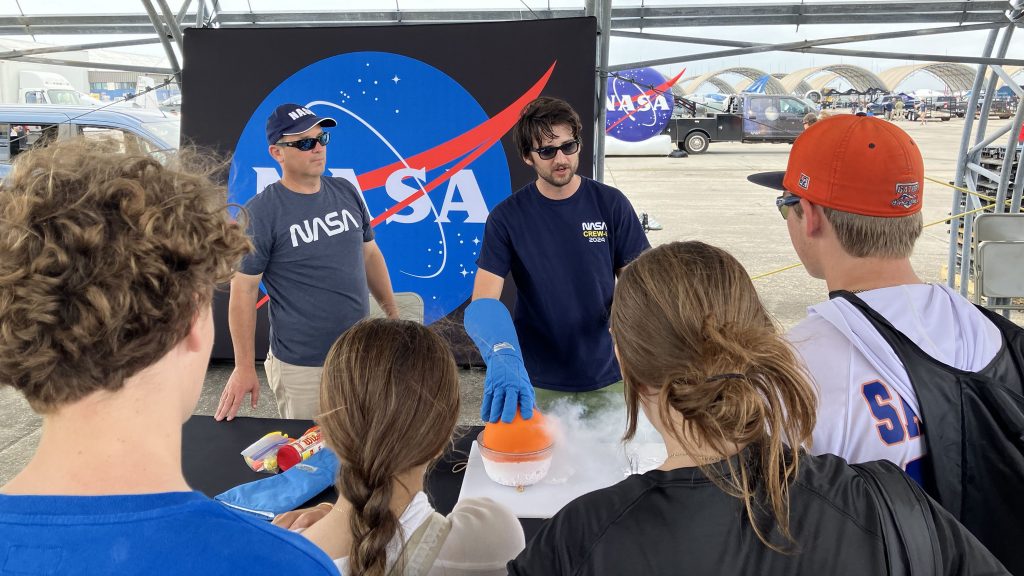
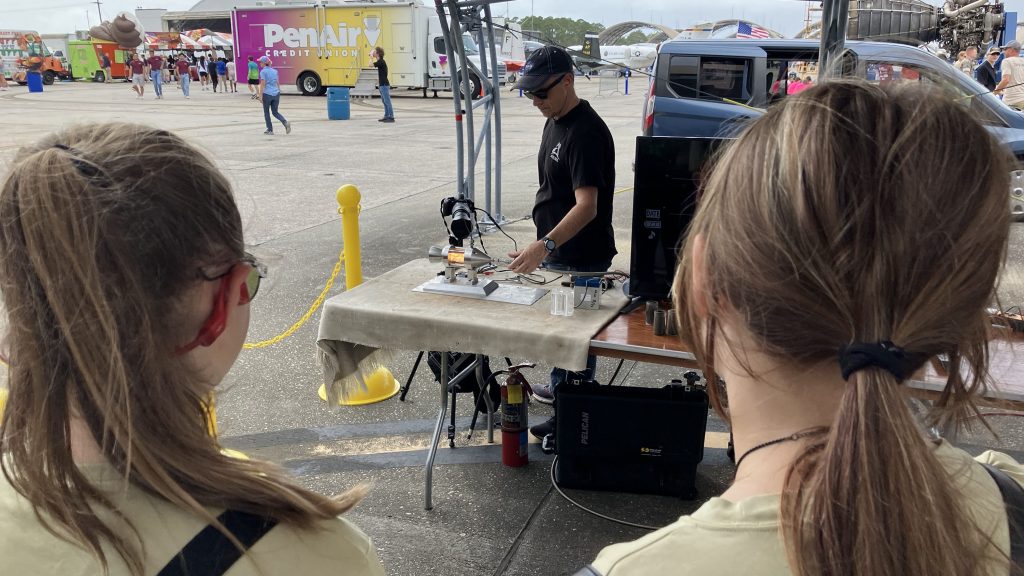
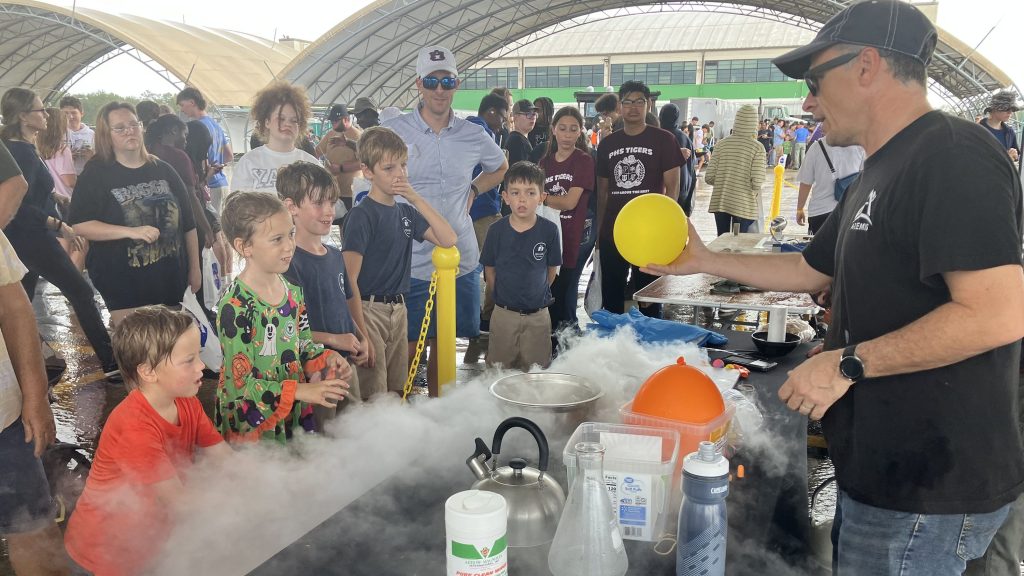
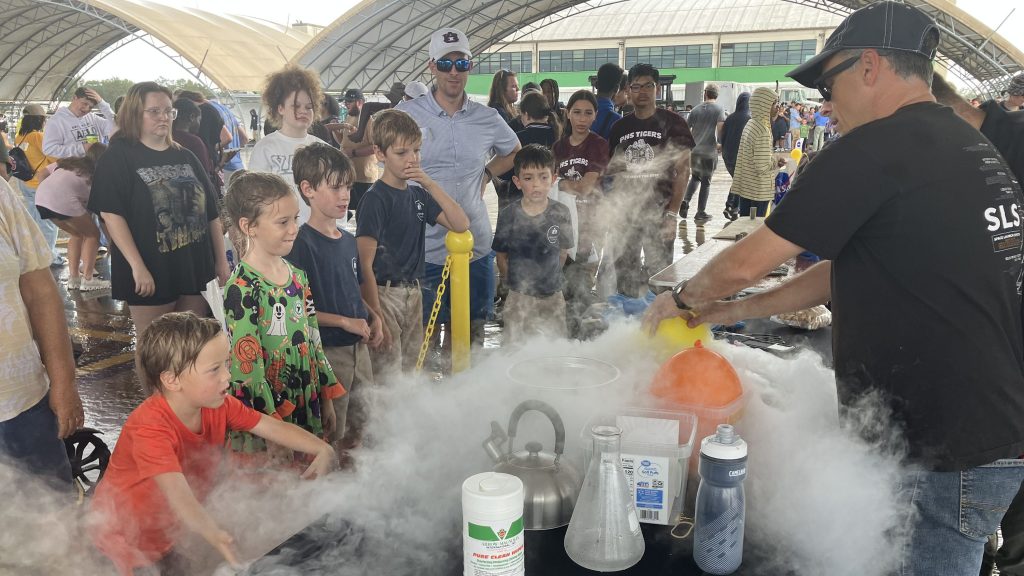
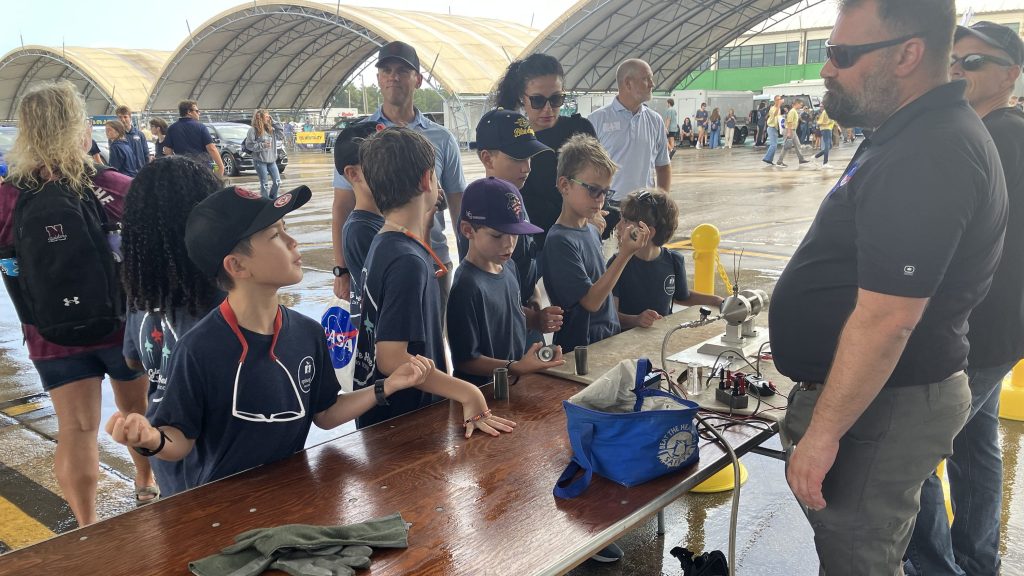
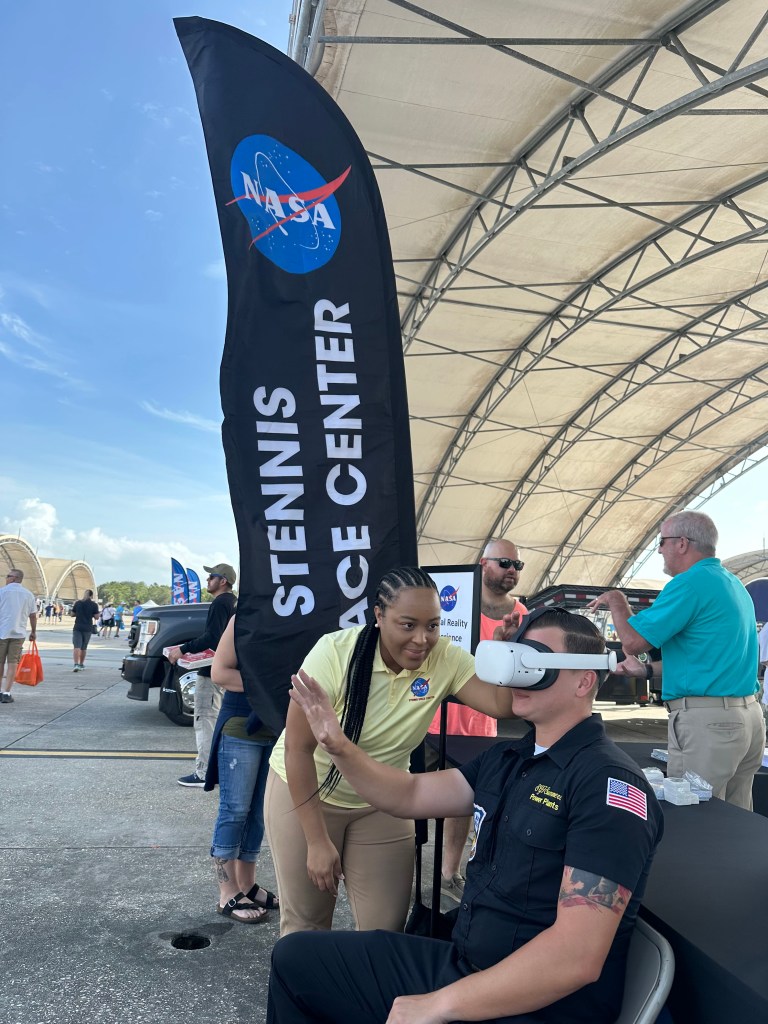
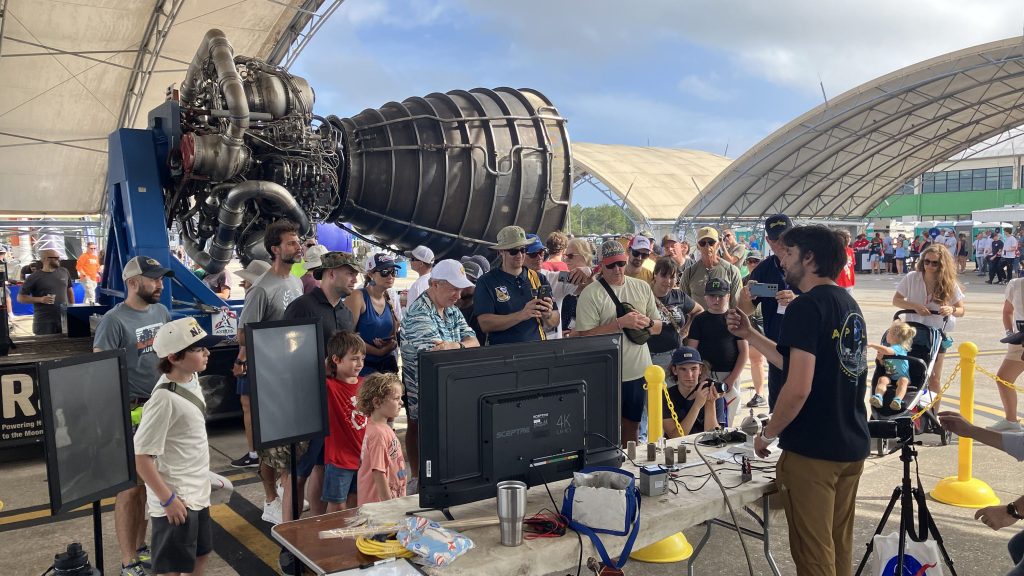
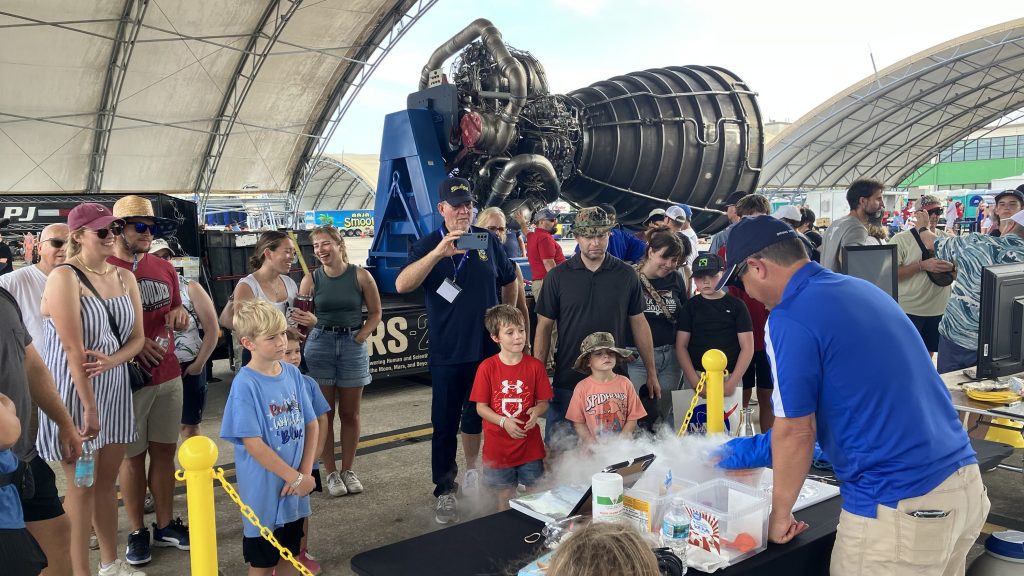
    October indeed was a cool month, and November has started off that way, too. NASA Stennis representatives participated in the NAS Pensacola Blue Angels Homecoming Air Show Nov. 1-2, one of Pensacola’s largest events with more than 150,000 in attendance.

    It marked just the fifth time in history that the U.S. Air Force Thunderbirds and U.S. Navy Blue Angels have flown together. This event also celebrated the 55th anniversary of NASA’s lunar landing.

    Pretty cool, huh?

    > Back to Top

    NASA Stennis Top News

    NASA Stennis Achieves Milestone in Preparation for Future Artemis Testing

    NASA’s Stennis Space Center near Bay St. Louis, Mississippi, achieved a key milestone this week for testing a new SLS (Space Launch System) rocket stage to fly on future Artemis missions to the Moon and beyond.

    NASA Stennis Takes Key Step in Expanding its Range Operations Work

    NASA’s Stennis Space Center near Bay St. Louis, Mississippi, has entered into an agreement with Skydweller Aero Inc. for the company to operate its solar-powered autonomous aircraft in the site’s restricted airspace, a key step towards achieving a strategic center goal.

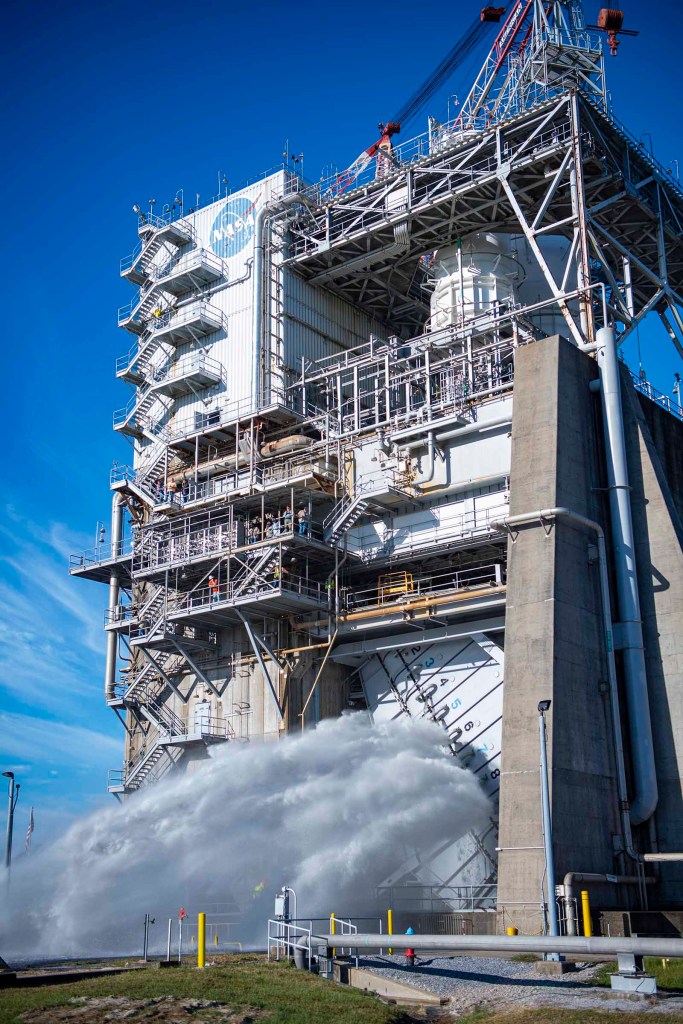
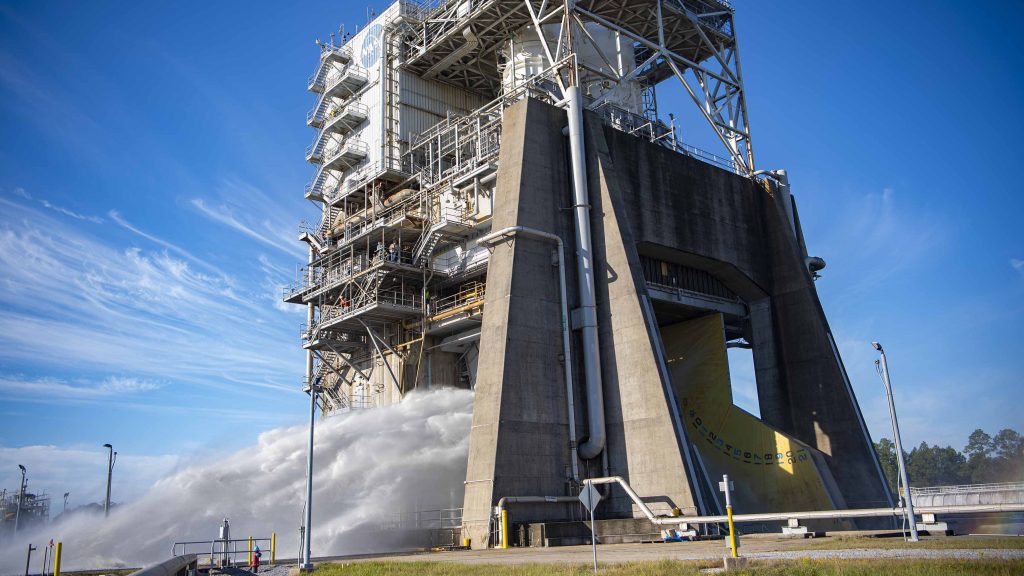
    NASA Stennis Conducts Water Flush at Fred Haise Test Stand

    NASA Employees Complete Agency Leadership Program

    Eli Ouder, left, and Thom Rich are pictured at NASA Headquarters; The NASA insignia is visible in the background
    Eli Ouder, left, and Thom Rich are pictured at NASA Headquarters in Washington on Oct. 23 after graduating from the NASA ASPIRE Program. Ouder is the procurement officer for NASA’s Stennis Space Center and NASA Shared Services Center. Rich is the associate director of the NASA Stennis Center Operations Directorate. The two were part of the first cohort in the new 18-month leadership program to prepare NASA leaders for executive leadership roles in the future.
    NASA

    NASA Stennis Plants Artemis Moon Tree

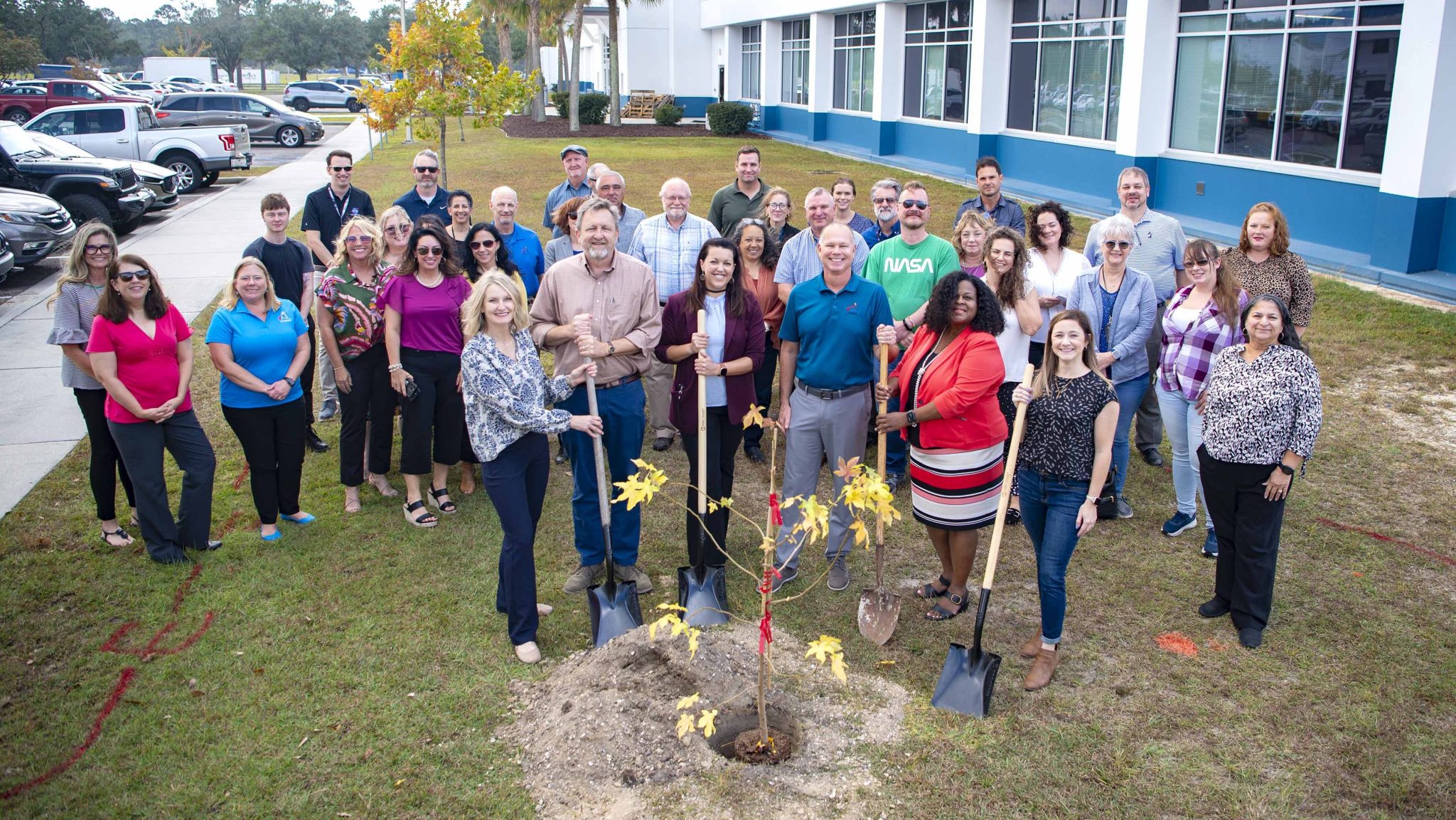
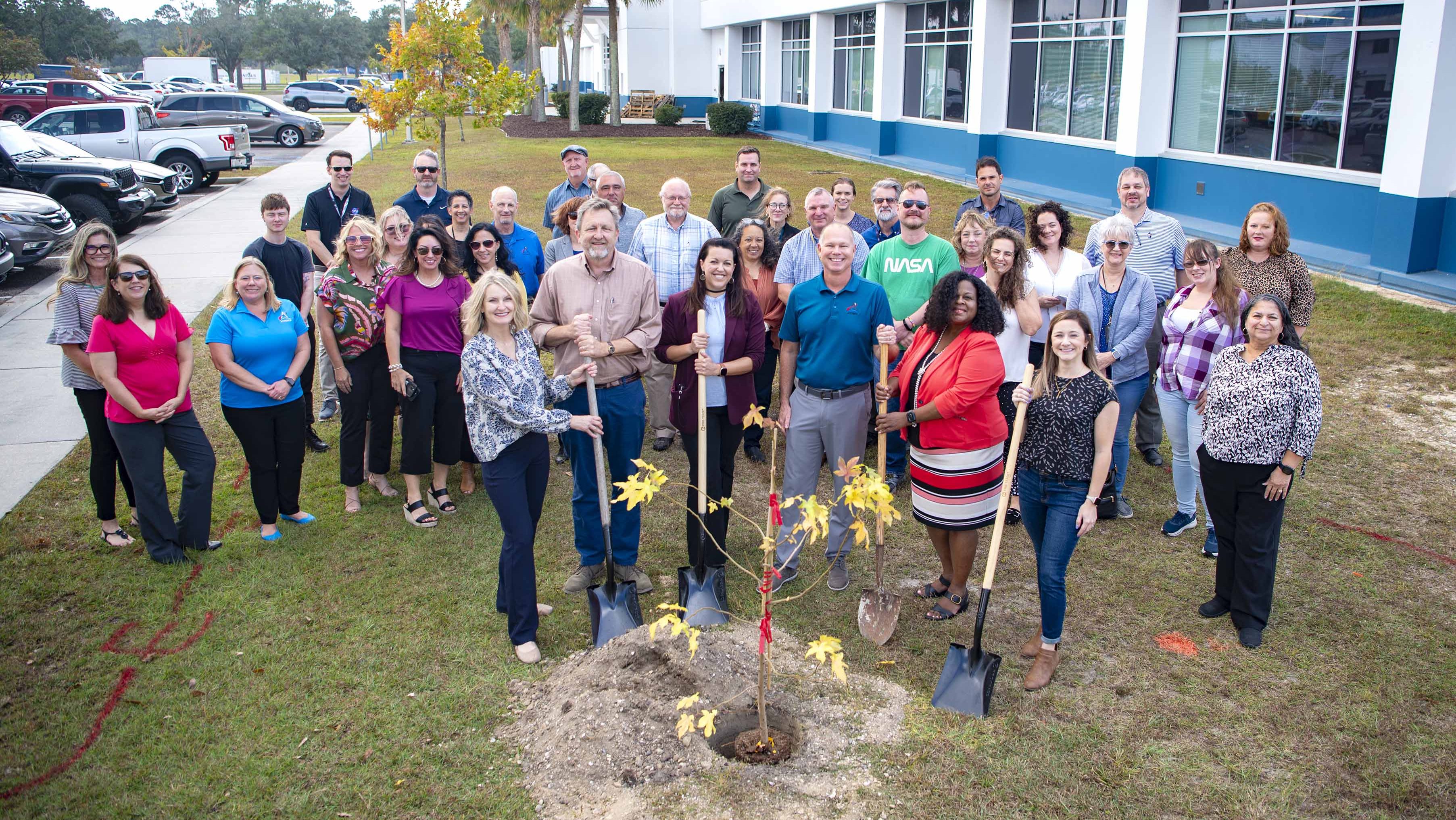
    Employees of NASA Stennis and the NASA Shared Services Center gather outside to plant an Artemis Moon Tree
    NASA employees plant an Artemis Moon Tree at NASA’s Stennis Space Center on Oct. 29 to celebrate NASA’s successful Artemis I mission as the agency prepares for a return around the Moon with astronauts on Artemis II.
    NASA/Danny Nowlin

    NASA Stennis Crews Continue Exploration Upper Stage Preparations

    > Back to Top

    Center Activities

    LSU Engineering Students Visit NASA Stennis

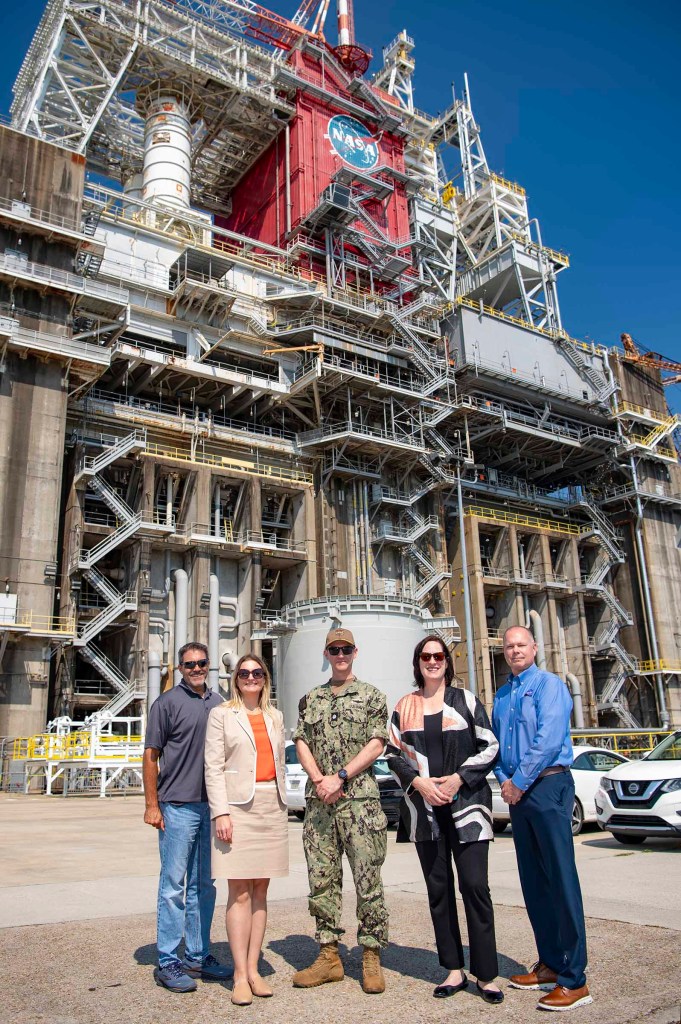
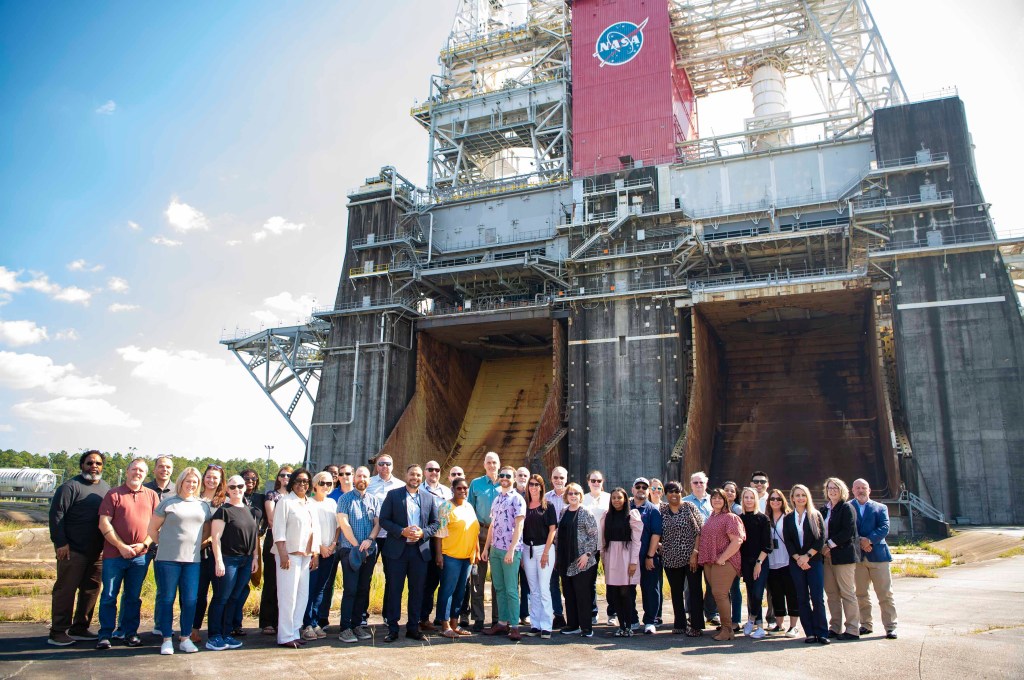
    Members of the Society for the Advancement of Material and Process Engineering at Louisiana State University stand at the Thad Cochran Test Stand during a visit to NASA Stennis
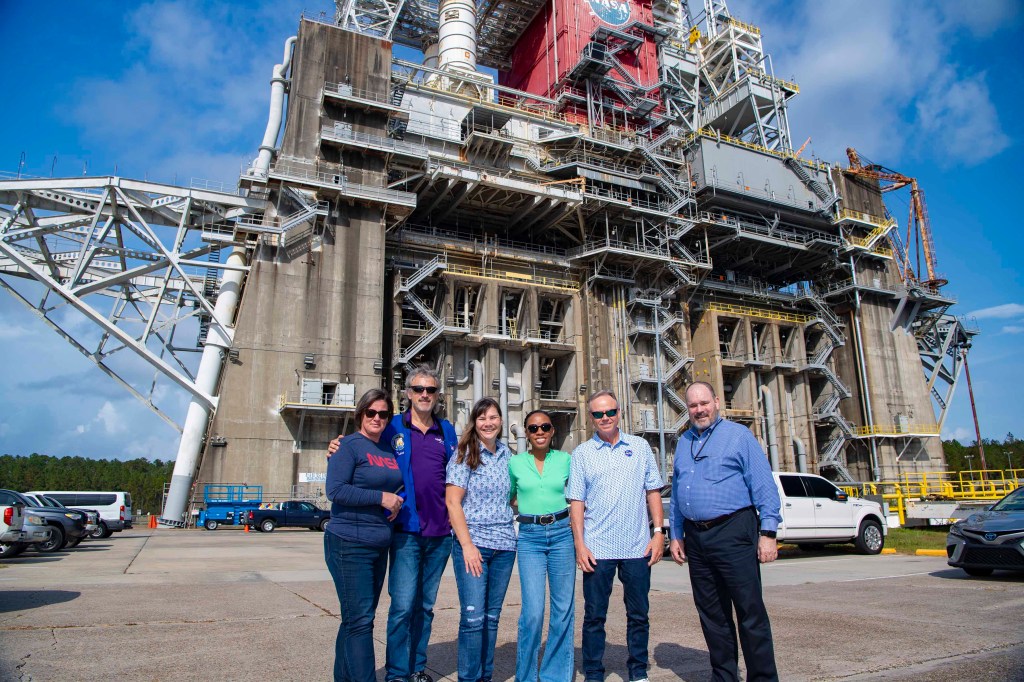
    Members of the Society for the Advancement of Material and Process Engineering at Louisiana State University stand at the Thad Cochran Test Stand during a visit to NASA Stennis on Oct. 4. The Thad Cochran Test Stand (B-2) is where future Green Run testing of NASA’s exploration upper stage will take place ahead of future Artemis missions to the Moon and beyond. The mission of the Society for the Advancement of Material and Process Engineering at LSU is to provide enhanced educational opportunities by delivering information on new and advanced materials and processing technology.
    NASA/Danny Nowlin

    U.S. Ambassador Visits NASA Stennis

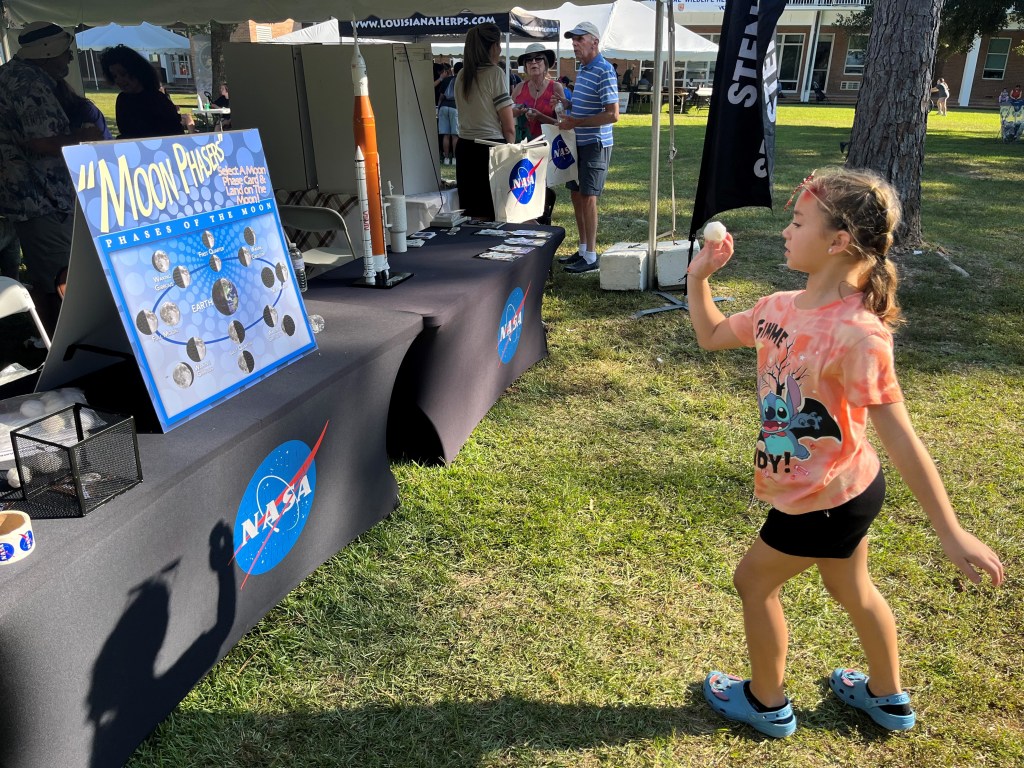
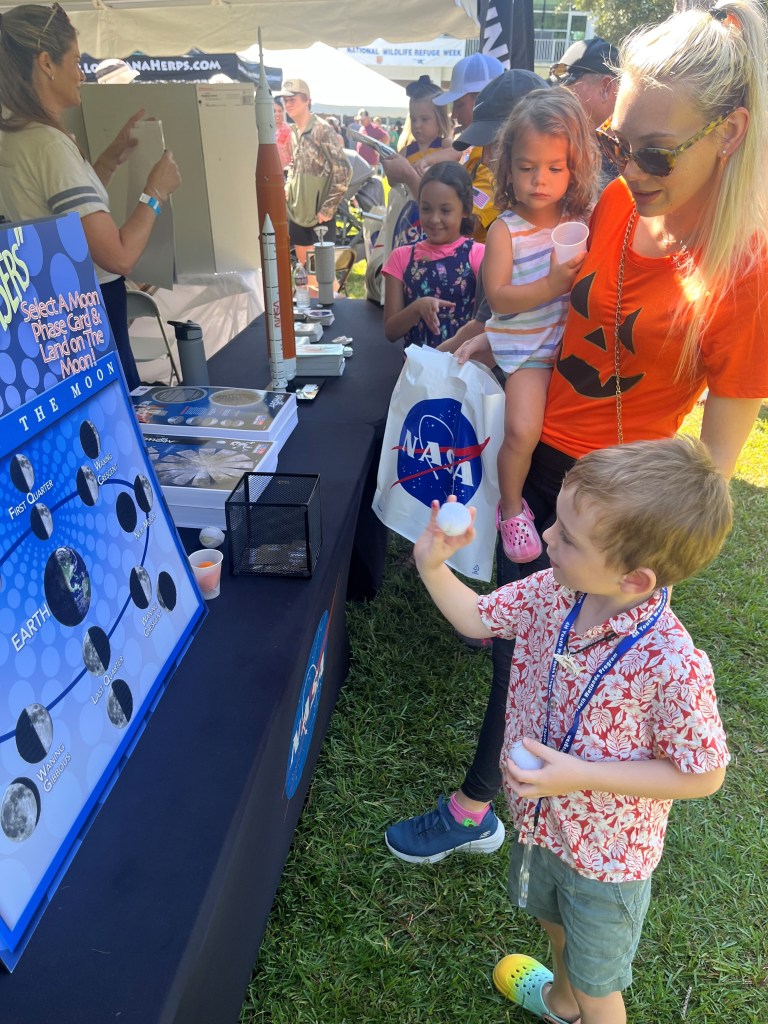
    NASA Stennis Highlights Return to the Moon in Louisiana

    NASA Stennis Hosts Office of the Chief Information Officer Teams

    Start Your Engines: NASA Stennis Cruises on the Coast

    Stennis Hosts Family Day at INFINITY

    Java with John: Brewing Conversations and Connection with NASA Stennis Employees

    NASA Attends Blue Angels Airshow

    NASA Attends Picayune Street Fair

    > Back to Top

    NASA in the News

    > Back to Top

    Employee Profile: Tessa Keating

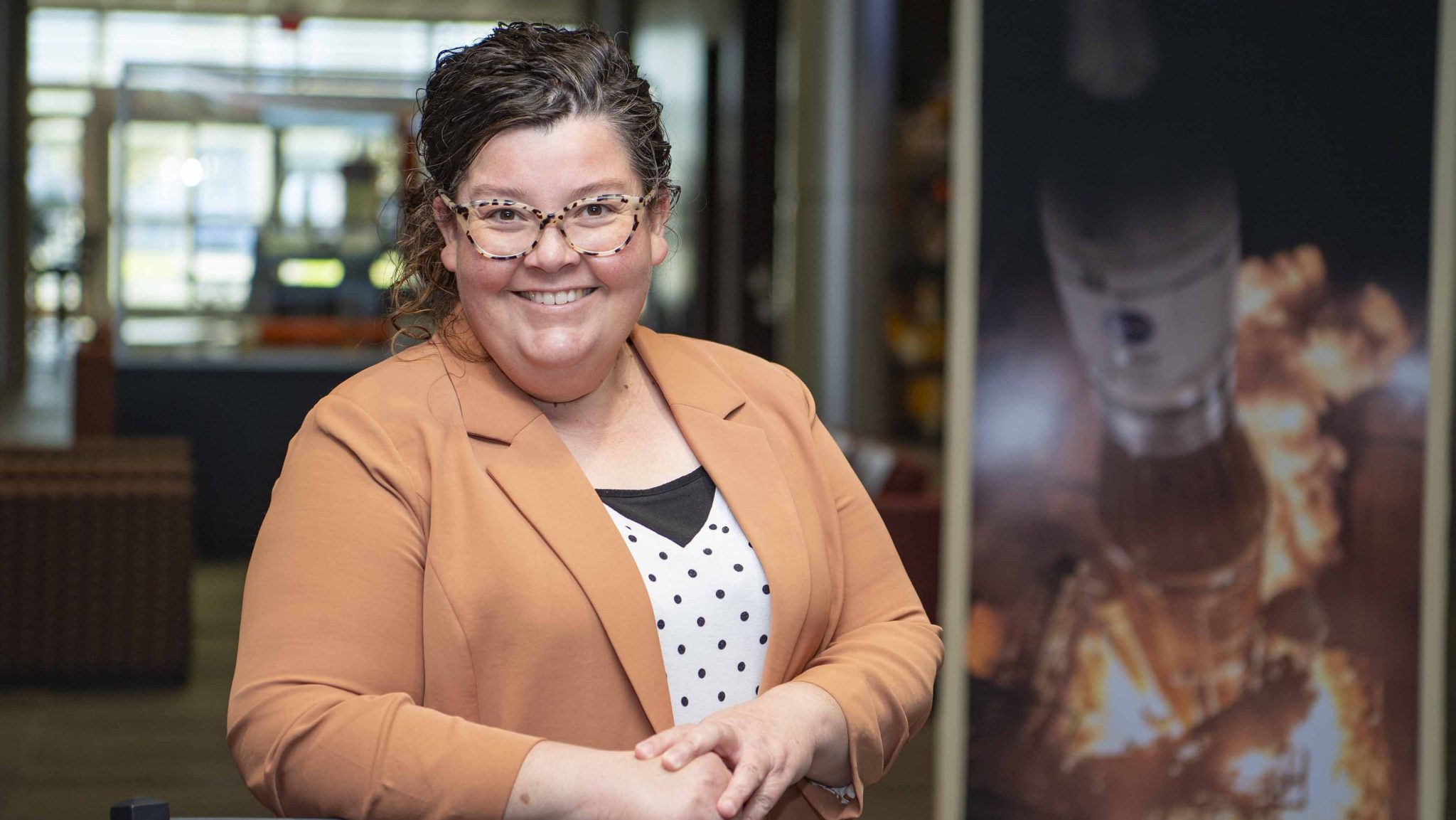
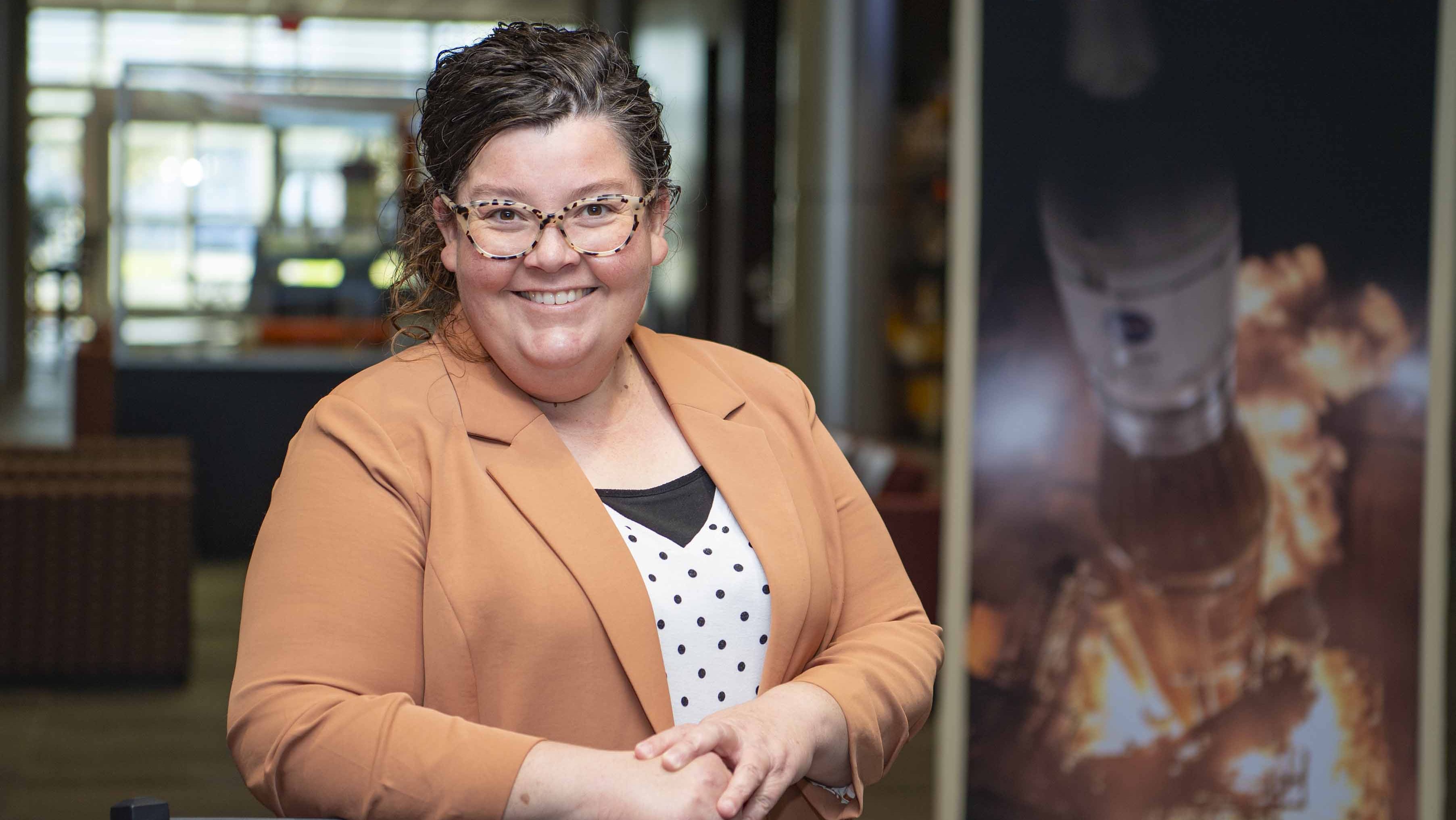
    Tessa Keating poses for a portrait wearing a caramel-colored jacket
    Tessa Keating is a public affairs specialist in the Office of Communications at NASA’s Stennis Space Center. Keating plans onsite logistics, serves as a protocol officer, and coordinates the Space Flight Awareness Program for NASA Stennis and the NASA Shared Services Center.
    NASA/Danny Nowlin

    Every task at NASA’s Stennis Space Center near Bay St. Louis, Mississippi, is not simply work for Tessa Keating – it is a meaningful step toward a part of something great.

    > Back to Top

    Additional Resources

    Subscription Info

    Lagniappe is published monthly by the Office of Communications at NASA’s Stennis Space Center. The NASA Stennis office may be contacted by at 228-688-3333 (phone); ssc-office-of-communications@mail.nasa.gov (email); or NASA OFFICE OF COMMUNICATIONS, Attn: LAGNIAPPE, Mail code IA00, Building 1111 Room 173, Stennis Space Center, MS 39529 (mail).

    The Lagniappe staff includes: Managing Editor Lacy Thompson, Editor Bo Black, and photographer Danny Nowlin.

    To subscribe to the monthly publication, please email the following to ssc-office-of-communications@mail.nasa.gov – name, location (city/state), email address.

    Powered by WPeMatico
    Get The Details…
    LaToya Dean

    From Logistics to Legacy: NASA Employee is a Part of Something Great

    From Logistics to Legacy: NASA Employee is a Part of Something Great

    4 min read

    Preparations for Next Moonwalk Simulations Underway (and Underwater)

    Tessa Keating poses for a portrait wearing a caramel-colored jacket
    Tessa Keating is a public affairs specialist in the Office of Communications at NASA’s Stennis Space Center. Keating plans onsite logistics, serves as a protocol officer, and coordinates the Space Flight Awareness Program for NASA Stennis and the NASA Shared Services Center.
    NASA/Danny Nowlin

    Every task at NASA’s Stennis Space Center near Bay St. Louis, Mississippi, is not simply work for Tessa Keating – it is a meaningful step toward a part of something great.

    “It has been a dream career. I count it an honor to share the NASA story and humbled to know our team witnesses a part of history,” said Keating, a NASA public affairs specialist in the NASA Stennis Office of Communications. “Every day is an opportunity to contribute to the NASA legacy that will last beyond today. “

    Keating plans onsite logistics, serves as a protocol officer, and coordinates the Space Flight Awareness Program for NASA Stennis and the NASA Shared Services Center. In fact, she organized much of the recent Space Flight Awareness Silver Snoopy Award ceremony at NASA Stennis in August, except for one part. As the ceremony finished, NASA Stennis Director John Bailey said one more award was to be given.

    No one was more surprised than the logistics coordinator herself when Keating’s family joined her on stage. The 21-year NASA Stennis employee was honored for her outstanding contributions in sharing the NASA story of exploring the secrets of the universe for the benefit of all with a diverse audience and for equipping everyone with a broader knowledge and appreciation of the center’s vital role within NASA.

    “I am not sure I will ever be able to top that in my NASA career,” Keating said.

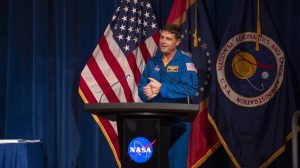
    It became a full-circle moment that she described as a great honor. The Silver Snoopy is the astronauts’ personal award and is presented to less than 1 percent of the total NASA workforce. Reid Wiseman, a NASA astronaut and commander for the upcoming Artemis II mission around the Moon, presented the award to Keating, along with a lapel pin flown aboard NASA’s Artemis I mission.

    As NASA returns to the Moon for scientific discovery, economic benefits, and inspiration for the Artemis Generation, Keating says it will be extra-special watching Wiseman and the Artemis II crew lay the groundwork for future milestones.

    Keating helped lay the groundwork ahead of the successful Artemis I mission. She served as lead logistics for onsite guest operations in 2021 when NASA conducted the most powerful propulsion test in more than 40 years at NASA Stennis. A full-duration hot fire of the first SLS (Space Launch System) core stage and its four RS-25 engines culminated a year-long series of integrated tests. Keating coordinated the viewing of the hot fire for some 200 agency leaders and guests, despite restricted settings due to COVID-19.  

    “It was truly a highlight. I had grown up hearing my parents and grandparents talk about engines that were tested during the Apollo era, and I had never experienced something of that magnitude,” Keating said. “I was able to live it, feel it, and watch the next part of NASA history onsite.”

    For Keating, the groundwork for a NASA career came following graduation with a bachelor’s degree in Journalism from William Carey University and a master’s degree in Communications from The University of Southern Mississippi, both schools in Hattiesburg, Mississippi. Having grown up in Pearl River County, Mississippi, for most of her life, she knew about NASA Stennis. However, she did not think she could ever work at the center because her strengths were in areas beyond math and science.

    Following some additional exploration and conversations with influential people in her life, Keating discovered she, in fact, could be a part of something great at NASA Stennis.

    “The possibilities are endless at NASA when you allow yourself to put your best foot forward and research the many opportunities that are available. There is always room for various types of studies,” Keating said. “I credit where I am in my career to God and to the people who have helped to guide my path. I will be forever grateful.” 

    Powered by WPeMatico
    Get The Details…
    LaToya Dean

    NASA Stennis Plants Artemis Moon Tree

    NASA Stennis Plants Artemis Moon Tree

    3 min read

    Preparations for Next Moonwalk Simulations Underway (and Underwater)

    Employees of NASA Stennis and the NASA Shared Services Center gather outside to plant an Artemis Moon Tree
    NASA employees plant an Artemis Moon Tree at NASA’s Stennis Space Center on Oct. 29 to celebrate NASA’s successful Artemis I mission as the agency prepares for a return around the Moon with astronauts on Artemis II.
    NASA/Danny Nowlin

    A tree-planting ceremony at NASA’s Stennis Space Center on Oct. 29 celebrated NASA’s successful Artemis I mission as the agency prepares for a return around the Moon with astronauts on Artemis II.

    “We already have a thriving Moon Tree from the Apollo years onsite,” NASA Stennis Director John Bailey said. “It is exciting to add trees for our new Artemis Generation as it continues the next great era of human space exploration.”

    NASA’s Office of STEM Engagement Next Gen STEM Project partnered with U.S. Department of Agriculture (USDA) Forest Service to fly five species of tree seeds aboard the Orion spacecraft during the successful uncrewed Artemis I test flight in 2022 as part of a national STEM Engagement and conservation education initiative. 

    The Artemis Moon Tree species included sweetgums, loblolly pines, sycamores, Douglas-firs, and giant sequoias. The seeds from the first Artemis mission have been nurtured by the USDA into seedlings to be a source of inspiration for the Artemis Generation.

    The Moon Tree education initiative is rooted in the legacy of Apollo 14 Moon Tree seeds flown in lunar orbit over 50 years ago by the late Stuart Roosa, a NASA astronaut and Mississippi Coast resident.

    NASA Stennis and the NASA Shared Services Center (NSSC), located at the site, planted companion trees during the Oct. 29 ceremony. Bailey and NSSC Executive Director Anita Harrell participated in a joint planting ceremony attended by a number of employees from each entity.

    The American sweetgum trees are the second and third Moon Trees at the south Mississippi site. In 2004, ASTRO CAMP participants planted a sycamore Moon Tree to honor the 35th anniversary of Apollo 11 and the first lunar landing on July 20, 1969.

    The road to space for both Apollo 14 and Artemis I went through Mississippi. Until 1970, NASA Stennis test fired first, and second stages of the Saturn V rockets used for Apollo.

    NASA Stennis now tests all the RS-25 engines powering Artemis missions to the Moon and beyond. Prior to Artemis I, NASA Stennis tested the SLS (Space Launch System) core stage and its four RS-25 engines.

    The Artemis Moon Trees have found new homes in over 150 communities and counting since last spring, and each of the 10 NASA centers also will plant one.

    As the tree grows at NASA Stennis, so, too, does anticipation for the first crewed mission with Artemis II. Four astronauts will venture around the Moon on NASA’s path to establishing a long-term presence at the Moon for science and exploration.

    The flight will test NASA’s foundational human deep space exploration capabilities – the SLS rocket and Orion spacecraft – for the first time with astronauts.

    Powered by WPeMatico
    Get The Details…
    LaToya Dean

    Station Science Top News: Nov. 1, 2024

    Station Science Top News: Nov. 1, 2024

    Bioprinted patches could help wounds heal

    Researchers successfully demonstrated the function of a handheld bioprinter that could provide a simple and effective way to treat wounds in space using human skin cells. Crews could use this technology to treat their own injuries and protect crew health and mission success in the future.

    Spaceflight can affect how wounds heal. The Bioprint FirstAid device tested a process for bioprinting a patch to cover a wound and accelerate healing. In the future, a crew member’s own cells may be used to create personalized patches for treating an injury. The bioprinting device is easy to use, can be tailored to specific needs, has a low failure rate, and its mechanics are electronics- and maintenance-free. This ESA (European Space Agency) investigation was coordinated by the German Aerospace Center (DLR).

    European Space Agency (ESA) astronaut Matthias Maurer demonstrates the Bioprint First Aid prototype during a training session.
    ESA (European Space Agency) astronaut Matthias Maurer demonstrates the Bioprint FirstAid prototype during preflight training.
    German Aerospace Center/European Space Agency

    Countering post-flight proficiency challenges

    The day they return from spaceflight, astronauts demonstrate significant impairments in fine motor control and the ability to multitask in simulated flying and driving challenges. This finding could help develop countermeasures so crew members can safely land and conduct early operations on the Moon and Mars.

    Manual Control used a battery of tests to examine how spaceflight affects cognitive, sensory, and motor function after landing. Researchers concluded that subtle physiological changes that occur during spaceflight degrade post-flight performance. Subsequent tests showed recovery of performance once exposed to the task, suggesting that simulation training immediately before a task could be an effective countermeasure. Researchers also suggest limiting dual or competing tasks during mission-critical phases.

    A simulator used to test crew members’ ability to fly and drive after spaceflight.
    A simulator used to test crew members’ ability to fly and drive after spaceflight.
    NASA

    Gamma-ray telescope resilient to space radiation

    Researchers found that the station’s Glowbug gamma-ray telescope could perform in the space radiation environment for multi-year missions. Radiation can affect these types of instruments, but Glowbug regularly detected gamma ray bursts (GRBs) during its one-year operation. Studying GRBs can help scientists better understand the universe and its origins.

    Glowbug demonstrated technology to detect and characterize cosmic GRBs, primarily short GRBs, which result from mergers of compact binary star systems containing either two neutron stars or a neutron star and a black hole. Short GRBs produce gravitational waves, ripples in space that travel at the speed of light. Studying these gravitational waves could provide insight into the star systems where they originate and the behavior of matter during the mergers.

    Learn more about GRB research here.

    Powered by WPeMatico
    Get The Details…
    Linda E. Grimm