Native American Seeds Flown Aboard Space Station

Native American Seeds Flown Aboard Space Station

Five plastic bags of different seeds are inside the cupola of the International Space Station, Earth can be seen through the cupola window.
NASA/Loral O’Hara

The Choctaw Heirloom Seeds investigation flew five varieties of heirloom seeds from the Choctaw Nation of Oklahoma aboard the International Space Station in early November 2023. The seeds are Isito (Choctaw Sweet Potato Squash), Tobi (Smith Peas), Tanchi Tohbi (Flour Corn), Tvnishi (Lambsquarter), and Chukfi Peas. The seeds spent six months aboard station, returning to Earth in April 2024.

Next spring, Jones Academy students will plant the space-flown seeds alongside Earth-bound seeds of the same type in the school’s Growing Hope Garden. Students will hypothesize how the seeds will grow and make observations throughout the growing season.

Middle school teachers are developing curriculum incorporating the seeds’ journey to space station and students’ experiments in the garden. This research could impact Native and Indigenous populations across the United States, inviting underrepresented groups to engage with science, technology, engineering, and mathematics.

Image credit: NASA/Loral O’Hara

Powered by WPeMatico

Get The Details…
Monika Luabeya

NASA Funds New Studies Looking at Future of Sustainable Aircraft

NASA Funds New Studies Looking at Future of Sustainable Aircraft

5 min read

Preparations for Next Moonwalk Simulations Underway (and Underwater)


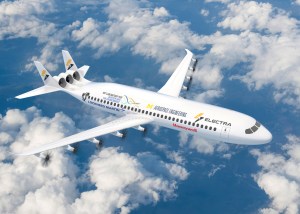
An artist’s concept that depicts a large, broad, white airliner with five propellers on each wing and twin tails with three air intakes between them. The concept aircraft is shown flying above the clouds in a blue sky.
Artist’s concept of a future airliner based on the NASA Advanced Aircraft Concepts for Environmental Sustainability 2050 submission from awardee Electra. The team’s project focuses on electric propulsion, integrated aircraft technologies, and vehicle design.
Electra

Picture yourself at an airport a few decades from now. What does your airliner look like? It’s more efficient, with lower emissions than today’s aircraft – what kinds of designs or technology make that possible? NASA is working to answer those questions by commissioning five new design studies looking to push the boundaries of possibility for sustainable aircraft. 

Through NASA’s Advanced Aircraft Concepts for Environmental Sustainability (AACES) 2050 initiative, the agency asked industry and academia to come up with studies looking at aircraft concepts, key technologies, and designs that could offer the transformative solutions needed to secure commercial aviation’s sustainable future by 2050. NASA issued five awards, worth a total of $11.5 million, to four companies and one university. These new NASA-funded studies will help the agency identify and select promising aircraft concepts and technologies for further investigations. 

An artist’s concept of an airliner with swept-back wings and 10 engines mounted between a large twin tail. The concept aircraft, white with blue and gold detailing on the back of it, is pictured flying above a cloud with an orange horizon in the background.
Artist’s concept of a future airliner based on the NASA Advanced Aircraft Concepts for Environmental Sustainability 2050 submission from awardee Georgia Institute of Technology. The team’s project focuses on exploring scenarios and technologies based on an aircraft concept the institute has developed, known as ATH2ENA.
Georgia Institute of Technology

“Through initiatives like AACES, NASA is positioned to harness a broad set of perspectives about how to further increase aircraft efficiency, reduce aviation’s environmental impact and enhance U.S. technological competitiveness in the 2040s, 2050s, and beyond,” said Bob Pearce, NASA associate administrator for the Aeronautics Research Mission Directorate. “As a leader in U.S. sustainable aviation research and development, these awards are one example of how we bring together the best ideas and most innovative concepts from the private sector, academia, research agencies, and other stakeholders to pioneer the future of aviation.” 

For decades, NASA has connected government agencies, industry, and academia to develop sustainable aviation technologies. In 2021, NASA launched its Sustainable Flight National Partnership, focused on technologies that could be incorporated into aircraft by the 2030s. The partnership’s research and development led to current NASA work including the experimental X-66 Sustainable Flight Demonstrator aircraft, its Electrified Powertrain Flight Demonstration project, and the development of more efficient engine cores and processes for the rapid manufacturing of lightweight composite materials

A computer rendering of an aircraft engine, with one side cut away to reveal the turbine and other internal components. The gray engine is shown on a white background.
Artist’s concept of a Pratt & Whitney advanced propulsion concept for the NASA Advanced Aircraft Concepts for Environmental Sustainability 2050 initiative. The Pratt & Whitney project focuses on commercial aviation propulsion technologies targeting thermal and propulsive efficiency improvements to reduce fuel consumption and greenhouse gas emissions.
Pratt & Whitney

The new AACES awards are initiating a similar process, but on a longer timeline, focusing on technologies to help transform aviation beyond SFNP with aircraft that could enter service by 2050. The kinds of partnerships NASA develops through SFNP and AACES are critical for the agency to support the U.S. goal of net-zero aviation emissions by 2050 and to help put aviation on a path toward energy-resilience. 

“The AACES 2050 solicitation drew significant interest from the aviation community and as a result the award process was highly competitive,” said Nateri Madavan, director for NASA’s Advanced Air Vehicles Program. “The proposals selected come from a diverse set of organizations that will provide exciting and wide-ranging explorations of the scenarios, technologies, and aircraft concepts that will advance aviation towards its transformative sustainability goals.” 

An artist’s concept depicts a white blended wing body aircraft with a broad, delta-shaped fuselage without a traditional tail. Two turbine engines sit atop the aircraft’s rear, and thin wings with large winglets extend from its body. The aircraft is depicted flying above clouds ina blue sky.
An artist’s concept of JetZero’s blended wing body, which the company’s team will use to evaluate technologies for the NASA Advanced Aircraft Concepts for Environmental Sustainability 2050 initiative. JetZero’s project will explore technologies that enable cryogenic, liquid hydrogen to be used as a fuel for commercial aviation to reduce greenhouse gas emissions.
JetZero

The AACES 2050 awards went to organizations that will form networks of university and corporate partners to advance their studies. NASA expects the awardees to complete their studies by mid-2026. The new awardee institutions are: 

  • Aurora Flight Sciences, a Boeing Company, whose team will perform a comprehensive, “open-aperture” exploration of technologies and aircraft concepts for the 2050 timeframe. This will include examining new alternative aviation fuels, propulsion systems, aerodynamic technologies, and aircraft configurations along with other technology areas that arise throughout the study. 
  • The Electra-led team will explore extending Electra’s novel distributed electric propulsion and its unique aerodynamic design capabilities to develop innovative wing and fuselage integrations that deliver sustainable aviation focused on enabling community-friendly emission reduction, noise reduction, and improved air travel access. The company’s existing small aircraft prototype has been flying for over a year, demonstrating Electra’s technology that aims to transform air travel with reduced environmental impact and improved operational efficiency. 
  • Georgia Institute of Technology will perform a comprehensive exploration of sustainability technologies, including alternative fuels, propulsion systems, and aircraft configurations. The institute’s team will then explore new aircraft concepts incorporating the selected technologies with their Advanced Technology Hydrogen Electric Novel Aircraft (ATH2ENA) as a starting point.  
  • JetZero will explore technologies that enable cryogenic, liquid hydrogen to be used as a fuel for commercial aviation to reduce greenhouse gas emissions. These technologies will be evaluated on both tube-and wing and JetZero’s blended wing body – an airplane shape that provides more options for larger hydrogen fuel tanks within the aircraft. 
  • Pratt and Whitney a division of RTX Corporation, will explore a broad suite of commercial aviation propulsion technologies targeting thermal and propulsive efficiency improvements to reduce fuel consumption and greenhouse gas emissions. The Pratt & Whitney team will then down-select high-priority and alternative propulsion concepts for potential integration studies with various airframe concepts for aircraft in 2050 and beyond. 
An artist’s concept that depicts an airliner with two propeller engines on each wing resting on airport tarmac. The aircraft is viewed through a window and, in the foreground, a small child with dark hair and a yellow backpack looks at it, with his hand resting on the glass. Sustainable infrastructure is visible in the far background, including wind turbines and large tanks.
Artist’s concept of a 50-60 passenger electric plane created by Boeing through its future flight concept efforts. Aurora Flight Sciences, a Boeing Company, received an award through NASA’s Advanced Aircraft Concepts for Environmental Sustainability (AACES) 2050 initiative to examine new alternative aviation fuels propulsion systems, aerodynamic technologies, and aircraft configurations, along with other technology areas.
Boeing

AACES 2050 is part of NASA’s Advanced Air Transport Technology project, which explores and develops technology to further NASA’s vision for the future development of fixed-wing transport aircraft with revolutionary energy efficiency. The project falls under NASA’s Advanced Air Vehicles Program, which evaluates and develops technologies for new aircraft systems and explores promising air travel concepts. 

Powered by WPeMatico

Get The Details…
Lillian Gipson

NASA Armstrong Builds Sensor Pod for Autonomous Flight

NASA Armstrong Builds Sensor Pod for Autonomous Flight

2 min read

Preparations for Next Moonwalk Simulations Underway (and Underwater)

NASA/Quincy Eggert

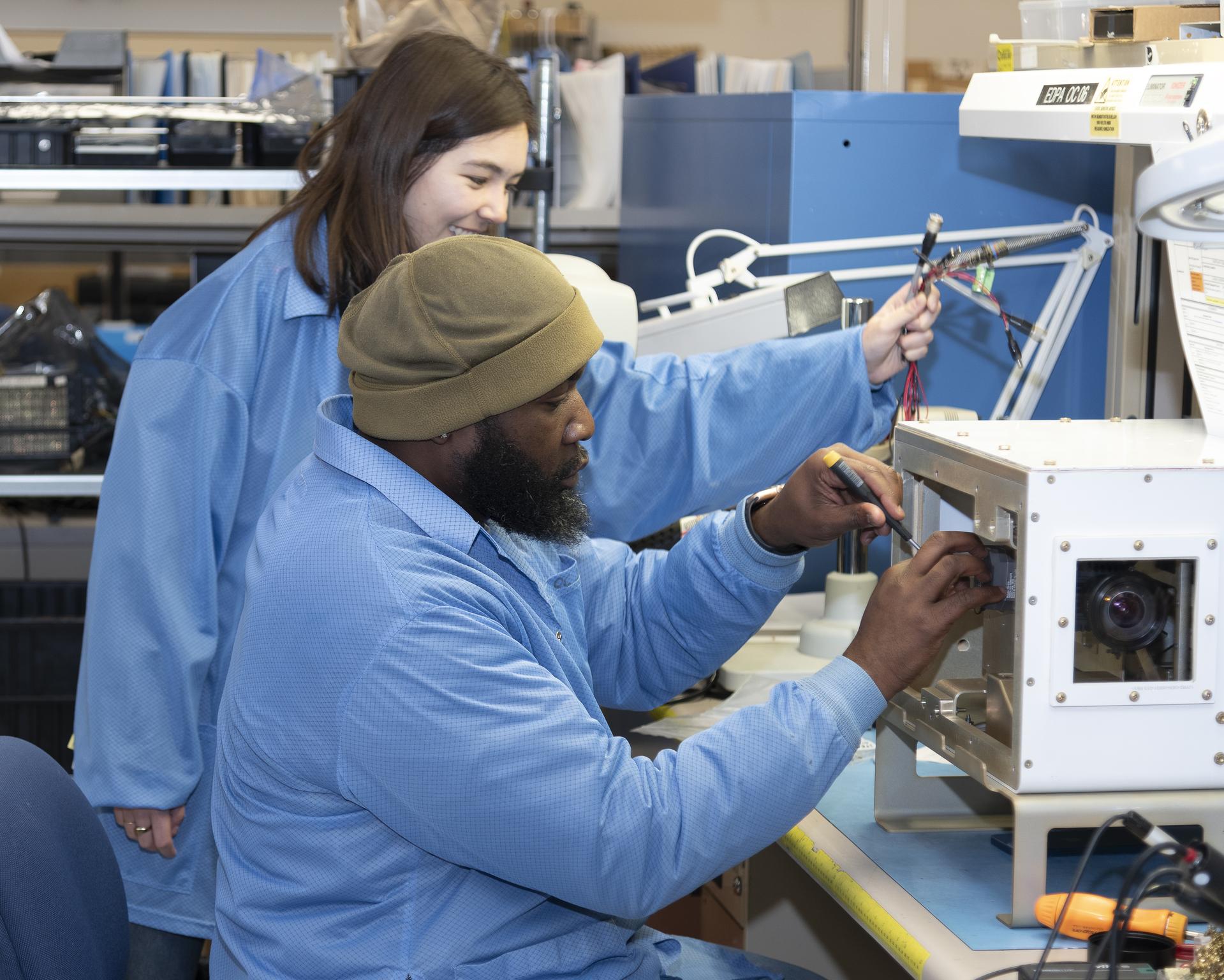
The design and build of a unique NASA pod, produced to advance computer vision for autonomous aviation, was recently completed in-house at NASA’s Armstrong Flight Research Center in Edwards, California, by using the center’s unique fabrication capabilities. The pod is called the NASA Airborne Instrumentation for Real-world Video of Urban Environments (AIRVUE). NASA Armstrong can take an idea from a drawing to flight with help from the center’s Experimental Fabrication Shop.  

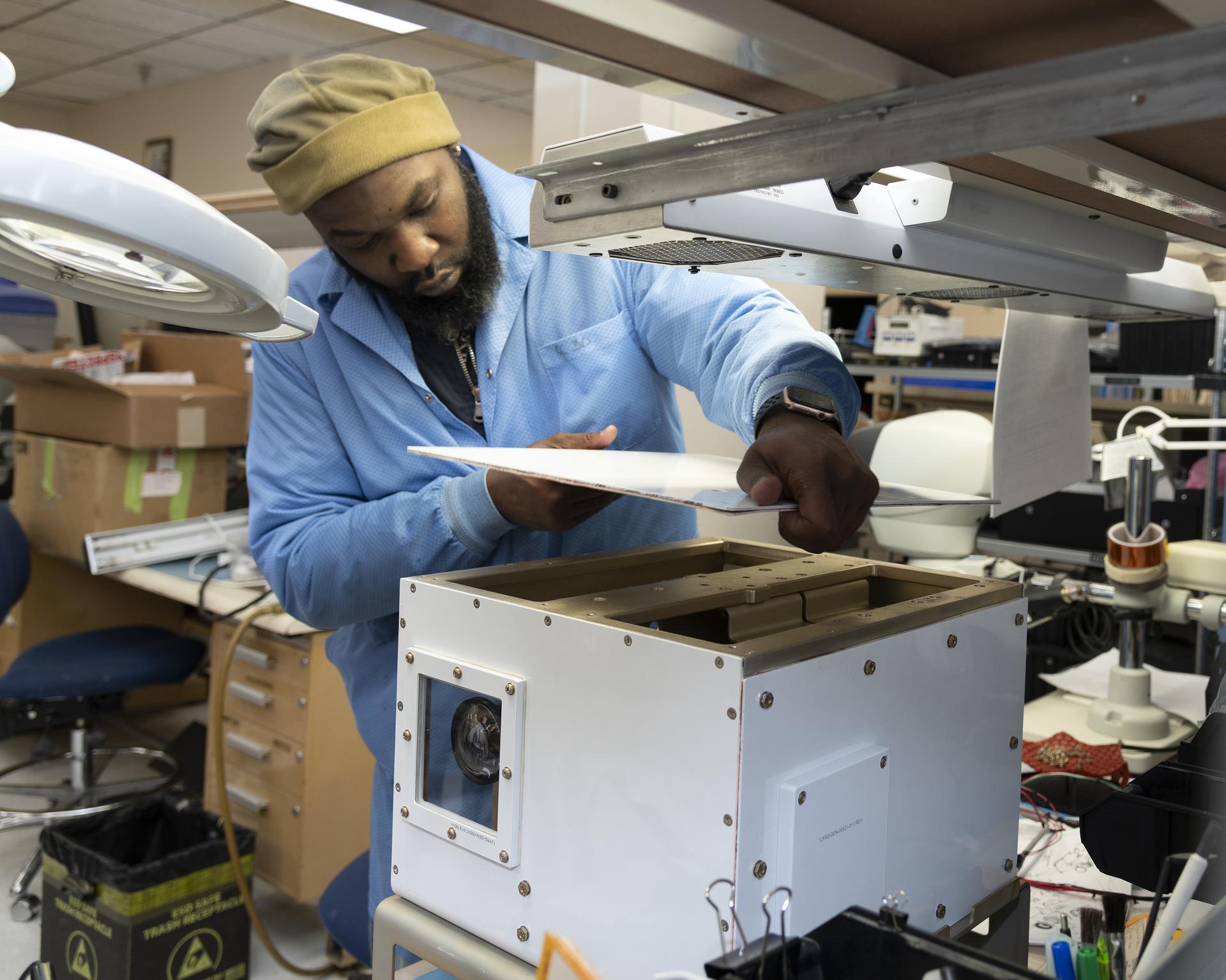
A man wearing a light blue lab coat inside of a lab installs the top back onto a white cube that sits on a desk. The man wears a tan winter hat. The background is filled with boxes, other lab equipment, a desk and rolling blue chair.
NASA researcher James Cowart adds the top back onto the NASA Airborne Instrumentation for Real-world Video of Urban Environments (AIRVUE) sensor pod at NASA’s Armstrong Flight Research Center in Edwards, California, in late February 2024. The pod houses sensors, wiring and cameras. The AIRVUE pod was flown on a helicopter at NASA’s Kennedy Space Center in Florida and is used to collect data for future autonomous aircraft.
NASA/Genaro Vavuris

NASA subject matter experts developed the idea for the project, after which engineers drew up plans and selected materials. The Experimental Fabrication Shop received those plans and gathered the materials to fabricate the pod.  

After the pod was built, it moved to NASA Armstrong’s Engineering Support Branch, where electronics technicians and other specialists installed instruments inside of it. Once completed, the pod went through a series of tests at NASA Armstrong to make sure it was safe to fly at NASA’s Kennedy Space Center in Florida on an Airbus H135 helicopter. The engineering team made final adjustments to ensure the pod would collect the correct data prior to installation. More about the design and fabrication process, and the pod’s capabilities, is available to view in a NASA video.

A man in the foreground and a woman in the background, both wearing light blue lab coats, install wiring, sensors, and cameras into a white cube that sits on a desk. The mean wears a tan winter hat. There is a metal shelf in the background full of hardware, wires, and baskets housing other lab equipment.
NASA researchers James Cowart and Elizabeth Nail add sensors, wiring and cameras, to the NASA Airborne Instrumentation for Real-world Video of Urban Environments (AIRVUE) sensor pod at NASA’s Armstrong Flight Research Center in Edwards, California, in late February 2024. The AIRVUE pod was flown on a helicopter at NASA’s Kennedy Space Center in Florida and is used to collect data for future autonomous aircraft.
NASA/Genaro Vavuris

Powered by WPeMatico

Get The Details…
Dede Dinius

NASA Johnson Director to Speak at Space Institute Groundbreaking

NASA Johnson Director to Speak at Space Institute Groundbreaking

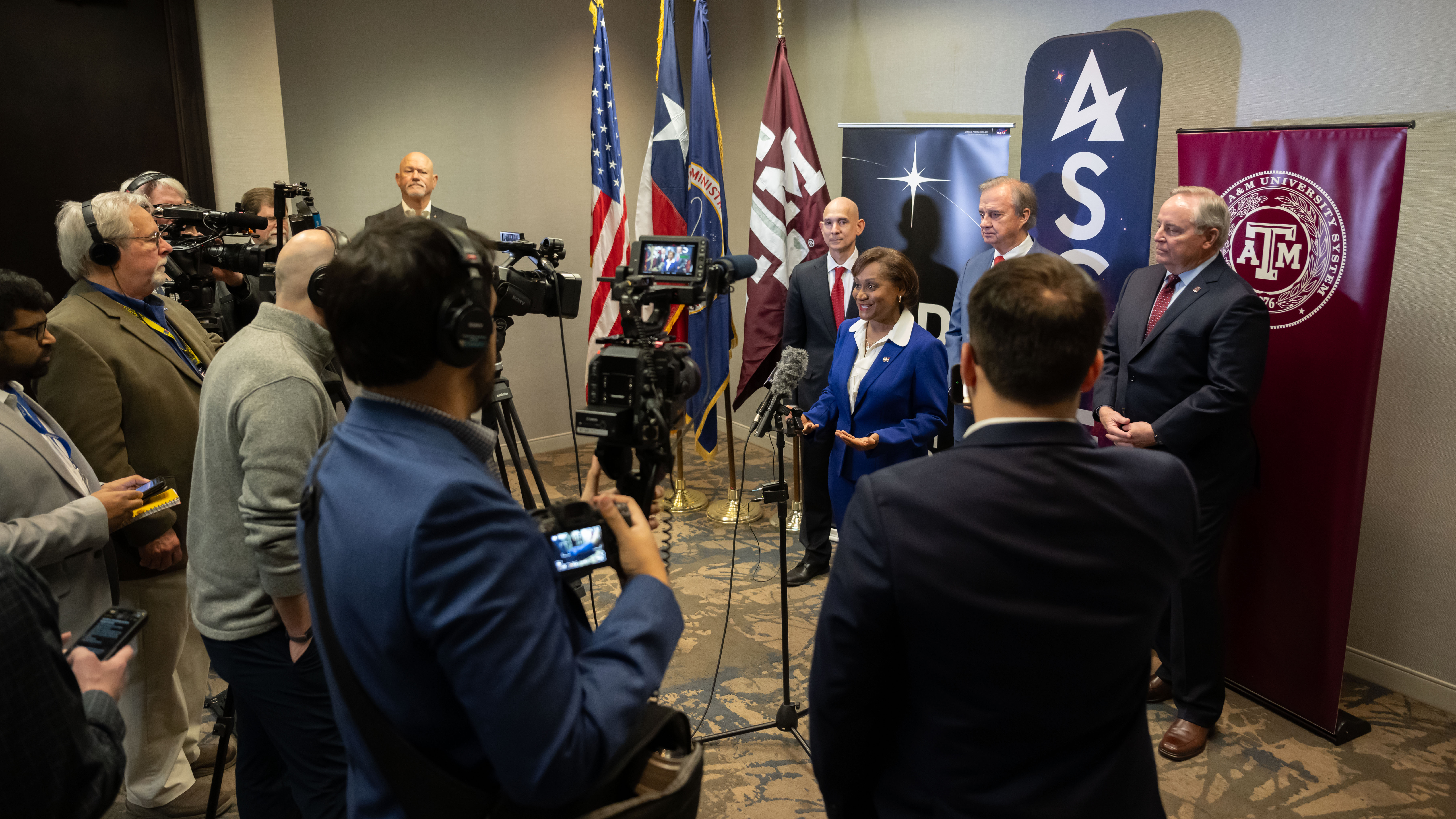
Director Wyche speaking to media
Vanessa Wyche, director of NASA’s Johnson Space Center provides an update on Exploration Park on Feb. 15, 2022, at the ASCENDxTexas conference at South Shore Harbor Resort and Conference Center. Credit: NASA / Josh Valcarcel

Nov. 12, 2024

Director Vanessa Wyche of NASA’s Johnson Space Center in Houston will join Texas A&M University leaders and guests Friday, Nov. 15, to break ground for the new Texas A&M University Space Institute.

U.S. media interested in participating in person must contact the NASA Johnson newsroom no later than 5 p.m. Wednesday, Nov. 13, by calling 281-483-5111 or emailing: jsccommu@mail.nasa.gov. NASA’s media accreditation policy is available online.

The groundbreaking is planned for 10 a.m. CST Nov. 15, at Johnson Space Center’s Exploration Park. Additional participants will include:

  • Greg Bonnen, Texas House of Representatives, chairman of House Appropriations Committee
  • William Mahomes, Jr., Board of Regents chairman, Texas A&M University System 
  • John Sharp, chancellor Texas A&M University System 
  • General (Ret.) Mark Welsh III, president, Texas A&M University 
  • Robert H. Bishop, vice chancellor and dean, Texas A&M Engineering
  • Nancy Currie-Gregg, director, Texas A&M University Space Institute
  • Robert Ambrose, associate director for space and robotics initiatives, Texas A&M Engineering Experiment Station 

The institute, funded through a $200 million initial investment from the State of Texas, will support research for civilian, defense and commercial space missions as part of NASA Johnson’s Exploration Park. Key features will include the world’s largest indoor simulation spaces for lunar and Mars surface operations, state-of-the-art high-bay laboratories, and multifunctional project rooms.

The Texas A&M Space Institute is set to open in Summer 2026. 

NASA is leasing the 240-acre Exploration Park to create facilities that enable a collaborative development environment, increase commercial access, and enhance the United States’ commercial competitiveness in the space and aerospace industries. 

To learn more about NASA Johnson and the Texas A&M University Space Institute, visit:

https://www.nasa.gov/nasas-johnson-space-center-hosts-exploration-park

-end-

Kelly Humphries

Johnson Space Center, Houston

281-483-5111

kelly.o.humphries@nasa.gov

Powered by WPeMatico

Get The Details…
Wendy K. Avedisian

Matthew Kowalewski: Aerospace Engineer and Curious About Everything

Matthew Kowalewski: Aerospace Engineer and Curious About Everything

Name: Matthew Kowalewski
Title: Dragonfly Mass Spectrometer (DraMS) Lead Instrument Systems Engineer
Formal Job Classification: Aerospace Engineer
Organization:  Instrument and Payload Systems Engineering Branch (Code 592)

Matthew Kowalewski stands second from left with three other people. He and the woman in the middle are wearing
Matthew Kowalewski (second from left) is the lead instrument systems engineer for NASA’s Dragonfly Mass Spectrometer (DraMS).
Photo courtesy of Matthew Kowalewski

What do you do and what is most interesting about your role here at Goddard?

As the DraMS lead instrument systems engineer for NASA’s Dragonfly mission, I lead the coordinated technical development, integrating systems and making sure communications across subsystems is maintained within the instruments as well as with the lander. I enjoy the diversity and complexity of this instrument.

What do you enjoy most about your current position as the DraMS lead instrument systems engineer?

I started this position in March 2023 and it has been like drinking from a fire hose ever since, but in a good way. The complexity of the instrument and the number of subsystems means this is really three separate instruments in one, and that makes my job exciting. I have to keep up with a range of disciplines across everything that Goddard does including mechanisms, lasers, mass spectrometers, gas flow systems, mechanical systems, thermal systems and electrical systems.

I am always challenged and excited by those challenges too. Everything we do is necessary to meet the broad science requirements. Our goal is studying prebiotic chemistry on the surface of Titan.

What is your educational background? Why did you become an aerospace engineer?

I have a B.A. in astronomy and physics from Boston University and a master’s in physics from Johns Hopkins University.

As a child, I was more interested in astronomy and physics. In college, I developed an extreme interest in experimental physics including the engineering required to perform these experiments.

How did you come to Goddard?

After college, I worked in missile defense for a private company supporting the Midcourse Space Experiment. After three years, in 1998, my wife and I wanted to move closer to family, so I came to Goddard as an instrument engineer supporting the Total Ozone Mapping Spectrometer-Earth Probe (TOMS/EP) mission. I have also supported the Ozone Monitoring Instrument on Aura, The Ozone Mapping Profiler Suite (OMPS) on Suomi NPP and JPSS, various airborne field campaigns, and the New Opportunities Office.

What interesting field work did you do prior to joining DraMS?

I largely did field work supporting Earth science research and new business development. We flew remote sensing instruments on high altitude aircraft in the United States, Costa Rica, South Korea [whose official name is the Republic of Korea], and Canada. Most field campaigns lasted about a month where we were housed in hotels or military bases. While supporting the New Opportunities Office, we developed instrument and mission concepts, evaluated and prioritized technologies, and fostered relationships with industry, universities, and other government organizations.

How do you lead across multiple teams?

I lead a large team engineers and technicians spanning across over six teams. Communication is the key. I rely on the expertise of our systems team and all of the subsystem leads. We have daily and weekly meetings where everyone is heard and they are free to approach me whenever they have concerns.

I try to encourage open discussions including contrarian thoughts and ideas. I listen to all the options and opinions in an attempt to make the best-informed decision. Then I move forward with my decision.

In a cost- and schedule-constrained environment, like most missions are, we cannot get stuck in the decision-making process. At some point, a decision needs to be made and the team then moves forward.

Where have you traveled for work?

I have been to multiple NASA centers and military bases in this country. In addition to Costa Rica, South Korea and Canada, I have also been to the Netherlands and France for mission development.

What is the most memorable moment you have had at Goddard?

In 2003, I was supporting the space shuttle Columbia mission, STS-107. We had a small payload in the shuttle cargo bay called a Hitchhiker. I was second shift in the Hitchhiker mission operations center. I got to interact with the astronauts both prelaunch and on orbit. It meant a lot to me. My last shift was just prior to their reentry. It really impacted me when I learned, after my shift, that the shuttle disintegrated with all hands lost.

I had the honor of meeting these astronauts. It reminded me of the importance of the work that we do as we continue sending astronauts into orbit for missions.

When you mentor someone, what do you advise them to do?

I tell them to learn as much about everything that they can. For example, if they are an engineer, they should learn about science and other disciplines because a broad knowledge base will help them in the future. They will also learn why building a small piece of hardware is important for accomplishing the mission’s science goals. An electrical engineer building a circuit is actually building something for a far larger purpose.

It is also very important to get along with others. We work with others every day, in all aspects of our lives, and we have to understand their perspectives and respect their opinions. There is more to our jobs than building things. Establishing relationships with others is what truly allows us to accomplish our goals.

What do you do for fun?

I have four kids and enjoy spending time with them. I coach soccer, mentor a robotics club, and participate in endurance swim races. This is my second year as a mentor to my son’s robotics club, which participates in an annual, national robotics competition to build a robot from scratch. This year we have a highly mobile, fast robot with a multi-jointed arm to manipulate objects. I think we have a good shot at going to nationals.

Who would you like to thank?

I wish to thank my wife Angie for supporting me over all these years as my career developed. She was often home alone with four kids during long stints of travel. I would not be where I am without her.

I also owe much to my mentors, Scott Janz, Glenn Jaross, and Jay Al-Saadi for all their guidance, support and opportunities over the many years. Nobody can work alone, no matter how smart you are.

What is your “five-word or phrase memoir”? A five-word or phrase memoir describes something in just five words or phrases.

Understanding. Compassionate. Persistent. Hard-working. Curious about too many things.

By Elizabeth M. Jarrell
NASA’s Goddard Space Flight Center, Greenbelt, Md.

A banner graphic with a group of people smiling and the text "Conversations with Goddard" on the right. The people represent many genders, ethnicities, and ages, and all pose in front of a soft blue background image of space and stars.

Conversations With Goddard is a collection of Q&A profiles highlighting the breadth and depth of NASA’s Goddard Space Flight Center’s talented and diverse workforce. The Conversations have been published twice a month on average since May 2011. Read past editions on Goddard’s “Our People” webpage.

Share

Details

Last Updated

Nov 12, 2024

Editor
Rob Garner
Contact
Rob Garner
Location
Goddard Space Flight Center

Powered by WPeMatico

Get The Details…
Rob Garner