Entrevista con Instructor de OCEANOS Roy Armstrong

Entrevista con Instructor de OCEANOS Roy Armstrong

4 min read

Preparations for Next Moonwalk Simulations Underway (and Underwater)
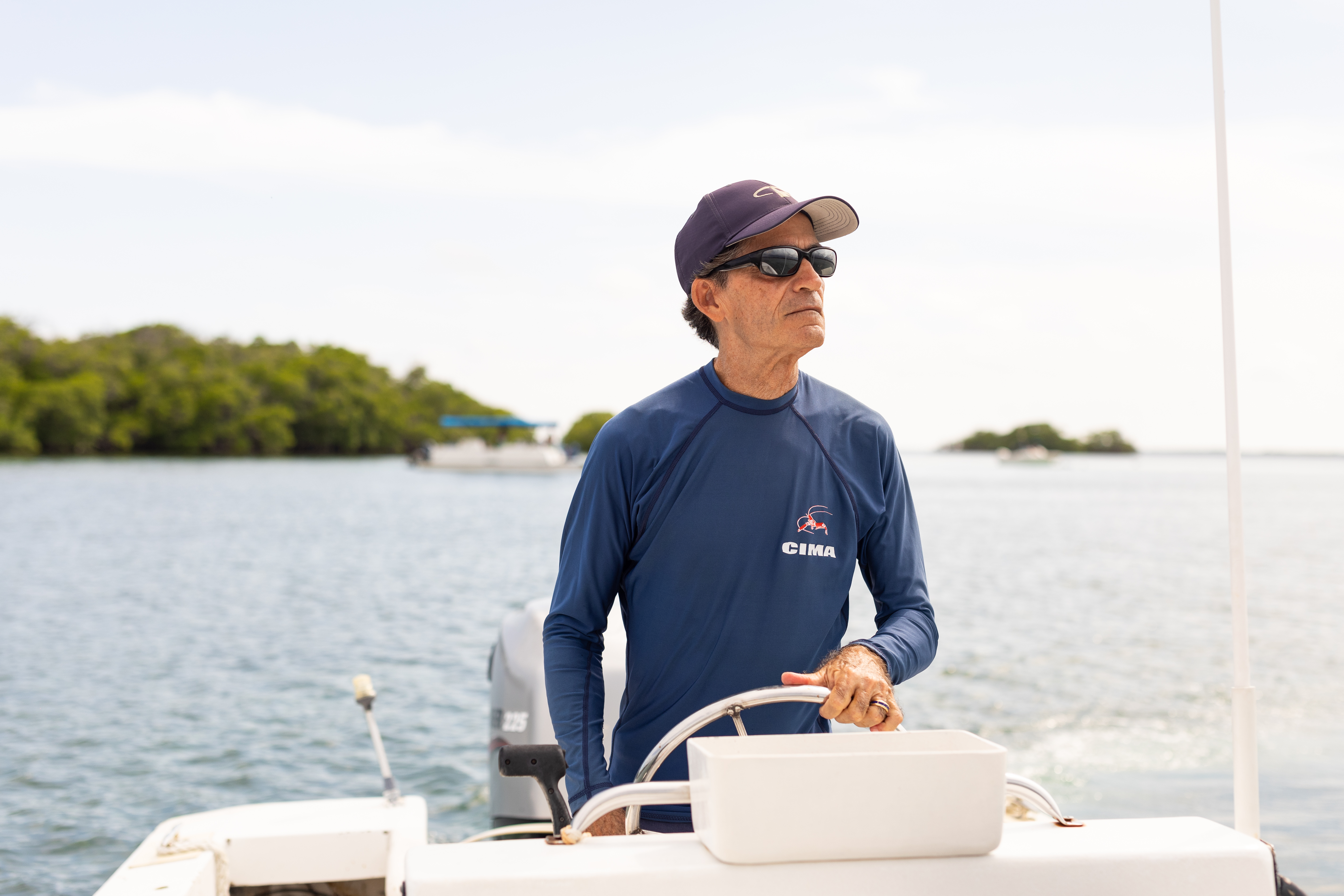
A Puerto Rican man wearing sunglasses, a navy baseball cap and longsleeve shirt is visible from the waist up, standing behind the silver wheel of a small white boat. In the background are a few islands of green foliage.
Roy Armstrong, un instructor de la pasantía de OCEANOS y profesor de ciencias marinas, pilotea un pequeño bote alrededor de los cayos frente a la costa de La Parguera, Puerto Rico.
NASA ARC/Milan Loiacono

¿Cuál es tu nombre y tu rol en OCEANOS?

Mi nombre es Roy Armstrong y soy profesor del Colegio de Mayagüez en el Departamento de Ciencias Marinas y en Océanos. Yo soy el investigador principal local en la Universidad de Puerto Rico y la manera que me involucré en este proyecto fue por invitación de mi ex estudiante, Juan Torres, quien trabaja en la NASA y se ideó este programa para motivar estudiantes hispanos puertorriqueños, particularmente a seguir carreras en la oceanografía usando tecnología de la NASA.

¿Cuál es la importancia de un programa como OCEANOS, particularmente en Puerto Rico?

Primero, porque son muy pocos los jóvenes que deciden continuar en sus estudios graduados y sobre todo en las ciencias marinas. Y muchos se van fuera de Puerto Rico. Lo que queremos hacer es motivar a estudiantes desde jóvenes, desde escuela superior y a principios de universidad, a que estudien y tengan carreras en la oceanografía, las ciencias marinas, usando tecnología de la NASA, satelital y robótica, etcétera para que entonces se queden en Puerto Rico y trabajen protegiendo nuestros recursos naturales.

¿Qué ha sido algo gratificante de trabajar con estos estudiantes?

Ha sido de gran satisfacción ver como los estudiantes se interesan en estos temas, aunque al principio lleguen con otras ideas en mente de otras carreras que quieren proseguir. Al final algunos deciden cambiar por completo sus preferencias y estudiar entonces ciencias marinas o seguir alguna carrera en tecnologías satelitales o cosas por el estilo. Así que eso para nosotros ha sido de suma satisfacción.

¿Cuál ha sido un desafío del programa?

El reto principal de trabajar con estudiantes primero es mantenerlos motivados y atentos. Así que hay que intercalar diferentes actividades fuera del salón. Las charlas no pueden ser muy extensas y también los temas tienen que ser diversos. Tratamos de que también ellos participen en actividades, en pequeños grupos y participen en proyectos diferentes proyectos de investigación, así que no es todo estar oyendo charlas en un salón de clase, sino que hay muchas otras actividades.

¿Cómo llegaste a la ciencia?

Yo empecé con mi interés en las ciencias marinas desde pequeño, porque yo nací en Puerto Rico, en Ponce y siempre he tenido una admiración inmensa por el mar. Y luego tuve la experiencia en mi 4.º año de universidad en los Estados Unidos de participar en un programa que se llama ‘el semestre en el mar,’ donde participé por seis semanas en un velero grande haciendo estudios de Oceanografía y eso me fascinó, me encantó. Y desde entonces yo supe que eso es lo que yo quería hacer en mi carrera.

¿Cuáles son algunos de los cambios ambientales que ha notado en Puerto Rico y sus alrededores?

En Puerto Rico, al igual que muchas áreas del Caribe y del planeta en general, han ocurrido muchos cambios a través de las décadas. El ambiente marino en las costas y sobre todo en los arrecifes de coral en Puerto Rico. En particular, luego de varios huracanes al final de la década de los setentas una mortandad grande de los corales en aguas bien someras y luego eso dio lugar a enfermedades que afectan los corales por muchos años.  En años más recientes hemos tenido también el impacto del humano porque ha habido más presión en los ecosistemas por el uso de múltiples  embarcaciones que cada vez son más y más. Así que también se ha deteriorado la calidad de agua en muchos sitios. Y sabemos que esto no es exclusivamente de Puerto Rico, sino que es un problema básicamente a nivel global.

¿Qué es algo que espera que los estudiantes se lleven con ellos cuando se vayan?

Pues mi esperanza con los estudiantes es que en los próximos años que pasen a universidad o que pasen a escuela graduada para estudiar entonces temas relacionados con las ciencias marinas y el uso de la tecnología satelital de la NASA. También espero que se motiven a permanecer en Puerto Rico y participar en el cambio que hace falta de protección de los ecosistemas de parte de una nueva generación que vienen desde pequeño con el interés y también el conocimiento de hacer un cambio notable en el futuro de este país y de nuestros ecosistemas.

Powered by WPeMatico

Get The Details…
Milan Loiacono
Entrevista con Instructor de OCEANOS Juan Torres-Pérez

Entrevista con Instructor de OCEANOS Juan Torres-Pérez

4 min read

Preparations for Next Moonwalk Simulations Underway (and Underwater)

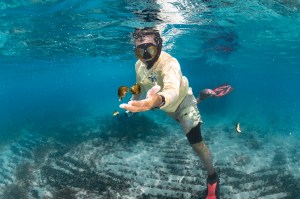
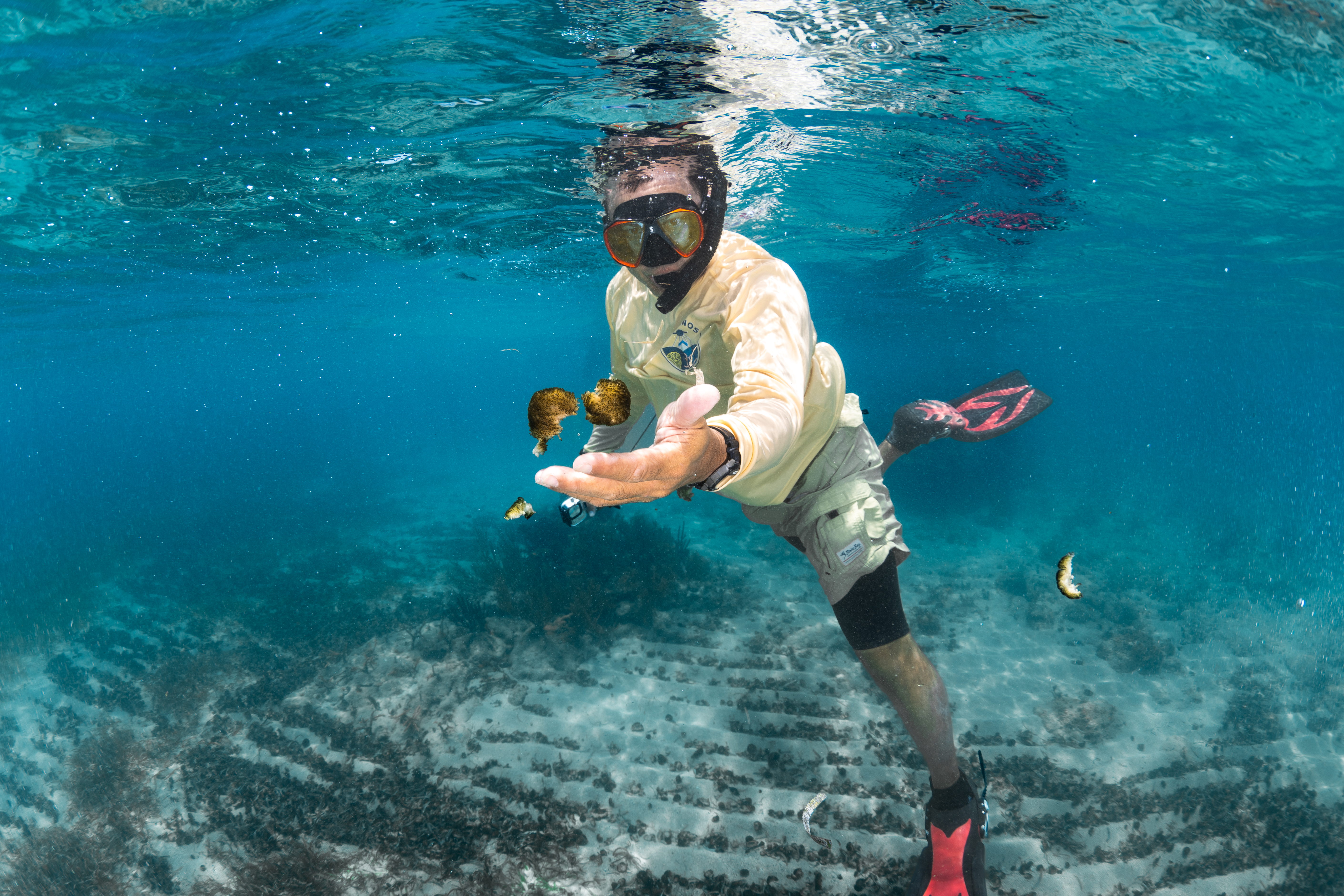
A Puerto Rican man wearing a snorkel mask, fins, and a cream long-sleeve shirt float in bright blue water with one hand extended towards the camera. Just above his hand float two brown fuzzy balls, roughly the size of golf balls.
OCEANOS Investigador Principal Juan Torres-Pérez, científico investigador del Centro de Investigación Ames de la NASA, sostiene dos piezas de cianobacterias en las aguas de Playa Melones, Isla Culebra (Puerto Rico) durante la pasantía de OCEANOS 2024. El crecimiento excesivo de cianobacterias probablemente sea causado por una fuente de contaminación terrestre que se filtra hacia las aguas.
NASA ARC/Milan Loiacono

¿Cuál es tu nombre y tu rol en OCEANOS?

Mi nombre es Juan Torres Pérez. Yo soy un científico de la NASA del Centro de Investigación Ames en California particular la División de Ciencias Terrestres, la rama biofísica. Yo soy el investigador principal de OCEANOS. Océanos significa, en inglés, ‘Ocean Community Engagement and Awareness with NASA Observations and Science’ for Hispanic/Latino Students. La abreviación OCEANOS es en español a propósito, porque es un proyecto dedicado a estudiantes hispanos y latinos.

¿Cuál es la importancia de un programa como OCEANOS, particularmente en Puerto Rico?

La importancia de un programa como océanos es sencilla cuando miramos a las estadísticas de las minorías en Estados Unidos. La minoría más grande actualmente en Estados Unidos, somos los hispanos y los latinos. Sin embargo, cuando miramos al porcentaje de los latinos y hispanos que trabajan en la geociencias y muy en particular en la oceanografía, es mínimo. Eso es bien, bien pequeño. Así que traer un programa como OCEANOS a la comunidad hispana y latina y darle la oportunidad a los estudiantes a envolverse en un programa como este, es una oportunidad única y en particular, pues lo estamos haciendo en Puerto Rico: una de las jurisdicciones de Estados Unidos, mayormente de habla hispana. Y estamos trayendo esta oportunidad a los estudiantes puertorriqueños para que se envuelvan en este tipo de actividades y en la conservación de los ecosistemas marinos.

¿Qué ha sido algo gratificante de trabajar con estos estudiantes?

El año pasado, cuando hicimos el piloto, tuvimos muchos estudiantes que se nos acercaron dándonos las gracias. Muchos estudiantes nos dijeron que esta ha sido una experiencia única. Este año hemos tenido estudiantes de igual forma que ya se nos han acercado para decirnos si hay oportunidad para ser mentores para el año que viene también. Y no solamente eso: hemos tenido estudiantes que al principio, el primer día nos dijeron que no sabían nadar. Tres semanas después ya están haciendo snorkeling, están sumergiéndose, están trabajando debajo del agua y están haciendo algo único que jamás en su vida ellos pensaron que iban a ser.

¿Cuáles son algunas de las actividades que realizan los estudiantes como parte del programa?

Algunas de las actividades que los estudiantes hacen, por ejemplo, es que están caracterizando arrecifes de coral, tanto en La Parguera como en Culebra. Están trabajando con. Cuáles son las especies que dominan, cuáles son las especies que están afectadas por distintos factores, ya sean climáticos o factores antropogénicos. También están haciendo perfiles de playa para ver cómo la playa crece o se se hace más pequeña con el tiempo. También están haciendo trabajos de calidad de agua, tanto aquí en Culebra como en el área de La Parguera, para comparar cómo está la calidad de agua en los no solamente en los distintos arrecifes alrededor de Culebra y los distintos arrecifes de La Parguera, sino también cómo comparan las dos áreas; el este de Puerto Rico y el suroeste de Puerto Rico.

¿Qué es algo que espera que los estudiantes se lleven con ellos cuando se vayan?

Lo más importante que nosotros queremos que los estudiantes lleven con ellos es que se conviertan en agentes de cambio. Y esto significa que ellos sirvan de los locutores, de las personas que van a pasar la información, ya sea a sus familiares, a sus escuelas, a sus comunidades, también sus hermanos, sus hermanas, sus papás, sus abuelos; a todo el mundo. La idea es de que esto se convierta en algo en que muchas de que crezca y que entonces todas esas personas pues entiendan la importancia que es conservar los ecosistemas marinos en Puerto Rico y todas las herramientas que tenemos para poder estudiar estos ecosistemas de forma tal que podamos protegerlos.

Powered by WPeMatico

Get The Details…
Milan Loiacono
Oral History with Karol J. Bobko

Oral History with Karol J. Bobko

1 Min Read

Oral History with Karol J. Bobko

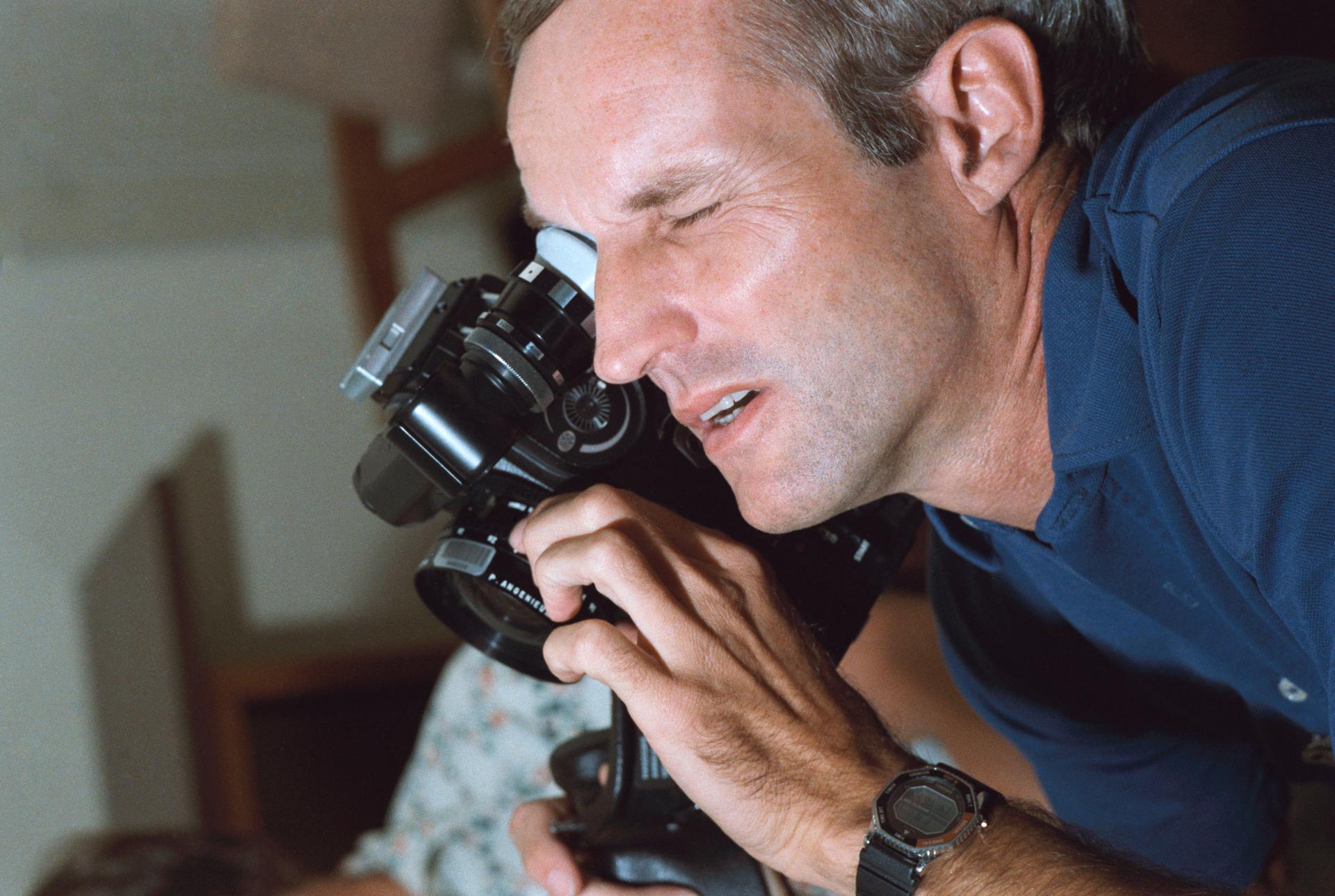
View of STS 51-D crew commander Karol Bobko training with Arriflex camera

View of STS 51-D crew commander Karol Bobko training with the Arriflex 16mm camera.

Credits:
NASA

A veteran of three space flights, Karol J. “Bo” Bobko was selected as an astronaut in 1969 and served as a crewmember on the Skylab Medical Experiments Altitude Test (SMEAT) 56-day ground simulation in preparation for the Skylab missions. He served in various positions supporting the Apollo-Soyuz Test Project and the first Approach and Landing Tests for the Space Shuttle before flying as the STS-6 pilot and as the mission commander on STS-51D and STS-51J.

Read more about Karol J. “Bo” Bobko

The transcripts available on this site are created from audio-recorded oral history interviews. To preserve the integrity of the audio record, the transcripts are presented with limited revisions and thus reflect the candid conversational style of the oral history format. Brackets and ellipses indicate where the text has been annotated or edited for clarity. Any personal opinions expressed in the interviews should not be considered the official views or opinions of NASA, the NASA History Office, NASA historians, or staff members.

Powered by WPeMatico

Get The Details…
Sandra L. Johnson

Colorado Students to Connect with NASA Astronauts Aboard Space Station

Colorado Students to Connect with NASA Astronauts Aboard Space Station

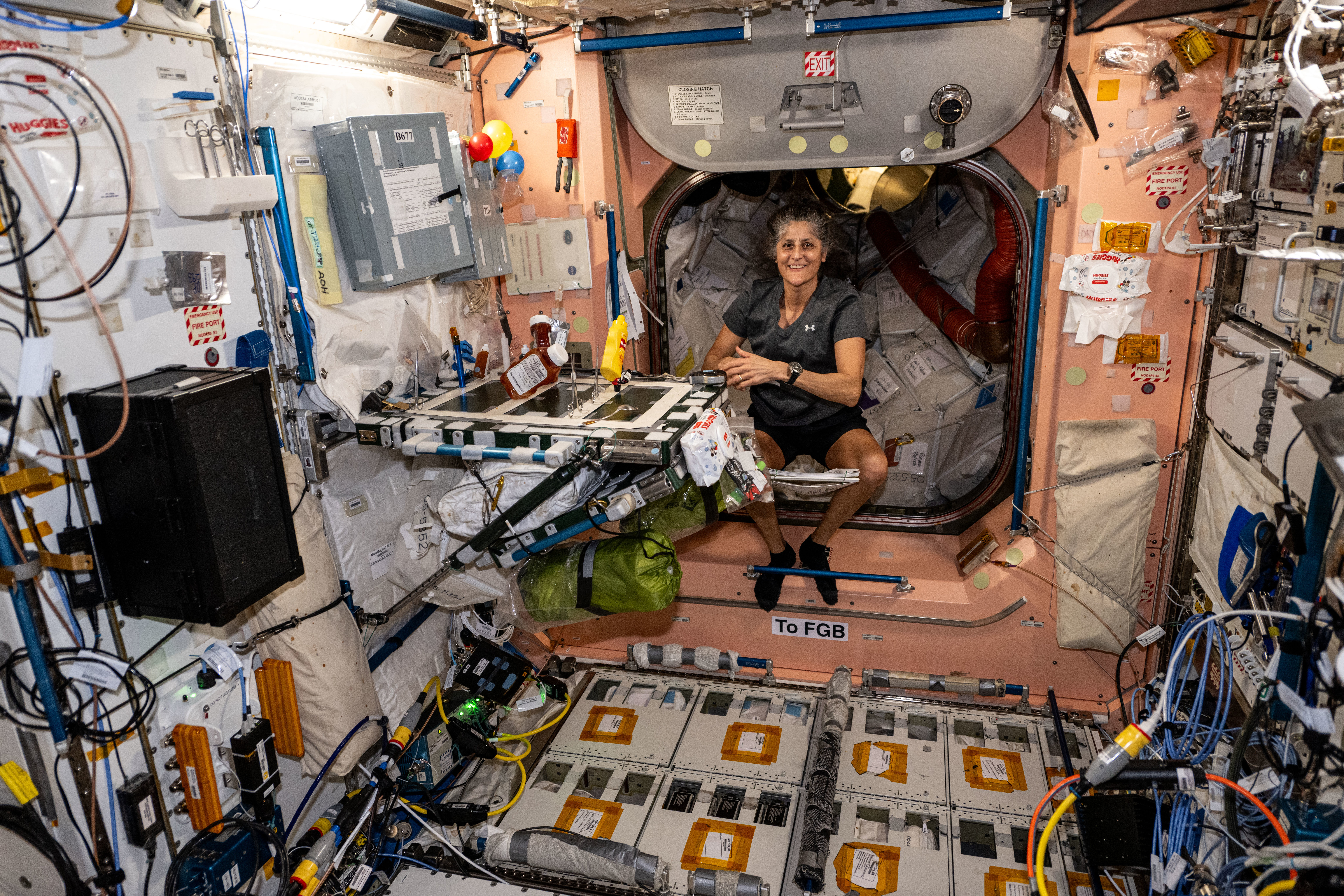
NASA astronaut and Expedition 72 Commander Suni Williams is pictured inside the International Space Station's Unity module.
(Oct. 25, 2024) — NASA astronaut and Expedition 72 Commander Suni Williams is pictured at the galley inside the International Space Station’s Unity module at the beginning of her day.
Credit: NASA

Students from Colorado will have the opportunity to hear NASA astronauts Nick Hague and Suni Williams answer their prerecorded questions aboard the International Space Station on Thursday, Nov. 14.

Watch the 20-minute space-to-Earth call at 1 p.m. EST on NASA+. Learn how to watch NASA content on various platforms, including social media.

The JEKL Institute for Global Equity and Access, in partnership with the Denver Museum of Nature and Science, will host students from the Denver School of Science and Technology for the event. Students are building CubeSat emulators to launch on high-altitude balloons, and their work will drive their questions with crew.

Media interested in covering the event must RSVP by 5 p.m., Wednesday, Nov. 13, to Daniela Di Napoli at: daniela.dinapoli@scienceandtech.org or 832-656-5231.

For more than 24 years, astronauts have continuously lived and worked aboard the space station, testing technologies, performing science, and developing skills needed to explore farther from Earth. Astronauts aboard the orbiting laboratory communicate with NASA’s Mission Control Center in Houston 24 hours a day through SCaN’s (Space Communications and Navigation) Near Space Network.

Important research and technology investigations taking place aboard the space station benefit people on Earth and lays the groundwork for other agency missions. As part of NASA’s Artemis campaign, the agency will send astronauts to the Moon to prepare for future human exploration of Mars; inspiring Artemis Generation explorers and ensuring the United States continues to lead in space exploration and discovery.

See videos and lesson plans highlighting space station research at:

https://www.nasa.gov/stemonstation

-end-

Tiernan Doyle
Headquarters, Washington
202-358-1600
tiernan.doyle@nasa.gov

Sandra Jones 
Johnson Space Center, Houston
281-483-5111
sandra.p.jones@nasa.gov

Powered by WPeMatico

Get The Details…
Tiernan P. Doyle

Kibo Robot Programming Challenge Breaks New Ground in Robotics 

Kibo Robot Programming Challenge Breaks New Ground in Robotics 

On Sept. 20, 2024, four students experienced the wonder of space exploration at NASA’s Johnson Space Center in Houston, taking part in an international competition that brought their work to life aboard the International Space Station.  

Now in its fifth year, the Kibo Robot Programming Challenge (Kibo-RPC) continues to push the boundaries of robotics, bringing together the world’s brightest young minds for a real-world test of programming, problem-solving, and innovation.

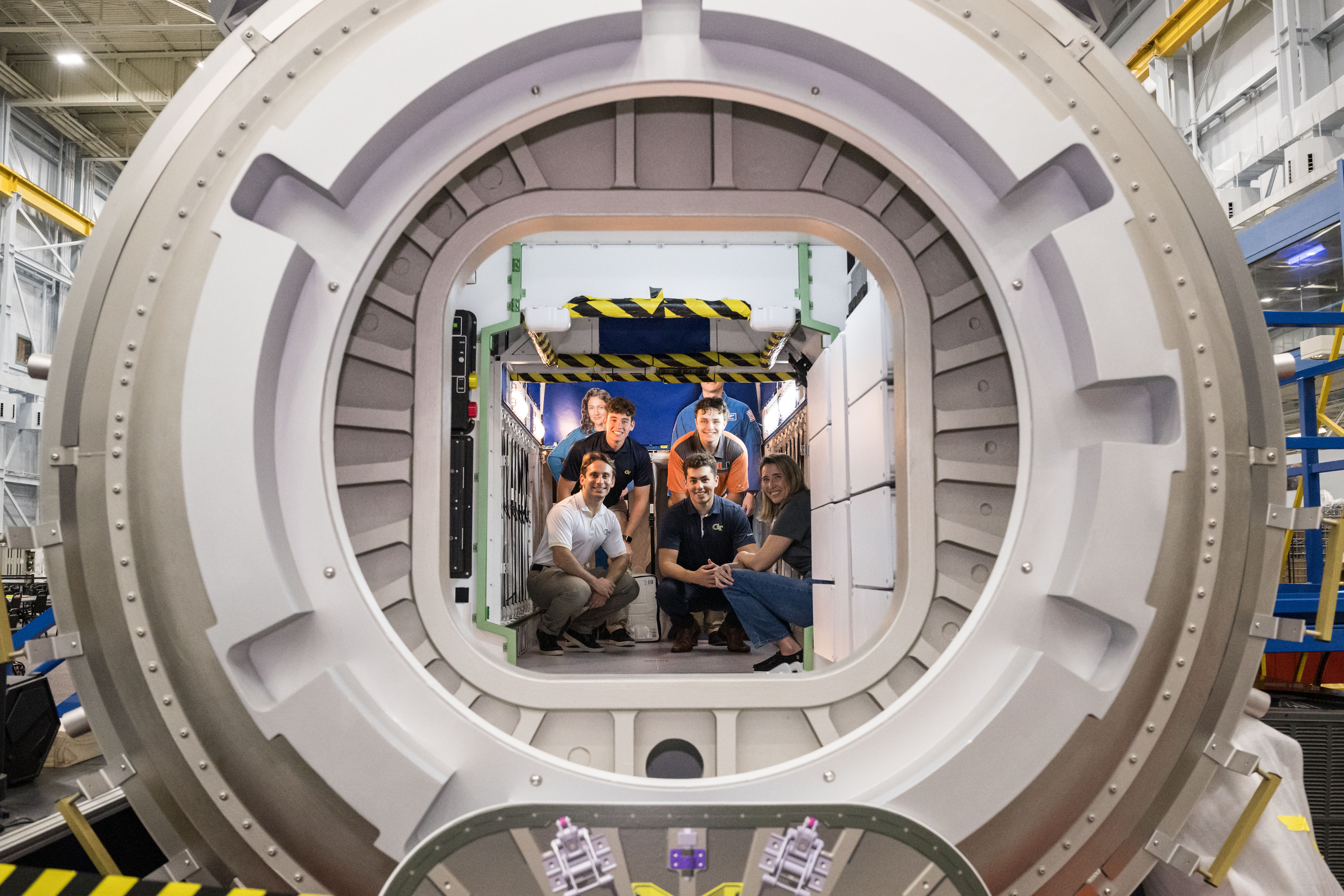
A group of six people pose inside a large circular module in a space station habitat mockup.
The Kibo Robot Programming Challenge (Kibo-RPC) students tour the Gateway Habitation and Logistics Outpost module at NASA’s Johnson Space Center in Houston.
NASA/Helen Arase Vargas

The stakes reached new heights in this year’s competition, with 661 teams totaling 2,788 students from 35 countries and regions competing to program robots aboard the orbiting laboratory. Organized by the Japan Aerospace Exploration Agency in collaboration with the United Nations Office for Outer Space Affairs, the challenge provided a unique platform for students to test their skills on a global stage. 

Meet Team Salcedo 

Representing the U.S., Team Salcedo is composed of four talented students: Aaron Kantsevoy, Gabriel Ashkenazi, Justin Bonner, and Lucas Paschke. Each member brought a unique skill set and perspective, contributing to the team’s well-rounded approach to the challenge. 

From left to right are Kibo-RPC students Gabriel Ashkenazi, Lucas Paschke, Aaron Kantsevoy, and Justin Bonner.
NASA/Helen Arase Vargas

The team was named in honor of Dr. Alvaro Salcedo, a robotics teacher and competitive robotics coach who had a significant impact on Kantsevoy and Bonner during high school. Dr. Salcedo played a crucial role in shaping their interests and aspirations in science, technology, engineering, and mathematics (STEM), inspiring them to pursue careers in these fields. 

Kantsevoy, a computer science major at Georgia Institute of Technology, or Georgia Tech, led the team with three years of Kibo-RPC experience and a deep interest in robotics and space-based agriculture. Bonner, a second-year student at the University of Miami, is pursuing a triple major in computer science, artificial intelligence, and mathematics. Known for his quick problem-solving, he played a key role as a strategist and computer vision expert. Paschke, a first-time participant and computer science student at Georgia Tech, focused on intelligence systems and architecture, and brought fresh insights to the table. Ashkenazi, also studying computer science at Georgia Tech, specialized in computer vision and DevOps, adding depth to the team’s technical capabilities. 

AstroBee Takes Flight 

The 2024 competition tasked students with programming AstroBee, a free-flying robot aboard the station, to navigate a complex course while capturing images scattered across the orbital outpost. For Team Salcedo, the challenge reached its peak as their code was tested live on the space station.  

Five men sit in a room around a circular table with laptops and electronic equipment. Behind them, a large wall display shows an image of Earth with the International Space Station model.
The Kibo-RPC students watch their code direct Astrobee’s movements at Johnson Space Center with NASA Program Specialist Jamie Semple on Sept. 20, 2024.
NASA/Helen Arase Vargas

The robot executed its commands in real time, maneuvering through the designated course to demonstrate precision, speed, and adaptability in the microgravity environment. Watching AstroBee in action aboard the space station offered a rare glimpse of the direct impact of their programming skills and added a layer of excitement that pushed them to fine-tune their approach. 

Overcoming Challenges in Real Time 

Navigating AstroBee through the orbital outpost presented a set of unique challenges. The team had to ensure the robot could identify and target images scattered throughout the station with precision while minimizing the time spent between locations.  

The Kibo-RPC students watch in real time as the free-flying robot Astrobee performs maneuvers aboard the International Space Station, executing tasks based on their input to test its capabilities.
NASA/Helen Arase Vargas

Using quaternions for smooth rotation in 3D space, they fine-tuned AstroBee’s movements to adjust camera angles and capture images from difficult positions without succumbing to the limitations of gimbal lock. Multithreading allowed the robot to simultaneously process images and move to the next target, optimizing the use of time in the fast-paced environment. 

The Power of Teamwork and Mentorship 

Working across different locations and time zones, Team Salcedo established a structured communication system to ensure seamless collaboration. Understanding each team member’s workflow and adjusting expectations accordingly helped them maintain efficiency, even when setbacks occurred. 

Team Salcedo tour the Space Vehicle Mockup Facility with their NASA mentors (from top left to right) Education Coordinator Kaylie Mims, International Space Station Research Portfolio Manager Jorge Sotomayer, and Kibo-RPC Activity Manager Jamie Semple.
NASA/Helen Arase Vargas

Mentorship was crucial to their success, with the team crediting several advisors and educators for their guidance. Kantsevoy acknowledged his first STEM mentor, Casey Kleiman, who sparked his passion for robotics in middle school.  

The team expressed gratitude to their Johnson mentors, including NASA Program Specialist Jamie Semple, Education Coordinator Kaylie Mims, and International Space Station Research Portfolio Manager Jorge Sotomayer, for guiding them through the program’s processes and providing support throughout the competition. 

They also thanked NASA’s Office of STEM Engagement for offering the opportunity to present their project to Johnson employees.  

“The challenge mirrors how the NASA workforce collaborates to achieve success in a highly technical environment. Team Salcedo has increased their knowledge and learned skills that they most likely would not have acquired individually,” said Semple. “As with all of our student design challenges, we hope this experience encourages the team to continue their work and studies to hopefully return to NASA in the future as full-time employees.” 

Pushing the Boundaries of Innovation 

The Kibo-RPC allowed Team Salcedo to experiment with new techniques, such as Slicing Aided Hyperinference—an approach that divides images into smaller tiles for more detailed analysis. Although this method showed promise in detecting smaller objects, it proved too time-consuming under the competition’s time constraints, teaching the students valuable lessons about prioritizing efficiency in engineering. 

The Kibo-RPC students present their robotic programming challenge to the International Space Station Program.
NASA/Bill Stafford

For Team Salcedo, the programming challenge taught them the value of communication, the importance of learning from setbacks, and the rewards of perseverance. The thrill of seeing their code in action on the orbital outpost was a reminder of the limitless possibilities in robotics and space exploration. 

Inspiring the Next Generation 

With participants from diverse backgrounds coming together to compete on a global platform, the Kibo-RPC continues to be a proving ground for future innovators.  

The challenge tested the technical abilities of students and fostered personal growth and collaboration, setting the stage for the next generation of robotics engineers and leaders. 

The Kibo-RPC students and their mentors at the Mission Control Center.
NASA/Helen Arase Vargas

As Team Salcedo looks ahead, they carry with them the skills, experiences, and inspiration needed to push the boundaries of human space exploration.  

“With programs like Kibo-RPC, we are nurturing the next generation of explorers – the Artemis Generation,” said Sotomayer. “It’s not far-fetched to imagine that one of these students could eventually be walking on the Moon or Mars.” 

The winners were announced virtually from Japan on Nov. 9, with Team Salcedo achieving sixth place. 

Watch the international final round event here

For more information on the Kibo Robot Programming Challenge, visit: https://jaxa.krpc.jp/

Powered by WPeMatico

Get The Details…
Sumer Loggins