NASA Plans to Assign Missions for Two Future Artemis Cargo Landers

NASA Plans to Assign Missions for Two Future Artemis Cargo Landers

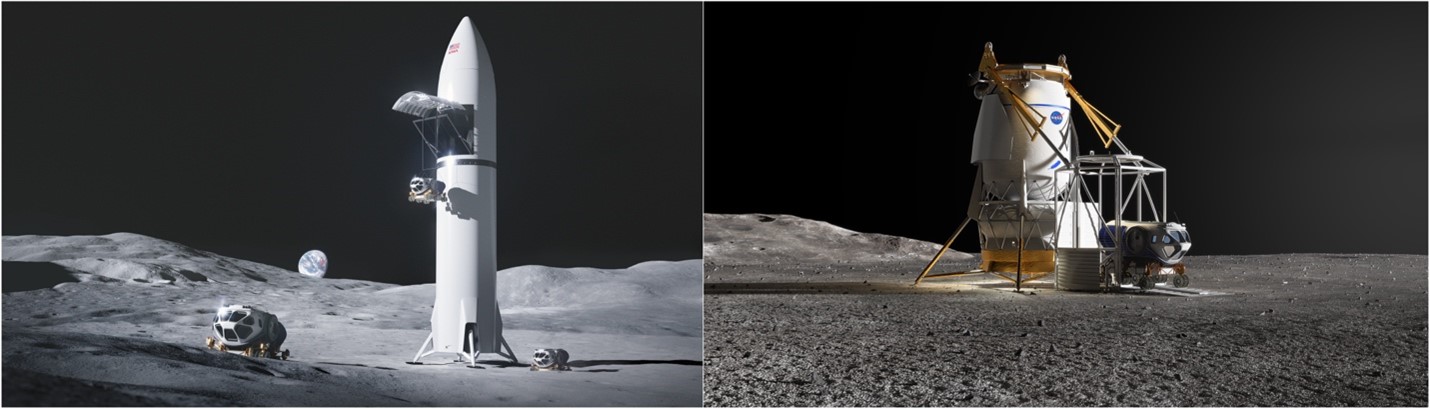
Two artists' concepts of human lunar landing systems on the Moon are shown: SpaceX on the left, which is white, tall, and thinner, with a pointed top, and Blue Origin on the right.
Early conceptual renderings of cargo variants of human lunar landing systems from NASA’s providers SpaceX, left, and Blue Origin, right. The large cargo landers will have the capability to land approximately 26,000 to 33,000 pounds (12-15 metric tons) of large, heavy payload on the lunar surface.
Credit: SpaceX/Blue Origin

NASA, along with its industry and international partners, is preparing for sustained exploration of the lunar surface with the Artemis campaign to advance science and discovery for the benefit of all. As part of that effort, NASA intends to award Blue Origin and SpaceX additional work under their existing contracts to develop landers that will deliver large pieces of equipment and infrastructure to the lunar surface.

NASA expects to assign demonstration missions to current human landing system providers, SpaceX and Blue Origin, to mature designs of their large cargo landers following successful design certification reviews. The assignment of these missions builds on the 2023 request by NASA for the two companies to develop cargo versions of their crewed human landing systems, now in development for Artemis III, Artemis IV, and Artemis V.

“NASA is planning for both crewed missions and future services missions to the Moon beyond Artemis V,” said Stephen D. Creech, assistant deputy associate administrator for technical, Moon to Mars Program Office. “The Artemis campaign is a collaborative effort with international and industry partners. Having two lunar lander providers with different approaches for crew and cargo landing capability provides mission flexibility while ensuring a regular cadence of Moon landings for continued discovery and scientific opportunity.”

NASA plans for at least two delivery missions with large cargo. The agency intends for SpaceX’s Starship cargo lander to deliver a pressurized rover, currently in development by JAXA (Japan Aerospace Exploration Agency), to the lunar surface no earlier than fiscal year 2032 in support of Artemis VII and later missions. The agency expects Blue Origin to deliver a lunar surface habitat no earlier than fiscal year 2033.

Based on current design and development progress for both crew and cargo landers and the Artemis mission schedules for the crew lander versions, NASA assigned a pressurized rover mission for SpaceX and a lunar habitat delivery for Blue Origin,” said Lisa Watson-Morgan, program manager, Human Landing System, at NASA’s Marshall Space Flight Center in Huntsville, Alabama. “These large cargo lander demonstration missions aim to optimize our NASA and industry technical expertise, resources, and funding as we prepare for the future of deep space exploration.”

SpaceX will continue cargo lander development and prepare for the Starship cargo mission under Option B of the NextSTEP Appendix H contract. Blue Origin will conduct its cargo lander work and demonstration mission under NextSTEP Appendix P. NASA expects to issue an initial request for proposals to both companies in early 2025.

With the Artemis campaign, NASA will explore more of the Moon than ever before, learn how to live and work away from home, and prepare for future exploration of Mars. NASA’s SLS (Space Launch System) rocket, exploration ground systems, and Orion spacecraft, along with commercial human landing systems, next-generation spacesuits, Gateway lunar space station, and future rovers are NASA’s foundation for deep space exploration.

For more on NASA’s Human Landing System Program, visit:

https://www.nasa.gov/hls

-end-

James Gannon
Headquarters, Washington
202-358-1600
james.h.gannon@nasa.gov

Corinne Beckinger
Marshall Space Flight Center, Huntsville, Ala.
256-544-0034
corinne.m.beckinger@nasa.gov

Powered by WPeMatico

Get The Details…
Jessica Taveau

Northwestern University Takes Top Honors in BIG Idea Lunar Inflatables Challenge 

Northwestern University Takes Top Honors in BIG Idea Lunar Inflatables Challenge 

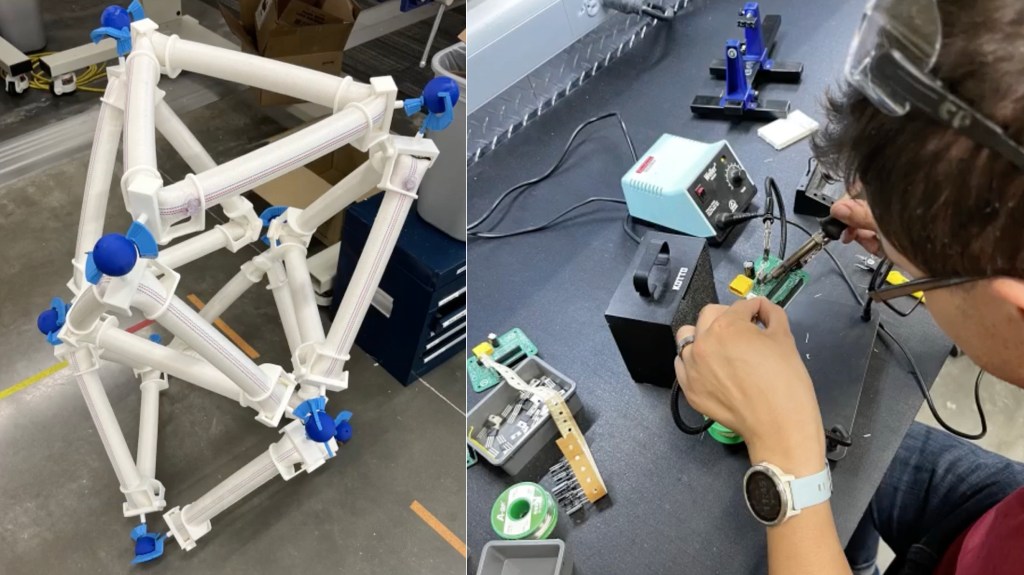
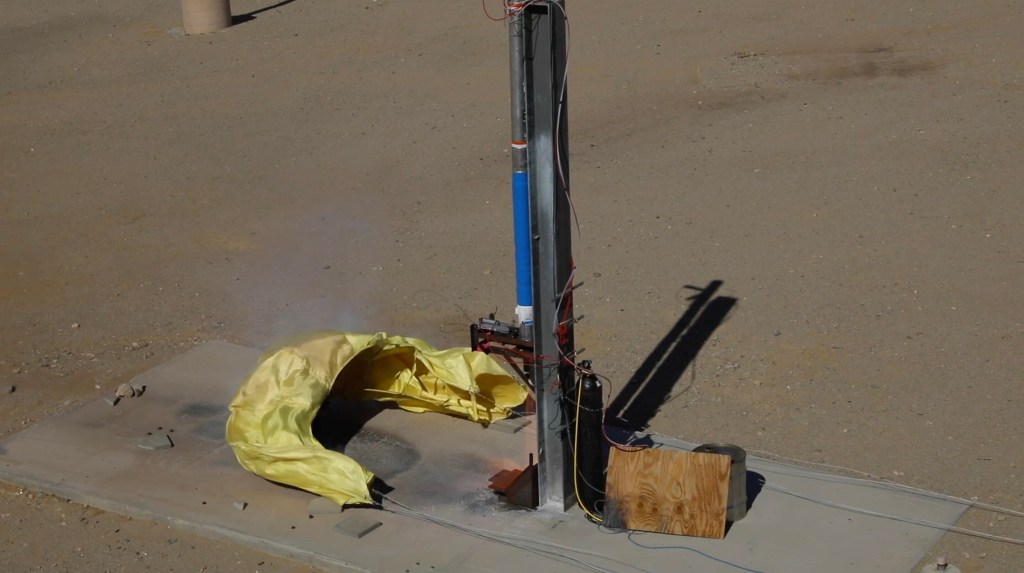
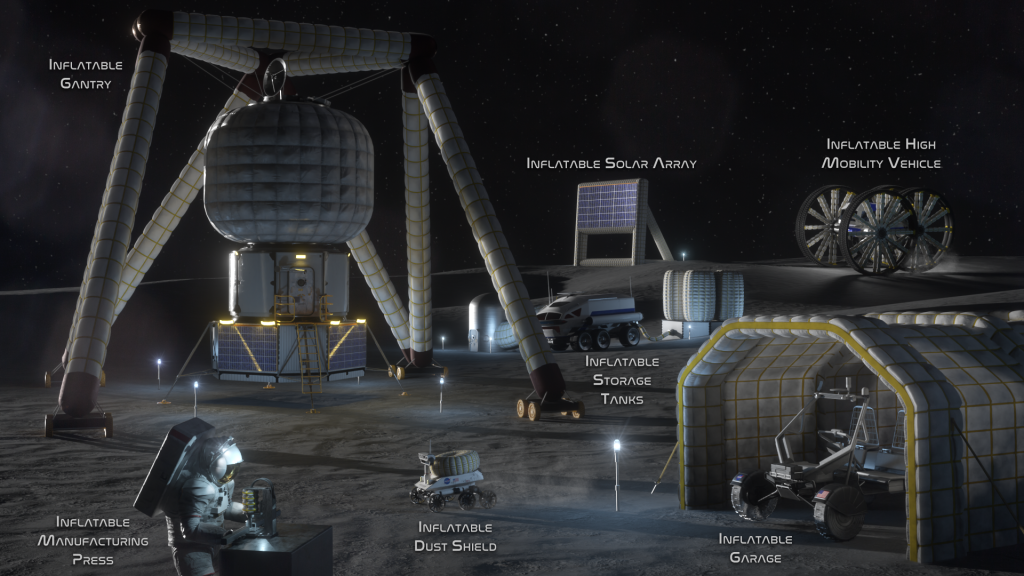
Following eight months of intense research, design, and prototyping, six university teams presented their “Inflatable Systems for Lunar Operations” concepts to a panel of judges at NASA’s 2024 Breakthrough, Innovative and Game-Changing (BIG) Idea Challenge forum. 

The challenge, funded by NASA’s Space Technology Mission Directorate and Office of STEM Engagement, seeks novel ideas from higher education on a new topic each year and supports the agency’s Lunar Surface Innovation Initiative in developing new approaches and innovative technologies to pave the way for successful exploration on the surface of the Moon. This year, teams were asked to develop low Size, Weight, and Power inflatable technologies, structures and systems that could benefit future Artemis missions to the Moon and beyond. 

Taking top honors at this year’s forum receiving the Artemis Award was Northwestern University with National Aerospace Corporation & IMS Engineered Products, with their concept titled METALS: Metallic Expandable Technology for Artemis Lunar Structures. The Artemis Award is given to the team whose concept has the best potential to contribute to and be integrated into an Artemis mission.  

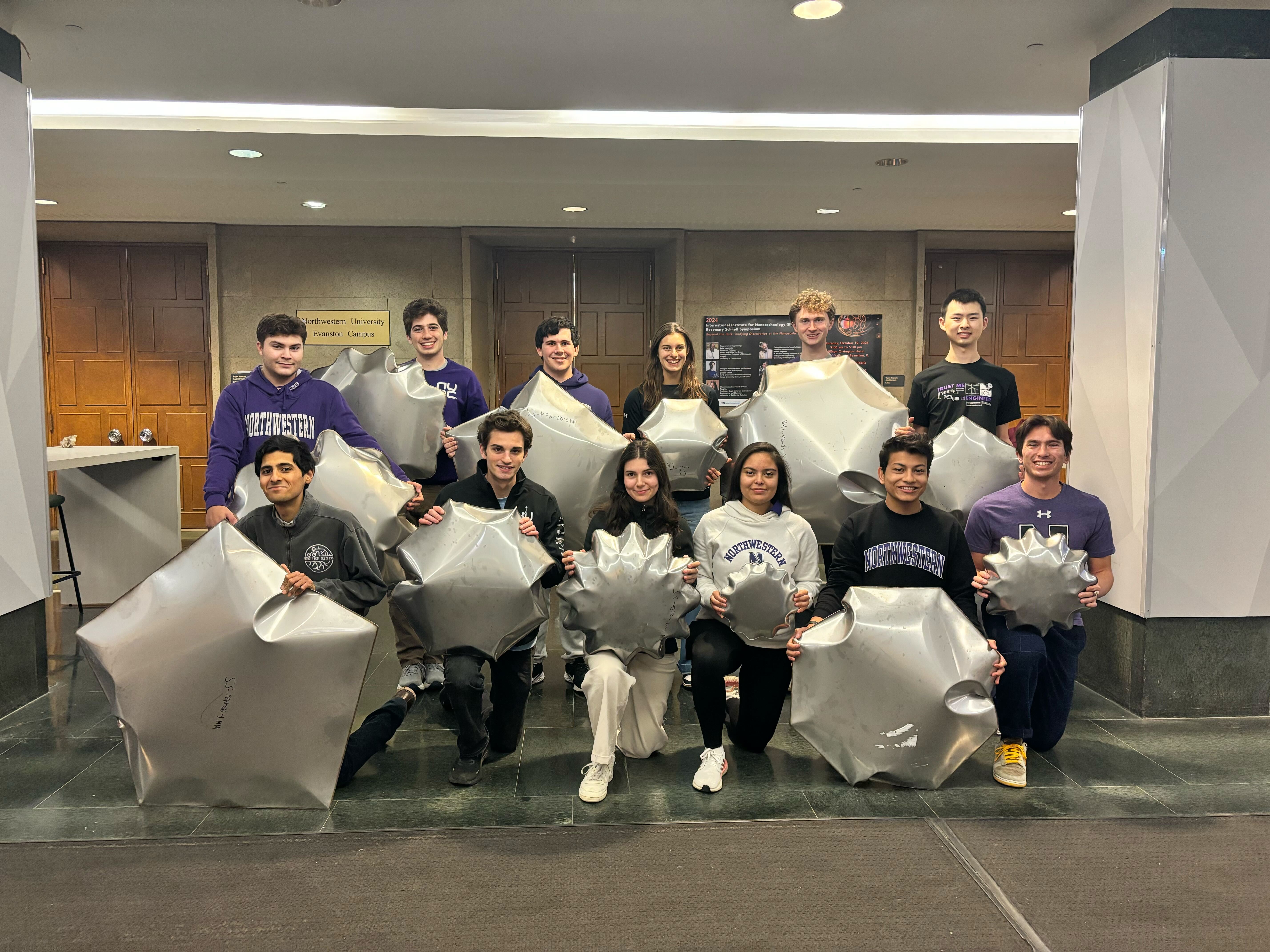
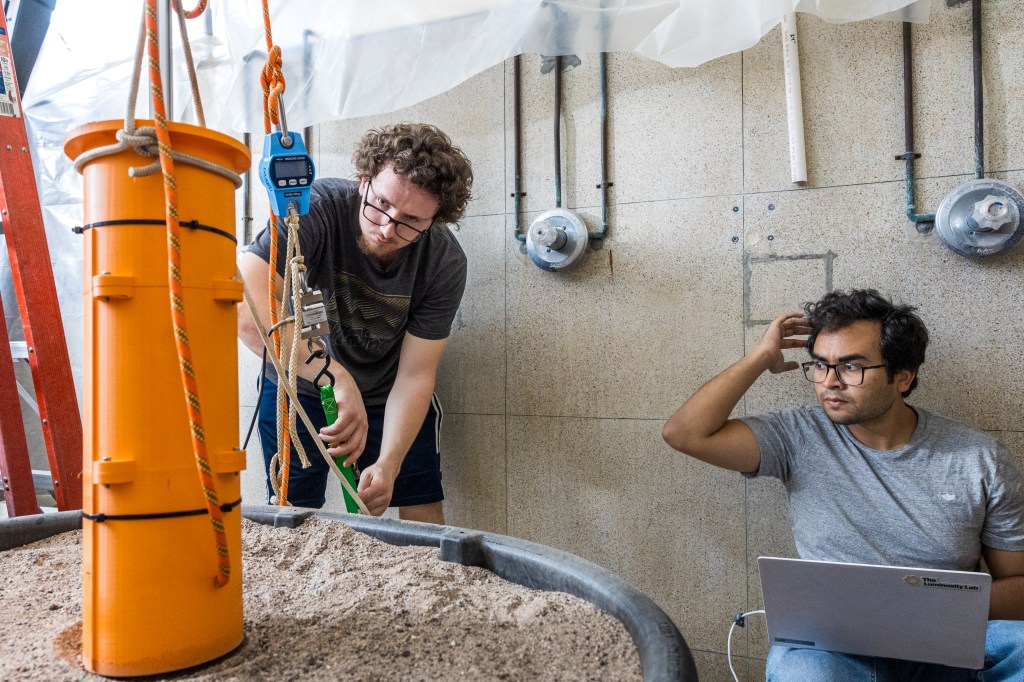
The Northwestern University BIG Idea Challenge team developed METALS, an inflatable metal concept for long-term storage of cryogenic fluid on the Moon. The concept earned the Artemis Award, top honors in NASA’s 2024 BIG Idea Challenge.
Credit: National Institute of Aerospace

The Artemis Award is a generous recognition of the potential impact that our work can have. We hope it can be a critical part of the Artemis Program moving forward. We’re exceptionally grateful to have the opportunity to engage directly with NASA in research for the Artemis Program in such a direct way while we’re still students.” 

Julian Rocher

Julian Rocher

Team co-lead for Northwestern University

METALS is an inflatable system for long term cryogenic fluid storage on the Moon. Stacked layers of sheet metal are welded along their aligned edges, stacked inside a rocket, and inflated once on the lunar surface. The manufacturing process is scalable, reliable, and simple. Notably, METALS boasts superior performance in the harsh lunar environment, including resistance against radiation, abrasion, micrometeorites, gas permeability, and temperature extremes.

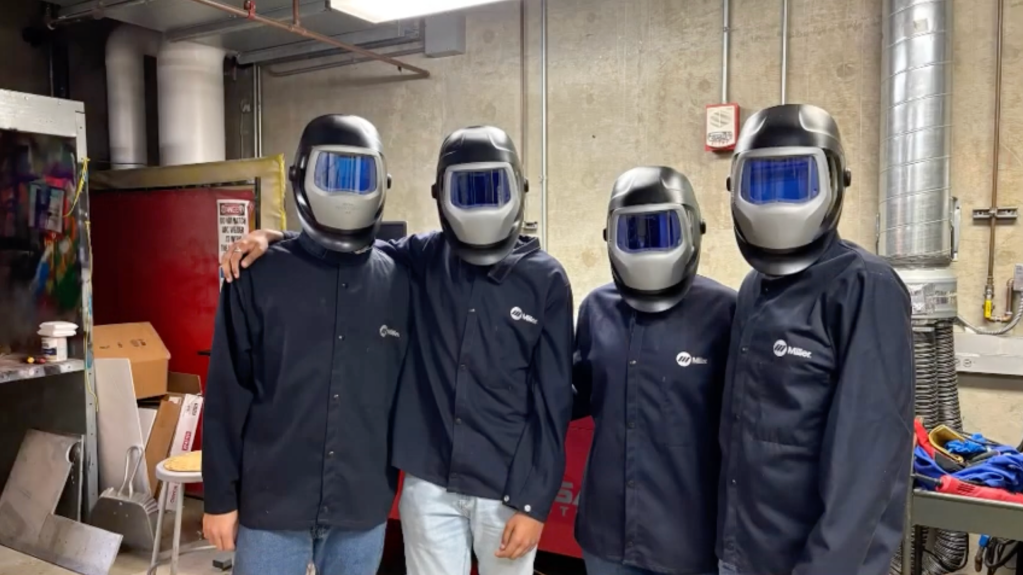
Northwestern University team members pose with lunar inflatable prototypes from their METALS project in NASA’s 2024 BIG Idea Challenge.
Credit: Northwestern University

We learned to ask the right questions, and we learned to question what is the status quo and to go above and beyond and think outside the box. It’s a special mindset for everyone to have on this team… it’s what forces us to innovate.” 

Trevor Abbott

Trevor Abbott

Team co-lead for Northwestern University

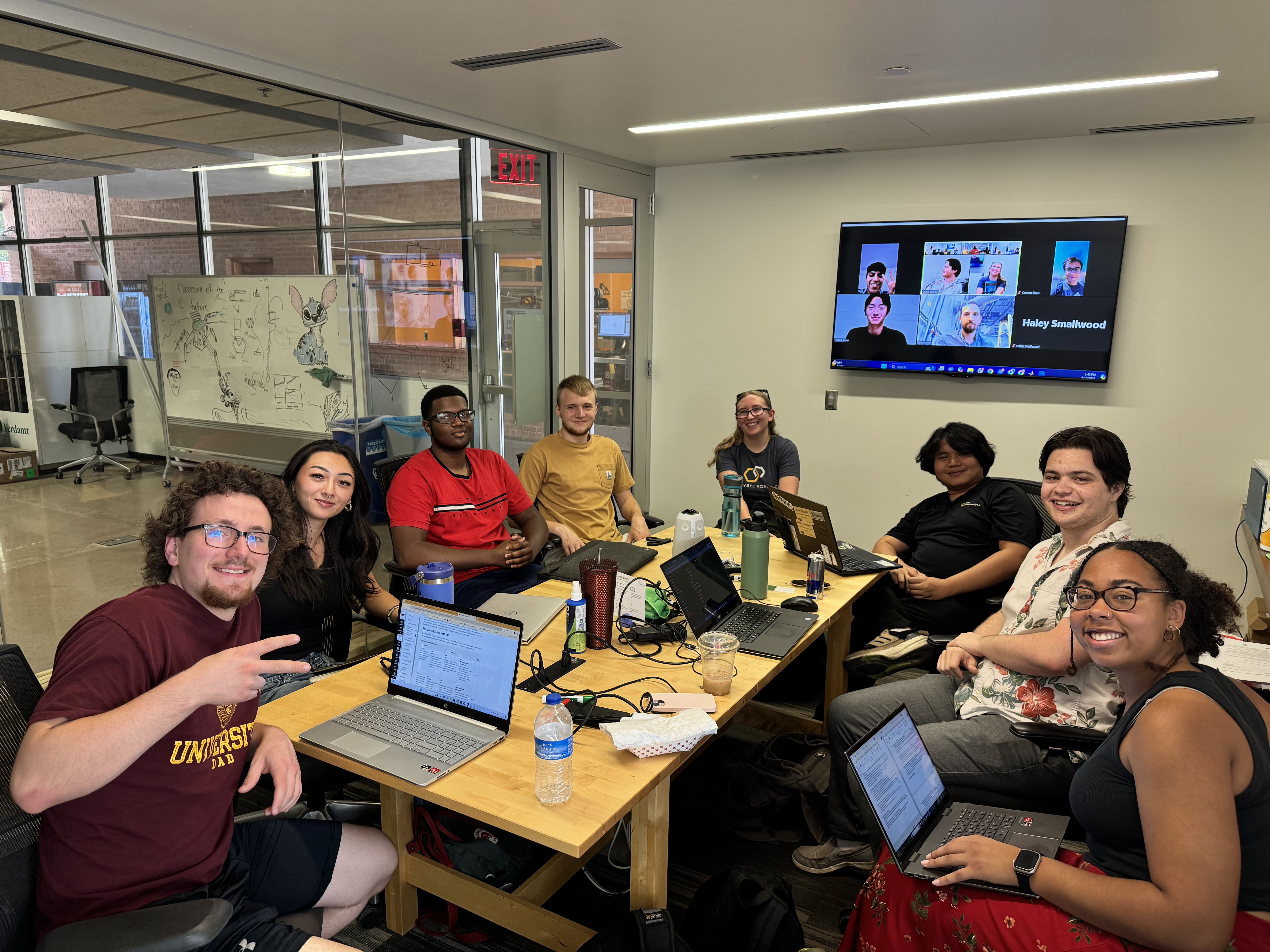
Arizona State University took home the 2024 BIG Idea Challenge Systems Engineering prize for their project, AEGIS: Inflatable Lunar Landing Pad System. The AEGIS system is designed to deflect the exhaust gasses of lunar landers thereby reducing regolith, or Moon dust, disturbances generated during landing. The system is deployed on the lunar surface where it uses 6 anchors in its base to secure itself to the ground. Once inflated to its deployed size of 14 m in diameter, AEGIS provides a reusable precision landing zone for incoming landers.

Arizona State University earned the Systems Engineering prize for their BIG Idea Challenge project: AEGIS: Inflatable Lunar Landing Pad System.
Arizona State University

This year’s forum was held in tandem with the Lunar Surface Innovation Consortium’s (LSIC) Fall Meeting at the University of Nevada, Las Vegas, where students had the opportunity to network with NASA and industry experts, attend LSIC panels and presentations, and participate in the technical poster session. The consortium provides a forum for NASA to communicate technological requirements, needs, and opportunities, and for the community to share with NASA existing capabilities and critical gaps. 

We felt that hosting this year’s BIG Idea Forum in conjunction with the LSIC Fall Meeting would be an exciting opportunity for these incredibly talented students to network with today’s aerospace leaders in government, industry, and academia. Their innovative thinking and novel contributions are critical skills required for the successful development of the technologies that will drive exploration on the Moon and beyond.” 

Niki Werkheiser

Niki Werkheiser

Director of Technology Maturation in NASA’s Space Technology Mission Directorate

In February, teams submitted proposal packages, from which six finalists were selected for funding of up to $150,000 depending on each team’s prototype and budget. The finalists then worked for eight months designing, developing, and demonstrating their concepts. The 2024 BIG Idea program concluded at its annual forum, where teams presented their results and answered questions from judges. Experts from NASA, Johns Hopkins Applied Physics Laboratory, and other aerospace companies evaluated the student concepts based on technical innovation, credibility, management, and the teams’ verification testing. In addition to the presentation, the teams provided a technical paper and poster detailing their proposed inflatable system for lunar operations. 

Year after year, BIG Idea student teams spend countless hours working on tough engineering design challenges. Their dedication and ‘game-changing’ ideas never cease to amaze me. They all have bright futures ahead of them.” 

David Moore

David Moore

Program Director for NASA’s Game Changing Development program

NASA’s Space Technology Mission Directorate sponsors the BIG Idea Challenge through a collaboration between its Game Changing Development program and the agency’s Office of STEM Engagement. It is managed by a partnership between the National Institute of Aerospace and Johns Hopkins Applied Physics Laboratory.   

Team presentations, technical papers, and digital posters are available on the BIG Idea website.       

For full competition details, visit:  https://bigidea.nianet.org/2024-challenge

Powered by WPeMatico

Get The Details…
Stefanie Payne

Super Insulation Requires Super Materials 

Super Insulation Requires Super Materials 

2 min read

Preparations for Next Moonwalk Simulations Underway (and Underwater)

A worker applies ceramic tiles to the space shuttle.
The thermal protection system on the outside of the space shuttle included hundreds of ceramic tiles custom made for the orbiter. These reflected heat off the shuttle’s outside surface during atmospheric re-entry and were an inspiration for the ceramic ingredients in Super Therm.
Credit: NASA

Without proper insulation, sunlight can make buildings feel like ovens. In the late 1980s, Joseph Pritchett aimed to solve this problem by developing a coating for building insulation. He knew of NASA’s experience with thermal testing, particularly with ceramics, which have several uses for the agency. Their heat-resistant properties make them excellent materials for spacecraft reentry shields, and their durability is perfect for airplane components. Pritchett thought by infusing paints with both insulating ceramic compounds and tough, resilient polymers, he could develop an insulation coating with the best features of both. 

Pritchett contacted the materials lab at NASA’s Marshall Space Flight Center in Huntsville, Alabama, through the center’s Technology Transfer Office. The facility had many ways to test heat-resistant materials, and the Marshall engineers and research scientists provided Pritchett with lists of material compounds to test for his insulation coating.  

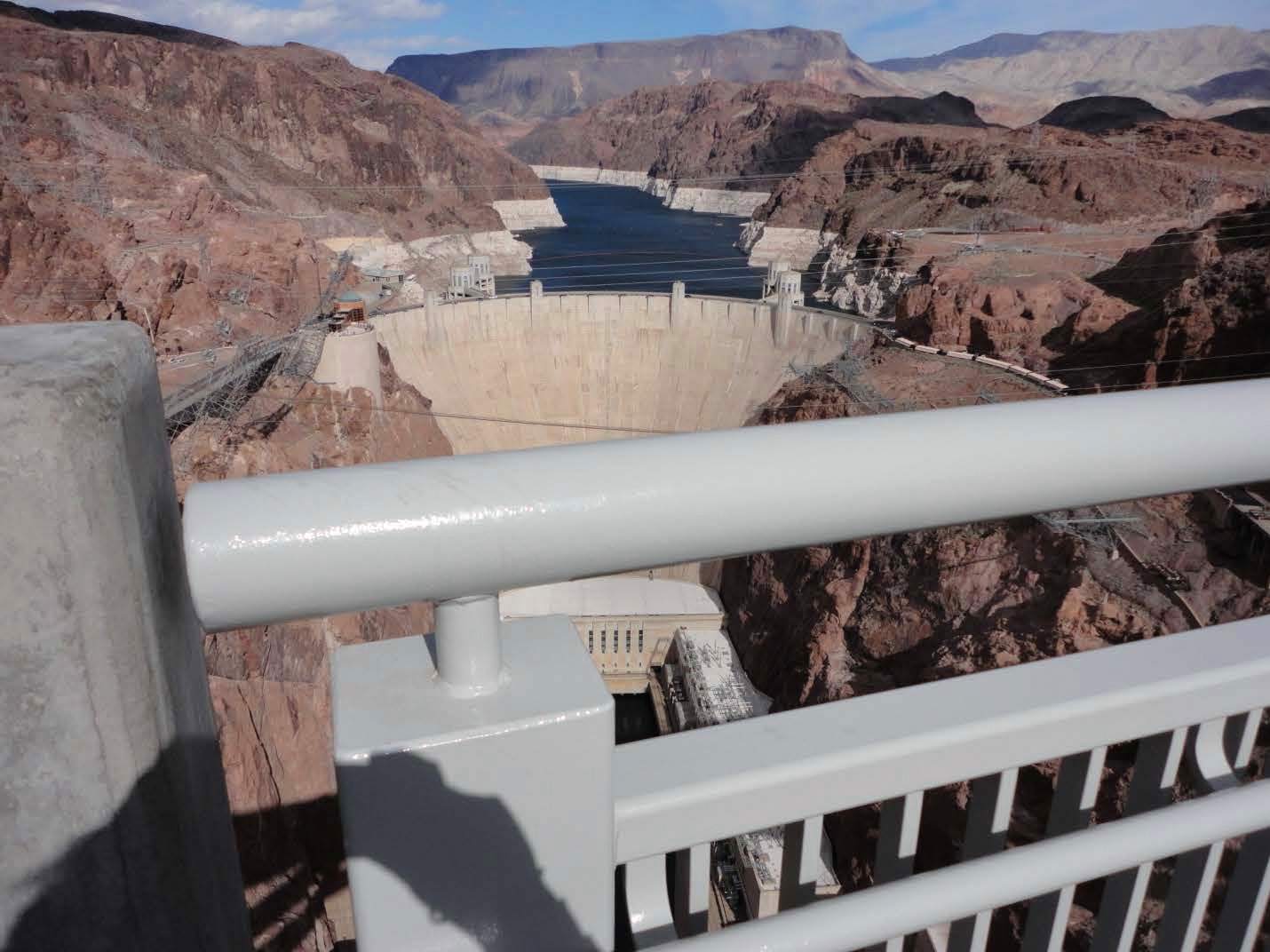
Super Therm has been applied in several places, including handrails on the Hoover Dam Bypass Bridge over the Colorado River. The selection of its makeup of ceramic and polymeric materials was assisted by NASA scientists.
Credit: Superior Products InternationaI II, LLC

Over a period of six years, Pritchett tested every compound on the lists NASA provided, narrowing down the potential compounds until he found the ideal insulation. Pritchett founded Superior Products International II, Inc. of Shawnee, Kansas, in 1995. His product, dubbed Super Therm, is a composite of both ceramic and polymeric materials. In 2011, when tested by Oak Ridge National Laboratory in Tennessee, Pritchett’s product proved successful in saving energy when cooling homes.

The engineers at Marshall played a pivotal role in Super Therm’s development, as their knowledge was key to finding the right ceramic material. In addition to insulation for buildings, the material has been used in other industrial applications, such as keeping equipment like tanks and pumps cool on oil rigs. Pritchett’s Super Therm is yet another example of how NASA’s Technology Transfer Program within the agency’s Space Technology Mission Directorate drives innovation in commercial industry.  

Share

Details

Last Updated

Nov 19, 2024

Powered by WPeMatico

Get The Details…
Andrew Wagner

Bob Swap Builds Bridges With ‘Science Diplomacy’

Bob Swap Builds Bridges With ‘Science Diplomacy’

Associate Director for Mission Planning, Earth Sciences, and environmental scientist Robert J. “Bob” Swap makes a difference by putting knowledge into action.

Name: Robert J. “Bob” Swap
Title: Associate Director for Mission Planning, Earth Sciences
Organization: Earth Science Division (Code 610)

Woman wearing a green jacket and man wearing a tan button down shirt with the Goddard logo stand on a runway in front of a plane.
Robert Swap (right) and Karen St. Germain, NASA Earth science director (left) joined NASA’s Student Airborne Research Program, an eight-week summer internship program for rising senior undergraduates during summer 2023.
Photo courtesy of Robert Swap

What do you do and what is most interesting about your role here at Goddard?

I work with our personnel to come up with the most viable mission concepts and put together the best teams to work on these concepts. I love working across the division, and with the center and the broader community, to engage with diverse competent teams and realize their potential in address pressing challenges in the earth sciences.

Why did you become an Earth scientist?

In the mid to late ’70s, the environment became a growing concern. I read all the Golden Guides in the elementary school library to learn about different creatures. I grew up exploring and discovering the surrounding woods, fields, and creeks, both on my own and through scouting and became drawn to nature, its connectedness, and its complexity. The time I spent fishing with my father, a military officer who also worked with meteorology, and my brother helped cement that love. I guess you could say that I became “hooked.”

What is your educational background?

In 1987, I got a B.A. in environmental science from the University of Virginia. While at UVA, I was a walk-on football player, an offensive lineman on UVA’s first ever post-season bowl team. This furthered my understanding of teamwork, how to work with people who were much more skilled than I was, and how to coach. I received master’s and Ph.D. degrees in environmental science from UVA in 1990 and 1996, respectively.

As an undergraduate in environmental sciences, I learned about global biochemical cycling — meaning how carbon and nitrogen move through the living and nonliving systems — while working on research teams in the Chesapeake Bay, the Blue Ridge Mountains and the Amazon Basin.

Before graduating I had the good fortune to participate in the NASA Amazon Boundary Layer Experiment (ABLE-2B) in the central Amazon, which I used to kick off my graduate studies. I then focused on southern African aerosol emissions, transports and depositions for my doctoral studies that ultimately led to a university research fellow postdoc at the University of the Witwatersrand in Johannesburg, South Africa.

What are some of your career highlights?

It has been a crazy journey!

While helping put up meteorological towers in the Amazon deep jungle, we would encounter massive squall lines. These storms were so loud as they rained down on the deep forest that you could not hear someone 10 feet away. One of the neatest things that I observed was that after the storms passed, we would see a fine red dust settling on top of our fleet of white Volkswagen rental vehicles in the middle of the rainforest.

That observation piqued my interest and led to a paper I wrote about Saharan dust being transported to the Amazon basin and its potential implications for the Amazon, especially regarding nutrient losses from the system. Our initial work suggested there was not enough input from Northern Africa to support the system’s nutrient losses. That caused us to start looking to Sub-Saharan Africa as a potential source of these nutritive species.

I finished my master’s during the first Persian Gulf War, and finding a job was challenging. During that phase I diversified my income stream by delivering newspapers and pizzas and also bouncing at a local nightspot so that I could focus on writing papers and proposals related to my research. One of my successes was the winning of a joint National Science Foundation proposal that funded my doctoral research to go to Namibia and examine sources of aerosol and trace gases as part of the larger NASA TRACE-Southern African Atmosphere Fire Research Initiative – 92 (SAFARI-92). We were based at Okaukuejo Rest Camp inside of Namibia’s Etosha National Park for the better part of two months. We characterized conservative chemical tracers of aerosols, their sources and long-range transport from biomass burning regions, which proved, in part, that Central Southern Africa was providing mineral and biomass burning emissions containing biogeochemically important species to far removed, downwind ecosystems thousands of kilometers away.  

When I returned to Africa as a postdoctoral fellow, I  was able to experience other countries and cultures including Lesotho, Mozambique, and Zambia. In 1997, NASA’s AERONET project was also expanding into Africa and I helped Brent Holben and his team deploy instruments throughout Africa in preparation for vicarious validation of instrumentation aboard NASA’s Terra satellite platform.

I returned to UVA as a research scientist to work for Chris Justice and his EOS MODIS/Terra validation team. I used this field experience and the international networks I developed, which contributed to my assuming the role of U.S. principal investigator for NASA’s Southern African Regional Science Initiative. Known as SAFARI 2000, it was an effort that involved 250 scientists from 16 different countries and lasted more than three years. When it ended, I became a research professor and began teaching environmental science and mentoring UVA students on international engagement projects.

Around 2000, I created a regional knowledge network called Eastern/Southern Africa Virginia Network and Association (ESAVANA) that leveraged the formal and informal structures and networks that SAFARI 2000 established. I used my team building and science diplomacy skills to pull together different regional university partners, who each had unique pieces for unlocking the larger puzzle of how southern Africa acted as a regional coupled human-natural system. Each partner had something important to contribute while the larger potential was only possible by leveraging their respective strengths together as a team.

I traveled extensively during this time and was supported in 2001 partially by a Fulbright Senior Specialist Award which allowed me to spend time at the University of Eduardo Mondlane in Maputo Mozambique to help them with hydrology ecosystem issues in the wake of massive floods. We kept the network alive by creating summer study abroad, service learning and intersession January educational programs that drew upon colleagues and their expertise from around the world that attracted new people, energy, and resources to ESAVANA. All of these efforts contributed to a “community of practice” focused on learning about the ethics and protocols of international research. The respectful exchange of committed people and their energies and ideas was key to the effort’s success. I further amplified the impact of this work by contributing my lived and learned experiences to the development of the first ever global development studies major at UVA.

In 2004, I had a bad car accident and as a result have battled back and hip issues ever since. After falling off the research funding treadmill, I had to reconfigure myself in the teaching and program consultant sector. I grew more into a teaching role and was recognized for it by UVA’s Z-Society 2008 Professor of the Year, the Carnegie Foundation for the Advancement of Teaching’s Virginia’s 2012 Professor of the Year, as well as my 2014 induction into UVA’s Academy of Teaching — all while technically a research professor. I was also heavily involved for almost a decade with the American Association for the Advancement of Science and its Center for Science Diplomacy and tasks related to activities such as reviewing the Inter-American Institute for Global Change Research and teaching science diplomacy in short courses for the World Academy of Sciences for the Advancement of Science in Developing Countries located in Trieste, Italy, and the Academy of Science of South Africa.

I worked in the Earth Sciences Division at NASA Headquarters from 2014 to early 2017 as a rotating program support officer as part of the Intergovernmental Personnel Act (IPA), where I supported the atmospheric composition focus area. One of my responsibilities involved serving as a United States Embassy science fellow in the summer of 2015, where I went to Namibia to support one of our Earth Venture Suborbital field campaigns. I came to Goddard in April 2017 to help revector their nascent global network of ground-based, hyperspectral ultraviolet and visible instruments known as the Pandora.

What is your next big project?

I am currently working with the NASA Goddard Earth Science Division front office to craft a vision for the next 20 years, which involves the alignment of people around a process to achieve a desired product. With the field of Earth System Science changing so rapidly, we need to position ourselves within this ever evolving “new space” environment of multi-sectoral partners — governmental, commercial, not-for-profit, and academic — from the U.S. and beyond to study the Earth system. This involves working with other governmental agencies, universities and industrial partners to chart a way forward. We will have a lot of new players. We will be working with partners we never imagined.

We need people who know how to work across these different sectors. One such attempt to “grow our own timber” involves my development of an experimental version of the first NASA Student Airborne Research Program East Coast Edition (SARP and SARP-East), where student participants from a diversity of institutions of higher learning can see the power and promise of what NASA does, how we work together on big projects, and hopefully be inspired to take on the challenges of the future. In other words, I am pushing an exposure to field-based, Earth system science down earlier into their careers to expose them to what NASA does in an integrated fashion.

What assets do you bring to the Earth Science Division front office?

In 2020, I came to the Earth science front office to help lead the division. I make myself available across the division to help inspire, collect, suggest, and coach our rank and file into producing really cool mission concept ideas.

Part of why the front office wanted me is because I use the skills of relationship building, community building, and science diplomacy to make things happen, to create joint ventures.  Having had to support myself for over 20 years on soft money, I learned to become an entrepreneur of sorts — to be scientifically and socially creative — and I was forced to look inward and take an asset-based approach. I look at all the forms of capital I have at hand and use those to make the best of what I have got. In Appalachia, there is an expression: use everything but the squeal from the pig.

Lastly, I bring a quick wit with a good dose of self-deprecating humor that helps me connect with people.

How do you use science diplomacy to make things happen?

Two of the things that bind people together about science are the process of inquiry and utilizing the scientific method, both of which are universally accepted. As such, they allow us to transcend national and cultural divides.

Science diplomacy works best when you start with this common foundation. Starting with this premise in collaborative science allows for conversations to take place focusing on what everyone has in common. You can have difficult conversations and respectful confrontations about larger issues.

Scientists can then talk and build bridges in unique ways. We did this with SAFARI 2000 while working in a region that had seen two major wars and the system of Apartheid within the previous decade. We worked across borders of people who were previously at odds. We did that by looking at something apart from national identity, which was Southern Africa. We focused on how a large-scale system functions and how to make something that incorporates 10 different countries operate as a unit. We wanted to conduct studies showing how the region operated as a functional unit while dealing with transboundary issues. It took a lot of community and trust, and we began with the science community.

What drives you?

I want to put knowledge into action to make a difference. I realize it is not about me, it is about “we.” That is why I came to NASA, to make a difference. There is no other agency in the world where we can harness such a unique and capable group of people.

What do you do for fun?

I enjoy watching sports. I still enjoy hiking, fishing, and tubing down the river. My wife and I like long walks through natural settings with our rescues, Lady, our black-and-tan coonhound, and Duchess, our long-haired German Shepherd Dog. They are our living hot water bottles in the winter.

My wife and I also like to cook together.

Who would you like to thank?

Without a doubt, it starts with my wife, family, and children whom without none of what I have accomplished would have been possible. I have had the good fortune to be able to bring them along on some of my international work, including to Africa.

I am also very grateful to all those people during my school years who stepped in and who did not judge me initially by my less than stellar grades. They gave me the chance to become who I am today.

Who inspires you?

There is an old television show that I really liked called “Connections,” by James Burke. He would start with a topic, go through the history, and show how one action led to another action with unforeseen consequences. He would take something modern like plastics and link it back to Viking times. Extending that affinity for connections, the Resilience Alliance out of Sweden also influences me with their commitment to showing connections and cycles.

My mentors at UVA were always open to serving as a sounding board. They treated me as a colleague, not a student, as a member of the guild even though I was still an apprentice. That left an indelible impression upon me and I always try to do the same. My doctoral mentor Mike Garstang said that he already had a job and that this job was to let me stand on his shoulders to allow me to get to the next level, which is my model.

Another person who was very formative during my early professional career was Jerry Melillo who showed me what it was like to be an effective programmatic mentor. I worked with him as his chief staffer of an external review of the IAI and learned a lot by watching how he ran that activity program.

With respect to NASA, a number of people come to mind: Michael King, Chris Justice, and Tim Suttles, as well as my South African Co-PI, Harold Annegarn, all of whom, at one time or another, took me under their respective wings and mentored me through the whole SAFARI 2000 process. From each of their different perspectives, they taught me how NASA works, how to engage, how to implement a program, and how to navigate office politics. And my sister and our conversations about leadership and what it means to be a servant leader. To be honest, there are scores more individuals who have contributed to my development that I don’t have the space to mention here.

What are some of your guiding principles?

Never lose the wonder — stay curious. “We” not “me.” Seeking to understand before being understood. We all stand on somebody’s shoulders. Humility rather than hubris. Respect. Be the change you wish to see.

By Elizabeth M. Jarrell
NASA’s Goddard Space Flight Center, Greenbelt, Md.

A banner graphic with a group of people smiling and the text "Conversations with Goddard" on the right. The people represent many genders, ethnicities, and ages, and all pose in front of a soft blue background image of space and stars.

Conversations With Goddard is a collection of Q&A profiles highlighting the breadth and depth of NASA’s Goddard Space Flight Center’s talented and diverse workforce. The Conversations have been published twice a month on average since May 2011. Read past editions on Goddard’s “Our People” webpage.

Share

Details

Last Updated

Nov 19, 2024

Editor
Madison Olson
Contact
Rob Garner
Location
Goddard Space Flight Center

Powered by WPeMatico

Get The Details…
Madison Olson

NASA Engineer Carries Indigenous Roots into New Aviation Era

NASA Engineer Carries Indigenous Roots into New Aviation Era

5 min read

Preparations for Next Moonwalk Simulations Underway (and Underwater)

A woman wearing a black polo shirt with the NASA insignia, dark gray pants, and white shoes stands inside an aircraft hangar in front of a scaled aircraft model. The words “SUSAN Electrofan” and “PAX 180” are printed on a graphic along with fuselage, with a large NASA insignia in the center of the plane. The rear of the aircraft model, along with the wings and tail, are taken apart to display the inner components that make up its electrified propulsion system.
Abigail Reigner, a systems engineer at NASA’s Glenn Research Center in Cleveland, supports the agency’s research in electrified aircraft propulsion to enable more sustainable air travel. Behind her is a 25% scale model of NASA’s SUbsonic Single Aft eNgine (SUSAN) Electrofan aircraft concept used to test and demonstrate hybrid electric propulsion systems for emission reductions and performance boosts in future commercial aircraft.
Credit: NASA/Sara Lowthian-Hanna

Growing up outside of Philadelphia, Abigail Reigner spent most of her childhood miles away from where her family called home, and where there was little trace of her Native American tribe and culture.

Belonging to the Comanche Nation that resides in Lawton, Oklahoma, Reigner’s parents made every effort to keep her connected to her Indigenous heritage and part of a community that would later play a key role in her professional journey.

“My parents were really adamant on making sure my brother and I were still involved in the Native American traditions.»

Abigail Reigner

“My parents were really adamant on making sure my brother and I were still involved in the Native American traditions,” Reigner said. “We would go down to Oklahoma often in the summertime, spending time with family and staying immersed in our culture.”

Both her parents come from a teaching background, so Reigner was surrounded by hands-on learning experiences early in life. As a school teacher, her mother would participate in local outreach events each year, talking and interacting with students. Her father, a middle school technology education teacher, taught Reigner how to use computer-aided design (CAD) and helped introduce her to the world of engineering at a young age.  

These unique experiences helped spark Reigner’s curiosity for learning about science, technology, engineering, and math (STEM) and connecting with others in her community who shared these interests. Reigner says she never takes her upbringing for granted. 

“I feel pretty lucky to have grown up with so many educational opportunities, and I try to use them as a way to give back to my community,” Reigner said.

After participating in various engineering and robotics classes in high school and realizing a career in STEM was the right fit for her, Reigner went on to attend the Rochester Institute of Technology in New York where she earned bachelor’s and master’s degrees in mechanical engineering.

During her time there, she joined the American Indian Science and Engineering Society (AISES) where she got the unique opportunity to connect with other Indigenous students and mentors in STEM fields and gain leadership experience on projects that eventually set her up for internship opportunities at NASA.

“The opportunities I got through AISES led me to get an internship at NASA’s Jet Propulsion Laboratory during the summer of 2021, and then an eight-month co-op the following year working in the center’s materials science division,” Reigner said.

Through AISES, Reigner also met Joseph Connolly, an aerospace engineer at NASA’s Glenn Research Center in Cleveland who was looking to recruit Indigenous students for full-time positions in the agency. Upon graduating from college, Reigner joined NASA Glenn as an engineer in the summer of 2024.

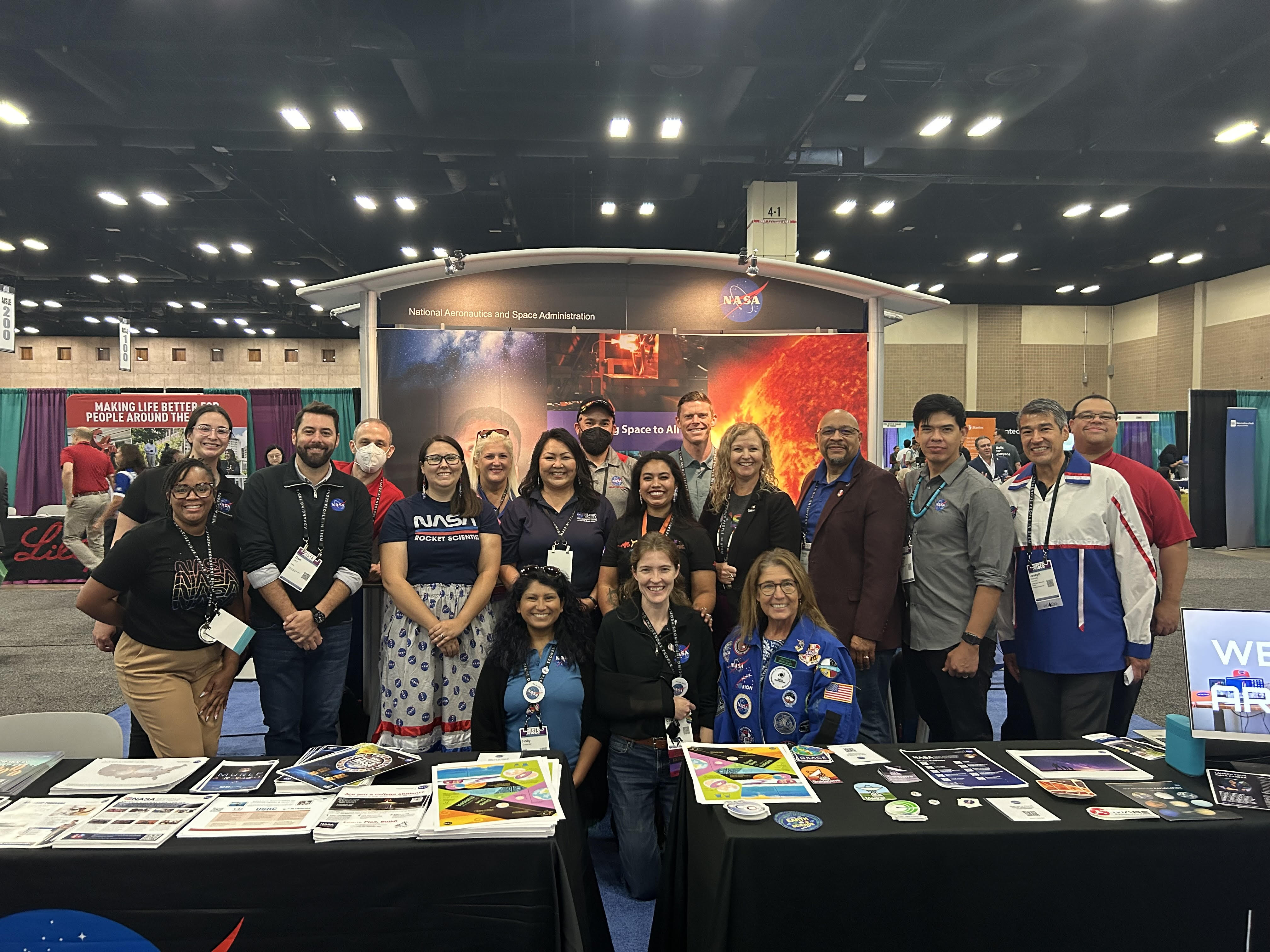
A group of 18 NASA employees pose in front of tables filled with various flyers, fact sheets, and handouts. Behind them is a large NASA backdrop with images of the Sun and deep space, as well as other conference booths.
Abigail Reigner (top far left) and Joseph Connolly (middle far right) pose with NASA employees while staffing a booth at an American Indian Science and Engineering Society (AISES) conference to help recruit Indigenous students to the agency.
Credit: Abigail Reigner

Today, Reigner works as a systems engineer supporting NASA Glenn’s efforts to test and demonstrate electrified aircraft propulsion technologies for future commercial aircraft as part of the agency’s mission to make air travel more sustainable.

One of the projects she works on is NASA’s Electrified Powertrain Flight Demonstration (EPFD), where she supports risk-reduction testing that enables the project to explore the feasibility of hybrid electric propulsion in reducing emissions and improving efficiency in future aircraft.

“It’s always good to know that you’re doing something that is furthering the benefit of humanity,” Reigner said. “Seeing that unity across NASA centers and knowing that you are a part of something that is accelerating technology for the future is very cool.” 

“I really feel like the reason I am here at NASA is because of the success of not just the Native American support group here at Glenn, but also Natives across the agency.”
Abigail Reigner

The growing community of Native Americans at NASA Glenn has fostered several initiatives over the years that have helped recruit, inspire, and retain Indigenous employees.

Leveraging some of the agency’s diversity programs that provide educational STEM opportunities for underrepresented communities, the Native Americans at NASA group has encouraged more students with Indigenous backgrounds to get involved in technical projects while developing the skills needed to excel in STEM fields.

“The Native American support group at NASA has been around since the mid-to-late 1980s and was actually one of the first Native American employee resources groups at the agency,” Connolly said. “Through this, we’ve been able to connect a number of Native employees with senior leaders across NASA and establish more agencywide recruitment efforts and initiatives for Native Americans.”

These initiatives range from support through NASA’s Minority University Research and Education Project (MUREP) to help recruit more Indigenous students, to encouraging participation in hands-on learning experiences through projects such as NASA’s University Leadership Initiative (ULI) and the agency’s involvement in the First Nations Launch competition, which helps provide students with opportunities to conduct research while developing engineering and team-building skills.
The efforts of the Native American community at NASA Glenn and across the agency have been successful in not only creating a direct pipeline for Indigenous students into the NASA workforce, but also allowing them to feel seen and represented in the agency, says Connolly.

For Reigner, having this community and resource group at NASA to help guide and support her through her journey has been crucial to her success and important for the future of diversity within the agency.

“I really feel like the reason I am here at NASA is because of the success of not just the Native American support group here at Glenn, but also Natives across the agency,” Reigner said. Without their support and initiatives to recruit and retain students, I wouldn’t be here today.” 

Powered by WPeMatico

Get The Details…
Anisha Engineer