NASA Invites Creators to Design Mascot for Artemis Moon Mission

NASA Invites Creators to Design Mascot for Artemis Moon Mission

Credit: NASA

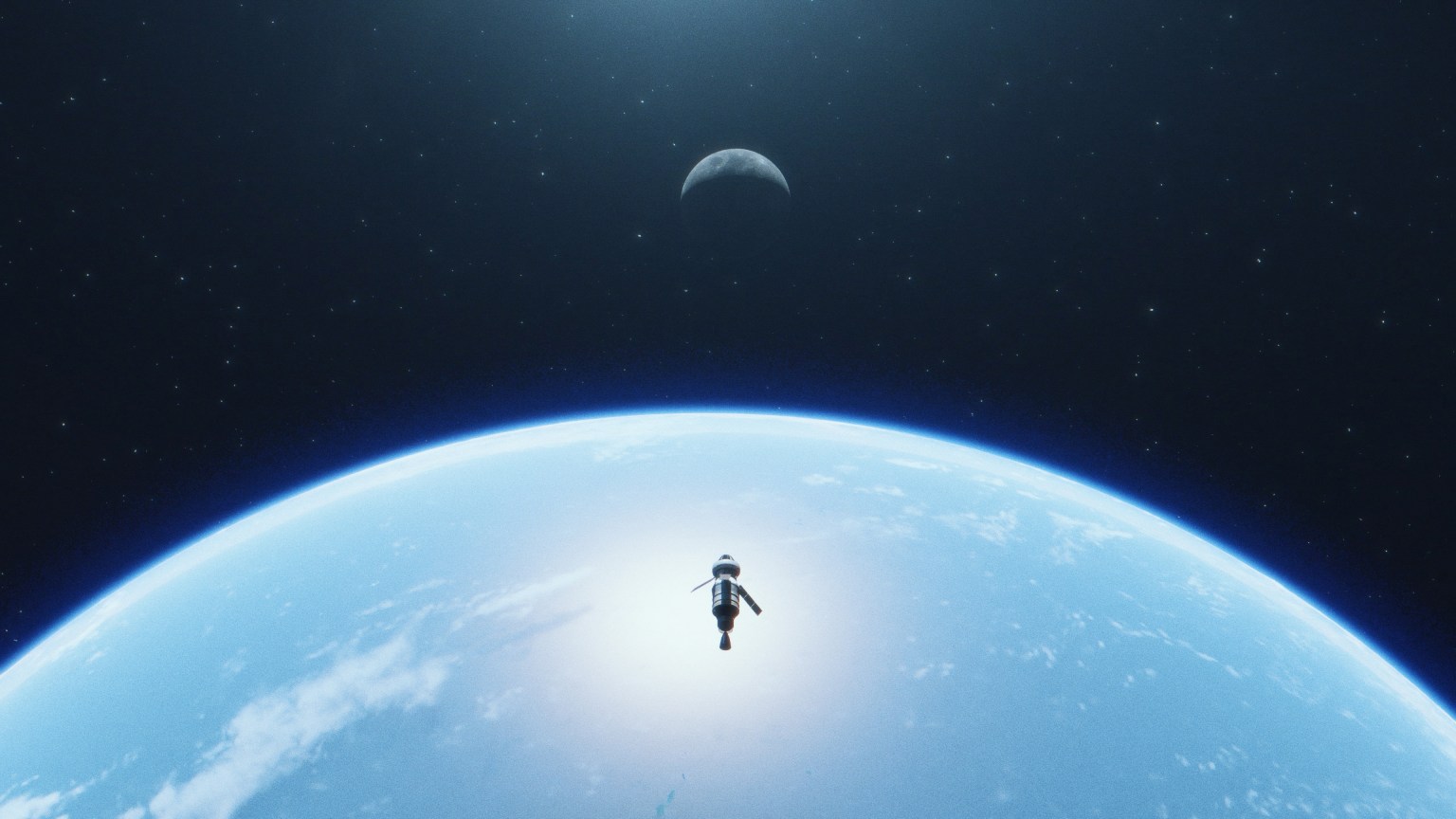
NASA is seeking design ideas from global creators for a zero gravity indicator that will fly aboard the agency’s Artemis II test flight. Zero gravity indicators are small, plush items carried aboard spacecraft to provide a visual indication of when the spacecraft and its crew reach space.

This opportunity, with a submission deadline of May 27, asks for original designs representing the significance of NASA’s Artemis campaign, the mission, or exploration and discovery, and meet specific requirements for materials and size.

“What better way to fly a mission around the Moon than to invite the public inside NASA’s Orion spacecraft with us and ask for help in designing our zero gravity indicator?” asked Reid Wiseman, NASA astronaut and Artemis II commander, at the agency’s Johnson Space Center in Houston. “The indicator will float alongside Victor, Christina, Jeremy, and me as we go around the far side of the Moon and remind us of all of you back on Earth.”

Up to 25 finalists, including from a K-12 student division, will be selected. The Artemis II crew will choose one design that NASA’s Thermal Blanket Lab will fabricate to fly alongside them in Orion. Imagine seeing your creation floating weightlessly with astronauts on their way around the Moon.

For complete contest details, visit:

http://www.freelancer.com/moon-mascot

Crowdsourcing company Freelancer is hosting the challenge, called Moon Mascot: NASA Artemis II ZGI Design Contest, on behalf of the agency through the NASA Tournament Lab, managed by the agency’s Space Technology Mission Directorate.

NASA has a long history of flying zero gravity indicators for human spaceflight missions. Many missions to the International Space Station include a plush item. A plush Snoopy rode inside Orion during NASA’s uncrewed Artemis I mission.

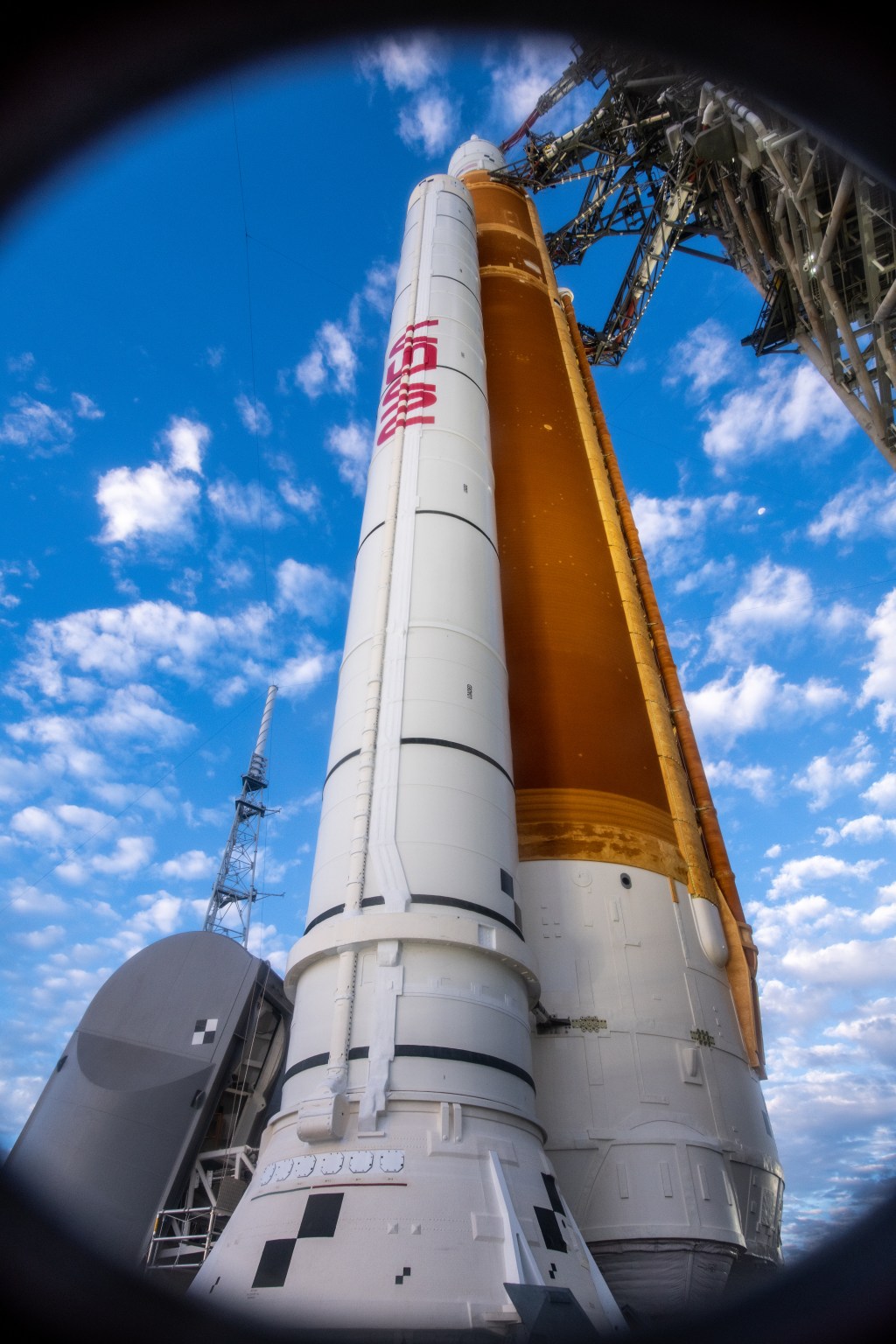
Artemis II will be the first test flight of the Space Launch System rocket, Orion spacecraft, and supporting ground system with crew aboard. NASA astronauts Reid Wiseman, Victor Glover, and Christina Koch, and CSA (Canadian Space Agency) astronaut Jeremy Hansen will venture around the Moon and back. The mission is the first crewed flight under NASA’s Artemis campaign and is another step toward missions on the lunar surface and helping the agency prepare for future human missions to Mars.

All major elements for Artemis II are readying for flight. Engineers recently completed stacking the twin solid rocket boosters for the SLS (Space Launch System) on their launch platform and are preparing for integration of the SLS core stage in the coming weeks. Teams also recently installed the solar array wings on the Orion spacecraft that will carry the four astronauts on their journey around the Moon and home.

Through Artemis, NASA will send astronauts to explore the Moon for scientific discovery, economic benefits, and build the foundation for the first crewed missions to Mars.

Learn more about Artemis II at:

https://www.nasa.gov/mission/artemis-ii/

-end-

Rachel Kraft
Headquarters, Washington
202-358-1600
rachel.h.kraft@nasa.gov

Courtney Beasley
Johnson Space Center, Houston
281-483-5111
courtney.m.beasley@nasa.gov

Share

Details

Last Updated

Mar 07, 2025

Powered by WPeMatico

Get The Details…
Gerelle Q. Dodson

NASA Astronaut to Answer Questions from Students in Oregon

NASA Astronaut to Answer Questions from Students in Oregon

NASA astronaut Don Pettit inside the Soyuz MS-26 spacecraft. (Credit: NASA)

Students from Oregon will have the chance to connect with NASA astronaut Don Pettit as he answers prerecorded science, technology, engineering, and mathematics-related questions from aboard the International Space Station.

Watch the 20-minute space-to-Earth call at 2:15 p.m. EDT on Monday, March 10, on NASA+ and learn how to watch NASA content on various platforms, including social media.

Oregon Charter Academy, a virtual school serving thousands of kindergarten through 12th grade students statewide, is hosting an event in Wilsonville, Oregon, for students and their families. The event aims to raise awareness of career opportunities for aspiring STEM students.

Media interested in covering the event must RSVP by 5 p.m., Friday, March 7, to Laura Dillon at ldillon@oregoncharter.org or 971-301-5060.

For more than 24 years, astronauts have continuously lived and worked aboard the space station, testing technologies, performing science, and developing skills needed to explore farther from Earth. Astronauts aboard the orbiting laboratory communicate with NASA’s Mission Control Center in Houston 24 hours a day through SCaN’s (Space Communications and Navigation) Near Space Network.

Important research and technology investigations taking place aboard the space station benefit people on Earth and lays the groundwork for other agency missions. As part of NASA’s Artemis campaign, the agency will send astronauts to the Moon to prepare for future human exploration of Mars; inspiring Artemis Generation explorers and ensuring the United States continues to lead in space exploration and discovery.

See videos and lesson plans highlighting space station research at:

https://www.nasa.gov/stemonstation

-end-

Abbey Donaldson
Headquarters, Washington
202-358-1600
Abbey.a.donaldson@nasa.gov

Sandra Jones
Johnson Space Center, Houston
281-483-5111
sandra.p.jones@nasa.gov

Share

Details

Last Updated

Mar 07, 2025

Powered by WPeMatico

Get The Details…
Abbey A. Donaldson

NASA Webb Wows With Incredible Detail in Actively Forming Star System

NASA Webb Wows With Incredible Detail in Actively Forming Star System

5 Min Read

NASA Webb Wows With Incredible Detail in Actively Forming Star System

At the center is a thin vertical cloud known as Lynds 483 that is shaped like an hourglass with irregular edges. At lower center are two discrete bright white, tiny blobs of light that have raced away from the hidden central stars. The top lobe shows a more prominent orange U-shape. Orange bleeds into light purple, and brighter pink at its edges. Some background stars are visible through sections of this lobe. Higher up, there is an orange arc. Some brighter pink material extends to the top edges near the center. In the lower lobe, less orange is visible. More opaque light purple is in its top third, rippling out into semi-transparent blues and pinks. The lower lobe has more texture. V-shapes left and right of the lobes are darkest, and the background stars in these areas appear orange. Elsewhere, the black background of space is clearer, speckled with tiny white stars and faint orange galaxies.
Shimmering ejections emitted by two actively forming stars make up Lynds 483 (L483). High-resolution near-infrared light captured by NASA’s James Webb Space Telescope shows incredible new detail and structure within these lobes.
Credits:
NASA, ESA, CSA, STScI

High-resolution near-infrared light captured by NASA’s James Webb Space Telescope shows extraordinary new detail and structure in Lynds 483 (L483). Two actively forming stars are responsible for the shimmering ejections of gas and dust that gleam in orange, blue, and purple in this representative color image.

Over tens of thousands of years, the central protostars have periodically ejected some of the gas and dust, spewing it out as tight, fast jets and slightly slower outflows that “trip” across space. When more recent ejections hit older ones, the material can crumple and twirl based on the densities of what is colliding. Over time, chemical reactions within these ejections and the surrounding cloud have produced a range of molecules, like carbon monoxide, methanol, and several other organic compounds.

Image A: Actively Forming Star System Lynds 483 (NIRCam Image)

At the center is a thin vertical cloud known as Lynds 483 that is shaped like an hourglass with irregular edges. At lower center are two discrete bright white, tiny blobs of light that have raced away from the hidden central stars. The top lobe shows a more prominent orange U-shape. Orange bleeds into light purple, and brighter pink at its edges. Some background stars are visible through sections of this lobe. Higher up, there is an orange arc. Some brighter pink material extends to the top edges near the center. In the lower lobe, less orange is visible. More opaque light purple is in its top third, rippling out into semi-transparent blues and pinks. The lower lobe has more texture. V-shapes left and right of the lobes are darkest, and the background stars in these areas appear orange. Elsewhere, the black background of space is clearer, speckled with tiny white stars and faint orange galaxies.
Shimmering ejections emitted by two actively forming stars make up Lynds 483 (L483). High-resolution near-infrared light captured by NASA’s James Webb Space Telescope shows incredible new detail and structure within these lobes, including asymmetrical lines that appear to run into one another. L483 is 650 light-years away in the constellation Serpens.
NASA, ESA, CSA, STScI

Dust-Encased Stars

The two protostars responsible for this scene are at the center of the hourglass shape, in an opaque horizontal disk of cold gas and dust that fits within a single pixel. Much farther out, above and below the flattened disk where dust is thinner, the bright light from the stars shines through the gas and dust, forming large semi-transparent orange cones.

It’s equally important to notice where the stars’ light is blocked — look for the exceptionally dark, wide V-shapes offset by 90 degrees from the orange cones. These areas may look like there is no material, but it’s actually where the surrounding dust is the densest, and little starlight penetrates it. If you look carefully at these areas, Webb’s sensitive NIRCam (Near-Infrared Camera) has picked up distant stars as muted orange pinpoints behind this dust. Where the view is free of obscuring dust, stars shine brightly in white and blue.

Unraveling the Stars’ Ejections

Some of the stars’ jets and outflows have wound up twisted or warped. To find examples, look toward the top right edge where there’s a prominent orange arc. This is a shock front, where the stars’ ejections were slowed by existing, denser material. 

Now, look a little lower, where orange meets pink. Here, material looks like a tangled mess. These are new, incredibly fine details Webb has revealed, and will require detailed study to explain.

Turn to the lower half. Here, the gas and dust appear thicker. Zoom in to find tiny light purple pillars. They point toward the central stars’ nonstop winds, and formed because the material within them is dense enough that it hasn’t yet been blown away. L483 is too large to fit in a single Webb snapshot, and this image was taken to fully capture the upper section and outflows, which is why the lower section is only partially shown. (See a larger view observed by NASA’s retired Spitzer Space Telescope.)

All the symmetries and asymmetries in these clouds may eventually be explained as researchers reconstruct the history of the stars’ ejections, in part by updating models to produce the same effects. Astronomers will also eventually calculate how much material the stars have expelled, which molecules were created when material smashed together, and how dense each area is.

Millions of years from now, when the stars are finished forming, they may each be about the mass of our Sun. Their outflows will have cleared the area — sweeping away these semi-transparent ejections. All that may remain is a tiny disk of gas and dust where planets may eventually form.

L483 is named for American astronomer Beverly T. Lynds, who published extensive catalogs of “dark” and “bright” nebulae in the early 1960s. She did this by carefully examining photographic plates (which preceded film) of the first Palomar Observatory Sky Survey, accurately recording each object’s coordinates and characteristics. These catalogs provided astronomers with detailed maps of dense dust clouds where stars form — critical resources for the astronomical community decades before the first digital files became available and access to the internet was widespread.

The James Webb Space Telescope is the world’s premier space science observatory. Webb will solve mysteries in our solar system, look beyond to distant worlds around other stars, and probe the mysterious structures and origins of our universe and our place in it. Webb is an international program led by NASA with its partners, ESA (European Space Agency) and the Canadian Space Agency.

Downloads

Click any image to open a larger version.

View/Download all image products at all resolutions for this article from the Space Telescope Science Institute.

Media Contacts

Laura Betz – laura.e.betz@nasa.gov
NASA’s Goddard Space Flight Center, Greenbelt, Md.

Claire Blomecblome@stsci.edu
Space Telescope Science Institute, Baltimore, Md.

Christine Pulliamcpulliam@stsci.edu
Space Telescope Science Institute, Baltimore, Md.

Related Information

More Webb News

More Webb Images

Webb Science Themes

Webb Mission Page

View more: Webb images of similar protostar outflows – HH 211 and HH 46/47

Animation Video: “Exploring Star and Planet Formation”

Explore the jets emitted by young stars in multiple wavelengths: ViewSpace Interactive

Read more: Birth of Stars with Hubble observations

Related For Kids

What is the Webb Telescope?

SpacePlace for Kids

En Español

Ciencia de la NASA

NASA en español 

Space Place para niños

Powered by WPeMatico

Get The Details…

Hubble Spies a Spiral in the Water Snake

Hubble Spies a Spiral in the Water Snake

2 min read

Hubble Spies a Spiral in the Water Snake

A spiral galaxy. It’s noticeably bright around the central region of its disk, then dims somewhat toward the edge where there are fewer stars. Two spiral arms circle through the disk and emerge beyond its edge, around the galaxy’s sides. Many pink spots of new star formation, as well as dark reddish strands of dust, cover the galaxy. The arms contain some speckled, blue patches containing hot stars.
This NASA/ESA Hubble Space Telescope features the spiral galaxy called NGC 5042
ESA/Hubble & NASA, D. Thilker

This NASA/ESA Hubble Space Telescope image of a vibrant spiral galaxy called NGC 5042 resides about 48 million light-years from Earth in the constellation Hydra (the water snake). The galaxy nicely fills the frame of this Hubble image, while a single, foreground star from the Milky Way shines with cross-shaped diffraction spikes near the galaxy’s edge toward the top, center of the image.

Hubble observed NGC 5042 in six wavelength bands from the ultraviolet to infrared to create this multicolored portrait. The galaxy’s cream-colored center is packed with ancient stars, and the galaxy’s spiral arms are decorated with patches of young, blue stars. The elongated yellow-orange objects scattered around the image are background galaxies far more distant than NGC 5042.

Perhaps NGC 5042’s most striking feature is its collection of brilliant pink gas clouds studded throughout its spiral arms. These flashy clouds are H II (pronounced “H-two” or hydrogen-two) regions, and they get their distinctive color from hydrogen atoms that were ionized by ultraviolet light. If you look closely at this image, you’ll see that many of these reddish clouds are associated with clumps of blue stars, often appearing to form a shell around the stars.

H II regions arise in expansive clouds of hydrogen gas, and only hot and massive stars produce enough high-energy, ultraviolet light to create a H II region. Because the stars capable of creating H II regions only live for a few million years — just a blink of an eye in galactic terms — this image represents a fleeting snapshot of this galaxy.

Media Contact:

Claire Andreoli (claire.andreoli@nasa.gov)
NASA’s Goddard Space Flight CenterGreenbelt, MD

Powered by WPeMatico

Get The Details…

Sealing the Deal

Sealing the Deal

2 min read

Sealing the Deal

A close-up color photograph shows a gold metal disk in the image center; everything else is black. The outer ring has rectangular indentations at the clock-face positions for 2, 6, and 10. Inside from there, indentations in the face of the disk make two concentric black circles. Just inside those, in the lower right area of the disk, are two rows of inscribed letters and numbers – reversed as if in a mirror, from the viewer’s point of view. Inside that, at the center of the disk, a black circle surrounds a small gold circle inscribed with three numbers, resembling a primer on the bottom of a bullet casing.
NASA’s Mars Perseverance rover acquired this image using its onboard Sample Caching System Camera (CacheCam), located inside the rover underbelly. It looks down into the top of a sample tube to take close-up pictures of the sampled material and the tube as it’s prepared for sealing and storage. This shows the “Green Gardens” sample after its successful sealing on March 1, almost two weeks and multiple sealing attempts after it was collected. This image was acquired on March 2, 2025, at the local mean solar time of 20:30:12, on sol 1433 — Martian day 1,433 of the Mars 2020 mission.
NASA/JPL-Caltech

Written by Melissa Rice, Professor of Planetary Science at Western Washington University 

This week, the Perseverance team faced a stubborn engineering challenge. After successfully collecting a core called “Green Gardens” from the “Tablelands” location, the rover struggled to seal the sample tube, despite multiple attempts. This isn’t entirely unprecedented — for a previous sample called “Mageik,” it took 40 days before being successfully sealed. The Green Gardens core is particularly exciting for our science team because it contains serpentine minerals, which may have formed billions of years ago when water interacted with rocks before the Jezero crater impact. On Earth, serpentine-rich environments can support microbial communities, making this sample particularly important to understanding ancient Mars’ potential for life.  

The science team was torn with competing priorities: sealing up Green Gardens as quickly as possible vs. continuing to our next important science stop, “Broom Point.” Several options were considered: (1) stay put and focus on sealing, (2) start driving and keep trying to seal Green Gardens on the road, or (3) dump the Green Gardens sample from the tube and try extracting another core at Tablelands (this was the most drastic option). The science team went with (2), a dual-track strategy that would allow us to keep mission momentum while giving our engineers time to develop new approaches to the sealing challenge. The risk was that option (2) would keep the Green Gardens sample open for potentially a long time — depending on how obstinate the sample sealing would be — leaving the rock core exposed to the harsh conditions of Mars’ surface. 

It was a trade that mission scientists were willing to make, and Perseverance has been making impressive progress down the west side of Jezero crater’s rim. With a downhill tilt there of 16 degrees, rover imagery is providing sweeping views of the landscape ahead toward Broom Point, where the rover will be tasked with studying the bright bedrock bands in the week to come.  

And our optimistic approach paid off, because — voila! — our latest attempt to seal Green Gardens worked! The image above shows the seal successfully topping the sample tube. The next time the science team sees Green Gardens will be in a laboratory here on Earth, when we will finally learn what story the serpentine minerals have to tell. Until then, this sample’s lips are sealed, so to speak. 

Share

Details

Last Updated
Mar 06, 2025

Related Terms

Powered by WPeMatico

Get The Details…