Curiosity Blog, Sols 4602-4603: On Top of the Ridge

Curiosity Blog, Sols 4602-4603: On Top of the Ridge

2 min read

Curiosity Blog, Sols 4602-4603: On Top of the Ridge

A grayscale photo shows Martian terrain, which appears medium gray throughout. In front of the Curiosity rover, the ground from the bottom to the middle of the frame appears relatively smooth, with a few scattered small rocks poking above the surface. In the upper part of the image, the terrain appears to slope downward from left to right, with ridges running down along that same direction. Part of the rover is visible in the lower-right corner of the image, casting a shadow on the ground.
NASA’s Mars rover Curiosity acquired this image looking along the ridge it is exploring during its planned activities for July 16, 2025. Curiosity acquired this image using its Left Navigation Camera on July 15 — Sol 4600, or Martian day 4,600 of the Mars Science Laboratory mission — at 17:12:14 UTC.
NASA/JPL-Caltech

Written by Alex Innanen, Atmospheric Scientist at York University

Earth planning date: Wednesday, July 16, 2025

As we hoped, we successfully climbed the 11-meter ramp (about 36 feet) and have arrived at the top of the ridge and the start of the main boxwork region. This means we’re moving into the next phase of the boxwork campaign, which is all about assessing these features and how we can navigate our way through them, and learning everything we can about their composition.

In support of that, we’re taking a good look around at the boxwork ridges with both ChemCam and Mastcam. Both instruments are taking mosaics of the more distant ridges to get a broader view of their features. A bit closer in, Mastcam has three more mosaics: two looking at different views of “El Corral” and “Chapare,” both of which we saw in Monday’s plan, and “Meson,” which is the ridge we’ll be heading for in today’s 15-meter drive (about 49 feet).

It’s not all looking ahead, though. The workspace in front of us has a lot to offer as well. Mastcam will be turning its sights to some nearby linear features. Our workspace is also full of nodular bedrock, which is getting lots of up-close attention. ChemCam will be turning its LIBS laser on a target called “Altamora,” and MAHLI and APXS will be examining another target called “Nocarane.”

With all the geological excitement, we can still manage to squeeze in some time to keep an eye on the environment. Though we don’t always mention them, REMS, RAD, and DAN are always there working steadily away to build up our understanding of Mars’ environment. We’ll also round out the plan with a suprahorizon cloud movie and a 360-degree dust-devil survey.

Share

Details

Last Updated
Jul 18, 2025

Related Terms

Powered by WPeMatico

Get The Details…

Stay Cool: NASA Tests Innovative Technique for Super Cold Fuel Storage

Stay Cool: NASA Tests Innovative Technique for Super Cold Fuel Storage

4 Min Read

Stay Cool: NASA Tests Innovative Technique for Super Cold Fuel Storage

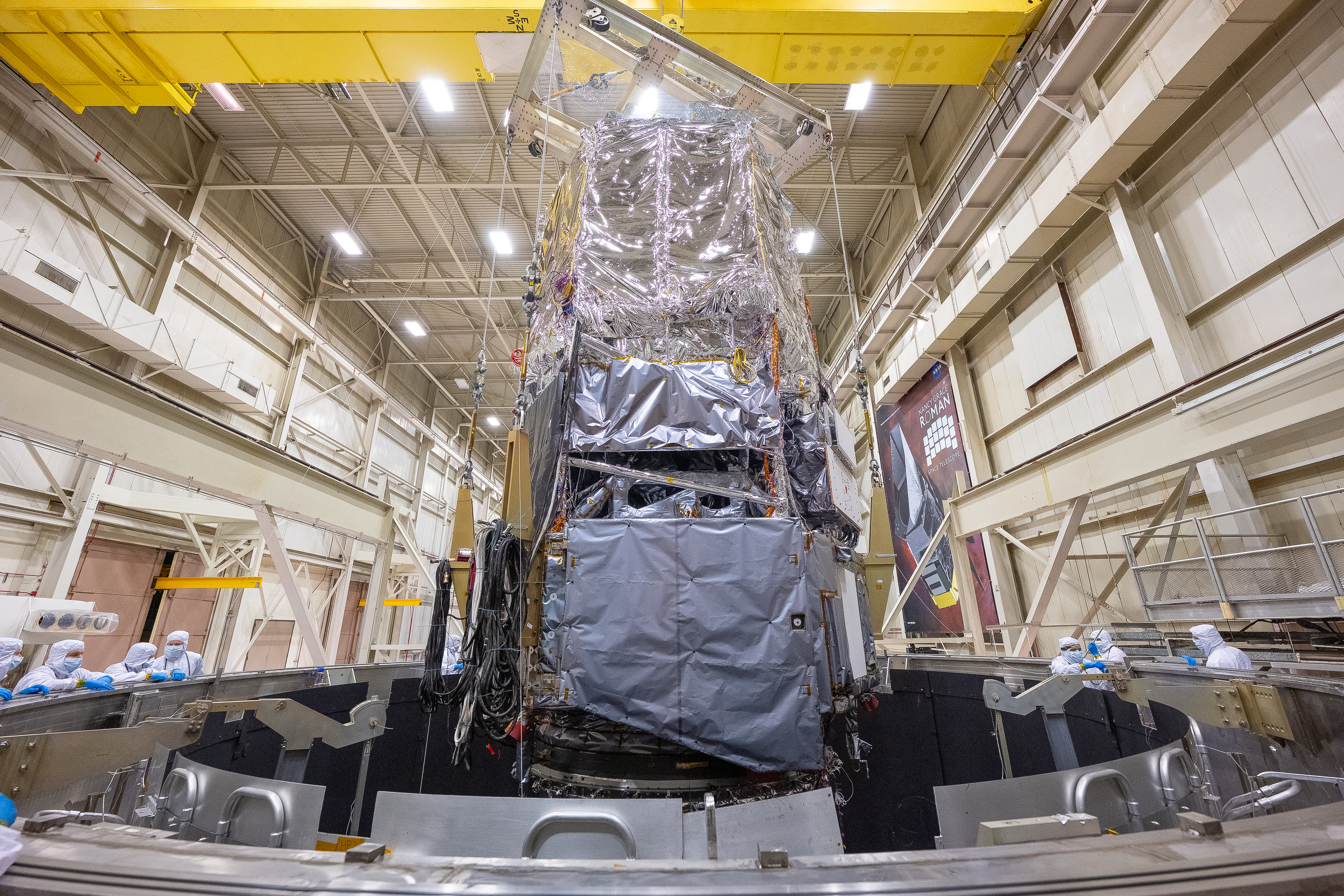
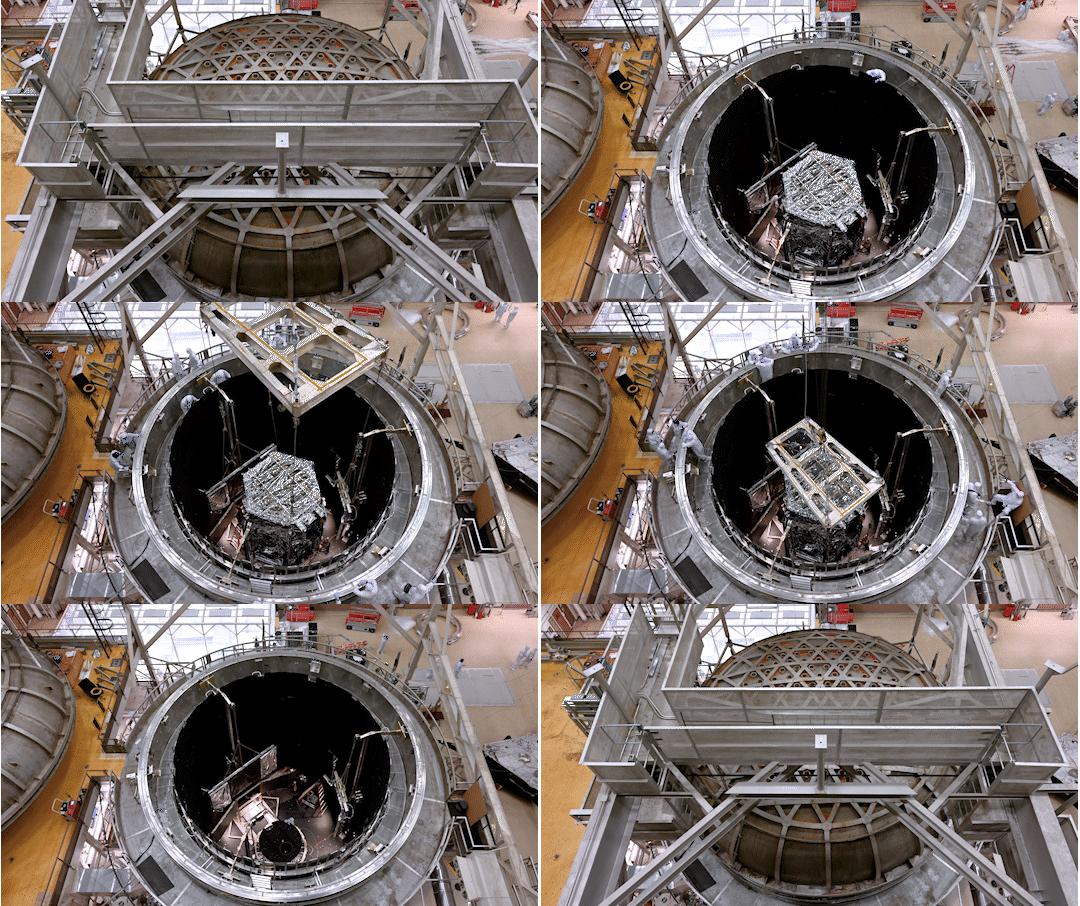
The tank for NASA’s two-stage cooling tests is lowered into a vacuum chamber in Test Stand 300 at NASA’s Marshall Space Flight Center in Huntsville, Alabama.

The tank for NASA’s two-stage cooling tests is lowered into a vacuum chamber in Test Stand 300 at NASA’s Marshall Space Flight Center in Huntsville, Alabama.

Credits:
NASA/Kathy Henkel

In the vacuum of space, where temperatures can plunge to minus 455 degrees Fahrenheit, it might seem like keeping things cold would be easy. But the reality is more complex for preserving ultra-cold fluid propellants – or fuel – that can easily overheat from onboard systems, solar radiation, and spacecraft exhaust. The solution is a method called cryogenic fluid management, a suite of technologies that stores, transfers, and measures super cold fluids for the surface of the Moon, Mars, and future long-duration spaceflight missions.

Super cold, or cryogenic, fluids like liquid hydrogen and liquid oxygen are the most common propellants for space exploration. Despite its chilling environment, space has a “hot” effect on these propellants because of their low boiling points – about minus 424 degrees Fahrenheit for liquid hydrogen and about minus 298 for liquid oxygen – putting them at risk of boiloff.

In a first-of-its-kind demonstration, teams at NASA’s Marshall Space Flight Center in Huntsville, Alabama, are testing an innovative approach to achieve zero boiloff storage of liquid hydrogen using two stages of active cooling which could prevent the loss of valuable propellant.

“Technologies for reducing propellant loss must be implemented for successful long-duration missions to deep space like the Moon and Mars,” said Kathy Henkel, acting manager of NASA’s Cryogenic Fluid Management Portfolio Project, based at NASA Marshall. “Two-stage cooling prevents propellant loss and successfully allows for long-term storage of propellants whether in transit or on the surface of a planetary body.”

The new technique, known as “tube on tank” cooling, integrates two cryocoolers, or cooling devices, to keep propellant cold and thwart multiple heat sources. Helium, chilled to about minus 424 degrees Fahrenheit, circulates through tubes attached to the outer wall of the propellant tank.

Teams installed the propellant tank in a test stand at NASA Marshall in early June, and the 90-day test campaign is scheduled to conclude in September. The tank is wrapped in a multi-layer insulation blanket that includes a thin aluminum heat shield fitted between layers. A second set of tubes, carrying helium at about minus 298 Fahrenheit, is integrated into the shield. This intermediate cooling layer intercepts and rejects incoming heat before it reaches the tank, easing the heat load on the tube-on-tank system.

To prevent dangerous pressure buildup in the propellant tank in current spaceflight systems, boiloff vapors must be vented, resulting in the loss of valuable fuel. Eliminating such propellant losses is crucial to the success of NASA’s most ambitious missions, including future crewed journeys to Mars, which will require storing large amounts of cryogenic propellant in space for months or even years. So far, cryogenic fuels have only been used for missions lasting less than a week.  

“To go to Mars and have a sustainable presence, you need to preserve cryogens for use as rocket or lander return propellant,” Henkel said. “Rockets currently control their propellant through margin, where larger tanks are designed to hold more propellant than what is needed for a mission. Propellant loss isn’t an issue with short trips because the loss is factored into this margin. But, human exploration missions to Mars or longer stays at the Moon will require a different approach because of the very large tanks that would be needed.”

The Cryogenic Fluid Management Portfolio Project is a cross-agency team based at NASA Marshall and the agency’s Glenn Research Center in Cleveland. The cryogenic portfolio’s work is under NASA’s Technology Demonstration Missions Program, part of NASA’s Space Technology Mission Directorate, and is comprised of more than 20 individual technology development activities.

Learn more about cryogenic fluid management:

https://go.nasa.gov/cfm

Powered by WPeMatico

Get The Details…
Lee Mohon

NASA-Derived Textiles are Touring France by Bike

NASA-Derived Textiles are Touring France by Bike

3 min read

Preparations for Next Moonwalk Simulations Underway (and Underwater)

This woman is wearing an Ekoï jersey made from Outlast. The phase-change materials incorporated into the fabric help the wearer stay comfortable in any temperature.
Credit: Ekoï

During the Tour de France, athletes have to maintain a constant speed while bike riding for dozens of miles through cold rains and summer heat. These cyclists need gear that adapts to the different environments they encounter. One company is using a material with NASA origins to ensure these athletes stay comfortable while taking their grand tours.

Phase-change materials use basic properties of matter to maintain a steady temperature. When a substance melts from a solid to a liquid, the material absorbs heat, and when it becomes solid again, it releases that heat. In the 1980s, Triangle Research Corporation received a NASA Small Business Innovation Research award to explore how phase-change materials could be incorporated into textiles to control temperatures in spacesuit gloves. By placing phase-change materials in small capsules woven throughout a textile, these temperature-regulating properties can be tuned to the comfort of the human body. While these textiles weren’t incorporated into any gloves flown on NASA missions, they formed the basis for a new product, sold under the name Outlast.

Astronaut Ann McClain displays a spacesuit glove
Spacesuit gloves have to be both dexterous enough to use tools and insulating enough to protect against the temperature extremes of working in space. Working with industry, NASA explored the use of phase-change materials for these purposes, which was later commercialized under the name Outlast.
Credit: NASA

Outlast has since become one of the most widely distributed temperature-regulating fabrics, found in products such as bedding, loungewear, and office chairs. It has seen especially extensive use in activewear, ranging from jogging clothes to professional sports gear. 

Founded in 2001 and based in Fréjus, France, the company Ekoï makes clothing and accessories for cyclists, particularly those who bike competitively. The company first encountered Outlast at the Performance Days fabric trade fair in Munich, Germany, and was impressed with its capabilities as well as its NASA heritage.

“When you say NASA, it’s always impressive.” said Celine Milan, director of textiles at Ekoï. “At the beginning we were even saying in here in our offices, ‘Wow, this technology was developed by NASA.’ It’s on another level.”

Ekoi’s Outlast line officially launched in July 2022, during that year’s Tour de France. Over the course of that race, the company found it improved cyclists’ performance in the event’s mountain stages, where elevation changes mean wide swings in temperature. It also improved athletes’ aerodynamics, as their jerseys could stay closed in warmer environments, rather than opening them to let in wind.

Today, Ekoï sells several products that incorporate Outlast materials, including jerseys, gloves, and socks. These products are internationally known for their NASA heritage. Whether engineering for astronaut’s comfort in space or competitive athletes, NASA aims for excellence. 

Learn more about NASA’s Spinoff Technologies: https://spinoff.nasa.gov/

Share

Details

Last Updated

Jul 18, 2025

Powered by WPeMatico

Get The Details…
Andrew Wagner

NASA, Oxford Discover Warmer Uranus Than Once Thought

NASA, Oxford Discover Warmer Uranus Than Once Thought

KEY POINTS

  • Jupiter, Saturn, and Neptune each emit more energy than they receive from the Sun, meaning they have comparatively warm interiors.
  • NASA’s Uranus flyby with Voyager 2 in 1986 found the planet colder than expected, which challenged ideas of how planets formed and evolved.
  • However, with advanced computer modeling and a new look at old data, scientists think the planet may actually be warmer than previously expected.

For millennia, astronomers thought Uranus was no more than a distant star. It wasn’t until the late 18th century that Uranus was universally accepted as a planet. To this day, the ringed, blue world subverts scientists’ expectations, but new NASA research helps puzzle out some of the world’s mystique. 

A glowing, bright blue-white circular sphere in the center of the image, surrounded by multiple concentric, thin rings of varying brightness against a black background. The rings appear as gray, white, and light-colored bands encircling the central blue-white disc. The outer ring appears brighter than the inner rings, with subtle variations in thickness and illumination throughout the ring structure.
This zoomed-in image of Uranus, captured by the Near-Infrared Camera on NASA’s James Webb Space Telescope on Feb. 6, 2023, reveals stunning views of Uranus’ rings.
Credits: NASA, ESA, CSA, STScI

Uranus is unlike any other planet in our solar system. It spins on its side, which means each pole directly faces the Sun for a continuous 42-year “summer.” Uranus also rotates in the opposite direction of all planets except Venus. Data from NASA’s Voyager 2 Uranus flyby in 1986 also suggested the planet is unusually cold inside, challenging scientists to reconsider fundamental theories of how planets formed and evolved throughout our solar system.

“Since Voyager 2’s flyby, everybody has said Uranus has no internal heat,” said Amy Simon, a planetary scientist at NASA’s Goddard Space Flight Center in Greenbelt, Maryland. “But it’s been really hard to explain why that is, especially when compared with the other giant planets.”

These Uranus projections came from only one up-close measurement of the planet’s emitted heat made by Voyager 2: “Everything hinges on that one data point,” said Simon. “That is part of the problem.” 

Now, using an advanced computer modeling technique and revisiting decades of data, Simon and a team of scientists have found that Uranus does in fact generate some heat, as they reported on May 16 in the Monthly Notices of the Royal Astronomical Society journal. 

A planet’s internal heat can be calculated by comparing the amount of energy it receives from the Sun to the amount it of energy it releases into space in the form of reflected light and emitted heat. The solar system’s other giant planets — Saturn, Jupiter, and Neptune — emit more heat than they receive, which means the extra heat is coming from inside, much of it left over from the high-energy processes that formed the planets 4.5 billion years ago. The amount of heat a planet exudes could be an indication of its age: the less heat released relative to the heat absorbed from the Sun, the older the planet is.

Uranus stood out from the other planets because it appeared to give off as much heat as it received, implying it had none of its own. This puzzled scientists. Some hypothesized that perhaps the planet is much older than all the others and has cooled off completely. Others proposed that a giant collision — the same one that may have knocked the planet on its side — blasted out all of Uranus’ heat. But none of these hypotheses satisfied scientists, motivating them to solve Uranus’ cold case.

“We thought, ‘Could it really be that there is no internal heat at Uranus?’” said Patrick Irwin, the paper’s lead author and professor of planetary physics at the University of Oxford in England. “We did many calculations to see how much sunshine is reflected by Uranus and we realized that it is actually more reflective than people had estimated.”

The researchers set out to determine Uranus’ full energy budget: how much energy it receives from the Sun compared to how much it reflects as sunlight and how much it emits as heat. To do this, they needed to estimate the total amount of light reflected from the planet at all angles. “You need to see the light that’s scattered off to the sides, not just coming straight back at you,” Simon said.

To get the most accurate estimate of Uranus’ energy budget yet, Oxford researchers developed a computer model that brought together everything known about Uranus’ atmosphere from decades of observations from ground- and space-based telescopes, including NASA’s Hubble Space Telescope and NASA’s Infrared Telescope Facility in Hawaii. The model included information about the planet’s hazes, clouds, and seasonal changes, all of which affect how sunlight is reflected and how heat escapes.

Side-by-side images of a nearly identical circular blue-white sphere against a black background. The sphere in the left image, which has
These side-by-side images of Uranus, taken eight years apart by NASA’s Hubble Space Telescope, show seasonal changes in the planet’s reflectivity. The left image shows the planet seven years after its northern spring equinox when the Sun was shining just above its equator. The second photo, taken six years before the planet’s summer solstice, portrays a bright and large northern polar cap.
Credit: NASA, ESA, STScI, A. Simon (NASA-GSFC), M. H. Wong (UC Berkeley), J. DePasquale (STScI)

The researchers found that Uranus releases about 15% more energy than it receives from the Sun, a figure that is similar to another recent estimate from a separate study funded in part by NASA that was published July 14 in Geophysical Research Letters. These studies suggest Uranus it has its own heat, though still far less than its neighbor Neptune, which emits more than twice the energy it receives.

“Now we have to understand what that remnant amount of heat at Uranus means, as well as get better measurements of it,” Simon said.

Unraveling Uranus’ past is useful not only for mapping the timeline of when solar system planets formed and migrated to their current orbits, but it also helps scientists better understand many of the planets discovered outside the solar system, called exoplanets, a majority of which are the same size as Uranus.

By Emma Friedman
NASA’s Goddard Space Flight Center, Greenbelt, Md.

Share

Details

Last Updated
Jul 17, 2025
Editor
Lonnie Shekhtman
Contact
Lonnie Shekhtman

Powered by WPeMatico

Get The Details…

NASA’s X-59 Quiet Supersonic Aircraft Begins Taxi Tests

NASA’s X-59 Quiet Supersonic Aircraft Begins Taxi Tests

2 min read

Preparations for Next Moonwalk Simulations Underway (and Underwater)

NASA/Jacob Shaw

NASA’s X-59 quiet supersonic research aircraft has officially begun taxi tests, marking the first time this one-of-a-kind experimental aircraft has moved under its own power.

NASA test pilot Nils Larson and the X-59 team, made up of NASA and contractor Lockheed Martin personnel, completed the aircraft’s first low-speed taxi test at U.S. Air Force Plant 42 in Palmdale, California, on July 10, 2025.

The taxiing represents the X-59’s last series of ground tests before first flight. Over the coming weeks, the aircraft will gradually increase its speed, leading up to a high-speed taxi test that will take the aircraft just short of the point where it would take off.

During the low-speed tests, engineers and flight crews monitored how the X-59 handled as it moved across the runway, working to validate critical systems like steering and braking. These checks help ensure the aircraft’s stability and control across a range of conditions, giving pilots and engineers confidence that all systems are functioning as expected.

The X-59 is the centerpiece of NASA’s Quesst mission, which aims to demonstrate quiet supersonic flight by reducing the loud sonic boom to a quieter “thump.” Data gathered from the X-59 will be shared with U.S. and international regulators to inform the establishment of new, data-driven acceptable noise thresholds related to supersonic commercial flight over land.

Powered by WPeMatico

Get The Details…
Dede Dinius