NASA Tests New Heat Source Fuel for Deep Space Exploration

NASA Tests New Heat Source Fuel for Deep Space Exploration

11 people (nine men and two women) are within a laboratory standing alongside each other smiling. The Americium-241 Stirling testbed is in front of them, skewed to the left side of the photo. Behind them is a shelving unit with supplies.
NASA Glenn Research Center’s Thermal Energy Conversion Branch team and the University of Leicester’s Space Nuclear Power team pose for a photo at the center in Cleveland following a successful test in January 2025.
Credit: NASA/Jef Janis

To explore the unknown in deep space, millions of miles away from Earth, it’s crucial for spacecraft to have ample power. NASA’s radioisotope power systems (RPS) are a viable option for these missions and have been used for over 60 years, including for the agency’s Voyager spacecraft and Perseverance Mars rover. These nuclear batteries provide long-term electrical power for spacecraft and science instruments using heat produced by the natural radioactive decay of radioisotopes. Now, NASA is testing a new type of RPS heat source fuel that could become an additional option for future long-duration journeys to extreme environments.

Historically, the radioisotope plutonium-238 (plutonium oxide) has been NASA’s RPS heat source fuel of choice, but americium-241 has been a source of interest for the past two decades in Europe. In January, the Thermal Energy Conversion Branch at NASA’s Glenn Research Center in Cleveland and the University of Leicester, based in the United Kingdom, partnered through an agreement to put this new option to the test.

One method to generate electricity from radioisotope heat sources is the free-piston Stirling convertor. This is a heat engine that converts thermal energy into electrical energy. However, instead of a crankshaft to extract power, pistons float freely within the engine. It could operate for decades continuously without wear, as it does not have piston rings or rotating bearings that will eventually wear out. Thus, a Stirling convertor could generate more energy, allowing more time for exploration in deep space. Researchers from the University of Leicester — who have been leaders in the development of americium RPS and heater units for more than 15 years — and NASA worked to test the capabilities of a Stirling generator testbed powered by two electrically heated americium-241 heat source simulators.

“The concept started as just a design, and we took it all the way to the prototype level: something close to a flight version of the generator,” said Salvatore Oriti, mechanical engineer at Glenn. “The more impressive part is how quickly and inexpensively we got it done, only made possible by a great synergy between the NASA and University of Leicester teams. We were on the same wavelength and shared the same mindset.”

A man wearing a blue shirt leans over a tabletop to make adjustments to a Stirling engine testbed. The mechanism showcases three pillars, about 12 inches in height with a metal cover. Orange winding cords are visible.
Salvatore Oriti, mechanical engineer in the Thermal Energy Conversion Branch at NASA’s Glenn Research Center in Cleveland, adjusts the Stirling testbed in preparation for testing at the center in January 2025.
Credit: NASA/Jef Janis

The university provided the heat source simulators and generator housing. The heat source simulator is the exact size and shape of their real americium-241 heat source, but it uses embedded electric heaters to create an equivalent amount of heat to simulate the decay of americium fuel and therefore drive generator operation. The Stirling Research Lab at Glenn provided the test station, Stirling convertor hardware, and support equipment.

“A particular highlight of this (testbed) design is that it is capable of withstanding a failed Stirling convertor without a loss of electrical power,” said Hannah Sargeant, research fellow at the University of Leicester. “This feature was demonstrated successfully in the test campaign and highlights the robustness and reliability of an Americium-Radioisotope Stirling Generator for potential future spaceflight missions, including long-duration missions that could operate for many decades.”

The test proved the viability of an americium-fueled Stirling RPS, and performance and efficiency targets were successfully met. As for what’s next, the Glenn team is pursuing the next version of the testbed that will be lower mass, higher fidelity, and undergo further environmental testing.

“I was very pleased with how smoothly everything went,” Oriti said of the test results. “Usually in my experience, you don’t accomplish everything you set out to, but we did that and more. We plan to continue that level of success in the future.”

For more information on NASA’s RPS programs, visit:
https://science.nasa.gov/rps

Powered by WPeMatico

Get The Details…
Kelly M. Matter

NASA’s SpaceX Crew-10 to Discuss Station Mission, Upcoming Return

NASA’s SpaceX Crew-10 to Discuss Station Mission, Upcoming Return

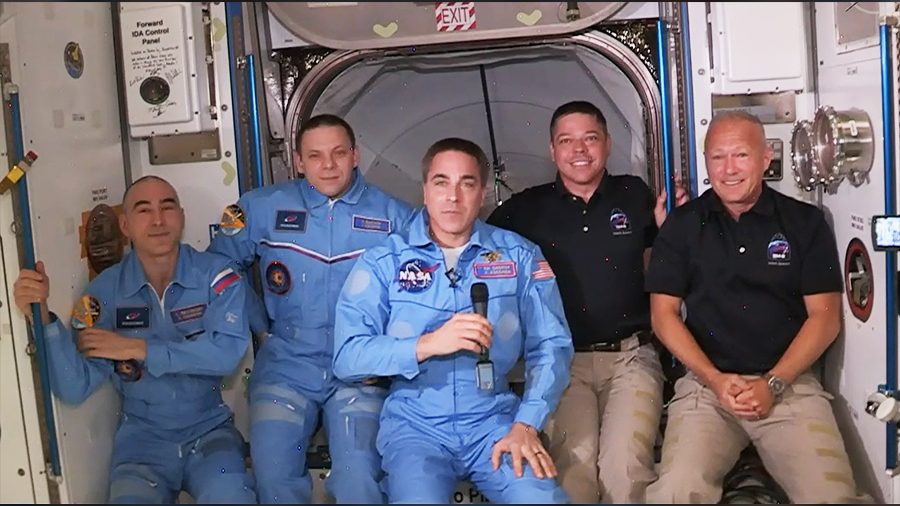
The crew of NASA’s SpaceX Crew-10 mission pictured aboard the International Space Station. From left to right: JAXA (Japan Aerospace Exploration Agency) astronaut Takuya Onishi, NASA astronauts Anne McClain and Nichole Ayers, and Roscosmos cosmonaut Kirill Peskov.
Credit: NASA

Media are invited to hear from NASA’s SpaceX Crew-10 during a news conference beginning at 10:40 a.m. EDT, Friday, July 25, from the International Space Station.

NASA astronauts Anne McClain and Nichole Ayers, JAXA (Japan Aerospace Exploration Agency) astronaut Takuya Onishi, and Roscosmos cosmonaut Kirill Peskov will discuss their upcoming return to Earth on the agency’s YouTube channel.

Media interested in participating must contact the newsroom at NASA’s Johnson Space Center in Houston no later than 5 p.m., Thursday, July 24, at 281-483-5111 or jsccommu@mail.nasa.gov. To ask questions, media must dial into the news conference no later than 10 minutes prior to the start of the call. A copy of NASA’s media accreditation policy is online.

Crew-10 joined the Expedition 72 crew when arriving to the station in March. Throughout Expedition 72 and into Expedition 73, the crew aboard the space station contributed to hundreds of experiments, including testing expanded capabilities of existing hardware for pharmaceutical production in space, investigating how cells sense gravity, which is an important aspect of space biology, and examining the effects of microgravity on protein yields in microalgae, a potential source for life support, fuel, and food on long-duration missions.

The crew will depart the space station after the arrival of Crew-11 and a handover period. Ahead of Crew-10’s return, mission teams will review weather conditions at the splashdown sites off the coast of California prior to departure from station.

The mission is part of NASA’s Commercial Crew Program, which provides reliable access to space, maximizing the use of the station for research and development and supporting future missions beyond low Earth orbit by partnering with private companies to transport astronauts to and from the space station.

Follow updates on the Crew-10 mission at:

https://www.nasa.gov/blogs/crew-10

-end-

Claire O’Shea
Headquarters, Washington
202-358-1100
claire.a.o’shea@nasa.gov

Courtney Beasley
Johnson Space Center, Houston
281-483-5111
courtney.m.beasley@nasa.gov

Powered by WPeMatico

Get The Details…
Lauren E. Low

NASA Goddard Center Director Makenzie Lystrup Set to Depart

NASA Goddard Center Director Makenzie Lystrup Set to Depart

Portrait of Dr. Makenzie Lystrup, director of NASA’s Goddard Space Flight Center in Greenbelt, Maryland.
Credit: NASA

On Monday, NASA announced Dr. Makenzie Lystrup, director of NASA’s Goddard Space Flight Center in Greenbelt, Maryland, is set to leave the agency on Friday, Aug. 1.

As center director of Goddard, a role she has held since April 2023, Lystrup also was responsible for guiding the direction and management of multiple other NASA field installations including Wallops Flight Facility in Virginia, Katherine Johnson Independent Verification & Validation Facility in West Virginia, the White Sands Complex in New Mexico, and the Columbia Scientific Balloon Facility in Texas.

“Having served in a variety of science and aerospace civilian and government roles in her career, Makenzie has led development of, and/or contributed to a variety of NASA’s priority science missions including successful operations of our James Webb Space Telescope and Imaging X-Ray Polarimetry Explorer, as well as development of the agency’s Roman Space Telescope, and more,” said Vanessa Wyche, acting NASA associate administrator. “We’re grateful to Makenzie for her leadership at NASA Goddard for more than two years, including her work to inspire a Golden Age of explorers, scientists, and engineers.”

Throughout her time at NASA, Lystrup led Goddard’s workforce, which consists of more than 8,000 civil servants and contractors. Before joining the agency, Lystrup served as senior director for Ball’s Civil Space Advanced Systems and Business Development, where she managed new business activities for NASA, National Oceanic and Atmospheric Administration (NOAA), and other civilian U.S. government agencies as well as for academia and other science organizations. In addition, she served in the company’s Strategic Operations organization, based in Washington where she led Ball’s space sciences portfolio.

Prior to joining Ball, Lystrup worked as an American Institute of Physics – Acoustical Society of American Congressional Fellow from 2011 to 2012 where she managed a portfolio including technology, national defense, nuclear energy, and nuclear nonproliferation.

Lystrup also has served on boards and committees for several organizations to include the University Corporation for Atmospheric Research, International Society for Optics and Photonic, the University of Colorado, and the American Astronomical Society. She was named an American Association for the Advancement of Science fellow in 2019 for her distinguished record in the fields of planetary science and infrared astronomy, science policy and advocacy, and aerospace leadership. Lystrup also served as an AmeriCorps volunteer focusing on STEM education.

Lystrup holds a bachelor’s in physics from Portland State University and attended graduate school at University College London earning her doctorate in astrophysics. She was a National Science Foundation Astronomy & Astrophysics Postdoctoral Research Fellow spending time at the Laboratory for Atmospheric & Space Physics in Boulder, Colorado, and University of Liege in Belgium. As a planetary scientist and astronomer, Lystrup’s scientific work has been in using ground- and space-based astronomical observatories to understand the interactions and dynamics of planetary atmospheres and magnetospheres – the relationships between planets and their surrounding space environments.

Following Lystrup’s departure, NASA’s Cynthia Simmons will serve as acting center director. Simmons is the current deputy center director.

For more information about NASA’s work, visit:

https://www.nasa.gov

-end-

Cheryl Warner / Kathryn Hambleton
Headquarters, Washington
202-358-1600
cheryl.m.warner@nasa.gov / kathryn.hambleton@nasa.gov

Katy Mersmann
Goddard Space Flight Center, Greenbelt, Md.
301-377-1724
katy.mersmann@nasa.gov

Share

Details

Last Updated

Jul 21, 2025

Editor
Jessica Taveau

Powered by WPeMatico

Get The Details…
Jessica Taveau

NASA Shares How to Save Camera 370-Million-Miles Away Near Jupiter

NASA Shares How to Save Camera 370-Million-Miles Away Near Jupiter

5 min read

Preparations for Next Moonwalk Simulations Underway (and Underwater)

The north polar region of Jupiter’s volcanic moon Io
The north polar region of Jupiter’s volcanic moon Io was captured by the JunoCam imager aboard NASA’s Juno during the spacecraft’s 57th close pass of the gas giant on Dec. 30, 2023. A technique called annealing was used to help repair radiation damage to the camera in time to capture this image.
Image data: NASA/JPL-Caltech/SwRI/MSSS Image processing by Gerald Eichstädt

An experimental technique rescued a camera aboard the agency’s Juno spacecraft, offering lessons that will benefit other space systems that experience high radiation.

The mission team of NASA’s Jupiter-orbiting Juno spacecraft executed a deep-space move in December 2023 to repair its JunoCam imager to capture photos of the Jovian moon Io. Results from the long-distance save were presented during a technical session on July 16 at the Institute of Electrical and Electronics Engineers Nuclear & Space Radiation Effects Conference in Nashville.

JunoCam is a color, visible-light camera. The optical unit for the camera is located outside a titanium-walled radiation vault, which protects sensitive electronic components for many of Juno’s engineering and science instruments.

This is a challenging location because Juno’s travels carry it through the most intense planetary radiation fields in the solar system. While mission designers were confident JunoCam could operate through the first eight orbits of Jupiter, no one knew how long the instrument would last after that.

Throughout Juno’s first 34 orbits (its prime mission), JunoCam operated normally, returning images the team routinely incorporated into the mission’s science papers. Then, during its 47th orbit, the imager began showing hints of radiation damage. By orbit 56, nearly all the images were corrupted.

The image, which captures one of the circumpolar cyclones on Jupiter’s north pole, was taken Nov. 22, 2023
The graininess and horizontal lines seen in this JunoCam image show evidence that the camera aboard NASA’s Juno mission suffered radiation damage. The image, which captures one of the circumpolar cyclones on Jupiter’s north pole, was taken Nov. 22, 2023.
NASA/JPL-Caltech/SwRI/MSSS

Long Distance Microscopic Repair

While the team knew the issue may be tied to radiation, pinpointing what, specifically, was damaged within JunoCam was difficult from hundreds of millions of miles away. Clues pointed to a damaged voltage regulator that is vital to JunoCam’s power supply. With few options for recovery, the team turned to a process called annealing, where a material is heated for a specified period before slowly cooling. Although the process is not well understood, the idea is that the heating can reduce defects in the material.

“We knew annealing can sometimes alter a material like silicon at a microscopic level but didn’t know if this would fix the damage,” said JunoCam imaging engineer Jacob Schaffner of Malin Space Science Systems in San Diego, which designed and developed JunoCam and is part of the team that operates it. “We commanded JunoCam’s one heater to raise the camera’s temperature to 77 degrees Fahrenheit — much warmer than typical for JunoCam — and waited with bated breath to see the results.”

Soon after the annealing process finished, JunoCam began cranking out crisp images for the next several orbits. But Juno was flying deeper and deeper into the heart of Jupiter’s radiation fields with each pass. By orbit 55, the imagery had again begun showing problems. 

“After orbit 55, our images were full of streaks and noise,” said JunoCam instrument lead Michael Ravine of Malin Space Science Systems. “We tried different schemes for processing the images to improve the quality, but nothing worked. With the close encounter of Io bearing down on us in a few weeks, it was Hail Mary time: The only thing left we hadn’t tried was to crank JunoCam’s heater all the way up and see if more extreme annealing would save us.”

Test images sent back to Earth during the annealing showed little improvement the first week. Then, with the close approach of Io only days away, the images began to improve dramatically. By the time Juno came within 930 miles (1,500 kilometers) of the volcanic moon’s surface on Dec. 30, 2023, the images were almost as good as the day the camera launched, capturing detailed views of Io’s north polar region that revealed mountain blocks covered in sulfur dioxide frosts rising sharply from the plains and previously uncharted volcanos with extensive flow fields of lava.

Testing Limits

To date, the solar-powered spacecraft has orbited Jupiter 74 times. Recently, the image noise returned during Juno’s 74th orbit.

Since first experimenting with JunoCam, the Juno team has applied derivations of this annealing technique on several Juno instruments and engineering subsystems.

“Juno is teaching us how to create and maintain spacecraft tolerant to radiation, providing insights that will benefit satellites in orbit around Earth,” said Scott Bolton, Juno’s principal investigator from the Southwest Research Institute in San Antonio. “I expect the lessons learned from Juno will be applicable to both defense and commercial satellites as well as other NASA missions.”

More About Juno

NASA’s Jet Propulsion Laboratory, a division of Caltech in Pasadena, California, manages the Juno mission for the principal investigator, Scott Bolton, of the Southwest Research Institute in San Antonio. Juno is part of NASA’s New Frontiers Program, which is managed at NASA’s Marshall Space Flight Center in Huntsville, Alabama, for the agency’s Science Mission Directorate in Washington. The Italian Space Agency, Agenzia Spaziale Italiana, funded the Jovian InfraRed Auroral Mapper. Lockheed Martin Space in Denver built and operates the spacecraft. Various other institutions around the U.S. provided several of the other scientific instruments on Juno.

More information about Juno is at:

https://www.nasa.gov/juno

News Media Contact

DC Agle
Jet Propulsion Laboratory, Pasadena, Calif.
818-393-9011
agle@jpl.nasa.gov

Karen Fox / Molly Wasser
NASA Headquarters, Washington
202-358-1600
karen.c.fox@nasa.gov / molly.l.wasser@nasa.gov

Deb Schmid
Southwest Research Institute, San Antonio
210-522-2254
dschmid@swri.org

2025-091

Share

Details

Last Updated

Jul 21, 2025

Powered by WPeMatico

Get The Details…
Anthony Greicius

GLOBE-Trotting Science Lands in Chesapeake with NASA eClips

GLOBE-Trotting Science Lands in Chesapeake with NASA eClips

2 min read

GLOBE-Trotting Science Lands in Chesapeake with NASA eClips

On June 16-17, 2025, 50 students at Camp Young in Chesapeake, Virginia traded their usual summer routines for microscopes. The NASA eClips team from the National Institute of Aerospace Center for Integrative STEM Education (NIA-CISE) taught two engaging lessons focused on macroinvertebrates and plankton, with a surprising star of the show – mosquitoes!

Camp Young, a Title I camp program serving students from Norfolk Public Schools, provides year-round, environmental science-based learning. The NASA eClips’ visit reinforced their mission to help students explore their environment on the Elizabeth River while seeing its place in the Earth System.

The lessons, designed for students in grades 3 through 8, were inspired by NASA’s GLOBE (Global Learning and Observations to Benefit the Environment) program, which encourages people around the world to collect and share environmental data as ‘citizen scientists’. This is where mosquitos stole the show! The lesson focuses on how these tiny insects can serve as indicators of climate and habitat change. By identifying mosquito larvae and understanding their breeding environments, students contributed to the bigger picture of global health and environmental monitoring, right from their own backyard.

During this experience, Camp Young’s stunning waterfront on the Elizabeth River was turned into a living laboratory. With phytoplankton nets, petri dishes, and sample jars in hand, campers ventured into the field to collect real environmental data, bringing their findings back to a cabin-turned-classroom to analyze them with scientific tools, including microscopes provided by the NASA eClips team.

Rather than just reading about ecosystems and the kinds of scientific questions that arise within them, students got to experience them firsthand and experience real science in the field. “It’s one thing to talk about microscopic marine organisms,” one instructor noted, “but it’s another thing entirely when students can actually see them swimming in a droplet from the river.”

The NASA eClips project provides educators with standards-based videos, activities, and lessons to increase STEM literacy through the lens of NASA. It is supported by NASA under cooperative agreement award number NNX16AB91A and is part of NASA’s Science Activation Portfolio. Learn more about how Science Activation connects NASA science experts, real content, and experiences with community leaders to do science in ways that activate minds and promote deeper understanding of our world and beyond: https://science.nasa.gov/learn

A student in jeans and a dark hoodie collected a water sample in a white spoon while kneeling on a teal platform.
A student collects a stagnant water sample, looking for mosquito eggs and larvae.

Share

Details

Last Updated
Jul 21, 2025
Editor
NASA Science Editorial Team

Powered by WPeMatico

Get The Details…