NASA’s Educational CubeSats: Small Satellites, Big Impact

NASA’s Educational CubeSats: Small Satellites, Big Impact
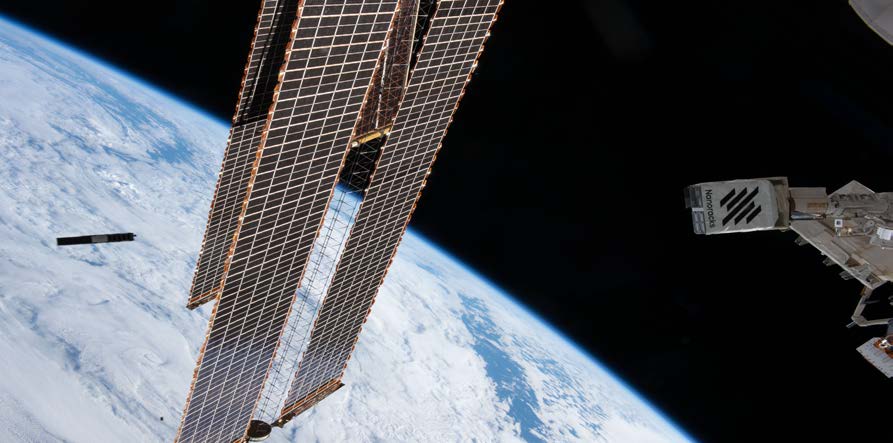
The CubeSats from NASA’s ELaNa 38 mission were deployed from the International Space Station on Jan. 26, 2022. Seen here is the deployment of The Aerospace Corporation’s Daily Atmospheric and Ionospheric Limb Imager (DAILI).
NASA

Despite their small size, the satellites launching through NASA’s CubeSat Launch Initiative (CSLI) missions have a big impact, creating access to space for many who might not otherwise have the opportunity. One recent mission tells the story of four teams of researchers and engineers who conceived, built, launched, and collected data from these shoebox-sized satellites, helping them answer a host of questions about our planet and the universe.

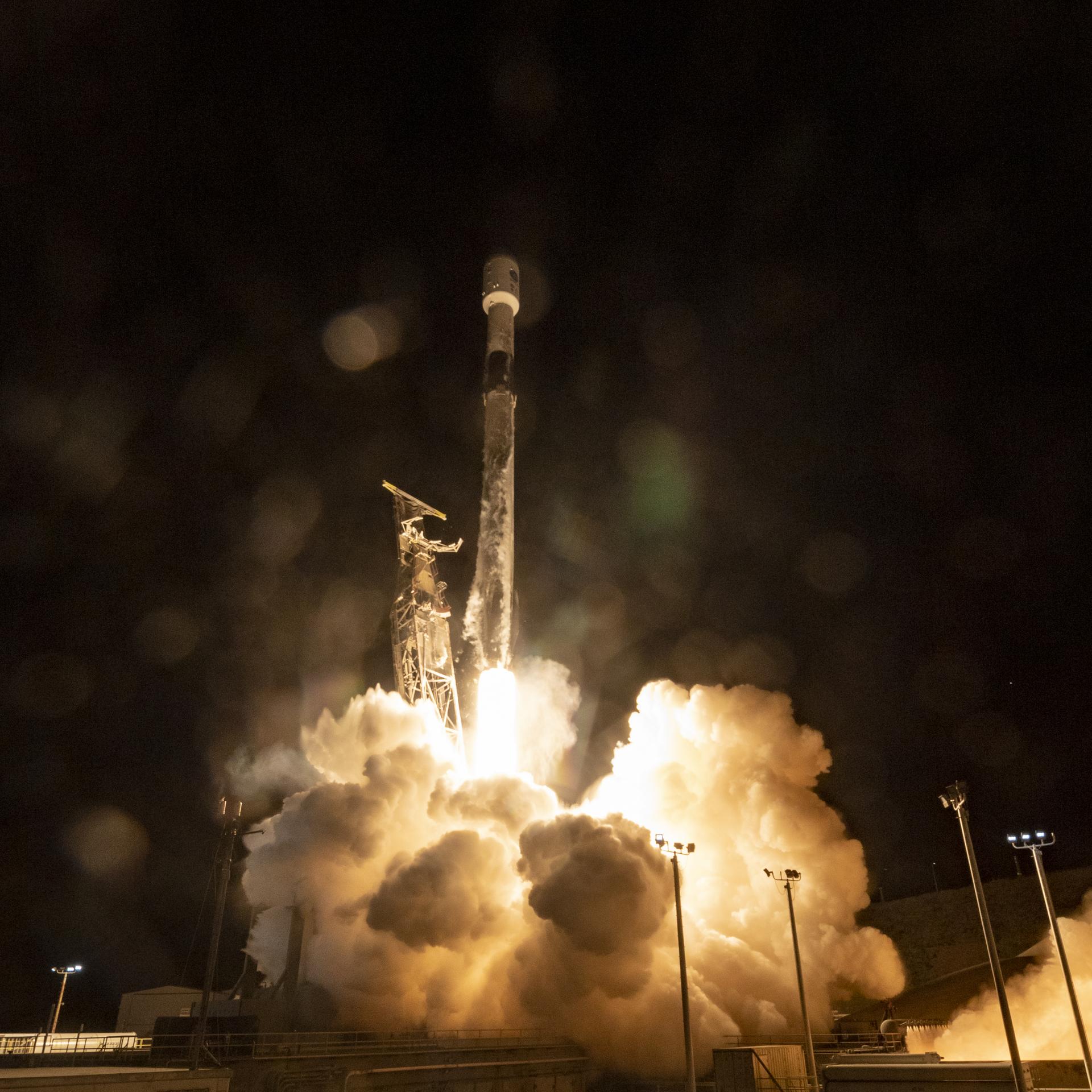
The teams’ CubeSats launched as part of the ELaNa 38 (Educational Launch of Nanosatellites) mission, selected by CSLI and assigned to the mission by NASA’s Launch Services Program. A little more than a month after launching aboard SpaceX’s 24th commercial resupply services mission from NASA’s Kennedy Space Center in Florida, the CubeSats were deployed from the International Space Station on Jan. 26, 2022.

Being selected by CSLI was an inspirational once-in-a-lifetime opportunity for more than 100 undergraduate students who worked on ELaNA 38’s Get Away Special Passive Attitude Control Satellite (GASPACS) CubeSat.

“None of us had ever worked on a project like this, much less built a satellite on our own,” said Jack Danos, team coordinator of Utah State University’s Get Away Special, or GAS Team. “When we first heard the audio beacon from our satellite in orbit, we all cheered.”

It took the GAS Team nearly a decade to develop and build GASPACS – the team’s first CubeSat – with many team members graduating in the process. But the team’s focus remained the same – to deploy and photograph a meter-long inflatable boom, known as the AeroBoom, from its CubeSat in Low Earth orbit.
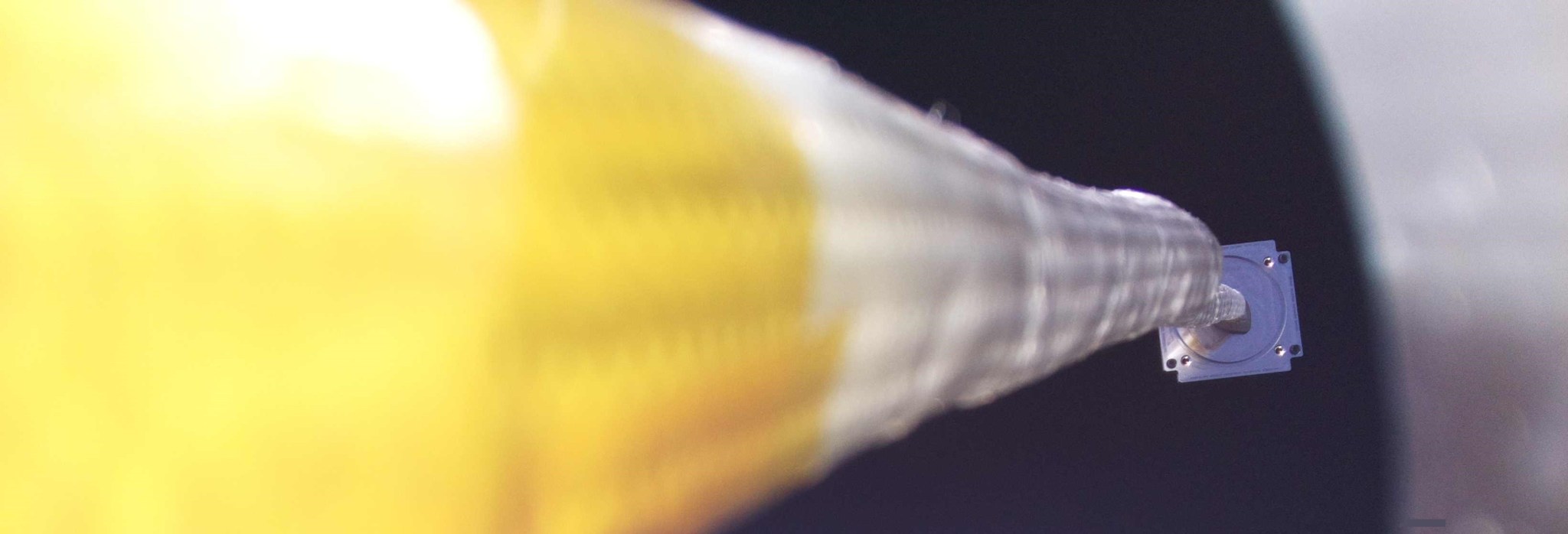
A photograph taken by the GASPACS CubeSat shows the AeroBoom fully deployed.
Utah State University

“When we saw that first photo come through, we were blown away, speechless,” Danos said. “This had been a decade of work and learning everything required for a real satellite mission – a lot of us got skills that we never could have gotten in a normal school environment.”

The team of college students who built Georgia Tech’s Tethering and Ranging mission (TARGIT) developed it to test an imaging LiDAR system capable of detailed topographic mapping from orbit. TARGIT’s students machined the CubeSat components themselves and integrated several new technologies into the final flight system.

“CSLI was a great window into how NASA works and the formal processes to ensure the hardware that gets launched meets requirements,” said Dr. Brian Gunter, principal investigator on the Georgia Institute of Technology TARGIT CubeSat. “Our spacecraft would not have made it to orbit without this program.”
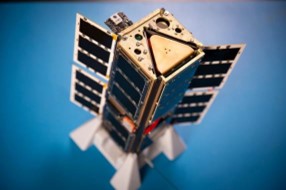
Georgia Tech’s Tethering and Ranging CubeSat engaged over 100 students at the university and overcame obstacles presented by the global pandemic to get to launch.
Georgia Institute of Technology

Prior to launch, the Georgia Tech team worked closely with NASA’s CSLI team, gained considerable industry experience, and delivered a flight-ready spacecraft, even after COVID forced a full shutdown of activity for an extended period, during which many key team members graduated.

“Just getting the spacecraft ready and delivered was the greatest achievement for the group and was a nice example of teamwork and resiliency from the students,” Gunter said.

Not all ELaNa 38’s CubeSats were student-built. With the goal of studying processes affecting Earth’s upper atmosphere and ionosphere, The Aerospace Corporation’s Daily Atmospheric and Ionospheric Limb Imager (DAILI) CubeSat employed an ambitious forward sunshade that was key to DAILI’s ability to examine atmospheric variations during daytime. As perhaps the most sophisticated sunshade ever flown on a CubeSat, it reduced intense scattered light from the Sun, the Earth’s surface, and low-altitude clouds by a factor of almost a trillion.
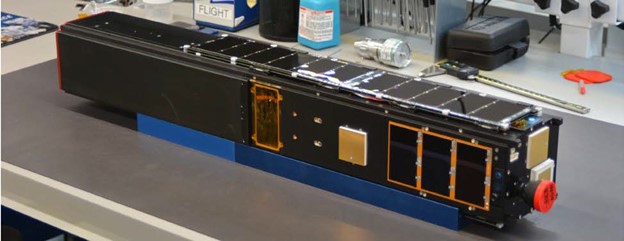
DAILI Cubesat.
The Aerospace Corporation’s DAILI featured an ambitious sunshade that helped the CubeSat examine minute variations in the atmosphere.
The Aerospace Corporation

“Not only did we have a shade that occupied over half of the space we had on the CubeSat – we also needed room for the optics, the detector, and for the CubeSat bus,” said Dr. James Hecht, senior scientist at Ionospheric and Atmospheric Sciences at Aerospace and DAILI principal investigator. “The effectiveness of the shade depended greatly on the length of the shade to the angular field of view of DAILI. It was a challenge, but it worked.”

Rounding out the ELaNa 38 flight was the Passive Thermal Coating Observatory Operating in Low Earth Orbit (PATCOOL) satellite, sponsored by NASA’s Launch Services Program and developed by the Advanced Autonomous Multiple Spacecraft Laboratory at the University of Florida. PATCOOL tested a highly reflective surface coating called “solar white” to measure its efficiency as way to passively cool components in space.
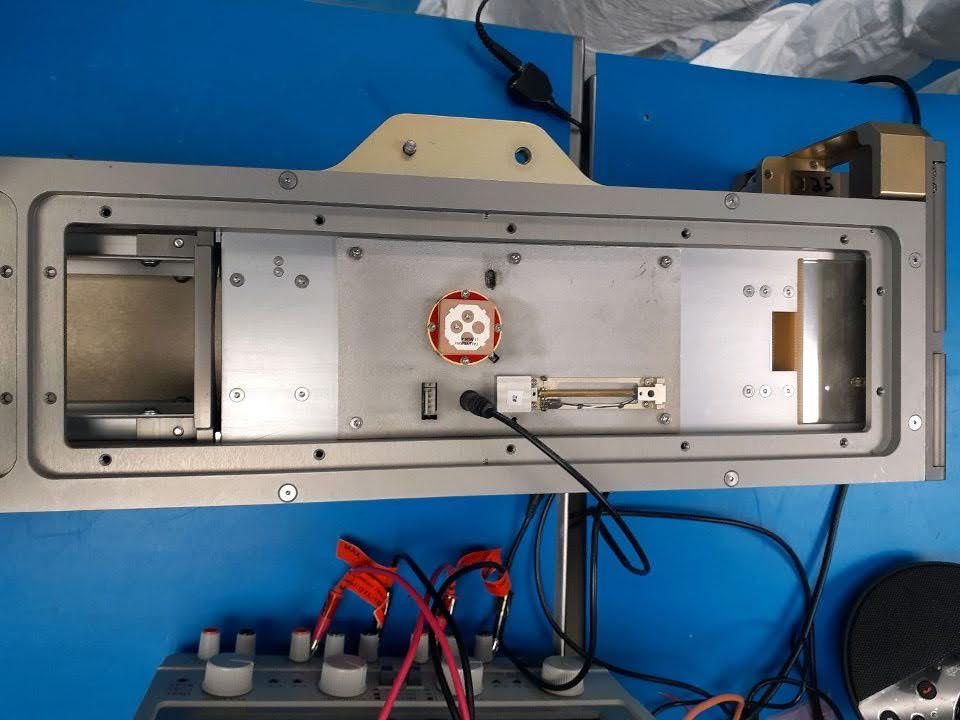
PATCOOL CubeSat.
PATCOOL during its development at the Advanced Autonomous Multiple Spacecraft Laboratory at the University of Florida
University of Florida

Through ELaNa 38’s four small satellites, hundreds of individuals – many developing and launching spacecraft for the first time – achieved access to space. For NASA, increasing access to space and making data and innovations accessible to all also serves to reinforce the future of the country’s space industry.

“This is an opportunity that you just can’t get anywhere else – the ability to send something into space, get the ride paid for, and form relationships within the industry,” Danos said. “There are so many members of the team that went into the space industry after the mission – a mission we literally couldn’t have done without NASA’s CSLI.”

Powered by WPeMatico

Get The Details…
Jason Costa
NASA Delivers Inclusion Message to Annual Bayou Classic Participants

NASA Delivers Inclusion Message to Annual Bayou Classic Participants

1 min read

Preparations for Next Moonwalk Simulations Underway (and Underwater)

Maury Vander at Bayou Classic
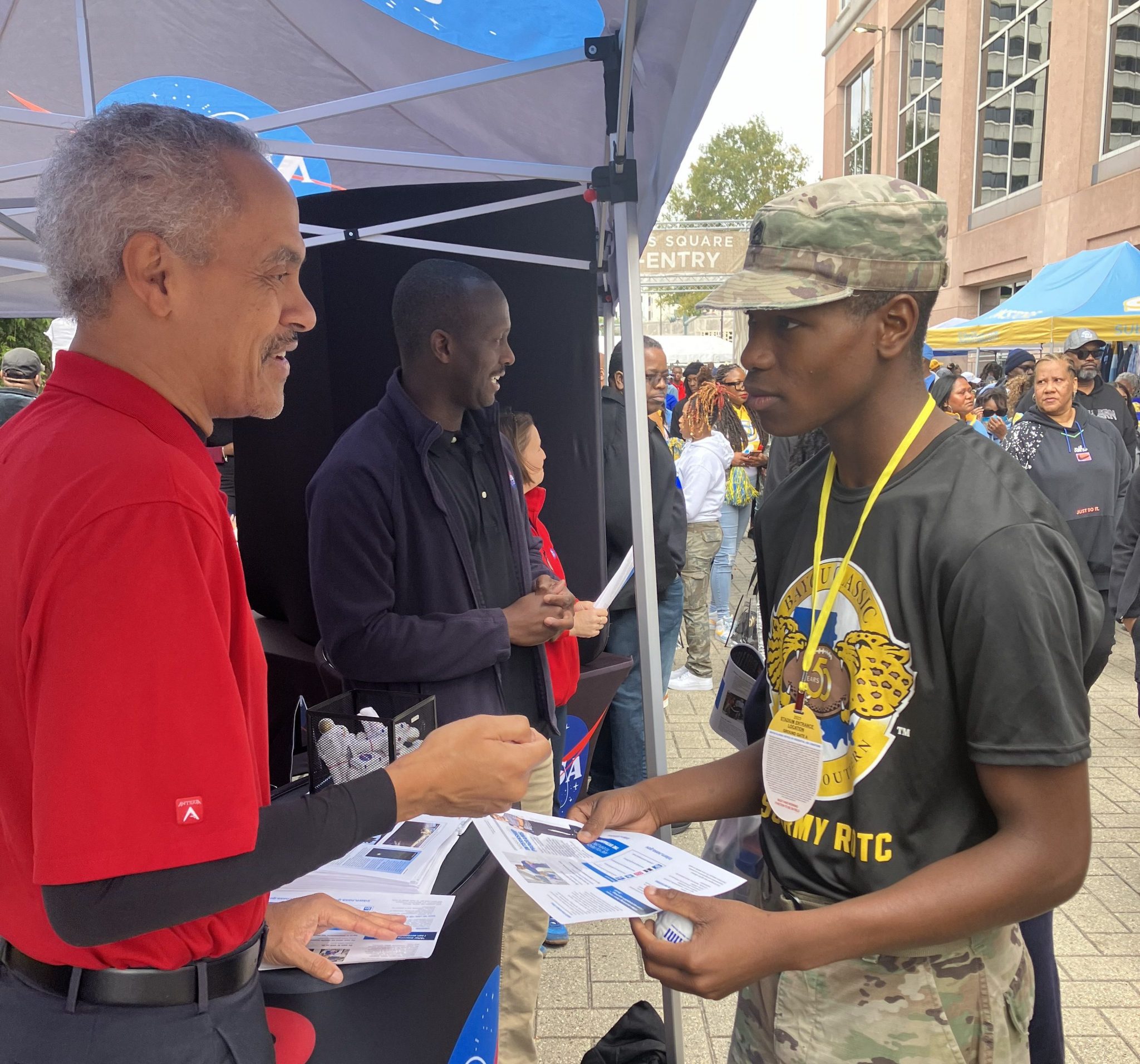
NASA Stennis Test Operations Chief Maury Vander speaks with a young visitor to the NASA booth during the 2023 Bayou Classic Fan Fest event in New Orleans on Nov. 25.
NASA / C. Lacy Thompson

NASA was on full display during the 50th Annual Bayou Classic Fan Fest activity in New Orleans on Nov. 25, hosting an informational booth and interacting with event participants to deliver a clear message – There’s Space for Everybody at NASA.

In addition to event signage and messaging, NASA representatives were out in force during the morning-long Fan Fest event, providing attendees with memorabilia and sharing information about student internship and employment opportunities with the agency.

The annual Bayou Classic event attracts tens of thousands of visitors each year and features several days of activities, including a Battle of the Bands showcase Nov. 24 and a nationally broadcast football game Nov. 25, all involving two Historically Black Colleges and Universities in Louisiana – Southern University in Baton Rouge and Grambling State University in Grambling. Almost 65,000 people attended this year’s game.

The NASA outreach and engagement effort was part of an ongoing agency-wide commitment to advance equity and reach deeper into underrepresented and underserved segments of society and was in support of the Biden-Harris Administration’s efforts to advance racial equity in the federal government.

Share

Details

Last Updated

Nov 30, 2023

Editor
NASA Stennis Communications
Contact
C. Lacy Thompson
Location
Stennis Space Center

Related Terms

Powered by WPeMatico

Get The Details…
LaToya Dean

NASA Conducts Annual Moon to Mars Architecture Concept Review

NASA Conducts Annual Moon to Mars Architecture Concept Review

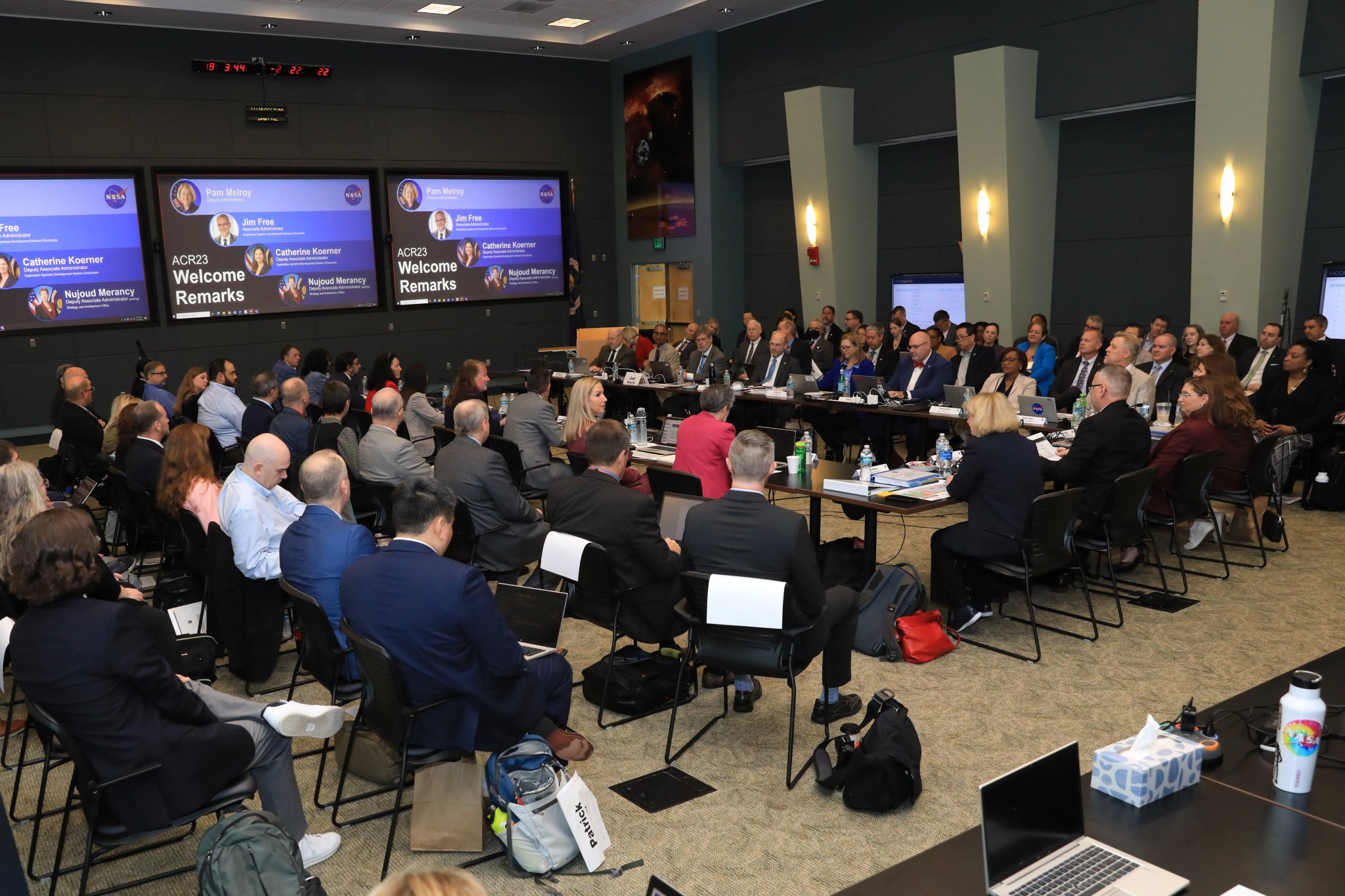
Architecture Concept Review attendees listen to welcome remarks from NASA leadership on Nov. 14, 2023, at NASA’s Kennedy Space Center in Florida. Attendees included representatives from all of NASA’s centers, leaders from all of NASA’s mission directorates, various technical authorities, and other stakeholders across the agency.
NASA/Kim Shifflett

NASA hosted its second annual Architecture Concept Review in mid-November, bringing together leaders from across the agency to discuss progress on and updates to NASA’s Moon to Mars architecture since NASA released outcomes from its first such review in April.

As NASA builds a blueprint for human exploration throughout the solar system for the benefit of humanity, the agency has established the internal Architecture Concept Review process to help align NASA’s Moon to Mars exploration strategy and codify the supporting architecture through robust analysis. Through this evolutionary process, NASA continuously updates its roadmap for crewed exploration, setting humanity on a path to the Moon, Mars, and beyond.

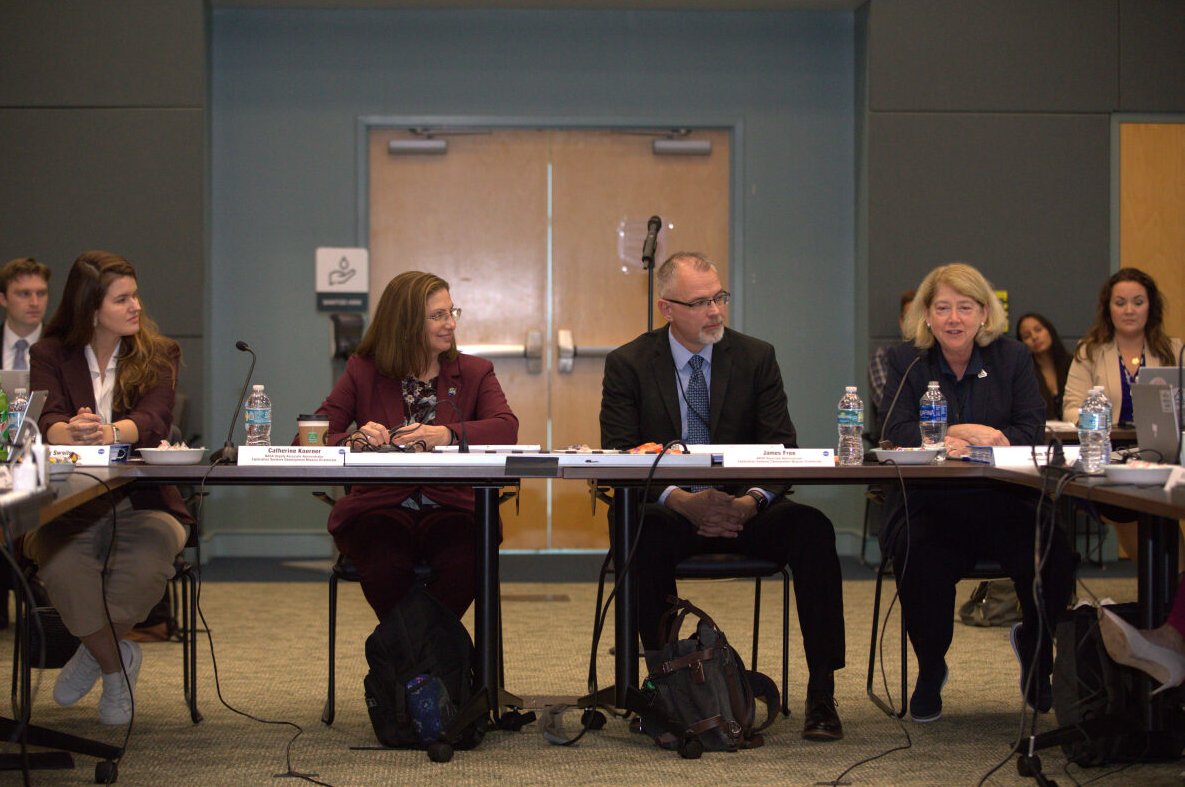
NASA leadership gives opening remarks at the review. From left to right: Casey Swails, deputy associate administrator; Catherine Koerner, deputy associate administrator for the Exploration Systems Development Mission Directorate; Jim Free, associate administrator for the Exploration Systems Development Mission Directorate; and Pam Melroy, deputy administrator.
NASA/Kim Shifflett

“Our yearly strategic analysis cycle informs architecture decisions by identifying technology gaps, performing trade studies, and soliciting feedback from industry, academia, and the international community,” said Catherine Koerner, deputy associate administrator for NASA’s Exploration Systems Development Mission Directorate. “This year’s review focused on identifying the foundational decisions needed for a crewed mission to Mars and adding more detail to how we break down our objectives for long-term lunar exploration into specific architectural elements.”

During the review, NASA also began to define potentially viable and affordable opportunities for new programs and projects that close capability gaps.

NASA will share the results of this year’s Architecture Concept Review cycle early next year. This will include an update to the agency’s Architecture Definition Document and associated white papers, which provide additional detail on results from this year’s strategic analysis cycle.

Both the updated Architecture Definition Document and white papers will be made available on NASA’s Moon to Mars architecture webpages.

Powered by WPeMatico

Get The Details…
Danny Baird

Google’s ‘A Passage of Water’ Brings NASA’s Water Data to Life

Google’s ‘A Passage of Water’ Brings NASA’s Water Data to Life

4 min read

Google’s ‘A Passage of Water’ Brings NASA’s Water Data to Life

As part of the long-standing partnership between NASA and Google, NASA worked with Google Arts & Culture and artist Yiyun Kang to create an interactive digital experience around global freshwater resources titled “A Passage of Water.” This immersive experience leverages data from the Gravity Recovery and Climate Experiment (GRACE) satellites and new high-resolution data from the Surface Water and Ocean Topography (SWOT) mission to illustrate how climate change is impacting Earth’s water cycle.

A digital version of “A Passage of Water” will be released online on Thursday, Nov. 30, ahead of the beginning of the United Nations’ Climate Change Conference of Parties (COP 28) in Dubai, United Arab Emirates. Google also will host a physical installation of the visualization project in the Blue Zone at COP 28.

“NASA is the U.S. space agency that provides end-to-end research about our home planet, and it is our job to inform the world about what we learn,” said Kate Calvin, NASA’s chief scientist and senior climate advisor in Washington. “Highlighting our Earth science data in the installation of ‘A Passage of Water’ is a unique way to share information, in a digestible way, around the important connection between climate change and the Earth’s water cycle.”

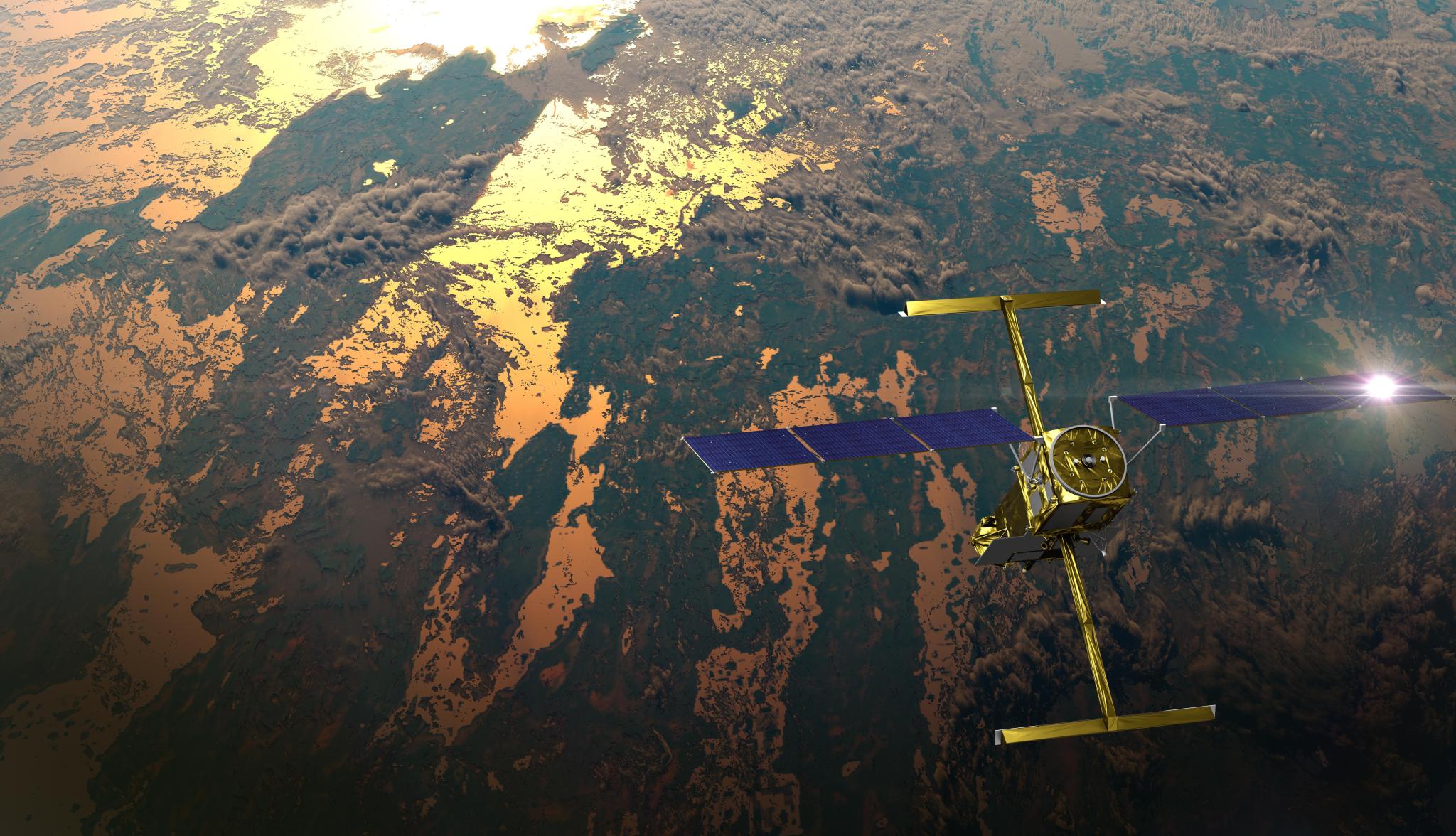
The international Surface Water and Ocean Topography (SWOT) satellite, as shown in this illustration, is the first global mission surveying Earth’s surface water. SWOT’s high-resolution data helps scientists measure how Earth’s bodies of water change overtime.
Credit: CNES.

For six decades, NASA has been collecting data on Earth’s land, water, air, and climate. This data is used to inform decision-makers on ways to mitigate, adapt and respond to climate change. All of NASA’s Earth science data is available for scientists and the public to access in a variety of ways.

“NASA studies our home planet and its interconnected systems more than any other planet in our universe,” said Karen St. Germain, director of NASA’s Earth Science Division. “’A Passage of Water’ provides an opportunity to highlight the public availability of SWOT data and other NASA Earth science data to tell meaningful stories, improve awareness, and help everyday people who have to make real decisions in their homes, businesses, and communities.”

A collaboration between NASA and the French space agency CNES (Centre National d’Études Spatiales), SWOT is measuring the height of nearly all water on Earth’s surface, providing one of the most detailed, comprehensive views yet of the planet’s freshwater bodies. SWOT provides insights into how the ocean influences climate change and how a warming world affects lakes, rivers, and reservoirs.

NASA studies our home planet and its interconnected systems more than any other planet in our universe.

Karen St. Germain

Karen St. Germain

Director, NASA’s Earth Science Division

“The detail that SWOT is providing on the world’s oceans and fresh water is game-changing. We’re only just getting started with respect to data from this satellite and I’m looking forward to seeing where the information takes us,” said Ben Hamlington, a research scientist at NASA’s Jet Propulsion Laboratory in Southern California.

The Google project also uses data from the GRACE and GRACE Follow-On missions –the former is a joint effort between NASA and the German Aerospace Center (DLR), while the latter is a collaboration between NASA and the German Research Centre for Geosciences (GFZ). GRACE tracked localized changes to Earth’s mass distribution, caused by phenomena including the movement of water across the planet from 2002 to 2017. GRACE-FO came online in 2018 and is currently in operation.

As with GRACE before it, the GRACE-FO mission monitors changes in ice sheets and glaciers, near-surface and underground water storage, the amount of water in large lakes and rivers, as well as changes in sea level and ocean currents, providing an integrated view of how Earth’s water cycle and energy balance are evolving.

“A Passage of Water” is the most recent digital experience created under NASA’s Space Act Agreement with Google, with resulting content to be made widely available to the public free of charge on Google’s web platforms. This collaboration is part of a six-project agreement series that aims to share NASA’s content with audiences in new and engaging ways.

Learn more about SWOT, GRACE, GRACE-FO, and NASA’s Earth Science missions at:

https://science.nasa.gov/earth

To learn more about NASA Partnerships, visit:

https://www.nasa.gov/partnerships

Katherine Rohloff
Headquarters, Washington
202-358-1600
katherine.a.rohloff@nasa.gov

Powered by WPeMatico

Get The Details…

NASA’s 6-Pack of Mini-Satellites Ready for Their Moment in the Sun

NASA’s 6-Pack of Mini-Satellites Ready for Their Moment in the Sun

4 min read

Preparations for Next Moonwalk Simulations Underway (and Underwater)

The six satellites that make up NASA’s SunRISE mission
The six satellites that make up NASA’s SunRISE mission are each only about the size of a cereal box, flanked by small solar panels. This fleet of six SmallSats will work together to effectively create a much larger radio antenna in space.
Space Dynamics Laboratory/Allison Bills

Most NASA missions feature one spacecraft or, occasionally, a few. The agency’s Sun Radio Interferometer Space Experiment (SunRISE) is using half a dozen. This month, mission members completed construction of the six identical cereal box-size satellites, which will now go into storage and await their final testing and ride to space. SunRISE will launch as a rideshare aboard a United Launch Alliance Vulcan rocket, sponsored by the United States Space Force (USSF)’s Space Systems Command (SSC).

Once launched, these six small satellites, or SmallSats, will work together to act like one giant radio antenna in space. The mission will study the physics of explosions in the Sun’s atmosphere in order to gain insights that could someday help protect astronauts and space hardware from showers of accelerated particles.

“This is a big moment for everyone who has worked on SunRISE,” said Jim Lux, the SunRISE project manager at NASA’s Jet Propulsion Laboratory in Southern California, which manages the mission for the agency. “Challenges are expected when you’re doing something for the first time, and especially when the space vehicles are small and compact. But we have a small team that works well together, across multiple institutions and companies. I’m looking forward to the day when we receive the first images of the Sun in these radio wavelengths.”

Monitoring Solar Radio Bursts

They may be small, but the six satellites have a big job ahead of them studying solar radio bursts, or the generation of radio waves in the outer atmosphere of the Sun. These bursts result from electrons accelerated in the Sun’s atmosphere during energetic events known as coronal mass ejections and solar flares.

Particles accelerated by these events can damage spacecraft electronics – including on communications satellites in Earth orbit – and pose a health threat to astronauts. Scientists still have big questions about how solar radio bursts, coronal mass ejections, and solar flares are created and how they are linked. SunRISE may shed light on this complex question. Someday, tracking solar radio bursts and pinpointing their location could help warn humans when the energetic particles from coronal mass ejections and solar flares are likely to hit Earth.

This type of monitoring isn’t possible from the ground. Earth’s atmosphere blocks the range of radio wavelengths primarily emitted by solar radio bursts. For a space-based monitoring system, scientists need a radio telescope bigger than any previously flown in space. This is where SunRISE comes in.

To look out for solar radio events, the SmallSats will fly about 6 miles (10 kilometers) apart and each deploy four radio antennas that extend 10 feet (2.5 meters). Mission scientists and engineers will track where the satellites are relative to one another and measure with precise timing when each one observes a particular event. Then they will combine the information collected by the satellites into a single data stream from which images of the Sun will be produced for scientists to study – a technique called interferometry.

“Some missions put multiple scientific instruments on a single spacecraft, whereas we use multiple small satellites to act as a single instrument,” said JPL’s Andrew Romero-Wolf, the deputy project scientist for SunRISE.

More About the Mission

SunRISE is a Mission of Opportunity under the Heliophysics Division of NASA’s Science Mission Directorate (SMD). Missions of Opportunity are part of the Explorers Program, managed by NASA’s Goddard Space Flight Center in Greenbelt, Maryland. SunRISE is led by Justin Kasper at the University of Michigan in Ann Arbor and managed by NASA’s Jet Propulsion Laboratory in Southern California, a division of Caltech in Pasadena, California. Utah State University’s Space Dynamics Laboratory built the SunRISE spacecraft. JPL, a division of Caltech in Pasadena, California, provides the mission operations center and manages the mission for NASA.

News Media Contacts

Calla Cofield
Jet Propulsion Laboratory, Pasadena, Calif.
626-808-2469
calla.e.cofield@jpl.nasa.gov

Denise Hill
NASA Headquarters, Washington
202-308-2071
denise.hill@nasa.gov

Share

Details

Last Updated

Nov 30, 2023

Powered by WPeMatico

Get The Details…
Anthony Greicius