30 Years Ago: STS-61, the First Hubble Servicing Mission
“Trying to do stellar observations from Earth is like trying to do birdwatching from the bottom of a lake.” James B. Odom, Hubble Program Manager 1983-1990.
The discovery after its launch that the Hubble Space Telescope’s primary mirror suffered from a flaw disappointed scientists who could not obtain the sharp images they had expected. But thanks to the Hubble’s built-in feature of on-orbit servicing, NASA devised a plan to correct the telescope’s optics during the first planned repair mission. The agency assigned one of its most experienced crews to undertake the complex tasks, naming Richard O. Covey, Kenneth D. Bowersox, Kathryn C. Thornton, Claude Nicollier of the European Space Agency, Jeffrey A. Hoffman, F. Story Musgrave, and Thomas D. Akers to the STS-61 first Hubble Servicing Mission. The first all veteran crew since the STS-26 return to flight mission in 1988 had a cumulative 16 previous missions among them and all had previous spacewalking experience. During their 11-day flight in December 1993, they repaired the telescope during an unprecedented five spacewalks in a single space shuttle mission, rendering it more capable than originally designed.
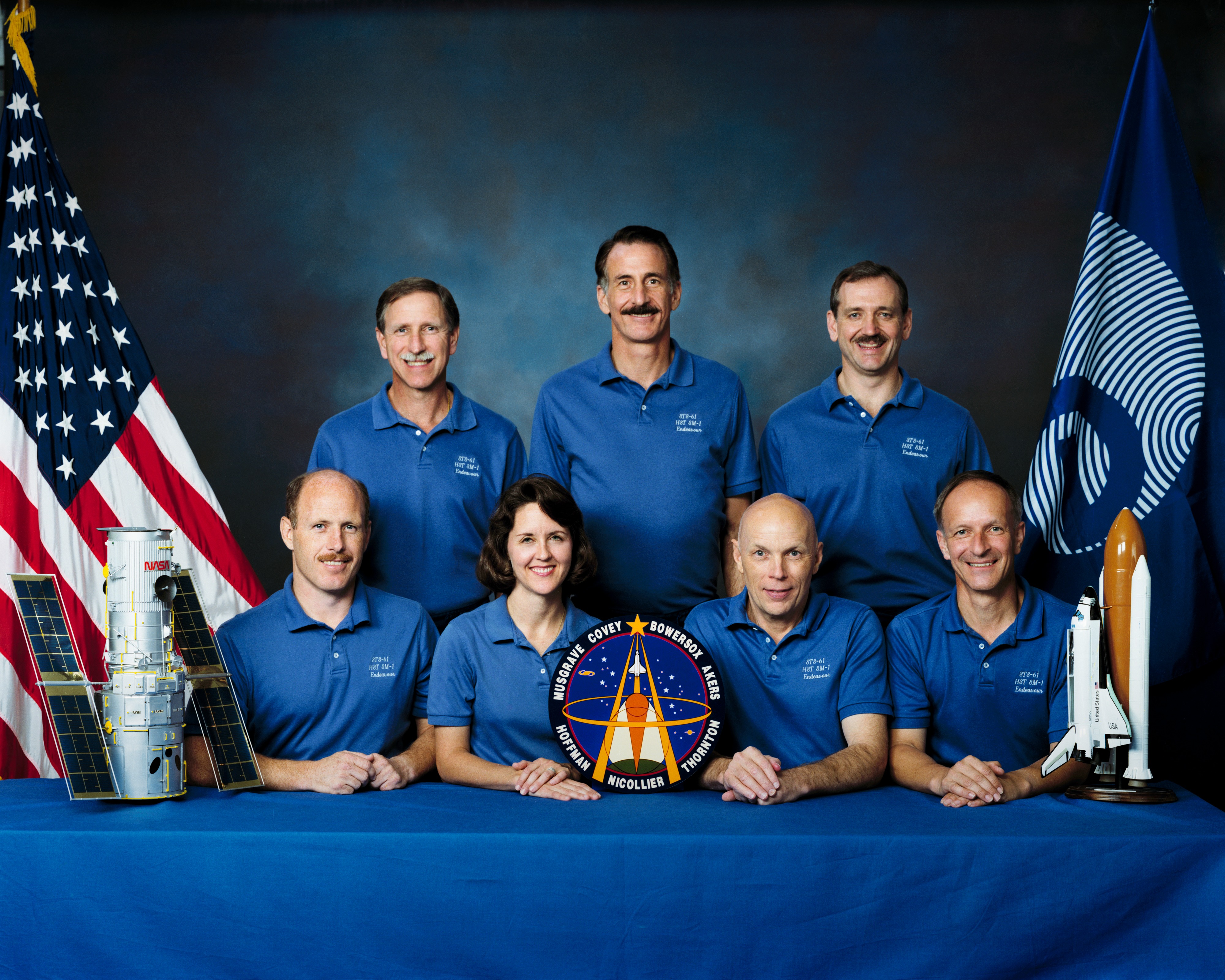
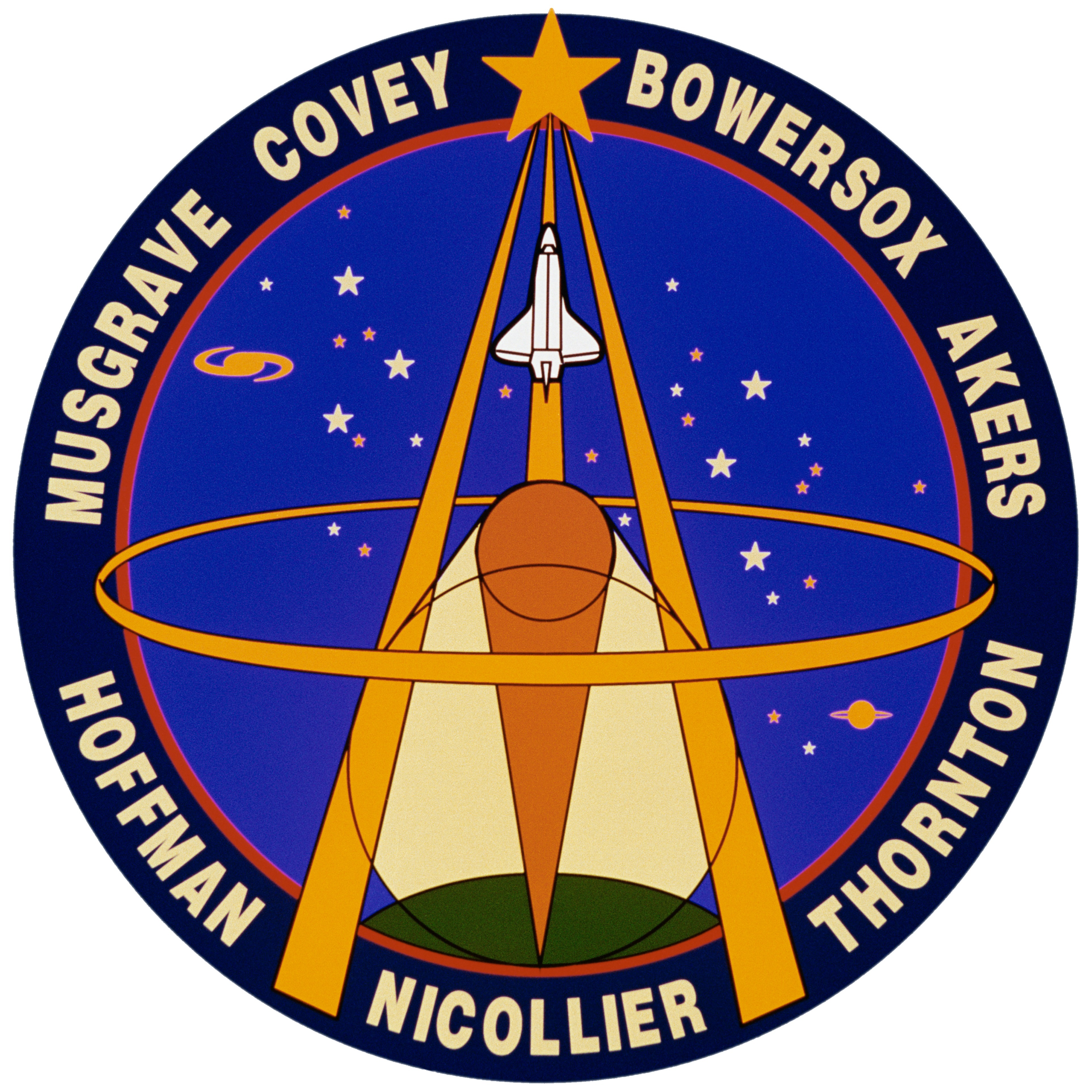
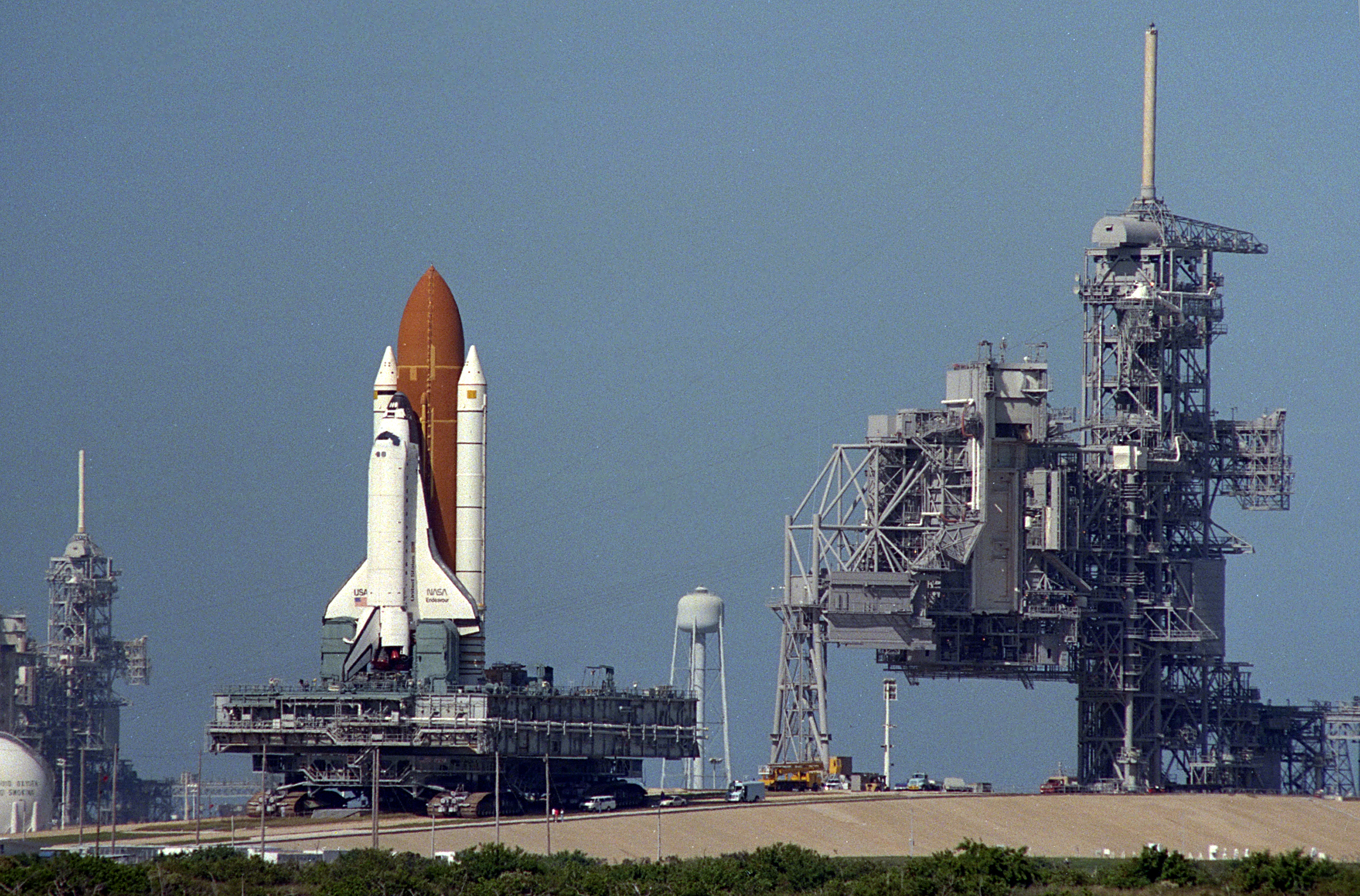
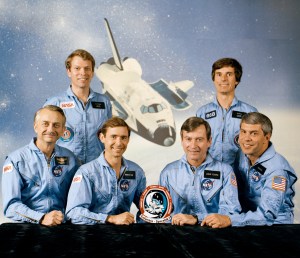
Left: The STS-61 crew of Kenneth D. Bowersox, sitting left, Kathryn C. Thornton, F. Story Musgrave, and Claude Nicollier of the European Space Agency; Richard O. Covey, standing left, Jeffrey A. Hoffman, and Thomas D. Akers. Middle: The STS-61 crew patch. Right: Endeavour rolls over from Launch Pad 39A to 39B at NASA’s Kennedy Space Center in Florida.
The first Hubble servicing mission proved to be one of the most complex up to that time. With that in mind, on March 16, 1992, NASA named Musgrave, an astronaut since 1967 and a veteran of four previous missions including conducting the first spacewalk of the shuttle era, as the payload commander and one of the four spacewalkers for STS-61. On Aug. 28, NASA named Hoffman, Akers, and Thornton as the other three spacewalkers who in teams of two would carry out the five spacewalks on alternating days. Finally, on Dec. 3, NASA named Covey, Bowersox, and Nicollier as the commander, pilot, and flight engineer, respectively, for the mission. Nicollier also served as the prime operator of the Remote Manipulator System (RMS), or robotic arm, with Bowersox as his backup. The seven-person crew trained intensely for the next year preparing for the complex tasks ahead, including simulating the spacewalks at the Neutral Buoyancy Simulator at NASA’s Marshall Space Flight Center in Huntsville, Alabama, and the Weightless Environment Training Facility at NASA’s Johnson Space Center in Houston. Meanwhile, at NASA’s Kennedy Space Center in Florida, workers prepared space shuttle Endeavour for its fifth journey into space. They rolled the shuttle, assembled with its external tank and solid rocket booster, to Launch Pad 39A on Oct. 28. However, following a wind storm on Oct. 30 that contaminated the payload changeout room with sandy grit, managers decided to move Endeavour to neighboring Pad B on Nov. 15, in only the second roll around in shuttle history.
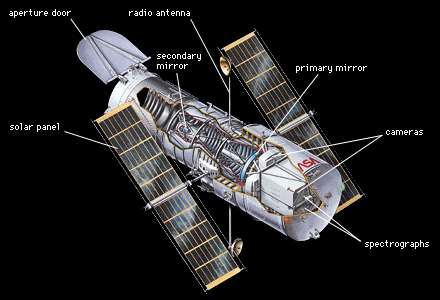
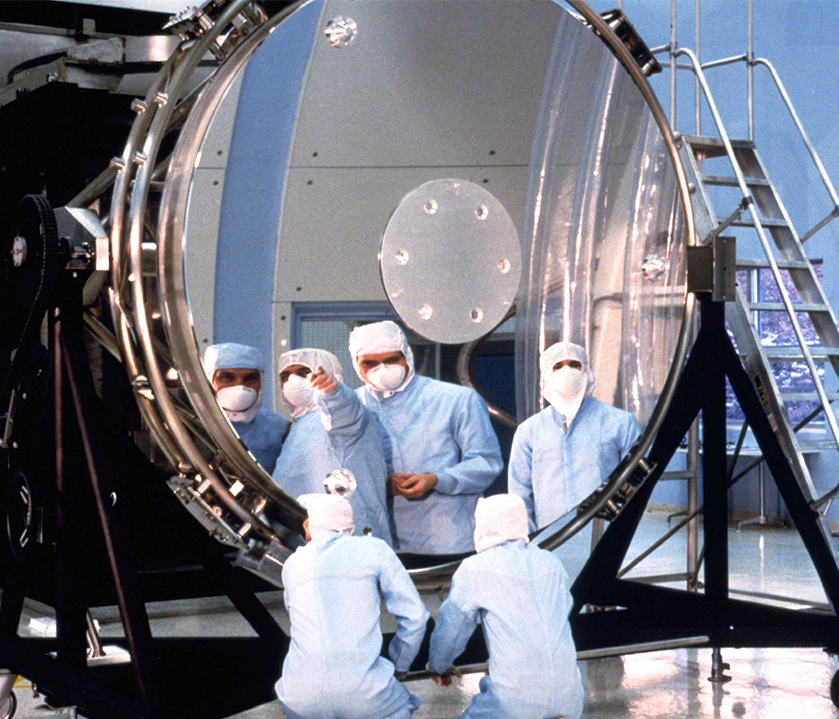
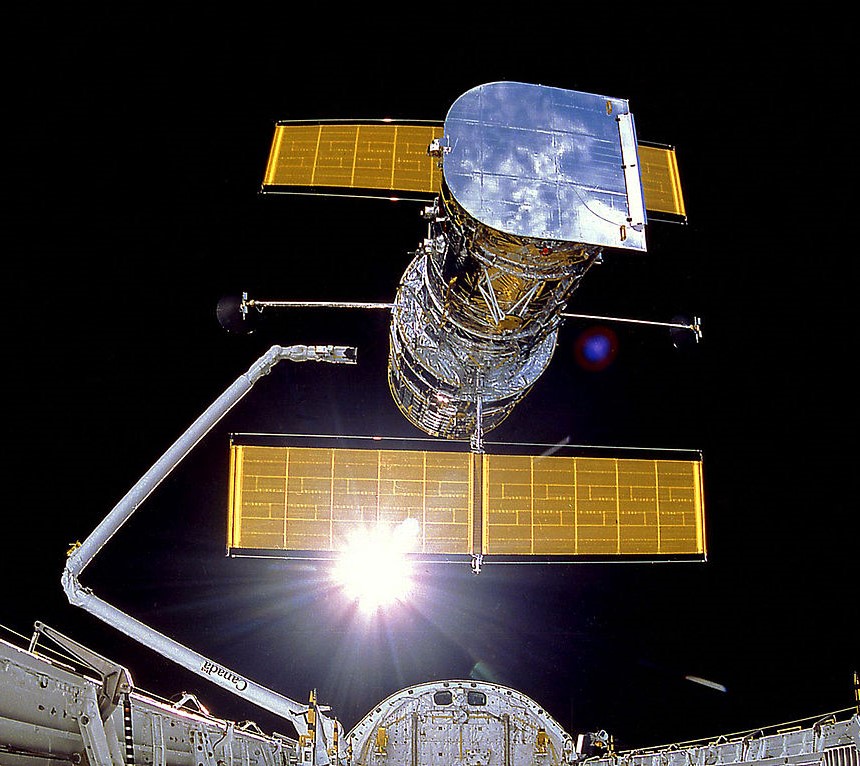
Left: Schematic of the Hubble Space Telescope’s major components. Middle: Workers inspect the Hubble Space Telescope’s 94-inch diameter primary mirror prior to assembly. Right: Astronauts release the Hubble Space Telescope in April 1990 during the STS-31 mission.
The first concrete plan for placing an optical telescope in space, above the obscuring and distorting effects of the Earth’s atmosphere, originated with Princeton University astronomer Lyman S. Spitzer in 1946. In 1972, NASA first proposed a plan to launch a Large Space Telescope (LST) and five years later Congress approved the funding. As envisioned, the LST would contain a 94-inch diameter primary mirror and launch on the space shuttle, then still under development, in 1983. With an expected on-orbit lifetime of 15 years, the LST’s instruments would make observations primarily in the visible and ultraviolet parts of the electromagnetic spectrum. In 1983, managers abandoned the original plan to use the space shuttle to return the telescope to Earth for refurbishment and relaunch in favor of in-orbit maintenance and upgrades by astronauts during spacewalks in the shuttle’s payload bay. The same year, NASA renamed the LST after astronomer Edwin P. Hubble and set the launch for October 1986. The Challenger accident in January 1986 delayed the launch of the Hubble Space Telescope until April 24, 1990, during Discovery’s STS-31 mission. The shuttle flew to an unusually high 380-mile orbit to ensure that Hubble would operate above as much of the Earth’s atmosphere as possible. After initial on-orbit activation and checkout of the telescope’s systems, it was time for the much-anticipated “first light” images. The initial images, however, puzzled scientists as they showed stars not as single well-focused points of light but as blurred and fuzzy. Investigators learned that the telescope’s primary mirror suffered from a production error, its edges too flat by 0.003 mm, resulting in an optical problem called spherical aberration. While this significantly degraded the capability of several of Hubble’s instruments to return exceptionally detailed photographs, the telescope still produced some good images. NASA put in place a plan to fix the Hubble’s optical problems without resorting to repairing the mirror. With the spherical aberration well-defined, engineers designed a set of mirrors that astronauts could place aboard Hubble during the previously planned first servicing mission.
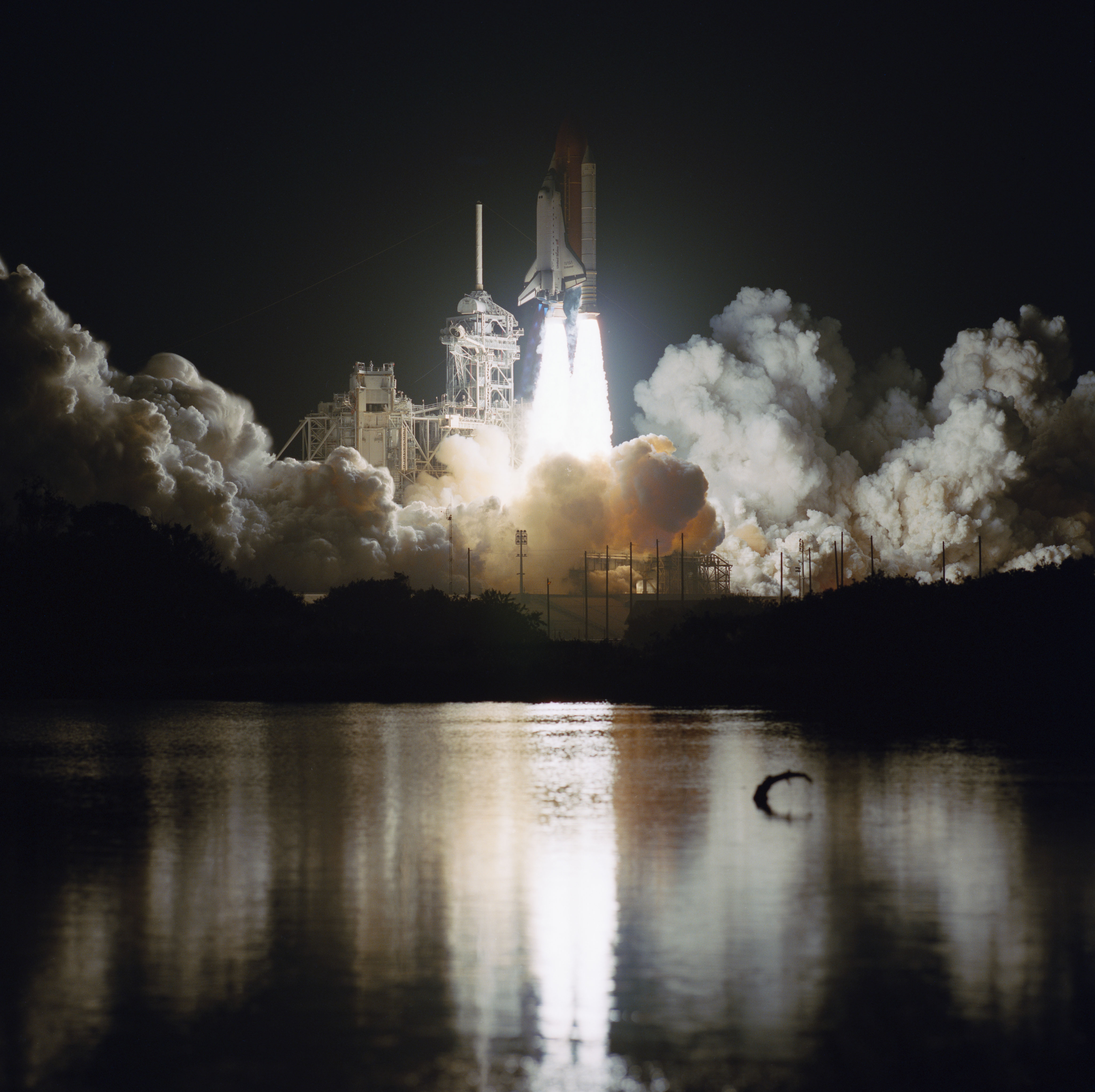
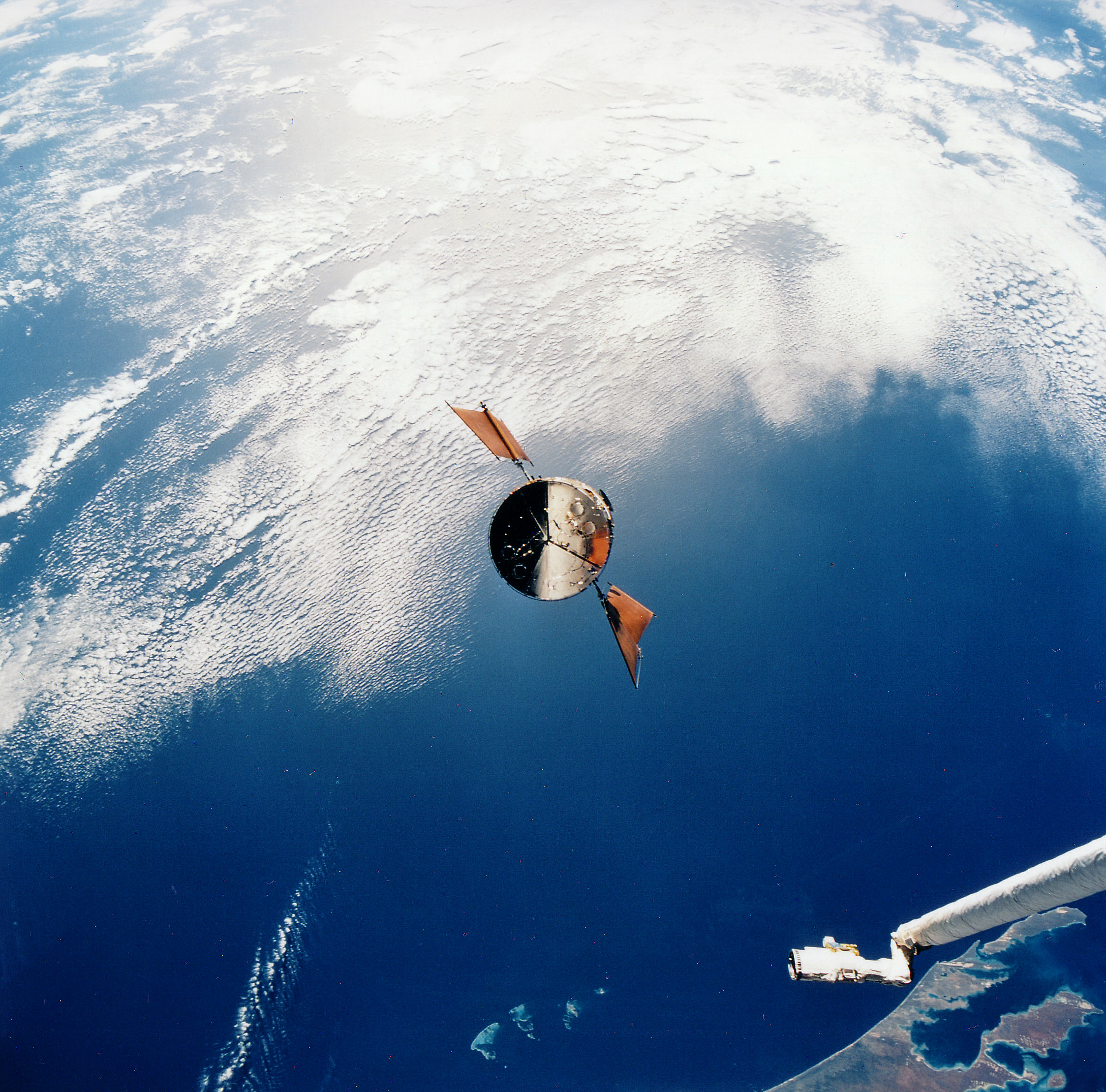
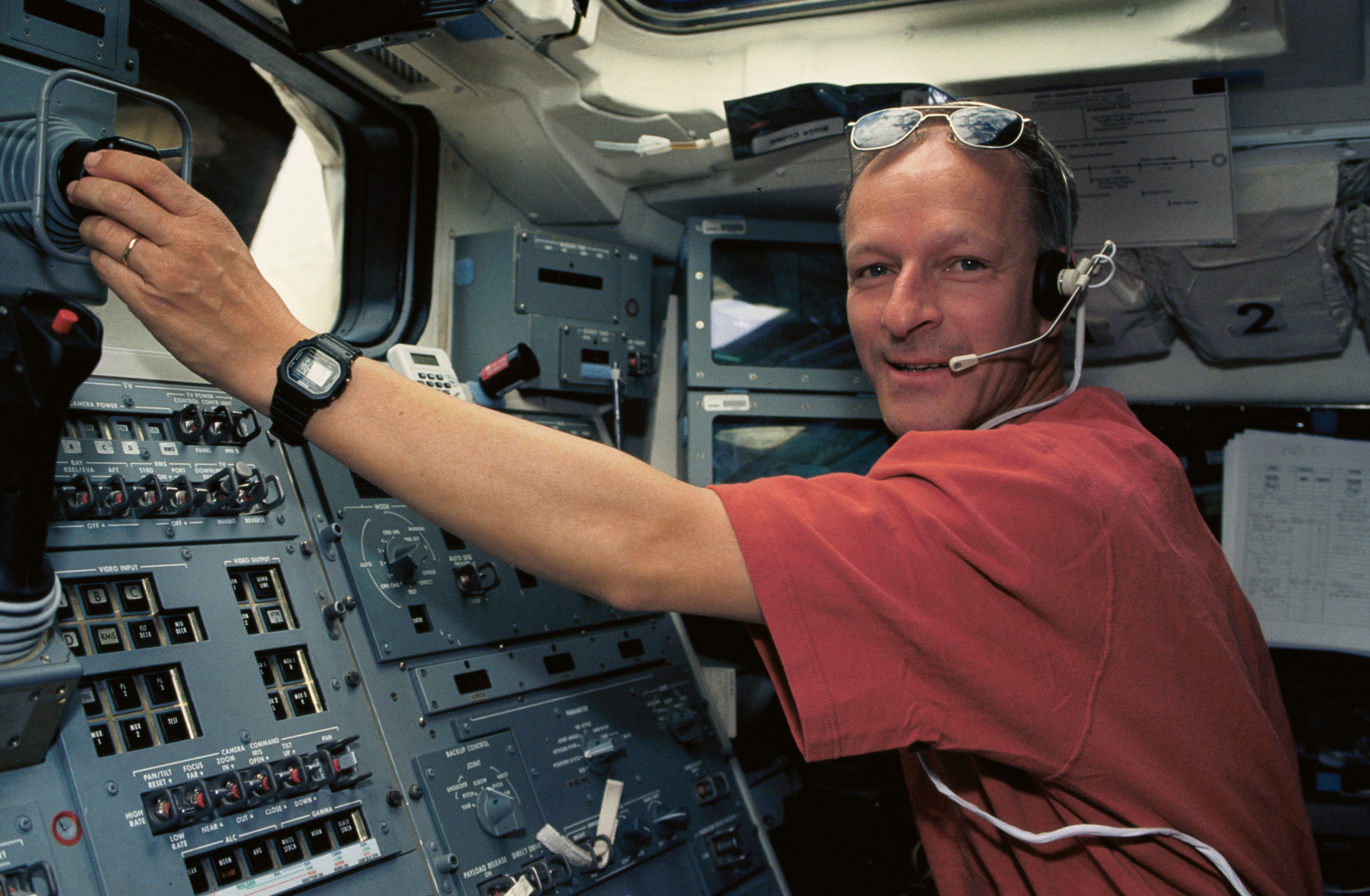
Left: Liftoff of space shuttle Endeavour on the STS-61 mission to repair the Hubble Space Telescope. Middle: The Hubble Space Telescope as seen from Endeavour during the rendezvous, with the end of the Remote Manipulator System (RMS), or robotic arm, visible at lower right. Right: On the shuttle’s flight deck, European Space Agency astronaut Claude Nicollier operates the RMS to grapple Hubble.
Planning for the first servicing mission to Hubble began in 1988, two years before the launch of the telescope. With the post-launch discovery of spherical aberration, the scope of the first servicing mission changed dramatically. The primary goal now focused on correcting the telescope’s optics to ensure that its onboard instruments could function as planned. Engineers developed the Corrective Optics Space telescope Axial Replacement (COSTAR), a tool to correct Hubble’s blurry vision, consisting of five pairs of corrective mirrors placed in front of the Faint Object Camera, the Faint Object Spectrograph, and the Goddard High Resolution Spectrograph (GHRS) instruments. Installing COSTAR required the removal of the High-Speed Photometer, the sacrifice of one instrument outweighed by the saving of the other three. The astronauts also replaced the original Wide Field Planetary Camera (WFPC) with the more advanced WFPC2 to improve the telescope’s ultraviolet performance. The WFPC2 carried its own corrective optics. The astronauts also replaced fuses and the telescope’s two solar arrays, one of which imparted vibrations that prevented precise pointing. On Dec. 2, 1993, space shuttle Endeavour lifted off from Pad 39B at 4:27 a.m. EST, after a one-day weather delay. Following insertion into an unusually high 360-mile orbit to reach Hubble, the astronauts began their initial on-orbit operations by opening the payload bay doors. The next day, Covey and Bowersox performed several engine burns as part of the rendezvous maneuvers. The astronauts checked out the rendezvous radar, the Ku-band antenna, the Canadian-built Remote Manipulator System (RMS) or robotic arm, and the spacesuits, and reduced the pressure inside the shuttle from 14.7 pounds per square inch (psi) to 10.2 psi in preparation for the upcoming spacewalks to reduce the pre-breathe time required to prevent decompression sickness or the bends.
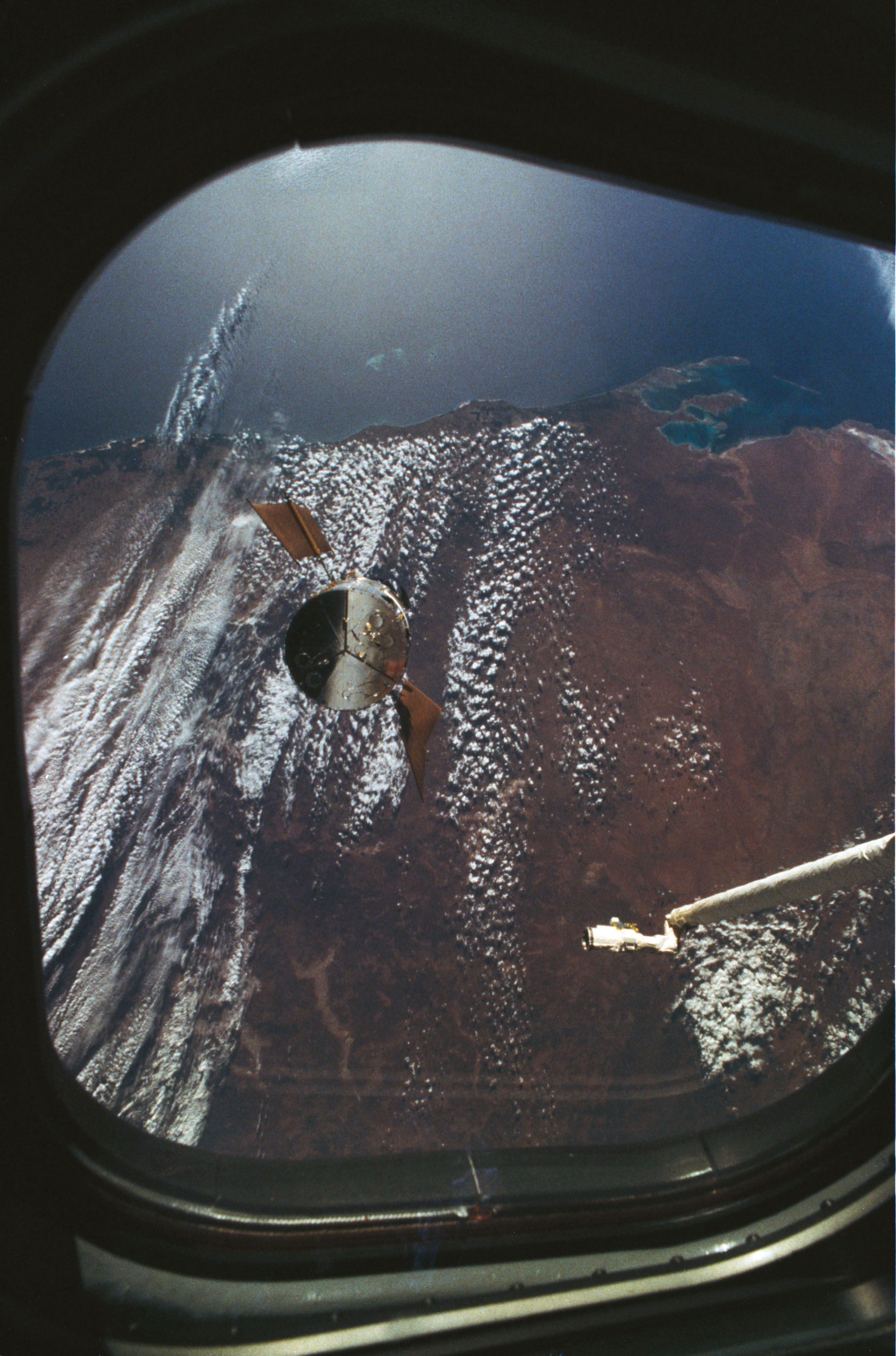
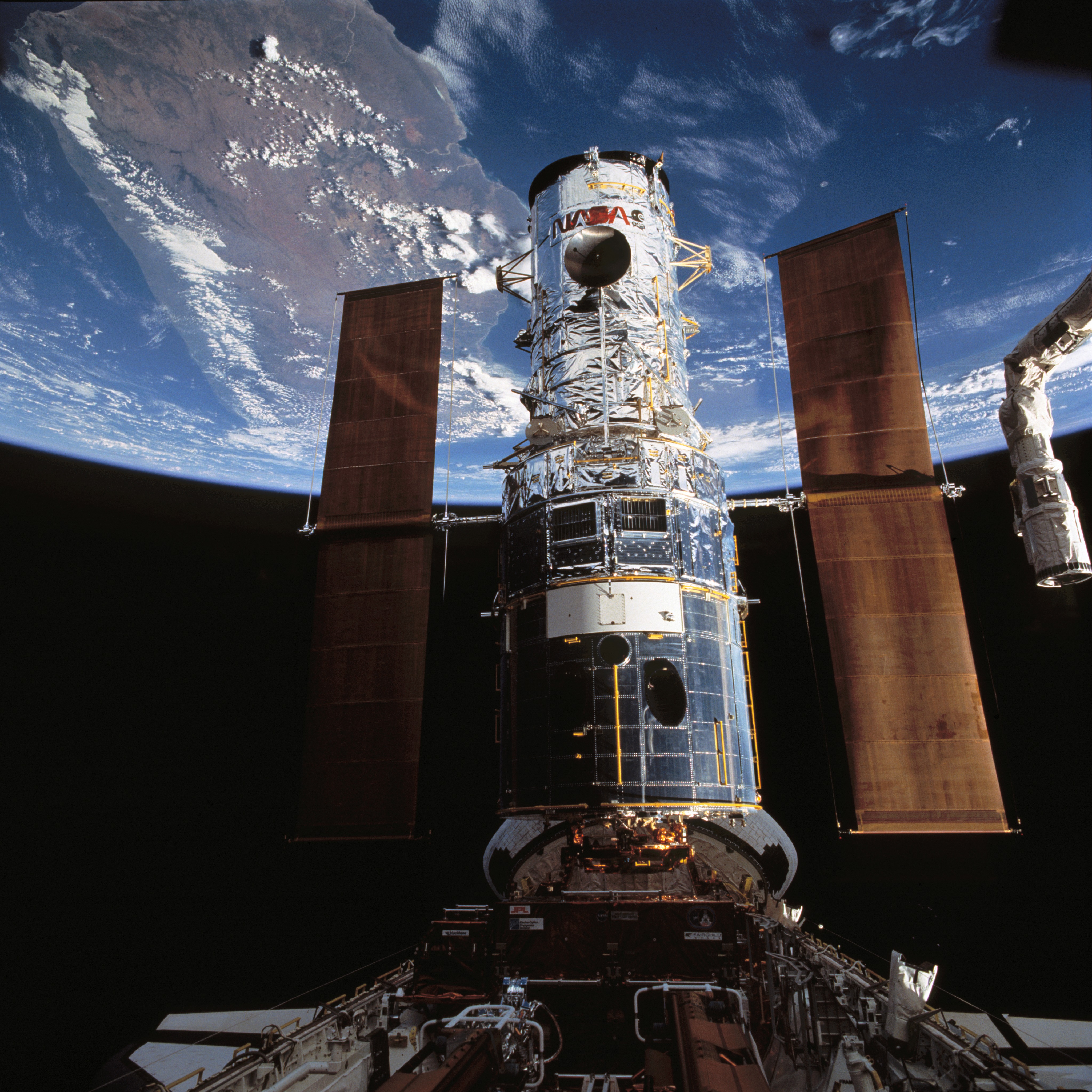
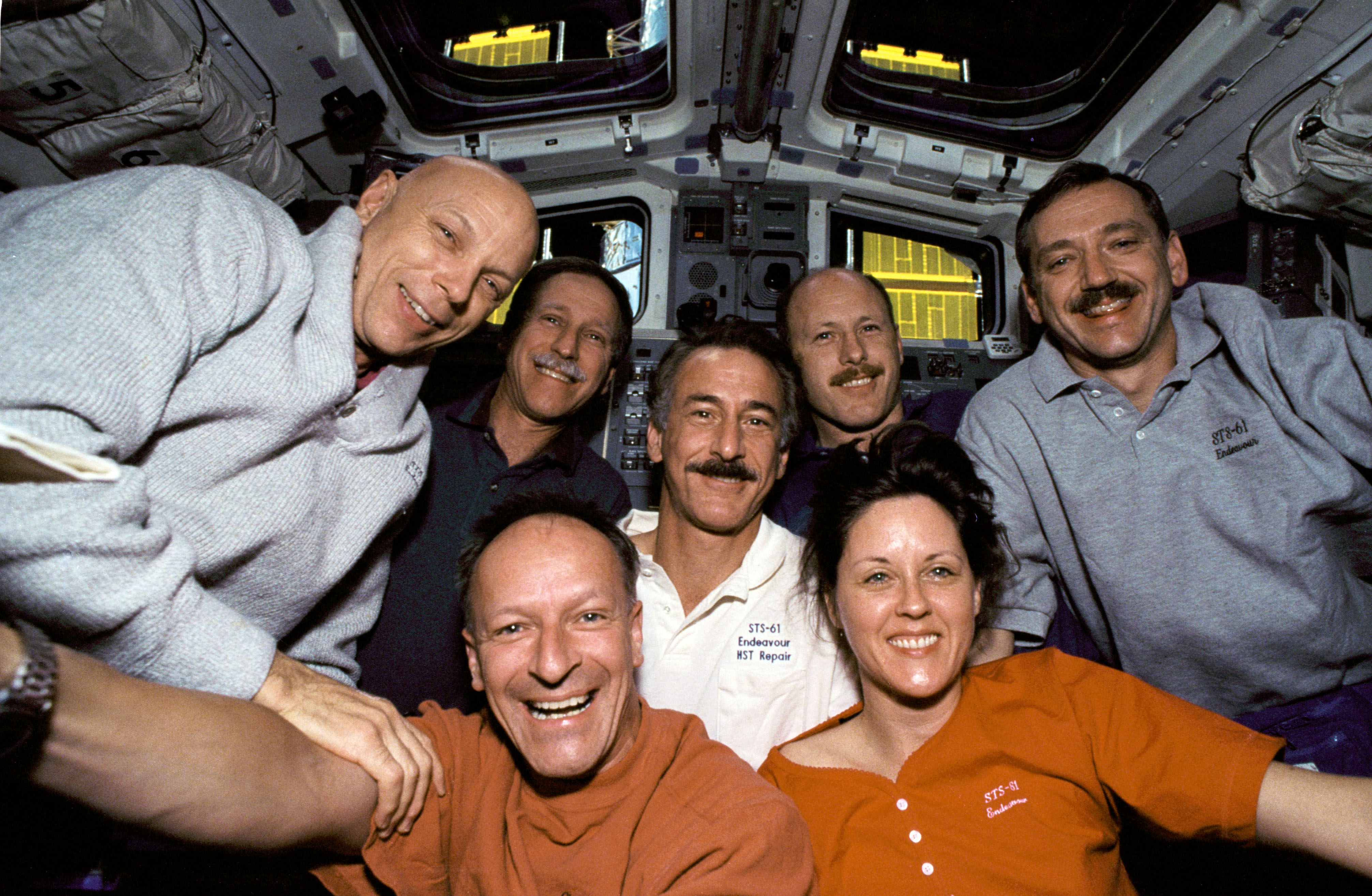
Left: Endeavour continues its approach to the Hubble Space Telescope. Middle: Hubble secured onto its flight support structure in Endeavour’s payload bay. Right: The STS-61 crew poses on Endeavour’s flight deck, with Hubble visible through the windows.
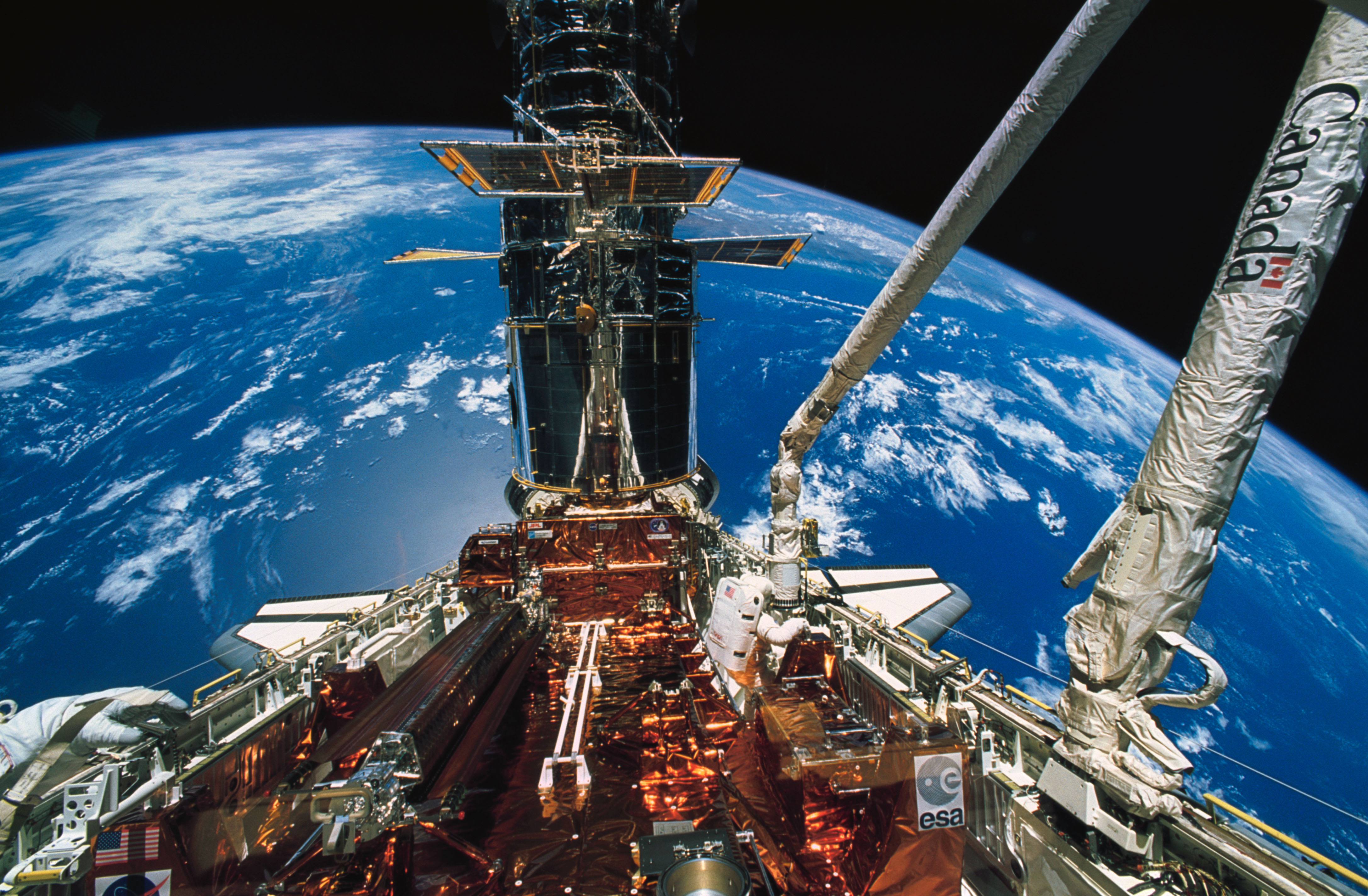
On the third day, Covey brought Endeavour to within 30 feet of Hubble so Nicollier could grapple it with the RMS. Covey radioed Houston, “Endeavour has a firm handshake with Mr. Hubble’s telescope.” Nicollier berthed the giant telescope onto its turntable-like Flight Support System (FSS) in the shuttle’s payload bay. Nicollier then used the RMS cameras to perform an inspection of Hubble.
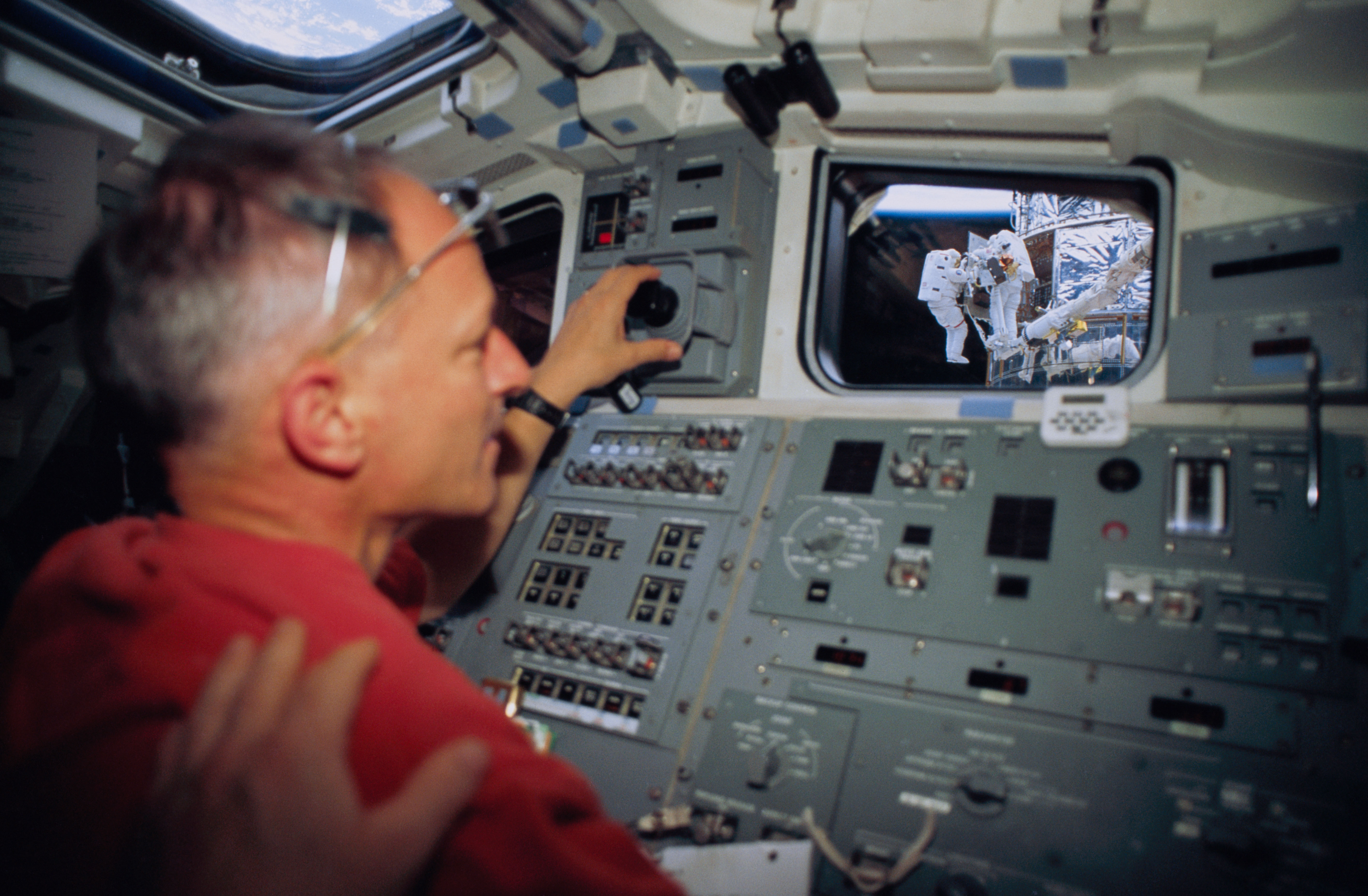
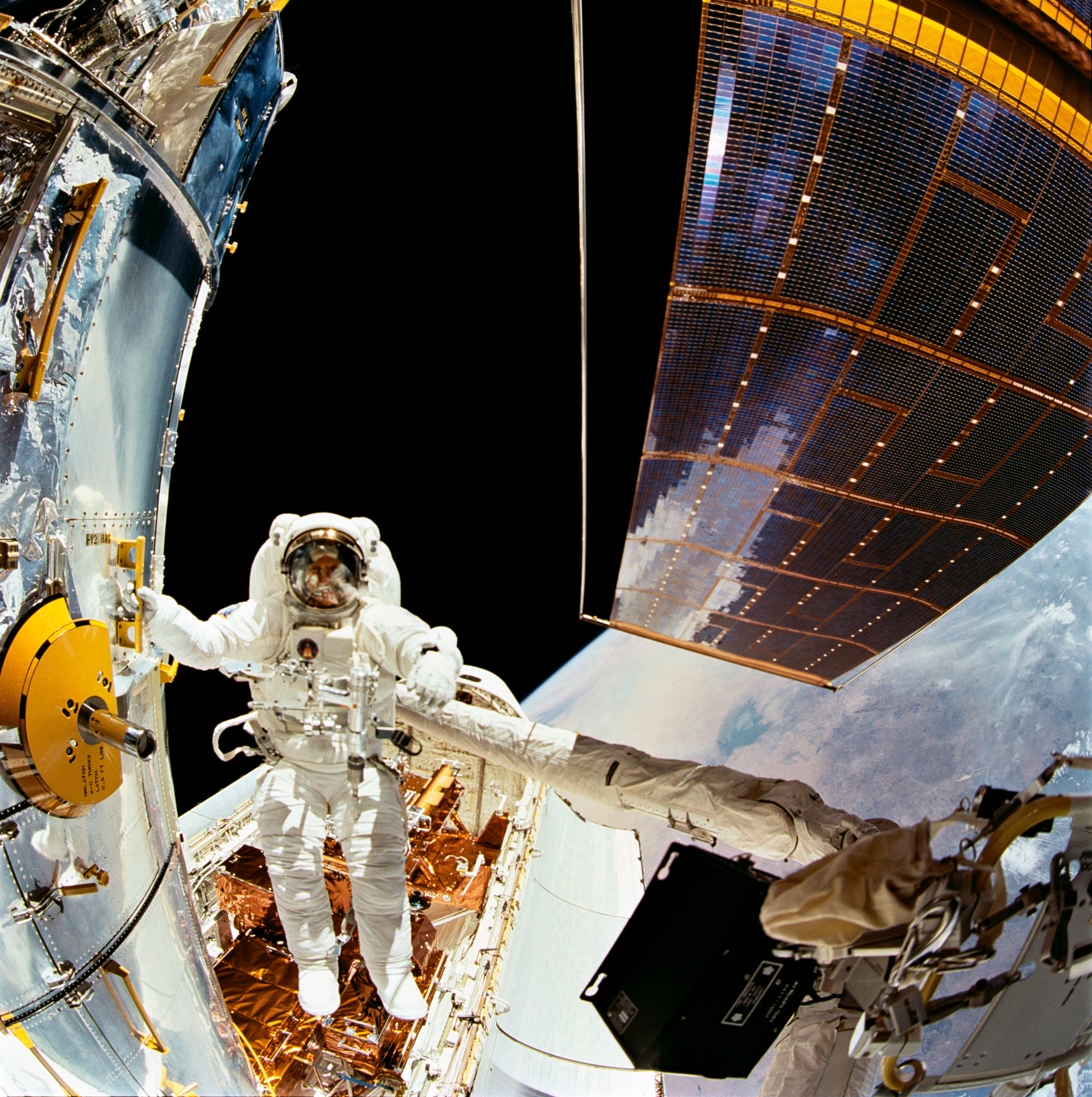
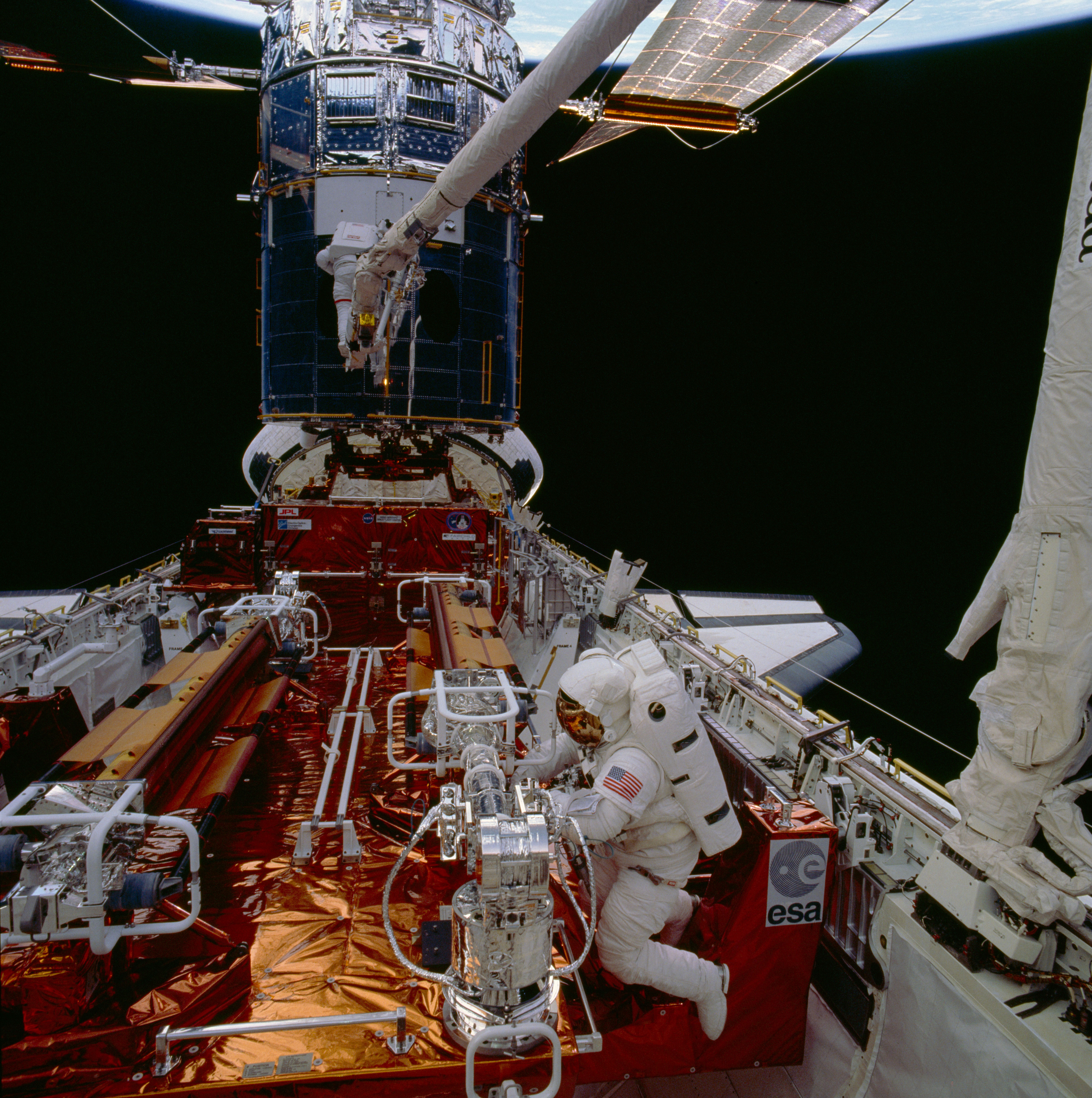
First spacewalk. Left: European Space Agency astronaut Claude Nicollier operates the shuttle’s Remote Manipulator System (RMS) or robotic arm in support of the spacewalks. Middle: Astronaut F. Story Musgrave works on the Hubble. Right: Near the end of the first spacewalk, Musgrave releases bolts on the replacement solar arrays.
With Nicollier operating the RMS as he did for all five spacewalks, Hoffman and Musgrave conducted the mission’s first excursion on flight day four. They replaced two sets of Rate Sensing Units that contain gyroscopes to orient the telescope and replaced electrical control units and fuse plugs, providing the telescope with six healthy gyroscopes. Musgrave and Hoffman prepared for the next day’s spacewalk by loosening bolts on the replacement solar arrays, stored in the forward part of the payload bay. The pair spent 7 hours and 54 minutes outside on this first spacewalk. The ground commanded the two existing solar arrays on the telescope to retract, and while one did so the second one did not due to a bent support rod.
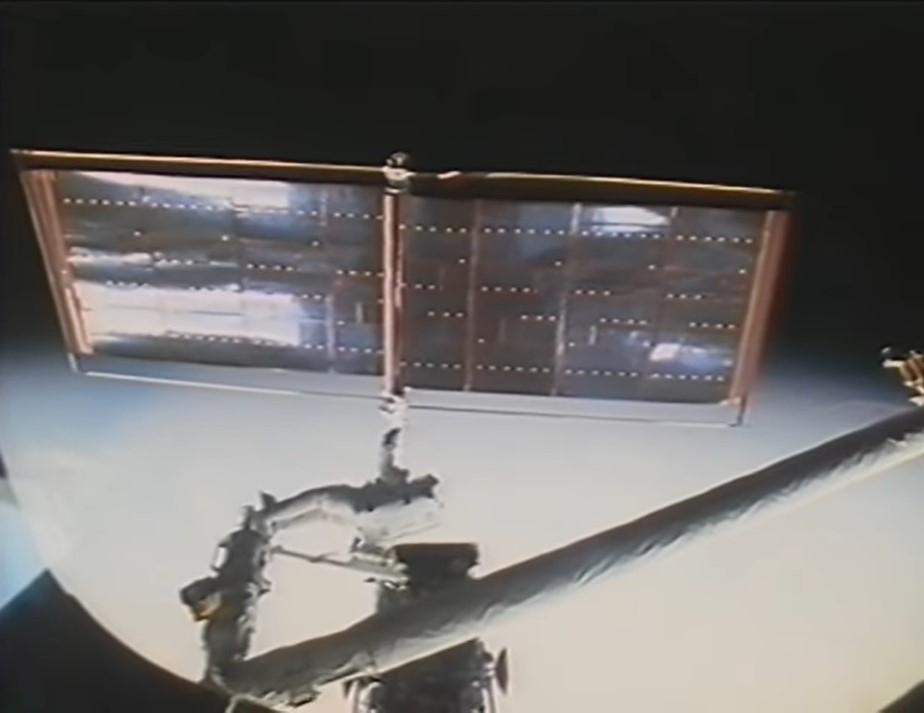
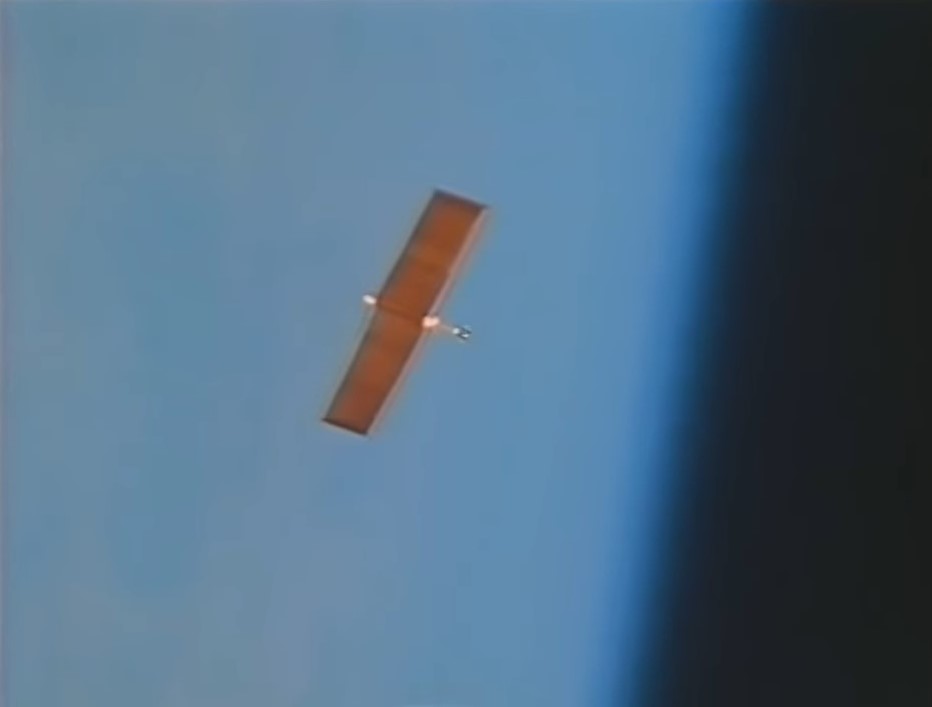
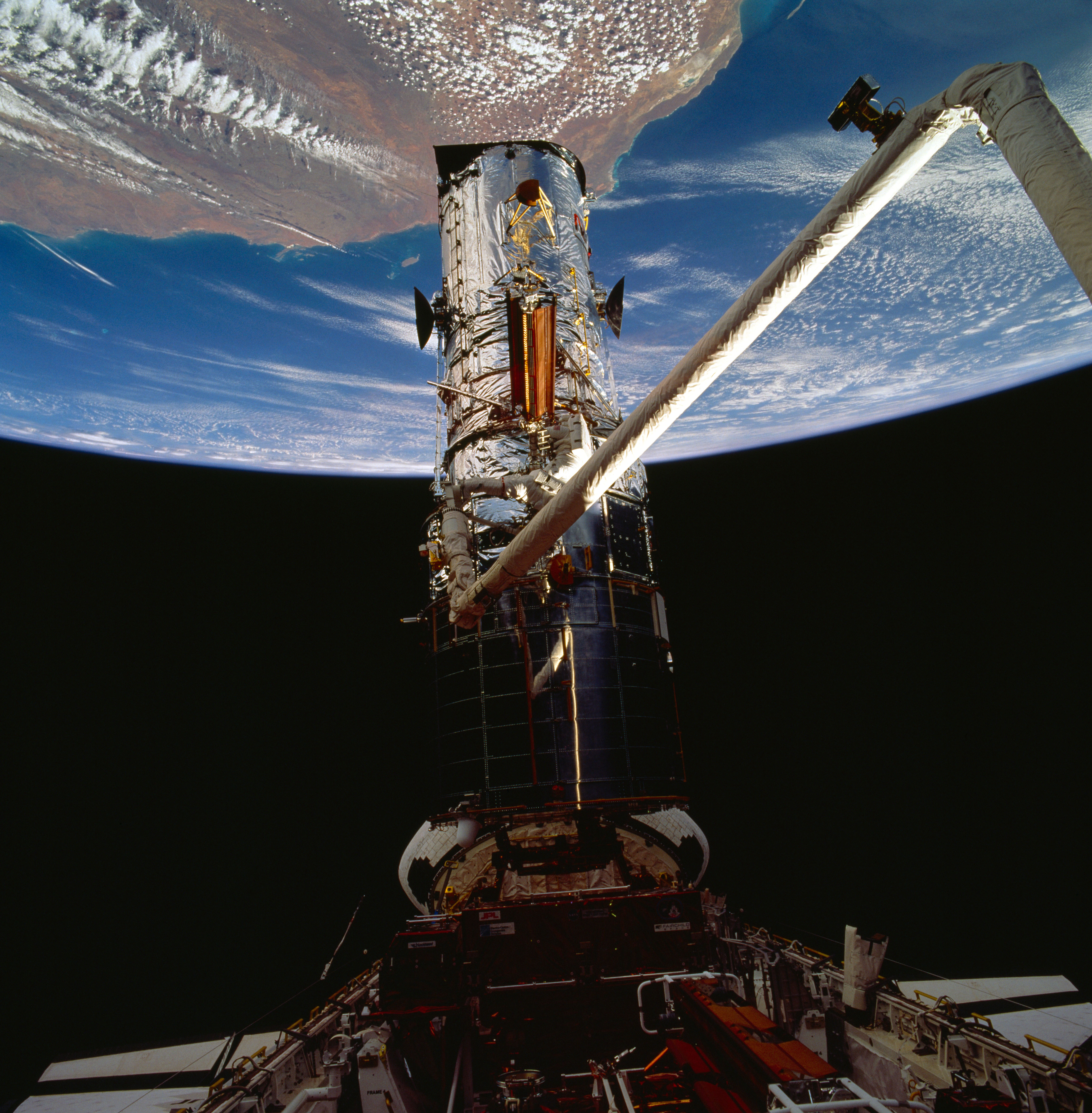
Second spacewalk. Left: Astronaut Kathryn C. Thornton, on the end of the Remote Manipulator System, releases Hubble’s old solar array that failed to retract properly. Middle: The solar array drifting away from space shuttle Endeavour. Right: Thornton disconnects Hubble’s retracted solar array.
On flight day five, Thornton and Akers stepped outside for the mission’s second spacewalk, lasting 6 hours 36 minutes. The primary tasks revolved around replacing the telescope’s two solar arrays. First, they disconnected the array that would not retract as planned, working only at night since the array generated electricity when exposed to sunlight. With Thornton on the end of the RMS, she released the partially open array as Nicollier pulled her away. Bowersox fired thrusters to separate from the array, the plumes impinging on it causing it to flap like a giant bird. Thornton and Akers then connected one of the new arrays, rotated the telescope on its FSS, disconnected the other array, stowing it in the payload bay for return to Earth, and replaced it with a new one.
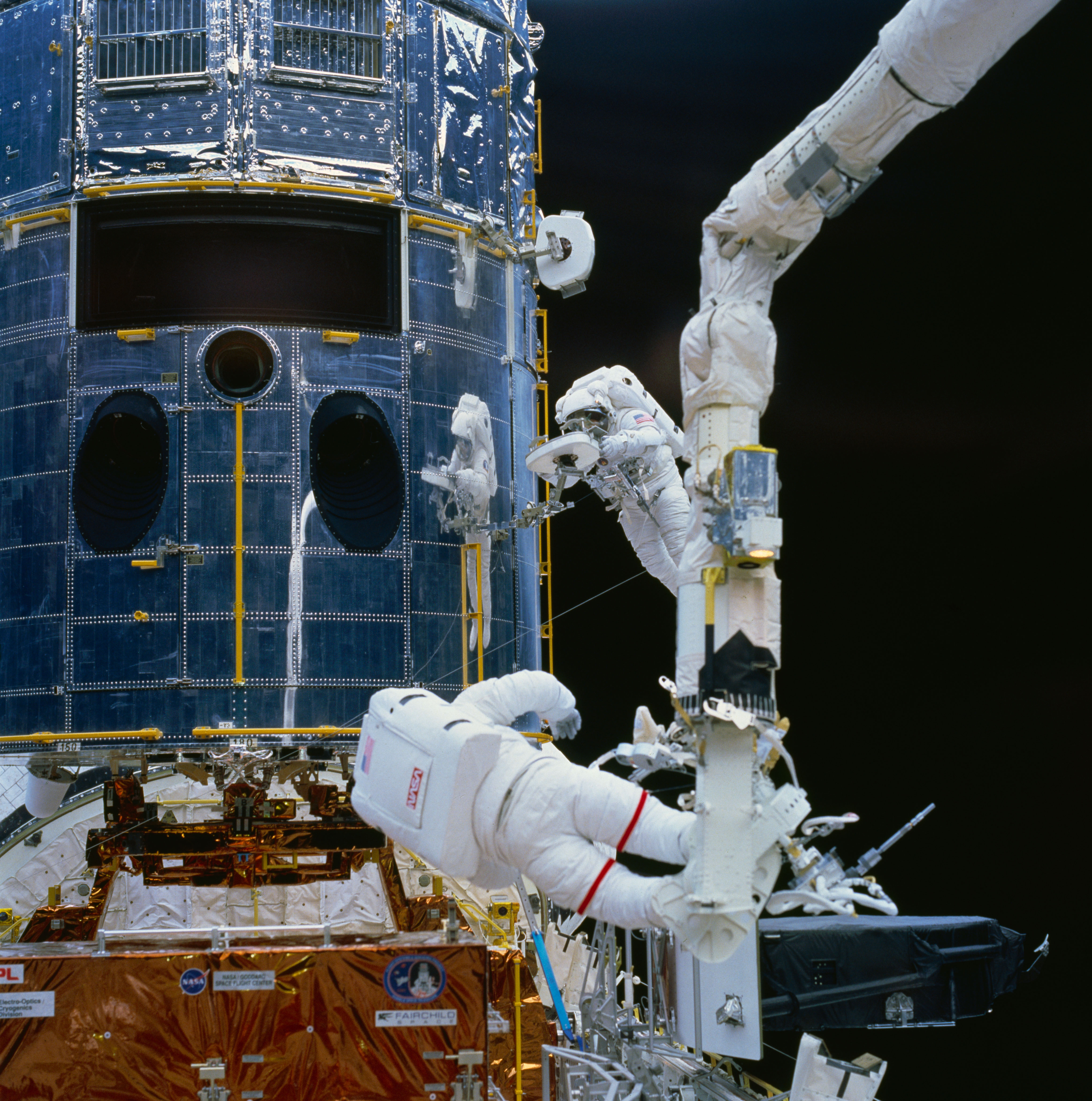
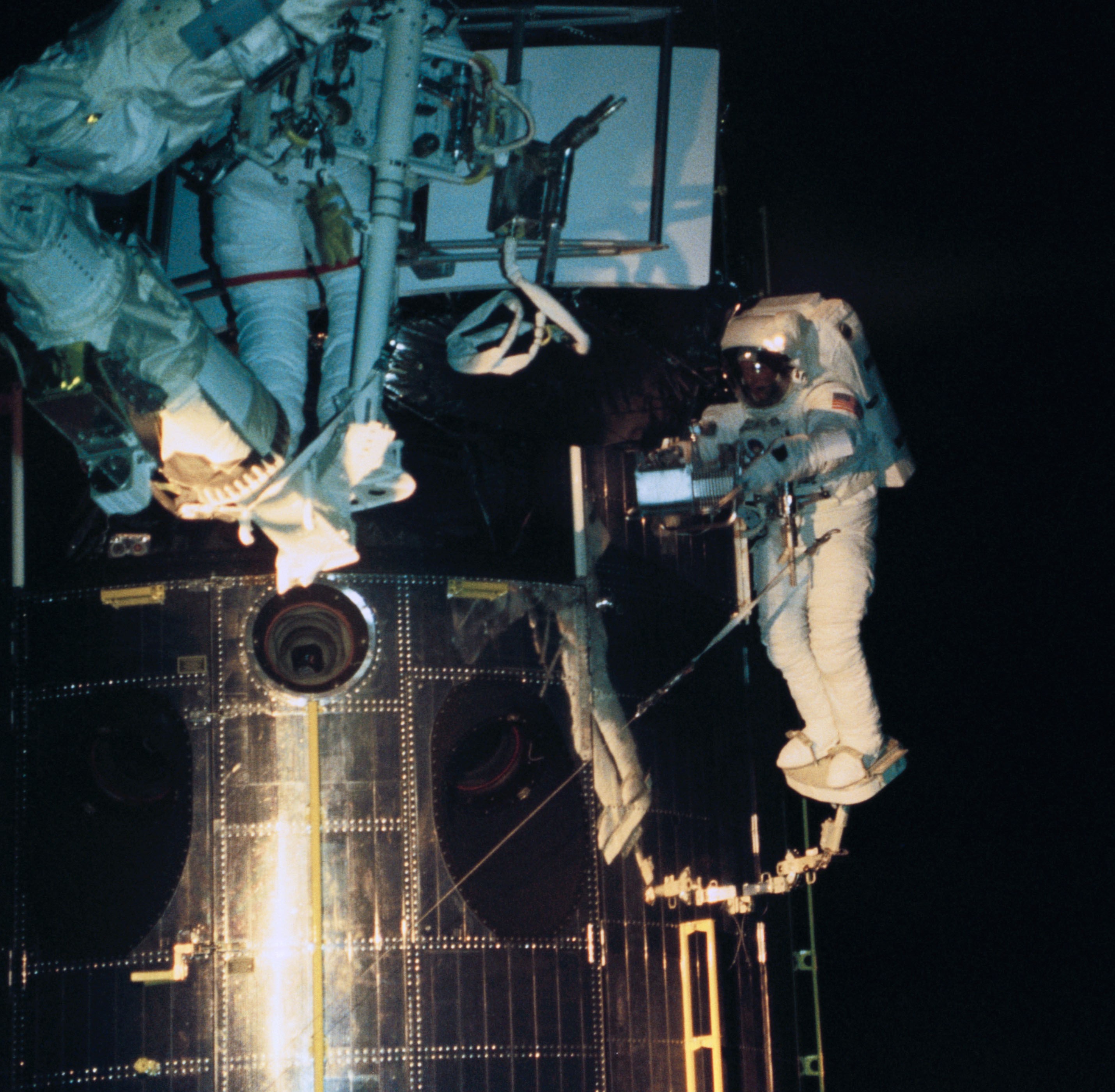

Third spacewalk. Left: Astronauts Jeffrey A. Hoffman, left, and F. Story Musgrave have removed the old Wide Field Planetary Camera (WFPC) from Hubble, the black rectangle at upper left shows its former location. Middle: With European Space Agency astronaut Claude Nicollier operating the Remote Manipulator System from inside the shuttle, Hoffman guides the new WFPC2 into position, with Musgrave ready to assist. Right: Musgrave, left, and Hoffman have installed WFPC2, the white triangle in the middle of the telescope, with Hoffman about to pick up WFPC1 temporarily stowed on the side of the payload bay and place it in its permanent location for return to Earth.
On the sixth day, Hoffman and Musgrave took their turn outside for the mission’s third spacewalk. Their primary task involved the replacement of the original WFPC with the more advance WFPC2 instrument. With Nicollier controlling the RMS, Hoffman removed the WFPC1 from the telescope and temporarily stowed it on the side of the payload bay. He then removed WFPC2 from its stowage location and he and Musgrave installed it into the telescope. After stowing WFPC1 in the payload bay for return to Earth, Hoffman replaced two magnetometers, essentially compasses the telescope uses to determine its orientation in space. This third spacewalk lasted 6 hours 47 minutes.
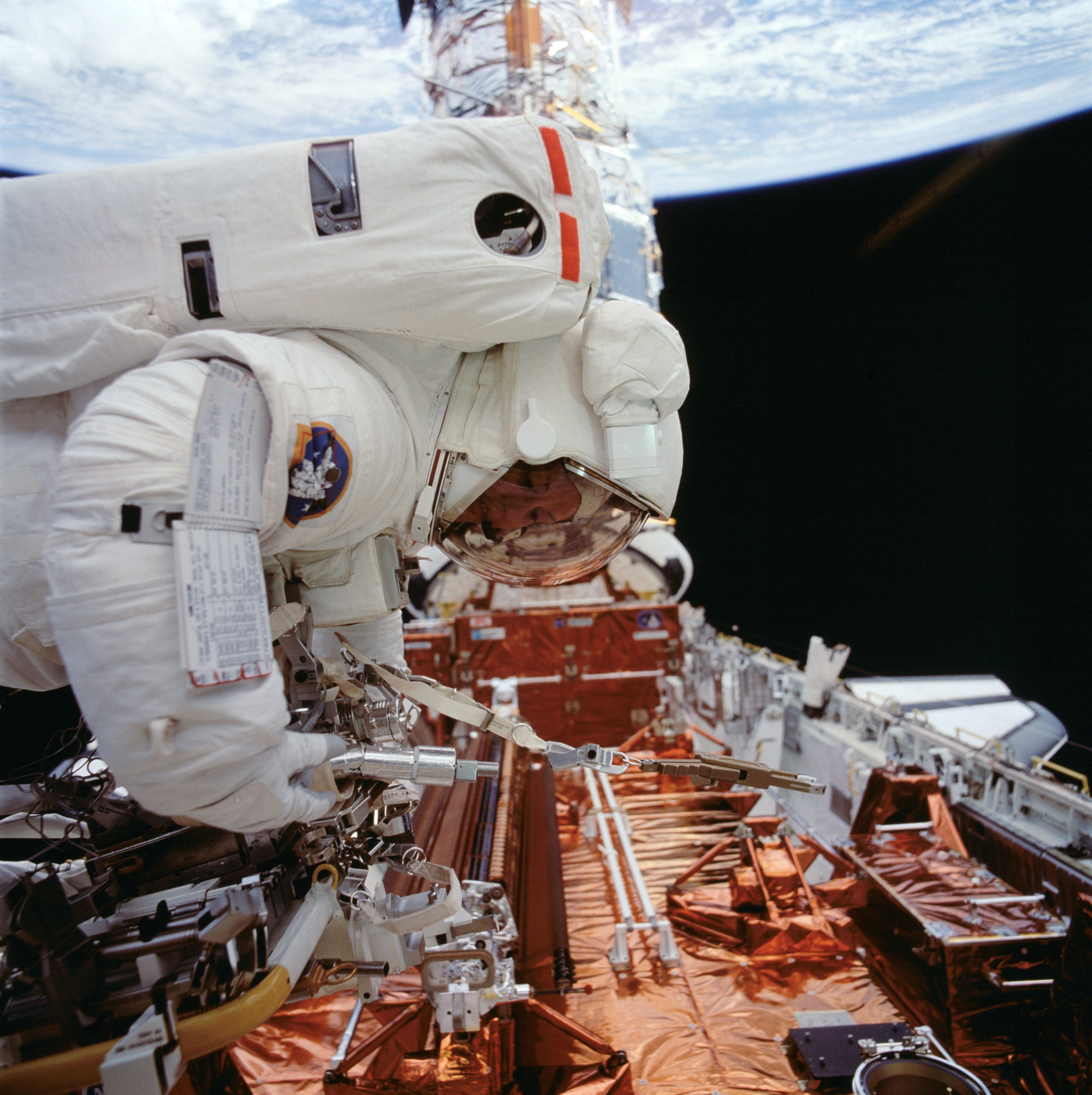
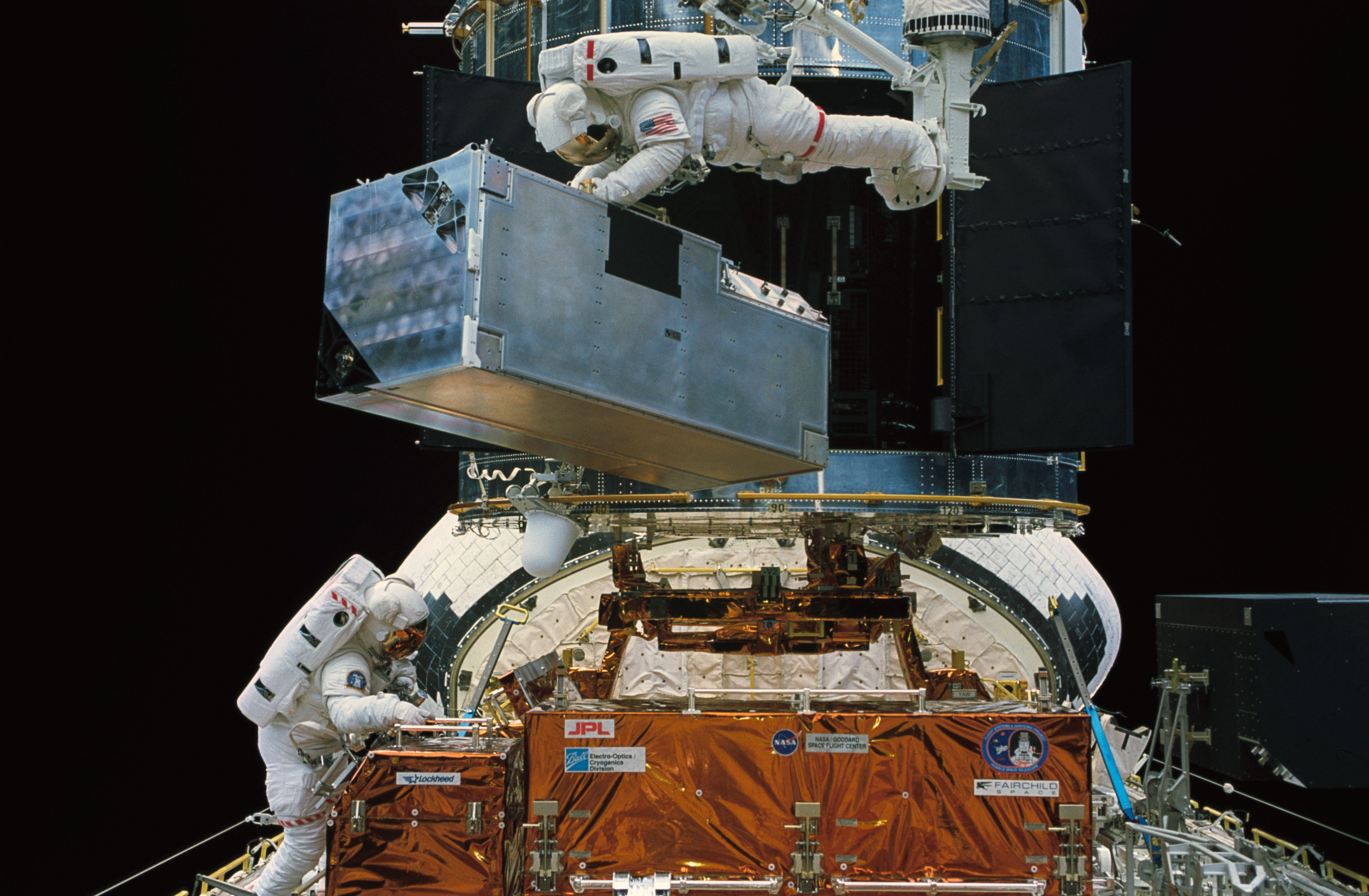
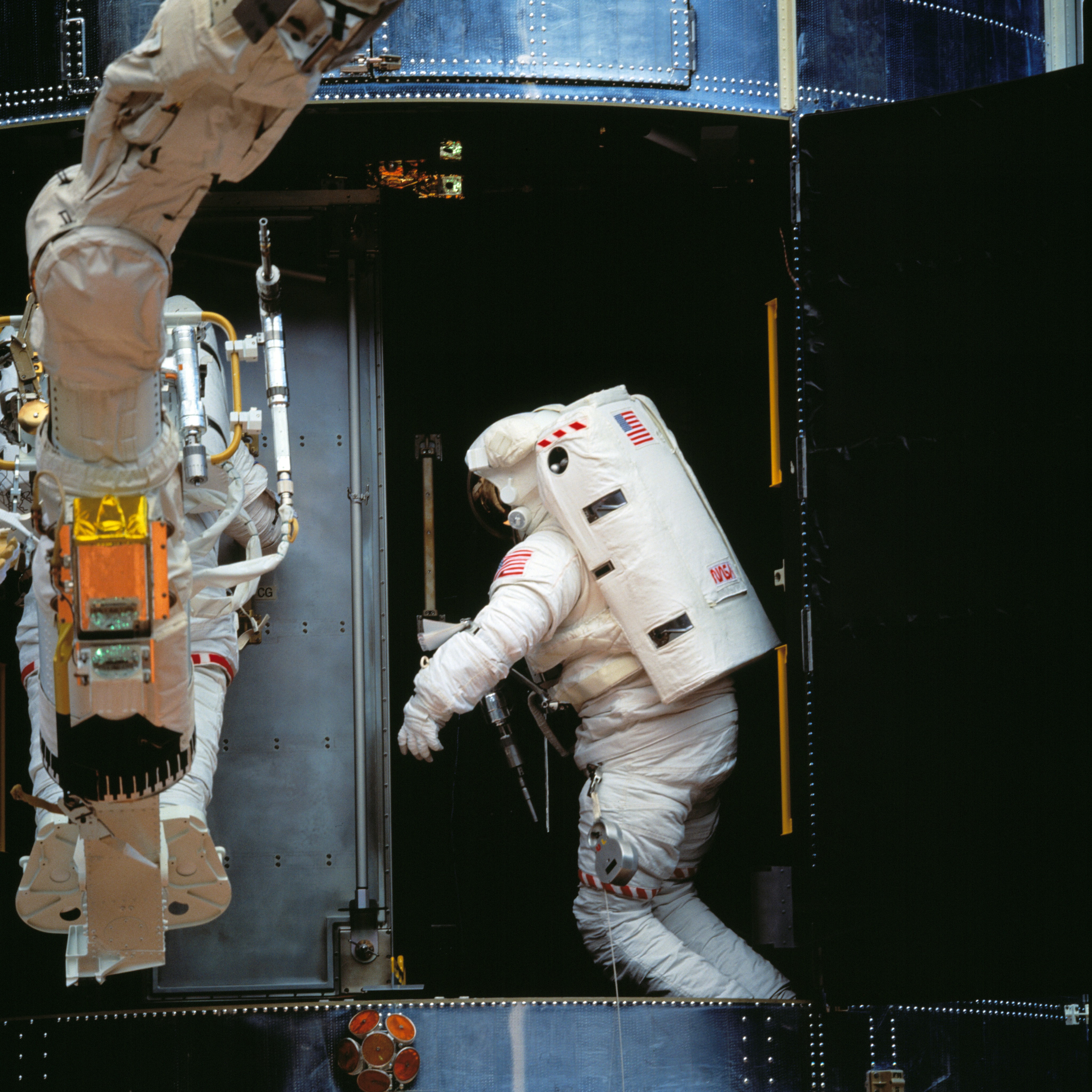
Fourth spacewalk. Left: Astronaut Kathryn C. Thornton works in shuttle Endeavour’s payload bay. Middle: With European Space Agency astronaut Claude Nicollier controlling the Remote Manipulator System, Thornton, top, removes the Corrective Optics Space telescope Axial Replacement (COSTAR) from its storage location. Right: Astronaut Thomas D. Akers, inside the Hubble Space Telescope prepares to install the COSTAR.
For Akers and Thornton, the primary tasks of the fourth spacewalk on the mission’s seventh day focused on the removal of the HSP instrument and replacing it with the COSTAR system to correct the telescope’s optics. Akers opened the telescope’s shroud doors and with Thornton removed the HSP, temporarily stowing it on the side of the payload bay. Nicollier then maneuvered the RMS with Thornton to pick up COSTAR from its storage location and translate them to Hubble where Akers awaited to help with the installation. After closing the door and stowing the HSP, and installing an electronics package with additional computer memory, Akers and Thornton finished the 6-hour 50-minut spacewalk.
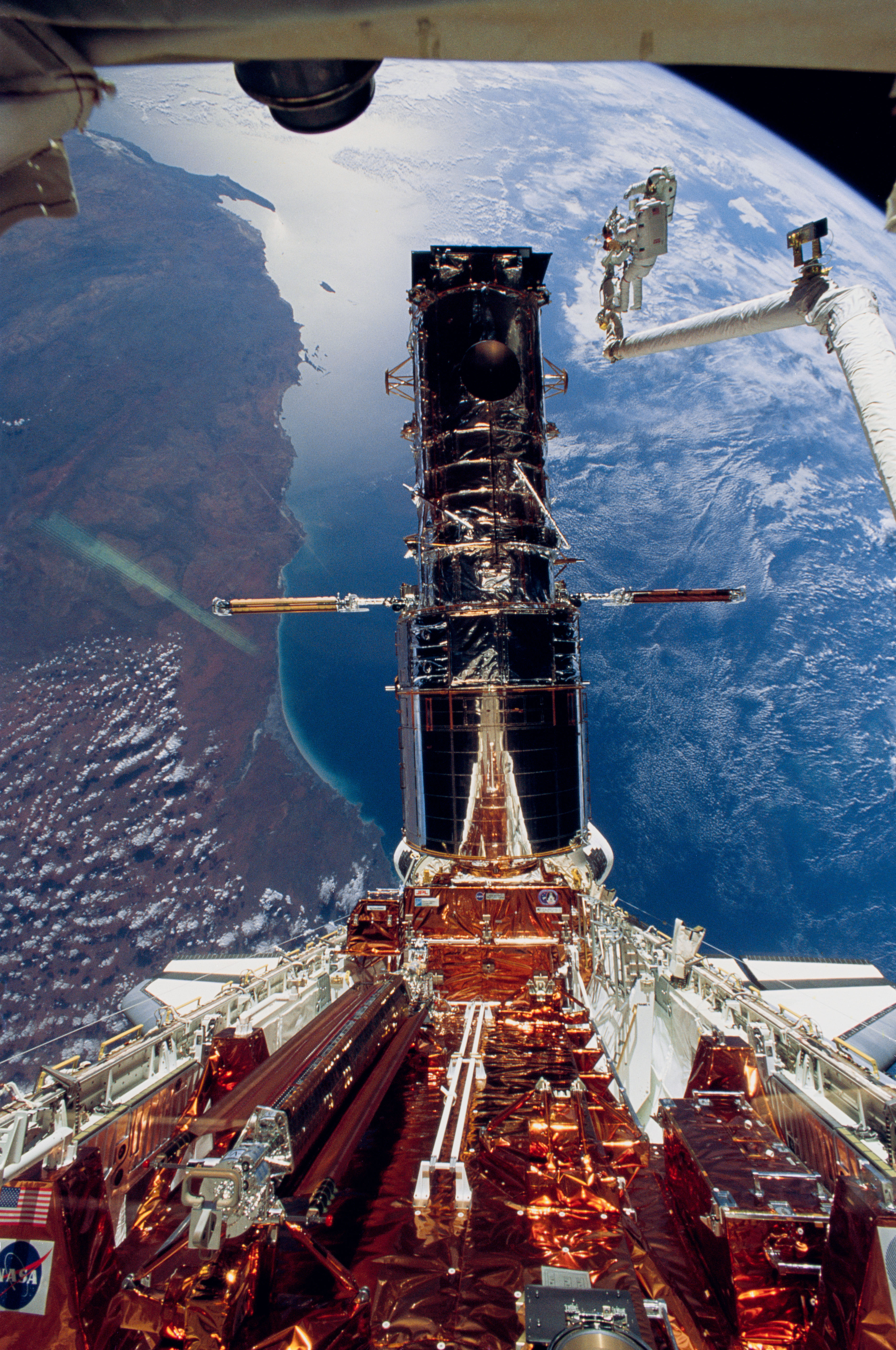
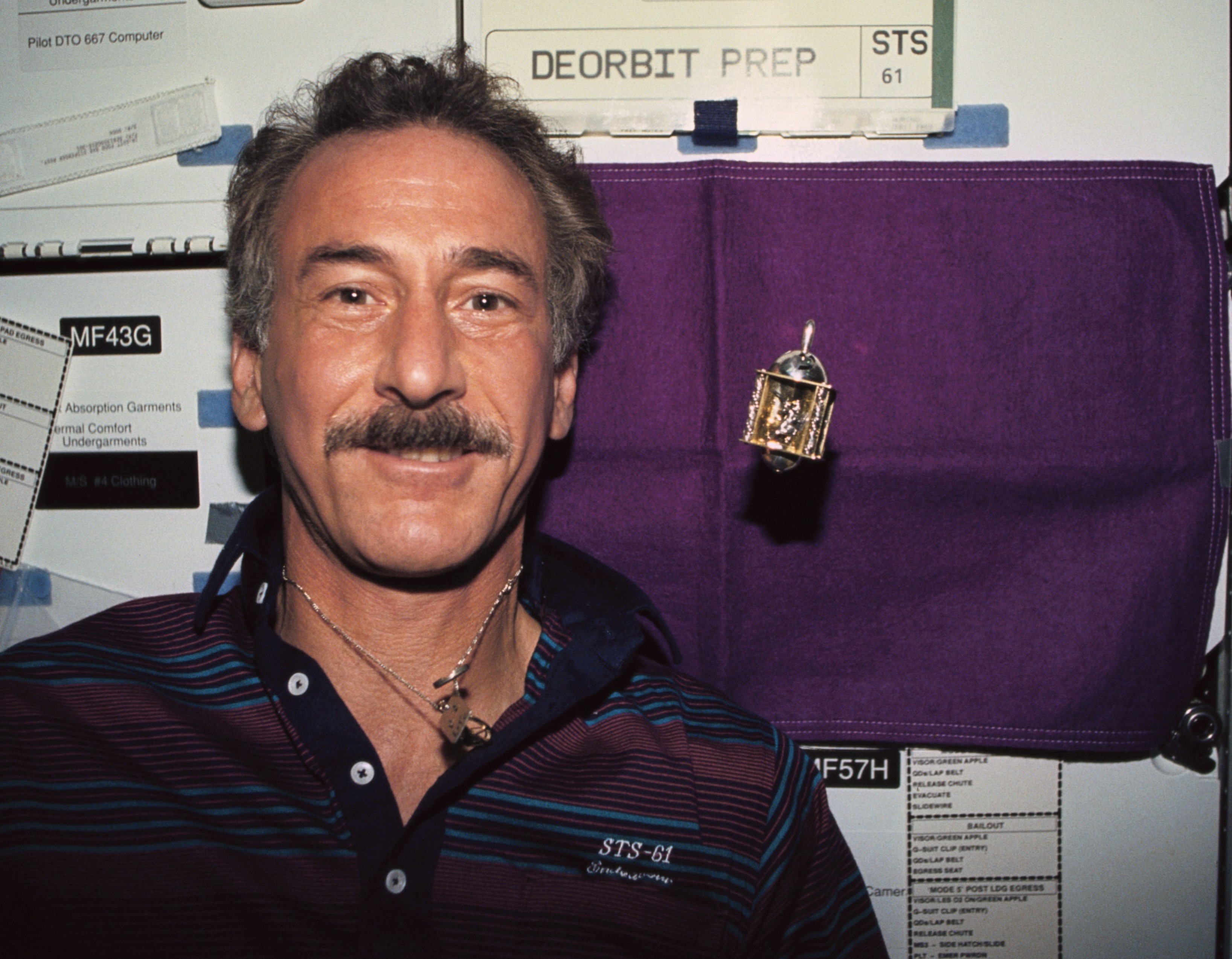
Fifth spacewalk. Left: Remote Manipulator System operator European Space Agency astronaut Claude Nicollier translates Jeffrey A. Hoffman and F. Story Musgrave to the top of the Hubble Space Telescope. Middle: The second of two solar arrays unfurls as Hoffman and Musgrave continue working. Right: Hoffman celebrates the first Hannukah in space, with a spinning dreidel floating nearby.
On the morning of the eighth day, Bowersox used Endeavour’s thrusters to slightly raise and circularize Hubble’s orbit. Hoffman and Musgrave stepped outside for the mission’s fifth and final spacewalk. When the two newly installed solar arrays failed to deploy after ground commanding, they manually deployed them, and the arrays unfurled without incident. They next replaced the solar array drive electronics and fitted an electronic connection box on the GHRS instrument. Hoffman and Musgrave’s final task involved installing covers, manufactured by Bowersox and Nicollier on board the shuttle, on the telescope’s magnetometers. The final spacewalk lasted 7 hours 21 minutes, bringing the mission’s total spacewalk time to 35 hours 28 minutes. Once back inside Endeavour, Hoffman celebrated the first Hanukkah in space during a televised broadcast, displaying a traveling menorah, unlit of course, and a spinning dreidel.
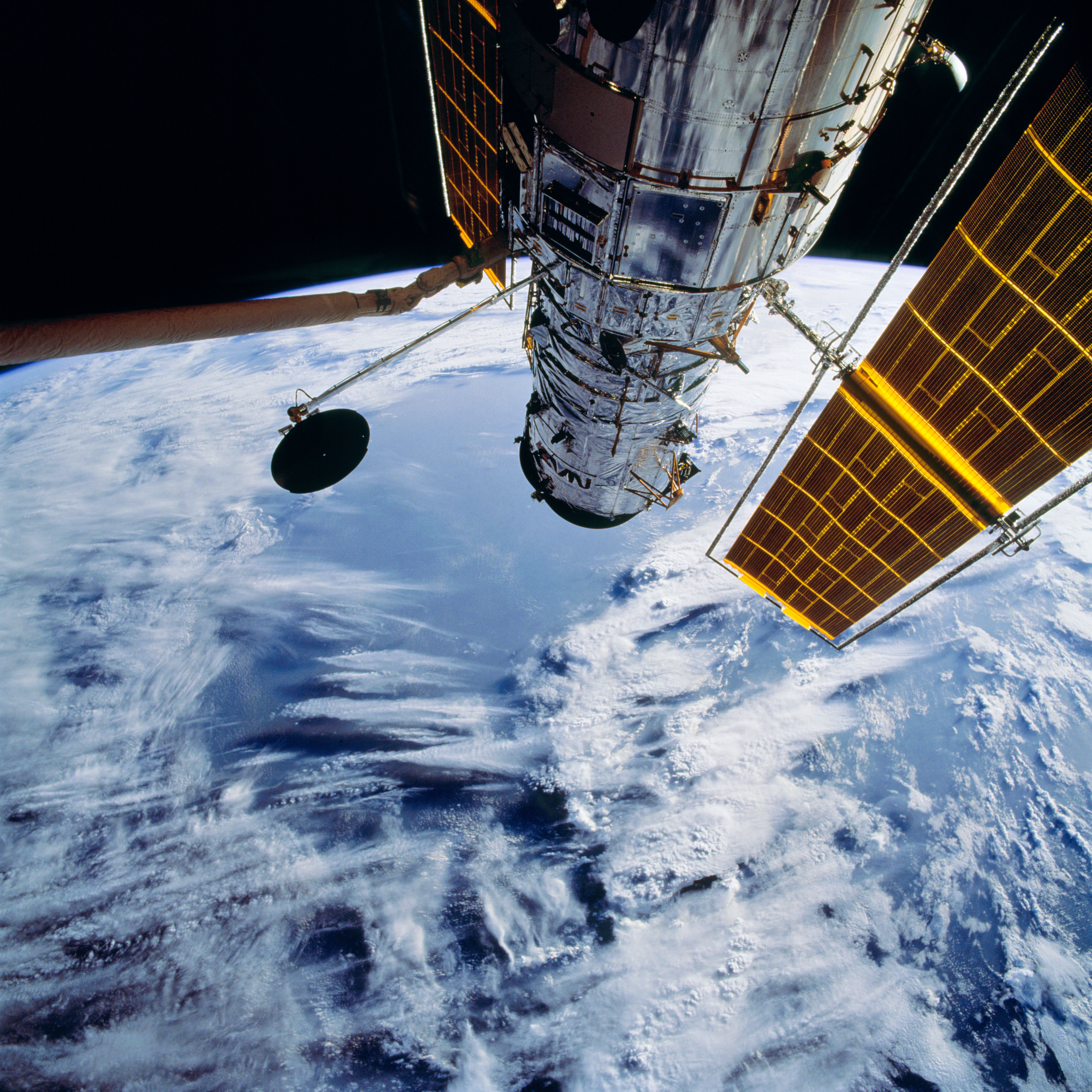
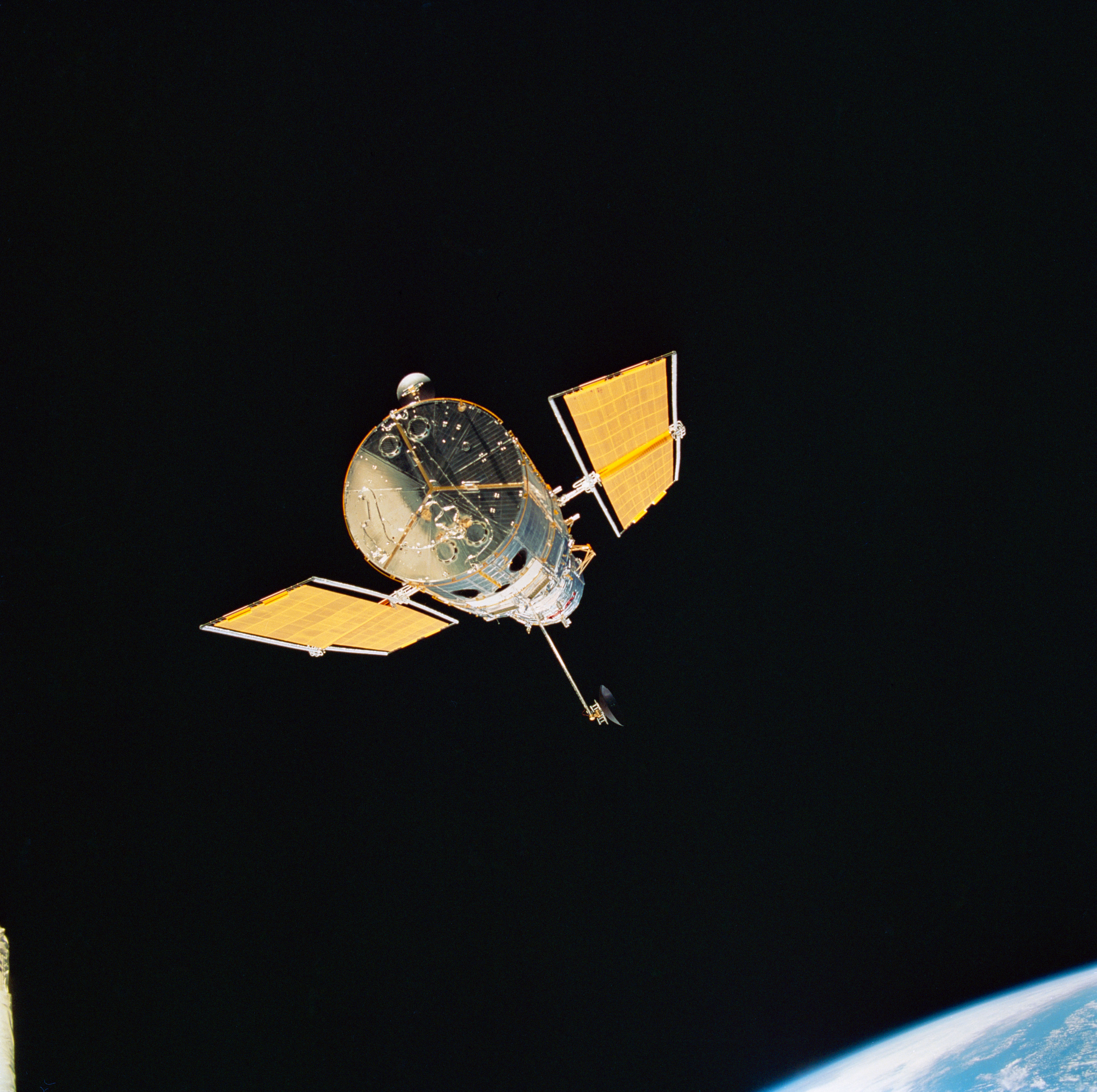
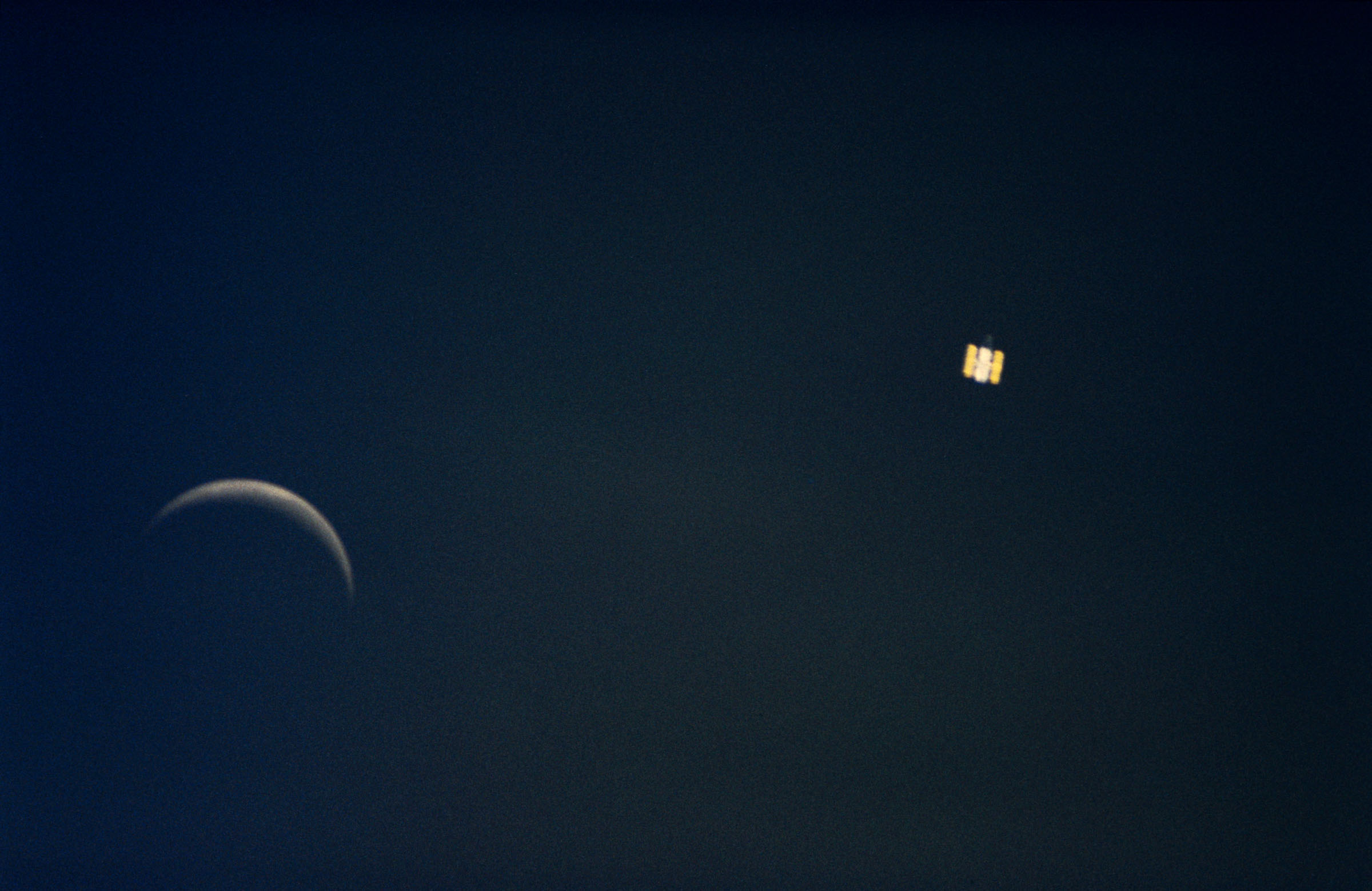
Left: European Space Agency astronaut Claude Nicollier grapples the Hubble Space Telescope, with its high-gain antenna deployed, just prior to release. Middle: After its release, Hubble slowly drifts away from Endeavour. Right: A distant view of Hubble, right, with a crescent Moon.
On flight day nine, Nicollier grappled Hubble with the RMS for the final time and lifted it above the payload bay. Ground controllers commanded its aperture door to open, and Nicollier released the telescope. Bowersox fired Endeavour’s thrusters to slowly back away from the telescope. The next day, the astronauts enjoyed a well-deserved day of rest. They returned the shuttle’s cabin pressure to 14.7 psi and tidied up the spacecraft. On the mission’s 11th day, Covey and Bowersox tested Endeavour’s flight control surfaces and practiced touchdowns using a laptop computer, all in preparation for deorbit, entry, and landing the following day.
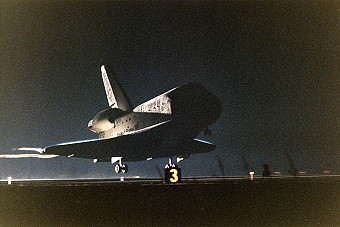
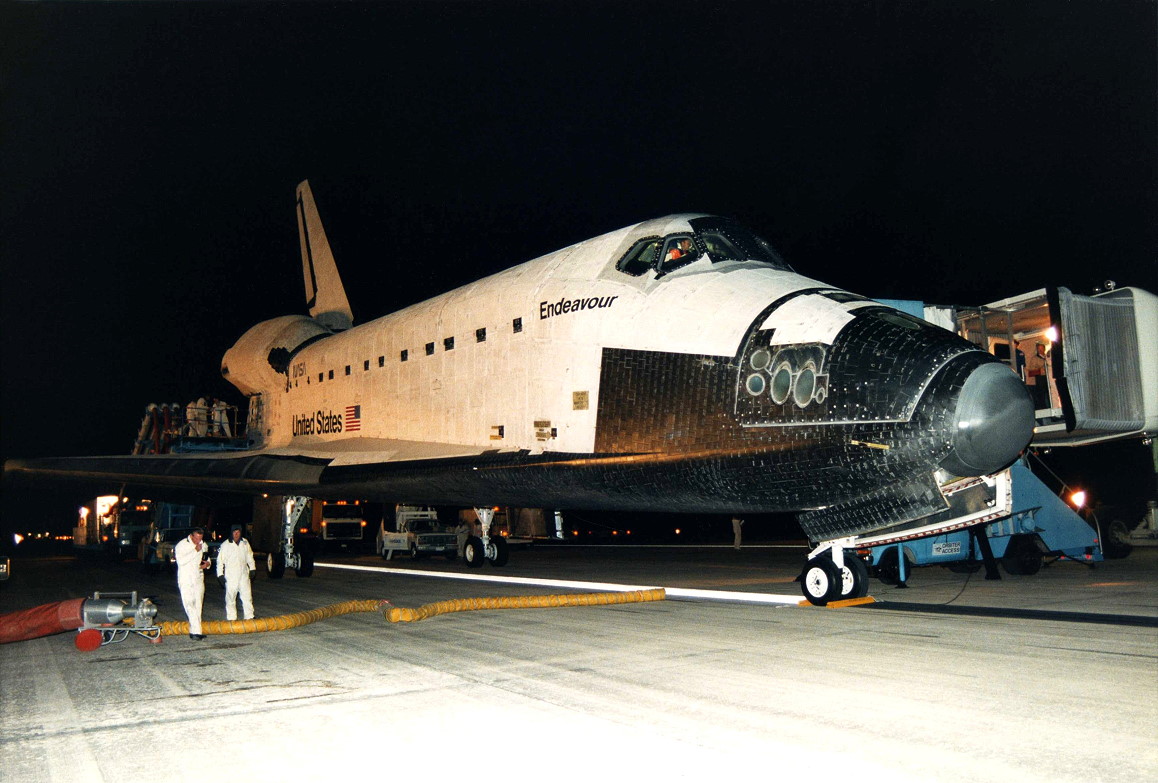

Left: Astronaut Richard O. Covey guides Endeavour to a landing at NASA’s Kennedy Space Center (KSC) in Florida. Middle: Workers at KSC continue to safe Endeavour following its landing. Right: Images of M100 galactic nucleus before, left, and after the first servicing mission showing the improved optical qualities.
On Dec. 13, 1993, their 12th and final day in space, the astronauts donned their pressure suits and prepared for the return to Earth. Due to predicted worsening weather conditions at KSC, Mission Control elected to bring them home one orbit earlier than planned. Covey guided Endeavour to a smooth landing at night at KSC, concluding a flight of 10 days, 19 hours, 59 minutes. They circled the Earth 163 times. Within a month, new images from Hubble indicated the repairs returned the telescope to its expected capabilities, providing astronomers with a unique observation platform. The lessons learned from planning and executing the complex series of spacewalks, with extensive coordination with teams on the ground, proved highly useful not only for future Hubble servicing mission but also for the difficult spacewalks required to assemble and maintain the International Space Station.
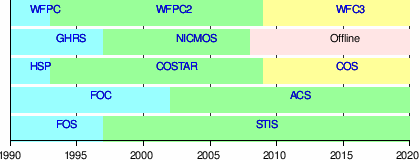
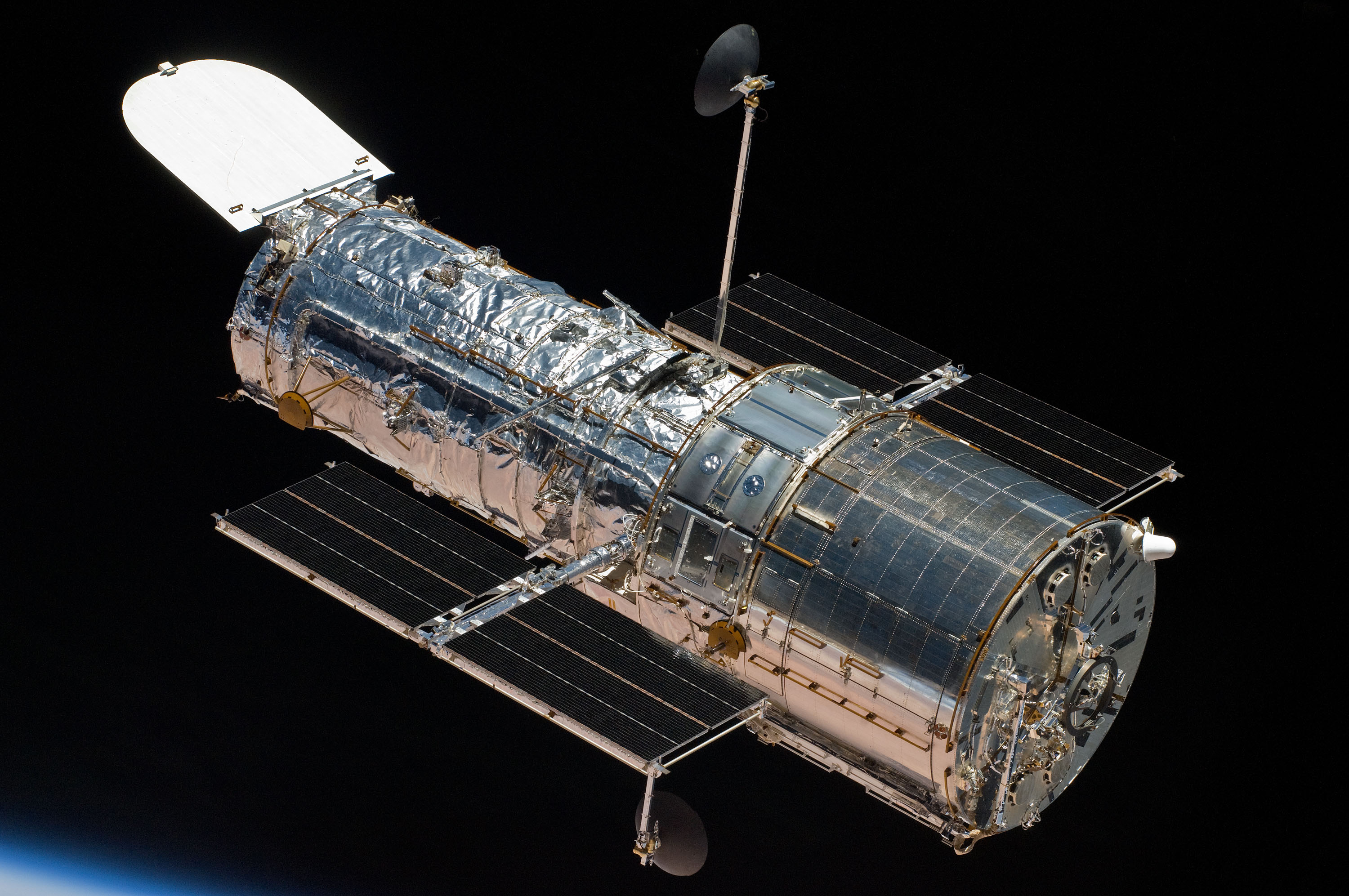
Left: Timeline of the Hubble Space Telescope’s instruments and their replacements during servicing missions. Right: Hubble as it appeared after its release during the final servicing mission in 2009.
Although the STS-61 crew’s work left the Hubble Space Telescope in better condition than originally designed, over the years it required additional servicing to ensure it met its expected 15-year on-orbit life. Four additional shuttle crews serviced the telescope between 1997 and 2009, and today it carries a suite of instruments far more advanced than its original complement. During the five servicing missions, 16 space walking astronauts conducted 23 spacewalks totaling more than 165 hours, or just under 7 days, to make repairs or improvements to the telescope’s capabilities. To summarize the discoveries made by scientists using data from the Hubble Space Telescope is well beyond the scope of this article. Suffice it to say that during its more than 30 years of operation, information and images returned by Hubble continue to revolutionize astronomy, literally causing scientists to rewrite textbooks, and have dramatically altered how the public views the wonders of the universe. On the technical side, the launch of Hubble and the servicing missions to maintain and upgrade its capabilities have proven conclusively the value of maintainability of space-based scientific platforms.
Watch the STS-61 crew narrate a video of their Hubble servicing mission.
Powered by WPeMatico
Get The Details…
Kelli Mars