The Marshall Star for November 29, 2023
The Marshall Star for November 29, 2023
Artemis II Crew Enjoys Visit with Marshall Team Members
By Wayne Smith
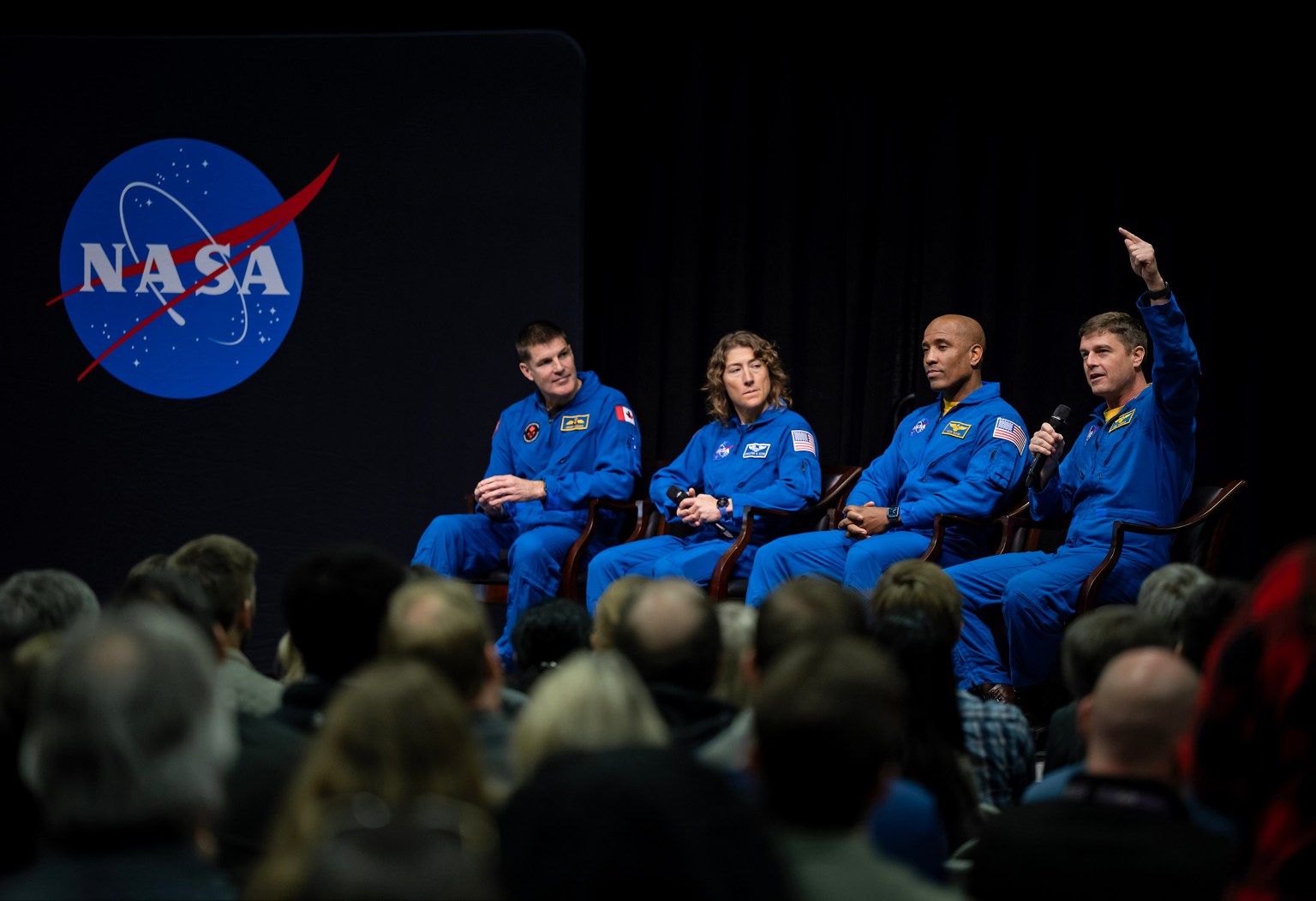
From talking about continuing the legacy of NASA’s Marshall Space Flight Center in space exploration to describing their roles in an upcoming historic mission, Artemis II astronauts enjoyed visiting with center team members Nov. 27.
The crew will be the first to ride aboard NASA’s SLS (Space Launch System) rocket and Orion spacecraft. They will launch atop the rocket to venture around the Moon on Artemis II, the first crewed flight for Artemis. Their mission around the Moon will verify capabilities for humans to explore deep space and pave the way for long-term exploration and science on the lunar surface. Marshall manages the SLS Program.
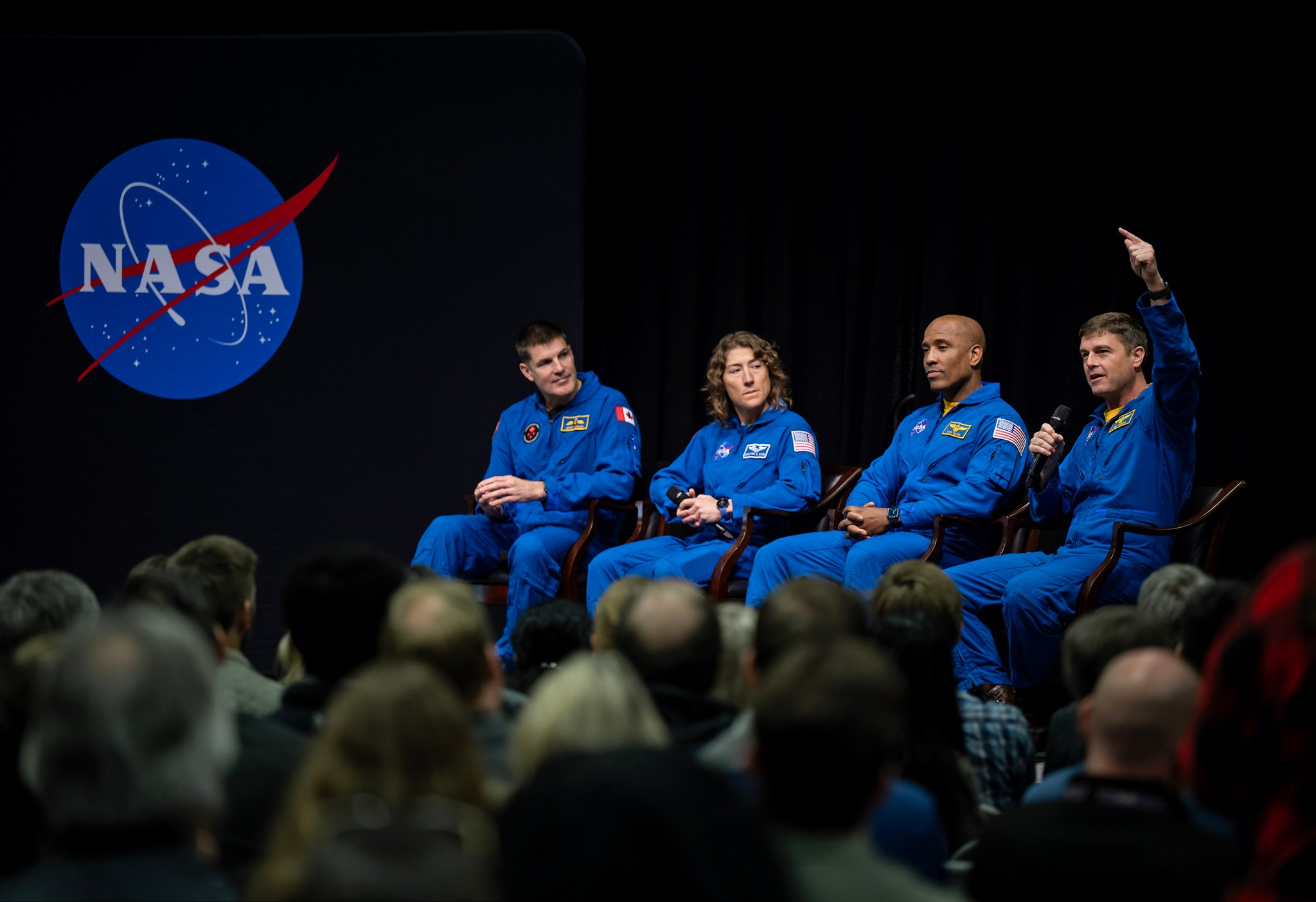
The four-member crew answered questions from a standing-room only crowd for about an hour inside Activities Building 4316 before taking photos with Marshall team members. The crew consists of NASA astronauts Reid Wiseman, who will be the Artemis II commander, Victor Glover (pilot) and Christina Koch (mission specialist), and Canadian Space Agency astronaut Jeremy Hansen (mission specialist).
They even took the time to send a personalized Christmas greeting to the grandmother of Corey Walker, an atmospheric science programmer at Marshall with Jacobs, who said it would be the perfect gift for her. During the question and answer portion of the event, the astronauts had Walker join them on stage and made a short greeting for his grandmother, Brenda Lowery, who lives on Sand Mountain.
“I can’t wait to give this to her because she loves the space program,” Walker said. “She was young when the astronauts went to the Moon the first time. She has lots of mementos at her house of the space program.”
After acting Center Director Joseph Pelfrey welcomed team members to the event, SLS Program Manager John Honeycutt talked about Marshall’s reputation of excellence in rocket propulsion and the success of Artemis I before introducing the astronauts.
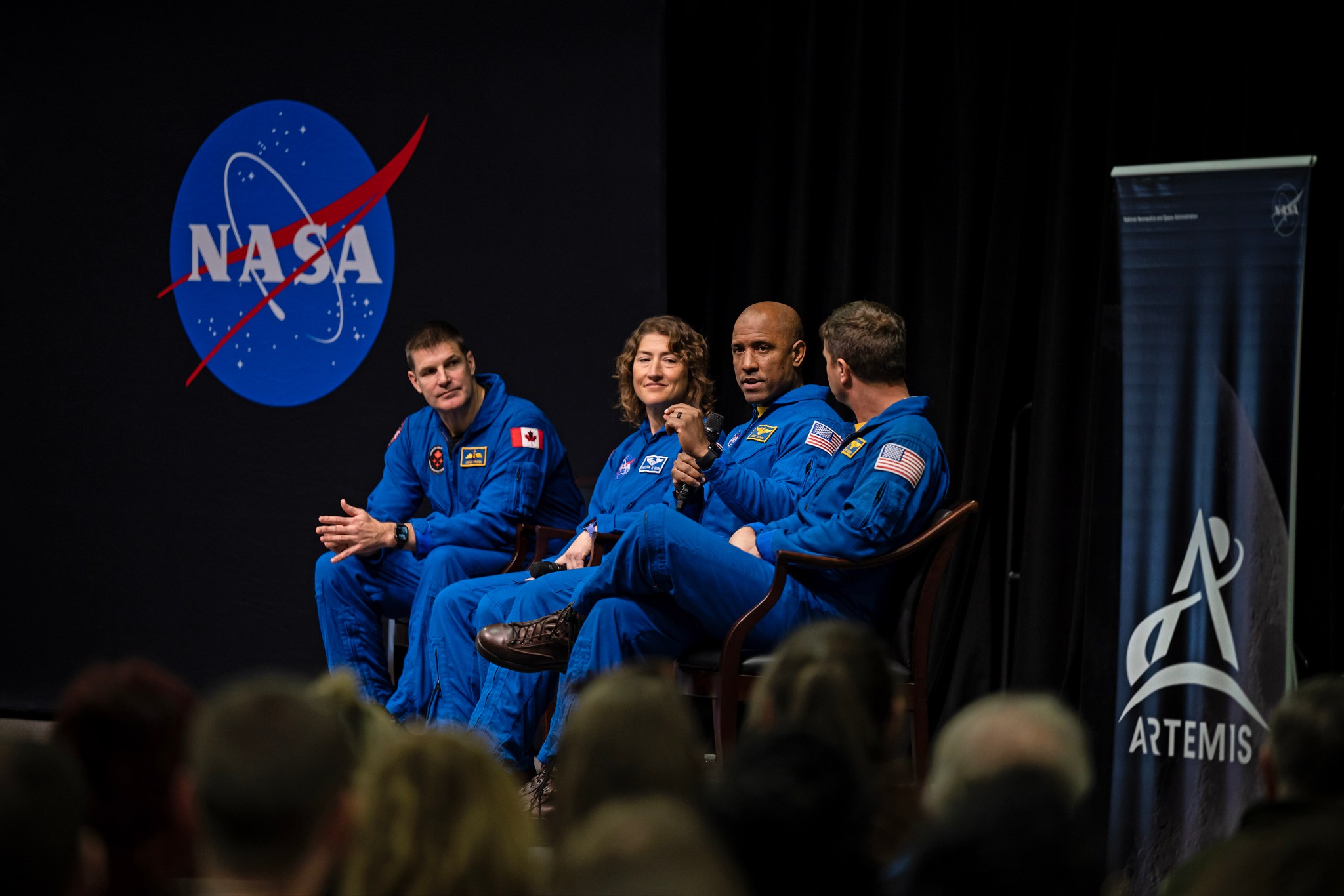
“Since the beginning, NASA astronauts have launched on historic missions and on rockets designed, developed, and built right here at Marshall Space Flight Center and our Michoud Assembly Facility,” Honeycutt said. “… It seems only fitting that when a new era of human space flight launches on a rocket developed here, that that’s the way it should be. We’ve been entrusted not just with an incredibly powerful and capable rocket, but with the lives of four astronauts. Their safety and return are chief among our responsibilities.”
Wiseman acknowledged Marshall’s rocket excellence, but also pointed out the center’s role in research for future missions to the Moon and working in the lunar environment. The Payload Operations Integration Center at Marshall is the control center for scientific operations on the International Space Station.
“(Marshall) means a lot more to us than getting us off this planet,’ Wiseman said. “It’s also our human research side when we are off the planet. When we are working sustainably in the lunar area, and we see humans on Mars, it’s built on the shoulders of POIC (Payload Operations Integration Center), of human research in orbit. That is the bread and butter of what we’re doing. We’re launching humans and living in space, and that is built right here at Marshall.”
Glover, who will be the first African American on a lunar mission, thanked Marshall team members for their work with SLS and the space station. He spent 168 days in space as a flight engineer aboard the space station for Expedition 64.
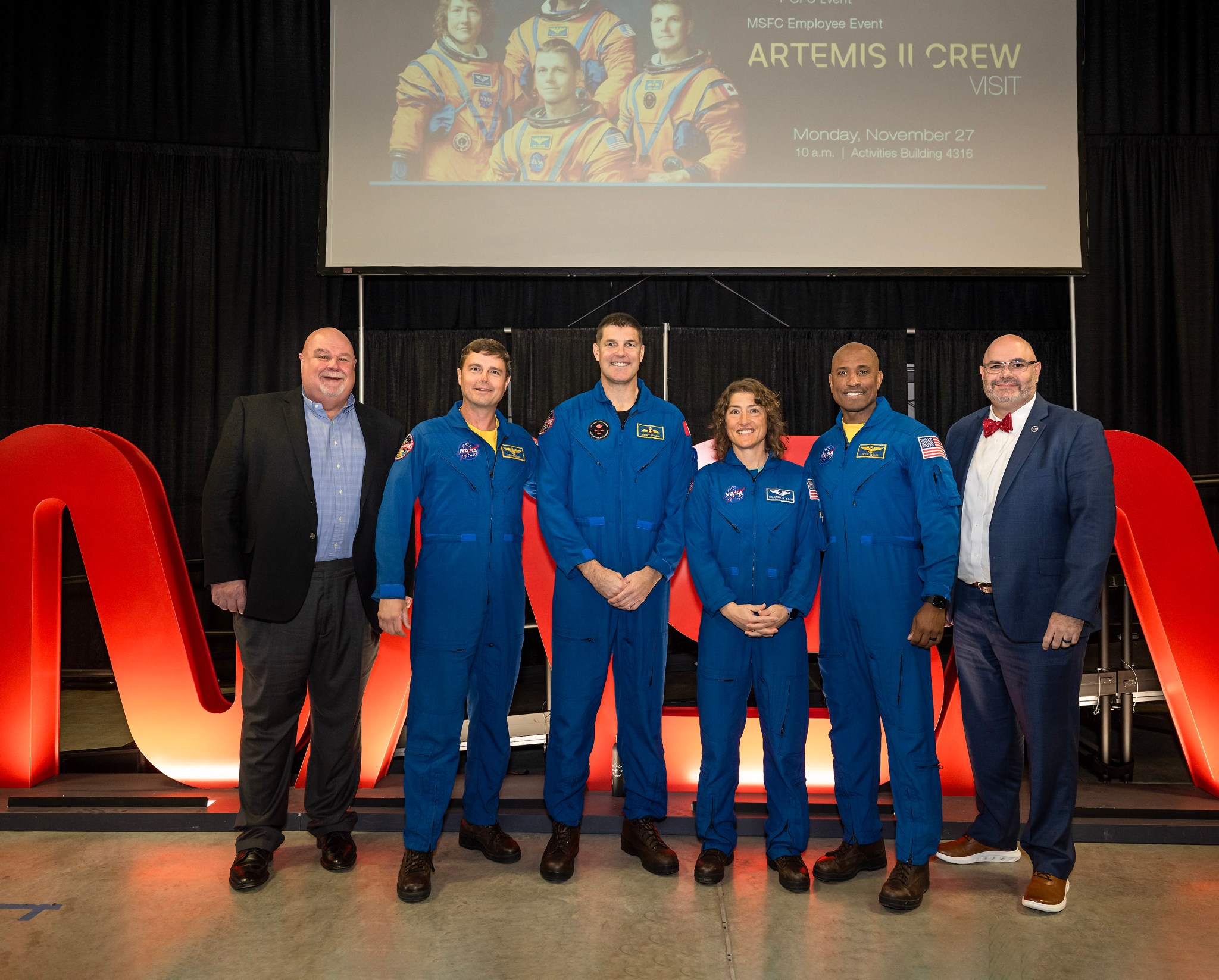
“Thank you for your work supporting our friends who are working on the space station now and for that amazing legacy that we’ve all had the opportunity to be a part of in one facet or another,” Glover said. “We’re here to do the work and be a part of this team. We hope that what we’re doing makes you proud.”
Koch and Hansen also will make history with the Artemis II mission. Koch will be the first woman on a lunar mission, while Hansen will be the first Canadian.
Andy Buehler, a rocket propulsion engineer at Marshall with Boeing, asked Koch what her message to young girls is as they see a female going to the Moon for the first time.
“Surround yourself with people who are encouraging,” Koch said. “Tell yourself you’re going to do great things one day. You can be that voice for yourself. Don’t just strive to be a part of something, strive to be excellent at what you’re doing.”
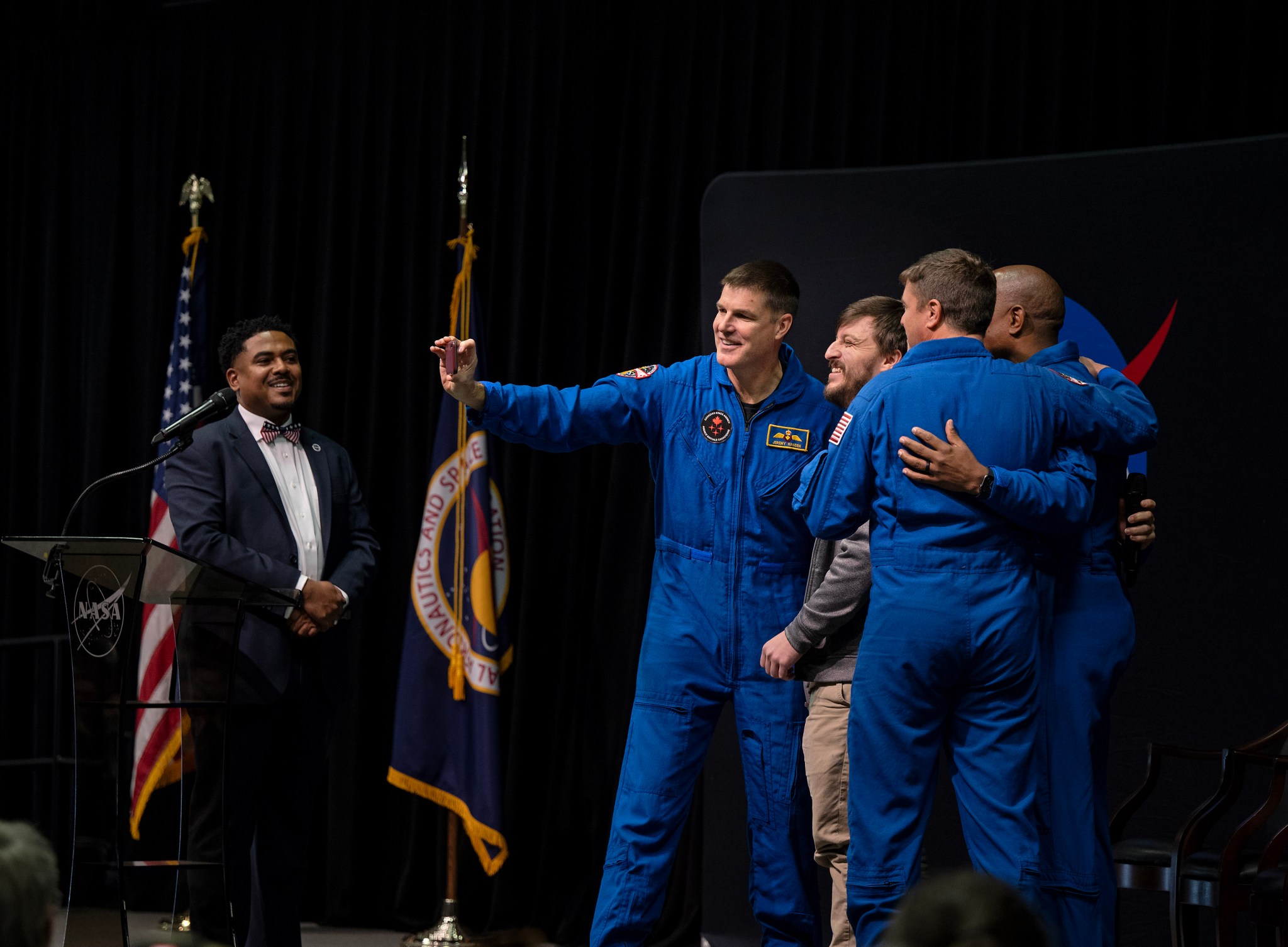
Hansen said he is excited about the future of Artemis. He told Marshall team members they are part of something that brings value to the world with NASA’s leadership.
“You’re doing that with partners around the world because you’re choosing to lead,” Hansen said. “We need that kind of leadership and that vision more than ever. We really need to be focused on things that lift up humanity. We have a lot of reason for hope for our future.”
Learn more about the Artemis II crew.
Smith, a Media Fusion employee and the Marshall Star editor, supports the Marshall Office of Communications.
Artemis II Crew Signs NASA Moon Rocket Hardware at Marshall
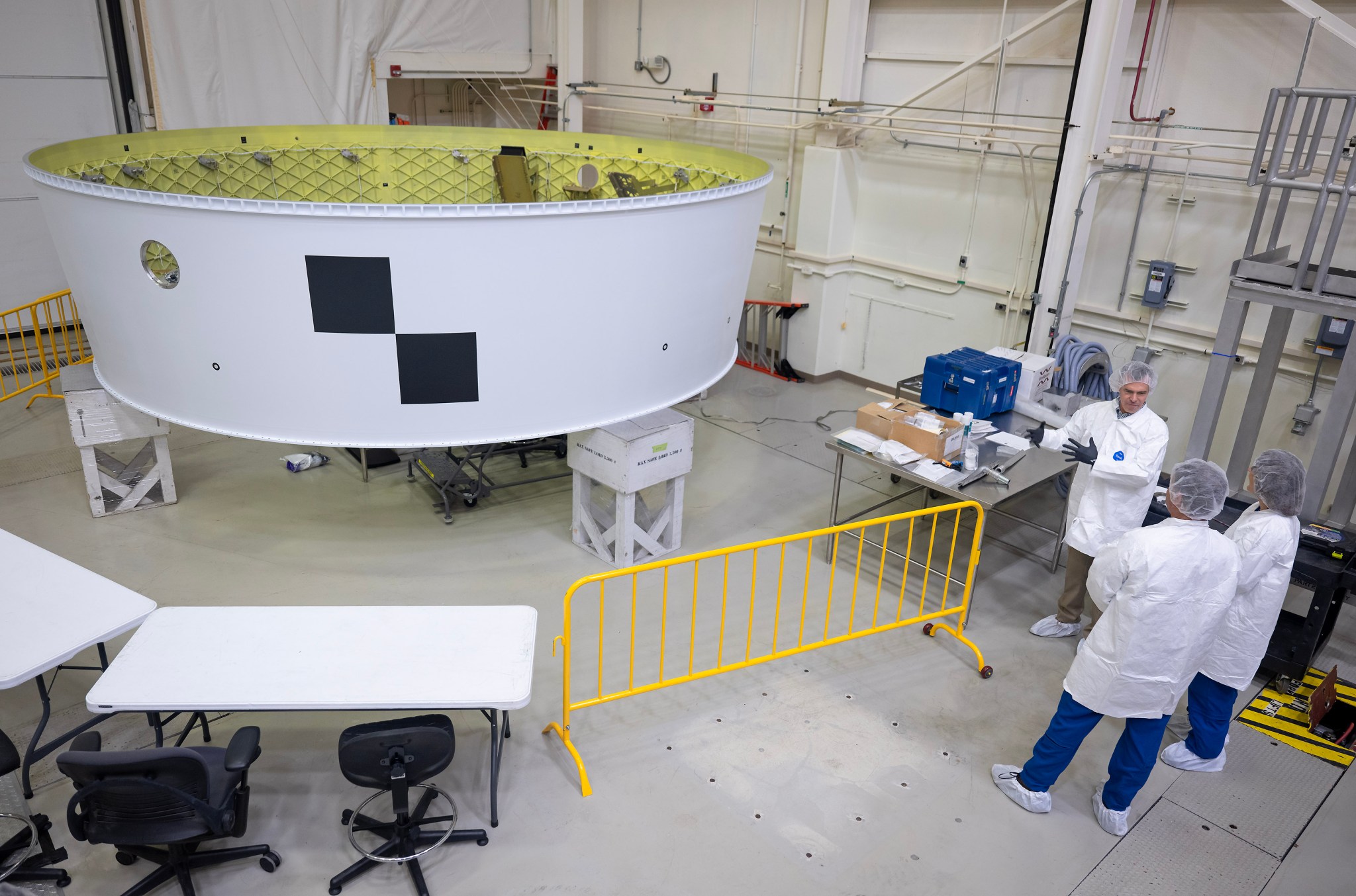
Artemis II astronauts Victor Glover, Reid Wiseman, and Christina Koch of NASA, and CSA (Canadian Space Agency) astronaut Jeremy Hansen signed the Orion stage adapter for the SLS (Space Launch System) rocket at NASA’s Marshall Space Flight Center on Nov. 27. The hardware is the topmost portion of the SLS rocket that they will launch atop during Artemis II when the four astronauts inside NASA’s Orion spacecraft will venture around the Moon.
The Orion stage adapter is a small ring structure that connects NASA’s Orion spacecraft to the SLS rocket’s interim cryogenic propulsion stage and fully manufactured at Marshall. At five feet tall and weighing 1,800 pounds, the adapter is the smallest major element of the SLS rocket. During Artemis II, the adapter’s diaphragm will serve as a barrier to prevent gases created during launch from entering the spacecraft.
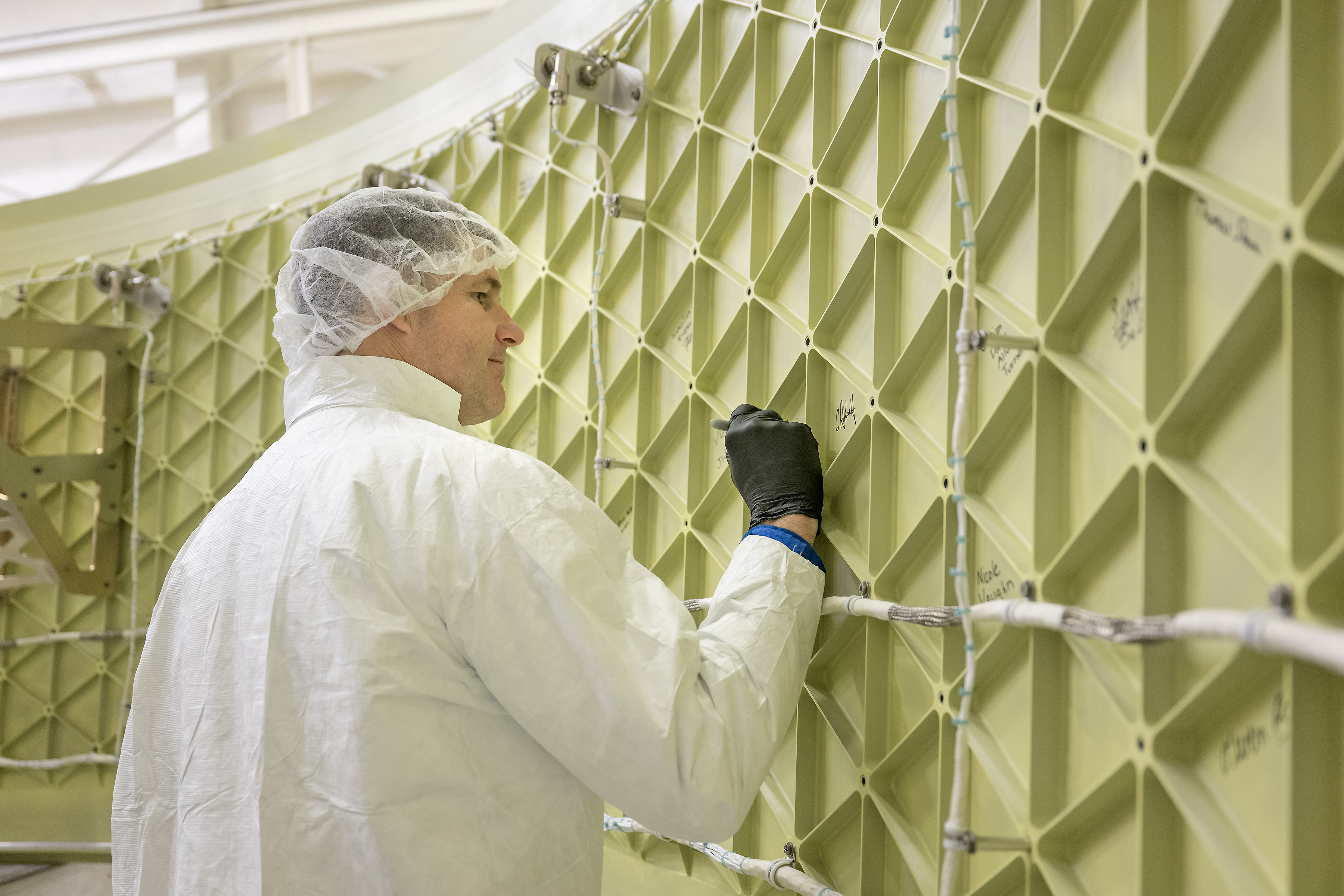
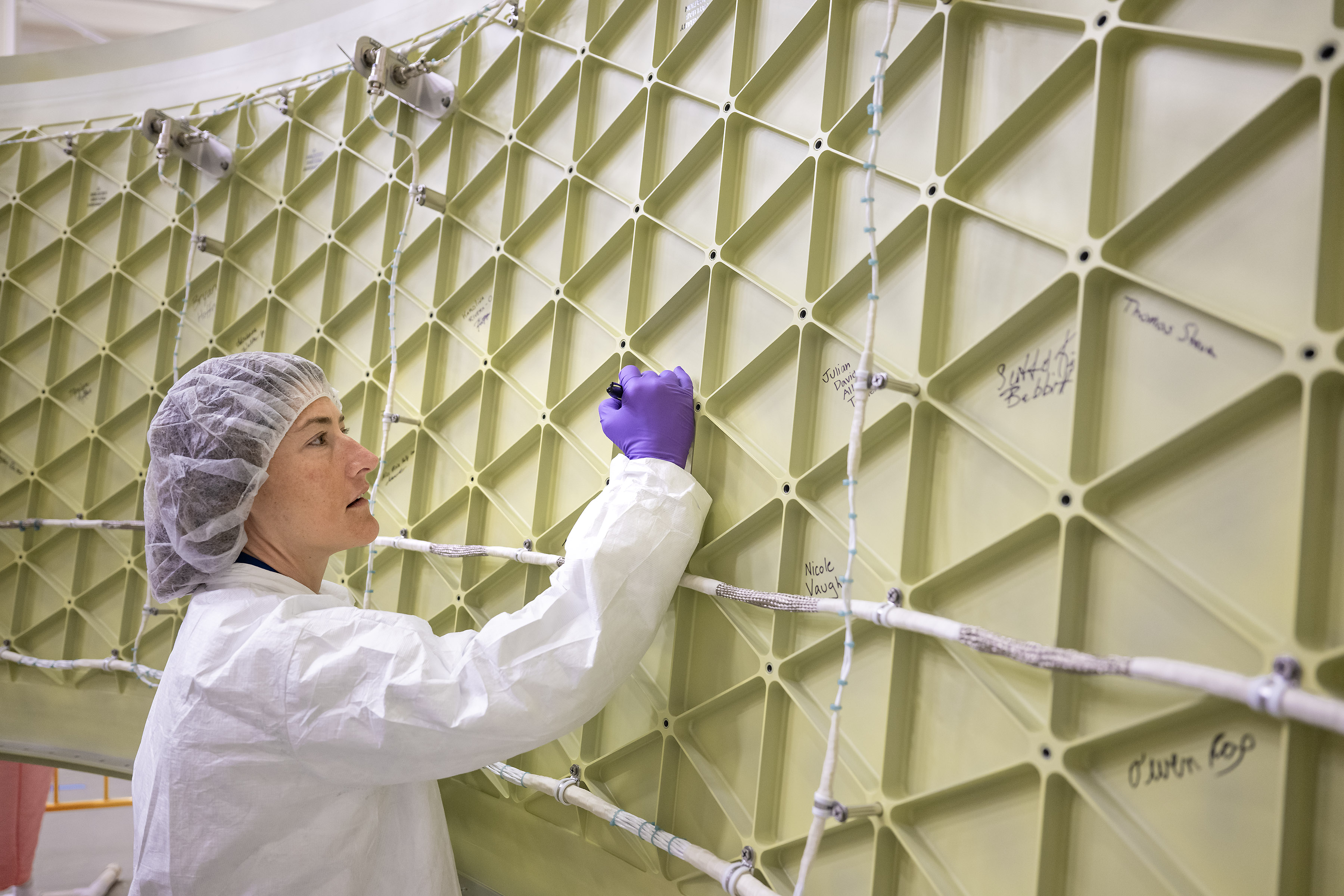
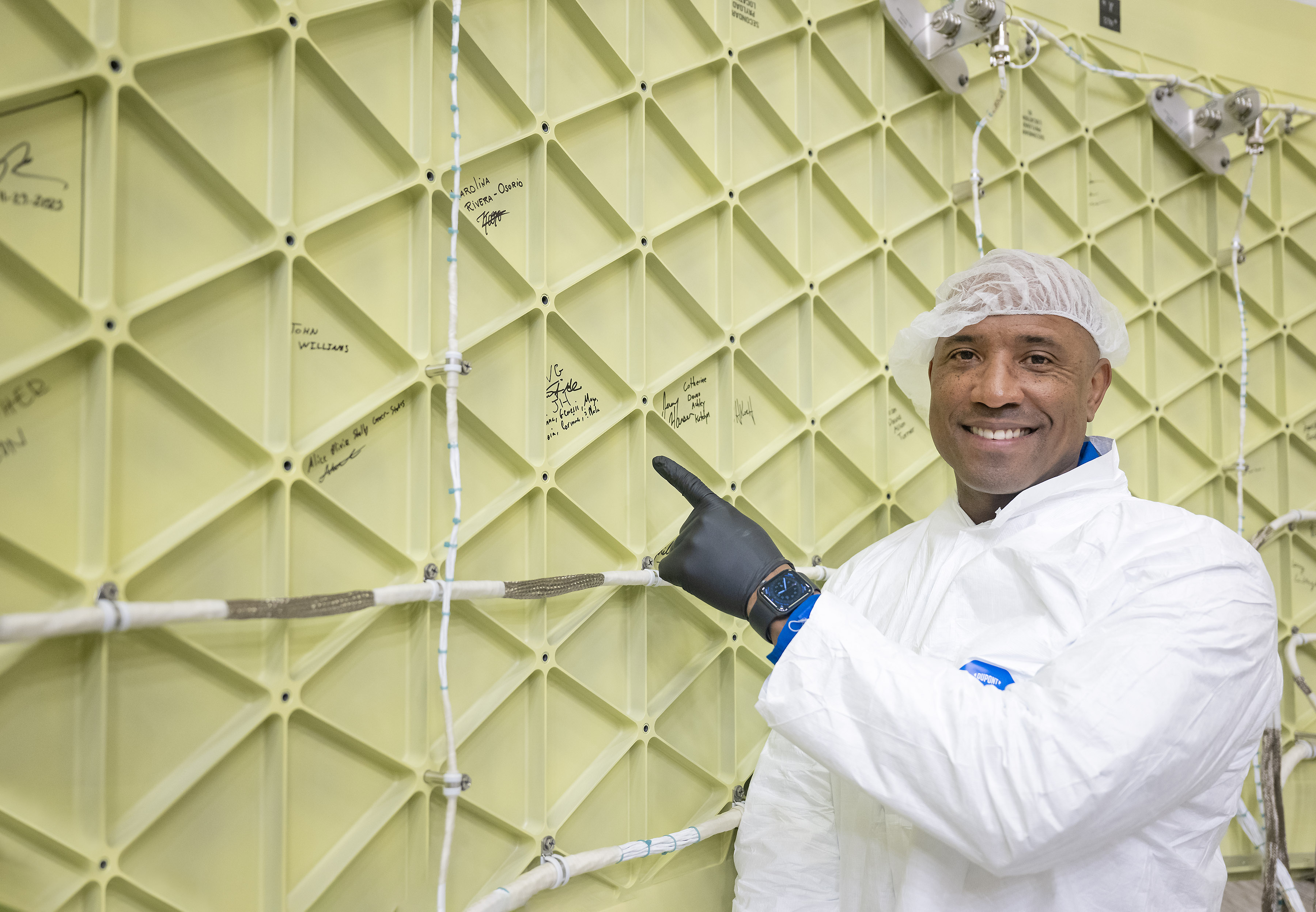
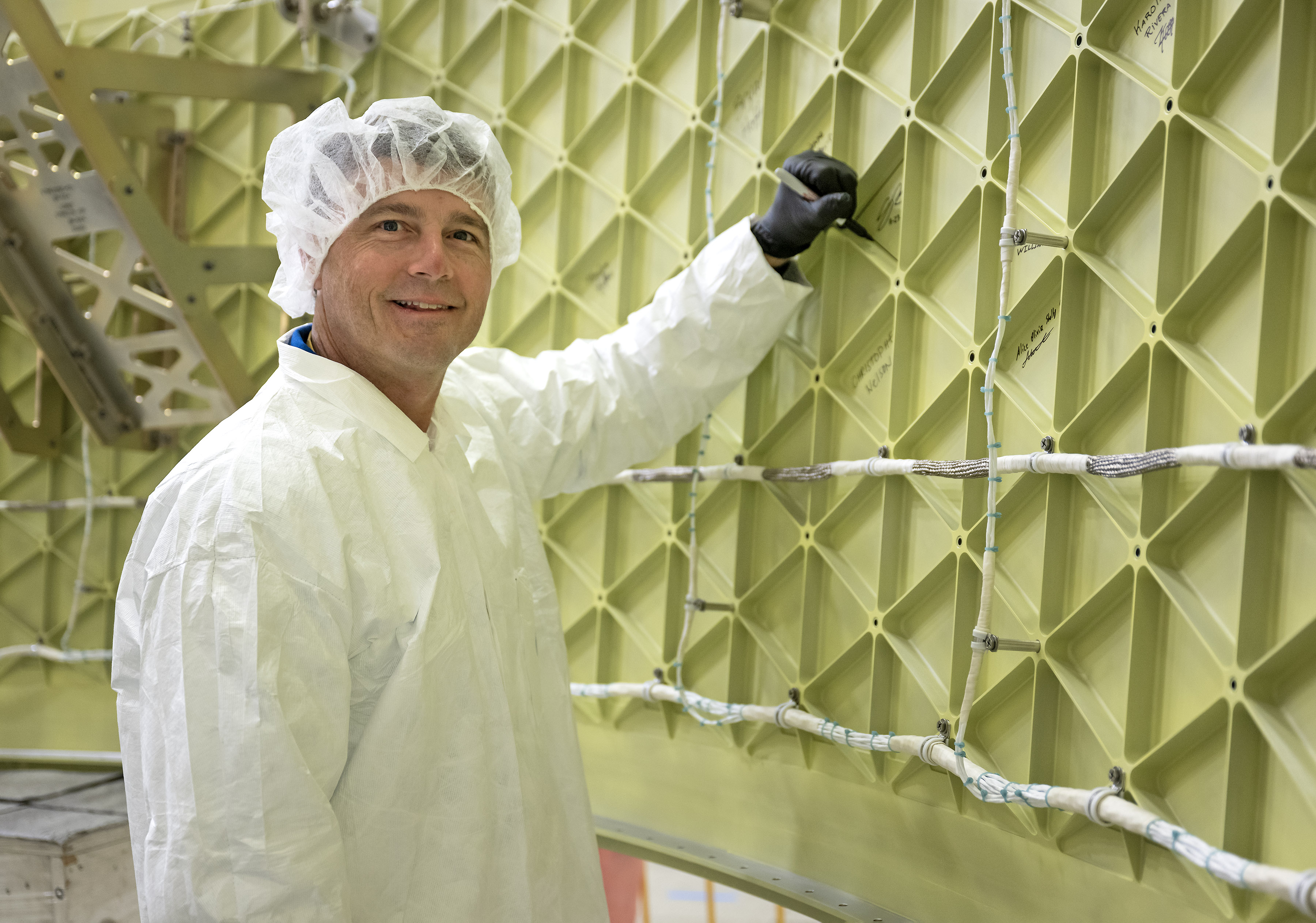
From left, Artemis II astronauts Jeremy Hansen, Christina Koch, Victor Glover, and Reid Wiseman sign the SLS Orion stage adapter for the Artemis II mission.
NASA/Charles Beason
In addition to signing the Orion stage adapter, Wiseman and Koch also visited the Systems Integration Lab at Marshall prior to an employee event.

NASA is working to land the first woman and first person of color on the Moon under Artemis. SLS is part of NASA’s backbone for deep space exploration, along with the Orion spacecraft, advanced spacesuits and rovers, the Gateway in orbit around the Moon, and commercial human landing systems. SLS is the only rocket that can send Orion, astronauts, and supplies to the Moon in a single mission. Through Artemis, NASA will explore more of the lunar surface than ever before and prepare for the next giant leap: sending astronauts to Mars.
Monthly Brown Bag Seminars Shine Spotlight on Marshall’s Business Units
By Jessica Barnett
With thousands of employees across hundreds of departments and teams, there’s no shortage of cool things happening at NASA’s Marshall Space Flight Center. To help keep Marshall team members up to date, the center recently started a series of monthly brown bag seminars aimed at highlighting its business units.
Each month features a different business unit. On Nov. 7, nearly 300 Marshall team members attended the first seminar, which focused on Marshall’s Moon/Mars Surface Technologies and Systems. In doing so, the participants learned more about the center’s strategy.
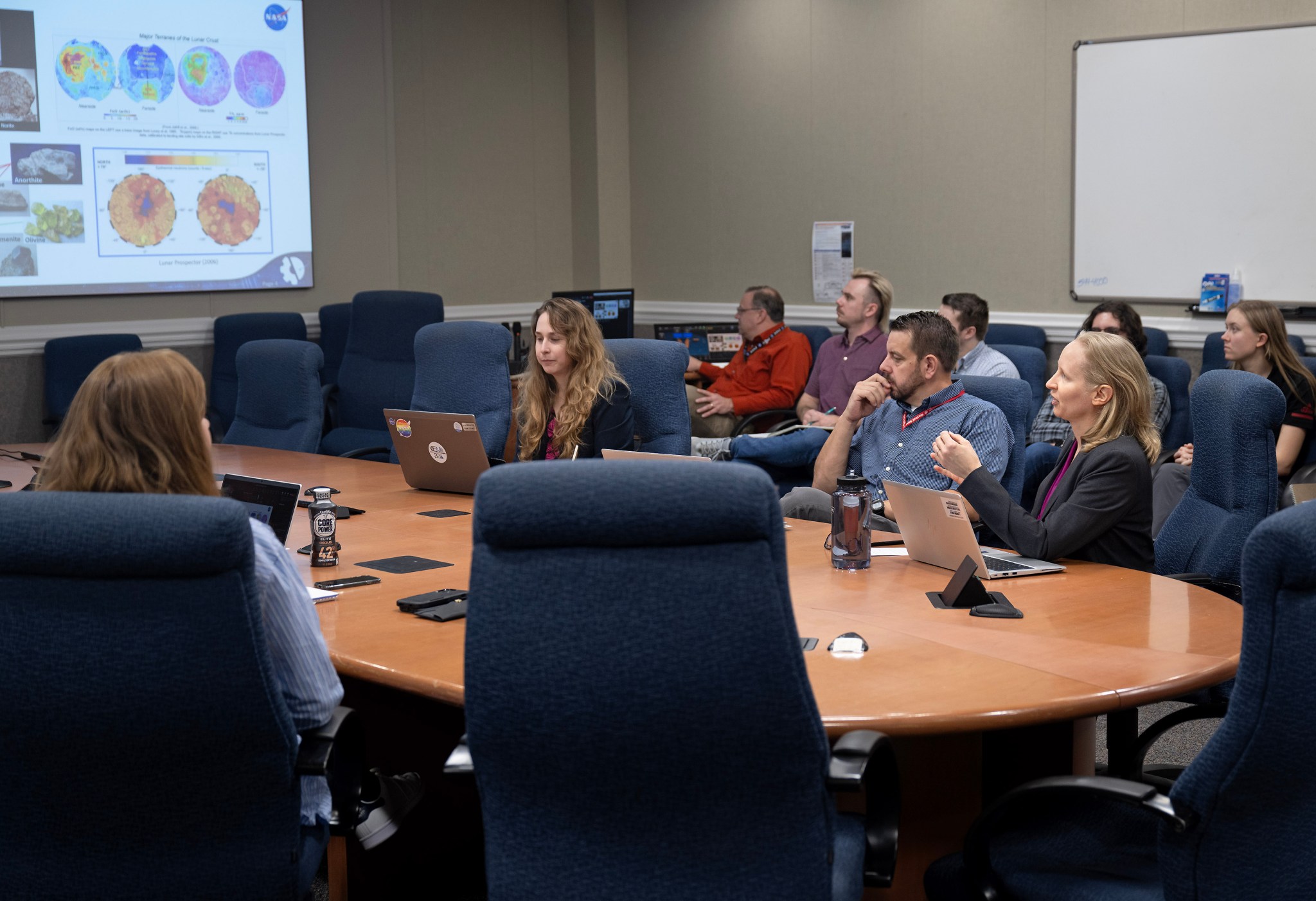
“We’re in between the hopes and dreams of what you might find out there or what the vision of the future on the lunar surface might look like, and what is actually practical,” said Michael Zanetti, a lunar and planetary geologist at Marshall who was also one of the speakers during the Nov. 7 seminar.
Zanetti discussed GPS-denied LiDAR navigation systems, including KNaCK (Kinematic Navigation and Cartography Knapsack), a proof-of-concept 3D terrain mapping, navigation, and algorithm development tool that can be used to determine the layout of portions of the lunar or Martian surface even when there is no light source or GPS to guide it.
He also talked about Marshall’s Lunar Regolith Terrain Facility – a 125-by-125-foot area covered in 500 tons of lunar regolith simulant that can be quickly modified as needed for robotics testing.
“If we’re going to send anything to the lunar surface, we need to make sure that technology is going to be able to function when it gets there,” said Jennifer Edmunson, project manager for Marshall’s Moon-to-Mars Planetary Autonomous Construction Technology Project, or MMPACT. “Testing with regolith is important to do that, but since we don’t have enough regolith material from the Apollo missions, we rely on simulants.”
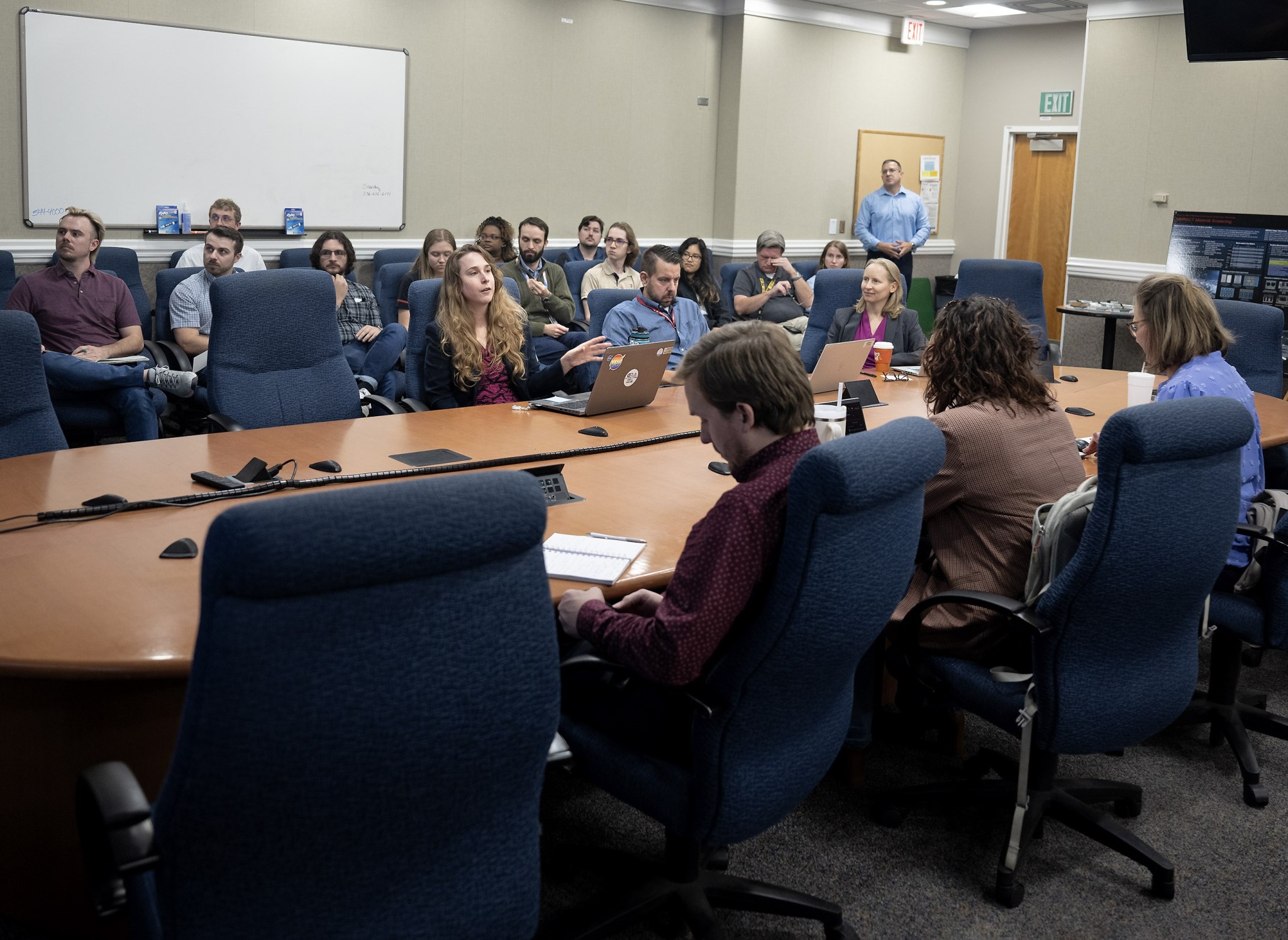
MMPACT is currently working to determine how best to build infrastructure on the lunar surface using the regolith and resources already available there. Edmunson shared how the project aims to build landing pads and even habitats on the Moon, but that it’s important to find ways of building that can withstand the extreme temperature variations, lengthy moonquakes, and other challenges that would be faced on the lunar surface.
Joining Edmunson and Zanetti at the seminar was Annette Gray, a materials test engineer who was part of MERCRII (Metallic Environmentally Resistant Coatings Rapid Innovation Initiative). Gray explained how the early career initiative project worked with other centers and NASA partners to develop a radiation-resistant coating to improve the wear resistance of mechanism joints on the lunar or Martian surface.
Part of the initiative included acquiring a Planetary, Lunar, and Asteroid Natural Environment Testbed, or PLANET. Gray said the PLANET was a 2-meter-by-3-meter chamber with up to 1 ton of regolith simulant inside that could test high vacuum, low-density plasma, and various atmospheric conditions.
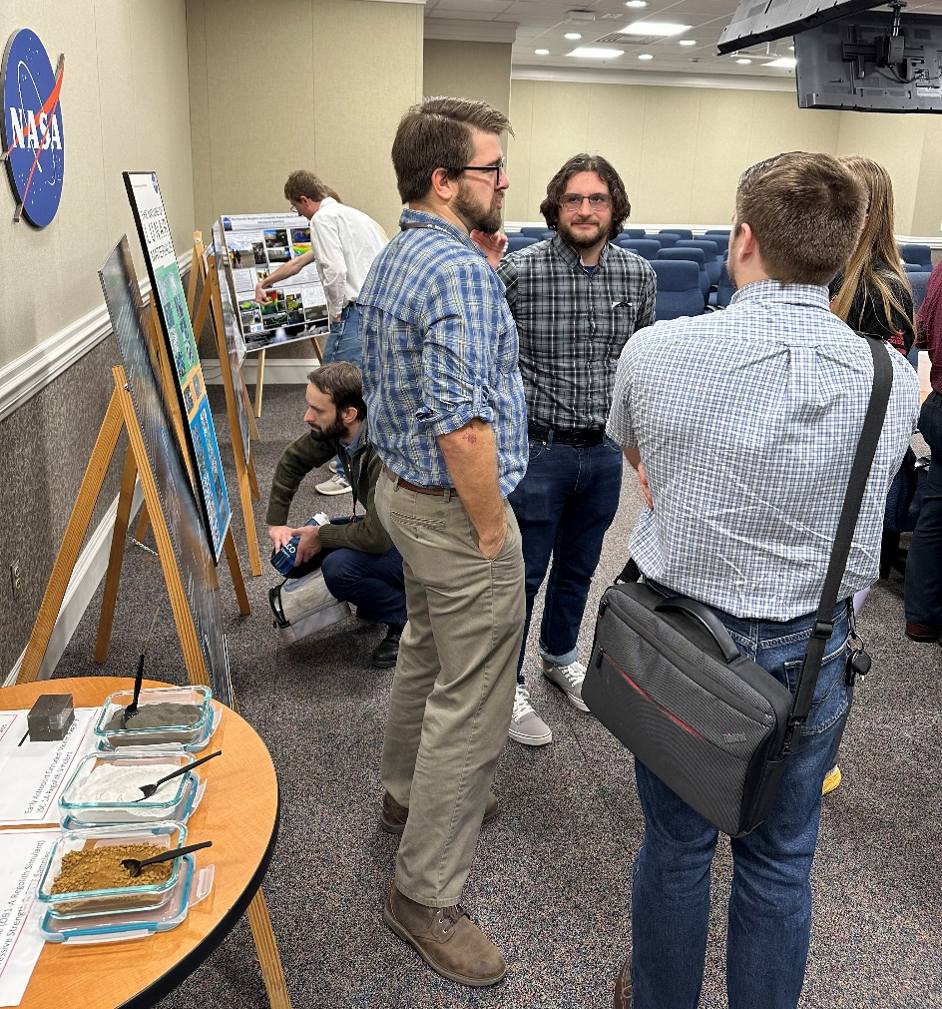
The seminar ended with a question-and-answer session and a chance for in-person attendees to check out regolith simulant samples.
“It was an excellent way to showcase how the varied work we do at Marshall is enabling future NASA missions and addressing critical gaps,” said MMSTS Strategy Lead Shawn Maynor. “The excitement was palpable, and the discussion was lively. I truly feel that Marshall is in a unique position to capitalize on the evolving space industry.”
The next brown bag seminar is set for January 2024, after the winter holiday season.
Barnett, a Media Fusion employee, supports the Marshall Office of Communications.
NASA Releases Its First International Space Station Tour in Spanish
Lee esta nota de prensa en español aquí.
Record-breaking NASA astronaut Frank Rubio provides the agency’s first Spanish-language video tour of humanity’s home in space – the International Space Station.
Rubio welcomes the public aboard the microgravity science laboratory in a behind-the-scenes look at living and working in space recorded during his 371-day mission aboard the space station, the longest single spaceflight in history by an American.
The station tour is available to watch on the agency’s NASA+ streaming platform, NASA app, NASA Television, YouTube, and the agency’s website.
Continuously inhabited for more than 23 years, the space station is a scientific platform where crew members conduct experiments across multiple disciplines of research, including Earth and space science, biology, human physiology, physical sciences, and technology demonstrations that could not be performed on Earth.
The Payload Operations Integration Center at NASA’s Marshall Space Flight Center operates, plans, and coordinates the science experiments onboard the space station 365 days a year, 24 hours a day.
The crew living aboard the station are the hands of thousands of researchers on the ground conducting more than 3,300 experiments in microgravity. During his record-breaking mission, Rubio spent many hours contributing to scientific activities aboard the orbiting laboratory, conducting everything from human health studies to plant research.
Rubio returned to Earth in September, having completed approximately 5,936 orbits of the Earth and a journey of more than 157 million miles during his first spaceflight, roughly the equivalent of 328 trips to the Moon and back.
Get the latest NASA space station news, images and features on Instagram, Facebook, and X.
NASA’s Dragonfly to Proceed with Final Mission Design Work
NASA’s Dragonfly mission has been authorized to proceed with work on final mission design and fabrication – known as Phase C – during FY (fiscal year) 2024. The agency is postponing formal confirmation of the mission (including its total cost and schedule) until mid-2024, following the release of the FY 2025 President’s Budget Request.
Earlier this year, Dragonfly – a mission to send a rotorcraft to explore Saturn’s moon Titan – passed all the success criteria of its Preliminary Design Review. The Dragonfly team conducted a re-plan of the mission based on expected funding available in FY 2024 and estimate a revised launch readiness date of July 2028. The agency will officially assess the mission’s launch readiness date in mid-2024 at the agency Program Management Council.
“The Dragonfly team has successfully overcome a number of technical and programmatic challenges in this daring endeavor to gather new science on Titan,” said Nicola Fox, associate administrator of NASA’s Science Mission Directorate at NASA Headquarters. “I am proud of this team and their ability to keep all aspects of the mission moving toward confirmation.”
Dragonfly takes a novel approach to planetary exploration, for the first time employing a rotorcraft-lander to travel between and sample diverse sites on Titan. Dragonfly’s goal is to characterize the habitability of the moon’s environment, investigate the progression of prebiotic chemistry in an environment where carbon-rich material and liquid water may have mixed for an extended period, and even search for chemical indications of whether water-based or hydrocarbon-based life once existed on Titan.
Dragonfly is being designed and built under the direction of the Johns Hopkins Applied Physics Laboratory in Laurel, Maryland, which manages the mission for NASA. The team includes key partners at NASA’s Goddard Space Flight Center; Lockheed Martin Space in Littleton, Colorado; Sikorsky, a Lockheed Martin company; NASA’s Ames Research Center; NASA’s Langley Research Center; Penn State University in State College, Pennsylvania; Malin Space Science Systems in San Diego, California; Honeybee Robotics in Pasadena, California; NASA’s Jet Propulsion Laboratory; CNES (Centre National d’Etudes Spatiales), the French space agency, in Paris, France; DLR (German Aerospace Center) in Cologne, Germany; and JAXA (Japan Aerospace Exploration Agency) in Tokyo, Japan.
Dragonfly is the fourth mission in NASA’s New Frontiers Program, managed by NASA’s Marshall Space Flight Center for the Science Mission Directorate.
Webb Telescope: A Prominent Protostar in Perseus
A new Picture of the Month from the NASA/ESA/CSA James Webb Space Telescope reveals intricate details of the Herbig Haro object 797, known as HH 797.
Herbig-Haro objects are luminous regions surrounding newborn stars (known as protostars), and are formed when stellar winds or jets of gas spewing from these newborn stars form shockwaves colliding with nearby gas and dust at high speeds. HH 797, which dominates the lower half of the image, is located close to the young open star cluster IC 348, which is located near the eastern edge of the Perseus dark cloud complex. The bright infrared objects in the upper portion of the image are thought to host two further protostars.
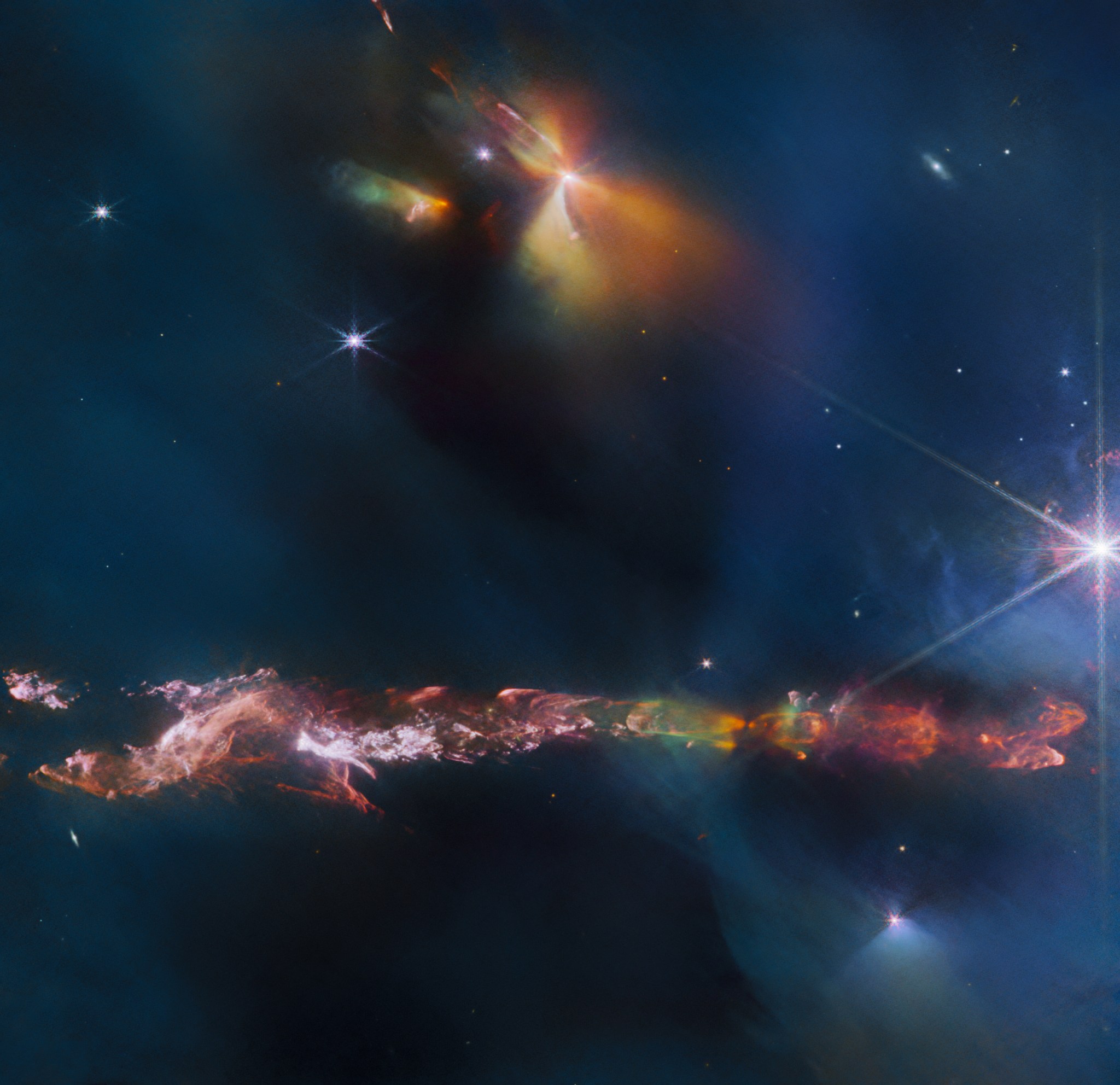
The image was captured with Webb’s NIRCam (Near-InfraRed Camera). Infrared imaging is powerful in studying newborn stars and their outflows, because the youngest stars are invariably still embedded within the gas and dust from which they are formed. The infrared emission of the star’s outflows penetrates the obscuring gas and dust, making Herbig-Haro objects ideal for observation with Webb’s sensitive infrared instruments. Molecules excited by the turbulent conditions, including molecular hydrogen and carbon monoxide, emit infrared light that Webb can collect to visualize the structure of the outflows. NIRCam is particularly good at observing the hot (thousands of degree Celsius) molecules that are excited as a result of shocks.
Using ground-based observations, researchers have previously found that for cold molecular gas associated with HH 797, most of the red-shifted gas (moving away from us) is found to the south (bottom right), while the blue-shifted gas (moving towards us) is to the north (bottom left). A gradient was also found across the outflow, such that at a given distance from the young central star, the velocity of the gas near the eastern edge of the jet is more red-shifted than that of the gas on the western edge. Astronomers in the past thought this was due to the outflow’s rotation. In this higher resolution Webb image, however, we can see that what was thought to be one outflow is in fact made up of two almost parallel outflows with their own separate series of shocks (which explains the velocity asymmetries). The source, located in the small dark region (bottom right of center), and already known from previous observations, is therefore not a single but a double star. Each star is producing its own dramatic outflow. Other outflows are also seen in this image, including one from the protostar in the top right of center along with its illuminated cavity walls.
HH 797 resides directly north of HH 211 (separated by approximately 30 arcseconds), which was the feature of a Webb image release in September 2023.
The James Webb Space Telescope is the world’s premier space science observatory. Webb is solving mysteries in our solar system, looking beyond to distant worlds around other stars, and probing the mysterious structures and origins of our universe and our place in it. Webb is an international program led by NASA with its partners, ESA (European Space Agency) and the Canadian Space Agency. Several NASA centers contributed to the project, including NASA’s Marshall Space Flight Center.
Powered by WPeMatico
Get The Details…
Lee Mohon