NASA’s Boeing Crew Flight Test: Atlas V Fueling Underway
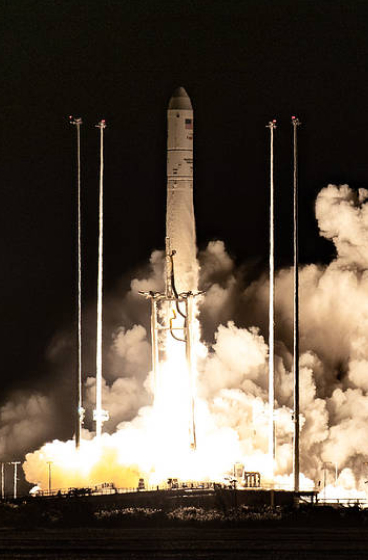
Boeing’s Starliner spacecraft atop the United Launch Alliance Atlas V rocket rolls out from the Vertical Integration Facility to the launch pad of Space Launch Complex-41 at Cape Canaveral Space Force Station in Florida on Saturday, May 4, 2024, ahead of NASA’s Boeing Crew Flight Test. Photo credit: NASA/Glenn Benson
Following a poll for fueling by NASA, Boeing, and United Launch Alliance, the Atlas V rocket now is being filled with liquid oxygen in the first stage and a combination of liquid oxygen and hydrogen in the Centaur upper stage. RP-1, a rocket-grade kerosene, was loaded into the first stage previously. The rocket will launch NASA astronauts Butch Wilmore and Suni Williams aboard the Starliner spacecraft at 10:34 p.m. EDT Monday from Cape Canaveral Space Force Station in Florida to the International Space Station.
The U.S. Space Force 45th Weather Squadron continues to predict a 95% chance of favorable weather conditions for launch, with the cumulus cloud rule being the primary weather concern.
NASA astronauts Wilmore and Williams are the first to launch aboard Starliner to the space station as part of the agency’s Commercial Crew Program. NASA will provide live coverage of the launch, beginning at 6:30 p.m. on May 6, on NASA+, NASA Television, the NASA app, YouTube, and the agency’s website. Learn how to stream NASA TV through a variety of platforms including social media.
L-6:00:00 Atlas V cryo load
L-4:00:00 Atlas V cryo load complete / stable configuration
L-4:30:00 Crew suit-up begins
L-4:04:00 T-4 minute hold begins
L-3:20:00 Crew suit-up complete / departs for launch pad
L-3:10:00 Crew Module preps begin
L-2:50:00 Crew arrives for insertion
L-1:20:00 Hatch closure complete
L-0:50:00 Cabin leak checks / cabin pressurization complete
L-0:35:00 Crew space to ground communication checks
L-0:22:00 Flight Director Poll: Go for terminal count
L-0:20:00 Crew visors configured for launch
L-0:18:00 Starliner poll for terminal count
L-0:18:00 Starliner to internal power
L-0:11:00 Crew access arm retracted
L-0:07:00 Atlas V launch vehicle poll for terminal count
L-0:07:00 Starliner configured for terminal count
L-0:05:00 Starliner configured for ascent
L-0:04:00 T-4 minute hold releases
L-0:00:00 Atlas V / Starliner crew launch
The astronauts will spend about a week aboard the orbiting laboratory before returning to Earth and making a parachute and airbag-assisted landing in the southwestern United States.
After successful completion of the mission, NASA will begin the final process of certifying Starliner and its systems for crewed rotation missions to the space station. The Starliner capsule, with a diameter of 15 feet (4.56 meters) and the capability to steer automatically or manually, will carry four astronauts, or a mix of crew and cargo, for NASA missions to low Earth orbit.
Expedition 71 Prepares to Welcome Boeing’s Starliner Crew
Boeing’s Starliner spacecraft sits atop the United Launch Alliance Atlas V rocket at Cape Canaveral Space Force Station in Florida.
It was a light duty day aboard the International Space Station for four Expedition 71 astronauts as they await the launch and arrival of Boeing’s Crew Flight Test. The orbital outpost’s three cosmonauts had their day full as they kept up lab maintenance and researched a variety of microgravity phenomena.
NASA Flight Engineers Tracy C. Dyson and Mike Barratt kicked off Monday morning with a series of biomedical tests to help doctors understand how living in space affects the human body. Dyson first collected her saliva samples then stowed them in a science freezer for later analysis. Afterward, she drew her blood then processed those samples with assistance from Barratt before spinning them in a centrifuge then stowing them in a science freezer.
Next, Barratt joined NASA Flight Engineer Matthew Dominick and set up in-ear sensors that will monitor an astronaut’s sleep patterns in space. Researchers will record the data and compare it to a crew member’s sleep patterns on Earth before and after a space mission. The Sleep in Orbit investigation will help doctors learn how sleep differs on and off the Earth and promote an astronaut’s cognitive well-being.
All three astronauts then joined NASA Flight Engineer Jeanette Epps, who had the entire day off, and relaxed the rest of their shift while also conducting in their daily exercise sessions.
The quartet will work half-a-day on Tuesday then go to bed early and get a good night’s sleep before the arrival of Boeing’s Starliner spacecraft carrying NASA astronauts Butch Wilmore and Suni Williams. The Commercial Crew duo is scheduled to launch aboard Starliner atop United Launch Alliance’s Atlas V rocket at 10:34 p.m. EDT today from Florida. Starliner is due to dock to the orbital lab’s forward port on the Harmony module at 12:46 a.m. on Wednesday. Watch live on the NASA+ streaming service via the web or the NASA app. Mission coverage also will air live on NASA Television, YouTube, and on the agency’s website. Learn how to stream NASA TV through a variety of platforms including social media.
Roscosmos’ three cosmonauts Oleg Kononenko, Nikolai Chub, and Alexander Grebenkin had a full day on Monday tending to ongoing research and ensuring the upkeep of the space station. Kononenko spent his shift servicing life support gear and science hardware. Chub cleaned airducts in the Nauka science module then photographed the condition of windows in the Zvezda service module. Grebenkin worked throughout the day on orbital plumbing duties and computer maintenance while also studying how international crews and controllers con improve communications.
Astronaut Suni Williams Prepares for Crew Flight Test
NASA/Frank Micheaux

NASA’s Boeing Crew Flight Test astronaut Suni Williams gives a thumbs up during a mission dress rehearsal on Friday, April 26, 2024, at the agency’s Kennedy Space Center in Florida. Williams was selected as an astronaut by NASA in 1998 and has been aboard the International Space Station twice. She is set to return to the space station for a third time, traveling aboard Boeing’s Starliner spacecraft as pilot. NASA astronaut Butch Wilmore will also be aboard as commander. Starliner is scheduled to liftoff atop a United Launch Alliance Atlas V rocket from Space Launch Complex-41 at nearby Cape Canaveral Space Force Station at 10:34 p.m. ET Monday, May 6. NASA’s Boeing Crew Flight Test is one of the final flight tests for Starliner on its road to certification.
New NASA Black Hole Visualization Takes Viewers Beyond the Brink
5 min read
New NASA Black Hole Visualization Takes Viewers Beyond the Brink
Ever wonder what happens when you fall into a black hole? Now, thanks to a new, immersive visualization produced on a NASA supercomputer, viewers can plunge into the event horizon, a black hole’s point of no return.
In this visualization of a flight toward a supermassive black hole, labels highlight many of the fascinating features produced by the effects of general relativity along the way. Produced on a NASA supercomputer, the simulation tracks a camera as it approaches, briefly orbits, and then crosses the event horizon — the point of no return — of a monster black hole much like the one at the center of our galaxy. Credit: NASA’s Goddard Space Flight Center/J. Schnittman and B. Powell
“People often ask about this, and simulating these difficult-to-imagine processes helps me connect the mathematics of relativity to actual consequences in the real universe,” said Jeremy Schnittman, an astrophysicist at NASA’s Goddard Space Flight Center in Greenbelt, Maryland, who created the visualizations. “So I simulated two different scenarios, one where a camera — a stand-in for a daring astronaut — just misses the event horizon and slingshots back out, and one where it crosses the boundary, sealing its fate.”
The visualizations are available in multiple forms. Explainer videos act as sightseeing guides, illuminating the bizarre effects of Einstein’s general theory of relativity. Versions rendered as 360-degree videos let viewers look all around during the trip, while others play as flat all-sky maps.
To create the visualizations, Schnittman teamed up with fellow Goddard scientist Brian Powell and used the Discover supercomputer at the NASA Center for Climate Simulation. The project generated about 10 terabytes of data — equivalent to roughly half of the estimated text content in the Library of Congress — and took about 5 days running on just 0.3% of Discover’s 129,000 processors. The same feat would take more than a decade on a typical laptop.
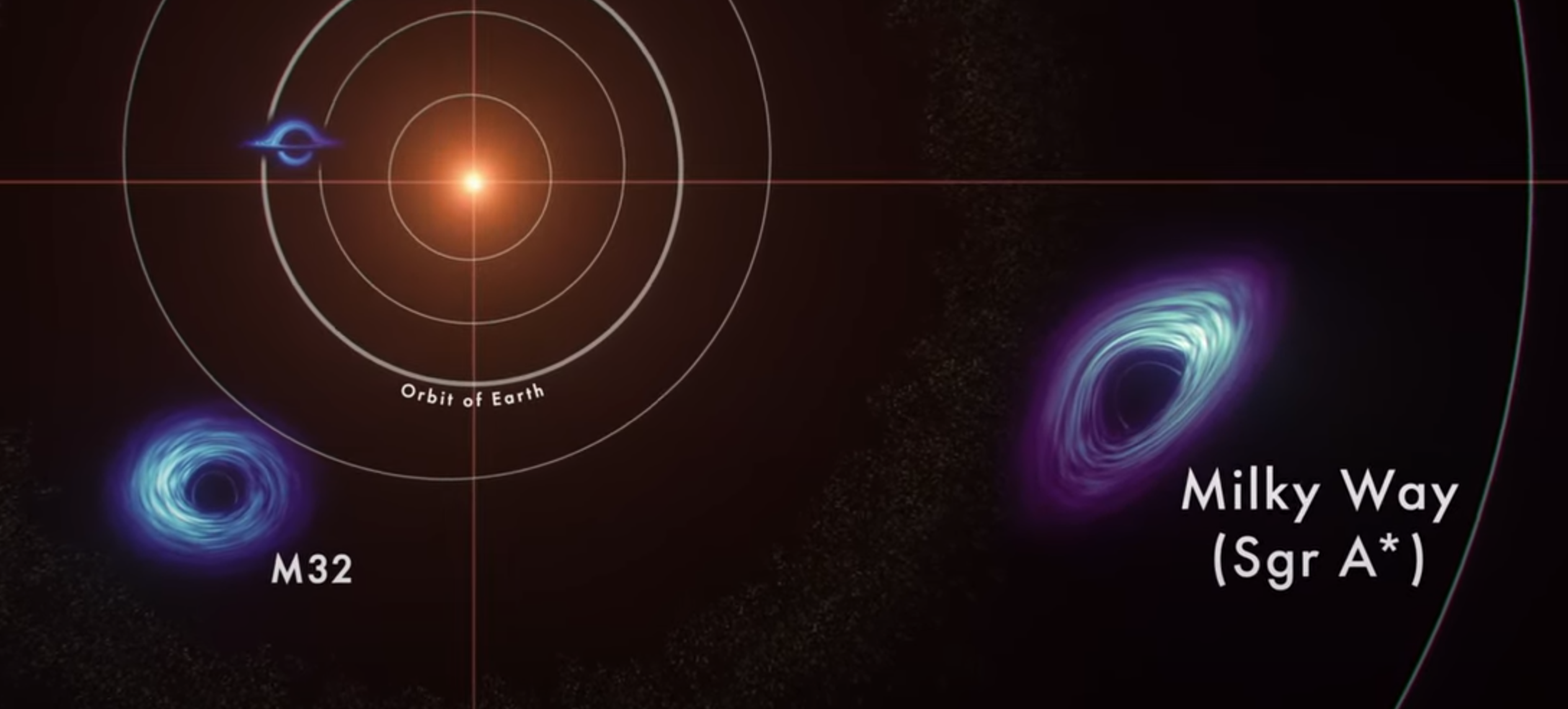
The destination is a supermassive black hole with 4.3 million times the mass of our Sun, equivalent to the monster located at the center of our Milky Way galaxy.
“If you have the choice, you want to fall into a supermassive black hole,” Schnittman explained. “Stellar-mass black holes, which contain up to about 30 solar masses, possess much smaller event horizons and stronger tidal forces, which can rip apart approaching objects before they get to the horizon.”
This occurs because the gravitational pull on the end of an object nearer the black hole is much stronger than that on the other end. Infalling objects stretch out like noodles, a process astrophysicists call spaghettification.
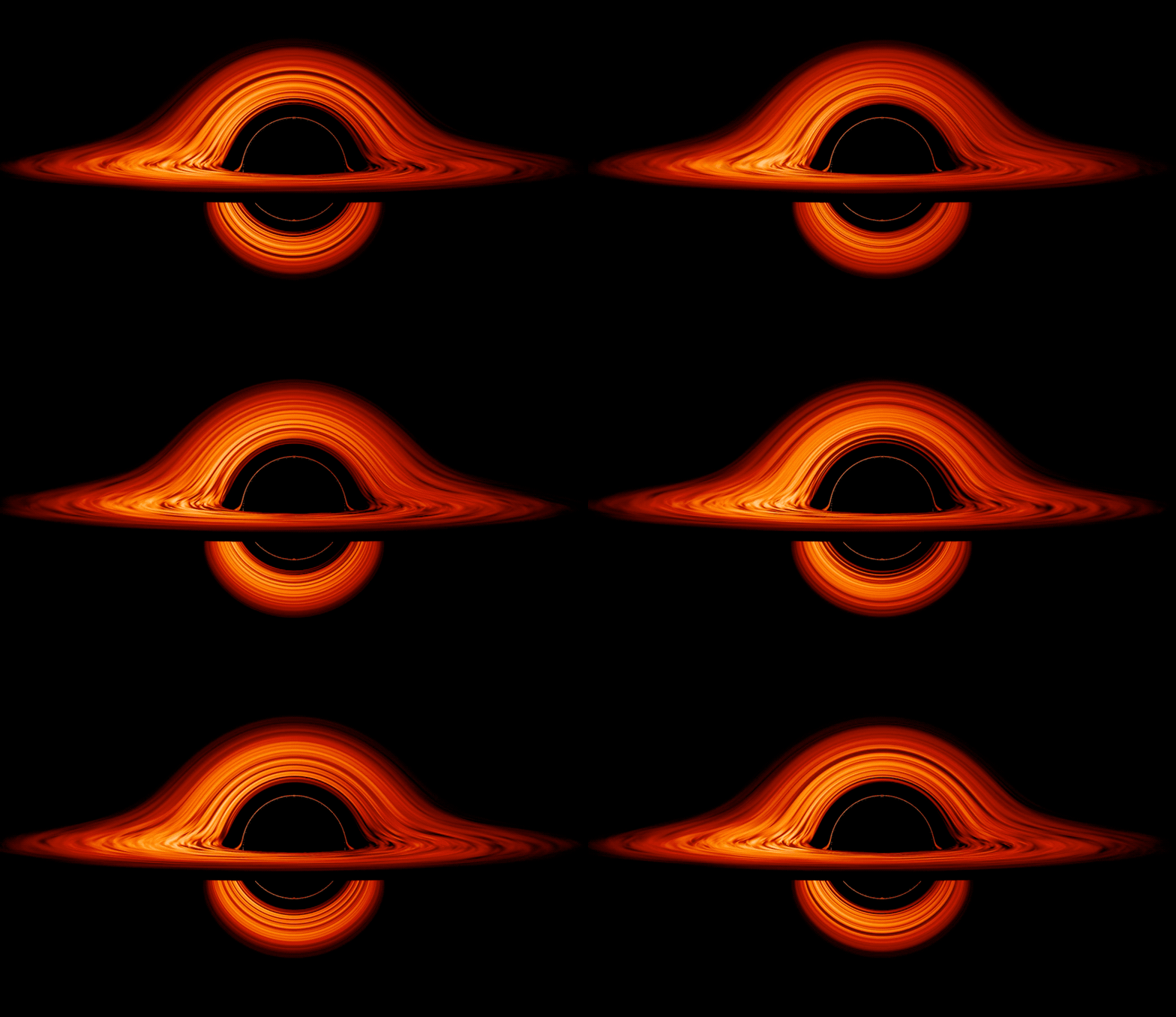
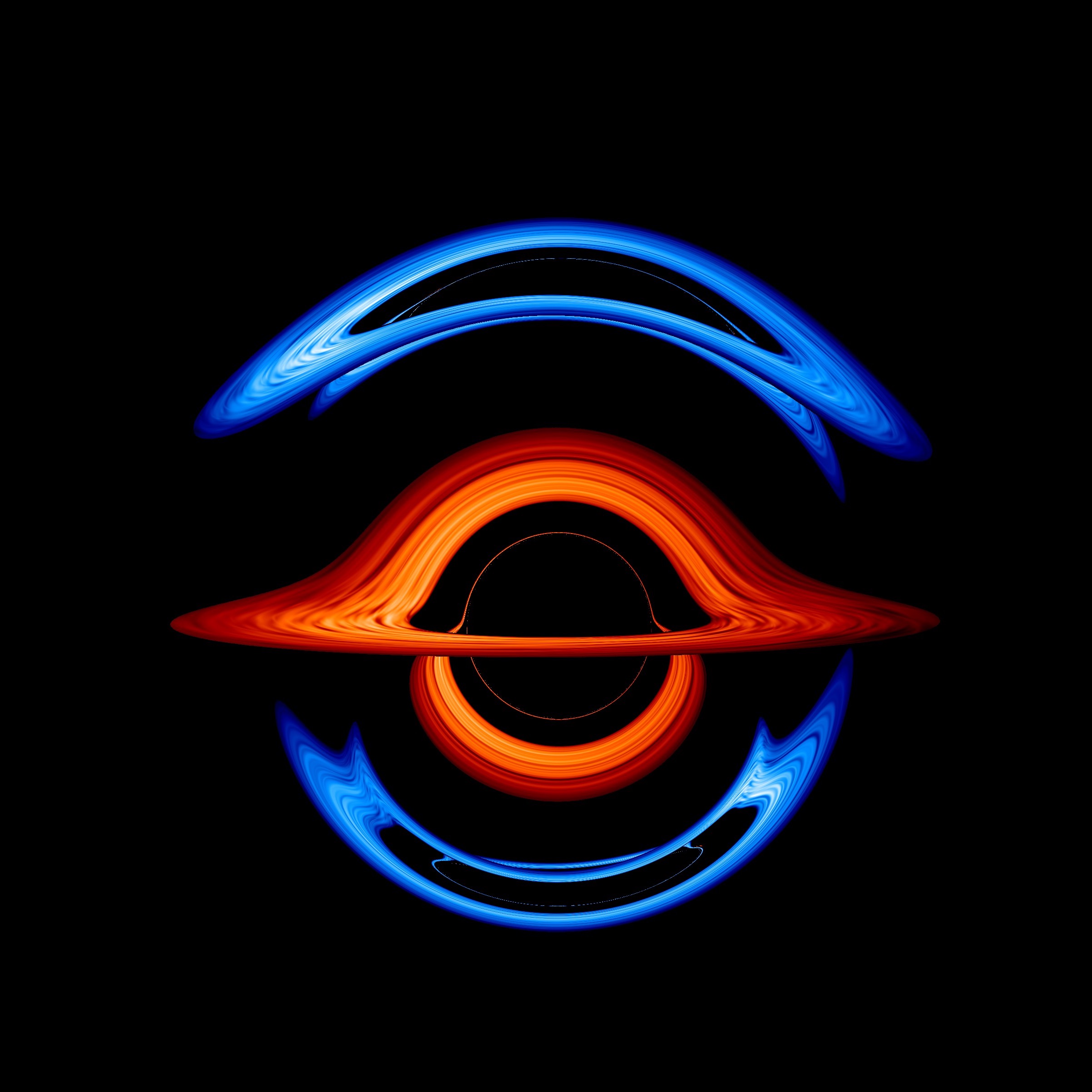
The simulated black hole’s event horizon spans about 16 million miles (25 million kilometers), or about 17% of the distance from Earth to the Sun. A flat, swirling cloud of hot, glowing gas called an accretion disk surrounds it and serves as a visual reference during the fall. So do glowing structures called photon rings, which form closer to the black hole from light that has orbited it one or more times. A backdrop of the starry sky as seen from Earth completes the scene.
Tour an alternative visualization that tracks a camera as it approaches, falls toward, briefly orbits, and escapes a supermassive black hole. This immersive 360-degree version allows viewers to look around during the flight. Credit: NASA’s Goddard Space Flight Center/J. Schnittman and B. Powell
As the camera approaches the black hole, reaching speeds ever closer to that of light itself, the glow from the accretion disk and background stars becomes amplified in much the same way as the sound of an oncoming racecar rises in pitch. Their light appears brighter and whiter when looking into the direction of travel.
The movies begin with the camera located nearly 400 million miles (640 million kilometers) away, with the black hole quickly filling the view. Along the way, the black hole’s disk, photon rings, and the night sky become increasingly distorted — and even form multiple images as their light traverses the increasingly warped space-time.
In real time, the camera takes about 3 hours to fall to the event horizon, executing almost two complete 30-minute orbits along the way. But to anyone observing from afar, it would never quite get there. As space-time becomes ever more distorted closer to the horizon, the image of the camera would slow and then seem to freeze just shy of it. This is why astronomers originally referred to black holes as “frozen stars.”
At the event horizon, even space-time itself flows inward at the speed of light, the cosmic speed limit. Once inside it, both the camera and the space-time in which it’s moving rush toward the black hole’s center — a one-dimensional point called a singularity, where the laws of physics as we know them cease to operate.
“Once the camera crosses the horizon, its destruction by spaghettification is just 12.8 seconds away,” Schnittman said. From there, it’s only 79,500 miles (128,000 kilometers) to the singularity. This final leg of the voyage is over in the blink of an eye.
In the alternative scenario, the camera orbits close to the event horizon but it never crosses over and escapes to safety. If an astronaut flew a spacecraft on this 6-hour round trip while her colleagues on a mothership remained far from the black hole, she’d return 36 minutes younger than her colleagues. That’s because time passes more slowly near a strong gravitational source and when moving near the speed of light.
“This situation can be even more extreme,” Schnittman noted. “If the black hole were rapidly rotating, like the one shown in the 2014 movie ‘Interstellar,’ she would return many years younger than her shipmates.”
A Different Perspective – Remembering James Dean, Founder of the NASA Art Program
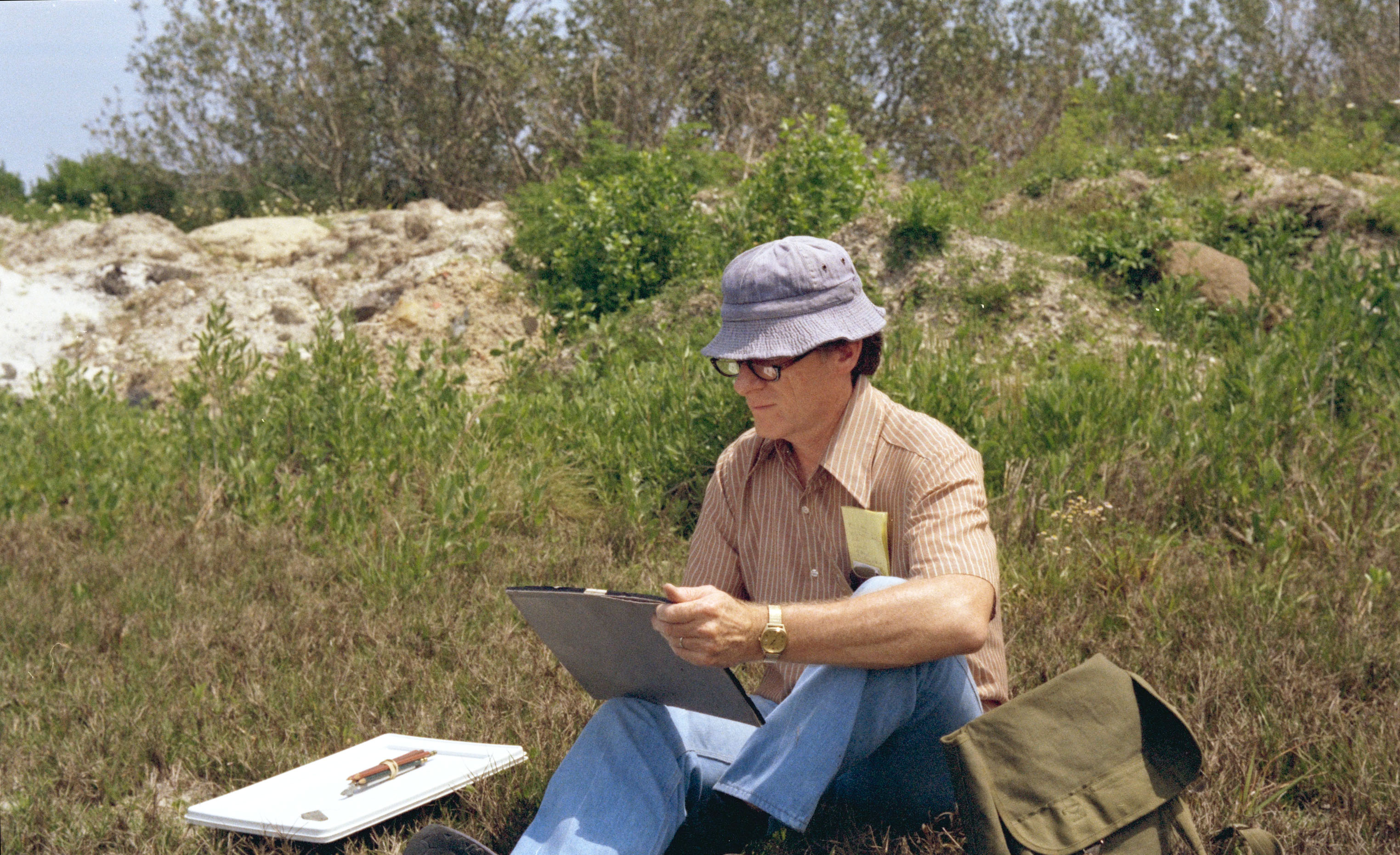
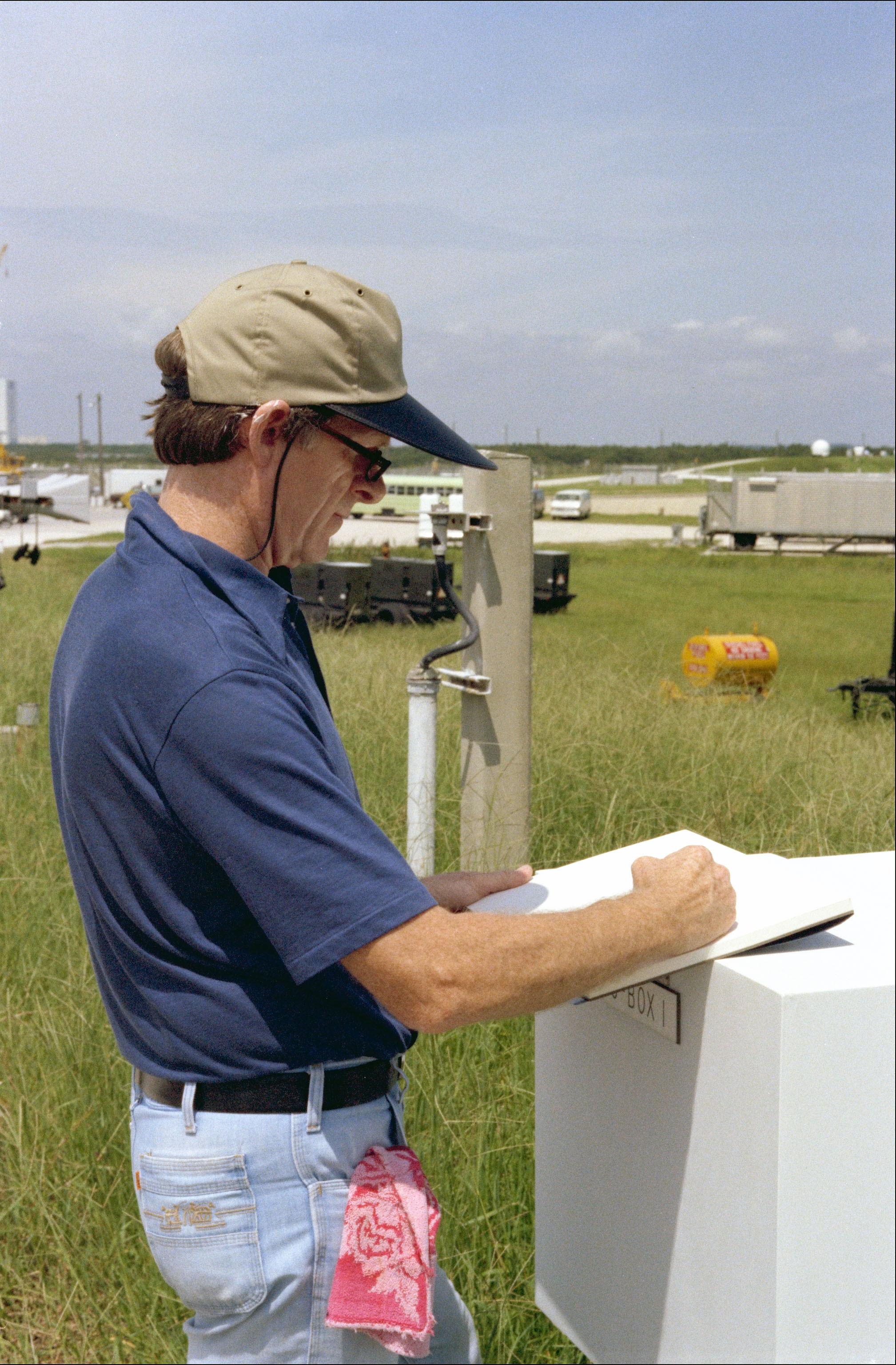
Artist James Dean prepares sketches of the space shuttle Columbia as it sits on Pad 39 at NASA’s Kennedy Space Center on April 9, 1981, waiting for its first historic flight (STS-1).
NASA
In March 1962, NASA Administrator James Webb addressed a two-paragraph memorandum to NASA Public Affairs Director Hiden T. Cox about the possibility of bringing in artists to highlight the agency’s achievements in a new way. In it, he wrote, “We should consider in a deliberate way just what NASA should do in the field of fine arts to commemorate the … historic events” of America’s initial steps into space.
Shortly thereafter, NASA employee and artist James Dean was tasked with implementing NASA’s brand-new art program. Working alongside National Art Gallery Curator of Painting H. Lester Cooke, he created a framework to give artists unparalleled access to NASA missions at every step along the way, such as suit-up, launch and landing activities, and meetings with scientists and astronauts.
“It’s amazing just how good a sketch pad is at getting you into places,” Dean said in a 2008 oral history interview. “People shy away from cameras, but sketch pads, pencils, paints, you know … a lot of doors got opened that you could never open by making an official request.”
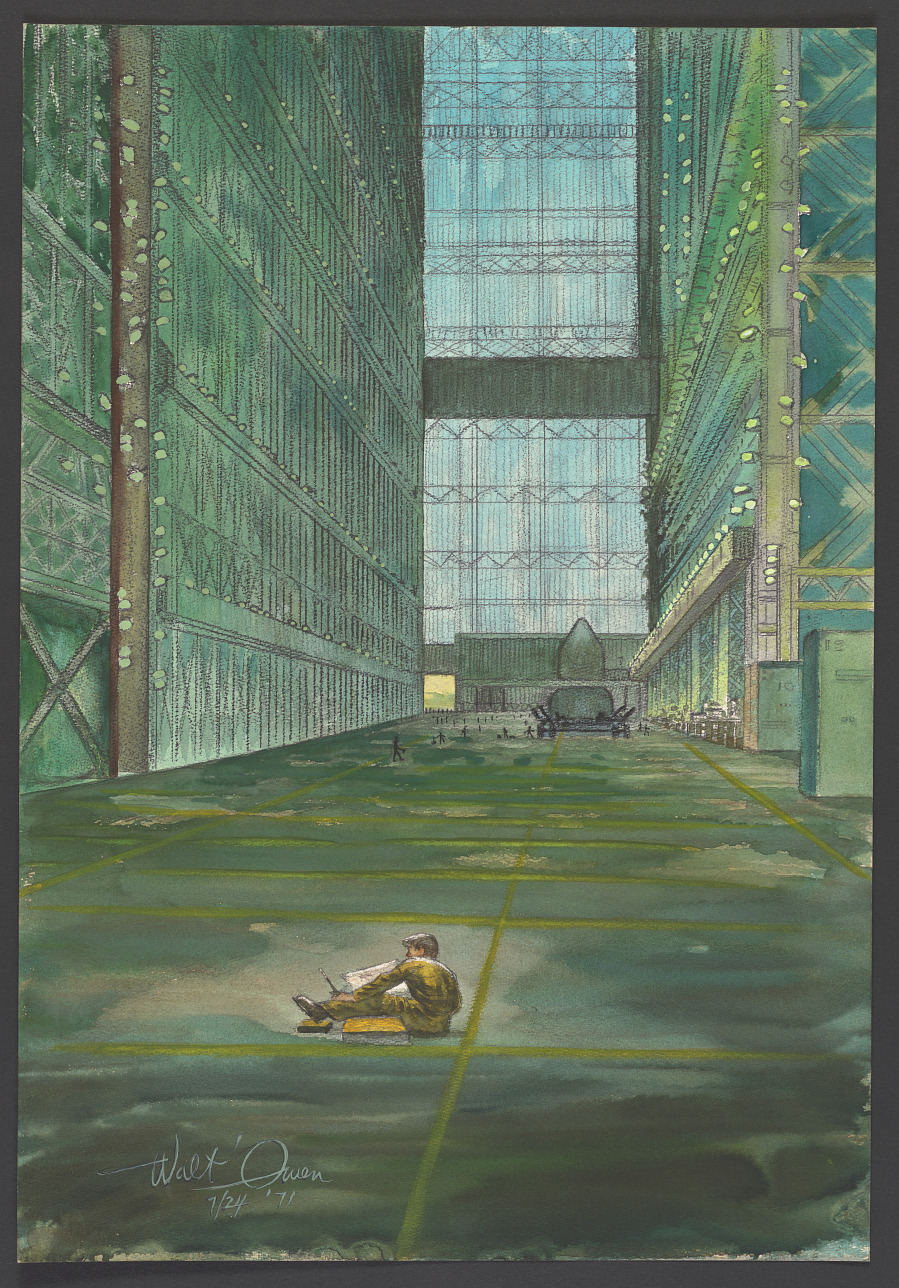
Walt Owen, “Apollo 15 NASA Artist at Work, VAB,” 1971, watercolor on paper. The painting depicts an artist seated on the ground inside the Vehicle Assembly Building (VAB).
Walt Owen / Courtesy of the Smithsonian National Air and Space Museum
The NASA Art Program selected an initial group of eight artists – Peter Hurd, George Weymouth, Paul Calle, Robert McCall, Robert Shore, Lamar Dodd, John McCoy, and Mitchell Jamieson – in May 1963 to capture their interpretations of the final flight of the Mercury program, Faith 7. Seven of these men spent their time exploring Cape Canaveral and covering prelaunch activities; Jamieson covered splashdown and landing by being assigned to one of the recovery ships.
Though the grants and honorariums associated with being a NASA Art Program participant were always nominal – $800 in the 1960s and up to $3,000 in the early 2000s – many other well-known artists continued to work with the program through the decades that followed, including Norman Rockwell, Robert Rauschenberg, Andy Warhol, Annie Leibowitz, and Chakaia Booker.
“It wasn’t money they were after,” Dean noted. “They were interested in the experience and being invited back into where history was being made. I mean, artists have been with explorers … [since] the early days of exploration in this country.”
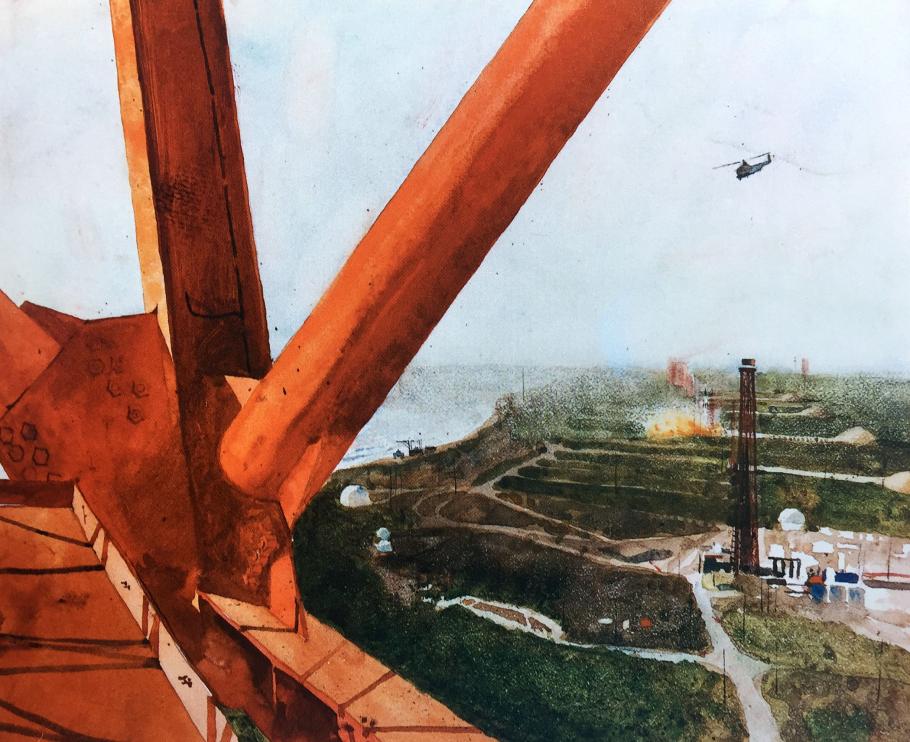
James Browning Wyeth, “Support,” 1965, watercolor on paper. The painting depicts the Gemini IV launch from the viewpoint of a neighboring gantry to the Gemini Launch Complex 19.
James Browning Wyeth / Courtesy of the Smithsonian National Air and Space Museum
Dean also recognized the importance of having a diverse range of artists present, even if they were all ostensibly there to capture the same historical event. “When you have six artists sitting together painting the same thing,” he explained, “each painting is different. And that’s because … they’re seeing all the same thing, but the image goes through their imagination too and all their experience.”
While there were some initial concerns about the NASA engineers and scientists accepting the artists as a new, prolonged presence in their midst, Dean found that once they “let the artist in and see what they were doing, they really hit it off because the engineers and the scientists and the artists really use a lot of imagination. So they were really connecting on a certain level.” He also observed a unique symbiosis occurring between artist and worker: “When an artist … turns your workplace into a work of art, you know, it validates everything you’ve been doing. It is a real motivating factor to see something like that.”
Artist James Dean, using a makeshift easel for support, prepares a preliminary study of the space shuttle Columbia on the pad at NASA’s Kennedy Space Center on June 27, 1982, as the spacecraft is prepared for its fourth flight (STS-4).
NASA
Dean served as the director of the NASA Art Program from 1962 to 1974, before leaving to become the first art curator for the Smithsonian’s National Air and Space Museum from 1974 until his retirement in 1980. He passed away in Washington on March 22, 2024, at the age of 92. But his legacy lives on in the NASA Art Program collection, which currently has some 3,000 works divided between the National Air and Space Museum and NASA. Today, the program is focused on STEM outreach initiatives to inspire youth through creative activity.