Hypersonics Technical Challenges

Hypersonics Technical Challenges

2 min read

Preparations for Next Moonwalk Simulations Underway (and Underwater)

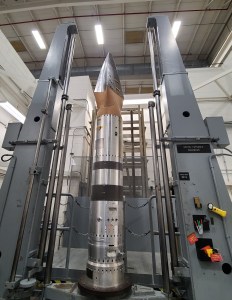
A research test rocket launch
Launch of the Hypersonic International Flight Research Experimentation Program (HIFiRE) Flight 2 sounding rocket, a joint NASA-Air Force Research Laboratory flight experiment, May 1, 2012.
Credit: AFRL

Technical Challenges (TCs) are finite-duration research and development endeavors supporting the strategic goals of NASA. The Hypersonic Technology project’s Technical Challenges include estimation of uncertainty for hypersonic research problems and vehicle systems, testing controls for switching engines mid-flight, and researching more efficient fuel combustors for large ramjets, which will be needed by future commercial high-speed planes.

Uncertainty Quantification

This Technical Challenge is complete!
TC-1: System-Level Uncertainty Quantification Methodology Development and Validation:
NASA developed and validated a system-level uncertainty propagation methodology to guide uncertainty-informed decision making by identifying fundamental research areas that will reduce the system performance uncertainty.

Turbine-Based Combined Cycle

TC-2: Turbine-Based Combined Cycle Mode Transition Technology Development: The Combined Cycle Mode Transition challenge demonstrates autonomous control and establishes performance/operability assessment methodologies for future reusable hypersonic propulsion systems that use turbine engines at slow speeds while transitioning to scramjets for high-speed operations. This challenge addresses the technology barrier of propulsion system mode transition via ground tests.

Improved Combustor Scaling Laws for Hypersonics

TC-3: Development of Improved Combustor Scaling Laws for Dual-Mode Ramjets: To improve current engine performance and enable engine scale up to fully reusable vehicle scales 100 times larger, NASA will develop and deliver mathematical models and associated validation test data with quantified uncertainty that support the design of high-speed combustors inclusive of green fuels. NASA will demonstrate such capability by reducing the length of the state-of-the-art cavity flameholder by 25 percent (10 percent threshold, 25 percent goal cavity length reduction relative to a state-of-the-art baseline.)

About the Author

Shannon Eichorn

Shannon Eichorn

Shannon Eichorn is the Strategic Engagement Lead for NASA’s Advanced Air Vehicles Program. She is a former test engineer in supersonic wind tunnels and former engineer managing facilities, such as the Aeroacoustic Propulsion Lab, Glenn Extreme Environments Rig, and Creek Road Cryogenics Complex.

Share

Details

Last Updated

Jun 21, 2024

Editor
Jim Banke
Contact
Shannon Eichorn

Powered by WPeMatico

Get The Details…
Shannon Eichorn

Hypersonic Research Topics

Hypersonic Research Topics

2 min read

Preparations for Next Moonwalk Simulations Underway (and Underwater)

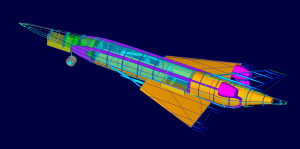
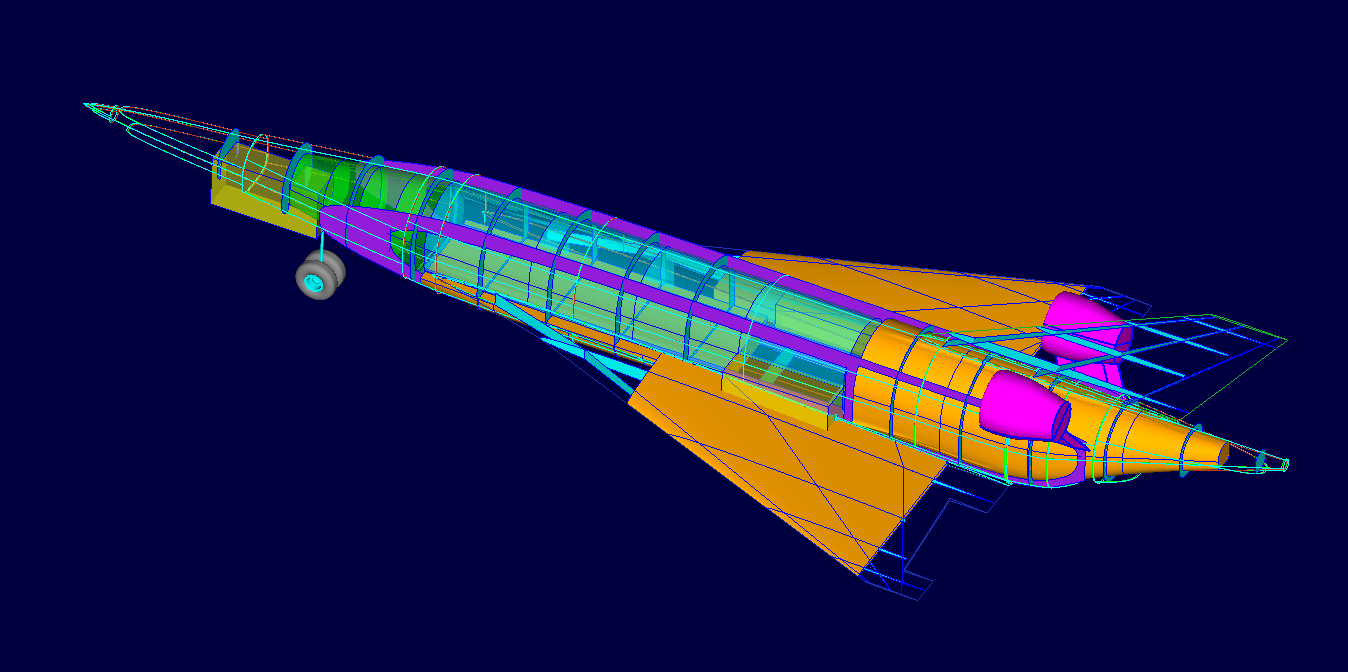
A wireframe image of an aircraft being designed.
NASA

The Hypersonic Technology project is divided into four research topic areas. The first research topic is system-level design, analysis, and validation, which explores the impacts of technologies on vehicle performance. The second and third topics focus more specifically on propulsion technologies and vehicle technologies enabling hypersonic flight. The fourth topic area explores material technology that can survive and be reused in high-temperature hypersonic flight.

System-Level Design and Analysis

The System-Level Design, Analysis, and Validation research topic (RT-1) investments are focused on computational tool development and validation for hypersonic propulsion and vehicle system analysis methods including uncertainty quantification. RT-1 coordinates and performs definitive systems analysis studies to clarify the potential benefits of hypersonic vehicles and technologies for both high-speed civilian travel and space access and will use these studies to drive a technology portfolio focused on reusability, affordability, and reliability.

An illustration of a hypersonic vehicle. The vehicle is skinny, long, and somewhat rectangular from overhead with delta wings. It is covered in black tiles and has the NASA logotype and logo.
An illustration of a hypersonic vehicle.
NASA

Propulsion Technologies

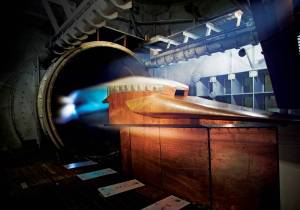
The Propulsion Technologies research topic (RT-2) focuses on turboramjet, ramjet, integrated combined-cycle, dual-mode, and scramjet propulsion systems and associated propulsive mode transitions, combustor operability, fuels, controls, and sensors. RT-2 develops computational fluid dynamic technologies to enable predictive simulations of these systems.

An angled, rectangular block of metal fires into a round exhaust duct. Mist flows over the corners and around the whole model.
Hypersonic model test in the 8-Foot High Temperature Tunnel at NASA Langley.
NASA

Vehicle Technologies

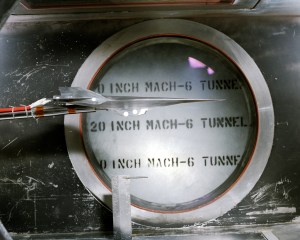
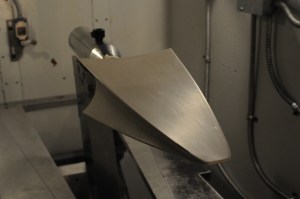
The Vehicle Technologies research topic (RT-3) investments focus on understanding aerodynamic and aerothermodynamic phenomena, such as high-speed boundary-layer transition and shock-dominated flows, to further technologies that improve aerodynamic performance as well as reduce aerodynamic heating.

A steel model of a hypersonic vehicle and sensor in front of a window in a wind tunnel labeled the 20 inch Mach 6 Tunnel. The model is narrow and sharp.
A model of a hypersonic vehicle and sensor in NASA’s 20-Inch Mach 6 Air Tunnel in the Langley Aerothermodynamic Lab.
NASA

High Temperature Materials

The High Temperature Durable Materials research topic (RT-4) investments focus on advanced propulsion and vehicle materials research. Due to the operating conditions of hypersonic vehicles, most of the structures and materials are shared between propulsion and vehicle components, which include aeroshell, control surface, leading edge, propulsion, and sealing concepts. RT-4 examines the design and evaluation of potential structure and material concepts through component development and testing under relevant environments. In addition, because of the extreme environments the materials and structures must endure, RT-4 also includes development of advanced thermal and structural measurement methods.

About the Author

Shannon Eichorn

Shannon Eichorn

Shannon Eichorn is the Strategic Engagement Lead for NASA’s Advanced Air Vehicles Program. She is a former test engineer in supersonic wind tunnels and former engineer managing facilities, such as the Aeroacoustic Propulsion Lab, Glenn Extreme Environments Rig, and Creek Road Cryogenics Complex.

Share

Details

Last Updated

Jun 21, 2024

Editor
Jim Banke
Contact
Shannon Eichorn

Powered by WPeMatico

Get The Details…
Shannon Eichorn

NASA’s ELaNa 43 Prepares for Firefly Aerospace Launch

NASA’s ELaNa 43 Prepares for Firefly Aerospace Launch

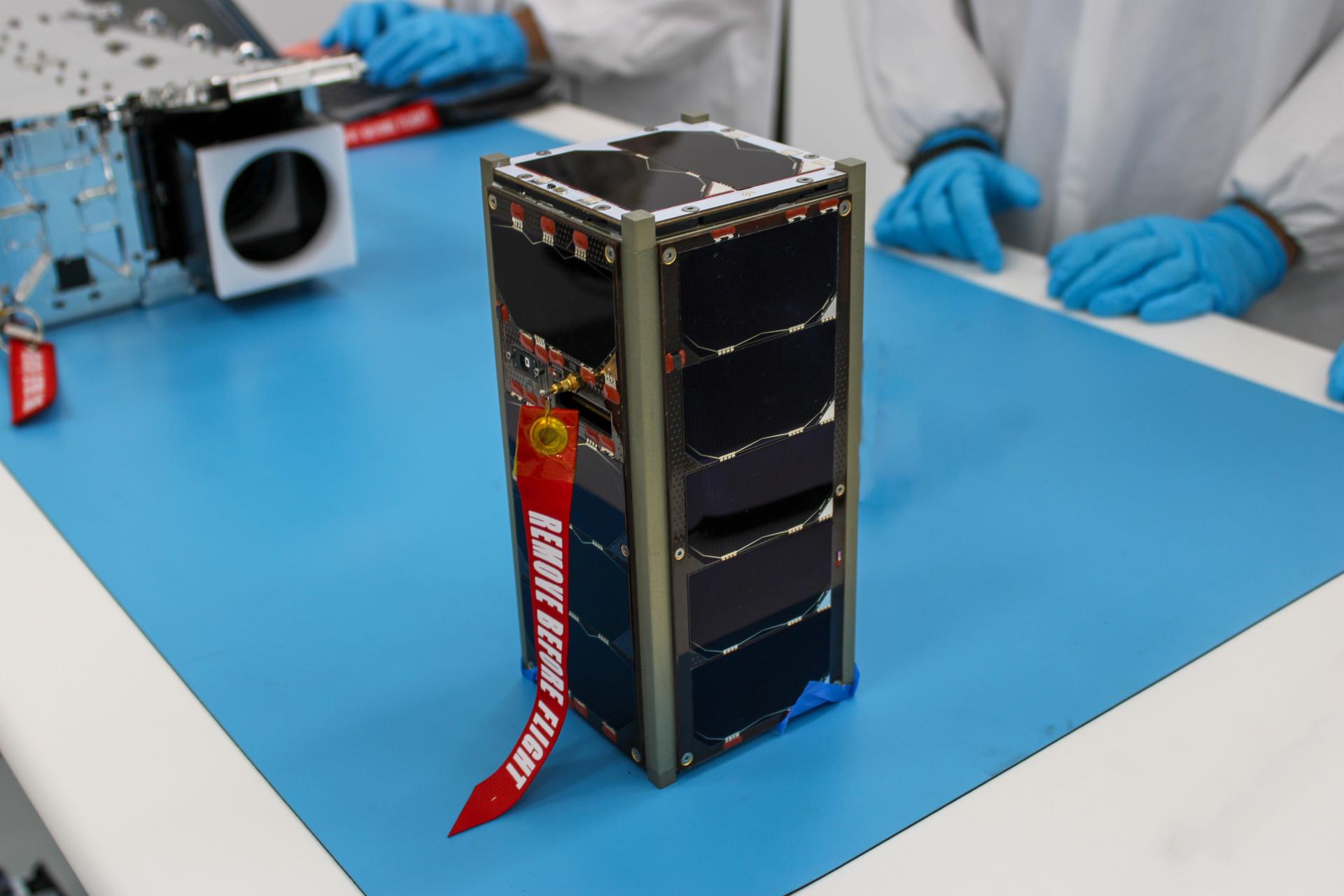
A Satellite for Optimal Control and Imaging (SOC-i) CubeSat awaits integration at Firefly’s Payload Processing Facility at Vandenberg Space Force Base, California on Thursday, June 6, 2024. SOC-i, along with several other CubeSats, will launch to space on an Alpha rocket during NASA’s Educational Launch of Nanosatellites (ELaNa) 43 mission as part of the agency’s CubeSat Launch Initiative and Firefly’s Venture-Class Launch Services Demonstration 2 contract.
NASA

NASA is readying for the launch of several small satellites to space, built with the help of students, educators, and researchers from across the country, as part of the agency’s CubeSat Launch Initiative.

The ELaNa 43 (Educational Launch of Nanosatellites 43) mission includes eight CubeSats flying on Firefly Aerospace’s Alpha rocket for its “Noise of Summer” launch from Space Launch Complex-2 at Vandenberg Space Force Base, California. The 30-minute launch window will open at 9 p.m. PDT Wednesday, June 26 (12 a.m. EDT Thursday, June 27).

NASA’s CubeSat Launch Initiative (CSLI) is an ongoing partnership between the agency, educational institutions, and nonprofits, providing a path to space for educational small satellite missions. For the ELaNa 43 mission, each satellite is stored in a CubeSat dispenser on the Firefly rocket and deployed once it reaches sun-synchronous or nearly polar orbit around Earth.

CubeSats are built using standardized units, with one unit, or 1U, measuring about 10 centimeters in length, width, and height. This standardization in size and form allows universities and other researchers to develop cost-effective science investigations and technology demonstrations.

Read more about the small satellites launching on ELaNa 43:

CatSat – University of Arizona, Tucson

CatSat, a 6U CubeSat with a deployable antenna inside a Mylar balloon, will test high-speed communications. Once the CatSat reaches orbit, it will inflate to transmit high-definition Earth photos to ground stations at 50 megabits per second, more than five times faster than typical home internet speeds.

The CatSat design inspiration came to Chris Walker after covering a pot of pudding with plastic wrap. The CatSat principal investigator and professor of Astronomy at University of Arizona noticed the image of an overhanging light bulb created by reflections off the concave plastic wrap on the pot.

“This observation eventually led to the Large Balloon Reflector, an inflatable technology that creates large collecting apertures that weigh a fraction of today’s deployable antennas,” said Walker. The Large Balloon Reflector was an early-stage study developed through NASA’s Innovative Advanced Concepts program.

KUbeSat-1 – University of Kansas, Lawrence

The KUbeSat-1, a 3U CubeSat, will use a new method to measure the energy and type of primary cosmic rays hitting the Earth, which is traditionally done on Earth. The second payload, the High-Altitude Calibration will measure very high frequency signals generated by cosmic interactions with the atmosphere. KUbeSat-1 is Kansas’ first small satellite to launch under NASA’s CSLI.

MESAT-1 – University of Maine, Orono

MESAT-1, a 3U CubeSat, will study local temperatures across city and rural areas to determine phytoplankton concentration in bodies of water to help predict algal blooms.  MESAT-1 is Maine’s first small satellite to launch under NASA’s CSLI.

R5-S4, R5-S2-2.0 ­­­­­- NASA’s Johnson Space Center

R5-S4 and R5-S2-2.0, both 6U CubeSats, will be the first R5 spacecraft launched to orbit to test a new, lean spacecraft build. The team will monitor how each part of the spacecraft performs, including the computer, software, radio, propulsion system, sensors, and cameras in low Earth orbit.

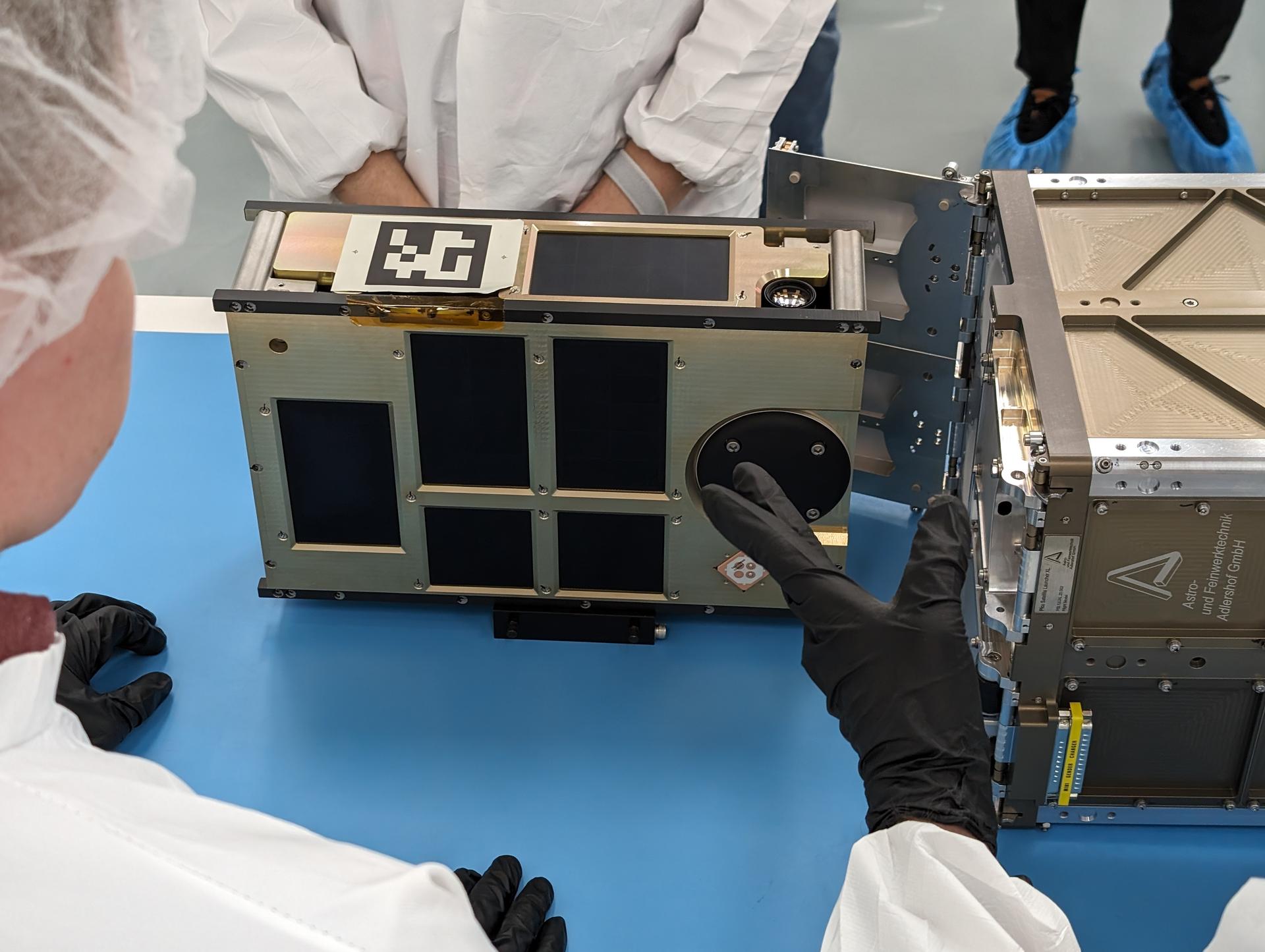
NASA and Firefly Aerospace engineers review the integration plan for the agency’s CubeSat R5 Spacecraft 4 (R5-S4) at Firefly Aerospace’s Payload Processing Facility at Vandenberg Space Force Base, California on Wednesday, April 24, 2024.
NASA/Jacob Nunez-Kearny

“In the near term, R5 hopes to demonstrate new processes that allows for faster and cheaper development of high-performance CubeSats,” said Sam Pedrotty, R5 project manager at NASA’s Johnson Space Center in Houston. “The cost and schedule improvements will allow R5 to provide higher-risk ride options to low-Technology Readiness Levels payloads so more can be demonstrated on-orbit.”

Serenity Teachers in Space

Serenity, a 3U CubeSat equipped with data sensors and a camera, will communicate with students on Earth through amateur radio signals and send back images. Teachers in Space launches satellites as educational experiments to stimulate interest in space science, technology, engineering, and math among students in North America.

SOC-i University of Washington, Seattle

Satellite for Optimal Control and Imaging (SOC-i), a 2U CubeSat, is a technology demonstration mission of attitude control technology used to maintain its orientation in relation to the Earth, Sun, or other body. This mission will test an algorithm to support autonomous operations with constrained attitude guidance maneuvers computed in real-time aboard the spacecraft. SOC-i will autonomously rotate its camera to capture images.

TechEdSat-11 (TES-11) – NASA’s Ames Research Center, California’s Silicon Valley

TES-11, a 6U CubeSat, is a collaborative effort between NASA researchers and students to evaluate technologies for use in small satellites. It’s part of ongoing experiments to evaluate new technologies in communications, a radiation sensor suite, and experimental solar panels, as well as to find ways to reduce the time to de-orbit.

NASA awarded Firefly Aerospace a fixed-price contract to fly small satellites to space under a Venture-Class Launch Services Demonstration 2 contract in 2020. NASA certified Firefly Aerospace’s Alpha rocket as a Category 1 in May, which authorized its use during missions with high risk tolerance.

NASA’s Launch Services Program is responsible for launching rockets delivering spacecraft that observe Earth, visit other planets, and explore the universe.

Follow NASA’s small satellite missions blog for launch updates.

Powered by WPeMatico

Get The Details…
Elyna N. Niles-Carnes

NASA Invites Public to Share Excitement of NOAA GOES-U Launch

NASA Invites Public to Share Excitement of NOAA GOES-U Launch

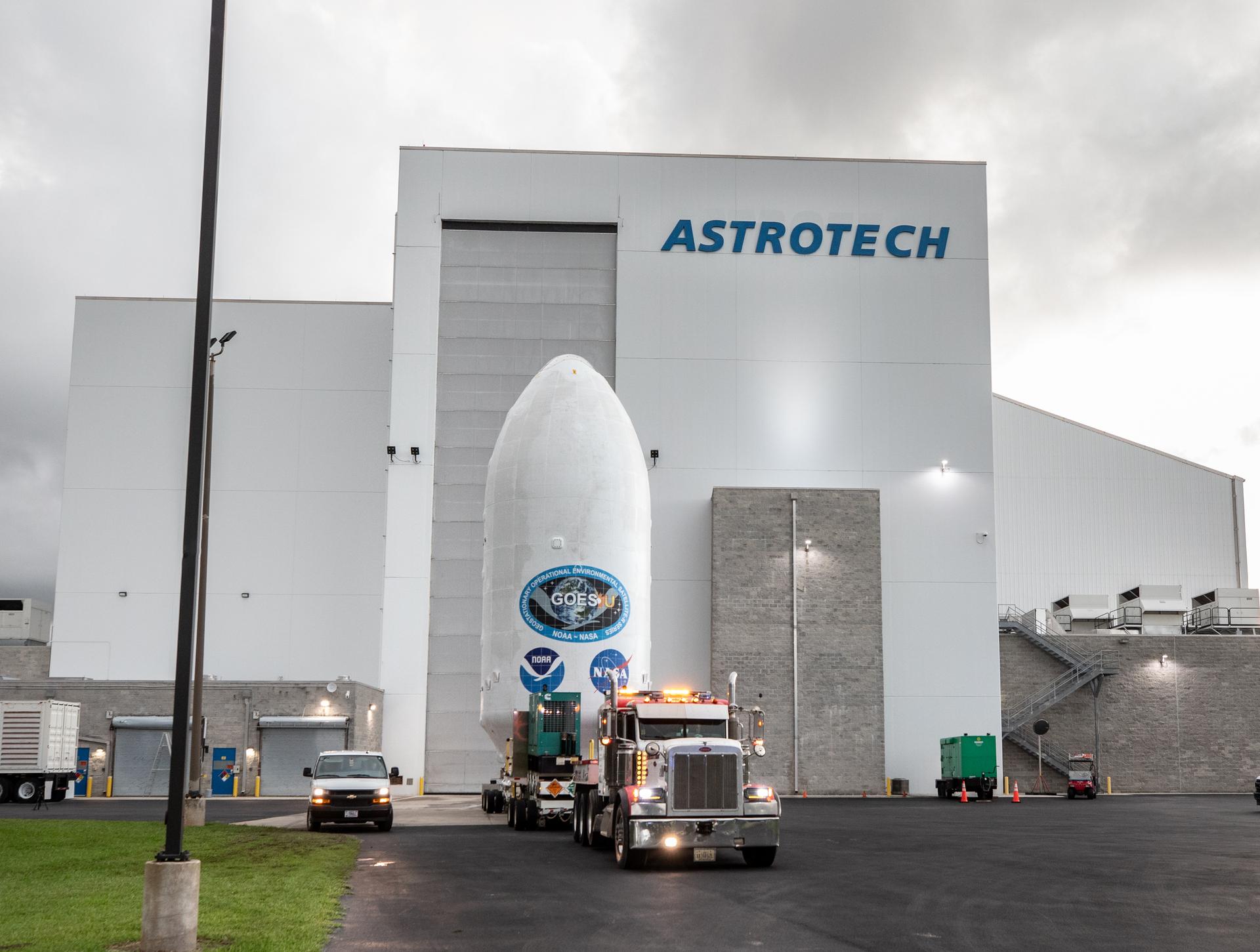
Crews transport NOAA’s (National Oceanic and Atmospheric Administration) Geostationary Operational Environmental Satellite (GOES-U) from the Astrotech Space Operations facility to the SpaceX hangar at Launch Complex 39A at NASA’s Kennedy Space Center in Florida beginning on Friday, June 14, 2024, with the operation finishing early Saturday, June 15, 2024.
NASA/Ben Smegelsky

NASA invites the public to participate in virtual activities and events leading up to the launch of the NOAA (National Oceanic and Atmospheric Administration) GOES-U (Geostationary Operational Environmental Satellite-U) mission. 

NASA is targeting a two-hour window opening at 5:16 p.m. EDT Tuesday, June 25, for the launch of the weather satellite aboard a SpaceX Falcon Heavy rocket from Launch Complex 39A at the agency’s Kennedy Space Center in Florida. 

Live launch coverage will begin at 4:15 p.m. and will air on NASA+, the agency’s website, and other digital channels. Learn how to stream NASA TV through a variety of platforms. 

As the fourth and final satellite in NOAA’s GOES-R Series, GOES-U will enhance meteorologists’ ability to provide advanced weather forecasting and warning capabilities. GOES-U also will improve the detection and monitoring of space weather hazards using a new compact coronagraph instrument. 

Members of the public can register to attend the launch virtually. As a virtual guest, you will have access to curated resources, schedule changes, and mission-specific information delivered straight to your inbox. Following each activity, virtual guests will receive a commemorative stamp for their virtual guest passport

Stay updated on the mission by following NASA’s GOES blog: 

https://blogs.nasa.gov/goes/

Powered by WPeMatico

Get The Details…
Amanda S. Vozeh

Contracts and Acquisition Integrity Law

Contracts and Acquisition Integrity Law

About

In its functional leadership role, the Contracts and Acquisition Integrity Law Practice Group supports policy-level interactions with other elements of Government; provides specialized guidance and advice to the Offices of the General Counsel at NASA Field Centers regarding contract award, administration and litigation matters; and develops and coordinates NASA legal policy in these areas. 

As a functional office to the NASA Administrator, the Contracts and Acquisition Integrity Law Practice Group provides legal advice regarding Headquarters-level contract selection, administration and termination decisions; drafts or comments on proposed legislation, regulations and executive orders; represents NASA in interagency meetings or bodies such as the Defense Acquisition Regulation (DAR) Council; and answers correspondence for the Administrator concerning contractual matters. 

The Contracts and Acquisition Integrity Law Practice Group provides central services to organizations within NASA, principally legal advice and counsel to the NASA Office of Procurement and other Headquarters Offices regarding the statutes, regulations and policies governing Federal Government contracting. Central services provided by the Practice Group also include representing the agency in bid protests and contract-related litigation before the Government Accountability Office (GAO), the Court of Federal Claims (COFC), and the United States District Courts; disputes before the Armed Services Board of Contract Appeals (ASBCA); and, ultimately, any appeals of these decisions to the United States Courts of Appeals, including the Court of Appeals for the Federal Circuit.

Contacts

Associate General Counsel:
Scott Barber 

Deputy Associate General Counsel:
Tory Kauffman 

Tel: 202-358-4455

Director, Acquisition Integrity Program:
Monica Aquino-Thieman 

Paralegal Specialist:
Rhonda Moss

Attorney Staff:
Michael Anderson
Young Cho
Allison Genco
Jennifer Howard
Victoria Kauffman
Stephen O’Neal
Vincent Salgado
Jessica Sitron
Adam Supple
Robert Vogt

Organization and Leadership

Headquarters OGC Organization

OGC Leadership Directory— Contact Information for the Headquarters Leadership and Center Chief Counsels

Resources

OGC Disclaimer: The materials within this website do not constitute legal advice. For details read our disclaimer.

Powered by WPeMatico

Get The Details…
Bill Keeter