From Polar Peaks to Celestial Heights: Christy Hansen’s Unique Path to Leading NASA’s Commercial Low Earth Orbit Development Program 

From Polar Peaks to Celestial Heights: Christy Hansen’s Unique Path to Leading NASA’s Commercial Low Earth Orbit Development Program 

Christy Hansen’s journey with NASA spans more than two decades and is marked by roles that have shaped her into a leader in space exploration. Now serving on a six-month rotation as the deputy manager for NASA’s CLDP (Commercial Low Earth Orbit Development Program) at Johnson Space Center in Houston, she brings 25 years of human spaceflight experience and a global perspective on Earth sciences to her role. 

Prior to her rotation, she served as the Artemis deputy mission manager in the Moon to Mars Program Office at NASA Headquarters in Washington, where she supported Artemis missions and facilitated the integration of science and utilization activities into the mission architecture and planning.  

Hansen now leverages her vast expertise to advance NASA’s commercial space initiatives and support the agency’s long-term goals. 

A woman with light blonde hair, wearing a black short-sleeved blouse, stands with her arms crossed outside during the day with trees behind her. She is smiling at the camera.
Christy Hansen serves a six-month rotation as deputy manager for NASA’s Commercial Low Earth Orbit Development Program at Johnson Space Center in Houston.
NASA/Bill Hrybyk

She is no stranger to Johnson. From 1999 to 2010, Hansen worked as an operations engineer in Johnson’s Flight Operations Directorate, focusing on astronaut training and flight control. She developed procedures, planned spacewalks, and trained astronauts to work in space suits with specialty tools on Space Shuttle, International Space Station, and Hubble Space Telescope missions. She was instrumental in supporting real-time operations as a flight controller for space station assembly missions and the final mission to service Hubble in 2009. 

In 2010, Hansen became the operations manager at NASA’s Goddard Space Flight Center in Greenbelt, Maryland for the Robotic Refueling Mission, a technology demonstration payload that flew to the orbiting laboratory on STS-135. By 2012 she transitioned to airborne science project management at Goddard, leading multiple missions including Operation IceBridge’s first deployment to Antarctica. Her work focused on studying changes in Earth’s ice sheets and sea ice in Greenland and Antarctica, where she collaborated with scientists, engineers, and managers to design aircraft-based Earth science missions. 

Christy Hansen at Antarctica’s geographic south pole in 2012.

Faced with her husband’s diagnosis of amyotrophic lateral sclerosis in 2014, Hansen drew on her vast experience and passion for engineering to solve a deeply personal issue on the ground. Combining her technical expertise and pioneering spirit, she led an effort to bring eye-gaze technology to Goddard, enabling individuals with neurodegenerative disabilities to continue working without the use of their hands or voice. 

Her husband, Dave Parker, an engineer at Goddard who worked on all hubble servicing missions and tech demo payloads on the space station, was determined to keep working even when he could not use his arms, legs, hands, or voice. Together, they researched and pushed for this capability, ensuring that the technology could help many others in similar situations. 

After collaborating with Goddard information technology and the commercial-off-the-shelf Tobi eye gaze company, they managed to implement the system within a year. Parker worked for a year and a half using this technology and supported the real-time installation of space station hardware he helped design from his hospital bed before passing away in March 2021.  

Hansen continues to work with NASA’s Office of Diversity and Equal Opportunity to make this a standard accommodation option. 

In her new role, she aims to support the development of an innovative acquisition strategy that fosters a robust commercial low Earth orbit environment. “I look forward to working with the CLDP team and our stakeholders to develop a creative and smart approach that enables a commercially led and operated low Earth orbit destination,” she said. “This includes fostering an open dialogue across disciplines, including critical tech authorities, programs, our industry and international partners, and Johnson and headquarters leadership. We can only go great places together.” 

Her background in human spaceflight and science missions has given her a unique perspective. “I truly enjoy building partnerships and working across broad teams to achieve amazing goals,” she said. “This diversity of experience gave me an understanding of the critical goals, priorities, and culture of our key NASA stakeholders – and how we must integrate and work together to achieve the NASA mission.” 

Through her career, she has learned to be open to new ideas and ways of doing things. “Be curious and proactively create space for all voices to be heard; there is more than one way to do things, and you must be open and receptive to different communication styles and experiences,” she said. “I lean on my broad experiences wherever I go.” 

Christy Hansen at NASA’s Goddard Space Flight Center in Greenbelt, Maryland during her time as the project manager for NASA’s Operation IceBridge.
NASA/Bill Hrybyk

For young girls interested in a career in space, her advice is clear: “Go, go, go! You will face challenges and hurdles, but human spaceflight and NASA need your ideas, experiences, and energy. You uniquely bring momentum in a way others cannot – so don’t compare yourself to others. Study and do what you love – as that will get you through the hard times.” 

Looking ahead, she is eager to help make space accessible and affordable to all, enabling a broader and diverse field of future flyers. “These destinations will enable critical science, human research, and tech development – important steppingstones to help us achieve our goals of landing on the Moon again and ultimately going to Mars,” she said. “No matter how dynamic and challenging our work is, my passion for human spaceflight and the NASA mission is inherently part of me.” 

The agency’s commercial strategy for low Earth orbit will provide the government with reliable and safe services at a lower cost and enable the agency to focus on Artemis missions to the Moon in preparation for Mars while also continuing to use low Earth orbit as a training and proving ground for those deep space missions. 

Learn more about NASA’s commercial space strategy at: 

https://www.nasa.gov/humans-in-space/commercial-space/

Powered by WPeMatico

Get The Details…
Sumer Loggins

NASA Moon Rocket Stage for Artemis II Moved, Prepped for Shipment

NASA Moon Rocket Stage for Artemis II Moved, Prepped for Shipment

The Artemis II Core Stage moves from final assembly to the VAB at NASA’s Michoud Assembly Facility in New Orleans in preparation for delivery to Kennedy Spaceflight Center later this month. Image credit: NASA/Michael DeMocker
NASA/Michael DeMocker

NASA is preparing the SLS (Space Launch System) rocket core stage that will help power the first crewed mission of NASA’s Artemis campaign for shipment. On July 6, NASA and Boeing, the core stage lead contractor, moved the Artemis II rocket stage to another part of the agency’s Michoud Assembly Facility in New Orleans. The move comes as teams prepare to roll the massive rocket stage to the agency’s Pegasus barge for delivery to NASA’s Kennedy Space Center in Florida in mid-July.

Prior to the move, technicians began removing external access stands, or scaffolding, surrounding the rocket stage in early June. NASA and Boeing teams used the scaffolding surrounding the core stage to assess the interior elements, including its complex avionics and propulsion systems. The 212-foot core stage has two huge propellant tanks, avionics and flight computer systems, and four RS-25 engines, which together enable the stage to operate during launch and flight.

The stage is fully manufactured and assembled at Michoud. Building, assembling, and transporting is a joint process for NASA, Boeing, and lead RS-25 engines contractor Aerojet Rocketdyne, an L3Harris Technologies company.

NASA is working to land the first woman, first person of color, and its first international partner astronaut on the Moon under Artemis. SLS is part of NASA’s backbone for deep space exploration, along with the Orion spacecraft, supporting ground systems, advanced spacesuits and rovers, the Gateway in orbit around the Moon, and commercial human landing systems. SLS is the only rocket that can send Orion, astronauts, and supplies to the Moon in a single launch.

News Media Contact

Corinne Beckinger 
Marshall Space Flight Center, Huntsville, Ala. 
256.544.0034  
corinne.m.beckinger@nasa.gov 

Powered by WPeMatico

Get The Details…
Lee Mohon

NASA, Boeing Provide Next Update on Space Station Crew Flight Test

NASA, Boeing Provide Next Update on Space Station Crew Flight Test

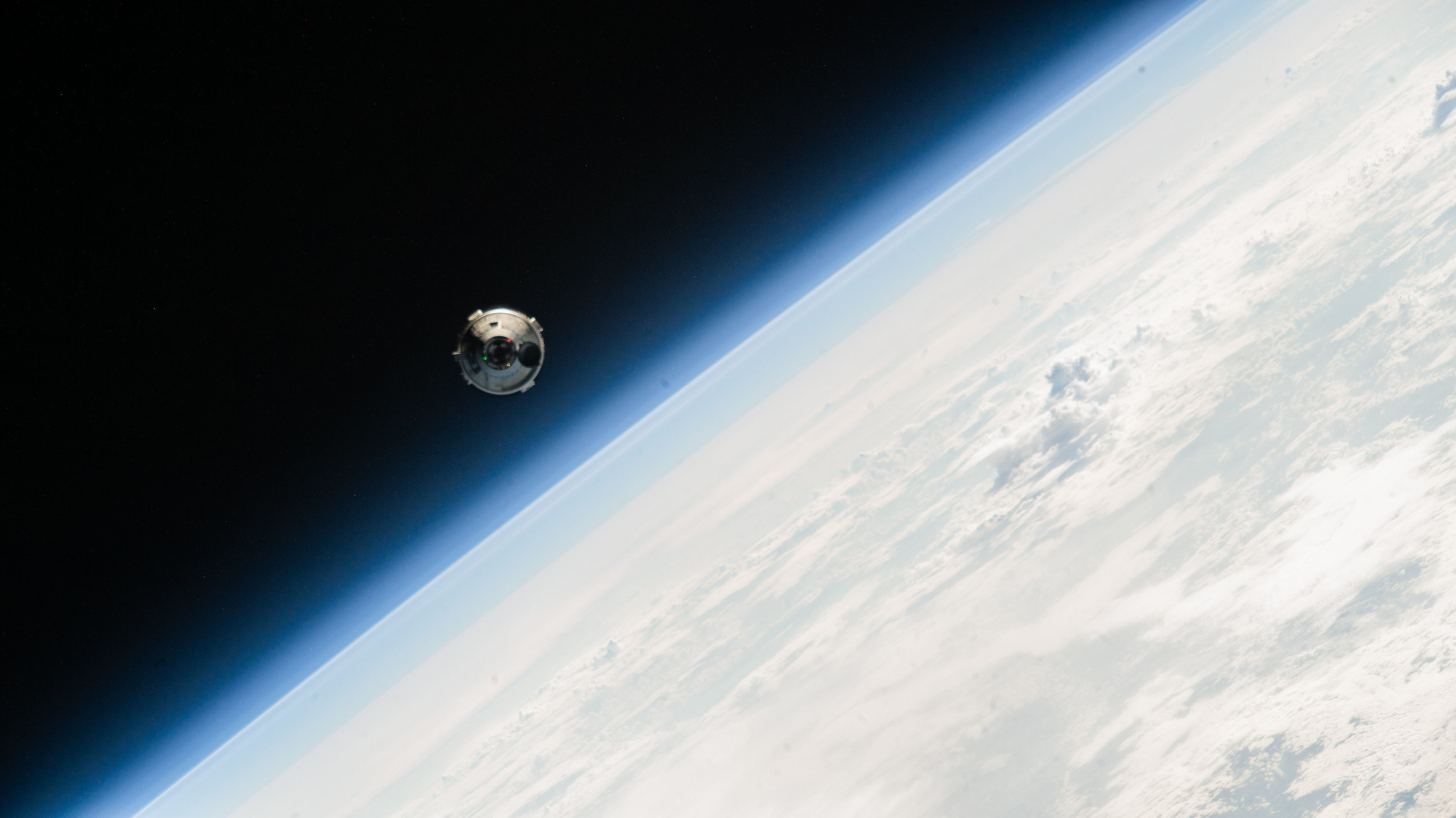
Boeing’s Starliner spacecraft, with NASA astronauts Butch Wilmore and Suni Williams aboard, approaches the International Space Station for an autonomous docking as it orbited 257 miles above the South Pacific Ocean.

Leadership from NASA and Boeing will participate in a media briefing at 12:30 p.m. EDT Wednesday, July 10, to discuss the agency’s Crew Flight Test at the International Space Station.

Audio of the media teleconference will stream live on the agency’s website:

https://www.nasa.gov/nasatv

Participants include:

  • Steve Stich, manager, NASA’s Commercial Crew Program
  • Mark Nappi, vice president and program manager, Commercial Crew Program, Boeing

Media interested in participating must contact the newsroom at NASA’s Kennedy Space Center in Florida no later than one hour prior to the start of the call at ksc-newsroom@mail.nasa.gov. A copy of NASA’s media accreditation policy is online.

NASA and Boeing continue to evaluate Starliner’s propulsion system performance and five small helium leaks in the spacecraft’s service module, gathering as much data as possible while docked to the International Space Station. Once all the necessary ground testing and associated data analysis is complete, leaders from NASA and Boeing will conduct an agency-level review before returning from the orbiting complex.

As part of NASA’s Commercial Crew Program, NASA astronauts Butch Wilmore and Suni Williams lifted off on June 5, on a United Launch Alliance Atlas V rocket from Space Launch Complex-41 at Cape Canaveral Space Force Station in Florida on an end-to-end test of the Starliner system. The crew docked to the forward-facing port of the station’s Harmony module on June 6.

Since their arrival on June 6, Wilmore and Williams have completed half of all hands-on research time conducted aboard the space station, allowing their crewmates to prepare for the departure of Northrop Grumman’s Cygnus spacecraft. NASA also will hold an Earth to space news conference at 11 a.m., Wednesday, July 10, with the Crew Flight Test astronauts to discuss the mission.

NASA’s Commercial Crew Program is delivering on its goal of safe, reliable, and cost-effective transportation to and from the International Space Station from the United States through a partnership with American private industry. This partnership is opening access to low-Earth orbit and the International Space Station to more people, science, and commercial opportunities. The space station remains the springboard to NASA’s next great leap in space exploration, including future missions to the Moon under Artemis, and ultimately, to Mars.

For NASA’s blog and more information about the mission, visit:

https://www.nasa.gov/commercialcrew

-end-

Josh Finch / Jimi Russell
Headquarters, Washington
202-358-1100
joshua.a.finch@nasa.gov / james.j.russell@nasa.gov

Steve Siceloff / Danielle Sempsrott / Stephanie Plucinsky
Kennedy Space Center, Florida
321-867-2468
steven.p.siceloff@nasa.gov / danielle.c.sempsrott@nasa.gov / stephanie.n.plucinsky@nasa.gov

Leah Cheshier / Sandra Jones
Johnson Space Center, Houston
281-483-5111
leah.d.cheshier@nasa.gov / sandra.p.jones@nasa.gov

Powered by WPeMatico

Get The Details…
Abbey A. Donaldson

Robotics, Cargo Ops, and Health Research to Kick Start Week

Robotics, Cargo Ops, and Health Research to Kick Start Week

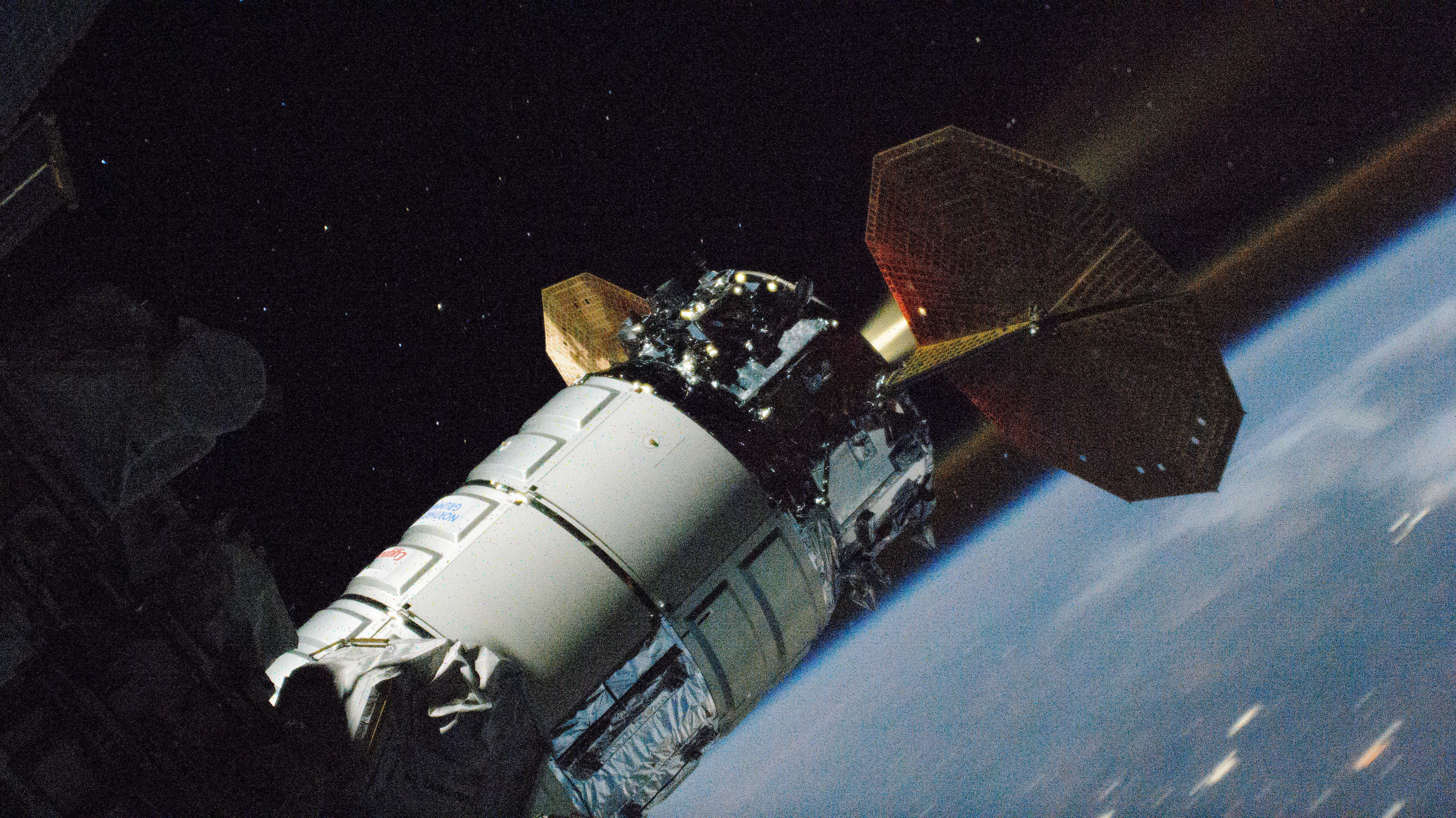
Northrop Grumman's Cygnus space freighter, attached to the Unity module, is pictured firing its single engine boosting the International Space Station's orbital altitude. This long-duration photograph also shows an atmospheric glow hovering above Earth's horizon.
Northrop Grumman’s Cygnus space freighter, attached to the Unity module, is pictured firing its single engine boosting the International Space Station’s orbital altitude. This long-duration photograph also shows an atmospheric glow hovering above Earth’s horizon.

A full day of robotics and cargo ops kept the Expedition 71 and Boeing Crew Flight Test crews busy on Monday as the nine orbital residents kick off a week of maintenance and science aboard the International Space Station. The crew also scheduled in some time for human health research and physical science activities.

NASA astronauts Tracy C. Dyson, Jeanette Epps, Matthew Dominick, and Mike Barratt all completed a round of robotics training throughout the day ahead of the departure of Northrop Grumman’s Cygnus space freighter. The quartet practiced capturing a cargo craft and trained to operate the Canadarm2 robotic arm.

Cygnus, which was captured by the robotic arm on Feb. 1, will be released by robotics controllers later this month for disposal over the South Pacific Ocean, ending its five-and-a-half-month mission at the orbital lab. Along with training, Dominick and Epps spent part of the day loading trash and discarded gear inside the spacecraft.

Epps also processed and separated Hicari samples in the Kibo Laboratory for future return to Earth. Hicari, an experiment led by JAXA (Japanese Aerospace Exploration Agency), investigates high-quality crystal growth of semiconductors. Later on, she inventoried emergency equipment, including the fire extinguisher, masks, and air supply tanks.

Meanwhile, research to assess psychological and physiological responses to microgravity was underway in the Destiny module. Dyson collected biological samples for the Standard Measures investigation, then stowed them in MELFI, the orbital lab’s ultra-cold freezer, for future analysis.

Starliner Commander Butch Wilmore and Pilot Suni Williams worked together to review use procedures for the Fluid Systems Servicer, which drains, purges, and circulates fluids on systems aboard the space station. Wilmore then refilled coolant loops in the water pump assembly located in the Columbus module.

Cargo ops, robotics activities, and health research also occupied the three cosmonauts’ schedules on Monday. In the morning, Flight Engineer Alexander Grebenkin donned a device that captures blood pressure measurements to study how the cardiovascular system adapts to microgravity. He then practiced his piloting techniques during a Pilot-T session. Current station Commander Oleg Kononenko loaded trash and discarded gear inside Progress 87, which is slated to undock from the station in August. He later joined by Flight Engineer Nikolai Chub to inspect and photograph windowpanes to assess their condition for future maintenance.


Learn more about station activities by following the space station blog, @space_station and @ISS_Research on X, as well as the ISS Facebook and ISS Instagram accounts.

Get weekly updates from NASA Johnson Space Center at: https://roundupreads.jsc.nasa.gov/

Get the latest from NASA delivered every week. Subscribe here: www.nasa.gov/subscribe

Powered by WPeMatico

Get The Details…

Abby Graf

NASA to Cover Northrop Grumman’s 20th Cargo Space Station Departure

NASA to Cover Northrop Grumman’s 20th Cargo Space Station Departure

Northrop Grumman’s Cygnus spacecraft and the International Space Station above western Mongolia (Credits: NASA).

Northrop Grumman’s uncrewed Cygnus spacecraft is scheduled to depart the International Space Station on Friday, July 12, five and a half months after delivering more than 8,200 pounds of supplies, scientific investigations, commercial products, hardware, and other cargo to the orbiting laboratory for NASA and its international partners.

This mission was the company’s 20th commercial resupply mission to the space station for NASA.

Live coverage of the spacecraft’s departure will begin at 6:30 a.m. EDT on the NASA+, NASA Television, the NASA app, YouTube, and the agency’s website. Learn how to stream NASA TV through a variety of platforms including social media.

Flight controllers on the ground will send commands for the space station’s Canadarm2 robotic arm to detach Cygnus from the Unity module’s Earth-facing port, then maneuver the spacecraft into position for its release at 7 a.m. NASA astronaut Mike Barratt will monitor Cygnus’ systems upon its departure from the space station.

Following unberthing, theKentucky Re-entry Probe Experiment-2 (KREPE-2), stowed inside Cygnus, will take measurements to demonstrate a thermal protection system for the spacecraft and its contents during re-entry in Earth’s atmosphere.

Cygnus – filled with trash packed by the station crew – will be commanded to deorbit on Saturday, July 13, setting up a destructive re-entry in which the spacecraft will safely burn up in Earth’s atmosphere.

The Northrop Grumman spacecraft arrived at the space station Feb. 1, following a launch on a SpaceX Falcon 9 rocket from Space Launch Complex 40 at Cape Canaveral Space Force Station in Florida.

Get breaking news, images, and features from the space station on the station blog, Instagram, Facebook, and X.

Learn more about Cygnus’ mission and the International Space Station at:

https://www.nasa.gov/station

-end-

Joshua Finch / Julian Coltre
Headquarters, Washington
202-358-1100
joshua.a.finch@nasa.gov / julian.n.coltre@nasa.gov

Sandra Jones / Dominique Crespo
Johnson Space Center, Houston
281-483-5111
sandra.p.jones@nasa.gov / dominique.v.crespo@nasa.gov

Powered by WPeMatico

Get The Details…
Abbey A. Donaldson