30 Years Ago: STS-65, the Second International Microgravity Lab Mission

30 Years Ago: STS-65, the Second International Microgravity Lab Mission

On July 8, 1994, space shuttle Columbia took to the skies on its 17th trip into space, on the second International Microgravity Laboratory (IML-2) mission. Six space agencies sponsored 82 life and microgravity science experiments. The seven-person crew consisted of Commander Robert D. Cabana, Pilot James D. Halsell, Payload Commander Richard J. Hieb, Mission Specialists Carl E. Walz, Leroy Chiao, and Donald A. Thomas, and Payload Specialist Chiaki Mukai representing the National Space Development Agency (NASDA) of Japan, now the Japan Aerospace Exploration Agency. Jean-Jacques H. Favier of the French space agency CNES served as a backup payload specialist. During their then-record setting 15-day shuttle flight, the international team of astronauts successfully completed the science program. They returned to earth on July 23.
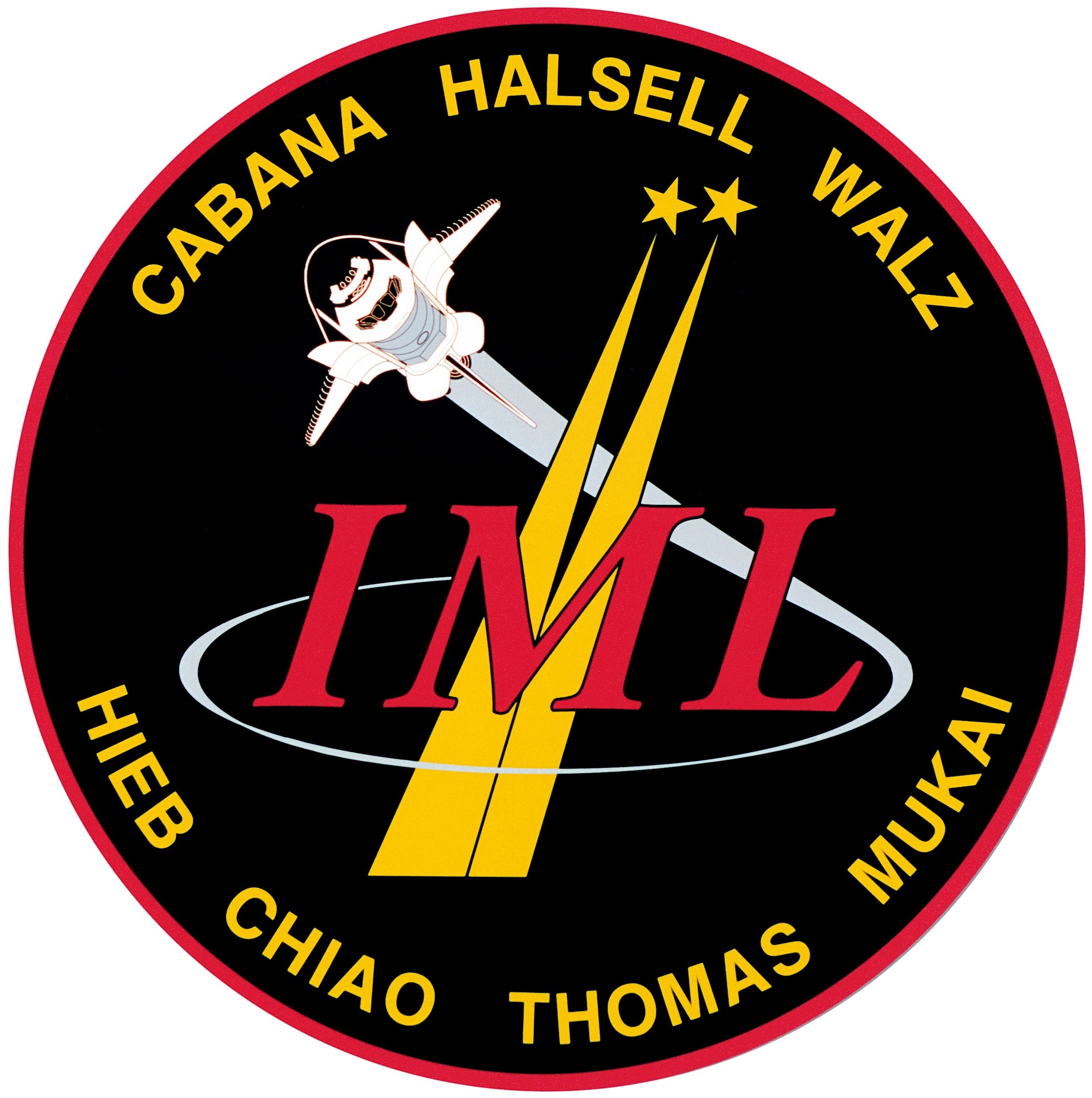
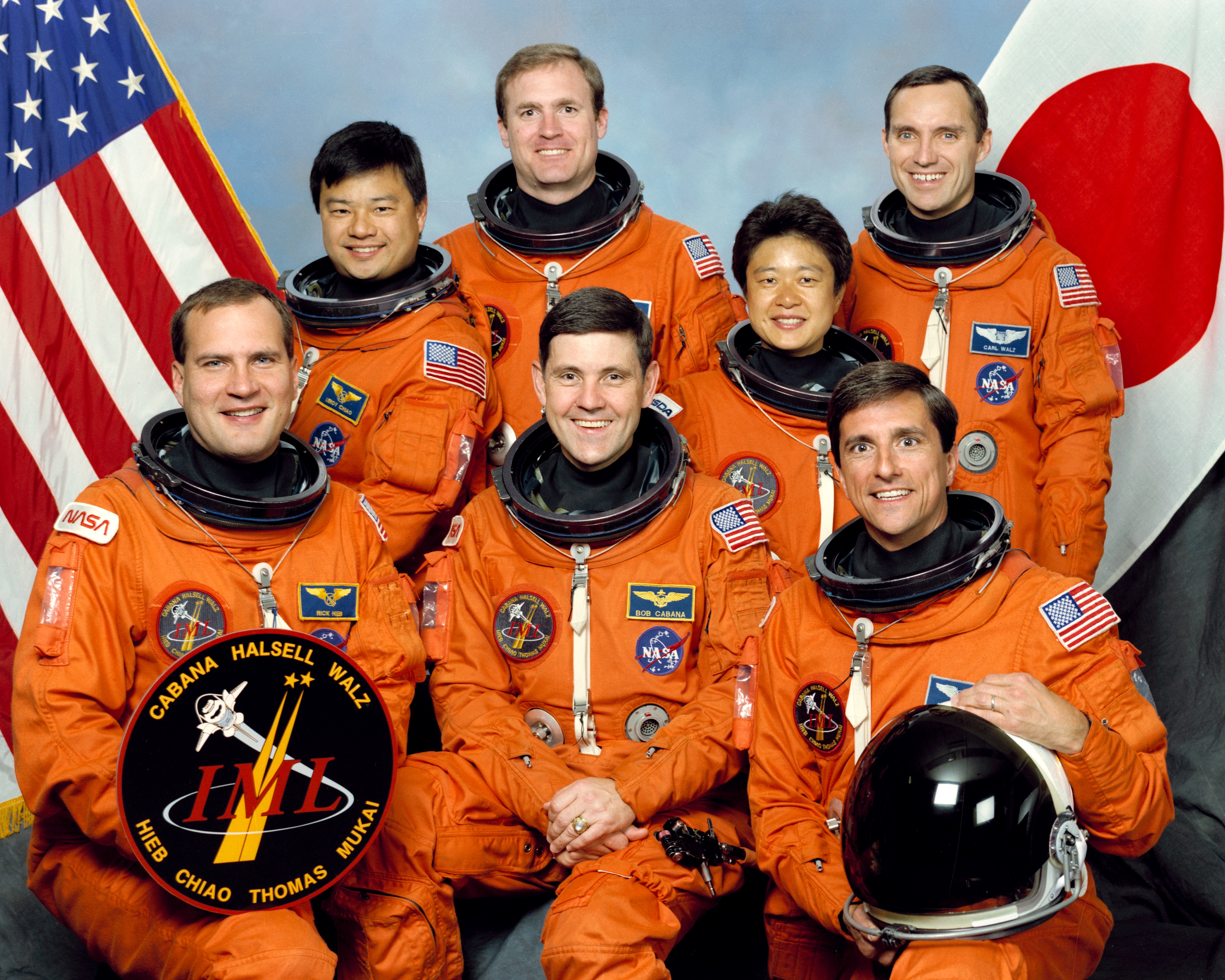
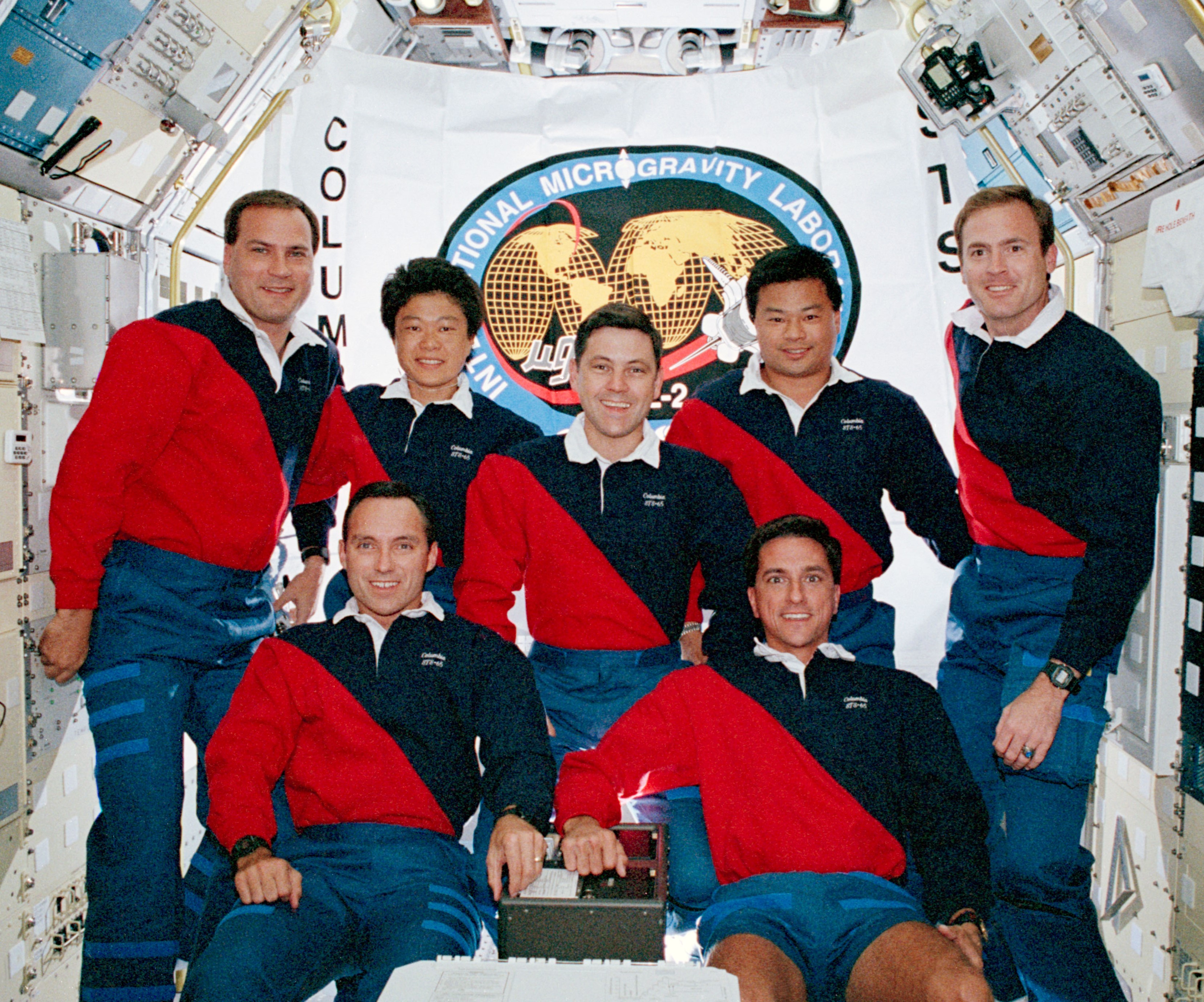
The STS-65 crew patch Official photo of the STS-65 crew of Richard J. Hieb, seated left, Robert D. Cabana, and Donald A. Thomas; Leroy Chiao, standing left, James D. Halsell, Chiaki Mukai of Japan, and Carl E. Walz The payload patch for the International Microgravity Laboratory-2
Left: The STS-65 crew patch. Middle: Official photo of the STS-65 crew of Richard J. Hieb, seated left, Robert D. Cabana, and Donald A. Thomas; Leroy Chiao, standing left, James D. Halsell, Chiaki Mukai of Japan, and Carl E. Walz. Right: The payload patch for the International Microgravity Laboratory-2.

In August 1973, NASA and the European Space Research Organization, reorganized as the European Space Agency (ESA) in 1975, agreed to build a reusable laboratory called Spacelab to fly in the space shuttle’s cargo bay. As part of the agreement, ESA built two pressurized modules in addition to other supporting hardware. First flying on STS-9 in 1983, the 18-foot-long pressurized Spacelab module made its 10th flight on STS-65. In September 1992 NASA named Hieb as the IML-2 payload commander and Mukai and Favier as prime and backup payload specialists, respectively, adding Chiao and Thomas as mission specialists in October 1992, finally designating Cabana, Halsell, and Walz as the orbiter crew in August 1993. For Cabana and Hieb, both selected as astronauts in 1985, STS-65 marked their third spaceflight.  NASA selected Halsell, Walz, Chiao, and Thomas in 1990, in the class nicknamed The Hairballs. Walz would make his second flight, with the other three making their first. NASDA selected Mukai in 1985 and she holds the distinction as the first Japanese woman in space. Chiao and Mukai as part of the STS-65 crew marked the first time that two Asians flew on the shuttle at the same time, and with Kazakh cosmonaut Talgat A. Musbayev aboard Mir, the first time that three people of Asian origins flew in space at the same time.
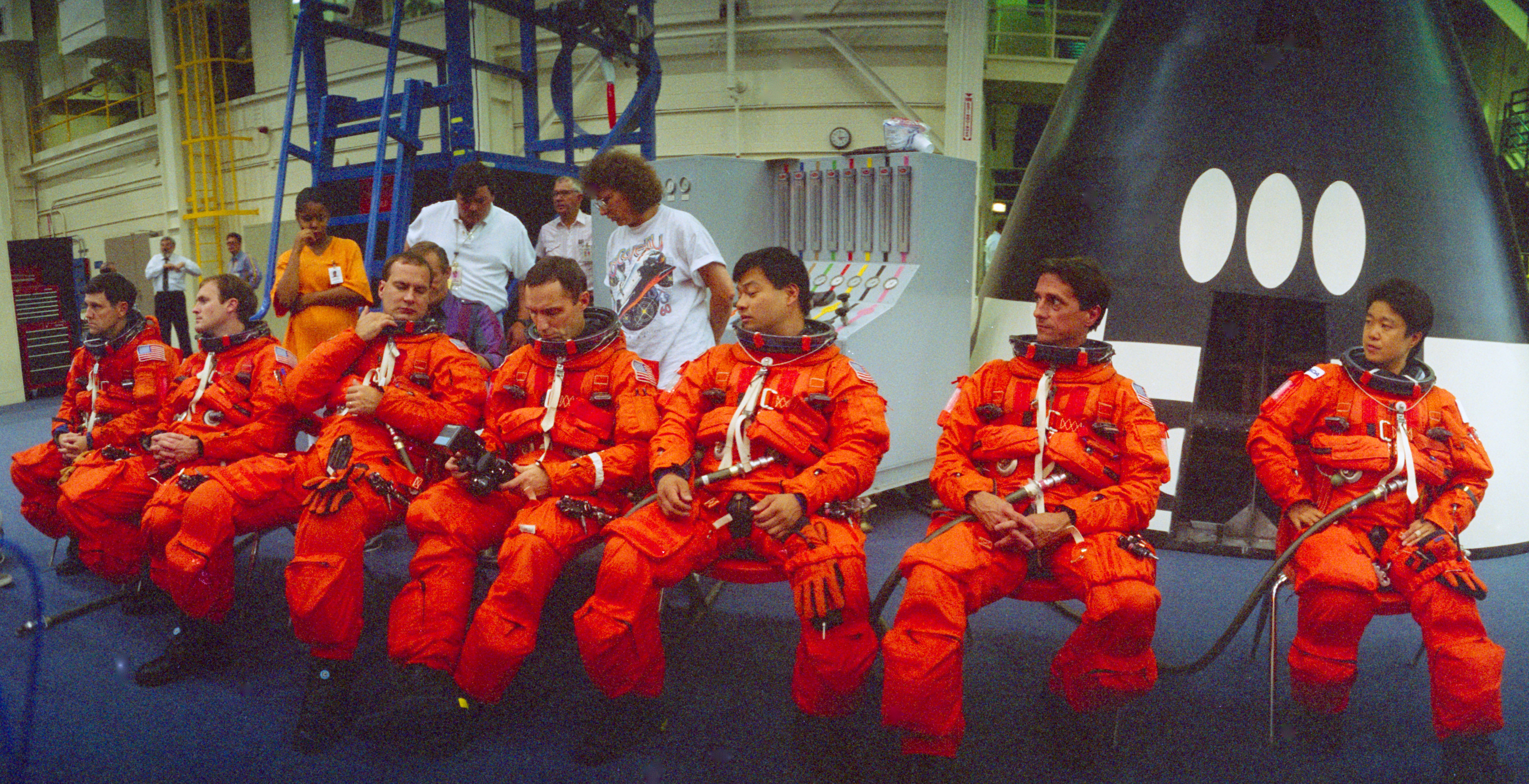
The STS-65 crew during preflight training at NASA’s Johnson Space Center in Houston Workers at NASA’s Kennedy Space Center in Florida prepare the Spacelab module for the STS-65 mission
Left: The STS-65 crew during preflight training at NASA’s Johnson Space Center in Houston. Right: Technicians at NASA’s Kennedy Space Center in Florida prepare the Spacelab module for the STS-65 mission.

Columbia returned to NASA’s Kennedy Space Center (KSC) in Florida following its previous flight, STS-62, in March 1994. Technicians in KSC’s Orbiter Processing Facility (OPF) serviced the orbiter, removed the previous payload, and installed the Spacelab module in the payload bay. Following a successful leak check of the Spacelab module, rollover of Columbia from the OPF to the Vehicle Assembly Building (VAB) took place on June 8, where workers mated it with an external tank (ET) and two solid rocket boosters (SRBs). Following integrated testing, the stack rolled out to Launch Pad 39A seven days later. The crew participated in the Terminal Countdown Demonstration Test on June 22.
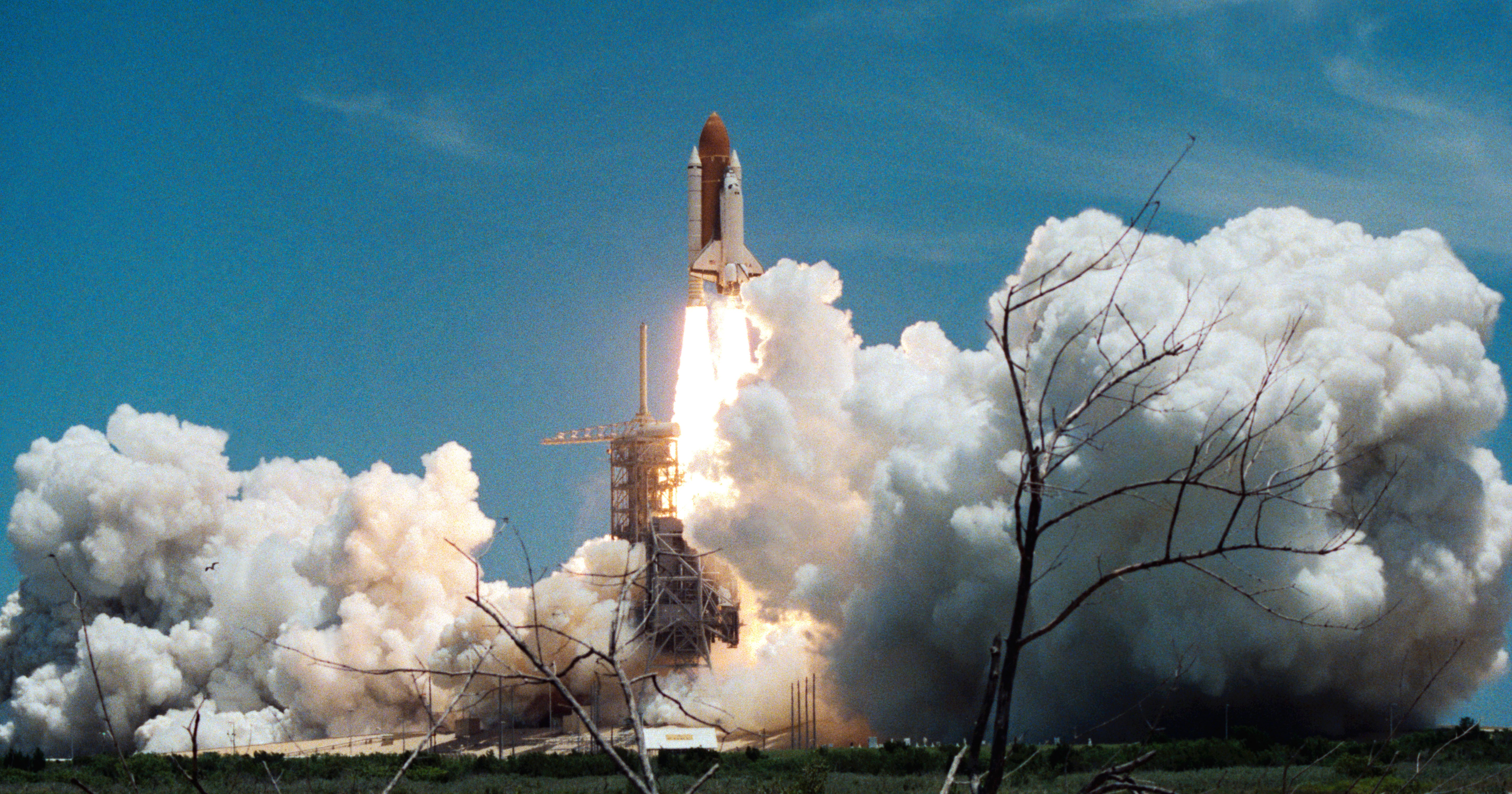
Liftoff of space shuttle Columbia on STS-65 carrying the second International Microgravity Laboratory
Liftoff of space shuttle Columbia on STS-65 carrying the second International Microgravity Laboratory.

On July 8, 1994, precisely on time, Columbia thundered off KSC’s Launch Pad 39A to begin the STS-65 mission. For the first time in shuttle history, a video camera recorded the liftoff from the orbiter’s flight deck, showing the vibrations during the first two minutes while the SRBs fired, smoothing out once the shuttle main engines took over. Mounted inside Columbia’s payload bay, the Spacelab 18-foot-long module provided a shirt-sleeve environment for the astronauts to conduct the scientific experiments. As during many Spacelab missions, the STS-65 crew carried out science operations 24-hours a day, divided into two teams – the red shift comprised Cabana, Halsell, Hieb, and Mukai, while Chiao, Thomas, and Walz made up the blue shift.

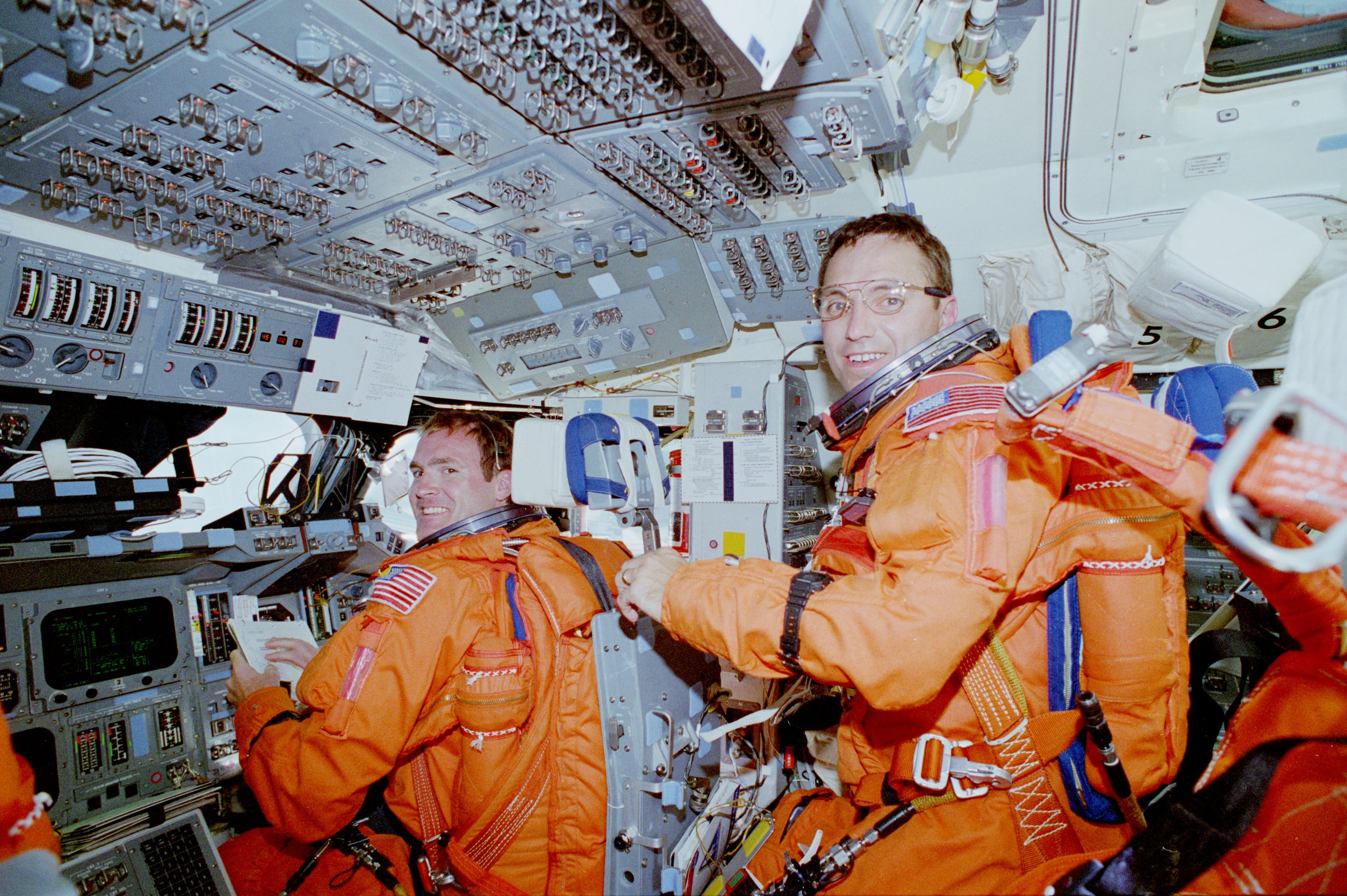
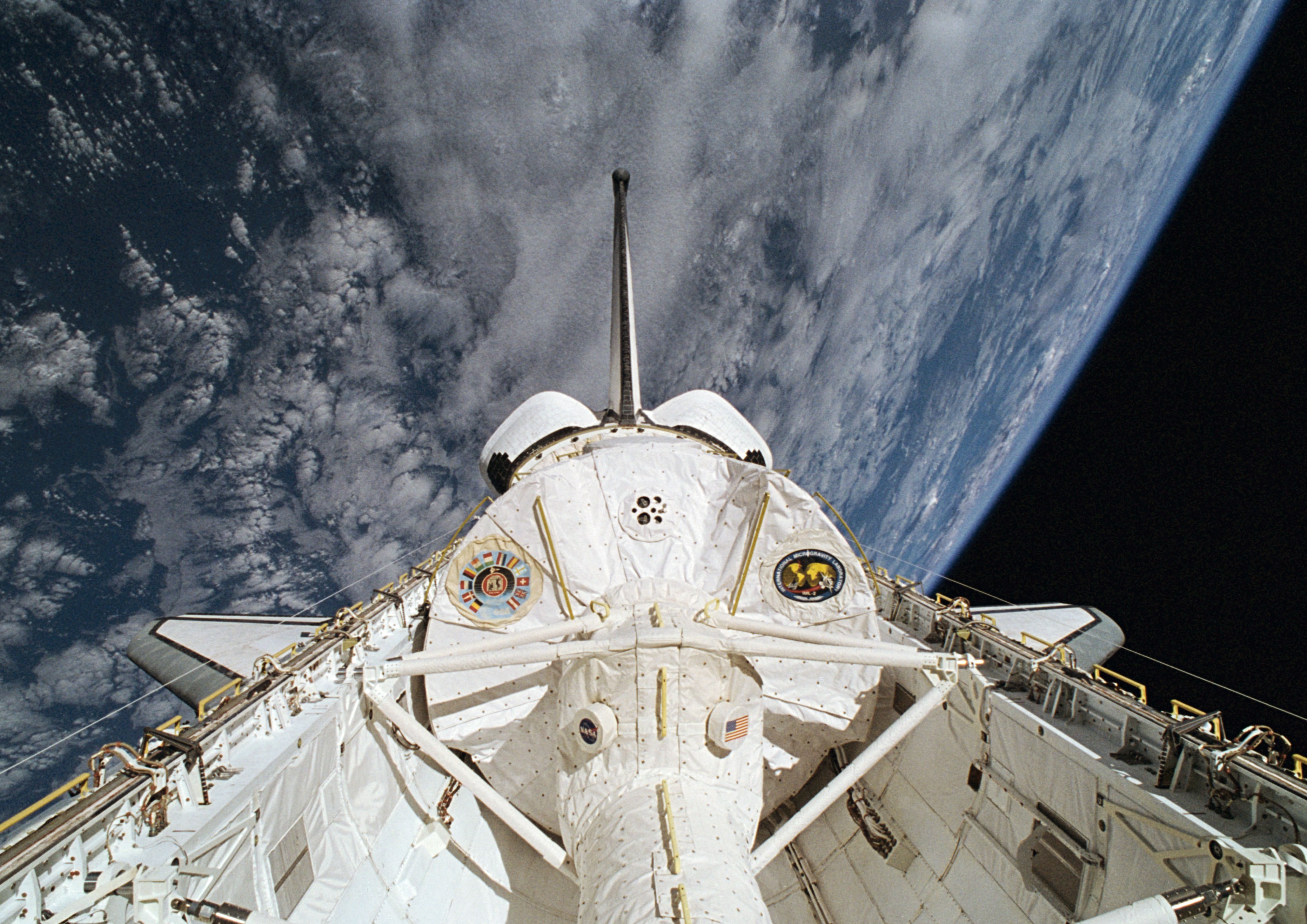
Still image from video recorded on the shuttle’s flight deck during powered ascent James D. Halsell, left, and Carl E. Walz moments after Columbia reached orbit View of the Spacelab module in the shuttle’s payload bay
Left: Still image from video recorded on the shuttle’s flight deck during powered ascent. Middle: James D. Halsell, left, and Carl E. Walz moments after Columbia reached orbit. Right: View of the Spacelab module in the shuttle’s payload bay.
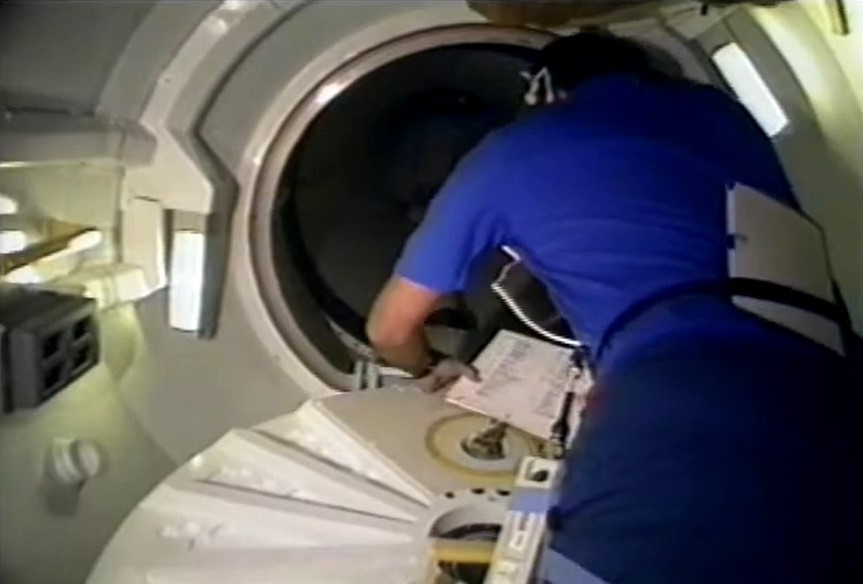
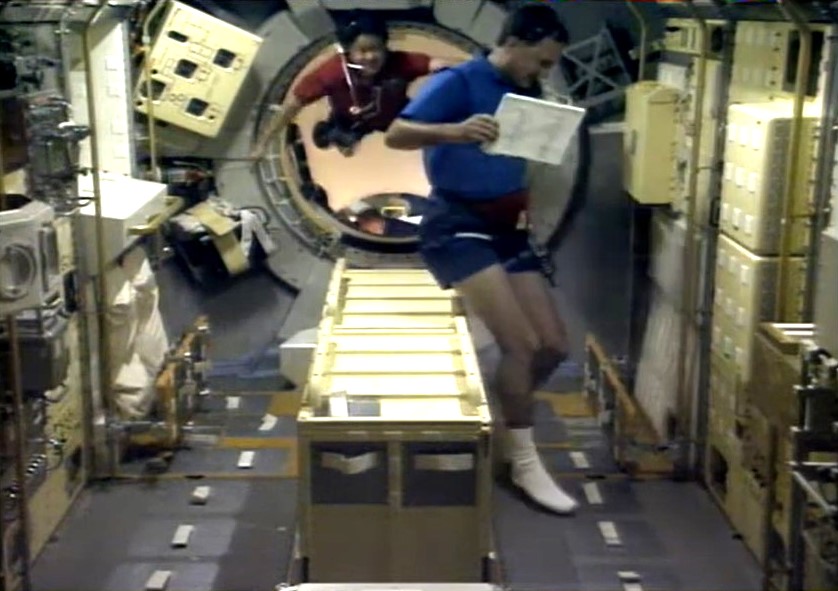
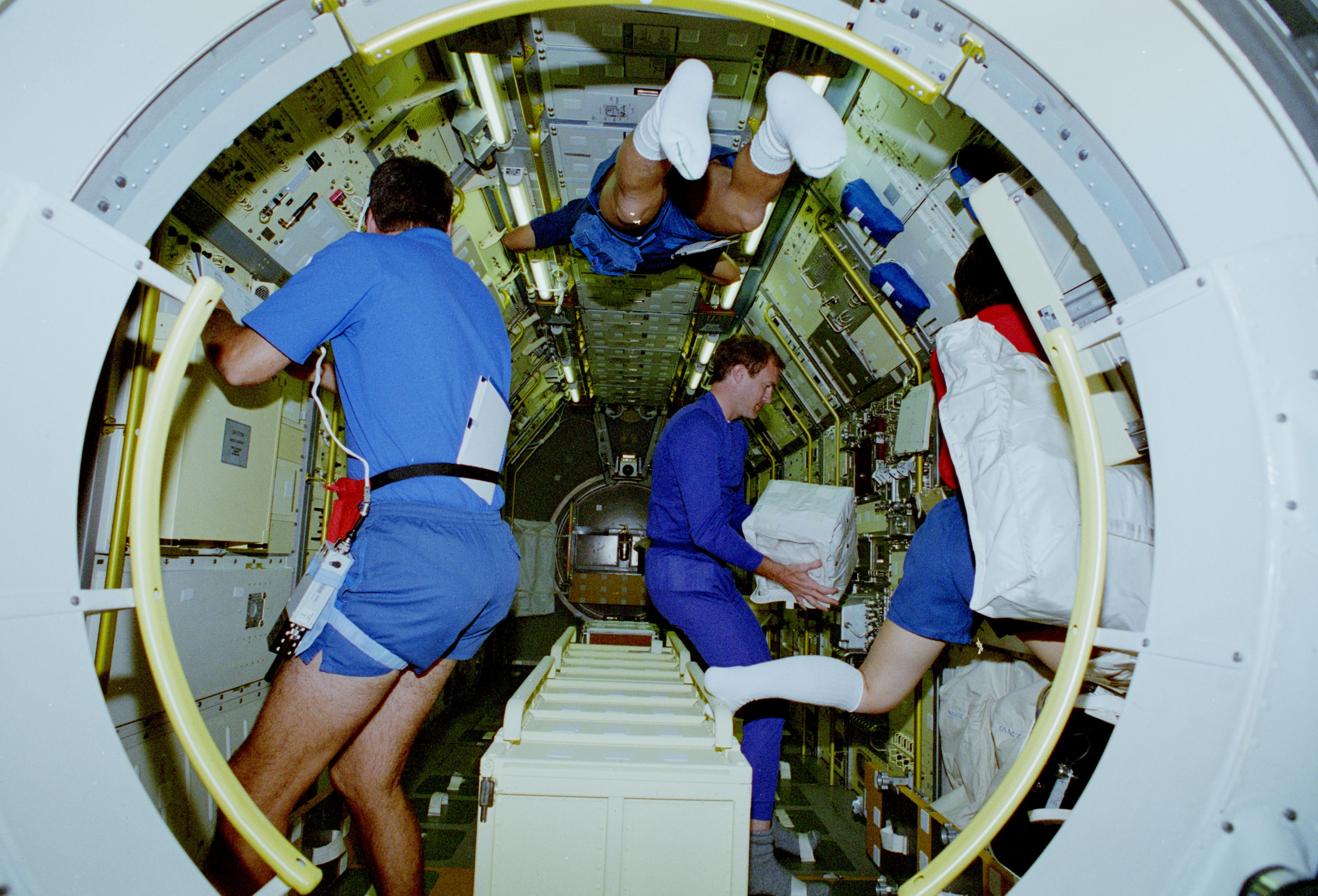
Richard J. Hieb opens the hatch from the airlock to the tunnel leading to the Spacelab module Hieb and Chiaki Mukai begin activating Spacelab and its experiments The view from the tunnel showing astronauts at work in the Spacelab module
Left: Richard J. Hieb opens the hatch from the airlock to the tunnel leading to the Spacelab module. Middle: Hieb and Chiaki Mukai begin activating Spacelab and its experiments. Right: The view from the tunnel showing astronauts at work in the Spacelab module.

After reaching orbit, the crew opened the payload bay doors and deployed the shuttle’s radiators, and removed their bulky launch and entry suits, stowing them for the remainder of the flight. Shortly after, Hieb opened the hatch to the transfer tunnel and translated through it to enter the Spacelab module for the first time. He and Mukai activated the module and turned on the first experiments. For the next 14 days, the astronauts worked round the clock, with Cabana, Halsell, and Walz managing the shuttle’s systems while Hieb, Chiao, Thomas, and Mukai conducted the bulk of the research. The astronauts commemorated the 25th anniversary of the Apollo 11 launch on July 16 and the Moon landing four days later, recalling that their spacecraft and the Command Module shared the name Columbia.

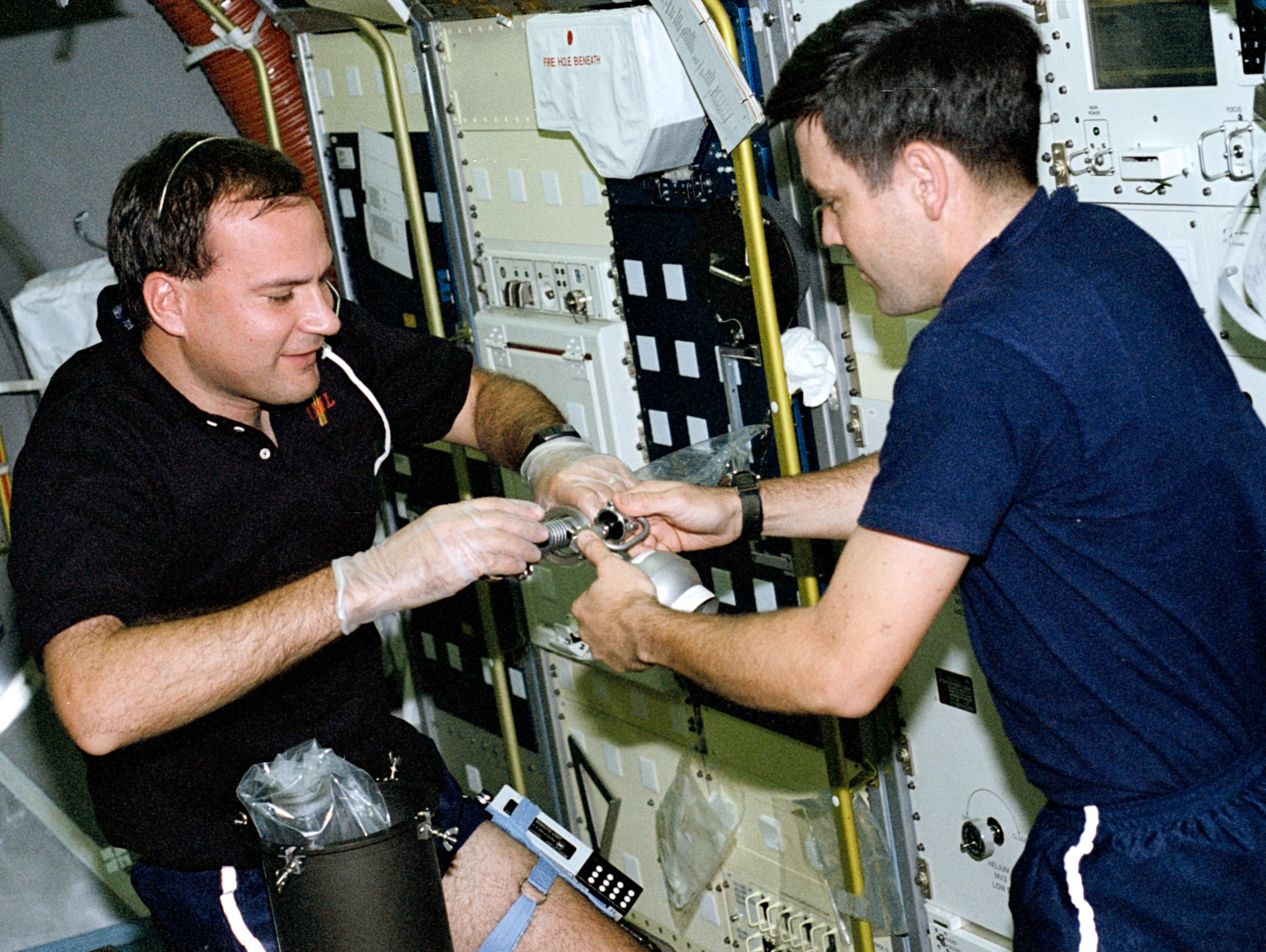
Chiaki Mukai of the National Space Development Agency of Japan, now the Japan Aerospace Exploration Agency, talks to students in Japan using the shuttle’s amateur radio Richard J. Hieb, left, and Robert D. Cabana take an air sample from an experiment Hieb in the Lower Body Negative Pressure device
Left: Chiaki Mukai of the National Space Development Agency of Japan, now the Japan Aerospace Exploration Agency, talks to students in Japan using the shuttle’s amateur radio. Middle: Richard J. Hieb, left, and Robert D. Cabana take an air sample from an experiment. Right: Hieb in the Lower Body Negative Pressure device.
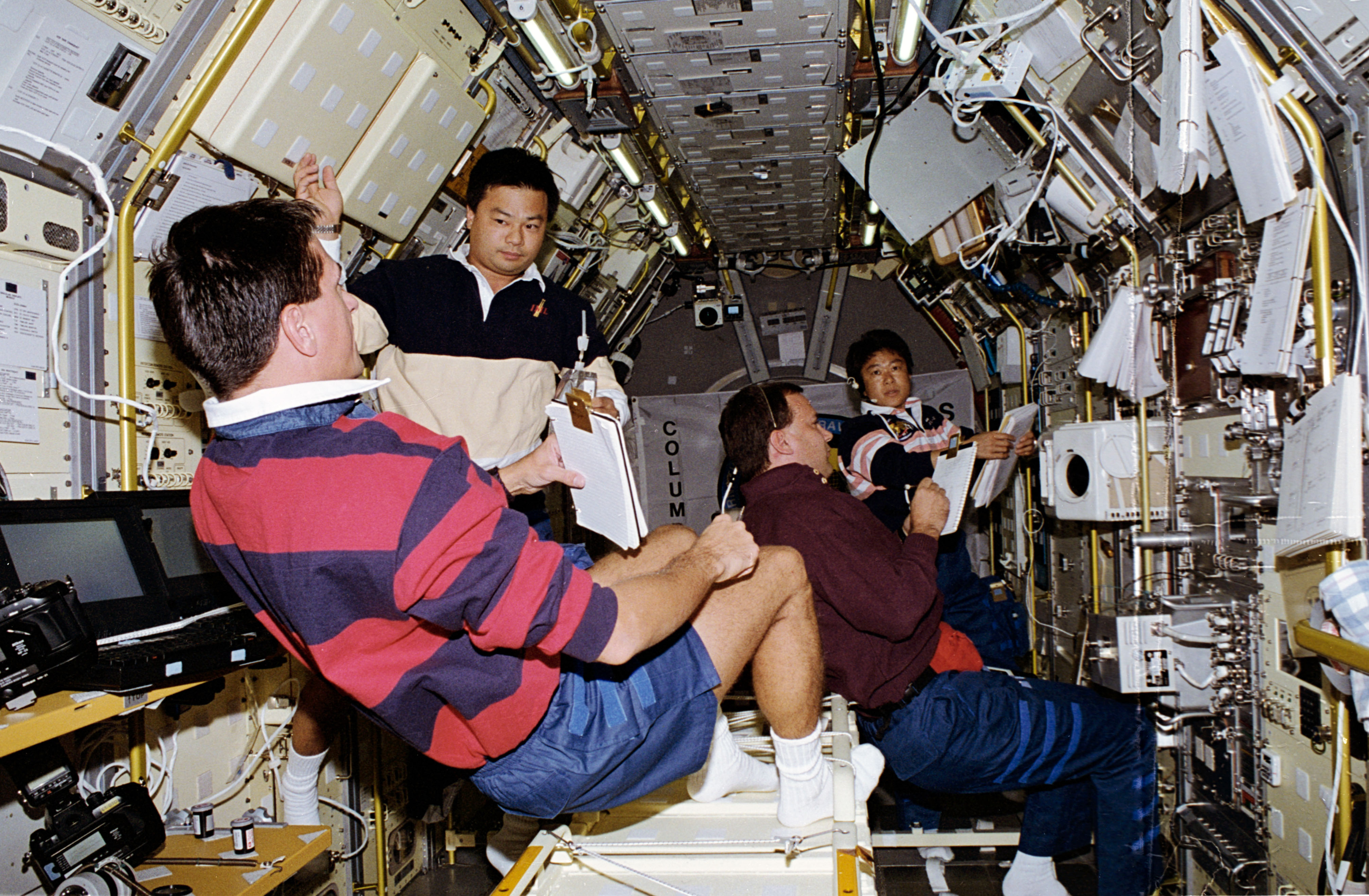
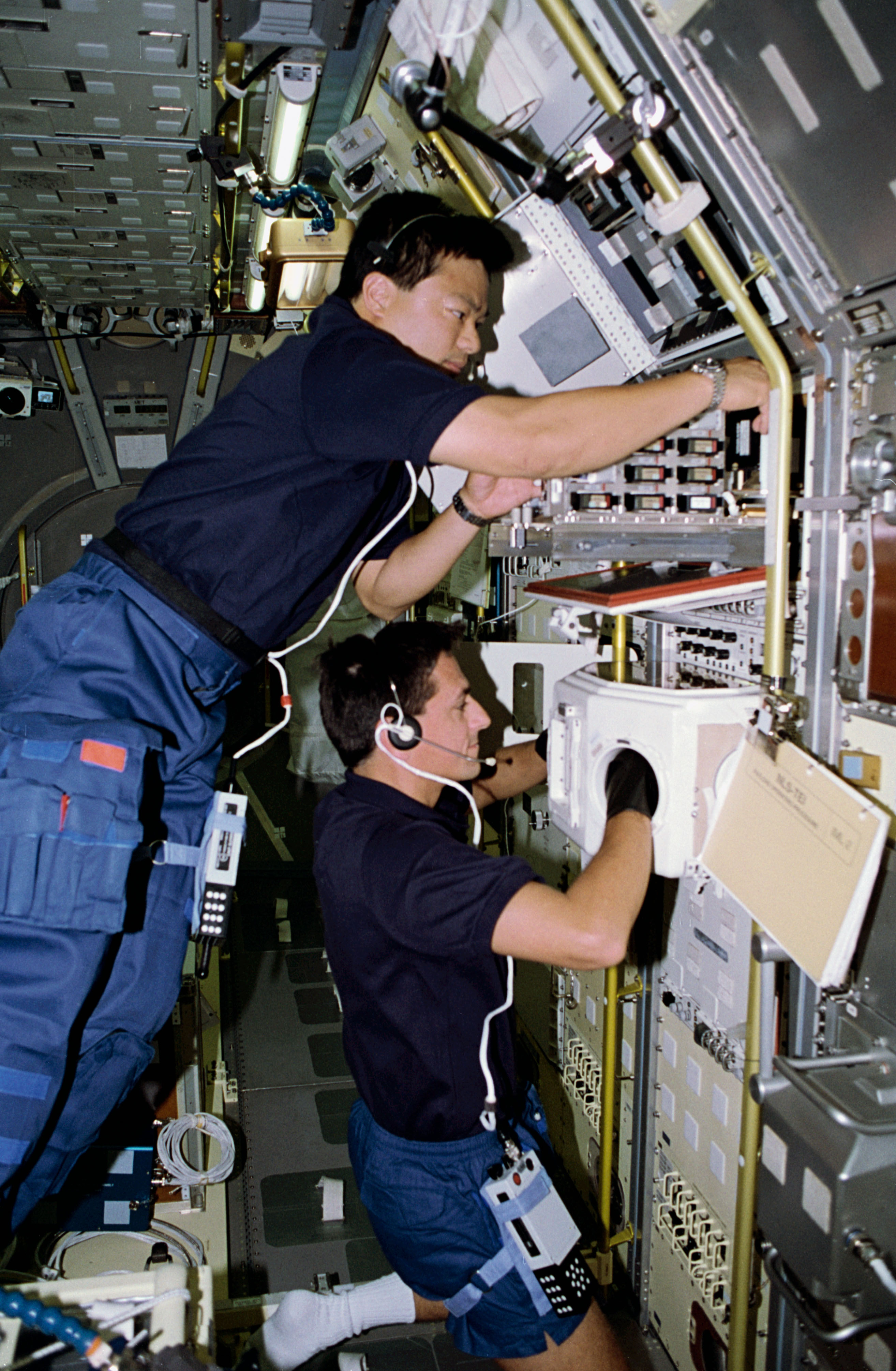
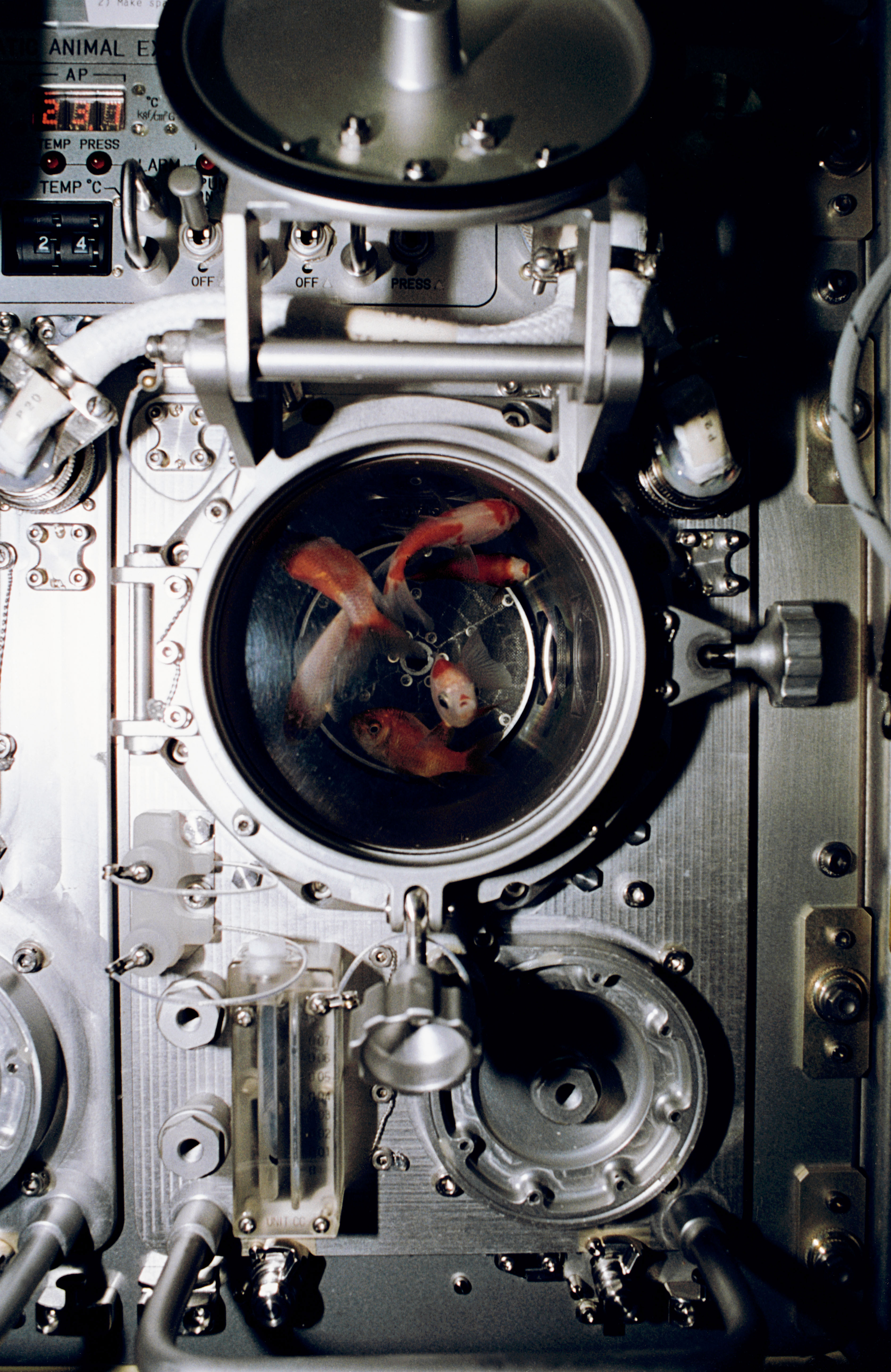
Donald A. Thomas, left, Leroy Chiao, Richard J. Hieb, and Chiaki Mukai at work in the Spacelab module Chiao, left, and Thomas work on the Biorack instruments Goldfish swim in the Aquatic Animal Experiment Unit
Left: Donald A. Thomas, left, Leroy Chiao, Richard J. Hieb, and Chiaki Mukai at work in the Spacelab module. Middle: Chiao, left, and Thomas work on the Biorack instruments. Right: Goldfish swim in the Aquatic Animal Experiment Unit.
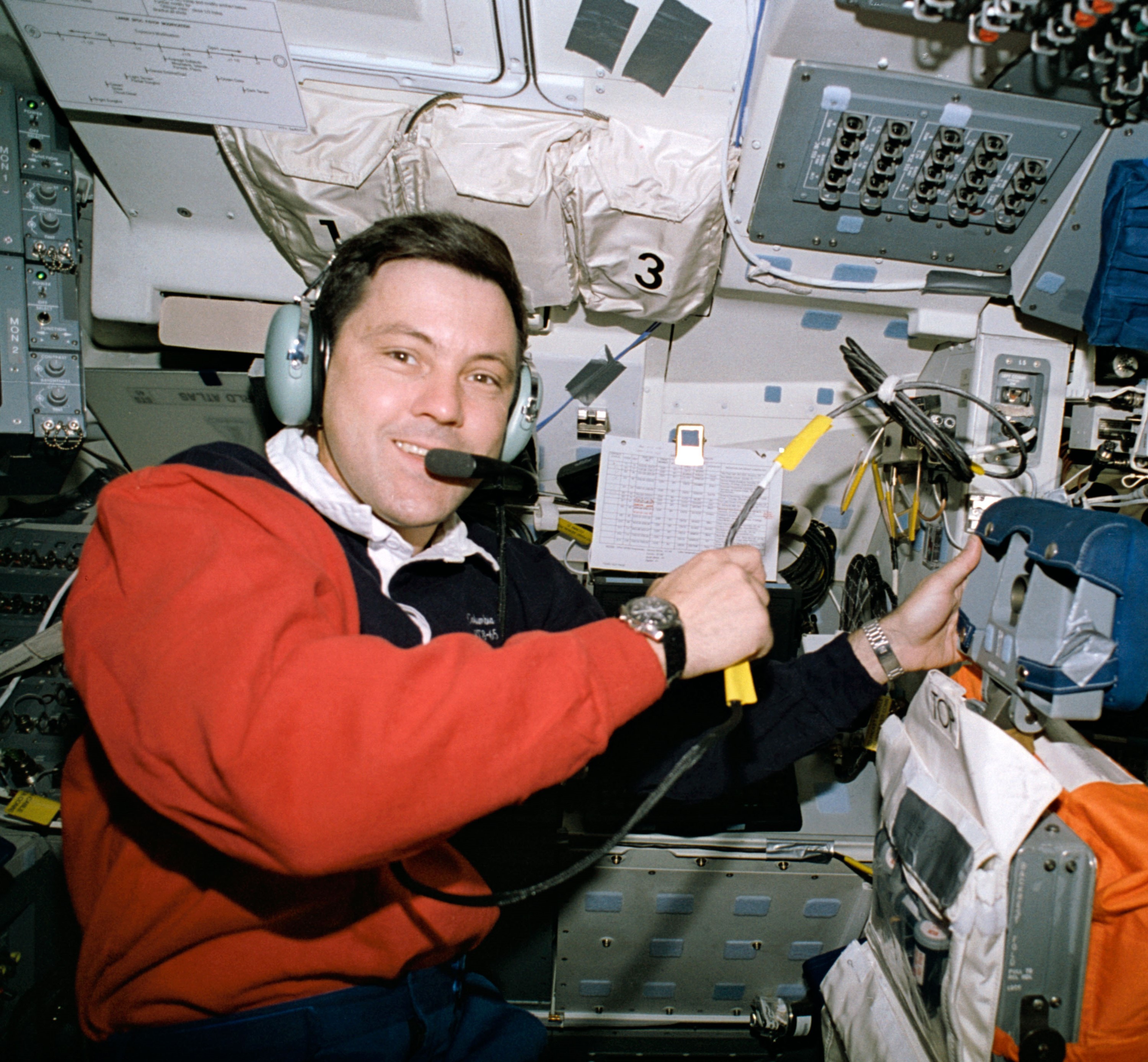
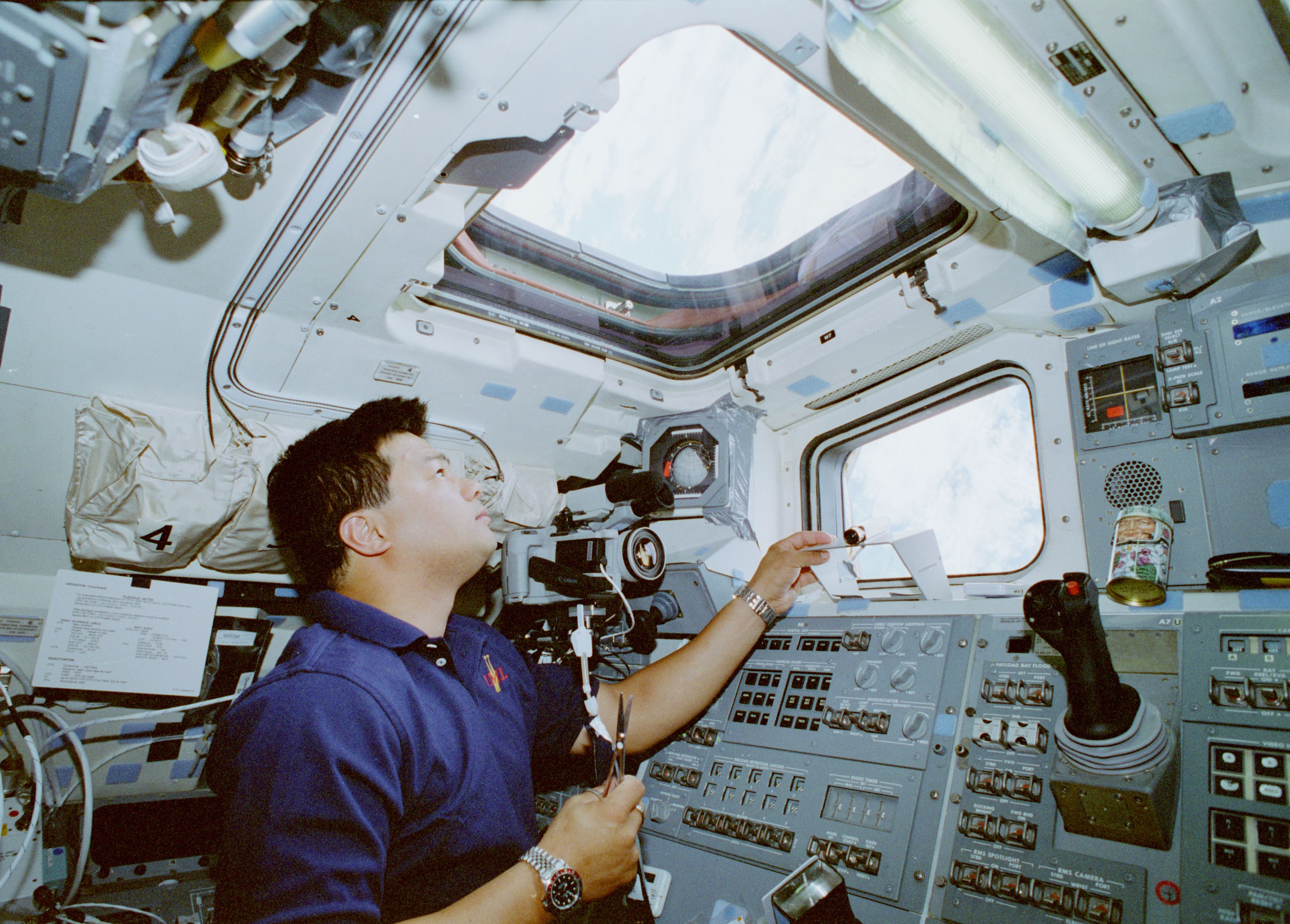
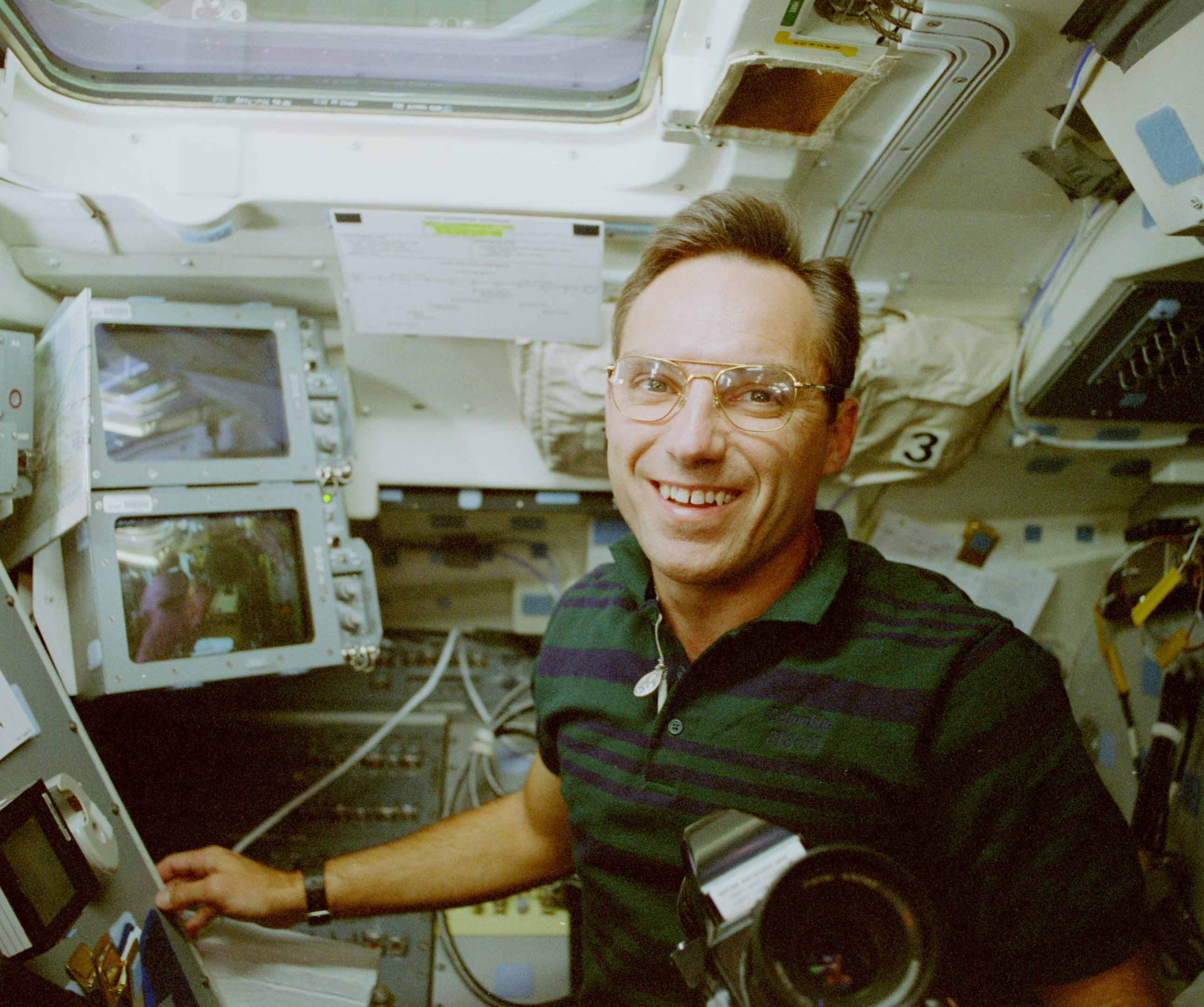
Robert D. Cabana uses the shuttle’s amateur radio Leroy Chiao looks out at the Earth Carl E. Walz working on the shuttle’s flight deck
Left: Robert D. Cabana uses the shuttle’s amateur radio. Middle: Leroy Chiao looks out at the Earth. Right: Carl E. Walz working on the shuttle’s flight deck.
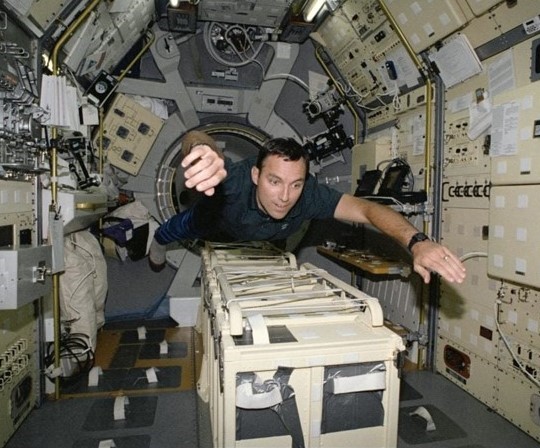
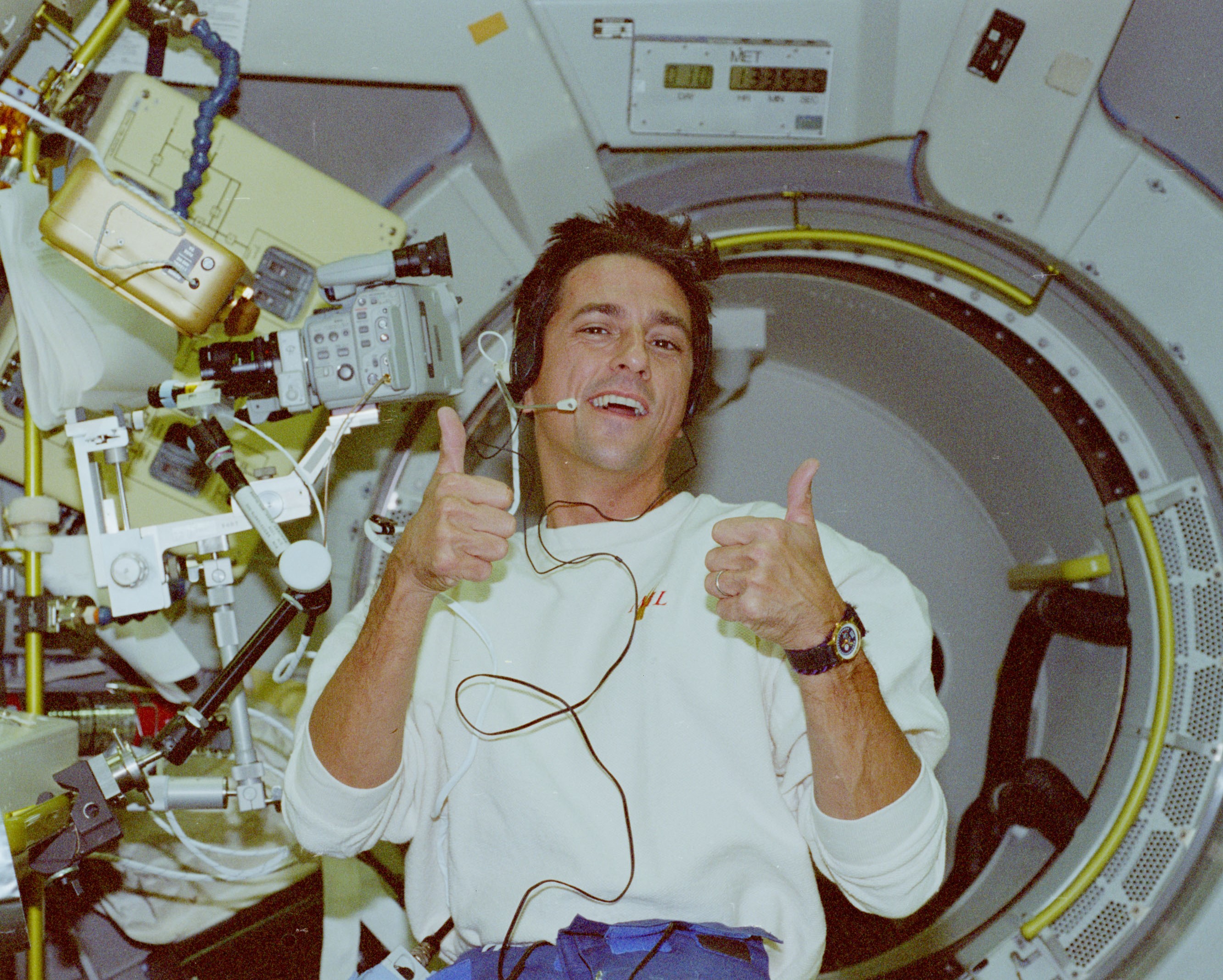
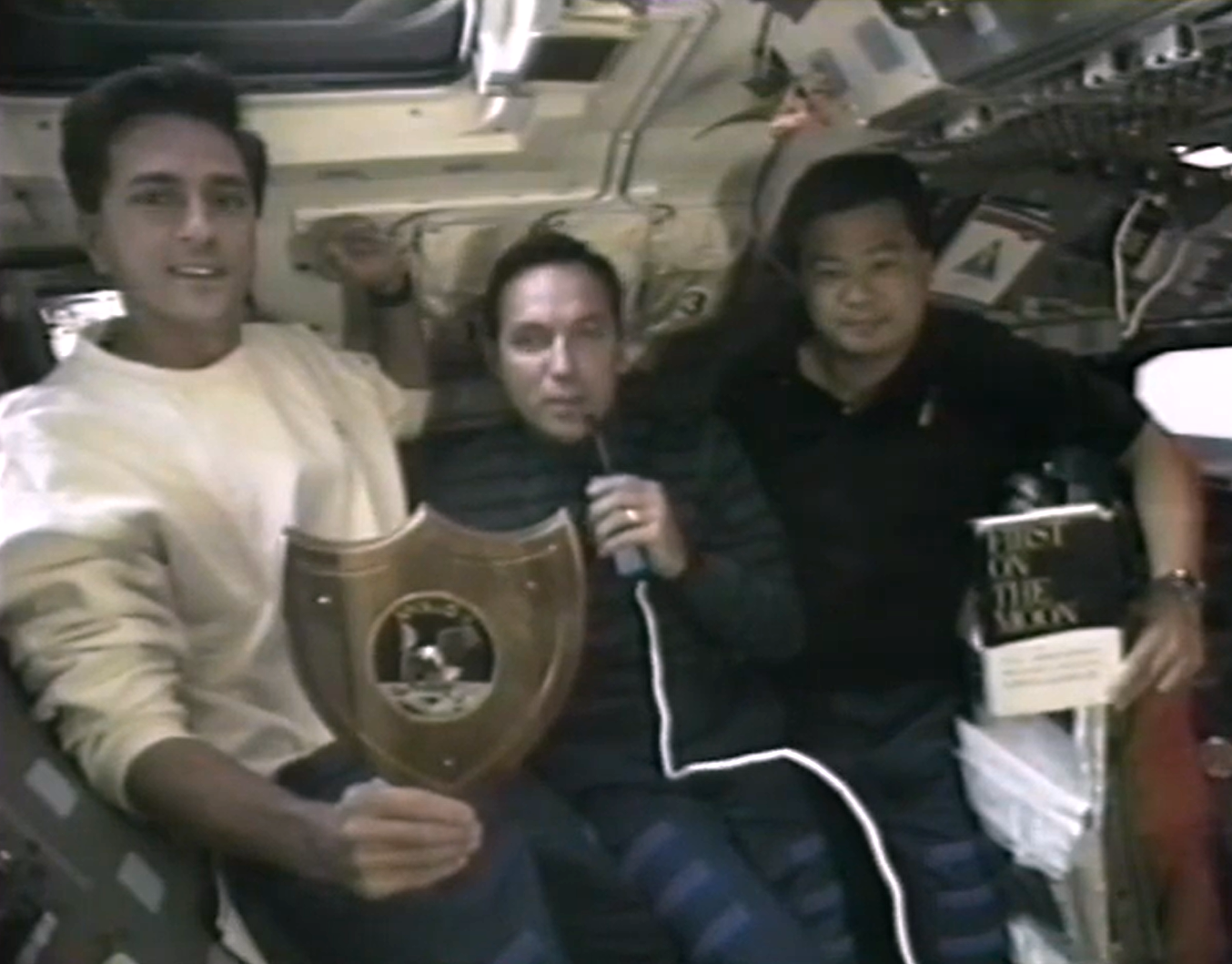
Carl E. Walz flies through the Spacelab module Donald A. Thomas gives two thumbs up for the crew’s performance during the mission Thomas, left, Walz, and Leroy Chiao pay tribute to Apollo 11 on the 25th anniversary of the Moon landing mission
Left: Carl E. Walz flies through the Spacelab module. Middle: Donald A. Thomas gives two thumbs up for the crew’s performance during the mission. Right: Thomas, left, Walz, and Leroy Chiao pay tribute to Apollo 11 on the 25th anniversary of the Moon landing mission.
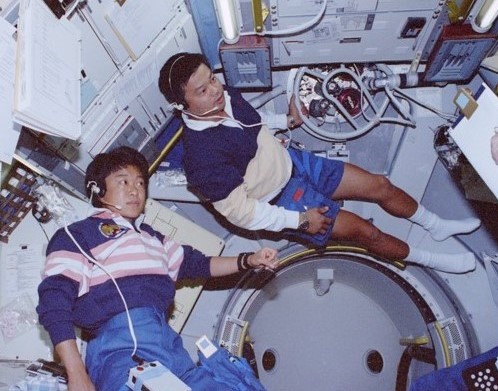
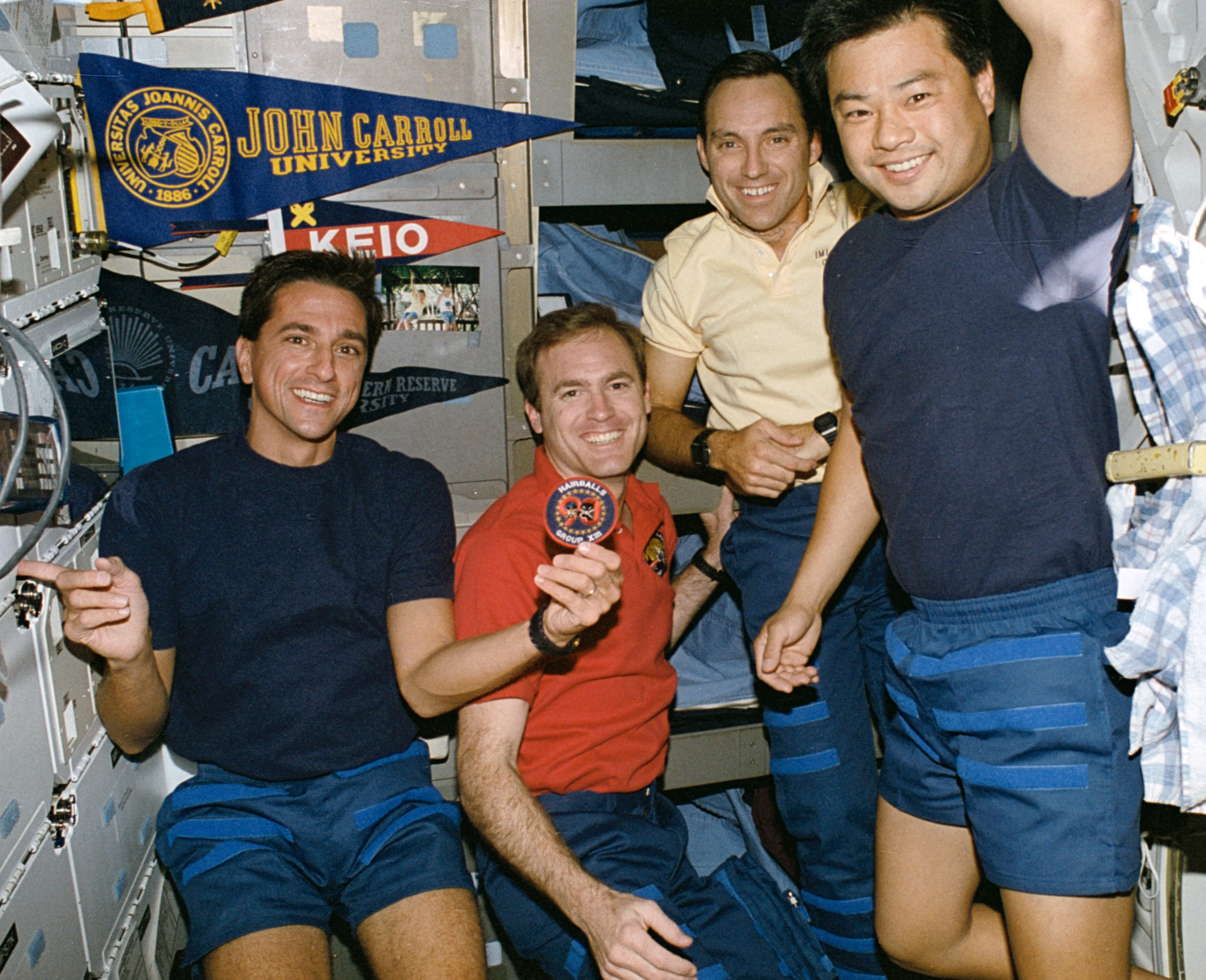
The first time two Asians fly on the shuttle at the same time – Chiaki Mukai, left, of the National Space Development Agency of Japan, now the Japan Aerospace Exploration Agency, left, and NASA astronaut Leroy Chiao Donald A. Thomas, left, James D. Halsell, Carl E. Walz, and Chiao, all selected in 1990 as part of astronaut class 13, nicknamed The Hairballs Inflight photograph of the STS-65 crew
Left: The first time two Asians fly on the shuttle at the same time – Chiaki Mukai, left, of the National Space Development Agency of Japan, now the Japan Aerospace Exploration Agency, left, and NASA astronaut Leroy Chiao. Middle: Donald A. Thomas, left, James D. Halsell, Carl E. Walz, and Chiao, all selected in 1990 as part of astronaut class 13, nicknamed The Hairballs. Right: Inflight photograph of the STS-65 crew.
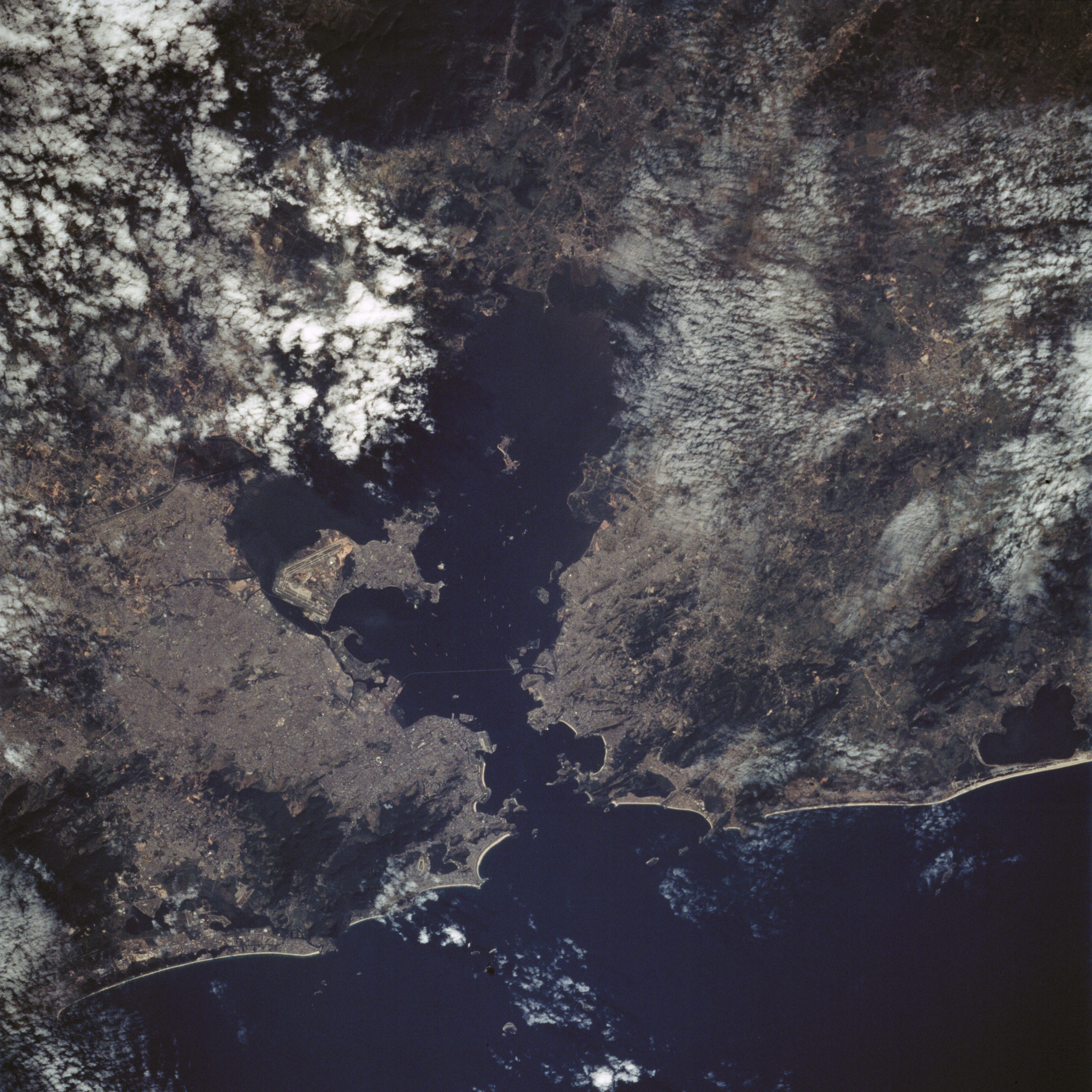
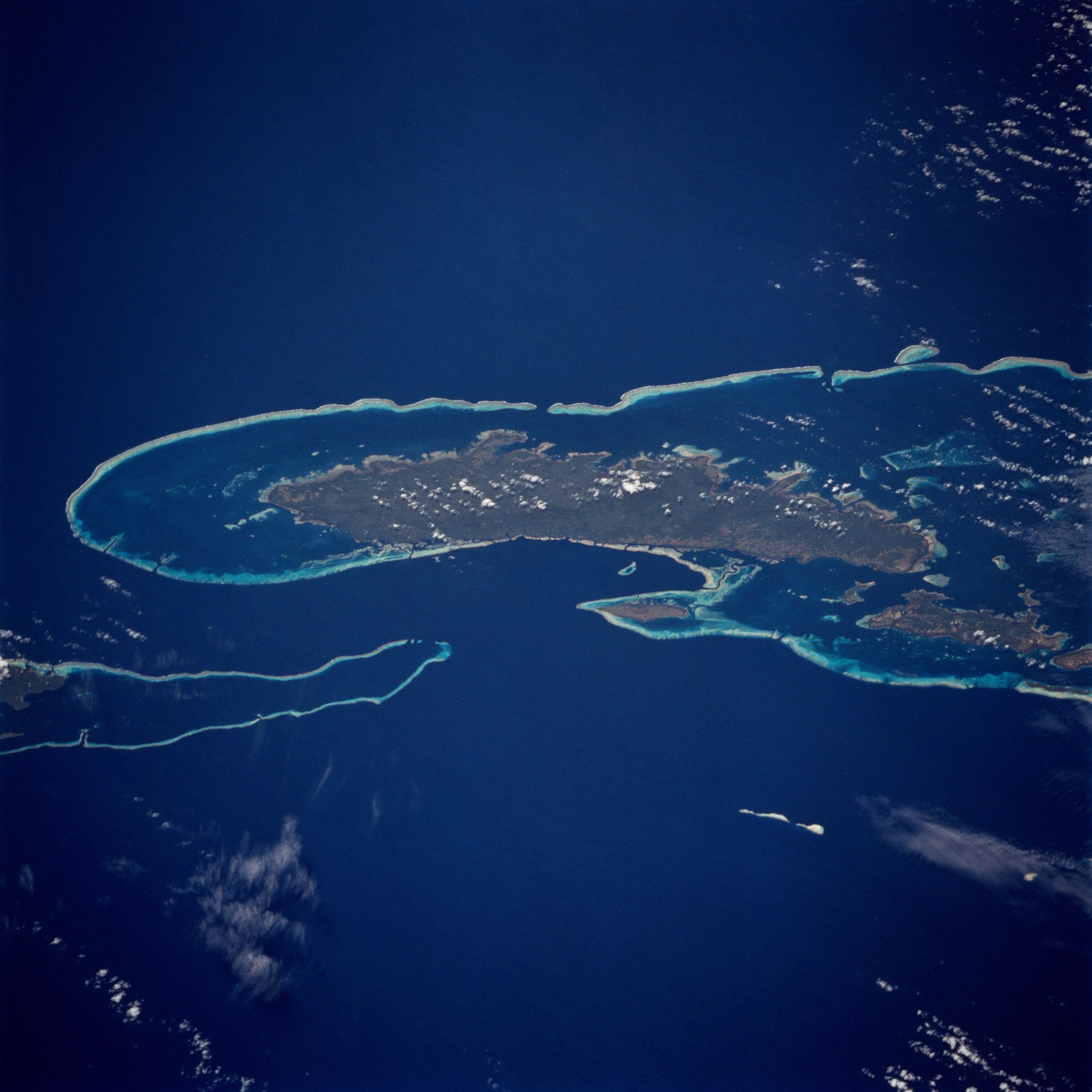
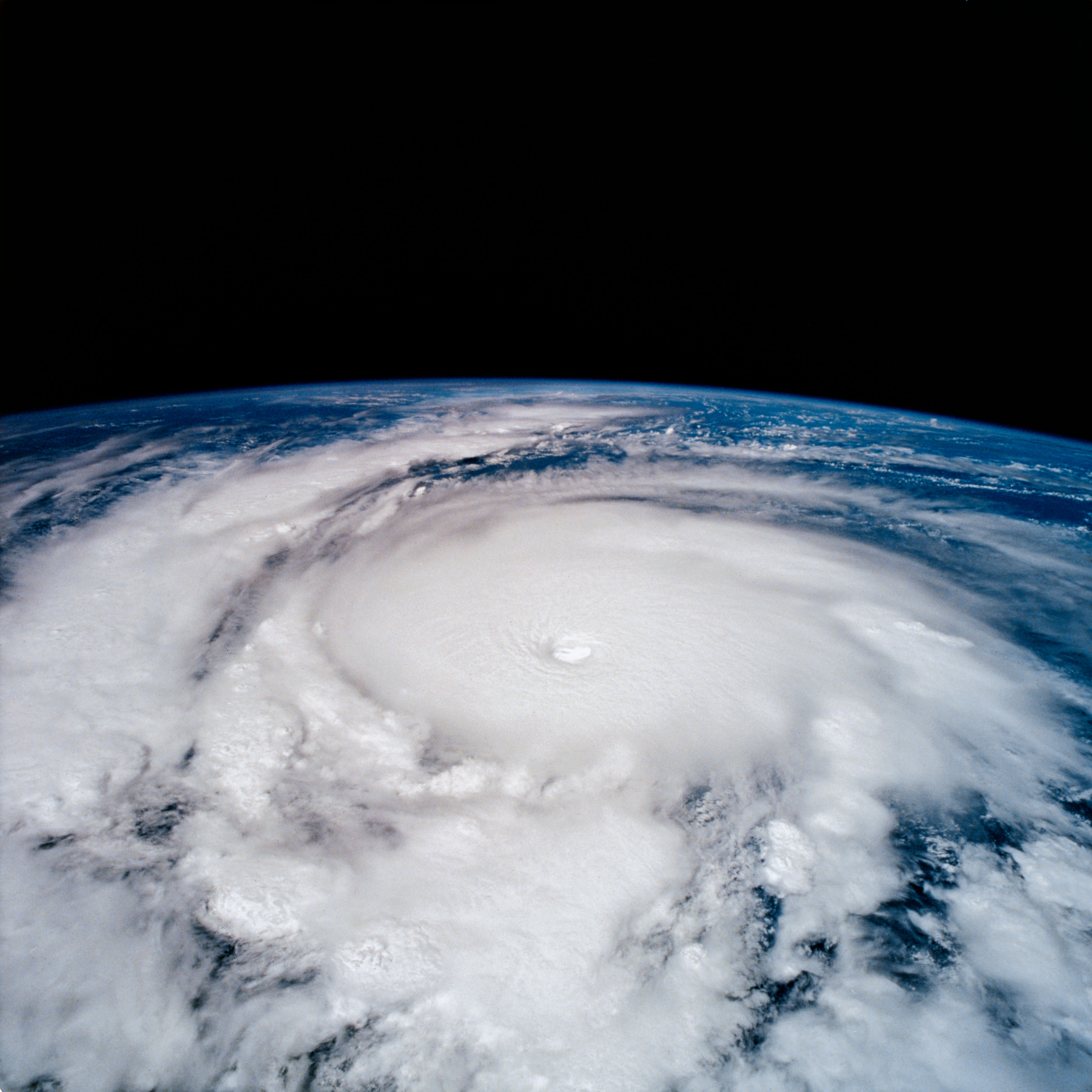
Rio de Janeiro Barrier islands in Papua New Guinea Hurricane Emilia in the central Pacific Ocean
A selection of the STS-65 crew Earth observation photographs. Left: Rio de Janeiro. Middle: Barrier islands in Papua New Guinea. Right: Hurricane Emilia in the central Pacific Ocean.
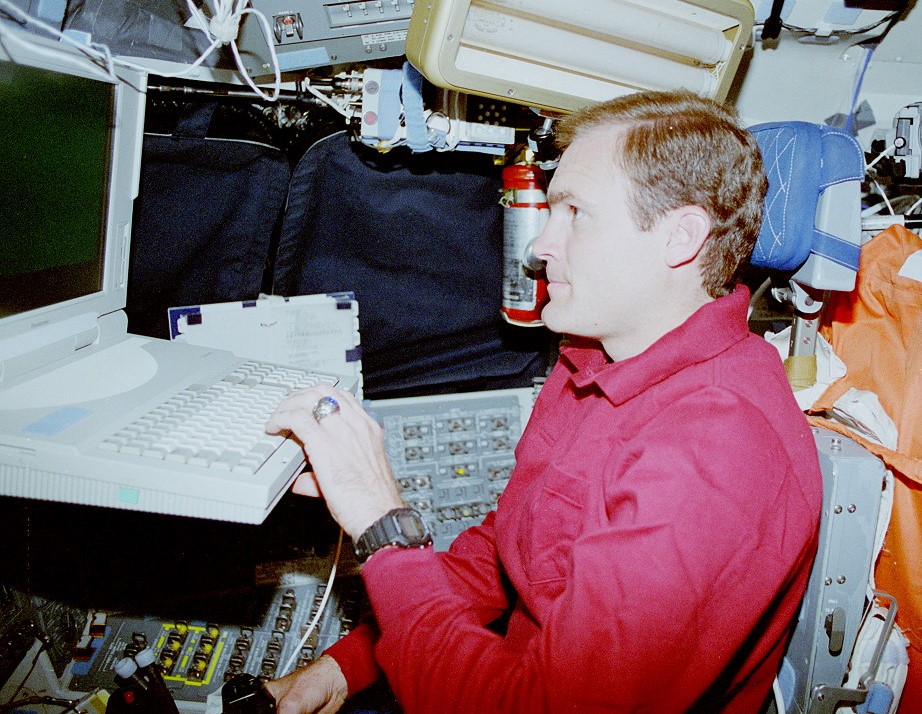
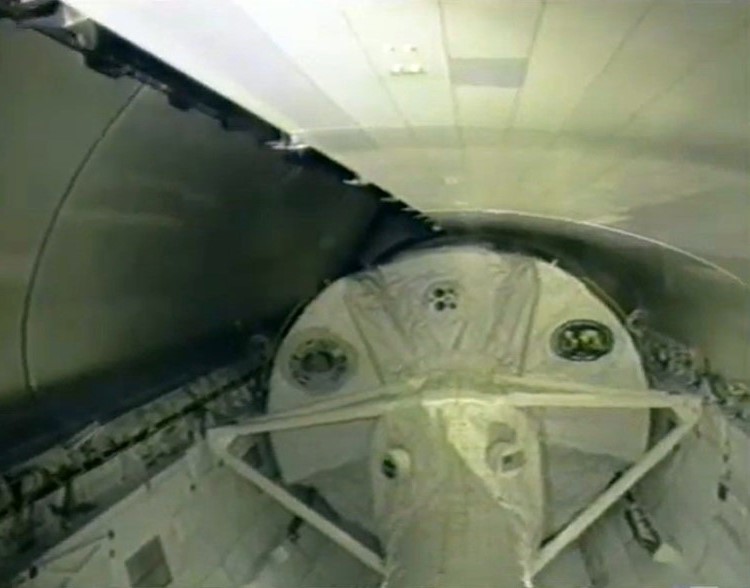
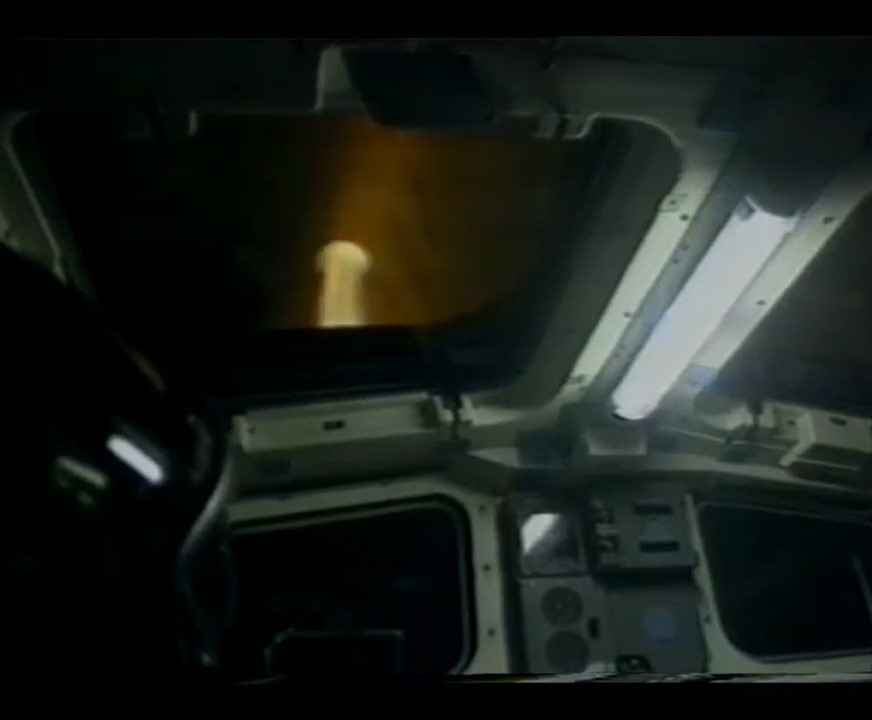
James D. Halsell uses the laptop-based PILOT to train for the entry and landing The astronauts close Columbia’s payload bay doors prior to entry Flash of plasma seen through Columbia’s overhead window during reentry
Left: James D. Halsell uses the laptop-based PILOT to train for the entry and landing. Middle: The astronauts close Columbia’s payload bay doors prior to entry. Right: Flash of plasma seen through Columbia’s overhead window during reentry.

At the end of 13 days, the astronauts finished the last of the experiments and deactivated the Spacelab module. Managers waved off the planned landing on July 22 due to cloudy weather at KSC. On July 23, the astronauts closed the hatch to the Spacelab module for the final time, closed Columbia’s payload bay doors, donned their launch and entry suits, and strapped themselves into their seats for entry and landing. Cabana piloted Columbia to a smooth landing on KSC’s Shuttle Landing Facility, completing 236 orbits around the Earth in 14 days, 17 hours, and 55 minutes, at the time the longest shuttle flight. Mukai set a then-record for the longest single flight by a woman. In October 1994, Columbia returned to its manufacturer, Rockwell International in Palmdale, California, for scheduled modification and refurbishment before its next mission, STS-73, in October 1995.
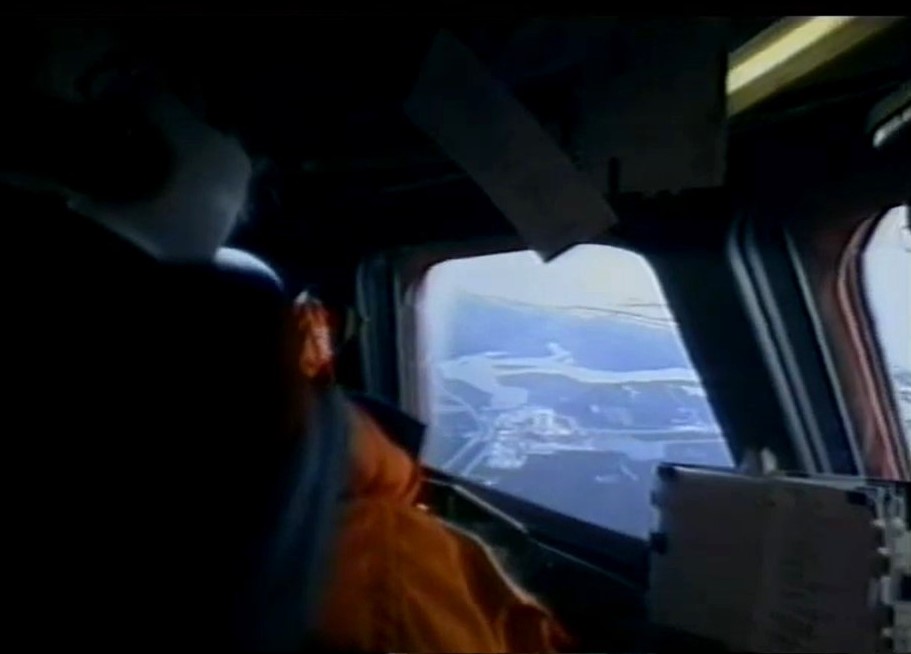
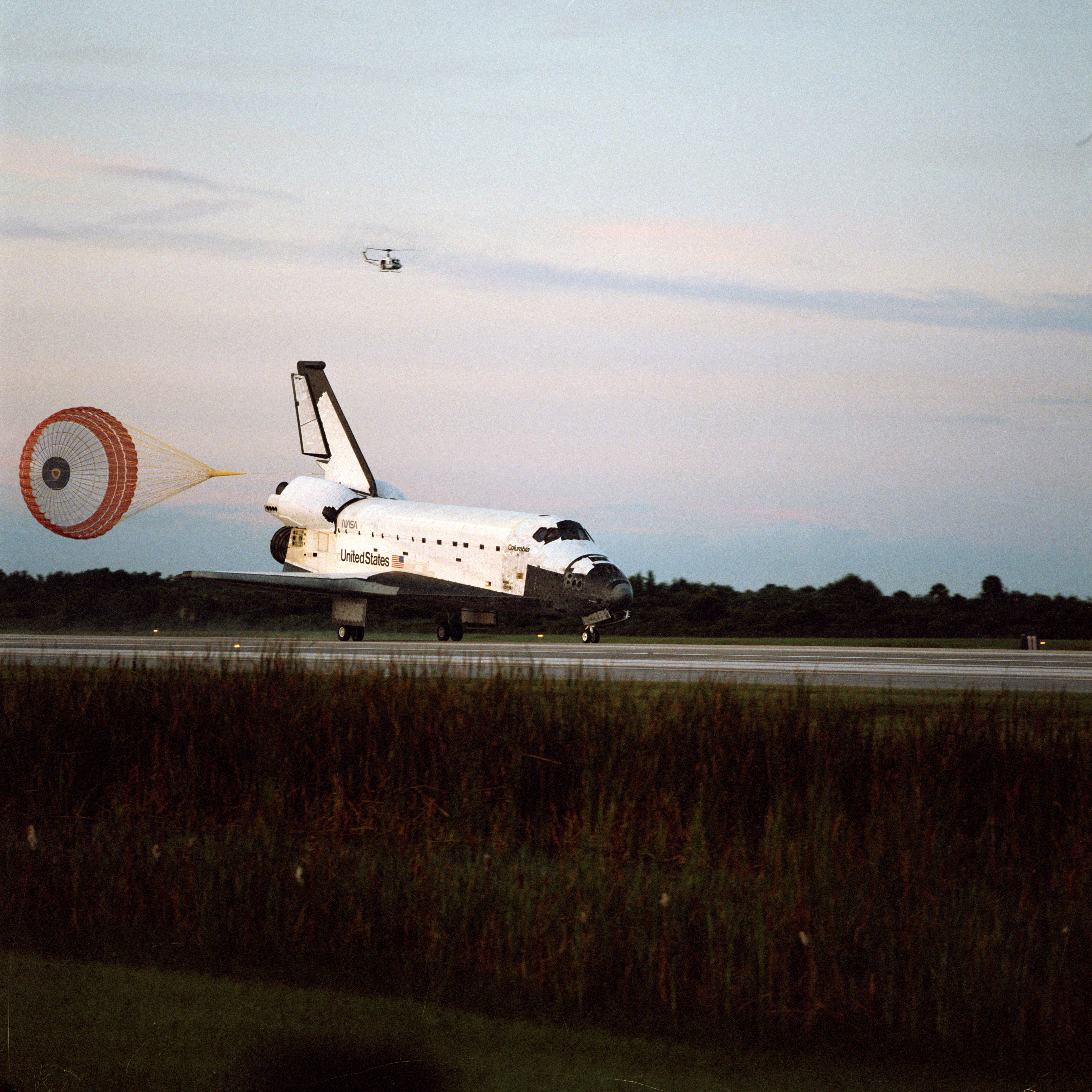
Robert D. Cabana pilots Columbia during the final approach to NASA’s Kennedy Space Center (KSC) in Florida, with the Vehicle Assembly Building visible through the window Columbia touches down on KSC’s Shuttle Landing Facility to end the STS-65 mission Donald A. Thomas, left, and Cabana give a thumbs up after the successful mission
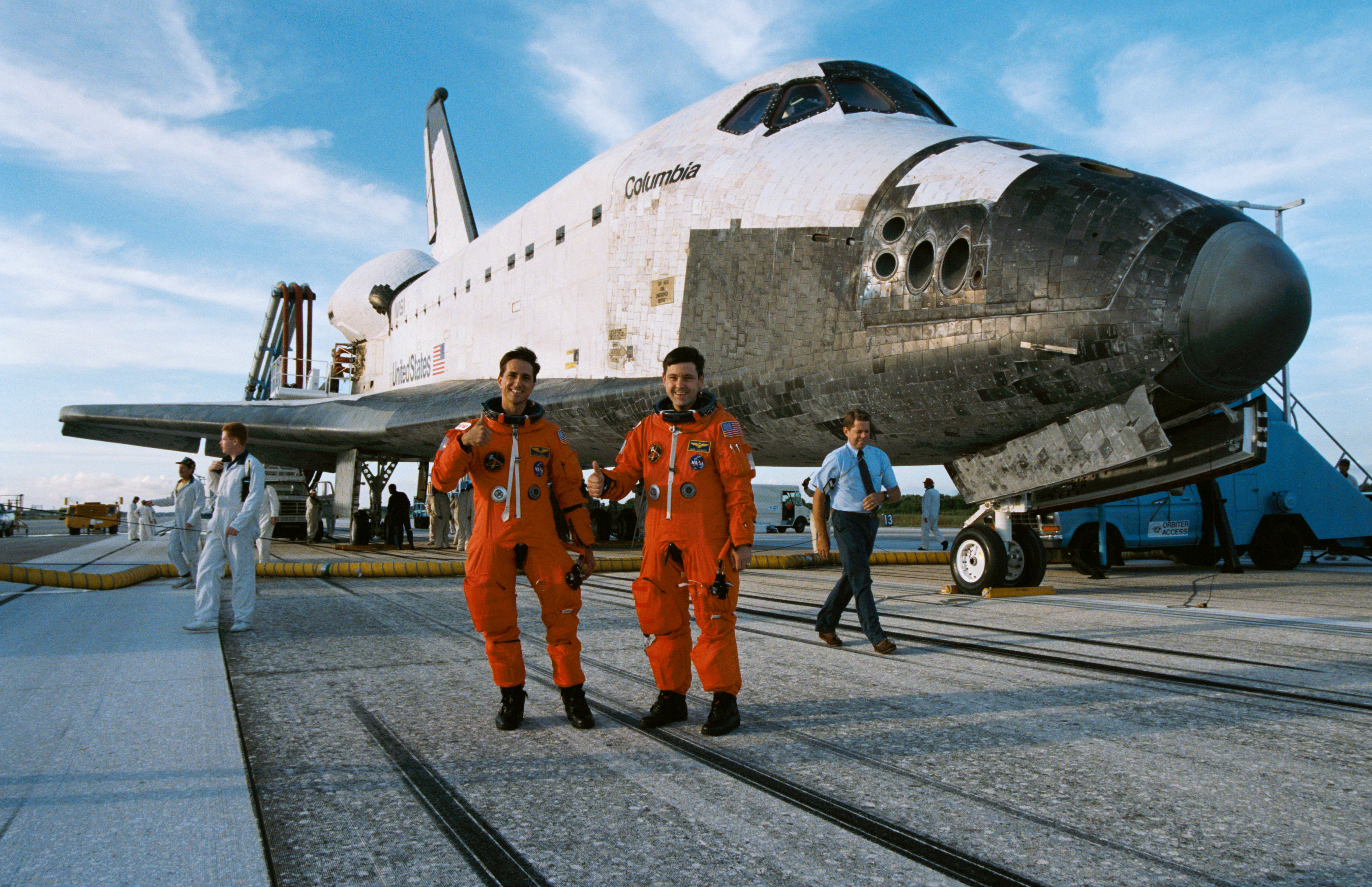
Left: Robert D. Cabana pilots Columbia during the final approach to NASA’s Kennedy Space Center (KSC) in Florida, with the Vehicle Assembly Building visible through the window. Middle: Columbia touches down on KSC’s Shuttle Landing Facility to end the STS-65 mission. Right: Donald A. Thomas, left, and Cabana give a thumbs up after the successful mission.

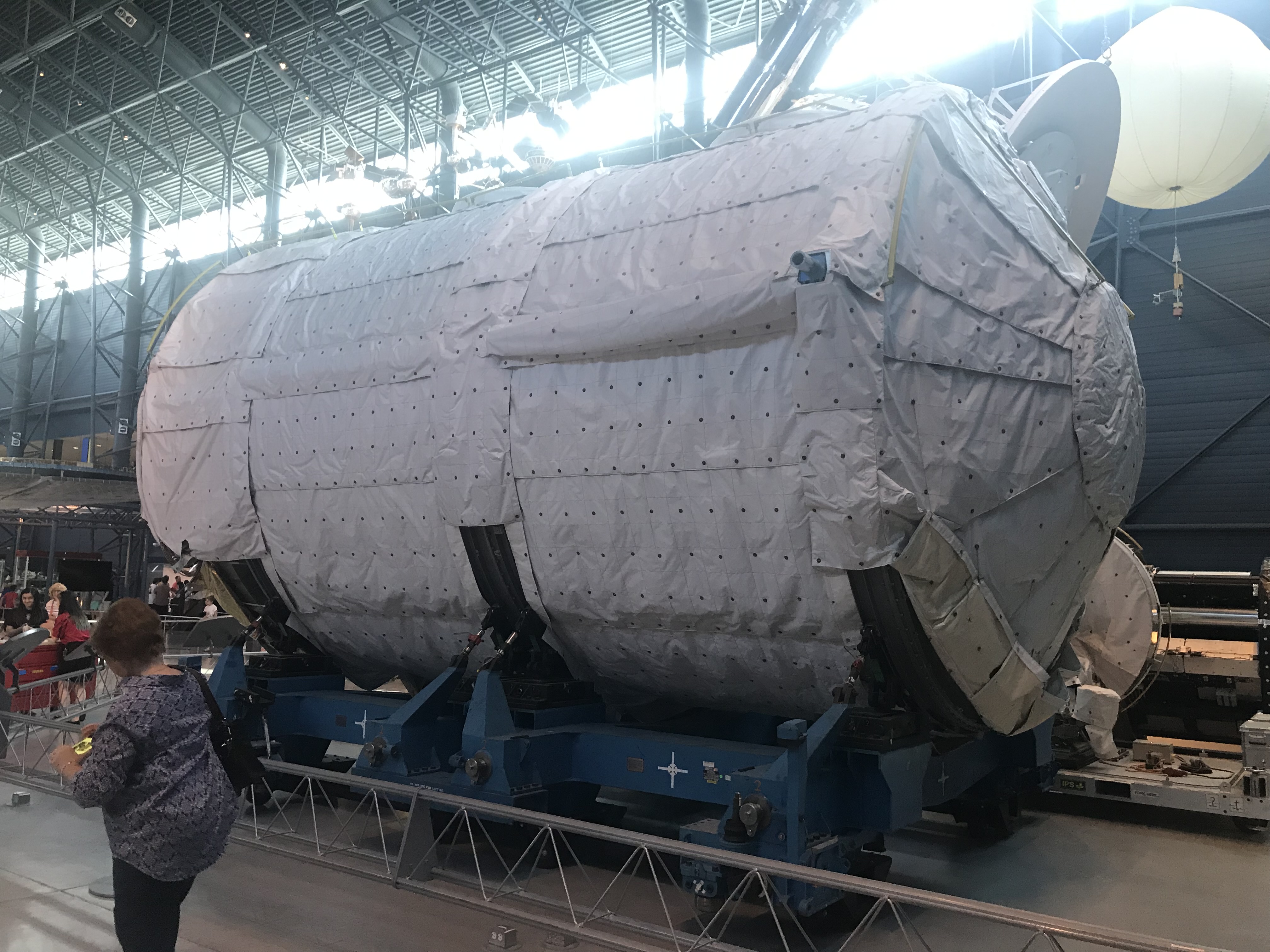
The two Spacelab modules flew a total of 16 times, the last one during the STS-90 Neurolab mission in April 1998. Visitors can view the module that flew on STS-65 and eight other missions on display at the Stephen F. Udvar-Hazy Center of the Smithsonian Institution’s National Air and Space Museum in Chantilly, Virginia. The other module resides at the Airbus Defence and Space plant in Bremen, Germany, and not accessible to the public.
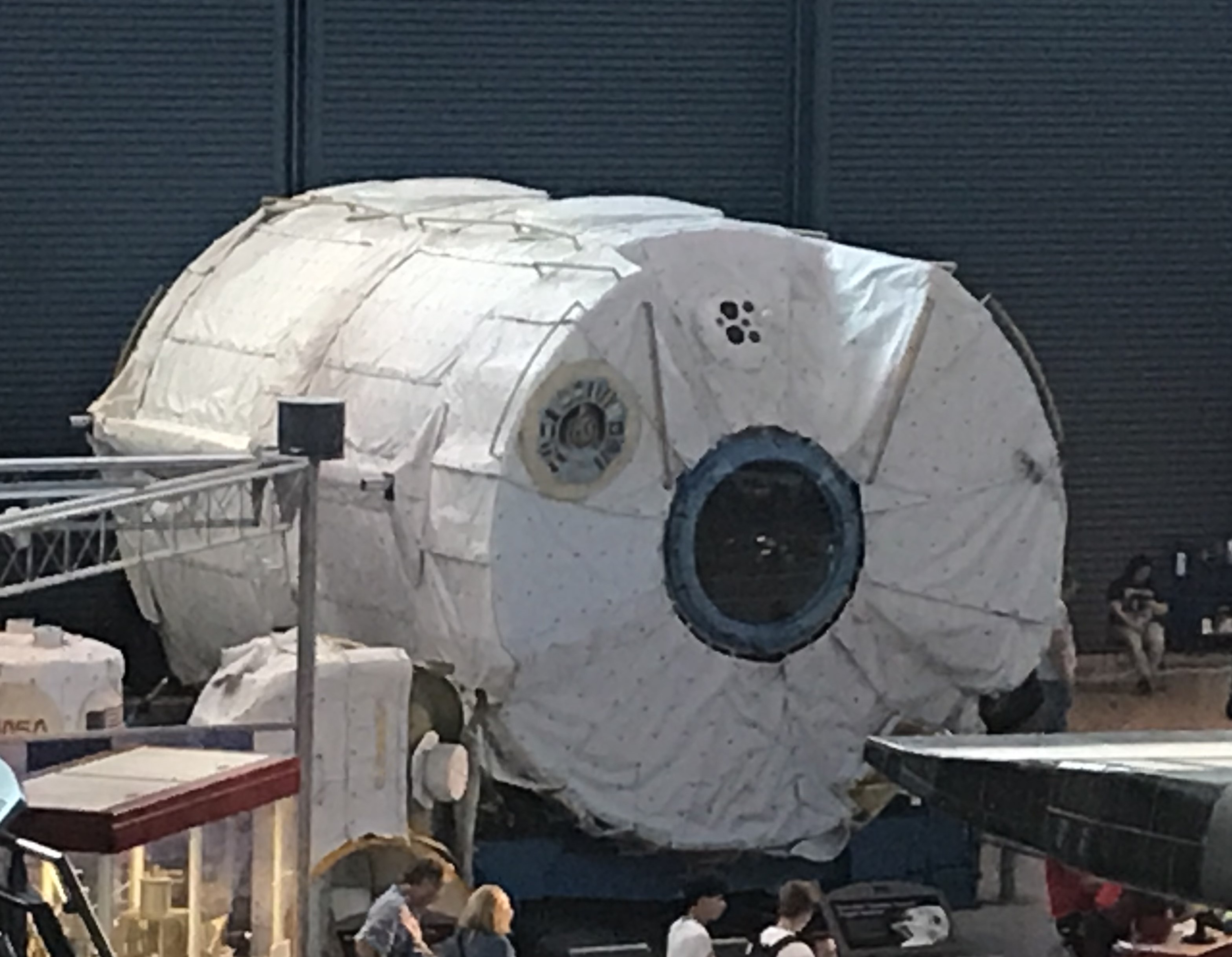
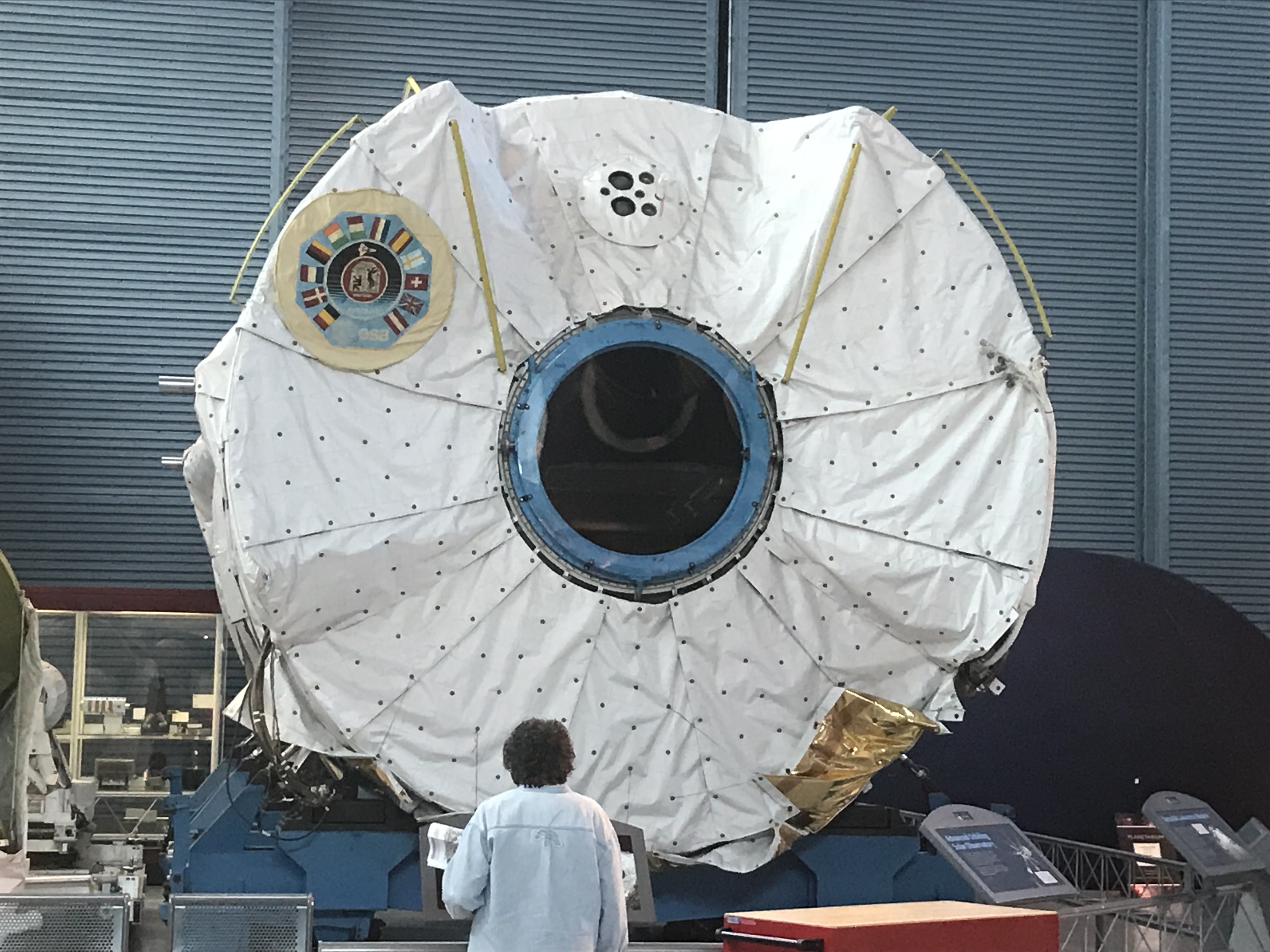
The Spacelab long module that flew on STS-65 and eight other missions on display at the Stephen F. Udvar-Hazy Center of the Smithsonian Institution’s National Air and Space Museum in Chantilly, Virginia. The Spacelab long module that flew on STS-65 and eight other missions on display at the Stephen F. Udvar-Hazy Center of the Smithsonian Institution’s National Air and Space Museum in Chantilly, Virginia. The Spacelab long module that flew on STS-65 and eight other missions on display at the Stephen F. Udvar-Hazy Center of the Smithsonian Institution’s National Air and Space Museum in Chantilly, Virginia.
The Spacelab long module that flew on STS-65 and eight other missions on display at the Stephen F. Udvar-Hazy Center of the Smithsonian Institution’s National Air and Space Museum in Chantilly, Virginia.

Enjoy the crew narrate a video about the STS-65 mission. Read Cabana’s and Chiao’s recollections of the STS-65 mission in their oral histories with the JSC History Office.

Powered by WPeMatico

Get The Details…
Kelli Mars

NASA Marshall Researchers Battle Biofilm in Space

NASA Marshall Researchers Battle Biofilm in Space

4 min read

Preparations for Next Moonwalk Simulations Underway (and Underwater)

An interconnected series of compact bioreactors, each a cylinder roughly the size of a Thermos with a network of tubing, sensors, and gauges whereby NASA scientists can monitor and measure biofilm growth as each canister’s temperature, filters, and other factors are changed. The biofilm test rack is housed in a laboratory at NASA’s Marshall Space Flight Center in Huntsville, Alabama.
The biofilm mitigation research team at NASA’s Marshall Space Flight Center assembled its own test stand to undertake a multi-month assessment of a variety of natural and chemical compounds and strategies for eradicating biofilm accretion caused by bacteria and fungi in the wastewater tank assembly on the International Space Station. Testing will help NASA extend the lifecycle of water reclamation and recycling hardware and ensure astronauts can sustain clean, healthy water supplies on long-duration missions in space and on other worlds.
NASA/Eric Beitle

A small group of scientists on the biofilm mitigation team at NASA’s Marshall Space Center in Huntsville, Alabama, study solutions to combat fast-growing colonies of bacteria or fungi, known as biofilm, for future space missions.

Biofilm occurs when a cluster of bacteria or fungi generates a slimy matrix of “extracellular polymeric substances” to protect itself from adverse environmental factors. Biofilm can be found nearly anywhere, from the gray-green scum floating on stagnant pond water to the pinkish ring of residue in a dirty bathtub.

For medical, food production, and wastewater processing industries, biofilm is often a costly issue. But offworld, biofilm proves to be even more resilient.

“Bacteria shrug off many of the challenges humans deal with in space, including microgravity, pressure changes, ultraviolet light, nutrient levels, even radiation,” said Yo-Ann Velez-Justiniano, a microbiologist and environmental control systems engineer at Marshall.

Biofilm is icky, sticky – and hard to kill.

Liezel Koellner

Liezel Koellner

Chemical Engineer and NASA Pathways Intern

“Biofilm is icky, sticky – and hard to kill,” said Liezel Koellner, a chemical engineer and NASA Pathways intern from North Carolina State University in Raleigh. Koellner used sophisticated epifluorescence microscopy, 3D visualizations of 2D images captured at different focal planes, to fine-tune the team’s studies.

Keenly aware of the potential hurdles biofilm could pose in future Artemis-era spacecraft and lunar habitats, NASA tasked engineers and chemists at Marshall to study mitigation techniques. Marshall built and maintains the International Space Station’s ECLSS (Environment Control and Life Support System) and is developing next-generation air and water reclamation and recycling technologies, including the system’s wastewater tank assembly.

“The wastewater tank is ‘upstream’ from most of our built-in water purification methods. Because it’s a wastewater feed tank, bacteria and fungus grow well there, generating enough biofilm to clog flow paths and pipes along the route,” said Eric Beitle, ECLSS test engineer at Marshall.

To date, the solution has been to pull and replace old hardware once parts become choked with biofilm. But engineers want to avoid the need for such tactics.

“Even with the ability to 3D-print spare parts on the Moon or Mars, it makes sense to find strategies that prevent biofilm buildup in the first place,” said Velez-Justiniano.

The team took the first step in June 2023 by publishing the complete genome sequence of several strains of bacteria isolated from the space station’s water reclamation system, all of which cultivate biofilm formation.

They next designed a test stand simulating conditions in the wastewater tank about 250 miles overhead, which permits simultaneous study of multiple mitigation options. The rig housed eight Centers for Disease Control and Prevention biofilm reactors – cylindrical devices roughly the size of a runner’s water bottle – each 1/60th the size of the actual tank.

A woman, seated, and a man, standing alongside her, both in lab coats, analyze biofilm samples taken from the test rack at NASA’s Marshall Space Flight Center in Huntsville, Alabama.
Yo-Ann Velez-Justiniano, left, and Connor Murphy, right, both Environmental Control and Life Support Systems engineers at NASA’s Marshall Space Flight Center in Huntsville, Alabama, prepare slides for study of cultured bacterial biofilm in the center’s test facility
NASA/Eric Beitle

Each bioreactor holds up to 21 unique test samples on slides, bathed continuously in a flow of real or ersatz wastewater, timed and measured by the automated system, and closely monitored by the team. Because of the compact bioreactor size, the test stand required 2.1 gallons of ersatz flow per week, continuously trickling 0.1 milliliters per minute into each of the eight bioreactors.

“Essentially, we built a collection of tiny systems that all had to permit minute changes to temperature and pressure, maintain a sterile environment, provide autoclave functionality, and run in harmony for weeks at a time with minimal human intervention,” said Beitle. “One phase of the test series ran nonstop for 65 days, and another lasted 77 days. It was a unique challenge from an engineering perspective.”

Different surface mitigation strategies, upstream counteragents, antimicrobial coatings, and temperature levels were introduced in each bioreactor. One promising test involved duckweed, a plant already recognized as a natural water purification system and for its ability to capture toxins and control wastewater odor. By devouring nutrients upstream of the bioreactor, the duckweed denied the bacteria what it needs to thrive, reducing biofilm growth by up to 99.9%.

Over the course of the three-month testing period, teams removed samples from each bioreactor at regular intervals and prepared for study under a microscope to make a detailed count of the biofilm colony-forming units on each plate.

“Bacteria and fungi are smart,” said Velez-Justiniano. “They adapt. We recognize that it is going to take a mix of effective biofilm mitigation methods to overcome this challenge.”

Biofilm poses as an obstacle to long-duration spaceflight and extended missions on other worlds where replacement parts may be costly or difficult to obtain. The biofilm mitigation team continues to assess and publish findings, alongside academic and industry partners, and will further their research with a full-scale tank experiment at Marshall. They hope to progress to flight tests, experimenting with various mitigation methods in real microgravity conditions in orbit to find solutions to keep surfaces clean, water potable, and future explorers healthy.

Joel Wallace
Marshall Space Flight Center, Huntsville, Ala.
256-786-0117
joel.w.wallace@nasa.gov

Share

Details

Last Updated

Jul 10, 2024

Editor
Beth Ridgeway

Powered by WPeMatico

Get The Details…
Beth Ridgeway

Gateway: Illuminating the Future

Gateway: Illuminating the Future

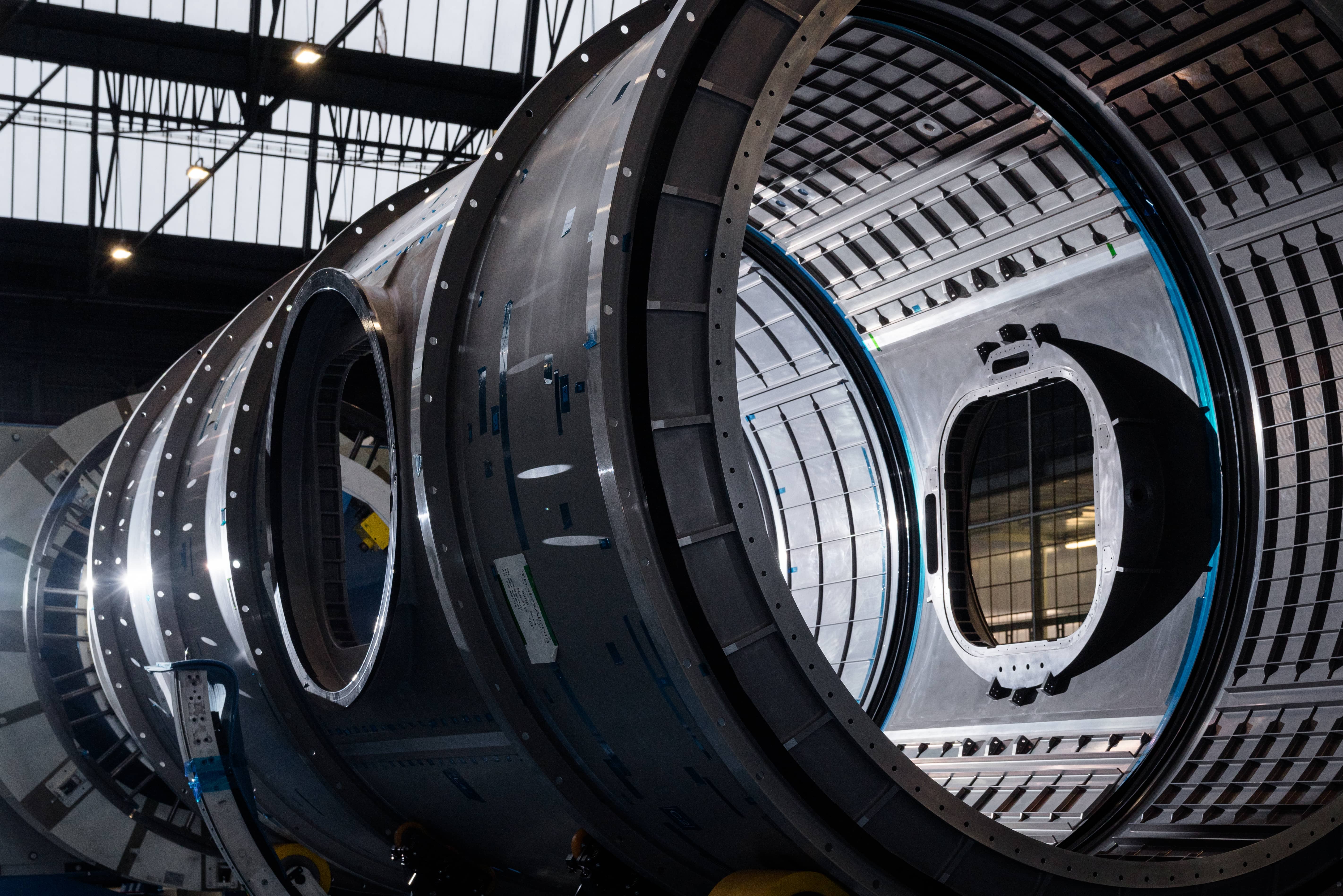
A close-up view of Gateway’s Habitation and Logistics Outpost (HALO) module at the Thales Alenia Space facility in Turin, Italy. The image captures the intricate internal structure of the cylindrical module, highlighting its framework and the interior. The module is positioned horizontally, with light casting dramatic shadows.
View of Gateway’s Habitation and Logistics Outpost (HALO) at a Thales Alenia Space facility in Turin, Italy.
Thales Alenia Space

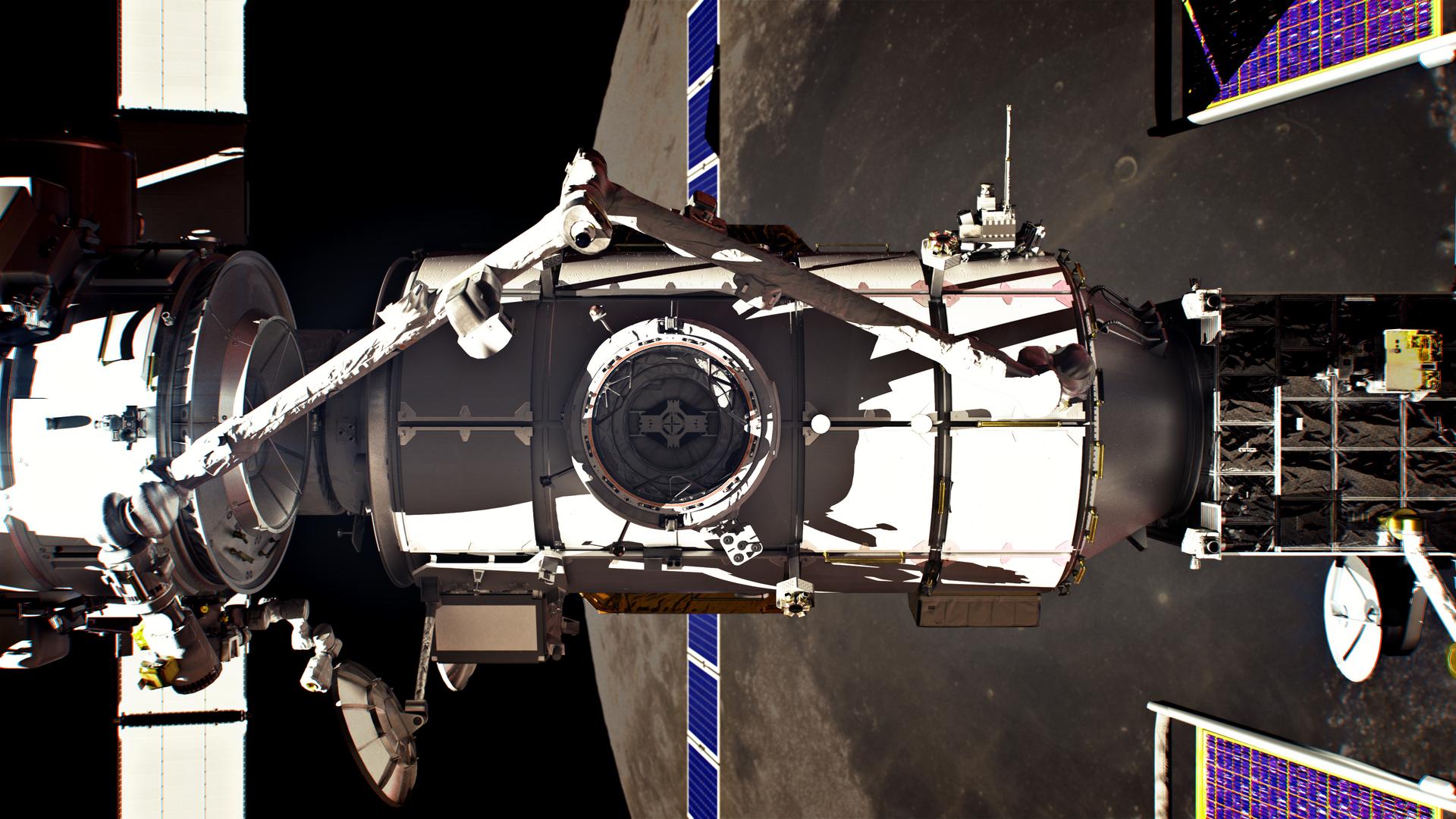
An interplay of light and shadows cast the docking ports for Gateway, humanity’s first space station around the Moon, into sharp relief. 

Built by NASA commercial partner Northrup Grumman, HALO (Habitation and Logistics Outpost), is one of four modules where international teams of astronauts will live, conduct science, and prepare for missions to the lunar South Pole region. The module’s main structure is currently undergoing testing in Turin, Italy. One docking port seen inside HALO, image right, is where a cargo spacecraft and Gateway’s Lunar View module, provided by ESA (European Space Agency), will dock. The docking port shown outside of HALO, image left, is where the SpaceX Starship and the Blue Origin Blue Moon Human Landing Systems will dock during the Artemis IV and V missions, respectively.

Gateway will launch to lunar orbit with the Power and Propulsion Element, provided by Maxar Space Systems, and later expand with ESA’s Lunar I-Hab and Lunar View modules, the Crew and Science Airlock provided by the Mohammed Bin Rashid Space Centre, advanced external robotics provided by CSA (Canadian Space Agency), and critical hardware from JAXA (Japan Aerospace Exploration Agency).

NASA and its international partners will explore the scientific mysteries of deep space with Gateway. The space station is central to the Artemis architecture that will return humans to lunar surface for scientific discovery and chart a path for the first humans to Mars.

An artist's rendering of Gateway's Habitation and Logistics Outpost (HALO) module.
An artist’s concept image of a docking port on Gateway’s HALO module.
NASA/Alberto Bertolin, Bradley Reynolds
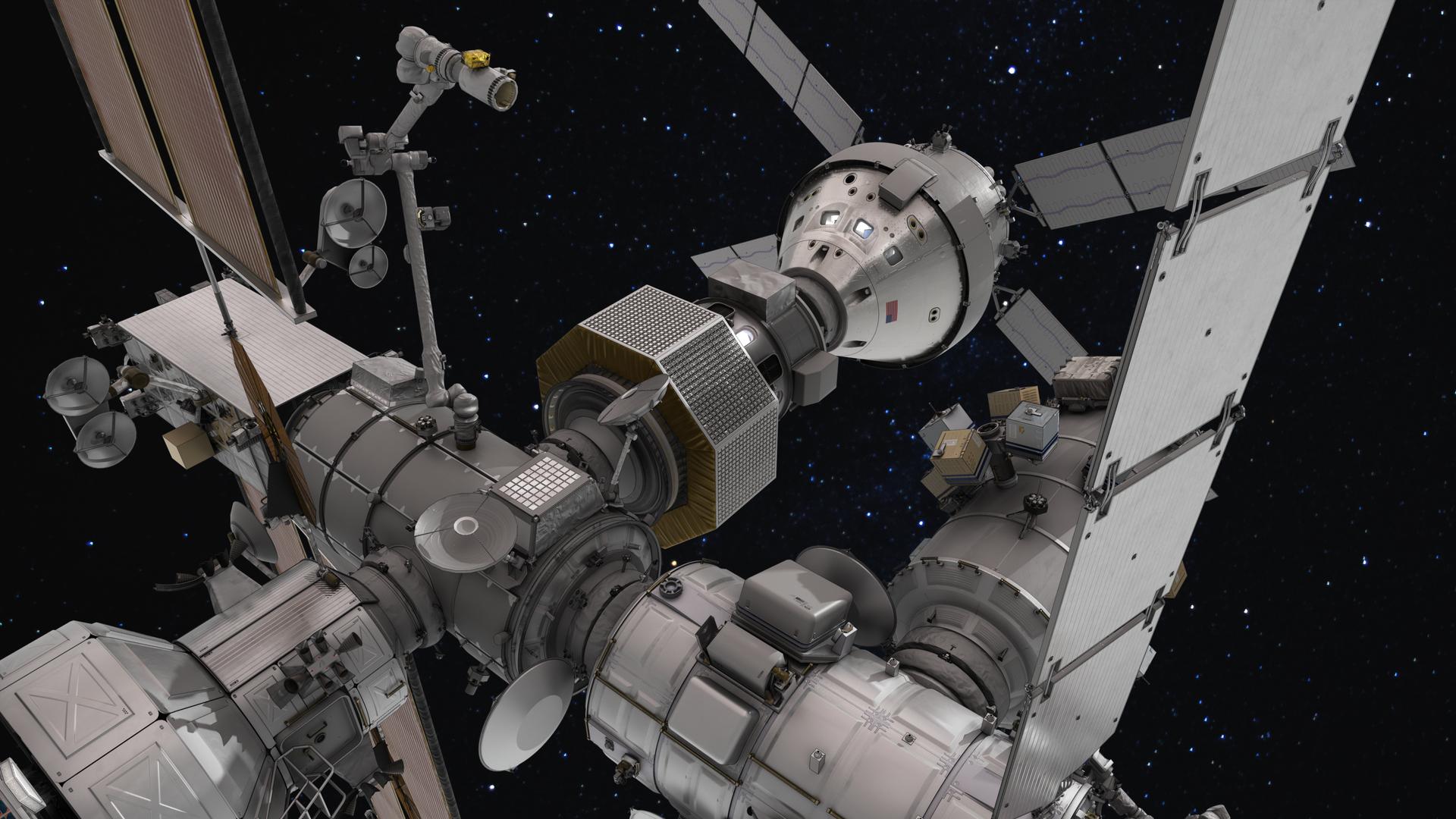
An artist’s rendering provides a detailed view of NASA’s Gateway space station, featuring various interconnected modules and solar panels. Numerous antennas and instruments are visible, all set against the backdrop of a starry outer space. Image Credit: NASA.
An artist’s concept image of the Gateway space station showing ESA’s Lunar View module and a government-reference Human Landing System docked to HALO.
NASA

Share

Details

Last Updated

Jul 10, 2024

Editor
Briana R. Zamora
Contact
Briana R. Zamora

Powered by WPeMatico

Get The Details…
Dylan Connell

Space Biology, Spacesuits, and Dragon Training Top Day for Astronauts, Cosmonauts

Space Biology, Spacesuits, and Dragon Training Top Day for Astronauts, Cosmonauts

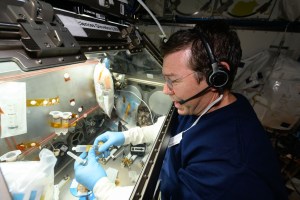

 NASA astronaut and Expedition 71 Flight Engineer Mike Barratt works on spacewalking hardware aboard the International Space Station's Unity module.
NASA astronaut and Expedition 71 Flight Engineer Mike Barratt works on spacewalking hardware aboard the International Space Station’s Unity module.

Life science and docked spacecraft training were the prime tasks aboard the International Space Station on Tuesday. The nine orbital residents also split their day on a variety of maintenance tasks including spacesuit work and orbital plumbing.

NASA astronauts Tracy C. Dyson and Matthew Dominick kicked off their day collecting biological samples and data to understand how living in weightlessness affects the human body. Dyson first processed her saliva samples and stowed them in a science freezer for later analysis. She then attached an acoustic monitor near her ear to measure station noise levels a crew member experiences in a 24-hour period. Dominick removed brain wave sensors from his ears that recorded his sleep patterns then he filled out a questionnaire documenting his sleep quality.

Dyson also worked in the Columbus laboratory module and studied the ability to remotely control robots on a planetary surface from a spacecraft for the Surface Avatar experiment. Dominick spent the afternoon in the Tranquility module checking the performance of components on the waste and hygiene compartment, the orbital outpost’s bathroom.

NASA Flight Engineer Jeanette Epps photographed Dyson during her robotics experiment. She then spent the afternoon reconfiguring life support gear before removing batteries from spacesuits at the end of the day. NASA Flight Engineer Mike Barratt started his day inspecting spacesuit safety jetpacks that would be used to maneuver safely back to the station in the unlikely event a spacewalker became untethered from the orbital lab.

Epps and Barratt also joined Dominick and Roscosmos Flight Engineer Alexander Grebenkin midday and reviewed standard SpaceX Dragon Endeavour spacecraft emergency undocking procedures. The SpaceX Crew-8 quartet docked to the station on March 5 and is due to return to Earth aboard Endeavour in late August.

NASA astronauts Butch Wilmore and Suni Williams, representing Boeing’s Crew Flight Test, took turns during the morning pedaling on an exercise cycle while attached to heart and breathing sensors that measured their aerobic capacity. The duo then split up as Wilmore serviced a pair of research freezers that preserve scientific samples and Williams installed hardware on an experiment that is exploring atmospheric reentry and thermal protection systems.

The Roscosmos segment’s three cosmonauts including Grebenkin had their day packed with continuing space research and laboratory upkeep duties. Expedition 71 Commander Oleg Kononenko spent the morning working on ventilation systems in the Nauka science module then completed his day studying futuristic spacecraft and robotic piloting techniques. Flight Engineer Nikolai Chub replaced life support gear in the Zarya module then joined Grebenkin for a photographic inspection of panels inside the Zvezda service module. Grebenkin earlier jogged on a treadmill for a regularly scheduled physical fitness test.

NASA’s Johnson Space Center remained closed to all but essential personnel today following Hurricane Beryl’s landfall near Matagorda, Texas. Mission Control  continues to support International Space Station and NASA’s Boeing Crew Flight Test mission.  If employees feel safe to do so, the center will be open for on-site work beginning Wednesday.


Learn more about station activities by following the space station blog@space_station and @ISS_Research on X, as well as the ISS Facebook and ISS Instagram accounts.

Get weekly video highlights at: https://roundupreads.jsc.nasa.gov/videoupdate/

Get the latest from NASA delivered every week. Subscribe here: www.nasa.gov/subscribe

Powered by WPeMatico

Get The Details…

Mark Garcia