Crews Speak to Managers and News Media, Keep Up Advanced Research
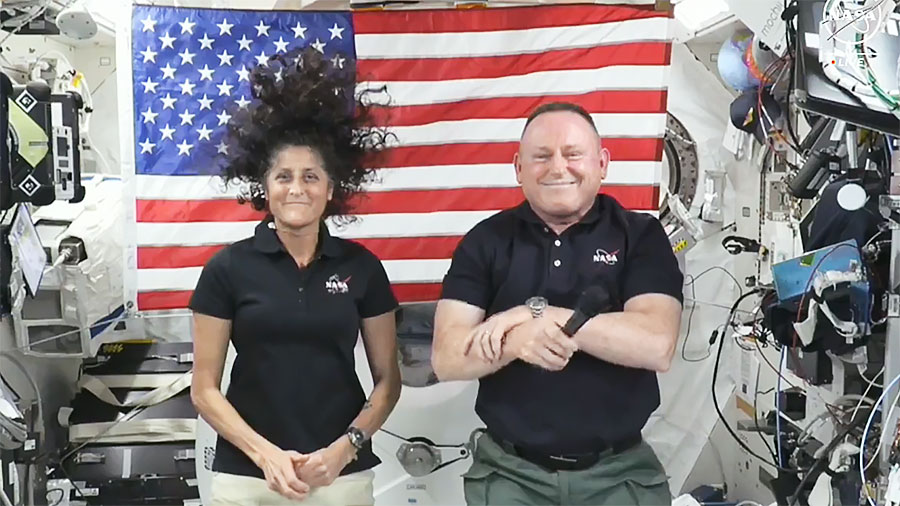
NASA’s Boeing Crew Flight Test astronauts Suni Williams and Butch Wilmore are pictured during a space-to-ground conference with journalists on Earth. Credit: NASA TV
All nine astronauts and cosmonauts aboard the International Space Station practiced responding to a simulated emergency on Wednesday. Earlier, the orbital residents split their day researching blood pressure, remote robotics, and 3D printing.
The seven-member Expedition 71 crew joined the two Boeing Crew Flight Test and practiced an emergency drill in collaboration with mission controllers. The teams aboard the orbital outpost and on the ground coordinated communications and reviewed procedures in the unlikely event of a pressure leak, chemical leak, or a fire aboard the space station.
At the beginning of the day, NASA Flight Engineers Tracy C. Dyson and Mike Barratt worked on a pair of human research experiments to understand how the human body adapts to the lack of gravity. Dyson powered up research hardware to measure her brain blood flow for the Cerebral Autoregulation investigation. Barratt collected and stowed his urine samples in a science freezer for the CIPHER study. The space biology experiment looks at a broad set of long-term biological and psychological data collected from astronauts to promote health and well-being on space missions.
NASA astronaut Jeanette Epps spent most of her day in the Columbus laboratory module exploring ways to control a robot on the ground from a spacecraft. Epps coordinated with robotics engineers on Earth remotely manipulating a robot using a computer interface while testing its ergonomic features and haptic feedback for conditions such as wind and gravity. Results may inform future exploration missions to the Moon, Mars, and beyond.
NASA Flight Engineer Matthew Dominick performed a video inspection of components on the Inter-Orbit Communications System (ICS) rack located in the Kibo laboratory module. The ICS enables data to be uplinked to the orbital outpost and downlinked to mission controllers using JAXA’s (Japan Aerospace Exploration Agency) Data Relay Test Satellite.
NASA astronauts Butch Wilmore and Suni Williams, representing Boeing’s Crew Flight Test, spoke to reporters today from the space station answering questions about their mission and the Starliner vehicle. NASA and Boeing managers also discussed the Crew Flight Test mission with the media in an audio teleconference afterward. Watch the crew news conference here and listen to the media briefing here. The duo earlier completed life support work refilling temperature loops with water in the Tranquility module’s internal thermal control system.
Working in the space station’s Roscosmos segment, Flight Engineer Nikolai Chub activated a 3D printer in the Nauka science module and tested its operations and ability to manufacture hardware on demand in space. Flight Engineer Alexander Grebenkin’s day was filled mostly with household duties such as checking carbon dioxide monitors, synchronizing cameras with station clocks, and downloading scientific data to a laptop computer. Station Commander Oleg Kononenko started his day speaking to science, technology, and education professionals near Moscow. Afterward, he jogged on a treadmill while attached to sensors for a physical fitness test.
NASA CubeSat Launches as Rideshare on ESA’s First Ariane 6 Rocket
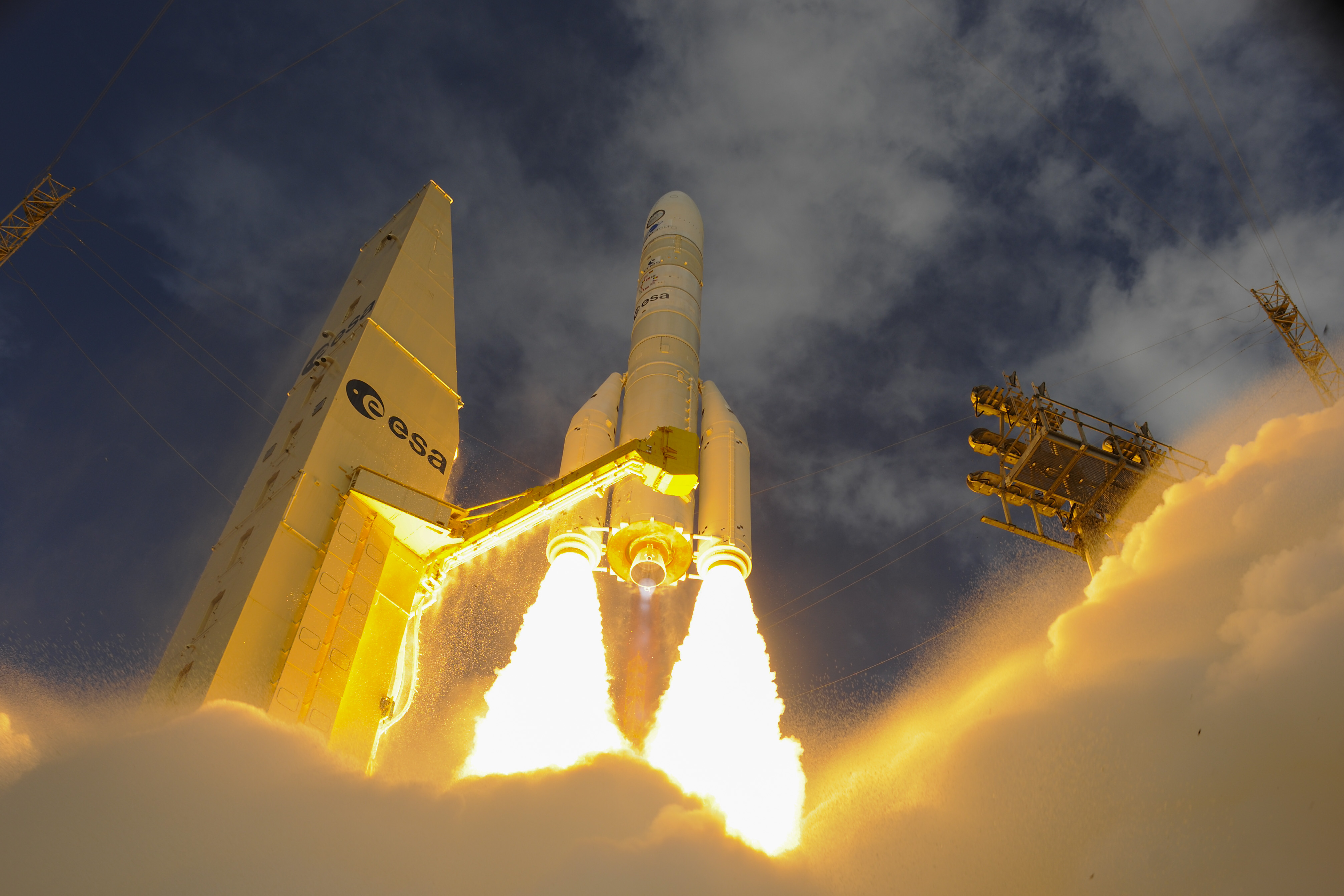
ESA’s (European Space Agency) Ariane 6 rocket launches NASA’s CURIE CubeSat from Europe’s Spacesport, the Guiana Space Center in Kourou, French Guiana on Tuesday, July 9, 2024. Photo credit: ESA/S. Corvaja
NASA launched CURIE (CubeSat Radio Interferometry Experiment) as a rideshare payload on the inaugural flight of ESA’s (European Space Agency) Ariane 6 rocket, which launched at 4 p.m. GFT on July 9 from Europe’s Spaceport, the Guiana Space Center in Kourou, in French Guiana.
Designed by a team from the University of California, Berkeley, CURIE will use radio interferometry to study the primary drivers of space weather.
CubeSats are built using standardized units, with one unit, or 1U, measuring about 10 centimeters in length, width, and height. The two-satellite CURIE mission launched as a 6U before separating into two separate spacecraft, each a 3U. The spacecraft will provide two separate vantage points to measure the same radio waves coming from the Sun and other sources in the sky.
NASA’s CubeSat Launch Initiative selected CURIE in 2020 during the initiative’s 11th round of applications. NASA’s Launch Services Program, in collaboration with ESA, designated CURIE as one of eleven payloads supplied by space agencies, commercial companies, and universities for the first flight of ESA’s Ariane 6 rocket.
NASA Moon Rocket Stage for Artemis II Moved, Prepped for Shipment
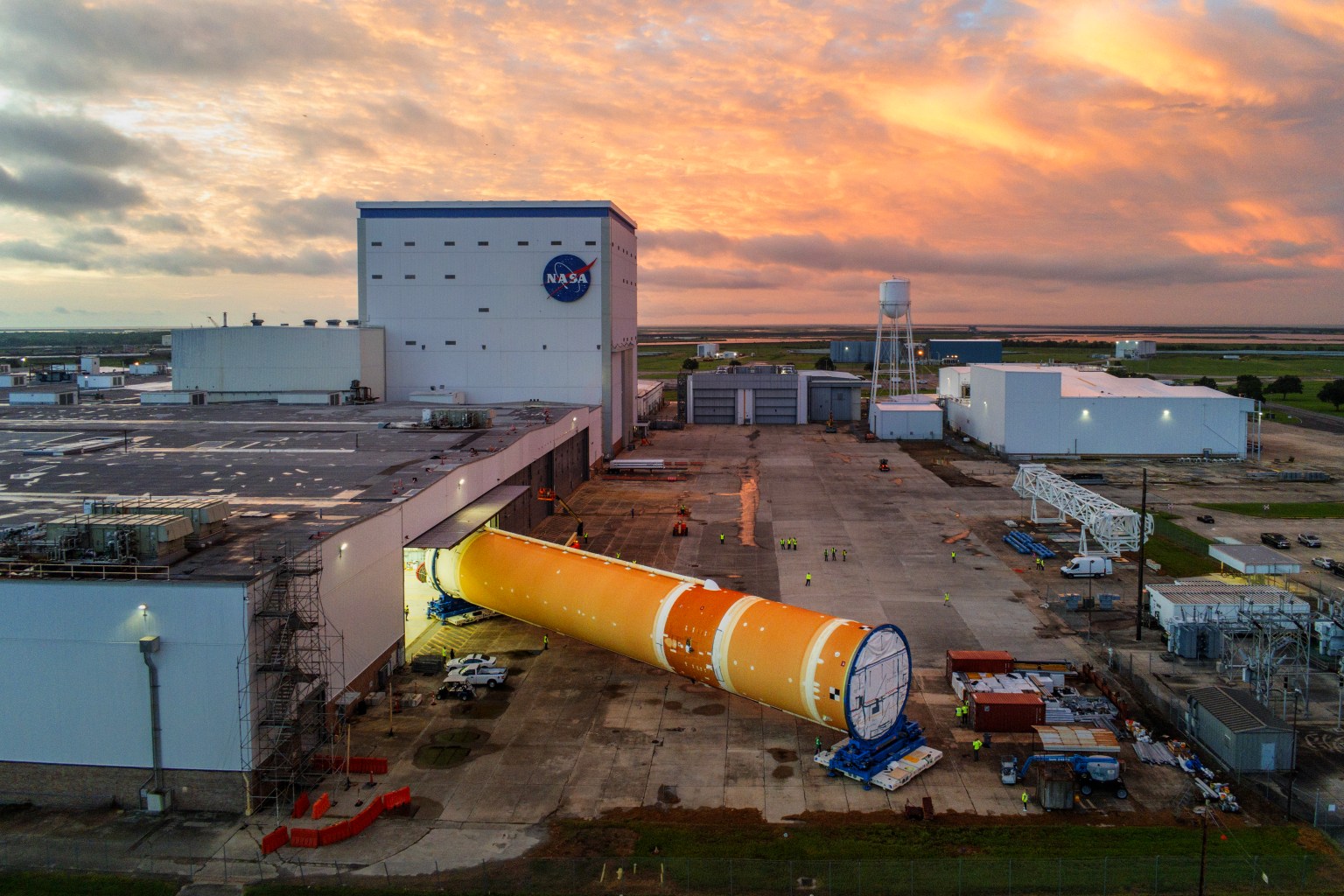
NASA is preparing the SLS (Space Launch System) rocket core stage that will help power the first crewed mission of NASA’s Artemis campaign for shipment. On July 6, NASA and Boeing, the core stage lead contractor, moved the Artemis II rocket stage to another part of the agency’s Michoud Assembly Facility. The move comes as teams prepare to roll the massive rocket stage to the agency’s Pegasus barge for delivery to NASA’s Kennedy Space Center in mid-July.
On July 6, NASA and Boeing, the core stage lead contractor, move the Artemis II rocket stage at the agency’s Michoud Assembly Facility. The move comes as teams prepare to roll the massive rocket stage to the agency’s Pegasus barge for delivery to NASA’s Kennedy Space Center in mid-July.
NASA/Michael DeMocker
Prior to the move, technicians began removing external access stands, or scaffolding, surrounding the rocket stage in early June. NASA and Boeing teams used the scaffolding surrounding the core stage to assess the interior elements, including its complex avionics and propulsion systems. The 212-foot core stage has two huge propellant tanks, avionics and flight computer systems, and four RS-25 engines, which together enable the stage to operate during launch and flight.
The stage is fully manufactured and assembled at Michoud. Building, assembling, and transporting is a joint process for NASA, Boeing, and lead RS-25 engines contractor Aerojet Rocketdyne, an L3Harris Technologies company.
Teams at NASA’s Michoud Assembly Facility are preparing the core stage of the agency’s SLS (Space Launch System) for shipment to the agency’s Kennedy Space Center. The 212-foot-tall core stage and its four RS-25 engines will help power Artemis II, the first crewed mission of NASA’s Artemis campaign. In this video, watch as crew remove the external access stands, or scaffolding, before moving the rocket hardware to another area of the facility. (NASA)
NASA is working to land the first woman, first person of color, and its first international partner astronaut on the Moon under Artemis. SLS is part of NASA’s backbone for deep space exploration, along with the Orion spacecraft, supporting ground systems, advanced spacesuits and rovers, the Gateway in orbit around the Moon, and commercial human landing systems. SLS is the only rocket that can send Orion, astronauts, and supplies to the Moon in a single launch.
NASA’s Marshall Space Flight Center manages the SLS Program and Michoud.
A small group of scientists on the biofilm mitigation team at NASA’s Marshall Space Center study solutions to combat fast-growing colonies of bacteria or fungi, known as biofilm, for future space missions.
Biofilm occurs when a cluster of bacteria or fungi generates a slimy matrix of “extracellular polymeric substances” to protect itself from adverse environmental factors. Biofilm can be found nearly anywhere, from the gray-green scum floating on stagnant pond water to the pinkish ring of residue in a dirty bathtub.
The biofilm mitigation research team at NASA’s Marshall Space Flight Center assembled its own test stand to undertake a multi-month assessment of a variety of natural and chemical compounds and strategies for eradicating biofilm accretion caused by bacteria and fungi in the wastewater tank assembly on the International Space Station. Testing will help NASA extend the lifecycle of water reclamation and recycling hardware and ensure astronauts can sustain clean, healthy water supplies on long-duration missions in space and on other worlds.
NASA/Eric Beitle
For medical, food production, and wastewater processing industries, biofilm is often a costly issue. But offworld, biofilm proves to be even more resilient.
“Bacteria shrug off many of the challenges humans deal with in space, including microgravity, pressure changes, ultraviolet light, nutrient levels, even radiation,” said Yo-Ann Velez-Justiniano, a Marshall microbiologist and environmental control systems engineer.
“Biofilm is icky, sticky – and hard to kill,” said Liezel Koellner, a chemical engineer and NASA Pathways intern from North Carolina State University in Raleigh. Koellner used sophisticated epifluorescence microscopy, 3D visualizations of 2D images captured at different focal planes, to fine-tune the team’s studies.
Keenly aware of the potential hurdles biofilm could pose in future Artemis-era spacecraft and lunar habitats, NASA tasked engineers and chemists at Marshall to study mitigation techniques. Marshall built and maintains the International Space Station’s ECLSS (Environment Control and Life Support System) and is developing next-generation air and water reclamation and recycling technologies, including the system’s wastewater tank assembly.
“The wastewater tank is ‘upstream’ from most of our built-in water purification methods. Because it’s a wastewater feed tank, bacteria and fungus grow well there, generating enough biofilm to clog flow paths and pipes along the route,” said Eric Beitle, ECLSS test engineer at Marshall.
To date, the solution has been to pull and replace old hardware once parts become choked with biofilm. But engineers want to avoid the need for such tactics.
“Even with the ability to 3D-print spare parts on the Moon or Mars, it makes sense to find strategies that prevent biofilm buildup in the first place,” said Velez-Justiniano.
The team took the first step in June 2023 by publishing the complete genome sequence of several strains of bacteria isolated from the space station’s water reclamation system, all of which cultivate biofilm formation.
Yo-Ann Velez-Justiniano, left, and Connor Murphy, right, both Environmental Control and Life Support Systems engineers at Marshall, prepare slides for study of cultured bacterial biofilm in the center’s test facility.
NASA/Eric Beitle
They next designed a test stand simulating conditions in the wastewater tank about 250 miles overhead, which permits simultaneous study of multiple mitigation options. The rig housed eight Centers for Disease Control and Prevention biofilm reactors – cylindrical devices roughly the size of a runner’s water bottle – each 1/60th the size of the actual tank.
Each bioreactor holds up to 21 unique test samples on slides, bathed continuously in a flow of real or ersatz wastewater, timed and measured by the automated system, and closely monitored by the team. Because of the compact bioreactor size, the test stand required 2.1 gallons of ersatz flow per week, continuously trickling 0.1 milliliters per minute into each of the eight bioreactors.
“Essentially, we built a collection of tiny systems that all had to permit minute changes to temperature and pressure, maintain a sterile environment, provide autoclave functionality, and run in harmony for weeks at a time with minimal human intervention,” Beitle said. “One phase of the test series ran nonstop for 65 days, and another lasted 77 days. It was a unique challenge from an engineering perspective.”
Different surface mitigation strategies, upstream counteragents, antimicrobial coatings, and temperature levels were introduced in each bioreactor. One promising test involved duckweed, a plant already recognized as a natural water purification system and for its ability to capture toxins and control wastewater odor. By devouring nutrients upstream of the bioreactor, the duckweed denied the bacteria what it needs to thrive, reducing biofilm growth by up to 99.9%.
Over the course of the three-month testing period, teams removed samples from each bioreactor at regular intervals and prepared for study under a microscope to make a detailed count of the biofilm colony-forming units on each plate.
“Bacteria and fungi are smart,” Velez-Justiniano said. “They adapt. We recognize that it’s going to take a mix of effective biofilm mitigation methods to overcome this challenge.”
Biofilm poses as an obstacle to long-duration spaceflight and extended missions on other worlds where replacement parts may be costly or difficult to obtain. The biofilm mitigation team continues to assess and publish findings, alongside academic and industry partners, and will further their research with a full-scale tank experiment at Marshall. They hope to progress to flight tests, experimenting with various mitigation methods in real microgravity conditions in orbit to find solutions to keep surfaces clean, water potable, and future explorers healthy.
Smith, an Aeyon/MTS employee, supports the Marshall Office of Communications.
Pathways Intern Liezel Koellner Aids NASA Biofilm Mitigation
By Rick Smith
Liezel Koellner is a NASA Pathways intern pursuing her master’s degree in chemical engineering from North Carolina State University in Raleigh. Like most ambitious young engineers, she sought a variety of different internships to augment her classwork.
But once she got word she’d been chosen to spend the spring 2024 term conducting biochemistry experiments at NASA’s Marshall Space Flight Center, her choice was made.
NASA Pathways intern Liezel Koellner, right, and her mentor Yo-Ann Velez-Justiniano, a microbiologist at NASA’s Marshall Space Flight Center, prepare compact bioreactors to be installed in the Marshall biofilm mitigation test stand, which is helping researchers study ways to curtail bacterial and fungal biofilm growth in water reclamation systems such as the one on the International Space Station.
NASA/Eric Beitle
“As a kid, I never imagined I could work at NASA,” she said. “It was a mind-blowing idea!”
That’s how she wound up spending the semester up to her safety gloves in bacterial goo – helping NASA’s biofilm mitigation team study strategies for vanquishing a pervasive, slimy invader playing havoc with space-based hardware. And Koellner couldn’t be happier.
Biofilm is the sticky goo generated by bacteria or fungi to armor itself against radiation, airlessness, and other conditions in space. Astronauts keep their environment fairly ship-shape – but inside closed water reclamation systems, like the one on the International Space Station, biofilm can thrive, wreaking havoc on critical life support systems.
Joining a team of Marshall microbiologists, chemists, and hardware engineers, Koellner spent weeks cultivating sample bacteria – either simulated stuff chemically created onsite or samples shipped frozen from NASA and Boeing archives. She closely monitored ongoing tests, regularly pulling samples to count biofilm colonies.
Most importantly, she oversaw the use of precision epifluorescence microscopy, which employs 3D visualizations to identify layered growth in 2D sample images. That contribution most impressed Marshall microbiologist Yo-Ann Velez-Justiniano, Koellner’s supervisor and project mentor, who said it dramatically improved data accuracy.
“Liezel was able to more accurately analyze patterns of sample growth and deliver precise quantitative data identifying biofilm progression,” Velez-Justiniano said.
A formula for success
Koellner said she’s always been driven to soak up as much practical experience as possible. She was born in Guam to Filipino parents who later emigrated to San Diego, California, to raise their family. From a young age, she took school very seriously.
Velez-Justiniano, left, who heads the biofilm mitigation science team at Marshall, looks on as Koellner, right, shows off her latest sample findings.
NASA/Eric Beitle
“I always enjoyed chemistry, observing scientific processes and documenting the effects,” Koellner said, but she was daunted by the challenges of calculus-based physics, used to model systems where change occurs and an integral part of scientific fields serving space exploration, engineering, pharmacology, and more.
That changed when she got to the University of North Carolina in Wilmington. “Suddenly, everything clicked,” she said. “With physics, it was amazing to see how math could be applied to real-life applications.”
That practical blend of disciplines led her to consider a career in chemical engineering – using chemical processes to develop products and resources for commercial uses. After completing her bachelor’s degree in chemistry at the University of North Carolina in 2022 and spending a year as a chemist for a private lab in Wilmington, she enrolled at North Carolina State, where she expects to graduate in 2026 with a master’s in chemical engineering.
From water reclamation to air recycling
With the biofilm mitigation tests completed – but her internship continuing until August – Koellner has shifted tracks, moving from the challenges of water reclamation to oxygen recovery solutions for future space habitats and on other worlds.
She’s part of a different team of Marshall ECLSS (Environment Control and Life Support System) specialists, studying ways to recover oxygen from methane gas. That capability could support a variety of oxygen recovery and recycling systems, saving and storing breathable air instead of just jettisoning it into space along with waste gas products. Koellner will write documentation and help monitor and operate the active test stand, once again working alongside Marshall specialists from various disciplines.
She said their commitment has left a lasting impression.
“Everyone is so willing to lend their expertise to pursue work that could impact NASA missions years or even decades in the future,” she said. “The diligence and enthusiasm here are tangible things. That’s the kind of engineer – the kind of person – I want to be.”
Smith, an Aeyon/MTS employee, supports the Marshall Office of Communications.
Lisa Bates Named Director of Marshall’s Engineering Directorate
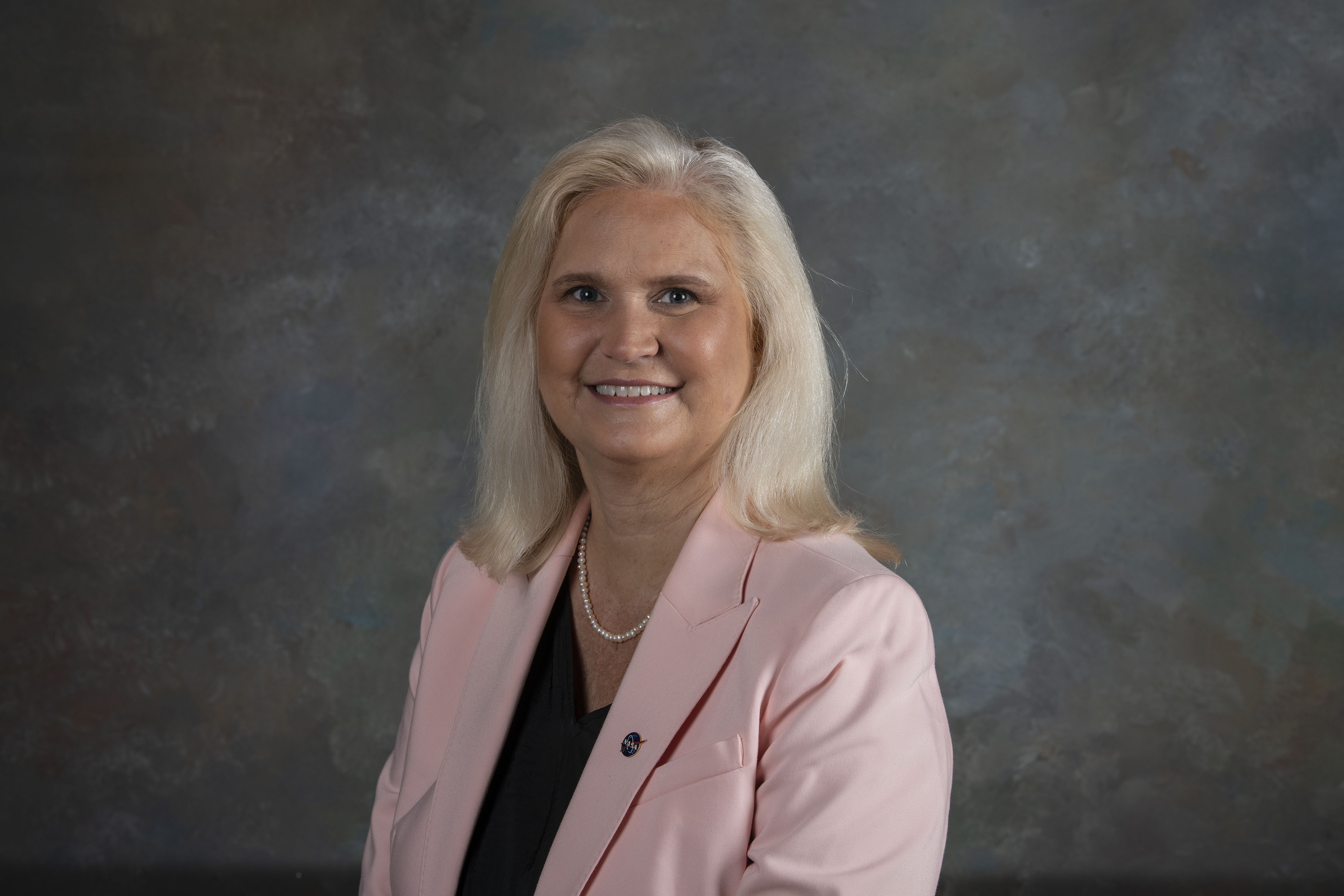
Lisa Bates has been named director of the Engineering Directorate at NASA’s Marshall Space Flight Center, effective July 14. In her new role, Bates will be responsible for the center’s largest organization, comprised of more than 2,500 civil service and contractor personnel, who design, test, evaluate, and operate flight hardware and software associated with Marshall-developed space transportation and spacecraft systems, science instruments, and payloads.
Lisa Bates has been named director of the Engineering Directorate at NASA’s Marshall Space Flight Center.
NASA
Since November 2023, Bates has served as deputy director of the Engineering Directorate. She was also previously director of Marshall’s Test Laboratory. Appointed to the position in 2021, Bates provided executive leadership for all aspects of the Laboratory, including workforce, budget, infrastructure, and operations for testing.
She joined Marshall in 2008 as the Ares I Upper Stage Thrust Vector Control lead in the Propulsion Department. Since then, she has served in positions of increasing responsibility and authority. From 2009 to 2017, she served as the first chief of the new TVC Branch, which was responsible for defining operational requirements, performing analysis, and evaluating Launch Vehicle TVC systems and TVC components.
As the Space Launch System (SLS) Program Executive from 2017 to 2018, Bates supported the NASA Deputy Associate Administrator for Exploration Systems Development as the liaison and advocate of the SLS. Upon returning to MSFC in 2018, she was selected as deputy manager of the SLS Booster Element Office. Bates also served as deputy manager of the SLS Stages Office from 2018 to 2021 where she shared the responsibilities, accountability, and authorities for all activities associated with the requirements definition, design, development, manufacturing, assembly, green run test, and delivery of the SLS Program’s Stages Element.
Prior to her NASA career, Bates worked 18 years in private industry for numerous aerospace and defense contractors, including Jacobs Engineering, Marotta Scientific Controls, United Technologies (USBI), United Defense, and Sverdrup Technologies.
Bates holds a bachelor’s degree in mechanical engineering from the University of Alabama in Huntsville. She was awarded a NASA Outstanding Leadership Medal in 2013 and 2022 and has received numerous group and individual achievement awards.
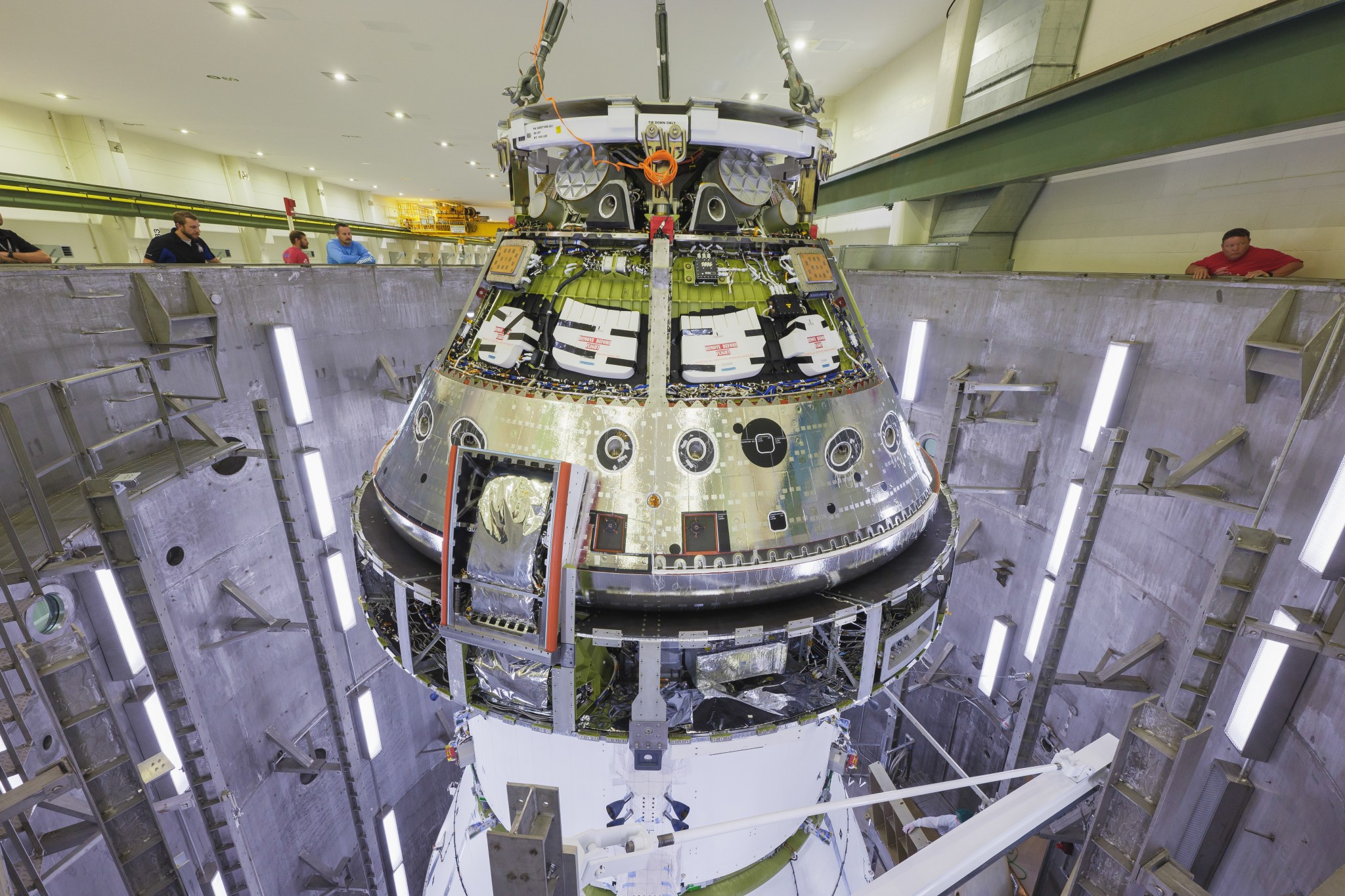
Technicians lift NASA’s Orion spacecraft out of the Final Assembly and System Testing cell at NASA’s Kennedy Space Center on June 28. The integrated spacecraft, which will be used for the Artemis II mission to orbit the Moon, has been undergoing final rounds of testing and assembly, including end-to-end performance verification of its subsystems and checking for leaks in its propulsion systems. A 30-ton crane returned Orion into the recently renovated altitude chamber where it underwent electromagnetic testing. The spacecraft now will undergo a series of tests that will subject it to a near-vacuum environment by removing air, thus creating a space where the pressure is extremely low. This results in no atmosphere, similar to the one the spacecraft will experience during future lunar missions. The data recorded during these tests will be used to qualify the spacecraft to safely fly the Artemis II astronauts through the harsh environment of space.(NASA/Radislav Sinyak)
NASA to Cover Northrop Grumman’s 20th Cargo Space Station Departure
Northrop Grumman’s uncrewed Cygnus spacecraft is scheduled to depart the International Space Station on July 12, five and a half months after delivering more than 8,200 pounds of supplies, scientific investigations, commercial products, hardware, and other cargo to the orbiting laboratory for NASA and its international partners.
Northrop Grumman’s Cygnus spacecraft and the International Space Station above western Mongolia.
NASA
This mission was the company’s 20th commercial resupply mission to the space station for NASA.
Live coverage of the spacecraft’s departure will begin at 5:30 a.m. CDT on the NASA+, NASA Television, the NASA app, YouTube, and the agency’s website. Learn how to stream NASA TV through a variety of platforms including social media.
Flight controllers on the ground will send commands for the space station’s Canadarm2 robotic arm to detach Cygnus from the Unity module’s Earth-facing port, then maneuver the spacecraft into position for its release at 6 a.m. NASA astronaut Mike Barratt will monitor Cygnus’ systems upon its departure from the space station.
Following unberthing, the Kentucky Re-entry Probe Experiment-2 (KREPE-2), stowed inside Cygnus, will take measurements to demonstrate a thermal protection system for the spacecraft and its contents during re-entry in Earth’s atmosphere.
Cygnus – filled with trash packed by the station crew – will be commanded to deorbit July 13, setting up a destructive re-entry in which the spacecraft will safely burn up in Earth’s atmosphere.
The Northrop Grumman spacecraft arrived at the space station Feb. 1, following a launch on a SpaceX Falcon 9 rocket from Space Launch Complex 40 at Cape Canaveral Space Force Station.
The HOSC (Huntsville Operations Support Center) at NASA’s Marshall Space Flight Center provides engineering and mission operations support for the space station, the Commercial Crew Program, and Artemis missions, as well as science and technology demonstration missions. The Payload Operations Integration Center within the HOSC operates, plans, and coordinates the science experiments onboard the space station 365 days a year, 24 hours a day.
Get breaking news, images, and features from the space station on the station blog.
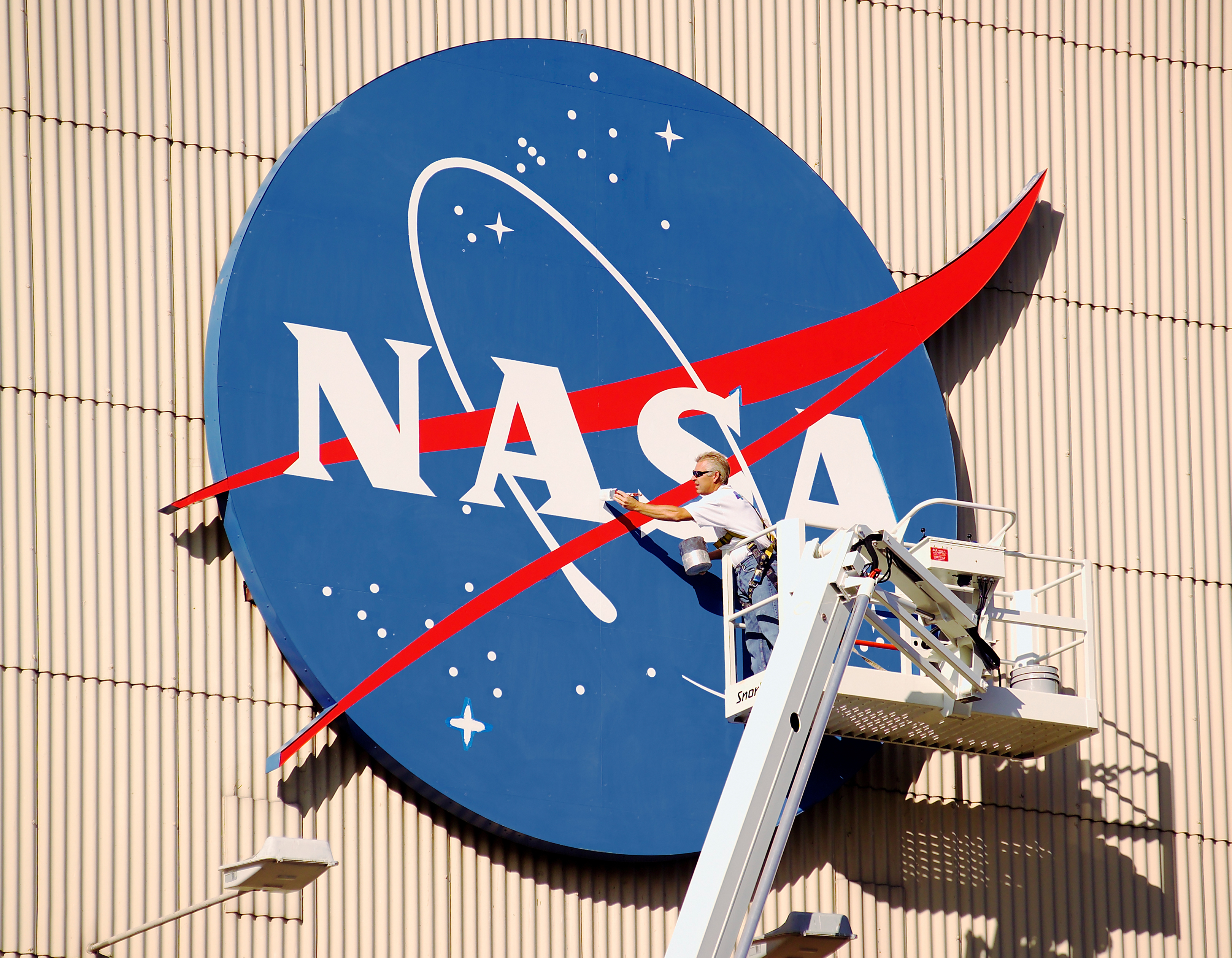
A painter applies a fresh coat of paint to the NASA “meatball” logo on the north façade of Glenn Research Center’s Flight Research Building, or hangar, in 2006.
NASA/Marvin Smith
The red, white, and blue design, which includes elements representing NASA’s space and aeronautics missions, became the official logo of the United States’ new space agency in 1959. A simplified version of NASA’s formal seal, the symbol has launched on rockets, flown to the Moon and beyond, and even adorns the International Space Station.
Workers install the NASA “meatball” logo on the front of the Flight Research Building, or hangar, at Lewis Research Center (now NASA Glenn) in 1962.
NASA
Along with its importance as a timeless symbol of exploration and discovery, the logo is also one of the world’s most recognized brand symbols. It gained its nickname in 1975 to differentiate it from NASA’s “worm” logotype. The “meatball” and these other NASA designs have made waves in pop culture.
“NASA’s brand elements are wildly popular,” said Aimee Crane, merchandising and branding clearance manager for the agency. “Every year, the agency receives requests to merchandise more than 10,000 NASA-inspired items.”
Surfing NASA’s Internet of Animals: Satellites Study Ocean Wildlife
5 min read
Preparations for Next Moonwalk Simulations Underway (and Underwater)
An aerial view of Palmyra Atoll, where animal tracking data now being studied by NASA’s Internet of Animals project was collected using wildlife tags by partners at The Nature Conservancy, the U.S. Geological Survey, the National Oceanic and Atmospheric Administration, and several universities.
The Nature Conservancy/Kydd Pollock
Anchoring the boat in a sandbar, research scientist Morgan Gilmour steps into the shallows and is immediately surrounded by sharks. The warm waters around the tropical island act as a reef shark nursery, and these baby biters are curious about the newcomer. They zoom close and veer away at the last minute, as Gilmour slowly makes her way toward the kaleidoscope of green sprouting from the island ahead.
Gilmour, a scientist at NASA’s Ames Research Center in California’s Silicon Valley, conducts marine ecology and conservation studies using data collected by the U.S. Geological Survey (USGS) from animals equipped with wildlife tags. Palmyra Atoll, a United States marine protected area, provides the perfect venue for this work.
A juvenile blacktip reef shark swims toward researchers in the shallow waters around Palmyra Atoll.
The Nature Conservancy/Kydd Pollock
A collection of roughly 50 small islands in the tropical heart of the Pacific Ocean, the atoll is bursting with life of all kinds, from the reef sharks and manta rays circling the shoreline to the coconut crabs climbing palm branches and the thousands of seabirds swooping overhead. By analyzing the movements of dolphins, tuna, and other creatures, Gilmour and her collaborators can help assess whether the boundaries of the marine protected area surrounding the atoll actually protect the species they intend to, or if its limits need to shift.
Launched in 2020 by The Nature Conservancy and its partners – USGS, NOAA (National Oceanic and Atmospheric Administration), and several universities – the project team deployed wildlife tags at Palmyra in 2022, when Gilmour was a scientist with USGS.
Now with NASA, she is leveraging the data for a study under the agency’s Internet of Animals project. By combining information transmitted from wildlife tags with information about the planet collected by satellites – such as NASA’s Aqua, NOAA’s GOES (Geostationary Operational Environmental Satellite) satellites, and the U.S.-European Jason-3 – scientists can work with partners to draw conclusions that inform ecological management.
The Palmyra Atoll is a haven for biodiversity, boasting thriving coral reef systems, shallow waters that act as a shark nursery, and rich vegetation for various land animals and seabirds. In the Landsat image above, a small white square marks the research station, where scientists from all over the world come to study the many species that call the atoll home.
NASA/Earth Observatory Team
“Internet of Animals is more than just an individual collection of movements or individual studies; it’s a way to understand the Earth at large,” said Ryan Pavlick, then Internet of Animals project scientist at NASA’s Jet Propulsion Laboratory in Southern California, during the project’s kickoff event.
The Internet of Animals at Palmyra
“Our work at Palmyra was remarkably comprehensive,” said Gilmour. “We tracked the movements of eight species at once, plus their environmental conditions, and we integrated climate projections to understand how their habitat may change. Where studies may typically track two or three types of birds, we added fish and marine mammals, plus air and water column data, for a 3D picture of the marine protected area.”
Tagged Yellowfin Tuna, Grey Reef Sharks, and Great Frigatebirds move in and out of a marine protected area (blue square), which surrounds the Palmyra Atoll (blue circle) in the tropical heart of the Pacific. These species are three of many that rely on the atoll and its surrounding reefs for food and for nesting.
NASA/Lauren Dauphin
Now, the NASA team has put that data into a species distribution model, which combines the wildlife tracking information with environmental data from satellites, including sea surface temperature, chlorophyll concentration, and ocean current speed. The model can help researchers understand how animal populations use their habitats and how that might shift as the climate changes.
Preliminary results from Internet of Animals team show that the animals tracked are moving beyond the confines of the Palmyra marine protected area. The model identified suitable habitats both in and around the protected zone – now and under predicted climate change scenarios – other researchers and decisionmakers can utilize that knowledge to inform marine policy and conservation.
Research scientist Morgan Gilmour checks on a young great frigatebird in its nest. The marine protected area around Palmyra Atoll protects these birds’ breeding grounds.
UC Santa Barbara/Devyn Orr
Following a 2023 presidential memorandum, NOAA began studying and gathering input on whether to expand the protected areas around Palmyra and other parts of the Pacific Remote Islands Marine National Monument. Analysis from NASA’s Internet of Animals could inform that and similar decisions, such as whether to create protected “corridors” in the ocean to allow for seasonal migrations of wildlife. The findings and models from the team’s habitat analysis at Palmyra also could help inform conservation at similar latitudes across the planet.
Beyond the Sea: Other Internet of Animals Studies
Research at Palmyra Atoll is just one example of work by Internet of Animals scientists.
Claire Teitelbaum, a researcher with the Bay Area Environmental Research Institute based at NASA Ames, studies avian flu in wild waterfowl, investigating how their movement may contribute to transmission of the virus to poultry and other domestic livestock.
Teams at Ames and JPL are also working with USGS to create next-generation wildlife tags and sensors. Low-power radar tags in development at JPL would be lightweight enough to track small birds. Ames researchers plan to develop long-range radio tags capable of maximizing coverage and transmission of data from high-flying birds. This could help researchers take measurements in hard-to-reach layers of the atmosphere.
With the technology brought together by the Internet of Animals, even wildlife can take an active role in the study of Earth’s interacting systems, helping human experts learn more about our planet and how best to confront the challenges facing the natural world.
The Internet of Animals project is funded by NASA and managed at NASA’s Jet Propulsion Laboratory in Southern California. The team at NASA’s Ames Research Center in California’s Silicon Valley is part of the NASA Earth Exchange, a Big Data initiative providing unique insights into Earth’s systems using the agency’s supercomputers at the center. Partners on the project include the U.S. Geological Survey, The Nature Conservancy, the National Oceanic and Atmospheric Administration, the Yale Center for Biodiversity and Global Change, Stanford University, University of Hawaii, University of California Santa Barbara, San Jose State University, University of Washington, and the Max Planck Institute for Animal Behavior.
Several transient luminous events illuminate pockets of Earth’s upper atmosphere. A line of thunderstorms off the coast of South Africa powers the rare phenomena.
NASA/Matthew Dominick
NASA astronaut Matthew Dominick photographed red sprites in Earth’s upper atmosphere from the International Space Station on June 3, 2024. The bright red flashes (more easily seen by clicking on the photo to see a larger version) are a less understood phenomena associated with powerful lightning events and appear high above the clouds in the mesosphere. Transient Luminous Events (TLEs), including red sprites, are colorful bursts of energy that appear above storms as a result of lightning activity occurring in and below storms on Earth.
While space station crew hunt for TLEs from space, you can help right here on Earth: send your photographs of sprites and other TLEs to NASA’s citizen science project, Spritacular, to contribute to a crowdsourced database that professional scientists can use for research.